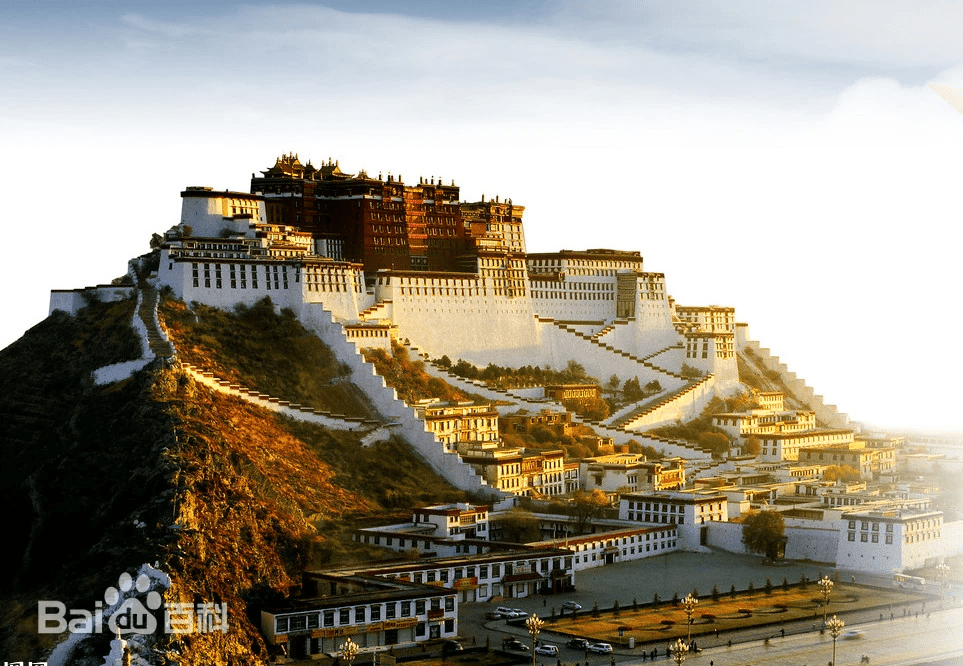
Located in the Tibet Autonomous Region of China, the Potala Palace is known as the “Jewel of the Roof of the World.” It stands as a symbol of China, Lhasa, and the Qinghai-Tibet Plateau. This palace, the highest and most majestic in the world, houses an incredibly rich collection of cultural relics and artifacts, preserving the unique heritage of the Snowy Plateau. The palace is renowned for its architectural layout, civil engineering, metal smelting, painting, and carving, showcasing the extraordinary skills of Tibetan artisans and the architectural achievements of the Tibetan people, as well as contributions from Han, Mongolian, and Manchu craftsmen. In December 1994, the Potala Palace was inscribed on the World Heritage List.
The magnificent Potala Palace stands at an altitude of 3,700 meters, covering a total area of 360,000 square meters, with a total building area of 130,000 square meters. The main building is 117 meters high, appearing to have 13 floors from the outside, while actually containing 9 levels internally. The complex includes palaces, stupas, Buddhist halls, scripture halls, monks’ quarters, and courtyards.
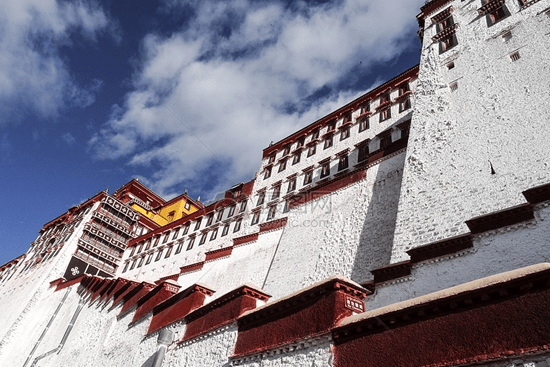
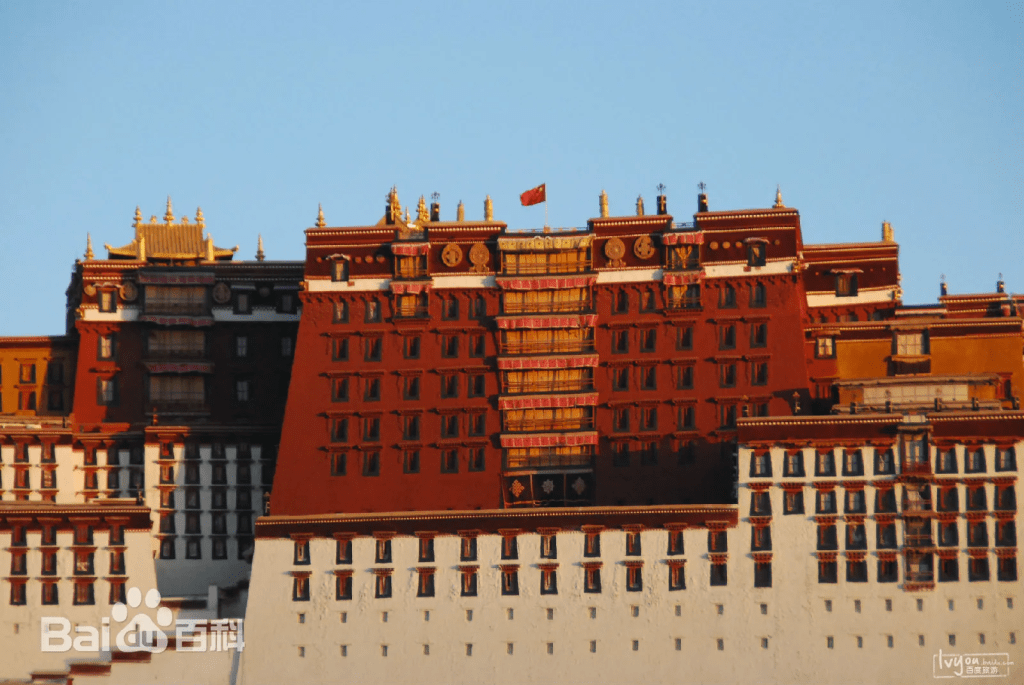
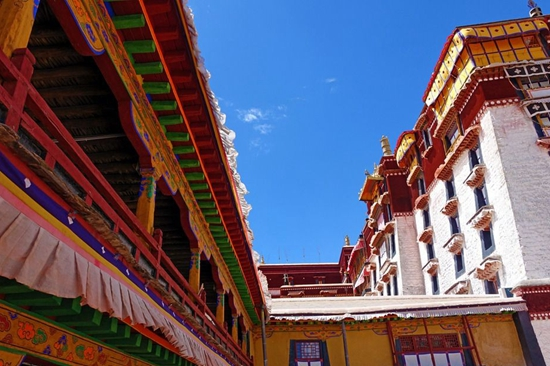
The Potala Palace’s main structure is divided into the White Palace and the Red Palace. Built into the mountainside, the complex features overlapping buildings, imposing halls, and a grand, sturdy granite structure. The white balustrades made of smooth bema grass, the resplendent golden roofs, and the large gilded bottles, stupas, and red banners create a striking decorative effect. The vivid contrast of red, white, and yellow, along with the intricate interlocking architecture, highlights the enchanting characteristics of ancient Tibetan buildings.
Historical records indicate that the Potala Palace was first constructed in the 7th century during the reign of Songtsen Gampo of the Tubo Kingdom, making it 1,300 years old. In the early 7th century, after moving the capital to Lhasa, Songtsen Gampo built three nine-story buildings with a total of one thousand rooms on Red Hill to welcome Princess Wencheng of the Tang Dynasty. The palace was named Potala Palace. The three walls surrounding Red Hill and a silver and copper bridge connecting the palaces of Songtsen Gampo and Princess Wencheng were part of the original structure. Outside the east gate of the Potala Palace was Songtsen Gampo’s horse-racing track.
When Princess Wencheng traveled to Tibet, she brought with her a large collection of books and documents, greatly promoting the development of Tibetan culture. It is said that there were more than 300 types of books on astronomy and calendrical calculations alone. The Tibetan calendar, still in use today, was created by absorbing and learning from the Han calendar, combined with the characteristics of Tibetan-inhabited areas and the experiences of the Tibetan people’s production labor. Classic works representing the excellent traditional culture of China, such as “Liezi,” “Shangshu,” “Strategies of the Warring States,” and “The Book of Questions Between Confucius and Xiang Tuo,” were also introduced to Tibet.


Ingenious Design and Construction
The design and construction of the Potala Palace take into account the patterns of sunlight in the plateau region. The foundation walls are broad and sturdy, featuring a network of tunnels and ventilation openings beneath them. Inside, the palace employs pillars, brackets, wooden struts, beams, and rafters to form its framework. The floors and roofs are made from a hard soil called “Arga.” Skylights are installed in the ceilings of each main hall and bedroom to facilitate lighting and air circulation. The pillars and beams inside the palace are adorned with various carvings, and the colorful murals on the walls cover an area of more than 2,500 square meters.

The Red Palace’s Enchanting Halls
The Red Palace, situated in the central position of the Potala Palace, is distinguished by its red outer walls and mandala layout. The Hall of the Dharma King (Qujiejiebu) and the Hall of the Sage (Pabalakang) within the Red Palace are said to be structures remaining from the Tubo period. The Hall of the Dharma King is located in the middle of the Potala Palace, directly above the peak of Marpori Mountain. It is believed that this hall was once the meditation retreat of Songtsen Gampo and now houses statues of Songtsen Gampo, Princess Chizun, Princess Wencheng, and other ministers. The Hall of the Sage enshrines Songtsen Gampo’s principal deity, a naturally formed sandalwood statue of Avalokiteshvara. The rooftop platform of the Red Palace is adorned with the golden roofs of various stupa halls, all single-eaved hip-and-gable structures supported by wooden brackets and covered with gilded copper tiles.



A Masterpiece of Tibetan Architecture
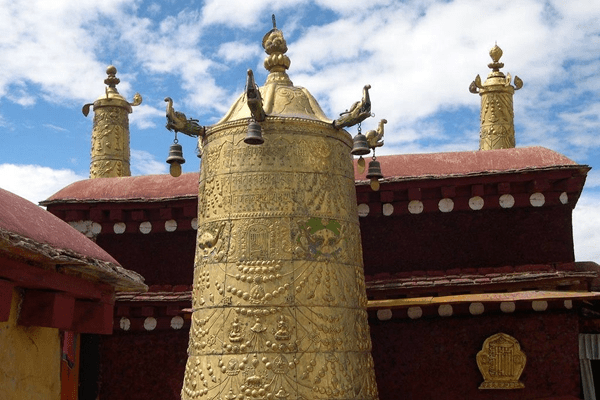
The Potala Palace is a masterpiece of ancient Chinese architecture and an outstanding representative of Tibetan architecture. Its architectural artistry is the most remarkable example among the thousands of Tibetan Buddhist temples and palaces, unmatched anywhere in the world. At the pinnacle of the palace stand three gilded pagodas, one large and two small, shining brightly and dazzling the eyes. The parapet around the rooftop is constructed from a deep purple-red shrub, decorated with various gold ornaments. The roof is adorned with large gilded finials and red prayer flags, reflecting a strong Tibetan style.
A Fusion of Artistic Traditions
The sculptural art within the Potala Palace combines techniques from Han, Indian, and Nepalese Buddhist art. The palace houses a vast collection of treasures, including heavy-colored clay sculptures, wood carvings, stone carvings, and a significant number of metal statues made from gold, silver, copper, and iron. These works of art range in size from over ten meters tall to just a few centimeters.


Thangka Paintings and Cultural Treasures
“Thangka,” a Tibetan transliteration, refers to scroll paintings mounted on colorful silk brocade, depicting religious figures, historical events, and doctrines, as well as subjects like Tibetan astronomy, calendrical calculations, and traditional medicine. The Potala Palace preserves nearly ten thousand thangkas, some of which are several tens of meters long.
The palace also houses numerous religious and artistically significant artifacts, including Tibetan carpets, prayer cushions, prayer flags, canopies, and embroidered satin hangings.


A National Treasure and World Heritage Site
The Potala Palace preserves a vast number of statues, murals, scriptures, and other cultural relics, making it a treasure trove of national art and culture. It is listed as a national cultural relic protection unit and a UNESCO World Heritage Site, reflecting its immense cultural and historical significance.
Explore the Potala Palace and immerse yourself in the rich tapestry of Tibetan history, art, and culture. Its breathtaking architecture and priceless artifacts offer a unique glimpse into the soul of Tibet, making it a must-visit destination for anyone seeking to understand the heritage of the Roof of the World.
Link:https://peacelilysite.com/2024/08/01/the-potala-palace-jewel-of-the-roof-of-the-world/
Source: https://www.brxuefo.com/2862.html,
 Peace LiLy