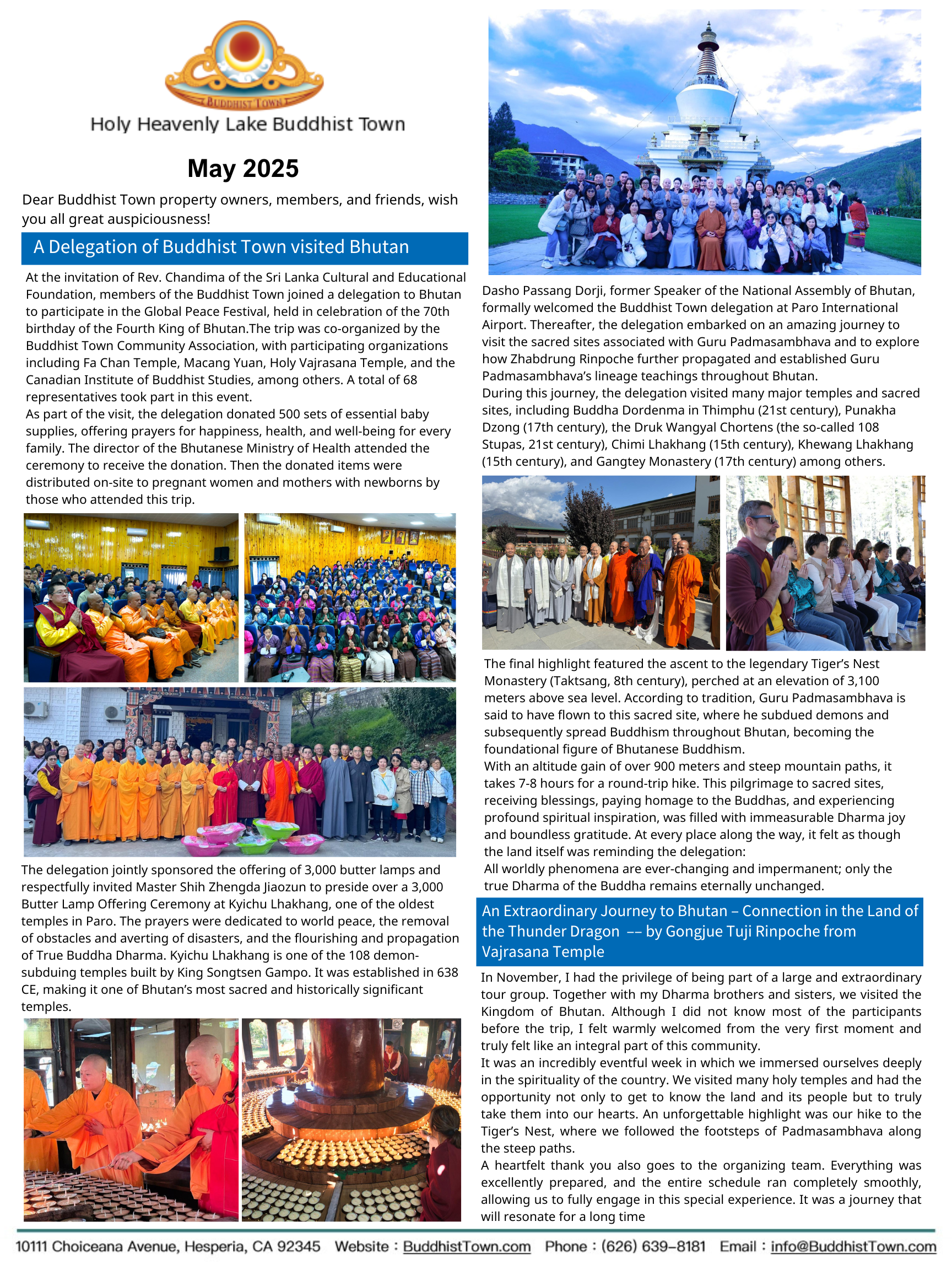
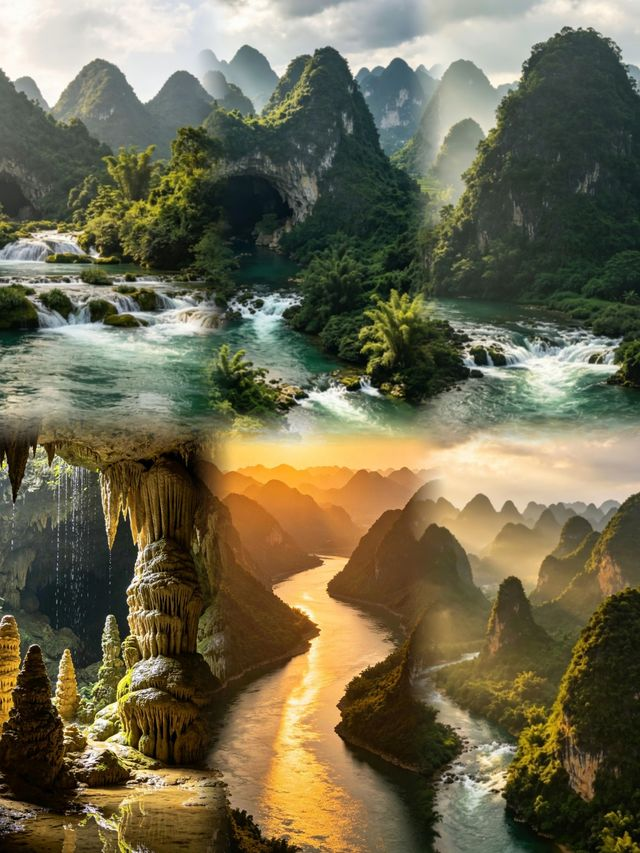
When people think of traveling to Guangxi, world-famous destinations like Guilin and Yangshuo immediately come to mind. But tucked away in the northwest of the province lies a hidden, crowd-free water wonderland that is about to become your next obsession: Hechi!
This isn’t Semporna or the Maldives—this is Hechi, a pristine paradise that brings together majestic karst mountains, emerald-green waters, mystical caves, and swirling schools of fish.
If you are looking to escape the summer heat and discover a side of China that most international tourists have never seen, bookmark this ultimate guide to Hechi’s three “divine hidden realms” and start packing!👇
🗺️ Deep Dive: The Three Mystical Water Spots of Hechi
1️⃣ Tian’er: The “Blue Blade” Fish Paddleboarding Drift 🐟
The Vibe: Stepping Into an Animated Fantasy World
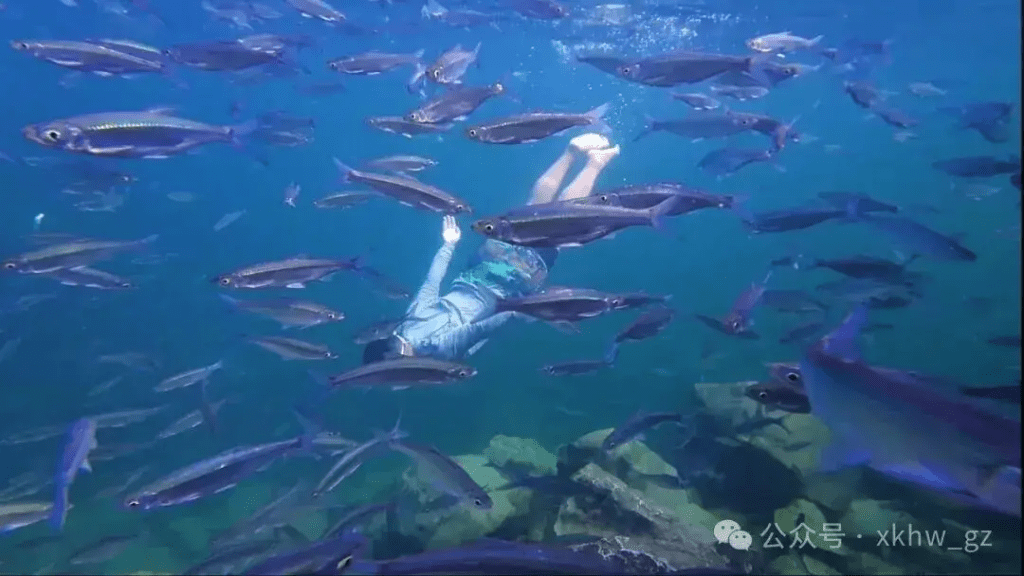
The Experience: Imagine paddling down a river nestled between towering karst cliffs, where the water is so still it looks like a sheet of flawless green jade. This is the Hongshui River section in Tian’er. Rent a paddleboard at “Guizhiyuan Mountain Villa” and embark on a breathtaking 12-kilometer drift downstream to the old town pier.The absolute highlight of this journey is crossing the “Blue Blade Fish Storm” point. The Blue Blade fish (Hemiculter leucisculus) is incredibly sensitive to environment and only thrives in ultra-pure, wild waters. When you crumble some bread into the water, the river instantly “comes alive.” Hundreds of shimmering, silver-blue fish will swirl around your paddleboard in a mesmerizing underwater vortex. With the morning sun reflecting off their scales, it genuinely feels like stepping straight into a scene from a fantasy movie.
💰 Cost: Around 150 RMB/day for paddleboard rental (convenient pick-up and drop-off services are available at both the start and end points).
⏰ Best Time: April to October, when the fish are most active. Aim for early morning or just after a rain shower when the water is at its most transparent.
2️⃣ Fengshan: Cruising the Underground “Sea” of Sanmenhai ⛵
The Vibe: A Journey to the Center of the Earth
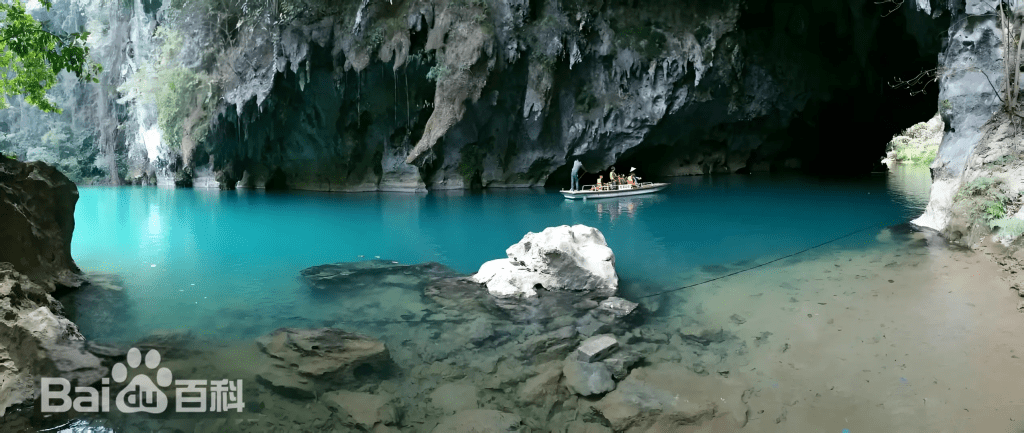
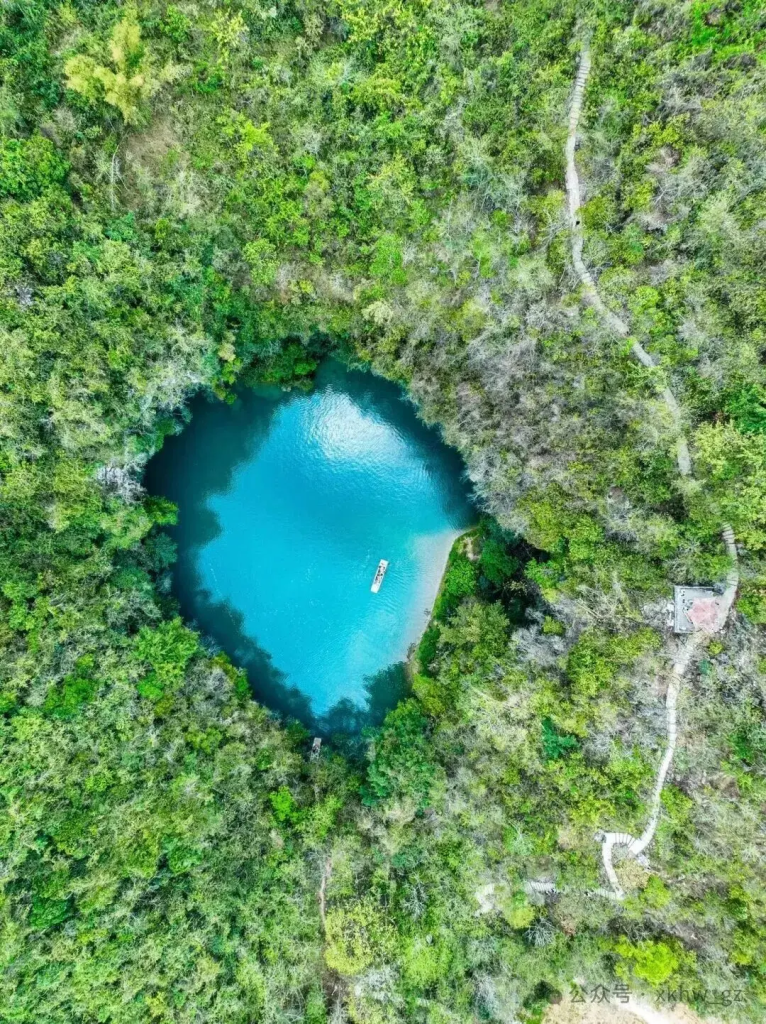
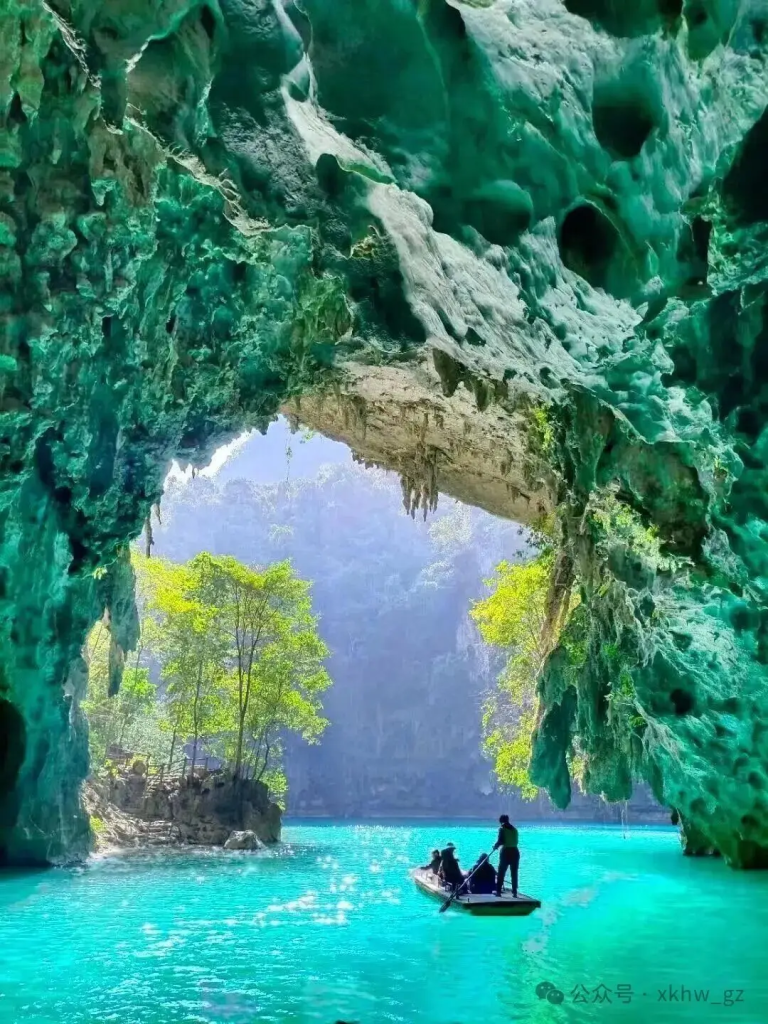
The Experience: Don’t let the name fool you—while “Hai” means sea, Sanmenhai is actually a spectacular, world-class geological wonder featuring a cluster of massive karst “heavenly windows” (sinkholes formed by the collapse of underground river ceilings). It is the only place in the world where you can board a traditional manual wooden boat and slide through interconnected caves into hidden tiankengs.As your boat glides from the pitch-black cavern into the light, you will be struck by an otherworldly sight. A beam of natural sunlight pierces through the open roof, illuminating the deep subterranean river into a surreal, glowing Tiffany Blue and deep sapphire. Local residents describe it as “a sea within the mountains, with gates upon the sea.” The jaw-dropping contrast of emerging from a dark cave into a hidden world of vibrant turquoise waters and hanging vines is a visual shock you will never forget.
🎫 Tickets: Around 60 RMB (Group rate/Online booking recommended for independent travelers).
⏰ Hours: 08:30 – 17:30 (Last entry at 17:00).
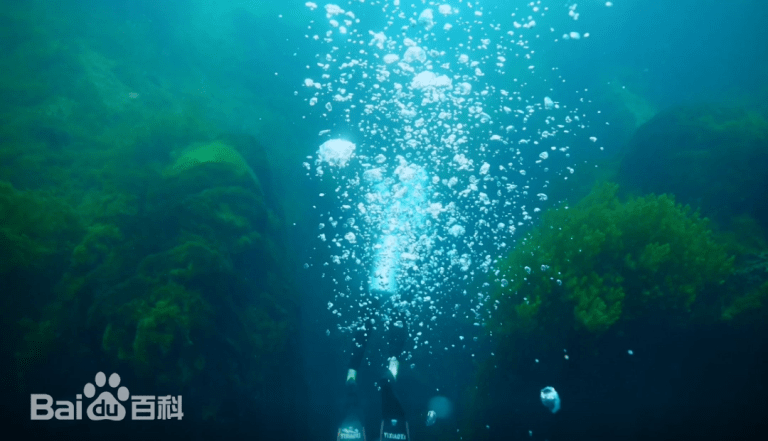
3️⃣ Du’an: Floating on the “Jelly Water” of Jiudun Tianchuang 💧
The Vibe: The Everest of Cave Diving Meets a Healing Crystal Palace
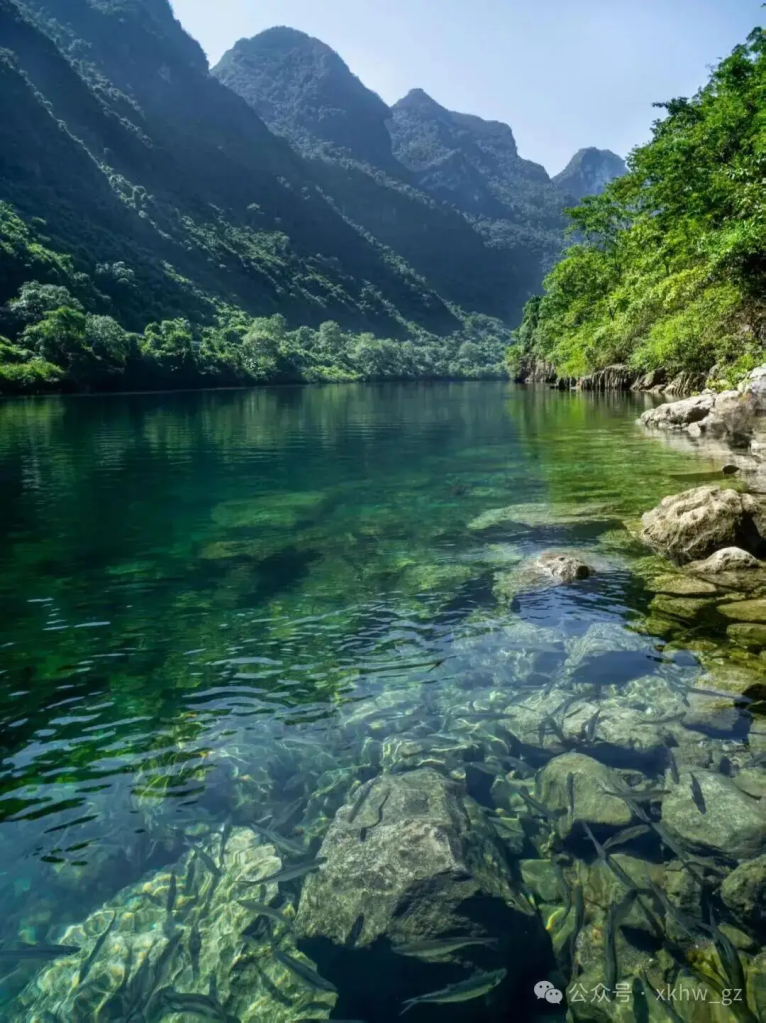
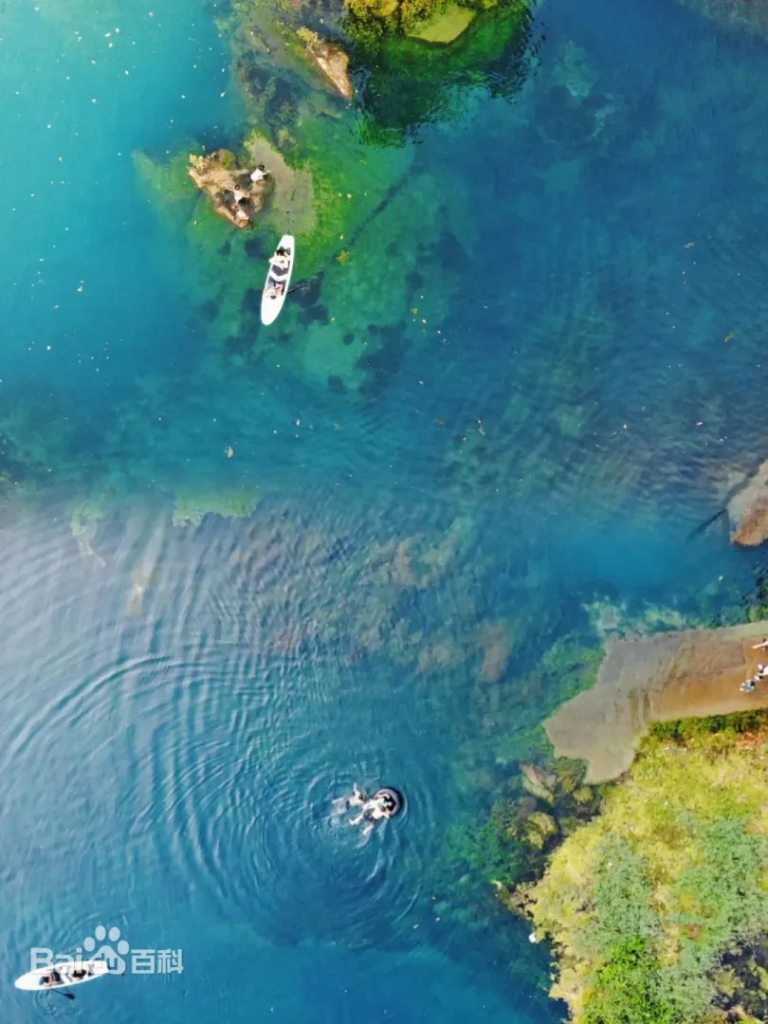
The Experience: Du’an county is home to hundreds of underground river sinkholes, but the Jiudun Tianchuang (Jiudun Heavenly Window) is the crown jewel. Serving as the source of the Chengjiang River, this spot is legendary among global diving communities. Its underwater caves drop down hundreds of meters into a complex, mysterious labyrinth, earning it the title of “The Mount Everest of Underwater Cave Diving.” In fact, global cave diving depth records have been smashed right here.While the depths are a thrilling challenge for professionals, the surface is a gentle, healing fairy tale. The water here possesses an astonishing, glass-like transparency. It looks exactly like a giant bowl of shimmering green jelly. The best way to experience this is by renting a completely transparent paddleboard. As you float, it feels as though you are suspended in mid-air. Looking down, you can see dozens of meters straight to the bottom where lush river weeds wave like silk ribbons in the current. It requires absolutely zero photo filters—any snapshot here is an instant masterpiece.
🎫 Tickets: FREE entry to the area!
💰 Paddleboard Rental: Around 30 RMB/hour, or 50 RMB for 2 hours.
📸 Pro-Tip: Make sure to request a clear/transparent paddleboard for those stunning, weightless aerial-style photos!
🚗 【Essential Travel Tips】
📅 Best Season:May to October. This is the prime time for water activities, and you will also get the chance to see the beautiful, rare Ottelia acuminata (sea-cake flowers) blooming on the water’s surface.
🚘 Getting Around:Self-driving or renting a car is highly recommended. The highways and national roads connecting Tian’er, Fengshan, and Du’an are well-maintained, and the driving routes wind through some of the most stunning, dramatic karst landscapes in China.
🎒 What to Pack: High-SPF sunscreen, quick-dry clothing, and a reliable waterproof bag for your electronics. Keep in mind that the caves can get quite chilly, so bring a light jacket.
🕶️ Secret Weapon: Bring a pair of polarized sunglasses! They cut the glare on the water’s surface entirely, allowing you to see the fish and underwater plants with perfect clarity.
⚠️ Safety First: Always wear your life jacket when paddleboarding! No matter how good of a swimmer you are, safety makes the trip enjoyable.
The beauty of Guangxi goes so much deeper than its famous postcards. Hechi offers a raw, wild, and incredibly pure escape that is hard to find in today’s crowded world. If you want to beat the summer heat, dive into crystal waters, and explore the mysteries of the earth without the crowds—Hechi is calling. 🎒🌿
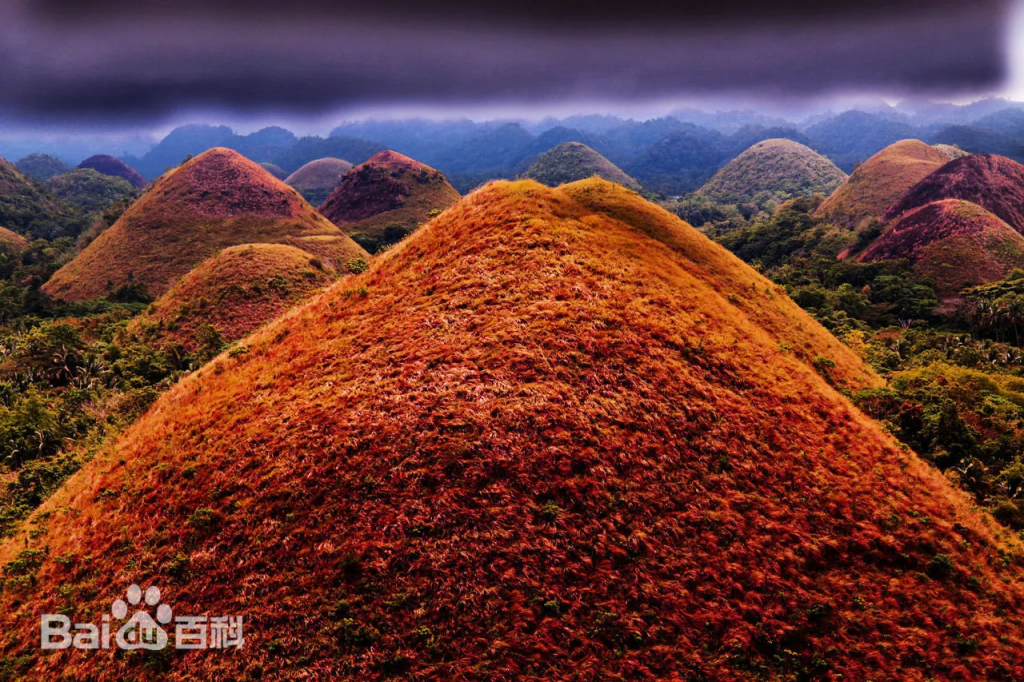
In the heart of Bohol Island, near the town of Carmen, lies one of the world’s most unusual and enchanting natural wonders — the famous Chocolate Hills.
At first glance, the landscape almost looks unreal.
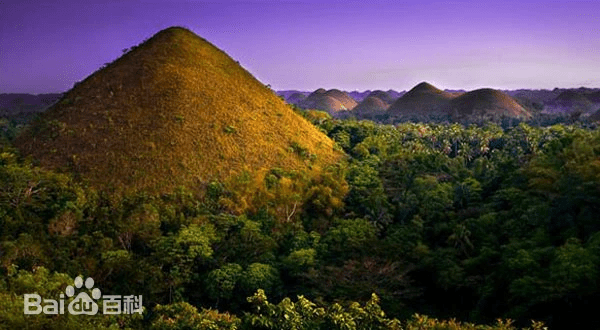
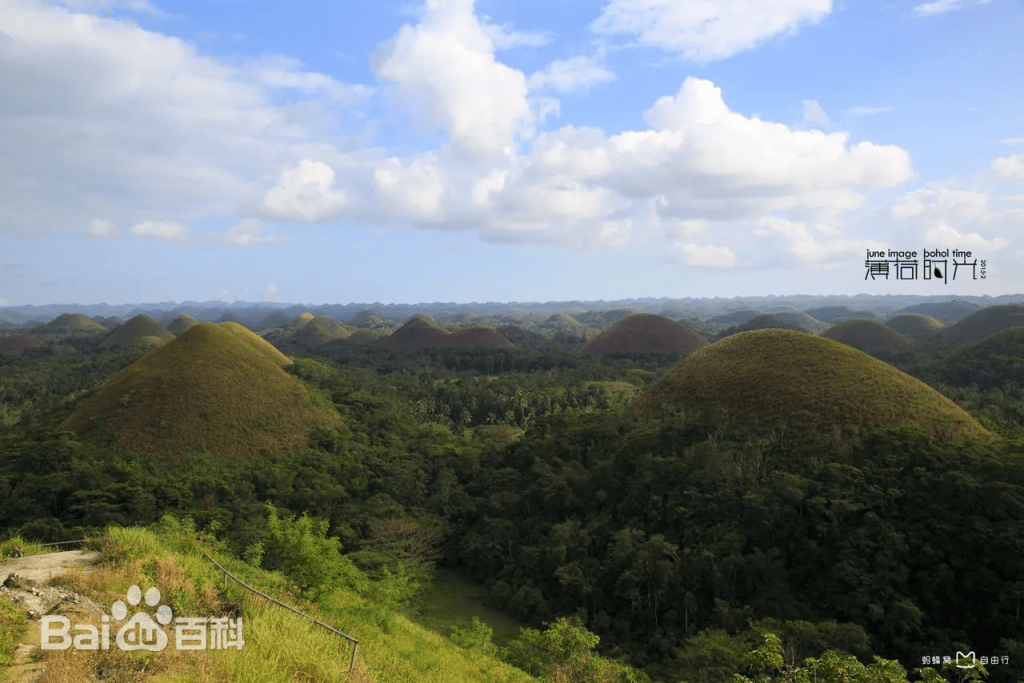
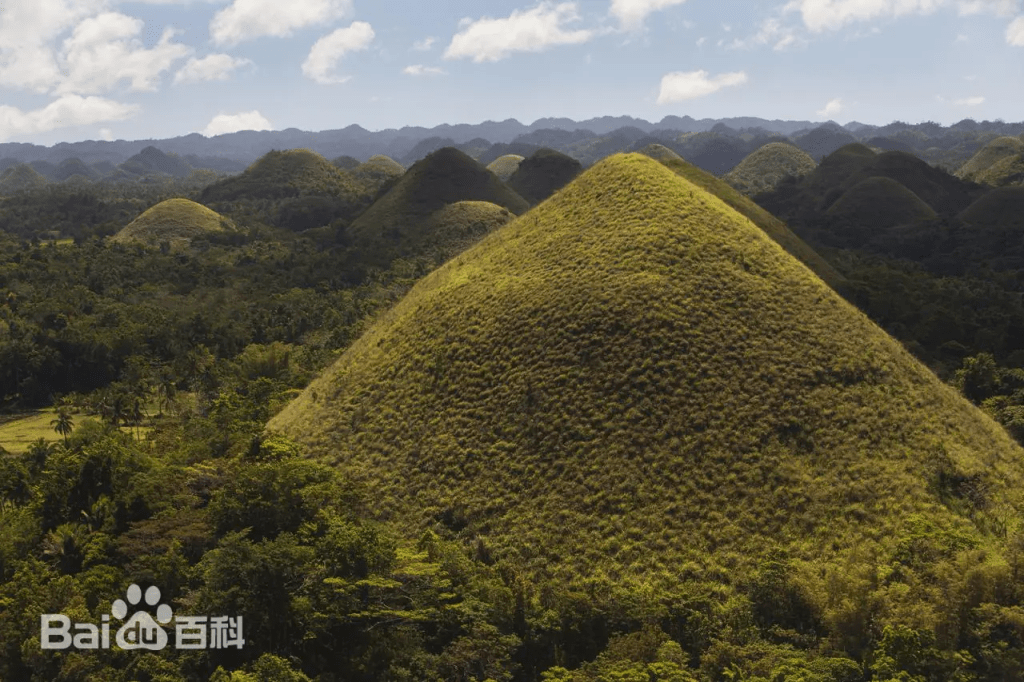
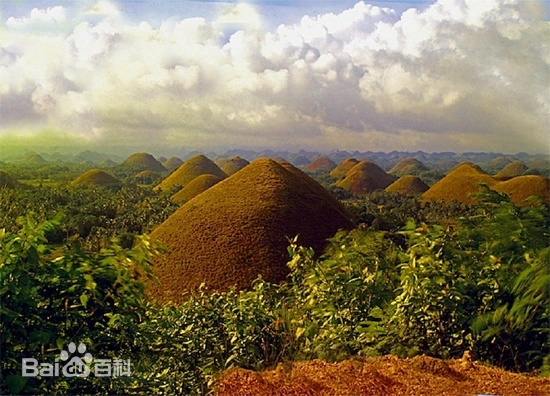
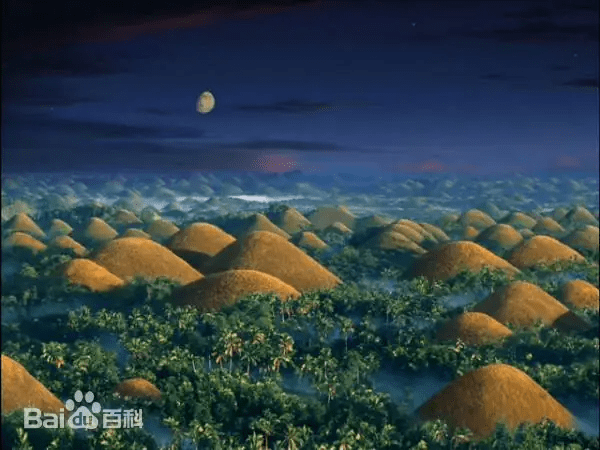
Spread across the earth are 1,776 nearly symmetrical cone-shaped hills, rising gently one after another like countless giant chocolate candies scattered across a green carpet. Their heights range from about 40 to 120 meters, and together they create one of the most mysterious and dreamlike scenes in nature.
During the rainy season, the hills are covered in lush green grass. But when the dry season arrives, usually between February and May, the intense tropical sun dries the grass into rich shades of brown. From a distance, the hills resemble rows of giant chocolate truffles covering the land — and this is how the Chocolate Hills received their delicious name.
The hills are so remarkably uniform that many visitors find it difficult to believe they were formed naturally. Some have smooth domes, while others appear more cone-shaped, standing side by side like enormous haystacks across the fields.
One especially curious feature is the vegetation. In the tropical climate of the Philippines, nearby mountains are usually covered with thick forests and fast-growing trees. Yet the Chocolate Hills remain mostly covered with grass rather than large trees, likely because the soil layer on the hills is relatively thin. This gives them their smooth, rounded appearance and makes them look even more surreal.
For decades, geologists have debated how these strange hills were formed.
Several scientific theories have been proposed, including limestone weathering, ancient underwater volcanic activity, and the uplift of the ocean floor. One modern theory suggests that millions of years ago, a volcanic eruption scattered huge amounts of rock and ash across the region. These materials were later covered by limestone and eventually pushed upward when the seabed rose, forming the hills we see today.
However, no single explanation has been universally accepted.
The most widely supported geological theory is that Bohol Island slowly rose from the sea long ago, and over thousands of years, rainwater eroded layers of coral, shell deposits, limestone, and clay, gradually shaping the landscape into these extraordinary cone-shaped formations.
Yet science is only part of the story.
Local legends add an even deeper sense of mystery and romance to the Chocolate Hills.
One ancient tale says that two giants fought each other for many days, hurling enormous rocks and boulders across the island. When they finally became exhausted and made peace, they left the island behind — along with the chaotic battlefield that later became the Chocolate Hills.
Another legend is far more tragic and romantic.
According to the story, a giant named Arogo fell deeply in love with a beautiful local woman named Aloya. One day, unable to resist his feelings, he carried her away to his home. But the frightened young woman could not bear the sight of the giant and died suddenly from shock. Heartbroken beyond measure, the giant wept endlessly until he too died of grief. His tears became the Chocolate Hills, while his enormous body transformed into the surrounding mountain ranges.
Perhaps it is precisely because science and legend exist together that the Chocolate Hills feel so magical.
Today, the Chocolate Hills remain one of the Philippines’ most beloved and extraordinary natural landmarks. Standing on the viewing platform and gazing across thousands of rolling chocolate-colored hills stretching all the way to the horizon, visitors often feel as though they have stepped into a fantasy world.
It is both majestic and strangely playful — as if nature itself decided to scatter a thousand giant chocolates across the earth simply to delight the human imagination.
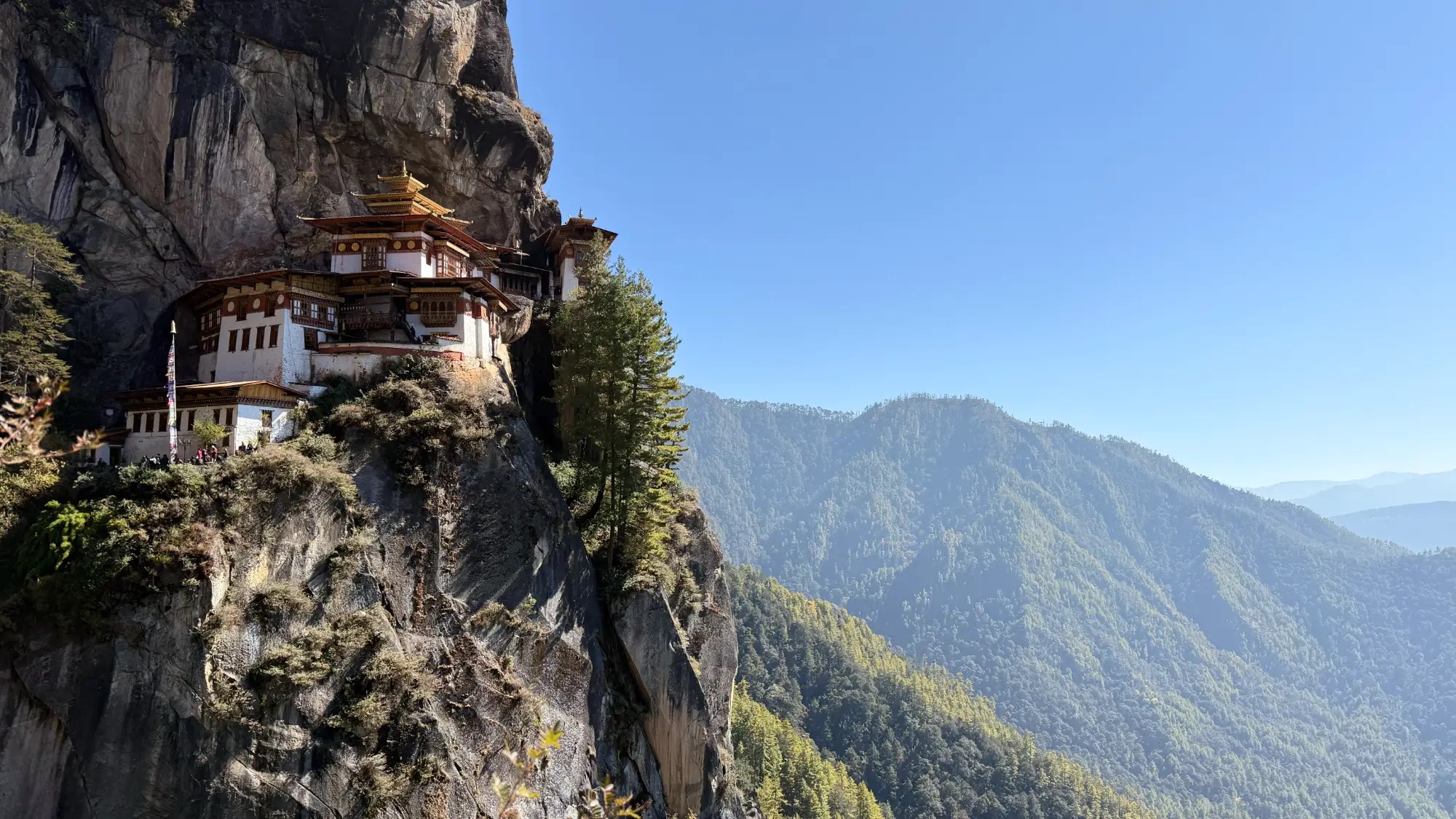
The goal of the ascent in sight: Taktsang Monastery is perched high on the steep cliff face
On a pilgrimage to holy places, one rarely follows a rigid plan. Rather, one engages with a flow of events. Our last days in Bhutan reminded us how valuable it is to let go of expectations. We learned that special doors often open exactly when one is ready to leave the original path.
Change of Plans in Punakha: Trusting the Flow of Things
The sixth day showed us this very clearly. Actually, we had a fixed plan: We wanted to drive from Punakha back to Paro. There, we had donated 3,000 butter lamps which we wanted to light ceremonially in a temple.
But then we received news on short notice that an audience with His Holiness the Je Khenpo, the highest religious head of the country, would be possible. Such an opportunity is a great blessing. However, there was a restriction: Our entire travel group was simply too large for this spontaneous audience.
So we had to split up in Punakha. One part of the group drove directly on to Paro, while the other part drove to Thimphu, where His Holiness the Je Khenpo was staying at the time. I traveled with this group.
View of Thimphu with the Buddha Dordenma statue in the background
Thangton Dewachen Nunnery: Legacy of the Iron Bridge Monk
Arriving in Thimphu, we still had some time before the appointment. We visited the Thangton Dewachen Duthop Nunnery. It is the only one of its kind in the capital and goes back to the legendary Thangtong Gyalpo. He was a fascinating personality: A great Mahasiddha and at the same time an ingenious engineer who lived in the 15th century. He is famous as the “Iron Bridge Monk,” as he built dozens of suspension bridges made of iron chains throughout the Himalayas to allow pilgrims and travelers to cross raging rivers. Many of his constructions withstood the centuries. We were welcomed very warmly at this place: We were served tea in the courtyard of the monastery, and we could enjoy the peaceful atmosphere for a moment before we had to leave.
Visiting the Thangton Dewachen Duthop Nunnery
Kalachakra Initiation: Encounter with H.H. the Je Khenpo
After lunch, we made our way to the stadium. There, H.H. the Je Khenpo was leading the conclusion of the Kalachakra initiation. The crowds were immense. The stadium itself was packed to capacity, but that was far from enough. Countless people had also gathered on the grounds outside to partake in the event. It was a very impressive image. The ceremony was also being broadcast live on Bhutanese television. We initially had to wait before the gates until we were allowed into the stadium.
After some time, we were able to enter and were led to a separate waiting area inside the stadium. During this time, a chance but wonderful encounter occurred. We met the young Vairochana Rinpoche (Ngawang Jigme Jigten Wangchuk). He is a highly revered Tulku and the son of Her Royal Highness Princess Sonam Dechan Wangchuk. He is revered as the reincarnation of the great translator Vairochana from the 8th century, one of the most important disciples of Guru Padmasambhava.
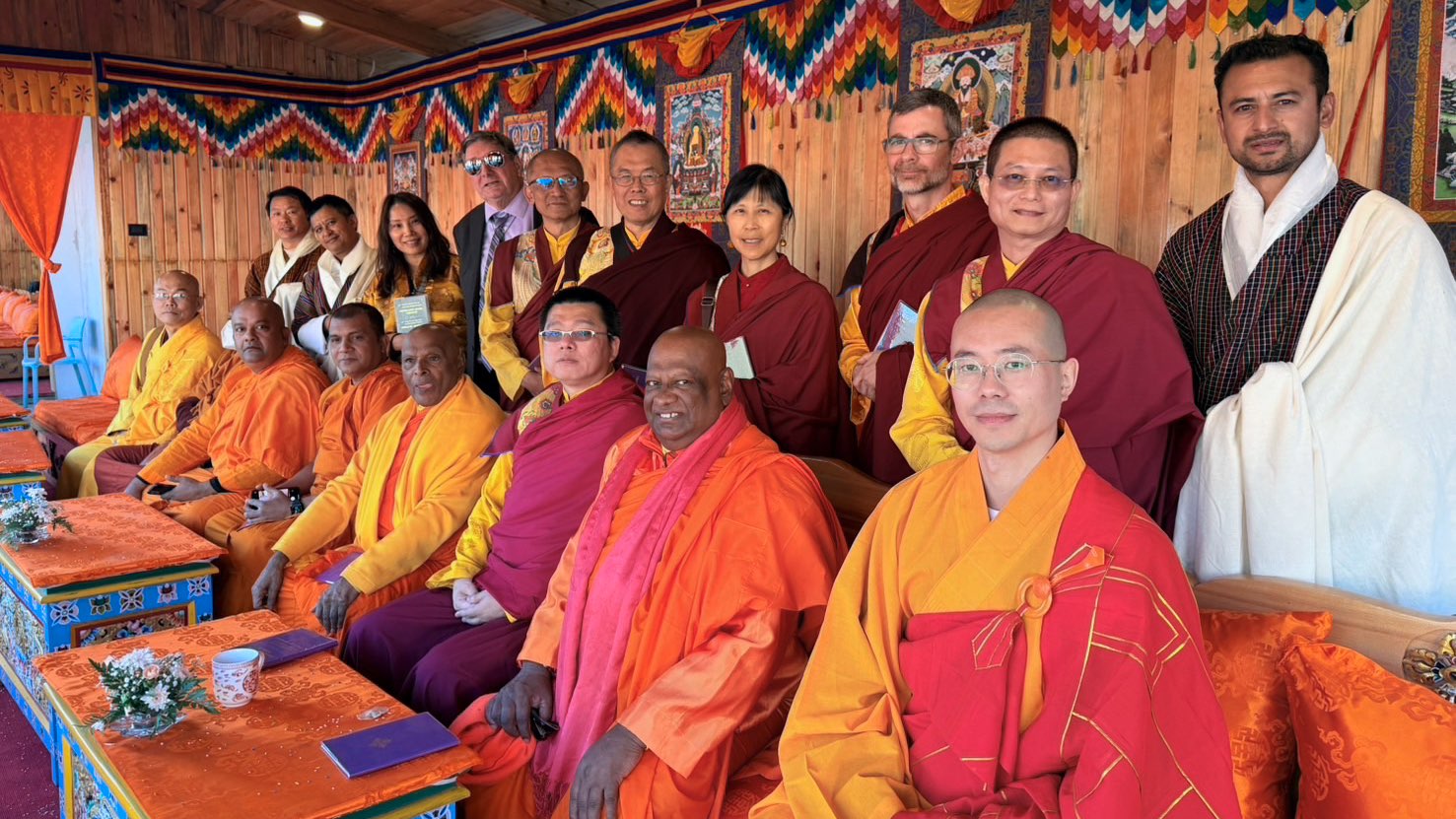
Following this, we were granted an audience with H.H. the Je Khenpo. Filled with gratitude, we presented him with a Khata (white scarf) as a token of our deep respect. In this special setting, we also had the opportunity to present His Holiness with information regarding the ‘Holy Heavenly Lake Buddhist Town’ project. Each of us then received a personal blessing, and upon our departure, he presented us with a text of the Amitabha Sadhana for our own practice.
Our group after the audience with H.H. the Je Khenpo
After the meeting with the Je Khenpo, a further great honor was completely unexpectedly offered to us: Actually, we were supposed to meet the young Vairochana Rinpoche and the Queen Mother for an official audience afterwards. But when the Kalachakra initiation ended, thousands of people streamed out of the stadium at the same time. Traffic in Thimphu came to a complete standstill. There was no getting through, and we could not reach the agreed location in time. Such are the karmic conditions sometimes. But we did not quarrel with fate: After everything we had experienced that day and the blessing we were allowed to receive, we felt richly gifted.
The Tiger’s Nest: Ascent to Guru Rinpoche’s Cave
On the last day of our trip, November 15th, the arguably most famous landmark of Bhutan was on the agenda: Paro Taktsang, widely known as the Tiger’s Nest. It is not only architecturally deeply impressive, but one of the holiest sites in the entire Himalayas.
Paro Taktsang Monastery (Tiger’s Nest)
We set off very early to reach the base camp, the parking lot at 2,300 meters. From there, it is about 800 vertical meters up to the monastery, which sits at 3,120 meters. For visitors who do not quite trust themselves with the steep climb, there is generally the option to be carried by a horse or mule for the first part of the route. Our group, however, decided to cover the entire path on foot under our own power.
The ascent took just under three hours. The path is beautiful, but also demanding. It leads through a dense pine forest where rhododendrons grow and the trees are draped with moss. Again and again, prayer flags flutter in the wind. Halfway up, we took a short rest at a café. From there, you already have a first, breathtaking view of the monastery, which literally clings to the steep rock.
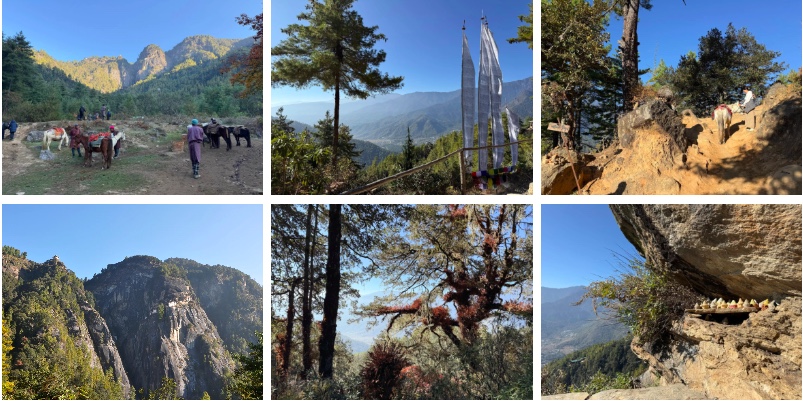
Impressions (in order): Resting horses at the starting point, fluttering prayer flags against the mountain backdrop, pack animals on the dusty trail, the first distant view of the cliffside monastery, the moss-covered mountain forest, and Tsa-Tsa offerings in a rock niche.
The history of this place is closely connected to Guru Rinpoche, the great Master Padmasambhava. He is revered by the Bhutanese as the “Second Buddha,” as he brought and firmly established Tantric Buddhism, the Vajrayana, in Bhutan in the 8th century. He manifested his supernatural powers and flew to this very spot on the back of a tigress to subdue a demon. Some say that the tigress was his tantric consort Yeshe Tsogyal in a transformed state. In the cave known as Taktsang Senge Samdup, around which the monastery was later built, he then meditated for exactly three years, three months, three weeks, and three days.
Once at the top, we had to hand in our cameras and bags at the entrance, as photography inside is strictly forbidden. We visited several small temples within the complex. In a special room that is guarded around the clock, I lit a butter lamp. This is the only place in the monastery where open fire is still permitted after a devastating fire destroyed large parts of the complex in the past. In Buddhism, lighting these lamps is a meritorious central ritual.
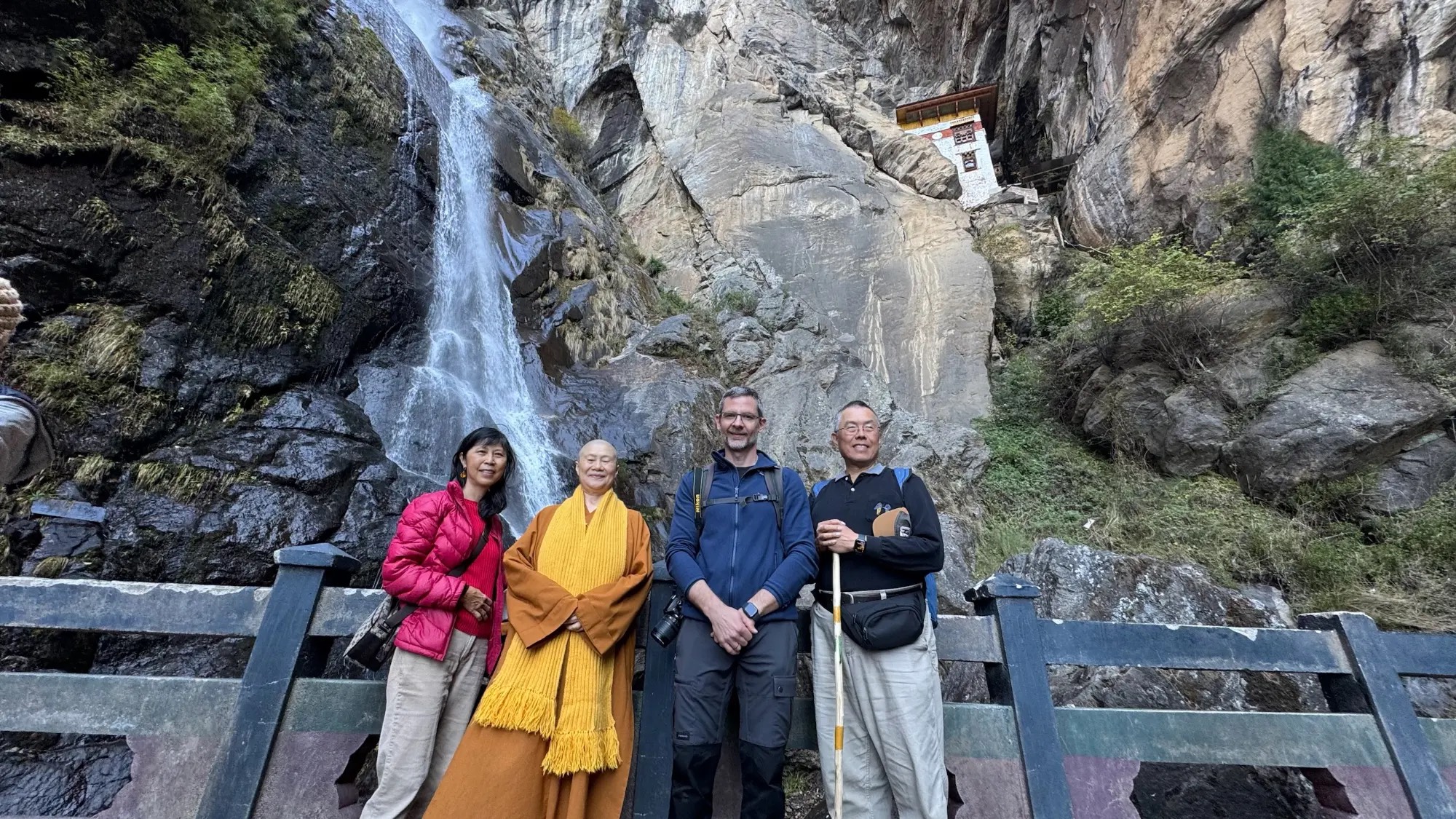
With Venerable Master Shi Zheng Da in front of the Taktsang Waterfall
Farewell in Paro: A Promise to Return
Back at the hotel in Paro, a special guest awaited us in the evening: Dasho Passang Dorji, the former Speaker of the National Assembly of Bhutan. He had been instrumental in organizing the official appointments and came by personally to apologize politely that the meeting with the King had not taken place due to the commotion. He promised us: “Next time I will arrange, this time the King and the Queen have been too busy.”
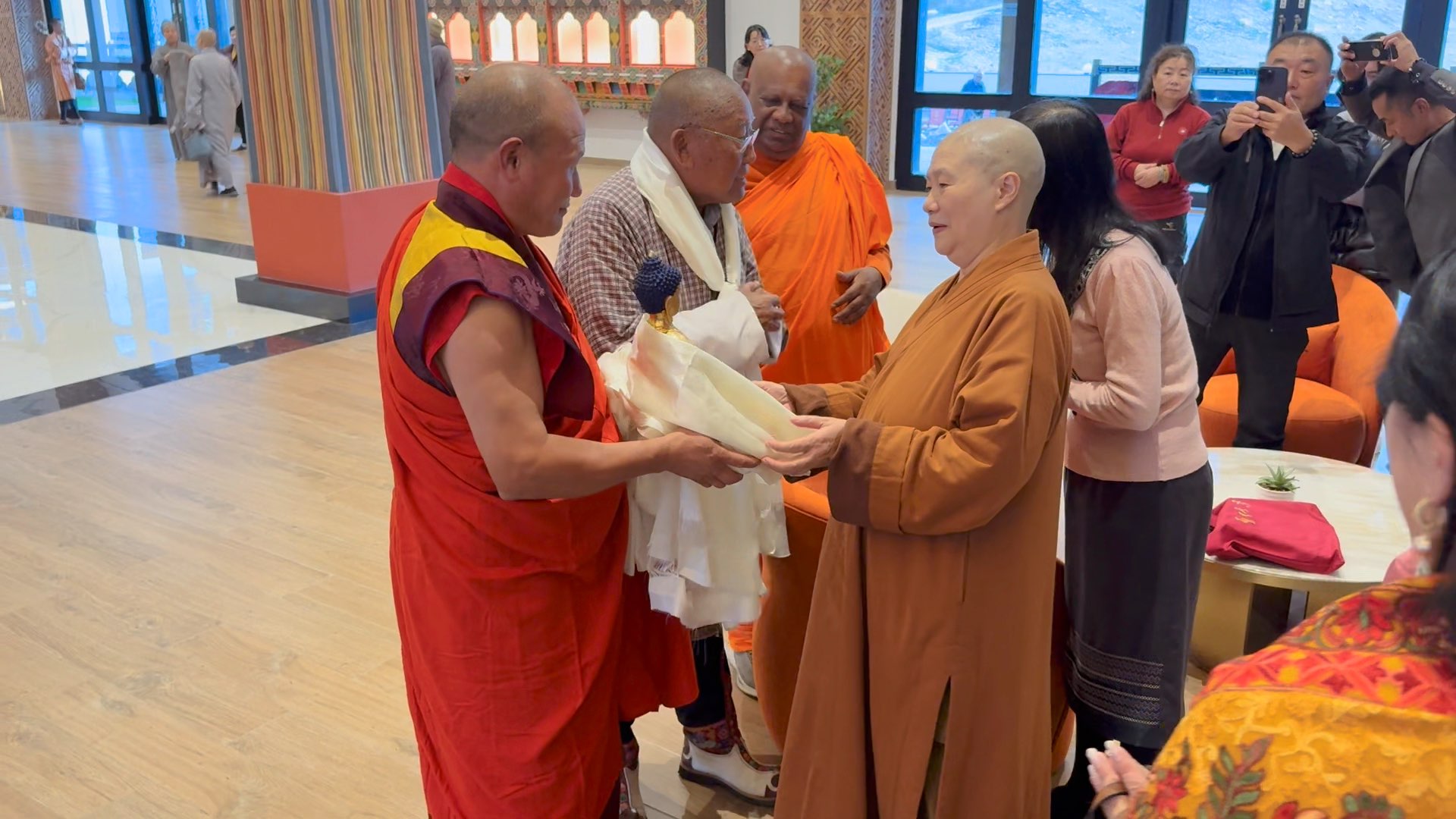
Exchange of gifts with Dasho Passang Dorji
In a very friendly atmosphere, an exchange of gifts took place. The Venerable Master Shi Zheng Da presented him with a special art object, a luminous three-dimensional picture of a Yun sculpture designed by H.H. Dorje Chang Buddha III. In return, he gave the Master a large golden Shakyamuni Buddha statue. It was a worthy moment of connection.
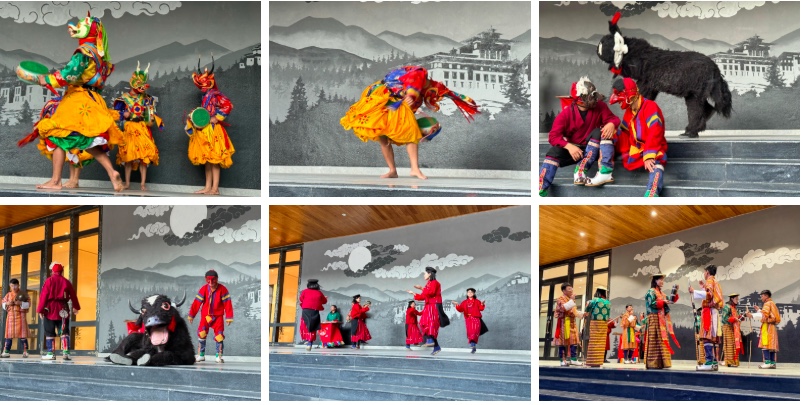
Scenes from the performance (in order): The famous Drametse Ngacham (Dance of the Drums), a solo dancer bowing deep, the performers of the yak scene, the humorous interaction of the yak with the audience, the women’s dance group in red garments, and finally a traditional performance with bows and arrows combining song and dance.
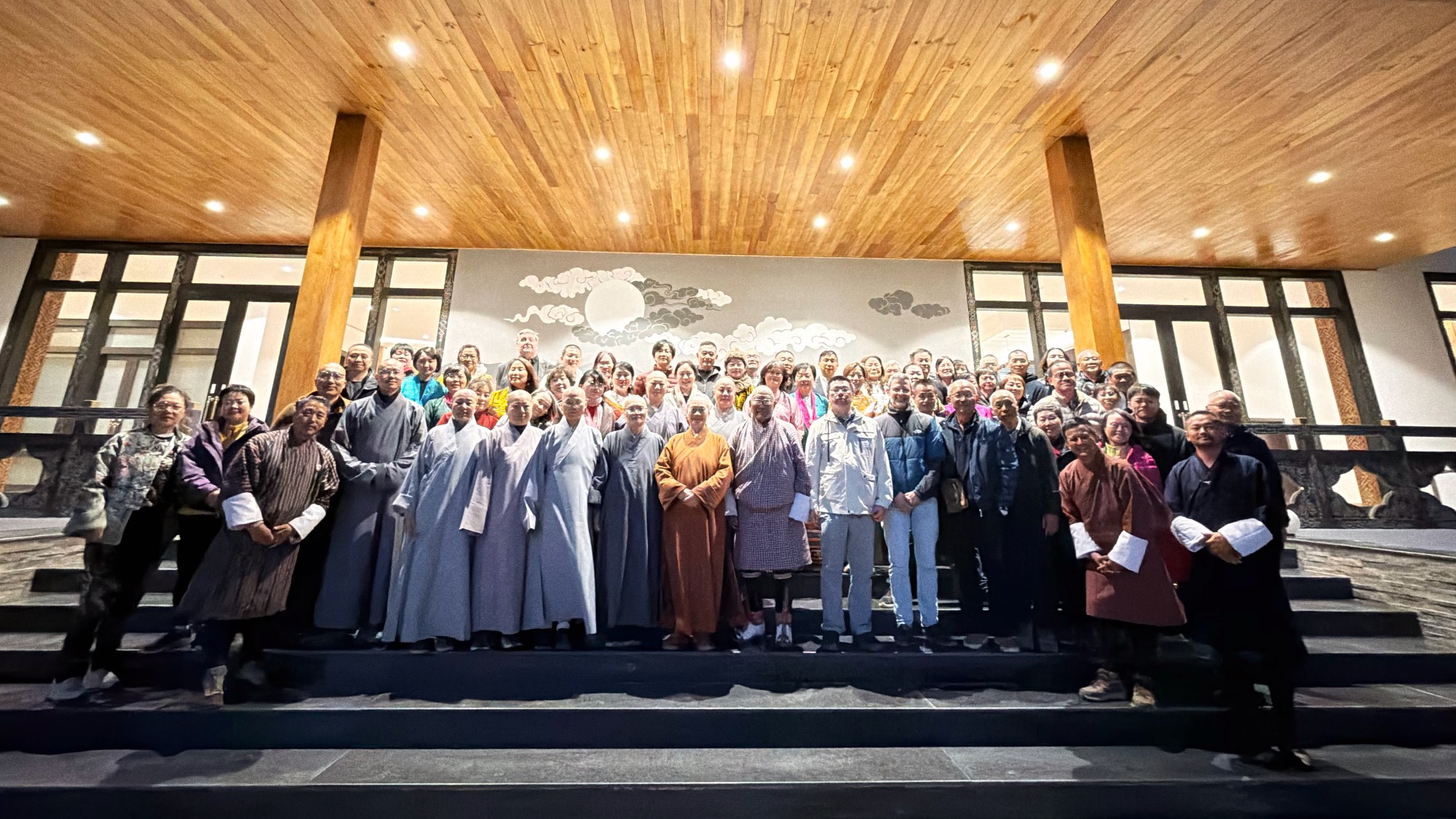
Afterwards, we watched a cultural performance together with Dasho Passang Dorji. There were traditional dances and songs whose gentle, flowing movements radiated great calm and peace. There were also humorous interludes, like the dance of a yak, where the performers visibly had fun. Even though I did not understand the language, the joy was contagious. After this show, we all gathered for a large group photo to capture this beautiful final evening.
Our entire group with Dasho Passang Dorji and our guides
The next morning, November 16th, it was time to say goodbye. From the hotel, we could look directly at the airport. We had arrived to make a contribution with our donation and our plans. But as I boarded the plane now, I felt that we ourselves were taking away far more than we had given. I took with me not only memories of the mighty mountains and venerable monasteries, but the feeling of a deep connection with our travel group and the people in Bhutan. I return with much inspiration and a heart full of gratitude for the blessing I was allowed to experience in this country.
The highest point of the leg: The Dochu La pass at 3,100 meters
By Gongjue Tuji
With many impressions from Thimphu and a feeling of gratitude, we continued our pilgrimage. Before leaving the busy capital behind for good to drive deeper into the mountains, however, we spent another day in its surroundings. After all, Bhutan is not only defined by its holy temples and deeply rooted Buddhism. The landscape itself also holds enormous power. We were looking forward to traveling to places where the country’s history and the powerful nature form a very special unity.
Semtokha Dzong: The Palace of Secret Mantras
On the third day, our path first led us about six kilometers south of Thimphu to Semtokha Dzong. This place also bears the meaningful name “Sangak Zabdhon Phodrang,” which translates to “Palace of the Profound Meaning of Secret Mantras.”
Semtokha Dzong
Historically, this is a milestone: The Dzong was built between 1629 and 1632 by Shabdrung Ngawang Namgyal, the legendary unifier of Bhutan. He introduced something completely new here, namely the combination of a monastery and an administrative center under one roof. This innovative concept worked so well that it later became the model for all other major fortresses in the country, such as in Paro or Punakha. This historical significance mixed with a very present joy on the day of our visit. Since the entire country was honoring the fourth King’s birthday, a particularly festive mood could be felt everywhere.
But something else left a deep impression on me. In the temple rooms, the distinct scent of butter lamps hung in the air. It is a very unique smell that we would encounter again and again at other places, and which for me is now inseparably linked to the atmosphere of these holy sites.
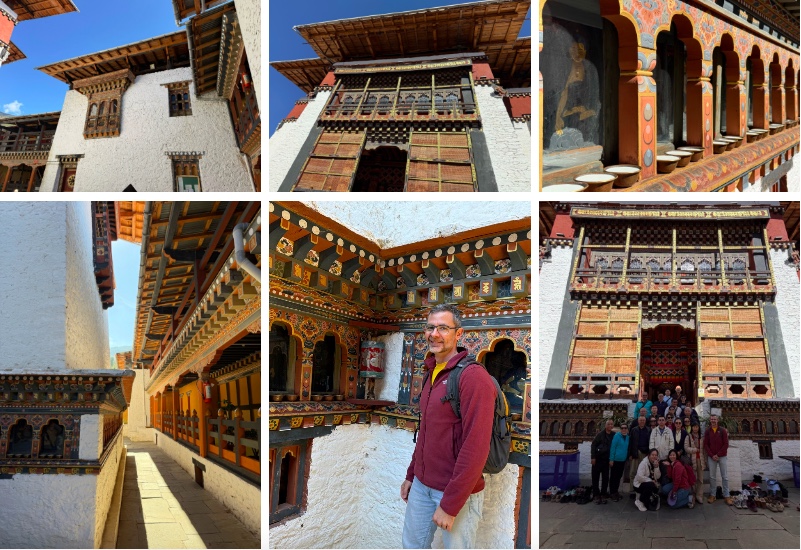
Impressions (in order): View into the courtyard, the magnificent entrance area, water bowls as offerings, the corridor with prayer wheels, myself inside, and our group on the entrance stairs.
Takin Preserve: The Creation of Drukpa Kunley
Bhutan is deeply rooted in its spiritual traditions, where the power of the Dharma also manifests in nature. We visited the Royal Preserve to see the national animal: the Takin. It is a fascinating creature, unique to the Himalayas, with an appearance that resembles a cross between a cow and a goat.
Its existence traces directly back to the miraculous activity of Drukpa Kunley, also known as the “Divine Madman.” In the 15th century, people asked him to perform a miracle to prove his realization. He requested to be served a cow and a goat. After consuming both, he placed the goat’s head upon the cow’s skeleton. With his supernatural powers, he brought this new being to life. This event stands as a powerful testament to the Master’s unconventional teaching methods and his ability to act beyond ordinary concepts.
Impressions (in order): The spacious forest area of the preserve, a resting Takin in the shade, and an animal by the stream.
Dochu La: Commemoration at the 108 Chortens
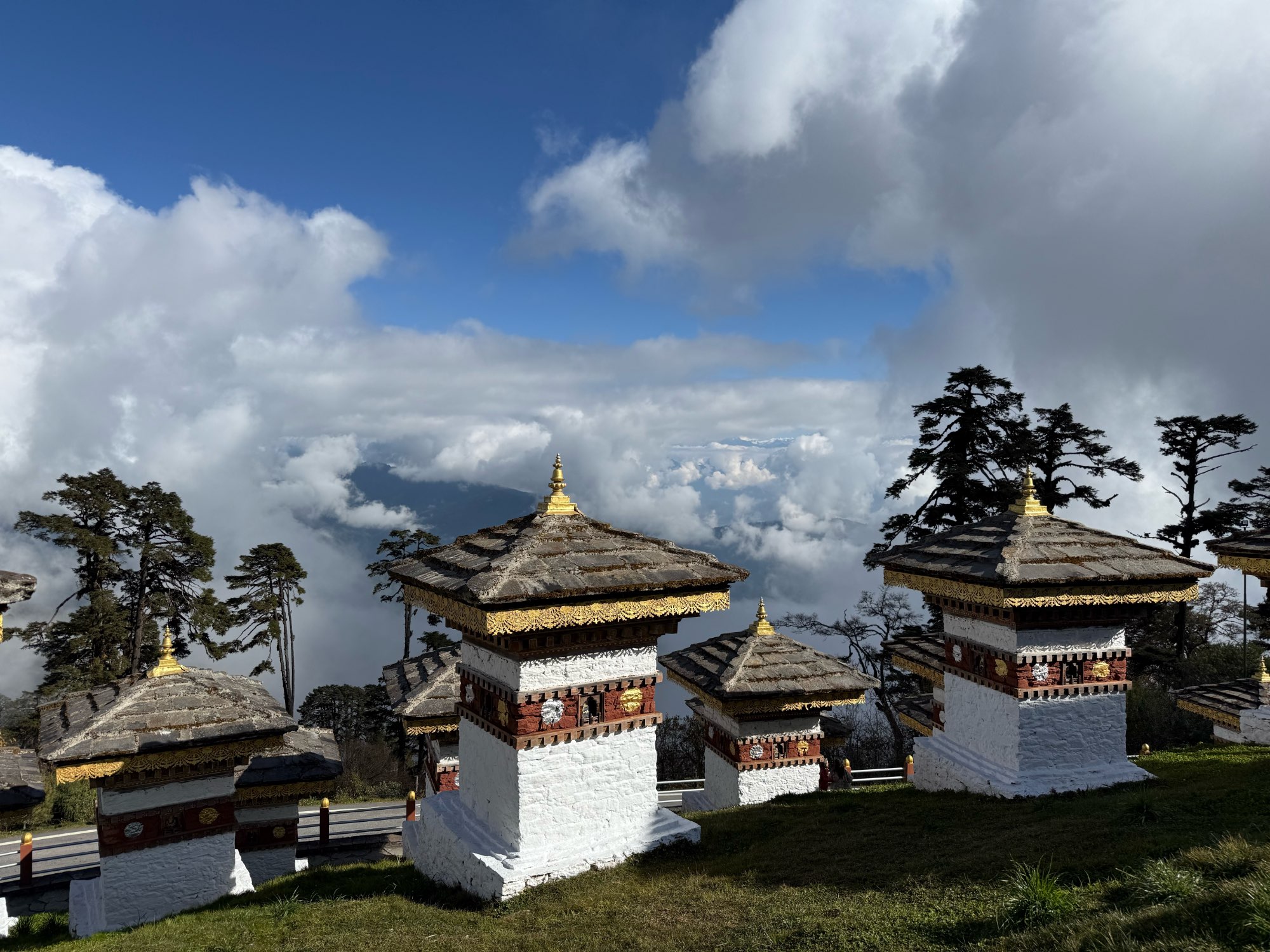
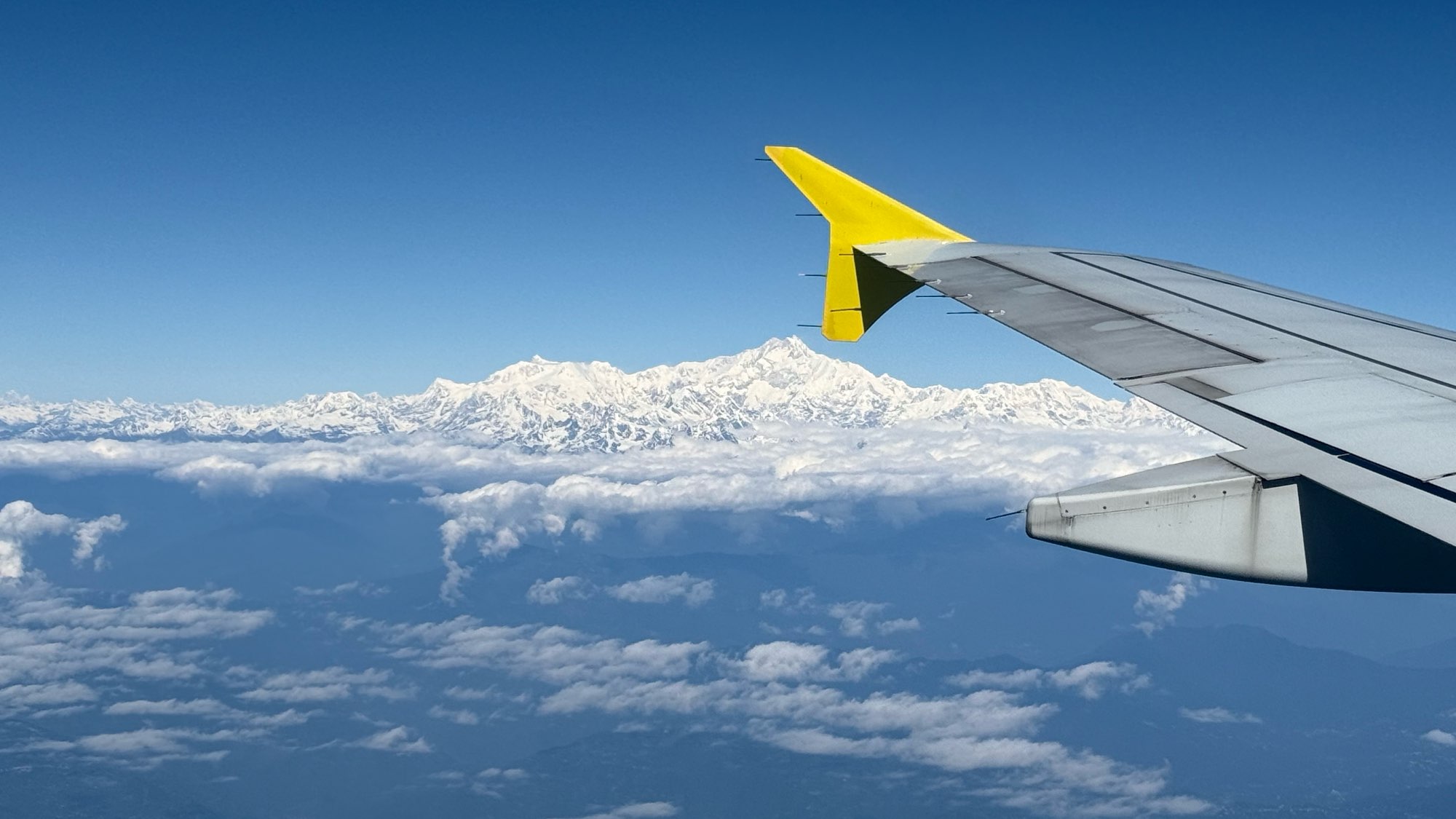
On the fourth day, we left the capital heading towards Punakha. The road led us over the Dochu La, a pass at an altitude of about 3,100 meters. Although a few clouds obscured the view of the very big ice giants of the Himalayas, gaps opened up again and again, through which we could see the snow-covered peaks.
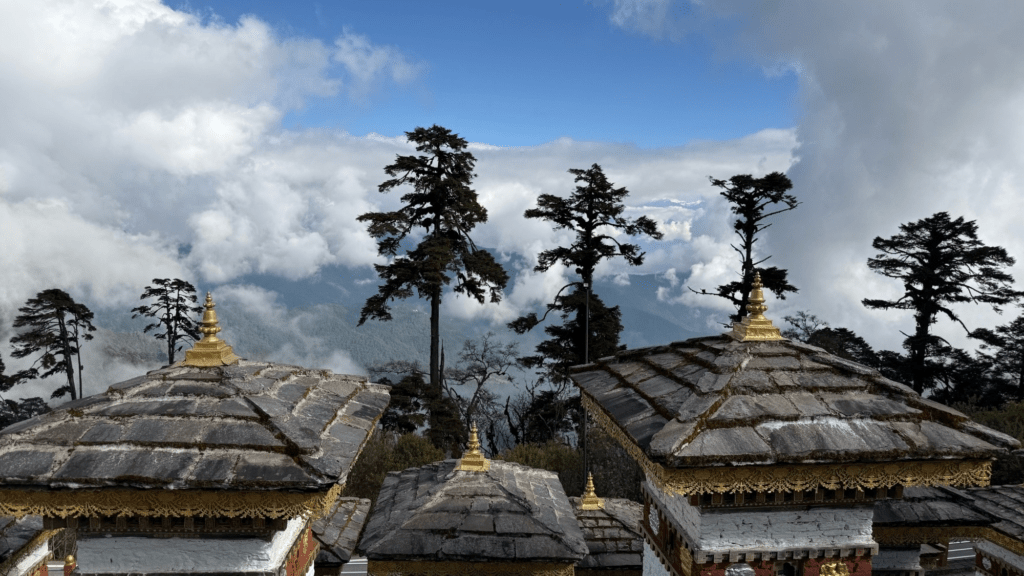
The 108 Druk Wangyal Chortens against the backdrop of the Himalayas
Up on the pass stand the 108 Druk Wangyal Chortens. They are an important place of remembrance. They were not built to celebrate a military victory in 2003, but to commemorate the fallen. It is characteristic of the culture here that triumph is not put in the foreground, but rather compassion and remembrance.
Chimi Lhakhang: The Legacy of Drukpa Kunley
In the Punakha district, the legacy of the “Divine Madman,” Drukpa Kunley, is ever-present. Even in the surrounding villages, we noticed the many houses painted with phallic symbols. What may initially seem unusual to foreign eyes is regarded here as a powerful symbol of protection.
View into the Punakha Valley
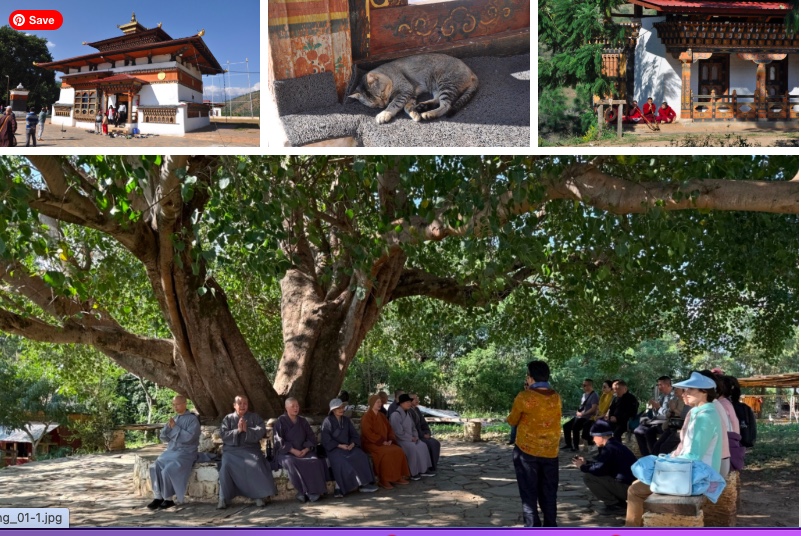
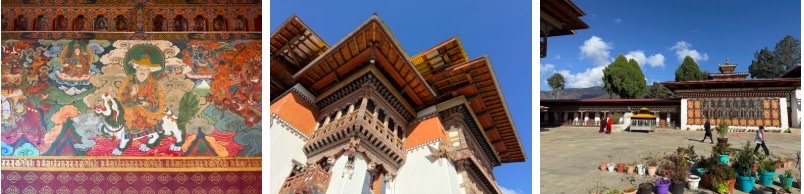
Our next destination was Chimi Lhakhang. The path there leads very picturesquely right through green rice fields. The temple itself stands exactly at the spot where the great master Drukpa Kunley manifested his power to subdue a demon that had taken the form of a dog. He did so with his “flaming thunderbolt of wisdom.” This also explains the paintings on the houses, as they represent this victorious thunderbolt. At the place of this subjugation, a small black stupa still stands today. Also, statues of the master can often be recognized by a dog lying at his feet. Today, the place is mainly known as the Temple of Fertility, to which couples from all over the world make pilgrimages. We used the peaceful atmosphere there to chant together under a large Bodhi tree in front of the temple.
Impressionen (der Reihe nach): Der Chimi Lhakhang Tempel mit der schwarzen Stupa, eine schlafende Tempelkatze, junge Mönche beim Üben der Dharma-Instrumente und unsere Gruppe beim gemeinsamen Chanten unter dem großen Bodhi-Baum.
Punakha Dzong: Palace of Great Bliss
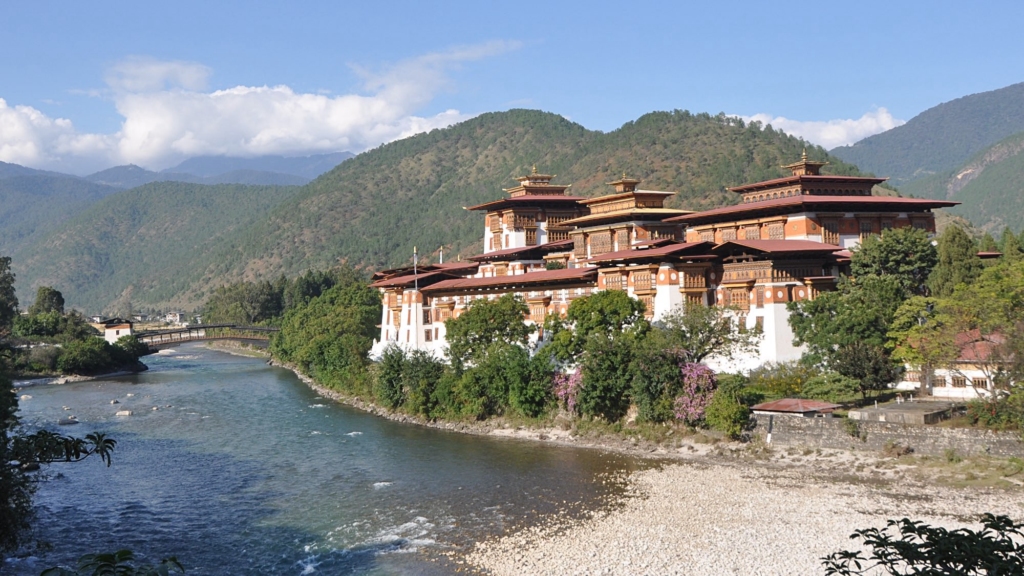
Afterwards, we continued to Punakha Dzong. It is situated very picturesquely right where the Pho Chhu (Father River) and the Mo Chhu (Mother River) meet. Its full name is Pungtang Dechen Photrang Dzong, which translates to “Palace of Great Happiness.” The building is not only huge but also historically of enormous importance. It was built as early as 1637 and for a long time formed the center of the then winter capital Punakha.
Punakha Dzong
Even today, the monastic community moves here during the cold months. Moreover, it is a historic place for the monarchy, as the first King of Bhutan was crowned here in 1907. Inside rest the mortal remains of the state founder Shabdrung Ngawang Namgyal. However, this area is strictly protected. Only the King and the Je Khenpo, as well as two guardian lamas, are allowed to enter the room with the relics.
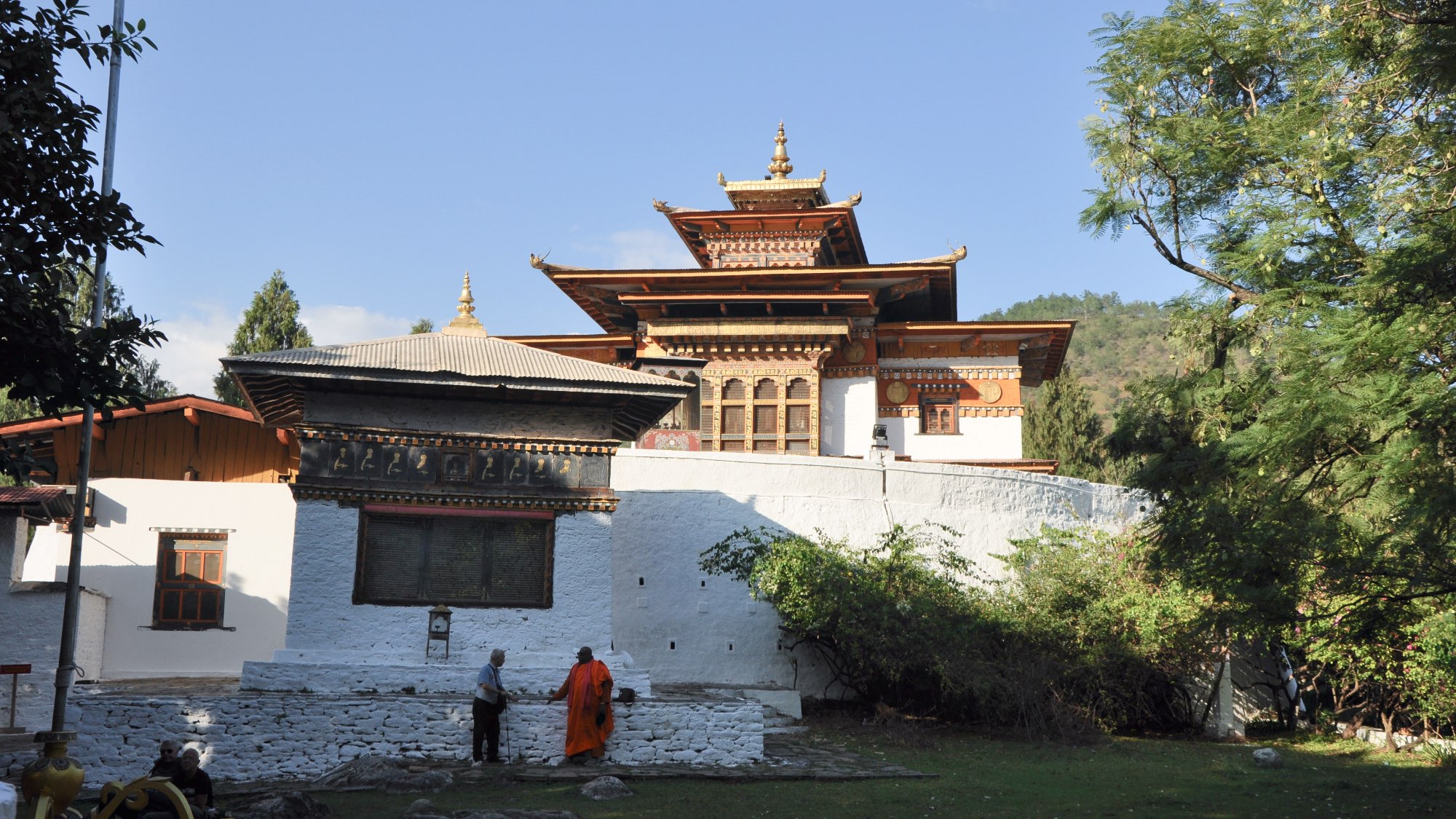
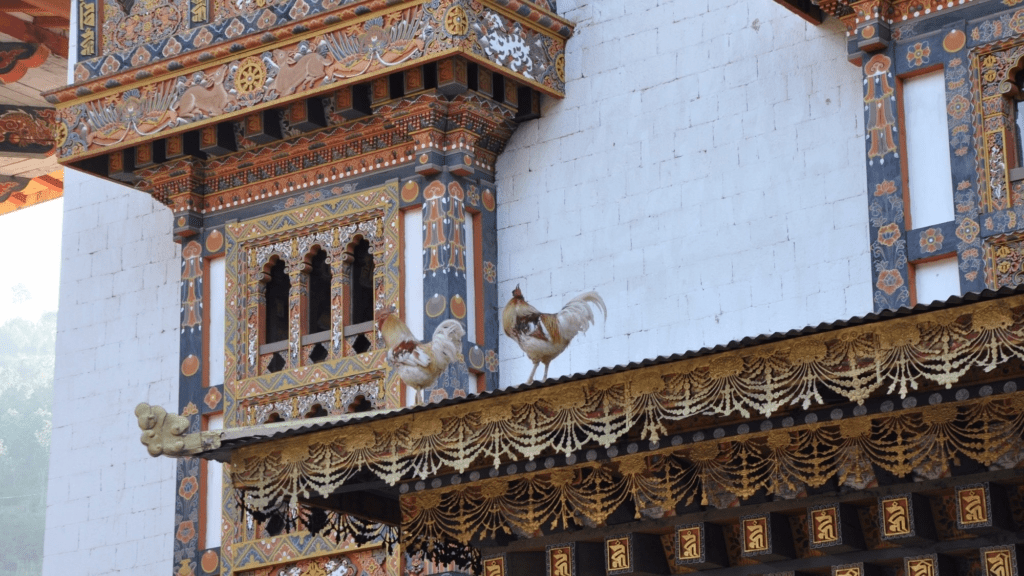
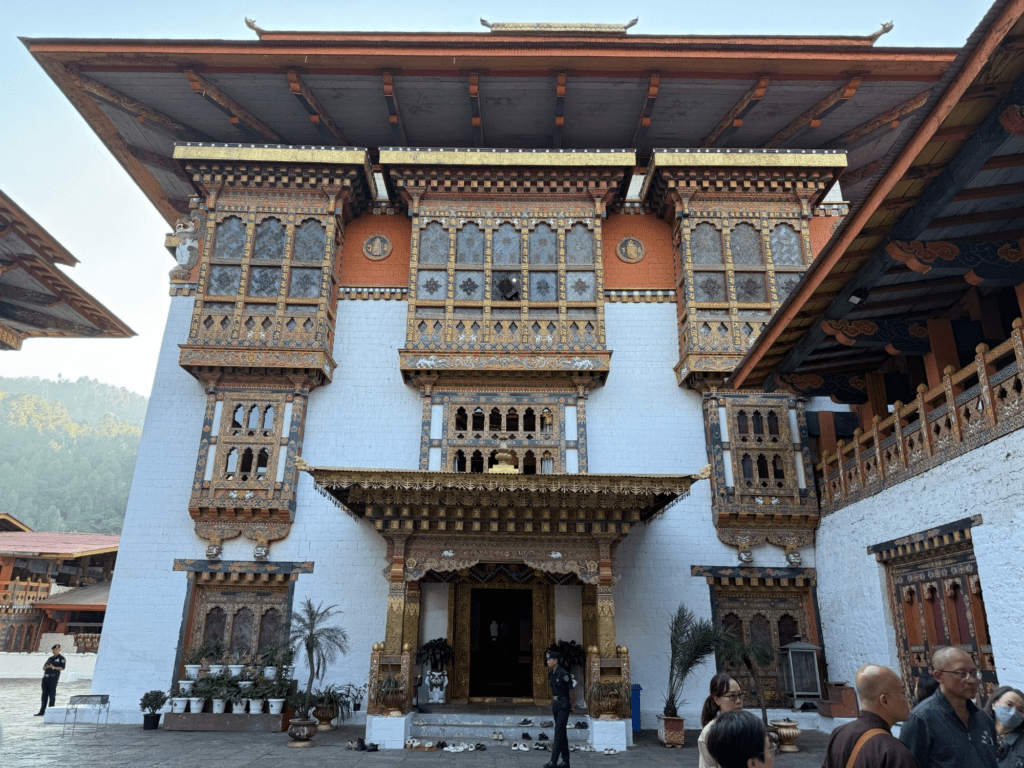
Impressions (in order): Conversations in front of white walls, roosters on the intricate roof ledge, and the entrance to the sacred temple area (Machen Lhakhang), where the relics of the state founder are kept.
Wangdue Phodrang: Rebuilding a Landmark
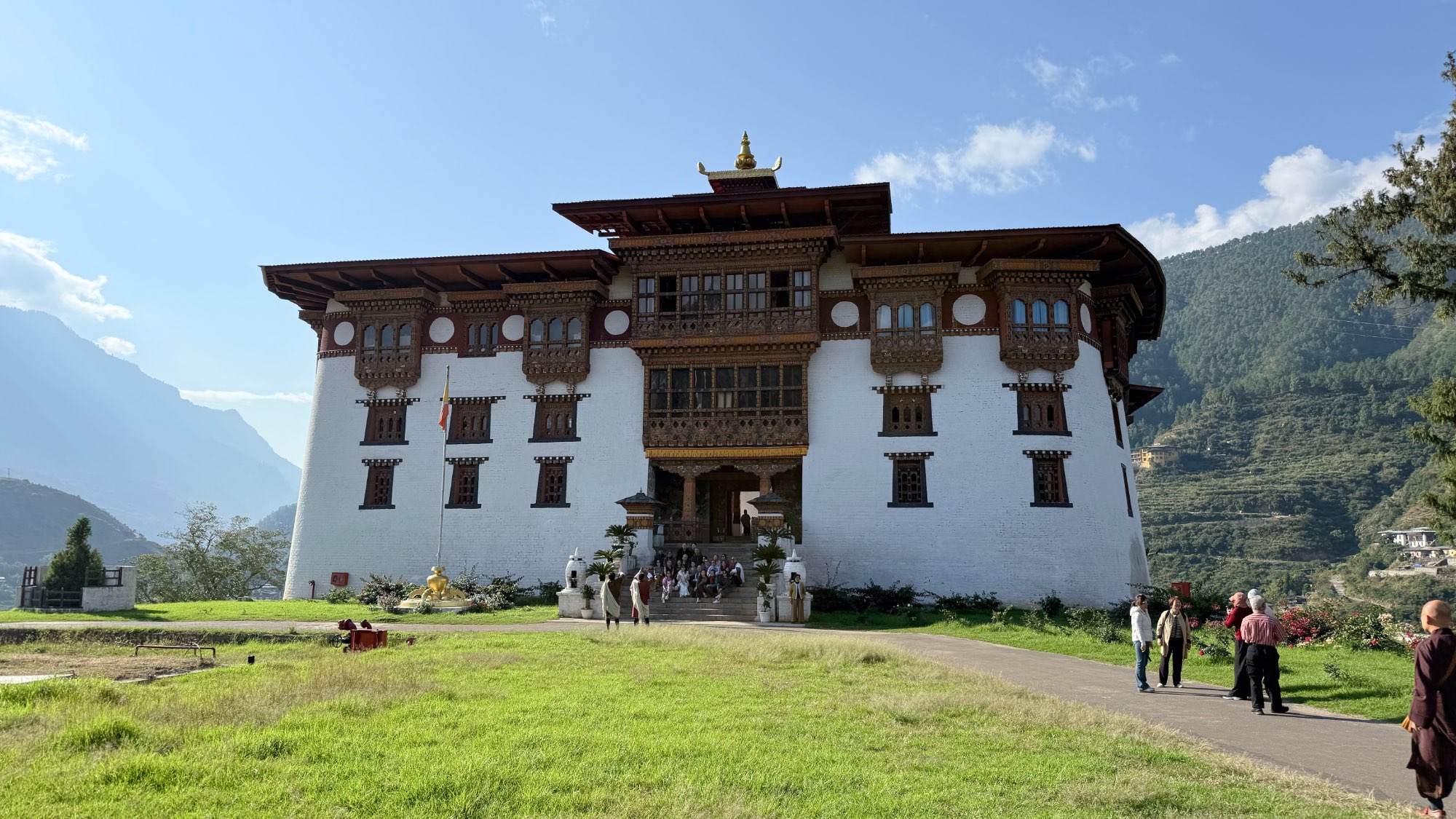
In the morning of the next day, we stopped at Wangdue Phodrang Dzong. This place has a moving history. It was founded in 1638 by Shabdrung Ngawang Namgyal under the auspicious name “Palace of the Four Cardinal Directions.” It sits strategically on a ridge that resembles a sleeping elephant and overlooks the confluence of two rivers.
Wangdue Phodrang Dzong
For a long time, it was considered the only Dzong that had never fallen victim to a fire in its almost 400-year history. But on June 24, 2012, fate struck: A technical defect triggered a fire in the early morning, and fueled by strong winds, the proud fortress burned out completely within a few hours.
But what we saw was not a place of mourning, but of hope. The reconstruction, which began in 2014, is an impressive testament to Bhutanese unity, but also to the deep friendship with neighboring India. Through close cooperation and generous support from India, this massive project could be realized. It wonderfully shows how modern engineering and cross-border solidarity are used not only to preserve traditional culture but to literally let it rise anew from the ashes.
Impressions (in order): Intricate carvings at the portal, colorful wall murals of guardian deities, the spacious courtyard, a monk at the staircase, and our group photo in front of the Dzong.
Drive through the Black Mountains
With this image of a new beginning in mind, we continued our journey towards the Phobjikha Valley. The drive was scenically very impressive. Our bus wound its way up the Black Mountains curve after curve. We had perfect weather. The sun was shining and allowed us a clear view that reached further with every meter of altitude. The road snaked along the partly steep mountain slopes in tight serpentines until we crossed the pass and finally drove down into the valley.
Phobjikha Valley: Winter Home of the Black-Necked Cranes
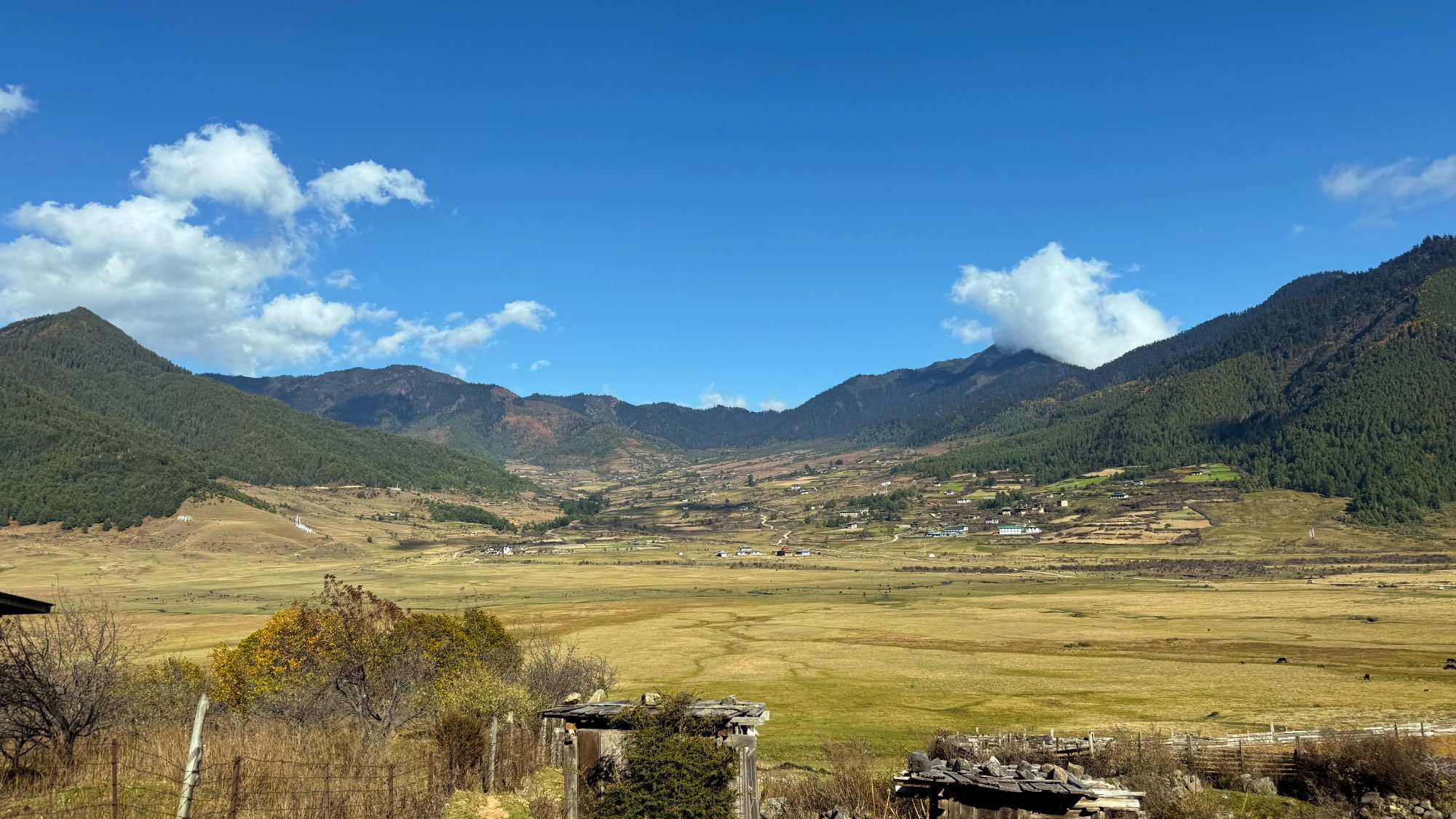
The Phobjikha Valley is a very special retreat. It serves as the wintering ground for the rare Black-necked Cranes from Tibet. There is a nice observation about this. When the birds arrive, they circle the local Gangtey Monastery three times. And apparently, they do the same when they leave again. Even the animals seem to have a connection to the Dharma here. We were lucky and some of us saw the first cranes that had already arrived.
Phobjikha-Tal
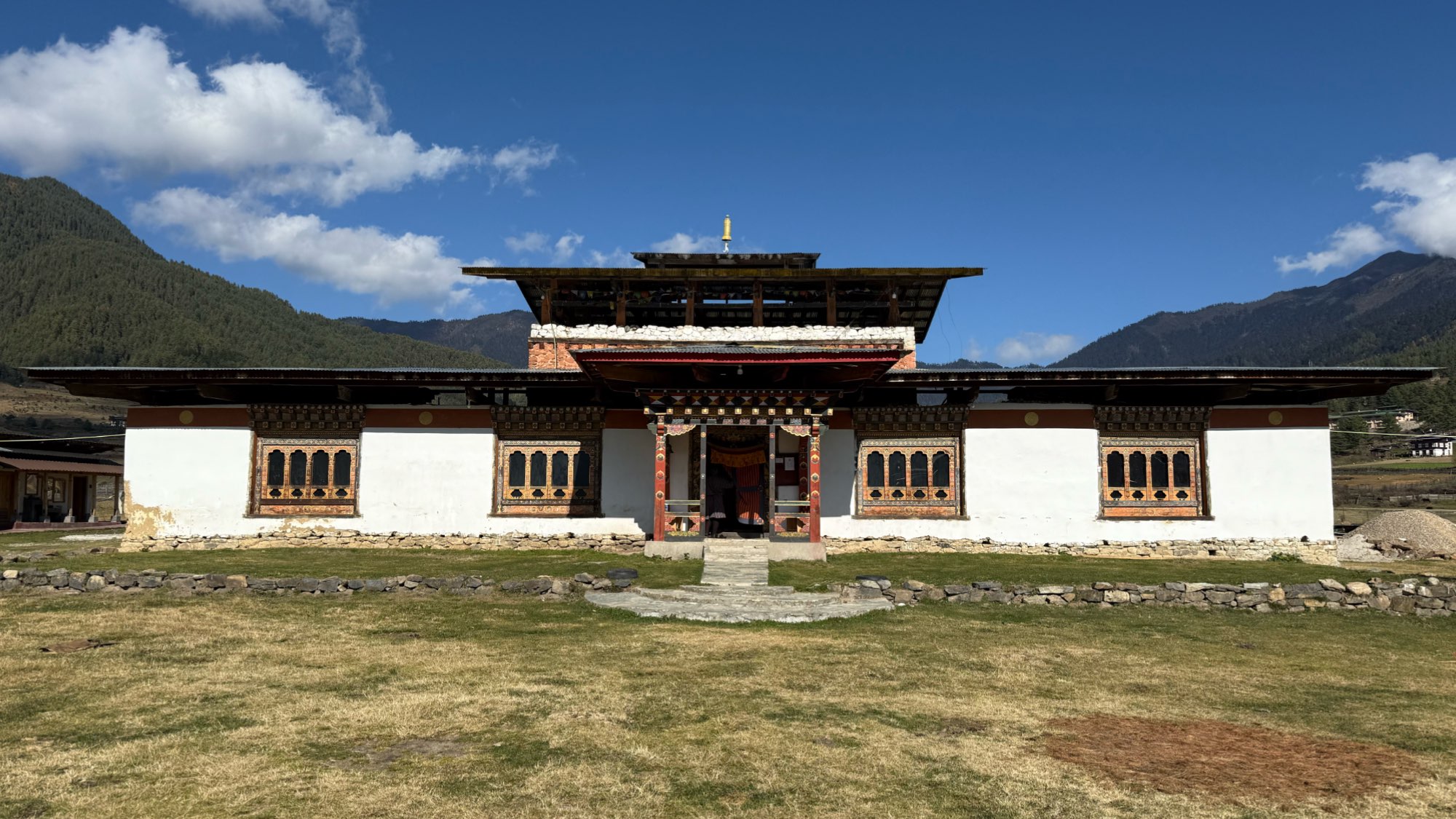
Our lunch was organized for us in an open field right in front of Khewang Lhakhang. We enjoyed it with a wide view into the valley. Afterwards, we visited the temple itself. Inside are still the original statues, which at a good 500 years old are as ancient as the building itself. One of these statues is particularly well-known, as it is said to have spoken twice already.
Khewang Lhakhang
I especially remember the story that’s connected to this place: A demon had taken the form of a young woman to deceive a young man. When the man died, the demon wanted to bring the body into the temple. But the Buddha statue spoke and denied him entry. The demon had to move on and was finally defeated by the deceased’s real girlfriend. A small stupa still stands at this spot today. Such events are not just fairy tales here; they are part of the living spiritual landscape.
Gangtey Goenpa: Spiritual Center of the Nyingmapa
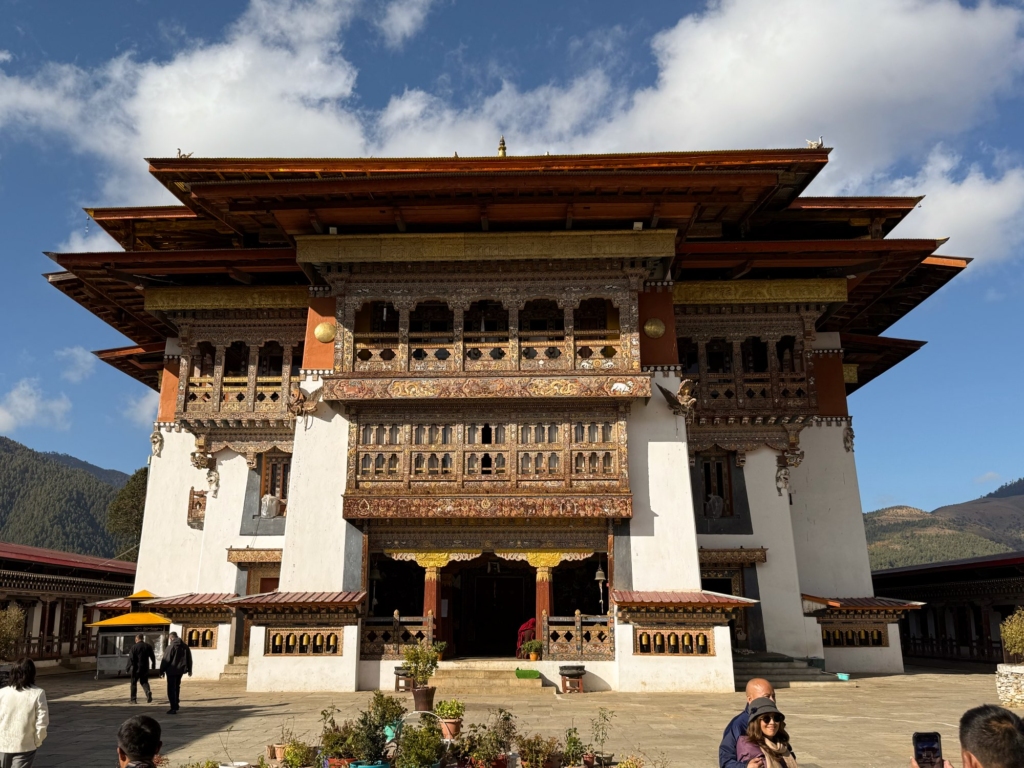
The crowning conclusion of this day was Gangtey Goenpa. It sits on a ridge above the valley and is far more than just a beautiful building. It is the largest and most important Nyingmapa monastery in western central Bhutan and is considered the spiritual heart of the entire region.
The history of this place goes back a long way and begins with a vision. The great “Treasure Finder” (Terton) Pema Lingpa visited the valley in the late 15th century. He looked at the ridge and prophesied that one of his descendants would build a monastery there one day. This prophecy was fulfilled in 1613 when his grandson Rigdzin Pema Thinley founded the monastery.
Gangtey Goenpa
Architecturally, it is fascinating. At first glance, it looks like a Dzong, meaning one of the mighty fortresses we had seen before. But if you look closely, you notice a crucial difference. The military elements are missing. There are no arrow slits and no defensive walls. It was designed purely as a place of peace and practice. I was particularly impressed by the elaborate wood carvings visible everywhere, testifying to the high level of craftsmanship.
Impressions (in order): Wall mural of Dharmapala Gyalpo Pehar in the entrance area, the view up to the intricate wooden architecture, and the sunny courtyard.
Today, the monastery is a very lively place and acts as the seat of the Pema Lingpa tradition as well as the seat of the master’s ninth reincarnation. About 140 monks live here. Together with the nearby Shedra, the Buddhist college, they ensure that the teaching is not only preserved here but actively studied and lived.
I had a special experience inside the temple. We had gone in to pay our respects to the Buddhas and chant together. Scarcely had we entered the hall when the power went out and it became pitch dark instantly. In the light of our phones, we looked for a place to sit. For about ten minutes, we chanted in this darkness, illuminated only by the faint flickering of a few butter lamps. That created a very unique mood. Suddenly the light came back on. Only at that moment did I see what was directly on the wall opposite me. My gaze fell on a beautiful mural of the 21 Taras. That was an unexpected and deeply moving moment for me.
Actually, we had a specific hope in our hearts for our return to Thimphu and Paro: We wanted to try to get an audience with the King. But as so often in life, plans do not always go in a straight line. Karmic conditions had intended another encounter for us, which we had not expected in this way.
I will tell you about that and our ascent to the famous Tiger’s Nest in the next part.
About Author: Gongjue Tuji
As a committed Buddhist and initiator of the Xuanfa Dharmazentrum, Gongjue Tuji has made it his mission to help other people integrate the teachings of Buddhism into their daily lives. In this blog, he regularly provides insights into his experiences, current news and highlights fascinating aspects of the Buddha-Dharma.
In November 2025, I went on a very special trip. Together with 66 Dharma brothers and sisters, I set off for Bhutan. Being the only German in this group from the USA, China, Taiwan, and Sri Lanka, I felt at home right away. We were a wonderful mix of monks, nuns, Rinpoches, and lay Buddhists. We all met in Thailand first to travel on to Paro together.
Our goal was more than just a visit. We came to honor the holy sites of this country and to dive into Bhutan’s deep-rooted Buddhist tradition. Of course, we were also excited to get to know the land and its people. Dedicated members of our group took care of the entire organization. Thanks to their excellent planning and the great local guides, everything ran smoothly. We also owe the fact that this trip was possible in this special way to the Venerable Dr. Chandima from Sri Lanka. Through his personal connections to the Kingdom of Bhutan, doors opened for us that might otherwise have remained closed. Having the Venerable Master Shi Zheng Da with us was also especially valuable.
We brought two matters close to our hearts with us. First, it was important to us not to arrive empty-handed. We had collected donations within the group to directly support the hospital in Thimphu and the expectant mothers there. Second, it was our spiritual mission to represent the Buddha Dharma as we learned it from H.H. Dorje Chang Buddha III. Connected to this was the wish to share news of the “Holy Heavenly Lake Buddhist Town” project, which is planned to provide space for over 30 Buddhist centers from all over the world.
Arrival in Paro & the Journey to Thimphu
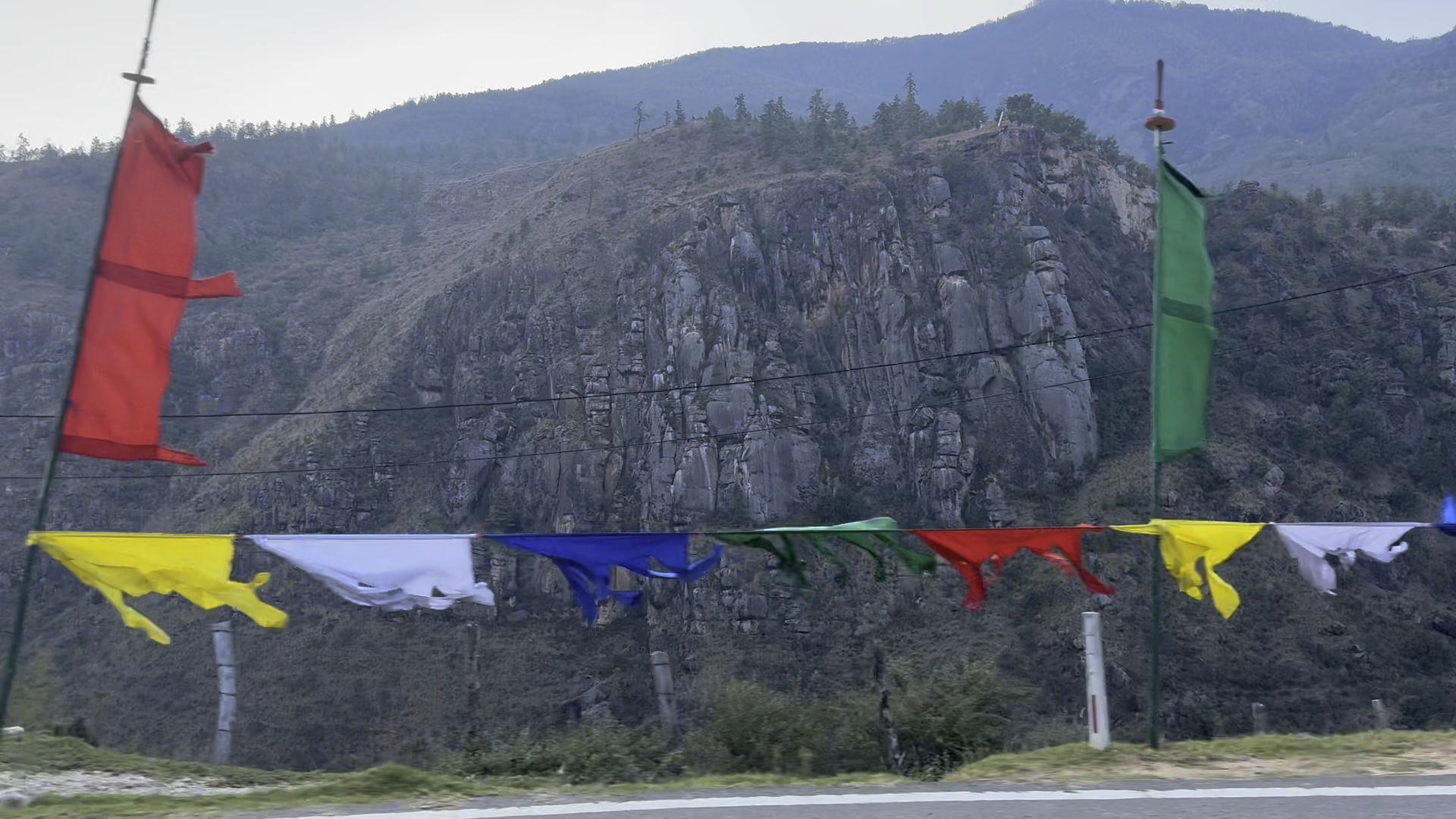
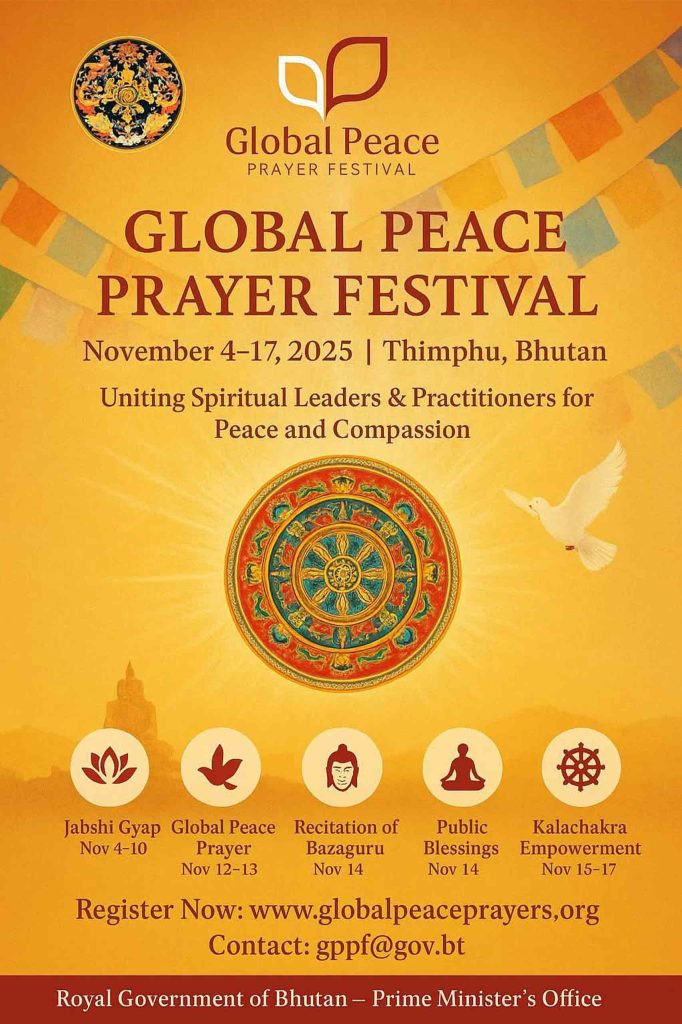
We landed in Paro on November 9th. From there, we took a bus about 40 kilometers through the valley to Thimphu. What I noticed immediately was that the entire road was decorated with five-colored banners. Our guide told us that this was the welcome greeting for the international guests of the “Global Peace Prayer Festival.”
Five-colored flags and pennants along the route
Thimphu itself was incredibly busy. Several events were happening at once: alongside the festival and the King’s upcoming birthday, Indian Prime Minister Narendra Modi was also expected for a state visit. You have to know that Thimphu is the only capital city in the world without traffic lights. Despite the crowds and the resulting traffic chaos, everyone remained calm. No one pushed, and people were patient and respectful. This relaxed attitude really impressed me.
National Memorial Chorten: The Spiritual Heart of Thimphu
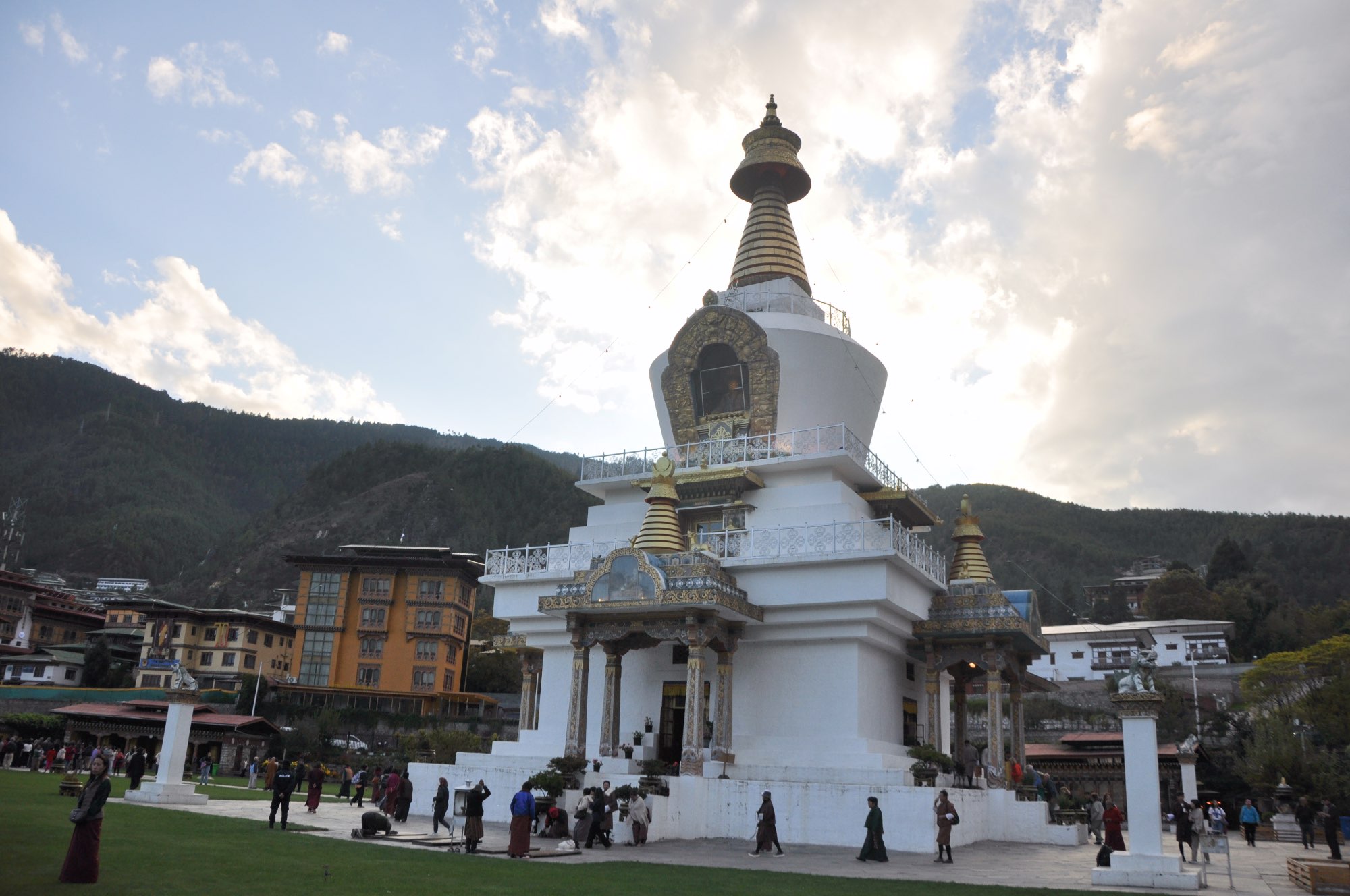
After checking into our first hotel, we visited the National Memorial Chorten. This is a large, white stupa in the middle of the city, built in 1974 for the third King. For the locals, this is an important place in everyday life. Many go there to walk around the stupa and spin the prayer wheels.
As at all holy sites, photography is not allowed inside. A simple rule applies: as soon as the shoes come off, the camera stays off. This allowed us to soak in the atmosphere without any distractions. The interior houses larger-than-life statues of wrathful deities in Yab-Yum posture and murals of Guru Rinpoche (Padmasambhava), Shakyamuni Buddha, and Ngawang Namgyal, the unifier of Bhutan. Colorful sculptures stand in all four directions. There are also mandalas, shrines for the third King, and images of Vajrakilaya.
Impressions (in order): The white Memorial Chorten, pilgrims at the prayer wheels, the sea of lights from the butter lamps, believers performing prostrations, and our group in front of the stupa.
Our group took the opportunity to chant on the square in front of the stupa, led by the Venerable Master Shi Zheng Da. It was a beautiful experience to do this at such a place.
Authentic Bhutanese Crafts Bazaar: Traditional Arts and Crafts
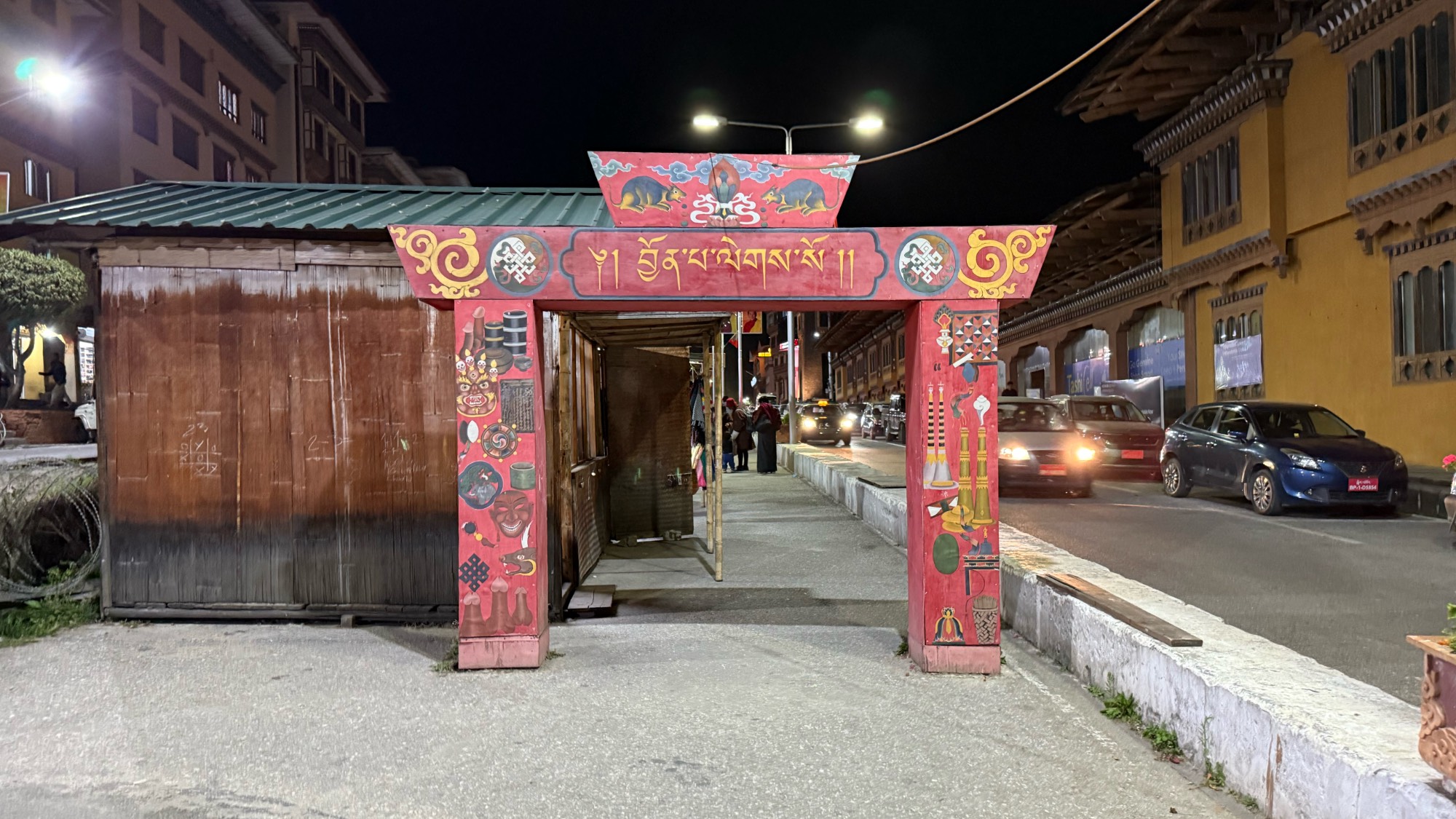
In the evening, I took the chance to stroll along Norzin Lam. That is where the Authentic Bhutanese Crafts Bazaar is located, which you enter through a distinct red gate. Behind it, many small huts are lined up where local artisans display their goods. There was really a lot to discover. Besides handmade textiles, jewelry, wood carvings, and thangkas, you can also find nice souvenirs to remember the trip by.
Entrance to the Authentic Bhutanese Crafts Bazaar
Global Peace Prayer Festival: Shared Prayers for Peace
November 10th was all about the Global Peace Prayer Festival. Since the stadium was within walking distance of our hotel, we went there on foot. Even on the street, we could feel how many people were flocking to this event. Once inside the stadium, we showed our respect through prostrations before the Venerables present. Afterwards, we were given a spot on the side where we could join in the peace prayers.
From there, we watched the program on the main stage, where various Buddhist traditions took turns with their recitations. Between the prayer sessions, there were traditional dances and songs. I was deeply impressed by how many people came together there peacefully. It was simply a good feeling to be right there among them.
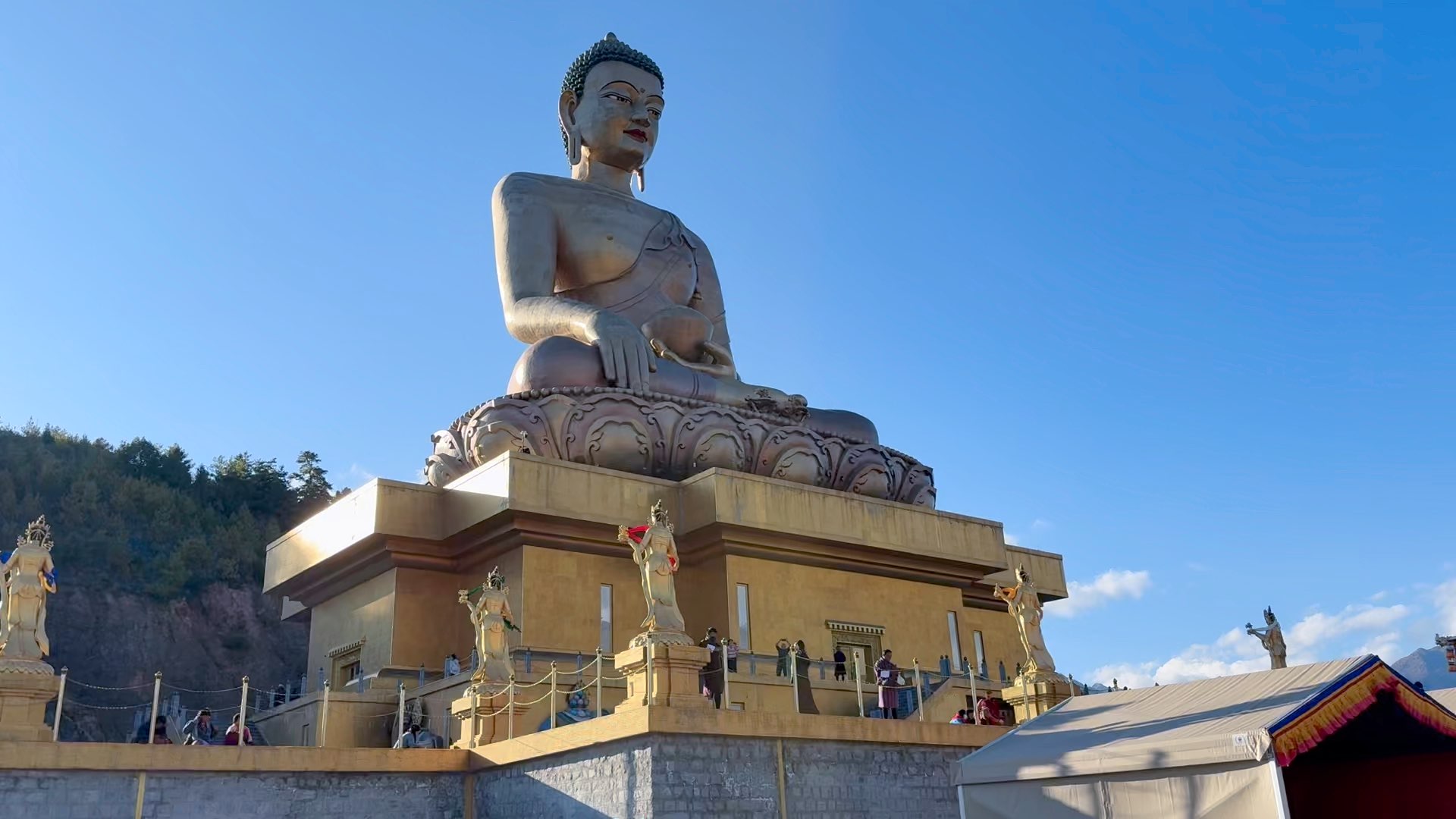
Buddha Dordenma: The Golden Statue Above the Valley
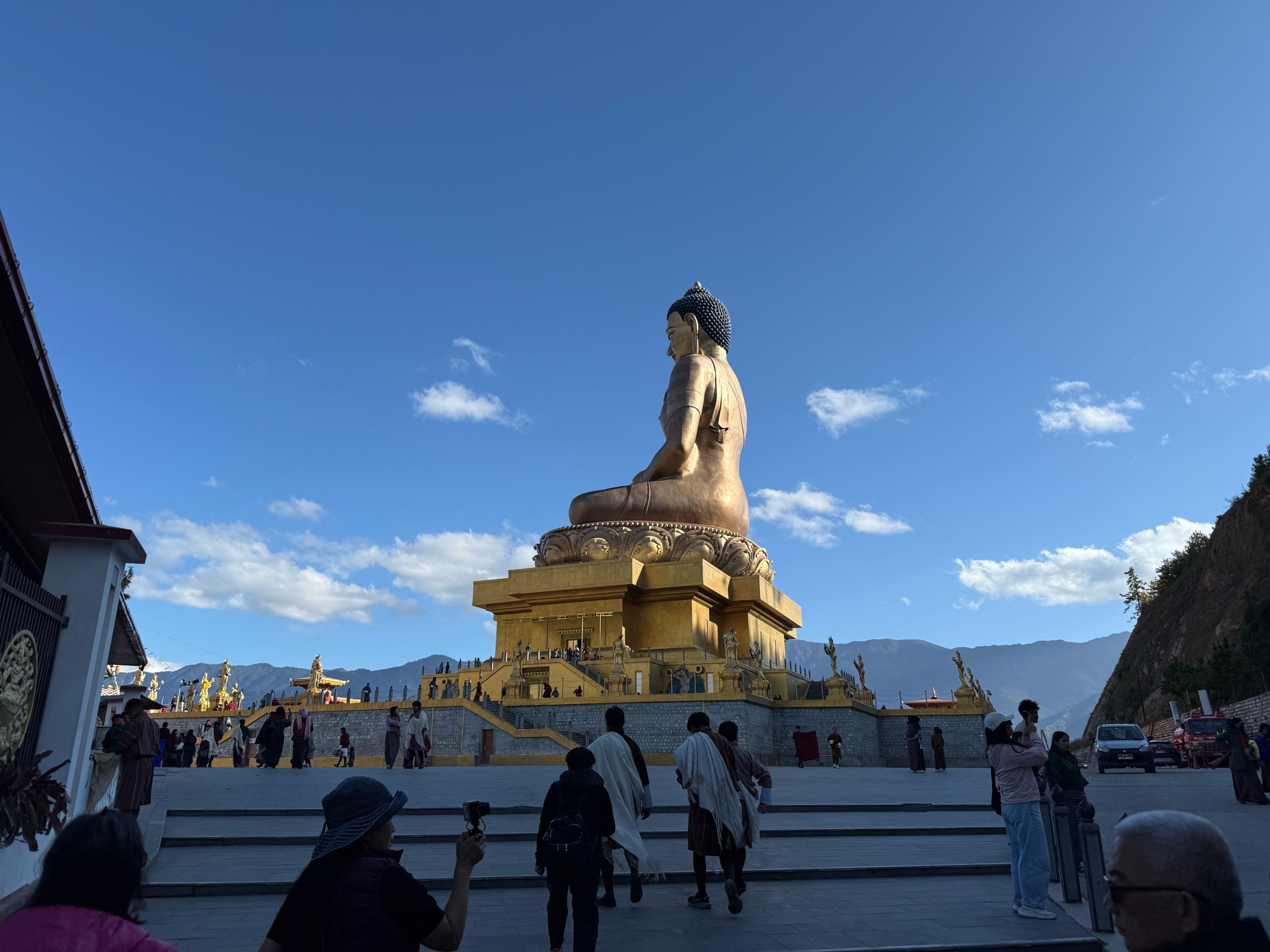
After noon, we continued to the Buddha Dordenma statue in Kuensel Phodrang Nature Park. This is an impressive, 51-meter-high statue of the seated Shakyamuni Buddha. It is made of bronze and completely gilded. By the way, it was built to celebrate the 60th birthday of the fourth King, Jigme Singye Wangchuck.
Buddha Dordenma Statue
Inside the building beneath the statue, there are over 100,000 small Buddhas, also made of bronze and gold. Every single one was donated. There is also a large meditation hall with many more beautiful Buddha statues. Various relics are kept in these rooms, which we were allowed to see during our visit.
Impressions of the Buddha Dordenma statue: The gigantic seated statue in side view, ritual structures featuring traditional thread crosses (Namkha/Mdos) on the plaza, the view up to the Buddha’s face, a relief of a blue elephant on the golden base, and the view over the square featuring golden Dakini statues.
What made this visit special was not just the statue itself. Right there, the conclusion of the Jabshi Gyap ritual was taking place. This is a major, multi-day ceremony intended to purify negative karma and bring healing. Thousands of devotees, monks, and Rinpoches were gathered. We learned that this ritual was done specifically for world peace. It was our good fortune that we could be there at exactly that moment.
A Matter of the Heart: Support for Expectant Mothers
We had collected money in advance to support 500 expectant mothers with care packages. For this reason, we gathered at the end of the day for a ceremonial handover at the hospital in Thimphu.
Handing over the donation at the hospital
In addition to our travel group, hospital staff, the Secretary to the Health Minister, and some mothers also took part. We had the opportunity to personally hand over the first packages to the mothers present.
With that, the first days in the capital were over. Next, the journey would take us out of the city, to ancient Dzongs and into nature.
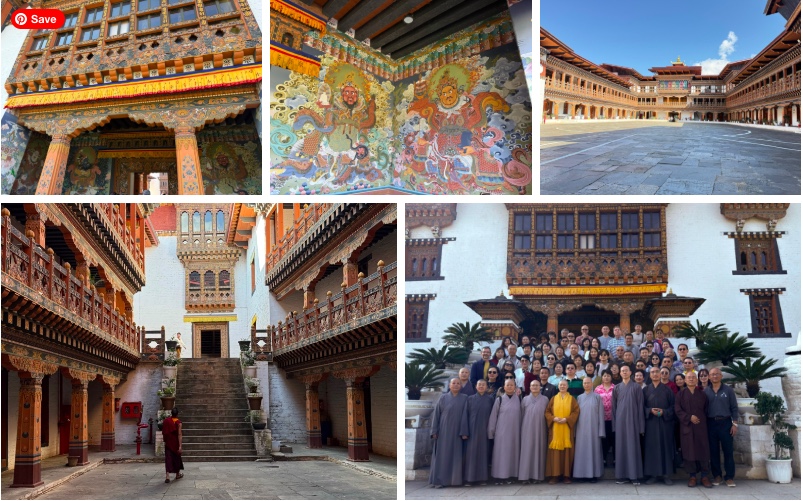
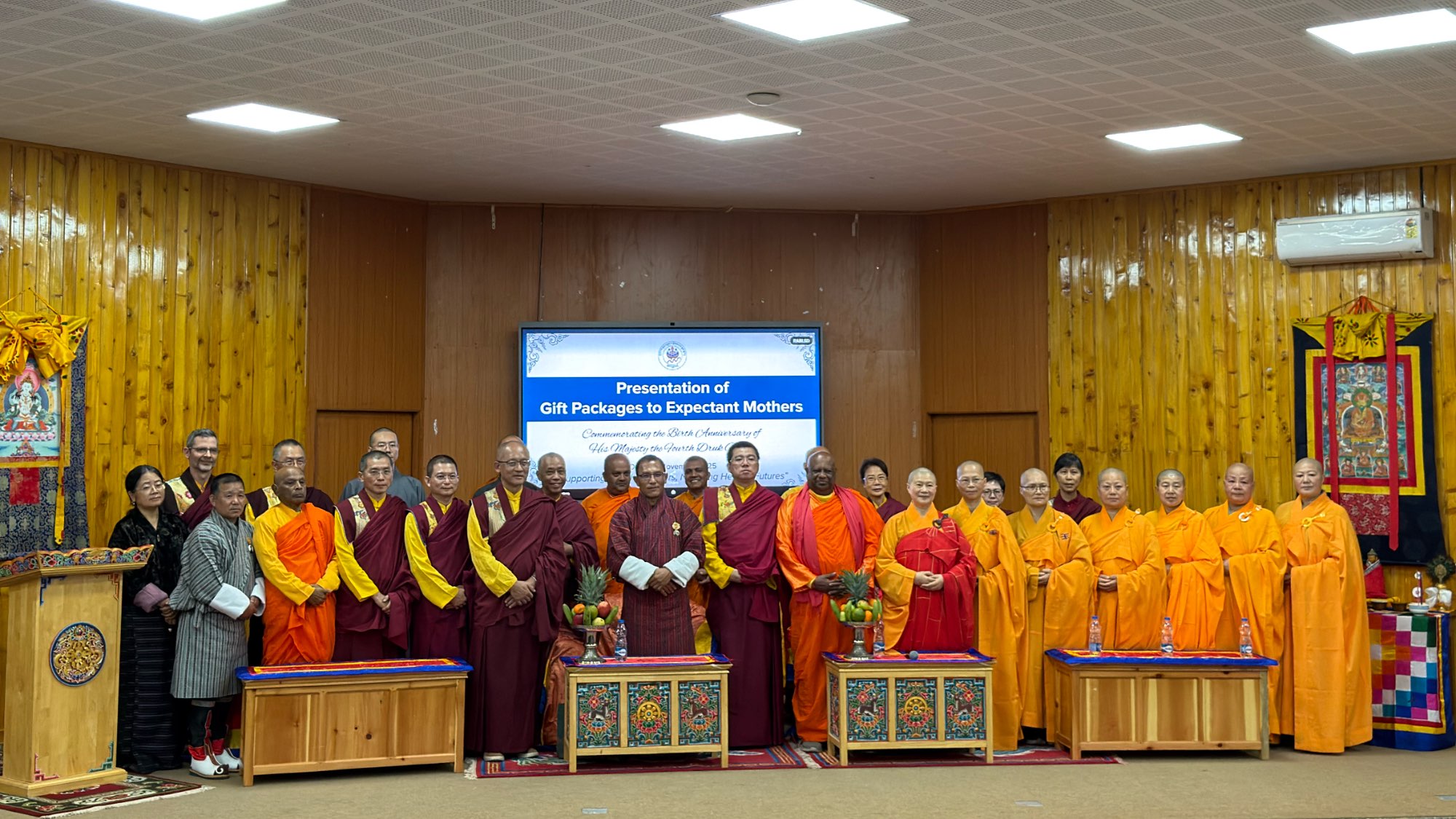
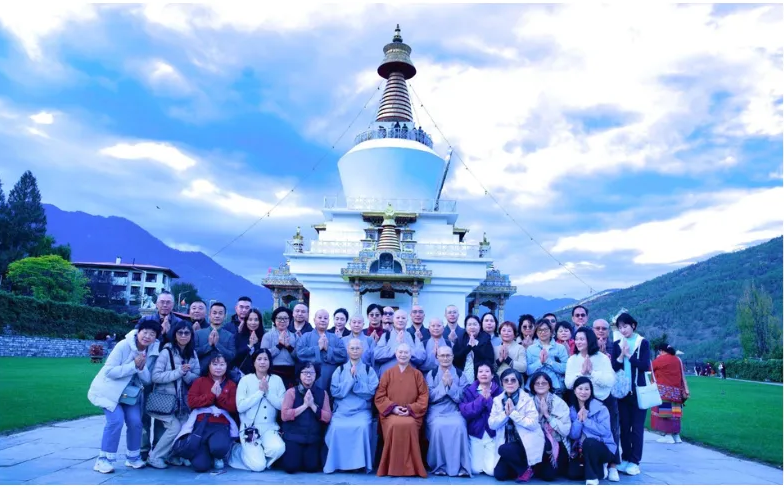
At the invitation of Rev. Chandima of the Sri Lanka Cultural and Educational Foundation, members of Buddhist Town joined a delegation to Bhutan to participate in the Global Peace Festival, held in celebration of the 70th birthday of the Fourth King of Bhutan. The trip was co-organized by the Buddhist Town Community Association, with participating organizations including Fa Chan Temple, Macang Yuan, Holy Vajrasana Temple, and the Canadian Institute of Buddhist Studies, among others. In total, 68 representatives took part in this meaningful event.
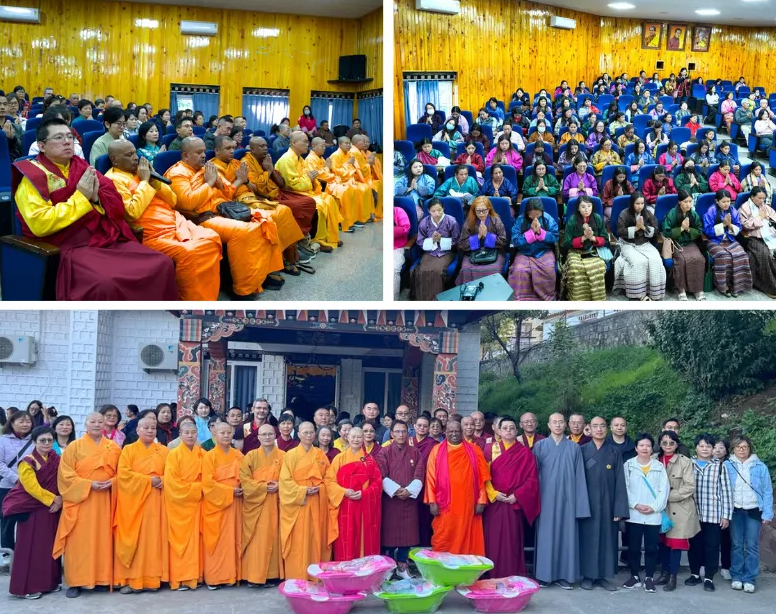
As part of the visit, the delegation donated 500 sets of essential baby supplies, offering prayers for happiness, health, and well-being for every family. The donation ceremony was attended by the Director of Bhutan’s Ministry of Health, who officially received the supplies. Following the ceremony, the donated items were distributed on-site to pregnant women and mothers with newborns by members of the delegation.
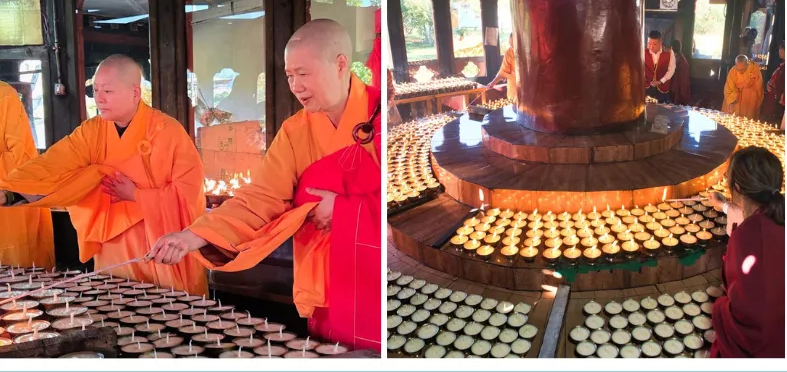
The delegation jointly sponsored the offering of 3,000 butter lamps and respectfully invited Master Shin Zhengda Jaozun to preside over the 3,000 Butter Lamp Offering Ceremony at Kyichu Lhakhang, one of the oldest temples in Paro. The prayers were dedicated to world peace, the removal of obstacles, the averting of disasters, and the flourishing and propagation of the True Buddha Dharma.
Kyichu Lhakhang is one of the 108 demon-subduing temples built by King Songtsen Gampo. Established in 638 CE, it stands as one of Bhutan’s most sacred and historically significant temples.
Dasho Passang Dorji, former Speaker of the National Assembly of Bhutan, formally welcomed the Buddhist Town delegation at Paro International Airport. Following the reception, the delegation embarked on an inspiring journey to visit sacred sites associated with Guru Padmasambhava and to learn how Zhabdrung Rinpoche further propagated and established Guru Padmasambhava’s lineage teachings throughout Bhutan.
During the journey, the delegation visited many major temples and sacred sites, including the Buddha Dordenma in Thimphu (21st century), Punakha Dzong (17th century), the Druk Wangyal Chortens—also known as the 108 Stupas (21st century), Chimi Lhakhang (15th century), Khewang Lhakhang (15th century), and Gangtey Monastery (17th century), among others.
The final highlight of the journey was the ascent to the legendary Taktsang Monastery (8th century), dramatically perched at an elevation of 3,100 meters above sea level. According to tradition, Guru Padmasambhava flew to this sacred site, where he subdued negative forces and later spread Buddhism throughout Bhutan, becoming the foundational figure of Bhutanese Buddhism.
With an elevation gain of more than 900 meters and steep mountain trails, the pilgrimage requires a 7–8 hour round-trip hike. Throughout the journey—visiting sacred sites, receiving blessings, paying homage to the Buddhas, and experiencing deep spiritual inspiration—the delegation was filled with immeasurable Dharma joy and boundless gratitude.
At every point along the path, it felt as though the land itself was gently reminding the delegation that all worldly phenomena are impermanent and ever-changing, and that only the true Dharma of the Buddha remains eternally unchanged.
In the southwestern suburbs of Xining, where the air grows thin and the spirit grows light, stands one of the most significant sites in the Buddhist world: Kumbum Monastery.
Known in Tibetan as Kumbum Jampa Ling, meaning “A Supreme Temple of a Hundred Thousand Lion’s Roar Buddha Images,” this sprawling complex is far more than just a collection of buildings. It is a living monument to Lama Tsongkhapa, the revered founder of the Gelug (Yellow Hat) sect of Tibetan Buddhism.
The Legend of the Golden Tree
Unlike many temples built to house statues, Kumbum was built to house a pagoda.
Legend tells us that Tsongkhapa was born here in 1357. When his mother cut his umbilical cord, drops of blood fell to the earth, and from that spot grew a miraculous sandalwood tree—the “Tree of Great Merit.” It is said this tree had 100,000 leaves, each bearing a natural image of the Buddha.
Years later, when Tsongkhapa was studying in Tibet, his mother sent a letter begging him to return. He replied that he could not leave his studies, but sent a self-portrait and a “Lion’s Roar” image, instructing her to build a pagoda over his birthplace. “Seeing this pagoda,” he promised, “is the same as seeing me.” In 1379, the Julian Pagoda was built, forming the sacred heart of what would become Kumbum Monastery.
Kumbum is world-renowned for its harmonious blend of traditional Tibetan and Chinese Han architectural styles.
1. The Eight Pagodas of Buddha Shakyamuni
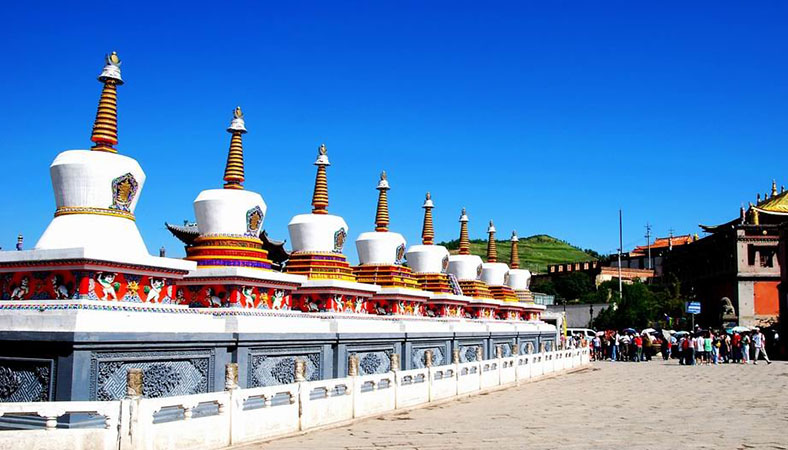
Greeting visitors in the front square are eight gleaming white pagodas. Built in 1776, they commemorate the eight great merits and virtues of Buddha Shakyamuni. Each stands 6.4 meters tall, decorated with delicate Sanskrit scriptures and guardian lions, serving as a powerful symbol of the monastery’s spiritual authority.
2. The Grand Golden Tiled Hall
This is the soul of the monastery. With its gilded copper roof and emerald glazed-tile walls, the hall radiates a celestial glow. Inside, you will find an 11-meter-tall golden tower wrapped in white sandalwood and encrusted with jewels. At its peak sits a statue of Tsongkhapa. For pilgrims, meeting this tower is considered a direct meeting with the Master himself.
3. The Main Assembly Hall
Spanning nearly 2,000 square meters, this is the center of monastic life. Under a flat roof adorned with gilded bronze bells and “Aquarius” vases, hundreds of monks gather to recite sutras. The interior is a sensory masterpiece of colorful streamers and intricate carvings.
Dhammapala Hall
The “Three Artistic Wonders” of Kumbum
Kumbum is celebrated throughout Asia for its “Three Arts,” which represent the peak of Tibetan craftsmanship and devotion.
I. Vivid Yak Butter Sculptures
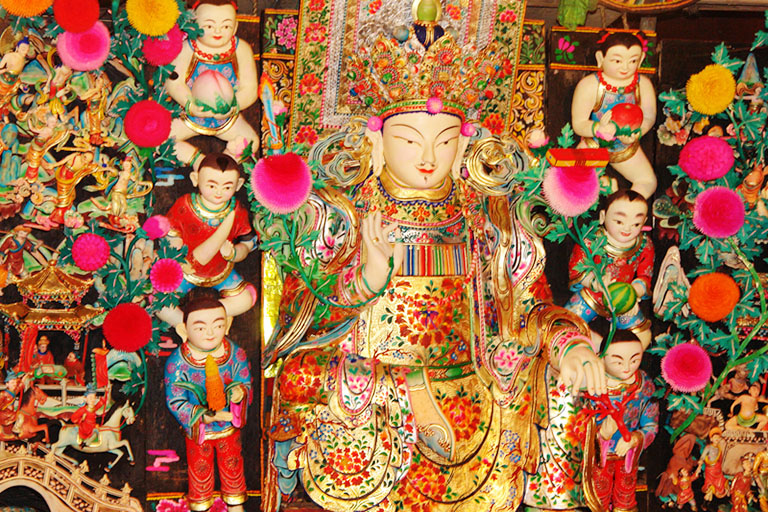
In the freezing depths of winter, when fresh flowers were unavailable for offerings, monks began carving flowers from yak butter. This evolved into a sophisticated art form. In the Yak Butter Sculpture Hall, you can see entire landscapes, pavilions, and deities crafted with impossible detail. To keep the butter from melting while they work, monks must dip their hands in ice water—a true testament to their endurance and faith.
II. Imaginative Barbola (Embroidered Appliqué)
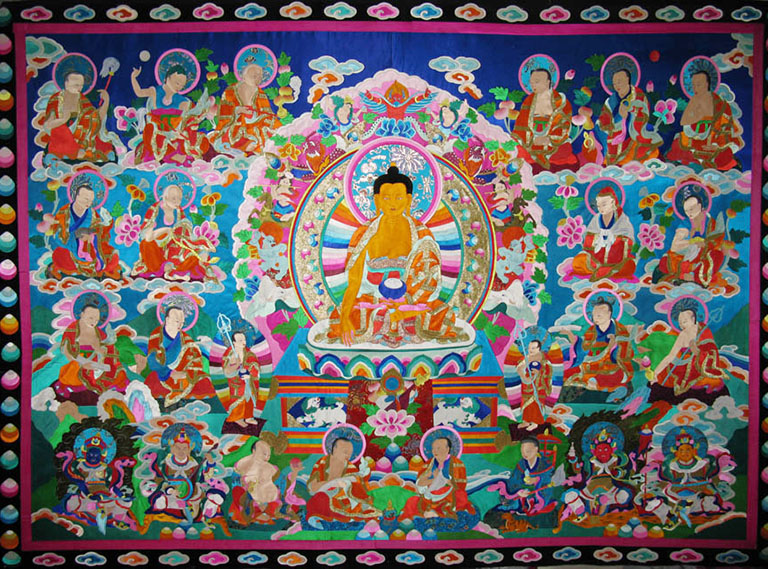
Barbola is a unique form of 3D silk embroidery. By layering silk and cotton, artists create raised patterns that give the figures of Buddhas and animals a lifelike, three-dimensional appearance. The “Sixteen Disciples of Buddha” housed in the Main Assembly Hall are considered national treasures.
III. Exquisite Murals
The walls of Kumbum are alive with color. Using special mineral pigments that remain vibrant for centuries, these murals depict the life of Shakyamuni and scenes from the sutras. During the Sutra-viewing Festival, a massive 30-meter-long Buddha scroll is unfurled on the hillside, a breathtaking sight known as the “Great Buddha Exhibition.”
Kumbum Monastery hosts four major Dharma assemblies annually, held during the first, fourth, sixth, and ninth months of the lunar calendar. These gatherings are a blend of traditional festivals and grand religious events unique to the monastery. During these times, the temple comes alive with sacred activities, including monastic debates, mask dances, and sutra chanting.
A highlight of these fairs is the Cham Dance, where monks wear ornate masks and vibrant costumes, using dramatic gestures to express profound Buddhist teachings to the rhythm of cymbals and suonas (traditional horns). One of the most awe-inspiring sights is the Giant Thangka Unveiling, where a massive, delicate image of Tsongkhapa is unfurled down the mountainside. For the faithful, witnessing this Thangka is considered a direct and holy encounter with the Master himself.
Thangka Exhibition during the Buddha Festival
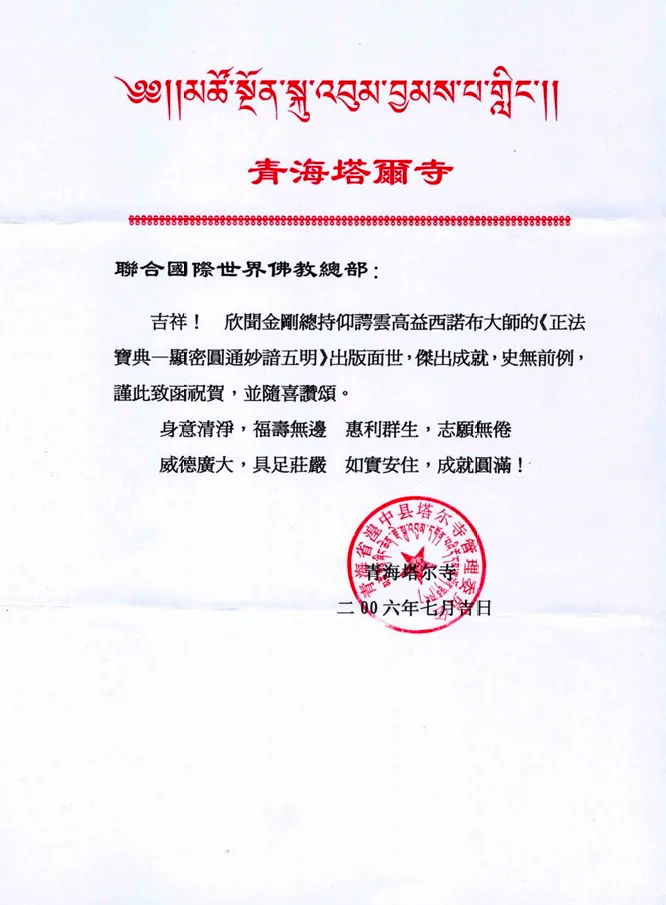
In July 2006, this sacred temple issued its formal recognition and congratulations to H.H. Dorje Chang Buddha III
United International World Buddhism Association Headquarters:
Under auspicious circumstances, we were happy to learn of the publication of A Treasury of True Buddha-Dharma—Complete Proficiency in Exoteric and Esoteric Buddhism and Perfect Mastery of the Five Vidyas about the Buddha Vajradhara, H.H. Master Yangwo Wan Ko Yeshe Norbu. His Holiness’s outstanding accomplishments are unprecedented. We respectfully send this letter of congratulations and joyfully offer our praise.
His actions and mind are pure, and His good fortune and wisdom are limitless. He benefits myriad living beings, and His willpower never tires. His powerful virtue is widespread, and His appearance is completely dignified. He truly abides in peace and His accomplishments are perfect!
Qinghai Skuvbum Monastery An auspicious day in July of 2006
Below is the original copy of the recognition letter in Chinese:
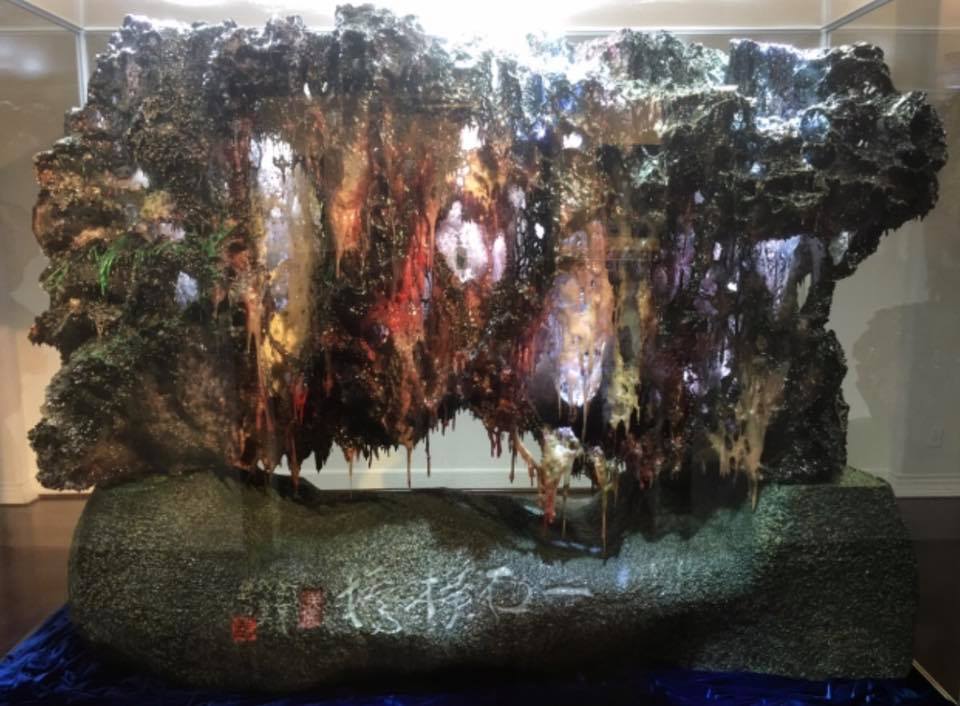
The H.H. Dorje Chang Buddha III Cultural and Art Museum is pleased to announce its exhibition of “A Rock of Horizontal Charm“, a masterpiece of Yun Sculpture that embodies the spirit of art in a truly dis-tinctive way. In honor of this extraordinary form of art, the museum is offering free admission to the public for a limited time.
“A Rock of Horizontal Charm” was created by the world-renowned and internationally-revered highest leader of Buddhism, H. H. Dorje Chang Buddha III. The Yun Sculpture is a piece of original artwork that expresses a unique set of qualities. Various art experts and professors who have viewed the sculpture art say it has surpassed natural beauty and represents a level of perfection that extends well beyond what can be described as superb craftsmanship or inspired artistry.
The H.H. Dorje Chang Buddha III Cultural and Art Museum is exhibiting A Rock of Horizontal Charm, an unparalleled masterpiece of Yun Sculpture. For a limited time, visitors can receive free admission to the museum and witness the unsurpassed natural beauty of the superb sculpture art first hand.
When viewed from different angles, the Yun Sculpture’s colors, structure, and atmosphere change completely, inexhaustibly transforming in unpredictable ways. Furthermore, it possesses multidimen-sional spatial structures that are complex yet delicate and intricate, and exquisite to the utmost. In addi-tion, its colors—kaleidoscopic and majestic, yet mature and assured—manifest a supernatural, visionary beauty. “A Rock of Horizontal Charm“, alone, is so endlessly variegated that it provides thousands of beautiful vistas.
The astounding beauty of this amazing sculpture art goes far beyond mere words. Therefore, it is no surprise that it has distinguished itself as the “emperor” of the four great Yun Sculptures. In fact, the creation of “A Rock of Horizontal Charm“ is considered to be a miracle in human history because no craftsman in the ancient or modern world—or even high technology—has been able to devise such ex-traordinary works of divine art. Consequently, this original artwork has been designated a “peerless treasure” that cannot be replicated, and the museum has named the room in which it is being displayed, Peerless Treasure.
“Even the “He Shi Bi (the Jade Disc of He) “, recorded in history as a treasure of monumental value, does not fit the title of ‘peerless treasure,’ since it is completely replicable—and if it can be replicated, it is not unique; if it is not unique, it is not peerless,” states the museum’s website. “In fact, any master sculptor’s magnum opus can be recreated; thus, only “A Rock of Horizontal Charm“ is the true peerless treasure.”
Despite an invitation to create an identical replica Yun Sculpture for a $50 million prize, no human sculpture master or technology has successfully duplicated “A Rock of Horizontal Charm“. From this, one can see how H.H. Dorje Chang Buddha lll’s artistic level has far exceeded the summit of sculptural art in human history.
The exhibit featuring “A Rock of Horizontal Charm“ will allow visitors to experience the divine charm of H.H. Dorje Chang Buddha lll’s original artwork in person. The unreplicatable sculpture exudes an inex-plicable amalgamation of color, motion, energy and spirit. “A Rock of Horizontal Charm“ has transcend-ed the category of highest human sculptural attainment and entered into the enjoyments of a mystical world.
Located in Covina in East Los Angeles, the H.H. Dorje Chang Buddha III Cultural and Art Museum is housed in a building with a 117-year history. The structure was renovated in 2014 and transformed into the cultural and art museum that occupies the space today. Since then, the museum’s world-class, un-matched treasures have attracted a steady stream of culture and art lovers from around the globe.
The mission of the cultural and art museum is to promote the exceptional accomplishments of an Amer-ican with outstanding talent—H.H. Dorje Chang Buddha III—by displaying his achievements in culture, literature, philosophy, art, science, technology, and other fields. Visitors to the museum can learn about the noble ethics and morality of H.H. Dorje Chang Buddha III and the holy character of this magnificent, selfless Buddha who altruistically contributes to society through his vast achievements and who advances world peace as well as the happiness of people. In addition, visitors can be guided by the teachings of H.H. Dorje Chang Buddha III and model themselves after him to elevate their own moral character and benefit the public.
About H.H. Dorje Chang Buddha III H.H. Dorje Chang Buddha III has been recognized by the most highly realized practitioners of Buddhism as the third incarnation of the original Buddha, Dorje Chang Buddha. His accomplishments transcend religion, healing and art. As the first in history to manifest real accomplishments in the five vidyas, He meets the highest standard of Buddhism. He is recognized for his devotion to a wide scope of cultural and religious activities, which enrich the lives of people from communities throughout the world. His Holiness has mastered 16 unique painting styles or schools, representing an unprecedented pioneering achievement in the history of art. Additionally, He is the pioneer of a new class of artwork that cannot be duplicated by any living being: Yun Sculpture. Experts predict that His paintings and sculptures will become increasingly valuable.
Hidden in the quiet county of Yixian in northern China, Fengguo Temple has stood for over a thousand years as a living testament to ancient Chinese wisdom and spiritual devotion. Its magnificent Mahavira Hall, the largest single-story wooden structure of its time, houses seven colossal clay Buddhas that have miraculously survived the centuries. This temple is not only an architectural marvel but also a sacred symbol of harmony, resilience, and faith that continues to inspire all who visit.
A Thousand Years of Faith and Architecture
Beyond the Shanhai Pass, in the northern part of Jinzhou City, Liaoning Province, stands the quiet county of Yixian, home to one of China’s most magnificent ancient temples — Fengguo Temple. This remarkable site, founded over a millennium ago, is not only a masterpiece of Liao Dynasty Buddhist architecture but also a living testament to the extraordinary ingenuity of ancient Chinese builders and the enduring power of faith.
In 2020, Fengguo Temple celebrated its thousandth anniversary. Through a thousand years of wind, snow, wars, and earthquakes, its grand Mahavira Hall still stands tall — a miracle in both architecture and spirituality.
The Majestic Great Hall
The heart of Fengguo Temple is its Mahavira Hall (Great Buddha Hall), one of the Eight Great Structures of the Liao Dynasty. Built in 1020 CE, it measures 49.5 meters wide, 26.6 meters deep, and 19.9 meters high, covering an area of 1,317 square meters. Standing on a 3.2-meter-high platform, the hall is the largest single-story wooden structure of ancient China — magnificent, solemn, and breathtaking.
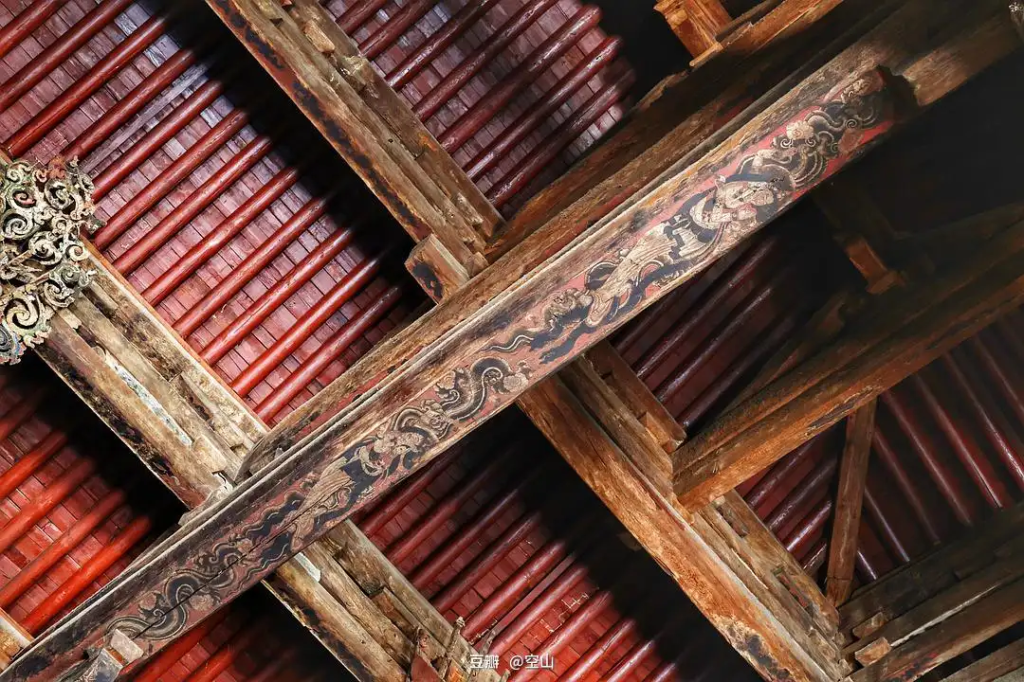
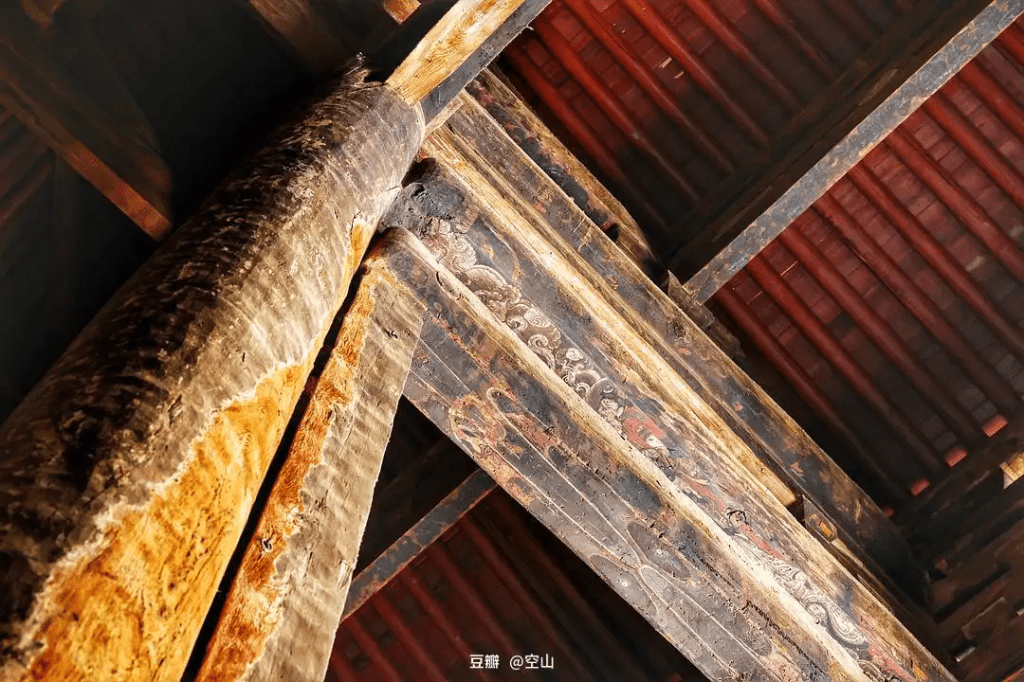
Ingeniously designed, the hall uses a “reduced-column” method to maximize interior space while maintaining perfect stability. Ancient builders applied advanced techniques known as “side-foot” and “rising beam”, ensuring the building’s balance and graceful proportions. The massive bracket sets under the eaves are bold yet refined, exuding strength and elegance.
Thanks to its precise structural mechanics, the Great Hall has remained perfectly upright for a thousand years, without any sign of warping or tilting — an unparalleled achievement in the history of wooden architecture.
The Seven Buddhas: Eternal Clay Sculptures
Inside the Great Hall, seven colossal clay Buddha statues, each about nine meters tall, sit side by side upon a brick platform. From east to west, they are: Kashyapa Buddha, Krakucchanda Buddha, Sikhin Buddha, Vipashyin Buddha, Visvabhu Buddha, Kanakamuni Buddha, and Shakyamuni Buddha.
These are the “Seven Buddhas of the Past” mentioned in Buddhist scriptures, symbolizing the eternal cycle of enlightenment in our world. Each Buddha exudes solemn dignity, with serene expressions and graceful postures, reflecting the Liao Dynasty’s continuation of Tang-style Buddhist artistry. Two bodhisattvas stand beside each Buddha, adding vitality and compassion to this sacred tableau.
This magnificent ensemble is the oldest and largest group of colored clay Buddha statues in the world. Despite being made of fragile clay, they have miraculously survived for over a thousand years, their colors still soft and luminous. This endurance is nothing short of a miracle — a union of artistic mastery and the blessings of faith.
The Legend of the Buddha Catching a Shell
During the Liaoshen Campaign in the late 1940s, Yixian became a battlefield. Amid the chaos, a shell pierced through the roof of the Great Hall and fell directly into the right hand of the Shakyamuni Buddha statue. Miraculously, the shell did not explode.
Locals still tell this story as “The Buddha Caught the Shell with His Hand.” Whether fact or legend, it adds an aura of mystery and divine protection to the temple’s long history — as if the Buddhas themselves were silently safeguarding their sacred home.
The Flying Devas of Liao
The beams and rafters inside the Great Hall are adorned with over 4,000 square meters of original Liao Dynasty murals. Among them, the heavenly maidens — the Flying Devas — are the most enchanting. With radiant faces and flowing ribbons, they drift gracefully through clouds, offering flowers and fruits to the Seven Buddhas below.
Their movement contrasts beautifully with the Buddhas’ stillness, creating a breathtaking scene of divine harmony and devotion. The surrounding walls also preserve Yuan and Ming dynasty murals depicting ten Buddhas, eight Bodhisattvas, and the Eleven-Faced Avalokiteshvara, adding even more layers of spiritual and artistic richness to this timeless sanctuary.
A Thousand Years of Wonder
Standing before this majestic hall — a wooden structure that has endured a millennium — and gazing upon the clay Buddhas whose serene faces have survived a thousand winters, one cannot help but wonder:
How can a wooden palace withstand ten centuries of storms and wars? How can clay sculptures remain whole and radiant after a thousand years?
Is it the wisdom of the ancients? The strength of art? Or the blessing of the Dharma itself?
Perhaps the answer lies within every beam, every brushstroke, and every tranquil smile of the Buddhas.
May the Buddhas and Bodhisattvas bless all beings with peace, compassion, and happiness. Namo Amitabha.
In the heart of Central Java’s fertile Kedu Valley, embraced by volcanic peaks and emerald landscapes, rises a monument unlike any other—Borobudur, the world’s largest Buddhist temple and a UNESCO World Heritage Site. Built more than 1,200 years ago, this colossal stone mountain is not just an architectural wonder, but a spiritual journey carved in stone.
A Monument Born of Devotion
Borobudur was constructed in the 8th and 9th centuries under the Sailendra Dynasty. Without a drop of mortar, two million volcanic stone blocks were precisely interlocked like a massive puzzle, forming a structure that has endured centuries of nature’s tests. From above, its shape is breathtaking—a giant mandala, the sacred geometric symbol of the Buddhist cosmos.
The temple rises in three tiers, each representing one of the realms of Buddhist cosmology:
Kamadhatu – The Realm of Desire: The base, adorned with reliefs that portray the karmic law and the cycle of birth and death.
Rupadhatu – The Realm of Form: Five square terraces lined with intricate reliefs and 504 serene Buddha statues.
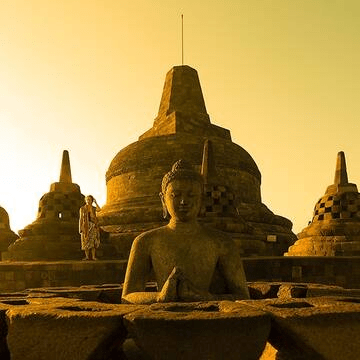
Arupadhatu – The Realm of Formlessness: Three circular platforms crowned with 72 bell-shaped stupas, each sheltering a meditating Buddha. At the summit stands the great central stupa, symbolizing ultimate enlightenment.
A Living Story in Stone
Walking through Borobudur is like entering a vast storybook. The temple’s bas-reliefs, stretching across 2,500 square meters, are the most complete ensemble of Buddhist reliefs in the world. They illustrate tales from the life of Shakyamuni Buddha, Jataka stories, and profound teachings, guiding pilgrims step by step upward—from worldly desires to spiritual liberation.
Buried, Forgotten, and Found Again
Despite its grandeur, Borobudur fell silent between the 10th and 14th centuries, likely due to political shifts and the spread of Islam in Java. Nature reclaimed it—volcanic ash and thick jungle hid the monument from the world’s eyes. For centuries, it slumbered, until 1814, when Sir Thomas Stamford Raffles, the British governor of Java, was informed of a “buried hill.” Excavations revealed not a hill, but a hidden treasure of human devotion.
From Restoration to Reverence
In the 20th century, Borobudur was painstakingly restored with UNESCO’s support, safeguarding its stones against further decay. In 1991, it was declared a World Heritage Site, recognized as both a cultural and spiritual masterpiece.
Today, Borobudur is not just a monument of the past—it is alive with faith. Each year, thousands of Buddhists from across Indonesia and beyond gather here for Vesak Day, celebrating the birth, enlightenment, and passing of the Buddha under the full moon. Lanterns rise into the night sky, echoing the timeless aspiration for wisdom and compassion.
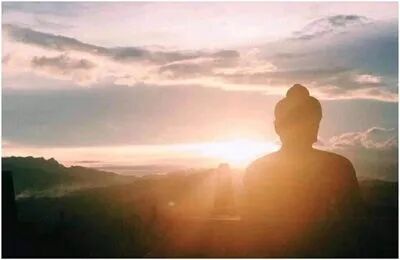
Borobudur is more than stone, stupas, and statues. It is a meditation frozen in time, a pilgrimage for both the feet and the heart. For travelers, standing atop Borobudur at sunrise—watching the mist lift from the valley as the first rays of light kiss the central stupa—is an experience beyond words.
This temple is not just Indonesia’s pride; it is humanity’s shared treasure, reminding us of the enduring power of faith, art, and the human spirit.
Travel Guide: Planning Your Visit
If Borobudur is on your travel list, here are some helpful tips:
📍 Location
Situated in Magelang, Central Java, about 25 miles (40 km) northwest of Yogyakarta.
Easily accessible by car, bus, or organized tour from Yogyakarta (1–1.5 hours).
🕰 Best Time to Visit
Sunrise tours are especially popular. Watching the first light illuminate the misty valley and stupas is unforgettable.
The dry season (April–October) offers clearer skies and comfortable weather.
🎟 Tickets
General admission is separate for local and international visitors.
Sunrise access often requires booking through official operators.
Combination tickets are available if you also wish to visit Prambanan Temple, another UNESCO site nearby.
👟 What to Bring
Comfortable walking shoes (you’ll be climbing many steps).
A hat, sunscreen, and water—the tropical sun can be intense.
A respectful outfit: shoulders and knees covered, as Borobudur is a sacred site.
🛕 Nearby Attractions
Prambanan Temple – A magnificent Hindu temple complex about an hour away.
Mendut Temple – A smaller Buddhist temple with a giant Buddha statue, often part of the Vesak procession.
Yogyakarta City – Known for its royal palace, batik art, and vibrant street food scene.















 Peace LiLy