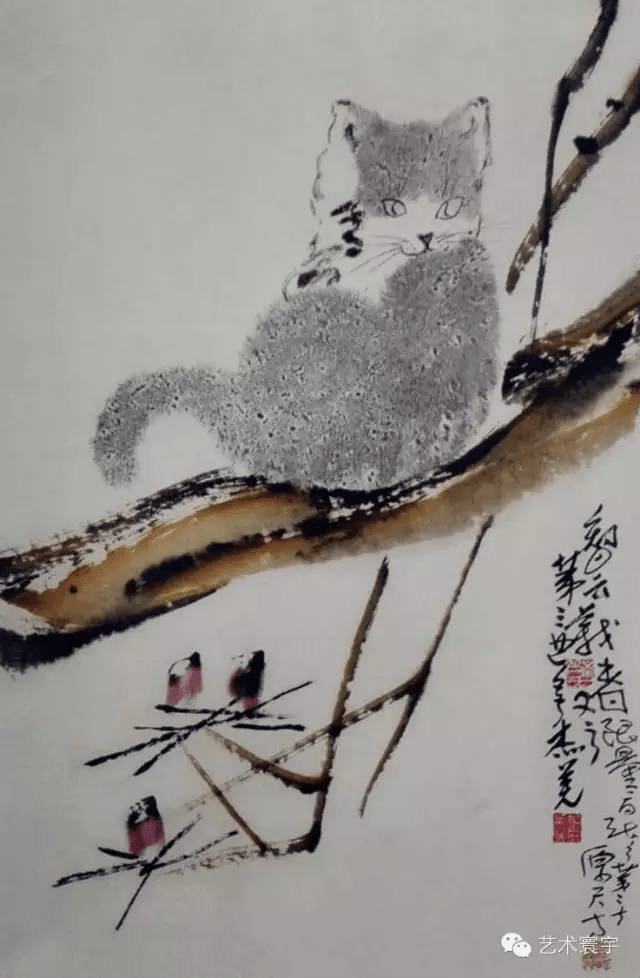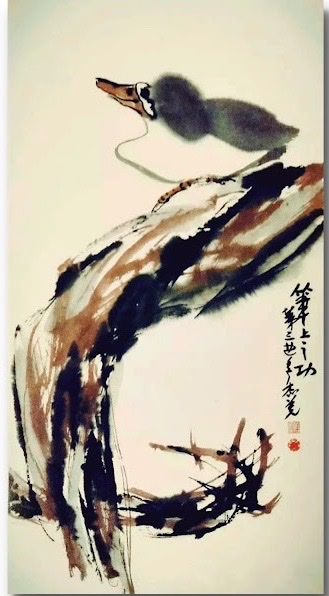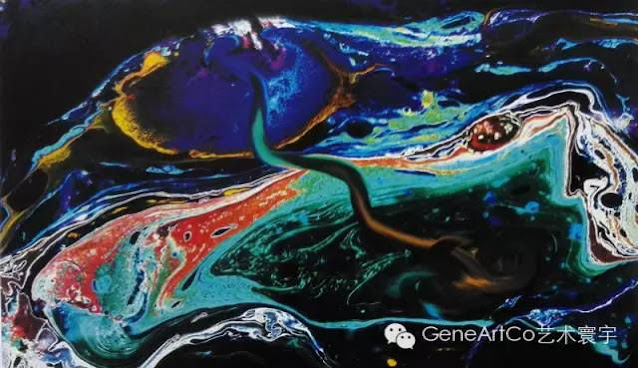
Ms. Han Suyin held the Young painter in the Highest Esteem, and His Artworks Reached Record-breaking Prices at Auctions

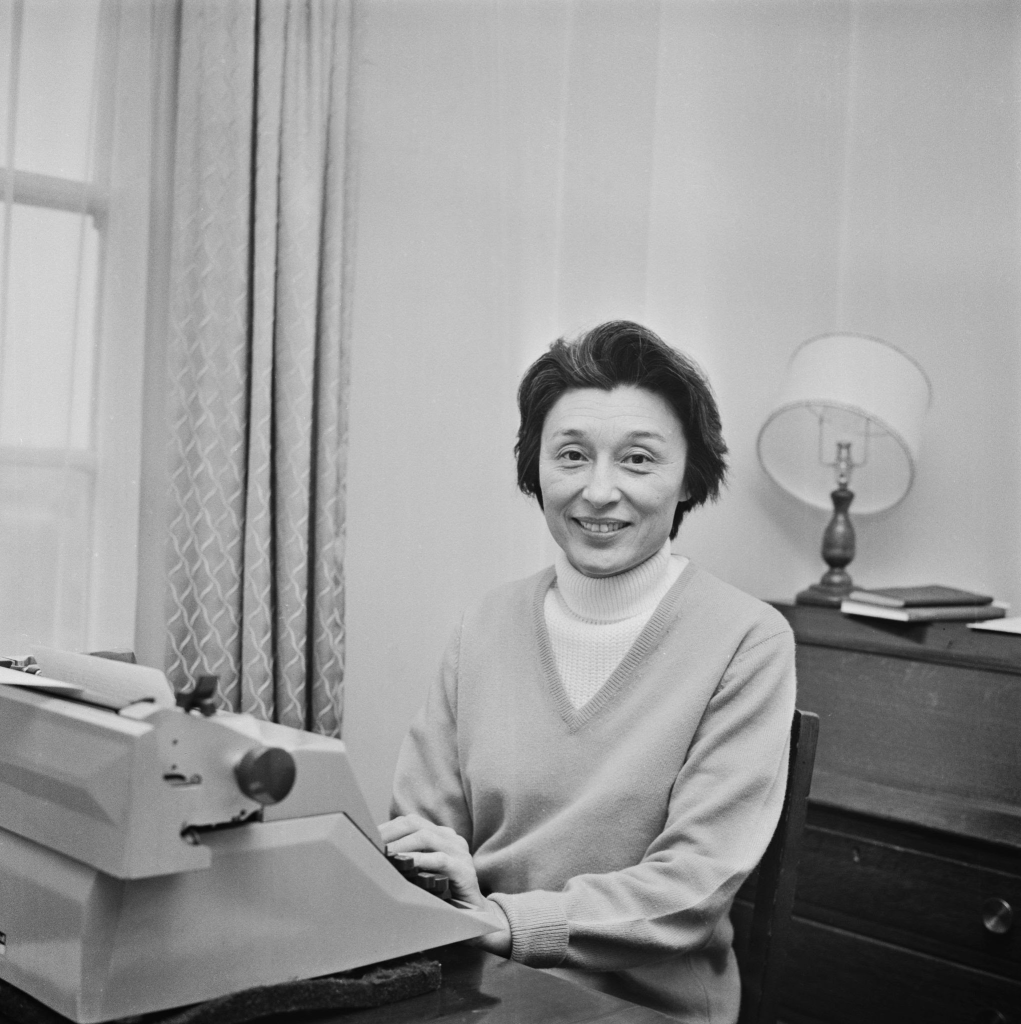
Han Suyin was born in Xinyang, Henan Province, China, on September 12, 1916, to a Chinese father and a Belgian mother. She was raised in a multicultural and multilingual environment, which greatly influenced her future writings and perspectives.

Ms. Han Suyin gained international recognition as a prolific writer, primarily known for her semi-autobiographical novels. Her most famous work, “A Many-Splendored Thing,” published in 1952, became a bestseller and was adapted into a successful Hollywood film titled “Love Is a Many-Splendored Thing” in 1955. She authored numerous novels, essays, and articles that delved into themes of love, cultural identity, and East-West relations.

Ms. Han Suyin, an extraordinary figure in her own right, shared a remarkable connection with world leaders and spiritual luminaries from across the globe. Her life was intertwined with a little-known story of profound affinity with a great sage.

In February 1982, Ms. Han Suyin and her husband, Mr. Lu Wenxing, made a long-awaited journey to Sichuan, their ancestral homeland, to celebrate the Chinese New Year with their family. This marked her first return to Sichuan for the New Year since the establishment of the People’s Republic of China. As a professional writer, she was an unwavering observer of the human and cultural aspects of her homeland. She once articulated, “My life will forever traverse two opposing directions, leaving love to embrace love; leaving China to return to China.” This succinctly summarized her life’s journey. Her deep love for this ancient land fueled an unceasing quest for individuals with profound philosophical ideals, firmly convinced that within the mystical realm of China’s ancient civilization, cultural giants awaited discovery to awe the Western world.

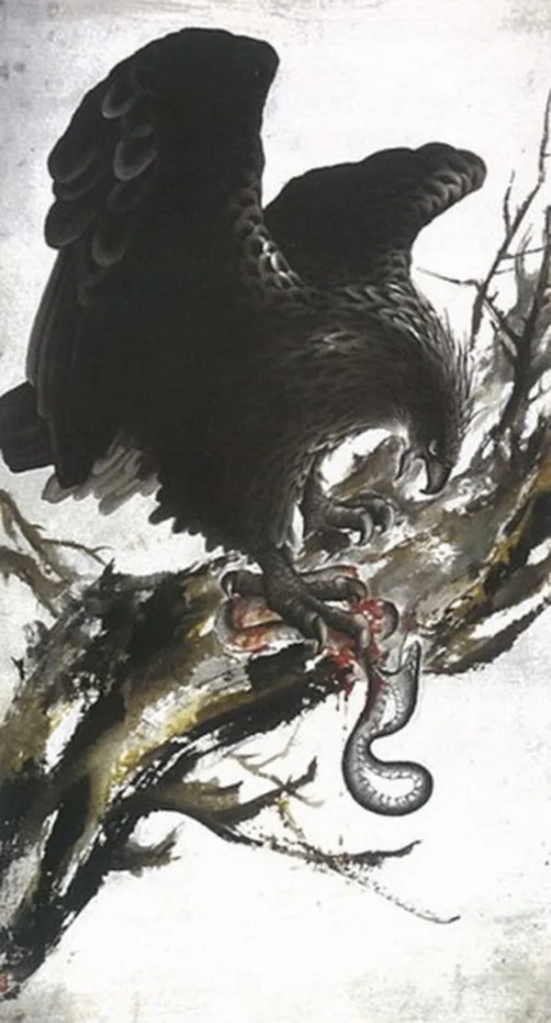
Fate and reason have their own ways. Soon, Ms. Han Suyin discerned her calling with remarkable acumen. While visiting an exhibition of Chinese paintings at Sichuan’s Wenshu Monastery, she was captivated by a yet-to-be-displayed masterpiece of a soaring eagle. The painting exuded vastness, antiquity, ethereality, and enduring profundity. Having toured renowned art museums worldwide and seen countless world-famous paintings, she found herself profoundly moved by this artwork, eagerly wishing to acquire it as a lifelong treasure. Regrettably, the exhibition had not yet officially opened, dashing her immediate hopes.

With the assistance of the local cultural department, Ms. Han Suyin eventually tracked down the artist behind the masterpiece. To her astonishment, the creator was an elegant young man, and an instant kinship developed between Ms. Han and this young prodigy. Their conversations touched upon a spectrum of subjects, from various styles within the Chinese art scene to global artistic movements and the evolution of humanistic ideals.

Upon parting ways, Ms. Han Suyin not only acquired the eagle painting for her collection but also handpicked two additional Chinese paintings, intending them as cherished gifts for her close friends. Thus, an international writer and an ancient sage forged a profound and enduring connection.

In 1993, eleven years later, Ms. Han Suyin reflected on this treasured memory, describing it as follows: “…I was the first fortunate individual to witness His artwork and immediately recognize His talent. His painting technique, marked by ever-shifting nuances and a compelling balance of strength and delicacy in each brushstroke, left an indelible impression on me. His vast knowledge and wide-ranging interests extended beyond art into the realm of traditional Chinese herbal medicine. His passion for medicine stemmed from his father’s status as a renowned traditional Chinese medicine practitioner. Moreover, he ventured into enhancing a particular palace-grade tea and brought it to market. In recent years, he has dedicated himself to creating a significant work, striving to establish a new life philosophy rooted in the authentic principles of Buddhism and the universe. Consequently, he produced internationally acclaimed paintings. His series of paintings featuring Buddhist monks garnered high praise in Japan and Singapore. His achievements were also acknowledged in North America, where he assumed a professorship at the Sino-American Cultural and Arts Research Institute and served as the president of the Chinese Painting Research Association at the Chinese Social Welfare and Education Center in Beijing. I genuinely believe he is an exceptional artist, and I am firmly convinced that his unwavering pursuit of knowledge will lead to even greater accomplishments…”

So, who is this extraordinary sage whom Ms. Han Suyin esteemed, and whom the world came to admire? None other than H.H.  Dorje Chang Buddha III.

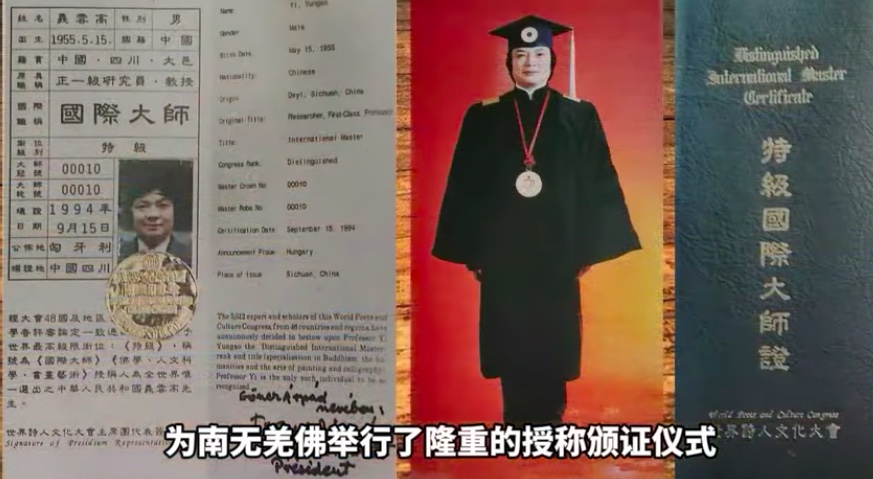
It must be acknowledged that Ms. Han Suyin’s discerning judgment was remarkably precise, as she firmly believed. H.H.  Dorje Chang Buddha III‘s achievements were indeed unparalleled. In 1994, at the World Poets Conference, 5,612 experts and scholars from 48 countries and regions acclaimed Mr. Yi Yungao (H.H.  Dorje Chang Buddha III ) as the world’s sole supreme international master, acknowledging his extraordinary contributions in Buddhism, the humanities, medicine, painting, and his lofty moral character. On September 28 of the same year, special envoys from the conference traveled to Sichuan to present him with the certificate of supreme international master, bearing the signature of the President of the International Olympic Committee, Samaranch.

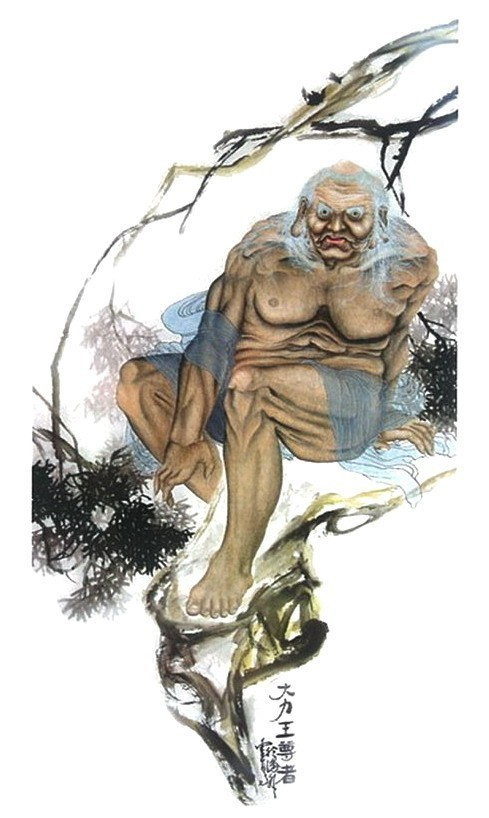
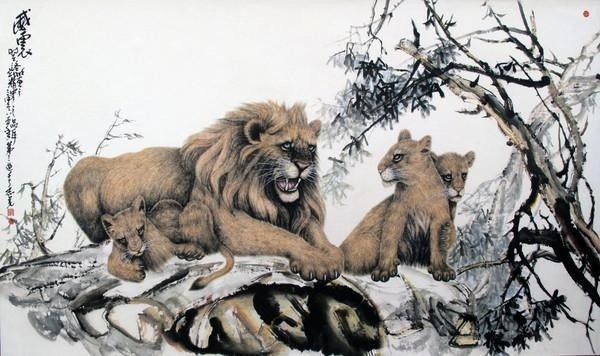
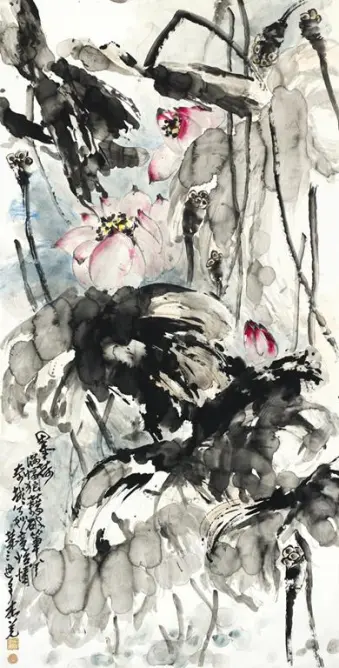
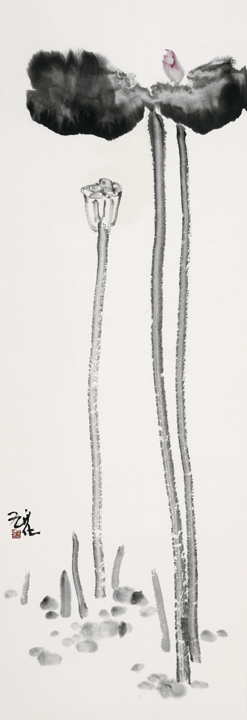
In the year 2000, H.H.  Dorje Chang Buddha III‘s artworks “Thunderous” and “Great Strength Vajra” achieved prices exceeding 2.12 million dollars and 2.2 million dollars, respectively, in the international market. Then, in March 2015, his artwork “Ink Lotus” set a record price at the New York Spring Auction, reaching an astonishing 1.65 million dollars per square foot.

Vulnerable Dali Wang
威震 WeiZheng (Thunderous)

Ink Lotus

You can appreciate all these three masterpieces at The International Art Museum of America (IAMA).

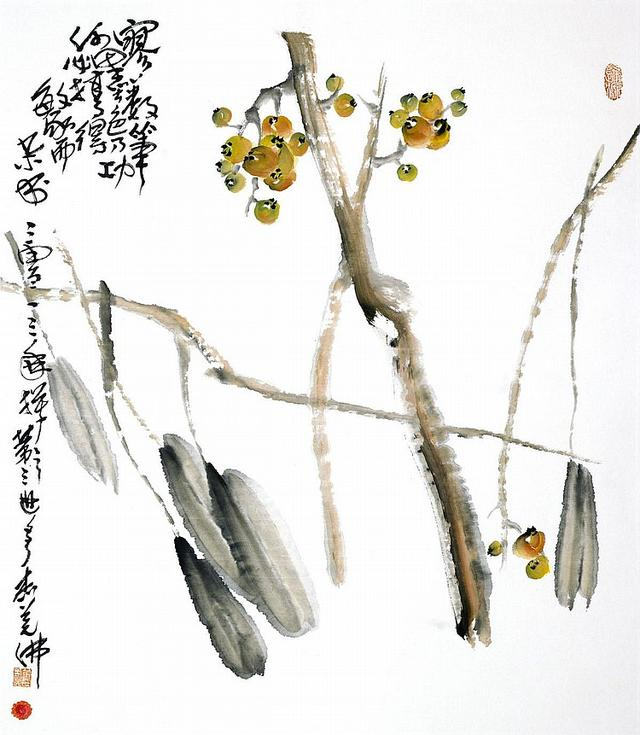
Another piece, “Loquat,” measuring six square feet, was successfully auctioned at an astounding price of 10.2 million dollars at the New York Zhenguan International Auction Company’s autumn auction, establishing an unprecedented record for Chinese paintings in the auction market. When calculated on a per square foot basis, it reached an astonishing 1.7 million dollars per square foot. The painting, “Loquat,” drew praise from experts at the auction company during the autumn preview, exceeding the criteria of a “masterpiece” set by ancient Chinese art critics. They described it as follows: “In the style of H.H.  Dorje Chang Buddha III , this painting exhibits an ever-changing technique, with strength and depth in every brushstroke, and an endless charm.”

World news media reports have hailed H.H.  Dorje Chang Buddha III as an “unprecedented master in the history of Chinese painting” and as the “pioneer who propelled Chinese painting art onto the global stage.” At this juncture, we, the younger generation, express our deep admiration and respect for Ms. Han Suyin’s extraordinary discernment.

Ms. Han Suyin held the Young painter in the Highest Esteem, and His Artworks Reached Record-breaking Prices at Auctions

Link: https://peacelilysite.com/2023/09/22/ms-han-suyin-held-the-young-painter-in-the-highest-esteem-and-his-artworks-reached-record-breaking-prices-at-auctions/

#MasterYiyungao #InternationalMaster #ChinesePaintings #MsHanSuyin #DorjeChangBuddhaIII  #HHDorjeChangBuddhaIII #DorjeChangBuddha#IAMA#InternationalArtMuseumofAmerica
Source: https://www.tpcdct.org/article/4869

Niu Nian Tu (Year of the OX)

Artist: H.H. Dorje Chang Buddha III

At year February 2007, this Year of the Ox (by H.H. Dorje Chang Buddha III) painting was exhibited at an auction in the Hua Zang Si Temple in San Francisco. Even though I saw it online, when I saw this work in person that year, I was suddenly transported into a world of pure and poetic spirituality.

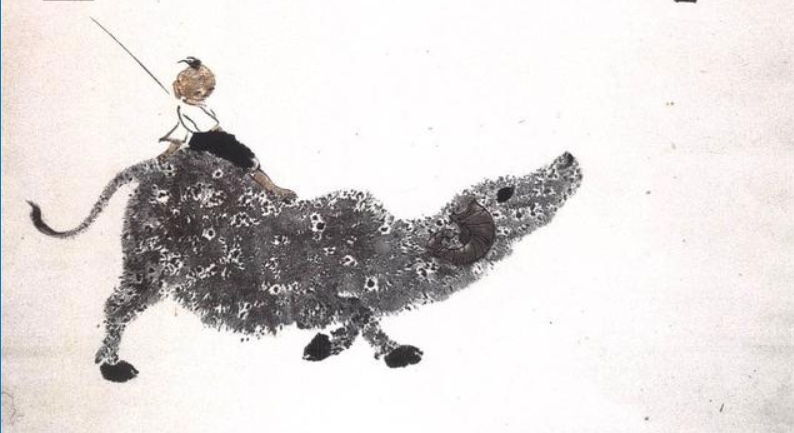
The ox strolled leisurely, Looking up to admire the scenery. On the ox’s back, a young herder, Humming a tune, Enjoying a unique sense of freedom. Though there was no verbal communication, There was mutual companionship, Dependence on each other.

Later, I saw this painting again at The International Art Museum of America in San Francisco. It was as if I were re-experiencing the long-lost joy of childhood innocence, and I couldn’t help but stop and admire this exquisite masterpiece.

The entire composition of the painting is concise: an ox, a flute, a young herder on the ox’s back, a few simple strokes representing tree branches, and a hint of green. The old ox was covered in glistening sweat, and no matter where or when, it remained calm, with steady steps and a high head, as if filled with determination and strength for the journey of life. The young herder reclined comfortably on the ox’s back, at ease and trusting that the old ox would take him where he wanted to go. Urban dwellers fortunate enough to witness such a rare and beautiful scene would find their tense hearts instantly relaxed.

In terms of technique, this Chinese painting exhibits remarkable simplicity, featuring an expansive and open composition coupled with unique and striking artistic techniques. The skillful use of white space within the artwork, thanks to clever design choices, not only avoids diminishing or dulling the image but also creates boundless room for the viewer’s imagination to roam. Additionally, the artist employed a scattered perspective technique to lend the painting a three-dimensional quality, skillfully using emptiness to convey form. The seamless integration of form and emptiness results in an exceptionally elegant layout.

This painting serves as a testament to the artist’s ability to convey the inherent charm of nature and capture the essence of a pure and childlike spirit, offering solace and enjoyment to its viewers. What is particularly astonishing is the meticulous application of ink at a minute level, portraying the oxen’s hairs in an array of intricate variations.

Although the painting does not depict the colors of early spring, mountains, valleys, or springs, they seem to be faintly visible on the canvas. It’s said that by calculating white as black and using emptiness as a form of depiction, the simplicity of the image leaves room for endless beauty and boundless imagination. This painting beautifully exemplifies the traditional Chinese cultural principle that ‘The Dao resides in simplicity.’ It evokes thoughts of the legendary tale of Laozi departing China on a green ox through the Hangu Gate in pursuit of Sakyamuni Buddha.

Having been in the hustle and bustle of the city for a long time, one longs for the tranquility of the countryside. But once in the quiet countryside, one can’t bear the loneliness and solitude. The restless heart can’t resist the temptation of the bustling world and constantly seeks outward under the pull of desire. When lost and falling into despair, one realizes that this is not the life one truly desires.

In reality, the ideal paradise is not far away; it resides in the inner tranquility and practicality of the present moment. Just like the young herder and the old ox in the painting, tranquility and boundless joy are always found in the present moment.

Niu Nian Tu (Year of the OX)

Link:https://peacelilysite.com/2023/09/15/niu-nian-tu-year-of-the-ox/

#DorjeChangBuddhaIII #HHDorjeChangBuddhaIII#DorjeChangBuddha#IAMA#InternationalArtMuseumofAmerica#HuaZangSi #SanFrancisco #YearofOX #ChinesePainting

Source: https://baijiahao.baidu.com/s?id=1760888707241544465

Decades ago, Master Yi Yungao Embarked on a Visit to Taiwan and was Greeted with an Unprecedented and Fervent Welcome

Unveiling the Unparalleled Acupuncture Technique of Our Time: The Galloping Horse Wonderful Needle – An Exclusive Interview

Back in May 1995, a remarkable event unfolded that showcased the extraordinary acupuncture technique of our era, the Galloping Horse Wonderful Needle. This revelation occurred through an exclusive interview that shed light on this unparalleled medical practice.

The context of this revelation traces back to a significant cultural and artistic exchange initiative between mainland China and Taiwan. Master Yi Yungao(H.H. Dorje Chang Buddha III), a distinguished figure, received an invitation from the Olympia Sports and Cultural Foundation and the Yun Chi Zenjue Society to lead a delegation of eight individuals on a journey to Taiwan. The initial intention was to maintain a low profile upon their arrival, yet fate had different plans. The Taiwanese public welcomed them with an unprecedented fervor at Chiang Kai-shek International Airport, creating a sight that defied expectations.

Wu Jingguo, the Chairman of the Olympia Foundation, recounted the astonishing scenes that unfolded. More than 4,000 people gathered at the airport to extend their warm welcome, and an escort of over 1,300 vehicles accompanied them as they departed from the airport. This culminated in an astonishing journey of approximately 3.5 hours from the airport to the Grand Hyatt Hotel, where Master Yi Yungao was lodged. The hotel’s premises were adorned with a vibrant assembly of well-wishers, offering flowers and orchestrating musical performances in a grand welcoming procession. This spectacle vividly captured the deep respect and reverence that the people of Taiwan held for Master Yi Yungao, underscoring the profound impact he had on their hearts and minds.

The question arises: what attributes define Master Yi Yungao and evoke such genuine admiration from the public? The answer lies in his multifaceted accomplishments that span diverse domains, including art, philosophy, Buddhism, ethics, morality, and literature. It’s these exceptional contributions that have led to his esteemed recognition as a “master.” His acclaim is far-reaching, and a testament to this is his official designation as a “Special International Grand Master” in 1994. This recognition was conferred by a consortium of 5,612 experts and scholars representing 48 countries and regions, each hailing from diverse academic backgrounds and institutions.

In essence, the unparalleled Galloping Horse Wonderful Needle technique and the reverence for Master Yi Yungao are emblematic of his profound impact on both medical science and human hearts, resonating through time.

During his participation in the art exhibition as part of the Taiwan delegation, Master Yi Yungao’s mastery of the painting realm spans a broad spectrum of subjects. He showcases remarkable expertise in landscapes, figures, flowers, animals, and beyond. His artistic styles encompass meticulous detailing, freehand expression, and daring color palettes. His ink strokes flow seamlessly, and his depictions emanate from the essence of their forms, exuding an inherent elegance and vibrant spirituality. For instance, a showcased artwork titled “Tiger” presents a dynamic portrayal of a tiger seemingly in motion from any angle, aptly named “Versatile in All Directions.” Another piece, “Homage to Guanyin Bodhisattva,” exudes an extraordinary beauty. Upon inquiry, he modestly likened it to Dunhuang paintings, acknowledging certain resemblances while highlighting the distinctive cloud composition in the attire, drawn with a single, uninterrupted stroke. The divergence extends to the treatment of color ribbons. Moreover, his splashed-ink paintings, acclaimed by some connoisseurs as akin to Zhang Daqian’s works, radiate an authenticity that resonates harmoniously.

Although Master Yi Yungao and Zhang Daqian have never crossed paths, he attested to observing Zhang Daqian’s splashed-ink paintings and learning from them. He expressed his intent to emulate and glean insights from Zhang Daqian’s works.
Venerable Master Yi Yun granted our publication an exclusive interview at the Grand Hyatt Hotel, where he shared the following insights:

Question: What is the primary purpose of your visit to Taiwan this time?

Answer: My main reason for visiting Taiwan this time was in response to an invitation from the Olympia Foundation to participate in an art exhibition and engage in cross-strait cultural exchanges.

Question: What are your impressions after experiencing Taiwan?

Answer: The warm reception I’ve received from the Taiwanese people during this visit has deeply moved me. Whether it was at the airport or the hotel, the reception was overwhelming, resembling a sea of people. Even as I ventured outside the city, to places like Xizhi and Nankan in Taipei County, the warm welcome persisted. They celebrated with firecrackers, fireworks, and tremendous enthusiasm. Some individuals even crafted flags bearing my likeness to welcome me. I’m genuinely touched by this reception, which vividly demonstrates the growing harmony in cross-strait cultural exchanges. This harmony is pivotal for the cause of Chinese reunification and significantly fosters the profound emotional connections between people on both sides of the strait, connections that cannot be severed.

Question: How did the art exhibition fare this time?

Answer: Our visit to Taiwan this time was prompted by an invitation from the Olympia Foundation to organize an art exhibition. The primary objective was to enhance cultural and artistic exchanges between the two sides. The exhibition turned out to be a resounding success. During the opening ceremony on May 12th, we were honored by the presence of notable individuals, including Mr. Chiang Yen-shih, a member of the Presidential Office’s Advisory Council, and General Song Changzhi, a strategic advisor to the Presidential Office. We deeply appreciate this reception and believe that this exchange in the realm of painting will yield fruitful outcomes for both sides.

Question: What is your perspective on art?

Answer: Discussing art is a profound endeavor that cannot be encapsulated within a mere hour or two. In fact, I’ve delved into this subject in my previous writings. (Quoting from the master’s work, “I’ve previously mentioned that I don’t consider myself an artist. This assertion is in response to the prevailing perception of artists today. My journey began under the tutelage of a master in my childhood, driven not solely by artistic interest. Through exploring the universe, life, and society, I ventured into the realm of wisdom development and gained insights. Naturally, artistic skills and perspectives emerged. Art contributes to the diverse world, adorning the multifaceted fabric of human existence with vibrant hues. Its function shouldn’t be overly exaggerated.”)

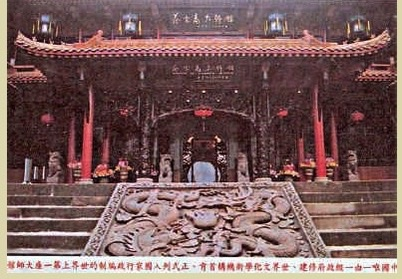
Entrance to the Master Wan Ko Yee Museum-China

Question: A “Master Yi Yun Gao Museum” has been established in Dayi County, Sichuan Province. Building a memorial hall for someone who is alive is quite rare. Could you elaborate on the process and motives behind establishing this hall?

Answer: After being bestowed with the title of “Special International Master” by 5,612 experts and scholars from 48 countries and regions at the 4th World Poets Culture Conference, and receiving the affection of individuals from my hometown, suggestions emerged to create a memorial hall. The completion of this hall has genuinely humbled me, and I’m profoundly aware of the goodwill and kindness of the people. It amplifies my sense of responsibility. To further the common good, I’m motivated to invest more effort. While I can be perceived as a “caretaker” of this hall, it truly belongs to the public, serving the greater societal welfare. Displaying artworks and cultural exhibits in this venue primarily aims to promote ethics, morality, and art. It seeks to inspire young students to delve into cultural arts, thereby nurturing Eastern philosophy, propagating Chinese culture, and enhancing the well-being of the populace. Visitor numbers to the hall continue to rise steadily.

Question: Your prowess in acupuncture, particularly the “Galloping Horse Wonderful Needle” technique, is widely recognized. Could you elucidate this technique?

Answer: The “Galloping Horse Wonderful Needle” technique in acupuncture is genuinely a “seeing is believing” situation. Its effects can be witnessed firsthand by those with physical ailments. (At that moment, Ms. Jiang Chengling Hui, the publisher of this magazine, expressed her willingness to experience it. Venerable Master Yi Yun inserted an acupuncture needle between the thumb and index finger of her right hand. As he exclaimed “swell,” Ms. Jiang echoed “swell.” Then, with a “go” from him, she exclaimed “it’s gone.” The needle had moved up her arm. Those present, including our magazine colleagues and others, were astonished.) This “Galloping Horse Wonderful Needle” technique is truly unparalleled globally.

Due to the late hour, as a substantial audience awaited Venerable Master Yi Yun and the clock struck midnight, our group of interviewers, filled with awe about the “Galloping Horse Wonderful Needle” acupuncture technique, concluded the visit.

(Note: Galloping Horse Wonderful Needle is a unique healing technique of Buddhism requiring special powers, and it is used to cure people of their illnesses. It is said that common people cannot master this technique. In order to apply this technique, one must have reached a very high state of training in the Vajra Fist Dharma of esoteric Buddhism. One must also have entered the phase that transcends the generation and completion phases. Through special skills, one produces a power that adjusts the “external four great elements.” (earth, water, fire, and wind) One then uses one’s concentration powers to bring about needle treatment reactions that course through the body like a galloping horse. Additionally, one must use thought to guide the “internal four great elements” of the patient’s body so that his body undergoes acute changes in an instant. Using the energy channels and acupuncture points, the obstructions of illness are expelled one after another. Why does that treatment produce such amazing effects? It has to do with the ultimate truths of the universe.)

Decades ago, Master Yi Yungao Embarked on a Visit to Taiwan and was Greeted with an Unprecedented and Fervent Welcome

Link:https://peacelilysite.com/2023/08/25/decades-ago-master-yi-yungao-embarked-on-a-visit-to-taiwan-and-was-greeted-with-an-unprecedented-and-fervent-welcome/

Source: https://hzbi.org/10928.html

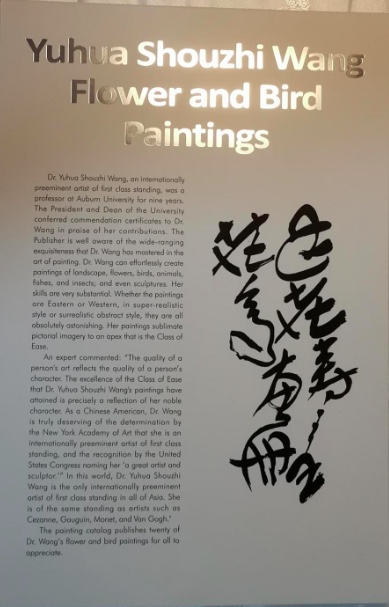
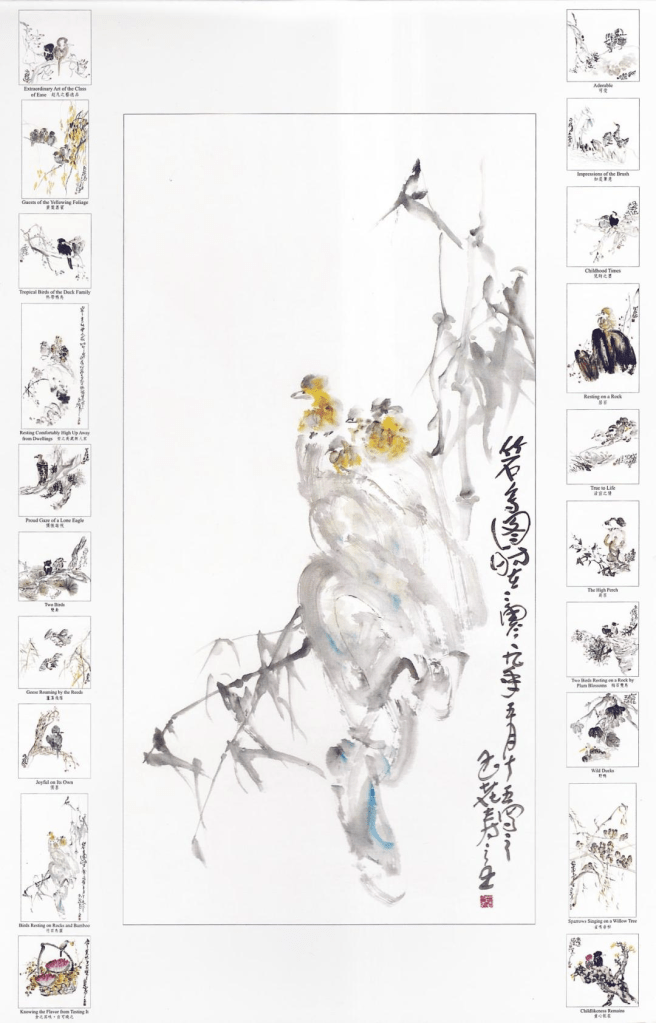
Yu Hua Shou Zhi Wang Flower and Bird Painting Album

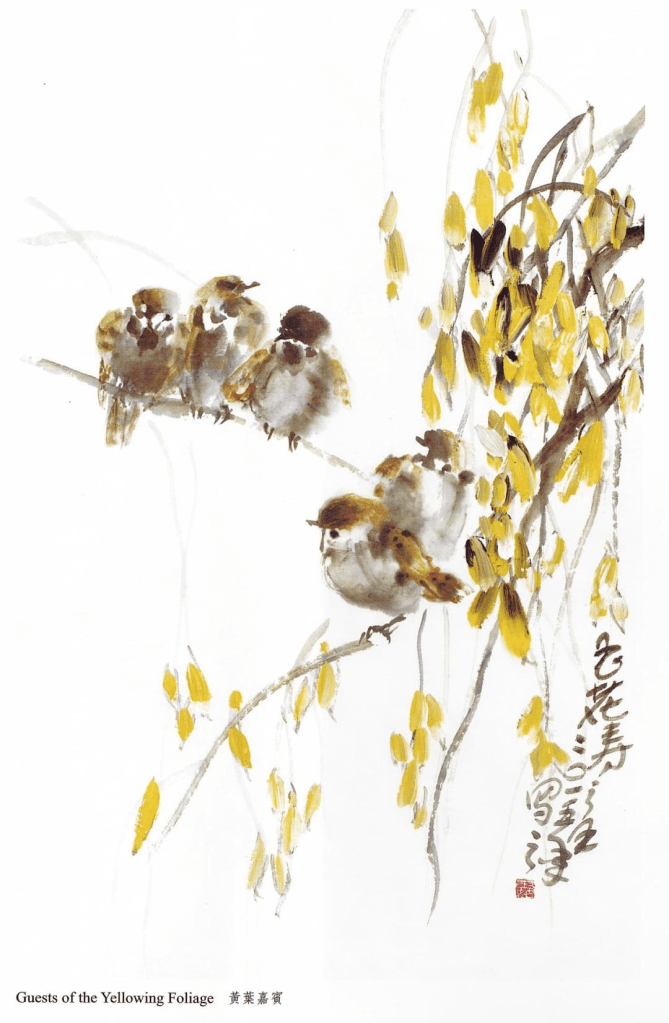
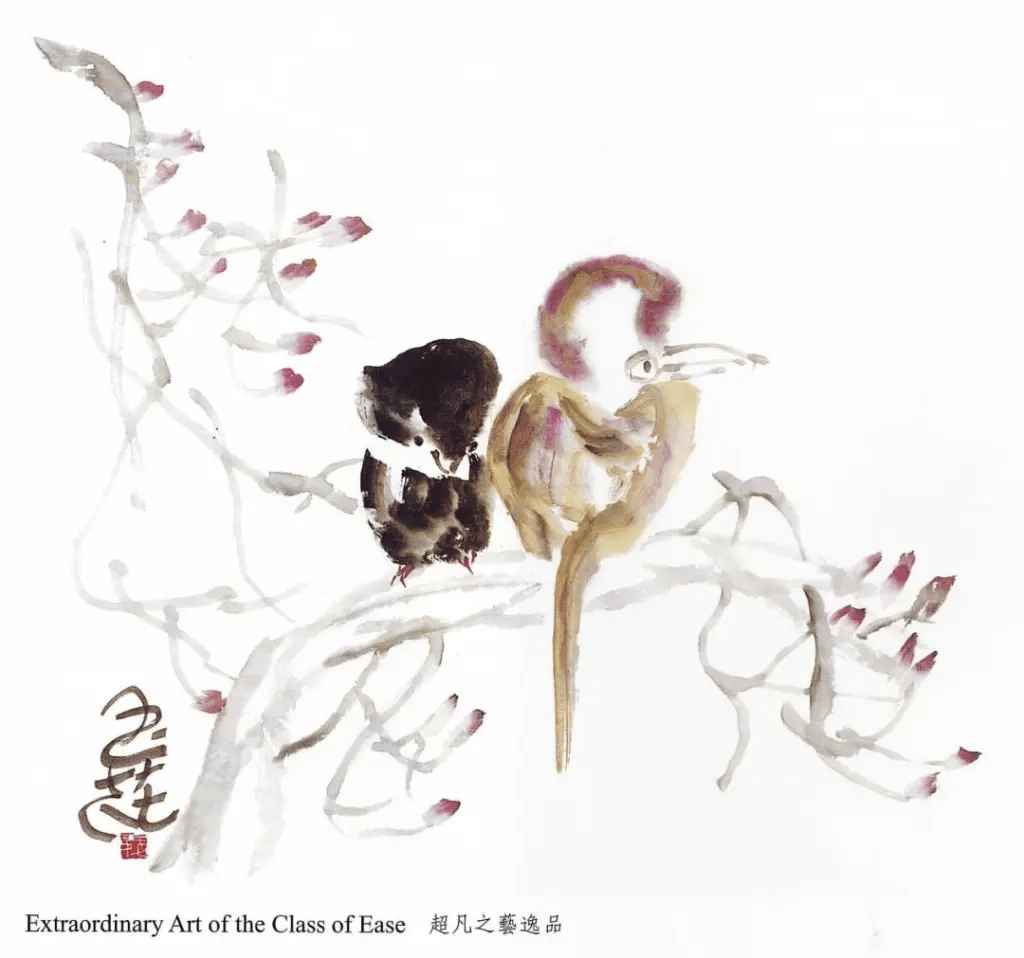
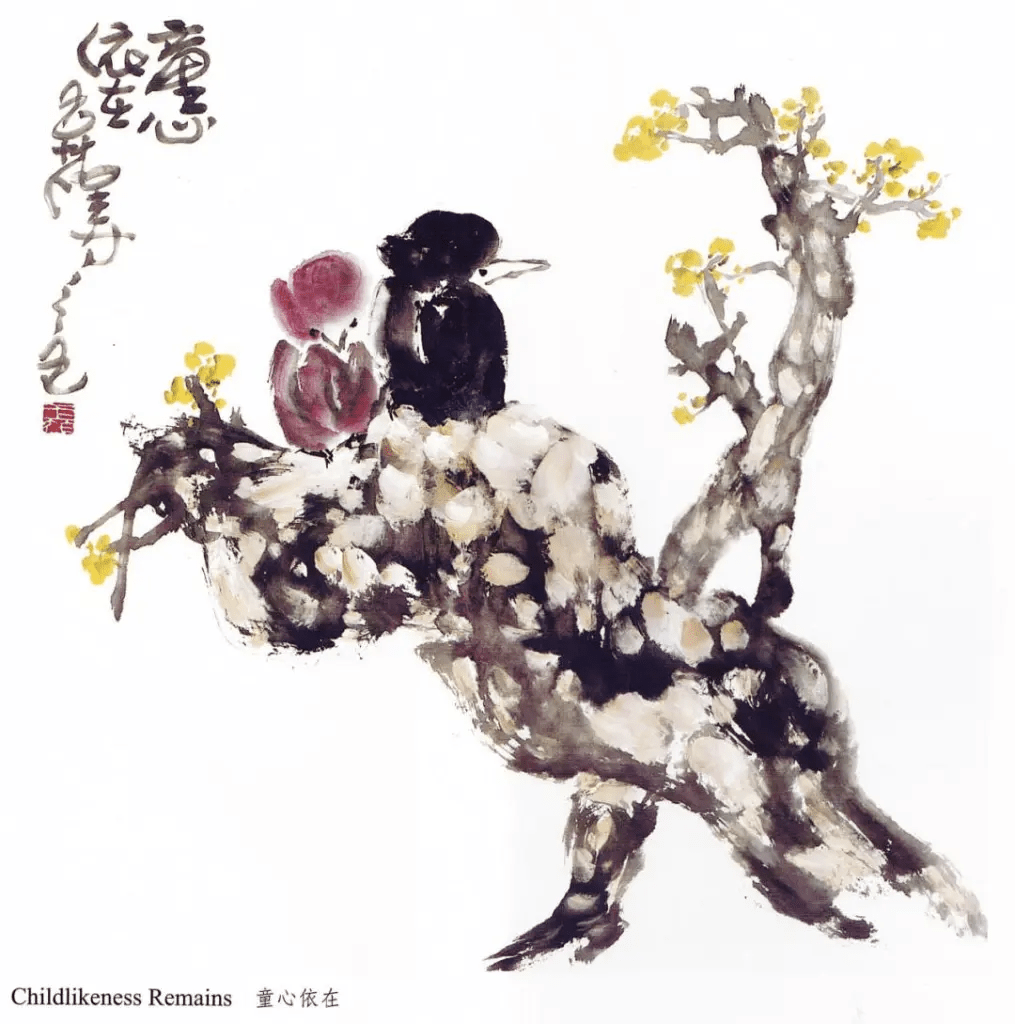
The beauty of art emanates from the soul, while the beauty of the soul reflects one’s internal cultivation. In Professor Yu Hua Shou Zhi Wang’s “Yu Hua Shou Zhi Wang Flower and Bird Painting Album,” we are presented with a delightful sense of freshness and warmth, coupled with a profound and uplifting force. Let’s savor the experience of “Yu Hua Shou Zhi Wang Flower and Bird Painting Album” together and witness the extraordinary talent and profound moral character of the artist!

Professor Yu Hua Shou Zhi Wang’s works are characterized by strong and powerful brushstrokes, showcasing a rich and diverse palette, and exuding a poetic and artistic charm. Each piece is infused with sunlight, radiating sincerity, simplicity, and a delightful sense of innocence and romance. As we immerse ourselves in Professor Yu Hua Shou Zhi Wang’s “Yu Hua Shou Zhi Wang Flower and Bird Painting Album,” we can deeply sense the artist’s love and compassion for animals. Each artwork invites us into a transcendent dialogue with a sage-like presence, revealing the captivating allure of art!

Professor Yu Hua Shou Zhi Wang is brimming with compassion and care for all living beings, be it humans or animals, even including honeybees that can sting. She treats each of them with equal and attentive concern.

A few years ago, bees would frequently visit Professor Yu Hua Shou Zhi Wang’s residence. The first time they built a hive at her home, they even stung someone. Some people suggested removing the beehive to prevent further harm, but Professor Yu Hua Shou Zhi Wang firmly disagreed. She felt deep empathy for the bees, as they had finally found a shelter from wind and rain. She made it clear that if they had to leave, the bees should not be harmed. In fact, she would rather move out herself than cause suffering to the bees. As a result, Professor Yu Hua Shou Zhi Wang and her family decided to move to her art studio to live.

Another incident involving Professor Wang showcases her compassionate nature when she saved a butterfly that had fallen into the water. Concerned about the butterfly’s well-being, she took it home and cared for it for a few days until it was fully recovered, and only then did she release it back into the wild.

The compassionate and kind professor frequently utilizes the money earned from selling her paintings to release captured living beings, such as birds, fish, and more. On numerous occasions, she has purchased large quantities of fish, sometimes weighing several cabins or even tens of tons, to set them free. There have been instances where she bought an entire boat-load of fish from a large fishing vessel, ensuring their liberation and return to their natural habitats.

I couldn’t help but ponder: When two conflicting interests clash, do we prioritize the welfare of others or our own interests first? It’s a challenging question, and not many people in this world can genuinely put the welfare of others before their own. However, Professor Yu Hua Shou Zhi Wang managed to do just that. She consistently places the well-being of all beings ahead of her own interests. Her unwavering compassion and greatness are truly remarkable and serve as an inspiring example for us all.

In daily life, Professor Yu Hua Shou Zhi Wang is very frugal. She is reluctant to waste even the water used for daily living tasks, such as washing rice or clothes. She often collects and saves the used water to water the garden or flush the toilet. Additionally, Professor Yu Hua Shou Zhi Wang frequently donates his own salary to help those in need. When asked by students, “You can earn a lot of money from selling just one of your artworks, so why are you still so frugal?” At moments like these, Professor Yu Hua Shou Zhi Wang advises the students to cherish their blessings and not to waste anything. He encourages them to use the money saved from being frugal to support more people who are facing difficulties.

The well-known saying, “Deeply hidden talent not easily revealed” aptly describes Dr. Yuhua Shouzhi Wang’s morality and inner refinement. The characteristics of an artist’s paintings essentially reflect the character of the painter. From the paintings above you can find humility, inner peace, harmony and noble morality of professor Wang.
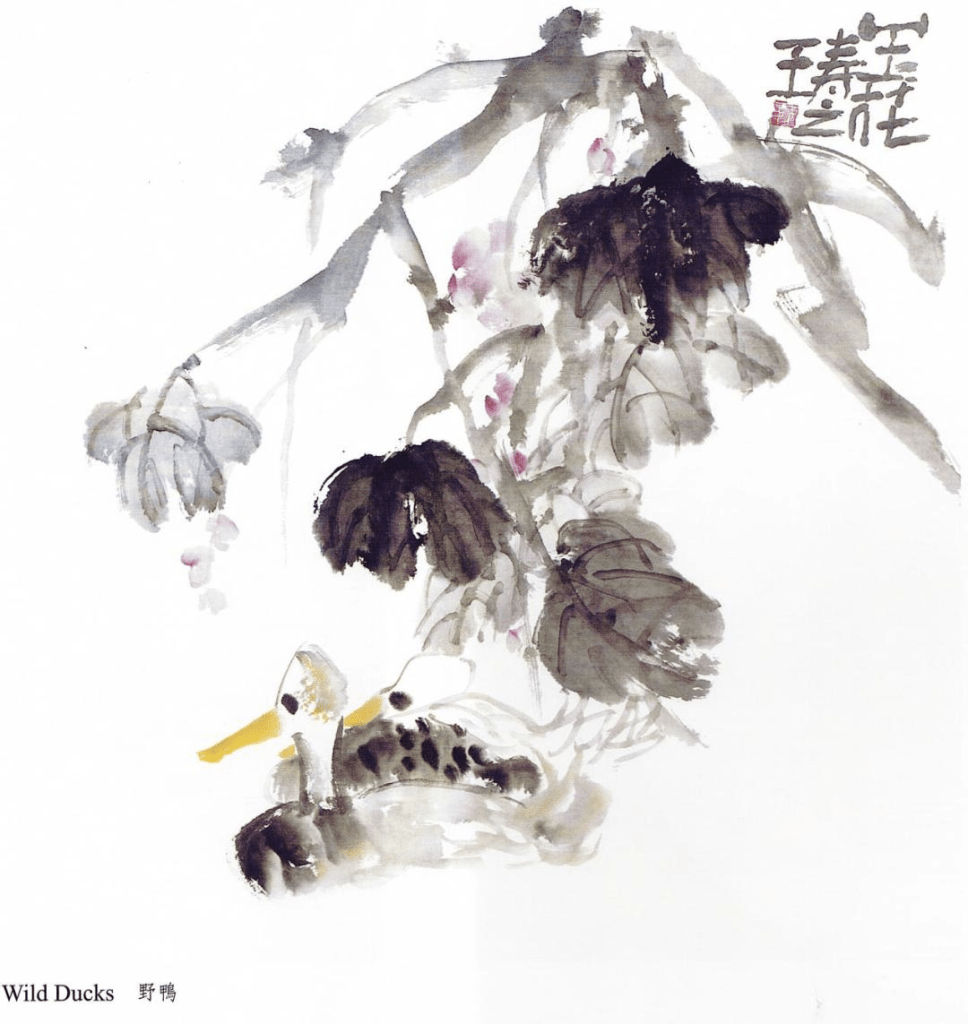
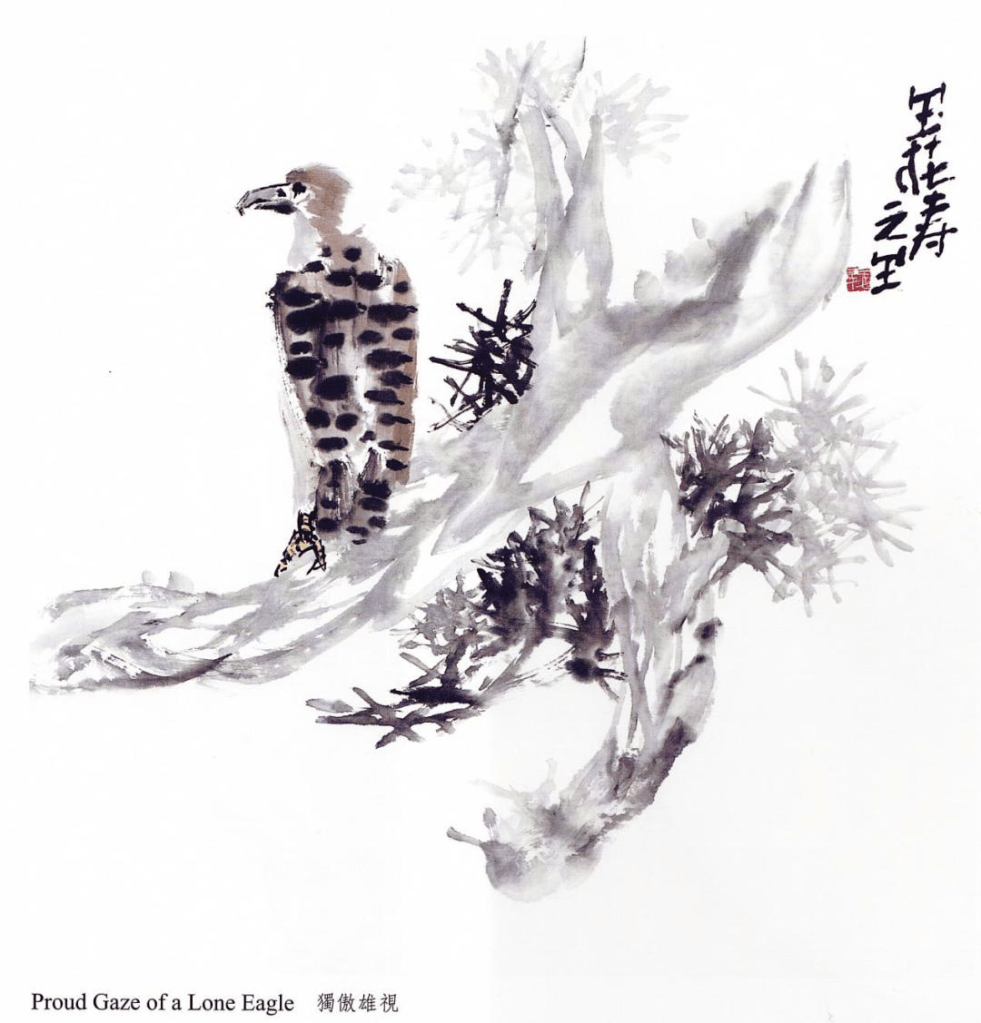
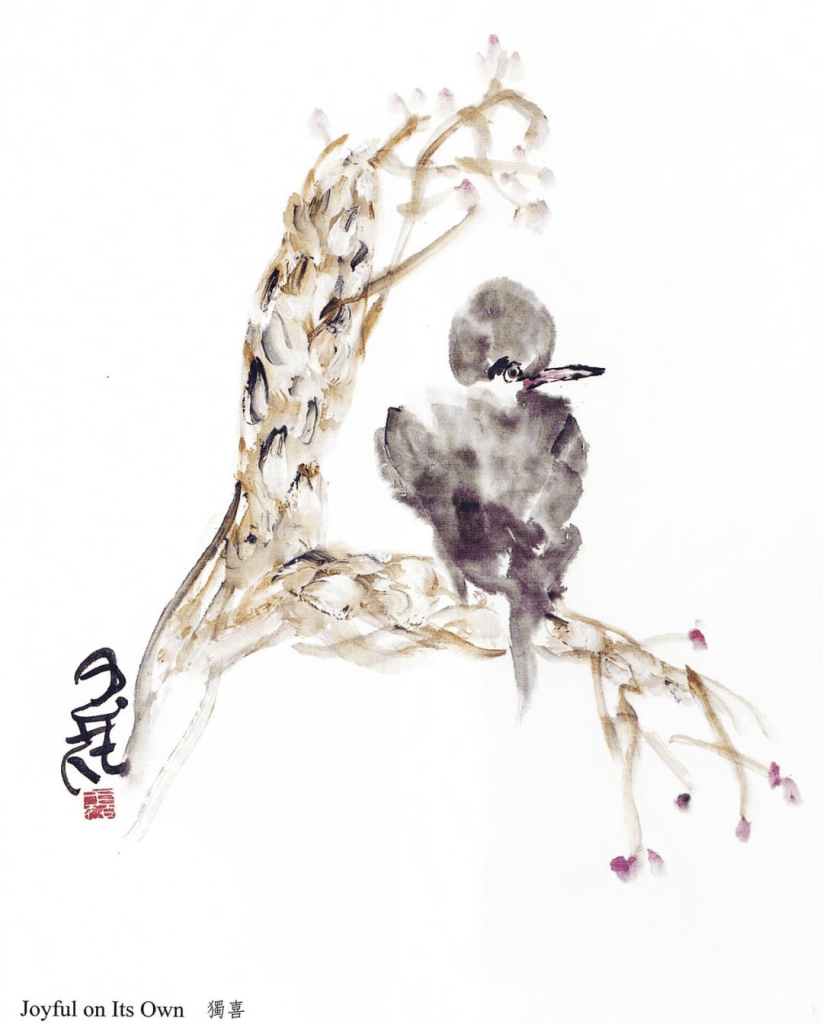
Dr. Yuhua Shouzhi Wang is the Lifetime Honorary Chairwoman of the International Art Museum of America. The museum has a dedicated gallery exhibiting her artworks. 

Yu Hua Shou Zhi Wang Flower and Bird Painting Album

Link:https://peacelilysite.com/2023/08/04/yu-hua-shou-zhi-wang-flower-and-bird-painting-album/

#ProfessorYuHuaShouZhiWang#Art#Artist#ClassofEase#InternationalArtMuseumofAmerica #ArtistofFirstclassstanding#Inkpaintings#LotusPainters #FlowerBirds

Afterthoughts To The Solo Exhibition Of Dr. Yuhua Shouzhi Wang

By Kang Wen

At February 2019, the solo art exhibition of Dr. Yuhua Shouzhi Wang was held at the Ratchadamnoen Contemporary Art Center of the Department of Culture of Thailand. Dr. Yuhua Shouzhi Wang is a distinguished international art master of world renown who is highly recognized by the art world both in the East and in the West.

I am very pleased to have the opportunity to appreciate Dr. Wang’s ink paintings which are truly refreshing. I feel like I have entered an art sanctuary of wonderful colors where I can stroll slowly, appreciate silently, and savor the details thoroughly. As I am strolling along, I notice that I have left the noise of the world behind, and I sense the clarity, peacefulness and serenity in my mind.
Great masters specializing in painting flowers and fruits in the recent 100 years are such as Wu Changshuo and Qi Baishi. As I view Dr. Wang’s works, I feel that her artworks are of the top quality in the free hand style of liberal expressivity.

Professor Wang’s paintings contains the brushwork of traditional Chinese ink painting while incorporating the strategies of Western painting. Her art, honoring tradition and breaking new grounds at the same time, is unique and unfathomable, sophisticated and powerful.

From the paintings, we can see how Professor Wang especially pursues and places emphasis on the spirit, the sensibilities, and artistic conception of ink painting through which she shows the different characteristics of Chinese and Western paintings. She merges these characteristics into her distinguished style.

Professor Wang’s ink paintings are leading me into the refreshing and beautiful nature, allowing my restless soul to rest peacefully.

In one of the paintings, three lotuses stand elegantly and the pods have just become fully grown. The stems created by seal-script brushstrokes have a pure and dignified presence.

The composition is clean, simple and effective; echoing the legacy of Bada Shanren. The painting seems to symbolize noble qualities of a lotus that grows out of the sledge yet remains pure, sending off its refreshing fragrance.

Standing in front of the Vitality at the Lotus Pond, I am drawn to the full composition of the ink-wash pastel flowers and the carefree, other-worldly artistic conception. The painting is enlivening a wondrous scenery of lotus in misty rain where the flowers can be compared to the renown classic beauty Xishi who was known to look elegant whether she adorned her face with rich or simple colors.

In a loquat painting, the fruits are painted in a semi-abstract manner. Powerful brushstrokes are used to depict the leaves and the stems. Under Dr. Wang’s sophisticated, forceful and unrestrained brushwork, the leaves of the loquat tree appear robust and energetic. The round and perfect yellow fruits depicted by Dr. Wang in the style of realism look adorable and delicious. There is a sense of classic elegance throughout the composition which also leads one to think of prosperity, peacefulness, and a big family with many children and grandchildren.

A painting depicting cockscomb flowers is inscribed with the verse “Red and white cockscombs are cherished delights. A few strokes of the brushes capture the pleasantness.” The color contrast of the red and white cockscomb flowers seems ordinary yet it is most exceptional. This is truly an extraordinary conception. The upstanding, bright and red flowers with heads held high give a sense of positivity, upward mobility, and vigorous passion.

In another painting, the plum blossoms are energetic and full of power, with slanting branches that are charmingly graceful. The composition of this painting is audacious, lively, and untainted by the mundane, giving a unique sense of spirituality. In this painting, the rich colors are not garish, the faint colors are not cold. The artistic conception is truly transcendent in depicting the subtle fragrance and gentle movement of the flowers.

The five petals of a plum blossom symbolize the five good fortunes including happiness, joy, longevity, wellbeing, and peace. There is a saying that goes, “The plum blossoms give out a sweet fragrance after enduring the bitter cold.” Plum blossom symbolizes strong and noble character.

In the painting Plum Blossoms, Professor Wang has penned the inscription that says, “The charm of the ink and brush is in the spirit, the way of painting plum blossoms is just the same.” The inscription speaks of how vivaciousness and the highest state of artistry can be achieved through the ink, the brush, the color and the lines.

With a faithful mind, I appreciate the paintings one by one silently. I read each and every classic inscription carefully. I feel as if I am taken into a brand-new state of being where I experience poetry in the paintings, paintings in the poetry, and wonderful melodies in praise of the nature’s embrace.

German philosopher Goethe once described art in this way: Beauty is the highest principle of art. It is also the highest goal.”

Professor Yuhua Wang’s paintings are extraordinary. The excellence of her art does not lie in how the artist represents the form of nature, but in how she uses the form to express her mind, and how she brings out the spirit within the form. Her paintings express humanity’s wishes for peace and happiness; they express humanity’s praise to the qualities of freshness, transcendence, nobility and elegance; and they also express humanity’s gratitude to the selfless beneficence of flowers, trees and plants.

In this sanctuary of art, we have enjoyed a precious experience of beauty. Our souls are cleansed and transformed by beauty.

I wish that Professor Yuhua Wang’s exhibition will tour different parts of the world, so more people may enjoy the beauty of nature, the beauty of art, the beauty of life, and the beauty of character.

We also look forward to seeing more of the art of Dr. Yuhua Wang that is of the style of ease.

Afterthoughts To The Solo Exhibition Of Dr. Yuhua Shouzhi Wang

Link: https://peacelilysite.com/2023/07/21/afterthoughts-to-the-solo-exhibition-of-dr-yuhua-shouzhi-wang/

Source: https://www.asianjournal.com/life-style/arts-culture/after-thoughts-to-the-solo-exhibition-of-dr-yuhua-shouzhi-wang/

Chinese Calligraphy: Intangible Cultural Heritage of Humanity

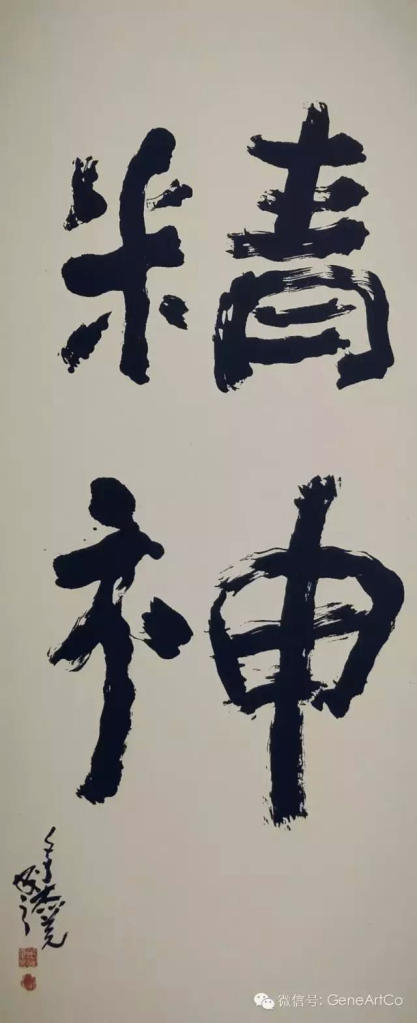
精神 Spirit by H.H. Dorje Chang Buddha III

H.H. Dorje Chang Buddha III Calligraphy Artworks

Chinese calligraphy has transcended its role as a mere communication tool and has become an art form highly esteemed even in an era dominated by ballpoint pens and computers. No longer limited to intellectuals and officials, calligraphy is now practiced by professional artisans and enthusiastic amateurs. Calligraphers employ brushes to beautifully ink five distinct styles of script: ‘seal’, ‘official’, ‘cursive’, ‘running’, and ‘regular’. While calligraphy can be found on various surfaces, even adorning the rocky walls of cliffs, it is most commonly seen on letters, scrolls, literary works, and fan coverings.

Throughout history, the Chinese have believed that no art form or field of study can truly reflect a person’s moral character and knowledge as effectively as calligraphy. The accomplishments or creations in other arts or fields often overshadow one’s shortcomings in knowledge and character. However, calligraphy stands apart from this convention. It functions as a three-dimensional mirror, projecting the depth of knowledge, moral character, and mental strength with each brushstroke. There is no hiding or concealing these qualities. When examining an individual’s ordinary handwriting of Chinese characters, one can often discern their level of education. This is even more evident when examining their calligraphy.

In the annals of history, there is no account of an unknowledgeable person making significant contributions to calligraphy. Profound and extensive knowledge does not necessarily guarantee expertise in calligraphy. However, great calligraphers possess both knowledge and skillful brushwork. Without exception, the renowned calligraphers of past generations were literary masters who possessed deep knowledge. Notable examples include Xizhi Wang, Su Huai, Shaoji He, Huaiguan Zhang, Fei Yue, and in more recent times, Youren Yu. Each of them was an erudite literary figure and exemplar of virtue.

Knowledge serves as the pillar and cornerstone of calligraphy, while moral character is reflected in the style and allure of the art form. Thus, calligraphy demands a combination of knowledge and moral character.


When one appreciate the calligraphy of H.H. Dorje Chang Buddha III, one can understand that why chinese believe that calligraphy combines one’s knowledge, moral character and mental strength .The calligraphy of H.H. Dorje Chang Buddha III Wan Ko Yeshe Norbu Holiest Tathagata is not bound by worldly conventions and is devoid of unnecessary flamboyance. It is highly refined and based upon ingenious artistic conception. His Holiness’s strokes are sometimes written in a swift curling style.
However, in an instant, His Holiness can express the innocent and natural charm of a child. There is wonder in even common strokes. His calligraphy is naturally graceful, exhibiting depth and brilliance. The calligraphy of His Holiness contains an invisible force that makes the characters seem much grander than they appear on a superficial level. His strokes look harmoniously smooth and unbroken. The Chinese characters may appear strong and vigorous, like a soaring dragon or mighty tiger. They may appear clear and gently elegant, like slowly floating clouds, cranes flying among pine trees, or dancing swans. They may appear simple and unadorned, like the free heart of a child. They are gracefully understated and completely devoid of any mundane quality. The calligraphy of H.H. Dorje Chang Buddha IlI is natural in quality and resonates with the true nature of the universe. A deep power underlies His Holiness’s strokes.

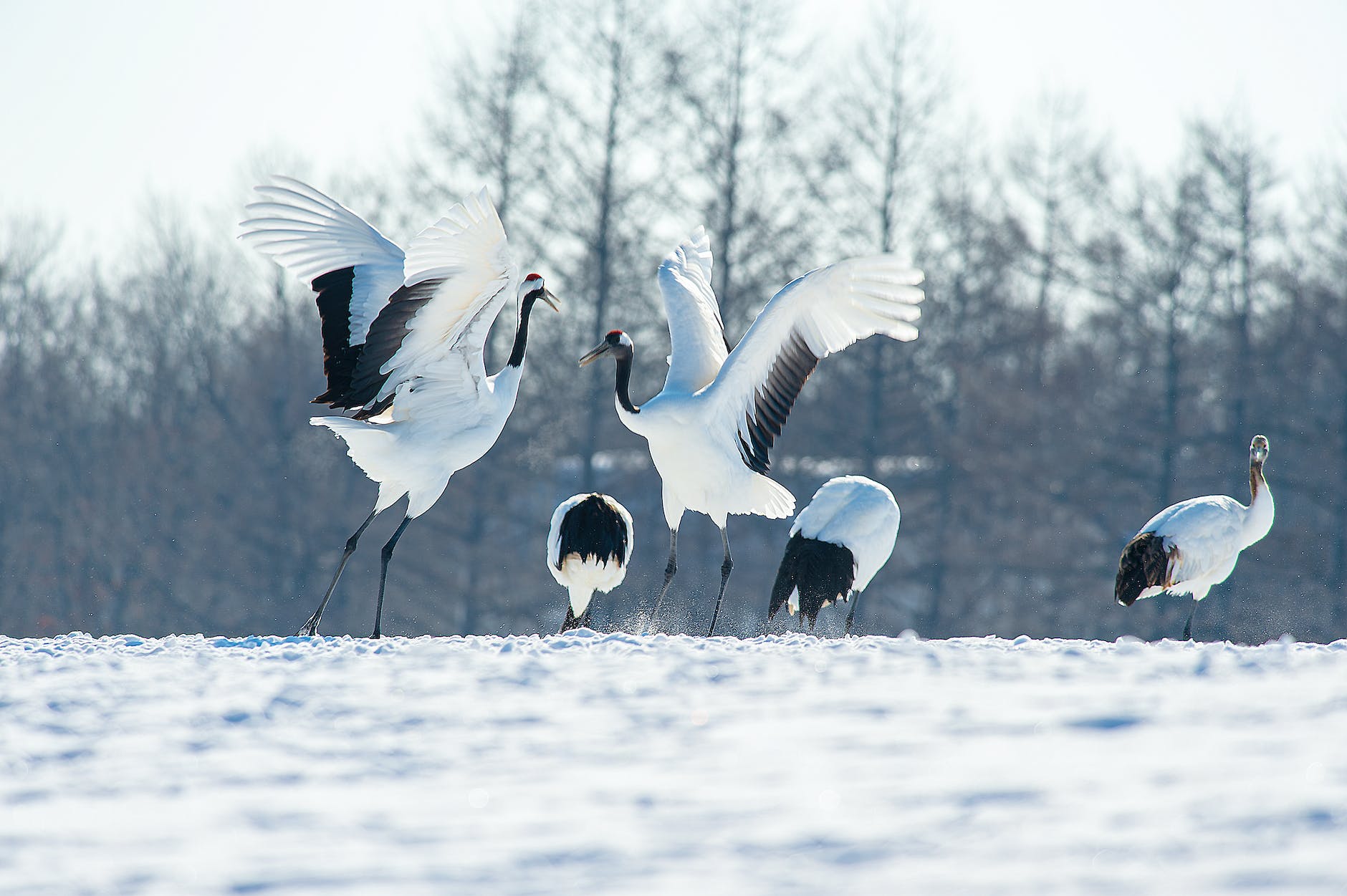
Photo by Klub Boks on Pexels.com
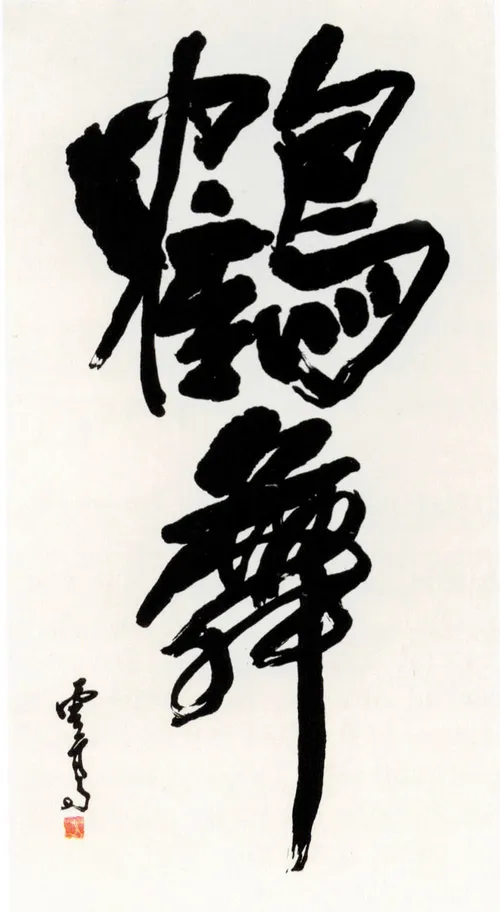
Crane Dance by H.H. Dorje Chang Buddha III at 1990

Red-crowned cranes tend not to build ness for themselves since they often stay in various places. When quiet, they frequently engage in meditational observation. When in motion, they frequently dance. Their nature is noble, pure, elegant and simple. They develop their virtue, are not attached to a specific abode, and take care of themselves so as to enjoy their natural lifespan. That is why since ancient times they have been praised for their longevity.


The ability of H.H. Dorje Chang Buddha III to reach such great heights in calligraphy is completely due to His Holiness’s vast knowledge and profound talents. Of course, His Holiness is extremely adept at learning from the styles of others since this is a simple matter for a Buddha. For example, even in the initial stage of learning calligraphy, H.H. Dorje Chang Buddha III had solid skills in the traditional cursive style of writing and also had extensive learning.

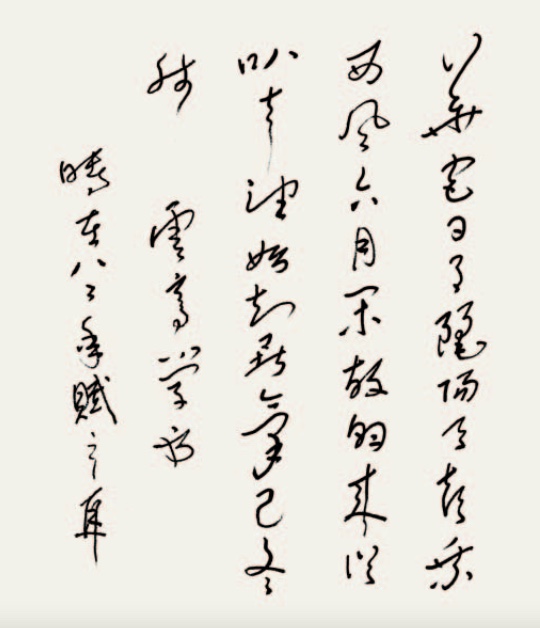
Calligraphy : A Qi jue poem (Thin Gold Cursive Style of Calligraphy)


Above is a qi jue poem written by H.H. Dorje Chang Buddha IIIat 1982. A qi jue poem is a four-line poem with seven characters to a line and a strict tonal pattern and rhyme scheme. The phonetic reading of the poem is as follows: “hua gong ri yue li yang tian, xi cheng xi feng liu yue xian, gu peng lai cong ba sheng wang, shi zhi shu qi yi dong can.” One can see that this work has surpassed all traces of the mundane and has transcended all earthly impurities. Its style is lofty and pure.
When that poem was written, H.H. Dorje Chang Buddha III was living in the seclusion of an ancient temple. His Holiness used his extraordinary realization to express his thoughts and feelings. The first line expresses that although His Holiness lived alone and secluded in the room of a temple, He governed the universe and bestowed blessings upon living beings.
The next line, “xi cheng xi feng liu yue xian,” conveys the scene that during the idle month of June H.H. Dorje Chang Buddha III bathed in the Buddha-state of coolness while under the scorching sun. His Holiness was free of all worldly cares and attachments, and his body merged with the universe. When friends came, His Holiness heard the horns of their cars, but He had already transcended the world, residing in quietude and non-action. H.H. Dorje Chang Buddha III kept no notion of the date, and His Holiness’s mind did not abide in anything whatsoever. The people of the world were ignorantly attached to the changing seasons and came in their cars and horses to inform H.H. Dorje Chang Buddha III that summer had long passed and the winter was about to end. The ancient Buddha acknowledged this and smiled.

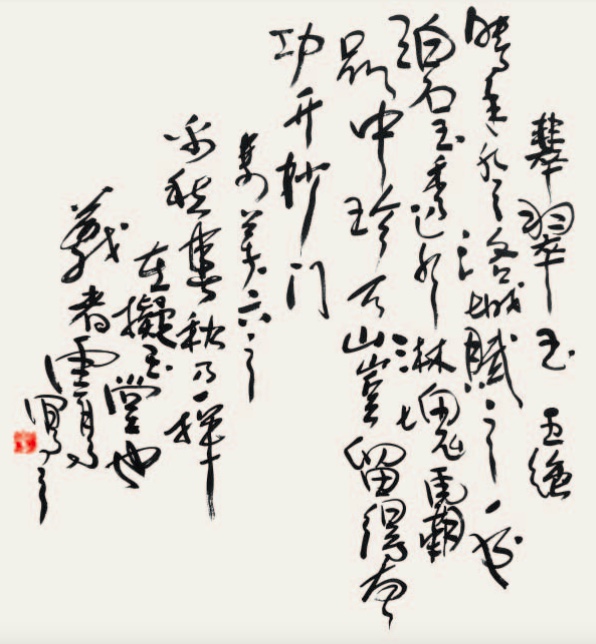
In recent years, there are works of H.H. Dorje Chang Buddha III that have been written in the cursive mode of calligraphy, showing a flowing and unobstructed style, and expressing even more than before the charm of this writing technique. For example, the work Fei Cui Jade expresses the spirit of an immortal or Buddha, thoroughly transcending the three worlds of reincarnation, standing proudly above the five elements of the universe. It is truly calligraphy beyond the category of calligraphy, expressing a feeling that incorporates the whole universe.

Fei Cui Jade: Created with an unfettered hand and unattached mind, it has the appearance of a celestial writing accomplished with a childlike mind and steady strokes of the brush.


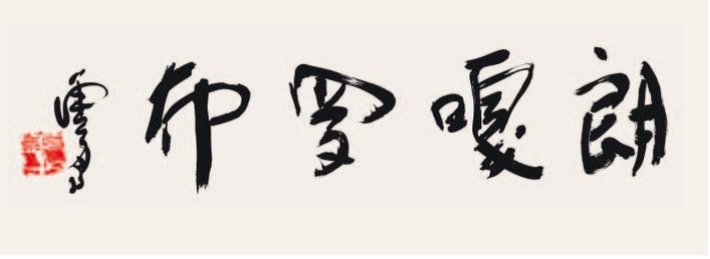
His Holiness’s calligraphy of the Chinese characters lang ga luo bu (Treasure of Heaven) excels the writing of calligraphers throughout history. It transcends all traces of worldliness. It expresses deep strength, like that which can break jade. The style of another calligraphic work called wu wo nai da cheng (No-Self Is Great Accomplishment), conveys the firmness and simplicity of steel and the vigor of a sharp knife. However, these same characters also contain delicate beauty. That calligraphic style truly surpasses styles of the past and present.

Lang ga luo bu (Treasure of Heaven)


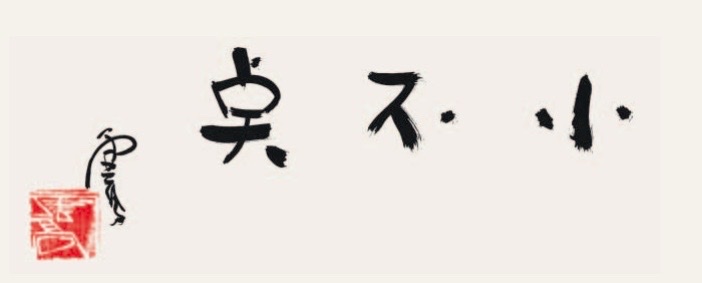
Another calligraphic style of H.H. Dorje Chang Buddha III is revealed in the writing of the Chinese characters xiao bu dian (Tiny). Such calligraphy shows the childlike innocence of a very old man, and its arrangement expresses the utmost ease and lack of rigid constraints. It is high-class calligraphy that does not even seem to be calligraphy. It is so elegant and refined that it completely transcends the mundane.

Tiny (Xiao bu dian)


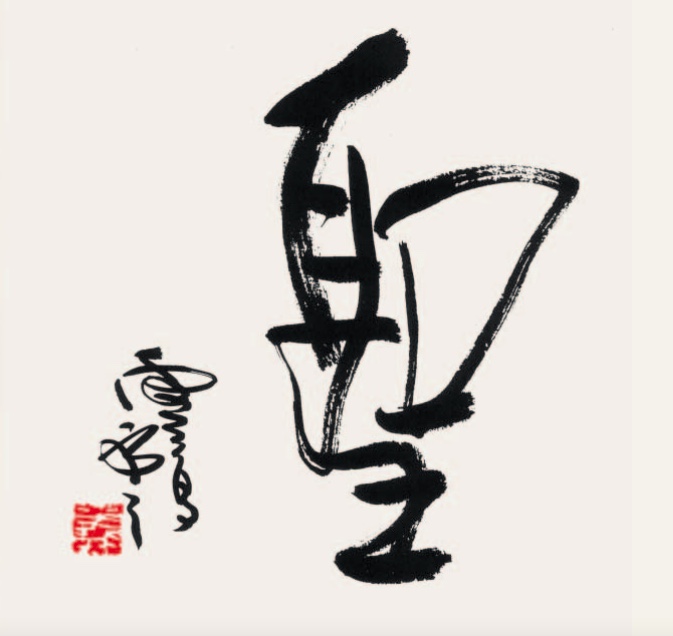
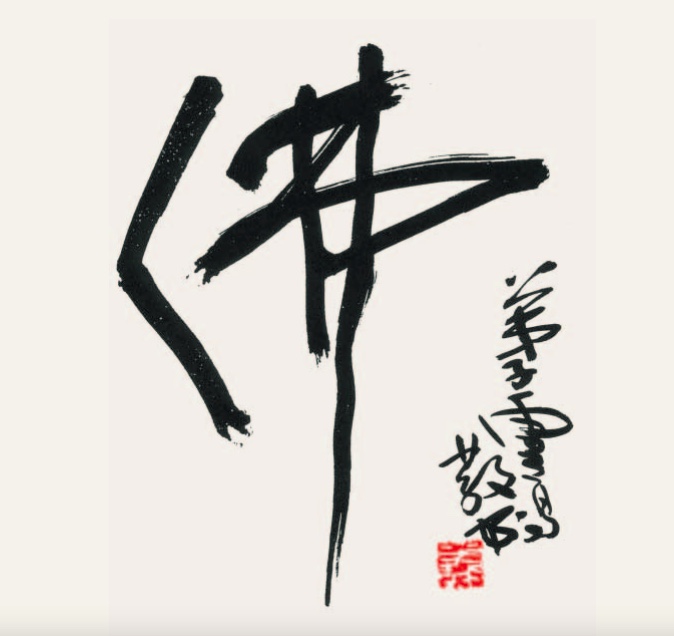
Beholding the character sheng (holy) written by His Holiness, one can see that it simultaneously embodies both the softness of ribbons and the inner-firmness of steel. Its inner beauty flows to the surface. Another example is the character fo, which means Buddha. The writing of that character demonstrates that His Holiness has truly attained the summit of calligraphic skills that the ancients extolled in the old saying, “the old pine branch cannot be weighed down by heavy snow; the might of a brush will lift a thousand-pound bronze cauldron.”

The Chinese character “sheng,” which means “holy.”
The Chinese character “fo,” which means “Buddha.”


In fact, the calligraphy of H.H. Dorje Chang Buddha III has a deep foundation and an internal richness. It embodies the manifold sensations that one could possibly experience in one lifetime. The essence of all things in the universe converges at the tip of His Holiness’s brush. With such a transcendent state of realization, the myriad things of the universe are in the palm of this Buddha. The calligraphy of H.H. Dorje Chang Buddha III is like a treasury. It can be vigorous, smooth, or naturally beautiful. His Holiness incorporates the best techniques of all of the schools of calligraphy. No words can really describe this!
His Holiness’s calligraphic skills have reached the highest degree of proficiency and naturalness that only a Buddha could reach!

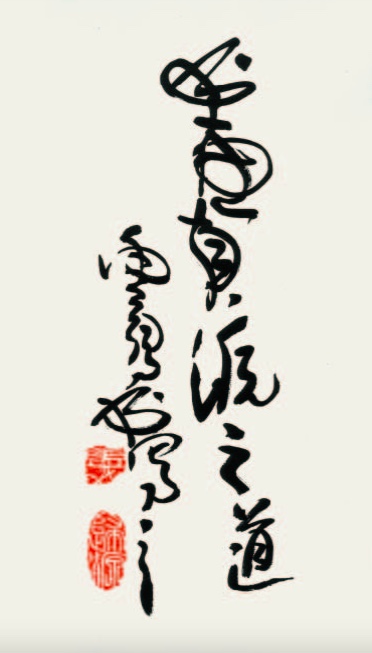
The Way to the True Source of Calligraphy and Painting
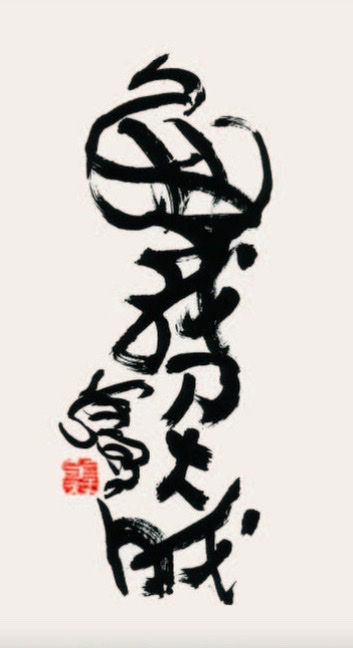
No-Self Is Great Accomplishment
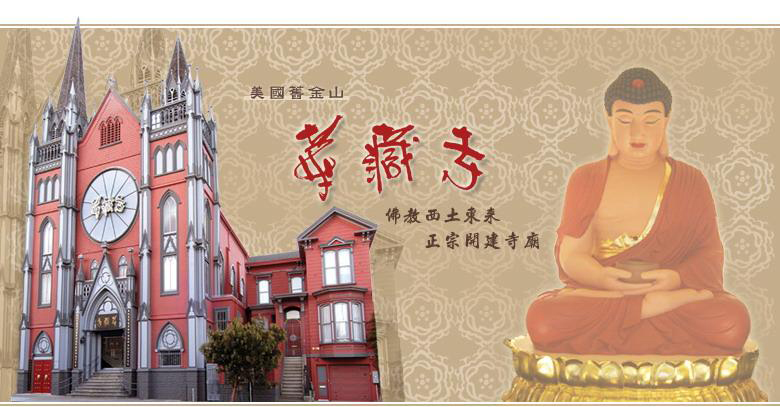
Hua Zang Si (Inscription of a Buddhist temple in San Francisco)

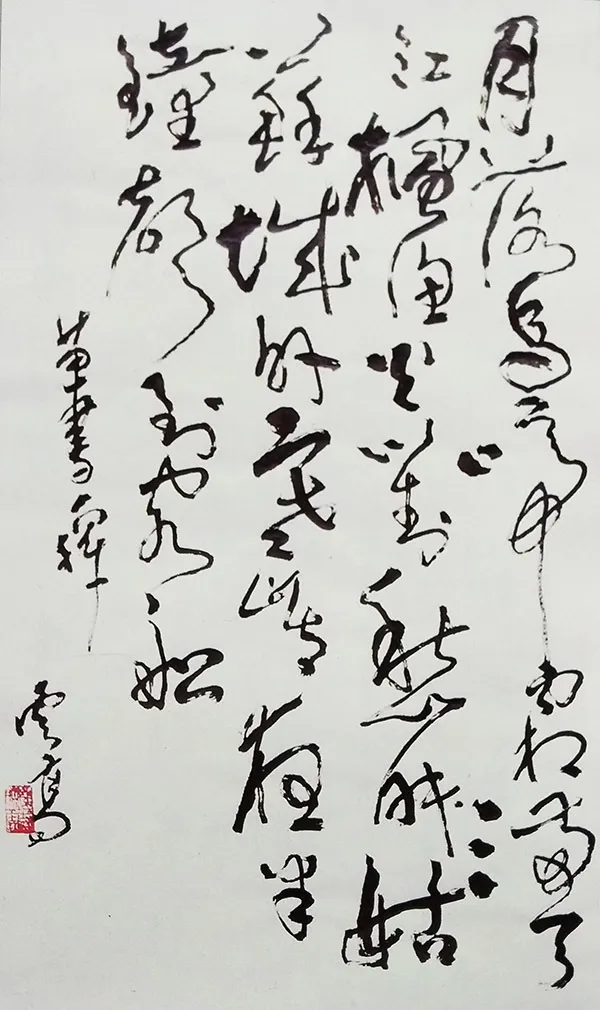
Chinese ancient poem Han Shan Si Temple in rapid cursive style by H.H. Dorje Chang Buddha III

You can discover a wealth of calligraphy artworks at The International Art Museum of America, situated in downtown San Francisco.

H.H. Dorje Chang Buddha III Calligraphy Artworks

Link:https://peacelilysite.com/2023/06/16/chinese-calligraphy-intangible-cultural-heritage-of-humanity/

#DorjeChangBuddhaIII #HHDorjeChangBuddhaIII#DorjeChangBuddha#IAMA#InternationalArtMuseumofAmerica#ChineseCalligraphy#Art

The Three Perfections: Image, Poem, and Calligraphy in Chinese Painting

In traditional China, painting was revered as “silent poetry,” while poetry was seen as “painting with sound.” Both art forms found expression through the medium of calligraphy, which was considered the “art of handwriting.” Scholars and artist-scholars incorporated calligraphic brushstrokes into their paintings, viewing their artworks as vehicles for self-expression. Consequently, painting was not only regarded as an art form of equal purity and lyricism to poetry and contemplative thought but also as a means to evoke sensory experiences, emotions, and a holistic engagement with the world.

For Western observers, it may be intriguing why Chinese artists incorporate writing in their paintings and what significance the characters hold. By examining some of H.H. Dorje Chang Buddha III’s paintings, we can gain insight into these questions and witness the embodiment of the concept known as the “Three Perfections.” This concept represents the harmonious fusion of fine painting, poetry, and calligraphy within a single artwork.

Song of the Waves in the Three Gorges by H.H. Dorje Chang Buddha III

This painting, titled “Song of the Waves in the Three Gorges,” beautifully captures the grandeur of splash-ink technique alongside the charm of water and ink colors. Its overall tone carries a weighty presence. The brushwork employed in this artwork evokes a powerful sense of momentum, lively charm, and a vividness akin to the scene of a long, flowing river just passing by. The inclusion of a few small sailboats adds elegance to the water scene as they gracefully navigate through it. The combination of the mighty river and awe-inspiring mountains, enveloped in mist and holding sacred spaces, has a purifying effect on one’s emotions. This painting possesses a quality that is reminiscent of both poetry and calligraphy.

Notably, H.H. Dorje Chang Buddha III has inscribed an elegant Chinese poem onto this painting, which can be translated as follows: “The song of waves echoes in the gorge. Hanging colors of rocky cliffs burst with charm. A few cloudy, misty mountains reveal shades of blue. The vast water’s melody sets the sails in motion.” This poem aptly captures the beautiful and misty landscape of the Three Gorges, where the water and sky harmoniously blend, and human emotions become intertwined with the scenery. This painting serves as an artistic paragon, showcasing the mastery of poetic, calligraphic, and painting skills.

Yi Shan Shui Yun Liang Qing Nong ( One Landscape Charm Presents Two Strong Emotions) By H.H. Dorje Chang Buddha III

This remarkable painting showcases a rare combination of splash-ink and splash-color techniques, displaying the artist’s bold and skillful brushwork. The resulting natural effect achieved through these techniques is truly indescribable. Within the bold and dynamic brushstrokes, one can discern countless intricate details and traces of charm emerging from the flowing watery ink.

The painting depicts a scene of mountains and water during the approaching dusk, conveying a profound message. The poem imparts the wisdom that we should strive to engage in virtuous deeds rather than harmful actions, treating all living beings with kindness and respect. By embodying such a way of life, one can transcend to another realm and grasp the truth of existence beyond the concepts of birth and death. This painting offers a profound contemplation on the purpose and significance of human existence.

The calligraphy in the two art works are executed in a cursive style, known for its swift and dynamic strokes. Cursive writing is often characterized by its rapidity and vitality, effectively conveying the artist’s profound emotions.

These paintings are in the permanent exhibition at The International Art Museum of America  in downtown San Francisco. Admission of the museum is free.

The Three Perfections: Image, Poem, and Calligraphy in Chinese Painting

Link:https://peacelilysite.com/2023/06/02/the-three-perfections-image-poem-and-calligraphy-in-chinese-painting/

#DorjeChangBuddhaIII #HHDorjeChangBuddhaIII  #MasterWanKoYee #Buddha#IAMA#InternationalArtMuseumofAmerica #ChineseCulture #ChinesePainting#ChineseCalligraphy #SplashInk #WaterColor

A Chinese Painting Conveys Profound and Enchanting Meaning

A Lotus Pond Has Carp by H.H. Dorje Chang Buddha III

The Title “A Lotus Pond Has Carp” suggests profound Philosophical implications that transcend everyday life. In addition to its masterful artistry, the painting contains subtle messages of the Dao and its fruits. The lyrics on the left and right sides of this work correspond perfectly with the image of the fish, forming a whole that awakens and enlightens, richly rewarding its viewers.

Why is this painting so artistically enchanting that it stirs the hearts of those who see it? One reason is that the fish are depicted with uncanny realism. The swimming carp are infused with vitality. The painting’s details clearly reveal the damage done to the carp’s skin, accumulated over a lifetime in the water, through lines that fade in and out. Appearing as delicate as a fine gauze, the translucent fins, for example, possess a natural realism. Texture and spirit are captured with utter precision, providing the viewer with stirring aesthetic pleasure. The surface and bottom of the pond are depicted with a wonderfully hazy charm, while the lotus flowers, leaves, and pods are portrayed in bold freehand brushwork with distinct and unusual brushstrokes rapidly applied.

The painting is mainly composed of back ink and rich colors. Only a few brushstrokes were used to create each vibrantly red flower, which seem to emit a pure fragrance. The hanging lotus pods embellish the painting, conveying an elegant contrast of hues and instilling a sense of vitality. As the fish swim about, free of any inhibition, the sunlight faintly reflecting off the water ripples provides the illusion of movement that occurs in the natural world.

When examined more closely, the painting has an intricate style to ascertain, for it seems to transcend realistic fine brushwork and convey the feeling of freehand brushwork. It is not in the style of conventional paintings. Instead, freehand brushwork was applied to produce the effect of fine brushwork with close attention to detail.

Fine brushwork was applied that transcends realism. The real and the surreal blend, resulting in a work that excels the beauty of a natural lotus pond. It represents a combination of techniques from the “Menglong” style of painting and bold, large-scale freehand brushwork.

For the painting, H.H. Dorje Chang Buddha III composed these lyrics of a Dao song: “No Dao exists on the high mountain, yet hearts yearn to go there. A lotus pond has carp; men have inquired about them. Which path leads to the truth is worth pondering. It would be better to look tranquil to our original nature, like a lotus flower sitting over its leaves in tranquility.” These lyrics speak of mysteries unknown to the ordinary person – seeing fish, not as fish; seeing water, not as water; no Dao exists on the high mountain, so no value exists in searching for it; and the fish have neither life nor death.

To understand the origin of the painting, we must ask: where did the fish come from? What state of realization was relied upon and gave birth to this exquisite painting? What form of realization manifested this mysterious, hazy, and illusory painting? The magical illusion of the fish and water is nothing more than a superficial image. Spirit is within; A life force underlies spirit. Spirit is empty or nothingness. The original essence of all things is neither empty nor substantive. Everything illusory and impermanent quickly changes in time and space, but their original nature remains constant. Thus, the lyrics of the Dao song continue: “To find our original nature, do not seek the source, as the source is our original nature, tranquil and unmoving, like a lotus flower sitting over its leaves in tranquility. There is no such thing as arising, passing away, and change. From this surpassing wisdom, usages that arise from Buddha-nature will naturally manifest. These usages include calligraphy and painting. Only in such a way is a consummate work created.” Thus, one should understand the tremendous meaning of this song of Dao written in this painting. Profound mysteries are deeply hidden within it.

In case the viewer remains oblivious to right stanza, on the left side of the painting, the second stanza of the song continues with: “The carp rely on the Dao, and the Dao awakens the fish.” The Dao refers to the state of holy ones, a realm that transcends the realm of ordinary people. It does not refer to regular abilities. The artist created this carp painting based on such a holy state. “The Dao awakens the fish” means that this painting of carp in a lotus pond was accomplished based on the wisdom of the transcendent Dao. Only with such wisdom could this lifelike, graceful scene of carp swimming in water be painted, a setting that combines the real and the surreal, emptiness and substance in such a wondrously appealing way. This scene of carp complimented by the boldly and powerfully depicted lotus leaves results from the artist’s awakening to the holy Dao.

This painting of carp, then, is merely an expression of one who has attained the Dao and reached enlightenment. Thus, this work is not just an ordinary combination of brush strokes, color, ink, and water. Instead, it results from techniques derived from the beautiful application of holy wisdom. The profound mysteries contained in “A Lotus Pond Has Carp” cannot possibly be conveyed by the superficial meaning of the words in its title! Actually, this explanation is entirely unnecessary. All those with discerning eyes will understand once they see the lyrics of the Dao song and the calligraphic skills with which they were written on the painting.

A Chinese Painting Conveys Profound and Enchanting Meaning

Link:https://peacelilysite.com/2023/05/25/a-chinese-painting-conveys-profound-and-enchanting-meaning/

#DorjeChangBuddhaIII #HHDorjeChangBuddhaIII#DorjeChangBuddha#IAMA#InternationalArtMuseumofAmerica#ChinesePaintings#Carp #LotusPond #Painting #Lotus

Source: https://new.artsmia.org/exhibition/the-three-perfections-image-poem-and-calligraphy-in-chinese-painting, iamasf.org

Congress Honored Dr. YuHua Wang

On November 13th 2008, at the Capitol in Washington D.C., several members of Congress and the Congressional Arts Caucus held an exhibition of the artwork of Professor Yuhua Wang and an official reception honoring her. The exhibition hall was crowded with people, including numerous officials and dignitaries. Many members of Congress, council members of the District of Columbia, ambassadors, and diplomats came to appreciate the exhibits on display. They praised the beauty of the artwork as being beyond imagination and praised Dr. Wang for bringing the light of beautiful art into the Capitol. Even after the exhibition ended, there were still members of Congress who came to the exhibition hoping to view Dr. Wang’s works of art.

Professor Wang personally attended the official reception in her honor. The hall was filled to capacity, making it a very grand occasion indeed. Members of Congress and members of the Congressional Arts Caucus added their support by signing and presenting certificates of commendation. During the official reception, members of Congress gave speeches expressing their respect for Professor Yuhua Wang. They praised Professor Wang for her outstanding contributions to world color-painting, sculpture, oriental arts, and the development of cultural exchange. A Congressional Commendation stated that Professor Wang is a selfless person whose moral character is noble. It also stated that through her practice of Buddhism, she benefits humanity and all living beings. Members of Congress who initiated the exhibition proudly presented that Congressional Commendation to Professor Wang as a symbol of appreciation and gratitude for her service to America and humanity. The Mayor of Washington D.C., Adrian M. Fenty, presented to Professor Wang a certificate welcoming the exhibition of her artwork in the nation’s capital and welcoming her to visit the entire area of Washington D.C.

Members of Congress who initiated and held this art exhibition included Corrine Brown, Danny Davis, Eliot L. Engel, Adam Schiff, Neil Abercrombie, Chaka Fattah, David Wu, and others.

Dr. Yuhua Wang was born in China and permanently resides in the United States. She is currently a research professor at the College of Liberal Arts at Auburn University in the United States. She has been highly commended by the president and vice-president of Auburn University and by the dean of the college where she is a visiting professor for her achievements in the study of colors. Her faux coral and cobblestones that she hand-sculpted from light-weight material and painted have been praised in the Congressional Record as being “treasures of the world.” The Congressional Record also states, “In the history of Chinese art, her lotus flower paintings are unsurpassed…”

Professor Stephen Farthing, who is a world-renown authoritative scholar on art, the Rootstein Hopkins Research Chair in Drawing at the University of the Arts in London, and a R.A. (Royal Academician), evaluated the artwork of Dr. Wang. He concluded that her paintings may draw heavily upon the traditions of Eastern art but they present themselves as extraordinarily western ideas and images. He also said that Dr. Wang’s paintings very elegantly bring two forces together-the force that rejects perspective and the force of photorealism. In his short foreword to the book World’s Highest-Level Color Paintings and Ink-Wash Paintings-the Art of Professor Yuhua Wang, Professor Farthing wrote that that the space Dr. Wang’s paintings occupy was only opened up in Western culture in the 20th Century. He also wrote that Professor Wang’s paintings “…reach across cultures to celebrate the space that exists intellectually and emotionally between representation and abstraction, between a fact and an idea.”

It is said that a person’s creations are a reflection of his or her character. Dr. Yuhua Wang has always been a very diligent person who leads a simple life. Even when she is ill, she still attends to her daily life and is unwilling to have others do her work. All who meet her sense her goodness, compassion, friendliness, elegance, and noble character. Seeing her creations is like seeing her in person. In either case, one is left with a feeling of great comfort, ease, and peace.

On July 30, 2008, the United States Congressional Record affirmed that “…Dr. Yuhua Wang…has been recognized as a great artist and sculptor.” It was also stated in that Congressional Record that she takes great pleasure in helping others, is a selfless person whose moral character is noble, and has made great contributions to the development of cultural exchange between the East and West. Additionally, Denis G. Antoine, Ph.D., Dean of the Ambassadors of the Western Hemisphere, wrote in a congratulatory letter that the color forms created by Professor Wang are pioneering and without comparison, and her paintings unleash blissful emotions. He also wrote that Professor Wang’s works make people not only think of but also perceive a world of colors that brings a calming a peaceful impact on the mind.

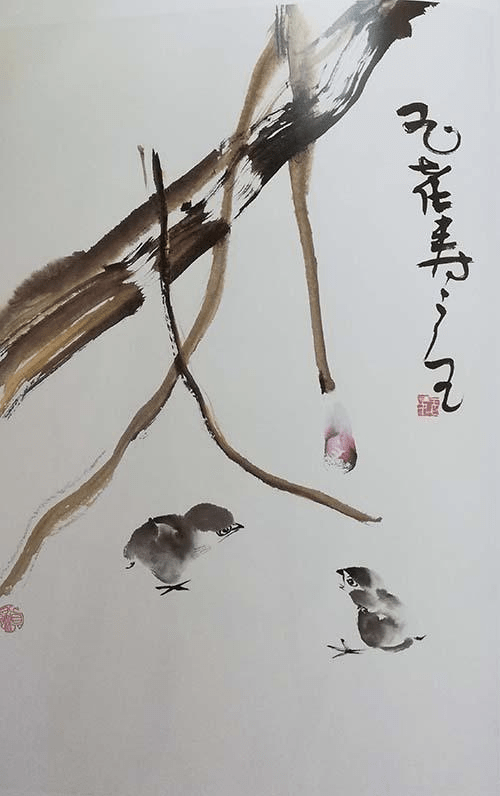
The exhibition displayed four of Professor Wang’s hand-sculpted faux coral painted in oil colors. Those works are entitled “Glamour in Pink,” “Arching Branches,” “Parched Antiquity,” and “Cinnabar Nectar.” Another exhibit is called “Seventy-Seven Stones,” which are exquisitely hand-sculpted and painted faux cobblestones. Additionally, there will be displayed ten ink-wash paintings called “Spiritual Air,” “The Appeal of Lotuses,” “Two Chicks Under the Wool Tree,” “Ink Alone Excels Nature,” “Auspicious Atmosphere at the Lotus Pond,” “Light, Elegant Ink; Three Lovely Flowers,” “Yuhua,” “Lotus Fragrance Blown by the Wind,” “Golden Lotuses,” and “A Bit of Charming Autumn Scenery.” The three oil paintings on exhibition were “Flying Object in the Night,” “Heavenly World,” and “Exuberant Life.” All of these exhibits were authentic, and most of them were chosen by International Arts Publishing to be included in the book World’s Highest-Level Color Paintings and Ink-Wash Paintings-the Art of Professor Yuhua Wang.

At the exhibition, news reporters asked Professor Yuhua Wang which one of the works of art that she created is her favorite. Her answer, which she gave without hesitation, has profound meaning. She said, “Whichever work of art is everyone’s favorite is my favorite work of art!”

United States Senator Dianne Feinstein stated in her certificate of commendation that Professor Wang’s work in the oriental arts across the nation has distinguished her as a leader in the field. In a congratulatory letter, United States Congressman Edward Royce praised Dr. Wang for her outstanding accomplishments in education and art, especially in the areas of lotus flower paintings and sculpting.

Professor Wang’s hand-sculpted faux coral on which she painted oil colors are even more genuine-looking and more beautiful in form and color than real coral found at the bottom of the sea or on islands. Touching these works of art is like touching real coral that has been immersed and eroded in water. One cannot help but admire Dr. Wang for creating coral with a texture of having been immersed and eroded in water for thousands of years. This texture is difficult to find even with real coral at the bottom of the sea. The forms and colors of her faux coral reveal a quality of elegance and good taste. Such works of art are many times more beautiful than natural coral and have become rare artistic treasures. It is no wonder that her art is regarded as “treasures of the world.”

The cobblestones that Professor Yuhua Wang hand-sculpted from light-weight material and painted are exquisite and were made with meticulous attention to detail. These intriguingly and unpredictably varied faux cobblestones are not only genuine-looking, they are even more beautiful than real cobblestones. Their spots, streaks, watermarks, weathered appearance, reflecting light, and hues are all lifelike and exquisite. In all of their myriad variations, these cobblestones capture the spirit and form of real cobblestones yet surpass the beauty of natural ones. None of her cobblestones duplicates any other cobblestone in form, lines, color, or extent of weathered or aged appearance. Each cobblestone is in and of itself a meticulously and realistically painted work of art. Just like Leonardo da Vinci’s Mona Lisa and Vincent van Gogh’s Sunflower Paintings, Dr. Wang’s oil painting on these cobblestones has been called wondrous color application and the most superb art in the world.

The ink and wash paintings of Professor Wang are boldly arranged yet lack the slightest trace of affectation. They have an air of ease and smoothness and convey a sense of complete naturalness. They express loftiness and broadmindedness and are imbued with deep charm and liveliness. Those works of art by Professor Wang can indeed be called ink and wash paintings of the highest order.

A great artist concluded that the lotus flowers painted by Professor Wang are the best in the world. He said, “She has an amazingly wide variety of techniques that she applies in an unpredictable way. It is hard to imagine that there is someone in this world with such adroit artistry. In her brushwork, she merges charm, strength, hues, scholarliness, graceful jaggedness, vitality, self-cultivation, and morality.”

The modern paintings of Dr. Wang have a unique style to them. Their lines flow smoothly and freely. Their diverse and unpredictable color combinations can express bold intensity, overflowing enthusiasm, traditional elegance, inspiring vitality, rustic charm, or majestic splendor. Those paintings are truly a feast for the eyes. Deeply embedded within them are feelings and wondrous skills. Her modern paintings are very sophisticated and should be carefully viewed. Actually, a magnifying glass would reveal that each of the many different parts that make up one of her modern paintings is a work of art in and of itself with its own unending appeal. This proves that Professor Yuhua Wang’s color application in modern paintings is another area where she has attained consummate artistic mastery.

Take, for example, her work entitled Yuhua. The leaves were painted with bold strokes, giving them a sense of natural charm. The stem was painted from top to bottom with one vigorous stroke of the brush, producing a gracefully jagged effect. The flower conveys the sense that it was painted with ease. It does not have the form of a flower but appears like a flower. This adeptly created work is not tainted by the slightest artificial brushstroke. In all of these aspects, Yuhua embodies the apex of artistic accomplishment.

The exhibits displayed in this Congressional exhibition deserve to be called works of art that are unique in the entire world.

Congress Honored Dr. YuHua Wang

Link:https://peacelilysite.com/2023/05/19/congress-honored-dr-yuhua-wang/

#Art#Artist#ArtAuctions#ChineseInkPaintings#Dr.YuhuaShouzhiWang#FirstClassA #Congress

#Capitol#WashingtonDC

Gao Zu Bao MaXi (High-Leg Treasure Horses)

Gao Zu Bao MaXi (High-Leg Treasure Horses)
Artist: H.H. Dorje Chang Buddha III 

The High-Leg Treasure Horse is a thoroughbred horse with great stamina. When this treasure horse perspires, it appears to be bleeding due to the color of its perspiration. According to ancient legend, it is the most precious among all species of horses. It has the reputation of being able to travel over three hundred miles a day. Long mane hairs and a mighty, strong-willed, handsome appearance are its prominent characteristics.
The High-Leg Treasure Horses in this painting have longer legs than horses commonly seen in paintings. The hairs of their manes are also long and strong. An extremely rare brushwork technique that combines haziness with clarity was applied to paint the hairs of the horses. The gossamer-thin hairs are strong but pliable. One can clearly see the natural effect of sunlight on the horses’ manes. Moreover, contrasting variations of dark and light are seen in every hair. The hairs of the horses are depicted with a realistic effect that nonetheless transcend their natural look.


An artistic technique was used to thoroughly capture on paper the charm and atmosphere of the grassland, lake, sky, and land. The “haziness technique” was applied to express a state of realization in which there is no distinction between emptiness and form.
The ancient cypress tree was drawn in one shade of green without the need to add decorative touches in several different shades of green. Both the spirit and form of the tree were captured through the artist’s brush. In addition, elegant charm is revealed by a small number dots of red leaves in the background that compliment the scene. The most difficult part of this work of art was painting the roots, trunk, and leaves in a spontaneous, casual manner using the center brush-up technique yet maintaining a scholarly tone. Such mastery of painting cannot be easily attained and requires solid skills in calligraphy, literature, and painting as well as a noble moral character.
From the brushwork style and details of this painting, we can sense the profound inner-cultivation of a renowned scholar. The abilities of a literary giant with abundant talent are visible everywhere. The scholarly tone and brushwork style are skinful and vigorous, totally free of any trace of the mundane, and reflect the highest level of painting and calligraphy.
Anyone who lifts a brush in an attempt to paint such painting will appreciate the fact that this scholarly style cannot be accomplished by anyone other than a literary giant who is a great master of art.
This painting coherently unites realism and small-scale freehand brushwork as well as the use of haze and clarity.

This painting is in the permanent exhibition of The International Art Museum of America. H.H. Dore Chang Buddha III, an artist of great talent, has created sixteen distinctive painting styles. The composition we are discussing here belongs to the “Menglong” style. This style combines realism and non-realism to capture the essence of the portrayed subject, resulting in a seemingly realistic but actually non-representational depiction. The brush strokes and color application in these paintings create a whimsical and dreamlike appearance, where the real and surreal merge into a lovely and hazy composition.

Gao Zu Bao MaXi (High-Leg Treasure Horses)

Link:https://peacelilysite.com/2023/04/25/gao-zu-bao-maxi-high-leg-treasure-horses/

#MasterWanKoYee #DorjeChangBuddhaIII #HHDorjeChangBuddhaIII#DorjeChangBuddha#IAMA#InternationalArtMuseumofAmerica