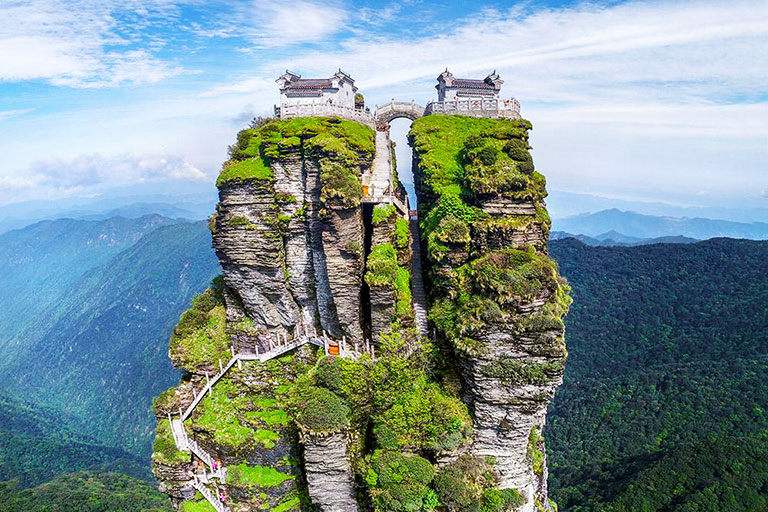
XuanKongSi – The most Dangerous Monastery

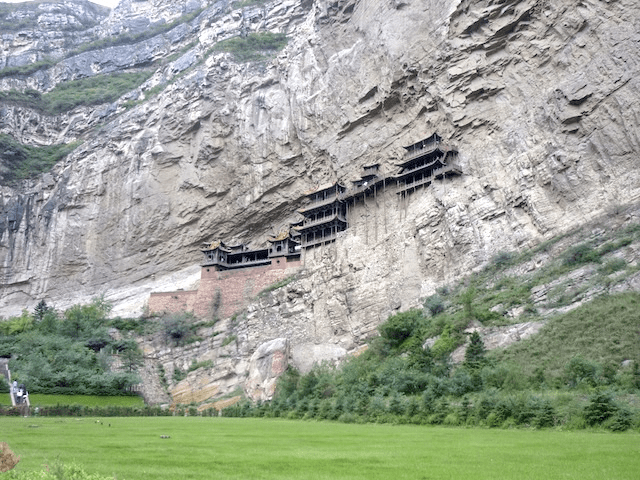
Hanging Temple, China [huanqiu.com]

Some ancient structures were purposely and skillfully constructed at the riskiest of locations or sometimes just had their appearance altered to reflect a sense of danger and awe. These ancient buildings are so remarkable that even modern scientists are amazed and astounded by them.

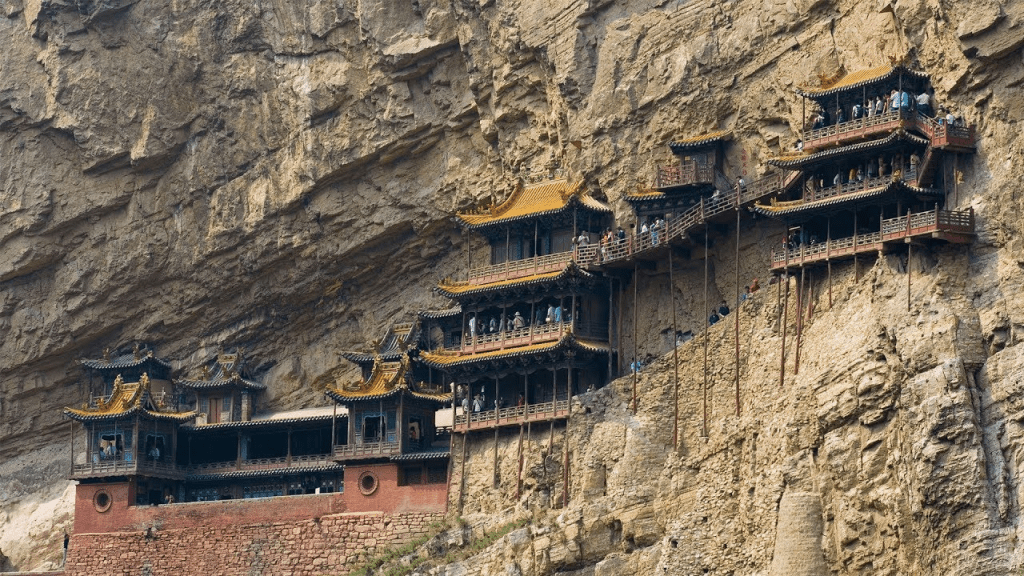
There are 10 most dangerous structures in the world, XuanKongSi Temple in China is one of them. Temples and monasteries were usually built on the ground, and if there was no money or it was necessary to hide from someone, then under the ground in caves. It seems impossible to think of anything else, but the temple tells us otherwise. It turns out that in one of the northern provinces of China, there is a so-called Hanging Temple which seems to be attached to the Rock at a height of 75 meters. It was built almost 1500 years ago in 491 during the northern Wei Dynasty. The Chinese call this Temple complex XuanKongSi.

The temple is located in Shanxi Province, 65 kilometers southeast of the city of Datang, it looks as if the entire Temple is held up on a steep Cliff by the power of Prayer. Perhaps prayers help because the temple is unique; it is the only Temple of three religions in China. It combines Buddhist, Taoist, and Confucian altars. It has everything that other temples have: the main gate, the bells, and drum Towers, the main and side Halls. The largest structure of the monastery is called sangana, and it stands on a stone ledge. There are also 40 halls in Pavilions, but they are smaller than the sangana. They are built on pallets that lie on beams hammered into the Rocks. The rock is used as the back wall of the rooms, and niches are made in it for statues. The larger the niches, the more statues they contain, and the larger they are.

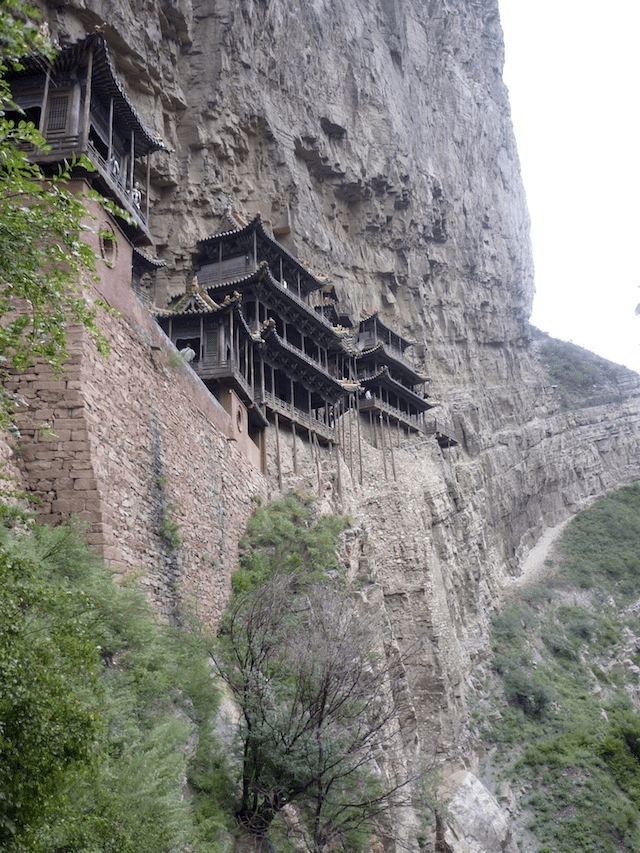
Upon first glance, the temple’s buildings seem to have been partially swallowed by an expanding mountain rather than built onto and into it. Some of the pathways that connect the separate buildings are hewn into the mountain. Others feature the same design as the buildings themselves – parked atop seemingly impossibly-thin wooden poles.

It is composed of three main sections:

North Pavilion

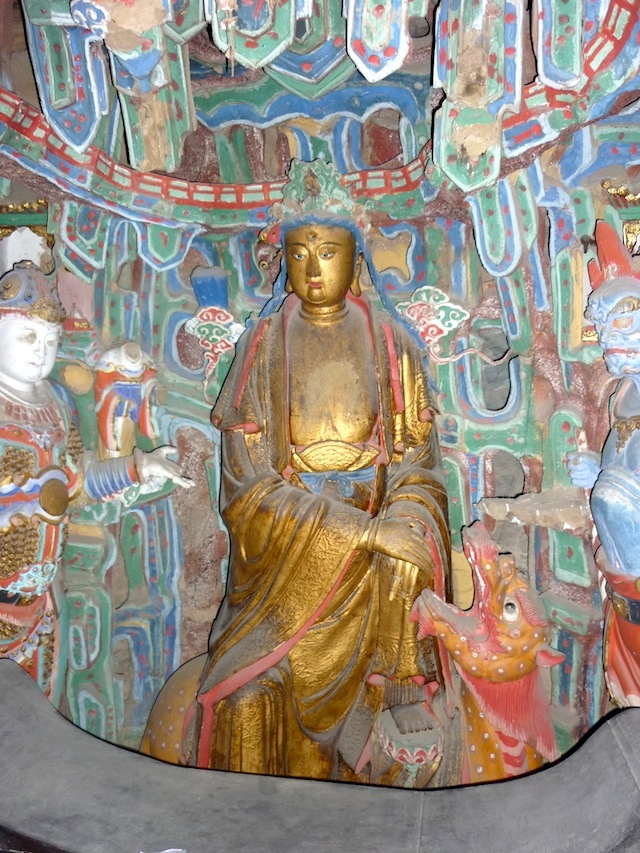
This pavilion is three storeys tall, 4 metres (13 feet) wide and 7 metres (23 feet) in length. Wufo Hall, which is located on the lowest floor is dedicated to the Five Dhyani Buddhas. Above it is Guanyin Hall and on the top storey is Sanjiao Hall. Sanjiao Hall, or the Hall of the Three Religions is widely regarded as the most important room in the Hanging Temple, at least in terms of symbology. It contains large statues of Buddha Shakyamuni, Lao-Tze and Confucius standing together.

SanJiao Hall

Given that the Hanging Temple is the only surviving example of the concept of the Three Teachings Harmonious as One, the Hall of Three Religions is perhaps the most important of these chambers. The idea of Three Teachings Harmonious as One, which emphasises the complementary nature and unifying ideas of Buddhism, Taoism and Confucianism, flourished during the Ming and Qing Dynasties.

Accordingly, the hall features sculptures of deities of all three religions. Three large statues take centre stage here: Buddha Shakyamuni in the middle, flanked by Lao-Tze on his left and Confucius on his right.

GuanYin Hall

South Pavilion

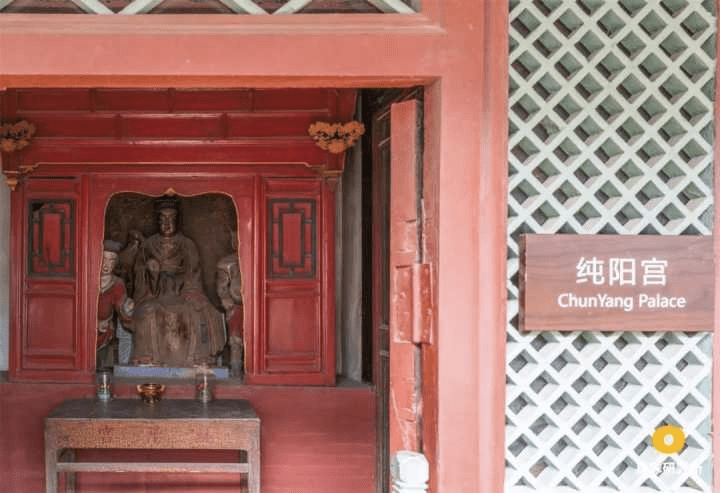
Slightly larger than the North Pavilion, it is also three storeys tall and 4 metres wide but longer at 8 meters (26 feet). The North Pavilion contains Sanguan Hall. It is the biggest hall of the Hanging Temple and is home to a 2-metre tall clay sculpture, the largest in the complex. On the middle storey is Chunyang Palace, which is dedicated to Lü Dongbin, one of the Eight Immortals of Taoism. He is the most popular Taoist character in Chinese culture. Leiyin Hall, which is dedicated to Buddhist deities is on the top storey.

The Long Bridge

The top storeys of the two pavilions are linked by a 10-metre (30 feet) bridge (a stairway has been cut into the mountainside to link the lowest storeys). A small balcony for worshipping sits above the bridge.

XuanKongSi007

However, as impressive as the Hanging Temple appears from the outside, the bulk of the builders’ efforts went into the portion of the complex that is ensconced within the rock. 40 halls and pavilions lie inside, covering an area of 125 m2.

The biggest and most prominent halls are the Hall of Three Religions, Guanyin (Avalokiteshvara) Hall, Hall of Shakyamuni, Qielan Hall (Hall of Sangharama), Sanguan Hall (Hall of the Three Officials) and Chunyang Hall.

Spread throughout the other halls are 78 sculptures made from stone, terracotta, copper and iron. They are remarkable for their vivid and detailed depiction of facial features and clothing.

Construction

Despite its precarious location and the logistical challenges construction must have presented, no design feature that is seen in other temples of the period has been spared. The two main buildings sport traditional multiple-roof designs, eaves and balconies with images of auspicious creatures like dragons common to Chinese holy structures.

Today, the part of the temple that extends beyond the face of the cliff is supported by poles made of oak. These poles have been inserted into holes chiselled out of the rock. From a distance, the brown oaken poles meld into the background, making the temple appear to float in the air.

Amazingly, the real support framework for the temple complex is hidden within the mountain and the structure itself. If these external vertical poles were removed, the hanging temple would continue to hang!

While it’s impossible to overlook the fact that the architecture disrupts the natural rock wall formation, a closer examination reveals something quite astounding. The way the roof, walls, and other structures seamlessly integrate with the rock pattern suggests that significant care and effort were put into minimizing any unnecessary destruction.

A unique mechanical theory guided the construction of the framework. Crossbeams were partially inserted into the rock as the foundation, while the rock in the back provided support. The Hanging Monastery seems to defy gravity, appearing to float in midair.

At certain points, a roof will abruptly end at an outcrop, only to resume on the other side, leaving the stone intact. This not only benefits the structural integrity of the building but also signifies a harmony with nature, a state to which all Buddhists aspire.

Construction experts from countries including Britain, Germany, and Italy have visited the monastery. In their opinion, the Hanging Monastery, which melds mechanics, aesthetics, and Buddhism, is a rarity. The monastery and everything it represents is a significant cultural achievement of the Chinese people.

Source: https://www.tsemrinpoche.com/tsem-tulku-rinpoche/art-architecture/the-hanging-temple.html, https://7wonders.org/asia/china/datong/hanging-temple/

Mount Jizu

Photo From https://www.visityunnanchina.com/attractions/natural-attractions/mount-jizu

In my eyes, Yunnan Province is the most beautiful province in China. Its mild climate throughout the four seasons and its unique geographical location give Yunnan breathtaking natural scenery. The numerous ethnic minorities in Yunnan add to its diverse cultural customs. Yunnan is both romantic and passionately exotic, yet also elegant and graceful. It is truly charming and enchanting. Jizu Mountain is one of my favorite places there.

Mount Jizu (Chicken-foot Mountain) is situated in Dali Prefecture. The mountain is located to the northeast of Erhai and forms the tripoint of three counties:  Heqing,  Binchuan, and Dali City. With three mountain ranges to the front and one range to the rear, it resembles a chicken’s foot, hence its common name is Mount Cock’s Foot or Mt. Cock’s Claw. Yet another name for this mountain is Nine Strata Cliffs.

Mount Jizu is a famed holy mountain in Buddhism. Its main peak, Tianzhu Peak, rises some 3,240 metres above sea level. The mountain is vegetated with dense forests and bamboo groves.

From it, visitors can see the sunrise in the east, floating clouds to the south, Cangshan Mountain to the west and Jade Dragon Snow Mountain in the north. They are described as the “four wonders seen from the mountain top.”

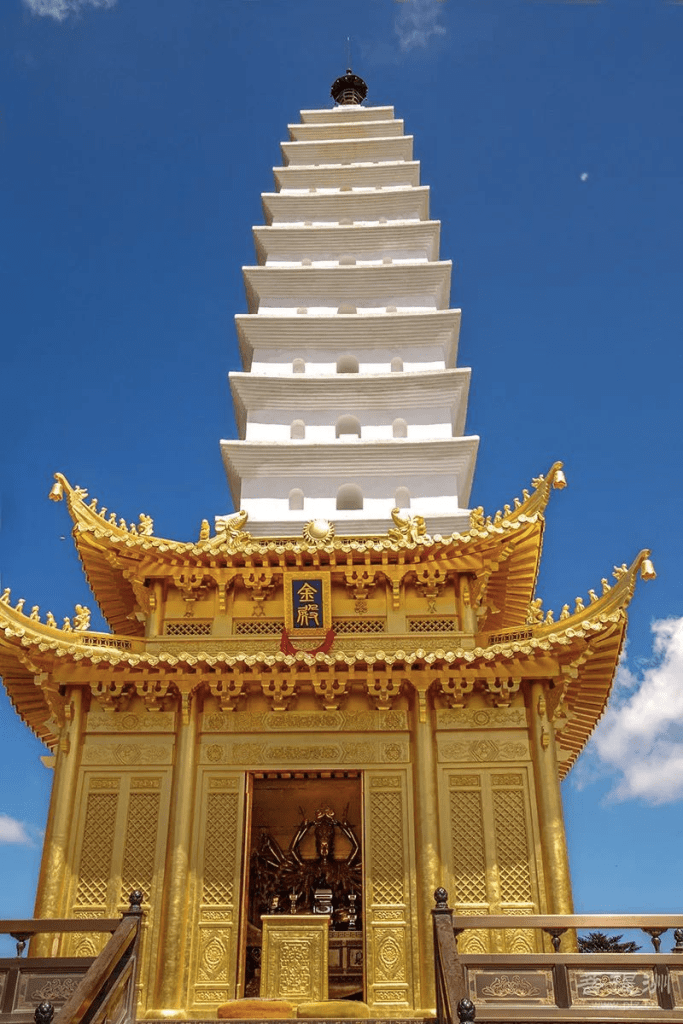
The best viewing spot for the four wonders of Jizu Mountain is at its highest point, the Golden Top Temple. The view from the temple is wide and open, with visibility for more than ten kilometers. Watching the sunrise in the east is the king of the four wonders. Early winter mornings are the best season to witness the sunrise, as the reduced moisture increases visibility.

Before dawn in winter, the stars in the sky gradually dim, and the eastern horizon begins to whiten. A hint of orange appears on the just-yellowing horizon. In just a few minutes, the orange-red sun leaps above the horizon, and its dazzling rays spread across the entire landscape. If there are rolling clouds, they turn into a dazzling orange-red color within seconds. The sun’s rays, like an arrow carrying a force of ten thousand pounds, fly straight at everyone. In an instant, a huge spark bursts open in one’s heart. The ruddy morning sun is so bright that it’s hard to keep one’s eyes open. However, once you get used to it, the earth has already begun to revive, welcoming a new day in the dawn.

The best season to view the silver Cangshan and jade Erhai from the west is still in winter and spring. In these two seasons, snow accumulates on the peaks of Cangshan. Looking west from Golden Top Temple, you’ll see the plateau’s pearl, Erhai Lake, which runs between the mountains and valleys, reflecting silver waves. It’s as if pearls are dancing on the water’s surface. At the place where the water meets the mountains, you’ll find the nineteen peaks of Cangshan neatly arranged. The pure white snow on the mountain peaks becomes even more noble silver under the sunlight. The mountains and the sea echo each other, with the mountains towering and magnificent, and the water soft and charming. This is a masterpiece of beauty that cannot be drawn!

The best time to view the colorful clouds from the south is in the evening when the sun is about to set. Try to choose a time when the clouds are most densely gathered. Standing at the Golden Top Temple and looking south, you’ll see the undulating mountains covered in mist, which either wraps around or disperses in clouds, drifting freely in the blue sky, transforming into various shapes. The afterglow of the setting sun is scattered among the light and leisurely drifting clouds, blooming with a burst of colorful brilliance!

Jade Dragon refers to the “Jade Dragon Snow Mountain,” whose peak is covered in snow all year round, so it can be viewed at any time. Looking north from the Golden Top Temple, the snow-capped mountains stretching for dozens of miles look like an outstretched dragon, crystal clear as jade, pure white and flawless, without a speck of dust.

There are some other scenic views of Jizu Mountain that appear at different times and moments, unique to Jizu Mountain. Every year in the summer and autumn rainy season, sudden storms suddenly stop, and the surrounding mountains are still in the mist, except for a part of the clouds above Jinding Temple which disperse and sunlight reappears. At this time, a circle of seven-colored light circles surrounds Jinding Temple, which is one of the Eight Scenic Views, known as “Tianzhu Buddha Light.” Similarly, during the summer and autumn rainy season, Jizu Mountain sometimes experiences strong winds, thunderous sounds, flashes of lightning, and heavy rain in the valleys. However, Huashou Gate, located under Tianzhu Peak and below the Sheshen Cliff, is still clear and sunny. The sound of thunder echoes here and lingers for a long time. This is the famous “Huashou Qing Lei.”

The most abundant trees on Jizu Mountain are “pine and oak.” These trees come together to form a vast forest.

Whether you look from a distance or up close, the “forest sea” of Jizu Mountain stretches for dozens of kilometers, from the mountain peak to the valley, casting shadows with its pine trees. The forest is deep and lush, and when the wind, whether gentle or strong, blows through, the leaves rustle, creating music reminiscent of the thunderous galloping of a thousand horses. Sitting in the mountain and quietly listening to this has a special charm. This landscape is known as “Wan He Song Tao”.

There are more beautiful scenic views waiting for you to explore.

Besides the beautiful scenery, Jizu mountain is a legendary buddhist holy place.

According to Buddhist scriptures, in ancient times, Shakyamuni Buddha demonstrated to the assembly at the Lingshan Meeting by holding up a flower, and everyone remained silent. Only Venerable Mahakasyapa deeply understood the Buddha’s intention and broke into a faint smile. The Buddha said, “I have the true Dharma eye treasury, the wondrous heart of Nirvana, which I entrust to you.” He also told Mahakasyapa that he would pass on the kasaya robe to him, which would then be transferred to Maitreya when he appears in the world. Venerable Mahakasyapa bowed to the Buddha’s feet and respectfully followed the Buddha’s intention. After the Buddha’s Nirvana, Venerable Mahakasyapa gathered the true Dharma three treasures in the city of Vaishali. He later entrusted the true Dharma three treasures to Ananda and went to Jizu Mountain alone, holding the kasaya robe given to him by the Buddha. He entered meditation at the Huashoumen.

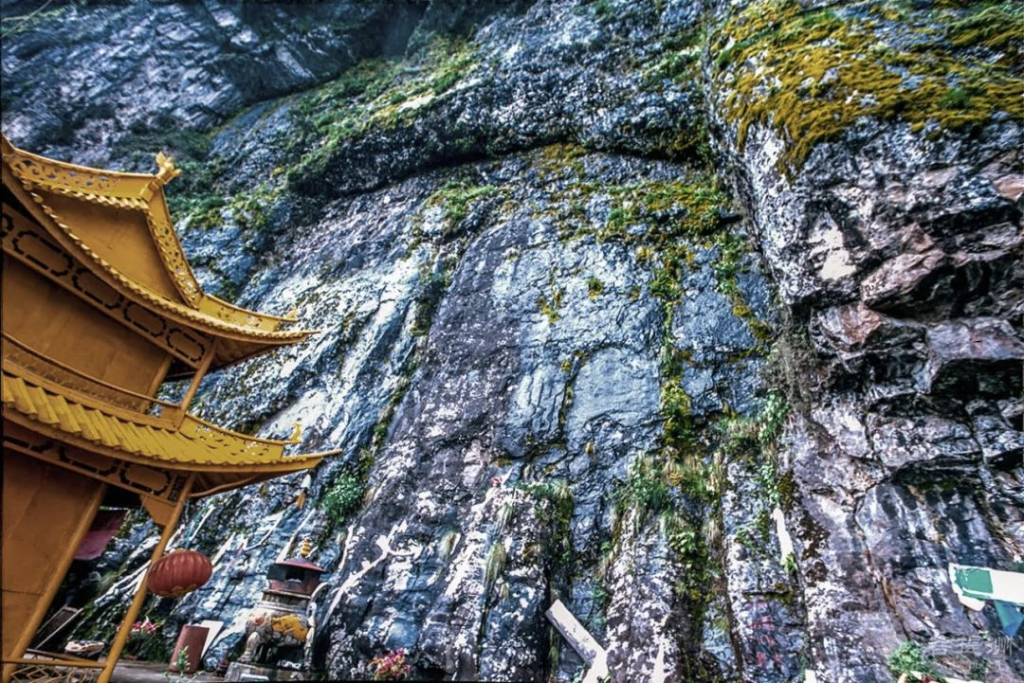
Huashou Gate is 40 meters high, with a sheer cliff face as if cut with a knife. A large stone gate is embedded at the top, and a vertical crack in the middle divides the cliff into two panels, with a “stone lock” hanging in the middle. The stone gate is covered with Hada (ceremonial scarves), and there are prayer flags around it. With an altitude of nearly 3000 meters, the landscape is very similar to that of Tibet.

When Maitreya Buddha is born in this world, he will also climb Jizu Mountain and go to the place where Venerable Mahakasyapa meditated. With a snap of his fingers, the mountain peak will open, and Mahakasyapa will pass on the robe and say his farewell. After the respectful ceremony, he will ascend into the sky, display divine transformations, and enter nirvana.

From the Buddhist scriptures, it can be seen that Jizu Mountain is the place where Venerable Mahakasyapa meditated, and it is also the future place of Maitreya. Its connection with Buddhism will never be severed for billions and trillions of years.

Jizu Mountain’s religious story stretches back nearly 1,000 years. Beginning during the Three Kingdoms period, several nunneries were built upon its slopes. But it was not until the time of the Tang Dynasty, four hundred years later, that the first known Buddhist temple was completed.

Throughout the following centuries, the construction of many other shrines and sanctuaries continued. By the late seventeenth century, during the Qing Dynasty, Jizu Mountain’s religious importance reach its zenith. At that point, according to official historical accounts, there were 42 temples and monasteries, 65 separate nunneries and more than 5,000 religious devotees residing on the mountain.

The mountain enjoys great prestige in South Asia and Southeast Asia, and shares the same fame with Wutai Mountain, Ermei Mountain, Putuo Mountain and Jiuhua Mountain in China. The mountain is a birthplace for Zen Buddhism.

The main sacred sites of Jizu Mountain include: Zhusheng Temple, Huashou Gate, Jinding Temple, Bronze Buddha Hall, Mahakasyapa Hall, Xuyun Zen Temple, Biyun Temple, Huashou Fangguang Temple, etc.

Jinding Temple

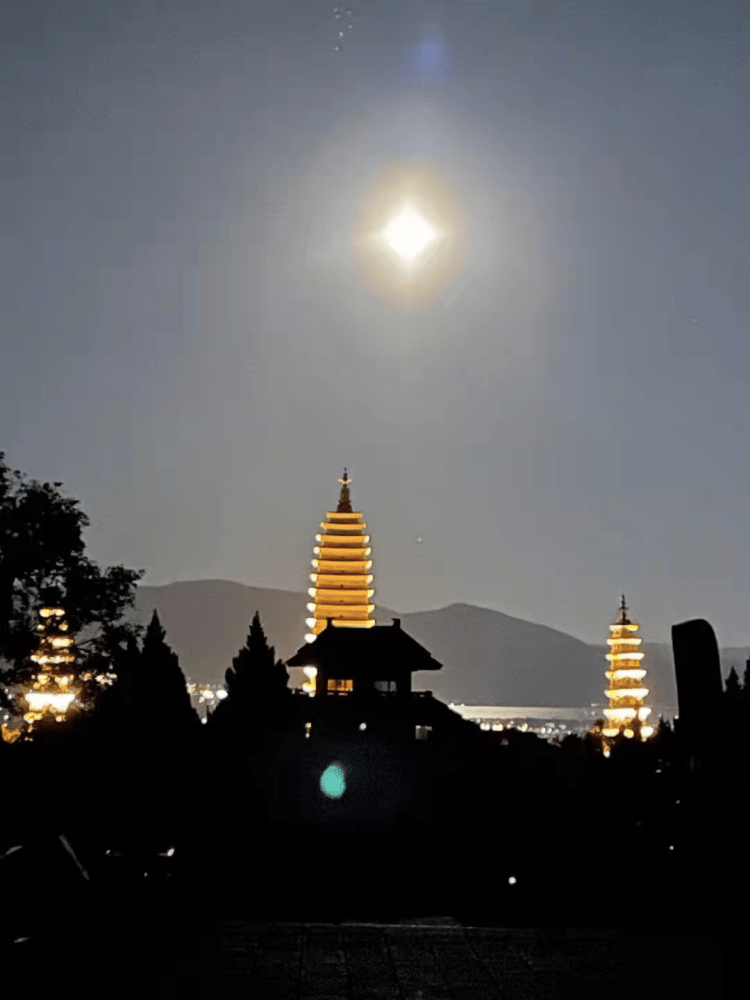
Golden Hall at Jinding Temple and LengYan Pagoda

The front entrance of Jinding Temple is typical Baizhu architecture style

Mahakasyapa Hall

From a high vantage point, the Mahakasyapa (Jia Ye) Hall is hidden among the lush green pines and cypresses in the depths of white clouds.

The Mahakasyapa Hall’s main hall houses a statue of the venerable Mahakasyapa, which is carved from camphor wood

Source: https://www.visityunnanchina.com/attractions/natural-attractions/mount-jizu, http://zgt.china.com.cn/v2/content/2022-06/17/content_11117.html, https://www.buli.page/en/article/wechat/0967339c-67be-4d26-bada-c2d7a5bc1709/

Mount Wuzhong – A Place Filled with Historical and Cultural Significance

Early distribution spot of Chinese Buddhism

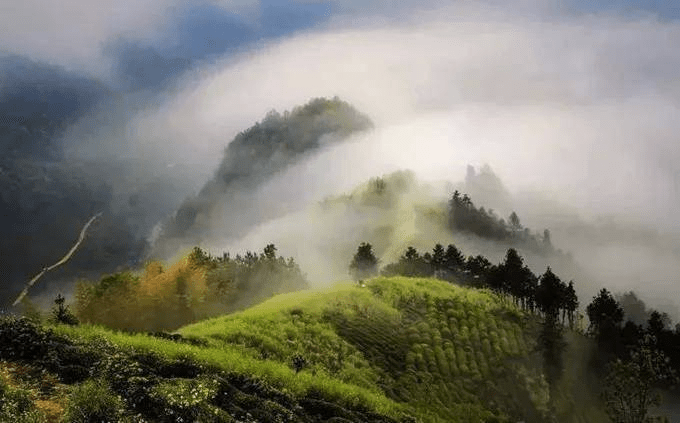
The Mount Wuzhong, also known as Misty Mountain and formerly referred to as Daguangming Mountain, Tiancheng Mountain, and Wushan, is a significant Buddhist pilgrimage site situated along the ancient Sichuan-to-India trade route, often referred to as the Southern Silk Road, within ancient China. It is located in Wushan Township, north of Dayi County, 25 kilometers from the county seat, and 80 kilometers from Chengdu. To its east lies Qinglong Mountain, to the south it connects with Daping, to the west it borders Wayao (also known as Baihushan), and to the north, it meets Longwo. The primary peak elevates to 1638 meters, with Jiulong Mountain and Jingang Mountain to the north and Hongyan Mountain to the west. Covering an expansive area of several square kilometers, it is aptly known as the “72 peaks” due to the constant presence of clouds and mist, hence earning its moniker as the “Misty Mountain.”

Historical records, such as the Ming Dynasty’s “Kaihuasi Stele Inscription” and the “Records of Misty Mountain,” reveal that as early as the Western Han Dynasty, Mount Wuzhong was renowned for its breathtaking natural beauty and mysterious wonders that left people in awe. It was described as a “land adorned in golden cloth and adorned with jade-like peaks, filled with endless wonders that inspired astonishment and amazement.” It was even considered “the place where the ancient Buddha Amitabha performed miracles.” In the 16th year of Emperor Ming of the Han Dynasty, responding to recommendations from the imperial court, Emperor Ming dispatched the courtier Fu Ying, accompanied by two distinguished monks from ancient India – the venerable monks Kashyapa Matanga and Zhu Falan – to establish a Buddhist temple on the mountain. Their mission was to propagate Buddhism and disseminate its teachings, thereby benefiting people far and wide with the nectar of Buddhist wisdom.

During the Ming Dynasty, Buddhism at Misty Mountain reached its zenith. The mountain boasted a total of seventy-two peaks, nine passes, and one hundred and eight winding paths, accommodating one hundred and eighty temples and forty-eight hermitages. According to the “Records of Misty Mountain,” it was described as a place “spanning dozens of square miles north of the two rivers and south of Longwo, with buildings scattered like black houses, without overcrowding.” “Monasteries and temples were as numerous as stars in the sky, surrounding the mountain from all sides, too numerous to count.” In modern terms, the total constructed area exceeded 400,000 square meters, equivalent to the size of a medium-sized city. During the Ming Zhengtong era, the emperor established the Dugang Institute at Misty Mountain, with the venerable monk Yuanxi serving as the official historian, overseeing all temple affairs. The temples at Misty Mountain were so prosperous and grand in scale during that period that a local saying emerged: “There are 25 thousand great monks, and the number of ordinary monks is beyond count.”

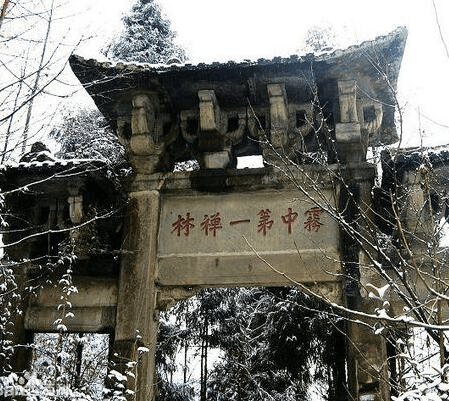
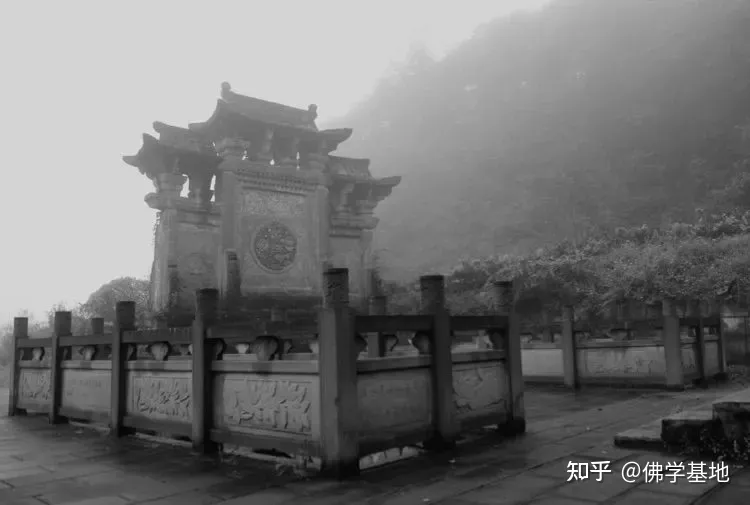
Eminent scholar Yang Sheng An, during his travels in Misty Mountain, inscribed a couplet on the “Heavenly Mountain” archway, proclaiming, “There is no match in the world; Misty Mountain is the number one.” With Yang Shen’s profound insight, he boldly asserted that Misty Mountain was unrivaled, and in the “Inscription of Kaihuasi temples at Misty Mountain,” he referred to this place as the “supreme stronghold of Chan (Zen) Buddhism.” This attests that during the Ming Dynasty, the prestige of Buddhism at Misty Mountain remained unmatched by other mountains in the region.

The Buddhist temple – KaihuaSi – established by the venerable monks Kashyapa Matanga and Zhu Falan was erected just six years after the White Horse Temple, often regarded as the first temple in Chinese Buddhist history. Therefore, it holds the distinction of being the second temple in the annals of Chinese Buddhism’s history and the first temple for the transmission of Buddhism from the south. Emperor Ming of the Han Dynasty bestowed upon it the name “Daguangming Puzhao Temple.”

KaiHuaSi Temple

Since the Han Dynasty, Mount Wuzhong has been home to renowned monks who have propagated and practiced the Buddhist teachings. During the Yonghe period of the Jin Dynasty, the esteemed Western monk Faxian revitalized Misty Mountain, renaming the temple as Tiancheng Mountain Xianying Temple. In the reign of Emperor Gaozong of the Tang Dynasty, two great masters, Sangha and Senghu, resided here and, by imperial decree, restored the original name of Daguangming Mountain Puzhao Temple. In the reign of Emperor Xiaozong of the Song Dynasty, Master Yuanze Laochang expanded and embellished the temple, bestowing it with splendor. During the reign of Emperor Xuanzong of the Ming Dynasty, Tibetan monks Pudashaye and Shigaba were once again appointed by imperial decree to rebuild the temple and requested the imperial name “KaiHuaSi at Misty Mountain.” This name has endured for the temple ever since.

Throughout its long history, Kaihuasi at Misty Mountain has withstood nearly two thousand years, bearing witness to the rise and fall of temple structures, yet it persists to this day. In this enduring history, one can discern the resilience of Buddhism, the steadfastness of human hearts, and the enduring nature of faith.

.

JiewangSi

In more recent times, two esteemed monks resided within the temples of Misty Mountain: Master PuGuan and Master Guozhang. Both were disciples of H.H. Dorje Chang Buddha III, receiving profound Dharma initiations from Him and achieving liberation. In 1998, Master Pu Guan passed away while in meditation, having attained mastery over his life and death. Remarkably, even eight years after his passing, his remains rest within a stupa, preserved in the meditation posture without any signs of decay.

Master Guozhang, a renowned Chinese Buddhist monk, embarked on his monastic journey at a young age on Mount Emei, one of China’s four famous Buddhist mountains. In his middle years, he ventured to Kangding in Tibet, where he received empowerment from the Supreme Vajradhara, H.H.  Dorje Chang Buddha III, who became his fundamental guru. Subsequently, he served as the abbot of Jiulao Cave on Mount Emei. Master Guozhang was celebrated for his unwavering commitment to monastic precepts, profound spiritual realization, and his extraordinary ability to tame wild animals on the mountain. Legends even spoke of his capacity to hear conversations between heavenly beings and humans.

In 1992, both Master Puguan and Master Guozhang were appointed to key positions at Misty Mountain’s Kaihuasi Temple by the government of Dayi County. Master Puguan assumed the role of abbot and oversaw Buddhist affairs within the mountain, while Master Guozhang was entrusted with overseeing the temple. Later on, Master Guozhang became the abbot of Jiewangting temple, which also located in the Misty Mountain.

Master Guo Zhang once shared with his disciples a remarkable experience: he received the Great Dharma initiation from H.H.  Dorje Chang Buddha III in Tibet when His Holiness was less than 5 years old.

In 2015, Master Guo Zhang passed away at the age of 108. Eleven days later, local government officials visited Jiewangting Temple and, doubting the profundity of the master’s practice, pierced his body with needles, causing blood to flow.

In China, there exists a saying that “famous temples produce famous tea since ancient times,” and the tea from Misty Mountain gained renown as early as the Tang and Song dynasties. Throughout history, the monks of Misty Mountain have often been involved in tea cultivation, using tea as sustenance, and blending Zen and tea culture. Within Misty Mountain’s expanse, ancient tea tree groves flourish, some so immense that it takes two people to encircle them. The tea leaves harvested from these trees emit a fragrant aroma and are considered the highest-quality Misty Mountain tea.

The fusion of Zen and tea culture embodies three virtues: “During Zen meditation, one stays awake all night, when one is full, tea aids in digestion, and tea is not consumed when not needed.” Tea serves to quench thirst, invigorate the senses, alleviate stress, purify the mind, nurture virtuous qualities, and has thus become an invaluable aid in Zen practice. The spiritual essence of Misty Mountain’s Zen and tea culture is encapsulated as “upright, pure, harmonious, and elegant,” with the purpose of “expressing gratitude, embracing inclusivity, sharing, and fostering connections.”

Mount Wuzhong – A Place Filled with Historical and Cultural Significance

Link:https://peacelilysite.com/2023/09/27/mount-wuzhong-a-place-filled-with-historical-and-cultural-significance/

Source: https://club.autohome.com.cn/bbs/thread/a3b8e453b0c45836/72821534-1.html, http://www.day.gov.cn/day/c140445/2021-01/14/content_d51260858d10469a94a004e1395bd9c6.shtml, http://www.lvyoudream.com/lvyougonglue/938/

Guangsheng Temple with Ancient Chinese Buddhist Buildings,Murals & Statues

As a cradle of Chinese culture, Shanxi is renowned for its abundance of cultural and historical treasures. While some iconic historical relics and monuments like the Great Wall, which stretches across the province, the Yungang Grottoes in Datong, and the Sakyamuni Pagoda in Yingxian, are at the top of tourists’ itineraries, there are also lesser-known “hidden gems” in terms of historical significance that are well worth exploring.

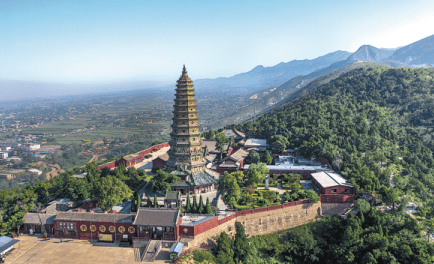
One such hidden gem is the Guangsheng Buddhist Temple, located in the Zhaocheng township of Hongtong county. The Guangsheng Temple is actually a complex that encompasses the upper monastery, the lower monastery, and the Water God Temple, situated on the slopes and foothills of Huoshan Mountain in Zhaocheng.

Founded in the first year (147) of the Jianhe reign of the Eastern Han Dynasty (25-220), the temple originally bore the name Julushe Temple. It later acquired its present name during the Tang Dynasty (618-907). While it suffered damage during an earthquake in the 7th year (1303) of the Dade reign of the Yuan Dynasty (1271-1368), subsequent restoration efforts took place over the years, preserving much of the architectural style from the Yuan Dynasty. Nestled against the mountains and overlooking a river, the temple is surrounded by ancient trees and boasts the Huoquan Spring gushing beneath the rocks at the foot of Huoshan Mountain, creating a serene and picturesque environment. The temple can be divided into three main sections: the upper temple, the lower temple, and the Water God Temple.

The upper temple, perched atop Huoshan Mountain amidst lush pine trees, is graced with ancient towers and adorned with colored glaze components, radiating magnificence and splendor. The lower temple, situated at the base of Huoshan Mountain, harmoniously blends with the mountain’s natural contours, creating an intriguing landscape with varying elevations. Adjacent to the lower temple is the Water God Temple, with connected walls. Here, one can find the Statue of Ying, an emperor of the Ming Dynasty, and renowned frescoes depicting Yuan Dramas, both of which are celebrated locally and internationally.

The upper temple complex comprises the temple gate, the Flying Rainbow Tower, the Amitabha Hall, the Great Hall, the Vairochana Hall, the Kwan-yin Hall, the Ksitigarbha Hall, as well as wing-rooms and corridors, among other features. The Temple Gate, situated at the entrance, is flanked by two guardian warriors. Just beyond the gate stands the impressive Flying Rainbow Tower, constructed from colored glaze bricks. Originally built during the Eastern Han Dynasty (25-220) and later restored in the Ming Dynasty (1368-1644), this thirteen-story tower soars to a height of 47.31 meters, featuring an octagonal plan. The tower is adorned with tri-colored glaze in yellow, green, and blue, creating a splendid and vibrant spectacle. Elaborate wooden square blocks and intricately carved designs of Buddha, Bodhisattvas, guardian warriors, flowers, birds, and animals adorn the eaves and pillars. Corridors encircle the first story, while the tower’s interior houses only the stairs leading to the tenth floor, showcasing remarkable architectural and artistic prowess.

Behind the tower lies the Amitabha Hall, a 5-bay wide, 4-bay long structure with a single-eaved gable and hip roof. Inside, the hall features three exquisite statues: Amitabha Buddha, Manjusri Bodhisattva, and Vajrapani Bodhisattva. These statues, masterpieces of the Ming Dynasty, are accompanied by frescoes adorning the eastern wall and screen wall. Additionally, the temple once housed 4,000 volumes of the Pingshui version of the Tripitaka during the Huangtong reign of the Jin Dynasty (1115-1234). These valuable volumes are now preserved in the Beijing Library and serve as a rare source for studying the history of Chinese printing.

The Great Hall, characterized by a 5-bay width, a single-eaved gable, and a hip roof, features three niches within for wooden statues of Sakyamuni, Manjusri, and Samantabhadra. These statues are meticulously crafted, possessing well-proportioned forms, a plump appearance, and an air of perfect serenity. In the Qing Dynasty, the hall was adorned with eighteen iron arhats along its two sides, along with statues of Kwan-yin and Amitabha Buddha on the rear niche wall.

The Vairochana Hall, spanning 5 bays in width with a hip roof, boasts an architectural style typical of the Yuan Dynasty, with two gables supported by substantial crawling beams. The altar within the hall features statues of three Buddhas and four Bodhisattvas, surrounded by wooden niches containing 35 iron statues. Notably, the back wall of the hall showcases frescoes depicting Sakyamuni and twelve Bodhisattvas of Perfect Enlightenment, regarded as exceptional examples of this art form.

The lower temple complex comprises the temple gate, front hall, back hall, the buttress hall, and other buildings, all constructed during the Yuan Dynasty. The temple gate stands impressively tall, measuring 3 bays in width and 3 bays in length, featuring a single-eaved gable and a hip roof. Canopies have been added to both the front and back eaves, lending it the appearance of a pavilion with double eaves. The front hall spans five bays in width and is supported by only two pillars that bear the weight of the entire structure. The back hall, dating back to the second year (1309) of the Zhida reign in the Yuan Dynasty, stretches 7 bays in width, featuring 9 purlins, 8 rafters, and a single-eaved overhanging gable roof. Within the hall, you’ll find the main statues of Amitabha Buddha, Sakyamuni Buddha, Bhaisajyaguru Buddha, Manjusri Bodhisattva, and Samantabhadra Bodhisattva, all crafted during the Yuan Dynasty. Sadly, the once-present frescoes on the walls were stolen and smuggled to other countries in 1928, and they are currently housed in the Naerson Museum in Texas, US. Notably, the fresco on the south wall documented the performances of Yuan Drama, serving as rare reference material for the study of Chinese dramas.

The lower temple complex photo from:Beijing Transportation University ancient architecture

The lower temple complex photo from: Beijing Transportation University ancient architecture

The Water God Temple comprises two courtyards: the front yard and the back yard, featuring key structures like the Temple Gate, the Door of Amenity, the Ming Ying King Hall, and wing-rooms of cave dwellings. The Ming Ying King Hall, measuring 5 bays in width and 5 bays in length, is enveloped by a cloister and crowned with a double-eaved gable hip roof. The interior beams follow a conventional style. Within the hall, you’ll find statues of Water God Ming Ying King and his eleven attendants. Their facial features, attire, and postures are all reflective of the Yuan style. The hall’s walls are adorned with frescoes depicting scenes of people praying for rain and other historical narratives, covering an area of 197 square meters. Notably, the eastern end of the south wall features vivid depictions of a comprehensive set of stage properties used by performers, including costumes, stage instruments, musical instruments, makeup, curtains, and the stage itself. The artwork is meticulously arranged, with a simple yet profound color palette, and the dramatis personae are depicted with great expressiveness. This fresco offers an authentic glimpse into the heyday of Yuan Drama and stands as a rare and outstanding example of Yuan fresco art in China.

Guangsheng Temple with Ancient Chinese Buddhist Buildings,Murals & Statues

Link: https://peacelilysite.com/2023/09/20/guangsheng-temple-with-ancient-chinese-buddhist-buildings%ef%bc%8cmurals-statues/

Source: http://shanxi.chinadaily.com.cn/2022-05/06/c_748899.htm, http://en.chinaculture.org/library/2008-02/15/content_34504.htm

The cultural Heritage of Hanshan Temple

The cultural Heritage of Hanshan Temple

Hanshan Temple (寒山寺), which translates to Cold Mountain Temple, is situated in the Gusu District of Suzhou city. Originally named “Miaoli Puming Temple,” it dates back to the Liang Dynasty of the Southern Dynasties, specifically from A.D 502-519. Covering an area of approximately 13,000 square meters, the temple boasts a construction area exceeding 3,400 square meters.

During the Tang Dynasty’s Zhenguan period (A.D. 627-649), two prominent monks of the time, Hanshan and Xiqian, founded Hanshan Temple. Over its more than 1,300-year history, the temple has suffered five fires (some versions claim seven), with its most recent reconstruction occurring during the Guangxu period (A.D. 1875-1908) of the Qing Dynasty. Historically, Suzhou’s Hanshan Temple held a prestigious position among China’s top ten famous temples. Its fame extends beyond borders due to a poem composed by Zhang Ji, a Tang Dynasty poet, which is taught in Chinese primary schools. This poem is also included in the curriculum of Japanese schools, further elevating Hanshan Temple’s renown in Japan, attracting numerous Japanese visitors who come to pay their respects to the Buddha. The temple features numerous historic buildings and tablet inscriptions authored by calligraphers, making it a popular destination for those seeking peace and spiritual solace.

Hanshan Temple holds a distinguished place in China’s Buddhist history, chiefly because of the famous poem by Tang Dynasty poet Zhang Ji. This poem is part of the curriculum in primary schools in both China and Japan.

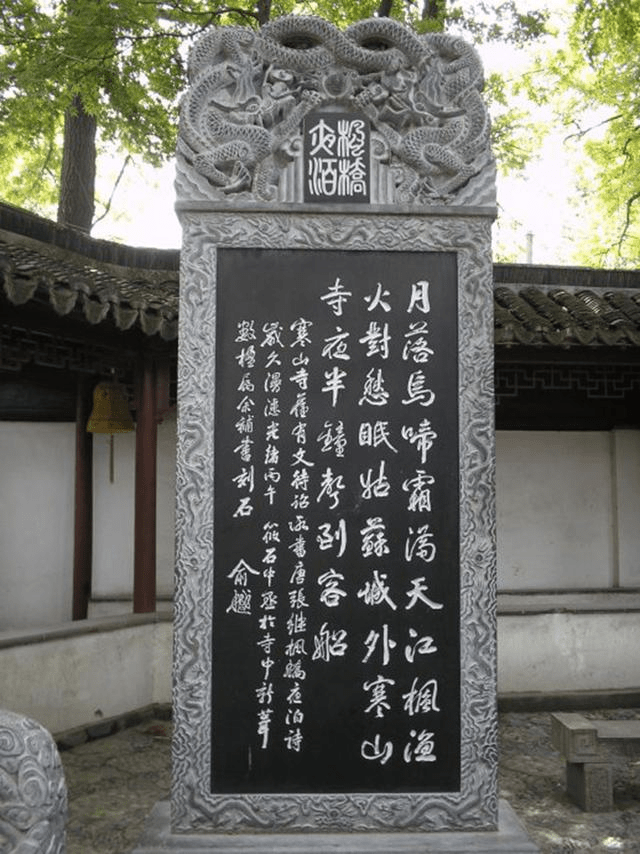
The Night Lodging at Maple Bridge
By Zhang Ji

月落乌啼霜满天
The moon sinks in the frosty sky and ravens caw far and near

江枫渔火对愁眠
Riverside maples and fishing lamps gloomily make me drowsy

姑苏城外寒山寺
From the Han-Shan temple siting at outside of the Gu-Su town

夜半钟声到客船
Come midnight bell rings as a passenger boat is arriving 

Apart from the legends of Hanshan and Shide, Hanshan Temple boasts a collection of treasures that have been cherished throughout its extensive history. Among these treasures, one of the most renowned is the poetic stele of ‘Night Mooring at Maple Bridge,’ crafted by the esteemed scholar and calligrapher Yu Yue during the late Qing Dynasty. It stands as an invaluable asset to Hanshan Temple.

It must be acknowledged that this piece of calligraphy represents the apex of ‘Night Mooring at Maple Bridge’ renditions throughout history. The lines of regular script flow seamlessly, displaying an inherent elegance and freshness, achieved with seemingly effortless brushwork. Engraved upon the stele, it emanates a subtle, age-old charm and an evocative poetic atmosphere. Each time I gaze upon this stele, it evokes a different emotional response within me. As I have delved into the art of calligraphy myself, I have even attempted to replicate ‘Night Mooring at Maple Bridge.’ While I deeply appreciate Yu Yue’s extraordinary skill and find it visually pleasing, there has always been a sensation of something missing, an ineffable aspect I couldn’t articulate. My pursuit has persisted, a continuous quest to discover calligraphic masterpieces that could genuinely satiate my aesthetic sensibilities, and this aspiration remains deeply rooted within me.

The other day, I had a sudden encounter with ‘Night Mooring at Maple Bridge,’ personally penned by H.H. Dorje Chang Buddha III, and it was as if I had stumbled upon a divine masterpiece! This artwork utilizes cursive script, showcasing the grandeur reminiscent of dragons and serpents, seasoned with masterful brushwork, conveying both a majestic ruggedness and a subtle elegance. What elevates its worth even further is its dynamic and ceaseless artistic allure, reaching monumental proportions. It can be aptly described as the highest sacred creation, far beyond the grasp of ordinary individuals. This represents the embodiment of the Five Vidyas, as expressed by the Buddhas and Bodhisattvas in the realm of Prajna, offering an extraordinary experience to those who behold it and serving as the ultimate exemplar for calligraphy enthusiasts like myself to aspire to emulate.

In this lifetime, I am profoundly fortunate to have encountered the authentic and unwavering Dharma of the Tathagata. The achievements of H.H. Dorje Chang Buddha III stand unparalleled on a global scale. When it comes to providing tangible evidence of wisdom and realization attained through proficiency in both exoteric and esoteric Buddhism, as well as mastery of the Five Vidyas, there is simply no one within the realm of Buddhism who can be mentioned in the same breath as His Holiness.

The Buddha’s criterion for measuring one’s level of accomplishment in the Buddha-dharma is rooted in the extent of proficiency in both exoteric and esoteric Buddhism, as well as the mastery of the Five Vidyas. However, throughout the history of Buddhism up to the present day, only H.H. Dorje Chang Buddha III Holiest Tathagata has truly and comprehensively demonstrated complete proficiency in exoteric and esoteric Buddhism, along with perfect mastery of the Five Vidyas. His Holiness unmistakably presents, for all to witness, a myriad of achievements that exemplify his complete proficiency in exoteric and esoteric Buddhism and his impeccable mastery of the Five Vidyas, as stipulated by the Buddha.

His Holiness, an ancient Buddha, holds the distinction of being the first being of holy virtue in history to genuinely manifest such lofty and all-encompassing realization. The undeniable proof of this is found in the numerous accomplishments single-handedly achieved by H.H. Dorje Chang Buddha III, as detailed within the thirty main categories listed in this book, “H.H. Dorje Chang Buddha III — A Treasury of True Buddha-Dharma.”

I earnestly pray that all sentient beings may embark upon the ‘vessel’ of liberation and achieve enlightenment.

The cultural Heritage of Hanshan Temple

Link:https://peacelilysite.com/2023/09/08/the-cultural-heritage-of-hanshan-temple/

#DorjeChangBuddhaIII #HHDorjeChangBuddhaIII  #HanShanTemple #ChineseCalligraphy #Buddhism #ExotericandEsotericBuddhism #AcientBuddha #TreasureBook #FiveVidyas

Source: https://blog.wenxuecity.com/myblog/77953/202108/16124.html, https://www.chinadiscovery.com/jiangsu/suzhou/hanshan-temple.html

Fanjing Mount

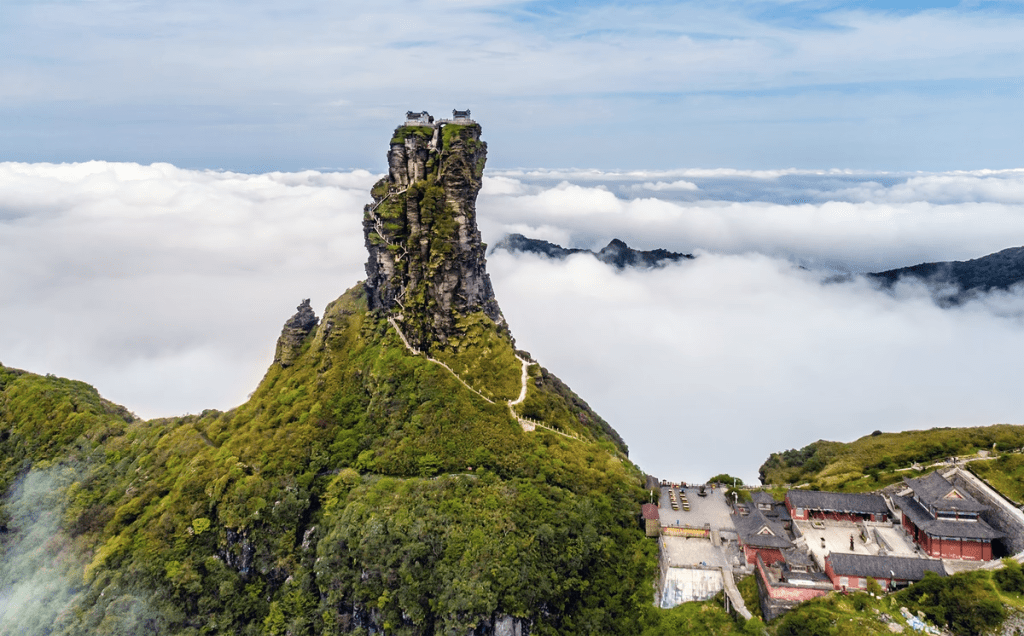
A view of the New Golden Summit, looking west. Costfoto / Barcroft Media via Getty

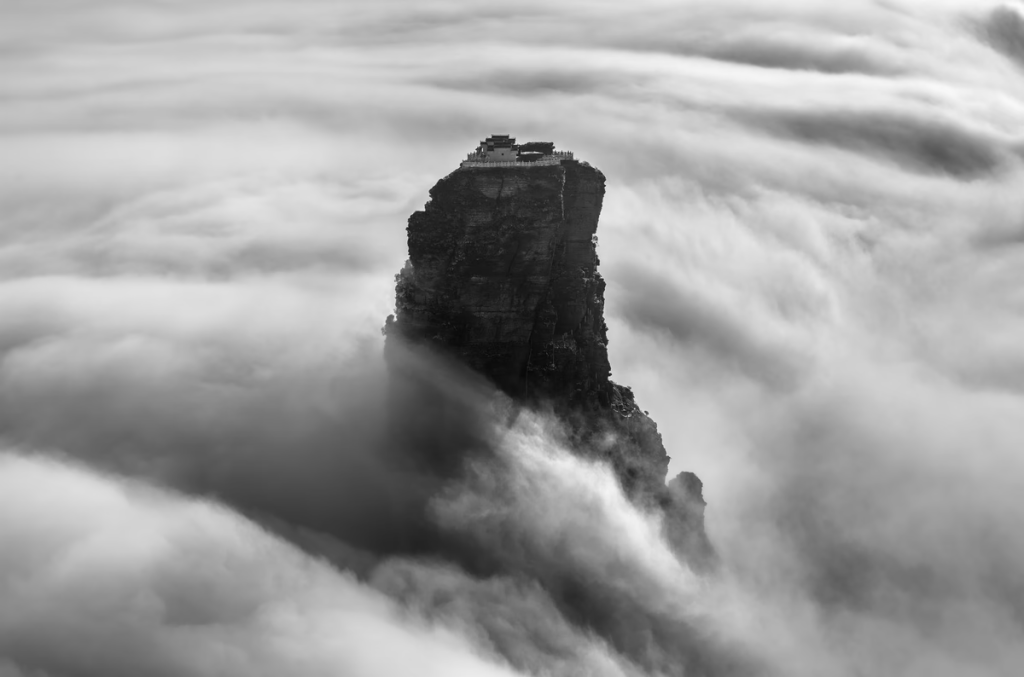
Clouds roll past the New Golden Summit on Mount Fanjing.  Clkraus / Shutterstock

Fanjingshan, also known as Mount Fanjing, is situated in the eastern part of Guizhou Province, China, within Tongren City. It is positioned approximately 248 kilometers away from Guiyang and 220 kilometers from Zhangjiajie. Mount Fanjing proudly claims the title of being the highest peak within the Wuling Mountains, with an impressive elevation of 2572 meters. The mountain stands adorned with primitive vegetation, its landscape characterized by majestic peaks, a continuous succession of towering summits, babbling streams interwoven with cascading waterfalls.

Moreover, Fanjingshan holds great spiritual significance as a revered Buddhist site. It’s widely believed among Buddhists that Fanjingshan is a place where spiritual enlightenment akin to that of Maitreya Buddha can be attained.

The appellation “Fanjing” finds its origins in “Fantian Jingtu,” a Buddhist term that translates to “Brahma’s Pure Land.” This hallowed mountain has been acclaimed as China’s Fifth Buddhist Mountain, a distinction following the likes of Mount Wutai in Shanxi Province, Mount Putuo in Zhejiang Province, Mount Emei in Sichuan Province, and Mount Jiuhua in Anhui Province. With a history spanning over 2000 years, embellished by extraordinary rock formations and abundant biodiversity, Mount Fanjing unveils itself as a serene, distinct haven. A sojourn to this tranquil expanse offers a revitalizing and spiritual respite from the bustling clamor of urban life.

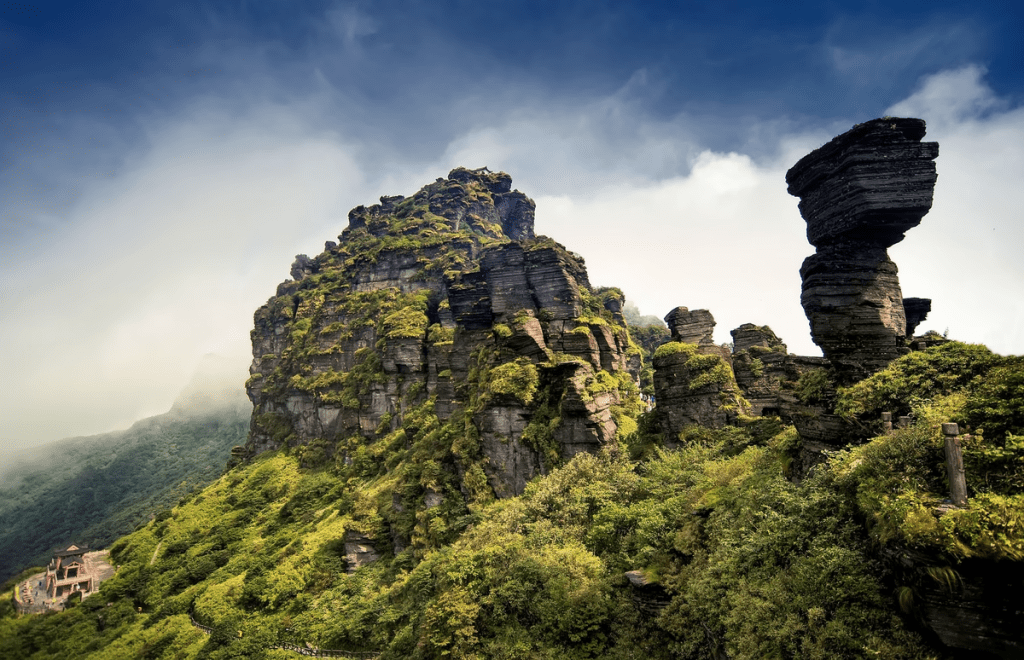
Unique geological landforms, including the “Mushroom Stone” at right. Sanyanwuji / Shutterstock

In geological terms, Mount Fanjing assumes the form of a “fold belt,” an arrangement akin to stacked layers of rock resembling an assemblage of intricate shapes, an occurrence seldom witnessed elsewhere. The Mushroom Stone serves as a prime exemplar, where layers of rock have taken on the semblance of a towering mushroom.

Throughout antiquity, Fanjing Mountain stood as a venerable hub of Buddhist culture within the Wuling Mountain range. Historical records attest to the proliferation of numerous Buddhist temples along its slopes, catering to pilgrims from around the world. Yet, during the 16th century in the Ming Dynasty, a substantial number of these temples met destruction, effectively suppressing Fanjing Mountain’s renown. The subsequent Qing Dynasty saw a revival of fortunes, with governmental initiatives aimed at temple reconstruction and expansion along the mountain’s pathway to the “Red Clouds Golden Summit.” Notable temples such as Cheng’en Temple and Baoguo Temple were erected. By 1896, the fifth phase of Fanjingshan Temple reconstruction reached its culmination, bestowing upon Fanjing Mountain an esteemed status in the global Buddhist sphere and solidifying its position as China’s “No. 5 Great Buddhist Mountain.”

Mount Fanjing boasts three soaring summits that pierce the heavens – the Red Clouds Golden Summit (2336 meters), the Old Golden Summit (2493 meters), and the Phoenix Golden Summit (2572 meters). From these majestic pinnacles, visitors are treated to breathtaking panoramic vistas of Mount Fanjing’s expansive landscape. Crowning the preeminent “Red Clouds Golden Peak” stands the remarkable Fanjingshan Temple, perched at a daring elevation of 2,336 meters above sea level. Nestled atop the columnar peak, this temple’s elusive location beckons travelers to witness its ethereal presence firsthand and capture mesmerizing, novel photographs.

Fanjingshan Temple, encompassing the revered Temple of the Buddha (释迦殿) and the Maitreya Temple (弥勒殿), graces the summit of the “Red Clouds Golden Summit” (also known as the New Golden Summit) on Fanjing Mountain. The former is dedicated to the worship of Sakyamuni, symbolizing the present, while the latter venerates Maitreya, representing the future. These two temples trace their origins back to the Yongle period of the Ming Dynasty, over five centuries ago. Presently, they have been meticulously reconstructed to echo their original splendor, their structures fortified with iron tiles to withstand the mountain’s formidable winds. Each temple is embodied by a single hall, constructed from meticulously arranged stone pieces measuring 5.4 meters in width and 5.55 meters in depth. A bridge gracefully connects the two temples, spanning the depths of the Gold Sword Gorge.

For pilgrims journeying to Fanjingshan, the ascent involves ascending thousands of steps to initially reach the Temple of the Buddha on the southern facet. Subsequently, crossing the bridge leads to the Maitreya Temple on the northern side of the “Red Clouds Golden Summit.” This sequence mirrors the Buddhist concept of transition from the present (Sakyamuni) to the future (Maitreya). As the “Red Clouds Golden Summit” often finds itself enshrouded by mist and enveloped in sea of clouds, standing upon the terrace outside Fanjingshan Temple offers a surreal experience of gazing upon the world from above, capturing an otherworldly perspective amidst the natural elements.

Much like the iconic Avatar Hallelujah Mountain in Zhangjiajie National Forest Park, Fanjingshan stands as a towering pinnacle, slender and vertically oriented, evoking the image of a pencil standing upright on a desk. Scaling its summit requires ascending over 8,000 steps or opting for a cable car ride up from the road below. Most visitors opt for a full day to thoroughly explore this remarkable sacred mountain. Its attractions span a diverse range, encompassing the Red Cloud Golden Peak, Old Golden Summit, Ten-Thousand Sleeping Buddha, Mushroom Stone, Jiulong Pond, Fenghuang Mountain, Numerous Rolls of Books, and more.

Situated in the mountainous expanse of Guizhou Province, Fanjingshan falls within the ambit of a subtropical humid monsoon climate, distinctly marked by four seasons. Throughout the year, the average annual temperature oscillates between 13.1°C and 14.7°C. July witnesses the hottest days, with an average temperature hovering around 24°C, while January holds the chilliest nights, registering an average temperature of approximately 4.6°C. On the whole, Fanjingshan enjoys a temperate climate, graced by ample sunlight and rainfall. Summers remain moderate, and winters remain mild, with neither excessive heat nor biting cold. Rainfall predominantly occurs from May to October, while the frost-free period spans a generous 270 to 278 days annually.

The prime window to explore Mount Fanjing extends from March to November. For those seeking to capture stunning photographs, the early morning hours are particularly enchanting. The aftermath of rain unveils captivating spectacles, such as the Sea of Clouds, Zen Fog, Buddha Light, and breathtaking sunrises, which contribute to the mountain’s mystique and allure.

Fanjing Mount

Link: https://peacelilysite.com/2023/08/22/fanjing-mount/

#FanjingMount# MountFanjing #Zhangjiajie #Buddha #BuddhistTemple #MaitreyaBuddha #FanTieJingTu #China #Travel #TravelChina #GuiZhou

Source: https://www.chinadiscovery.com/guizhou/fanjingshan.html, https://www.theatlantic.com/photo/2019/04/a-photo-visit-to-mount-fanjing/586879/, https://www.chinadiscovery.com/guizhou/fanjingshan/fanjingshan-temple.html
Leshan Giant Buddha

Leshan Giant Buddha

Around a 2-hour drive from downtown Chengdu lies one of the most marvelous ancient wonders of China, the Leshan Giant Buddha, also known as Lingyun Giant Buddha. Carved into a cliff-face along a peaceful river, this imposing figure, at 71 meters (over 200 feet) in height, dates back over a thousand years and is the largest and tallest stone Buddha statue in the world.

Carved in the 8th century during the Tang Dynasty, the Leshan Giant Buddha was built during a peak period of Buddhist culture in ancient China. The sculpture depicts Maitreya, a very popular Buddha in the Tang Dynasty. The sutras say that when Maitreya comes into world, the world will be at peace. The female Chinese female sovereign Wu Zetian even proclaimed she was the reincarnation of Maitreya and was a strong advocate of Maitreya sculptures being built as a way to maintain her rule. People liked to carve Maitreya sculptures and believed that Maitreya would bring light and happiness into their lives in the future.

This remarkable historic site was listed as a UNESCO World Heritage Site since 1996. It is an amazing and immense religious relic that was built over a period of 90 years from 713 to 803 AD. The statue was constructed at the confluence of three rivers notorious for their turbulent waters; it was hoped that the Buddha’s presence would help calm the rivers’ waters.

Hai Tong’s Legacy

The Buddhist monk Hai Tong was concerned about the safety of the local people who earned their living around the three rivers. Many people traveling by boat in the area were killed by the turbulent waters each year before the Leshan Giant Buddha was created. Hai Tong decided to carve a statue of Buddha beside the river and believed that this sculpture would appease the river gods and keep the locals safe.

He had begged for over 20 years to accumulate enough money needed to build this statue. During this hard period in his life, he refused official help because the parties who offered it didn’t just want to help him but wanted to gain personal profits from the project. He even gouged out his eyeball in protest against the local authorities. These officials backed off after this behavior. Fortunately, Hai Tong’s disciples continued his work after he passed away and finally completed the sculpture in 803 AD after 90 years of hard work.

There is a cleverly designed drainage system behind the Buddha’s head and between his two ears. This important design aspect is the reason why the great Buddha of Leshan has not eroded despite having existed for thousands of years. The “spectacle”

Interestingly, there haven’t been any shipwrecks since the Buddha was built. Many stones were actually removed from the cliff and transferred to the rivers during construction, which made the waters calmer and safer than before. The project didn’t end after the Leshan Giant Buddha was finished.

Buddhism had been one of the most important religions in ancient China and many other people built statues around the giant Buddha to thank the gods . Numerous small Buddhas were carved around this huge statue. People even excavated the cliff tombs of the Han Dynasty around the Leshan Giant Buddha. Multiple historic sites make the Leshan Giant Buddha particularly important for archaeologists and researching people’s lifestyles in ancient times.

With the most sunny days and beautiful scenery, April and October are the best months of the year to travel to see the Leshan Giant Buddha.

There are two ways for visitors to see the Giant Buddha. One is to walk down from the top near the head and end at its feet. This involves some waiting in line, sometimes for hours on particularly busy days, and larger crowds, as well as many narrow and steep stairs, but offers you a more intimate perspective of the Buddha. This up-close view will allow you to appreciate the statue’s enormity; its shoulders spread over a width of 28 meters (as long as a basketball court!) and its pinky toe is large enough for a person to sit on.

The other option is to view the statue from a boat on the river immediately in front of it. The boat trip allows you to get the best and fullest front-facing view of the Buddha from a distance and is ideal for those who prefer not to wait in line and climb the stairs. The cruise takes around 30 minutes there and back, stopping for several minutes in front of the Buddha for visitors to appreciate the statue and take pictures. It’s best to sit on the right side of the boat, as the Buddha will end up being on that side once you arrive.

Leshan Giant Buddha

Link:https://peacelilysite.com/2023/02/23/leshan-giant-buddha/

#Travel#China#LeshanGiantBuddha#Buddhism#MarvelousAncientWonder

Source: https://www.trippest.com/chengdu-travel-guide/leshan-giant-buddha/ https://www.thechinaguide.com/sight/leshan-giant-buddha#:~:text=It’s%20best%20to%20sit%20on,worth%20seeing%20from%20both%20angles.

The Hanging Temple in China

By Charlie fong – Own work, CC BY-SA 4.0, https://commons.wikimedia.org/w/index.php?curid=82753942

The Hanging Temple in China

China have about a dozen of hanging temples. They are truly relics in Chinese architecture history. The most famous hanging Temple, is Hengshan Hanging Temple, Hanging Monastery or Xuankong Temple, is a unique and ancient structure located in Hunyuan County, Datong City, Shanxi Province, China. This temple is built into a cliff that stands 75 meters or 246 feet above the ground, near Mount Heng. The closest city, Datong, is located 64 kilometers or 40 miles to the northwest.

The Hanging Temple is one of the main tourist attractions and historical sites in the Datong area, along with the Yungang Grottoes. It is considered unique because it is the only existing temple that combines three Chinese traditional philosophies or religions: Buddhism, Taoism, and Confucianism. The structure is held in place with oak crossbeams that are fitted into holes chiseled into the cliffs, and the main supportive structure is hidden inside the bedrock.

The temple was built more than 1,500 years ago by a monk named Liaoran in 491 AD. Over the years, many repairs and extensions have been made to the temple, leading to its present-day scale. The temple comprises of 40 halls and pavilions that are all built on cliffs that are over 30 meters or 98 feet from the ground. The distance from north to south is longer than from east to west, and it becomes higher and higher as one moves from the south gate to the north along the mountain.

The temple’s layout includes the Qielan Hall (Hall of Sangharama), Sanguan Hall (Hall of Three Officials), Chunyang Hall, Hall of Sakyamuni, Hall of Three Religions, and Guanyin Hall. The Hall of Three Religions mainly enshrines Buddhist deities, as well as both Taoism and Confucianism. The statues of Sakyamuni (middle), Lao-Tze (left) and Confucius (right) are enshrined in the hall, reflecting the prevailing idea of “Three Teaching Harmonious as One” in the Ming and Qing dynasties (1368–1911).

By Zhangzhugang – Own work, CC BY-SA 3.0, https://commons.wikimedia.org/w/index.php?curid=32138611

The Hanging Temple is a unique and ancient structure that combines three Chinese traditional philosophies or religions, and is one of the main tourist attractions and historical sites in the Datong area. Its location on a sheer precipice and its history make it a must-see destination for anyone visiting China.

You can visit the Hanging Temple all year around, but considering the Datong weather, normally from April to October is the best period. Datong has a temperate continental climate with distinct seasons, low rainfall, a short summer, and a long freezing winter (November–March).

There are big temperature differences between morning and night, day to day, and mountain and valley, so please bring a warm jacket with you even if you travel in the summer time.

In order to protect the temple, the number of visitors is limited to 80 in the temple at a time. Therefore, it is recommended to visit the Hanging Temple early in the morning to avoid long waits especially in the high travel seasons (summer and holidays).

The Hanging Temple in China

link: https://peacelilysite.com/2023/01/27/the-hanging-temple-in-china/

#HangingTemple#Buddhism#Datongcity#TravelChina # Architecture #ChineseCulture#Travel #Temple

Source: https://www.chinahighlights.com/datong/attraction/hanging-monastery.htm, https://en.wikipedia.org/wiki/Hanging_Temple

Mount Xuedou and Maitreya Bodhisattva

Mount Xuedou and Maitreya Bodhisattva

Located at around 8 kilometers north-west of Xikou Town, Fenghua City of Zhejiang Province, Xuedou Mountain is 800 meters above sea level, featuring graceful mountain ridges, unique cliffs, tempting waterfalls, and deep streams. The mountain has a milky peak, while on the peak there is a dou (meaning hollow or hole). Water flows out of the dou, and it is as white as milk, thus getting the name of the Milk Spring. It is well-known for its serenity, magnificent landscape, and an abundance of greenery. Mount Xuedou Scenic Area was known as “a fairyland on the sea” early in the Han Dynasty (206 BC-220 AD. However it was not popular until the previous president of National Party Jiang, Jieshi promoted it heartly. Xikou is the hometown for this important historical figure Jiang, Jieshi. His family had Buddhism tradition. So when he was young he often went to Xuedou Temple with his mother. He loved its picturesque sceneries, and believed it was the most beautiful place in the country. Later on he built a mansion in Mount Xuedou, he and his family lived there once a while. He even had a plan to promote Mount Xuedou as second Mount Lu, but the plan did not come true, since he left mainland China to Taiwan after the civil war. Therefore, this place becomes more mysterious and interesting for tourists from China and abroad to explore.

The charm of Mount Xuedou lies not only in its picturesque sceneries, it also has held a high status in Chinese Buddhism since ancient times. Located in a scenic site, the Xuedou Temple has a history of over 1600 years and has cultivated numerous eminent monks. It is also the place where Monk Maitreya practiced his Buddhism, thus a large number of eminent monks and pilgrims have been attracted to Mount Xuedou.

Maitreya Bodhisattva is a very popular Buddhist figure in China. Maitreya is a transcendent bodhisattva,he will be the next Buddha in the Saha world. Maitreya means “loving kindness.” In Mahayana Buddhism, Maitreya is the embodiment of all-encompassing love. Maitreya, in Buddhist tradition, presently resides in Tushita heaven.

With big belly and jolly smell, he is a symbol of enduring humiliation, optimism and compassion. In Buddhism teaching, disciples should be like the Buddhas and Bodhisattvas. All should have a broad mind, open heart, and great tolerance. The first priority for one who learns Buddhism and cultivates himself is to be patient and forbearing under insult.

In the historical record, there is an eminent Monk named Qichi (契此), who was the incarnation of Maitreya Bodhisattva. This monk lived at the end of WuDai period (right after the Tang Dynasty), and is most well known for his rather fat belly. Since he always carried a cloth bag, people began to call him the cloth bag monk. Unlike the stereotypical image of the strict and severe ascetic, Qichi was a jovial, good-humored man, but no less intelligent and thoughtful. He was loved and respected by all for these qualities. Often, others would ask him, “what is the true meaning of Buddhism?”, and in response, he would drop his bag to the ground. The deepest meaning of Buddhism is to lay down your burdens. Qichi took residence in Xuedou Temple, where he would spread the Buddhist Dharma to all those who came to him. To this day, Xuedou Mountain is regarded as the Holy Land of Maitreya. In honor of the cloth bag monk, statues of the Maitreya Bodhisattva are always depicted carrying a cloth bag.

Xuedou Temple

Xuedou Temple was originally founded in the Jin Dynasty. For thousands of years, it has been visited by many people, and has produced numerous eminent monks. It has a high status and is regarded by the Buddhist circle in China as one of the ten most famous Buddhist temples together with the other nine temples, such as Zhongtian, Zhutianning, Wanshou, the Yongzuo Temple of Hangzhou, and the Jiangshan Taiping Xingguo Temple of Nanjing.

During the Tang and Song dynasties, Xuedou Temple had received 41 imperial edicts from emperors of several generations. So far, the temple has stored 5,760 Confucian classics granted by emperors, jade seals, dragon robes, dragon pots and jade Buddhas.

In the temple, the constructions are magnificent and attractive. Outside the temple, ancient trees are towering up into the sky. Among them, two ginkgo trees from the Han Dynasty can be surrounded by about five people. With exuberant leaves, the ginkgoes rise above the clouds.

At the back peak of Xuedou Mount, the statue of Maitreya Buddha is the highest copper statue of its kind in the world. The Buddha body is 33 meters high, the lotus seat is 9 meters high, and the base is 14.74 meters high. It completed at 2008, with exquisite workmanship. Having this remarkable structure, Mount Xuedou was officially named as the fifth sacred Buddhist Site, dedicated to Maitreya Bodhisattva. Now, the temple covers a landscape area of over 20,000 sq meters and has perfectly combined natural landscapes and Buddhist culture. 

XueDou Temple Overview

Since Mount Xuedou is dedicated for Maitreya Bodhisattva, there is a Grand Maitreya Hall in the Temple. It is really magnificent and dignified.

Grand Maitreya Hall
Marvelous Maitreya Statue

Qianzhang Rock Waterfall

In front of Xuedou Temple, there is a waterfall called Xuedou Waterfall, also known as Qianzhang Rock Waterfall. The water head is in the valleys at the south and the north of Xuedou Temple. The water of the Milk Spring flows into Jinjing Pool (which is an ancient pool developed in the Southern Song Dynasty), crossing Guanshan Bridge and pouring out of the cliff mouth.

The waterfall pours down from Qianzhang Rock. From the top of the rock to the pool, it is as high as 186 meters. At the half-way point, there is a huge rock. In spring and autumn, the rain falls down in a deluge but it runs into the rock at the half-way point and splashes in all directions right away. It falls like pearls and jades, and also dances like snow. Under the sunlight, it forms a rainbow, which is quite splendid. Xuedou Waterfall was well known by the whole nation as early as in the Northern Song Dynasty.

Sanyin Pond Waterfall

Sanyin Pond Waterfall is situated at 5 li north-west of Xuedou Temple. The water flows from Dongao Village (on Xuedou Mountain, there is a village of alpine flowers. With a beautiful and clean environment, the village is an ocean of flowers and seedlings) to the cliff mouth, forming one waterfall; it continues running down the mountainside to the foot, forming three waterfalls. As a result, it is called Sanyin Pond.

With a length of more than 1,600 meters, the pond can be divided into Shangyin Pond, Zhongyin Pond and Xiayin Pond respectively from the highest to the lowest. Shangyin Pond is highlighted by its quietness and danger; Zhongyin Pond stands out for its delicacy and cleanness; Xiayin Pond is well known for its superb beauty. Despite the positions of the three ponds in remote mountains and deep valleys and the difficulty of visiting them, tourists still visit in great numbers.

Miaogao Platform

Miaogao Platform is also known as Miaogao Peak or Tianzhu Peak. It is the main scenic spot of the Xuedou landscapes. Although it is only 396 meters above sea level, it stands out against the mountain behind it. With the middle part bulging, three steep cliffs, and a gaping abyss down its side, the platform has a precipitous terrain.

In a narrow sense, Miaogao Platform refers to a platform of about 350 square meters. Standing at the front edge, you can look out on the natural sceneries of Tingxia Lake. On the periphery of Miaogao Platform, ancient trees and green bamboos are thriving so much that they keep the sunlight away. In addition, the clear breeze blows gently. It is an ideal summer resort.

Tingxia Lake

Located at the south of Xuedou, Tingxia Lake is 6 kilometers away from Xikou Town. It is a large artificial lake, with a surface area of 5.9 square kilometers, an equivalent of West Lake in Hangzhou. The water storage capacity is as much as 153 million cubic meters.

Tingxia Lake is a good place to enjoy the landscapes of lakes, mountains, steep peaks and deep valleys. Tingxia Lake is a huge reservoir famous for its position under Yushu Pavilion of Xuedou Mountain and its location at Tingxia Village.

Tingxia Lake has wonderful natural sceneries. On the basis of unique peaks, deep valleys, high mountains and water scenes, interesting and attractive landscapes of lakes and mountains come into being. With clean air and high quality water, the scenic spot is also rich in fish, fruit and forest resources. Tourists can sail on the lake, and can also go fishing, picnicking and camping.

Naturalists and photographers love to visit the Miaogao Platform, Qianzhang Rock, and Qianzhang Crag with its huge, scenic waterfall in the region spanning 85 square kilometers. Mount Xuedou is also a national forest park, a really great place worth of visiting.

Mount Xuedou and Maitreya Bodhisattva

Link: https://peacelilysite.com/2022/08/10/mount-xuedou-and-maitreya-bodhisattva/

 #Buddhism#ClothBagMonk #Buddhist #XuedouTemple#MountXuedou#MaitreyaBodhisattva#Compassion#TravelChina

Source: https://www.trip.com/travel-guide/attraction/ningbo/xuedou-mountain-90600/, https://www.chinahighlights.com/ningbo/attraction/xuedou-mountain.htm

Mount Putuo: Wonders and Thoughts

From trip.com

Mount Putuo: Wonders and Thoughts

By Xuming Bao August 9, 2021

It was late January, just a few weeks before Chinese New Year, when we headed to Zhoushan in Zhejiang Province. It was bitterly cold and traveling to Mount Putuo (普陀) for a two-day visit was not good timing. COVID-19 was—and still is—running rampant around the world. Any kind of travel required constant and painstaking vigilance, including full compliance with stringent prevention measures in China. Nevertheless, our destination  looked as beautiful as ever, a glimmering island in the great ocean, celebrated as the “Buddha-land in the sea.” (Haitian fogou 海天佛國)

Mount Putuo is very environmentally friendly. Except for public buses, no vehicles are allowed, so we had to leave our car at the wharf. Most residents simply cycle around for their daily errands, and even said bicycles are under a quota control. For visitors to move about, you can take a bus, cycle, or simply walk. Roads and pathways are well maintained, and there is a long road that connects all the temples on the island, big or small, affording a pleasant journey at one’s own pace.

It was warm and sunny with a gentle breeze by the time we reached the island in the early afternoon. As there were very few visitors, we could stroll around at our leisure, enjoying the sunlight’s embrace. “You are so lucky,” commented our trip’s docent. “It was so windy in the morning that the ferry service was about to be suspended. In a week, the entire mountain might be closed to prevent the chance of further infections, no matter how sporadic.” We were blessed with the good fortune of a joyful excursion.

Mount Putuo is classified by the Chinese government as an “AAAAA Grade Scenic Resort and Historic Site,” attracting about 10 million visitors each year under normal circumstances. Visitation, though down 40 per cent during the pandemic in 2020, has rebounded sharply; as of April, 2.8 million people had visited Mount Putuo, a fivefold increase. The effort to attract visitors is ongoing: the Putuo Mountain College of the Buddhist Academy of China was recently completed, and Guanyin Dharma Park opened last November.

Putuo is a Chinese transliteration of the Sanskrit Potalaka, which is mentioned in several Buddhist scriptures, including the Gandavyuha Sutra (added as the final sutra in the Avatamsaka Sutra). Potalaka is described as the holy residence of Avalokiteshvara, the bodhisattva of compassion. According to Guang Xing, Mount Putuo was identified as the mythical Potalaka mountain by Buddhist monks and Chinese literati (Guang 2011: 1-22). It has been the pilgrimage site of Avalokiteshvara for about a millennium, honored as one of the four sacred Buddhist mountains in Chinese Buddhism. We speak here of Guanyin, the feminine form of Avalokiteshvara popularized in Chinese Buddhism. We will return to Guanyin below. For now, we simply need to know that Mount Putuo’s status matches that of Mount Wutai (五台) for Manjushri, Mount Jiuhua (九華) for Kshitigarbha, and Mount Emei (峨眉) for Samantabhadra.

There seem to be three main demographics for visitors to Mount Putuo: sightseers, pilgrims, and students of Buddhism. The majority of sightseers are visitors who do not have much knowledge of Buddhism, nor much interest in its history, sutras, or temples. Nevertheless, everyone, regardless of background, recognizes this place as one expecting reverence and respect for the buddhas and bodhisattvas. When we worship and make our wishes before the famous 33-meter statue of Nanhai Guanyin, we are also introspecting, contemplating, and reflecting on the vicissitudes and travails of our lives.

The town nearby is neat and chic, full of activity and interesting souvenirs for tourists to commemorate their visit. Even in the winter, Mount Putuo is generously covered with greenery and vegetation, with a multitude of species including ancient camphor trees and the rare wild plants of Carpinus putoensis (普陀鵝耳櫟). They are one of the major treasures on Mount Putuo and monoecious. There are red and yellow variations coexisting, but they do not mature at the same time, so the pollination rate is extremely low. When the Sun is shining, the leaves of many trees turn golden in the backdrop of the Prussian blue sky, surrounded by the various temples. It is truly a picturesque sight.

Carpinus Putoensis Cheng. From baidu

The beautiful scenery, unique to Mount Putuo, is reminiscent of places I have visited in Japan. The connection between Mount Putuo and Japan can be traced back to the Tang dynasty (618–907), when a Japanese Zen and Tendai monk-pilgrim named Egaku (Chinese: 慧鍔; Hui’E) wanted to bring a statue of Guanyin from Mount Wutai to Japan. However, his voyage back via Mount Putuo was hampered by storms and waves despite several attempts. One day, Egaku had a dream in which he realized that the statue of Guanyin did not want to leave. He decided to enshrine it and built a simple hut near the Tidal Sound Cave. Immediately, his ship sailed through and he was able to return to Japan. This is the story of Guanyin “bu ken qu” or “unwilling to go,” and is the source of many folktales surrounding the establishment of temples and monasteries on Mount Putuo. Exchanges between Mount Putuo and Japan continued over many centuries.

Guanyin is the real protagonist linking Japan and China, with Guanyin known as Kannon or Kanzeon in Japan. Belief in this personification of compassion and benevolence has a long history in China. First introduced from India in the Western Han dynasty (202 BCE–9 CE), Avalokiteshvara was adapted and amalgamated into Chinese culture, most famously through the female figuration and her unique 32 transformations (Guang 2011: 1-22). Beginning in the Song dynasty (960–1279), the Chinese transformed the bodhisattva into the Goddess of Mercy, depicted in the feminine. (Minneapolis Institute of Art)

Belief in Guanyin has flourished in China ever since, going beyond even religious boundaries in everyday life (Guang 2011: 1-22). She is not confined to monastic life, as it is said in the Universal Gate chapter of the Lotus Sutra that any worldly being in danger will be delivered instantly on calling her name. Therefore, Guanyin has been worshipped and revered by all classes of people. As she is a compassionate divinity with countless virtues and merits, she is endowed with transcendental power. She excels in skilful means, allowing her to appear in whatever form needed by sentient beings. And that, in my opinion, is probably the reason behind the 32 forms in the Chinese tradition, including Guanyin Yangzhi (楊枝), or Willow Branch Guanyin. The Guanyin Yangzhi is only one example among many of her history-rich gender transitions.

Willow Branch Guanyin. From online source

We were able to visit a 2.5-meter-high, 2.2-meter-wide monument of Guanyin Yangzhi at a nunnery of the same name. The nunnery, situated at the foot of Putuo’s Western Xiangwang Peak, was built in 1608. The artistic style was pioneered by Yan Liben (閻立本), a famous figure painter in the Tang dynasty, while the stele’s engravings appeared during the Ming dynasty (1368–1644). Holding a tender willow branch in her right hand and a clear water vase in the left, Guanyin is luxuriously crowned with pearls and precious stones, dressed in sumptuously embroidered garments, and adorned with agate, amber, and pearls. She spreads dewdrops to all the world’s quarters to dispel suffering and pain.

Guanyin is replete with the marks of beauty, dignity, and calm. Except for her face, there are not many traditionally female features shown. Indeed, she appears tall and somehow mighty and masculine, standing on her bare feet. Her belly bulges out slightly, and she has large hands and feet. While beholding her, I could not help but think of the mural of Padmapani, another manifestation of Avalokiteshvara, at Ajanta Cave No.1, in India. Painted during the sixth century BCE, the bearer of the blue lotus is a male figure with a slender body. Both forms of Avalokiteshvara are crowned and bejewelled, have physically beautiful features, and appear composed and graceful.

Padmapani, Ajanta Cave 1. From alamy.com

There are many temples on Mount Putuo, but the two most well known are Puji Temple (普濟寺) or the “front temple” (又稱前寺), and Huiji Temple (慧濟寺) on the peak of the mountain. They receive the most pilgrims, but Fayu Temple (法雨寺) is my personal favorite; when there is no pedestrian crowding, it has a gentle and soothing atmosphere. It is surrounded by towering ancient trees, suspending the visitor in time between past and present. From a distance, one can see that the gate to the monastery is unique, unlike those of other temples on Mount Putuo, which are painted in yellow ochre. Here it is light red in color: a soft, ambient hue that emphasizes an atmosphere of paradisical peace and bliss.

Upon entering and reaching the main hall of Nine Dragons, where a statue of Guanyin is enshrined, one feels a strong sense of sublime and resplendent majesty. Yuantong Hall of the Fayu Temple is renowned for its resplendent appearance and ingenious interior structure, with a large ball hanging from the ceiling of its dome surrounded by nine vertical rafters. Each rafter is carved with a dragon that rears its head in a scramble for the ball. This intricate layout is called the Bracket with Nine Coiling Dragons and is ascribed to Emperor Kangxi (康熙) (1654–1722), who used the materials of the former palace of the Ming dynasty in Nanjing to reconstruct an earlier monastery, Zhenhai Monastery, on Mount Putuo. 

Fayu Temple. From the author

What strikes me most, however, is not Fayu Temple’s imperial heritage, but rather two great minds that made their mark here. Venerable Yinguang (印光) (1861–1940) was the 13th patriarch of the Pure Land tradition and the abbot of Fayu Temple for decades. Meanwhile, Ven. Hongyi (弘一) (1880–1942) wrote in traditional calligraphy Fayu Temple’s nameplate of “heavenly flowers and Dharma rain”—first devised by Emperor Kangxi. Li Shu Tong (李叔同) was Hongyi’s secular name. A wealthy and rakish young man, he was also an eclectic and learned scholar of high culture. He relinquished what he possessed and committed to living a monastic life. Fully devoted to promulgating Buddhism, he rose to become an eminent monk.

At some point, the two monastics met each other. It is said that Master Hongyi admired Master Yinguang and asked him to be his teacher. Humble and modest, Master Yinguang refused, but invited him to stay as long as he wanted. The two spent seven days together, studying, practicing, and meditating without a single word exchanged. They simply were, as minds think alike, without verbal obstructions, thoughts traveling and flowing effortlessly. How wonderful it is to exist together beyond words. But in the era of the Internet, we are bombarded with so many words and so much information that we lose our sense of their meaning, let alone their authenticity.

If we wish to be heard, we need to be sincere, candid, and heartfelt. “Guanyin” in Chinese means the Perceiver of Sounds, or “Guanshiyin,” the Perceiver of World’s Sounds. As chanted in the Universal Gate chapter of the Lotus Sutra: “Perceiver of the World’s Sounds, heavenly voice, the voice of the sea’s tide—magnificent, rich and harmonious surpassing all worldly sounds.” If we keep Guanyin in our hearts and call on her sincerely, she will always respond.

Mount Putuo: Wonders and Thoughts

Link:https://peacelilysite.com/2022/07/17/mount-putuo-wonders-and-thoughts/

Source: https://www.buddhistdoor.net/features/mount-putuo-wonders-and-thoughts/

#Avalokiteshvara#Buddhism#BuddhistPilgrimage#ChineseBuddhism#compassion#Fayu temple#Guanyin#GuanShiYin