51. King Goodness the Great [Perseverance]

51. King Goodness the Great [Perseverance]

Once upon a time, in Benares in northern India, the Enlightenment Being was born into the royal family. When he became king he was called Goodness the Great. He had earned this title by trying to do good all the time, even when the results might not benefit him. For example, he spent much of the royal treasury on the building and running of six houses of charity. In these houses good and aid were given freely to all the poor and needy who came along, even to unknown travellers. Soon King Goodness the Great became famous for his patience, loving-kindness and compassion. It was said that he loved all beings just like a father loves his young children.

Of course King Goodness observed the holy days by not eating. And naturally he practiced the ‘Five Training Steps’, giving up the five unwholesome actions. These are: destroying life, taking what is not given, doing wrong in sexual ways, speaking falsely, and losing one’s mind from alcohol. So his gentle kindness became more and more pure.

Since he wished to harm no one, King Goodness the Great even refused to imprison or injure wrongdoers. Knowing this, one of his highest ministers tried to take advantage of him. He cooked up a scheme to cheat some of the women in the royal harem. Afterwards it became known by all and was reported to the king.

He called the bad minister before him and said, ‘I have investigated and found that you have done a criminal act. Word of it has spread and you have dishonoured yourself here in Benares. So it would be better for you to go and live somewhere else. You may take all your wealth and your family. Go wherever you like and live happily there. Learn from this lesson.’

Then the minister took his family and al his belongings to the city of Kosala. Since he was very clever indeed, he worked his way up and became a minister of the king. In time he became the most trusted adviser to the King of Kosala. One day he said, ‘My lord, I came here from Benares. The city of Benares is like a beehive where the bees have no stingers! The ruling king is very tender and weak. With only a very small army you can easily conquer the city and make it yours.’

The king doubted this, so he said, “You are my minister, but you talk like a spy who is leading me into a trap!’ He replied “No my lord. If you don’t believe me, send your best spies to examine what I say. I am not lying. When robbers are brought to the King of Benares, he gives them money, advises them not to take what is not given, and then lets them go free,”

The king decided to find out if this was true. So he sent some robbers to raid a remote border village belonging to Benares. The villagers caught the looters and brought them to King Goodness the Great. He asked them, “Why do you want to do this type of crime?”

The robbers answered, “Your worship, we are poor people. There is no way to live without money. As your kingdom has plenty of workers, there is no work for us to do. So we had to loot the country in order to survive.” Hearing this, the king gave them gifts of money, advised them to change their ways, and let them go free.

When the King of Kosala was told of this, he sent another gang of bandits to the streets of Benares itself. They too looted the shops and even killed some of the people. When they were captured and brought to king Goodness, he treated them just the same as the first robbers.

Learning of this, the King of Kosala began marching his troops and elephants towards Benares.

In those days the King of Benares had a mighty army which included very brave elephants. There were many ordinary soldiers, and also some that were as big as giants. It was known that they were capable of conquering all India.

The giant soldiers told King Goodness about the small invading army from Kosala. They asked permission to attack and kill them all.

But King Goodness the Great would not send them into battle. He said, “My children, do not fight just so I may remain king. If we destroy the lives of others we also destroy our own peace of mind. Why should we kill others? Let them have the kingdom if they want it so badly. I do not wish to fight.”

The royal ministers said, “Our Lord, we will fight them ourselves. Don’t worry yourself. Only give us the order.” But again he prevented them.

Meanwhile the King of Kosala sent him a warning, telling him to give up the kingdom or fight. King Goodness the Great sent this reply: “I do not want you to fight with me, and you do not want me to fight with you. If you want the country, you can have it. Why should we kill people just to decide the name of the king? What does it matter even the name of the country itself?”

Hearing this, the ministers came forward and pleaded, “Our Lord, let us go out with our mighty army. We will beat them with our weapons and capture them all. We are much stronger than they are. We would not have to kill any of them. And besides, if we surrender the city, the enemy army would surely kill us all!”

But King Goodness would not be moved. He refused to cause harm to anyone. He replied, “Even if you do not wish to kill, by fighting many will be injured. By accident some may die. No one knows the future – whether our attackers will kill us or not. But we do know whether our present actions are right or wrong. Therefore I will not harm, or cause others to harm, any living being!”

Then King Goodness ordered the city gates be opened up for the invaders. He took his ministers to the top floor of the palace and advised them, “Say nothing and try to remain calm.”

The King of Kosala entered the city of Benares and saw that no one was against him. So he and his soldiers entered and went up to the top floor. They capture the innocent King Goodness the Great. The soldiers tied the hands of the defeated king and all of his ministers.

Then they were taken to the cemetery outside the city. They were buried up to their necks, standing straight up, with only their heads above ground. But even while the dirt was being trampled down around his neck, the Great Being remained without anger in his mind and said nothing.

Their discipline and obedience to King Goodness were so great that not a single minister spoke a word against anyone. But the King of Kosala had no mercy. He said roughly, “Come night time, let the jackals do as they please!”

And so it came to pass that, at midnight, a large band of jackals wandered into the cemetery. They could smell a feast of human flesh waiting for them.

Seeing them coming, King Goodness and his ministers shouted all at once and scared the jackals away. Twice more this happened. Then the clever jackals realised, “These men must have been put here for us to kill and eat.” No longer afraid, they ignored the shouts. The jackal king walked right up to the face of King Goodness.

The king offered his throat to the beast. But before he could bite into him, the king grabbed the jackal’s chin with his teeth. No harming him, King Goodness gripped him tightly so the jackal king howled in fear. This frightened his followers and they all ran away.

Meanwhile the jackal king thrashed back and forth, trying madly to free himself from the might jaws of the human king. In so doing, he loosened the dirt packed around the king’s neck and shoulders. Then King Goodness released the screaming jackal. He was able to wiggle himself free from the loosened earth and pull himself up onto the ground. Then he freed all his frightened ministers.

Nearby there was a dead body. It just so happened that it was lying on the border of the territories claimed by two rival demons. They were arguing over the division of the body, insulting each other in ways that only demons can.

Then one demon said to the other, “Why should we continue quarrelling instead of eating? Right over there is King Goodness the Great of Benares. He is famous in all worlds for his righteousness. He will divide the dead body for us.

They dragged the body to the king and asked him to divide it between them fairly. He said, ‘My friends, I would be glad to divide this for you. But I am filthy and dirty, I must clean myself first.”

The two demons used their magic powers to bring scented water, perfume, clothing, ornaments and flowers from the king’s own palace in Benares. He bathed, perfumed himself, dressed, and covered himself with ornaments and flower garlands.

The demons asked King Goodness if there was anything else they could do. He replied that he was hungry. So, again by their magic powers, the demons brought the most delicious flavoured rice in a golden bowl and perfumed drinking water in a golden cup — also from the royal palace in Benders.

When he was satisfied, king Goodness asked them to bring him the sword of state from the pillow of the King of Kosala, who was sleeping in the palace in Benares. With magic that too was easily done. Then the king used the sword to cut the dead boy into two halves, right down the spine. He washed the sword of state and strapped it to his side.

The hungry demons happily gobbled up the fairly divided dead body. Then they gratefully said to King Goodness, “Now that our bellies are full, is there anything else we can do to please you?”

He replied, “By your magic, set me in my own bedroom in the palace next to the King of Kosala. In addition, put all these my ministers back in their homes.” Without a word, the demons did exactly as the king had asked.
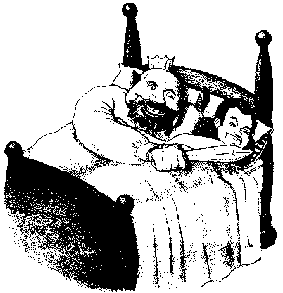
At that moment the King of Kosala was fast asleep in the royal bedchamber. King Goodness the Great gently touched the belly of the sleeping king with the sword of state. The king awoke in great surprise. In the dim lamplight he was frightened to see King Goodness leaning over him with sword in hand. He had to rub his eyes to make sure he was not having a nightmare!”

Then he asked the great king, “My lord how did you come here in spite of all my guards? You were buried up to your neck in the cemetery — how is it you are spotlessly clean, sweet smelling, dressed in your own royal robes, and decorated with fine jewellery and the loveliest flowers?”

King Goodness told him the story of his escape from the band of jackals. He told of the two demons that came to him to settle their quarrel. And he told how they gratefully helped him with their magic powers.

On hearing this, the King of Kosala was overcome by his own shame. He bowed his head to King Goodness the Great and cried, “Oh great king, the stupid ferocious demons, who live by eating the flesh and drinking the blood of dead bodies — they recognised your supreme goodness. But I, who was lucky enough to be born as an intelligent and civilised human being — I have been too foolish to see how wonderful your pure goodness is.

“I promise never again to plot against you, my lord —- you who have gained such perfect harmlessness. And I promise to serve you forever as the truest of friends. Please forgive me, great king.” Then, as if he were a servant, the King of Kosala laid King Goodness the Great down on the royal bed, while he himself lay on a small couch.

The next day the King of Kosala called all his soldiers into the palace courtyard. There he publicly praised the king of Benares and asked his forgiveness once again. He gave back the kingdom and promised that he would always protect King Goodness. Then he punished his adviser, the criminal minister, and returned to Kosala with all his troops and elephants.

King Goodness the Great was sitting majestically on his golden throne, with its legs like those of a gazelle. He was shaded from the sun by the pure white royal umbrella. He taught his loyal subjects saying, “People of Benares wholesomeness begins with giving up the five unwholesome actions once and for all. The highest qualities of the good person, whether ruler or subject, are loving-kindness and compassion. Filled with these qualities, one cannot harm another —- no matter what the reason or the cost. No matter how dangerous the threat, one must persevere until the greatness of the good heart wins in the end.”

Throughout the rest of his reign, the people of Benares lived peacefully and happily. King Goodness the Great continued performing wholesome works. Eventually he died and was reborn as he deserved.

The moral is: Refusing to harm others, the good heart wins over all.

51. King Goodness the Great [Perseverance]

Link:https://hhdorjechangbuddhaiiiinfo.com/2023/08/15/king-goodness-the-great-perseverance/

#Buddhisttalesforyoungandold #Buddhiststories #storiesforkids #moralstories #Buddha #Jatakastories #PansiyaPanasJataka

Buddha-dharma, Buddhist Studies And Popular Buddhism

Buddha-dharma, Buddhist Studies And Popular Buddhism

 In Taichung there is an elderly layman. All nine members of his family are devout Buddhists. They have followed and learned from a famous old monk for many years. However, what they hear from this old monk is completely theory. Each of them can talk about the sutras in a clear and logical fashion. However, none of them have real skills associated with the Buddha-dharma.

            In the autumn of 1995 the Elder Dharma King happened to be in Taiwan propagating the dharma.  The elderly layman requested instruction from the Elder Dharma King by saying, “This year I am already eighty-one years old.  I do things in furtherance of Buddhism everyday.  I have donated over one-half of my vast wealth.  Nevertheless, I have never seen a real Buddha or Bodhisattva.  The only knowledge I have of supernormal dharma powers comes from what I read in books.  Why do the Buddhas and Bodhisattvas not come down to our house?  May I ask the Elder Dharma King, what is the Buddha-dharma?”

When the Dharma King heard these words, he chanted “Wobamei!”  He then said, “Layman, you all have not learned the Buddha-dharma.  How could you have any true skills?” When all of the members of the layman’s family heard this, they felt quite surprised.  With his brows tightly knit, the old layman said, “My entire family devoutly learns Buddhism and recites sutras. How is it that we are not learning the Buddha-dharma? Could it be said that these sutras are all false?”

The Elder Dharma King said, “It is true that all of you are reading sutras and learning Buddhism.  Those sutras are genuine sutras and are dharma treasures.  The knowledge concerning Buddhism which those old monks impart to all of you is also genuine knowledge.  However, this is Buddhist studies.  It is not the Buddha-dharma!  In Esoteric Buddhism, Buddhist studies is called the exoteric teachings portion.  This is what we are required to learn when we first enter Esoteric Buddhism.  After we have learned the exoteric teachings portion and we have this foundation of theory, we must then enter into real, practical cultivation of our conduct, speech and thoughts.  The process of putting this into practice is called cultivation of the Buddha-dharma.

“Take, for example, the practice whereby one invites the Buddhas and Bodhisattvas to bestow nectar. In theory, people think that this is simply reciting mantras, reciting passages from sutras and visualizing.  In theory, people think that nectar is simply water which has been empowered by mantras. However, in the real practice of the Buddha-dharma, there is a special dharma method to invite the Buddhas to directly bestow true nectar from the sky. The shape of this nectar is unlike any other thing on this earth. It has unlimited power. It can cure all illnesses and can easily increase one’s life span! This is because this is the Buddha-dharma, not Buddhist studies.”

The old layman said, “I received the Kalachakra Vajra Initiation from the Dalai Lama!”  Elder Dharma King Losang said, “Last year a Great Rinpoche wanted to introduce the Dalai Lama to me.  I did not have any spare time.  I wanted to do other things in furtherance of the Buddha-dharma.  I did not meet him.  I do not know much about him and will not comment on him.  I do not have any right to inquire into that initiation.  I hope that you are able to receive benefits from it.”

When the old layman and his family heard this, it was as if they had awakened from a big dream.  Their eyes became teary, they knelt down on the ground and respectfully requested the Elder Dharma King to teach them the dharma.  After a moment, the Elder Dharma King slowly said, “Today I will teach the dharma to your entire family.  I will also teach the dharma to all living beings.”  Following his words, a beam of red light emanated from in between his eyebrows which circled the room.  The Elder Dharma King then said, “Do no evil.  Do that which is good.  Deeply study the sutras. This is Buddhist studies.  Do no evil.  Do that which is good.  Recite the Buddha’s name with all your mind.  This is the way to ascend to the Pure Land.  Do no evil. Do that which is good.  Deeply study the sutras.  Esoteric initiations in which supernormal powers are manifested and which comply with Know the True Doctrine is the Buddha-dharma.”

After the old layman heard these words, he put his palms together and respectfully asked, “Other than Know the True Doctrine, what books should I read?”  Dharma King Losang said, “With respect to Know the True Doctrine, it is enough if you understand its contents.  The most important thing is that you read the books of Ah Wang Nuo Bu Pa Muand Great Dharma King Yangwo Yisinubu [H.H. Dorje Chang Buddha III].  The more you read such books the better.  You must also live in accordance with the principles contained therein.  This is the best method!”

The old layman said, “I will remember your words. I would like to ask another question.  Does every Rinpoche have a mind which regards all things as equal?” The Elder Dharma King instructed, “The most difficult thing to attain in one’s cultivation and in one’s practice of the Buddha-dharma is a mind which regards all things as equal.  Without such a mind, one will pursue fame, gain, riches, high government positions and occupation of other people’s land.  One with a mind which regards all things as equal does not pursue such things.

“For example, some people want to cut apart my native place, Tibet.  Actually, this way of thinking is a deviation from cultivation.  Is this cultivation or is this fighting for something based upon personal desire?  Tibetan people, Chinese people and people of every other race and ethnicity should all be considered our close family members who are on an equal footing!  We should cause all of these people to unite so that they can live together in friendship and love and develop their common happiness.  The Buddha taught us that all living beings have the Buddha nature and that we should treat them equally and with love.  We should not desire government positions.  Only by cutting off the concept of self, cutting off erroneous thinking and cutting off attachment to things of the world can one reach high spiritual states!  This is the certain truth of the Buddha-dharma.  We must love others equally in order that we may give rise to the four limitless states of mind.   With the four limitless states of mind as our foundation, we will be able to enter into the state of the sacred bodhi mind.  If one cannot even renounce selfish desires and cannot even look after all living beings on an equal basis, then how can one enlighten oneself and enlighten others?”

Link: https://wisdomtea.org/2023/08/11/buddha-dharma-buddhist-studies-and-popular-buddhism/

Embracing Silence: 5 Advantages of Practicing Stillness

In China, there’s a saying that goes, “Disaster comes from the mouth, and illness enters from the mouth.” This saying serves as a reminder for people to exercise caution with their words. In Chinese traditional culture, there’s an even stronger emphasis on encouraging individuals to avoid engaging in arguments as much as possible. Confucius’s Analects even contain the proverb “Silence is golden.” The traditional Taoist concept in China emphasizes achieving ultimate emptiness and upholding tranquility and dedication. In Buddhism, there’s also the story of Vimalakirti’s profound silence. While I used to think that these ideas were exclusive to Chinese culture, I later discovered that a similar perspective exists in Western culture as well.

In his timeless masterpiece “The 48 Laws of Power,” Robert Greene delves into the art of navigating complex human interactions to achieve personal and professional success. Amid the book’s numerous valuable insights, the power of silence stands out as a potent tool that often goes unnoticed. Embracing silence can be challenging in our fast-paced, noisy world, but it offers unique advantages that can significantly impact our lives. Let’s explore five key benefits of practicing silence as outlined in “The 48 Laws of Power.”

Cultivating Mystery and Intrigue:

In the realm of power and influence, excessive verbosity can lay bare your intentions and vulnerabilities. In contrast, silence exudes an aura of mystery and intrigue. By listening more and speaking less, people become curious about your thoughts and motivations. Practicing strategic silence creates an impression of wisdom and depth that captures others’ attention, rendering them more receptive to your words when you choose to speak.

Exerting Control Over Emotional Responses:

Our emotions frequently lead us astray, prompting impulsive and regrettable actions. Through silence, you gain mastery over your emotional reactions. By pausing and observing your feelings without immediate response, you grant yourself the space to process and rationalize, resulting in more thoughtful and measured reactions. This controlled demeanor projects strength and stability, fostering an air of authority and respect.

Revealing Concealed Motives:

In a world rife with deception and manipulation, silence can be a potent ally in exposing others’ true intentions. Your silence creates a void that others may attempt to fill with their words. In this process, people often unveil their motives, vulnerabilities, and secrets, affording you invaluable insight into their genuine character. The ability to discern hidden agendas bestows a significant advantage in any situation.

Promoting Attentive Listening and Learning:

In the era of ceaseless chatter and information overload, the art of listening has faded. Embracing silence allows you to become a more attentive and empathetic listener. Active listening enables you to gather vital information, identify valuable opportunities, and comprehend the needs of those around you. This heightened understanding empowers you to tailor your actions and words to suit diverse situations, enhancing relationships and augmenting your influence.

Mastery of Strategic Timing:

Silence is a formidable instrument for mastering the art of timing, particularly when dealing with sensitive or contentious matters. Selecting the appropriate moment to speak or act can profoundly impact the outcome of a situation. Silence grants you the ability to observe the rhythm of events, enabling well-calculated decisions that can profoundly affect your success.

By nurturing enigma, exercising emotional restraint, exposing hidden motives, fostering attentive listening, and mastering the art of timing, you can harness the power of silence to your advantage. Integrating these principles into your daily life will unveil newfound strength, resilience, and influence, propelling you toward success in both personal and professional pursuits. Remember, sometimes, less truly is more, and silence can speak volumes in a world saturated with noise.

Embracing Silence: 5 Advantages of Practicing Stillness

Link:https://peacelilysite.com/2023/08/10/embracing-silence-5-advantages-of-practicing-stillness/

#The48LawsofPower #RobertGreene #ChineseCulture #Taoist #Buddhism #PowerofSilence#Stillness

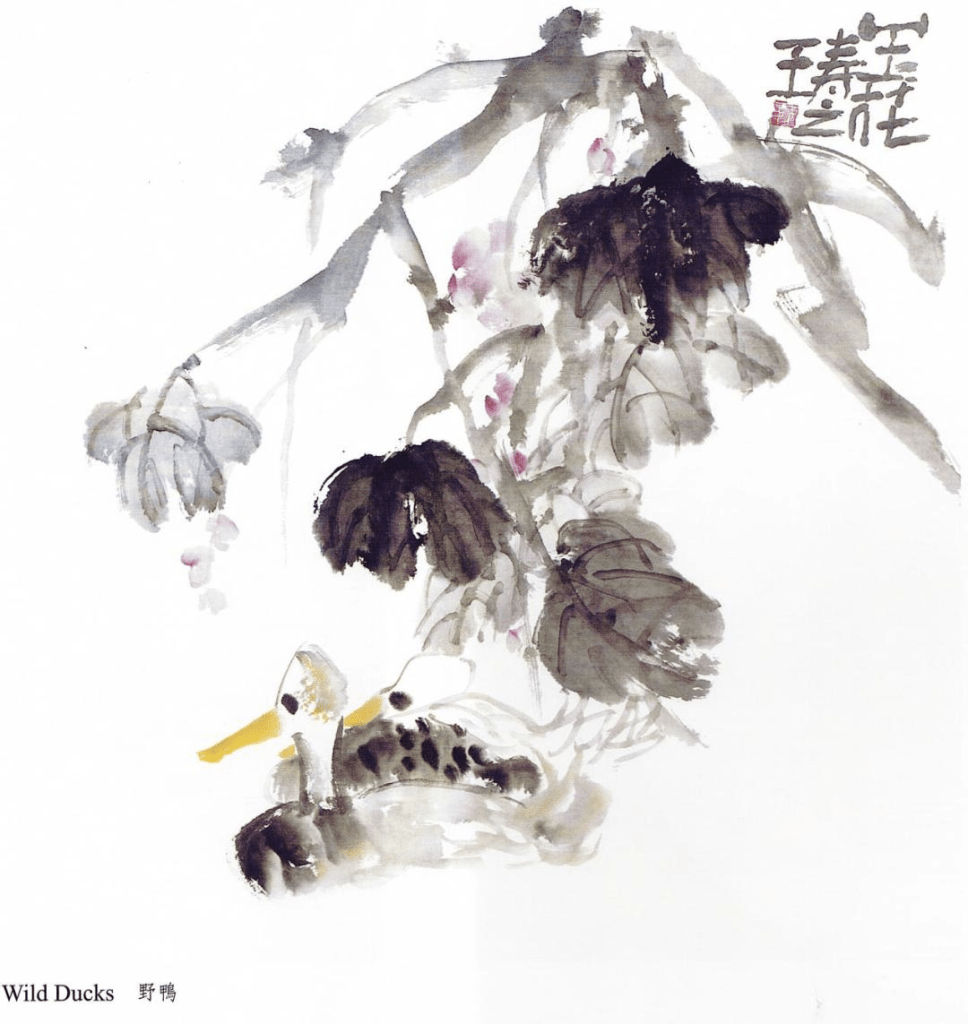
Yu Hua Shou Zhi Wang Flower and Bird Painting Album

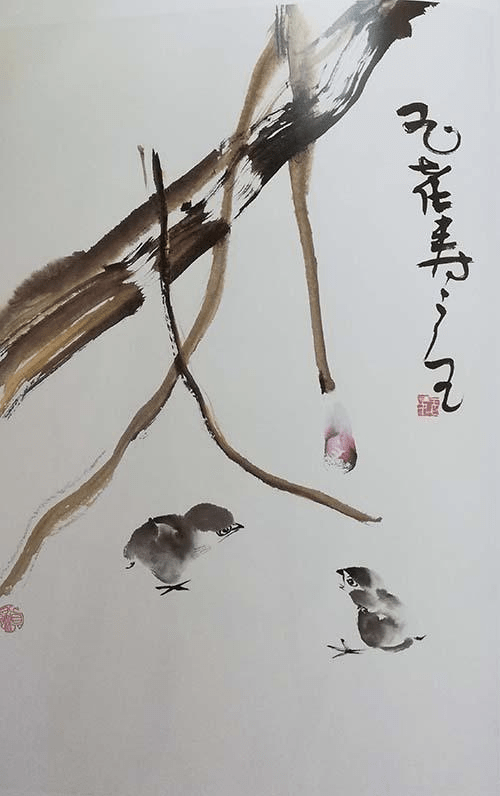
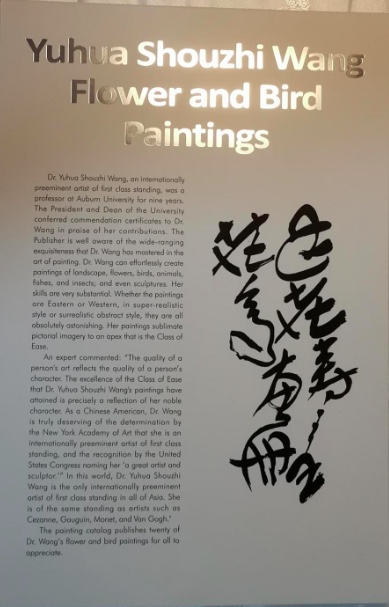
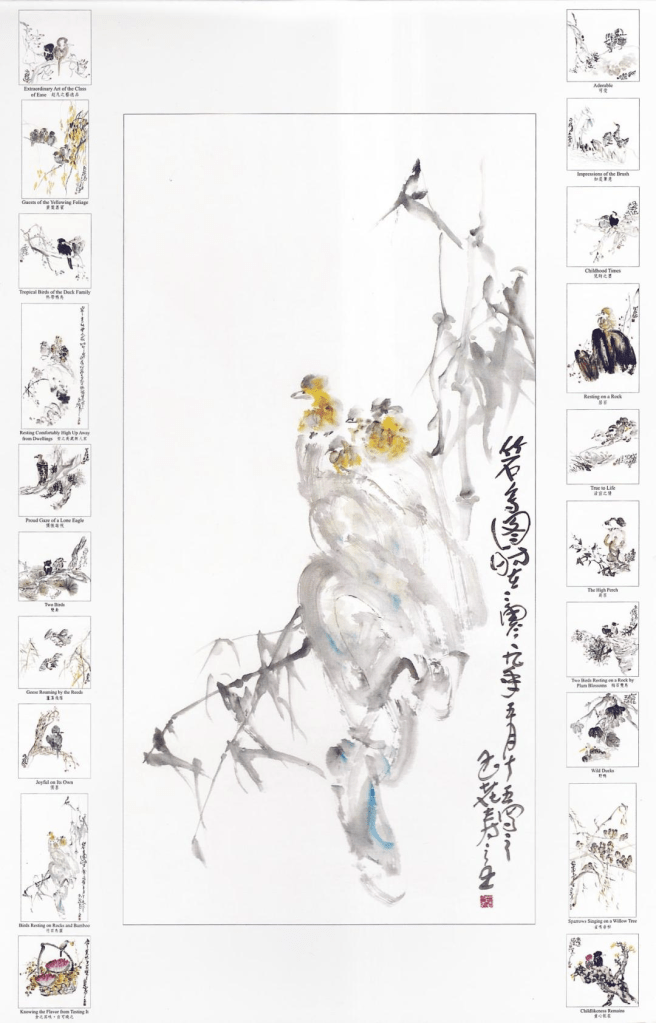
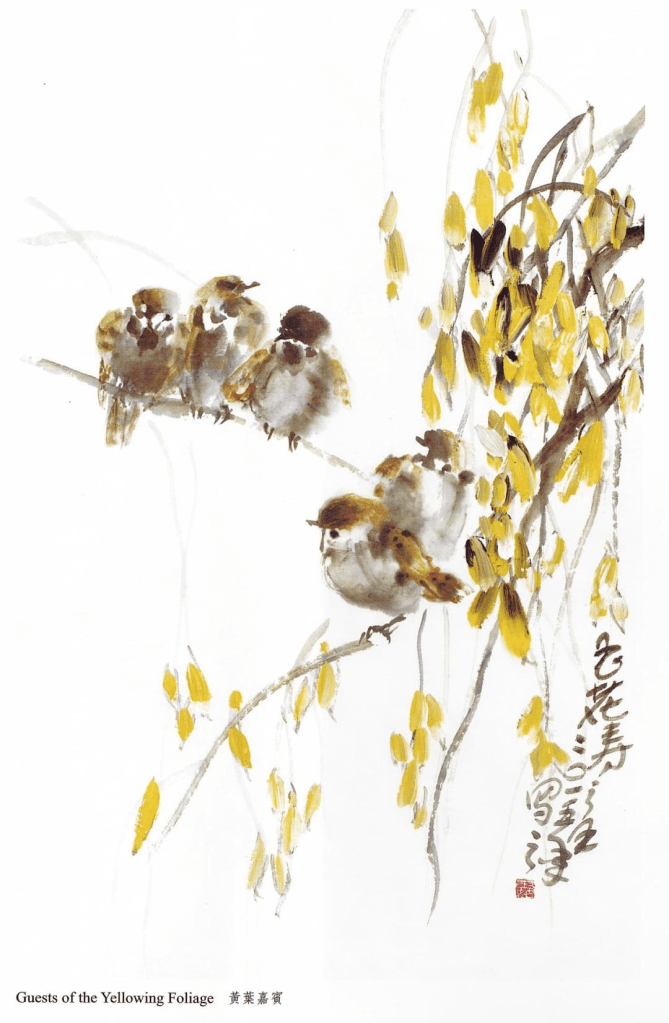
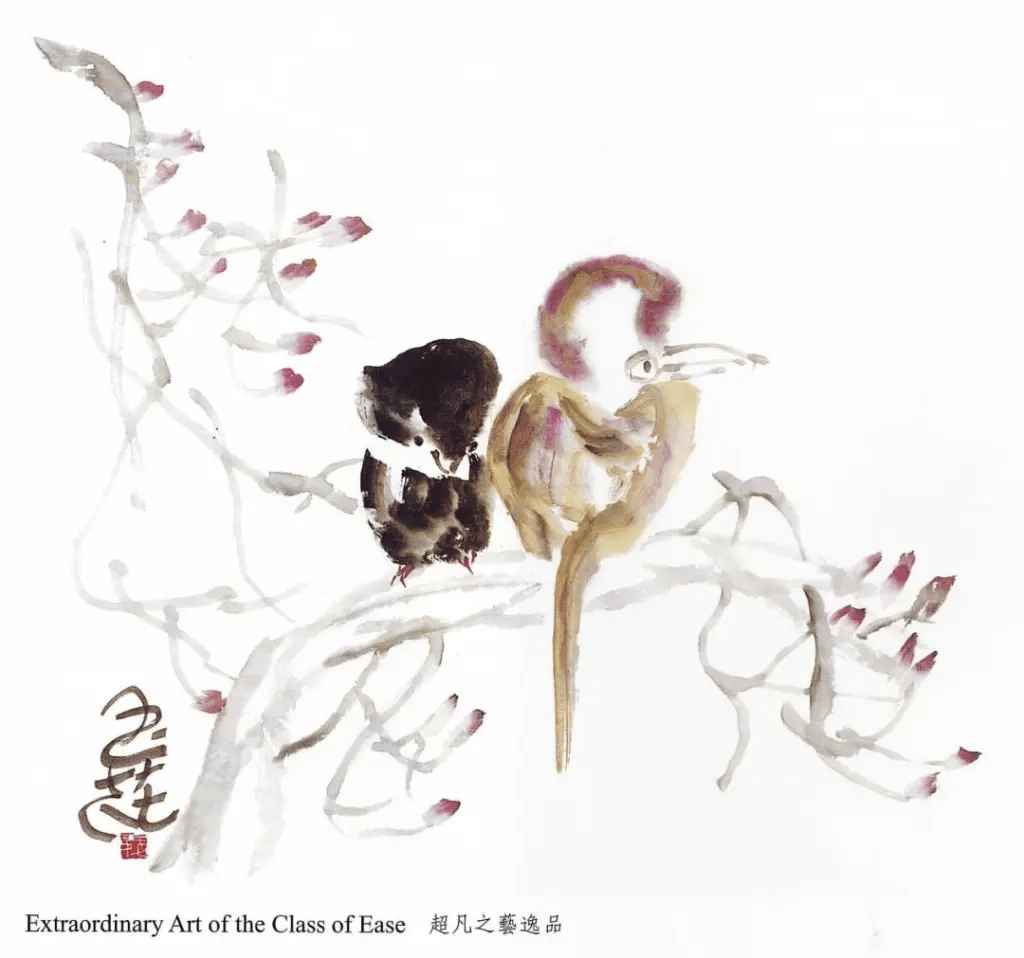
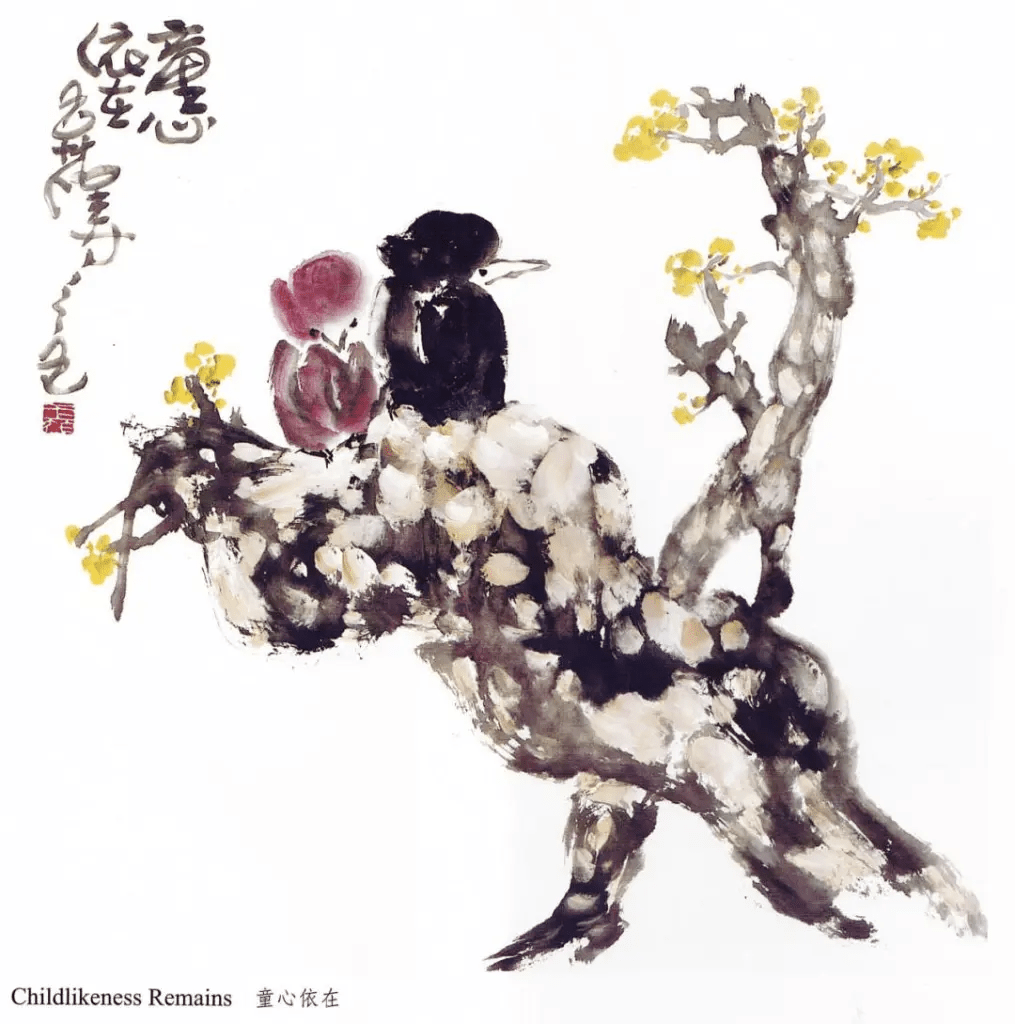
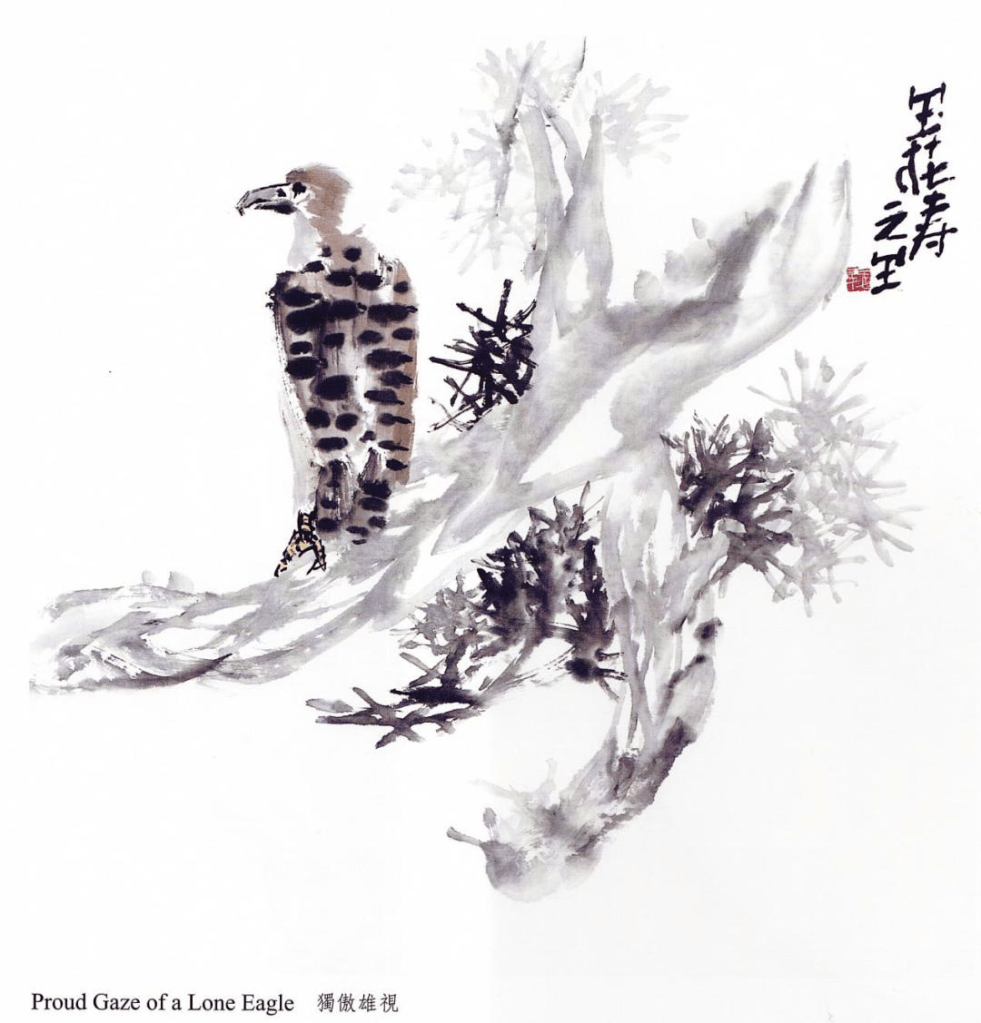
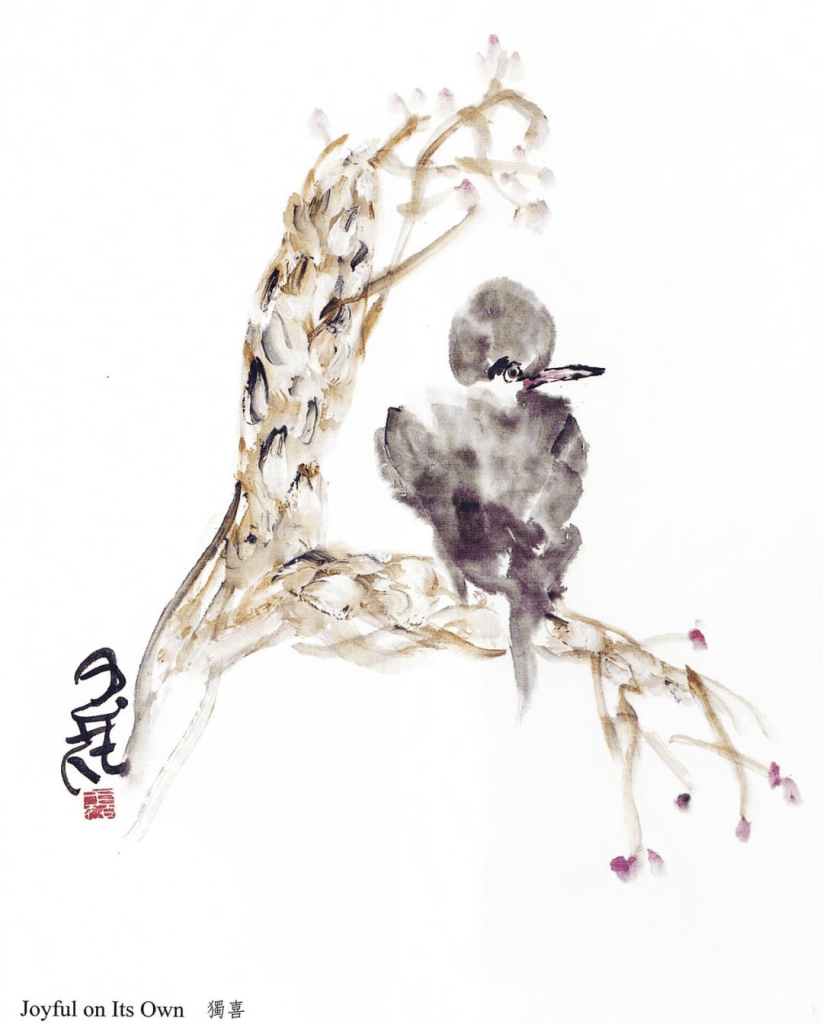
The beauty of art emanates from the soul, while the beauty of the soul reflects one’s internal cultivation. In Professor Yu Hua Shou Zhi Wang’s “Yu Hua Shou Zhi Wang Flower and Bird Painting Album,” we are presented with a delightful sense of freshness and warmth, coupled with a profound and uplifting force. Let’s savor the experience of “Yu Hua Shou Zhi Wang Flower and Bird Painting Album” together and witness the extraordinary talent and profound moral character of the artist!

Professor Yu Hua Shou Zhi Wang’s works are characterized by strong and powerful brushstrokes, showcasing a rich and diverse palette, and exuding a poetic and artistic charm. Each piece is infused with sunlight, radiating sincerity, simplicity, and a delightful sense of innocence and romance. As we immerse ourselves in Professor Yu Hua Shou Zhi Wang’s “Yu Hua Shou Zhi Wang Flower and Bird Painting Album,” we can deeply sense the artist’s love and compassion for animals. Each artwork invites us into a transcendent dialogue with a sage-like presence, revealing the captivating allure of art!

Professor Yu Hua Shou Zhi Wang is brimming with compassion and care for all living beings, be it humans or animals, even including honeybees that can sting. She treats each of them with equal and attentive concern.

A few years ago, bees would frequently visit Professor Yu Hua Shou Zhi Wang’s residence. The first time they built a hive at her home, they even stung someone. Some people suggested removing the beehive to prevent further harm, but Professor Yu Hua Shou Zhi Wang firmly disagreed. She felt deep empathy for the bees, as they had finally found a shelter from wind and rain. She made it clear that if they had to leave, the bees should not be harmed. In fact, she would rather move out herself than cause suffering to the bees. As a result, Professor Yu Hua Shou Zhi Wang and her family decided to move to her art studio to live.

Another incident involving Professor Wang showcases her compassionate nature when she saved a butterfly that had fallen into the water. Concerned about the butterfly’s well-being, she took it home and cared for it for a few days until it was fully recovered, and only then did she release it back into the wild.

The compassionate and kind professor frequently utilizes the money earned from selling her paintings to release captured living beings, such as birds, fish, and more. On numerous occasions, she has purchased large quantities of fish, sometimes weighing several cabins or even tens of tons, to set them free. There have been instances where she bought an entire boat-load of fish from a large fishing vessel, ensuring their liberation and return to their natural habitats.

I couldn’t help but ponder: When two conflicting interests clash, do we prioritize the welfare of others or our own interests first? It’s a challenging question, and not many people in this world can genuinely put the welfare of others before their own. However, Professor Yu Hua Shou Zhi Wang managed to do just that. She consistently places the well-being of all beings ahead of her own interests. Her unwavering compassion and greatness are truly remarkable and serve as an inspiring example for us all.

In daily life, Professor Yu Hua Shou Zhi Wang is very frugal. She is reluctant to waste even the water used for daily living tasks, such as washing rice or clothes. She often collects and saves the used water to water the garden or flush the toilet. Additionally, Professor Yu Hua Shou Zhi Wang frequently donates his own salary to help those in need. When asked by students, “You can earn a lot of money from selling just one of your artworks, so why are you still so frugal?” At moments like these, Professor Yu Hua Shou Zhi Wang advises the students to cherish their blessings and not to waste anything. He encourages them to use the money saved from being frugal to support more people who are facing difficulties.

The well-known saying, “Deeply hidden talent not easily revealed” aptly describes Dr. Yuhua Shouzhi Wang’s morality and inner refinement. The characteristics of an artist’s paintings essentially reflect the character of the painter. From the paintings above you can find humility, inner peace, harmony and noble morality of professor Wang.

Dr. Yuhua Shouzhi Wang is the Lifetime Honorary Chairwoman of the International Art Museum of America. The museum has a dedicated gallery exhibiting her artworks. 

Yu Hua Shou Zhi Wang Flower and Bird Painting Album

Link:https://peacelilysite.com/2023/08/04/yu-hua-shou-zhi-wang-flower-and-bird-painting-album/

#ProfessorYuHuaShouZhiWang#Art#Artist#ClassofEase#InternationalArtMuseumofAmerica #ArtistofFirstclassstanding#Inkpaintings#LotusPainters #FlowerBirds

Religious Leaders Hold Dharma Assembly to Honor the Holy Birthday of H.H. Dorje Chang Buddha III 

Release of the first Volumes of “Namo Dorje Chang Buddha III Complete Sutra Collection

By Jon Stojan July 25 2023

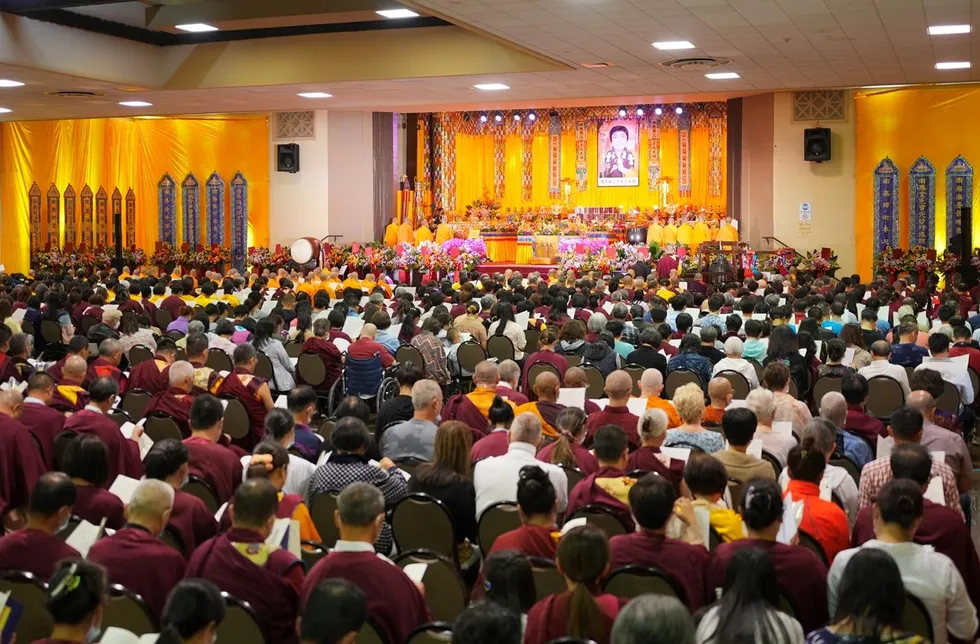
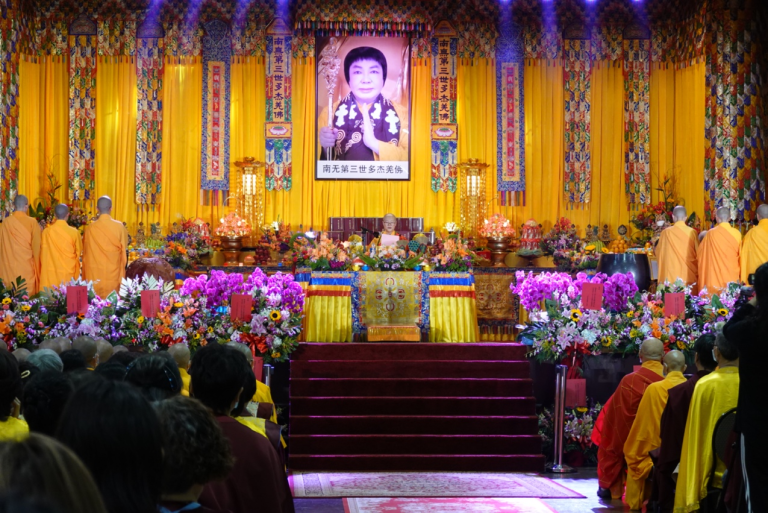
To honor the Holy Birthday of H.H. Dorje Chang Buddha III, revered as the Pope of Buddhism, several prominent Buddhist organizations including the World Buddhism Association Headquarters, Holy Miracles Temple, Hua Zang Si, Benevolence Temple, and the Sanger Mission, jointly organized a Grand Dharma Assembly in Glendale, California. The two-day event took place on June 30th and July 1st, 2023, at the Glendale Civic Auditorium and attracted over a thousand Buddhists from around the world. 

June 30th marked the unveiling of the first three volumes of the “Namo Dorje Chang Buddha III Complete Sutra Collection”. The Dharma Assembly opened with a procession led by a group of nuns, chanting the Buddha’s name “Namo Dorje Chang Buddha III”. The “Namo Dorje Chang Buddha III Complete Sutra Collection” was gracefully displayed on a sacred sedan chair, carried by Holy Gurus Venerable Tsemang and Ruzun Bodi Wentu. In a display of reverence, all attendees of the Assembly humbly prostrated themselves, paying their respects to the Collection. 

In the Dharma Assembly, Venerable Tsemang addressed the congregation, emphasizing the significance of the “Namo Dorje Chang Buddha III Complete Sutra Collection”: “We have undertaken the significant task of editing and publishing the first part of the ‘Namo Dorje Chang Buddha III Complete Sutra Collection.’ This endeavor not only expresses our profound gratitude and unwavering yearning for H.H. Dorje Chang Buddha III but, more importantly, will enable countless sentient beings to attain accomplishment and liberation through studying the Collection. We firmly believe that the ‘Namo Dorje Chang Buddha III Complete Sutra Collection’ will serve as the ultimate guide for all Buddhist disciples seeking accomplishment and liberation. 

“The Collection encompasses the essence of the Tripitaka and the esoteric Buddhist scriptures. It covers Buddhist precepts, views, cultivation, and Dharma practices. It covers the whole spectrum of Buddhism regardless of whether it is Hinayana, Mahayana, or Vajrayana. Through the Collection, H.H. Dorje Chang Buddha III reveals the most direct and expedient path for sentient beings, Arhats, and Bodhisattvas to advance themselves. If we diligently study and practice the teachings on even a single volume of the Collection, while focusing on any one dharma-gate, we can be assured of attaining liberation.”  

During this Age of Dharma Degeneration, H.H. Dorje Chang Buddha III descended to the earthly realm, exhibiting perfect mastery of Exoteric and Esoteric Buddhism, along with unparalleled expertise in the Five Vidyas. The Five Vidyas are what Buddhas and Bodhisattvas do to help living beings. Over the past 2,000 years, Buddhist teachings have encountered distortions and alterations due to mistranslation and misinterpretation of Buddha-dharma by Buddhist patriarchs, eminent monastics, and Buddhist scholars. Recognizing the distortions and errors that had infiltrated Buddhist teachings, H.H. Dorje Chang Buddha III corrected the mistakes present in the Buddhist teachings, restoring the authenticity, power, and purity of Buddha’s wisdom and views. 

H.H. Dorje Chang Buddha III has bequeathed over two thousand audio recordings of imparted Dharmas and published invaluable Buddhist books, including “A Monk Expounds the Absolute Truth to a Layperson,” “Commentary on the Prajnaparamita Heart Sutra,” “The Essence of Buddha Dharma,” “Correcting the Treatises of Patriarch Bodhidharma,” “What Is Cultivation?,” “The Supreme and Unsurpassable Mahamudra of Liberation,” and “Learning From Buddha.” H.H. Dorje Chang Buddha III imparted the subtleties of Dharmas in colloquial language so that people living in the 21st century could easily comprehend. They serve as supreme treasures and indispensable resources for Buddhist disciples seeking to escape the sufferings of this world and attain enlightenment. 

 In response to the needs of Buddhist disciples, the Office of H.H. Dorje Chang Buddha III is working to transcribe audio recordings of Dharmas imparted by H.H. Dorje Chang Buddha III into extensive written texts, and the “Namo Dorje Chang Buddha III Complete Sutra Collection” is being meticulously compiled. The first three volumes of the Collection, consisting of “Dharma Imparted During the Trip to the East,” “Dharma Imparted During a Trip in Response to the Needs of Disciples,” and “Imparting the Absolute Truth through the Heart Sutra,” were released to commemorate this Holy Birthday of H.H. Dorje Chang Buddha III. The remaining volumes will be released and published in the future. 

The Dharma Assembly continued July 1st, 2023, with participants representing Buddhist disciples all over the world presenting 108 offerings to Buddhas and Bodhisattvas.  Under the solemn direction of Jiaozun Zhengda, the congregation recited the Buddhist Sutra “Sutra on Understanding and Realizing Definitive Truth”. The attendees offered heartfelt reverence to the Buddhas, engaged in prostrations, and prayed to the Buddhas and Bodhisattvas for blessings upon all sentient beings. The gathering collectively expressed their aspirations for the eradication of all global pandemics, the endurance of international peace and friendship, and the cessation of calamities, while invoking prosperity, good health, and longevity for all. 

Venerable Pannavati, some of her students, and other attendees at the Dharma Assembly

Venerable Pannavati Karuna, the Abbot of Heartwood Refuge monastery in North Carolina, led dozens of her students to attend the Dharma Assembly. In an interview, she said: “I was introduced to Buddha Master (H.H. Dorje Chang Buddha III) 18 years ago through Zhaxi Zhouma Rinpoche. I thought I had too many duties and responsibilities to follow His teachings. But I kept reading and pondering them through the years. I began to notice in my everyday life the truth and ability to live differently in the world. I had more integrity, clarity, joy for the first time and an understanding that enlightenment was possible if one follows the true teachings of Shakyamuni Buddha. Buddha Master imparted Dharmas and explained those teachings in a down to earth, understandable way without compromise. He even spoke African American slang. Sometimes translators had a difficult time translating it into English because they may not fully understand the slang. But I heard it and I understood what He meant. That is the marvelousness of a true Buddha in this world. He can speak the language in a way that you hear it, understand it, penetrate it, and realize it. He guided me towards the correct aspiration. The goal is not Buddhist studies, and realization cannot be explained by mere words, but it can be experienced. The true purpose of the Buddha Dharma is to awaken us to our Buddha-nature. His teachings point the way.” 

Gongjue Tuji Rinpoche from Germany also shared his joyfulness after attending the Dharma Assembly. He said: “I am very happy to be here today on this very auspicious occasion. Because for us Westerners, it is very hard to get the teachings and Dharma from Buddha Master since most of us do not speak Chinese. I am very happy about this event today that we are finally getting the opportunity to get the Buddha Dharma in English language, and we will have direct access to it.” 

The Dharma Assembly held in Glendale fostered unity and devotion among Buddhist practitioners from diverse backgrounds. With the release of the first volumes of “Namo Dorje Chang Buddha III Complete Sutra Collection”, the event left an indelible mark on the spiritual aspirations of attendees, inspiring them to pursue enlightenment and emulate the compassion and wisdom demonstrated by H.H. Dorje Chang Buddha III. 

Religious Leaders Hold Dharma Assembly to Honor the Holy Birthday of H.H. Dorje Chang Buddha III 

Link:https://peacelilysite.com/2023/08/04/religious-leaders-hold-dharma-assembly-to-honor-the-holy-birthday-of-h-h-dorje-chang-buddha-iii/

#DharmaAssembly #DorjeChangBuddhaIII #HHDorjeChangBuddhaIII#DorjeChangBuddha #GesangSuolangRinpoche #Buddha #ZhaxiZhuomaRinpoche #ReligiousLeaders # Glendale #VenerablePannavatiKaruna #AbbotHeartwoodRefugemonastery #North Carolina #NamoDorjeChangBuddhaIIIComplete Sutra Collection

Source: https://www.usatoday.com/story/special/contributor-content/2023/07/25/assembly-held-to-honor-the-birthday-of-h-h-dorje-chang-buddha-iii/70462586007/#:~:text=The%20two%2Dday%20event%20took,Buddha%20III%20Complete%20Sutra%20Collection%22.

The Power of Silence

Profound Insights into the Importance of Silence

By L. M. Sacasas

The modern world has a curious way of stripping something away and then selling it back to us at a premium. Or, to put it another way, of transforming formerly public goods into a private luxuries. I’m sure you can think of any number of cases. Take darkness, for example. Over the course of one hundred years or so we conquered the night and banished the starry hosts. Only recently have we discovered that if we now want to experience natural darkness and behold the Milky Way we might have to pay for it. Dark Sky tourism is one of the most popular trends in tourism. Adequate or healthy levels of physical activity serves as another example. A monthly gym or CrossFit membership supplies what might have been achieved as a matter of course while completing one’s ordinary daily work.

Silence is yet another example. The World Health Organization recently updated its noise pollution guidelines. The report, focused on European nations, claims that one in five Europeans is exposed to noise levels with adverse health effects, including high blood pressure, heart disease, and the risk of cognitive impairment for children. The report went so far as to classify noise pollution one of the “top environmental risks to health.” Naturally, those who are sufficiently resourced can now turn to one of the growing number of luxury resorts whose main selling point is silence. In 2017, Alex Glasscock, CEO and founder of The Ranch in Malibu told Condé Nast Traveler, “A calm and silent mind is the new luxury and people are actively seeking this opportunity.” And intrepid entrepreneurs are willing to supply the opportunity at a hefty price. A four-day stay at the Ranch, its cheapest offering, will run you $4200. Alternatively, you could buy $350 noise-cancelling headphones.

How exactly does this happen? How do public goods turn into private luxuries? The story, as we might imagine, is rather complicated. From one perspective, it is merely the ordinary operations of capital. But it may be worth asking why it proves so difficult to resist these operations. It is possible to suppose that the goods were not recognized as such until they were lost, that they were not framed as goods until they were threatened. Indeed, this is almost certainly part of the answer. It is easy to see how darkness, bodily activity, and silence would be taken for granted. Moreover, it is easy to see how they might even be construed as problems to be overcome. Darkness limits our work, bodily activity can be wearisome and slavish, and silence can be a symptom of loneliness and isolation. Consequently, we embrace the technologies that allow us to work and play into the night, relieve us of our wearisome labor, and fill or silences.

William Cronon argued along similar lines several years ago with respect to the idea of “the wilderness” in American history. Regarding the idea of the wilderness, Cronon writes, “Far from being the one place on earth that stands apart from humanity, it is quite profoundly a human creation—indeed, the creation of very particular human cultures at very particular moments in human history.” During the turn of the nineteenth century, the wilderness was theorized as the sublime and the frontier. As industrial technologies expanded and altered the shape and pace of urban life, “the wilderness” appeared in a new light. It was no longer a foreboding and threatening space; it was now a hallowed and treasured place. And, strikingly, Cronon also reminds us that at this point “Wilderness suddenly emerged as the landscape of choice for elite tourists.”

I would suggest, however, that the story is slightly more complicated than this. Alasdair MacIntyre has argued that ethics lost its way when it lost its telos. Traditionally, ethics was conceived of as the bridge between “man-as-he-happens-to-be and man-as-he-could-be-if-he-realized-his-essential-nature.” Ethical prescriptions only made sense within this tripartite structure. In MacIntyre’s view, modern ethical theories amounted to one failed effort after another to do ethics without some normative understanding of “man-as-he-could-be-if-he-realized-his-essential-nature.” Under these circumstances, ethical rules and principles were no longer coherent or compelling. They had, in short, lost their story.

This is not a bad way of understanding what happened to a whole class of goods that includes silence but also things like solitude, attention, and privacy. Once they were disembedded from a socio-moral context from which they derived their taken-for-granted value—once they lost their story—they became easy prey for the emerging technological and economic milieu. Within this context, any attempt to conserve these goods tends to appear reactionary or nostalgic. Worse yet, as the examples with which we began suggest, such efforts do little more than return these goods to us as commodities.

It is with these considerations in mind that I took up Robert Cardinal Sarah’s 2016 book, The Power of Silence: Against the Dictatorship of Noise. The work, first published in French, appeared in English in 2017. The book is structured as a long interview or conversation with the French journalist, Nicolas Diat, who previously collaborated with Cardinal Sarah on an earlier book God or Nothing.

Cardinal Sarah was appointed bishop by John Paul II in 1979 and, in 2010, Benedict XVI made him a cardinal. He is Prefect of the Congregation for Divine Worship and the Discipline of the Sacraments. Most notably for our purposes, he was born in 1945 in rural French Guinea. This is notable because it places Cardinal Sarah at a decided advantage when it comes to the question of silence: his sensibilities and insights have been cultivated in a non-Western context. He is able to speak about silence in a manner that is not captive to the patterns outlined above. Silence is not a commodity or lifestyle hack he’s selling. It is a good that remains integrated into a coherent and compelling understanding of human flourishing. “In Africa,” as the cardinal puts it, “the sacred is something quite obvious for the Christian people, but also for believers of all religions.”

The Power of Silence is a rich repository of writings, ancient and modern, from the fathers to Blaise Pascal to Thomas Merton and Henri Nouwen. What emerges from the cardinal’s weaving of these theological resources and his own insights is an expansive understanding of what constitutes silence, one which, not surprisingly, often touches on the mystical. “It is not enough to be quiet,” Cardinal Sarah tells us, “It is necessary to become silence.”

Silence, we are reminded, describes both external and internal realities. Silence is as much a condition of the soul as it is the absence of auditory stimuli. It describes a state of “interior rest and harmony.” Silence, as Cardinal Sarah understands it, is not unlike that state of the soul characterized by leisure described by another Catholic theologian, Josef Pieper: “a form of that stillness that is the necessary preparation for accepting reality; only the person who is still can hear, and whoever is not still cannot hear.”

Yet, “it is absurd to speak about interior silence without exterior silence.” Silence, then, involves the absence of noise, but noise is not merely what we perceive with our ears: noise, like silence, is also a condition of the soul. It is a state of perpetually harried restlessness. Moreover, silence is a deeply personal reality, but also the foundation of our right relation to others: “Without the capacity for silence, man is incapable of hearing, loving, and understanding the people around him. Charity is born of silence.”

Most importantly, silence is the condition for our hearing the voice of God and it is the voice of God. Silence is not merely a matter of finding personal peace and well-being. It is a requisite condition of our knowing God, for which knowledge we have been made. To participate in the silence of God, then, a silence that dwells within us, is an indispensable element of our becoming the sorts of creatures we have been created to be. “Silence is not an absence,” Sarah explains. “On the contrary, it is the manifestation of a presence, the most intense of all presences.” “The desire to see God is what urges us to love solitude and silence,” Sarah observes, “For silence is where God dwells. He drapes himself in silence.”

Opposed to the life characterized by silence, however, we find what Cardinal Sarah called “the dictatorship of noise.” This dictatorship is characterized by the tools at its disposal. He describes the regime of noise as a “highly technological society” and warns us of “the glowing screens” that “need a gargantuan diet in order to distract mankind and destroy consciences.” This world is marked, as the German scholar Harmut Rosa, has argued by social acceleration. “The experience of modernization,” Rosa argues, “is an experience of acceleration.” By this he means an acceleration of the pace of social change and an acceleration of the experience of time by modern individuals. Just as Cardinal Sarah understands that noise is not merely auditory stimuli, Rosa understands that acceleration is not only about the speed at which we experience life. It is also a matter of frenzied and frenetic activity, which makes it difficult to get one’s bearings or to make sense of one’s own personal history.

The cardinal also understands, however, that there are also deeper issues at play. “Without noise,” he writes, “postmodern man falls into a dull, insistent uneasiness.” This line recalls the thinking of Blaise Pascal, who Cardinal Sarah frequently cites throughout The Power of Silence. Pascal knew that the turn to diversions to help us cope with our inability to abide silence was the symptom of the malaise at the heart of the human condition. But Pascal could still speak about silence, or what he frequently called rest, as a good with a view to an ultimate end—understanding our predicament as a step toward recognizing our dependence on God’s grace.

Cardinal Sarah has written a moving book. He circles around the same basic principles and themes repeatedly, which does generate a mild redundancy. And at times, his efforts to put words to what must finally be a wordless experience fall rather flat, or perhaps that is a matter of translation. But he succeeds in giving silence a story within which it can achieve its value independently of the dynamics which have rendered it a private luxury. But even if we recognize the value of silence, we still face the dictatorship of noise. We will stand a better chance of securing a measure of silence to sustain our spiritual lives if our efforts unfold alongside others who seek silence with us. The dictatorship of noise is best combatted not by individuals but by communities of practice which prioritize silence and a well-ordered life.

The Power of Silence: profound insights into the importance of silence

Link:https://peacelilysite.com/2023/08/02/the-power-of-silence/

#Silence #Power #God #CardinalSarah #BlaisePascal

Source: https://mereorthodoxy.com/book-review-power-silence-robert-cardinal-sarah

HEAVEN PICTURE, PHOTOGRAPHED BY HUBBLE TELESCOPE

In 1994, a researcher claimed to have obtained a top-secret photo taken by the Hubble Space Telescope, suggesting it could be an image of Heaven. The Weekly World News was the first to publish this image along with Dr. Marcia Masson’s findings. Despite media coverage, NASA chose not to acknowledge the existence of such a photo.

With the recent repair of the Hubble Telescope and NASA’s official release of new findings, the editorial team at Weekly World News believes that NASA should take responsibility and further investigate this intriguing space anomaly.

As of now, NASA has not issued a response. However, an exclusive report reveals that shortly after space shuttle astronauts repaired the Hubble Space Telescope in mid-December, the lens focused on a star cluster at the universe’s edge, capturing what some describe as a vast white city in the void of space.

HEAVEN PHOTOGRAPHED BY HUBBLE TELESCOPE
February 8, 1994

Dr. Marcia Masson, an author and researcher, cites anonymous NASA insiders who claim that hundreds of photos were beamed back to the Goddard Space Flight Center in Greenbelt, Md., on December 26. According to these insiders, the city depicted in the images is believed to be Heaven due to its location in icy, airless space, seemingly incompatible with life as we know it.

Despite Dr. Masson’s excitement about the potential significance of these findings, NASA has remained silent, stating they need further analysis of the photographs received on December 26. However, insiders within the agency admit that this discovery could be transformative for humanity’s future. The photos have even piqued the interest of President Bill Clinton and Vice President Al Gore, who request daily briefings on the matter.

The Hubble Space Telescope, once limited by a lens flaw, now has the capability to photograph distant reaches of the universe. As adjustments were made and focus improved, NASA analysts were astonished by what they found. They authenticated the images and theorized that the city could not be inhabited by life as we understand it, leading some to speculate it might be the dwelling place of departed souls. Speculations abound, and rumors suggest that even Pope John Paul II may have requested copies of these photographs, though the Vatican has neither confirmed nor denied this.

Dr. Masson, having obtained a single photograph from her NASA sources, believes that the agency’s next steps will be crucial. She urges NASA to be transparent and share all relevant information with the public, allowing humanity to grasp the full implications of this extraordinary discovery.

HEAVEN PICTURE, PHOTOGRAPHED BY HUBBLE TELESCOPE

Link: https://peacelilysite.com/2023/07/28/heaven-picture-photographed-by-hubble-telescope/

#Heaven #NASA #HubbleTelescope #God #PresidentCliton

Source:   https://m.blog.naver.com/PostView.naver?isHttpsRedirect=true&blogId=jwnlee0214&logNo=220641501587

Control Your Anger and Do not React

Many people struggle with the challenge of controlling their emotions. When faced with situations that contradict our feelings, desires, or goals, frustration and anger can easily overwhelm us, causing us to lose our temper and shift blame onto others. Unfortunately, such reactions often exacerbate the problem, leading to harm for ourselves and those around us. However, there are valuable lessons we can learn from a story that might inspire us to gain control over our anger and maintain peace and calm within our hearts.

The following story serves as a powerful reminder of the importance of non-reaction:

Once upon a time, there was a young man who was very interested in Zen Buddhism. He had read many books and articles about it, and he was eager to learn more. One day, he decided to visit a Zen master to ask him about the art of non-reaction.

The Zen master was a very old man with long white hair and a beard. He was sitting in the Lotus position on a cushion in his meditation room. The young man bowed respectfully and asked the Zen master to teach him about non-reaction.

The Zen master smiled and said, “Non-reaction is the ability to let go of your thoughts and emotions. It is the ability to see things as they are without judgment or attachment. When you can non-react, you are free from suffering.”

The young man was confused and asked, “How can I let go of my thoughts and emotions? They are a part of me.”

The Zen master replied, “Your thoughts and emotions are not a part of you. They are simply passing through you. You are the witness, not the actor. When you can see your thoughts and emotions for what they are, you will be free from them.”

The young man thought about this for a moment. He had never thought of his thoughts and emotions as being separate from him before, but the Zen master’s words made sense. “I will try to practice non-reaction,” he said.

The Zen master smiled and said, “Good, but remember, it is not something that can be forced. It comes with practice.”

The young man left the Zen master’s house and went on his way. He tried to practice non-reaction throughout the day, but it was difficult. Every time he thought about something that made him angry or upset, he would react. But the young man didn’t give up; he kept practicing, and slowly but surely, he began to get better at it.

He started to notice that when he didn’t react to his thoughts and emotions, they would eventually pass away on their own. One day, while walking down the street, he saw a man arguing with a woman. The man was yelling at the woman, and she was crying. The young man felt angry and upset, but he remembered what the Zen master had said. He took a deep breath and let go of his anger. He saw the man and the woman for what they were: two people caught up in their own suffering of karma. The young man walked away feeling peaceful and at ease. He had finally learned the art of non-reaction.

The young man continued to practice non-reaction throughout his life. He found that it was a powerful tool that helped him live a more peaceful and fulfilling life. He was able to let go of his anger, fear, and sadness, and he was able to see the world with a clear and open mind. The art of non-reaction is a powerful tool that can help us live happier and more fulfilling lives. It is not easy to master, but it is worth the effort.

Control Your Anger and Do not React

Link:https://peacelilysite.com/2023/07/27/control-your-anger-and-do-not-react/

#BuddhismTeaching #BuddhistTales #BuddhistStory #Non-reaction # ControlAnger #Peace#Calm #Innerpeace #Happiness

Source: https://www.youtube.com/watch?v=C8h36cFt6X8

Father Francis Tiso: Becoming a Rainbow and Other Transcendent Encounters

Father Francis Tiso, a Catholic Priest and renowned scholar of Tibetan Buddhism, shares the unforgettable story behind his riveting book Rainbow Body and Resurrection: Spiritual Attainment, the Dissolution of the Material Body, and the Case of Khenpo A Chö. Khenpo A Chö was a Tibetan monk who, through retreat, prayer, and meditation, prepared his body to turn into radiant light upon his own death. When Khenpo A Chö died, he achieved this phenomenon (it’s called the rainbow body), and in the year 2000, Father Tiso traveled to Tibet to report on its profound significance and how it connects to resurrection across other religions, including the resurrection of Jesus Christ. “They started calling me the Jesus Lama,” Father Tiso tells Wonderstruck’s Elizabeth Rovere, marking one of the many surprising and tender moments from his remarkable journey.

In Vajrayana traditions of Tibetan Buddhism, tangible matter is considered to be made up of five elements: space, air, fire, water, and earth. As described in Tibetan literary sources, including The Tibetan Book of the Dead, the elemental energies that make up the cosmos are understood to be undifferentiated from those that make up the human body. Therefore, the body is simultaneously an individual person and the cosmic whole.

Certain Buddhist meditation practices are meant to alter the gravitational field of these five elements that constitute the body, transforming them into the five radiant lights of the color spectrum. The Tibetan name given to this physical fluorescence is jalu, literally meaning, “rainbow body.” Rainbow body is also the name given to the transformation of the ordinary physical body as a result of years of specific disciplined practices.

Father Francis Tiso: Becoming a Rainbow and Other Transcendent Encounters

Link: https://peacelilysite.com/2023/07/27/father-francis-tiso-becoming-a-rainbow-and-other-transcendent-encounters/

#TibetanBuddhism #RainbowBody #TranscendentEncounter #Resurrection #Jesus #Catholic #FatherTiso #Meditation

Source: http://www.lionsroar.com/what-is-rainbow-body

A Western Practitioner’s Profound Spiritual Journey

Gesang Suolang Rinpoche, the founder and leader of the Xuanfa Utah Dharma Center in Salt Lake City, Utah

Gesang Suolang Rinpoche Shares Her Insight into the Dharma of H.H. Dorje Chang III & Why the West Needs It

Like many American Buddhists, I didn’t learn Buddhism in the family home. My interest in and later conversion to Buddhism began in the 1990s when my husband’s teacher, a Japanese Zen priest, stayed with us in our home in Virginia. My husband had studied with this teacher in the 1960s and 1970s when the teacher lived in America. The teacher had returned to Japan to raise his young family before I met my husband, so I didn’t meet him until 1990 when he began to travel to America again to pick up where he’d left off with his students.  My husband had been his first student, and our house became a gathering place for the teacher’s students when he started coming to America again.  My first exposure to the teachings of the Buddha was at our kitchen table where the teacher gave lectures on the Blue Cliff Record, a famous collection of koans from China. I didn’t understand the texts at all, but there was a scent of the profound and mysterious to them.  And in curious contrast, there were earthy, often irreverent quips added to each koan by a later commentator to the collection, followed by transcendent poetry from yet another commentator.  These texts sailed straight to the part of my mind that wants to know, wants to understand the depths of the universe. I was hooked. The teacher was at his best when translating and illuminating texts. He had a literary bent of mind, could read Chinese, and did beautiful English translations of Zen texts. He seemed most brilliant when dealing with the profound, the matters that could not be expressed in words.  But as a teacher of human beings, his gifts were undeveloped.  He was hard as nails, bristling with energy, and seemed to have some dharma powers. I initially thought he would help me understand the dharma, the universe, me, my life, but after a while I couldn’t see what kind of human being would be able to benefit from his unfeeling and bullying approach to students. I began to doubt him. And when those closest to him truly seemed to be suffering mental disorders and deep depression I decided to leave the group. I can’t say that I learned nothing from this experience. I did walk away with a love for the dharma, a deep faith that it was definitely my karma to be a Buddhist and a respect for the practice of patience under insult.  Yet, I doubted that I had been presented with the true Buddha-dharma nor a model Buddhist teacher.

After a while, I was drawn to an American Zen teacher. I found him to be charismatic, very confident, and able to work with flawed human beings.  He took a psychological approach to the dharma, which was in great contrast to my Japanese teacher who frequently declared that he “didn’t do therapy.”  My American teacher talked a lot about becoming a better-functioning human being. His teachings emphasized exploring one’s accumulated psychological knots rather than sitting on one’s stuff. The idea seemed to be that if you became aware of the knots and hurts in your psyche and embraced them instead of burying them you could be free; and by understanding yourself more deeply you could also feel more compassion for others, recognizing that we’re all deluded in so many ways.  I did this practice for a number of years and found it helpful and manageable, but I couldn’t stop feeling that something was missing.  I couldn’t reconcile these teachings with the sutras or the other great texts of Buddhism.  And again, the teacher and assistant teachers, who were often less than admirable models, raised doubt for me. There was a lot of talk about power and empowerment and a great deal of interest in this subject among students, especially about empowerment of the career-oriented type. We were supposed to know and embrace our hidden behavior patterns but there wasn’t much encouragement to simply be good, or to keep precepts. There was an implicit sense — and from some of the teachers  an outright suggestion — that intentions and efforts to do good and be beneficial to others were tainted and suspect.  I could somewhat appreciate this point of view — a bodhisattva doesn’t have to “do good” –but I felt this stance left us without tools for transformation, for training ourselves in new behaviors.

There was also little talk about becoming enlightened and even the suggestion that we did not need enlightenment, but should aim to become freely functioning human beings. It was as if, by becoming a better human being you needn’t bother becoming a bodhisattva. I think there was a lack of understanding among the teachers of this sangha about what a Bodhisattva would really be like.

I suspect much of Buddhism in the West is similar to this. The main points seem to be: stay in the present, be non-attached, be non-judgmental, don’t believe anything, fully experience your emotions, be ordinary, dharma powers — if not an outright myth, would be laughable to possess, also, Buddhism naturally changes when it enters a new culture. I had gotten the impression from Western-style Buddhism that when Shakyamuni said to “be a lamp unto oneself” he’d meant that we should decide for ourselves what was true or not – like the new-age dictum to “believe what resonates with you” rather than look inside and honestly evaluate oneself.

I had read some sutras, and the dharma talks I heard bore little relation to the teachings of the sutras. I’d had some deep experiences of emptiness so I knew there had to be more to Buddhism than just being a mentally and emotionally healthy person. I wondered about enlightenment, liberation from birth and death, prajna, becoming a Bodhisattva, acquiring the usages of emptiness? Why didn’t we hear about these age-old goals of Mahayana Buddhism in the lecture hall? I was deeply disappointed and felt adrift once again. I liked the community of people I was learning with, but found this psychological approach so limited. Yes, my Buddhist practice was about me, but it also had to be about the not me that had yet to appear. Once I acknowledged my disgruntlement, I could no longer give the benefit of the doubt to some of the things that my teachers said such as: “I’m agnostic about reincarnation,” “why believe that the Buddha’s enlightenment was anything special since we weren’t there,” “we can stand on the shoulders of the Buddha and go beyond the Buddha’s teachings,” and “Zen is a business.” I was doubting my teachers too much to continue with this group.

Then I met Zhaxi Zhuoma Rinpoche, an American teacher who was a close disciple of H.H. Dorje Chang Buddha III. She was touring all 50 U.S. states giving presentations about and distributing copies of a book about H.H. Dorje Chang Buddha III.  She presented a copy to every governor’s office in every state. I had actually heard about H.H. Dorje Chang Buddha III a few years earlier, when he was known as Dharma King Wan Ko Yeshe Norbu. An acquaintance had shown me a video about the Dharma King’s artworks. One of these was a sculpture in which he had placed mist into a cavernous structure in the sculpture. To this day, the mist just stays there circulating in the sculpture year after year.  No ordinary artist could create such a sculpture, I knew it had to be made by an extraordinary person. It was miraculous. It had been exhibited, along with other examples of his work, in Washington, DC in October 2003 at the Congressional House Office Building. The rock with mist is currently on view in The international Art Museum of America in San Francisco, CA.

The book that prompted this 50 state tour was about the wonderful accomplishments of H.H. Dorje Chang Buddha III. His artworks were only one of 30 categories of accomplishments written about in the book, many miracles were documented there as well.

The book also included photographs of recognition letters written by high-level, independent leaders of the esoteric schools of Buddhism. Some of these great masters said that they entered samadhi and personally saw that H.H. Wan Ko Yeshe Norbu is the true incarnation of Dorje Chang Buddha. Dharma King Omniscience Jamyang Langdok Gyaltsen (Lama Achuk), Urgyen Xirao Woxiu Lama, Dharma King Renzeng Nima* all wrote letters stating they had supernaturally seen the truth that H.H. Master Wan Ko Yeshe Norbu is the incarnation of Dorje Chang Buddha also known as Buddha Vajradhara. (Translations of the letters of these three masters can be found HERE..)

I felt some unease on learning that the Dharma King artist I had admired was now called a Buddha. I thought it would be easier tell other people about this great person if he was still called a Dharma King. Being recognized as a Buddha, I feared, would create an insurmountable barrier for people — that they would find the idea outlandish. Members of my Zen group reacted this way, almost to a person.  And the thing is, H.H. Dorje Chang Buddha III really is so extraordinary and so outside the bounds of what is usual.  However, we ordinary practitioners were just not equal in wisdom to these great masters of esoteric Buddhism, so who were we to do anything less than celebrate their recognition statements? Langdok Gyaltsen was the leader of one of the largest monasteries in Tibet. His main temple was Second Virtue Mountain Monastery where he provided teachings of the Great Perfection to tens of thousands of practitioners. Urgyen Xirao Woxiu Lama of the Nyingma school is a great terton (a discoverer of ancient texts or terma.) Renzeng Nima is a great dharma king of the Nyingma sect who has transcended the mundane world and has practiced almost his whole life in a secluded mountain valley. In fact, letters of recognition, congratulations and corroborating recognitions from many more Dharma Kings and Rinpoches are reproduced in the book.

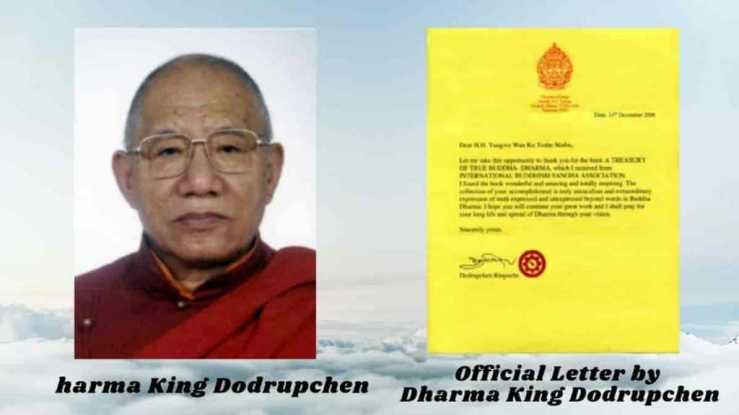
H.H. Dorje Chang Buddha III ‘s accomplishments are unprecedented. H.H. Dodrupchen Rinpoche, the greatest dharma king and master of the Nyingma sect congratulated H.H. Dorje Chang Buddha III with the following words, “The collection of your accomplishment is truly miraculous and extraordinary expression of truth expressed and unexpressed beyond words in Buddha Dharma.” Jigme Dorje, Supreme Dharma King of the Jonang Sect wrote: “Such superlative accomplishments are truly unprecedented in the past few thousand years, outshining the accomplishments of all others, both ancient and modern. His Holiness is a shining paragon among Buddhas.” Buddhist leaders cannot just toss off statements like these as if they were blurbs on the back cover of a book.  The consequences of making ill-considered or casual statements about recognizing a Buddha would be enormous.

I can understand the impulse to be suspicious of things outside the normal and usual happenings, but I do sometimes think that our current times are not really all that normal. The natural world is in serious decline. There’s climate change and other troubles for life on the planet. We’re losing birds, insects, sea life, coral reefs and whole species. And there’s very great social change as we embrace the digital world, automation and artificial intelligence. Maybe it really is a time of extraordinary danger and a Buddha has come just in time to help all living beings on earth.

I’d like to say that Zhaxi Zhuoma Rinpoche’s tour of America was a roaring success, but the number of Westerners who follow His Holiness the Buddha is still quite small. After meeting Zhaxi Zhuoma Rinpoche, I traveled to many different places to be able to hear preliminary English translations of recorded discourses by H.H. Dorje Chang Buddha III. Though there are thousands of recordings in Chinese, not many have been translated into English. Of these, only one, The Dharma of Cultivation is completely approved as a translation and published as a book and also free online on multiple websites. Zhaxi Zhuoma Rinpoche’s Holy Vajrasana Temple website has a link to this text. Listening to the discourses, I felt I was hearing the true Buddha Dharma. They were brilliant, clear, informative and extremely practical.  If you listen to these discourses, as many thousands of Chinese speakers do, you will know exactly how to transform yourself through cultivation into the causal state for becoming a bodhisattva — that is, one who corresponds with a bodhisattva’s actions of body, speech, and mind.

All my resources for learning and practicing Buddhism are magnificent now. From the Buddha Master’s discourses and dharma teachings I have learned things I never heard before and experienced things I never saw before. Many high-level disciples of His Holiness are shining examples of sincere cultivation and devoted practice.  Many of His disciples can manifest dharma powers. Some of them can perform extraordinary rituals of esoteric Buddhism, so that manifestations of Buddha-dharma are being seen and experienced in America now that only used to happen in Tibet.  Dharma rituals such as: Creating a Sand Mandala through a Stone Slab; various rituals of selection such as, Drawing Lots from a Golden Vase; high temperature displays of Tummo Concentration; the Vajra Fa Man Initiation in which grains of sand weave themselves into a crown above a portrait of a Buddha or Bodhisattva; Beseeching Nectar from the Buddhas in which nectar manifests in a bowl; Eight Winds in Samsara Battle Position in which masters are tested in the holy realm.  My teacher, Zhaxi Zhuoma Rinpoche’s Holy Vajrasana Temple is a Bodhimandala empowered by H.H. Dorje Chang Buddha III where Dharma Protectors will sometimes shake vajra poles to the delight of devout visitors to the temple. It is all so wonderful. I have seen these vajra poles mysteriously, vigorously shake. I have seen and felt nectar from the Buddhas rain from cloudless blue skies. I participated in the Eight Winds in Samsara test.  My experiences are everything I expected the true Buddha-dharma to be and I’m experiencing these things in the USA!

As a follower of H.H. Dorje Chang Buddha III, I feel that the dharma I’m receiving is the original, authentic, and very real thing.  It is a great treasure that I would like others in the West to enjoy as well. I liken this true Dharma to the silver dimes and quarters we used to use in America. In 1964 the silver content of American coins that had been minted from 90% silver was drastically reduced to no silver at all.  There was no loss in their use as currency, their purchasing power remained, but they had lost their intrinsic value. They weren’t real silver and did not have the true properties of silver. I feel that secular Buddhism is like these new coins, which are shiny and still useful, since they still function as currency, but they’re not silver.  They have lost the essence of why silver was chosen for coinage in the first place; it reflects light purely and beautifully and can be fashioned into treasured objects. I don’t believe the secular brand of Buddhism with its focus on being the best me, or on therapy, or on succeeding at business and personal relationships has retained its original value and purpose of helping us leave samsara. Many other systems can accomplish these aims as well. And these aims are side effects of sincere practice anyway, so there’s no value at all in losing the treasured ultimate goal of Buddhism. For those of us who want more, who wish to become arhats or bodhisattvas or buddhas, who want to realize enlightenment, accomplish prajna, attain the four wisdoms, the three bodies, the usages of emptiness. For those who wish to be able to expound the dharma that can liberate living beings, they should know there is more to Buddhism than the usual American fare. There is a Buddha here now whose teachings will help them cultivate their three karmas into a causation state for becoming a bodhisattva and whose transmissions of dharma practices can activate true dharma abilities. Everyone please take notice.

Gesang Suolang Rinpoche Shares Her Insight into the Dharma of H.H. Dorje Chang III & Why the West Needs It

Link:

#XuanfaUtahDharmaCenter#MasterWanKoYee #DorjeChangBuddhaIII #HHDorjeChangBuddhaIII#DorjeChangBuddha#IAMA#InternationalArtMuseumofAmerica #GesangSuolangRinpoche #Buddha #ZhaxiZhuomaRinpoche

Source: https://holyvajrasana.org/articles/gesang-suolangs-story