Bamboo of Noble Integrity By Professor Yuhua Shouzhi Wang
Bamboo, as a plant with profound cultural significance, carries rich and diverse symbolism. It represents resilience, noble character, vitality, humility, modesty, harmony, and unity. With its graceful posture and vibrant green appearance, bamboo evokes a sense of freshness and refinement. Though its exterior is simple and unadorned, it embodies a noble inner quality. This unique temperament has made bamboo a symbol of integrity and uprightness. In ancient times, it often served as a metaphor in the writings of scholars and poets for individuals of high moral character and self-discipline.
For the Chinese, admiration for bamboo has endured throughout history. Countless poets and literati have celebrated its virtues, grouping it alongside plum blossoms, orchids, and chrysanthemums as one of the “Four Gentlemen,” embodying the character and aesthetic spirit of the Chinese people. Bamboo’s simplicity belies its profound cultural significance. In traditional Chinese culture, it is a symbol of auspiciousness and virtue, carrying layers of meaning that resonate deeply with the human spirit.
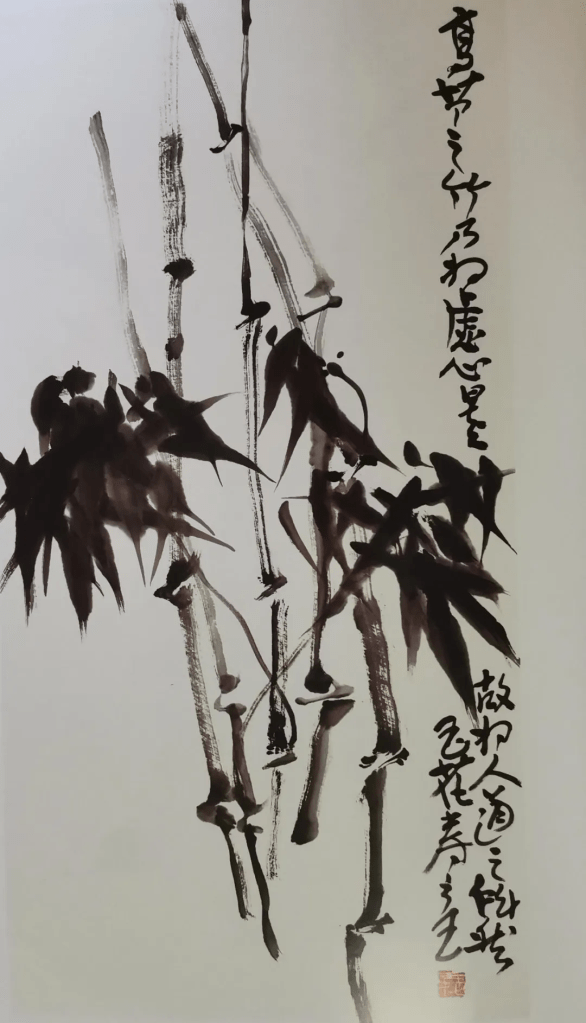
Professor Wang’s Chinese paintings of bamboo are a testament to her extraordinary ability to bring this cultural icon to life. Each stroke captures the essence of bamboo’s resilience and unyielding spirit while emphasizing its humility and integrity. Her works not only celebrate the elegant charm of bamboo but also evoke its vibrant vitality and enduring strength.
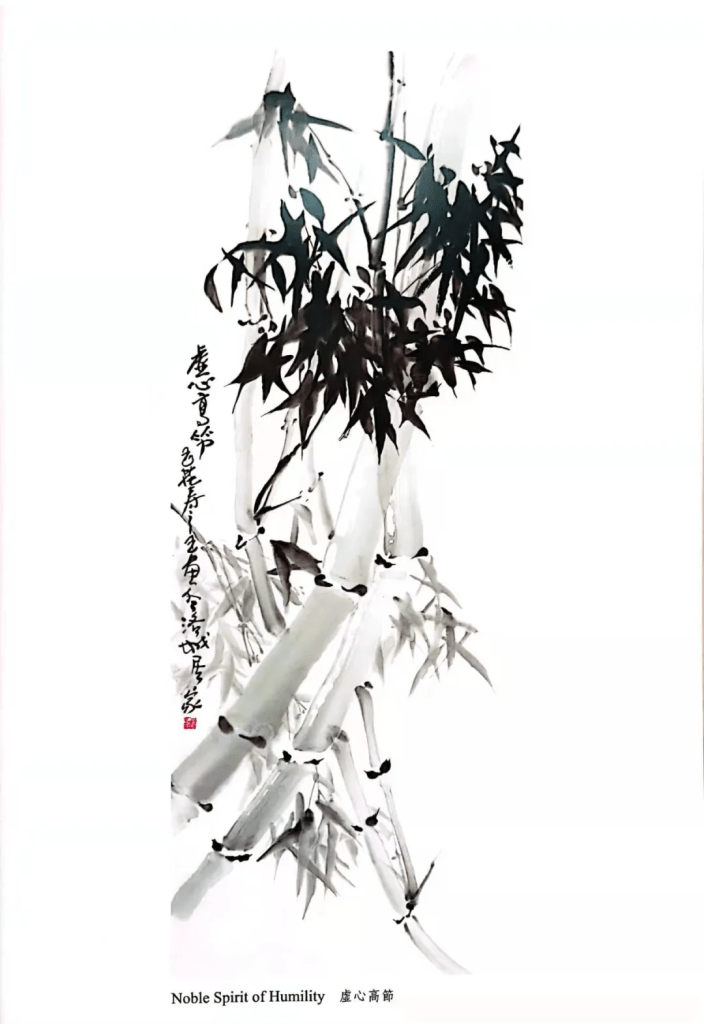
Professor Wang’s Artwork “Noble Spirit of Humility”
The artwork “Noble Spirit of Humility“ depicts a cluster of bamboo deep within a dense forest. Two tall and robust bamboo stalks stand prominently in the foreground, their lush branches and leaves rendered in bold ink. Behind them, a few smaller bamboo stalks, delicately painted in lighter ink, appear to lean on the larger ones, as if embraced by Mother Earth. Together, they form a unified group, advancing and retreating in harmony.
Look closely, and you’ll see their branches intertwine amidst the clouds, and their roots tightly clasp together underground. Neither torrential rain nor fierce winds can break them down. The bamboo’s unyielding resilience is vividly and profoundly brought to life.
Dr. Yuhua Shouzhi Wang was recognized and chronicled in the United States Congressional Record as “a great artist and sculptor,” and “treasure of the world.” In 2013, President George Christophides of the World Federation of UNESCO Clubs, Centers, and Associations (WFUCA) conferred the title “2013WFUCA” to one of her artworks.
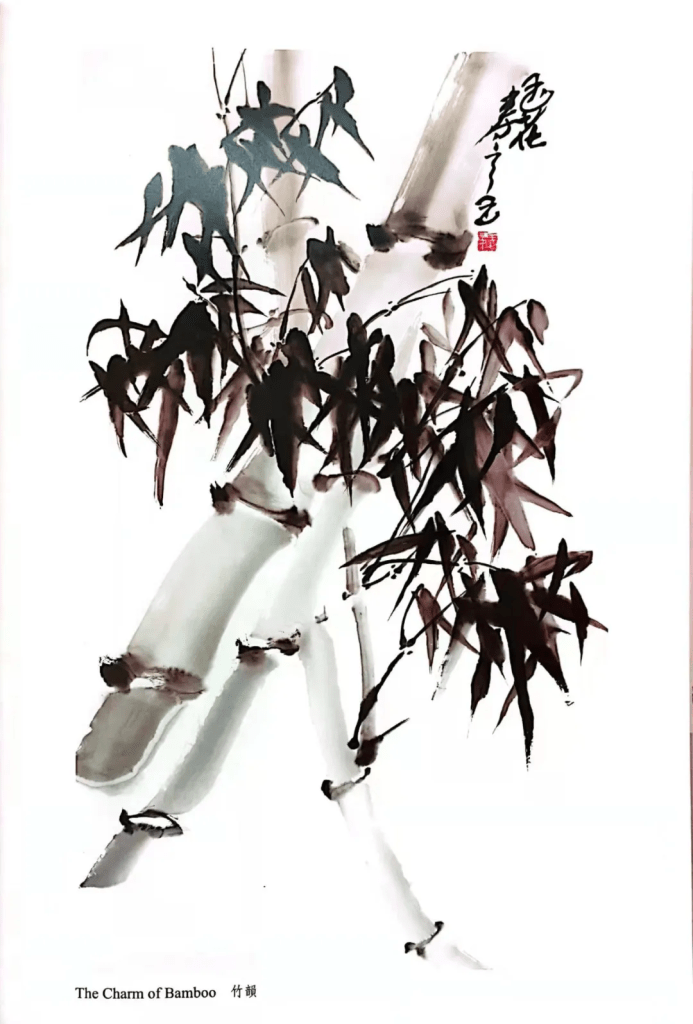
The artwork “The Charm of Bamboo” conveys the fresh and elegant essence of bamboo, exuding a gentle and harmonious beauty. It seems to remind us that in life and work, we should not only take responsibility but also foster an atmosphere of harmony and mutual respect. The use of varying ink tones, alternating between light and dark, strikes a balance of simplicity and ingenuity, greatly enhancing the dynamic energy of the piece.
Dr. Yuhua Shouzhi Wang’s bamboo paintings are truly exceptional. Through her art, she vividly conveys bamboo’s noble qualities, leaving viewers with a deep appreciation for this remarkable plant and its timeless symbolism. Her work serves as a bridge between nature and art, reminding us of the profound lessons we can draw from the natural world.
Professor Yu Hua Shouzhi Wang stands as a towering figure in the world of art, celebrated as the only artist in Asia to receive the prestigious title of International First-Class Artist. Her unparalleled achievements span an extraordinary range of artistic styles and subjects. Whether she’s creating landscapes, portraying flora and fauna, rendering animals and insects, or crafting intricate sculptures, Professor Wang’s creations are nothing short of masterpieces. Effortlessly bridging traditional Chinese painting with Western art, hyperrealism with surreal abstraction, she has achieved a level of artistic excellence that places her at the very pinnacle of her field.
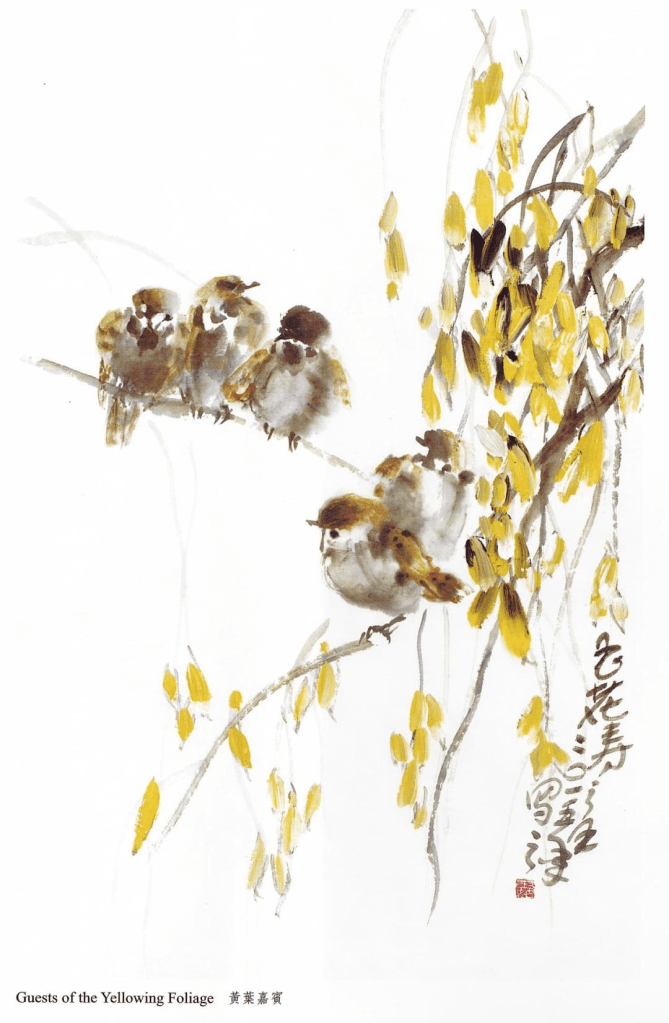
One of Professor Wang’s most captivating works, Sparrows Singing on a Willow Tree, exemplifies her genius and profound connection with nature. The painting captures the graceful elegance of weeping willows, their slender branches gently drooping in an intricate, harmonious interplay. The composition exudes simplicity and refinement, with minimalistic lines that evoke the profound idea that “silence speaks louder than words.”
Despite its restrained use of color, this piece immerses the viewer in a vibrant world of subtlety and depth. The willow leaves are rendered in soft shades of pale yellow, light green, and muted ink tones, each leaf imbued with a carefree vitality. So vivid and dynamic are these details that one can almost sense the crisp freshness of the air. The leaves alone expand the painting’s spatial and emotional dimensions, drawing the viewer into an almost otherworldly tranquility. As one takes in the whole composition, it becomes evident that this work is rich in artistic flavor and showcases transcendent mastery of brushwork and ink technique.
On the right side of the painting, a lively gathering of sparrows perches on the willow branches. Each sparrow’s unique posture and expression are brought to life with remarkable precision, transforming them into endearing characters within the scene. They appear as if they are animated notes of a melody, harmonizing with the natural setting, or perhaps a group of playful children savoring their carefree moments after school. This idyllic scene evokes a serene joy and simplicity that resonates deeply with viewers.
Adding to the painting’s charm is a long inscription on the left side, written in elegant calligraphy: “Sketching in the garden at home.” This thoughtful addition not only complements the willow tree but also enhances the overall vitality of the piece. It provides insight into the painting’s creation—the place, and artist’s signature—and demonstrates Professor Wang’s extraordinary calligraphic skill. The inscription enriches the work’s narrative and aesthetic harmony, making it a testament to her multifaceted artistry.
Through this painting, it is clear that Professor Wang’s love for life and her compassionate nature are woven into every brushstroke. One can almost envision her peaceful afternoons spent in her garden, observing the interplay between the willow tree and the sparrows. The joyful spirit of the birds, carefree and unrestrained, reflects the tender care and connection Professor Wang shares with the natural world. A particularly charming detail is a small sparrow spreading its wings and gazing downward, as if greeting the artist or playfully seeking attention. The scene radiates a sense of love, harmony, and mutual understanding between the artist and her surroundings.
Sparrows Singing on a Willow Tree stands as a testament to Professor Wang’s exceptional artistry. The work is elegant and transcendent, with lifelike birds and an ethereal atmosphere that captivate the heart. From mood to color, composition to emotional resonance, the painting embodies her unique artistic style and extraordinary mastery. It is a work that not only delights the eyes but also uplifts the spirit, leaving an indelible impression on all who behold it.
Chiang Wei-Kuo(蔣偉國), the son of the former Kuomintang Chairman Chiang Kai-Shek (蒋介石), is often remembered as a prominent political figure. However, many may not know that he was also a deeply devout Buddhist, with a profound understanding of Buddhist teachings. His dedication to Buddhism led him to engage in meaningful discussions and exchanges with Western religious figures, leaving a lasting impact. In fact, the president of a league of eighty-three American universities once said that Chiang Wei-Kuo was his godfather. But beyond his public life, Chiang Wei-Kuo’s spiritual journey was one of deep significance.
In his early years, Chiang Wei-Kuo made a special pilgrimage to India, seeking to connect with the sacred sites of the Buddha and attain enlightenment.
While standing beneath the Bodhi Tree, where Shakyamuni Buddha himself attained supreme enlightenment, Chiang Wei-Kuo made a solemn vow to benefit all living beings. At that very moment, a large leaf suddenly fell from the tree. This leaf, unusually large compared to the others, seemed to be a sign. Deeply moved, Chiang Wei-Kuo took the leaf back home and showed it to his father, Chiang Kai-Shek. Touched by the story, Chiang Kai-Shek instructed his son to enshrine the leaf in the family’s ancestral hall. Since that day, the Bodhi leaf became a revered object of worship in the Chiang family’s ancestral hall.
Years later, in May 1995, Master Yi Yungao (H.H. Dorje Chang Buddha III) led a delegation of eight individuals to visit Taiwan. During this visit, Chiang Wei-Kuo, with deep reverence and devotion, requested to become a disciple of Master Yi Yungao. As part of his request, he presented the sacred Bodhi leaf as an offering. In a heartfelt gesture, Chiang Wei-Kuo personally inscribed the story of how he obtained the leaf in Bodhgaya, its significance to his family, and the profound spiritual connection it held. This offering symbolized his deep respect for the Buddha and his unwavering commitment to his spiritual path.
On November 13, 2008, the U.S. Congress hosted a special art exhibition featuring the works of Buddha Mother (Professor Yuhua Shou Zhiwang) at the Capitol Building in Washington, D.C. To ensure the safe transport of these precious artworks, a decision was made to rent an RV (Recreational Vehicle) and form a convoy with trucks carrying the pieces. Namo H.H. Dorje Chang Buddha III, along with Buddha Mother and their disciples, stayed in the RV throughout the journey, embarking on a spiritual pilgrimage across America.
The convoy, led by Namo H.H. Dorje Chang Buddha III and accompanied by several dozen disciples, departed from Los Angeles on October 25, 2008. Over the course of 33 days, they journeyed across more than 20 states, traveling from the west coast to the east coast. Despite the busy preparations for an exhibition in Washington, D.C., Namo H.H. Dorje Chang Buddha III delivered teachings to his disciples almost every evening. These teachings were later compiled into a 19-volume collection titled Teachings from the Eastward Journey.
Throughout the journey, numerous sacred signs appeared wherever Namo H.H. Dorje Chang Buddha III visited. One such miraculous event occurred when the Buddha and his disciples were resting under a Western Bodhi tree. As the Buddha was speaking to Venerable Tsemang and other disciples about Chiang Wei-Kuo’s offering of a Bodhi leaf years ago, a rustling sound suddenly came from above. With a distinct “thud,” a Western Bodhi leaf fell from the tree, astonishing everyone present.
Western Bodhi leaves typically have white veins with light pinkish veins on the back. However, this particular leaf was different. While it shared the same shape as other Bodhi leaves, its veins were strikingly red on both sides, without any trace of white veins.
Moreover, it was extraordinarily large, much larger than any other leaf on the tree. The timing of this event was miraculous, coinciding precisely with the Buddha’s recounting of how Chiang Wei-Kuo had obtained a large Bodhi leaf in India. This unique leaf falling from the Western Bodhi tree signified that wherever the true Dharma of the Tathagatas is spoken, profound responses occur.
Additionally, after the Eastward Journey ended and they returned to Los Angeles, Namo H.H. Dorje Chang Buddha III manifested amrita (nectar) at the Vajra Mandala in Pasadena. This further confirmed that the “Teachings from the Eastward Journey” are the pure and supreme authentic Dharma of the Buddha, a testament to the spiritual power and significance of the journey.
Artworks are meant to construct a sanctuary for the readers’ souls, allowing their minds to be cleansed, purified, and elevated. Regardless of the style of art, it should convey positive energy and the enjoyment of beauty. Dr. Yuhua Shouzhi Wang deepens the concept of surreal abstract art by integrating it with both form and spirit, striving for simplicity by eliminating complex colors and intricate brushstrokes to achieve a harmonious fusion of form and spirit, making it comfortable and soothing for people to look at. Such works, with simple yet spiritually profound strokes, can be referred to as “masterpieces”. What poetry and painting seek is not the objective depiction of the external world’s reality but rather the grasp of a certain quality that moves the heart, embodying the author’s spiritual perspective and genuine emotions.
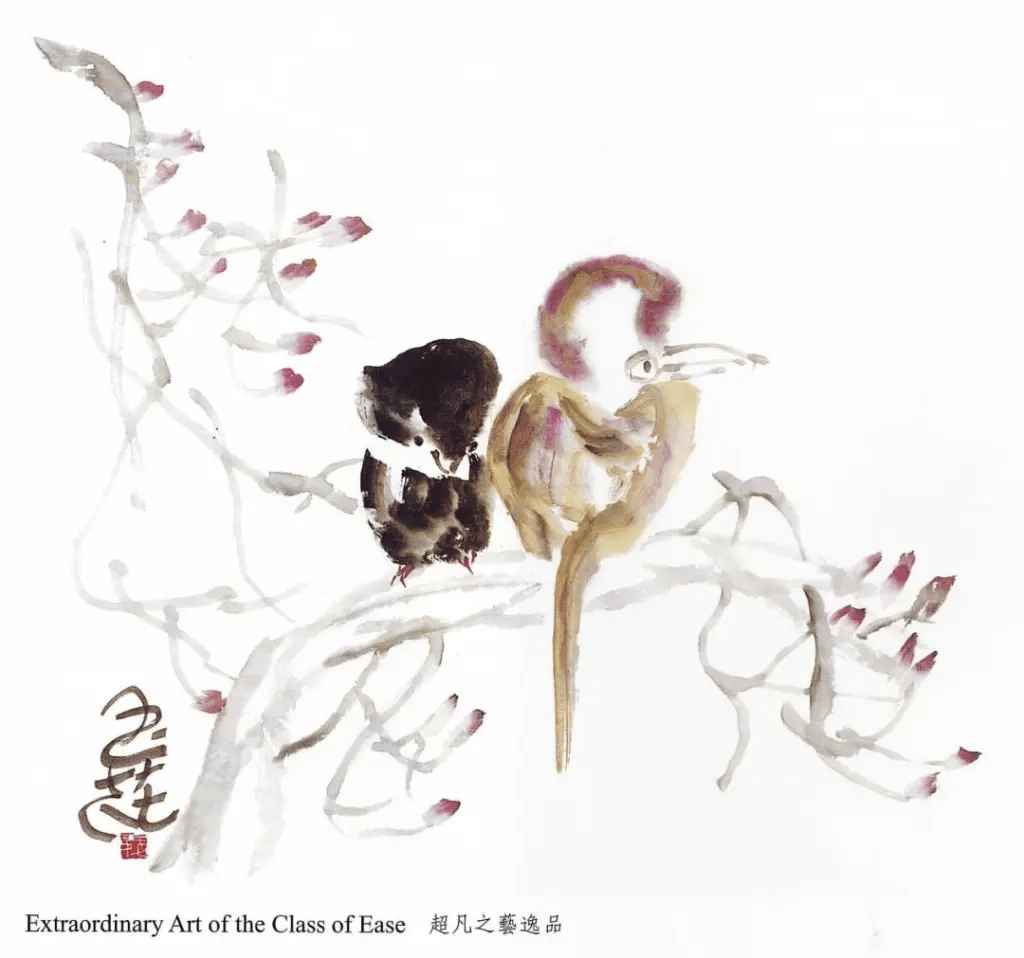
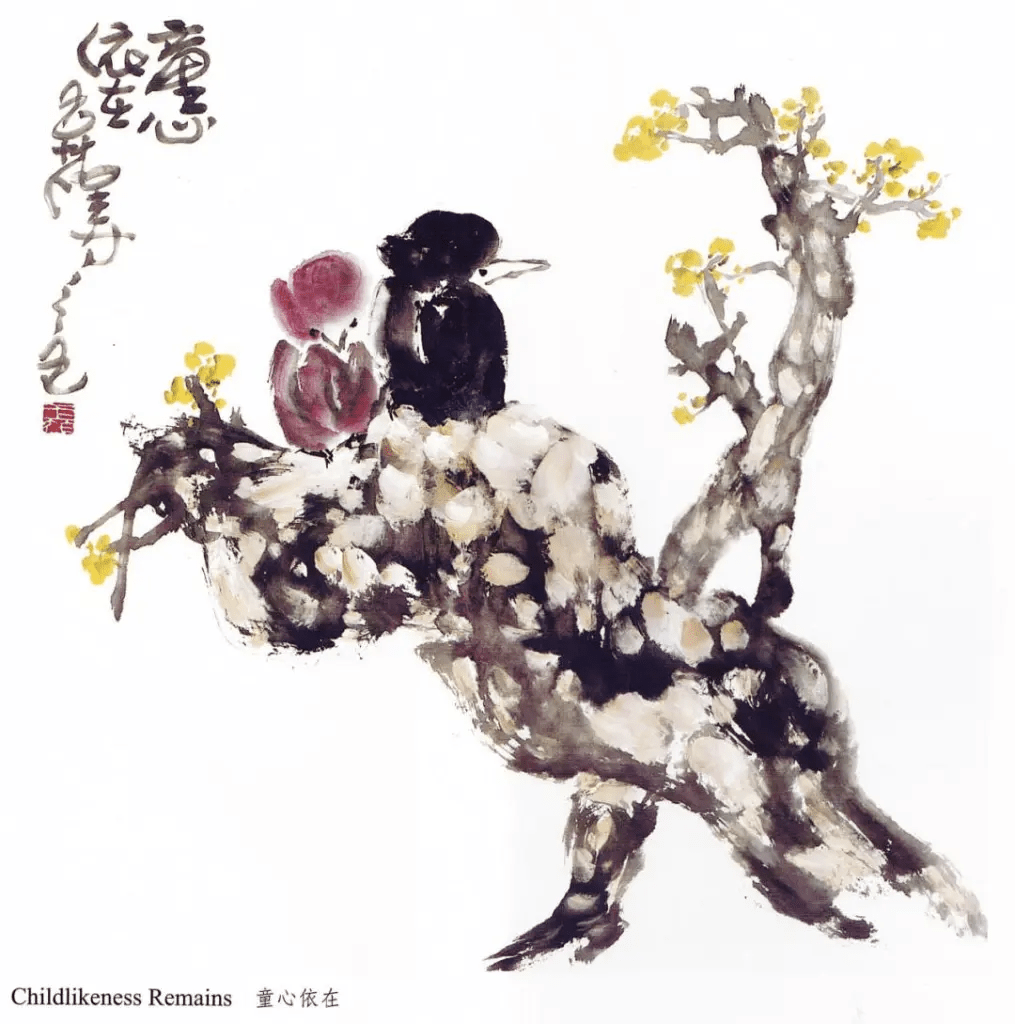
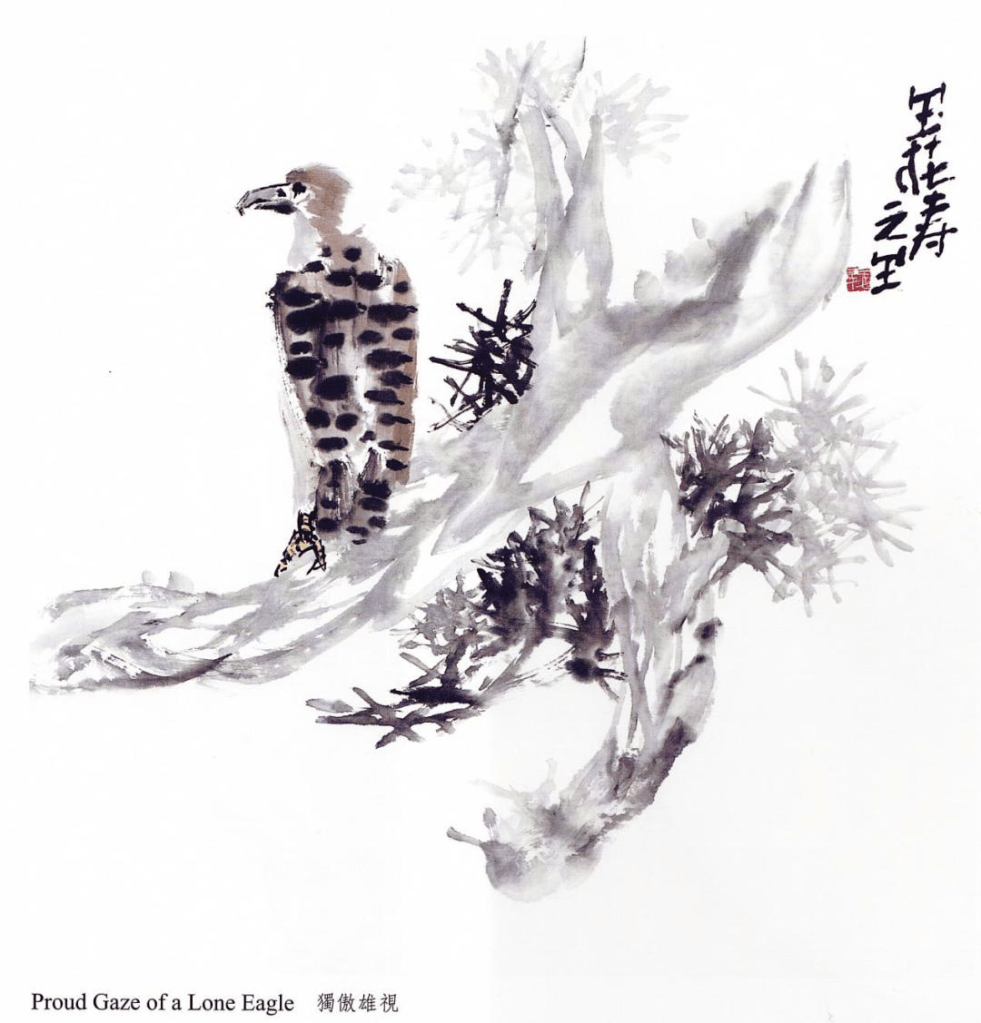
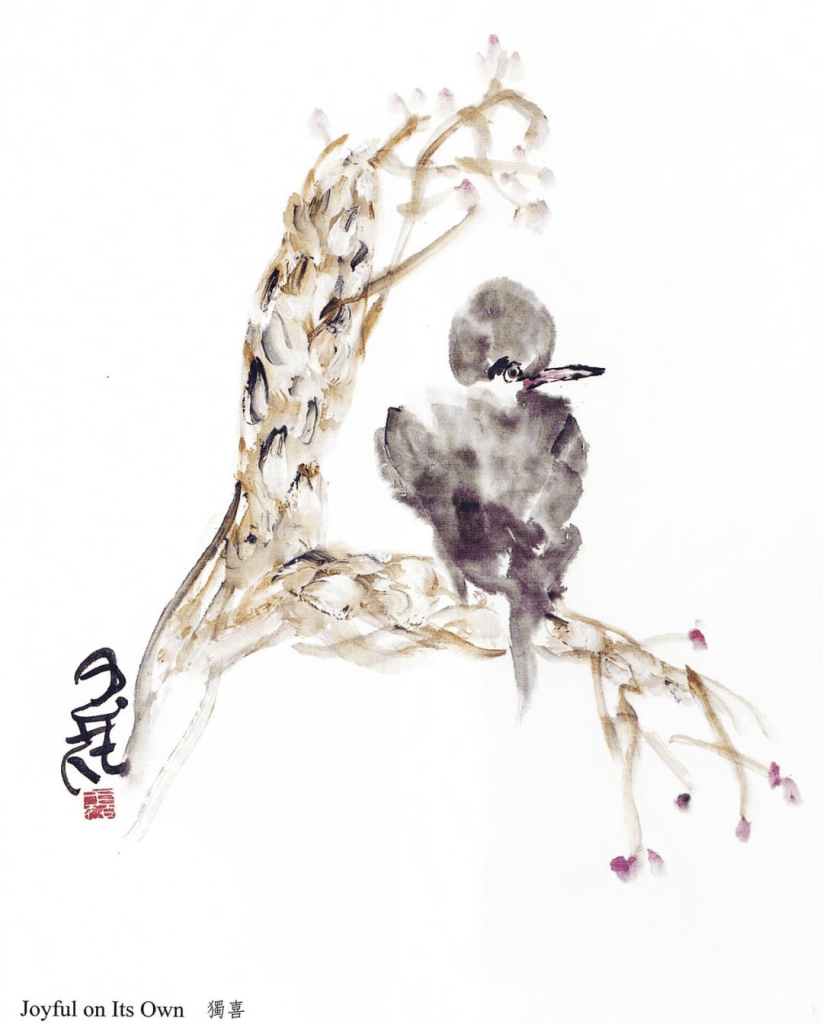
Dr. Yuhua Shouzhi Wang’s paintings are characterized by divine, out-of-this-world artistic conception. They carry the likeness of both form and spirit, created with profound skills and a strong sense of scholarly essence. Her artistic skill is solid and formidable, transcending the mundane to attain the class of ease, the highest of the four classes of artistic mastery. Following the tradition of Chinese ink paintings as her foundation, Dr. Wang incorporates super-realistic skills, elevating her works to a distinguished style and purity rarely seen elsewhere.
In ink painting, the highest state of accomplishment is the Class of Ease, where the artist attains natural ease by using simple brushstrokes to fully capture the form. With the most succinct brushwork and the most superb technique, the artist depicts objective reality and attains a state of miraculousness where both form and spirit are fully captured. This kind of art leaves viewers never tired of appreciating, leaving a wonderful aftertaste that lingers long after the viewing experience.
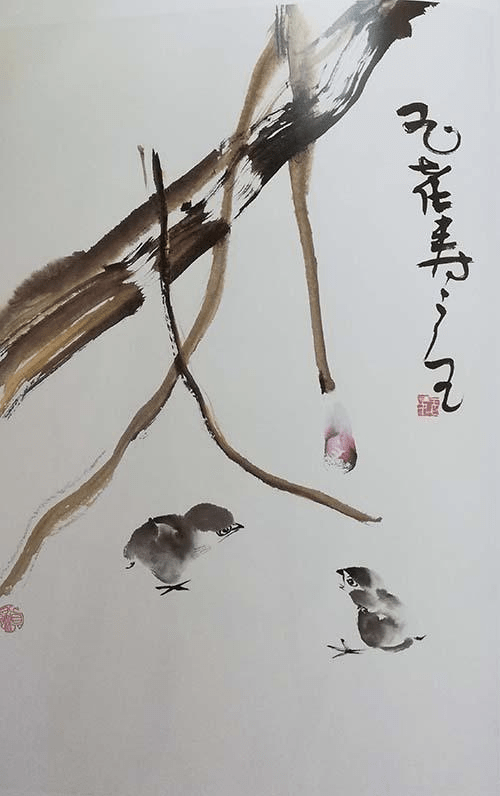
High Perch and Herding Cattle stand out as masterpieces belonging to the genre of Ease.
The High Perch
Upon seeing this artwork, my heart was melted by its fresh and clear painting realm. The delightful chirping of birds seems to faintly echo in my ears. A pair of adorable little birds, as if just arrived from beyond the sky to the earthly realm, one of them gazing down at the land beneath its feet while the other curiously observing the distance. This traditional Chinese painting is extremely concise in brushwork, with a simple and distant meaning, yet it possesses an enchanting artistic appeal. With just a few strokes of light ink, the vivid and lively texture of the birds is vividly presented before the viewers, instantly taking me back to my distant childhood. The moist ink and exquisite lines everywhere convey the painter’s sincere brushwork and extraordinary true temperament. At the same time, it reflects the painter’s extraordinary and unsullied noble character, free from worldly attachments.
Herding cattle
This painting of herding cattle adopts a bold and expressive brushstroke style, prioritizing capturing the spirit over exact likeness. The depiction of the water buffalo involves bold and vigorous brushwork, conveying the robustness and fierceness of the animal. The herder on the back of the buffalo is sketched with simple strokes, portraying the carefree innocence of the shepherd. To prevent the composition from being monotonous, light green strokes are lightly applied to depict willow branches as the background, creating a sense of vitality, tranquility, and beauty. In the lower right corner of the painting, a calligraphy inscription with a strong classical flavor reveals the artist’s genuine and unadorned character.
The excellence of Dr. Yuhua Shouzhi Wang’s art does not lie in how the artist represents the form of nature, but in how she uses the form to express her mind, and how she brings out the spirit within the form. Her paintings express humanity’s wishes for peace and happiness; they express humanity’s praise to the qualities of freshness, transcendence, nobility and elegance; and they also express humanity’s gratitude to the selfless beneficence of flowers, trees and plants. These ink paintings are leading me into the refreshing and beautiful nature, allowing my restless soul to rest peacefully.
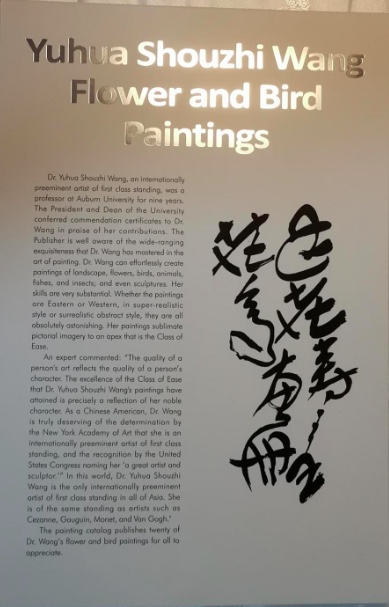
At the International Art Museum of America in downtown San Francisco, there is a special exhibition room, dedicated to Professor Yuhua Shouzhi Wang. This installation was established in 2018, containing a variety of water and ink paintings as wells as sketches.
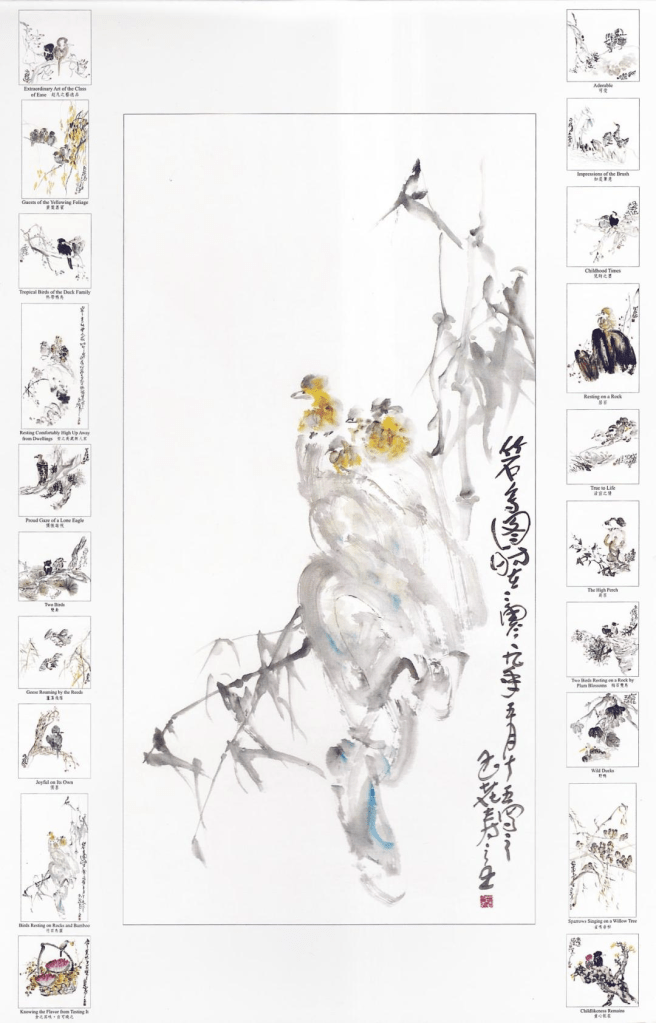
The beauty of art emanates from the soul, while the beauty of the soul reflects one’s internal cultivation. In Professor Yu Hua Shou Zhi Wang’s “Yu Hua Shou Zhi Wang Flower and Bird Painting Album,” we are presented with a delightful sense of freshness and warmth, coupled with a profound and uplifting force. Let’s savor the experience of “Yu Hua Shou Zhi Wang Flower and Bird Painting Album” together and witness the extraordinary talent and profound moral character of the artist!
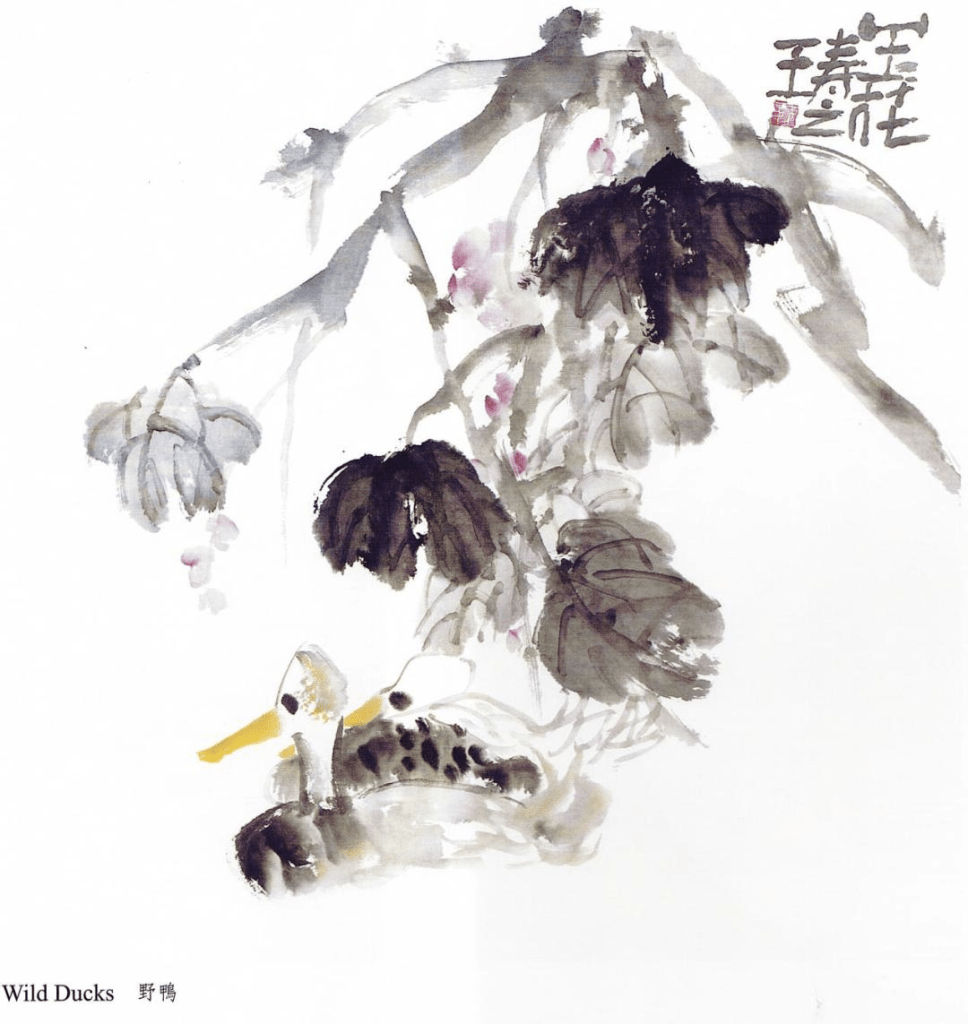
Professor Yu Hua Shou Zhi Wang’s works are characterized by strong and powerful brushstrokes, showcasing a rich and diverse palette, and exuding a poetic and artistic charm. Each piece is infused with sunlight, radiating sincerity, simplicity, and a delightful sense of innocence and romance. As we immerse ourselves in Professor Yu Hua Shou Zhi Wang’s “Yu Hua Shou Zhi Wang Flower and Bird Painting Album,” we can deeply sense the artist’s love and compassion for animals. Each artwork invites us into a transcendent dialogue with a sage-like presence, revealing the captivating allure of art!
Professor Yu Hua Shou Zhi Wang is brimming with compassion and care for all living beings, be it humans or animals, even including honeybees that can sting. She treats each of them with equal and attentive concern.
A few years ago, bees would frequently visit Professor Yu Hua Shou Zhi Wang’s residence. The first time they built a hive at her home, they even stung someone. Some people suggested removing the beehive to prevent further harm, but Professor Yu Hua Shou Zhi Wang firmly disagreed. She felt deep empathy for the bees, as they had finally found a shelter from wind and rain. She made it clear that if they had to leave, the bees should not be harmed. In fact, she would rather move out herself than cause suffering to the bees. As a result, Professor Yu Hua Shou Zhi Wang and her family decided to move to her art studio to live.
Another incident involving Professor Wang showcases her compassionate nature when she saved a butterfly that had fallen into the water. Concerned about the butterfly’s well-being, she took it home and cared for it for a few days until it was fully recovered, and only then did she release it back into the wild.
The compassionate and kind professor frequently utilizes the money earned from selling her paintings to release captured living beings, such as birds, fish, and more. On numerous occasions, she has purchased large quantities of fish, sometimes weighing several cabins or even tens of tons, to set them free. There have been instances where she bought an entire boat-load of fish from a large fishing vessel, ensuring their liberation and return to their natural habitats.
I couldn’t help but ponder: When two conflicting interests clash, do we prioritize the welfare of others or our own interests first? It’s a challenging question, and not many people in this world can genuinely put the welfare of others before their own. However, Professor Yu Hua Shou Zhi Wang managed to do just that. She consistently places the well-being of all beings ahead of her own interests. Her unwavering compassion and greatness are truly remarkable and serve as an inspiring example for us all.
In daily life, Professor Yu Hua Shou Zhi Wang is very frugal. She is reluctant to waste even the water used for daily living tasks, such as washing rice or clothes. She often collects and saves the used water to water the garden or flush the toilet. Additionally, Professor Yu Hua Shou Zhi Wang frequently donates his own salary to help those in need. When asked by students, “You can earn a lot of money from selling just one of your artworks, so why are you still so frugal?” At moments like these, Professor Yu Hua Shou Zhi Wang advises the students to cherish their blessings and not to waste anything. He encourages them to use the money saved from being frugal to support more people who are facing difficulties.
The well-known saying, “Deeply hidden talent not easily revealed” aptly describes Dr. Yuhua Shouzhi Wang’s morality and inner refinement. The characteristics of an artist’s paintings essentially reflect the character of the painter. From the paintings above you can find humility, inner peace, harmony and noble morality of professor Wang.
Dr. Yuhua Shouzhi Wang is the Lifetime Honorary Chairwoman of the International Art Museum of America. The museum has a dedicated gallery exhibiting her artworks.
At February 2019, the solo art exhibition of Dr. Yuhua Shouzhi Wang was held at the Ratchadamnoen Contemporary Art Center of the Department of Culture of Thailand. Dr. Yuhua Shouzhi Wang is a distinguished international art master of world renown who is highly recognized by the art world both in the East and in the West.
I am very pleased to have the opportunity to appreciate Dr. Wang’s ink paintings which are truly refreshing. I feel like I have entered an art sanctuary of wonderful colors where I can stroll slowly, appreciate silently, and savor the details thoroughly. As I am strolling along, I notice that I have left the noise of the world behind, and I sense the clarity, peacefulness and serenity in my mind.
Great masters specializing in painting flowers and fruits in the recent 100 years are such as Wu Changshuo and Qi Baishi. As I view Dr. Wang’s works, I feel that her artworks are of the top quality in the free hand style of liberal expressivity.
Professor Wang’s paintings contains the brushwork of traditional Chinese ink painting while incorporating the strategies of Western painting. Her art, honoring tradition and breaking new grounds at the same time, is unique and unfathomable, sophisticated and powerful.
From the paintings, we can see how Professor Wang especially pursues and places emphasis on the spirit, the sensibilities, and artistic conception of ink painting through which she shows the different characteristics of Chinese and Western paintings. She merges these characteristics into her distinguished style.
Professor Wang’s ink paintings are leading me into the refreshing and beautiful nature, allowing my restless soul to rest peacefully.
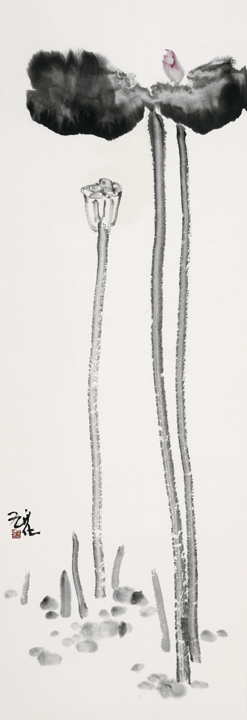
In one of the paintings, three lotuses stand elegantly and the pods have just become fully grown. The stems created by seal-script brushstrokes have a pure and dignified presence.
The composition is clean, simple and effective; echoing the legacy of Bada Shanren. The painting seems to symbolize noble qualities of a lotus that grows out of the sledge yet remains pure, sending off its refreshing fragrance.
Standing in front of the Vitality at the Lotus Pond, I am drawn to the full composition of the ink-wash pastel flowers and the carefree, other-worldly artistic conception. The painting is enlivening a wondrous scenery of lotus in misty rain where the flowers can be compared to the renown classic beauty Xishi who was known to look elegant whether she adorned her face with rich or simple colors.
In a loquat painting, the fruits are painted in a semi-abstract manner. Powerful brushstrokes are used to depict the leaves and the stems. Under Dr. Wang’s sophisticated, forceful and unrestrained brushwork, the leaves of the loquat tree appear robust and energetic. The round and perfect yellow fruits depicted by Dr. Wang in the style of realism look adorable and delicious. There is a sense of classic elegance throughout the composition which also leads one to think of prosperity, peacefulness, and a big family with many children and grandchildren.
A painting depicting cockscomb flowers is inscribed with the verse “Red and white cockscombs are cherished delights. A few strokes of the brushes capture the pleasantness.” The color contrast of the red and white cockscomb flowers seems ordinary yet it is most exceptional. This is truly an extraordinary conception. The upstanding, bright and red flowers with heads held high give a sense of positivity, upward mobility, and vigorous passion.
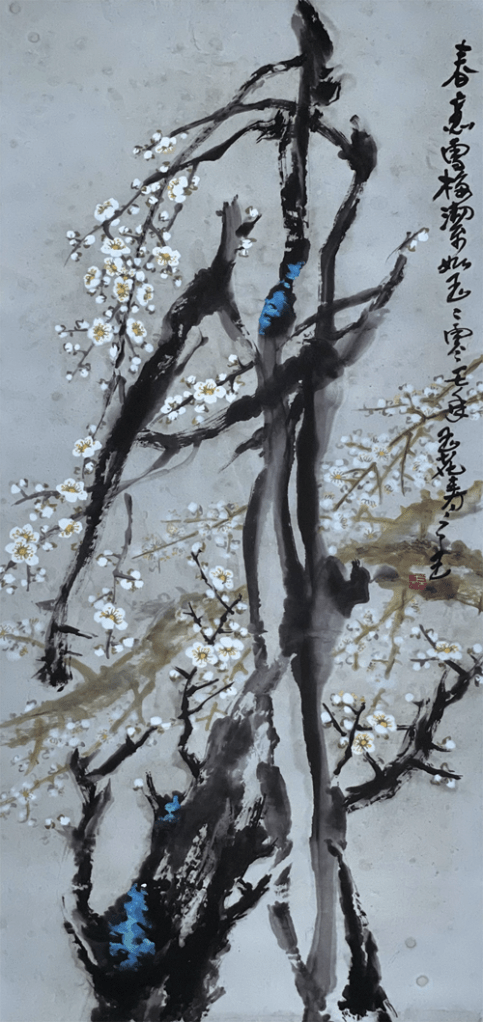
In another painting, the plum blossoms are energetic and full of power, with slanting branches that are charmingly graceful. The composition of this painting is audacious, lively, and untainted by the mundane, giving a unique sense of spirituality. In this painting, the rich colors are not garish, the faint colors are not cold. The artistic conception is truly transcendent in depicting the subtle fragrance and gentle movement of the flowers.
The five petals of a plum blossom symbolize the five good fortunes including happiness, joy, longevity, wellbeing, and peace. There is a saying that goes, “The plum blossoms give out a sweet fragrance after enduring the bitter cold.” Plum blossom symbolizes strong and noble character.
In the painting Plum Blossoms, Professor Wang has penned the inscription that says, “The charm of the ink and brush is in the spirit, the way of painting plum blossoms is just the same.” The inscription speaks of how vivaciousness and the highest state of artistry can be achieved through the ink, the brush, the color and the lines.
With a faithful mind, I appreciate the paintings one by one silently. I read each and every classic inscription carefully. I feel as if I am taken into a brand-new state of being where I experience poetry in the paintings, paintings in the poetry, and wonderful melodies in praise of the nature’s embrace.
German philosopher Goethe once described art in this way: Beauty is the highest principle of art. It is also the highest goal.”
Professor Yuhua Wang’s paintings are extraordinary. The excellence of her art does not lie in how the artist represents the form of nature, but in how she uses the form to express her mind, and how she brings out the spirit within the form. Her paintings express humanity’s wishes for peace and happiness; they express humanity’s praise to the qualities of freshness, transcendence, nobility and elegance; and they also express humanity’s gratitude to the selfless beneficence of flowers, trees and plants.
In this sanctuary of art, we have enjoyed a precious experience of beauty. Our souls are cleansed and transformed by beauty.
I wish that Professor Yuhua Wang’s exhibition will tour different parts of the world, so more people may enjoy the beauty of nature, the beauty of art, the beauty of life, and the beauty of character.
We also look forward to seeing more of the art of Dr. Yuhua Wang that is of the style of ease.
On November 13th 2008, at the Capitol in Washington D.C., several members of Congress and the Congressional Arts Caucus held an exhibition of the artwork of Professor Yuhua Wang and an official reception honoring her. The exhibition hall was crowded with people, including numerous officials and dignitaries. Many members of Congress, council members of the District of Columbia, ambassadors, and diplomats came to appreciate the exhibits on display. They praised the beauty of the artwork as being beyond imagination and praised Dr. Wang for bringing the light of beautiful art into the Capitol. Even after the exhibition ended, there were still members of Congress who came to the exhibition hoping to view Dr. Wang’s works of art.
Professor Wang personally attended the official reception in her honor. The hall was filled to capacity, making it a very grand occasion indeed. Members of Congress and members of the Congressional Arts Caucus added their support by signing and presenting certificates of commendation. During the official reception, members of Congress gave speeches expressing their respect for Professor Yuhua Wang. They praised Professor Wang for her outstanding contributions to world color-painting, sculpture, oriental arts, and the development of cultural exchange. A Congressional Commendation stated that Professor Wang is a selfless person whose moral character is noble. It also stated that through her practice of Buddhism, she benefits humanity and all living beings. Members of Congress who initiated the exhibition proudly presented that Congressional Commendation to Professor Wang as a symbol of appreciation and gratitude for her service to America and humanity. The Mayor of Washington D.C., Adrian M. Fenty, presented to Professor Wang a certificate welcoming the exhibition of her artwork in the nation’s capital and welcoming her to visit the entire area of Washington D.C.
Members of Congress who initiated and held this art exhibition included Corrine Brown, Danny Davis, Eliot L. Engel, Adam Schiff, Neil Abercrombie, Chaka Fattah, David Wu, and others.
Dr. Yuhua Wang was born in China and permanently resides in the United States. She is currently a research professor at the College of Liberal Arts at Auburn University in the United States. She has been highly commended by the president and vice-president of Auburn University and by the dean of the college where she is a visiting professor for her achievements in the study of colors. Her faux coral and cobblestones that she hand-sculpted from light-weight material and painted have been praised in the Congressional Record as being “treasures of the world.” The Congressional Record also states, “In the history of Chinese art, her lotus flower paintings are unsurpassed…”
Professor Stephen Farthing, who is a world-renown authoritative scholar on art, the Rootstein Hopkins Research Chair in Drawing at the University of the Arts in London, and a R.A. (Royal Academician), evaluated the artwork of Dr. Wang. He concluded that her paintings may draw heavily upon the traditions of Eastern art but they present themselves as extraordinarily western ideas and images. He also said that Dr. Wang’s paintings very elegantly bring two forces together-the force that rejects perspective and the force of photorealism. In his short foreword to the book World’s Highest-Level Color Paintings and Ink-Wash Paintings-the Art of Professor Yuhua Wang, Professor Farthing wrote that that the space Dr. Wang’s paintings occupy was only opened up in Western culture in the 20th Century. He also wrote that Professor Wang’s paintings “…reach across cultures to celebrate the space that exists intellectually and emotionally between representation and abstraction, between a fact and an idea.”
It is said that a person’s creations are a reflection of his or her character. Dr. Yuhua Wang has always been a very diligent person who leads a simple life. Even when she is ill, she still attends to her daily life and is unwilling to have others do her work. All who meet her sense her goodness, compassion, friendliness, elegance, and noble character. Seeing her creations is like seeing her in person. In either case, one is left with a feeling of great comfort, ease, and peace.
On July 30, 2008, the United States Congressional Record affirmed that “…Dr. Yuhua Wang…has been recognized as a great artist and sculptor.” It was also stated in that Congressional Record that she takes great pleasure in helping others, is a selfless person whose moral character is noble, and has made great contributions to the development of cultural exchange between the East and West. Additionally, Denis G. Antoine, Ph.D., Dean of the Ambassadors of the Western Hemisphere, wrote in a congratulatory letter that the color forms created by Professor Wang are pioneering and without comparison, and her paintings unleash blissful emotions. He also wrote that Professor Wang’s works make people not only think of but also perceive a world of colors that brings a calming a peaceful impact on the mind.
The exhibition displayed four of Professor Wang’s hand-sculpted faux coral painted in oil colors. Those works are entitled “Glamour in Pink,” “Arching Branches,” “Parched Antiquity,” and “Cinnabar Nectar.” Another exhibit is called “Seventy-Seven Stones,” which are exquisitely hand-sculpted and painted faux cobblestones. Additionally, there will be displayed ten ink-wash paintings called “Spiritual Air,” “The Appeal of Lotuses,” “Two Chicks Under the Wool Tree,” “Ink Alone Excels Nature,” “Auspicious Atmosphere at the Lotus Pond,” “Light, Elegant Ink; Three Lovely Flowers,” “Yuhua,” “Lotus Fragrance Blown by the Wind,” “Golden Lotuses,” and “A Bit of Charming Autumn Scenery.” The three oil paintings on exhibition were “Flying Object in the Night,” “Heavenly World,” and “Exuberant Life.” All of these exhibits were authentic, and most of them were chosen by International Arts Publishing to be included in the book World’s Highest-Level Color Paintings and Ink-Wash Paintings-the Art of Professor Yuhua Wang.
At the exhibition, news reporters asked Professor Yuhua Wang which one of the works of art that she created is her favorite. Her answer, which she gave without hesitation, has profound meaning. She said, “Whichever work of art is everyone’s favorite is my favorite work of art!”
United States Senator Dianne Feinstein stated in her certificate of commendation that Professor Wang’s work in the oriental arts across the nation has distinguished her as a leader in the field. In a congratulatory letter, United States Congressman Edward Royce praised Dr. Wang for her outstanding accomplishments in education and art, especially in the areas of lotus flower paintings and sculpting.
Professor Wang’s hand-sculpted faux coral on which she painted oil colors are even more genuine-looking and more beautiful in form and color than real coral found at the bottom of the sea or on islands. Touching these works of art is like touching real coral that has been immersed and eroded in water. One cannot help but admire Dr. Wang for creating coral with a texture of having been immersed and eroded in water for thousands of years. This texture is difficult to find even with real coral at the bottom of the sea. The forms and colors of her faux coral reveal a quality of elegance and good taste. Such works of art are many times more beautiful than natural coral and have become rare artistic treasures. It is no wonder that her art is regarded as “treasures of the world.”
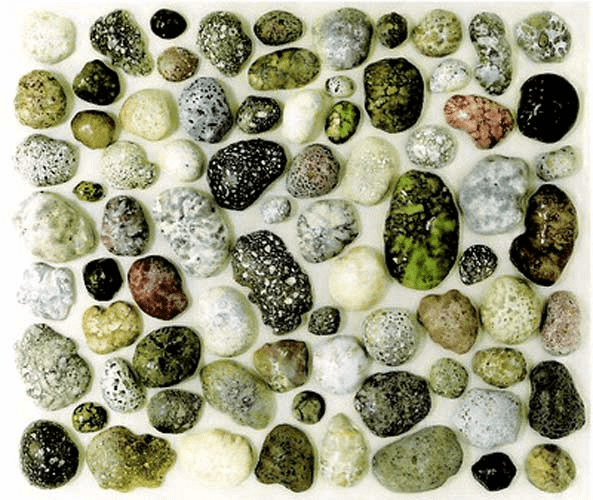
The cobblestones that Professor Yuhua Wang hand-sculpted from light-weight material and painted are exquisite and were made with meticulous attention to detail. These intriguingly and unpredictably varied faux cobblestones are not only genuine-looking, they are even more beautiful than real cobblestones. Their spots, streaks, watermarks, weathered appearance, reflecting light, and hues are all lifelike and exquisite. In all of their myriad variations, these cobblestones capture the spirit and form of real cobblestones yet surpass the beauty of natural ones. None of her cobblestones duplicates any other cobblestone in form, lines, color, or extent of weathered or aged appearance. Each cobblestone is in and of itself a meticulously and realistically painted work of art. Just like Leonardo da Vinci’s Mona Lisa and Vincent van Gogh’s Sunflower Paintings, Dr. Wang’s oil painting on these cobblestones has been called wondrous color application and the most superb art in the world.
The ink and wash paintings of Professor Wang are boldly arranged yet lack the slightest trace of affectation. They have an air of ease and smoothness and convey a sense of complete naturalness. They express loftiness and broadmindedness and are imbued with deep charm and liveliness. Those works of art by Professor Wang can indeed be called ink and wash paintings of the highest order.
A great artist concluded that the lotus flowers painted by Professor Wang are the best in the world. He said, “She has an amazingly wide variety of techniques that she applies in an unpredictable way. It is hard to imagine that there is someone in this world with such adroit artistry. In her brushwork, she merges charm, strength, hues, scholarliness, graceful jaggedness, vitality, self-cultivation, and morality.”
The modern paintings of Dr. Wang have a unique style to them. Their lines flow smoothly and freely. Their diverse and unpredictable color combinations can express bold intensity, overflowing enthusiasm, traditional elegance, inspiring vitality, rustic charm, or majestic splendor. Those paintings are truly a feast for the eyes. Deeply embedded within them are feelings and wondrous skills. Her modern paintings are very sophisticated and should be carefully viewed. Actually, a magnifying glass would reveal that each of the many different parts that make up one of her modern paintings is a work of art in and of itself with its own unending appeal. This proves that Professor Yuhua Wang’s color application in modern paintings is another area where she has attained consummate artistic mastery.
Take, for example, her work entitled Yuhua. The leaves were painted with bold strokes, giving them a sense of natural charm. The stem was painted from top to bottom with one vigorous stroke of the brush, producing a gracefully jagged effect. The flower conveys the sense that it was painted with ease. It does not have the form of a flower but appears like a flower. This adeptly created work is not tainted by the slightest artificial brushstroke. In all of these aspects, Yuhua embodies the apex of artistic accomplishment.
The exhibits displayed in this Congressional exhibition deserve to be called works of art that are unique in the entire world.
Springtime Snow-White Plum Blossoms as Pure as Jade
At the International Art Museum of America in downtown San Francisco, there is a special exhibition room, dedicated to Professor Yuhua Shouzhi Wang. This installation was established in 2018, containing a variety of water and ink paintings as wells as sketches. Professor Wang’s acclaimed works have been displayed all over the world, including an exhibition at Congress in 2008, where they called her work a ‘treasure of the world’. In 2019, Professor Wang’s art was exhibited at Shanghai Exhibition Center in China and the Louvre Museum in Paris. An art critic Aude de Kerros praised this event in Paris, saying ‘I have curated and critiqued so many art exhibitions, yet I have never seen an exhibition like this where all the guests are so touched and amazed by the art.’ Following the Paris exhibition, Professor Peter Drake, the Provost of the New York Academy of Art, presented a certificate to Professor Wang, recognizing her extraordinary contributions to representational and abstract art. In December 2020, the Chairman of Centre for Peace in United Nations Educational, Scientific and Cultural Organization (UNESCO), Guy Djoken awarded an “International First-Class Artist” title to Professor Wang for her accomplishment. Professor Wang is the only Asian artist who has ever received such a title. On December 29th 2020, Chairman Guy Djoken came to the museum to personally present the title certificate to Professor Wang.
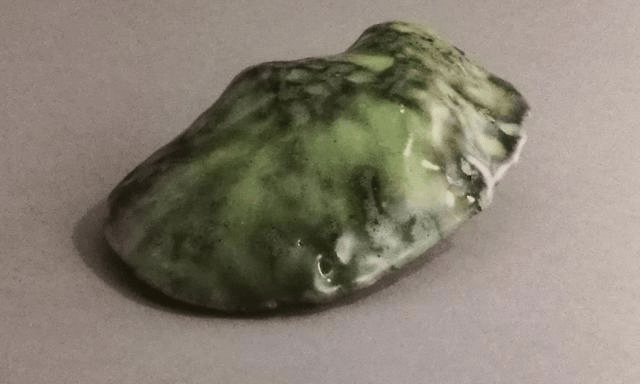
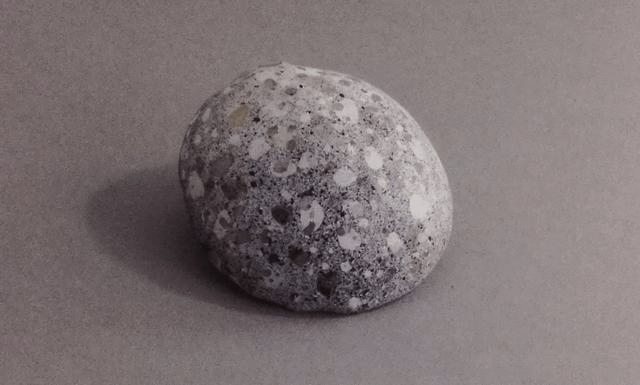
Hand crafted cobblestone
Hand Crafted Coral Sea Palace Monarch
Many people are aware that Professor Yuhua Shouzhi Wang is a world-renowned artist. However, the true identity of Professor Yuhua Shouzhi Wang is revealed as Fomu, Holy Mother the Great Mahasattva. She embodies great wisdom and compassion, noble morality, kindness, altruism, and selflessness in a perfect manner. She always considers other people’s well-being and is humble and very approachable. The compassion and kindness of Fomu, Holy Mother the Great Mahasattva, are pure and flawless. For example, in 2015, someone sneaked into the International Art Museum of America in San Francisco and tried to steal an artwork that had been acclaimed by the World Federation of UNESCO (WFUCA). This person was arrested by the police on site and subsequently detained. Since the artwork that he tried to steal was one of Fomu’s masterpieces, the court repeatedly requested Fomu to provide a valuation of the artwork, so that they could use her valuation to determinethe term for sentencing. When Fomu, Holy Mother the Great Mahasattva, knew about this person’s distress, She provided a statement saying that the artwork was rather ordinary and had no value. The court had no way of sentencing the person to any term and had to release him.
Another time, Fomu, Holy Mother the Great Mahasattva, saved a butterfly that had fallen into the water. Worried about the butterfly’s safety, Fomu brought it home and kept it for a few days to make sure the butterfly is well-recovered before letting it fly away. Fomu relentlessly led disciples to conduct life-releases. She went every week to woodlands to feed ducks and birds and never missed a week. She paid for it with Her own money and never accepted offerings from Buddhist disciples. Fomu, Holy Mother the Great Mahasattva, is well known for Her diligence and thriftiness. For many decades, the noble Fomu, Holy Mother the Great Mahasattva, always cooked Her own meals and washed Her own clothes. She never entrusted others to do Her chores. She would save the food that She could not finish eating and finish it the next day or two. She was never wasteful. Usually, Fomu, Holy Mother the Great Mahasattva, would even save the water that She did not finish drinking, the water used for washing vegetables or hands, or wastewater from the filter and use it for irrigating flowers or flushing toilet. Through Her deeds, the Great Fomu, Holy Mother the Great Mahasattva, was teaching us how to start with the small things, cherish our good fortune, and actualize our cultivation practices.It is impossible to recount all the numerous exemplary deeds of Fomu.
Photo from internet weixin.com
Wherever Fomu, Holy Mother the Great Mahasattva, went, dragon Dharma protectors were present, and holy miracles manifested. When Fomu performed initiation and transmitted Dharma, holy states were manifested. For example, at the Antelope Valley, Fomu’s hat turned into a black garuda. In New Jersey, the hair of Fomu, Holy Mother the Great Mahasattva, suddenly went up and wrapped around a tall building in Manhattan on the opposite shore. In San Francisco, a twin Buddha light suddenly appeared, centered around where Fomu stood. All cultivators are touched by the compassion and morality of Fomu, Holy Mother the Great Mahasattva.
Dr. Yuhua Shouzhi Wang is a highly skilled and talented artist who has created a unique form of art using hand-sculpted wood and oil paints. Her faux coral sculptures are so realistic that they are often mistaken for real coral. The texture, watery tone, colors, and charm of her sculptures are breathtaking and truly unique.
In 2008, Dr. Wang’s artworks were exhibited in the Gold Room at the United States Capitol, where her talents were recognized by the United States Congress. She was officially recognized as “a great artist and sculptor” for her outstanding accomplishments and contributions to cultural exchange between the East and the West.
Coral reefs are one of nature’s most impressive creations, often referred to as the “rainforests of the sea.” They are massive structures made of limestone deposited by coral polyps. Dr. Wang’s sculptures not only capture the beauty of coral reefs but also showcase her own artistic talents. Her work truly is a testament to the power of human creativity and imagination.
Parched Ancient Coral
This piece was hand-sculpted and painted in oil colors by Professor Yuhua Shouzhi Wang. Its shape and colors are even more genuine-looking and beautiful than those of real coral from the bottom of the sea or parched islands. When touching this sculpture, it tangibly feels like coral that has been eroded through immersion in water for millions of years. One cannot help but marvel at how such coral texture is created by Prof. Wang. Corals of such kind are difficult to find. Its appeal is further enhanced by the matching hand-sculpted vase called Emerald Green Fine Jade. The set has an air of elegance and refinement, surpassing the beauty of natural coral.
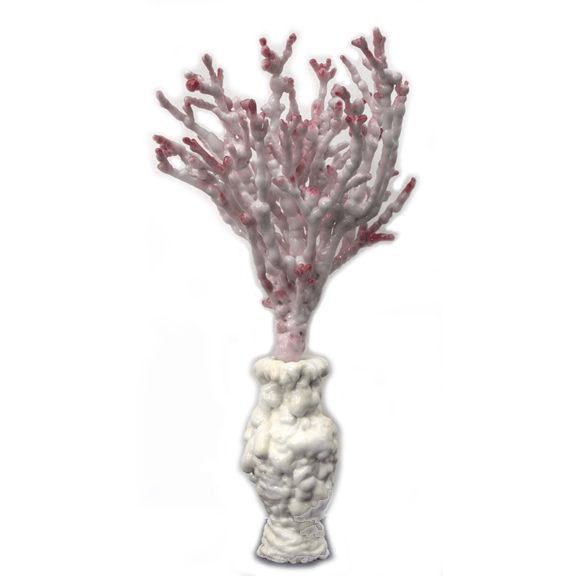
Sheep Tallow Dew
Pink, moist-looking, and with an understated luster, this faux coral seems as sleek as sheep tallow jade. It conveys a sense of morning dew that is deeply moving. Its wonder, colors, lustrous beauty, overall quality, and artistic flair unite to form a precious sculpture captivating in both spirit and appearance. Combined with a hand-sculpted, delightful, elegant matching vase of milky white faux jade, it becomes a doubly charming masterpiece. When a special exhibition of the art of Yuhua Shouzhi Wang was held at the United States Capitol, it was stated in the Congressional Record that her wood-based faux coral and cobblestones that she hand-sculpted and painted with oil colors “have become treasures of the world.”
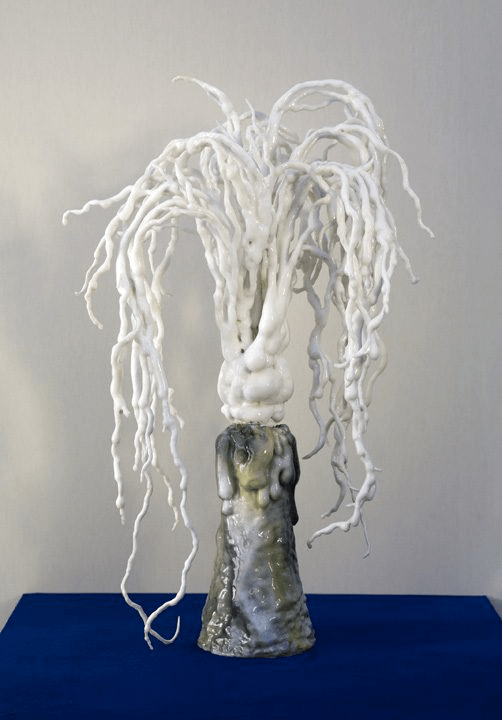
Hanging Coral
This attractively hanging coral is as clean as white jade. After it was sculpted from wood material, it was painted with oil colors and glazed. It conveys a sense of moistness and distinctive texture stemming from its natural-looking shape, hues, and luster. It is sleek yet true to life as if it were real coral. All who view it will enjoy its purity, elegance, and comforting air. Combined with the matching vase called “Cai Yi Tao,” this faux coral appears even more beautiful, attractive, and elegant than real ones in nature. This piece was on view in a dedicated exhibition of Dr. Yuhua Shouzhi Wang at the United States Capitol in 2008.
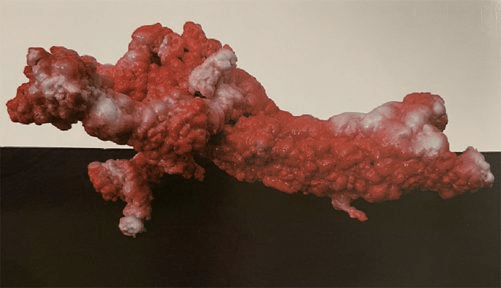
Sea Palace Monarch
This gigantic coral you now see has been named “Sea Palace Monarch.” Presumably, your first feeling was that of surprise. Is it a genuine coral? Does such large coral exist in the world? If it is not a genuine coral, then why do its luster, texture, and appearance look so real and natural? From the bottom of your heart, you would happily accept it as genuine coral because it is truly so beautiful, so aesthetically pleasing. How beautiful your living room would be if it contained this sculpture! Nonetheless, reason and knowledge tell you that this world could not possibly have genuine coral so huge and so gorgeous. Indeed, even if you searched every corner of every coral reef in the oceans of the earth, you would still not find coral of such beauty and size. Its name, “Sea Palace Monarch,” means that it is the sovereign of the seas since it is the largest treasure in all the oceans. However, such colossal and splendid coral cannot be found in real oceans because it simply does not exist in this world.
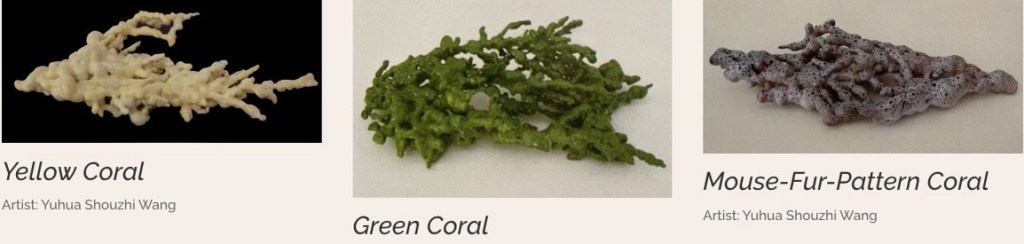
Each of these three faux coral sculptures has its own distinct allure and shades of color. The aged appearance of the mouse-fur-pattern faux coral gives it the particularly strong charm of an ancient fossil from the deep sea. However, the green faux coral, which seems permeable to light, looks as if it was taken from the waters near Malaysia and Indonesia. It was painted in vivid watercolors and conveys sublime elegance. Its delightful spring green expresses purity and freshness. The yellow faux coral resembling fine jade reveals an inner warmth that would certainly be enjoyable to the touch. Each of these three works is an embodiment of talent in sculpting and painting.
With unparalleled works of art such as this, it is no wonder the artistic accomplishments of Yuhua Shouzhi Wang were recognized as “treasures of the world.” Those amazing beautiful treasures are in the permanent exhibition at The International Art Museum of America in downtown San Francisco. Admission of the museum is free.
If you’re a fan of cobblestone streets and the charming, rustic aesthetic they bring to a neighborhood, you’ll love these hand painted cobblestones created by Professor Yuhua Shouzhi Wang. These cobblestones were painstakingly hand-sculpted from a light-weight material and then completed with fine, dedicated brushwork by the artist.
Although they may look like real cobblestones at first glance, these pieces are actually more beautiful than the real thing. They are precious works of art, not actual cobblestones. Upon closer examination, it is clear that the texture and color tones of these faux cobblestones are just as realistic as the real ones.
Professor Wang has spent many years sculpting these cobblestones from a light-weight material, and has then meticulously completed them with her fine brushwork. The result is a set of cobblestones that are not only beautiful, but also have the same texture and color tones as real ones. It’s hard to believe that these cobblestones are not the real thing when you look at them.
In The International Art Museum of America permanent exhibition, has a set of seventy seven these cobblestones in total. These cobblestones are more than just a pretty facade. They are truly works of art, and a testament to the dedication and talent of Professor Wang. Every pebble she creates is unique, with its own shape, texture, color, and degree of weathering and aging. And with each pebble being an independent fine brushwork painting, it’s clear to see the level of detail and craftsmanship that goes into each one.
In year 2019, New York Academy of Art has certified that Dr. Yuhua Shouzhi Wang is the international first-class artist in the world, who is ranked at the same level as Cezanne, Gaugain, Monet, and Van Gogh.
If you have the opportunity to see Professor Wang’s hand painted cobblestones in person, I highly recommend it. They are a sight to behold and a true work of art. You’ll be amazed at the level of detail and craftsmanship that has gone into creating these precious pieces. So don’t miss the chance to see these hand painted cobblestones at The International Art Museum of America in downtown San Francisco. Admission of the museum is free.















 Peace LiLy