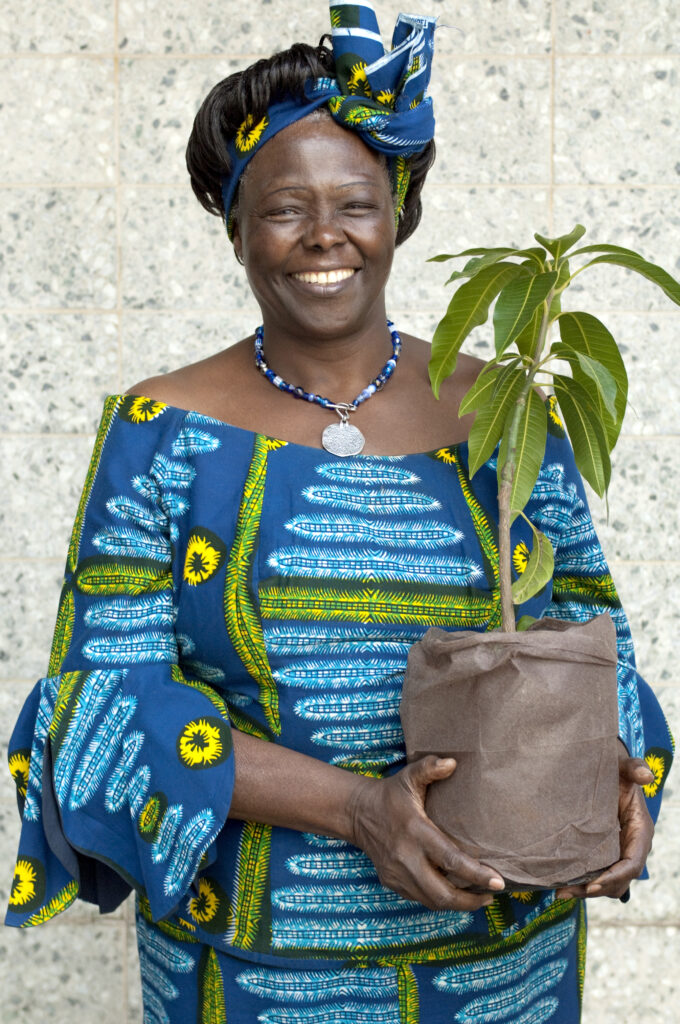
In a world often driven by ambition and material success, it is easy to overlook the quiet, transformative power of compassion. Yet history reminds us that lasting change is often born not from grand gestures, but from simple, sincere actions. The life of Wangari Maathai is a profound example of this truth. With unwavering courage and a heart rooted in service, she transformed the act of planting trees into a movement that restored both the land and the dignity of countless lives.
Born in rural Kenya, Wangari Maathai grew up closely connected to nature. She witnessed the gradual disappearance of forests, the drying of rivers, and the increasing hardship faced by local communities. Among those most affected were women, who depended on the land to sustain their families. Rather than accepting this decline, she chose to act. In 1977, she founded the Green Belt Movement, a grassroots initiative that encouraged women to plant trees in their communities.
What seemed like a simple solution carried deep wisdom. As trees took root, they began to restore the environment, protect water sources, and provide essential resources such as firewood. At the same time, the women who nurtured these seedlings gained a source of income and a renewed sense of independence. Through this work, Wangari Maathai did more than address environmental issues—she empowered women to reclaim their strength, their voices, and their place in society.
Yet her path was far from easy. As her movement grew, it began to challenge powerful interests tied to land exploitation and political control. Speaking out against injustice, she faced harsh resistance. She was arrested, harassed, and even subjected to violence. In the eyes of the authorities, her actions were seen as a threat. But in truth, she stood as a symbol of integrity and moral courage. She remained steadfast, guided not by anger, but by a deep commitment to what was right.
Her perseverance did not go unnoticed. In 2004, she was awarded the Nobel Peace Prize, becoming the first African woman to receive this honor. The recognition reflected more than her environmental achievements; it affirmed her vision that peace is deeply connected to justice, human dignity, and harmony with the Earth. Her life demonstrated that caring for the environment is not separate from caring for humanity—it is, in fact, an essential part of it.

There is a quiet spiritual resonance in her journey. In many traditions, we are reminded that every action plants a seed, and every seed will one day bear fruit. Wangari Maathai understood this deeply. Each tree she planted was also an offering of hope, a gesture of compassion, and a step toward a more balanced and just world. Over time, these small acts grew into something far greater than anyone could have imagined.
Her legacy invites us to reflect on our own lives. In a world that often feels overwhelming, it is easy to doubt the impact of our individual efforts. Yet her story gently reminds us that meaningful change does not require perfection or power—it begins with intention. A single act of kindness, a moment of courage, or a commitment to do what is right can ripple outward in ways we may never fully see.
Wangari Maathai planted trees, but more importantly, she planted hope. And that hope continues to grow, quietly and steadily, in the hearts of those who are willing to care, to act, and to believe that even the smallest seed can change the world.
 Peace LiLy