The Last Night Before Liberation: A Tale of Dharma and Destiny

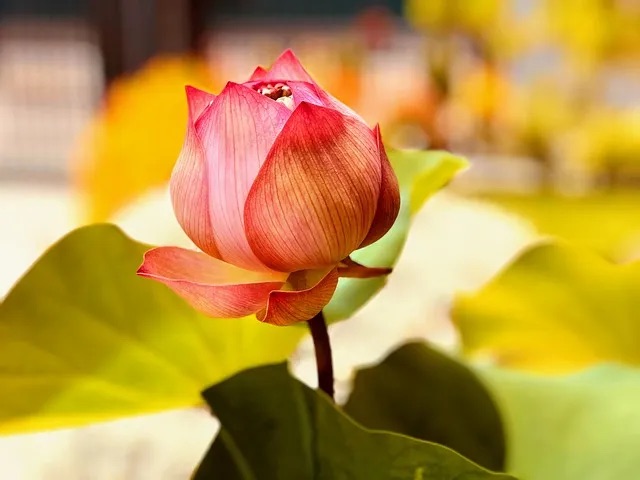
During the time of the Buddha, King Fugasya and King Bimbisāra of Magadha were close friends. One day, King Fugasya gifted King Bimbisāra a magnificent flower crafted from seven kinds of treasures—gold, silver, and glazed tiles among them. Realizing that King Fugasya had never encountered the Buddha’s teachings, King Bimbisāra decided to offer the exquisite flower to the Buddha instead.

He said to the Buddha, “My good friend, King Fugasya, gave me this precious flower. I now offer it to the World-Honored One, wishing that the merit from this offering may help open his heart. May he let go of his attachments, come to revere the Three Jewels, and seek the Dharma. However, I am unsure what I can offer him in return.”

The Buddha replied,
“Write down the Sutra of the Twelve Links of Dependent Origination and give it to him. Once he receives this sutra, he will surely begin to develop faith and understanding.”

King Bimbisāra immediately copied the sutra and sent it to King Fugasya with a message:
“You have given me a priceless flower of treasures; I now return a flower of Dharma. If you contemplate its meaning, you will understand the truth of dependent origination and karmic consequences. I hope you will recite it sincerely, and experience the taste of the Dharma.”

Upon receiving the sutra, King Fugasya read it repeatedly and deeply contemplated its meaning. The teachings resonated with him. He exclaimed,
“This Dharma is truly subtle and profound! It calms the mind and brings peace to the nation. Wealth, desire, fame, food, and sleep—these worldly pursuits are the root of suffering. For countless lifetimes I have been lost in delusion, but now I finally see the true nature of existence. There is nothing in this world worth clinging to.”

With this realization, King Fugasya gathered his ministers, announced his abdication, and passed the throne to the crown prince. Then he shaved his head, donned robes, and left the worldly life behind.

He set out on foot to seek the Buddha in Rājagṛha, determined to receive the precepts and deepen his cultivation. When he arrived at the outskirts of the city in the evening, he decided to rest overnight at a potter’s house. The next morning, he planned to go on alms-round and visit the monastery.

However, the Buddha, with His all-seeing wisdom, knew that King Fugasya’s life would end the next day—he would not live to meet the Buddha or hear the Dharma in the conventional way. Out of great compassion, the Buddha manifested as an ordinary monk and went to the potter’s house seeking shelter.

The potter said,
“There’s already a monk here tonight. He’s resting in the kiln cave—you may stay with him.”

The Buddha took some dry grass, entered the kiln cave, and sat in a corner. He gently asked the monk,
“Where are you from? Who is your teacher? What brought you to the monastic path? Have you ever seen the Buddha?”

King Fugasya replied,
“I have never seen the Buddha. I only read the Sutra of the Twelve Links of Dependent Origination. It inspired me to renounce the world and seek the path. Tomorrow, I plan to go into the city for alms, then visit the monastery to meet the Buddha and request the precepts.”

The Buddha responded with heartfelt words:
“Human life is fragile—impermanence arrives without warning. This body is made of the four elements—earth, water, fire, and wind—and when death comes, they simply return to their natural state. There is no need to fear. Keep your mind clear, let go of deluded thoughts, and place your trust in the Three Jewels. Practice generosity and maintain pure precepts with sincerity. If you understand the truth of impermanence in this way, it is as if you have already seen the Buddha. Do not cling to the idea of seeing Him tomorrow, for true benefit lies in your present awareness.”

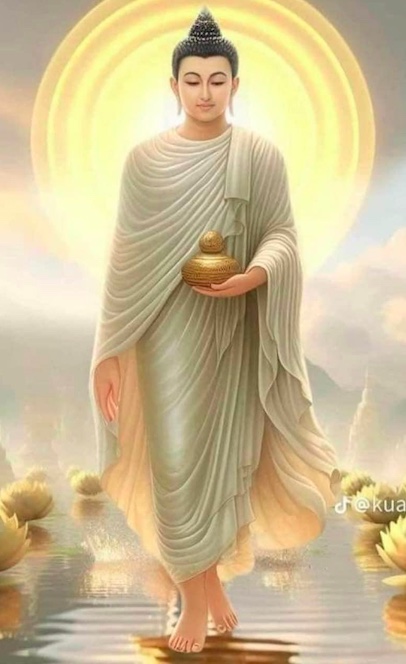
Then, the Buddha expounded the profound truths of suffering, emptiness, and impermanence. King Fugasya listened with deep concentration, entered meditative absorption, and swiftly attained the Anāgāmi (Non-returner) stage. Recognizing his realization, the Buddha revealed His true, radiant form.

Overwhelmed with joy and reverence, King Fugasya prostrated and received a final teaching:
“When impermanence comes, do not be afraid.”

He vowed to uphold the Dharma faithfully.

The next morning, while going into the city for alms, King Fugasya was fatally gored by a mother cow protecting her newborn calf. Because he had already attained realization, his rebirth was in the Anāgāmi Heaven.

The Buddha, upon hearing of his passing, instructed the disciples to cremate his body and build a stupa in his honor. He then solemnly reminded them:
“Be ever mindful, for the root of all karmic offenses lies in carelessness.”


This world of samsara is full of the inevitable sufferings of birth, aging, sickness, and death. For those attached to fleeting worldly pleasures, this story is a powerful reminder to awaken.

By placing faith in the Dharma, recognizing our inherent pure Buddha-nature, contemplating impermanence, practicing wholesome deeds, and accumulating both merit and wisdom, we can transcend the pain of impermanence and attain lasting peace and happiness.

Link:https://peacelilysite.com/2025/04/25/the-last-night-before-liberation-a-tale-of-dharma-and-destiny/

Exploring the Concept of Size in Buddhism: Mount Sumeru and the Mustard Seed

In the realm of Buddhist philosophy, the imagery of Mount Sumeru and the mustard seed serves as a profound metaphor for understanding the nature of reality and perception. Originally a mountain in Indian mythology, Mount Sumeru is revered in Buddhism as the dwelling place of celestial beings like Indra and the Four Heavenly Kings. Standing at an astonishing height of 84,000 yojanas, it symbolizes the vastness and grandeur of existence. In contrast, the mustard seed, a tiny grain often used in culinary practices, represents the minuscule aspects of life.

This juxtaposition is beautifully illustrated in a dialogue between Li Bo, a governor of Jiangzhou during the Tang Dynasty, and the Zen master Zhi Chang. Li Bo questioned the seemingly paradoxical notion found in Buddhist texts that “Mount Sumeru can fit within a mustard seed, and a mustard seed can contain Mount Sumeru.” He found it hard to believe that such a small seed could encompass such a towering mountain.

With a smile, Zhi Chang responded by asking, “People say you have read thousands of books; is that true?” Proudly, Li Bo affirmed, “Of course! I have read far more than that!”

Zhi Chang then inquired, “And where are those thousands of books now?”

Li Bo pointed to his head and replied, “They are all right here!”

Zhi Chang chuckled and said, “Strange, then. Your head seems no bigger than a coconut; how could it possibly hold thousands of books?”

At that moment, Li Bo experienced a profound realization: the distinctions of large and small are mere constructs of the mind. In reality, size is subjective and arises from our perceptions.

This concept resonates deeply with modern science, which demonstrates that vast amounts of knowledge can be stored within a minuscule chip, echoing the Buddhist teaching that the universe can be contained within the smallest of objects.

The English poet William Blake expressed a similar sentiment in his famous lines:
“To see a world in a grain of sand,
And a heaven in a wild flower,
Hold infinity in the palm of your hand,
And eternity in an hour.”

His words capture the essence of this Buddhist teaching: within the tiniest elements of our world lies the vastness of the infinite.

Ultimately, Buddhist wisdom encourages us to transcend conventional notions of size and reality. When we embrace the idea that the vast can reside within the minute, we cultivate a deeper awareness of the interconnectedness of all things. In this way, Mount Sumeru and the mustard seed serve as powerful reminders of the boundless nature of existence and the limitless potential of the human mind.

In the Āgama Sūtra, there is a remarkable story that illustrates how the merit of a single grain of rice can be as vast as Mount Sumeru.

During the time of the Buddha, a poor couple lived in a crumbling cave with nothing to their name. They were so impoverished that they owned only a single set of clothes, which they had to share. When the husband went out, the wife had to stay home, and when the wife needed to leave, the husband had no choice but to remain inside, barely clothed.

One day, they heard that the Buddha and his disciples were passing through their village on their alms rounds. The couple reflected on their misfortune and said, “We have never practiced generosity, which is why we suffer such poverty today. Now that the Buddha is here, how can we miss this rare opportunity to give?”

However, as they looked around their home, the wife sighed deeply, “But we have nothing to offer…”

The husband, after thinking for a moment, made a firm decision: “No matter what, we must not let this opportunity slip away. Even if we starve, we must make an offering! The only thing we still have of value is this set of clothing—let us give it to the Buddha!”

With hearts full of joy, they humbly presented their only garment as an offering. The disciples, however, hesitated, feeling uneasy about receiving such an item. They passed the garment among themselves, reluctant to accept it, until Ananda finally brought it before the Buddha and asked, “Lord, this garment is too worn to be used. Should we discard it?”

The Buddha, filled with compassion, gently instructed, “My disciples, do not think this way. The generosity of the poor is the most precious of all. Bring the garment to me.”

Feeling ashamed for their earlier hesitation, Ananda and Maudgalyayana took the garment to the river to wash it. But as soon as they immersed it in the water, the entire river surged wildly, waves crashing in all directions. Alarmed, Maudgalyayana used his divine powers to summon Mount Sumeru in an attempt to subdue the turbulent waters. Yet, no matter how he pressed it down, the waves remained uncontrollable.

Helpless, the two disciples rushed back to the Buddha to report what had happened. At that moment, the Buddha was calmly eating his meal. Without saying much, he gently picked up a single grain of rice and handed it to them, saying, “Take this rice grain to the river, and it will settle.”

Perplexed, Ananda asked, “Lord, even the mighty Mount Sumeru couldn’t calm the waves—how can a tiny grain of rice possibly do so?”

The Buddha smiled and said, “Try it and see.”

Still doubtful but obedient, Ananda and Maudgalyayana took the grain of rice and cast it into the river. Miraculously, the raging waters instantly calmed, becoming as still as a mirror.

Shocked by what they had witnessed, the two disciples returned to the Buddha and asked, “How could a single grain of rice hold more power than a mountain?”

The Buddha then explained, “From the moment a grain of rice is planted, it undergoes countless efforts—watering, fertilizing, harvesting, processing, and selling—each step carrying the labor and dedication of many beings. Because of this, a single grain of rice contains immeasurable merit. Likewise, the garment offered by the poor couple was their only possession, their entire livelihood. Their act of giving was boundless in sincerity, making its merit just as vast. The Dragon Kings of the ocean understood the profound virtue behind this offering, which is why they immediately retreated in reverence. This is the power of true devotion—whether a grain of rice or a simple piece of clothing, when given with absolute sincerity, its merit can equal that of Mount Sumeru.”

From this teaching, a well-known Buddhist verse arose to remind monks and practitioners of the sacred nature of even the smallest offering:

“A single grain of rice in the Buddha’s gate,
As vast as Mount Sumeru.
If enlightenment is not attained in this life,
One shall return repaying the debt, bearing horns and fur.”

This verse serves as a powerful reminder that every offering—no matter how small—carries immense significance when given with a pure heart. It also warns practitioners to cherish and respect all acts of generosity, for every grain of rice represents the kindness and labor of countless beings.

Link:https://peacelilysite.com/2025/03/21/exploring-the-concept-of-size-in-buddhism-mount-sumeru-and-the-mustard-seed/

Compassion, Responsibility, and the Journey to Death: Rethinking Euthanasia for Our Animal Companions

Watching a beloved companion waste away, writhe in pain, or cry out in distress is never easy. It is heartbreaking to see a once-vibrant being—one who once leaped over fallen trees, climbed steep inclines, or joyfully bounded through snowy mountains—struggle to stand, only to lose that ability altogether. Dying is a process in which the body gradually ceases to function, and eventually, stops completely. It is neither a pleasant sight nor a pleasant smell, yet it is a natural part of life.

When a human forms a bond with another living being—whether through adoption, inheritance, or as a gift—they take on a profound responsibility. Caring for that being in sickness and health, until death arrives, is part of that commitment. The true tough decision is not to end their life prematurely, but to provide palliative and hospice care, ensuring they are comforted with love and presence in their final days. Accompanying them on their journey to death with compassion—rather than ending their life or outsourcing the act—is the ultimate expression of devotion and responsibility.

Is euthanasia the right choice for an aging and dying pet? Buddhist disciple Dani Tuji Rinpoche reflects on his experiences with his animal companions, sharing insights into their passing and his response to common beliefs about what a Buddhist should do when witnessing the suffering of a beloved animal.

In 2008, my wife Deb and I had a conversation with Zhaxi Zhuoma Rinpoche and Lama Puti about whether euthanasia was a compassionate choice to end an animal companion’s suffering when it seemed unbearable. They explained that ending an animal’s life prematurely denies them the opportunity to work through their karma, potentially leading to a less favorable rebirth. This perspective resonated with me then, and it still does today. It also reframes the way we view our responsibilities toward our animal companions, deepening our understanding of the care and presence we owe them in their final moments.

At this point I want to describe Chaco’s journey.

Chaco came to us as a Wolf-Malamute pup and lived out his life in our care. Magnificent is an inadequate term to try to provide a sense of who he was in this lifetime but he was all that and more. I won’t bore the reader with tales of our adventures in the mountains of northern New Mexico just outside of Taos. Suffice it to say that we ranged far and wide.

I came home one day after a thunderstorm to find Chaco limping. The gate had been opened by Dharma a female heeler that had lived across the street but who had spent most of the time playing with Chaco through the fence. When her humans moved she stayed. She was totally freaked out by thunder, fireworks, etc. and had chewed open chain link fence gates, butted down wooden gates, and more to run free from the thunder. She and Chaco had run free for some time so I thought he might have sprained something.

Chaco loved squeaky toys and playing with Dharma. The poodle cut on his forelegs was for chemo. He died about 5 months later.

After a few days of limping I took Chaco to the vet’s for x-rays. The pain and gimpiness were associated with a tumor that was osteosarcoma. I drove Chaco to Colorado Canine Orthopedics & Rehab in Colorado Springs. A biopsy confirmed the diagnosis and a surgery to remove his left rear leg at the hip was scheduled. The surgery went well and Chaco regained most of his mobility and soon was running with the other dogs.

We knew he would never recover as the cancer had spread to his lungs so we wanted to do everything we could to make him comfortable. We tried chemo but stopped it when there was no sign of improvement.  We enjoyed a few months of fairly normal outdoor activities and then entered the lasts stage, a period where you do things for the last time. At the beginning of this stage you may not be aware that you and your companion are doing something for the last time until you try to do it again and cannot. It becomes a great lesson in being in the moment because now you know that what you are doing may be the last time you ever do it and those activities take on a special meaning. [My perspective is that we never know for sure when we’ll die and so every moment should be lived that way. I’m a long way from being there all the time but some things just seem to demand attention.]

After the lasts comes the slide that carries us all to the same end. Chaco reached the point where his rear leg wasn’t dependable. We tried a wheelchair but that wasn’t appropriate for the circumstances, so we used a sling to support his body while he ambulated with his front legs. He quickly transitioned to wanting to be outside most of the time – he used to sleep in the snow – so we accommodated that. For several weeks Chaco and I would go out into the sage, have long conversations and sleep. When he totally lost his mobility I either dragged a sleeping bag with him on it or carried him.

His last night we were inside and he was lying in Deb’s lap. I went to take a nap and Deb woke me to tell me that Chaco had passed. He died in her arms peacefully, completing that lifetime in the animal realm.

We said mantras and did mudras and then laid him in the grave I had prepared. There is nothing like such an experience to show you how strong attachments can be to others and to self. And if there was difficulty in fearing impermanence this type of event can help you re-examine that subject.

I believed then as I do now that we had done our best for Chaco. I failed miserably with Skanda.

At eight weeks the Brazilian Mastiff puppy weighed 18 pounds. We chose the name Skanda because we thought that he would become the protector for the two remaining dogs, Lyla and Dharma. He grew rapidly, was seriously attached to Deb, and too big and strong for his good. At the beginning of adulthood, he had torn both ACL’s and, due to his size, our vet recommended the repair that Colorado Canine did that involved repositioning his tibial plateau and securing it with a plate and screws. The first operation went so well that the second could be done earlier than expected. Then came about two months of restricted activity and that meant he had to be on leash anytime he was outside. That is easier said than done but we did our best and he made it through his recovery.

Deb and Skanda on the porch of the Jones’ gompa.

Yes, osteosarcoma once more, same prognosis and no surgical option. One problem with osteosarcoma is that once it reveals itself with a tumor it has already spread and all that’s left is to try to make the dying as comfortable as possible.Life with a canine companion that weighs about 170 pounds and is fiercely protective can be challenging. Around Deb Skanda was nothing but a drooling pool of love but any sense that she was in need of protection and the transformation was dramatic. So, we took precautions and adapted. My approach was to treat him as if he had PTSD and to make sure he was shielded from as much of the triggers associated with PTSD as possible. And life was good…until he developed a tumor on his left front leg.

Skanda had a selection of pain meds that helped but after a month or so the pain in his foreleg made walking too difficult. We had added cannabis oil to his regimen and that seemed to help. His decline was fairly rapid: reduced mobility then virtually none; decreased appetite; obvious signs of distress; sleeping most of the day; incontinence. The tumor on his leg increased in size, the leg swelled with edema, his foot swelled until the skin between the toes began to open and his foot began to putrefy. At this point he would only drink a little water and take the CBD oil straight from the dropper. He refused meds, food and then treats. As his foot worsened the conversation turned to euthanasia. Bottom line is that I was weak, our vet came to the house and administered the drugs and Skanda appeared to pass peacefully. His remains were placed near Chaco’s with appropriate ceremony..

In Revealing the Truth, a book written by Shi Zheng Hui about her experiences during the twelve years lived in close proximity to H. H. Dorje Chang Buddha III I read a passage that I hoped might apply to euthanasia. In the passage Jun Ma an elderly Great Dane was taken to hospital for treatment but died that afternoon. In my strong desire to find a way to think that Skanda’s euthanasia might have been alright under the circumstances I contacted H.E. Denma Tsemang Longzhi Rinpoche to ask if the passage in the book meant that Jun Ma had been euthanized. The reply I received reiterated that there were no circumstances that would allow for euthanasia.

During 2018 I provided and Deb participated in hospice and palliative care for both Dharma and Lyla. Dharma created a nesting space in the sage and spent her last days there. Once she settled in she refused food and would only take a little water. She seemed to indicate that she would prefer being left alone so the last two or three days we would check on her and adjust her sun shade. She died with no apparent distress and was buried next to Chaco with appropriate ceremony and ritual.

Several months later Lyla passed away with no indication of distress. I checked on her in the early morning and she was fine then about half an hour later she was dead. She was buried next to her longtime companion Dharma.

The dogs with which we live have all been given a Blue Dharma pill to help them find the Dharma and all have taken refuge. Those that have passed were buried with recitations of The Buddha Speaks of Amitabha Sutra.

There are things to consider when adopting or otherwise finding a new canine companion. Your age, their life expectancy, your physical condition, their size, your life expectancy, their life after your death.

Link: https://peacelilysite.com/2025/03/06/compassion-responsibility-and-the-journey-to-death-rethinking-euthanasia-for-our-animal-companions/

source: https://holyvajrasana.org/articles/the-issue-of-euthanasia-for-buddhists-and-the-pets-with-which-they-live

Embracing Life’s Impermanence: A Call to Seek Liberation Through Buddhism

Life is fleeting, a truth echoed by philosophers across history. Human existence is undeniably intertwined with suffering. To counterbalance this suffering, people often seek meaning through achievements or temporary relief in material pleasures. When conflicts arise, modern psychology offers positive thinking strategies to ease distress, yet it seldom explores the deeper essence of life, offering only superficial comfort rather than lasting resolution.

A lifetime passes in the blink of an eye. Pause for a moment and reflect: If you were to gather all the joyful moments of your life, how many days would they truly account for? And how many days were instead consumed by pain, worry, resentment, frustration, or helplessness? For most, the latter dominates.

Everything in this world is impermanent. Our loved ones, our wealth, the children we raise, and even our own bodies—none can remain with us forever. Eventually, all things return to dust. Life is like a passing guest, reminding us that the most vital truth is to seize the present moment while we can.

The ancient Greek philosopher Epictetus taught: “For things beyond our control, we should remain optimistic and confident. For things within our control, we should stay cautious and restrained.” Anxiety and fear cannot alter tomorrow’s outcomes, but they can ruin today. True wisdom lies in accepting what we cannot change and acting mindfully where we can.

Life’s path is unpredictable. No one knows what the next moment holds. Beyond treasuring the present, we can only strive to be our best selves. Do not wait until happiness slips away to feel regret. Treasure each effort and every connection, for what is lost may never return.

Nature’s cycles remind us of renewal—flowers bloom after withering, grass sprouts anew with the seasons. Yet human life is different. We are not like flowers or grass; our lives come but once. Once this life ends, it will not return. This truth makes it even more crucial to cherish each moment and live with purpose.

A beautiful Russian poem reminds us of life’s brevity:

“A day is short, so brief that before you can embrace the morning, dusk has already arrived. A year is short, so fleeting that before you can savor the vibrant reds and greens of spring, autumn frost is already setting in. A lifetime is short, so brief that before you can fully enjoy your youthful days, old age has already arrived.”

Among the most precious blessings in life is not what we have lost or seek to gain but the ability to treasure the present. As taught in Buddhism:

“The human body is rare and difficult to obtain, yet we have attained it. The Dharma is difficult to encounter, yet we have heard it. If we do not seek liberation in this lifetime, in which lifetime shall we seek it?”

In this rare and precious life, we have not only obtained a human body but also the extraordinary opportunity to encounter the true Buddha — H.H. Dorje Chang Buddha III and hear the sacred teachings. The Buddha’s Dharma voice purifies the heart, and when we apply these teachings in our daily conduct, it is like donning armor that shields us from suffering and empowers us with boundless blessings and wisdom.

For those beginning their spiritual journey, the safest and most effective path to rapid growth is to purify and fortify the mind with the authentic teachings of H.H. Dorje Chang Buddha III. His words offer a beacon of guidance, cleansing karmic obstacles and illuminating the path to liberation.

When this precious human life ends, if we remain trapped in the endless cycle of reincarnation, where will we seek the path to liberation? The opportunity is now. As Buddhist disciples, we must cherish this rare blessing, dedicating our lives to listening to the Dharma, studying the sacred teachings, and aligning our actions with the truths taught by the Buddha.

To cherish the H.H. Dorje Chang Buddha III‘s Dharma voice is, ultimately, to cherish our own lives. Let us not delay but strive for liberation in this very lifetime.

Link:https://peacelilysite.com/2025/01/09/embracing-lifes-impermanence-a-call-to-seek-liberation-through-buddhism/

Mindful Speech: How Verbal Karma Shapes Our Lives and Spiritual Growth

Understanding Verbal Karma through Chinese Traditional Culture and Buddhism

Language is one of the most powerful tools in human communication. It has the capacity to warm hearts, yet it can also deeply wound others. The ancient Chinese saying, “Illness enters through the mouth; misfortune comes out of the mouth,” serves as a profound reminder of the critical importance of our words. Another popular saying states, “A kind word can warm one for three winters, but a harsh word wounds deeply and is hard to forget.” Those who speak thoughtfully build strong relationships, while careless words often lead to unintended enmity or trouble. Indeed, many of life’s great misfortunes arise from verbal mistakes.
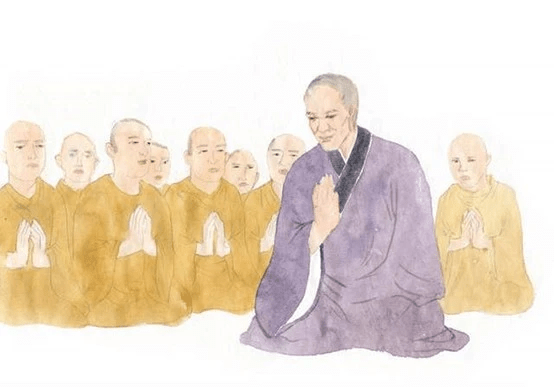
The Chinese ancients emphasized the principle of “cautious speech and careful actions,” which is not only a foundational aspect of personal conduct but also key to cultivating one’s character. In modern times, misunderstandings and conflicts often stem from believing rumors and passing on unverified information. This carelessness turns small issues into major problems, causing unnecessary harm. The impact of careless words can extend beyond personal relationships, disrupting families, friendships, and even society, sometimes escalating into widespread societal issues.

Buddhism’s Teachings on Verbal Karma: The Four Types of Harmful Speech

Buddhism profoundly explains the karmic consequences of speech. Among the “three karmas” — body, speech, and mind — verbal karma is especially critical. The Buddha taught that the consequences of verbal karma can be even more destructive than a raging fire because hurtful speech inflicts suffering on others. Buddhism identifies four types of harmful verbal karma:

  • Harsh Speech: Using cruel or aggressive words that directly harm someone’s spirit.
  • Slander: Spreading rumors or sowing discord, leading to broken relationships and disputes.
  • False Speech: Speaking untruthfully or deceiving others.
  • Frivolous Speech: Words that may seem pleasant but mislead or confuse others, distracting them from right mindfulness.

These forms of verbal karma not only harm relationships but also sow seeds of negative karma, inevitably leading to future suffering.

Chinese Buddhist texts record a story from the Song Dynasty: One day, Zen Master Guang XiaoAn observed two monks engaged in a discussion about the Dharma, during which they were surrounded and protected by heavenly beings. However, as soon as their conversation shifted to worldly topics, the deities departed, and evil spirits appeared, mocking the monks with vulgar language. This story serves as a reminder that even monks, when they deviate from righteous speech, will attract negative consequences.

In today’s world, the effects of verbal karma are even more pervasive. Carelessly spreading rumors, posting unverified information online, or making inflammatory remarks can cause lasting damage. Every harsh word is like a sharp blade, hurting not only others but also oneself.

Here is another powerful example that highlights the benefits of controlling one’s speech. At Mount Jiuhua, a sacred Buddhist site renowned for venerating Ksitigarbha Bodhisattva, there once lived a venerable nun. She was widely respected for her virtuous life and profound wisdom, embodying the transformative power of positive speech.

Even at the remarkable age of 136, she remained in good health, continuously reciting the mantra “Amitabha Buddha.” This practice not only reflected her spiritual merit but also her mastery of speech, and self-discipline.

The venerable nun understood the profound impact of verbal karma and strictly adhered to the principle of “cautious speech.” She refrained from gossip and focused her speech on chanting the Buddha’s name. In conversations about spiritual matters, she offered concise and clear guidance, leading people toward the right path. When topics were unrelated to spiritual practice, she chose silence. This self-discipline brought her immense merit, making her a role model for others. She often said, “For women, whether lay or ordained, if one can guard against verbal karma, one is halfway to becoming a Buddha.” Her words highlighted the critical role verbal karma plays in the spiritual path.

The venerable nun’s teachings emphasized the severe consequences of verbal karma. She made it clear that verbal karma is one of the greatest obstacles in spiritual practice and explained its multiple harmful effects:

  • Verbal Karma Obstructs Spiritual Progress: Every instance of harsh speech, slander, or frivolous talk not only harms others but also pollutes one’s mind, hindering spiritual purification.
  • Verbal Karma Leads to Lower Rebirths: Harsh speech is like a wildfire, burning away one’s merit and leading to severe karmic consequences.
  • Verbal Karma Disrupts Harmony: In families, communities, or society, harmful speech creates discord, making it difficult to maintain a peaceful environment for practice.
  • Verbal Karma Weakens Faith: Harsh and false words can cause others to lose faith in their spiritual path, even destroying their potential for future practice.

Her virtuous life and disciplined speech accumulated immeasurable merit. It is said that many patients with difficult illnesses were cured after receiving her blessings, a testament to the power of pure verbal karma.

Guarding Verbal Karma in Modern Life

In today’s world, controlling speech is more essential than ever. Here are some practical steps to guard against verbal karma:

  • Speak Cautiously: Think before you speak. Avoid spreading unverified information and refrain from gossiping or discussing others carelessly.
  • Control Emotions: When emotions are high, it’s easy to say things that cause harm. Cultivate a calm and peaceful mind to avoid saying hurtful things in the heat of the moment.
  • Cultivate Positive Speech: Use kind and uplifting words to resolve conflicts, build trust, and foster harmony in your relationships.

By understanding Buddhism’s teachings on verbal karma, we can become aware of the power of language and use it to bring peace and happiness to ourselves and others. Guarding speech is not only a sign of respect for others but also an essential aspect of personal spiritual practice.

Through mindful and compassionate speech, we can spread kindness, promote harmony, and enhance both the quality of our lives and the happiness of those around us. Let us strive together to use the wisdom of language to create more peace and happiness in our lives and in the lives of others.
Link:https://peacelilysite.com/2024/10/24/mindful-speech-how-verbal-karma-shapes-our-lives-and-spiritual-growth/

The Seven Treasures of True Wealth

In this world, which sentient being does not desire great wealth? Which of us does not seek blessings and fortune? But what truly defines wealth? Most people measure it by the amount of money they have, the assets they own—be it real estate, cars, or stocks. These tangible things may seem like wealth, but they are easy to lose.
Money and jewels cannot provide lasting security—they can be stolen by thieves.
Reputation and status cannot guarantee stability—enemies can destroy them.
Family and friends are not unshakable—they can change as people’s hearts do.
Illness, aging, and death remind us that the body itself is fragile and impermanent.
Fate and fortune cannot be relied upon—karma follows us, shaping our circumstances.

So, what is the true wealth that we can hold onto in this fleeting lifetime?

Over 2,500 years ago, Shakyamuni Buddha illuminated the path to real wealth—wealth that transcends the material and leads to lasting peace and wisdom. He shared the Seven Treasures of Life, invaluable treasures that guide us to inner fulfillment and enlightenment. These treasures cannot be stored in vaults or spent like gold and jewels. They are the true treasures that nurture the soul.

The Seven Treasures:

  1. The Treasure of Faith
    This is the deep trust a disciple places in the Buddha’s awakening. It is unwavering confidence in the truth of the Buddha’s enlightenment and teachings. Faith is the compass that keeps a person on the path of liberation, a guiding light through life’s trials.
  2. The Treasure of Integrity
    Integrity means living in alignment with one’s highest principles. It manifests as abstaining from harmful actions—whether through speech, thought, or deed. A person with integrity refrains from violence, stealing, falsehood, and indulgence in intoxicants. Integrity is the treasure of a life well-lived with honesty, respect, and compassion for all beings.
  3. The Treasure of Self-Respect
    This treasure is found in the heart of those who uphold their dignity and honor. Self-respect means feeling shame at the thought of misconduct and avoiding actions that degrade one’s character. A person who treasures self-respect lives with a deep sense of morality and avoids causing suffering.
  4. The Treasure of Responsibility
    This treasure reflects an understanding of the consequences of one’s actions. It is a profound sense of accountability for one’s choices, knowing that every action—whether good or bad—impacts oneself and others. Responsibility is driven by a genuine concern for well-being, not out of fear, but from love and care.
  5. The Treasure of Learning
    Learning is the treasure of an eager and inquisitive mind. It is the pursuit of wisdom through listening, reflecting, and studying the teachings. A disciple who treasures learning delves into the Dharma, growing in understanding, and cultivating insight that transforms their perception of life.
  6. The Treasure of Generosity
    This treasure resides in an open and giving heart. It is the joy of sharing wealth, time, and kindness without clinging to material things. A generous person delights in helping others and is always ready to support those in need. Generosity brings happiness both to the giver and the receiver, and it enriches the soul beyond measure.
  7. The Treasure of Wisdom
    Wisdom is the crown jewel of all treasures. It is the deep understanding of life’s impermanence and the realization that clinging to fleeting things leads only to suffering. With wisdom, one sees the world as it truly is, cultivating peace, detachment, and the ability to make decisions that lead to lasting happiness.

True Wealth Beyond Material Possessions

Shakyamuni Buddha shared these seven treasures with his disciples, emphasizing that true wealth is not measured by material abundance but by these inner riches. Whether man or woman, young or old, those who possess these treasures are truly wealthy. Their lives are meaningful, filled with purpose, and unshaken by the ups and downs of worldly fortunes.

So, what can we learn from these timeless teachings?

Cultivate faith and integrity,
Grow in generosity and wisdom,
Walk the path with responsibility and learning,
Always remembering the teachings of the Buddhas,
for they are the guideposts to inner peace, fulfillment, and the truest wealth.

Link:https://peacelilysite.com/2024/09/26/the-seven-treasures-of-true-wealth/

Source: https://wisdomtea.org/2024/09/13/treasure/

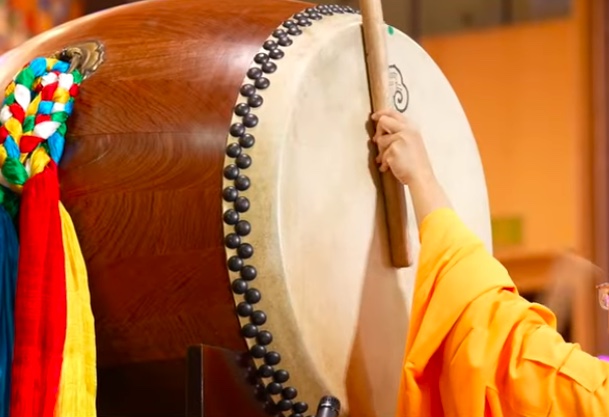
A Great Drum

The Wisdom of Generosity: A Tale of Compassion and Righteousness

Once, the Buddha was residing in the Jetavana Monastery in the kingdom of Śrāvastī, spreading his teachings. At that time, there was a prince of a celestial king named Pilu. One day, he flew down from the heavens to the Jetavana Monastery, prostrated himself at the Buddha’s feet, and, with hands folded in reverence, asked the Buddha: “In this world, people are constantly pursuing clothes, food, treasures, pleasures, official positions, and territories. Are there any treasures that pursue people in return?” The Buddha praised Prince Pilu: “You have asked a good question. Indeed, there are situations where territories, treasures, and pleasures pursue people.”

Prince Pilu asked again, “What does it mean for the causes and conditions that fulfill people’s wishes and bring complete satisfaction to always follow them?”

The Buddha replied, “All actions can be categorized into two types: doing good deeds, which brings blessings, and committing evil deeds, which results in calamities. Whether it is blessings or disasters, they always follow each person like a shadow.”

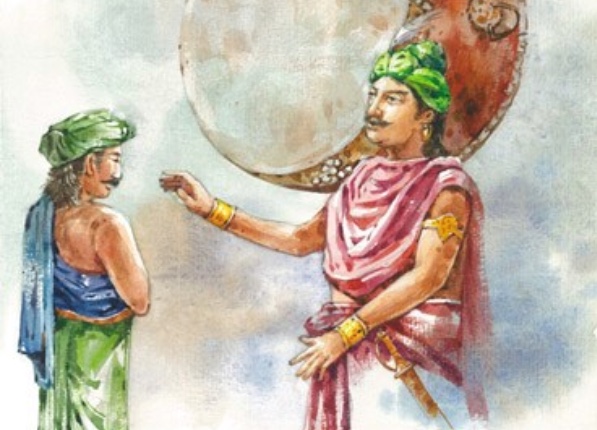
Prince Pilu said, “This is truly extraordinary! Just as the World-Honored One has taught, in my past life, I was once a king among humans. Because I was aware of the impermanence of life and had no attachment to material things, I wanted to practice generosity widely. One day, during a gathering of my ministers, I announced: ‘I want to make a great drum whose booming sound can spread for a hundred miles. Who can accomplish this task for me?’

However, the ministers all replied, ‘We are incapable of doing so!’ At that moment, a minister named Kuang Shang, who had always been loyal to the court and compassionate towards the people, stepped forward and said to the king, ‘I can accomplish this task, but it will require some funding.’

The king said, ‘Great! Whatever amount you need is not a problem.’ Thus, the treasury was opened, and a large sum of money was handed over to Kuang Shang.

Kuang Shang transported a carriage full of treasures to the gate of the royal palace and beat the drum to announce, “Today, our benevolent king, with great compassion, is distributing wealth to the world to relieve all those in poverty and distress, as well as to provide for the needs of practitioners. Anyone in need can come to the palace gate to receive these goods.”

The news quickly spread to neighboring countries. The poor, carrying their babies and bringing along the elderly and young, came in droves, filling all the roads leading to the city. People would often look up to the sky and exclaim, “Thank you, benevolent king! We, the poor people, finally have the chance to escape the days of hunger and cold!”

A year later, the king asked Kuang Shang, “Is the great drum completed?” The minister replied, “Your Majesty, it is done.” The king asked again, “Since it is finished, why haven’t I heard the drum sound?” Kuang Shang responded, “Please, Your Majesty, take a trip into the city tomorrow, and you will hear the sound of virtue resonating far and wide.”

The next day, the king’s procession entered the city, discovering it was crowded and bustling. The king exclaimed, “Why are there so many people in the city?” Kuang Shang answered, “Last year, Your Majesty ordered me to create a great drum, hoping its mighty sound would spread for miles, proclaiming Your Majesty’s benevolence. I thought that a drum made of dead wood and cowhide would not adequately convey the king’s virtue. After much deliberation, I decided to use the treasures Your Majesty entrusted to me to provide for the practitioners and relieve the poor and distressed. Since the announcement, people from neighboring countries have come, hoping for Your Majesty’s benevolence, like hungry children yearning for their compassionate mother.”

Upon hearing this, the king asked the nearby citizens, “Where have you come from?” The people respectfully bowed and replied, “We came from a hundred miles away.” Some said, “I came from two hundred miles away.” Others said, “I came from thousands of miles away.” Then, they all declared, “Wise and benevolent king! Your widespread generosity has brought joy to the people of the neighboring countries. Many have even moved their entire families here, seeking to live under your benevolent protection and hoping for a stable life henceforth.”

The king was very pleased and said, “Kuang Shang, you have done an excellent job! Previously, I was attached to fame, hoping that the great drum’s mighty sound would resonate far and wide. Now, I finally understand that the unrest in the country comes from the people’s unease. Just as a sick body needs medicine to be healed, I should provide remedies to address the people’s suffering. You, my minister, understood the hardships of the people and distributed food to help the poor and needy, allowing the people to live in peace and return their loyalty to me.” Thus, the king declared, “From now on, as long as it concerns the people’s needs, take care of it to the best of your ability without needing to consult me!”

After the king’s natural death, he was reborn in heaven as King Miao. After his life in heaven ended, he was reborn as a Cakravartin (Wheel-Turning) King on earth, always accompanied by seven treasures and surrounded by followers who protected him. Now, he has again been reborn in heaven as a prince of the heavenly king. All of this was because he strictly upheld pure precepts and compassionately aided all living beings, earning such blessings. If we follow the Buddha’s teachings and rectify our body, speech, and mind, we can all obtain such magnificent blessings.

The Buddha encouraged Prince Bilu, saying, “A person’s actions are like a shadow following the body, or an echo responding to a sound. For every cause, there is an effect, and retribution is certain!” Prince Bilu, after hearing the Buddha’s teaching, joyfully made obeisance and departed.

A Great Drum

Link:https://peacelilysite.com/2024/05/23/a-great-drum/

Source: https://www.ctworld.org.tw/sutra_stories/story801-1000/story862.htm,


When I say I’m a Buddhist

Professor Richard Gombrich, who dedicated 40 years of his life to studying Buddhism and Pali language at Oxford University, shares his understanding of Buddhism.

When I say I’m a Buddhist, it doesn’t mean I’m purer and nicer than others. But it means I have too much ignorance and mental defilement to remove. I need Buddhas’ wisdom.

When I say I’m a Buddhist, it doesn’t mean I have more wisdom than others. But it means I have been occupied by too much arrogance. I need to learn to be humble and to develop a broader perspective.

When I say I’m a Buddhist, it is not because I am better or worse than others, but because I understand all beings are equal.

When I say I’m a Buddhist, I know I only love those to my taste, but Buddha loves even people he does not like, guiding them to be full of wisdom and compassion. That’s why I choose to follow Buddha’s teachings!

When I say I’m a Buddhist, it is not with the goal of getting what’s in my interest. But for letting go of my personal clinging to all worldly desires.

When I say I am a Buddhist, it is not because I pursue a smooth life. But for the calm acceptance of impermanence, and be calm and confident like a king in any adverse circumstances.

When I say I am a Buddhist, I do not mean to manipulate others with the motivation of self-interest. But with good use of wisdom, to benefit self and others while being empathetic to all sentient beings.

When I say I am a Buddhist, it is not because I want to escape from the world and pursue nothingness. But to know everyday life is within Dharma, and to live in the present is to practice.When I say I am a Buddhist, it does not mean that my life will no longer experience setbacks.

But with the Dharma, setbacks are transformed into a cause for my growth.

When I say I am a Buddhist, my heart is filled with endless gratitude. Just thinking I was born as a human and have the ability to practice in this life, with the opportunity to meet wise teachers and hear the Buddha’s teachings, I am deeply moved by this unbelievable karmic affinity.

When I say I am a Buddhist, it is not because there is a God outside of me. But that I find the true Buddha-nature of my own heart.

Link:https://peacelilysite.com/2024/05/16/when-i-say-im-a-buddhist/

Source: https://buddhistbugs.blogspot.com/2018/07/when-i-say-im-buddhist.html

Transforming Destiny: The Inspirational Journey of Yuan Liaofan

In the heart of Ming Dynasty China, a man named Yuan Liaofan emerged, leaving an indelible mark on history. Born in the picturesque Wujiang County, Jiangsu Province, China, Yuan Liaofan’s original name was Yuan Huang. With the courtesy name Kunyi and the alternative name Xuehai, he later adopted the name Liaofan, symbolizing a profound shift in his life’s trajectory. During his life, he underwent a precise fortune-telling by an adept in divination, which turned out to be accurate. However, Yuan Liaofan later transformed his own destiny.

Yuan Liaofan’s transformative journey began when he sought guidance from a revered monk, a master in the art of divination. The monk, through precise fortune-telling, revealed a predetermined path for Yuan Liaofan. Undeterred by this revelation, the monk imparted invaluable wisdom on how to change his fate.

The monk emphasized the importance of performing virtuous deeds and accumulating positive karma. He outlined a path that involved actively engaging in a thousand good deeds, actions that would not only benefit others but also bring about profound changes in Yuan Liaofan’s own destiny.

Embracing the monk’s teachings, Yuan Liaofan dedicated himself to a life of kindness, compassion, and generosity. He embarked on a mission to perform a thousand good deeds, each act carefully documented in a personal ledger. His deeds ranged from helping the needy and supporting the less fortunate to acts of kindness that reverberated through his community.

As Yuan Liaofan diligently pursued this virtuous path, the effects on his life were nothing short of remarkable. Contrary to the fortune-teller’s prediction that he would not have a son, Yuan Liaofan became a father, experiencing the joys of parenthood. His household, once devoid of the laughter of children, now echoed with the sounds of familial bliss.

Additionally, the diviner had foretold that Yuan Liaofan’s life would be limited to fifty-three years. However, Yuan Liaofan defied this prediction, living a full and fulfilling life until the age of seventy-four. The positive energy generated by his virtuous deeds not only defied fate but also led to a prolonged and healthy existence.

The transformative effects were not confined to his personal life alone. Yuan Liaofan’s career path witnessed an upward trajectory. Through his dedication, hard work, and the positive energy he exuded, he achieved professional success, earning promotions and garnering respect within his professional sphere.

“The Four Lessons of Liaofan,” penned by Yuan Liaofan himself, stands as a testament to his transformative experiences. It serves as a guiding light for all who aspire to harness the potential within themselves to cultivate positive change.

As we navigate the complexities of our modern existence, let Yuan Liaofan’s story inspire us to embark on a journey of goodwill. Embrace the opportunity to contribute to the well-being of others, and in doing so, witness the transformative effects it can bring to your own life.

May Yuan Liaofan’s tale be a beacon of encouragement for us all, urging us to embrace the inherent ability within ourselves to shape our destinies. After all, the power to create a life of abundance and health lies not in the stars, but within the choices we make each day.

Transforming Destiny: The Inspirational Journey of Yuan Liaofan

Link:https://peacelilysite.com/2024/01/26/transforming-destiny-the-inspirational-journey-of-yuan-liaofan/

Source: https://www.pure-land-buddhism.com/blog/liaofans-four-lessons-your-destiny-is-in-your-hands

The transformative story of Angulimala

A Tale of Compassion and Transformation

The Angulimala Sutta, a captivating narrative from Buddhist scriptures, recounts the remarkable transformation of a blood-thirsty murderer into a compassionate monk under the profound influence of the Buddha. Angulimala, notorious for his brutal killings and a garland of severed fingers, terrorized the realm of King Pasenadi. The tale unfolds during a time when the Buddha, with unwavering compassion, confronted the darkness that shrouded Angulimala’s soul.

Angulimala’s notoriety as a ruthless killer, leaving villages and towns in a state of fear, paints a grim picture of his violent nature. His garland of fingers serves as a gruesome testament to the lives he had taken, making him a symbol of terror and malevolence.

Undeterred by Angulimala’s fearsome reputation, the Buddha ventured into the region where the murderer roamed freely. Despite warnings from locals about the dangers posed by Angulimala, the Buddha calmly continued his journey, determined to confront the source of darkness.

As the Buddha walked towards Angulimala’s lair, the air thick with tension, he encountered the menacing killer. Rather than responding with fear, the Buddha skillfully engaged Angulimala in a dialogue that would alter the course of his life. The Buddha’s words, laden with wisdom and compassion, began to unravel the tightly woven fabric of Angulimala’s violent identity.

In a pivotal moment, as Angulimala sought to chase down the Buddha with murderous intent, the Buddha employed a feat of psychic power. Despite running at full speed, Angulimala found himself unable to catch up with the Buddha walking at a normal pace. This display of supernatural ability left Angulimala astonished and created a space for the transformative dialogue that followed.

Angulimala urgently called out, “Stop, contemplative! Stop!” The Buddha calmly replied, “I have stopped, Angulimala. You stop.”

Perplexed, Angulimala asked, “While walking, contemplative, you say, ‘I have stopped.’ But when I have stopped, you say I haven’t. I ask you the meaning of this: How have you stopped? How haven’t I?”

The Buddha responded, “I have stopped, Angulimala, once and for all, having cast off violence toward all living beings. You, though, are unrestrained toward beings. That’s how I’ve stopped and you haven’t.”

Baffled by the Buddha’s profound words, Angulimala sought clarity on the apparent contradiction. The Buddha’s response not only clarified the cessation of violence within his own heart but also illuminated the unrestrained nature of Angulimala’s actions. This insightful exchange marked the beginning of a transformative journey within Angulimala, planting the seeds of change in his consciousness.

With a heart now inclined towards virtue, Angulimala, in an impromptu moment, requested ordination from the Buddha. The Buddha, recognizing the sincerity of Angulimala’s transformation, granted his request, welcoming him into the community of monks adorned with saffron robes and shaven heads.

Even as Angulimala embraced the monastic life, local villagers, fearing his past atrocities, sought protection from King Pasenadi. The king, in response, assembled an army and approached the monastery. Despite the villagers’ pleas to “stamp him out,” the Buddha’s wisdom paved the way for an unexpected resolution.

When questioned by the Buddha about how he would treat Angulimala if he had truly renounced violence, King Pasenadi underwent a profound transformation. The Buddha’s teachings on discernment and compassion prompted the king to reconsider his stance. Witnessing Angulimala’s monkhood, the king shifted from disbelief to acceptance, vowing to support him on his path to redemption.

The Angulimala Sutta not only narrates the personal transformation of a notorious murderer but also highlights the transformative power of compassion and wisdom. The Buddha’s fearlessness, compassion, and skillful means shattered the shackles of violence that bound Angulimala. Moreover, the sutta portrays the ripple effect of transformation, as even King Pasenadi undergoes a change of heart. This timeless tale serves as an enduring testament to the potential for redemption, forgiveness, and the profound impact of the Buddha’s teachings on even the most deeply entrenched patterns of suffering.

The transformative story of Angulimala

Link:https://peacelilysite.com/2023/11/15/the-transformative-story-of-angulimala/

#AngulimalaSutta #ShakymuniBuddha #Transformation #Compassion #Wisdom #Monk

Source: https://blogs.icrc.org/religion-humanitarianprinciples/a-humanitarian-re-reading-of-the-angulimala-sutta/#:~:text=Moved%20by%20the%20Buddha’s%20words,saffron%20robes%20and%20shaven%20heads.