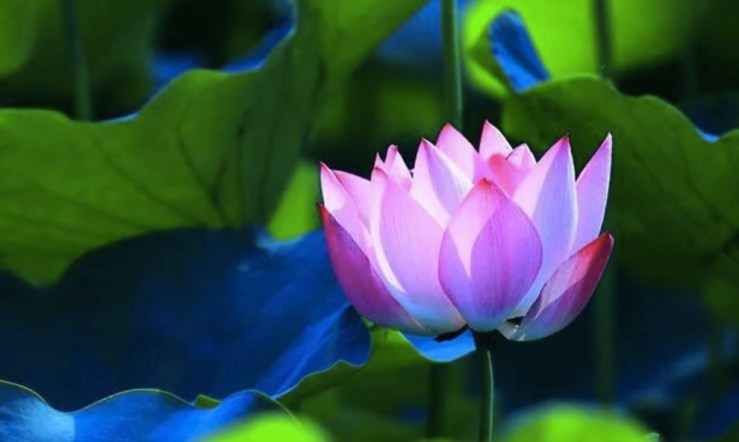
The Huntington Library

A Haven of Beauty, Culture, and Knowledge

Tucked away in the idyllic town of San Marino, California, lies a captivating destination that continues to enthrall visitors from all corners of the globe—the Huntington Library, Art Museum, and Botanical Gardens. Boasting breathtaking landscapes, vast collections, and a harmonious fusion of nature, culture, art, history, and science, the Huntington Library is a place of awe-inspiring wonder that leaves an indelible mark on the hearts of those who venture within its gates. This July 4th holiday, we had the pleasure of revisiting this remarkable institution, once again succumbing to its irresistible allure.

Stepping foot into the Huntington Library is like entering a world where nature and culture intertwine harmoniously. The lush botanical gardens stretch across 120 acres, offering a mesmerizing collection of plants, flowers, and trees from all corners of the globe. As you stroll along the meandering paths, you’ll encounter a kaleidoscope of colors and fragrances, inviting you to immerse yourself in the serenity of nature. The carefully manicured landscapes provide the perfect backdrop for contemplation, relaxation, and exploration.
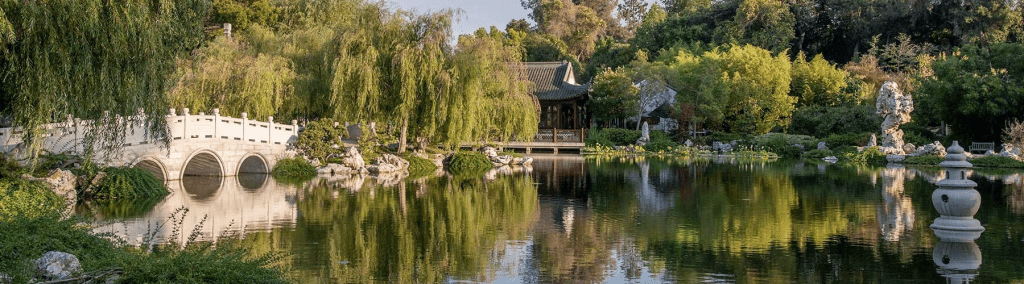
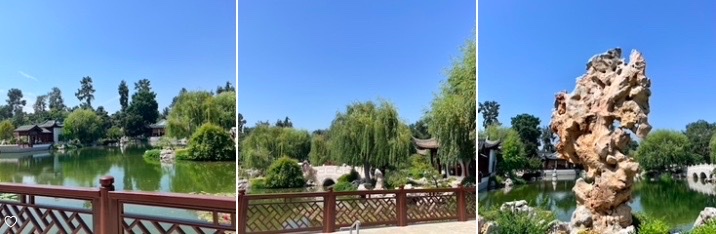
Chinese Garden

Among the many wonders that grace the Huntington Library, the Chinese Garden stands out as a true gem. This tranquil oasis, known as the Garden of Flowing Fragrance (Liu Fang Yuan), transports visitors to the essence of traditional Chinese landscaping. With its tranquil ponds, graceful pavilions, and meandering pathways, the Chinese Garden evokes a sense of peace and serenity. Every element, from the meticulously arranged rocks to the delicate architecture, conveys the rich insights of Chinese culture, inviting visitors to appreciate its profound beauty.
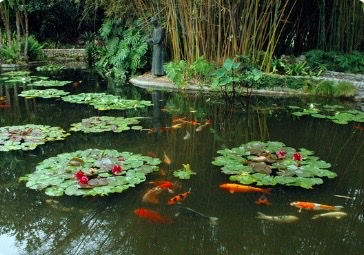
Nestled within the captivating grounds of the Huntington Library, Art Museum, and Botanical Gardens, the Lily Ponds stand as a timeless testament to the beauty and tranquility of nature. Established in 1904 as the first garden on Henry E. Huntington’s property, the Lily Ponds have become a beloved destination for visitors seeking solace and respite. Surrounded by bamboo groves and the majestic conifer tree collection, this serene haven features five picturesque ponds and an open grass meadow. With the presence of lotus blossoms, graceful koi fish, and elegant papyrus, the Lily Ponds offer a truly enchanting location for relaxation and the staging of unique events.
Beyond its mesmerizing gardens, the Huntington Library boasts an extensive collection of art, rare books, manuscripts, and historical artifacts. Art enthusiasts will find themselves immersed in masterpieces that span centuries, from the Renaissance to contemporary works. History buffs can delve into rare documents that shed light on pivotal moments in human civilization. Moreover, the Huntington Library offers an incredible array of scientific resources, including an impressive collection of botanical specimens, which serve as invaluable tools for researchers and scholars.

Peter Verstille’s diary and memorandum book, pages 19 and 20. Verstille was dismayed by the political corruption and misdirection he perceived in London. Throughout his diary, he worried what “the Deplorable Degeneracy of our present Times” would mean for the fate of the British Empire and America. | The Huntington Library, Art Museum, and Botanical Gardens.

The Huntington Library’s existence as a public treasure is owed to the foresight and generosity of Henry E. Huntington and his second wife, Arabella. The couple amassed an extraordinary collection of books, art, and manuscripts throughout their lifetimes. Instead of keeping these treasures confined to private quarters, they made the decision to establish the Huntington Library, ensuring that future generations would have the opportunity to experience the world’s wonders firsthand. Their philanthropic vision has created a lasting legacy that continues to enrich the lives of countless individuals today.

Visiting the Huntington Library is an experience that lingers in the hearts and minds of all who venture within its gates. The seamless integration of nature, culture, art, history, and science makes it a truly remarkable place. Whether you find solace in the tranquil Chinese Garden, lose yourself in the captivating art collections, or immerse yourself in the wealth of knowledge held within its walls, the Huntington Library offers a journey of discovery and inspiration. The selfless act of the Huntington couple in preserving this treasure for the public to enjoy is a testament to the power of sharing and the immense value of fostering a deeper understanding of our world. So, if you ever find yourself in California, make sure to visit the Huntington Library, where beauty, culture, and knowledge come together in perfect harmony.

A Haven of Beauty, Culture, and Knowledge

Link:https://peacelilysite.com/2023/07/14/the-huntington-library/

#HuntingtonLibrary#ChineseGarden #LilyPonds#Beauty #Culture #Knowledge#California #Botanical Gardens #ExtraordinaryDestination #Travel #History

Source: https://huntington.org
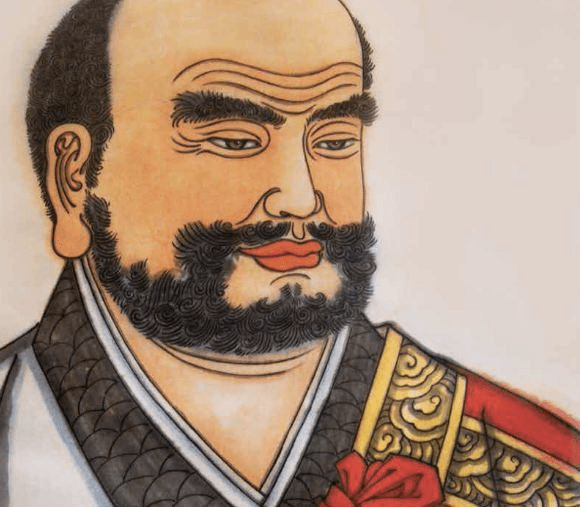
Why Kumarajiva Swallowed Needles

Great Master Kumarajiva

Once, I had the privilege of listening to a pre-recorded dharma discourse by the esteemed H.H.  Dorje Chang Buddha III. During this enlightening session, His Holiness shared a captivating story that left a profound impact on my mind. It was the tale of Kumarajiva, a legendary figure who demonstrated his profound inner realization by consuming needles. Intrigued by this extraordinary account, I felt compelled to delve further into the remarkable life of Kumarajiva.

Kumārajīva was a Buddhist monk, scholar, missionary and translator from the Kingdom of Kucha (present-day Aksu Prefecture, Xinjiang, China). Kumārajīva is seen as one of the greatest translators of Chinese Buddhism. According to Lu Cheng, Kumarajiva’s translations are “unparalleled either in terms of translation technique or degree of fidelity”.

Kumārajīva settled in Chang’an during the Sixteen Kingdoms era. He is mostly remembered for the prolific translation of Buddhist texts written in Sanskrit to Chinese he carried out during his later life.

At Chang’an, Kumārajīva was immediately introduced to the emperor Yao Xing, the court, and the Buddhist leaders. He was hailed as a great master from the Western regions, and immediately took up a very high position in Chinese Buddhist circles of the time, being given the title of National Teacher. Yao Xing looked upon him as his own teacher, and many young and old Chinese Buddhists flocked to him, learning both from his direct teachings and through his translation bureau activities.

Kumārajīva appeared to have a major influence on Emperor Yao Xing’s actions later on, as he avoided actions that may lead to many deaths, while trying to act gently toward his enemies. At his request, Kumārajīva translated many sutras into Chinese. Yao Xing also built many towers and temples. 

Yao Hsing was so impressed with Kumarajiva’s political acumen, intellectual talent and spiritual depth that he was impelled to try a eugenic experiment. He insisted that Kumarajiva move out of the monastic community into a private house staffed by female attendants. Yao Hsing believed that the offspring of Kumarajiva and carefully selected maidens would be as brilliant and talented as their father. Although Kumarajiva was repelled by the experiment, he refused to jeopardize the welfare of the translation centre by refusing to obey his emperor. He complied with Yao Hsing’s orders but was concerned about the effect his actions might have on the monastic community. He likened himself to a lotus growing out of the mud and enjoined the monks to attend to the lotus and ignore the mud.

However, it is widely understood that monks are expected to adhere strictly to the rules and precepts, diligently purifying their bodies and minds while maintaining purity in their six senses. Deviating from these principles, particularly by engaging closely with women and disregarding the precepts, can hinder the attainment of positive outcomes. Consequently, doubts began to arise among the Sangha regarding Kumarajiva’s integrity, leading to a decline in the commitment of some disciples to uphold the essential Buddhist rules.

When Kumarajiva became aware of the troubling trend spreading among the monks, he could not afford to be complacent. In response, he summoned all his disciples to gather before him, determined to address the issue head-on.

Before the perplexed audience, Kumarajiva unveiled a bowl filled with silver needles, their sharpness and gleaming appearance catching everyone’s attention. The monks were left wondering about the purpose behind Kumarajiva’s display.

In a solemn tone, Kumarajiva addressed his disciples, saying, “Not every monk is qualified to enter into worldly attachments and establish households. If you can swallow these silver needles as I do, then I will consider granting you permission to marry and have children. However, if you are unable to do so, you must never attempt to follow in my footsteps.”

Having spoken these words, Kumarajiva proceeded to place each silver needle into his mouth, consuming the entire bowl with a composed ease. The supernatural power exhibited by Kumarajiva left the assembled monks awe-struck, their eyes widened in astonishment. In the end, they were all convinced by Kumarajiva’s demonstration, believing him to be the true successor endorsed by the Buddha.

With this act, Kumarajiva showcased the potency of the correct Buddha Dharma. Consequently, no one dared to criticize him from that point forward. Instead, they committed themselves to diligent practice, upholding the precepts, engaging in self-cultivation, and abandoning any fantasies of pursuing worldly desires.

The community perceived Kumarajiva’s actions as an exemplification of self-sacrifice in the pursuit of the Bodhisattva Ideal, despite the disappointment he experienced due to the children of Yao Hsing’s experiment falling short of his grand expectations.

Why Kumarajiva Swallowed Needles

Link: https://peacelilysite.com/2023/05/11/why-kumarajiva-swallowed-needles/

#DorjeChangBuddhaIII#HHDorjeChangBuddhaIII #Kumarajiva #Buddhist #BuddhaDharma #SwallowNeedles #ChangAnChina #YaoxingEmperor #KuchaKingdom #InnerRealization #BuddhistPower #Monk

Source: https://en.wikipedia.org/wiki/Kum%C4%81raj%C4%ABva, https://www.tsemrinpoche.com/tsem-tulku-rinpoche/great-lamas-masters/kumarajiva-the-great-translator-from-kucha.htmlhttps://khyentsefoundation.org/the-life-and-legacy-of-kumarajiva/https://japanesemythology.wordpress.com/study-notes-the-influence-of-kumaraju-kumarajiva-upon-japan/