The practice of life release originates from Mahayana Buddhist scriptures and has been widely practiced in mainland China, Tibet, and also spread to Japan, Korea, Vietnam, and neighboring regions. The act of life release is rooted in the compassionate principle of equality among all beings and the karmic understanding of the cycle of birth and death. As the saying goes, “If you take half a pound from others, you will have to repay eight ounces.” Abstaining from killing while also practicing life release brings even greater merit, and there are countless historical accounts of miraculous responses and blessings resulting from such acts.
In Volume 4 of the Miscellaneous Treasures Sutra, there is a story about a novice monk and his teacher. The teacher foresaw that the novice monk would pass away within seven days and advised him to return to his family home, asking him to come back after seven days, without explaining why.
On his way home, the novice monk came across a broken pond, where water was flooding an anthill.
The ants were frantically trying to escape, but their speed was no match for the rushing water. Seeing that countless ants were about to drown, the novice monk used his robe to carry soil and blocked the breach in the pond, saving all the ants.
After seven days, the novice monk returned to his teacher. The teacher, upon seeing him alive, was astonished and asked what had happened during those days. Mistakenly thinking he was being accused of wrongdoing, the novice monk fearfully replied that he had done nothing. The teacher, being an Arhat, used his divine vision and discovered that the novice monk had performed a small yet significant act of kindness by saving the ants from drowning.
This single compassionate act altered the novice monk’s karmic fate, extending his lifespan and allowing him to live a long life until his natural passing.
The Profound Teachings Behind Life Release
The practice of releasing lives is deeply rooted in Buddhist scriptures:
The Chapter on the Practices and Vows of Samantabhadra states: “Living beings cherish their lives above all, and Buddhas cherish living beings above all. To save the lives of living beings is to fulfill the heartfelt wishes of the Buddhas.”
The Brahma Net Sutra on the Bodhisattva Precepts states: “If a disciple of the Buddha practices life release out of compassion, they should regard all men as their fathers and all women as their mothers, for in every life, they are born through them. Therefore, all beings in the six realms are like one’s own parents. To kill and eat them is akin to killing one’s parents or oneself. When witnessing the slaughter of animals, one should strive to protect and relieve them from their suffering. Furthermore, one should teach and explain the Bodhisattva Precepts, guiding and saving all sentient beings.”
The Sutra on Distinguishing the Origin of Good and Evil reveals: “The Buddha said: In this world, if one possesses a compassionate heart and refrains from killing, they will gain five blessings: longevity, physical well-being, freedom from harm, rebirth in the heavens, and a long life when returning to the human world. Those who live to a hundred years today owe it to their abstention from killing in past lives.”
These teachings emphasize that compassion is both a passive and active virtue. While refraining from killing is essential, taking proactive steps to save lives embodies the true spirit of Buddhist teachings.
October 29 marks the Day of Releasing Lives, a profound observance dedicated to the protection and liberation of living beings. This day calls for the nurturing of compassion, the accumulation of virtue, and the cultivation of good karma. Initiated in 2009 by H.H. Dorje Chang Buddha III, this practice symbolizes an enduring commitment to compassion and liberation. Following a major Buddhist event, H.H. Dorje Chang Buddha III designated this day as a global occasion for the compassionate release of captive lives, inspiring a tradition now embraced worldwide.
The 2024 Life Release Event: A Global Act of Compassion
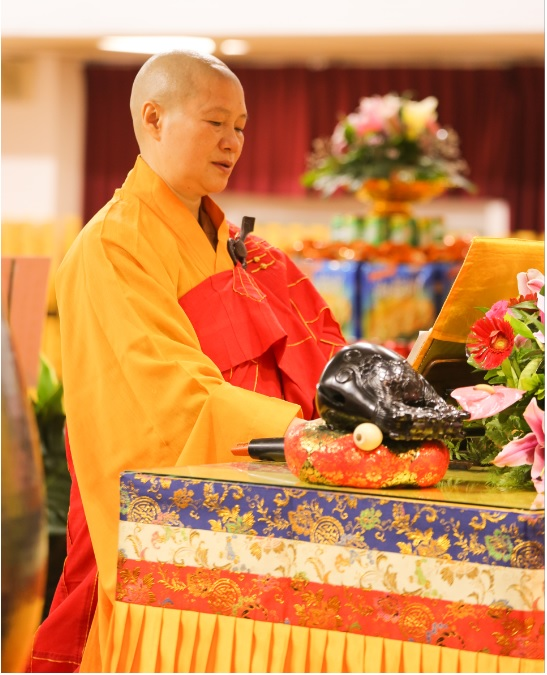
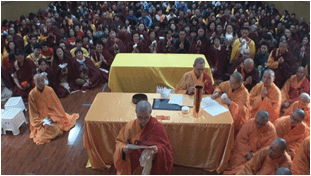
Photo Courtesy: Joyce Lee | Vice President of World Buddhism Association Headquarters, Jiaozun Zhengda, presided over the Dharma Assembly on the Buddha-Stipulated Day of Releasing Lives.
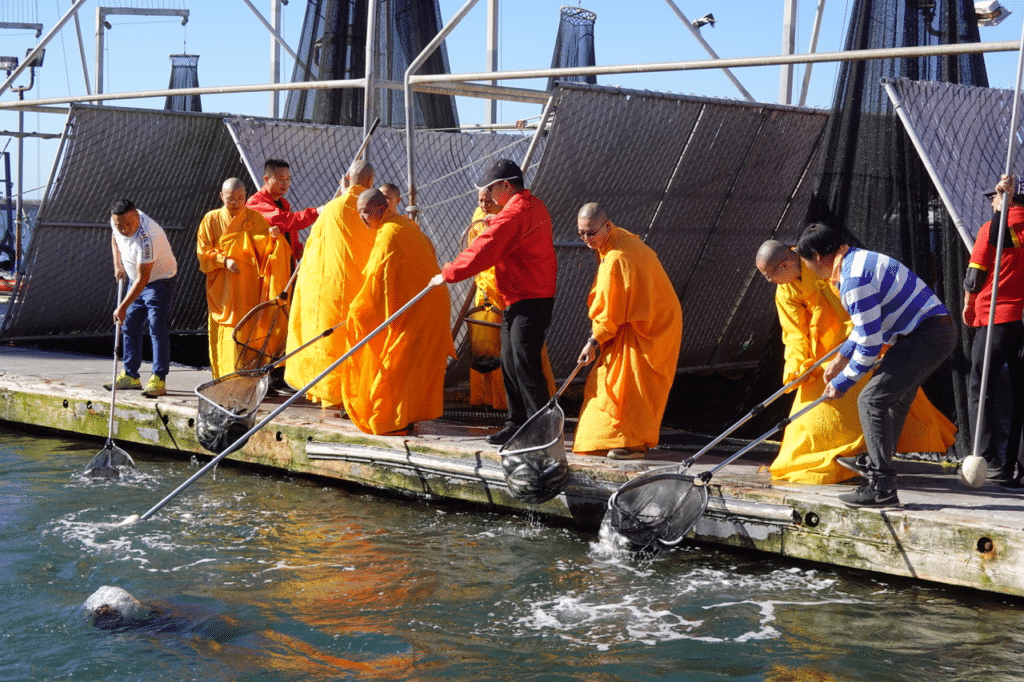
The gathering featured the release of thousands of fish back into the ocean, accompanied by the recitation of the Heart Sutra. Jiaozun Zhengda, Vice President of the World Buddhism Association Headquarters, led the prayers and delivered an inspiring address on the significance of the occasion. She emphasized the need for ongoing acts of compassion and the responsibility to protect living beings wherever and whenever they face suffering.
Jiaozun Zhengda explained that the practice of releasing lives arises naturally from the precept of refraining from killing. While refraining from harm is virtuous, actively saving lives elevates compassion to its highest form. This principle is at the heart of the teachings of Namo H.H. Dorje Chang Buddha III and Namo Shakyamuni Buddha.
Photo Courtesy: Joyce Lee | Hundreds of Buddhists from all over the world attended the Dharma Assembly of Releasing Lives.
Photo Courtesy: Joyce Lee | Participants released captive fish into the ocean
Participants shared profound reflections on the event. Watching the fish swim freely into the ocean became a moving symbol of resilience, freedom, and the boundless compassion of Buddhas and Bodhisattvas. For many, this practice reaffirmed their vows to live with kindness, respect all life, and emulate the selflessness of the Buddhas.
The Day of Releasing Lives is more than a symbolic gesture. It is a reminder that compassion knows no boundaries of time or space. Through the release of captive lives, Buddhists actively demonstrate their commitment to fostering a world of harmony and peace.
A Global Call for Compassion
As we observe the Day of Releasing Lives, let us remember that every act of compassion matters. By choosing to release lives, we contribute to a legacy of kindness that transforms our world. May this day inspire all of us to nurture compassion, protect life, and cultivate peace for the benefit of all beings.
On April 18, 2014, a contest of skills of Buddha-dharma was held at Sanger Temple in the greater Los Angeles area of the United States of America. Rinpoches, dharma masters, and acaryas from the USA, mainland China, Taiwan, Hong Kong, Australia, New Zealand, and other countries were present. Among them, there were great dharma kings, venerable ones, and great dharma masters who possess uncommon abilities of realization. The master of the contesting stage was Jianggong Kangqing Rinpoche (Gong Kang), who is over 70 years old and is one of the four prominent dharma princes. He demonstrated an imposing grandeur and blustered arrogantly. The Contest was presided by Dharma King Gar Tongstan, who is a great holy virtuous one at the level of two Sun-Moon wheels.
The karmic condition of this dharma assembly was induced by a dharma master from Taiwan, whose name is Long Jing. This dharma master brought a highly capable rinpoche whose name is Baizhe Lamu and who had the title of Smiling-Face Fighter in her previous lifetime. They came to America with three laypersons Wang Sixia, Meiling, and Lianying as a group. They proposed to have a contest of dharma with dharma masters at the International Buddhism Sangha Association (IBSA). Dharma masters at IBSA thought they just wanted to have a debate on the Tripitaka and therefore accepted their proposal without hesitation. However, in addition to debating the sutras, they insisted on having a contest of dharma in the end. Baizhe Lamu stated that the purpose of the contest was to publicize the dharma and benefit living beings. Dharma Master Long Jing said that after winning the contest and returning to Taiwan they would look for a great dharma king and other great dharma masters and great laypersons to contest the dharma, because Baizhe Lamu would like to meet with them and learn each other’s realization of cultivation to see who is superior after all. When they were paying respect to H.H. Dorje Chang Buddha III in person, Baizhe Lamu’s speech and conduct showed her gaffes of arrogance and ignorance.
Coincidentally at that time, Jianggong Kangqing Rinpoche from China was in the United States. This rinpoche was fond of dharma contest even when in China. Through contesting with many famous dharma kings and venerable ones, he never met anyone who was a good match to him. After coming to America, he looked everywhere for superior persons for contesting. He declared that there was not even one dharma king or venerable one in China who could be a good match for him, and that dharma kings, dharma masters, and great laypersons in Taiwan could not withstand a single blow of his. Therefore, he came to America to find superior persons for contesting. Because of this, his Buddha Master H.H. Dorje Chang Buddha III seriously scolded him, “Your cultivation is only skin deep and very laughable. You must clearly understand that learning Buddhism requires cultivating patience, severing attachment to the self, and applying the bodhicitta of great compassion to benefit living beings. You should read and understand Expounding the Absolute Truth through the Heart Sutra to know the true dharma and the absolute truth. Showing one’s strength and pursuing winning runs counter to the undertaking of learning Buddhism and cultivation. Manifesting miraculous abilities to prove one’s power of cultivation is nothing other than playing with untrue illusions. Doing so can only produce one more actor or magician.”
At that time, Gong Kang nodded with obedience, “Yes! Yes!” Afterwards, he still did all he could to look for opponents to make appointments of contesting. He even said, “Many people who are learning from the sutras not only could not understand the sutras but also had hollow and wrong comprehension. That is why they do not have true Buddha–dharma and dare not contest with the dharma. Without comparing each other’s’ dharma through contesting, how can living beings be reminded not to be deceived by false holy ones and false Buddha-dharma?” Because he had won every fight so far, he was naturally indulged in self-pride and arrogance.
At the time, he met with the team of Baizhe Lamu Rinpoche, Dharma Master Longjing, and others. After a debate of sutras, the battle of contesting the dharma finally began on April 18!
Baizhe Lamu Rinpoche didn’t dare to engage in a one-on-one fight with Gong Kang. All five of the team joined force to participate in the match using the dharma of Kuan Yin. They climbed onto the stage and launched an imposing momentum. With focused concentration, they applied mudras and mantras. Their roars were swinging within the Hall of Three Holy Beings, demonstrating an all-out effort striving for winning. Gong Kang heightened his vigilance and responded cautiously. He practiced the dharma of Four-Armed Kuan Yin to fight back. A fierce battle was fought between the two sides with mental power, spirit, and crisscrossed movement. Additionally, with the karmadana shouting loudly to announce the battling field situation, the atmosphere was bustling and tense. Attacking mudras applied silently in unison created a scene of fighting as if sharp and flickering weapons were intercrossing. It was really an unprecedented great battle of dharma contest. Jianggong Kangqing Rinpoche truly deserved the status of one of the four prominent dharma princes. He fought bravely by himself against five in a very hard battle. In the end, Gong Kang applied the Besieging-God Battle Position to have all his five opponents tightly confined, unable to move, and thereby defeated.
In the second match, the two parties switched sides and roles. The losing party in the previous match was to confine and tie up the winning party. All five joined forces in the fighting. With an imposing manner and a sweating effort, they moved forward together with an extremely mighty power to practice the dharma to try to besiege and seize Gong Kang. Spectators at the scene were all holding their breath tightly. At this time of heavy contesting, Gong Kang chanted the Six-Character Great Bright Mantra to practice the dharma of Horsehead Vajra Armor (Horsehead Vajra is a manifestation of Kuan Yin Bodhisattva) as counter-attack. Then the five opponents were unable to defend themselves and were thrown off the stage by Gong Kang. The karmadana declared victory for Jianggong Kangqing Rinpoche, and the surrounding audience gave a loud applause.
Jianggong Kangqing Rinpoche in the contest
Gong Kang was very arrogant and put up an air of pride. He suddenly made a hand gesture to invite Great Dharma Master Zhengda who was present to contest with Buddha-dharma for learning from each other. Dharma Master Zhengda was unable to decline and had to step on the stage. In their earlier years, Jianggong Kangqing and Shi Zhengda were dharma brother and sister. They both are disciples of H.H. Dorje Chang Buddha III. However, Gong Kang was not happy to see this fellow sister taking the highest position of chief abbot at IBSA and being revered as a superior one. Therefore, he thought it was a good time to teach her a lesson on that day. That was why he invited her to contest the dharma in front of others. This arrogant act of Gong Kang scared the venerable ones and dharma masters who were present. Their hearts were trembling due to fear and they were afraid of being called by Gong Kang for contesting. It could be seen that, except Dharma King Gar Tongstan and Venerable Long Zhi Denma Tsemang, people in high ranks all lowered their heads and dared not to face Gong Kang’s eyesight.
Master Zhengda in the contest
Right after Jianggong Kangqing Rinpoche and Dharma Master Zhengda walked onto the stage, Gong Kang sneered with an air of pride and gave an arrogant statement, “You will not keep me still.” Zhengda replied, “I will besiege you and will not let you move.” The two fellow brother and sister started a verbal exchange before contesting the dharma. Later, they sat down facing each other along the north-south direction and both practiced the dharma of Kuan Yin to contest. The two entered deep concentration and manifested their dharma powers. Spectators were greatly impressed. For a long time, they fought to a match of draw without showing who could overpower the other. However, eventually the outcome could only be one defeating the other. Upon seeing Gong Kang’s extraordinary power, Dharma Master Zhengda used Kuan Yin’s dharma of Pure-Water Bottle in combination with the God-Besieging Rope. At that time, Gong Kang was tied up and captured. He was powerless and unable to move his limbs. Therefore, Dharma Master Zhengda won the first match.
They switched side to start the second match. Suffering this defeat had a great impact to Gong Kang’s record. He could never have imagined that Dharma Master Zhengda had truly became one with superior realization and was so great. Now he had to use his highest secretive method of Besieging-God Battle Position. That was truly powerful and had Dharma Master Zhengda bounded up. She was trembling all over her body and her body was as cold as ice. At this time, Dharma Master Zhengda unexpectedly used the dharma of Kuan Yin’s Pure-Water Bottle Willow-Branch Breaking Siege. Her voice of chanting the Six-Character Great Bright mantra sounded like rotating pearls and she was quickly revived. Gong Kang’s God-Besieging formation became seriously disorganized and he lost his power of concentration. Dharma Master Zhengda then made a punch to knock him off the stage. Because Gong Kong had spoken arrogantly before in public, this defeat made him very embarrassed. The Karmadana then announced, “Dharma Master Zhengda won and becomes the champion of the dharma contest.”
However, Gong Kang strongly disagreed. He said that the referee had judged erroneously, and asked for having another match of “Viewing the Realm and Exiting the Samsara” with Dharma Master Zhengda. Dharma Master Zhengda did not want to have another dharma contest with him, but Gong Kong insisted. Therefore, this big battle was fought on April 20. The battleground was a grassy lawn, with a very big piece of cubic cordierite. This is a mani stone used by a great holy virtuous one to practice the dharma. After the referee Dharma Master Long Hui sprinkled the pure soil that was empowered by an extremely great holy virtuous one onto the mani stone, the two fighters sat away from the huge stone by about three meters. Jianggong Kangqing Rinpoche started first to practice the dharma of Four-Armed Kuan Yin. He practiced 15 rounds of the mantra and the mudra, but was unable to push the mani stone into movement across the separation of empty space.
Next it was Dharma Master Zhengda’s turn in the contest. She also practiced the dharma of Four-Armed Kuan Yin. With three rounds of the mantra and the mudra, the mani stone was pushed to move across the separation of empty space. Then, after Dharma Master Zhengda, Jianggong Kangqing Rinpoche, and Dharma Master Long Hui prostrated to the mani stone to pay homage, the mani stone suddenly flew to the sky and disappeared in the sea of clouds. They were all stunned so as to be speechless. It was not known which extremely great holy virtuous one did this. Everyone could only utter exclamation and praise of surprise! The realization power of doing this is hundreds or thousands of times greater than the power of a female great rinpoche from Tibet who let a big mani stone circling around her in the empty space in 2002. The weight of this mani stone that flew to and disappeared in the sky was not exactly known. It was estimated to be about two tons heavy. Actually, weight is not the issue. Even making a pillow fly to the sky would be a world-shocking miracle.
Now, the referee announced that the dharma contest of “Viewing the Realm and Exiting the Samsara” was to begin. After the two had a conversation, Gong Kang still insisted on having the contest. Then they sat facing each other with a far distance in between to begin the dharma contest. According to the rules of the contest, Gong Kang was to besiege Dharma Master Zhengda. On the other hand, Dharma Master Zhengda had to exit samsara to win. Each of them practiced the dharma of the Tathagata to engage quickly in the battle. After only two encounters, Dharma Master Zhengda used Green Tara’s dharma of Breaking Siege by Bodhicitta of Great Compassion to break open Gong Kang’s iron peripheral surrounding of the Besieging-God Battle Position. In a moment, she started from the mandala of samsara and went through the outer court of the Tusita Heaven. After looking and verifying a few times, she quickly found the right direction and directly approached the siddhi of Bodhisattva. After arriving there, she stayed firmly unperturbed. Referee Long Hui who is IBSA’s chairperson was full of praises for her. The host of this dharma contest Great Dharma King Gar Tongstan announced, “Jianggong Kangqing Rinpoche was defeated. Dharma Master Zhengda exited samsara and won the victory. She is the champion of this contest.” The meaning of this one-to-one dharma contest is even more profound than the previous one. For details, readers can watch the live video recording of the contest.
Since ancient times, debating sutras has existed in Buddhism as a preliminary form of dharma contest. This belongs to the theoretical aspect of Buddhism. After practitioners’ cultivation and conduct reached the state of manifesting true utilization and realization, dharma contest is used as the main method of distinguishing whether one belongs to hollow theory only and appraising one’s realization for the purpose of benefiting living beings.
The earliest dharma contest in Buddhism was between two disciples of Sakyamuni Buddha, Shariputra who took the first-place in wisdom and Mahamaudgalyayana who was regarded as the best in supernatural power. Shariputra won the contest. Other examples of dharma contest in history include:
Baltsa Takdelwa (who later became a disciple of Dusongchienba) looked for Dusongchienba (the first-generation Great Jewel Dharma King of the Kyagu Sect) to have a dharma contest, but was defeated by a disciple of Dusongchienba.
Karma Pakshi (the second-generation Great Jewel Dharma King of the Kyagu Sect) lost to Chojal Pakpa in a dharma contest at the Mongolian Palace.
A dharma contest between Zhaguo Longjue Songmou Rinpoche (from Songzhanling Temple in Shangri-La) and Naizhang Qujiong of Lasa.
A dharma contest between the 13th Dalai Lama and the abbot of Kumbum Monastery Agya Rinpoche recorded in history that can be found on the internet.
During the last several hundred years, however, it became rare to see dharma contests between eminent monks. This is because true Buddha-dharmas are becoming extinct. Some rinpoches, dharma masters, and great laypersons who only have hollow theories to write books and give discourses dare not even mention the term “dharma contest.” They are afraid that their disciples would know the thing of dharma contest that can prove one’s true power of cultivation. They fear that their disciples would see the fact that their master can only talk about hollow and erroneous theories and therefore does not have Buddha-dharma. That is why the recorded stories of eminent monks contesting their dharma in the past have almost been completely wiped out within a short period of time. Today, Jianggong Kangqing Rinpoche, Baizhe Lamu Rinpoche, Dharma Master Long Jing, and others are fond of contesting with Buddha-dharma. Their deeds are opposed by H.H. Dorje Chang Buddha III. However, looking from a different angle, what they did does have boundless merit. Otherwise, the stories of holy virtuous ones contesting the dharma in the history of Buddhism would have completely disappeared without a trace. Then Buddhism would only be left with theories. Consequently false rinpoches and false dharma masters who have no understanding in the sutras could freely create and teach erroneous theories without having to prove with real Buddha-dharma. Therefore, we should thank the people who contest with Buddha-dharma on the stage. They proved the real existence of true Buddha-dharma and wrote the fact “Buddhism is not just talking about hollow theories” into the history of Buddha-dharma.
Throughout the ages, in the pursuit of happiness, countless individuals have renounced worldly life to engage in spiritual practice. Monks and nuns who have shaved their heads and taken vows can be seen wandering in the secular world. People become monastics for various reasons, including pressure from material needs, family discord, social conflicts, life hardships, or a desire to seek liberation from the suffering of birth, aging, sickness, and death. Some renounce the worldly life to transcend desires, cultivate spiritual practices, and embark on the path to enlightenment. However, those who renounce a life of wealth, family, and worldly pleasures to become monastics are extremely rare.
Modern figures like Venerable Xuyun, Master Hongyi, Master Nenghai, and Master Longlian are typical examples of genuine monastics. Their renunciation was wholeheartedly directed towards the Buddha, without worldly attachments. When they made the decision to become monastics, their minds were solely focused on Buddha and Bodhisattvas, despite their flourishing family lives, prosperity, talents, and widespread respect. They left their homes without any attachments, not even informing their families. Suddenly, they abandoned their comfortable lives and became ascetics in the temples. Such individuals are rare, occurring perhaps once in several decades.
However, today, there is a Bhikshuni (Buddhist nun) who has renounced the world in an extraordinary way, captivating people’s hearts. She was originally known as Renbo Rinpoche, with the Dharma name “Awangdeji,” and held some reputation in Chinese Buddhist circles. She had centers in over twenty provinces in China, and her organization had a presence in Taiwan and Hong Kong. Wherever she went, male and female disciples welcomed her with reverence. Despite her prosperous personal business, she decided to renounce her worldly life.
Twenty years ago, she practiced the Sakya tradition but found no progress in her path. Seeking guidance, she turned to the profound teachings of the H.H. Dorje Chang Buddha III. Within a year, she completed her studies and realized that her previous practice was a common worldly path accessible to everyone, not true Buddhist teachings. In 2011, after rigorous examinations, she obtained certificates of realization that many other high lamas could not attain.
Her dedication, compassion, and influence attracted jealousy and rumors from some ordinary practitioners. However, Awangdeji Rinpoche bore no resentment, remaining calm and patient, even praising those who spread rumors. In response to societal criticisms, the International Buddhist Sangha Association sought an objective assessment from the United International World Buddhist Headquarters. After a solemn examination, she was praised by seventeen examiners for her moral virtues and realization.
During the examination, when Awangdeji Rinpoche’s consciousness soared, she personally saw Buddhas and Bodhisattvas, fulfilling a vow made to Avalokiteshvara. Overwhelmed with gratitude, she immediately renounced worldly life. Without her family’s knowledge, she underwent tonsure in Lianfeng Temple, Taiwan, adopting the Dharma name “Zhengda.” She relinquished all worldly wealth and family joy, untainted by the six dusts, transcending the ordinary and entering the realm of the holy.
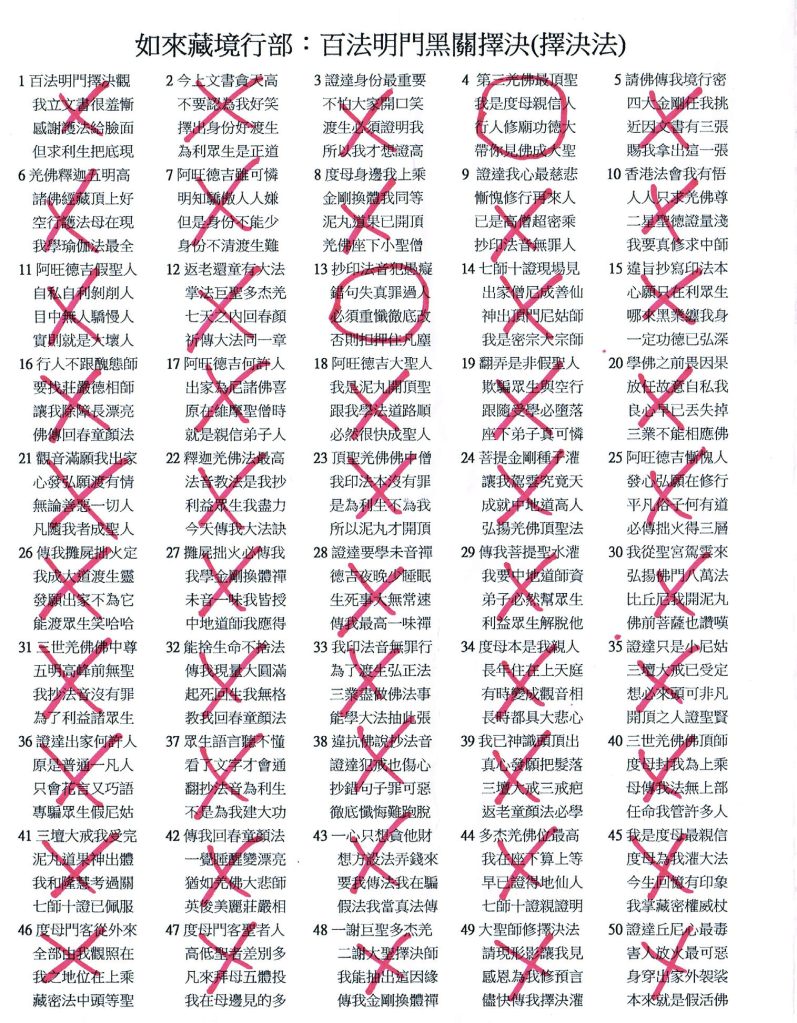
On December 12th, 2012, a Assembly was held to bestow the initiation of “Selection Made in Dark Confinement from One-Hundred Dharmas to Choose the Door toward Enlightenment” upon Dharma Master Zhengda. This Assembly concluded that Dharma Master Zhengda was a reincarnated holy one and a trusted aide of the Tara. Her status of the dharma was extremely high, at the upper level representing the summit of esoteric Buddhism.
On May 25, 2013, Master Zhengda was honored with the Grand Cross of Humanitarian Merit by the Spanish Humanitarian Merit Association. This award, established and presented by the association, is specifically given to international figures who have made outstanding contributions to promoting world peace, advocating for humanitarian equality, and excelling in public administration, education, arts, charity, and other fields.
After receiving the sacred inner tantric initiation from H.H. Dorje Chang Buddha III, she experienced a remarkable transformation, surpassing ordinary spiritual attainments and delving into profound realms. The International World Buddhist Headquarters at October 25th, 2019 officially acknowledges her as a JiaoZun (Golden Button Stage II), having successfully passed examination conducted and validated by about twenty buddhist masters and monastics. She stands as an embellishment to Buddhism, a virtuous teacher, and a refuge for sentient beings.
ZhengDa Jiaozun is currently the Vice President of the World Buddhist Headquarters, concurrently serving as the Honorary Chairman of the International Buddhist Sangha and the abbot of many temples worldwide. Presently, she resides at the Holy Miracle Temple in Los Angeles and the Benevolence Temple in Las Vegas.
In esoteric Buddhism, a multitude of Dharma categories exists. Among these, within the realm of decision by selection, “the Dharma of Selection in Dark Confinement” holds a prestigious position as an advanced and profound teaching. This particular Dharma surpasses other practices such as “the Dharma of Inquiry by a Flying Lot,” “the Dharma of Selection with Mani Stone,” “the Dharma of Lot Drawing from a Golden Vase,” and “the Dharma of Card Drawing Across the Curtain.” It even stands above the esteemed “Dharma of Vajra Selection,” second in rank only to “the Dharma of Divine Forecasting.”
It’s important to note that participating in the ceremony of “the Dharma of Selection in Dark Confinement” does not inherently imply a person’s high status or identity. The determination of one’s status relies on the outcomes of the selection process. The exceptional aspect of “the Dharma of Selection in Dark Confinement” lies in its ability to precisely unveil an individual’s true identity with absolute certainty.
On December 12th, 2012, a remarkable opportunity graced my life as I attended a live assembly centered around this sacred teaching. The event took place within a magnificent edifice that now houses the H.H.Dorje Chang Buddha Culture and Art Museum. Illuminated against the night sky, the gathering attracted several hundred disciples. Led by an anonymous yet revered figure of great holiness and virtue, the ceremony aimed to bestow the initiation of “Selection Made in Dark Confinement from One-Hundred Dharmas to Choose the Door toward Enlightenment” upon Dharma Master Zhengda (Awang Deji Rinpoche).
The enigmatic spiritual leader entered the assembly hall donning a cone-shaped bamboo hat veiled in darkness, evoking the aura of a martial arts hero from cinematic lore. His countenance remained shrouded, a mystery to all. Swiftly, he proceeded into a petite Buddha hall, safeguarded by a group of rinpoches. The shroud of anonymity around his true identity remained impenetrable to everyone present.
H.H. Dorje Chang Buddha III, the figure whom everyone awaited with the utmost anticipation, graced the hall of the dharma assembly with His presence. The profound sense of blessedness and gratitude that welled up within me was immeasurable, as I had the privilege to worship and attentively listen to the Buddha from such a close vantage point. Furthermore, every attendant could witness to the remarkable transformation of His Holiness into a youthful appearance, an occurrence that transpired in October of that very year, 2012. (For more intricate details, refer to the “Truth about Reversing An Old Age Back to Youth“).
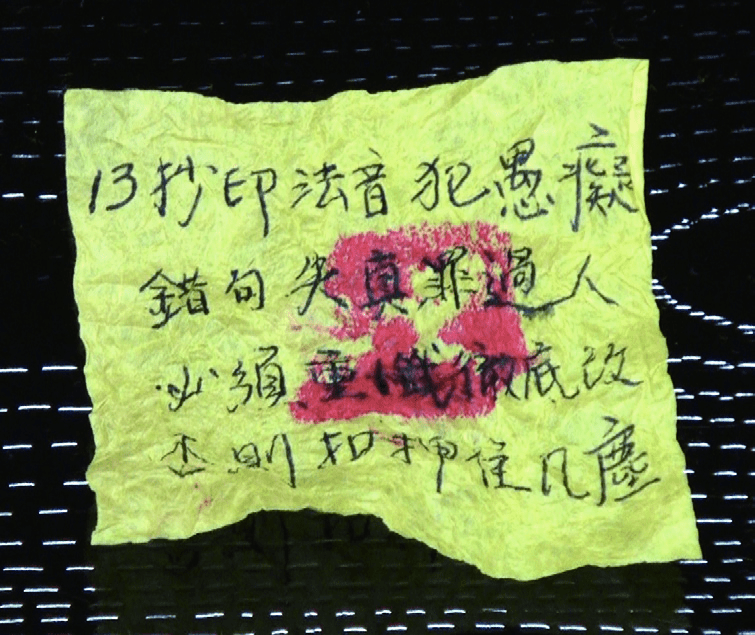
First, dharma masters presented a manuscript containing all one hundred letters of petition to this great holy and virtuous one who would practice the dharma for this dharma assembly. The great holy and virtuous one circled three of the one hundred letters of petition using a pen with red colored ink as the predictions made ahead of time for publishing at the conclusion of the dharma assembly. When the disciple who was subject to the decision by selection drew three letters of petition, the three circled ones would be verified that they all matched the letters of petition actually selected by the disciple. These three then represented this disciple’s correct karmic conditions at that time. The other ninety-seven letters of petition did not match karmic conditions of the disciple receiving the initiation this time and were all crossed out, indicating they were at least irrelevant if not untrue. Additionally, a required procedure was to make a seal on the spot. This was very rigorous and was done by dharma masters in person. An un-carved stone seal was rested on both of its ends and unsupported in the middle. With a strike by a hammer, the seal was broken into two pieces. The uneven face of one of the two pieces was ground slightly with sandpaper, while still preserving enough lines and contours from the break. A seal made this way could never be duplicated, even if you attempted to do it ten thousand times. Once the seal was made, it was used at the scene to stamp the one hundred letters of petition written by hand by the disciple. Every letter of petition was stamped so no one could make any falsification.
Dharma Master Zhengda drew three letters of petition by herself in complete darkness. Later with lights on, dharma masters opened them up to verify them. As expected, they all completely matched the three that were circled by the great holy and virtuous one earlier. Then the three were rolled and squeezed again into nubs in front of the public and put together with the other ninety-seven nubs with the same appearance. After mixing them together by shaking the golden vase, they were sent to the great holy and virtuous one for selection. In less than one minute, the great holy and virtuous one selected three. Dharma masters again opened them in public. They were the same ones that Dharma Master Zhengda had drawn earlier. Moreover, they were all stamped by the seal made on the spot. To verify that the other ninety-seven pieces did not have the same contents, dharma masters opened them all to verify. They were all stamped with the seal made on the spot. Each one was read out by the dharma masters. There wasn’t any repetition at all. All were unique and agreed with the contents in the common manuscript. This fact proved that the Dharma of Selection in Dark Confinement conducted by the great holy and virtuous one was completely carried out by perfect holy realization.
These one hundred letters of petition were all written by the person undergoing the decision by selection, Dharma Master Zhengda. The most important fact was that Dharma Master Zhengda had to take an oath against severe consequences, in front of the offering table and before all people present, to all Buddhas and Bodhisattvas in the ten directions, the eight types of celestial beings, and deities in all heavens.
Her oath swore that these one hundred letters of petition were written by her and kept by her; all letters of petition were never touched by the great holy and virtuous one; the drawing of the three letters of petition was done by her in complete darkness without any visibility and were arbitrarily picked; and there was not any falsification from the beginning to the end. If what she said were false, she would definitely descend into the Vajra Hell to suffer forever without any chance of being saved. This dharma assembly determined for certain Dharma Master Zhengda’s karmic conditions.
The numbers and contents of the three letters of petition selected were respectively: No. 4: H.H. Dorje Chang Buddha III is the holiest. I am a trusted aide of the Tara. A cultivator building temples has great merit. You will be brought to see the Buddha and become a holy one.
No. 13: Transcribing and copying the recorded dharma lessons was a foolish violation. Making errors in sentences to cause the loss of true meanings made me a person of guilt. I must repent earnestly and correct completely. Otherwise the outcome would be being detained in the mundane world.
No. 69: The dharmas of Lamdre have many levels. The Dharma of Mud-Pill Lamdre is the highest. Having passed the exam proctored by seven monastic masters and ten witnesses, my status is at the summit of esoteric Buddhism.
The selections made by the Dharma of Selection in Dark Confinement concluded that Dharma Master Zhengda was a reincarnated holy one and a trusted aide of the Tara. Her status of the dharma was extremely high, at the upper level representing the summit of esoteric Buddhism. H.H. Dorje Chang Buddha III conducted “the Dharma of Divine Forecast-ing’ using a golden vase for an anonymous great holy and virtuous one who did not reveal his identify. The forecast was repeated three times without discrepancy, proving its correctness. “The Dharma of Divine Forecasting” showed that this great holy and virtuous one possessed master’s qualifications at the middle level of holy realization with Three Sun-Moon Wheels. That represented a truly rare great holy and virtuous one. Even Dharma King Gar Tongstan who is the chairperson of the United International World Buddhism Association Headquarters, Kaichu Rinpoche, and Holy and Virtuous One La Zhen possessed just master’s qualifications represented by One Sun-Moon Wheel. Even Mozhi Rinpoche’s realization was only at the level of Two Sun-Moon Wheels. He surpassed the status of Mozhi Ripoche and truly deserved the title of great holy and virtuous one. To achieve the status of “Great Holy and Virtuous One,” one must possess master’s qualifications at the middle level of holy realization with Sun-Moon Wheels. The United International World Buddhism Association Headquarters issued a document for receiving the certificate of Three Sun-Moon Wheels to the great holy and virtuous one on the spot. After the dharma assembly had ended, people were all very excited and thought that they would have the opportunity of paying respect to the great holv and virtuous one in person and knowing who He actually was. However, the great holy and virtuous one did not leave his name and did not meet with people. He left quietly without accepting the document. People were very disappointed. So far no one knows who He really was. People only learned that this was a selfless great holy and virtuous one possessing master’s qualifications with Three Sun-Moon Wheels. The demeanor of a true Mahasattva and a true great holy and virtuous one was definitely not what those who chased fame and gain, those who faked being holy ones by boasting and self-promotion, and those dharma kings, venerable ones, and great dharma kings who used false initiations to cheat believers for money and property could even slightly resemble. Master’s qualifications with Sun-Moon Wheels are very amazing and indicate the levels of realization and status of master’s qualifications.











 Peace LiLy