Turpan’s Hidden Lifelines: The Ingenious Karez Irrigation System of Xinjiang

Nestled in the heart of Xinjiang, the Turpan Basin holds several extraordinary records: it’s the lowest geographical point in China, and during summer, it’s the hottest place in the country. With scorching sunlight, relentless winds, and almost no rainfall, Turpan earns its title as the “Land of Fire.”

In the peak of summer, the surface temperature in the surrounding Gobi Desert can soar to 82.3°C (180.1°F), while the air temperature often exceeds 49°C (120°F). Rain is almost nonexistent—Turpan receives an average of just 16.4 mm of rainfall annually, and in some years, as little as 4.3 mm. Yet, amidst this harsh, parched environment, an ancient miracle has quietly sustained life for over two thousand years: the Karez irrigation system.


A Miracle Beneath the Earth

While nature was unforgiving above ground, it hid a gift below. Meltwater from the distant Tianshan Mountains seeps underground through coarse gravel and sand, eventually blocked by the Flaming Mountains and surfacing as springs. Ingenious local people found a way to capture and guide this underground treasure—thus, the Karez was born.

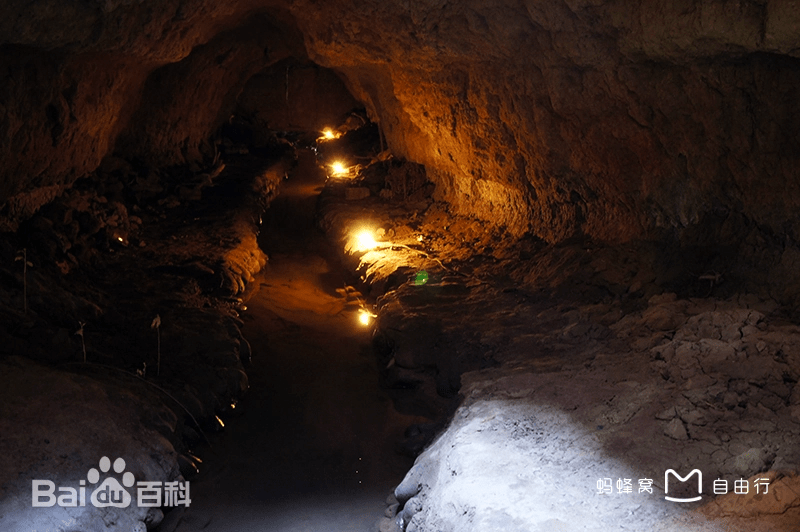
The Karez system channels water from mountain sources through a network of underground tunnels and vertical shafts, delivering it to the arid land without evaporation loss. Remarkably, this ancient system operates entirely without pumps, relying solely on gravity and terrain.

A complete Karez includes:

  • Vertical shafts for ventilation and maintenance
  • Underground tunnels to carry water
  • Open canals to distribute it
  • Storage ponds to hold it

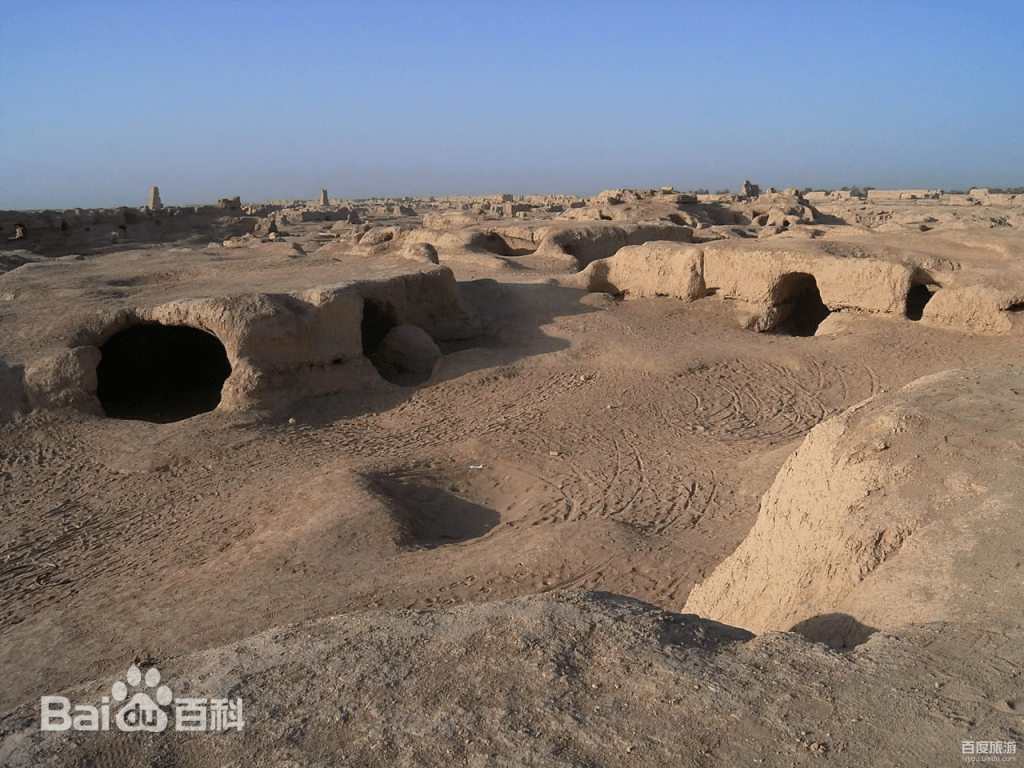
Across Turpan’s landscape, you can still see long rows of small mounds—each one marking a shaft, a glimpse into the remarkable infrastructure below.


A Testament to Ingenuity and Endurance

The origins of the Karez can be traced back to the Han Dynasty, over 2,000 years ago. Most of the surviving systems were built during the Qing Dynasty, including during historical moments like Lin Zexu’s fourth inspection of Turpan, when over 300 new Karez channels were added, and Zuo Zongtang’s campaigns, which saw nearly 200 more constructed.

At its peak in the 1950s, there were about 1,700 Karez systems in Turpan, stretching over 3,000 kilometers. Today, about 725 remain, a number slowly dwindling due to modernization, drought, and human impact.

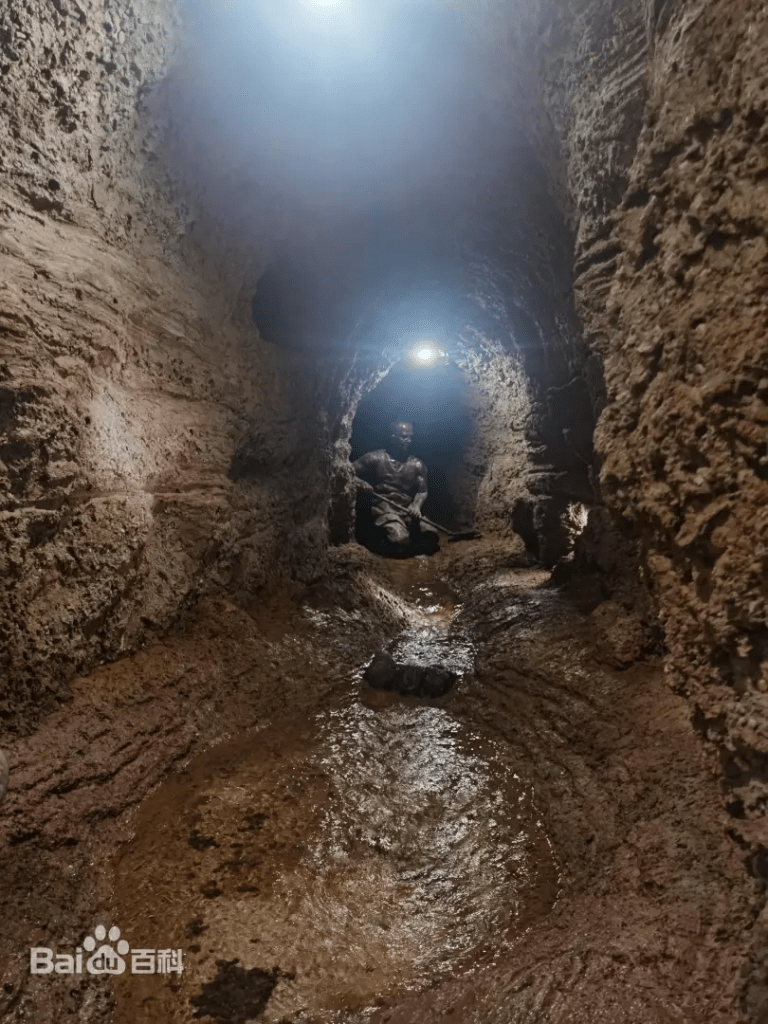
The construction of each Karez was no small feat. Generations of laborers worked in dark, narrow tunnels, often barefoot in icy water, chiseling stone with simple tools and oil lamps. They carried earth and rock out by hand, surviving on dry flatbread and enduring brutal conditions.


A Culture of Water, Wisdom, and Survival

More than just a hydraulic system, the Karez represents a culture—a story of human resilience, harmony with nature, and intergenerational wisdom. In this water-scarce land, the Karez has nurtured lush vineyards, fertile fields, and diverse communities, offering life where none should thrive.

Today, many of these systems are dry or abandoned, relics of a past shaped by necessity and brilliance. But for those who walk among them, they are still very much alive—whispers from the earth, reminding us of what is possible when people respect and work with nature.


If you ever find yourself in Turpan, do not miss the chance to explore the Karez wells. They are more than ancient engineering marvels—they are monuments of perseverance, and living echoes of a civilization that made the desert bloom.

Link:https://peacelilysite.com/2025/06/18/turpans-hidden-lifelines-the-ingenious-karez-irrigation-system-of-xinjiang/

Yuanmou Earth Forest

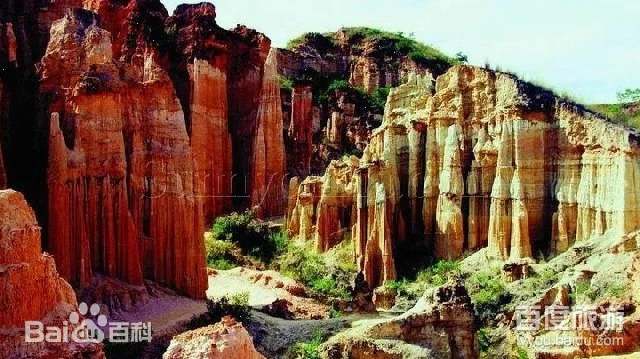
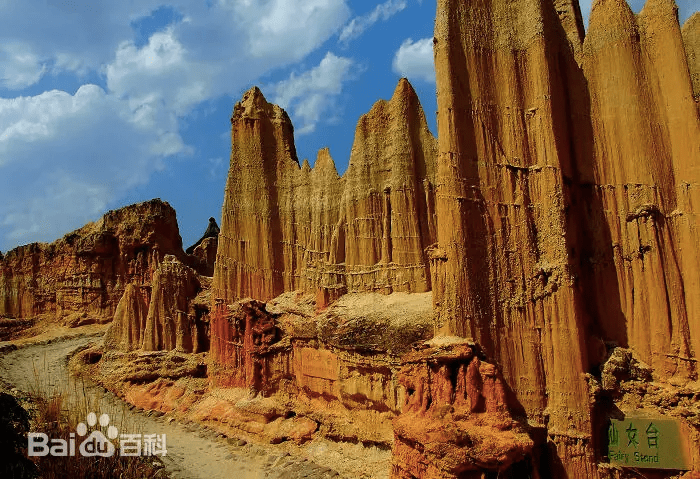
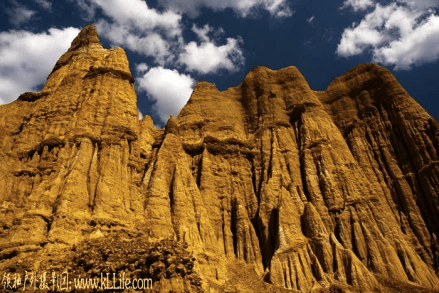
Yuanmou Earth Forest is a breathtaking area of clay formations that have developed over the past 1.5 million years. Located 210 km northwest of Kunming, this scenic wonderland features rocks composed of sand mixed with clay, giving them a distinctive yellow color and loose texture. These rocks have undergone extensive weathering, making their surface resemble earth, and they glisten like gold under the sunlight. Some are as large as castles, while others resemble pylons, all in various magnificent shapes. The earth forest covers a wide area in the Yuanmou Basin, with different regions exhibiting unique features based on the extent of weathering and erosion. Three notable scenic sites within the area are Tiger Leaping Sands, Ban Guo, and Xin Hua, each with its own distinct characteristics.

Tiger Leaping Sands is considered the most spectacular site within the Yuanmou Earth Forests. From a distance, the rocks resemble an ancient deserted castle. Tall, straight rock pillars appear as remnants of a shrine, and the rock walls resemble the enclosure of an ancient palace. What makes it truly unique is the three-color ‘roof’ on top of the ‘castle’ – red, brown, and black. This coloration is due to rain permeating the rock, causing ferrous and calcium substances to coagulate into an impermeable layer. As other parts eroded away, this layer naturally protruded and formed an ‘umbrella’ that preserved the rocks below.

Exploring this hidden world, you’ll be captivated by the abrupt clay formations that glisten like yellow crystals emerging from the ground. These formations vary in shapes, heights, and volumes, each resembling a piece of indescribable artwork.

Collectively, they create an intricate maze filled with mystery and sublime beauty. Some liken Yuanmou Earth Forest to a weathered golden monastery, a desolate Gothic church, or a giant shrine ravaged by fierce elements.

When illuminated by sunlight, these clay columns emit sparkling rays, a rare phenomenon likened to China’s clay version of the Parthenon. At twilight, their silhouettes resemble gothic structures, transforming the fairyland into a haunting terrain. It takes great courage to explore and walk among them.

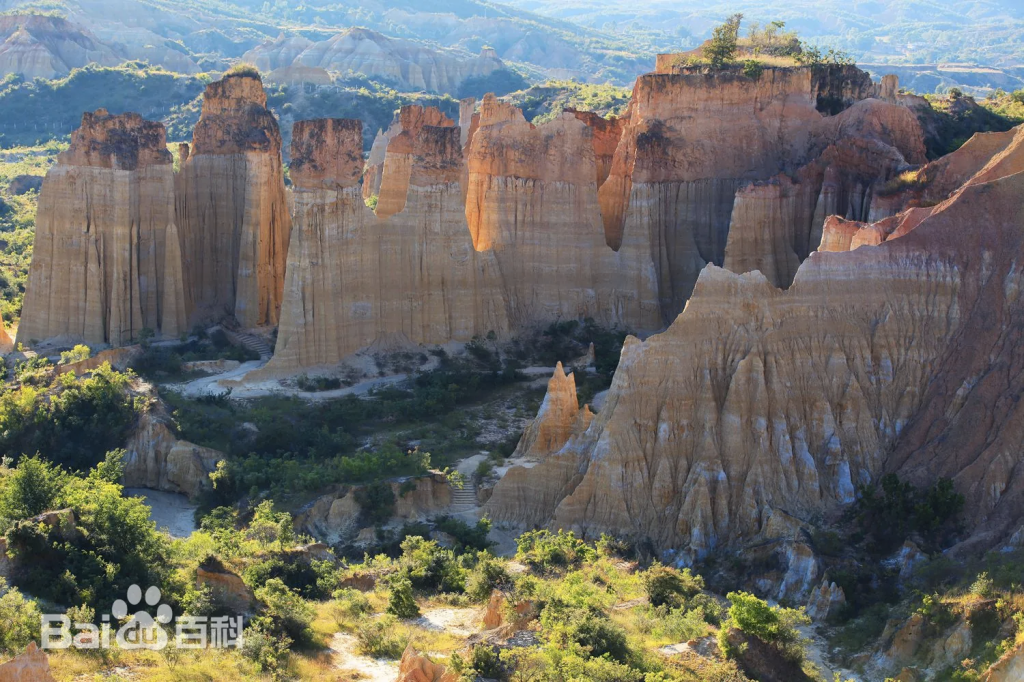
To fully appreciate the beauty of Yuanmou Earth Forest, viewing from above is recommended. A bird’s-eye view reveals the meandering Longchuan River, a tributary of the Jinsha River (a major tributary of the Yangtze River), flowing like a silver ribbon alongside the attention-grabbing golden patchworks on its west bank, where you’ll find Earth Forests of Banguo, Tiger Leaping Shoal, Wanbao, Xiaoleizai, and Xinhua covering an area spanning over 5 square kilometers.

Photo taken on Nov. 17, 2021 shows the scenery of earth forest in Yuanmou County, southwest China’s Yunnan Province. The earth forest, which was formed by geological movement and soil erosion, is basically in color of yellow and the color varies in different parts. (Xinhua/Wang Guansen)

Yuanmou Earth Forest’s clay formations can be categorized into four styles based on shapes and formation processes: Earth Bud Style, Castle Style, Bamboo Shoot Style, and Mushroom Style. Earth Bud Style formations, though small, serve as precursors to other types, while Castle Style formations are larger, typically measuring 2 to 5 meters in height.

Earth Bud Style

Due to varying degrees of cementation and semi-cementation, sedimentary rocks have different water content in clay minerals and varying expansion coefficients after water absorption. Surface rock layers are subject to long-term weathering, resulting in a series of cracks. Surface runoff and rainwater initially erode along these cracks and soft rock layers, forming soil buds with heights and diameters less than 1 meter and relative heights less than 1 meter. This type serves as the embryonic form for developing other types of earth forests.

Castle Style

The continuous flow of water erodes and cuts into the base of soil buds, along vertical fissures, horizontal fissures, and other forms of cracks in the strata, as well as erosion and abrasion along the surfaces of soft and hard rock layers. This process forms shapes such as arches, platforms, and vertical shafts, creating an environment reminiscent of ancient castles.

These types of soil columns generally have a connected base, with a thick and rounded or serrated top, occupying a relatively large area and standing 2-5 meters in relative height. However, the flat tops and arches below these columns often collapse under the effects of flowing water and gravity, causing the columns to separate and evolve into other types of soil columns.

Bamboo Shoot Style

This type of earth forest is primarily composed of sand and clay, with loose consolidation and no hard covering layer at the top. As a result, it undergoes erosion and cutting by rainwater and surface runoff, forming conical soil columns. These earth pillars have sharp tops, resembling large bamboo shoots after rain or the pointed tip of a pagoda, with heights generally ranging from 5 to 10 meters.

Iron Cap Style

As a typical category of earth forest, it is the most widely distributed. Due to the leaching effect of surface water on iron, silica, and calcium in the strata, these elements gradually dissolve, penetrate, and filter to the interface of the impermeable layer, where they precipitate and accumulate, cementing the upper strata to form iron oxide caps or silica/calcium iron caps. Under the erosion and scouring action of water flow, these caps gradually expose themselves at the tops of columns, acting as natural “umbrellas” that protect the soil columns from direct erosion and scouring by flowing water and intense sunlight.

The “iron cap” above and the soil column below merge into one, forming a variety of unique landscapes within the earth forest. Some resemble old fishermen fishing, some resemble soldiers going to battle, some resemble standing cranes, and some resemble galloping wild horses, creating yet another extraordinary sight within the earth forest.

Link:https://peacelilysite.com/2024/04/24/yuanmou-earth-forest/

Source: http://www.news.cn/english/2021-11/18/c_1310317427.htm, https://www.westchinatour.com/kunming/attraction/yuanmou-clay-forest.htmlhttps://baike.baidu.com/item/%E5%85%83%E8%B0%8B%E5%9C%9F%E6%9E%97/3379396

The Environment Is in You

STUDENT CONTEST

Photography and Original Illustration Contest

Sabine Wolpert (15)

The Environment Is in You

Sabine Wolpert (15) – California, U.S.

As a little kid, I thought that life was like a flat line with bumps and dips rarely occurring. The news of floods, earthquakes, and fires might flash across the news but they were never close enough to really touch my life. Now that I’m older, these natural disasters are closer to where I live. The rainy season seemed shorter than I remembered and signs started to appear in restaurants and hotels saying “save water” or “minimize your water use.” 

When fires got really close, little pieces of ash, like black rain, would fall from the sky. Soon I learned that these events were not random, and I realized how responsible we were, how responsible we are. I began to learn how connected we are to our environment. I began to realize that it mattered whether I kept the water running for that extra minute or left the hose on for too long. When the fires got so close to our house that evacuation was a threat, I had to pack a bag and look at the forest outside wondering whether it wouldn’t be there in a month or a week or tomorrow. 

I have been lucky enough to live in one of the most beautiful places in the world. I get to see the ocean, the redwood forests, and thousands of blossoms hanging over daffodils in the spring. It’s dark enough at night to see a thousand stars and quiet enough in the morning to hear birds and bees. I have grown up in nature, and I am so saddened to see our earth deteriorating at our hands. I think that people can become so used to our luxuries that we forget how fragile and impermanent they can be. I hope my artwork can help people remember how connected to the environment we are. I think we all need to remember that we live in the environment and it lives in us. We breathe the same air as butterflies and our hair gets blown by the wind that sways tree branches. We must come together to save our land because it will not last if we continue to treat it as disposable. It is our responsibility as people to save the earth that provides us life.

Marguerite Baxter

Marguerite Baxter (18) – Minnesota, U.S.

I was walking down my alley, a place that I visit everyday. It was spring and the snow was melting into puddles. When I looked into the puddle, I could see a perfectly clear image of myself and my surroundings. In this moment, I understood how I was a part of the environment and Earth. The reflection of my small hand as I recognized this symbolizes my connection to the environment. Living in a city, natural and man-made beauty is intermixed. Both exist together, but not always in harmony. I believe that all of these things can be beautiful together, but they must respect one another.

This work is a love story to the planet, as I appreciate that in the tiniest puddle a whole environment can be reflected. What a beautiful and miraculous thing. I was taking a moment to see myself as a part of that environment, not separate but a part. Reaching out and placing myself in it. I loved that puddle and I loved the asphalt that looked like a million little stars. I want this work to communicate the tiny details that people so often walk by and ignore. There are truly millions of miracles around us all of the time: the perfect circles that raindrops make in puddles, the way that our bodies can heal themselves, how still water can perfectly reflect like a mirror. This earth is amazing and resilient. This recognition is the first step to understanding how to solve our problems. It starts with love. We must love our environment and recognize all of the beauty in it to become passionate protectors of it. We are not more powerful than nature. We are nature.

Ellie Knight

Ellie Knight (16) – North Carolina, U.S.

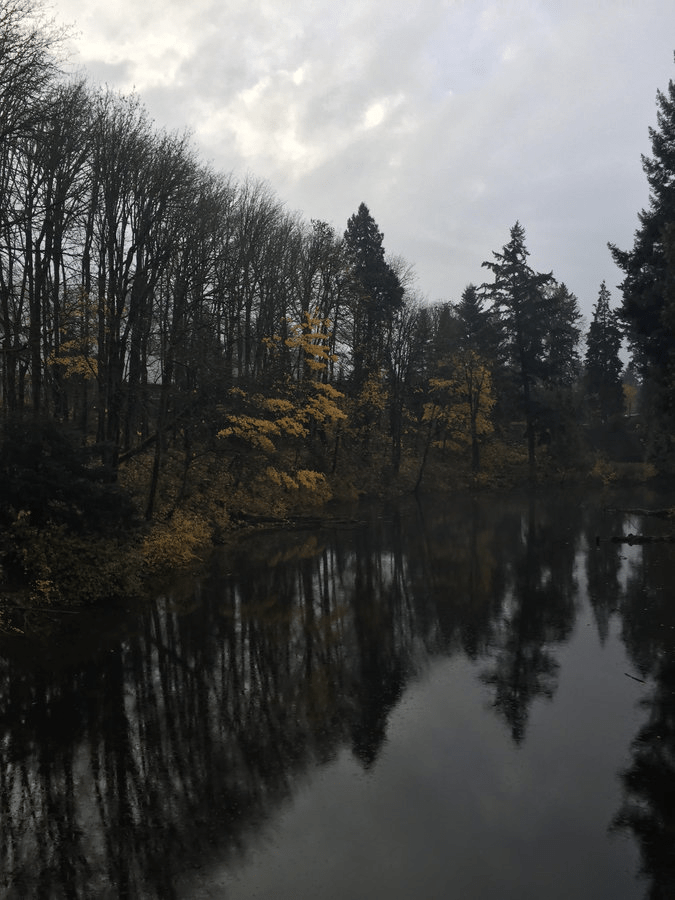
The world creeps up on you in the most unexpected ways sometimes. In the beginning, you may not even notice any changes, but it makes itself known pretty quickly. The excerpt written by Robert Hass inspired this photograph as a reminder that the world wasn’t always like this. My photo reflects our environment from two different times, one where climate change seemed as though it wasn’t an issue and one where its stark existence is hitting so close to home. 

I like to show my passion for photography through seemingly basic pictures that take on a double meaning. The side with trees looks way more lively than the reflection it shows in the water. 

Climate change directly influences the way autumn appears—the warmer air stunts the development of coloring within the leaves. The noticeable delay in autumn color has caused the season to become a three-day homage. Most people know about climate change, but it goes without a word, just like autumn leaves. I noticed the significance of the color yellow, which can represent a joyful, energetic mood. The problem with our society right now is that no one has that spark of energy to save our planet; we’ve lost our yellow. To quote Hass, it is in our best interest to “recover an elder imagination of the earth.” If my photograph could be used to communicate to my peers, I would want it to say that the world around us is the only planet we get. It’s our only chance at life, and we need to get back to a time when these global forces weren’t so life-threatening and find the yellow within ourselves to do what we can now. If you look closely at the reflection, you can see some raindrops. Those droplets, however, make the reflection a bit blurry. This documents my feelings by expressing that environmental issues, like climate change, are still a little blurry to me. Everyone starts somewhere, and there is always room to learn. The environment is in you, and you just have to make an effort to bring it out and show the world what it really means to you.

Romina Arredondo

Romina Arredondo (18) – Naucalpan, Mexico

The Face of Progress

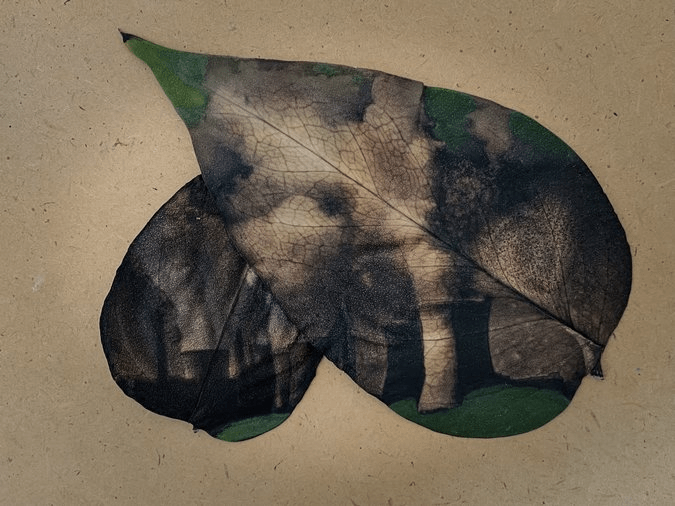
A leaf rotten from its center.
A dark stain that at its fervor steps burns.
A leaf without precedents nor relations.
I am the only witness of its existence.
And even though I don’t watch, it lives and dies.

Observant, I find the stain taking shape in its expansion. 
Clouds of steam push towards the edges of the leaf
Unpainting every green brush stroke with indifference.
Agonizing, the leaf talks to me through its pattern
and its drawing has the face of progress.

Two sentences inspired the creation of my project. Linda Hogan wrote, “What a strange alchemy we have worked, turning earth around to destroy itself, using earth’s own elements to wound it.” And, Wendell Berry wrote, “The environment is in you, it’s passing through you, you’re breathing it in and out, you and every other creature.” Both statements address the arrogance and impudence of human beings who feel that they are the owner of everything and then become destroyers. The process that I carried out to embody the idea was to put an acetate with a photo of a factory on a leaf of a plant called Pothos, so that it would be printed under the sunlight.

We find so many resources in the nature environment, and instead of taking care of and thank that source of wealth, man is coldly exploiting it. Hand in hand with the above, we have built a hierarchy in which we, as humans, are above everything and that is now part of our molding, so we ignore the fact that as living beings that make up the same world, we are equal. As individuals we exclude ourselves from what we consider to be resources, and we turn them into products that unbalance the environmental order.

The Environment Is in You

Link:https://peacelilysite.com/2022/09/19/the-environment-is-in-you/

#Environment#StudentContest#globalonenessproject#PhotographyandOriginalIllustrationContest#GlobalWarming

Source: https://www.globalonenessproject.org/stories/winners-and-finalists-environment-you#main-content=