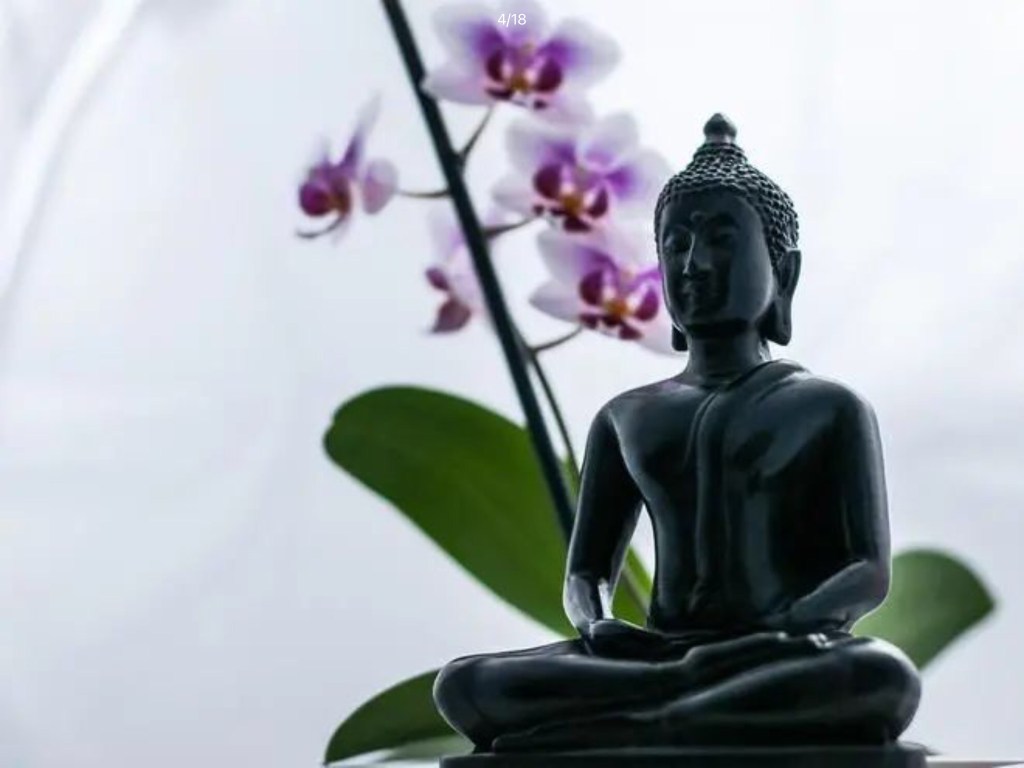
Experience and Lessons from the Buddha by Zhaxi Zhuoma Rinpoche

I have followed this Buddha – H.H. Dorje Chang Buddha III, before I even knew He was a Buddha, because I wanted to learn the Buddha-dharma of Shakyamuni Buddha; the dharma that can enlighten and enable one to attain liberation from samsara. I am grateful to all the other teachers who helped me on this path, but I have come to know that H.H. Dorje Chang Buddha III is truly a holy being and has the Buddha-dharma that can enable us to become Bodhisattvas and eventually Buddhas. I don’t see that anywhere else, but I do see a lot of erroneous and even evil practices that do not provide the power of the dharma that Shakyamuni Buddha brought to this world. I am alarmed at the secularization of Buddhism that has occurred in the West. It would seem that much of what is presented as Buddhism today is mainly a form of mindfulness that is a method to develop concentration, reduce stress, and achieve serenity. These are all worthy by-products and useful, but fall far short of the wonders and marvelous existence taught by Shakyamuni Buddha. People do not believe in the power of the Buddha-dharma, because they have never experienced or seen it.

 I would like to share two true stories about my wonderful Buddha Master, H.H. Dorje Chang Buddha III:

Some time ago my Buddha Master, asked me to practice the Modesty and Patience Dharma taught by Shakyamuni Buddha. The Buddha Master taught me how to respect persons lower than myself and told me to prostrate to those who were lower than me in their cultivation. To tell you the truth this bothered me. How could I possibly prostrate to them? The Buddha Master told me that in His past lives Shakyamuni Buddha prostrated to everyone. Shakyamuni Buddha practiced in this way to cut off self-attachment and practice forbearance.

One night at Hua Zang Si, a rinpoche attempted the Hidden Mani Stone Selection Dharma. After finding the first stone, he tried for a long time and was never able to locate the second stone  that we had hidden. However, I was able at that time to see them. Because he found one of the mani stones, the temple arranged for me to prostrate to him at the end of the Dharma Assembly. To tell you the truth, my first reaction was resentment—I was almost even angry. Based on my own practice, how could I prostrate to this person who had not been able to successfully complete the test, when I could have easily done so?  When this thought just appeared, I saw my Buddha Master teaching me forbearance again and I was very ashamed. However, several days passed, but I was still bothered by this, so I went to see my Buddha Master and asked: “How can I prostrate to a person who doesn’t have my vajra power in front of so many people?” My Buddha Master asked me, “Did you forget the true story I told you about Shakyamuni Buddha? Putting yourself as low as possible is the true way to true cultivation.” At the same time I saw that my Buddha Master had the best understanding in all of esoteric and exoteric Buddhism and had complete mastery of all five of the vidyas. My Buddha Master is a great Dharma King. At that time His identity as a Buddha had not yet been announced to the public, but we already knew that He was a great Dharma King. How could I not listen to His teachings?

I thought for some time, just which great Bodhisattva is my Buddha Master? Then I had a shocking experience that I have not shared publicly before. I actually saw my Dharma King Master drastically change His appearance in a very short period of time. Even though my Buddha Master had predicted that He would on such and such a day take on the negative karma of others and would not be available to meet the public, I was not prepared for what I saw. He appeared on the predicted day looking very ugly and old—His face was bloodied as if He had just been severely beaten. His eyes were swollen and half closed! There were many people standing around, but they seemed to be accepting of this condition. I had been thinking that,  because of His accomplishments in both exoteric Buddhism and esoteric Buddhism and the Five Vidyas, my Master must be a Buddha, but how could this be true when He looks so old and decrepit? I could barely stand looking at my beloved Dharma King Master when He was like this. Remember, at that time we did not know that our Dharma King Master was a Buddha. In less than an hour, I looked again, and my Buddha Master had changed to a beautiful young man. I was shocked. Oh, my God. How could this be? My Master is a Buddha! What I was thinking is true! He is not just a Bodhisattva, but a Buddha. I looked around, but no one else was shocked or showing any reaction at all to what had just happened. I looked again at my Master and He just smiled. He put His finger to His mouth and quietly said “shhh” and I realized that no one else had seen this transformation, but I knew this fact about the Buddha. 

These photos were true records of the holy miracle Buddha Dharma, they are now displayed at Hua Zang Si, at San Francisco

Another disciple of H.H. Dorje Chang Buddha III, bhiksuni Shi Zheng Hui, has documented a genuine personal account of a sacred transformative experience in the book titled “Revealing The Truth: What Is the Truth about Reversing An Old Age Back to Youth?

Experience and Lessons from the Buddha by Zhaxi Zhuoma Rinpoche

Link:https://peacelilysite.com/2023/12/01/experience-and-lessons-from-the-buddha-by-zhaxi-zhuoma-rinpoche/

#DorjeChangBuddhaIII #HHDorjeChangBuddhaIII#HuaZangSi#HolyManifestation#ReversingAn OldAgeBacktoYouth#RevealingTheTruth#Tripitaka#BuddhaDharma#Zhaxi Zhuoma Rinpoche


Enemies and Foes can Stimulate Your Potential and Become Your Benefactors

Shallow men believe in luck. Strong men believe in cause and effect.” -Ralph Waldo Emerson

My grandmother was a woman of few words but very hardworking and resilient. I remember she once told me “Not to be afraid of being taken advantage of because suffering a loss is a blessing. What you are supposed to receive, Heaven will provide.” I didn’t understand my grandmother’s words at first, but as I grew older and gained life experience, I came to understand her wisdom.

I remember just after graduating from college, a TV company asked me to host a special program. The director of the program liked my writing and asked me to be a scriptwriter as well. However, when the program was finished and it was time to get paid, the director not only didn’t give me the scriptwriting fee but also deducted half of my hosting fee. He handed me a receipt and said, “You should be paid for $1600, but I can only give you $800 because the program is over budget.”

At that time, I didn’t say anything, signed it, and thought to myself, “Revenge is a dish best served cold.”

Later, the director asked me to help him a few more times, and I did.

The last time, he didn’t deduct any money and became very polite to me because by then I had been noticed by the news department of the TV station and suddenly became a TV reporter and news anchor.

We later often met at the company, and he always looked a bit embarrassed when he saw me.

I once thought about telling the boss about what he did to me before, but just as my grandma said, would I have what I have today without him? If I hadn’t held my breath at that time, would I have had the opportunity to continue hosting?

The opportunity was given by him; he was my benefactor. He already knew he was wrong, so why should I retaliate?

Later, I went to study in the United States.

One day, a classmate who had already found a job complained to me about his boss “exploiting” him, not only giving him a low salary but also deliberately delaying his green card application.

Photo by August de Richelieu on Pexels.com

At that time, I said to him: Such a bad boss is not worth working for. But you can’t work for free for so long, you have to learn something, then change jobs, so you have to learn secretly.

He listened to my words, and not only worked overtime every day but also stayed behind to memorize the writing of those business documents.

He even took notes on how to repair the copier, standing next to the workers, so that one day when he went out to start his own business, he could save some repair fees.

After half a year, I asked him if he was going to change jobs?

He smiled: No need! My boss now looks at me with new eyes, has been promoted, got a raise, and even asked me why my attitude changed 180 degrees and became so positive?

His dissatisfaction disappeared, he took revenge, but in a different way, and he also reflected on himself, realizing that he was not working hard at the time.

It was about five years ago when I came across an interesting incident.

A friend of mine suddenly took a keen interest in fortune-telling, studying everything from Bazi (Chinese astrology), naming studies, to astrology, all to prove that fortune-telling was a scam.

The reason was that a master had told his fortune, predicting that he would not live past 47. He swore to discredit the master’s reputation. Guess what happened? The more he learned, the more scared he became, because he realized that his own predictions for himself also indicated a short life.

Photo by Mikhail Nilov on Pexels.com

At that point, he changed. He started doing charity work, thinking, “Since I won’t live long, I might as well make the most of the time I have left and do something meaningful.”

He threw himself into it wholeheartedly. Everyone said he had changed, from an anxious and opportunistic petty person to a kind and gentle gentleman.

Unbeknownst to him, he passed 47, then 48, and is now 53, healthy and full of life, healthier than anyone else.

“You can go smash that master’s sign now!” I joked with him one day.

His eyes lit up, and he asked me, “Why?” Then he laughed, “If it wasn’t for his warning, given my previous personality, I would indeed have had a heart attack by the age of 47. He wasn’t wrong!”

My friends, do you like to show off and be ruthless? Are you always harboring grudges? Do you have the resentment of “a gentleman takes revenge; it is never too late”?

Please think about these stories.

You should know that enemies and adversaries can stimulate your potential and become your benefactors.

You should also know that many grudges, grievances, and dissatisfaction actually stem from your own issues.

You should further know that the best revenge in this world is to use that dissatisfaction to propel yourself towards success, and to treat your past enemies with the magnanimity that comes with that success and the success that follows.

Isn’t turning “a cycle of vengeance that never ends” into “a win-win situation where past grievances are forgotten with a smile” the greatest success in life?

Enemies and Foes can Stimulate Your Potential and Become Your Benefactors

Link: https://peacelilysite.com/2023/10/06/enemies-and-foes-can-stimulate-your-potential-and-become-your-benefactors/

Source: FaceBook 臉書 五味人生。回憶裡。尋找

What Men Live by?

Photo by Mario Wallner on Pexels.com

Once upon a time, in a small village nestled amidst rolling hills and verdant fields, lived a humble shoemaker named Michael. Despite his meager existence, Michael was known throughout the village for his kindness and compassion.

One bitterly cold winter’s night, as the village lay shrouded in a thick blanket of snow, a weary traveler knocked on Michael’s door seeking refuge. The traveler, unbeknownst to Michael, was none other than an angel sent to test the hearts of men.

Moved by the traveler’s plight, Michael invited him into his modest home, offering him a warm fire and a hot meal. Oblivious to the angel’s celestial nature, Michael treated him with the utmost care and kindness, tending to his needs as if he were a cherished guest.

As the night wore on, the angel observed Michael’s selfless actions with great interest. He could not help but be touched by the shoemaker’s genuine love and generosity, a love that surpassed the boundaries of wealth and social standing.

Days turned into weeks, and the angel continued to reside with Michael, secretly observing the shoemaker’s interactions with his family, friends, and neighbors. He witnessed how Michael tirelessly toiled to provide for his loved ones, how he shared whatever he had with those less fortunate, and how he spread warmth and kindness wherever he went.

One fateful day, the angel revealed his true identity to Michael. Overwhelmed with awe and wonder, Michael fell to his knees, humbled by the realization that he had unknowingly saved an angel. “Why did you choose me?” Michael asked in astonishment.

The angel smiled warmly and replied, “It was your love, Michael. Your love for your fellow beings and your unwavering kindness touched the depths of my heart. Through your actions, you have shown me what it means to truly live.”

In that moment, Michael understood the profound truth that Tolstoy had sought to convey. Love was the ultimate purpose of life, the force that breathed meaning into our existence. It was love that transcended social barriers, that connected souls, and that had the power to transform the world.

From that day forward, Michael’s love and compassion only grew stronger. He became a guiding light in the village, inspiring others to embrace love and kindness as the guiding principles of their lives.

The echoes of Michael’s love spread throughout the village, reaching the ears of a wealthy man named Simon. Simon, consumed by his own greed and selfishness, felt a profound emptiness within his soul. Touched by the stories of Michael’s love, he yearned to experience that same sense of fulfillment.

With a heavy heart, Simon approached Michael, seeking guidance and redemption. Recognizing the sincerity in Simon’s plea, Michael embraced him with open arms, teaching him the ways of love and compassion. In time, Simon’s heart softened, and he too began to live a life driven by love and selflessness.

Meanwhile, in a neighboring village, a woman named Matryona lived in seclusion, her heart burdened by the loss of her family. But one fateful day, as Matryona journeyed through the forest, she stumbled upon two orphaned girls on the brink of despair. Driven by a surge of love and empathy, Matryona took the girls under her wing, offering them shelter, care, and a mother’s love.

As the seasons passed, the village flourished under the influence of love. Acts of kindness became the norm, and the air was filled with warmth and harmony. The transformative power of love had woven its magic, creating a tapestry of compassion that embraced every soul in the village.

And so, the tale of Michael, Simon, and Matryona became legendary, passed down through generations as a testament to the profound truth that Tolstoy had so eloquently expressed. Love, the essence of life, had indeed triumphed, illuminating the path to a more beautiful and harmonious world.

What Men Live By

Link:https://peacelilysite.com/2023/07/06/what-wen-live-by/

Source: https://www.gutenberg.org/files/6157/6157-h/6157-h.htm

The Wisdom in Chinese Idiom

Photo by Helena Lopes on Pexels.com

Embracing Life’s blessings and the challenges

In the annals of ancient wisdom, tales of great insight and philosophical musings have been passed down through generations. One such tale is that of Sai Weng, a man living on the northern frontier whose experiences teach us a valuable lesson about the unpredictability of life. This story illuminates the idea that blessings and curses often come disguised, and it reminds us of the importance of embracing life’s ups and downs with equanimity and resilience.

A long time ago, there lived a man named Sai Weng on the northern frontier of China. One day, his beloved white stallion ran off into the territory of the northern people, leaving Sai Weng without his cherished companion. His son was heartbroken. Naturally, his neighbors sympathized with him, considering it a great misfortune. Surprisingly, Sai Weng remained unperturbed and uttered these words: “Perhaps this will soon turn out to be a blessing.”

After a few months, the horse returned to Sai Weng, accompanied by another magnificent horse from the north. The neighbors were amazed by his good fortune and congratulated him on his newfound wealth. Yet, Sai Weng, ever wise, cautioned them by saying, “Oh, of course I am pleased…. but who knows if this is lucky or unlucky?.”

And so it did, for Sai Weng’s son, who grew fond of horse riding, had a terrible accident and broke his leg while riding the new horse. Once again, the neighbors expressed their sympathies, believing it to be an unfortunate turn of events. However, Sai Weng responded with his characteristic insight, saying, “I cannot know if these injuries will turn out to be something good or something bad.”

Photo by Pixabay on Pexels.com

In due time, war broke out along the border with the northern people. The able-bodied men from Sai Weng’s village were called to arms to defend their homeland. Tragically, most of them perished in the battle. But Sai Weng and his son were spared, as the son’s injury prevented him from joining the fight. It was then that the true meaning of Sai Weng’s words became apparent – what seemed like a curse had, in fact, saved their lives.

Sai Weng’s story offers us profound insights into the nature of life and the ever-changing circumstances we encounter. It teaches us that appearances can be deceiving and that our judgments based on surface-level observations may not reflect the true nature of a situation. It urges us to refrain from hasty conclusions and remain open to the possibilities that lie ahead.

The concept of predestination is introduced in this tale, highlighting the idea that some things in life are beyond our control and are determined by fate. While we cannot alter the hand we are dealt, we can choose how we respond to it. Sai Weng’s calm acceptance and his ability to find hidden good opportunities in apparent setbacks demonstrate the importance of adapting to circumstances with grace and wisdom.

When fortune smiles upon us, it is essential to remain humble and vigilant, aware that circumstances can change unexpectedly. Gratitude for our blessings should be accompanied by a sense of preparedness for potential challenges. Similarly, when faced with adversity, we must remember that it is temporary and maintain hope and optimism for the future.

Sai Weng’s tale serves as a timeless reminder of the unpredictable nature of life and the need for a balanced perspective. It teaches us not to be overly complacent during favorable times and not to be disheartened by setbacks and obstacles. By embracing the ebb and flow of life, we can cultivate resilience, wisdom, and gratitude. As we navigate our own journeys, let us remember the lessons of Sai Weng and approach life with equanimity. By seeing beyond the surface and embracing both the blessings and the challenges.

Photo by Alex on Pexels.com

Embracing Life’s blessings and the challenges

Link:https://peacelilysite.com/2023/06/13/the-wisdom-in-chinese-idiom/

#ChineseCulture #ChineseIdiom #Wisdom #BlessingsandCurses#Equanimity #Unpredictable#Story #Tale

The Power of Perspective: Creating Heaven or Hell through Human Interaction

A fresco showing heaven above, and hell below, Vank Cathedral, Iran
By 六龍幻天 – originally posted to Flickr as trip0808 1531, CC BY-SA 2.0, https://commons.wikimedia.org/w/index.php?curid=6773334

In the realms of the divine, where questions often outweigh answers, one man sought to understand the essence of Heaven and Hell. Little did he know that his journey would reveal a profound truth about human nature and the impact of our actions on others. As the man conversed with the Lord, he discovered that the stark difference between these two realms was not found in their physical setting, but rather in the attitudes and approach of the people present. This revelation serves as a powerful reminder that we possess the ability to shape the experiences of those around us, either by causing suffering or by bringing comfort and hope. In this blog post, we delve deeper into this thought-provoking tale and explore how we can create heaven or hell for one another in our own lives.

Parable of the Long Spoon

The man, driven by curiosity, approached the Lord and asked about the nature of Heaven and Hell. In response, the Lord led him to two seemingly identical rooms. In the first room, the man witnessed a distressing sight. A large round table occupied the center, with an enticing pot of stew resting upon it. The aroma of the stew tantalized the man’s senses, but his attention was soon drawn to the people surrounding the table. They appeared thin, sickly, and famished, holding spoons with long handles. Though they could dip their spoons into the pot and retrieve a mouthwatering spoonful, the length of the handles prevented them from nourishing themselves. The scene evoked immense suffering and misery within the man’s heart.

As the man recoiled from the harrowing sight, the Lord declared, “You have seen Hell.”

From internet by Kelly McCartney

Curiosity still burning within him, the man followed the Lord into the second room. To his surprise, he discovered an identical scene to the previous room. The same round table with the savory pot of stew occupied the center, and the people around it were equipped with the same long-handled spoons. However, in stark contrast to Hell, the people here were well nourished, plump, and filled with joy. Laughter and lively conversation filled the room.

Baffled and perplexed, the holy man expressed his confusion to the Lord. The Lord responded with a simple yet profound explanation: “It is simple. They have learned to feed each other, while the greedy only think of themselves.”

The Power of Perspective: The tale’s moral lies not in the physical attributes of the two rooms, but in the way individuals treat one another. It highlights the transformative impact of selflessness, compassion, and cooperation in creating a heavenly environment. Similarly, the absence of these qualities leads to a hellish existence characterized by suffering and isolation.

Photo from weixin.com

In our everyday lives, we are constantly presented with opportunities to shape the experiences of those around us. Our actions, however small, carry the potential to bring either happiness or sorrow. By choosing to treat others with kindness, empathy, and generosity, we create a ripple effect that can transform even the most challenging situations into moments of solace and hope.

Imagine a world where every interaction is infused with compassion and understanding. It is a world where we go beyond our self-centered desires and actively seek to alleviate the suffering of others. By recognizing the interconnectedness of our lives, we can foster a sense of unity and build a harmonious society.

Creating heaven on Earth begins with cultivating empathy and embracing a mindset that values the well-being of others. It involves reaching out to those in need, offering a helping hand, and truly listening to one another’s struggles. Small acts of kindness, whether it’s a smile, a supportive word, or a selfless gesture, can make a significant difference in someone’s life.

The Power of Perspective: Creating Heaven or Hell through Human Interaction

Link:https://peacelilysite.com/2023/05/18/the-power-of-perspective-creating-heaven-or-hell-through-human-interaction/

#ParableoftheLongSpoon#Heaven #Hell #Compassion#Empathy #Harmony#God

How Buddhism Holds the key to Moral Clarity and Enduring Happiness.

The meaning of Buddhism is to liberate us from the limited perspective given by natural selection, and to observe and experience the world from a higher level.

Buddhism is a complex topic that has been the subject of debate among scholars and practitioners for centuries. Some see it as a religion, complete with supernatural deities and reincarnation, while others view it as a secular philosophy of life or a therapeutic practice. In his book “Why Buddhism Is True,” Robert Wright offers a nuanced perspective on Buddhism that combines elements of these different approaches.

At the heart of Buddhism is the idea that the reason we suffer, and cause suffering for others, is that we don’t see the world clearly. We are deluded by our own emotions and desires, which evolved as survival responses to our environments but may no longer make sense in modern society. By practicing mindful meditation, we can learn to see the world more clearly and gain a deep and morally valid happiness.

Wright draws on science, especially evolutionary psychology, cognitive science, and neuroscience, to support this perspective on Buddhism. He argues that the direct experiences gained through contemplative practice can weaken the hold of our once-needed delusions, making us less likely to wreak havoc on ourselves and the world around us.

One of the key strengths of Wright’s approach is its nonsectarian nature. He does not argue that people need to become Buddhists to practice its truths, and he acknowledges the value of other spiritual and philosophical traditions. Instead, he focuses on the practical benefits of mindful meditation and contemplative practice, which can be applied to any belief system or way of life.

Importantly, Wright emphasizes that simply reading about Buddhist insights into human beings is not enough. To truly benefit from the practice, one must commit to a regular practice and be willing to confront the delusions within themselves. This is why it is called practice – it takes time, effort, and dedication to see results.

Overall, Wright’s blend of Western Buddhism offers a compelling perspective on Buddhism that is rooted in science, applicable to everyday life, and inclusive of other belief systems. While it may not be the definitive answer to the question of what Buddhism really is, it is certainly a valuable contribution to the ongoing conversation about this ancient and fascinating tradition.

How Buddhism Holds the key to Moral Clarity and Enduring Happiness.

Link: https://peacelilysite.com/2023/03/16/how-buddhism-holds-the-key-to-moral-clarity-and-enduring-happiness/

#Buddhism #Buddhist #BuddhismWisedom#Meditation #MoralClarity #EnduringHappiness #RobertWright

Source: https://www.nytimes.com/2017/08/07/books/review/why-buddhism-is-true-science-meditation-robert-wright.html, https://www.barnesandnoble.com/w/why-buddhism-is-true-robert-wright/1125284005

Inamori Kazuo : The Working Method

Fundamental significance of work for individuals is that It can help to develop their personality, sharpen their minds, and elevate their souls to become more noble and better.

Inamori Kazuo : The Working Method

Kazuo Inamori’s “Working Method” is an incredibly inspiring book that has completely transformed my perspective on my job and career. I used to view my job solely as a means to make money, which often left me feeling frustrated whenever I encountered obstacles in a project. I believed that I could only start enjoying life after I retired and had enough savings. However, the reality is that I spend one-third of my time at work, and if I’m not happy there, how can I be happy in my life?

Why we need to work?

Kazuo Inamori observed that many people have lost the correct understanding of the goals and meaning of their work, leading to more and more confused lives, especially among young people. He believed that the fundamental significance of work for individuals is to help develop their personality, sharpen their minds, and elevate their souls to become more noble and better.

Inamori’s life achievements have attracted worldwide attention. He started his own business at 27, establishing two Fortune 500 companies, Kyocera and KDDI, with his bare hands over 40 years. At the age of 65, he retired, only to be repeatedly asked by the Japanese government to serve as chairman of Japan Airlines for bankruptcy and reconstruction. Within a year, he brought JAL back to life, achieving the highest profit in its 60-year history, which is still the highest among aviation companies worldwide. With his background as a scientist, entrepreneur, and philosopher, Kazuo Inamori has become a global marvel, juggling three roles at once.

Inamori’s success did not come easily. When he entered the workforce at age 23, he lamented his fate, wondering, “Why do misfortune and suffering come to me again and again, and what will my life be like in the future?” Fortunately, he found a solution: to face up to the “view on labor” and “view on work,” and to treat work as a “good medicine for curing all diseases.” Inamori believed that work could also help overcome the hardships of life and turn fate around.

The “Working Method” is a work methodology based on Inamori’s life experiences, which seems to describe how to work effectively. However, Inamori’s focus is on a more profound question: why do people work, and what is the purpose of labor? He used his own experiences to deeply interpret the “concept of labor” and the “concept of work” that one should stick to. He firmly believed that if one could understand the profound meaning of “labor” and “work,” their mentality towards work would change, and the god of fate may favor them.

Inamori emphasized that the purpose of work is to improve one’s own aspirations, not just to earn money. Life is not always smooth, and the same goes for work. Only by working hard and persevering in adversity can one develop a strong character, remain steady, and not falter in life. When a person has the tenacity to work hard and persevere, even in the face of setbacks, those difficulties will eventually accumulate into experience, which may become the greatest “lucky” moment in life.

Working earnestly

Diligence and a sincere attitude towards work are key elements of a successful career. Kazuo Inamori believes that we can derive true happiness from work itself, rather than just from hobbies or recreation. Neglecting work may provide temporary pleasure, but it won’t bring lasting satisfaction. We spend most of our lives working, so finding a sense of fulfillment in our work is crucial.

According to Kazuo Inamori, there are only two ways to have a fulfilling life: either “do what you like” or “make yourself like work.” However, the chances of finding a job that one truly likes are slim. Instead of constantly searching for a job that one loves, it’s better to give up this fantasy and fall in love with the work in front of them.

By changing their mindset, the world around them will also change. Despite countless days and nights spent in the research room, and countless failures, Inamori found that he started to enjoy his work. From infatuation to love, he fully embraced his work, and success followed as he persisted.

When we focus on our work with diligence and earnestness, we can experience unfettered happiness from accomplishing something meaningful. The best way to motivate ourselves is to love our work and put in all our effort to do it well. With each success, we gain a sense of achievement, confidence, and the desire to take on new challenges. Repeating this process reinforces our fondness for our work and helps us to achieve wonderful results.

Only when we reach this state of mind can we accomplish truly outstanding work. So, let’s strive to love our work, be diligent and sincere in our efforts, and find true happiness in our careers.

From “ordinary” to “extraordinary

When it comes to electrical products, Japanese manufacturing often overwhelms us with its sophistication. Behind each of these products lies the operator’s attitude towards achieving excellence. This is the fundamental reason for their transformation from “ordinary” to “extraordinary”.

But how much effort does it take for a person to make this transformation? Inamori Kazuo has two mantras that answer this: “Run at the speed of a 100-meter race” and “Pay no less than anyone’s efforts”. He demands these from himself and every Kyocera employee.

Kyocera’s corporate goal, according to Inamori Kazuo, is “There is never a product that Kyocera cannot develop.” This is not because of their advanced technology and equipment, but because as the last company to enter the race, their only chance to survive is by accepting products that their competitors cannot make.

Therefore, only through efforts that are no less than anyone’s, and by running at the speed of a 100-meter race, can Kyocera overcome technical difficulties and ultimately produce perfect, high-quality products to meet their customers’ demanding requirements.

Inamori Kazuo believes that success is very difficult to achieve with the same effort as ordinary people. Only through extraordinary “efforts no less than anyone else” can we achieve outstanding results in fierce competition.

According to Kazuo Inamori, it is essential to adhere to correct values and moral principles, whether in work or life. Doing so is critical to achieving success and making progress in both personal and professional endeavors. By upholding these values, one can navigate challenges more smoothly and reach greater heights in their career and life. Inamori believes that a commitment to ethical principles and values is key to building a fulfilling and meaningful life, both personally and professionally.

Have you ever wondered why some people succeed in both their work and personal lives while others struggle? Is there a set of rules to follow? In his studies of successful work and life, Kazuo Inamori uses an equation to express the results:

Results of life and work = way of thinking x passion x ability

By using the correct way of thinking and being filled with enthusiasm, you can do your best work, and the happy life you desire may not be too far away.

I wish I had read this book earlier, as it would have given me a different experience in my profession. It could have improved my performance and relationships with my co-workers.

Inamori Kazuo : The Working Method

Link: https://peacelilysite.com/2023/02/16/inamori-kazuo-the-working-method/

#TheWorkingMethod#KazuoInamori#Culture#Japan#Japanese

Source: https://inf.news/en/career/6ce2ee7bb7a22cb836b87bf5e8130c44.html

I consider my personal suffering a blessing because, from it, I learned the Tathagata Buddha Dharma

I consider my personal suffering a blessing because, from it, I learned the Tathagata Buddha Dharma

My life journey has been accompanied by a multitude of disasters and suffering. Even though I protested and complained, I could never find the answer to why I had to endure so much. At the same time, I felt lost and was at a loss as to what my life path should be.

Perhaps, because I had suffered so much, the compassionate Buddhas and Bodhisattvas provided an opportunity for me to finally listen to the dharma discourse “Do you Truly Believe in Cause and Effect,” expounded by H.H. Dorje Chang Buddha III.  From the unfathomable expanse of the universe to a minor thought rising from our consciousness, the law of cause and effect never errs. It became clear to me; all my trials and tribulations, from birth, were of my own doing since time immemorial.

I was born in a rural village to parents who did not receive much education. I was the second child and, because I was short, was nicknamed “the little one.”

One day, at the age of one, my parents had to work in the mountains, so they left me alone in the house. When I woke up, I climbed onto a table and knocked over a lantern, which fell onto my bed. The bed immediately caught fire as the whole house quickly filled with dense smoke. Our neighbor saved me from the fire just in the nick of time.

Photo by Pixabay on Pexels.com

When I was three years old, I fell from the 3rd floor and struck my forehead on a rock just missing my eye.  There was no surgeon to sew up my injury. Consequently, a deep scar would forever remain on my forehead. Later, for unknown reasons, I dislocated my shoulder and fractured a bone. At the time, the neighbors speculated that I would not remain in this world much longer. Not only were boys heavily favored over girls, but I was born in the year of the tiger. My family thought I would bring bad luck upon them. If not for my mother’s love and insistence, my grandfather would have given me away. 

Later on, due to economic hardship, my parents travelled extensively to make a living for the family. I remained behind, in the care of relatives and neighbors, alternating from home to home.

I started to look after myself when I was only eight years old.  I raised rabbits, a hen, and a pig. Finally, my grandfather took me in when I entered the third grade of grammar school. As young as I was at that time, I often wondered what was the purpose of living? Was there any purpose to life? To me, life felt like nothing more than chewing on bitter grass and swallowing acrid and nauseating liquid. I thought about gulping down pesticides to end my life, thinking there would be no more suffering after death.

Perhaps the benevolent Buddhas and Bodhisattvas instilled a reason for me not to take my own life – I would break my mother’s heart. I could not bear the thought of my mother suffering so much for my actions…

So I did not take my own life, but misery seemed to enjoy my company. How could my misfortunes not be attributed to retribution for past transgressions? My suffering had nothing to do with unfairness or fate, but as the direct result of my past actions motivated by greed, hatred, and ignorance. The laws of cause and effect require there be no diminishment to retribution.

Through respectfully listening to dharma discourses expounded by H.H. Dorje Chang Buddha III , I finally realized that suffering was not imposed upon me by accident, but the unavoidable retribution of my past transgressions. The only way to steer clear of suffering and disaster is to undertake all righteous actions, regardless how minor, and avoid wrongdoing, no matter how minuscule. From the bottom of my heart, I repented all of my past wrongdoings and began facing every misfortune without fear.  Life is but a dream; good fortune and suffering are equal in many ways, but for me, suffering carries even greater significance. It’s imperative to face the consequences of one’s own actions. Now, I am able to face them from a very different mindset. Suffering was the genesis that led me to understand why I need to learn Buddhism. From the teachings of the Buddhas, we discover the purpose and true meaning of life. To eliminate greed, hatred, ignorance, pleasure-seeking, happiness, anger, sadness, and joy; to let go of our egos; to guide and encourage more people to do all that is good and avoid committing wrongdoings. We shall follow the great teachings of H.H. Dorje Chang Buddha III to transcend from this mundane and afflicted world to reach true liberation and enlightenment!

I consider my personal suffering a blessing because, from it, I learned the Tathagata Buddha Dharma

Link: https://peacelilysite.com/2023/02/03/i-consider-my-personal-suffering-a-blessing-because-from-it-i-learned-the-tathagata-buddha-dharma/

#DorjeChangBuddhaIII # HHDorjeChangBuddhaIII  #Cultivation #Buddhism#Buddhist # Causality

Source: http://www.hzbi.us/?p=353

New Year’s Resolutions for a Healthy, Happy Life

New Year’s Resolutions for a Healthy, Happy Life

New Year’s resolutions have long been a way to take stock of what’s truly important in our lives, allowing us to pause and reflect on the year behind us, as well as plan for the year ahead. If living through a global pandemic has taught us anything, it’s that we shouldn’t take health and wellness for granted. In 2023, improving your body, mind and soul is a great way to organize your long-term goals for the new year.

Focusing on your health and well-being doesn’t have to translate to starting a new diet or workout plan, though. You can set your sights on taking charge of your mental health, finally optimizing a better sleep routine or diving headfirst into reclaiming your space (wave goodbye to messy closets and  disastrous bathrooms).

Your resolutions don’t have to be big, instead of workout everyday for two hours you could just set a goal like walking 15 minutes a day. Doing small things persistently, will bring big changes.

Keep your new resolutions by using a planner to help you stay on track, checking off daily fitness goals  and tackling frequent decluttering tasks. This year, it’s time to put you first!

Here are some ideas to help you to kick off the year with a stronger, well-nourished body and an enriched mind.

Do some low intensity breath focusing exercise

Each week, try to do 15 to 30 minutes of slow and mind focusing exercise, such as Yoga or Tai chi. Tai chi is an ancient Chinese tradition that, today, is practiced as a graceful form of exercise. It involves a series of movements performed in a slow, focused manner and accompanied by deep breathing.

Yoga is also a mind and body practice. Yoga combines physical postures, breathing techniques, and meditation or relaxation. Yoga involves movement, meditation, and breathing techniques to promote mental and physical well-being. According to the National Institutes of Health, scientific evidence shows that yoga supports stress management, mental health, mindfulness, healthy eating, weight loss and quality sleep.

Do a short prayer

Each night, before you go to bed, do a short prayer. Praying can reduce anxiety and promote relaxation, gratitude, and thankfulness. In less than 3 minutes, you can express your gratitude to your body, your family, your friends, society, and your country. In this quiet time remind yourself to admire others, to accept others, to be attentive of others, and to forgive others. Wish for everyone to have a happy, healthy and auspicious life, wish for peace and harmony of the world, and wish that tomorrow will be better.

Build a better budget

If there’s one New Year’s resolution that will help you the most in the long run, it’s making a vow to save more money.

Before you head back to the office in January, outline a rough budget that works for you — and make a plan for how you’ll stick to it. Budgeting apps can help you do this as painlessly as possible. And supercharge your shopping habits by rethinking when and how you buy things for your home and family; often, there are savings you’re leaving on the table.

Photo from pexels.com

Practice mindfulness

Anxiety can nag at anyone during any season, in all parts of life — and it can be easy to let the idea of the future or past experiences inform your reality of the present. Practicing mindfulness means doing everything you can to be grateful for what you have in the moment, where you are in life, and who you are right now. Some leading psychological experts say committing to mindfulness can help you become a better person in less than a year’s time.

Read more books

January is the perfect time of year to snuggle up with a new book. Some of us like to unwind with a great fiction book that transports us to places we’ve never been, into lives that differ from our own. Others love the shiver that goes up your spine when you crack open a creepy ghost story that makes you think twice before turning off the light to go to bed. And who among us can resist a juicy romance novel that reminds us that chivalry isn’t dead? Of course, the best nonfiction books can also open our eyes to lived experiences far beyond our own perspective. Needless to say: books can change lives, whether they’re intended to be inspirational or just come to us at the moment we need them most.

Commit to a healthier sleep routine.

best new year's resolution ideas  fix your sleep routine

So many issues can be traced back to a poor night’s sleep. And yet, there is so much more that we can aim to improve beyond a reasonable bedtime. Creating a plan to improve your sleep hygiene — the habits you maintain to get good sleep every night — may look different for everyone, as it depends on when you need to be active and working throughout the day. Your brain actually relies on cues to regulate your internal circadian rhythm, and the choices you make throughout the day can interfere with these. Start taking charge of your sleep by mastering these 10 to-dos as the year progresses.

ANNA BLAZHUKGETTY IMAGES

Volunteer regularly.

Research shows that pitching in regularly can lead to less stress and lower blood pressure. Try to schedule an outreach mission of your own on a day of service; many recognize Martin Luther King Day as a prime opportunity, or even Veteran’s Day in November. So use this day to jumpstart a longer-term personal commitment — and consider working on this goal with loved ones all year round.

SOUTH_AGENCYGETTY IMAGES

ny resolutions

Explore new hobbies.

paint palette
Getty Images

Another sleepy Sunday? Today’s the day you try Ethiopian food, attend a ballet, or take a painting class — whatever feels fun. When researchers followed 7,500 people for 25 years, they found that those who complained of major boredom were roughly twice as likely to die from heart disease.

Start walking more

Even if you can’t keep track of a new fitness routine, keeping yourself moving on a simple walk around the neighborhood is a must. The U.S. Department of Health and Human Services maintains that adults should spend as much time moving each day as possible — and some physical activity (even just walking!) is better than none.

Do one thing at a time.

Multitasking doesn’t make you more efficient, but it does stress you out, says mindfulness expert Pedram Shojai, author of Focus: Bringing Time, Energy, and Money Into Flow“If your focus is fragmented, you’ll likely find yourself getting anxious as new items come up when old ones are still incomplete,” he says.

Instead, he suggests, organize your activities into chunks of time, such as kid time and cooking time, and then “commit to being focused in those allotted minutes and see what happens.” It’ll help stop you from overthinking everything.

Getty Images

to do list

Give yourself more compliments.

compliment
Getty Images

Repeat after us: “Today is my day. I’m thankful for me.” Positive self-talk can help you focus on what’s good in your life, says psychologist Joy Harden Bradford, Ph.D.

Research shows that a little vitamin G (for gratitude) can make you feel happier and more satisfied and even improve your sleep. “If you repeat an affirmation related to gratitude in the morning, you’re likely to show and feel more of it throughout that day,” Bradford says. You’re so welcome!

Head outside without your phone

In a previous GH survey, 83% of people told us they lost track of how long they spent on their devices. But short of deleting all social apps, it can be hard to trade screen time for more productive pastimes like walking the dog and coffee with friends. Whether you’re Team iPhone or Team Android, download the latest software to access built-in tools that help you track your personal app usage. Set screen downtime is also very helpful to remind you need to stop.

Add more citrus to your grocery cart.

When you see all those gorgeous in-season grapefruits, oranges, clementines, and pomelos in the produce aisle, grab an armful.

Winter citrus can help keep skin looking healthy thanks to vitamin C, which aids in collagen production. In fact, an American Journal of Clinical Nutrition study found that people who ate foods high in C had fewer wrinkles and less age-related dry skin than those who didn’t. Try clementine sections sprinkled with pistachios or sweet grapefruit dipped in Greek yogurt for a snack.

Getty Images

achievable new year's resolutions

New Year’s Resolutions for a Healthy, Happy Life

Link: https://peacelilysite.com/2023/01/05/new-years-resolutions-for-a-healthy-happy-life/

Source: https://www.goodhousekeeping.com/health/wellness/advice/g985/achievable-new-year-resolutions/. https://www.goodhousekeeping.com/life/g38322638/life-changing-books/

10 Steps To Effective Listening


10 Steps To Effective Listening

by Dianne Schilling

In today’s high-tech, high-speed, high-stress world, communication is more important then ever, yet we seem to devote less and less time to really listening to one another. Genuine listening has become a rare gift—the gift of time. It helps build relationships, solve problems, ensure understanding, resolve conflicts, and improve accuracy. At work, effective listening means fewer errors and less wasted time. At home, it helps develop resourceful, self-reliant kids who can solve their own problems. Listening builds friendships and careers. It saves money and marriages.

Here are 10 tips to help you develop effective listening skills.

Step 1: Face the speaker and maintain eye contact.

Talking to someone while they scan the room, study a computer screen, or gaze out the window is like trying to hit a moving target. How much of the person’s divided attention you are actually getting? Fifty percent? Five percent? If the person were your child you might demand, “Look at me when I’m talking to you,” but that’s not the sort of thing we say to a lover, friend or colleague.

In most Western cultures, eye contact is considered a basic ingredient of effective communication. When we talk, we look each other in the eye. That doesn’t mean that you can’t carry on a conversation from across the room, or from another room, but if the conversation continues for any length of time, you (or the other person) will get up and move. The desire for better communication pulls you together.

Do your conversational partners the courtesy of turning to face them. Put aside papers, books, the phone and other distractions. Look at them, even if they don’t look at you. Shyness, uncertainty, shame, guilt, or other emotions, along with cultural taboos, can inhibit eye contact in some people under some circumstances. Excuse the other guy, but stay focused yourself.

Step 2: Be attentive, but relaxed.

Now that you’ve made eye contact, relax. You don’t have to stare fixedly at the other person. You can look away now and then and carry on like a normal person. The important thing is to be attentive. The dictionary says that to “attend” another person means to:

  • be present
  • give attention
  • apply or direct yourself
  • pay attention
  • remain ready to serve

Mentally screen out distractions, like background activity and noise. In addition, try not to focus on the speaker’s accent or speech mannerisms to the point where they become distractions. Finally, don’t be distracted by your own thoughts, feelings, or biases.

Step 3: Keep an open mind.

Listen without judging the other person or mentally criticizing the things she tells you. If what she says alarms you, go ahead and feel alarmed, but don’t say to yourself, “Well, that was a stupid move.” As soon as you indulge in judgmental bemusements, you’ve compromised your effectiveness as a listener.

Listen without jumping to conclusions. Remember that the speaker is using language to represent the thoughts and feelings inside her brain. You don’t know what those thoughts and feelings are and the only way you’ll find out is by listening.

Don’t be a sentence-grabber. Occasionally my partner can’t slow his mental pace enough to listen effectively, so he tries to speed up mine by interrupting and finishing my sentences. This usually lands him way off base, because he is following his own train of thought and doesn’t learn where my thoughts are headed. After a couple of rounds of this, I usually ask, “Do you want to have this conversation by yourself, or do you want to hear what I have to say?” I wouldn’t do that with everyone, but it works with him.

Step 4: Listen to the words and try to picture what the speaker is saying.

Allow your mind to create a mental model of the information being communicated. Whether a literal picture, or an arrangement of abstract concepts, your brain will do the necessary work if you stay focused, with senses fully alert. When listening for long stretches, concentrate on, and remember, key words and phrases.

When it’s your turn to listen, don’t spend the time planning what to say next. You can’t rehearse and listen at the same time. Think only about what the other person is saying.

Finally, concentrate on what is being said, even if it bores you. If your thoughts start to wander, immediately force yourself to refocus.

Step 5: Don’t interrupt and don’t impose your “solutions.”

Children used to be taught that it’s rude to interrupt. I’m not sure that message is getting across anymore. Certainly the opposite is being modeled on the majority of talk shows and reality programs, where loud, aggressive, in-your-face behavior is condoned, if not encouraged.

Interrupting sends a variety of messages. It says:

  • “I’m more important than you are.”
  • “What I have to say is more interesting, accurate or relevant.”
  • “I don’t really care what you think.”
  • “I don’t have time for your opinion.”
  • “This isn’t a conversation, it’s a contest, and I’m going to win.”

We all think and speak at different rates. If you are a quick thinker and an agile talker, the burden is onyouto relax your pace for the slower, more thoughtful communicator—or for the guy who has trouble expressing himself.

When listening to someone talk about a problem, refrain from suggesting solutions. Most of us don’t want your advice anyway. If we do, we’ll ask for it. Most of us prefer to figure out our own solutions. We need you to listen and help us do that. Somewhere way down the line, if you are absolutely bursting with a brilliant solution, at least get the speaker’s permission. Ask, “Would you like to hear my ideas?”

Step 6: Wait for the speaker to pause to ask clarifying questions.

When you don’t understand something, of course you should ask the speaker to explain it to you. But rather than interrupt, wait until the speaker pauses. Then say something like, “Back up a second. I didn’t understand what you just said about…”

Step 7: Ask questions only to ensure understanding.

At lunch, a colleague is excitedly telling you about her trip to Vermont and all the wonderful things she did and saw. In the course of this chronicle, she mentions that she spent some time with a mutual friend. You jump in with, “Oh, I haven’t heard from Alice in ages. How is she?” and, just like that, discussion shifts to Alice and her divorce, and the poor kids, which leads to a comparison of custody laws, and before you know it an hour is gone and Vermont is a distant memory.

This particular conversational affront happens all the time. Our questions lead people in directions that have nothing to do with where they thought they were going. Sometimes we work our way back to the original topic, but very often we don’t.

When you notice that your question has led the speaker astray, take responsibility for getting the conversation back on track by saying something like, “It was great to hear about Alice, but tell me more about your adventure in Vermont.”

Step 8: Try to feel what the speaker is feeling.

If you feel sad when the person with whom you are talking expresses sadness, joyful when she expresses joy, fearful when she describes her fears—and convey those feelings through your facial expressions and words—then your effectiveness as a listener is assured. Empathy is the heart and soul of good listening.

To experience empathy, you have to put yourself in the other person’s place and allow yourself to feel what it is like to be her at that moment. This is not an easy thing to do. It takes energy and concentration. But it is a generous and helpful thing to do, and it facilitates communication like nothing else does.

Step 9: Give the speaker regular feedback.

Show that you understand where the speaker is coming from by reflecting the speaker’s feelings. “You must be thrilled!” “What a terrible ordeal for you.” “I can see that you are confused.” If the speaker’s feelings are hidden or unclear, then occasionally paraphrase the content of the message. Or just nod and show your understanding through appropriate facial expressions and an occasional well-timed “hmmm” or “uh huh.”

The idea is to give the speaker some proof that you are listening, and that you are following her train of thought—not off indulging in your own fantasies while she talks to the ether.

In task situations, regardless of whether at work or home, always restate instructions and messages to be sure you understand correctly.

Step 10: Pay attention to what isn’t said—to nonverbal cues.

If you exclude email, the majority of direct communication is probably nonverbal. We glean a great deal of information about each other without saying a word. Even over the telephone, you can learn almost as much about a person from the tone and cadence of her voice than from anything she says. When I talk to my best friend, it doesn’t matter what we chat about, if I hear a lilt and laughter in her voice, I feel reassured that she’s doing well.

Face to face with a person, you can detect enthusiasm, boredom, or irritation very quickly in the expression around the eyes, the set of the mouth, the slope of the shoulders. These are clues you can’t ignore. When listening, remember that words convey only a fraction of the message.

Listening Skills Exercise: Summarize, Summarize, Summarize!

For at least one week, at the end of every conversation in which information is exchanged, conclude with a summary statement. In conversations that result in agreements about future obligations or activities, summarizing will not only ensure accurate follow-through, it will feel perfectly natural. In conversations that do not include agreements, if summarizing feels awkward just explain that you are doing it as an exercise.

Photo by cottonbro studio on Pexels.com

10 Steps To Effective Listening

Link:https://peacelilysite.com/2022/11/27/__trashed-4/

#Listening#Respect#Conversation#Solution#EffectiveListening

https://www.forbes.com/sites/womensmedia/2012/11/09/10-steps-to-effective-listening/?sh=4d5306543891