Embracing Life’s Impermanence: A Call to Seek Liberation Through Buddhism

Life is fleeting, a truth echoed by philosophers across history. Human existence is undeniably intertwined with suffering. To counterbalance this suffering, people often seek meaning through achievements or temporary relief in material pleasures. When conflicts arise, modern psychology offers positive thinking strategies to ease distress, yet it seldom explores the deeper essence of life, offering only superficial comfort rather than lasting resolution.

A lifetime passes in the blink of an eye. Pause for a moment and reflect: If you were to gather all the joyful moments of your life, how many days would they truly account for? And how many days were instead consumed by pain, worry, resentment, frustration, or helplessness? For most, the latter dominates.

Everything in this world is impermanent. Our loved ones, our wealth, the children we raise, and even our own bodies—none can remain with us forever. Eventually, all things return to dust. Life is like a passing guest, reminding us that the most vital truth is to seize the present moment while we can.

The ancient Greek philosopher Epictetus taught: “For things beyond our control, we should remain optimistic and confident. For things within our control, we should stay cautious and restrained.” Anxiety and fear cannot alter tomorrow’s outcomes, but they can ruin today. True wisdom lies in accepting what we cannot change and acting mindfully where we can.

Life’s path is unpredictable. No one knows what the next moment holds. Beyond treasuring the present, we can only strive to be our best selves. Do not wait until happiness slips away to feel regret. Treasure each effort and every connection, for what is lost may never return.
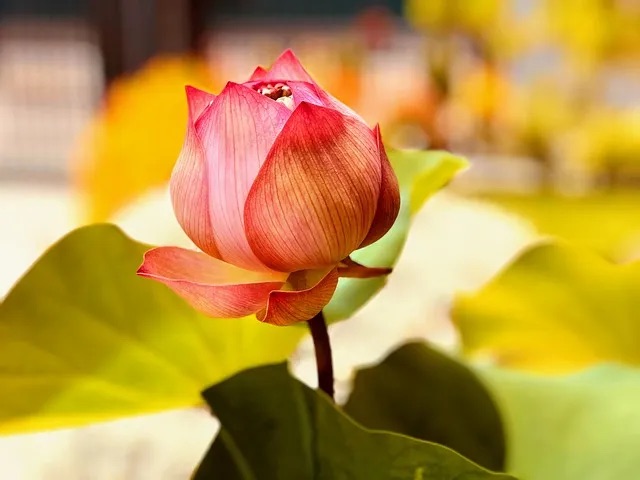
Nature’s cycles remind us of renewal—flowers bloom after withering, grass sprouts anew with the seasons. Yet human life is different. We are not like flowers or grass; our lives come but once. Once this life ends, it will not return. This truth makes it even more crucial to cherish each moment and live with purpose.

A beautiful Russian poem reminds us of life’s brevity:

“A day is short, so brief that before you can embrace the morning, dusk has already arrived. A year is short, so fleeting that before you can savor the vibrant reds and greens of spring, autumn frost is already setting in. A lifetime is short, so brief that before you can fully enjoy your youthful days, old age has already arrived.”

Among the most precious blessings in life is not what we have lost or seek to gain but the ability to treasure the present. As taught in Buddhism:

“The human body is rare and difficult to obtain, yet we have attained it. The Dharma is difficult to encounter, yet we have heard it. If we do not seek liberation in this lifetime, in which lifetime shall we seek it?”

In this rare and precious life, we have not only obtained a human body but also the extraordinary opportunity to encounter the true Buddha — H.H. Dorje Chang Buddha III and hear the sacred teachings. The Buddha’s Dharma voice purifies the heart, and when we apply these teachings in our daily conduct, it is like donning armor that shields us from suffering and empowers us with boundless blessings and wisdom.
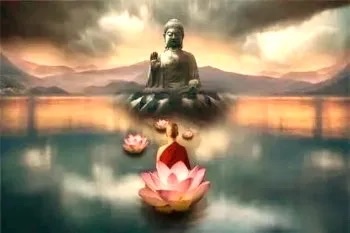
For those beginning their spiritual journey, the safest and most effective path to rapid growth is to purify and fortify the mind with the authentic teachings of H.H. Dorje Chang Buddha III. His words offer a beacon of guidance, cleansing karmic obstacles and illuminating the path to liberation.

When this precious human life ends, if we remain trapped in the endless cycle of reincarnation, where will we seek the path to liberation? The opportunity is now. As Buddhist disciples, we must cherish this rare blessing, dedicating our lives to listening to the Dharma, studying the sacred teachings, and aligning our actions with the truths taught by the Buddha.

To cherish the H.H. Dorje Chang Buddha III‘s Dharma voice is, ultimately, to cherish our own lives. Let us not delay but strive for liberation in this very lifetime.
Link:https://peacelilysite.com/2025/01/09/embracing-lifes-impermanence-a-call-to-seek-liberation-through-buddhism/

The Story Behind Dharma Discourse: The Dharma of Concentration and Visualization Essential for Enlightenment

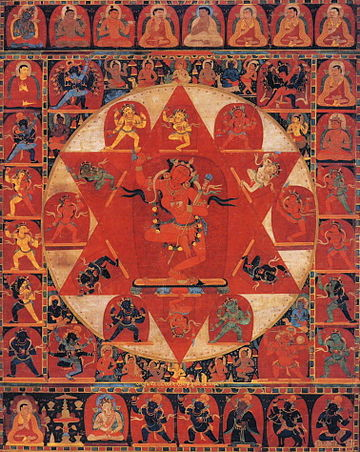
Vajravārāhī

By Yang Zong Da Wa Rinpoche

Pamu has been seriously ill for three months. She is often in a state of unconsciousness, with sores all over her body. Since she can only intake a small amount of liquid food, her body is as dry and thin as rattan. Her once youthful and solemn face has already become like that of a 100-year-old lady, with spots and deep wrinkles. She often says:

“Time does not wait for anyone. Everything is changing. Everything is in a state of impermanence. You should use this as a lesson. After you have read the books I have written, you should put into practice the principles contained in those books. Otherwise, you will not be able to end the cycle of birth and death.”

We used all kinds of medicine and thought of all kinds of methods, yet we could not cure her illness. Thus, on March 29 of this year, Sang Ba Kun Jue Rinpoche and I returned to Lalong-gegan. On the fifth day after our return, we made our way to Lhasa. We went to the Zu Pu Temple to worship, make offerings, and pray for Pamu’s swift recovery. Due to time constraints, we stayed there for only three days and then rushed back to our meditation cells.

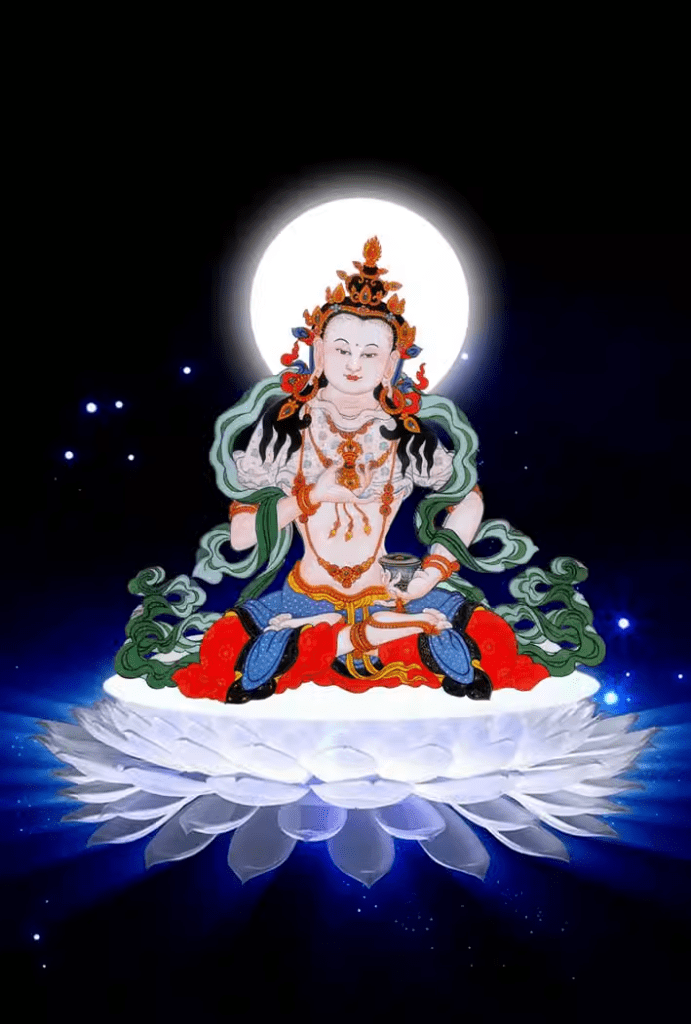
Vajrasattva

Sang Ba Kun Jue and I together practiced the Wu Xiu Yoga Samadhi. We decided to go to the Tusita Heaven to ask Maitreya Bodhisattva to save Pamu. In my state of concentration, I arrived at the inner palace of the Tusita Heaven and paid my respects to Maitreya Bodhisattva. After prostrating myself, I suddenly saw Vajrasattva and Pamu each sitting on a lotus throne, discussing the Dharma with Maitreya Bodhisattva.

At this time, Maitreya Bodhisattva said to me:

“Yang Zong Da Wa, go back and tell those good men and women that Amang Nopu Pamu is the magnificent Buddha Mother of wisdom.”

I joined my palms in front of my heart and asked, “If people ask me how she is magnificent, how should I answer them?”

Maitreya Bodhisattva replied:

“When looking at the history of Buddhism in the human realm, which Buddha Mother in the earthly world has been able to master the Tripitaka and write so many commentaries by the age of 20? Her Dharma water can cause a beard that has stopped growing to grow again rapidly. This is the true Vajravarahi. Have you seen any Buddha Mother who simply saves living beings without accepting any offerings? Her magnificence fills infinite space and cannot be completely expressed to living beings with words. You should quickly go back. Your Pamu will at once return to the earthly world to preach ‘The Dharma of Concentration and Visualization Essential for Enlightenment.’ If you do not quickly leave, you will miss this class.”

I again joined my palms in respect and said to Maitreya Bodhisattva:

“Greatly Honored Maitreya Mahasattva, Pamu is now ill. Why is she here with you? I will go back together with Pamu.”

Maitreya Bodhisattva smiled but did not speak. Vajrasattva then said:

“Do not say anything more. Such deep Dharma is so seldom heard in the world. Quickly go back to the human realm.”

I hurriedly prostrated before Pamu, Vajrasattva, and Maitreya Bodhisattva and bid farewell to them. Through my state of samadhi, I returned to the human realm.

After I emerged from my concentration, three months and six days had already passed. Without even thinking about washing myself, I hurriedly went to pay my respects to Pamu. When I saw her, she still looked so old. She was in the sacred state of having only a faint breath of life left.

Pamu said: “You entered that state of concentration for a few months. I was waiting for you to return. I will soon give discourses on the essential Dharma for practicing concentration and visualization.”

Representing all living beings, I hurriedly prostrated myself before Pamu, joined my palms in respect, and asked:

“Most kind Pamu, when did you return?”

Pamu replied:

“Return from where? With such a serious illness, I did not go anywhere.”

I said, “I clearly saw you in the inner palace of the Tusita Heaven.”

Pamu rejoined:

“This is what you viewed in your state. Do not speak nonsense. Things of the world are all impermanent. One must make the best use of one’s time to benefit living beings.”

As soon as we obtained Pamu’s kind approval, we took a few photographs of her virtuous face. After the film was developed, one photograph showed a young, solemn appearance, while another showed an aged appearance. These two photographs were taken within a few seconds of each other but were totally different. This is truly unbelievable.

We immediately took the photographs to Pamu and asked her to explain the causative factors surrounding this. When we entered the door, everyone was startled. Pamu could hardly speak. Her face was shriveled and had no color. The Great Rinpoches all began to cry.

The next day, when everyone was terribly sad and hopeless, Pamu got up from her seat. My heavens! After only one night, she who was sitting before us was not an old lady about to die but our young and solemn Pamu! All who witnessed this were stupefied. The sound of crying mixed with laughter filled the room.

Pamu then said:

“Do you think I can mysteriously change myself? In fact, you are mistaken! You were not able to see clearly since there was medicine on my face and I was under the lamplight. I only have a heart of humility. How could I have such great skills? You must realize that everything is impermanent and always changing.”

The next day, Pamu formally ascended her throne to give a discourse. The subject was the Dharma of concentration and visualization. With utmost sincerity, I am telling everyone that this is the transcription of the discourses of Amang Nopu Pamu Rinpoche, the greatest and most outstanding Holy Mother in the history of Buddhism. She has never accepted any offerings, silently contributing to the benefit of living beings throughout the three spheres of existence.

This lesson of Dharma practice was given after Pamu returned from the inner palace of the Tusita Heaven. No other Buddha Mother or Dakini can compare with her loftiness and magnificence. We should prostrate ourselves before and feel grateful to the Great Jewel Amang Nopu Rinpoche Holy Mother, appreciating the empowerment of the Buddhas and Bodhisattvas abiding in the ten directions.

Link:https://peacelilysite.com/2025/01/04/the-story-behind-dharma-discourse-the-dharma-of-concentration-and-visualization-essential-for-enlightenment/

Source: Dharma that every Buddhist must follow by Amang Nopu Pamu, translated by Bodi Wentu Rinpoche. This post is an excerpt from the original article, taken from the preface of The Dharma That Every Disciple Must Follow, pages 55 to 58, by the great Rinpoche Yang Zong Da Wa.

Bodhisattva Ksitigarbha: A Beacon of Hope in Impermanence

The belief in Bodhisattva Ksitigarbha is deeply rooted in Asian folk religions, offering a profound message of compassion and salvation. Ksitigarbha, also known as “Earth Treasury” or “Earth Store,” is revered for his extraordinary vows and his unwavering commitment to alleviating suffering, particularly in hellish realms. In China, alongside Manjusri, Samantabhadra, and Avalokiteshvara, Bodhisattva Ksitigarbha is honored as one of the “Four Great Bodhisattvas.”

The “Sutra of the Bodhisattva Ksitigarbha’s Fundamental Vows” is a sacred scripture, attributed to Shakyamuni Buddha himself, that highlights the remarkable vow power of Bodhisattva Ksitigarbha. In this sutra, Ksitigarbha’s magnificent vow is eloquently praised: “Until the hells are empty, I will not attain Buddhahood, and I will only achieve enlightenment after saving all beings.” The text also provides insights into Ksitigarbha’s exemplary actions and deeds along his spiritual path.

A Tale of Filial Piety and Redemption: In one of his past lives, Bodhisattva Ksitigarbha incarnated as a woman named Guangmu. She exemplified unparalleled filial devotion, but her mother’s disbelief in karma led to her descent into hell after death. Learning of her mother’s plight, Guangmu selflessly sacrificed her most cherished possessions to accumulate merits on her mother’s behalf. Before the Buddha, she made a solemn vow: to secure her mother’s permanent liberation from the three evil paths and, only then, seek her own enlightenment. Through Guangmu’s selfless acts and immense vow, her mother swiftly attained liberation and ultimately achieved Buddhahood.

People place their faith in Bodhisattva Ksitigarbha due to his profound aspiration: “To save all sentient beings and attain enlightenment; I will not achieve Buddhahood until hell is empty.” This resolute vow has made him a beacon of hope for those seeking liberation in the afterlife.

The holy birthday of Bodhisattva Ksitigarbha falls on the last day of July in the Chinese lunar calendar, which corresponds to September 14th this year. Buddhists worldwide come together to honor and memorialize Bodhisattva Ksitigarbha during special assemblies held in Buddhist temples. These gatherings serve not only to pray for the well-being of all living beings but also to beseech blessings for departed relatives and friends, hoping they will ascend to higher realms through the benevolent influence of Bodhisattva Ksitigarbha. This year, a special assembly was held at Hua Zang Si temple in San Francisco on September 10th.

Every year, my participation in the Ksitigarbha Dharma assembly evokes a mix of emotions. On one hand, I feel a deep sense of joy as I pray for the protection and blessings of the Buddhas and Bodhisattvas for all beings. On the other hand, a profound sadness envelops me as I witness my loved ones departing from this world one by one. The list of those to be transferred to a better realm, through prayers and rituals, continues to grow. This year, the passing of my uncle, the youngest brother of my father, added to the somber realization of life’s brevity and the swift nature of impermanence.

As I age, I keenly experience various illnesses, physical decline, and a slowing of my movements. These experiences have deepened my understanding of why H.H.  Dorje Chang Buddha III continually reminds us to cultivate the awareness of impermanence. In “What is Cultivation?” and in many pre-recorded Dharma discourses, His Holiness emphasizes that being mindful of impermanence is the cornerstone of our spiritual development. Without this awareness, one cannot establish the sincere commitment required to practice Buddhist Dharma earnestly and break free from the cycle of life and death.

Life has presented me with numerous unpredictable natural disasters and personal sufferings. Unless I persistently dedicate myself to spiritual practice, the looming specter of death may catch me unprepared, leading to a fate that is both pitiable and terrifying.

I earnestly pray that all Buddhas and Bodhisattvas, with a special invocation to Bodhisattva Ksitigarbha, bless all living beings with the wisdom to grasp the impermanence of life. May we all diligently cultivate ourselves, seeking liberation in this lifetime and guiding the departed souls to higher realms, where they can encounter the profound teachings of Buddhism and ultimately break free from the cycle of birth and death.

Bodhisattva Ksitigarbha: A Beacon of Hope in Impermanence

Link:https://peacelilysite.com/2023/09/22/bodhisattva-ksitigarbha-a-beacon-of-hope-in-impermanence/

#  DorjeChangBuddhaIII#HHDorjeChangBuddhaIII#HuaZangSi #Buddha #Buddhism #buddhist #Temple#BuddhismTemple#SanFrancisco#BodhisattvaKsitigarbha #Impermanence

Buddha Imparted a Parable Story to King Shengguang

In the “Buddha Imparts The Parables Sutra,” Sakyamuni Buddha explained a story to King Shengguang that conveyed the true meaning of life. The story goes like this: A thousand eons ago, there was a man wandering in the wilderness who was suddenly chased by a ferocious elephant. With no place to rely on, he ran in fear and came across an empty well with a large tree beside it. Desperate to escape, he followed the roots of the tree and hid in the well. However, the well was not a safe place either. There were two mice, one black and one white, constantly gnawing at the tree roots. And there were four poisonous snakes surrounding the well, ready to strike, and a poisonous dragon at the bottom of the well. The man was afraid of the snakes and the dragon, and also worried that the mice would eat away the tree roots. Just then, five drops of honey from a honeycomb on the tree fell into the man’s mouth, and he immediately forgot his fear and worries. But soon, bees from the honeycomb stung him due to the shaking of the tree, and a wildfire suddenly broke out and burned the tree.

The Buddha told King Shengguang that the wilderness represents the long night of ignorance, the man represents all sentient beings, the elephant represents impermanence, the well represents life and death, the tree root represents life, and the black and white mice represent night and day. The four poisonous snakes symbolize the four elements of earth, water, fire, and wind; the honey represents the five desires of wealth, sex, fame, food, and sleep; the bees represent evil thoughts; the wildfire represents aging and disease; and the poisonous dragon represents death. The Buddha emphasized that birth, old age, sickness, and death are inevitable and frightening. One should always be vigilant and not be consumed by the desires for wealth, sex, fame, food, and sleep. Upon hearing the Buddha’s teachings on the parables of life and death, King Shengguang was deeply moved.

This story serves as a reminder for us as well. Have we become absorbed in the sweetness of “honey” in our lives, forgetting that the “black and white mice” are constantly nibbling away at our time? Life is like a fleeting dream, and it is empty. It is crucial for us to awaken from this dream of fleeting existence.

Buddha Imparted a Parable Story to King Shengguang

Link:https://peacelilysite.com/2023/04/13/buddha-imparted-a-parable-story-to-king-shengguang/

#SakyamuniBuddha #TheParablesSutra #Impermanence#LifeandDeath#Buddhism #BuddhistTeaching #BuddhistSutra #BuddhistTales