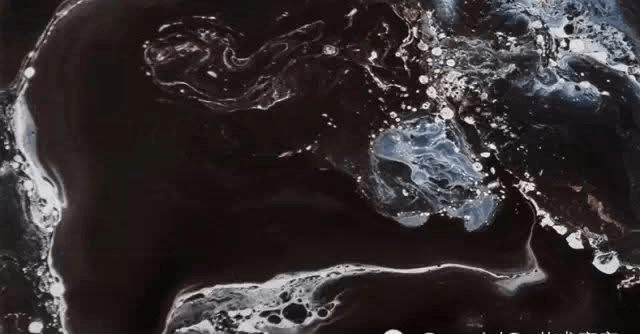
Through his brushwork, H.H. Dorje Chang Buddha III renders the subtle life cycle of a water bubble—its emergence, transformation, and eventual dissolution—with remarkable vitality. Though the medium is static, the painting evokes a striking sense of movement and immediacy. One almost senses the gentle drifting of bubbles across the surface, and even imagines the delicate sound that might accompany the instant when a bubble touches the ground and quietly disappears.
Beyond its visual beauty, the work carries a deeper contemplative resonance. In the fleeting rhythm of the bubbles, one cannot help but see a metaphor for the human condition. The trajectory of a bubble—from its brief formation to its silent vanishing—mirrors the arc of human life: birth, growth, aging, and departure. Life itself unfolds within the span of a breath, fragile and transient, reminding us of the importance of awareness and presence in each passing moment.
From an artistic perspective, the painting also demonstrates a remarkable command of impressionistic expression. The composition operates not only as a unified whole but also as a constellation of smaller visual worlds. Any isolated fragment of the canvas could stand independently as an exquisite impressionist study, rich in color, light, and atmosphere. This structural richness gives the work a dreamlike, almost illusory quality—where forms appear to emerge and dissolve within layers of color and movement.
In this way, the painting invites the viewer to linger, not merely to observe, but to reflect. It transforms a simple natural phenomenon into a meditation on impermanence, perception, and the delicate beauty of existence.
Click here to Wikitia page on H.H. Dorje Chang Buddha III that list major accomplishments and teachings with links.
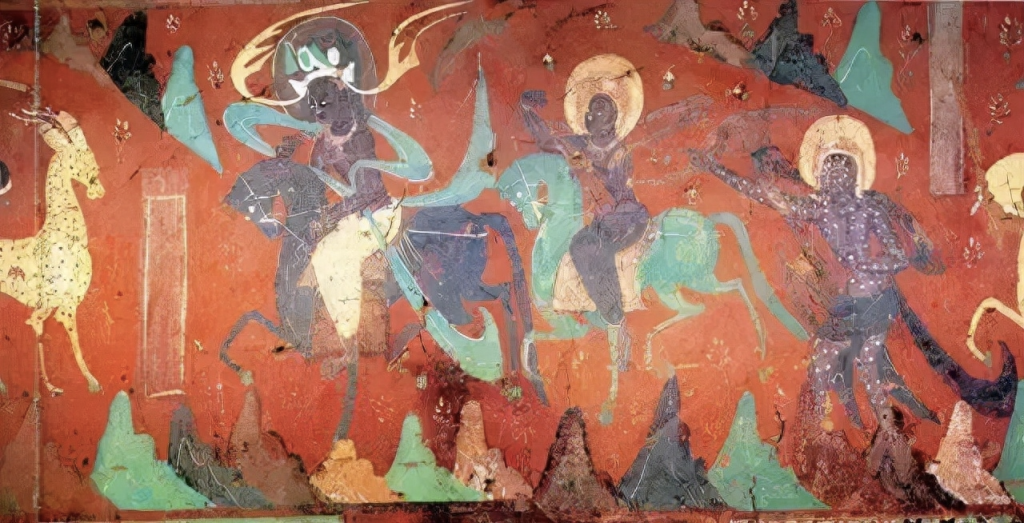
“The Story of the Nine-Colored Deer King” is the main theme of the murals in Cave 257 of the Mogao Caves. It unfolds in a long horizontal scroll, narrating many stories from the past life of the founder of Buddhism, Siddhartha Gautama.
Legend has it that long ago, on the banks of the Ganges River in India, there lived a beautiful and kind nine-colored deer king (the previous incarnation of Siddhartha Gautama)…
One day, as the nine-colored deer king was leisurely strolling by the river, he suddenly heard a pitiful cry from the water. Without hesitation, the brave nine-colored deer leaped into the river, risking its own safety, and rescued the drowning person. The saved individual, overwhelmed with gratitude for a second chance at life, repeatedly bowed in thanks to the nine-colored deer.
The nine-colored deer king said, “No need for thanks; just go on your way. My only request is that you do not reveal my whereabouts to anyone.” The drowning person solemnly swore, “Kind benefactor, rest assured. If I ever betray this promise, may my body be covered in sores and my mouth emit a foul odor.” With that, the person departed.
Before long, the queen of that country dreamt of a deer—one with nine colors and silver-like antlers. She told the king about her dream and requested that he order the capture of such a deer. She had a strong desire to use its colorful hide for clothing and its antlers for earrings. Consequently, the king issued a proclamation and offered a substantial reward.
Upon seeing the proclamation, the person who had been saved reported to the king, leading soldiers to the mountain to hunt down the nine-colored deer.
When the nine-colored deer was surrounded by the king’s troops… it spotted the person it had rescued from drowning, tears of sorrow welled up in its eyes…
The nine-colored deer leaped in front of the king and recounted the story of how it had saved the person from drowning and how that person had broken his promise. The king and the soldiers were deeply moved by the deer’s account. The king ordered the soldiers to clear a path, allowing the nine-colored deer to regain its freedom. He also issued a decree: “From now on, people are not allowed to shoot deer.”
As for the person who had broken his promise, in an instant, sores covered his body, and a foul odor emanated from his mouth. From that moment on, he was despised and reviled by the people.
The story of the nine-colored deer is vividly portrayed in Cave 257 of the Dunhuang Grottoes, which is what we now see as “The Story of the Nine-Colored Deer King.” While the mural is not particularly large in size, it holds significant importance in Chinese art history.
This artwork takes the form of a horizontal scroll with the story unfolding from both ends and converging in the middle. It consists of multiple scenes depicting various stages of the story, such as its origin, development, climax, and conclusion, all seamlessly connected to create a cohesive narrative.
“The Story of the Nine-Colored Deer King” is composed of nine panels, illustrating five key plot points: the person drowning, the nine-colored deer rescuing the drowning person, the drowning person expressing gratitude to the deer, the queen’s desire to capture the deer, the informant revealing the deer’s whereabouts to the king, and the confrontation between the king and the deer.
The story progresses from both ends of the mural towards the center, placing the pivotal conversation between the king and the deer in the middle. This unique composition style captures the essence of continuous horizontal scroll art from the Wei and Jin dynasties, showcasing the distinctive historical aesthetics of the era.
In the artwork, the depiction of mountains, rocks, and rivers occupies a significant portion. The rendering of the landscape primarily serves to fill the space and delineate the composition, providing a brief description of the specific environment, thereby enhancing the visual impact of the artwork and its storytelling function.
“The Story of the Nine-Colored Deer King” places the climax of the story—the moment when the nine-colored deer recounts the events—at the center of the composition. At the same time, both nine-colored deer on the left and right sides turn their bodies toward the center, serving as visual guides.
This is precisely the turning point in the storyline of the nine-colored deer, where the drowning person’s affliction receives its retribution. It places the Buddhist concept of rewarding goodness and punishing evil at the visual forefront, narrating the sequence of events step by step to gradually reveal the story’s progression to the viewer.
The entire process is rhythmic, marked by the ebb and flow of the narrative, skillfully aligning the chronological order with the spatial arrangement, showcasing the artist’s unique conceptualization of the composition.
In terms of color usage, “The Story of the Nine-Colored Deer King” appears to be very vibrant, but in reality, it uses a limited color palette, consisting of only six colors. The earthy red color dominates the entire painting, which is a prominent color characteristic of the Wei, Jin, Northern and Southern Dynasties period.
Complementing this are touches of stone blue and stone green, along with the harmonious blending of black, white, and gray. This blending softens the strong contrast between earthy red and stone green and blue, achieving a harmonious contrast of warm and cool tones. At the same time, it also accentuates the brightness of contrasting colors.
The introduction of Buddhism had a significant impact on the development of portraiture in China, introducing a set of strict conventions for Buddhist iconography. During the Northern Wei dynasty, the Dunhuang murals began to emphasize body proportions and adopted more attention to three-dimensionality after incorporating color shading techniques.
In “The Story of the Nine-Colored Deer King,” most of the figures on the canvas have slender bodies, with their clothing belts fluttering in the wind. Their gestures and movements exude a graceful dance-like elegance, evoking the style of figures that “float like wandering dragons and are delicate as startled swans.”
In the murals of the Northern Wei period in Dunhuang, Jataka stories are an important theme. Jataka stories refer to the countless events and experiences in the past lives of Siddhartha Gautama, who would later become the founder of Buddhism. In history, there are numerous Jataka stories related to Siddhartha Gautama.
Within Buddhist art themes, there are many Jataka story paintings, and “The Story of the Nine-Colored Deer King” is just one of them. Story paintings are used to promote the Buddhist concept of karmic retribution and to praise the spirit of self-sacrifice displayed by the Nine-Colored Deer King.
In reality, all Jataka paintings ultimately convey one message: that by performing good deeds, selflessly giving, and enduring hardships, one can achieve positive outcomes, whereas engaging in wrongful actions will lead to self-destruction.
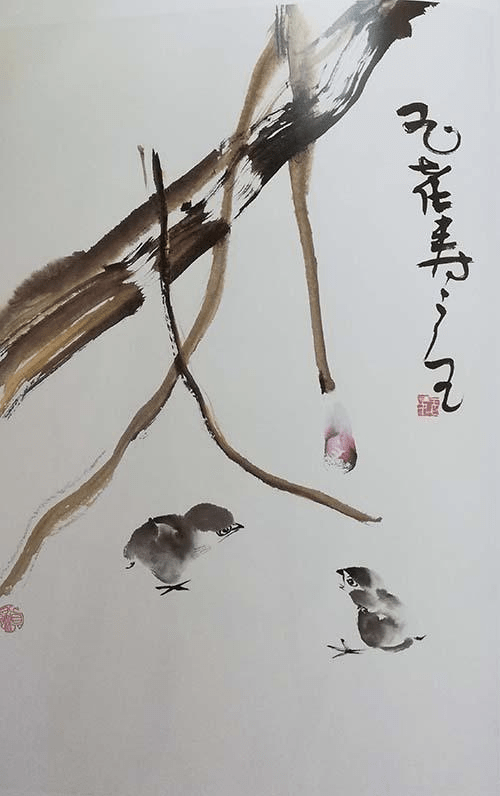
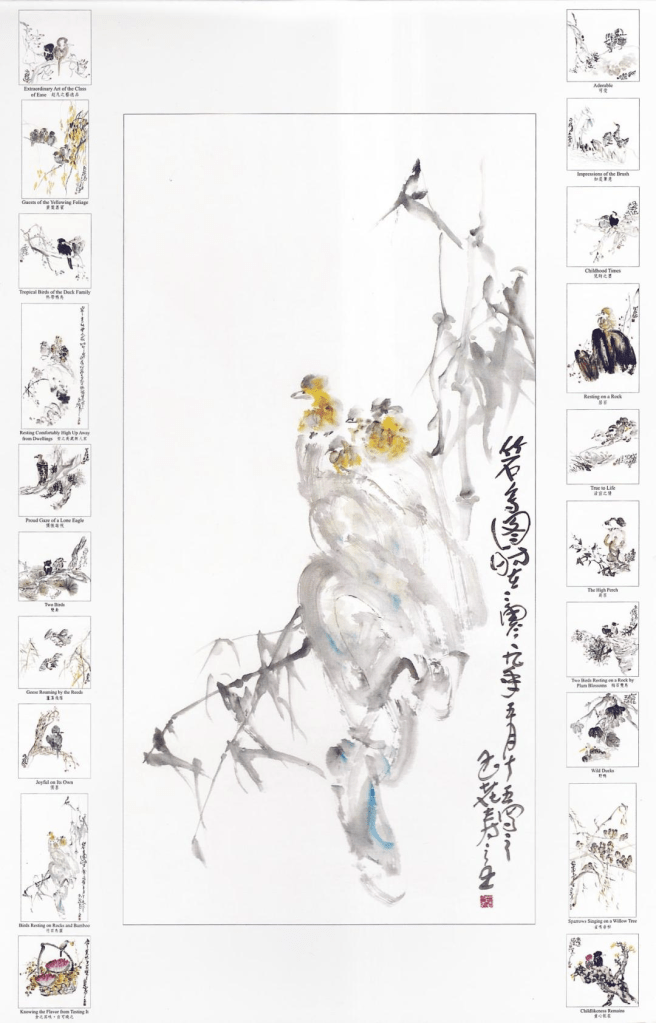
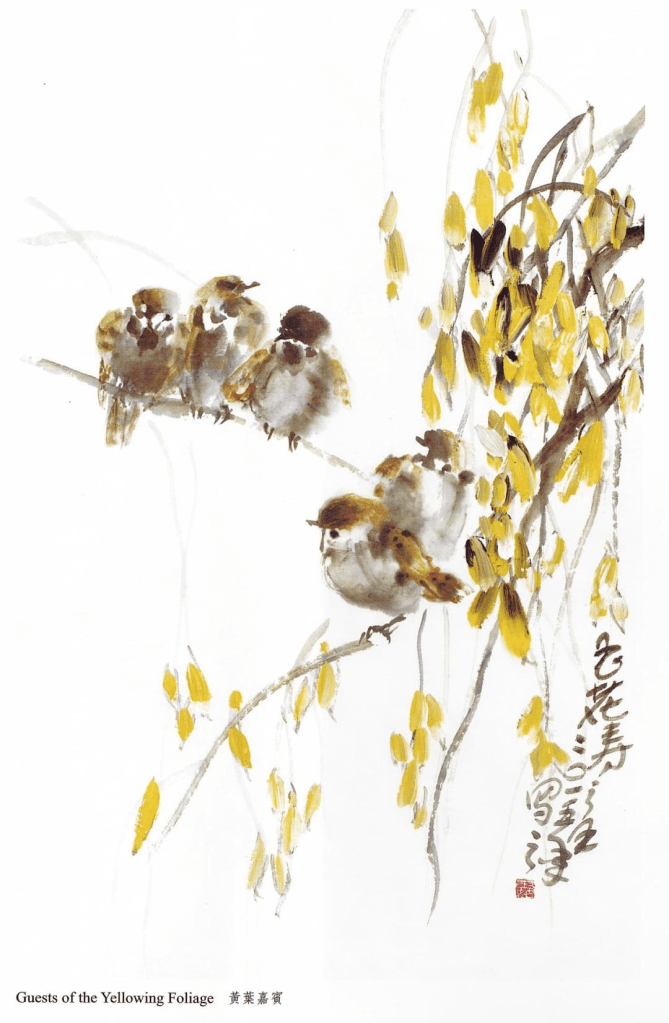
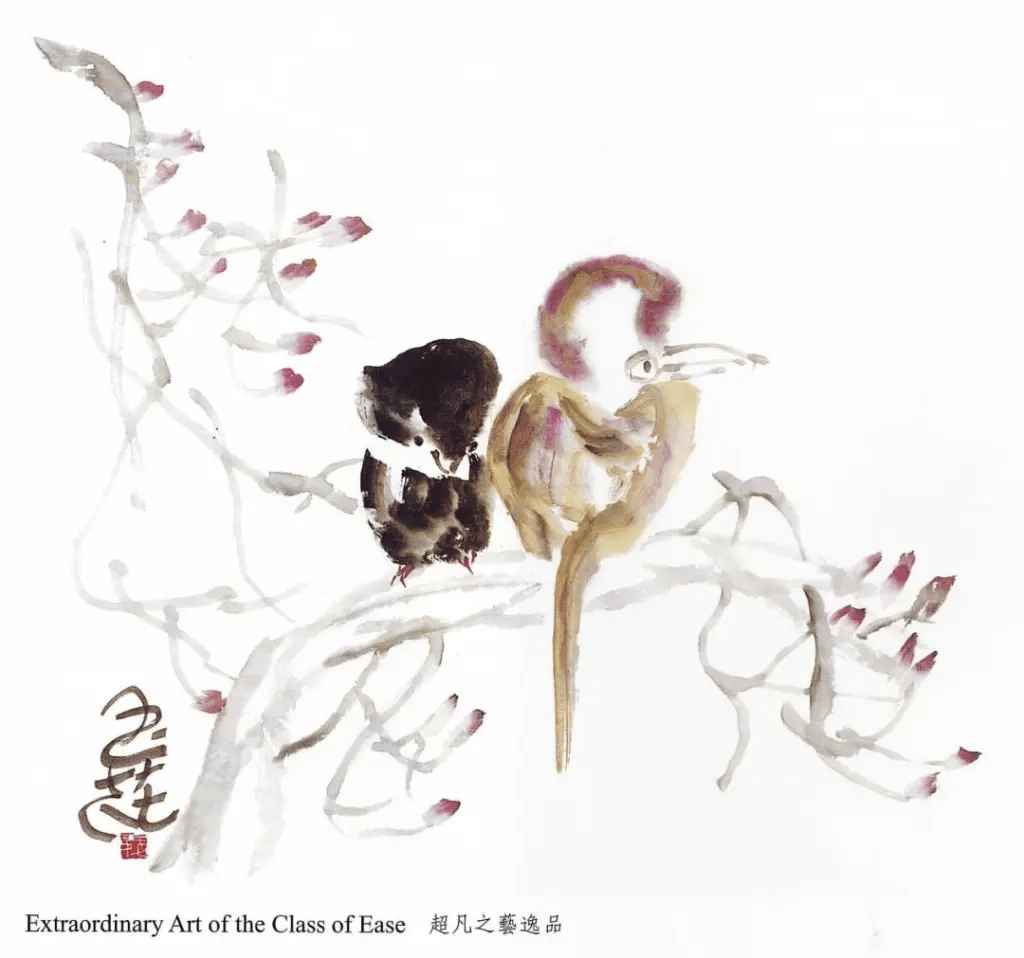
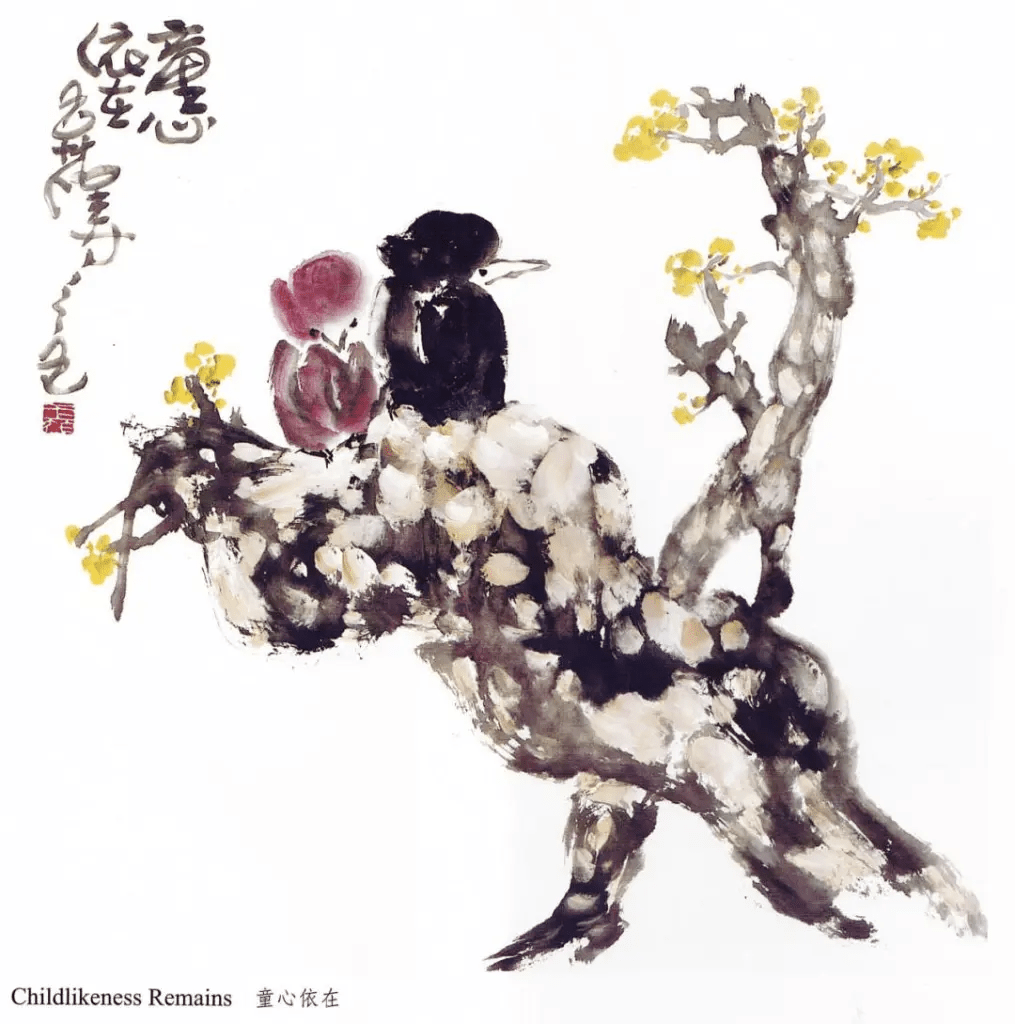
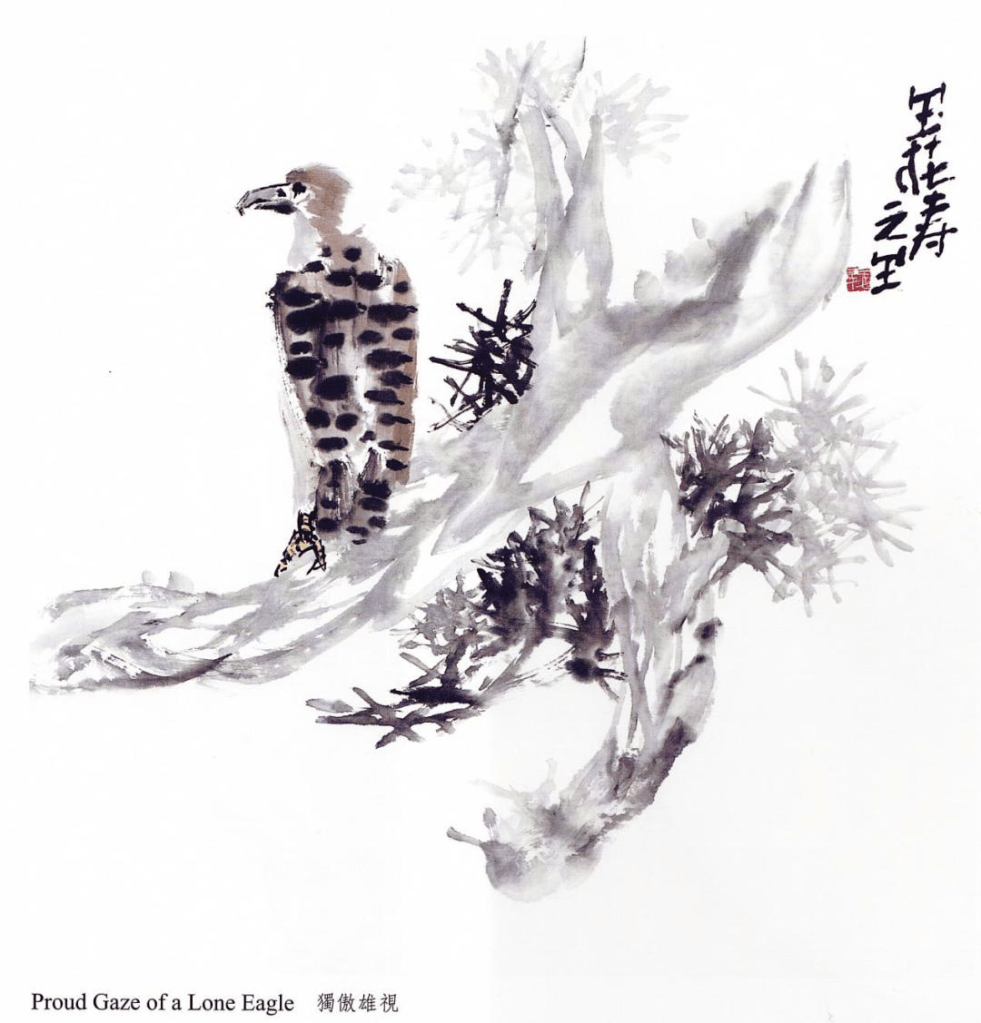
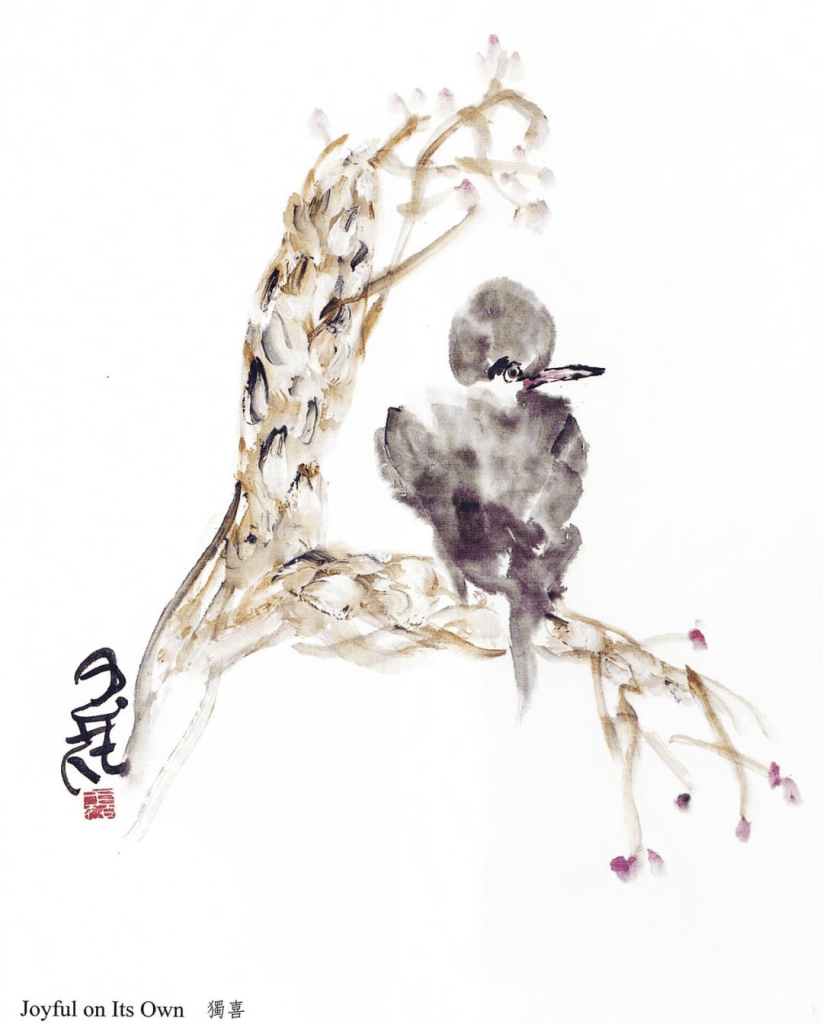
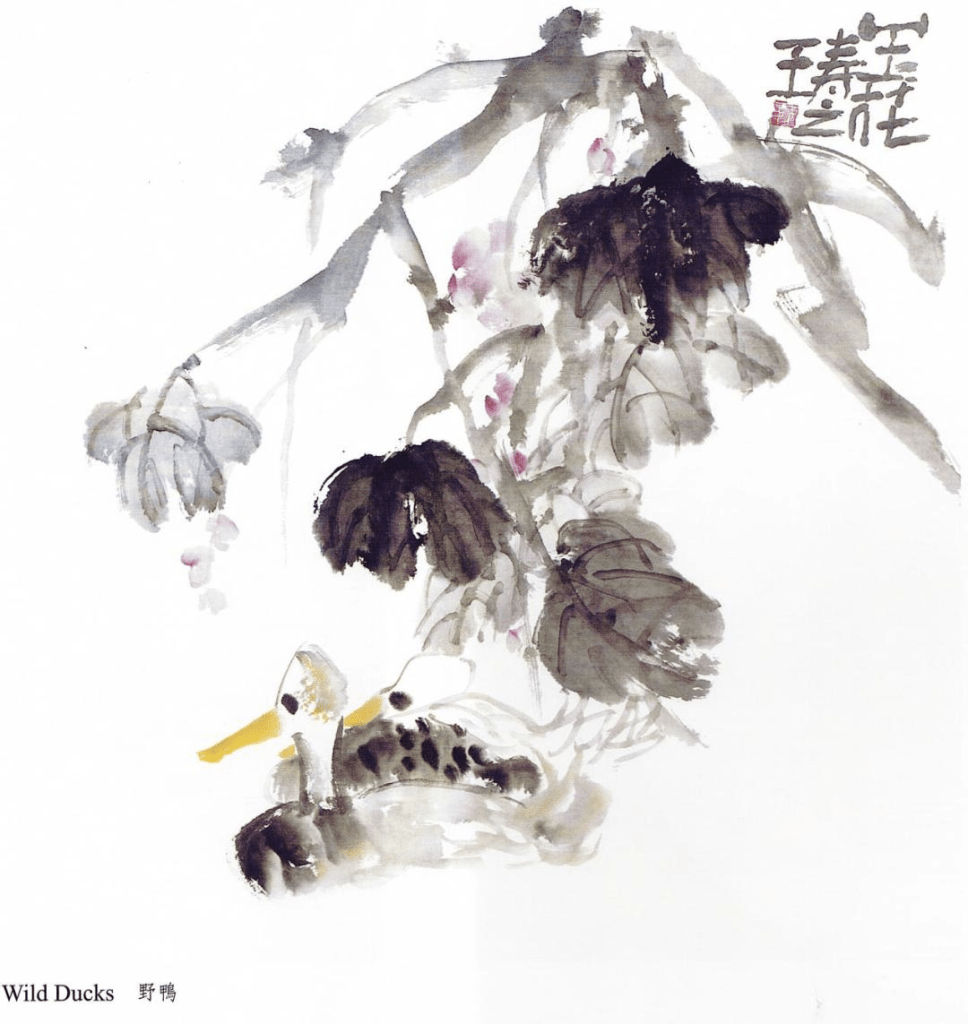
The beauty of art emanates from the soul, while the beauty of the soul reflects one’s internal cultivation. In Professor Yu Hua Shou Zhi Wang’s “Yu Hua Shou Zhi Wang Flower and Bird Painting Album,” we are presented with a delightful sense of freshness and warmth, coupled with a profound and uplifting force. Let’s savor the experience of “Yu Hua Shou Zhi Wang Flower and Bird Painting Album” together and witness the extraordinary talent and profound moral character of the artist!
Professor Yu Hua Shou Zhi Wang’s works are characterized by strong and powerful brushstrokes, showcasing a rich and diverse palette, and exuding a poetic and artistic charm. Each piece is infused with sunlight, radiating sincerity, simplicity, and a delightful sense of innocence and romance. As we immerse ourselves in Professor Yu Hua Shou Zhi Wang’s “Yu Hua Shou Zhi Wang Flower and Bird Painting Album,” we can deeply sense the artist’s love and compassion for animals. Each artwork invites us into a transcendent dialogue with a sage-like presence, revealing the captivating allure of art!
Professor Yu Hua Shou Zhi Wang is brimming with compassion and care for all living beings, be it humans or animals, even including honeybees that can sting. She treats each of them with equal and attentive concern.
A few years ago, bees would frequently visit Professor Yu Hua Shou Zhi Wang’s residence. The first time they built a hive at her home, they even stung someone. Some people suggested removing the beehive to prevent further harm, but Professor Yu Hua Shou Zhi Wang firmly disagreed. She felt deep empathy for the bees, as they had finally found a shelter from wind and rain. She made it clear that if they had to leave, the bees should not be harmed. In fact, she would rather move out herself than cause suffering to the bees. As a result, Professor Yu Hua Shou Zhi Wang and her family decided to move to her art studio to live.
Another incident involving Professor Wang showcases her compassionate nature when she saved a butterfly that had fallen into the water. Concerned about the butterfly’s well-being, she took it home and cared for it for a few days until it was fully recovered, and only then did she release it back into the wild.
The compassionate and kind professor frequently utilizes the money earned from selling her paintings to release captured living beings, such as birds, fish, and more. On numerous occasions, she has purchased large quantities of fish, sometimes weighing several cabins or even tens of tons, to set them free. There have been instances where she bought an entire boat-load of fish from a large fishing vessel, ensuring their liberation and return to their natural habitats.
I couldn’t help but ponder: When two conflicting interests clash, do we prioritize the welfare of others or our own interests first? It’s a challenging question, and not many people in this world can genuinely put the welfare of others before their own. However, Professor Yu Hua Shou Zhi Wang managed to do just that. She consistently places the well-being of all beings ahead of her own interests. Her unwavering compassion and greatness are truly remarkable and serve as an inspiring example for us all.
In daily life, Professor Yu Hua Shou Zhi Wang is very frugal. She is reluctant to waste even the water used for daily living tasks, such as washing rice or clothes. She often collects and saves the used water to water the garden or flush the toilet. Additionally, Professor Yu Hua Shou Zhi Wang frequently donates his own salary to help those in need. When asked by students, “You can earn a lot of money from selling just one of your artworks, so why are you still so frugal?” At moments like these, Professor Yu Hua Shou Zhi Wang advises the students to cherish their blessings and not to waste anything. He encourages them to use the money saved from being frugal to support more people who are facing difficulties.
The well-known saying, “Deeply hidden talent not easily revealed” aptly describes Dr. Yuhua Shouzhi Wang’s morality and inner refinement. The characteristics of an artist’s paintings essentially reflect the character of the painter. From the paintings above you can find humility, inner peace, harmony and noble morality of professor Wang.
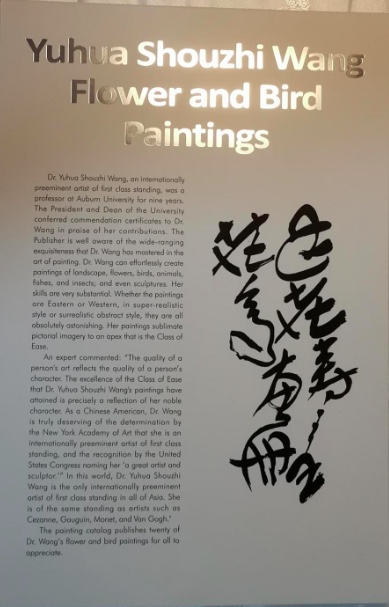
Dr. Yuhua Shouzhi Wang is the Lifetime Honorary Chairwoman of the International Art Museum of America. The museum has a dedicated gallery exhibiting her artworks.
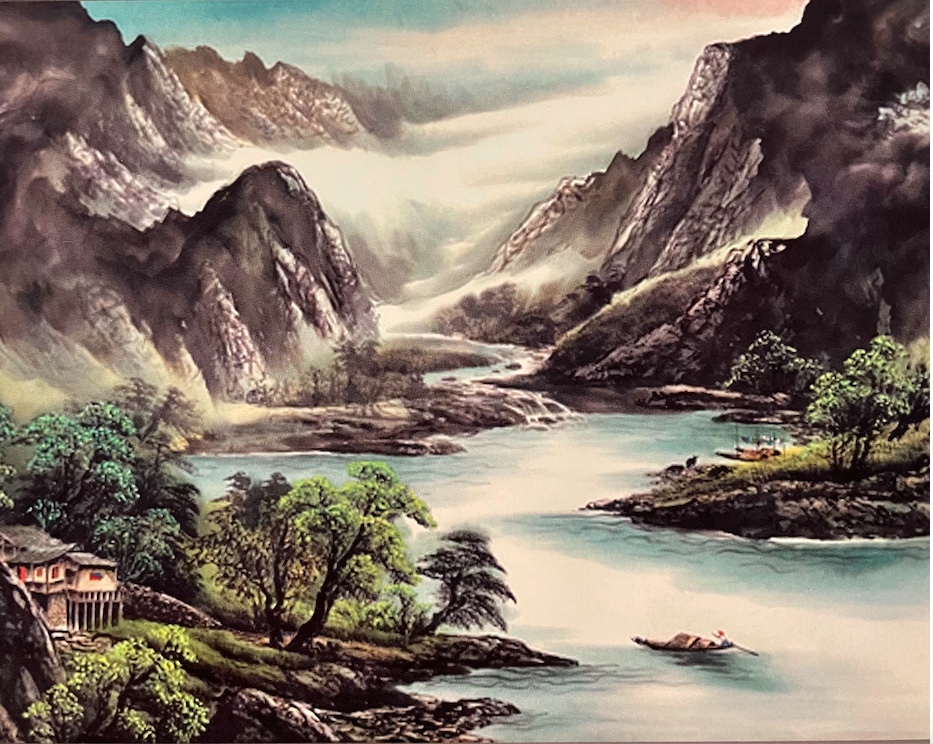
The first time I saw this Chinese ink painting, I cried from the bottom of my heart. What a wonderland beyond this world, how I wish I could live there! It gave me the deep impression of otherworldliness, leisureliness and tranquility. This place is not for ordinary people, it is the place for the holy hermits living untethered from the world. The painting seems like a clear spring flowing through my body and purifying my soul. People have said: a good painting is like a fine poem, like a beautiful song. Looking at this transcendental art piece, I could hear the elegant Chinese classic music “River flowing down from the tall mountain”, and see the gentle pleasant whisper of the clouds sweeping through the forest. It also reminds me one of the Cold Mountain’s poem:
Clambering up the Cold Mountain path, The Cold Mountain trail goes on and on: The long gorge choked with scree and boulders, The wide creek, the mist blurred grass. The moss is slippery, though there’s been no rain The pine sings, but there’s no wind. Who can leap the world’s ties And sit with me among the white clouds?
Here you can see the artist combined different kinds of painting skills: center brush-tip technique, side brush-edge technique, large-scale freehand brush work, splash-ink technique and fine brush stroke. The mountain scenery was painted with black ink and heavy hues of green. This artwork not only preserves traditional painting skills but also manifests the realistic effect of modern Western oil paintings.
In Chinese paintings, it is very difficult to apply the perspective technique, with its three-dimensional look, to paintings in which the center brush-tip technique is used to express scholarly charm. However, this painting combines four different elements: the three-dimensional perspective technique together with the scattered perspective technique, the splash-ink technique with lines freehand brushwork, and realism. Attributes from both Chinese and Western paintings form a single stylish charm. It depicts a pristine rural setting, a land accompanied by mountain, river, sun and moon spirits. One regards a place as home when one has cherished feelings toward the local customs and conditions of that place. Wouldn’t you like such a home?








 Peace LiLy