Iron Man of Bhutan

Great Bodhisattva H.E. Tangtong Gyalpo

H.E. Tangtong Gyalpo , the iron man of Bhutan, the Leonardo da Vinci of the Himalayas, the king of empty fields, artisan, engineer, composer, poet, soldier, merchant and more. He is a repertoire matched only by his own achievements. He is none other than H.E. Tangtong Gyalpo, the great wandering scholar and accomplished yogi saint- and all the above.

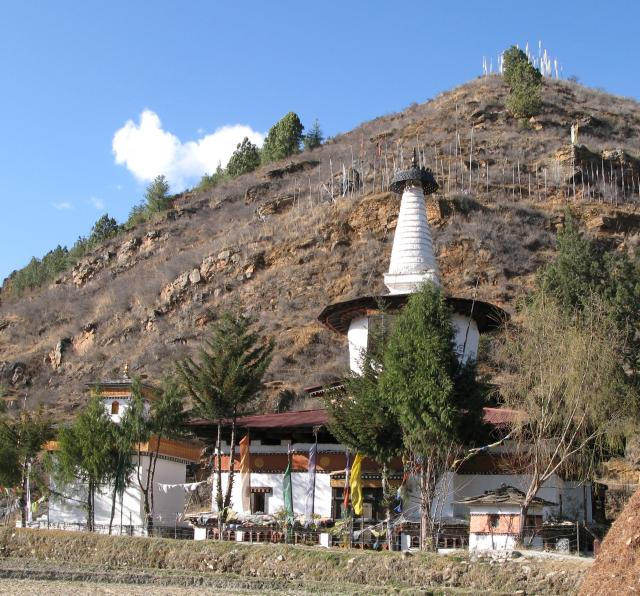
Perhaps the most enigmatic of Buddhist saints,H.E. Tangtong Gyalpo is the most renowned as the builders of iron bridges. In his many visits to Bhutan he built 8 iron bridges and 2 temples, the Dumtseg lhakhang in Paro and the Tachog Lhakhang . These are the top places to visit in Bhutan

Dumtsek Lhakhang at Paro

If any imminent personage has fired the imagination of later day chronicles, scholars and devotees, none can compare to that of H.E. Tangtong Gyalpo. From the scandalously rogue antics of Drukpa Kuenley, the divine madman, to the menacingly airborne Milarepa, the legacy of Thang Tong Gyalpo is solid iron, literally so.

Personality

H.E. Tangtong Gyalpo is most revered and remembered for the numerous iron bridges that he built, accomplishments that begat him the more popular title  Chazampa(iron bridges). For his eccentricity and unconventional behavior he was called Lungton Nyonpa, the madman of an empty village. What was generally accepted was that he was Drubthob, the realized and accomplished one. He was so, in every sense of the word.

Iron Bridge at Tacgogang Lhakhang Built by H.E. Tangtong Gyalpo

His Birth

A popular and interesting but apocryphal legend has it that H.E. Tangtong Gyalpo was born as an old man. His parents, fearing that they had given birth to a freak abandoned him in the fields. He was then brought up by the wild animals and hence his name Tangtong Gyalpo. It translates as King of the open fields.

The more accurate accounts are that he grew up a child prodigy who has mastered the scriptures and the arts at a young age. In this context the name has been interpreted as the one with incomparable excellence in meditation. He is also known for steadfast and immobile from the plains (thang) of concentration. The name is also explained as indicative of his vast and supreme views on the nature of emptiness. 

His Reincarnation

His life is one of progression. The avatars as manifold as the names and their interpretations. He is at once a militia conscript who rose rapidly through the ranks to become a commander. He has captured several forts by way of nonviolent strategy. In his youth, he was a very successful merchant who gave up his wealth and profits to a local ruler to save the lives of several unknown people from execution. 

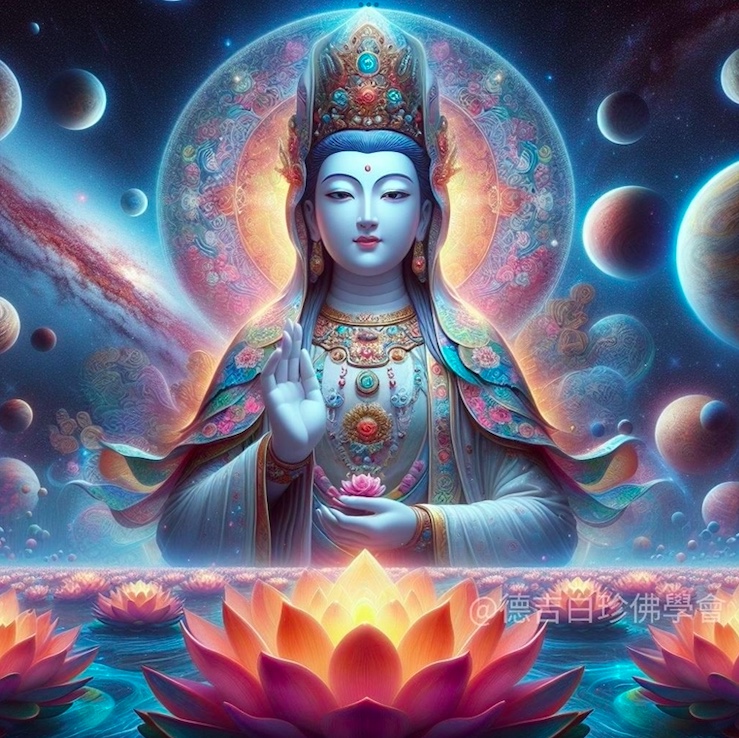
It is hardly surprising from this incident that he was considered an active emanation of Chenrezig, the bodhisattva of compassion. Additionally, several of his sadhanas such as Avalokiteshvara sadhana ‘For The benefit of All Beings Pervading Space” was composed by him after he received the transmission of this practice directly from Chenrizig. Chenrizig Nyungnye was also said to be a practice that he did throughout his life.

His Youth

H.E. Tangtong Gyalpo lived for a time in Lhasa, at the court of  the Deb Desi and was under the patronage of the daughter of the Desi. 

The princess commissioned several major works of sculpture and paintings; most notable among them the exquisite gold sculpture of Milarepa. He also crafted several life-sized statues of Chenrezig, Tsepame and Drolma from conch shell, coral and turquoise that were destroyed in 1959.
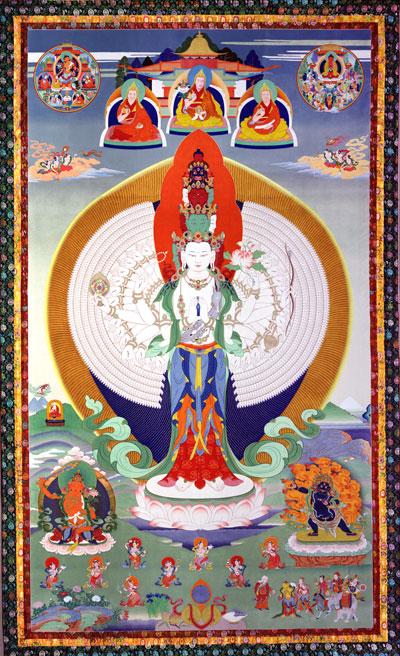
chenrezig
Chenrezig

H.E. Tangtong Gyalpo’s creativity and ingenuity were not limited to art but even extended to developing numerous medicines and treatments including some longevity pills. Perhaps through strange coincidence, the Chakpori hilltop where H.E. Tangtong Gyalpo lived near Lhasa later became the site for the first formal Tibetan medicinal institute built in the 17th century.

His Inspiration

H.E. Tangtong Gyalpo’s engineering feats, particularly with regard to bridge building, were reportedly inspired after he was refused passage on a ferry because of his ferocious and unkempt outward appearance. He was thrown unceremoniously into the water only to emerge with an insatiable zest for building bridges and ferry points. 
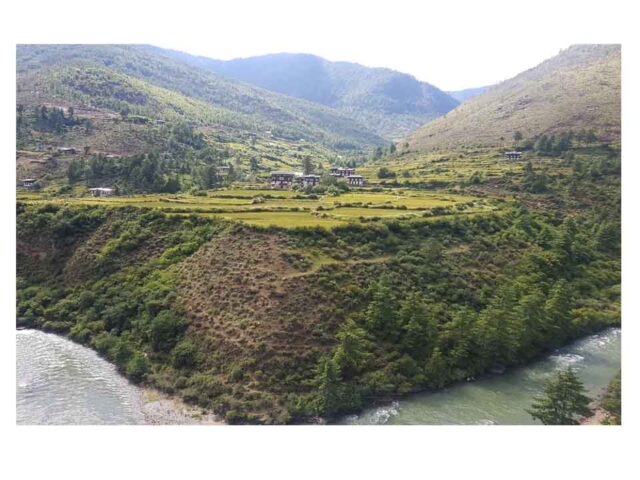
Tachogang village , connected by iron bridge
Tachogang Village , Connected By iron Bridge

The new found vocation was intended to inter-link remote and inaccessible villages and propagate the Buddhist faith. His early attempts suffered many set backs, the primary one being the lack of funds. This did not deter or faze H.E. Tangtong Gyalpo and he is said to have come up with an innovative idea to compose and organize performances of the first ever Tibetan Opera, the Achi Lhamo to finance his passion. 

Acheivement

Both bridge building and the opera were great successes. H.E. Tangtong Gyalpo went on to build something like 58 iron bridges and an equal number of wooden bridges, and over hundred ferry crossings all over the Himalayas including 8 iron bridges in Bhutan. None of the bridges are known to be standing. However, parts and pieces of iron still stand the taste of time at the national museum in Paro and at Duksum near Trashiyangtse, in eastern Bhutan. 
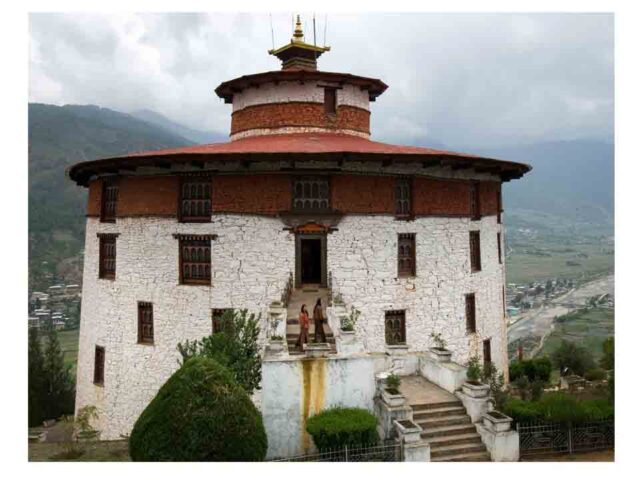
National Museum in Paro

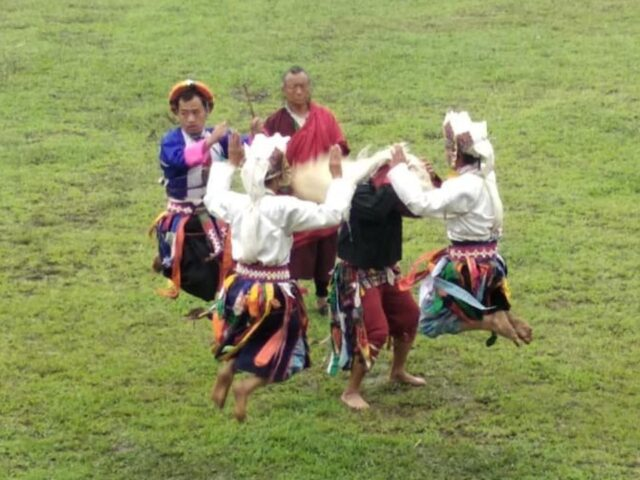
The Achi Lhamo opera, with the starting troupe of seven sisters who worked on the saint’s bridges, is still performed and enjoyed hugely to these days during the new year celebration and on festive occasions. 
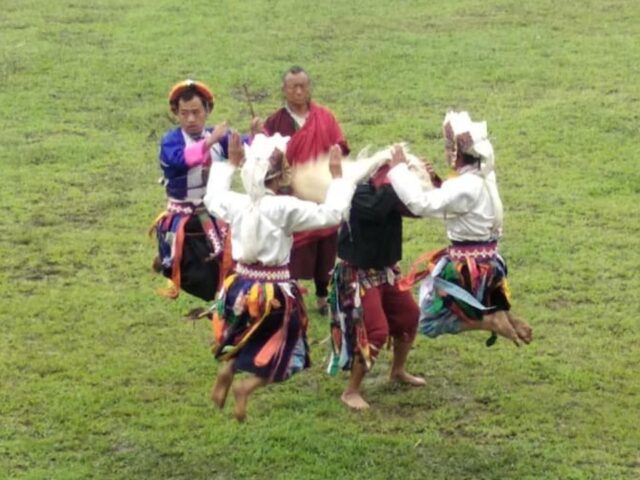
Achi Lhamo Opera Still Prevalent in Bhutan
Achi Lhamo Opera Composed by H.E. Tangtong Gyalpo Still Prevalent in Bhutan

Places he visited

H.E. Tangtong Gyalpo traveled widely and is said to have visited SIkkim, Ladakh, Assam, Arunachal Pradesh and Bhutan in search of iron ore. He is a celebrated figure in this region and his exploits and compositions live on in the local folk songs and lore. He is also credited with composing many of the work songs sung in the villages of the region, including in Bhutan. Numerous stories and songs also extol his miracles and his enlightened activities and one song tells of him using the yeti as his porter. 

Living Temple of Thang Tong Gyalpo in Bhutan

H.E. Tangtong Gyalpo’s passage in Bhutan stands enshrined in the temples of Tachoggang and Dumtse in Paro that he built.
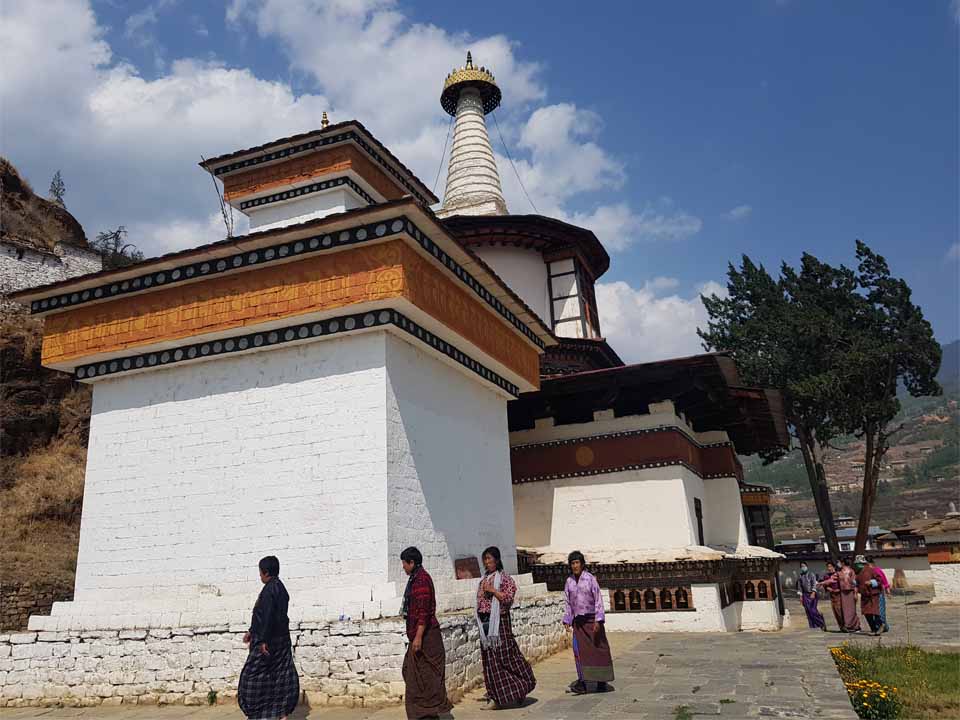
Dumtseg Lhakhang Paro

The biography of Lochen Gyurmey Dechen narrates that the blacksmith of Paro once manufactured seven thousand chain links for H.E. Tangtong Gyalpo. These he took to Tibet in 1400 carrier loads. During his frequent and long sojourns to bhutan he took a consort Drubthob Zangmo, the aunt of Great Terton Pema Lingpa from whom he had several sons whose descendants live on at the Tachogang monastery. 

The Depictions of H.E. Tangtong Gyalpo

Depictions of H.E. Tangtong Gyalpo are easily identifiable given his unusual appearances as in the manner of Maha siddhas. He has the signature iron chain link held in his right hand. The saint’s body complexion is dark reddish- brown, described in some cases as having the hue of “wet liver”.
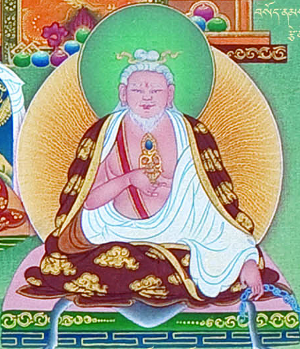
Thangtong Gyalpo

He is said to belong to the descendent of the famed and legendary king Gesar. Seated on an antelope skin in the relaxed posture, he holds a  tsebum or vase of long life in his left hand which rests on his lap in the dhyani mudra. The saint’s tsebum links him to tsepame, the bodhisattva of infinite life. He had also discovered the sacred dharani  as a terma hidden by Guru Rinpoche. Special H.E. Tangtong Gyalpo drupchens of long life are still very popular..

His Countenance

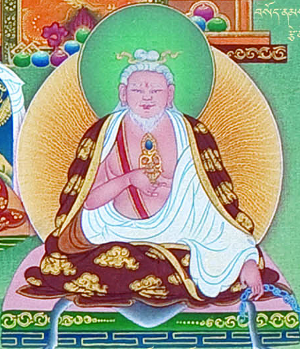
H.E. Tangtong Gyalpo is depicted with his hair in a turban-like knot. He sports a long beard and long logs up to his shoulders which may be either black or white depending on whether he is depicted as an old man or in his prime. His image in Dumtse Lhakhang near the entrance is perhaps the youngest depiction. 
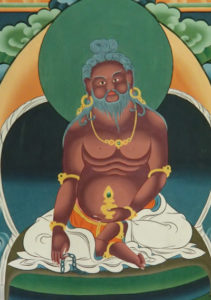
Thangtong Gyalpo

Clothed  in a white garment in this particular and unusual depiction, he maintains a goatee, short hair and holds his hand in the bhumisparsa mudra. The iron chain links are not held in the hands as usual but lie at the edge of the throne, barely discernible under the folds of his garments. In contrast, the huge main statue of the saint in the ZIlukha Drubthob nunnery above the Tashichho Dzong shows him at a ripped old age with long white flowing locks and beard. A pot belly and perhaps a gentler expression on his face. Numerous slate carvings of the saint holding his iron chain and vase are found in the Dzong and monasteries all around Bhutan. In many of these slate carvings the face is embellished with gold paint. 

H.E. Tangtong Gyalpo was also famous throughout Tibet for his great strength and engineering skills. He is a great Bodhisattva known and respected by one and all in Tibet. H.E. Tangtong Gyalpo was the supreme leader of four esoteric sects within India, Bhutan, Sikkim, Mongolia, and Eastern Tibet. He possessed teachings from many dharma lineages, the most remarkable of which were the lineage to extend one’s life and the lineage to bring in wealth and change one’s fortune. H.E. Tangtong Gyalpo was a great terton, or discoverer of hidden teachings called terma, who both revealed and concealed terma for future generations. His main practice was that of Chenrezig. A young incarnation of this great master is currently living in Bhutan.

In year 2005, H.H. Dorje Chang Buddha III accepted H.E. Tangtong Gyalpo as one of his disciples who is on the level of a great venerable one and performed an initiation for him, at HuaZangSi Temple in San Francisco.

He later learned that the book A Treasury of True Buddha-Dharma about the H.H. Dorje Chang Buddha III Wan Ko Yeshe Norbu Holiest Tathagata was about to be published. He thereupon organized many rinpoches to practice the Kuan Yin Dharma one billion times as an offering to His Holiness Dorje Chang Buddha III. He also sent his written congratulations stating that His Holiness is the master of Buddhas, the magnificence of His Holiness is supreme and that in this world no other holy being in history can compare with His Holiness.

Iron Man of Bhutan

Link:https://peacelilysite.com/2024/04/12/iron-man-of-bhutan/

#DorjeChangBuddhaIII#HHDorjeChangBuddhaIII#HuaZangSi #Buddha #Buddhism #buddhist #Temple#GuanYinBodhisattva#BuddhismTemple#SanFrancisco#TangtongGyalpo #Buthan #Tibet
Source: https://www.bhutaninbound.com/blog/2022/06/11/thang-tong-gyalpo-iron-man-of-bhutan/#:~:text=Thang%20Tong%20Gyalpo%20is%20most,title%20Chazampa(iron%20bridges).

Brief Introduction to Great Bodhisattva H.E. Tangtong Gyalpo Bodhisattva

A Great Disciple of H.H. Dorje Chang Buddha III

H.E. Tangtong Gyalpo is a greatly accomplished person within Tibetan esoteric Buddhism who attained the rainbow body. He is a great Bodhisattva known and respected by one and all in Tibet.

He is also an extremely holy person who has made huge contributions to the Tibetan people. It was this great Bodhisattva who was the father of medicine, ferryboats, bridges, and operas in Tibet. He has brought to the living beings of Tibet limitless blessings. To this day, Tibetan temples and families continue to worship H.E. Tangtong Gyalpo Bodhisattva.


The first Tangtong Gyalpo left the household life to become a monk when he was very young. He studied the sutras and treatises and became good at debating the sutras. Although he possessed the Five Vidyas, he remained modest, simple, and down-to-earth. In order to provide a model of self-cultivation, H.E. Tangtong Gyalpo followed and learned under many people of great virtue.

He also engaged in solitary, quiet cultivation for a long period of time at the Eri Temple. Later, he received teachings directly from Dakini Niguma and became a person greatly accomplished in the dharma. People praised H.E. Tangtong Gyalpo with the following words: “In the vast realm of emptiness, there is a yogi who intensively studies emptiness and who is like the King of Fearlessness. His name is Tangtong Gyalpo.” He has also been respectfully called Zhibai Wangxiu Tangtong Gyalpo, which means the accomplished, free and unhindered Tangtong Gyalpo!

During a certain year in history, there was a serious drought and famine in Tibet. H.E. Tangtong Gyalpo conducted a Dharma Assembly in front of the Sakyamuni Buddha statue in the Jo-khan Temple in Lhasa. At that Dharma Assembly, he wrote “A Prayer to Eliminate Famine.” Many people then saw Kuan Yin Bodhisattva in the sky disseminating various grains. The famine ended not long after that.


There was another time when war and chaos occurred in the Muya district of Kham in Tibet, causing people to leave their homes and wander about. H.E. Tangtong Gyalpo made a vow and wrote “A Prayer to End War and Chaos.” People in that area very soon after that ended their mutual hatred and instead treated one another in a peaceful, friendly, and loving manner. There was another year when a pestilence broke out in a large area covering a religious site of the Sakya sect, causing countless deaths. The chanting of mantras and the offering of sacrifices could not end the pestilence. Thus, H.E. Tangtong Gyalpo again practiced dharma and wrote “A Prayer to End the Disaster of Illness.” As a
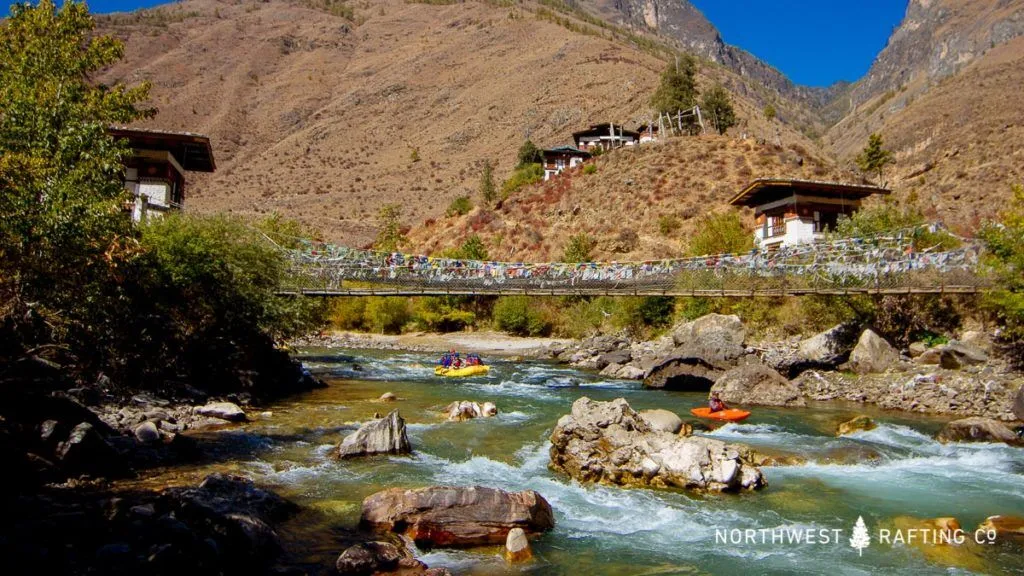
result, the pestilence disappeared forthwith. In previous times in Tibet, it was very difficult for people to cross rivers. The river waters mercilessly took away people’s lives as they attempted to cross the rivers. Thus, H.E. Tangtong Gyalpo made improvements to ferryboats and began building bridges. In that lifetime, he built fifty iron-chain bridges, sixty wooden bridges, and many temples. One of those temples was the Tangge Lakong (the Tangtong Gyalpo Temple), which was the first temple in the Derge region. With respect to medicine, H.E.Tangtong Gyalpo established the Medicine King Temple at Jiabori in Lhasa, invented a white pill that cured all kinds of internal medical diseases, and invented a red pill that cured epidemic diseases. Thus, he became the founder of Tibetan medicine. That white pill and red pill are used in Tibetan medicine even to this very day to relieve the sufferings of living beings.

This 600 year old bridge crosses the Paro Chhu (Paro River) and was traditionally restored in 2005 after being washed away during a 1969 flood. The bridge was originally built by the legendary Thangtong Gyalpo
Dungtse Lhakhang, a temple in form of a chörten near Paro in Bhutan was built by Thangtong Gyalpo. The roof construction is made of iron.


H.E. Tangtong Gyalpo Bodhisattva also wrote many Tibetan operas and established the Ache Lhamo opera troupe, the members of which acted out Tibetan historical stories through song and dance and pioneered Tibetan operas. The Achi Lhamo opera, with the starting troupe of seven sisters who worked on the saint’s bridges, is still performed and enjoyed hugely to these days during the new year celebration and on festive occasions. 

Achi Lhamo Opera Composed by Thang Tong Gyalpo Still Prevalent in Bhutan

H.E. Tangtong Gyalpo was the supreme leader of four esoteric sects within India, Bhutan, Sikkim, Mongolia, and Eastern Tibet. He possessed teachings from many dharma lineages, the most remarkable of which were the lineage to extend one’s life and the lineage to bring in wealth and change one’s fortune.
Everyone in Tibet, no matter what sect he or she belonged to, believed in and practiced such lineages and scriptures. Countless disciples of H.E. Tangtong Gyalpo became accomplished in the dharma under his teachings and attained great supernatural powers, wisdom and great compassion. More than one hundred disciples of his attained the rainbow body or the transformation rainbow body. All Tibetan people know that H.E. Tangtong Gyalpo is truly a great patriarch of Tibetan esoteric Buddhism and a great Bodhisattva. Later, each time H.E. Tangtong Gyalpo incarnated into this world. He was a great patriarch who spread the dharma, liberated living beings, and pervasively benefited people.

Thang Tong Gyalpo Present Reincarnation


H.E. the sixteenth Tangtong Gyalpo Bodhisattva (Thangtrul Rinpoche) took birth in Bhutan. His physical appearance resembles that of Guru Padmasambhava. Even when he sleeps, his eyes remain open. He saw H.H. Wan Ko Yeshe Norbu (Dorje Chang Buddha III) during a Dharma Assembly that took place in 2005 at Hua Zang Si in San Francisco, U.S.A. In a supernatural state of samadhi, he instantly saw that H.H. Dorje Chang Buddha, the highest ancient Buddha in the dharma realm, had already come to this world again. He at once formally acknowledged H.H. Dorje Chang Buddha III Wan Ko Yeshe Norbu as his master. H.H. Dorje Chang Buddha III asked him, “Did you follow and learn dharma under Guru Padmasambhava? Why have you come here?”H.E. Tangtong Gyalpo answered
that he had received teachings directly from Guru Padmasambhava and from H.H. Sakya Trizin who is the nirmanakaya of Manjushri Bodhisattva. He also said that he had come to request the highest dharma in order to save living beings. H.H. Dorje Chang Buddha III immediately snapped His fingers, and a dharma bowl manifested awesome power. H.H. Dorje Chang Buddha III then accepted H.E. Tangtong Gyalpo as one of his disciples who is on the level of a great venerable one and performed an initiation for him. H.E. Tangtong Gyalpo took that dharma bowl back to his home country.


He later learned that the book A Treasury of True Buddha-Dharma about the H.H. Dorje Chang Buddha III Wan Ko Yeshe Norbu Holiest Tathagata was about to be published. He thereupon organized many rinpoches to practice the Kuan Yin Dharma one billion times as an offering to His Holiness Dorje Chang Buddha III. He also sent his written congratulations stating that His Holiness is the master of Buddhas, the magnificence of His Holiness is supreme and that in this world no other holy being in history can compare with His Holiness.

H.H. Dorje Chang Buddha III accepted H.E. Tangtong Gyalpo as his disciple at Hua Zang Si temple San Francisco

#DorjeChangBuddhaIII#HHDorjeChangBuddhaIII#HuaZangSi #Buddha #Buddhism #buddhist #Temple#GuanYinBodhisattva#BuddhismTemple#SanFrancisco#TangtongGyalpo #Buthan #Tibet


Link:https://peacelilysite.com/2024/03/22/brief-introduction-to-great-bodhisattva-h-e-tangtong-gyalpo-bodhisattva/

Source: https://www.rigpawiki.org/index.php?title=Thangtong_Gyalpo, https://www.nwrafting.com/international/thangtong-gyalpo-tachog-lhakhang, https://www.bhutaninbound.com/blog/2022/06/11/thang-tong-gyalpo-iron-man-of-bhutan/

Discovering the Hidden Gem of Tibet: Mêdog – Where Nature Unveils Its Mysteries

Nestled in the southeastern part of the Tibet Autonomous Region lies Mêdog, a town whose name translates to “hidden lotus” in Tibetan. Situated in the Nyingchi area, Mêdog finds its home in the lower reaches of the Yarlung Tsangpo River, nestled at the southern foothills of the eastern Himalayas. This picturesque town boasts breathtaking landscapes, abundant rainfall, and pristine ecology, making it a true hidden gem waiting to be explored.

Mêdog’s allure lies not only in its natural beauty but also in its remote location, which has preserved its untouched landscapes from excessive development and damage. With a relatively sparse population, Mêdog offers visitors a rare opportunity to experience unspoiled natural beauty and unravel the mysteries of nature.

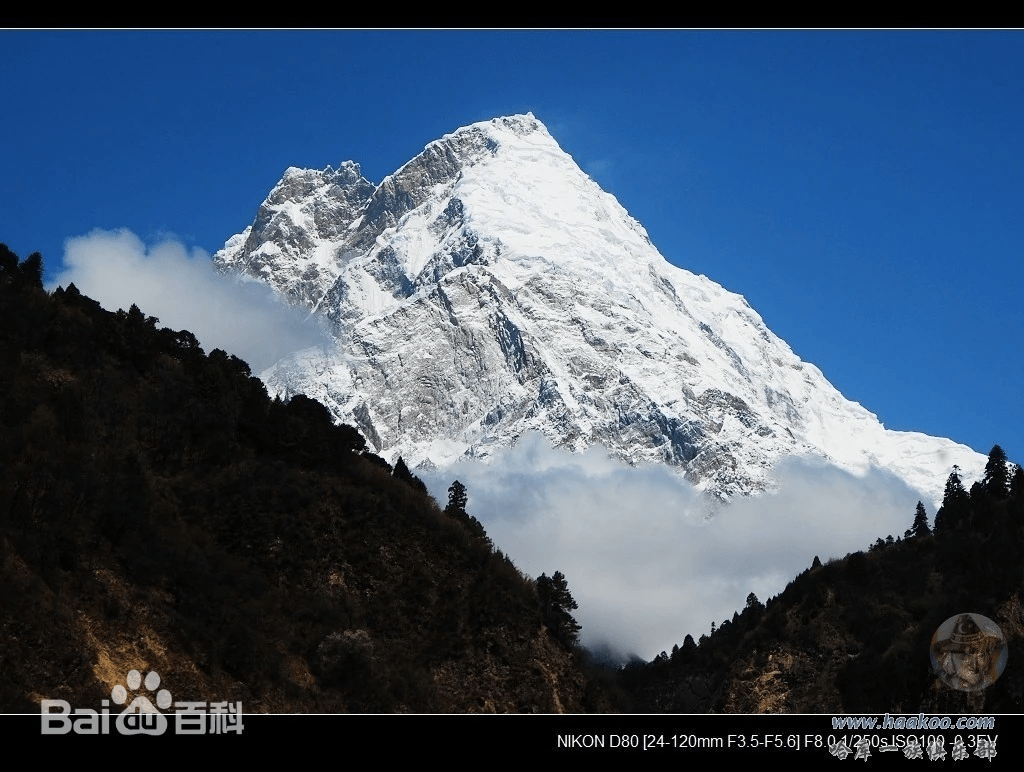
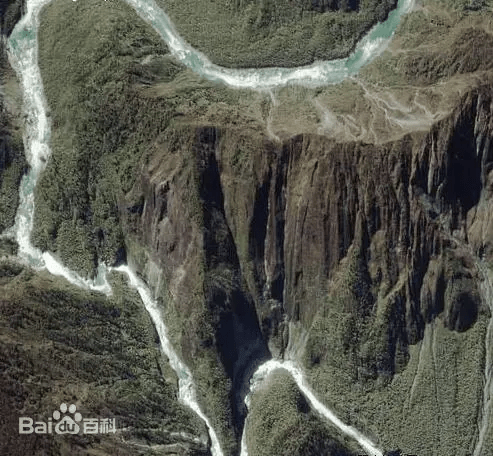
One of the most striking features of Mêdog is the majestic Yarlung Tsangpo River, which winds its way around the towering Namcha Barwa Peak, standing at an impressive 7,782 meters. As the river meanders through the territory of Mêdog, it carves a deep gorge akin to a sharp sword, creating a mesmerizing sight that resembles the Milky Way cascading towards the sea.

Big Bend

The Yarlung Tsangpo Grand Canyon stretches from Dado Kar village in Milin County at an elevation of 2880 meters in the north to Baxika village in Motuo County at an elevation of 115 meters in the south. The canyon spans a length of 504.6 kilometers, with an average depth of 2268 meters and a maximum depth reaching 6009 meters. With an average elevation of over 3000 meters, it holds the distinction of being the world’s largest canyon.

The entire canyon region is characterized by a harsh environment, where glaciers, cliffs, steep slopes, mudslides, and the turbulent Yarlung Tsangpo River converge. Many areas remain untouched by human activity, making it one of the few remaining “last frontiers” on Earth and a relatively unexplored geological blank spot.

Some of the primary waterfalls within the canyon have drop heights ranging from 30 to 50 meters. The canyon features nine vertical natural zones, ranging from high mountain snow zones to low river valley tropical rainforests. This diversity creates a habitat for a variety of biological resources, including two-thirds of known higher plant species on the Qinghai-Tibet Plateau, half of known mammal species, four-fifths of known insect species, and three-fifths of known large fungi species in China.

The convergence of warm and humid oceanic air currents with the snowy plateau gives rise to a unique climatic phenomenon in Mêdog. With annual rainfall reaching around 2000 millimeters and an average temperature of 16°C, Mêdog boasts rare South Asian climatic characteristics at its latitude. Despite its Tibetan location, Mêdog is home to the northernmost tropical rainforest in China, thriving with lush vegetation and vibrant landscapes reminiscent of Jiangnan’s greenery.

Exploring Mêdog offers visitors a chance to witness the breathtaking scenery of the Yarlung Tsangpo Grand Canyon, hailed as one of China’s ten most beautiful canyons by “National Geographic.” Here, travelers can marvel at the grandeur of nature while appreciating the unique rattan bridges that adorn the landscape, crafted without a single nail or pier.

As one traverses the mountains of Mêdog, they are greeted with mist-shrouded landscapes that change hues with the seasons, each unveiling its unique beauty. From the dense foliage to the meandering streams, Mêdog presents a captivating panorama that unfolds like a charming scroll, inviting visitors to immerse themselves in its vibrant colors and tranquil ambiance.

In the age of dinosaurs, a plant often referred to as a “living fossil” – the tree fern, also known as the “cycad,” is a nationally protected plant at the second level. It is the only woody fern species.
Wild Banana
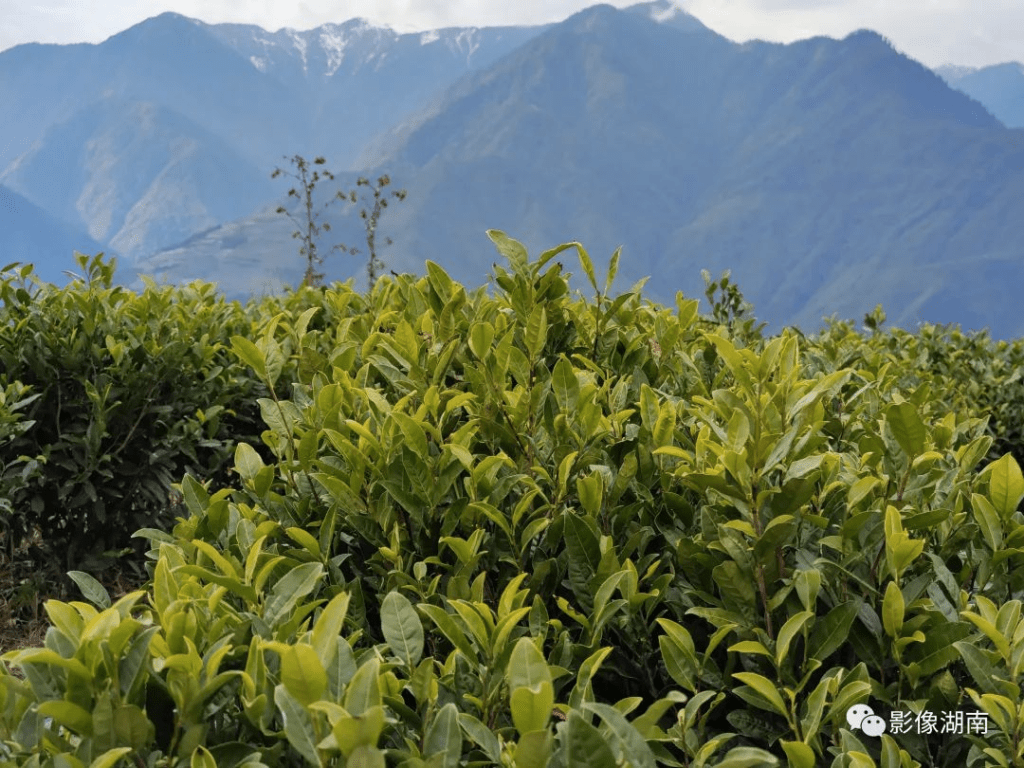
Tea Tree Farm

For those seeking respite from the hustle and bustle of city life, Mêdog offers a sanctuary of serenity and natural beauty. Whether it’s witnessing the grandeur of the Yarlung Tsangpo River or wandering through the lush rainforests, Mêdog promises an unforgettable journey filled with awe-inspiring moments and cherished memories.

In Mêdog, every step reveals a new wonder, every corner a hidden treasure. As visitors embark on this journey of exploration, they are reminded to approach nature with humility and appreciation, embracing its beauty with a calm heart and open mind. In Mêdog, the beauty of life reveals itself in every mist-covered peak and verdant valley, leaving an indelible mark on the soul of all who venture there.

Discovering the Hidden Gem of Tibet: Mêdog – Where Nature Unveils Its Mysteries

Link:

#Travel #China #Mêdog #Tibet #YarlungTsangpoGrandCanyon

Source: https://m.voc.com.cn/xhn/news/202202/16733558.html