Nezha: From Buddhist Origins to a Chinese Cultural Icon

Recently, the animated film Nezha 2 has become incredibly popular, reaching the top spot in global box office earnings for animated movies. While many believe Nezha is a character from Chinese mythology, his origins can actually be traced back to Buddhist scriptures.

Vaisravana

Nezha’s name first appeared in Vajrayana Buddhist texts, where he is associated with the role of a Dharma protector. He is described as the third son of Vaisravana, one of the Four Heavenly Kings. According to The Ritual of Vaisravana, “The Heavenly King’s third son, Prince Nezha, holds a pagoda and always follows the King.” His duty is to assist his father in safeguarding the Dharma, driving away evil forces, and protecting humanity. In The Mantra of the Dharma Protector Following the Northern Vaisravana Heavenly King, translated by the eminent Tang Dynasty monk Amoghavajra, Nezha is again referred to as Vaisravana’s third son. Other Buddhist texts from the Tang Dynasty, such as The Awakening of Faith in the Mahayana and The Lotus Sutra, also mention Nezha.

In Buddhism, Dharma protectors and yaksha deities often have fierce appearances, symbolizing their hatred of evil and fearless bravery. As a result, Nezha is typically depicted with a wrathful and intimidating image. As Buddhism spread to China, many Buddhist stories and figures gradually merged with local Chinese culture, giving rise to new belief systems. Over time, Nezha became integrated into Taoism and Chinese folk beliefs, forming a unique cultural phenomenon.

The story of Nezha is filled with many well-known and beloved episodes, such as his birth from a ball of flesh, cutting his flesh and bones to repay his parents, and being reborn from a lotus flower. Although this scene cannot be found in modern Buddhist scriptures, it became a popular topic among monks after the Song Dynasty. For example, Volume 1 of The Comprehensive Collection of Zen Verses on Ancient Cases mentions: “Prince Nezha offered his flesh to his mother and his bones to his father, then manifested his true form and used his divine power to preach to his parents.” This suggests that the story of Nezha sacrificing his flesh and bones likely originated from Buddhist texts. Although the exact cause and details are unclear, this story undoubtedly provided a prototype for later adaptations in folk literature.

As Buddhism spread throughout China, the assimilation of foreign religions by local culture and the evolution of folk beliefs gradually transformed Nezha’s image, steering it away from its original Buddhist context and toward a more Chinese identity. After the Tang Dynasty, the worship of Vaisravana (known as Bishamonten in Japan) reached its peak in China, gaining widespread recognition from both the imperial court and the common people. He was honored in official rituals and revered by many folk believers. Simultaneously, Li Jing, a prominent Tang Dynasty military general, became a popular figure of worship as a god of war. Renowned for his military campaigns against the Turks and Tuyuhun in the northwest, Li Jing was deified as early as the Tang Dynasty, with dedicated temples built in his honor during the Song Dynasty.
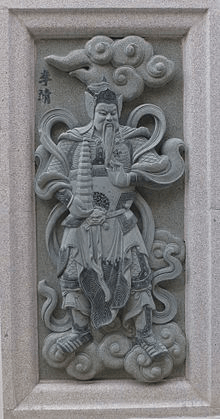
Li Jing’s temple wall statue

The broader and deeper the spread of a belief, the greater the possibility of its transformation and integration with other cultural elements. Over time, through public imagination and interpretation, the belief in Vaisravana merged with the worship of Li Jing, forming a new deity known as “Pagoda-Wielding Heavenly King Li” (Tuota Li Tianwang) by the Song Dynasty at the latest. From then on, Vaisravana took on the surname Li and became more secularized and localized within Chinese culture. Since Li Jing became identified with Vaisravana, it was only natural within folk beliefs to regard Nezha as Li Jing’s son. This marked Nezha’s departure from the cultural context of foreign religions and his integration into the Chinese pantheon.

This transformation made Nezha a more relatable and accessible figure, understood through the lens of native cultural concepts. As a result, Nezha’s story gained broader appeal, providing ample room for reinterpretation and adaptation in later generations.

Nezha holds an important place in ancient Chinese mythology. Under the influence of Taoism, he was endowed with more mythological attributes, portrayed as a young hero with powerful magical abilities who frequently battles demons and protects the people. His story further developed in classic literary works such as Journey to the West and Investiture of the Gods, where Nezha became a symbol of justice and courage.

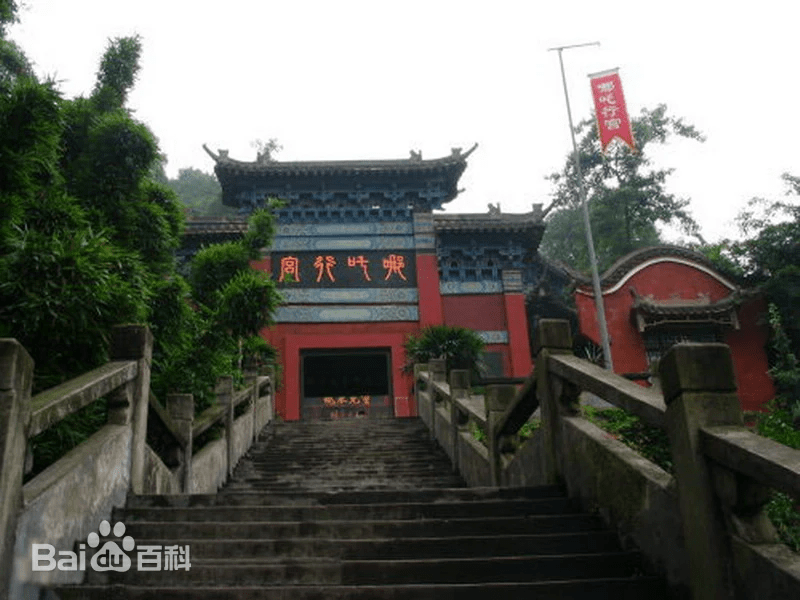
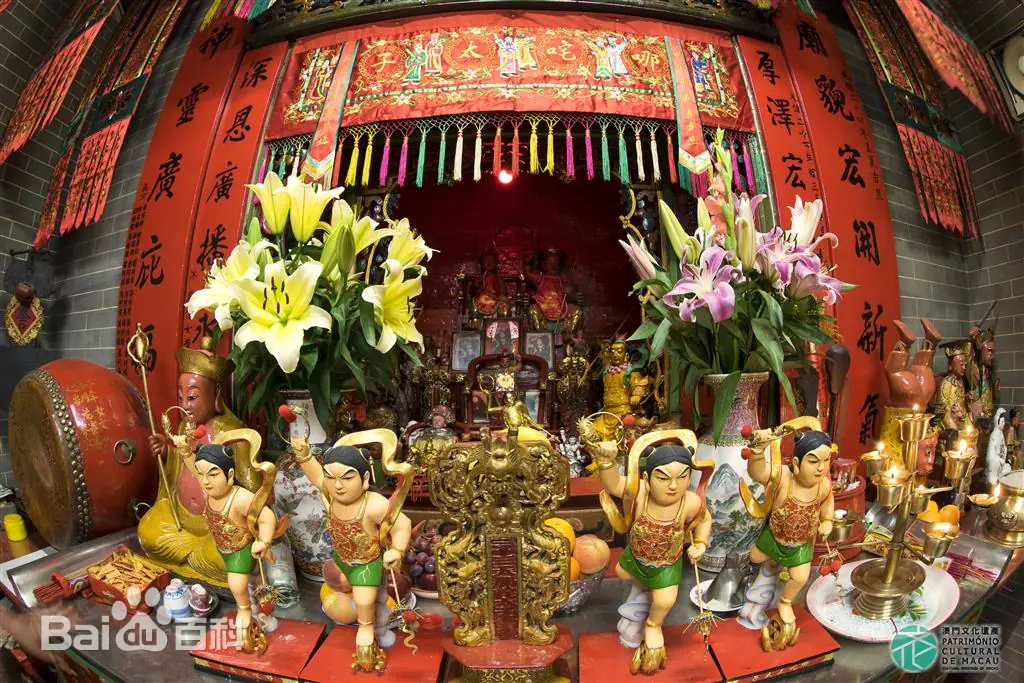
Nezha Temple in HeNan China

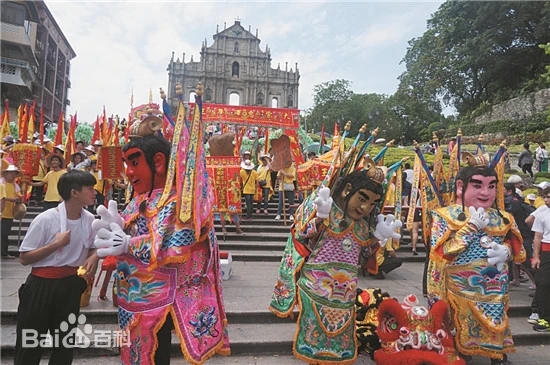
Folk worship activities for Nezha

Link:https://peacelilysite.com/2025/02/21/nezha-from-buddhist-origins-to-a-chinese-cultural-icon/

Twelve years of Thangka Art: Apprenticeship, Personal Practice, and Evolution

By Dakini As Art, Tiffani Gyatso

A commonly held view is that the body houses the soul—but have you ever thought that the soul could live elsewhere? I have experienced that feeling. Although my body was born in 1981 to my German mother in Brazil, where I grew up, 18 years later I had an “encounter” with my soul’s home in Mongolia. For almost a year, my family and I traveled east by motorhome from Germany and right across Russia. Reaching the border between Russia and western Mongolia, it took days just to receive permission to cross. Stuck in the middle of nowhere, we feared we might never make it! Finally a drunken general provided the necessary authorization and we drove freely onwards into Mongolia, sometimes without a visible road in front of us.

Beneath the expansive blue sky that crowned the arid landscape, my happy tears fell like rain. Those tears nourished a hungry artistic seed within me that desired to grow in the direction of the sunshine; to follow a path to spiritual liberation through art. I believed in such a path and it made sense to me, but until then I hadn’t known how to go about following it. Once in Mongolia, however, I was introduced by a monk at Gandantegchinlen Monastery in Ulaanbaatar to the sacred art of thangka painting, which depicts the various Buddhas, spirits, enlightened beings, and spiritual worlds of Tibetan Buddhism. I had been seeking an artistic discipline of some kind that would guide me to the divine, and this was it! 

One of the paintings by Tiffani at Lama Padma Samten’s temple in Brazil

Nevertheless, it was a long road before I was accepted three years later as the first Western student at the Norbulingka Institute, founded by His Holiness the Dalai Lama, near Dharamsala in northern India. I have traveled all my life—even living for a few months with an aborigine community in the Australian outback, and spending a couple of years on a sailboat on the Brazilian coast during my teens—but India was beyond anything I could have imagined. I was sick for the first three months I spent there, during which time the school was unsure whether to accept me or not. Even my mother urged me to go home. But something inside me was unmoved by all these “tests.” I felt that if I went back, my soul would abandon my body.

I was finally accepted as a student at the Norbulingka Institute in September 2003. All the wise and holy artists I had expected to meet turned out to be mostly teenagers eager to meet a girl—a blond girl—in the studio at last. Gen-la, the master, was initially somewhat reticent, and we didn’t even share a common language. He gestured towards a Buddha face made up of many symmetrical lines and then pointed to a blank sheet of paper, so I sat on the floor near him and started to sketch. The first word I learned in Tibetan from Gen-la was “again!”—do it again! And so I did, for weeks, the same drawing over and over again until Gen-la would give me my next project. 

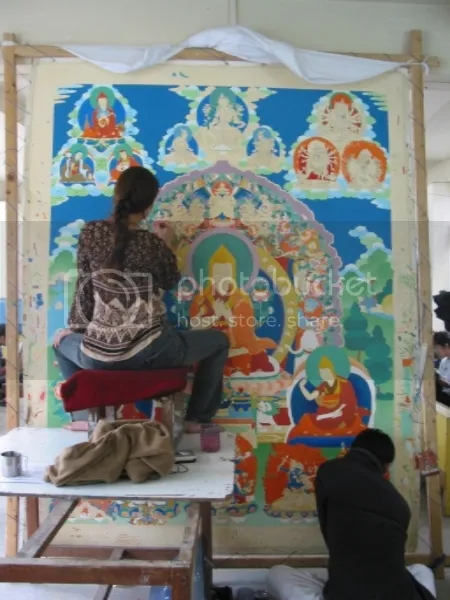
Painting class at the Norbulingka Institute, 2005

My apprenticeship during the three years I spent there was very slow and painstaking. It was essentially this atmosphere that molded my predisposition to understand that painting a thangka is a spiritual practice in itself; the thangka is there for you to give your time and attention to, and to house your soul. It is a sacred art with a unique function. If you do not have that understanding in the very depth of your being, you will soon abandon the training. Some do not even consider thangka painting to be art, but a practice involving paint that has the same aim as any other Buddhist practice. It was a year before Gen-la even called me by my name; until then he just called me “intchi bhumo,” or “foreign girl.” And it was more than a year before I actually even touched paint, and then only because one of my classmates hid me behind a big canvas and started to teach me himself. Gen-la was actually proud of my boldness when he found out, and finally guided me on my first proper painting. Those were precious times; I was truly happy despite the difficulties I experienced, and my certainty of being on the right track never wavered.

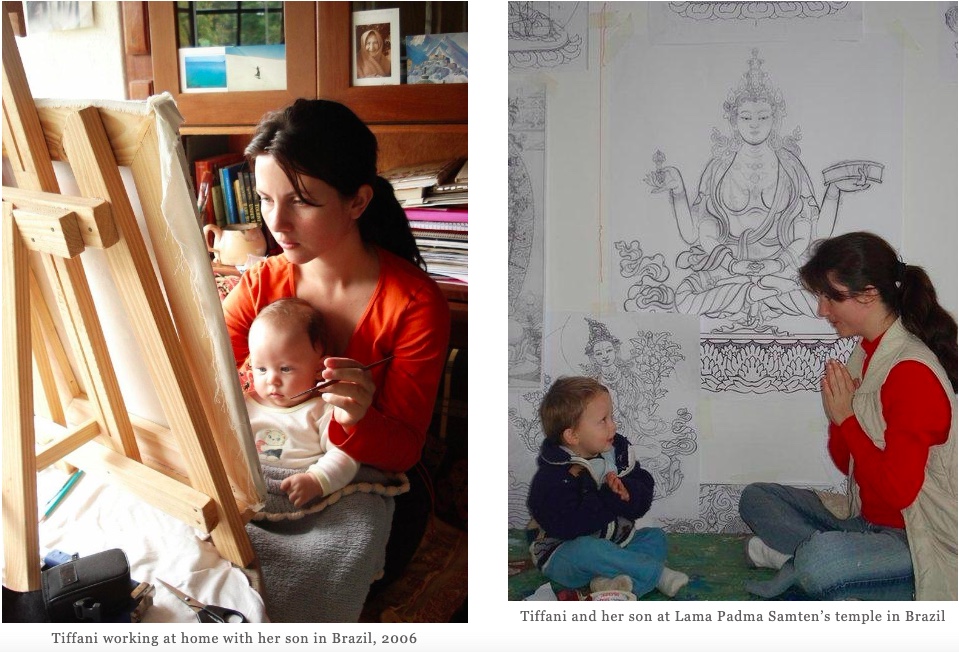
In 2006 I returned to Brazil to discover that I was pregnant. In October that year, a little boy of Tibetan-Brazilian-German heritage was born. His father came over and we lived together for a few years until he moved to the United States to join a larger Tibetan community. Back in Brazil I was fearful that I would have to stop painting—I was 24 with a baby and no money, and all I knew how to do was paint. Afraid that such worries would make me lose my path, I continued to paint my thangkas, my son held close to my body.

When my son was only a few months old, I was contacted by a Brazilian lama—Lama Padma Samten, a disciple of Chagdud Tulku Rinpoche, who had already established a huge sangha. He had heard about me through a mutual friend and sent my son and me tickets to visit his new temple in the south of Brazil. When I finally arrived I was amazed by the size of the temple, which was built to accommodate 300. As I stood there sleep-deprived and perfumed with milk and diapers, he asked me if I would paint the interior walls. I was astonished—but I agreed!

For a month I stood gazing at those terrifyingly huge white walls in fear. I really had no idea how to start! I could not call anyone in India because of the language barrier, and the materials available in Brazil for painting murals wouldn’t be the same as those I was familiar with. So I began slowly, as Gen-la had taught me. First, I met with a local artist to learn more about the proper materials. I learned about the specific deities and mandalas that Lama Samten wished to incorporate. The members of his sangha were very supportive, and many came to help. Those who could give more of their time I trained to paint. Those who couldn’t paint, I asked to massage our aching shoulders, play some instrument or other, give yoga lessons, or even bake a cake for our tea breaks. I felt that everyone should be included. The project took five challenging years to complete, all guided by Lama Samten’s blessings.

As mentioned earlier, those tears in Mongolia had fed the artist within, and now the artist was awake. I soon had the feeling that thangka painting was a “safe zone” for me as the work is all done according to rules that, if followed, offer some guarantee of success. So, in a way, I felt that thangkas had given me discipline and now, only now, was I ready to risk expressing myself. So I began to take more seriously the opportunity to try a more intuitive kind of painting, especially when my personal life was a mess. I was allowed to explode on the canvas, I was allowed to make mistakes . . . I needed to be able to be wrong yet acceptable. 

Accumulating a body of art pieces during my free time while painting the temple, with some trepidation I presented my work to Tibet House in New York. I was relieved when they accepted my work and agreed to produce my first show, in 2012—a solo exhibition titled Mystic Nostalgia, in which I sought to express that longing for a lost “home.” Not necessarily a real place; the work is more about our inner landscape . . . a mystic longing. My second exhibition will open at Tibet House on 23 October this year.

Since completing my work at the temple at the end of 2012, I have focused on holding thangka workshops, producing thangkas to order, and taking part in workshops and retreats to teach the intuitive process of self-expression through paint, movement, and writing. I believe the key is maintaining the approach of an apprentice—the beginner’s mind. I feel that I’m learning each time I teach, each time I listen to people, each time I encounter another culture or eat a different food. I learned the benefits of discipline and following rules from the thangka tradition, and when I walk into the unknown with my wild self that sometimes wants its own way, I continue to learn.

Tradition provides us with the roots and structure through which we express ourselves like a hundred branches growing in the air, catching the breeze with their lush leaves. Nourish discipline as much as you nourish your freedom and you’ll soon discover that they are one.

Tiffani Gyatso is a traditional Buddhist thangka painter and a member of the Dakini As Art Collective. To learn more about Tiffani, her work, and Dakini As Art, please visit Dakini As Art.

Link:https://peacelilysite.com/2024/06/07/twelve-years-of-thangka-art-apprenticeship-personal-practice-and-evolution/

 #SpiritualPractice #ThangkaPainting #TibetanBuddhism #Vajrayanabuddhism

Source: https://www.buddhistdoor.net/features/twelve-years-of-thangka-art-apprenticeship-personal-practice-and-evolution/