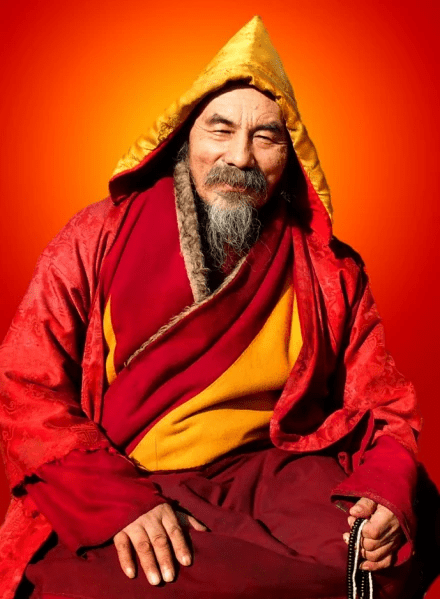
The Extraordinary Life of H.E. Xiazhu Qiuyang Rinpoche: A Master of Boundless Compassion and Wisdom

The most venerable H.E. Xiazhu Choying Rinpoche, also known as H.E. Xiazhu Qiuyang Rinpoche, is a highly accomplished Buddhist master from Guoluo, renowned for his spiritual achievements and mastery of Vajrayana teachings. Born in the winter of 1945, his birth was marked by extraordinary signs: thunder echoed across the sky, and colorful flowers blossomed spontaneously on the grasslands surrounding his birthplace. Many local herdsmen witnessed these rare and auspicious omens, heralding the arrival of an extraordinary being.

Renowned mantra master Regong, a revered monk, recognized the young child as the reincarnation of the venerable Chagailong Cichengdaji Rinpoche and the great master Naropa. From an early age, Rinpoche dedicated himself to the welfare of all sentient beings, living a life of simplicity and spiritual practice in the mountains. Throughout his life, H.E. Xiazhu Choying Rinpoche devoted himself to intense ascetic practice, receiving direct teachings from the supreme Vajrayogini and attaining profound realization. It is said that he could soar through the sky, using his monk robes as wings, a testament to his deep mastery of esoteric yoga.

At the age of fourteen, Rinpoche was ordained as a monk under the guidance of Xiari Huzuo Qintu Dannima. Over the years, he studied under more than 100 highly accomplished masters from all major Tibetan Buddhist schools, including:

  • H.H. the Tenth Panchen Lama and H.H. the Sixth Dharma King Gongtang Yongzeng from the Gelug sect.
  • H.H. Dodrupchen Rinpoche and Khenpo Mengse from the Nyingma sect.
  • Kanda Chiwa Gadan from the Sakya sect.
  • Lama Wangcai Kazhige from the Kagyu sect.
  • Jiana Bannan from the Jonang sect.

From these masters, H.E. Xiazhu Choying Rinpoche absorbed the essence of both exoteric and esoteric teachings. His spiritual journey led him to receive numerous secret mind-dharma teachings and unique empowerments, passed down without reservation, like water flowing freely from a vessel.

Rinpoche spent much of his life wandering through remote mountains and plains, sleeping in caves, eating cold rice and vegetables gathered from alms, and wearing discarded clothing. He lived humbly, indifferent to worldly praise or criticism, appearing at times like a wandering madman. For 25 years, he did not speak a single word, dedicating himself entirely to the practice of the Dharma, undisturbed by the distractions of the world. His rigorous practice took him to numerous sacred sites across Tibet, Qinghai, and India, where he engaged in solitary retreat, including seven years of intense meditation at a holy site in India.

Through these practices, Rinpoche achieved profound realization in the Dakini Dharma, the Great Perfection (Dzogchen) teachings, Kalachakra Vajra Dharma, and Green Tara Dharma. His deep connection with Vajrayogini from a young age allowed him to access highly secret dakini teachings. Buddhist masters of great virtue have recognized H.E. Xiazhu Choying Rinpoche as the true reincarnation of the great master Naropa, revered as the “venerable leader of 100,000 dakinis.”

In a historic event, the International Buddhism Sangha Association conducted an unprecedented Drawing Lots From a Golden Vase Ceremony, drawing one lot from 120 sealed lots. This ceremony affirmed that H.E. Xiazhu Choying Rinpoche is indeed the reincarnation of Patriarch Naropa, a recognition that had been previously confirmed by H.H. Dorje Chang Buddha III.

H.E. Xiazhu Choying Rinpoche has been praised by numerous revered masters, including H.H. the Tenth Panchen Lama, H.H. Dharma King Yongzeng, and H.H. Dharma King Jigme Phuntsok. Xiaridong Rinpoche, a master of the Yamantaka Dharma, described him as “a truly great master of the Dakini Dharma,” while H.H. Dharma King Jigme Phuntsok hailed him as “an extremely rare master who has perfected the Four Initiations Dharma.”

Despite his vast accomplishments, H.E. Xiazhu Choying Rinpoche remains humble and approachable, freely exercising his supernatural powers without attachment. Known for miraculous feats such as flying, multiplying his body, walking underwater, understanding multiple languages, foreseeing disasters and blessings, and reading people’s minds, Rinpoche is revered as “the unhindered rinpoche.” Clothing and personal items that Rinpoche has worn or used are said to be imbued with miraculous blessings. Many Tibetans have reported turning disasters into blessings, surviving dangerous situations, or recovering from serious illnesses after wearing or ingesting a small piece of his monk’s robe.

H.E. Xiazhu Choying Rinpoche’s legendary life and accomplishments have been widely recorded, including in books such as Holy Cultivation and Its Marvelous Fruits and Biographies of Ten Major Disciples of Dharma Kings. In Tibet, particularly in the Amdo region, almost everyone knows of his miraculous deeds. His life stands as a beacon of inspiration and a model of Dharma practice in this world of five defilements.

This image has an empty alt attribute; its file name is image-8.png

Upon reading A Treasury of True Buddha-Dharma, H.E. Xiazhu Choying Rinpoche immediately recognized H.H. Wan Ko Yeshe Norbu as the primordial Dorje Chang Buddha, the highest Buddha in Buddhism. His realization corroborated the recognition of other great holy dharma kings. H.E. Xiazhu Choying Rinpoche offered his heartfelt congratulations in a respectful letter, further acknowledging the sacred truth.

To the Most Revered and Holiest Wish-Fulfilling Jewel Dharma King:

I have learned that A Treasury of True Buddha-Dharma, is a sacred text about His Holiness, the supreme and most honored H.H. Dorje Chang Buddha III, is soon to be distributed worldwide. This book contains the highest, authentic Dharma that brings immense benefit to all sentient beings.

Master Dodrupchen, who is universally recognized as the second Guru Padmasambhava and the highest holy being within Tibetan esoteric Buddhism, expressed his astonishment in his formal congratulations. He praised the accomplishments of the Holiest Wan Ko Wish-Fulfilling Jewel Dharma King as truly extraordinary—unimaginable and miraculous, transcending the ordinary. These achievements express both the describable and indescribable absolute truth of the Buddha-Dharma.

We shall proclaim and praise the accomplishments of His Holiness throughout the Dharma realm. We express our deepest gratitude to His Holiness, the ancient Buddha, for His boundless and great compassion in coming to this world once again to benefit all sentient beings!

Xiazhu Qiuyang Rinpoche
May 1, 2007

▲那諾巴祖師轉世的夏珠秋楊敬賀第三世多杰羌佛成就之原函(楊宜翻攝自《多杰羌佛第三世》正法寶典)
▲Original congratulatory letter from Xiazhu Choying in Tibetan

#DorjeChangBuddhaIII #HHDorjeChangBuddhaIII  #MasterWanKoYee #Buddha#HuaZangSi#InternationalBuddhismSanghaAssociation#IBSA#WorldBuddhismPublishingLLC#WorldDharmaVoice #XiazhuQiuyangRinpoche #Tibetan #EsotericBuddhism
Link:https://peacelilysite.com/2024/10/16/the-extraordinary-life-of-h-e-xiazhu-qiuyang-rinpoche-a-master-of-boundless-compassion-and-wisdom/

Source: https://www.tpcdct.org/article/1327#detail

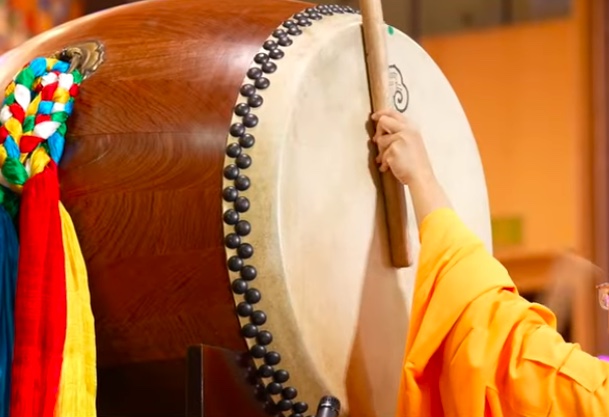
A Great Drum

The Wisdom of Generosity: A Tale of Compassion and Righteousness

Once, the Buddha was residing in the Jetavana Monastery in the kingdom of Śrāvastī, spreading his teachings. At that time, there was a prince of a celestial king named Pilu. One day, he flew down from the heavens to the Jetavana Monastery, prostrated himself at the Buddha’s feet, and, with hands folded in reverence, asked the Buddha: “In this world, people are constantly pursuing clothes, food, treasures, pleasures, official positions, and territories. Are there any treasures that pursue people in return?” The Buddha praised Prince Pilu: “You have asked a good question. Indeed, there are situations where territories, treasures, and pleasures pursue people.”

Prince Pilu asked again, “What does it mean for the causes and conditions that fulfill people’s wishes and bring complete satisfaction to always follow them?”

The Buddha replied, “All actions can be categorized into two types: doing good deeds, which brings blessings, and committing evil deeds, which results in calamities. Whether it is blessings or disasters, they always follow each person like a shadow.”

Prince Pilu said, “This is truly extraordinary! Just as the World-Honored One has taught, in my past life, I was once a king among humans. Because I was aware of the impermanence of life and had no attachment to material things, I wanted to practice generosity widely. One day, during a gathering of my ministers, I announced: ‘I want to make a great drum whose booming sound can spread for a hundred miles. Who can accomplish this task for me?’

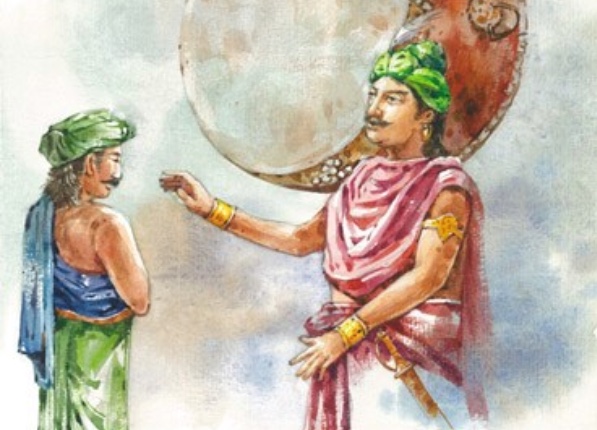
However, the ministers all replied, ‘We are incapable of doing so!’ At that moment, a minister named Kuang Shang, who had always been loyal to the court and compassionate towards the people, stepped forward and said to the king, ‘I can accomplish this task, but it will require some funding.’

The king said, ‘Great! Whatever amount you need is not a problem.’ Thus, the treasury was opened, and a large sum of money was handed over to Kuang Shang.

Kuang Shang transported a carriage full of treasures to the gate of the royal palace and beat the drum to announce, “Today, our benevolent king, with great compassion, is distributing wealth to the world to relieve all those in poverty and distress, as well as to provide for the needs of practitioners. Anyone in need can come to the palace gate to receive these goods.”

The news quickly spread to neighboring countries. The poor, carrying their babies and bringing along the elderly and young, came in droves, filling all the roads leading to the city. People would often look up to the sky and exclaim, “Thank you, benevolent king! We, the poor people, finally have the chance to escape the days of hunger and cold!”

A year later, the king asked Kuang Shang, “Is the great drum completed?” The minister replied, “Your Majesty, it is done.” The king asked again, “Since it is finished, why haven’t I heard the drum sound?” Kuang Shang responded, “Please, Your Majesty, take a trip into the city tomorrow, and you will hear the sound of virtue resonating far and wide.”

The next day, the king’s procession entered the city, discovering it was crowded and bustling. The king exclaimed, “Why are there so many people in the city?” Kuang Shang answered, “Last year, Your Majesty ordered me to create a great drum, hoping its mighty sound would spread for miles, proclaiming Your Majesty’s benevolence. I thought that a drum made of dead wood and cowhide would not adequately convey the king’s virtue. After much deliberation, I decided to use the treasures Your Majesty entrusted to me to provide for the practitioners and relieve the poor and distressed. Since the announcement, people from neighboring countries have come, hoping for Your Majesty’s benevolence, like hungry children yearning for their compassionate mother.”

Upon hearing this, the king asked the nearby citizens, “Where have you come from?” The people respectfully bowed and replied, “We came from a hundred miles away.” Some said, “I came from two hundred miles away.” Others said, “I came from thousands of miles away.” Then, they all declared, “Wise and benevolent king! Your widespread generosity has brought joy to the people of the neighboring countries. Many have even moved their entire families here, seeking to live under your benevolent protection and hoping for a stable life henceforth.”

The king was very pleased and said, “Kuang Shang, you have done an excellent job! Previously, I was attached to fame, hoping that the great drum’s mighty sound would resonate far and wide. Now, I finally understand that the unrest in the country comes from the people’s unease. Just as a sick body needs medicine to be healed, I should provide remedies to address the people’s suffering. You, my minister, understood the hardships of the people and distributed food to help the poor and needy, allowing the people to live in peace and return their loyalty to me.” Thus, the king declared, “From now on, as long as it concerns the people’s needs, take care of it to the best of your ability without needing to consult me!”

After the king’s natural death, he was reborn in heaven as King Miao. After his life in heaven ended, he was reborn as a Cakravartin (Wheel-Turning) King on earth, always accompanied by seven treasures and surrounded by followers who protected him. Now, he has again been reborn in heaven as a prince of the heavenly king. All of this was because he strictly upheld pure precepts and compassionately aided all living beings, earning such blessings. If we follow the Buddha’s teachings and rectify our body, speech, and mind, we can all obtain such magnificent blessings.

The Buddha encouraged Prince Bilu, saying, “A person’s actions are like a shadow following the body, or an echo responding to a sound. For every cause, there is an effect, and retribution is certain!” Prince Bilu, after hearing the Buddha’s teaching, joyfully made obeisance and departed.

A Great Drum

Link:https://peacelilysite.com/2024/05/23/a-great-drum/

Source: https://www.ctworld.org.tw/sutra_stories/story801-1000/story862.htm,


Unlocking Life’s Wisdom: Lessons from Benjamin Franklin

In the intricate tapestry of life, the tragedy often unfolds in the untimely aging of our bodies and the delayed acquisition of wisdom. The relentless pace of time is keenly felt as we advance in age, and it appears to quicken its stride. Acknowledging the finite and precious nature of life, the imperative emerges to use time judiciously, ensuring it doesn’t slip away in vain. Wisdom, a product of experience, demands the investment of time to mature.

Many traverse their youthful years without a profound understanding of life or the ability to make sound decisions. These capabilities tend to evolve slowly, sculpted by the crucible of life and work experiences. Regrettably, just as individuals amass the wisdom to navigate life effectively, the opportune moments for significant changes might have already slipped through their grasp.

To avert the arrival of wisdom too late, one must treasure time, actively seek learning and growth opportunities, and expedite wisdom acquisition through continuous learning, reflection, and introspection. Making sagacious choices early in life becomes a shield against future regrets.

The aforementioned philosophy mirrors Franklin D. Roosevelt’s contemplation and insight into life, urging individuals to proactively plan and reflect on their lives from a young age. Striving for the wisdom that typically takes years to acquire allows for the optimal utilization of limited time, resulting in a more fulfilling and meaningful life.

Persuasion: Appealing to Interests Over Reason

In the realm of persuasion, appealing to interests often outshines the use of reason alone. The driving force behind human behavior lies in the pursuit of benefits and the avoidance of harm. To sway others convincingly, it is crucial to showcase the tangible or intangible benefits they stand to gain by adopting a suggestion. This pragmatic approach surpasses relying solely on logic and rational arguments.

Rooted in fundamental psychological principles of human decision-making, individuals tend to weigh their interests and benefits when making choices. Clearly illustrating how adopting a suggestion directly or indirectly benefits them—such as saving time, reducing costs, improving health, or increasing happiness—makes the suggestion more likely to be accepted.

While rational thinking plays a pivotal role in decision-making, emotions profoundly influence human choices. Emphasizing how a suggestion meets others’ needs, desires, or alleviates their pain can evoke emotions and enhance the persuasiveness of the argument.

The call to appeal to interests doesn’t negate the importance of logic and reason in persuasion. Rather, it recognizes that addressing individuals’ interests alongside rational thinking fosters emotional resonance, increasing the likelihood of persuasive success.

Combining the demonstration of benefits with sound reasoning can comprehensively influence the audience’s decision-making process. Yet, the essence lies in the reminder that, in persuading others, emphasis should be placed on making them see the direct benefits of following the advice. Such appeals are more attractive and compelling, urging action.

Words of Wisdom: Thoughtful Speech and Lifelong Learning

“Fool’s hearts are in their mouths; wise men’s mouths are in their hearts.” This timeless advice urges against reckless or thoughtless speech, stemming from the eagerness to express ideas without due consideration. A wise person contemplates before speaking, filtering thoughts and emotions before choosing words. This not only avoids misunderstandings and conflicts but also reflects maturity and wisdom.

Thinking more and speaking less is the mantra. Caution with words prevents reckless speech. Investing in knowledge, unlike wealth, provides lasting returns. Allocating resources to personal growth and wisdom yields valuable returns. While wealth can be stolen or lost, knowledge gained through learning becomes an everlasting asset, guiding individuals to make wise decisions and achieve success.

Investing time, money, and energy in education and learning ensures acquired knowledge becomes an intrinsic part of oneself—a secure and irrevocable asset. Returns from self-improvement far exceed material wealth accumulation.

Stages of Life: Wisdom’s Evolution

At twenty, willpower dominates; at thirty, wit takes control; at forty, judgment prevails. Different life stages exhibit distinct psychological and competency characteristics. The twenties are often driven by willpower, with decisions based on impulses and passion. By thirty, adaptability and mechanisms take precedence, with accumulated experience guiding creative problem-solving. Wit becomes crucial for survival and success. By forty, decisions are grounded in mature judgment, informed by rich experiences.

Judgment becomes the key ability for this age group—guiding individuals to make rational and long-term decisions in complex environments. Mental development undergoes changes with age, and active learning and adaptation should be encouraged at every stage. Utilizing each period’s characteristics to achieve personal potential and goals is the key.

Continuous Growth: The Lifelong Pursuit

In the journey of life, successful individuals strive for daily self-improvement. Failures, on the other hand, repeat the same patterns daily. The distinction between success and failure lies in continuous self-improvement versus stagnation.

Some individuals stagnate in the early stages of life, and while physically alive, they lack true meaning and vitality. The essence of life isn’t solely in its length but in its depth and quality. Lifelong learning, continuous self-improvement, and exploration are crucial to maintaining vitality and meaning. Regardless of life stage, the pursuit of growth and change is paramount, avoiding premature spiritual death and infusing life with vibrancy and progress.

Positive Communication: The Power of Praise

“I won’t say anything negative about anyone; I’ll only speak positively about everyone I know.” Focusing on people’s strengths rather than weaknesses builds and maintains good relationships. Choosing to selectively share opinions about others, even if aware of their shortcomings, promotes a positive atmosphere.

This practice avoids hurting others’ self-esteem, reduces conflicts, and fosters a positive environment. Commending others’ strengths and achievements makes them feel respected and recognized, enhancing relationships and intimacy. Praise motivates individuals, opens their hearts, and fosters a positive and constructive attitude in interpersonal relationships.

By concentrating on others’ strengths and offering sincere praise, a harmonious social environment is cultivated, and deeper connections are formed. This approach applies not only to personal relationships but also to interactions in the workplace and public life.

Thoughtful Debate: Constructive Communication

Debating and refuting in interpersonal communication can have potential negative impacts, particularly when this behavior becomes habitual. Even if one proves their point in an argument, victories may lack substantive value, potentially sacrificing relationships. People value being respected and understood more than being persuaded or defeated.

Adopting an open and constructive attitude in communication, listening, respecting others’ viewpoints, and seeking understanding fosters healthy relationships. This approach prioritizes effective communication over the pursuit of victory in every argument.

Practical Wisdom: Testing Thoughts Through Action

Thoughts lead to actions, and actions have consequences. The true test of thoughts lies in observing the effects of the behavior they guide. Judging the value of a thought is most effectively done by observing the practical effects of the behavior it influences. Actions guided by positive thoughts, leading to personal growth and societal improvement, are considered valuable and correct.

The effectiveness of thoughts and beliefs is best evaluated by their application in real life, focusing on outcomes rather than theoretical consistency. A results-oriented approach encourages critical thinking based on actual consequences, promoting self-awareness and a practical mindset.

Navigating Contradictions: Empathy and Self-Reflection

In a world where fools and cowards coexist, Franklin’s observation highlights the contradiction in human behavior. People often find enough courage and wisdom to endure others’ misfortunes and mind others’ business. This contradiction emphasizes the need for self-improvement rather than excessive intervention in others’ lives.

“Love thy neighbor, but do not tear down your fence” underscores the importance of maintaining good social relations while respecting personal boundaries and privacy. Balancing relationships while preserving personal independence and dignity fosters both community welfare and personal growth.

Overcoming Poverty: The Power of Mindset

“Poverty itself is not frightening; what is truly frightening is the mindset that believes one is destined to be poor or bound to die poor.” The real danger lies in negative thought patterns perceiving oneself as inevitably poor. Poverty is a changeable condition, and individuals can improve their situations through effort, education, and innovation.

Rejecting the acceptance of poverty as an unchangeable fate and believing in the ability to alter life circumstances fosters optimism. Maintaining a positive mindset provides the motivation to seek change, find opportunities, and achieve personal growth and success.

Benjamin Franklin’s Timeless Wisdom

Franklin’s thoughts and quotes encompass various facets of life, offering lessons in personal growth, interpersonal relationships, professional ethics, and social responsibility. His profound insights and pragmatic philosophy remain relevant, providing guidance on how to balance personal development with social responsibility, navigate complex relationships, and approach life’s challenges with a positive attitude.

As we absorb Franklin’s wisdom, we gain not only a deeper understanding of human nature and social phenomena but also a blueprint for a more fulfilling and meaningful life. Franklin’s legacy endures as a beacon of practical wisdom, encouraging us to embrace continuous learning, cultivate positive relationships, and face life’s journey with resilience and optimism.

Link:https://peacelilysite.com/2024/03/07/unlocking-lifes-wisdom-lessons-from-benjamin-franklin/

The transformative story of Angulimala

A Tale of Compassion and Transformation

The Angulimala Sutta, a captivating narrative from Buddhist scriptures, recounts the remarkable transformation of a blood-thirsty murderer into a compassionate monk under the profound influence of the Buddha. Angulimala, notorious for his brutal killings and a garland of severed fingers, terrorized the realm of King Pasenadi. The tale unfolds during a time when the Buddha, with unwavering compassion, confronted the darkness that shrouded Angulimala’s soul.

Angulimala’s notoriety as a ruthless killer, leaving villages and towns in a state of fear, paints a grim picture of his violent nature. His garland of fingers serves as a gruesome testament to the lives he had taken, making him a symbol of terror and malevolence.

Undeterred by Angulimala’s fearsome reputation, the Buddha ventured into the region where the murderer roamed freely. Despite warnings from locals about the dangers posed by Angulimala, the Buddha calmly continued his journey, determined to confront the source of darkness.

As the Buddha walked towards Angulimala’s lair, the air thick with tension, he encountered the menacing killer. Rather than responding with fear, the Buddha skillfully engaged Angulimala in a dialogue that would alter the course of his life. The Buddha’s words, laden with wisdom and compassion, began to unravel the tightly woven fabric of Angulimala’s violent identity.

In a pivotal moment, as Angulimala sought to chase down the Buddha with murderous intent, the Buddha employed a feat of psychic power. Despite running at full speed, Angulimala found himself unable to catch up with the Buddha walking at a normal pace. This display of supernatural ability left Angulimala astonished and created a space for the transformative dialogue that followed.

Angulimala urgently called out, “Stop, contemplative! Stop!” The Buddha calmly replied, “I have stopped, Angulimala. You stop.”

Perplexed, Angulimala asked, “While walking, contemplative, you say, ‘I have stopped.’ But when I have stopped, you say I haven’t. I ask you the meaning of this: How have you stopped? How haven’t I?”

The Buddha responded, “I have stopped, Angulimala, once and for all, having cast off violence toward all living beings. You, though, are unrestrained toward beings. That’s how I’ve stopped and you haven’t.”

Baffled by the Buddha’s profound words, Angulimala sought clarity on the apparent contradiction. The Buddha’s response not only clarified the cessation of violence within his own heart but also illuminated the unrestrained nature of Angulimala’s actions. This insightful exchange marked the beginning of a transformative journey within Angulimala, planting the seeds of change in his consciousness.

With a heart now inclined towards virtue, Angulimala, in an impromptu moment, requested ordination from the Buddha. The Buddha, recognizing the sincerity of Angulimala’s transformation, granted his request, welcoming him into the community of monks adorned with saffron robes and shaven heads.

Even as Angulimala embraced the monastic life, local villagers, fearing his past atrocities, sought protection from King Pasenadi. The king, in response, assembled an army and approached the monastery. Despite the villagers’ pleas to “stamp him out,” the Buddha’s wisdom paved the way for an unexpected resolution.

When questioned by the Buddha about how he would treat Angulimala if he had truly renounced violence, King Pasenadi underwent a profound transformation. The Buddha’s teachings on discernment and compassion prompted the king to reconsider his stance. Witnessing Angulimala’s monkhood, the king shifted from disbelief to acceptance, vowing to support him on his path to redemption.

The Angulimala Sutta not only narrates the personal transformation of a notorious murderer but also highlights the transformative power of compassion and wisdom. The Buddha’s fearlessness, compassion, and skillful means shattered the shackles of violence that bound Angulimala. Moreover, the sutta portrays the ripple effect of transformation, as even King Pasenadi undergoes a change of heart. This timeless tale serves as an enduring testament to the potential for redemption, forgiveness, and the profound impact of the Buddha’s teachings on even the most deeply entrenched patterns of suffering.

The transformative story of Angulimala

Link:https://peacelilysite.com/2023/11/15/the-transformative-story-of-angulimala/

#AngulimalaSutta #ShakymuniBuddha #Transformation #Compassion #Wisdom #Monk

Source: https://blogs.icrc.org/religion-humanitarianprinciples/a-humanitarian-re-reading-of-the-angulimala-sutta/#:~:text=Moved%20by%20the%20Buddha’s%20words,saffron%20robes%20and%20shaven%20heads.

This famous prayer has hidden wisdom in every line

This famous prayer has hidden wisdom in every line

God grant me the serenity
to accept the things I cannot change; 
courage to change the things I can; 
and wisdom to know the difference.

Living one day at a time; 
enjoying one moment at a time; 
accepting hardships as the pathway to peace; 
taking, as He did, this sinful world
as it is, not as I would have it; 
trusting that He will make all things right
if I surrender to His Will; 
that I may be reasonably happy in this life
and supremely happy with Him
forever in the next. 
Amen.

The Serenity Prayer is well known by both believers and non-believers. The famous prayer asks for God’s help achieving something that most people desire but few can achieve: peace and happiness in life. Unlike many prayers that ask for peace or happiness, the Serenity Prayer does not simply ask that God hand a person peace wholesale. Instead, the prayer lays out specific steps that will help a person achieve serenity in their life and asks God to help them gather the strength to live by those smaller goals. The Serenity Prayer does not so much ask for a gift as much as it asks God to help a person create or earn their own peace.

The first half of the Serenity Prayer is the most commonly quoted section of the prayer. The prayer has inspired millions of people, Christians and non-Christians alike. This beautiful prayer, however, is so often quoted that its wisdom can be lost. Here is a breakdown of the wisdom of the Serenity Prayer.

God grant me the serenity to accept the things I cannot change…
Everyone has things in their life they wish that they could change, whether it is something as small as the traffic and congestion that fills a person’s daily commute or something as serious as a loved one’s diagnosis with terminal cancer. When faced with something we wish we could change, we often fight it. We rage against the congested traffic and fall prey to road rage. We deny the terrible news of a deadly diagnosis and stick our heads in the sand. We hide from the truth. We hate it. We curse it. We do the spiritual equivalent of punching a brick wall and expecting the wall to come down instead of our knuckles to bruise and split and break. In our hearts we know that there is nothing we can do to change some facts of life. People will die. Tragedies will happen. The inevitability of those facts does not make them less horrible, but it does mean that there is nothing we can do about it.

The first two lines of the Serenity Prayer ask for perhaps one of the hardest things of all: the strength to both accept that some things are out of our control and come to peace with that fact rather than drowning in useless, toxic rage.


Courage to change the things I can…
People love to complain. Think about it. How often do our coworkers start the week not with a smile and story about something pleasant they did over the weekend but a moan, groan or curse about the first day of the work week? When starting a conversation, do we share our joy? Unfortunately, we are much more likely to start a conversation by complaining about something, even something as small as the weather. Complaints seem to be our go-to form of communication, but how often do people really try to change what they claim so grievously offends, inconveniences or angers them?

In the age of social media and the internet, it is easier than ever to jump on the bandwagon and complain about an event, person, policy or organization. Ironically, many of the loudest virtual voices have never done a thing to help the causes they claim matter so much. It is easy to complain, especially from behind the protection of a screen name and keyboard. It is not easy to actually enact change. It is not easy to go up to someone we respect and say “I disagree.” It is not easy to face down someone who is screaming with hate and say, civilly and respectfully, “You are wrong and here is why.” Truly creating change does not happen from behind a screen or around a water cooler. It takes time, effort, energy and, yes, risk.

The penultimate line of the first stanza of the Serenity Prayer asks God to help us find the inner strength and deep well of bravery we all possess and turn that willpower and courage toward bringing about the changes that matter to us.

And the wisdom to know the difference.
Discernment is one of the most difficult skills to master especially when it comes to dealing with our ability to influence the world around us. We often have an overinflated sense of our own power to enact change. On some subconscious level, we truly believe that we can make other people see our point of view if we just have one more conversation with them, explain our position one more time or, sometimes, yell loudly enough. This, of course, is ridiculous. People do not change their minds when others shout at them or call them names. Even those who try to change events or others’ opinions with civil, respectful behavior often find themselves frustrated as things refuse to change. This is because the things they want to influence are not within their ability to alter. Discerning what we can change and what we simply wish we could change is not easy. The Serenity Prayer recognizes that very human refusal to admit defeat and accept that something is out of our hands. As such, the prayer asks for God’s help discerning what we can truly control and what we merely wish we could influence.

Living one day at a time, enjoying one moment at a time
We all know someone who is never really present in the moment. They may be worrying constantly about tomorrow or forever daydreaming about the next great thing that they believe will happen in their life. They never take the time to enjoy the moment they are standing in or to revel in the life they live. Their focus is always on something else. Unfortunately, when we are focused on something in the far off future or distant past, whether good or bad, we let life pass us by. Whether we want to admit it or not, most of life is composed of the little moments that so many of us ignore. When we are worrying about the big presentation we have at work later in the week, we are not paying attention to our spouse who is longing for some emotional connection. When we are consumed with excitement for our cruise next month, we miss the friend who was looking to simply catch up over lunch. The Serenity Prayer reminds us that those little moments—the butterfly perched on the flowers by the office door, the smile of our child when she sees that daddy’s home, the smell of fresh baked cookies–get lost so easily even though those little moments are the ones that make up most of our lives and make our lives worth living.

Accepting hardships as the pathway to peace
No one likes to focus on the difficulties that come with life. For all that people love to complain, no one really wants to have a troubled life. We want to be able to win the competition of “who had the worst day,” but we do not actually want to be miserable. We want to have our cake and eat it, too. Unfortunately, this is not possible. Hardships will come up in life, but they are so much more important than a way to win the misery Olympics that so often take place at family dinners or around the water cooler.

“Nothing worth doing was every easy.” This cliché phrase has been both revered for its truth and reviled for its unpleasant reality, but there is no denying its accuracy. Finding love is difficult, and marriages are hard work. Few relationships, however, come close to being as fulfilling as a loving marriage. Parenting is a lifetime of staring at the ceiling at night wondering if we are screwing up our kids irreversibly. That does not mean that it is not the most important job on earth. Almost anything that will bring us true lasting happiness and peace instead of transient pleasure comes with difficulty and trial. In moments when we want to walk away, the Serenity Prayer reminds us that those struggles will be worth it in the end.

Taking, as He did, this sinful world as it is, not as I would have it
The world is not perfect. Anyone who would say otherwise is naïve, blind or has their head buried so deep in the sand that their hair is poking through the grass on the other side of the globe. The advent of 24 hour news and the internet has driven home the imperfection of the world in all its gruesome, filthy, nightmarish detail. The worst of humanity is regularly on display as both natural and human made disasters dominate the news and religious extremism and terrorism are documented with sickly loving detail. Given that the horrors of the world are regularly shoved down our throats, is it any wonder that many people would prefer to hide under the covers and pretend that everything is just hunky dory?

Hiding from reality, however, does nothing to change what is actually happening in the world. Distorting facts and figures to feed a popular narrative robs those actually hurt of any chance of enacting real change. The key to dealing with this world is to accept it as it is, both the good and the bad. It is wrong to pretend away the suffering of others, but it is not right to rub the worst of human depravity in the face of someone who is counting their own blessings. The Serenity Prayer makes it clear that we need to deal with reality, not wishful fantasy. To do that, we need to celebrate the highs and spread the good as far and as wide as we can. We need to mourn the lows and fight fiercely to correct what wrongs we can. We cannot change reality when we do not even know what is real.


Trusting that He will make all things right if I surrender to His Will
Trust is one of the key components of the Christian faith. Christians must trust that God has a plan for their lives. They must trust that everything, even terrible things, happen for a reason. Painful though it may be, they must trust that their loved ones who die are going to a better place. Trust, however, does not always come easily. Christians who are mourning a lost parent, spouse, friend or, worst of all, a child, may find themselves raging against God and questioning everything they ever believed.

While hardship and trial sometimes brings a person’s faith to its knees, the hottest fires sometimes forge the strongest faith. Those people who come out of trials with both a faith core of steel and a deepened trust in God are often those who manage to accept, somehow, that God is in control even when everything around them is going to hell in a handbasket. Even when life is easy-breezy and good, however, it is not always easy for us to trust in God and surrender. We want to take control. We want to be in charge. The Serenity Prayer reminds us, though, that what we can influence is so much smaller than what God can determine. Whether we like it or not, we are being dragged in the direction God wants us to go, so we may as well stop fighting, go with the flow and trust that He has our best interests at heart.


So that I may be happy in this life
Everyone wants to be happy. We know that this life is too short, and we want to enjoy every minute of it. We want to spend our days smiling and laughing. We want to feel both joy and excitement and treasure every moment. The desire to be happy is one of the most natural desires of humanity. Our very biological drive to survive is based on our need to be happy. Our bodies are hardwired to use a biological reward-based system to keep us alive. When we do something that helps us survive, we are rewarded with a surge of dopamine, a feel-good chemical. These hormonal surges come when we eat, sleep, talk with other human beings and have sex. These processes are necessary for the continuation of the human species. Staying happy in this life, however, is not just about fulfilling biological urges. We are hardwired to do more than survive. Dopamine floods our brains when we truly live. Singing, dancing, creating and exploring new things all trigger dopamine. The Serenity Prayer helps remind us that, despite what some fire-and-brimstone sermons say, aiming to be happy in this life is nothing to be ashamed of as long as we do not trade morality for transient pleasure. This, however, rarely happens when we do what is hardwired to be one of our greatest natural sources of happiness: connecting with and helping others.


And eternally happy with Him forever and ever in the next.
Christians know that there is more than just this world. There is another world that is free of the horrors and tragedies that plague this world. Our current world is painfully imperfect, but that does not make it devoid of beauty. God’s hand is everywhere in the world, and hope can be found in even the darkest and most dangerous of times. The beauty and good of this world, however, pale in comparison to what is waiting in the next world with Jesus Christ Himself. When we pursue happiness and peace in this life, we must be sure not to get so caught up in earthly pleasures that we take our eyes off the ultimate prize: eternal life with Christ in the next life. The Serenity Prayer helps us focus on what we need to do to achieve happiness and peace in this life, but the final two lines of the prayer make sure to remind us that there is more, much more, than just this life. It reminds us to keep the next life in mind even as we strive to enjoy this one and to change this world for the better.

The Serenity Prayer is well known by both believers and non-believers. It offers simple, but effective methods to truly begin to feel peace in this life, but it also reminds us of what is waiting for us in the next life. It asks God not to fix our lives for us but to lend us the strength to correct them for ourselves. It offers inspiration and advice in equal measure and reminds the faithful that with God anything is possible.


By Stephanie Hertzenberg
Source: Beliefnet

This famous prayer has hidden wisdom in every line

Link: https://peacelilysite.com/2022/11/02/this-famous-prayer-has-hidden-wisdom-in-every-line/

#God#Prayer#Wisdom#Christians#Christianity

The Choice of Companion

Photo by Victoria Borodinova on Pexels.com

The Choice of Companion

By William Makepeace Thackray

A good companion is better than a fortune, for a fortune cannot purchase those elements of character which make companionship a blessing. The best companion is one who is wiser  and  better than ourselves, for we are inspired  by  his wisdom  and  virtue to nobler deeds.

“Keep good company, and  you shall be one of the number,” said George Herbert. “A man is known  by  the companion he keeps. ” Character makes character in the associations of life faster than anything else. Purity begets purity, like begets like;  and  this fact makes the choice of companion in early life more important even than that of teachers  and  guardians.

It is true that we cannot always choose all of our friends, some are thrust upon us  by  business or the social relations of life, we do not choose them, we do not enjoy them;  and  yet, we have to associate with them more or less. The experience is not altogether without compensation, if there be principle enough in us to bear the strain. Still, in the main, choice of companions can be made,  and  must be made. It is not best or necessary for a young person to associate with “Tom, Dick,  and  Harry” without forethought or purpose. Some fixed rules about the company he or she keeps must be observed. The subject should be uttermost in the thoughts,  and  canvassed often.

Companionship is education, good or not; it develops manhood or womanhood, high or low; it lifts the soul upward or drags it downward; it ministers to virtue or vice. Sow virtue,  and  the harvest will be virtue. Sow vice,  and  the harvest will be vice. Good companionships help us to sow virtue;evil companionships help us to sow vice.

The Choice of Companion

Link:https://peacelilysite.com/2022/09/28/the-choice-of-companion/

#ChoiceofCompanion#Friends#companionship#blessing#wisdom#virtue