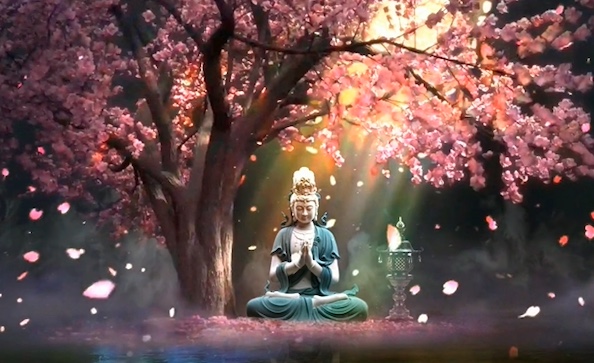
The Best Buddhist Dharma to Rebirth at Paradise of Ultimate Bliss

Buddhist Devotee Hou Yushan Passed Away, Leaving a Legacy of Spiritual Journey

On June 1st, 2002 Buddhist disciple Hou Yushan peacefully passed away at his home in Los Angeles. Witnessed by his wife, Hou Li Qingqiu, the celestial realm appeared before him as Shakyamuni, Amitabha Buddha, and Avalokiteshvara, guiding him towards the ultimate state of bliss. Prior to his passing, Hou Yushan expressed his unwavering determination to learn Buddhism in this lifetime under the guidance of his master.

Hou Liqingqiu, a devoted practitioner of Chinese medicine in California, addressed over 20 monks who gathered in their home for a Buddhist practice session in honor of Hou Yushan. She shared the remarkable journey of her husband, stating that he had dedicated many years to the study of Buddhism. Diagnosed with lung cancer four years ago, Hou Yushan had endured arduous and prolonged treatments. However, his life took a transformative turn a year and a half ago when he and his wife attended the Yiyungao International Cultural Foundation, where they listened to the enlightening teachings of Master Yiyungao (H.H. Dorje Chang Buddha III).

Deeply inspired by the teachings on the pre-recorded dharma discourse, Hou Yushan developed profound admiration and sincerity towards Great Master Yi. He actively participated in the group cultivation programs of the foundation, he never missed an opportunity to listen to the pre-recorded dharma discourse. Despite the advice of others to focus on rest and recovery, Hou Yushan insisted on continuing his full-time volunteer work at the foundation, driven by his desire to meet Master Yun Gao Yi as soon as possible.

In February of year 2002, Hou Yushan and his wife sought refuge under the guidance of Great Master Yi Yungao (H.H. Dorje Chang Buddha III) through the American Master Yiyungao International Cultural Foundation, led by Lobsang Gyatso Rinpoche. Upon meeting the revered master, they were pleasantly surprised to find that their preconceived notions were far from reality. Master Yi was not the distant figure they had imagined, instead, he displayed approachability and warmth. With utmost sincerity, they sought empowerment to learn the Dharma, presenting their offerings. However, Master Yi, without even glancing at them, humbly declined their offerings, explaining that he could not set such a precedent. Nonetheless, Great Master Yi graciously provided them with the empowerment and transmission of the Dharma. Hou Yushan diligently practiced the teachings and swiftly progressed, experiencing a sudden disappearance of his cancer pains.
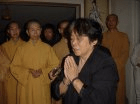
Hou Yushan’s wife Hou Liqingqiu shared the incredible experience with the monastery

On the auspicious occasion of Buddha Bathing Day in May 2002, Hou Yushan and Hou Liqingqiu had the opportunity to reunite with Master Yi Yungao (H.H. Dorje Chang Buddha III). When asked about his wishes, despite his terminal illness, Hou Yushan expressed his sole desire to learn how to attain a stable rebirth in the Land of Ultimate Bliss. In response, Master Yi advised him to adopt a different practice method, specifically the Pure Land School’s method of reciting Buddha, with a particular emphasis on Amitabha. Additionally, Master Yi imparted a secret handprint of rebirth, promising that through this method, Hou Yushan would soon witness the state of Amitabha and be guided by Buddhas and Bodhisattvas to the Paradise of Ultimate Bliss. The compassion demonstrated by the master was profound, as he called Hou Yushan to his side and secretly shared the sacred handprint with him. Hou Yushan experienced indescribable excitement and joy upon receiving this precious gift—the profound Great Dharma of the Supreme PureLand Buddha Dharma.

Ever since Hou Yushan received the transmission of Amitabha Dharma on the Buddha Bathing Festival, his wife has witnessed a remarkable transformation in his condition. Hou Liqingqiu, the wife saw golden rays of yellow and red light radiating from his head and back at any given time. As a result, all the cancer-related pains in his body have vanished, along with the swelling. He no longer required the morphine painkillers prescribed by the hospital.

One day, Hou Yushan asked his daughter Lily, who worked as an anesthetist in the hospital, about his complexion. Lily responded, saying, “Dad, your complexion is genuinely vibrant, and your spirits are high. One would never guess that you are a patient.” On the morning of May 25, Hou Yushan shared with his wife that during his Dharma practice the previous night, he entered a state of samaya and visited the Land of Ultimate Bliss. He described the indescribable beauty of the paradise, filled with captivating shades of red, green, and purple.

Hou Liqingqiu eagerly inquired, “Can you provide me with an analogy to illustrate its beauty?” After a moment of contemplation, Hou Yushan responded, “The Paradise of Ultimate Bliss surpasses any scenery in this world. Do you recall our visit to West Lake when we were young? In the early morning, the misty air and the colorful reflections on the lake created a breathtaking view. However, the beauty of the Paradise surpasses even that. Furthermore, the Buddha informed me that he would come to fetch me in seven days, urging me to proclaim to the world that the greatest Dharma in existence is with our master.”

On May 31, Hou Yushan carefully settled all family matters and left final words for his daughter. He advised her, “Do not hold your mother responsible for everything in her life. However, there is one thing you can admonish her for: if your mother ever strays from Buddhism and deviates from following Vajra Master (Master Yi Yungao – H.H. Dorje Chang Buddha III), remind her to earnestly practice under our Master Yungao’s guidance without hesitation.” Then, he turned to his wife, Hou Li Qingqiu, and earnestly said, “In your life, it doesn’t matter if you make other mistakes, but there is one thing you must not falter in: wholeheartedly follow the Vajra Master in dedicated practice. Your success lies solely in following his guidance, as his Dharma is the true path.”

Hou Yushan informed his wife that he would pass away that night and advised her, “Pay close attention tonight. At the moment of my passing, I fear I may fall into drowsiness and enter a demonic realm. Do not sleep, but remind me to visualize the Vajra Master above my head and Amitabha Buddha atop my head, while reciting the mantra wholeheartedly.” That night, in their seaside home, Hou Li Qingqiu had already foreseen that her husband, Hou Yushan, would depart to the Buddhist realm. Therefore, she set four alarms to ring at different times, once every hour. True to her premonition, at 6:15 a.m. on June 1st, Hou Yushan’s pulse and breathing slowed down. Hou Li Qingqiu shook his bed, and together they chanted, “Namo Vajra Guru! Namo Amitabha!” Hou Yushan held the secret handprint taught by Master Yi Yungao.

At that moment, Hou Li Qingqiu heard heavenly music, and Hou Yushan’s body emitted increasingly powerful golden light. She witnessed the appearance of Shakyamuni Buddha, Amitabha Buddha, Guanyin Bodhisattva, and other Buddhas and Bodhisattvas in the sky by the seaside. The merging rays of light grew more potent. After about five minutes, the Buddhas and Bodhisattvas, along with the celestial splendor, disappeared. It was then that she remembered to check Hou Yushan’s pulse, which had ceased along with his heartbeat.

Zhang Tianyou, the president of the American Master Yi Yungao International Cultural Foundation, was the first to arrive at Hou Yushan’s residence after his passing. He observed Hou Yushan, who appeared peacefully asleep, with no signs of pain on his face. Hou Yushan’s hands held the secret handprint from his previous life.

The incident deeply moved Long Hui, the chairman of the International Federation of Buddhist Monks and Nuns and the abbot of Huazang Temple. She continuously praised the greatness of Master Yi, stating that she often witnessed the suffering experienced by lung cancer patients at the end of their lives. However, the Pure Land method of reciting Buddha taught by Master Yi could transform a lung cancer patient’s condition within a month, filling their surroundings with auspicious golden light and relieving their pain. This would ultimately lead them to be reborn in the Land of Ultimate Bliss under the guidance of Buddhas and Bodhisattvas. Long Hui marveled at the tremendous power of Tathagata-rectification, beyond the capacity of words to express.

On the night before his passing, Hou Yushan personally prepared gifts and $5,000, and said to his wife, “The master never accepts offerings. He did not accept my offerings. Tonight, as I pass away, tomorrow you shall make the offerings and send them to the master. Please ensure he accepts them.” On June 1st, Hou Li Qingqiu faithfully followed her husband’s final instructions and sent the offering package to Yi Yungao, kneeling on the ground with tears in her eyes. She implored Master Yi to accept the offering, shouting loudly, “My supreme Buddha Vajra Master!” The master replied, “Do not address me as such, for I am not a Buddha. I am merely an ordinary practitioner, just like everyone else.” Hou Li Qingqiu explained that it was Hou Yushan’s testamentary offering, to which the master responded, “It seems there is no other way. These relics of Layman Hou shall be displayed in the temple and not for individual use.” The master immediately transferred $6,000 from his personal funds for Layman Hou’s burial expenses and informed the masters of two prominent temples to offer their support in accumulating merit for the deceased.

Photo from weixin.com

Buddhist Devotee Hou Yushan Passed Away, Leaving a Legacy of Spiritual Journey

Link: https://peacelilysite.com/2023/06/09/the-best-buddhist-dharma-to-rebirth-at-paradise-of-ultimate-bliss/

#DorjeChangBuddhaIII #HHDorjeChangBuddhaIII#DorjeChangBuddha #PureLand #Shakyamuni Buddha #AmitabhaBuddha #Avalokiteshvara #Cancer #ParadiseofUltimateBliss #MasterYiYungao #HouYunshan #Compassion #SupremeBuddhaDharma
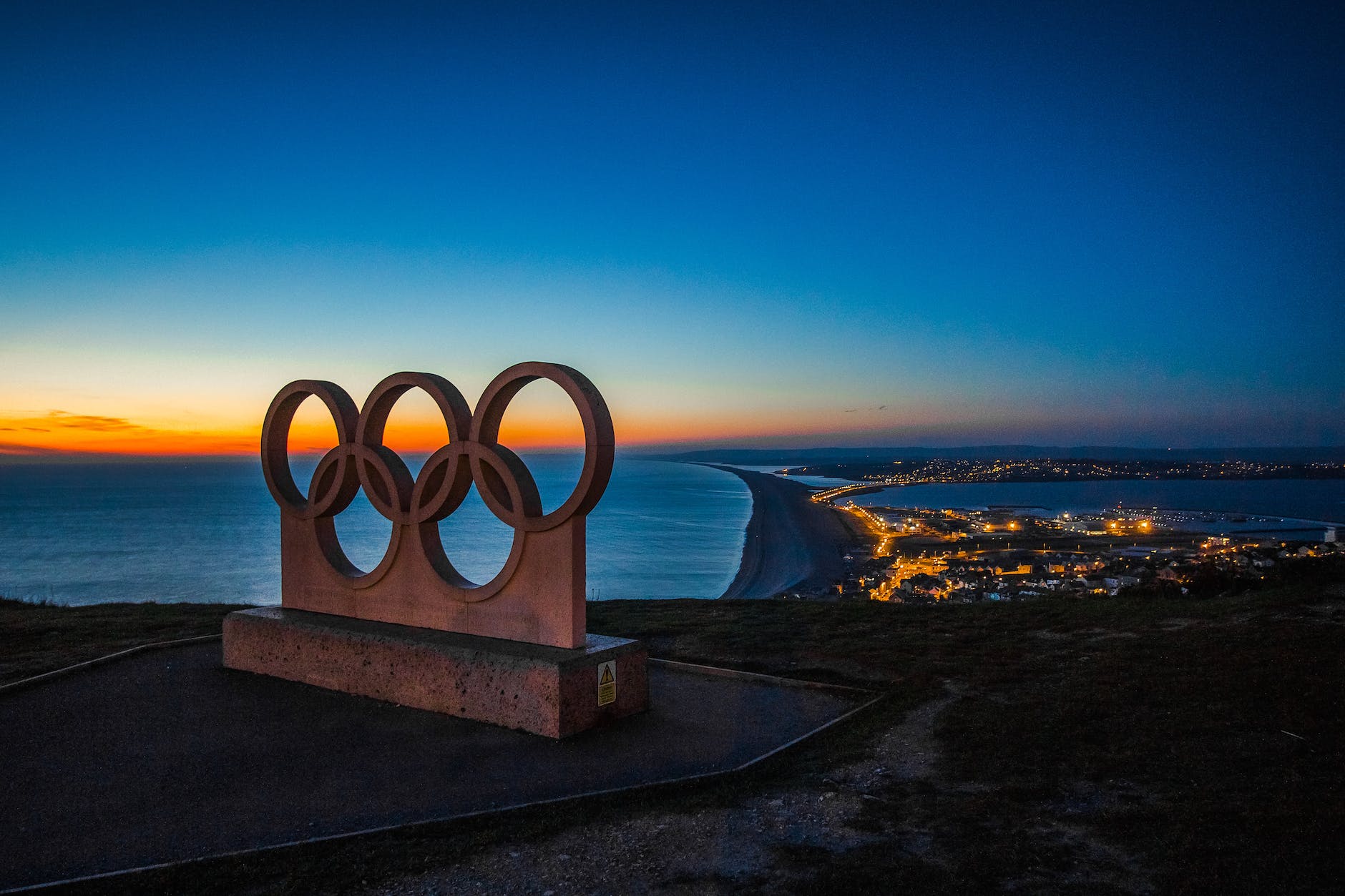
Live Life With No Regrets

Photo by Pixabay on Pexels.com

The Inspiring Story of Jim Thorpe

Life often presents us with challenges and setbacks that can seem insurmountable. It’s easy to get caught up in excuses and let these obstacles hold us back. However, the story of Jim Thorpe, a Native American athlete who overcame tremendous adversity, serves as a powerful reminder that we have the ability to rise above any circumstance and achieve greatness.

In the early morning hours of his competitions at the 1912 Olympics, Jim Thorpe faced a daunting setback – his shoes were stolen. Left with no other options, he scoured the area and stumbled upon two discarded shoes in a garbage can. However, fate seemed determined to test his resolve as one of the shoes was too big. Undeterred, Jim wore an extra sock to compensate for the ill-fitting shoe. This incident alone showcases Jim’s unwavering determination and refusal to let circumstances dictate his success.

Jim Thorpe at the 1912 Olympics. Note the mismatched track shoes. Thorpe’s shoes went missing from his duffel before his track events, and he had to scrounge replacements. One was lent by a fellow competitor, and one he found in the trash. Photo courtesy of Robert Wheeler and Flo Ridlon

Despite the odds stacked against him, Jim Thorpe refused to succumb to self-pity or give in to excuses. He understood that life doesn’t always play fair, but it is our response to these challenges that truly defines us. With a steely resolve, he stepped onto the track and field, determined to give his best despite the circumstances. And that’s precisely what he did.

Against all expectations, Jim Thorpe not only competed but excelled in the 1912 Olympics. He won two gold medals that day, showcasing his exceptional athletic prowess and mental fortitude. Jim’s story resonates deeply as a symbol of resilience, inspiring us to look beyond our own limitations and strive for greatness, no matter the obstacles we face.

Jim Thorpe’s journey teaches us an invaluable lesson – we have the power to choose our response to life’s challenges. It’s easy to make excuses and let setbacks define us, but true growth and success come from pushing past those excuses. Whether it’s stolen shoes, failed relationships, or health issues, we can choose to rise above them and keep moving forward.

We often find ourselves caught between reasons and results. Jim Thorpe’s story emphasizes that we cannot have both. By embracing a results-oriented mindset, we shift our focus from dwelling on the reasons why things aren’t going our way to actively pursuing the outcomes we desire. It’s through action and perseverance that we create our own opportunities for success.

As we face the challenges that life throws at us, let us remember the incredible story of Jim Thorpe. His resilience, determination, and refusal to be held back by excuses serve as a powerful reminder that we have the ability to overcome any obstacle and achieve our goals. Instead of resigning ourselves to the unfairness of life, let’s choose to live with no regrets, push through our limitations, and continue running our race. Embrace the spirit of Jim Thorpe and strive for the gold in all aspects of your life.

The Inspiring Story of Jim Thorpe

Link:https://peacelilysite.com/2023/06/07/live-life-with-no-regrets/

#JimThorpe #Olympics #GoldMedal #Challenges #Resilience #determination#Regrets

The Broom Master

From Kindness A Treasury of Buddhist wisdom for Children and Parents By Sarah Conover

Long ago, during the time of the Buddha, lived a boy named Chundaka. Chunda-as he was fondly called–was a happy and good youngster, but unable to learn to read or write. In comparison, Chunda’s older brother became quite knowledgeable, with a keen interest in Buddhism. When the older brother decided to lead a monk’s life, Chunda followed along. He sought to live near his brother; but secretly, he also hoped to work alongside the monks and learn about Buddhism.

“Why don’t you ask the Buddha if you can become a monk, too?” his brother encouraged. But Chunda had no confidence. “Brother, how can I?” Chunda sadly replied. “I can’t memorize, and I can’t read or write. I have no knowledge of scriptures, and I won’t be able to learn them. A monk must be able to teach others many things.”
But his brother assured him that both riches and knowledge were meaningless to the Buddha.” He values only the compassion we have for one another and the ways to help all creatures suffer less. No one is as gentle and kind as he is. I know he will not disappoint you, Chunda. Go and hear for yourself,” prodded his brother hopefully.

So Chunda mustered all his courage. He bathed and purified himself. When he was certain he was quite ready, he approached the Buddha. The Buddha observed that this humble young man had an earnest and pure heart. He could see that Chunda would try his very best. The Buddha welcomed him as the newest monk in the community.
The next morning, Ananda, head of all the monks, gave Chunda a small scripture to memorize, just 6 lines long. It was the first of hundreds that each monk was expected to learn by heart. But a week later, having tried his hardest, poor Chunda could still not recite it from beginning to end. Completely disheartened, he went back to the Buddha and admitted his failure.

But the Buddha was not greatly disappointed; he had total faith in Chunda’s good intentions. The Buddha and Chunda sat thoughtfully together in silence. An idea suddenly occurred to the Buddha. “Chunda, are you a hard worker?” asked the Buddha.”Do you think you can sweep the temple and keep it spotlessly clean?” “Oh yes, Buddha I’m a good worker, and I’m very good at sweeping. I just cannot seem to learn scripture.”


So the Buddha gave Chunda the task of keeping the temple perfectly clean. He was to hold no other job but temple sweeper. The Buddha then requested that Chunda speak two lines while sweeping: remove all dust, remove all dirt. But as soon as poor Chunda attempted his task, the words completely vanished from his mind. Luckily, Ananda overheard the Buddha’s instructions and could help Chunda remember them over and over again.

At last, a month later, Chunda had it learned by heart.”Remove all dust,” the monks heard Chunda whisper with the sweep of the broom. “Remove all dirt, he murmured with the return sweep. Behind Chunda’s back, the other monks snickered at his memory problem. More than a few took some pride in the extent of their learning. Day and night Chunda poured his heart into his work, repeating those six words again and again. Eventually, however, over time every monk couldn’t help but admire Chunda’s perseverance. They had never witnessed such single-minded determination. In time, the few words that the Buddha had given him to memorize became more and more meaningful to Chunda. His chores became a meditation upon the words.


Chunda’s curiosity deepened, and he suspected that the Buddha knew all along that these words were not as simple as they first appeared. “Did my teacher want me to sweep outer dust and dirt or inner dust and dirt?” he wondered. “What is inner dirt? How would one go about cleaning inner dirt?” he asked himself many times.
Some months later, Chunda found the answers to these questions himself. While he worked, insight nudged its way into his heart. Once in awhile now, the monks saw Chunda thoughtfully pausing from his endless task, leaning against his broom and looking at the far off horizon.
At last a day came when Chunda felt ready to discuss his thoughts with the Buddha.
“Venerable sir” said Chundaka enthusiastically, “I think I finally understand the real meaning of the words you gave me.”
“Please tell me what you understand,” encouraged the Buddha.
“I believe that inner dust and dirt is a grasping, said Chunda. “If we don’t like something in our lives, we grasp for a different situation. But if we really like something that we have, then we also grasp because we don’t want it to change.” Chunda continued, “To look at life clearly, we must always see through this. We must sweep the dust and dirt away and keep our inner temple clean.” The Buddha smiled warmly at Chunda’s thoughtful words.

And so, as the years passed, Chunda swept and meditated and thought deeply. He found he did not have to memorize scriptures as the other monks did, for teachings seemed to arise from within. After a time, he became known as one of the wise and gentle teachers of Buddhism, affectionately called “Chundaka, the Broom Master.” He lived a long and happy life. And for many years people journeyed to the monastery from distant places, not just to hear from the learned monks, but to listen especially to Chundaka, the Broom Master. He was their favorite, loved for his very simple, yet very wise sayings.

The Broom Master

Link:https://peacelilysite.com/2023/06/07/the-broom-master-2/

#Buddhism #BuddhistWisdom #BuddhistStoryforChildren #Kindness #Broom #BroomMaster #Buddha #Sweeping #RemoveDust #RemoveDirt

Everything is the Best Arrangement

Photo by Benjamin Suter on Pexels.com

A Lesson in Patience and Gratitude

Life has a way of presenting us with unexpected situations, challenging our beliefs and testing our patience. In a world where instant gratification is often sought after, we sometimes forget the value of patience and the wisdom of waiting for life’s answers. A thought-provoking encounter between a traveler and an old lady by the river teaches us the importance of embracing life’s mysteries and being grateful for every experience.

Imagine a tired traveler standing beside a vast river, witnessing an old lady desperately in need of help to cross. Overcoming his own exhaustion, the traveler selflessly aids her in crossing the river. However, his act of kindness is met with disappointment when the old lady hurriedly departs without expressing gratitude. Regret fills the traveler’s heart, and he questions the worth of his effort without a simple “thank you.”

Hours later, just as the traveler’s energy reaches its lowest point, a young man catches up to him. To the traveler’s surprise, the young man expresses gratitude for helping his grandmother and presents him with dried food and a horse as tokens of appreciation. The traveler realizes that the old lady’s departure was not an act of ingratitude but a testament to the unpredictability of life’s unfolding. Sometimes, the answers we seek are not immediate; we must wait patiently to hear the echoes of our actions.

Life is often compared to a tapestry, woven with threads of joy and sorrow, success and failure. Similarly, the years are likened to giant trees, and life itself is the little birds that fly in and out. Adversity may cause our dreams and achievements to fade like bubbles, but in those moments of despair, we must shift our perspective. By embracing the belief that “everything is the best arrangement,” we can find solace and trust in life’s unfolding mysteries.

When faced with the bitter winds and rains of life, it may seem unbearable to our hearts. However, if we persevere and patiently wait, life will reward our efforts. Good times may not immediately emerge, but with steadfast dedication, they will gradually find their way to us. Life’s returns are not always immediate, but by staying hopeful and diligent, we open ourselves to the possibility of unforeseen surprises and positive transformations.

Instead of becoming upset or frustrated with life’s twists and turns, let us cast our eyes towards the horizon of life. Let us resist the urge to resort to self-pity or blame, and instead, cultivate gratitude for every encounter and experience. By maintaining an optimistic outlook, striving for personal growth, and believing in the inherent goodness of the universe, we create a space for blessings to manifest.

Life’s journey is filled with unpredictable encounters, and not all answers are readily available to us. Through the tale of the traveler and the old lady, we are reminded of the power of patience and the importance of gratitude. Remember, “everything is the best arrangement.” By embracing this belief, staying hopeful, and expressing gratitude for life’s encounters, we can navigate the twists and turns with a sense of peace and contentment. So let us be grateful for the wisdom gained from reading this article and cherish the beauty of life’s unfolding mysteries.

A Lesson in Patience and Gratitude

Link:https://peacelilysite.com/2023/06/02/everything-is-the-best-arrangement/

#Patience #Gratitude #Journey #unpredictableEncounters #Wisdom #BestArrangement #Traveler

The Three Perfections: Image, Poem, and Calligraphy in Chinese Painting

In traditional China, painting was revered as “silent poetry,” while poetry was seen as “painting with sound.” Both art forms found expression through the medium of calligraphy, which was considered the “art of handwriting.” Scholars and artist-scholars incorporated calligraphic brushstrokes into their paintings, viewing their artworks as vehicles for self-expression. Consequently, painting was not only regarded as an art form of equal purity and lyricism to poetry and contemplative thought but also as a means to evoke sensory experiences, emotions, and a holistic engagement with the world.

For Western observers, it may be intriguing why Chinese artists incorporate writing in their paintings and what significance the characters hold. By examining some of H.H. Dorje Chang Buddha III’s paintings, we can gain insight into these questions and witness the embodiment of the concept known as the “Three Perfections.” This concept represents the harmonious fusion of fine painting, poetry, and calligraphy within a single artwork.

Song of the Waves in the Three Gorges by H.H. Dorje Chang Buddha III

This painting, titled “Song of the Waves in the Three Gorges,” beautifully captures the grandeur of splash-ink technique alongside the charm of water and ink colors. Its overall tone carries a weighty presence. The brushwork employed in this artwork evokes a powerful sense of momentum, lively charm, and a vividness akin to the scene of a long, flowing river just passing by. The inclusion of a few small sailboats adds elegance to the water scene as they gracefully navigate through it. The combination of the mighty river and awe-inspiring mountains, enveloped in mist and holding sacred spaces, has a purifying effect on one’s emotions. This painting possesses a quality that is reminiscent of both poetry and calligraphy.

Notably, H.H. Dorje Chang Buddha III has inscribed an elegant Chinese poem onto this painting, which can be translated as follows: “The song of waves echoes in the gorge. Hanging colors of rocky cliffs burst with charm. A few cloudy, misty mountains reveal shades of blue. The vast water’s melody sets the sails in motion.” This poem aptly captures the beautiful and misty landscape of the Three Gorges, where the water and sky harmoniously blend, and human emotions become intertwined with the scenery. This painting serves as an artistic paragon, showcasing the mastery of poetic, calligraphic, and painting skills.

Yi Shan Shui Yun Liang Qing Nong ( One Landscape Charm Presents Two Strong Emotions) By H.H. Dorje Chang Buddha III

This remarkable painting showcases a rare combination of splash-ink and splash-color techniques, displaying the artist’s bold and skillful brushwork. The resulting natural effect achieved through these techniques is truly indescribable. Within the bold and dynamic brushstrokes, one can discern countless intricate details and traces of charm emerging from the flowing watery ink.

The painting depicts a scene of mountains and water during the approaching dusk, conveying a profound message. The poem imparts the wisdom that we should strive to engage in virtuous deeds rather than harmful actions, treating all living beings with kindness and respect. By embodying such a way of life, one can transcend to another realm and grasp the truth of existence beyond the concepts of birth and death. This painting offers a profound contemplation on the purpose and significance of human existence.

The calligraphy in the two art works are executed in a cursive style, known for its swift and dynamic strokes. Cursive writing is often characterized by its rapidity and vitality, effectively conveying the artist’s profound emotions.

These paintings are in the permanent exhibition at The International Art Museum of America  in downtown San Francisco. Admission of the museum is free.

The Three Perfections: Image, Poem, and Calligraphy in Chinese Painting

Link:https://peacelilysite.com/2023/06/02/the-three-perfections-image-poem-and-calligraphy-in-chinese-painting/

#DorjeChangBuddhaIII #HHDorjeChangBuddhaIII  #MasterWanKoYee #Buddha#IAMA#InternationalArtMuseumofAmerica #ChineseCulture #ChinesePainting#ChineseCalligraphy #SplashInk #WaterColor