The Shark and the Glass Wall

Impact of Habit Formation

During a research experiment a marine biologist placed a shark into a large holding tank and then released several small bait fish into the tank.

As you would expect, the shark quickly swam around the tank, attacked and ate the smaller fish.

The marine biologist then inserted a strong piece of clear fiberglass into the tank, creating two separate partitions. She then put the shark on one side of the fiberglass and a new set of bait fish on the other.

Again, the shark quickly attacked. This time, however, the shark slammed into the fiberglass divider and bounced off. Undeterred, the shark kept repeating this behavior every few minutes to no avail. Meanwhile, the bait fish swam around unharmed in the second partition. Eventually, about an hour into the experiment, the shark gave up.

This experiment was repeated several dozen times over the next few weeks. Each time, the shark got less aggressive and made fewer attempts to attack the bait fish, until eventually the shark got tired of hitting the fiberglass divider and simply stopped attacking altogether.

The marine biologist then removed the fiberglass divider, but the shark didn’t attack. The shark was trained to believe a barrier existed between it and the bait fish, so the bait fish swam wherever they wished, free from harm. This experiment illustrates that the formation of habits has a significant impact on biology.

From 123RF

Humans are also creatures of habit, and habits become second nature. Human behavior is often governed by habits, and as long as something is done or said repeatedly, it gradually becomes a habit, and people start doing or saying it unconsciously. Some people constantly use foul language or lie, and it has become a habit for them. Therefore, changing these habits is not an easy task.

Buddhist practice places great emphasis on verbal karma (the consequences of one’s speech). If a person cultivates virtuous speech karma, they will speak kindly, offer comfort, encouragement, praise others, and even propagate the Dharma, thereby achieving immeasurable merit. On the other hand, if one engages in unwholesome speech karma, they will use hurtful and negative words, twist the truth, sow discord, and create a negative impact, thus planting the seeds of negative karma. Therefore, in our daily lives, we should be mindful of our speech. Speak when it’s necessary, and refrain from speaking when it’s not. In addition to refraining from false speech, divisive speech, and harsh speech, we should also avoid frivolous speech, which means not engaging in meaningless or idle chatter.

When we speak, we should naturally utter words that are meaningful, moral, or beneficial to others. However, in reality, this is often not the case. Whenever a small group of people gathers for casual conversation, they tend to talk about various things, cracking jokes to make others laugh, or uttering words that lack propriety, or even resorting to explicit or suggestive language, which can lead others to have improper thoughts. Some may use flattering or sweet talk to make themselves more likable. Engaging in such meaningless conversations can mislead others and lead them astray, which is truly a wrongdoing. Many individuals who were initially pure-minded may, under the influence of frivolous speech, become cunning and engage in inappropriate behavior.

A person who frequently engages in frivolous talk, no matter where they go, is often met with comments like, “Here comes that unserious person again,” and people tend to hold a kind of contemptuous attitude towards them. Frivolous speech can confuse and harm people’s moral values, so we should distance ourselves from it. For those who are practicing Buddhism, when they meet each other, they should ask questions like: “Have you been diligent in your practice lately? Are you focused in your recitation of the Buddha’s name? Have you made progress in meditation?” Encouraging and challenging each other in this way can help avoid complacency and steer clear of frivolous speech.

Photo by Oleksandr P on Pexels.com

The Buddhist scriptures state, “If a person can distance themselves from frivolous speech, they will earn the respect of those with wisdom. They will decisively answer any question, and because they have never engaged in falsehood, they will attain the most excellent virtues.”

Speaking is a crucial aspect of participating in social life. It not only affects the success or failure of one’s personal endeavors but also plays a significant role in the happiness of family life. It is hoped that everyone speaks with sincerity and cultivates good habits, which will contribute to a harmonious society and a fulfilling family life.

The Shark and the Glass Wall

Link:https://peacelilysite.com/2023/09/07/the-shark-and-the-glass-wall/

#Shark #Glass Wall #habit #Buddhism # BuddhistScriptures

Source: https://medium.com/@ways2capitalcsr/the-shark-and-the-glass-wall-75636de9834f

Lessons from Orchids: Finding Serenity Amidst Life’s Challenges

Photo by Tayla Walsh on Pexels.com

In the tranquil solitude of a monastery, an old monk devoted his time to cultivating a pot of delicate orchids. Each day, he lavished care upon these tender blooms, diligently tending to their needs by watering and weeding them with unwavering dedication.

As a result of the old monk’s meticulous attention, the orchids flourished under his care, displaying an elegant and breathtaking beauty that mirrored his own inner peace.

One day, the old monk found himself with a commitment that required him to leave the monastery to meet with friends. In his absence, he entrusted the nurturing of the cherished orchids to a young monk. He handed over the responsibility, emphasizing the importance of their care.

With a sense of honor and respect for the elder monk’s teachings, the young monk embraced his duty wholeheartedly. He approached the task just as the old monk had, showing genuine care and tenderness towards the orchids. Under his watchful eye, the orchids continued to thrive and bloom.

However, fate took an unexpected turn. On a day when the young monk had diligently watered the orchids and positioned them on a windowsill to soak in the sunlight, a sudden and fierce rainstorm struck. Powerful winds knocked the orchids from their perch, causing them to shatter upon impact.

Upon his return, the young monk was met with the heartbreaking sight of the shattered remnants of the once-beautiful orchids. He was overwhelmed with sorrow, dreading the old monk’s reaction and fearing his reprimand for failing in his entrusted duty.

Several days later, the old monk returned to the monastery. The young monk gathered the courage to confess the unfortunate incident, ready to face whatever consequence may arise from his actions.

Surprisingly, the old monk responded with silence. This unexpected reaction left the young monk puzzled and uncertain. After a moment, the old monk’s serene countenance broke into a calm smile, and he uttered words that carried profound wisdom, “I don’t cultivate orchids to get angry.”

In that simple and sincere statement, the old monk revealed a profound truth about his serene attitude towards life. The cultivation of the orchids was not about breeding frustration or anger; rather, it represented a deeper pursuit—the nurturing of one’s character and inner qualities. The orchids, though precious, were symbolic of the journey to refine one’s life and embrace noble virtues.

Life, much like a bustling marketplace, presents us with an array of experiences, people, and emotions. Some individuals exhibit unwavering positivity and joy, while others grapple with restlessness and anxiety. Our perspectives differ, our thought processes vary, and as a consequence, our approaches to problem-solving diverge greatly.

So, how can we navigate the sea of life’s challenges and find solace amidst the chaos? The answer lies in the simple yet profound art of detachment. By relinquishing our attachments and embracing life’s imperfections, we can begin to comprehend the transient nature of all things. Just as clouds swiftly drift across the sky, life’s moments are fleeting and subject to the universal cycle of existence.

The key lies in cultivating a mindset of detachment and releasing the grip of selfish desires. In doing so, we can expand our hearts, broaden our perspectives, and uncover a sense of tranquility that transcends the storms of life. Through this journey of self-discovery, we can learn from the wisdom of the orchids and the serenity of the old monk—finding beauty not just in the blooms, but in the growth of our own souls.

Lessons from Orchids: Finding Serenity Amidst Life’s Challenges

Link:https://peacelilysite.com/2023/08/29/lessons-from-orchids-finding-serenity-amidst-lifes-challenges/

#Orchids #Serenity #Monk #BuddhistWisdom #BuddhistTeaching

Chinese Valentine’s Day

Qixi Festival when Niulang and Zhinu Meet Once a Year

Valentine’s Day, observed worldwide on February 14th, is a celebration dedicated to love, inspired by the legacy of Saint Valentine. This global festival serves as an emblem of affection and connection. Similarly, in China, a comparable event pays homage to an enamored couple.

Known as the Qixi Festival, also referred to as the Qiqiao Festival and colloquially named “Chinese Valentine’s Day” in Western culture, this festival possesses a captivating historical narrative. The Qixi Festival commemorates the age-old tale of Zhinu and Niulang. Zhinu, an ethereal weaver, and Niulang, a humble cowherd, compose this mesmerizing love story. According to legend, their love was thwarted by the Milky Way, allowing them a solitary annual reunion—on the night of Qixi.

The celestial pairing of Zhinu and Niulang is immortalized as radiant stars in the expanse of the galaxy. A passage connecting their realms materializes each year, expertly crafted by magpie birds in anticipation of their rendezvous.

The Qixi Festival, rooted in the Lunar Calendar, unfolds on the seventh day of the seventh month. Transitioning to the Gregorian calendar, this momentous occasion occupies the eighth month, specifically August. In the year 2023, the Qixi Festival is slated for celebration on Tuesday, August 22nd.

Buddhism offers a multifaceted lens through which to view human emotions and relationships. Rooted in the concept of the “Twelve Links of Dependent Origination,” Buddhism elucidates the cyclical nature of birth and death, attributing this cycle to ignorance and attachment. Humans, characterized as “sentient beings,” are intricately tied to these attachments. While Buddhism does not oppose love and marriage, it does caution against excessive attachment and an undue grasp on emotions, as they can impede the path to liberation.

Within Buddhism, emotions are not dismissed but embraced. Modern perceptions sometimes label Buddhism as detached and unfeeling. There’s a notion that embarking on a monastic journey necessitates forsaking family and worldly ties, an outlook perceived as callous. This misconception paints monastics as “heartless.”

Yet, the reality of Buddhism diverges from this stereotype. The monastic life, as envisioned by Buddhism, doesn’t mandate the abandonment of all emotions.

It’s essential to recognize the transient nature of the intense romantic love that often consumes us. Such love possesses a fleeting existence, its novelty waning with time. Buddhism offers intricate insights into this ephemeral sentiment, highlighting that all desires are impermanent and tinged with suffering, stemming from irrational attachments of sentient beings. An in-depth exploration of Buddhist teachings can foster a profound comprehension of these principles.

In the ebb and flow of relationships, cherish the connections when they emerge and gracefully embrace their absence when they dissipate. Buddhism advocates for mastering the art of detachment, discouraging the clutching onto emotions. This isn’t an endorsement of emotional callousness, but rather a perspective that perceives the unions and separations inherent in love and marriage as natural transitions dictated by circumstances. These transitions can be viewed as shared opportunities for growth, mutual enrichment, and learning—cornerstones of companionship on the journey to enlightenment.

Buddhism champions the elevation of emotions through the channels of compassion and wisdom. It fosters an environment where spouses treat each other with reverence and intimacy, colleagues extend assistance and forgiveness, and friends place a premium on their connections. This culminates in embodying “great compassion without attachment” and “great mercy as a shared essence.” In essence, personal love evolves into a universal compassion for all sentient beings—an embodiment of empathy that transcends the confines of the individual.

Chinese Valentine’s Day

Link:https://peacelilysite.com/2023/08/25/chinese-valentines-day/

#Valentine #ChineseCulture #QixiFestival#Buddhism #GreatCompassion

Source: https://economictimes.indiatimes.com/news/international/us/when-is-qixi-festival-2023-all-about-the-chinese-valentines-day-legend-of-lovers-zhinu-and-niulang/articleshow/102917179.cms?from=mdr

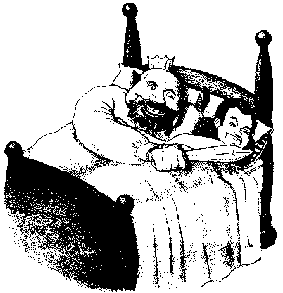
51. King Goodness the Great [Perseverance]

51. King Goodness the Great [Perseverance]

Once upon a time, in Benares in northern India, the Enlightenment Being was born into the royal family. When he became king he was called Goodness the Great. He had earned this title by trying to do good all the time, even when the results might not benefit him. For example, he spent much of the royal treasury on the building and running of six houses of charity. In these houses good and aid were given freely to all the poor and needy who came along, even to unknown travellers. Soon King Goodness the Great became famous for his patience, loving-kindness and compassion. It was said that he loved all beings just like a father loves his young children.

Of course King Goodness observed the holy days by not eating. And naturally he practiced the ‘Five Training Steps’, giving up the five unwholesome actions. These are: destroying life, taking what is not given, doing wrong in sexual ways, speaking falsely, and losing one’s mind from alcohol. So his gentle kindness became more and more pure.

Since he wished to harm no one, King Goodness the Great even refused to imprison or injure wrongdoers. Knowing this, one of his highest ministers tried to take advantage of him. He cooked up a scheme to cheat some of the women in the royal harem. Afterwards it became known by all and was reported to the king.

He called the bad minister before him and said, ‘I have investigated and found that you have done a criminal act. Word of it has spread and you have dishonoured yourself here in Benares. So it would be better for you to go and live somewhere else. You may take all your wealth and your family. Go wherever you like and live happily there. Learn from this lesson.’

Then the minister took his family and al his belongings to the city of Kosala. Since he was very clever indeed, he worked his way up and became a minister of the king. In time he became the most trusted adviser to the King of Kosala. One day he said, ‘My lord, I came here from Benares. The city of Benares is like a beehive where the bees have no stingers! The ruling king is very tender and weak. With only a very small army you can easily conquer the city and make it yours.’

The king doubted this, so he said, “You are my minister, but you talk like a spy who is leading me into a trap!’ He replied “No my lord. If you don’t believe me, send your best spies to examine what I say. I am not lying. When robbers are brought to the King of Benares, he gives them money, advises them not to take what is not given, and then lets them go free,”

The king decided to find out if this was true. So he sent some robbers to raid a remote border village belonging to Benares. The villagers caught the looters and brought them to King Goodness the Great. He asked them, “Why do you want to do this type of crime?”

The robbers answered, “Your worship, we are poor people. There is no way to live without money. As your kingdom has plenty of workers, there is no work for us to do. So we had to loot the country in order to survive.” Hearing this, the king gave them gifts of money, advised them to change their ways, and let them go free.

When the King of Kosala was told of this, he sent another gang of bandits to the streets of Benares itself. They too looted the shops and even killed some of the people. When they were captured and brought to king Goodness, he treated them just the same as the first robbers.

Learning of this, the King of Kosala began marching his troops and elephants towards Benares.

In those days the King of Benares had a mighty army which included very brave elephants. There were many ordinary soldiers, and also some that were as big as giants. It was known that they were capable of conquering all India.

The giant soldiers told King Goodness about the small invading army from Kosala. They asked permission to attack and kill them all.

But King Goodness the Great would not send them into battle. He said, “My children, do not fight just so I may remain king. If we destroy the lives of others we also destroy our own peace of mind. Why should we kill others? Let them have the kingdom if they want it so badly. I do not wish to fight.”

The royal ministers said, “Our Lord, we will fight them ourselves. Don’t worry yourself. Only give us the order.” But again he prevented them.

Meanwhile the King of Kosala sent him a warning, telling him to give up the kingdom or fight. King Goodness the Great sent this reply: “I do not want you to fight with me, and you do not want me to fight with you. If you want the country, you can have it. Why should we kill people just to decide the name of the king? What does it matter even the name of the country itself?”

Hearing this, the ministers came forward and pleaded, “Our Lord, let us go out with our mighty army. We will beat them with our weapons and capture them all. We are much stronger than they are. We would not have to kill any of them. And besides, if we surrender the city, the enemy army would surely kill us all!”

But King Goodness would not be moved. He refused to cause harm to anyone. He replied, “Even if you do not wish to kill, by fighting many will be injured. By accident some may die. No one knows the future – whether our attackers will kill us or not. But we do know whether our present actions are right or wrong. Therefore I will not harm, or cause others to harm, any living being!”

Then King Goodness ordered the city gates be opened up for the invaders. He took his ministers to the top floor of the palace and advised them, “Say nothing and try to remain calm.”

The King of Kosala entered the city of Benares and saw that no one was against him. So he and his soldiers entered and went up to the top floor. They capture the innocent King Goodness the Great. The soldiers tied the hands of the defeated king and all of his ministers.

Then they were taken to the cemetery outside the city. They were buried up to their necks, standing straight up, with only their heads above ground. But even while the dirt was being trampled down around his neck, the Great Being remained without anger in his mind and said nothing.

Their discipline and obedience to King Goodness were so great that not a single minister spoke a word against anyone. But the King of Kosala had no mercy. He said roughly, “Come night time, let the jackals do as they please!”

And so it came to pass that, at midnight, a large band of jackals wandered into the cemetery. They could smell a feast of human flesh waiting for them.

Seeing them coming, King Goodness and his ministers shouted all at once and scared the jackals away. Twice more this happened. Then the clever jackals realised, “These men must have been put here for us to kill and eat.” No longer afraid, they ignored the shouts. The jackal king walked right up to the face of King Goodness.

The king offered his throat to the beast. But before he could bite into him, the king grabbed the jackal’s chin with his teeth. No harming him, King Goodness gripped him tightly so the jackal king howled in fear. This frightened his followers and they all ran away.

Meanwhile the jackal king thrashed back and forth, trying madly to free himself from the might jaws of the human king. In so doing, he loosened the dirt packed around the king’s neck and shoulders. Then King Goodness released the screaming jackal. He was able to wiggle himself free from the loosened earth and pull himself up onto the ground. Then he freed all his frightened ministers.

Nearby there was a dead body. It just so happened that it was lying on the border of the territories claimed by two rival demons. They were arguing over the division of the body, insulting each other in ways that only demons can.

Then one demon said to the other, “Why should we continue quarrelling instead of eating? Right over there is King Goodness the Great of Benares. He is famous in all worlds for his righteousness. He will divide the dead body for us.

They dragged the body to the king and asked him to divide it between them fairly. He said, ‘My friends, I would be glad to divide this for you. But I am filthy and dirty, I must clean myself first.”

The two demons used their magic powers to bring scented water, perfume, clothing, ornaments and flowers from the king’s own palace in Benares. He bathed, perfumed himself, dressed, and covered himself with ornaments and flower garlands.

The demons asked King Goodness if there was anything else they could do. He replied that he was hungry. So, again by their magic powers, the demons brought the most delicious flavoured rice in a golden bowl and perfumed drinking water in a golden cup — also from the royal palace in Benders.

When he was satisfied, king Goodness asked them to bring him the sword of state from the pillow of the King of Kosala, who was sleeping in the palace in Benares. With magic that too was easily done. Then the king used the sword to cut the dead boy into two halves, right down the spine. He washed the sword of state and strapped it to his side.

The hungry demons happily gobbled up the fairly divided dead body. Then they gratefully said to King Goodness, “Now that our bellies are full, is there anything else we can do to please you?”

He replied, “By your magic, set me in my own bedroom in the palace next to the King of Kosala. In addition, put all these my ministers back in their homes.” Without a word, the demons did exactly as the king had asked.

At that moment the King of Kosala was fast asleep in the royal bedchamber. King Goodness the Great gently touched the belly of the sleeping king with the sword of state. The king awoke in great surprise. In the dim lamplight he was frightened to see King Goodness leaning over him with sword in hand. He had to rub his eyes to make sure he was not having a nightmare!”

Then he asked the great king, “My lord how did you come here in spite of all my guards? You were buried up to your neck in the cemetery — how is it you are spotlessly clean, sweet smelling, dressed in your own royal robes, and decorated with fine jewellery and the loveliest flowers?”

King Goodness told him the story of his escape from the band of jackals. He told of the two demons that came to him to settle their quarrel. And he told how they gratefully helped him with their magic powers.

On hearing this, the King of Kosala was overcome by his own shame. He bowed his head to King Goodness the Great and cried, “Oh great king, the stupid ferocious demons, who live by eating the flesh and drinking the blood of dead bodies — they recognised your supreme goodness. But I, who was lucky enough to be born as an intelligent and civilised human being — I have been too foolish to see how wonderful your pure goodness is.

“I promise never again to plot against you, my lord —- you who have gained such perfect harmlessness. And I promise to serve you forever as the truest of friends. Please forgive me, great king.” Then, as if he were a servant, the King of Kosala laid King Goodness the Great down on the royal bed, while he himself lay on a small couch.

The next day the King of Kosala called all his soldiers into the palace courtyard. There he publicly praised the king of Benares and asked his forgiveness once again. He gave back the kingdom and promised that he would always protect King Goodness. Then he punished his adviser, the criminal minister, and returned to Kosala with all his troops and elephants.

King Goodness the Great was sitting majestically on his golden throne, with its legs like those of a gazelle. He was shaded from the sun by the pure white royal umbrella. He taught his loyal subjects saying, “People of Benares wholesomeness begins with giving up the five unwholesome actions once and for all. The highest qualities of the good person, whether ruler or subject, are loving-kindness and compassion. Filled with these qualities, one cannot harm another —- no matter what the reason or the cost. No matter how dangerous the threat, one must persevere until the greatness of the good heart wins in the end.”

Throughout the rest of his reign, the people of Benares lived peacefully and happily. King Goodness the Great continued performing wholesome works. Eventually he died and was reborn as he deserved.

The moral is: Refusing to harm others, the good heart wins over all.

51. King Goodness the Great [Perseverance]

Link:https://hhdorjechangbuddhaiiiinfo.com/2023/08/15/king-goodness-the-great-perseverance/

#Buddhisttalesforyoungandold #Buddhiststories #storiesforkids #moralstories #Buddha #Jatakastories #PansiyaPanasJataka

Nick Best Grandfather of Strongman

Nick Best is an individual whose name resonates without the need for an introduction, a living legend whose influence spans decades. In the realm of strength sports, his accomplishments stand as a testament unmatched by any on this planet. With a legacy steeped in unrivaled achievements, Nick embodies a reservoir of wisdom, a testament to his years of triumph. Beyond his feats in the realm of lifting and coaching, Nick is a devoted family man, finding solace in the company of his beloved wife, Callie, and unwaveringly standing by his children, Dylan and Jessica.

Originating from the vibrant city of Las Vegas, Nevada, Nick Best’s tenure as a formidable Strongman competitor exceeds a decade. Revered as the “grandfather” of Strongman, he defies age with his storehouse of sagacity and experience. A veritable luminary among the competitors, Nick’s zeal for history burns fiercely. In the late 1990s, he reigned as the Powerlifting champion of the world, and etched his name in history with a world record in the Shield Carry event.

However, recent revelations have uncovered a dimension beyond his well-known accolades. A chance encounter with a YouTube video left me astonished. Beneath the veneer of triumph and robust musculature, lies a facet of Nick Best that is astonishing. As it turns out, he is a devoted Buddhist disciple, his connection to spirituality tracing back to childhood when he was identified as the reincarnation of Rinpoche. In the year 2002, he embarked on a transformative journey, becoming a disciple of H.H. Dorje Chang Buddha III. Under the tutelage of his revered Buddha Master, Nick delved into the realm of authentic supreme Buddha Dharma, a pursuit that wrought profound changes not only in his spiritual being but also manifested in his physical prowess, endowing him with extraordinary strength beyond imagination. Now he is known by buddhist disciples as Wangzha ShangZun.

After years of dedicated cultivation and practice, diligently following the Dharma teachings imparted by H.H. Dorje Chang Buddha III, Wangzha Shangzun (Nick Best) has ascended to the esteemed Bodhisattva stage, attaining the exalted status of Golden Button Level Three. His unwavering commitment is directed towards the salvation of sentient beings, embodying a profound dedication to their well-being.

Nick Best Grandfather of Strongmen

Link:https://peacelilysite.com/2023/08/15/nick-best-grandfather-of-strongman/

#DorjeChangBuddhaIII #HHDorjeChangBuddhaIII  #Buddhism #Buddhist #Strongman #Worldchampion #Powerlifting #Grandfather #NickBest #Rinpoche #Reincarnation #WangzhaShangzun

Source: https://www.strengthletecollective.com/nick, https://www.history.com/shows/the-strongest-man-in-history/cast/nick-best

Buddha-dharma, Buddhist Studies And Popular Buddhism

Buddha-dharma, Buddhist Studies And Popular Buddhism

 In Taichung there is an elderly layman. All nine members of his family are devout Buddhists. They have followed and learned from a famous old monk for many years. However, what they hear from this old monk is completely theory. Each of them can talk about the sutras in a clear and logical fashion. However, none of them have real skills associated with the Buddha-dharma.

            In the autumn of 1995 the Elder Dharma King happened to be in Taiwan propagating the dharma.  The elderly layman requested instruction from the Elder Dharma King by saying, “This year I am already eighty-one years old.  I do things in furtherance of Buddhism everyday.  I have donated over one-half of my vast wealth.  Nevertheless, I have never seen a real Buddha or Bodhisattva.  The only knowledge I have of supernormal dharma powers comes from what I read in books.  Why do the Buddhas and Bodhisattvas not come down to our house?  May I ask the Elder Dharma King, what is the Buddha-dharma?”

When the Dharma King heard these words, he chanted “Wobamei!”  He then said, “Layman, you all have not learned the Buddha-dharma.  How could you have any true skills?” When all of the members of the layman’s family heard this, they felt quite surprised.  With his brows tightly knit, the old layman said, “My entire family devoutly learns Buddhism and recites sutras. How is it that we are not learning the Buddha-dharma? Could it be said that these sutras are all false?”

The Elder Dharma King said, “It is true that all of you are reading sutras and learning Buddhism.  Those sutras are genuine sutras and are dharma treasures.  The knowledge concerning Buddhism which those old monks impart to all of you is also genuine knowledge.  However, this is Buddhist studies.  It is not the Buddha-dharma!  In Esoteric Buddhism, Buddhist studies is called the exoteric teachings portion.  This is what we are required to learn when we first enter Esoteric Buddhism.  After we have learned the exoteric teachings portion and we have this foundation of theory, we must then enter into real, practical cultivation of our conduct, speech and thoughts.  The process of putting this into practice is called cultivation of the Buddha-dharma.

“Take, for example, the practice whereby one invites the Buddhas and Bodhisattvas to bestow nectar. In theory, people think that this is simply reciting mantras, reciting passages from sutras and visualizing.  In theory, people think that nectar is simply water which has been empowered by mantras. However, in the real practice of the Buddha-dharma, there is a special dharma method to invite the Buddhas to directly bestow true nectar from the sky. The shape of this nectar is unlike any other thing on this earth. It has unlimited power. It can cure all illnesses and can easily increase one’s life span! This is because this is the Buddha-dharma, not Buddhist studies.”

The old layman said, “I received the Kalachakra Vajra Initiation from the Dalai Lama!”  Elder Dharma King Losang said, “Last year a Great Rinpoche wanted to introduce the Dalai Lama to me.  I did not have any spare time.  I wanted to do other things in furtherance of the Buddha-dharma.  I did not meet him.  I do not know much about him and will not comment on him.  I do not have any right to inquire into that initiation.  I hope that you are able to receive benefits from it.”

When the old layman and his family heard this, it was as if they had awakened from a big dream.  Their eyes became teary, they knelt down on the ground and respectfully requested the Elder Dharma King to teach them the dharma.  After a moment, the Elder Dharma King slowly said, “Today I will teach the dharma to your entire family.  I will also teach the dharma to all living beings.”  Following his words, a beam of red light emanated from in between his eyebrows which circled the room.  The Elder Dharma King then said, “Do no evil.  Do that which is good.  Deeply study the sutras. This is Buddhist studies.  Do no evil.  Do that which is good.  Recite the Buddha’s name with all your mind.  This is the way to ascend to the Pure Land.  Do no evil. Do that which is good.  Deeply study the sutras.  Esoteric initiations in which supernormal powers are manifested and which comply with Know the True Doctrine is the Buddha-dharma.”

After the old layman heard these words, he put his palms together and respectfully asked, “Other than Know the True Doctrine, what books should I read?”  Dharma King Losang said, “With respect to Know the True Doctrine, it is enough if you understand its contents.  The most important thing is that you read the books of Ah Wang Nuo Bu Pa Muand Great Dharma King Yangwo Yisinubu [H.H. Dorje Chang Buddha III].  The more you read such books the better.  You must also live in accordance with the principles contained therein.  This is the best method!”

The old layman said, “I will remember your words. I would like to ask another question.  Does every Rinpoche have a mind which regards all things as equal?” The Elder Dharma King instructed, “The most difficult thing to attain in one’s cultivation and in one’s practice of the Buddha-dharma is a mind which regards all things as equal.  Without such a mind, one will pursue fame, gain, riches, high government positions and occupation of other people’s land.  One with a mind which regards all things as equal does not pursue such things.

“For example, some people want to cut apart my native place, Tibet.  Actually, this way of thinking is a deviation from cultivation.  Is this cultivation or is this fighting for something based upon personal desire?  Tibetan people, Chinese people and people of every other race and ethnicity should all be considered our close family members who are on an equal footing!  We should cause all of these people to unite so that they can live together in friendship and love and develop their common happiness.  The Buddha taught us that all living beings have the Buddha nature and that we should treat them equally and with love.  We should not desire government positions.  Only by cutting off the concept of self, cutting off erroneous thinking and cutting off attachment to things of the world can one reach high spiritual states!  This is the certain truth of the Buddha-dharma.  We must love others equally in order that we may give rise to the four limitless states of mind.   With the four limitless states of mind as our foundation, we will be able to enter into the state of the sacred bodhi mind.  If one cannot even renounce selfish desires and cannot even look after all living beings on an equal basis, then how can one enlighten oneself and enlighten others?”

Link: https://wisdomtea.org/2023/08/11/buddha-dharma-buddhist-studies-and-popular-buddhism/

The International Buddhist Headquarters hosted a Globally Renowned and Extensive Seminar titled “Buddhism, Buddhist Studies, and Buddhist Dharma: Distinguishing Right from Wrong”

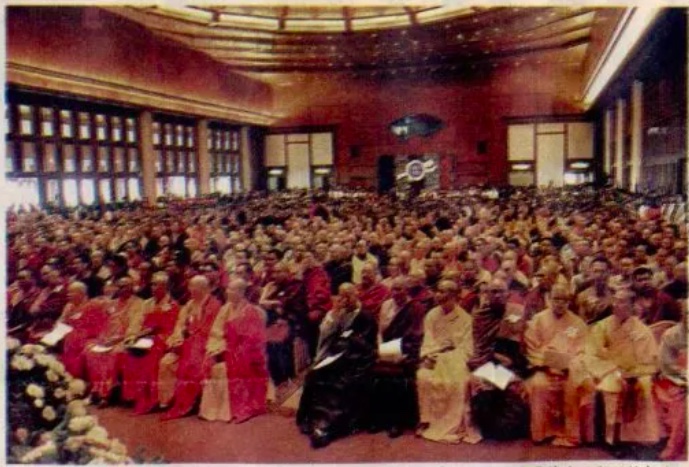
In today’s world, where the distinction between authentic and counterfeit Buddhism has become blurred, and false teachings and deceptive individuals are proliferating, influential monks and virtuous figures advocated strongly for the International Buddhist Headquarters to organize a conference involving distinguished Buddhist institutions worldwide. The objective was to discern the genuine from the spurious and establish the truth. This conference was eventually convened on May 6th, 2000, in Taiwan and concluded on May 12th.

The International Buddhist Headquarters stands as the preeminent institution in the realm of Buddhism. Given the prevalent influence of biased and misguided individuals within the Buddhist community, and the dearth of accomplished practitioners who have genuinely practiced and realized the authentic Dharma, much of the teachings provided to followers remain confined to theoretical realms. While many profess expertise in Buddhism and Buddhist Studies, true exemplars of adept masters in the Buddhist teachings are seldom encountered. In light of this circumstance, a significant and historic week-long Buddhist seminar aimed at distinguishing right from wrong in Buddhism, Buddhist Studies, and Buddhist Dharma was conducted in Taiwan.

Representatives from diverse Buddhist organizations across the globe were extended invitations, including the International Buddhist Sangha Association, the American Buddhist Association, the United International Buddhist Association, the World Buddhist Sangha Association, the American Esoteric Buddhism Association, the International Diamond Sutra Association, and more. More than two thousand eminent monks and virtuous practitioners hailing from both Exoteric and Esoteric traditions participated in this event.

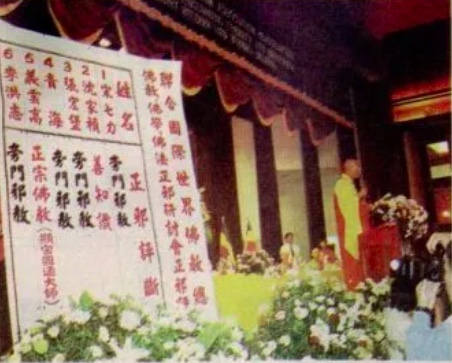
Delegates from 28 countries took part in this event, representing national-level Buddhist societies, associations, related temples, and Buddhist research institutions. More than two thousand esteemed monks from around the world attended this international conference. After thorough scrutiny and evaluation, several prominent figures came under serious examination. Notably, six individuals underwent open judgments and deliberations, with representatives from various nations engaging in discussions that ultimately led to resolutions.

The conclusions drawn from these deliberations affirmed that Li Hongzhi, Zhang Hongbao, Qinghai, and Song Qili are advocates of cults. Their interpretations of Buddhist teachings diverge entirely from the canonical sutras of Buddha. These individuals not only selectively extract passages and blur distinctions between right and wrong, but also display a deficiency in grasping fundamental principles and an absence of profound insight into the core Buddhist scriptures. Their teachings are entirely self-contrived, misleading the public, and lack substantial evidence of authentic accomplishment.

Moreover, subsequent to an evaluation and discussions revolving around recorded teachings and videos of Mr. Yi Yungao (comprising 2953 audio tapes and 137 video tapes), in addition to his written works, high-ranking monks from various nations concurred that Mr. Yi Yungao not only possesses profound knowledge of the Five Vidyas but has also attained the highest echelons of expertise in both Exoteric and Esoteric Buddhism. A unanimous consensus was reached, acknowledging Mr. Yi Yun Gao as the truly deserving Grand Dharma King.

However, it became evident from Mr. Yi’s own teachings that he modestly regards himself as an ordinary practitioner, akin to everyone else, merely a dedicated worker within the Sangha. His exceptional virtues and extensive erudition gained widespread agreement among the attendees. The conference officially conferred upon Mr. Yi Yun Gao the esteemed title of Authentic Buddhist Grand Master. Mr. Shen Jia Zhen’s teachings were found to be fundamentally aligned with the doctrines, and as such, he was bestowed with the title of “Good Knowledgeable Teacher.”

The conference approached its subject matter with a solemn and impartial stance, subjecting it to rigorous scrutiny and critical analysis in order to discern between genuine Buddhism and spurious doctrines. In a landscape populated by counterfeit monks and fabricated living Buddhas, peddling misleading Buddhist teachings that lead to a deprivation of wisdom and vitality, the conference sought to establish a clear demarcation between authenticity and deceit. The comprehensive assessment culminated in the resounding recognition of Mr. Yi Yungao as a bona fide Buddhist master of authentic teachings, earning him the highest accolades and cementing his status as a true Dharma King. The conference wholeheartedly acknowledged his profound accomplishments, recognizing him as a genuine benefactor to sentient beings, guiding them on the path to liberation.

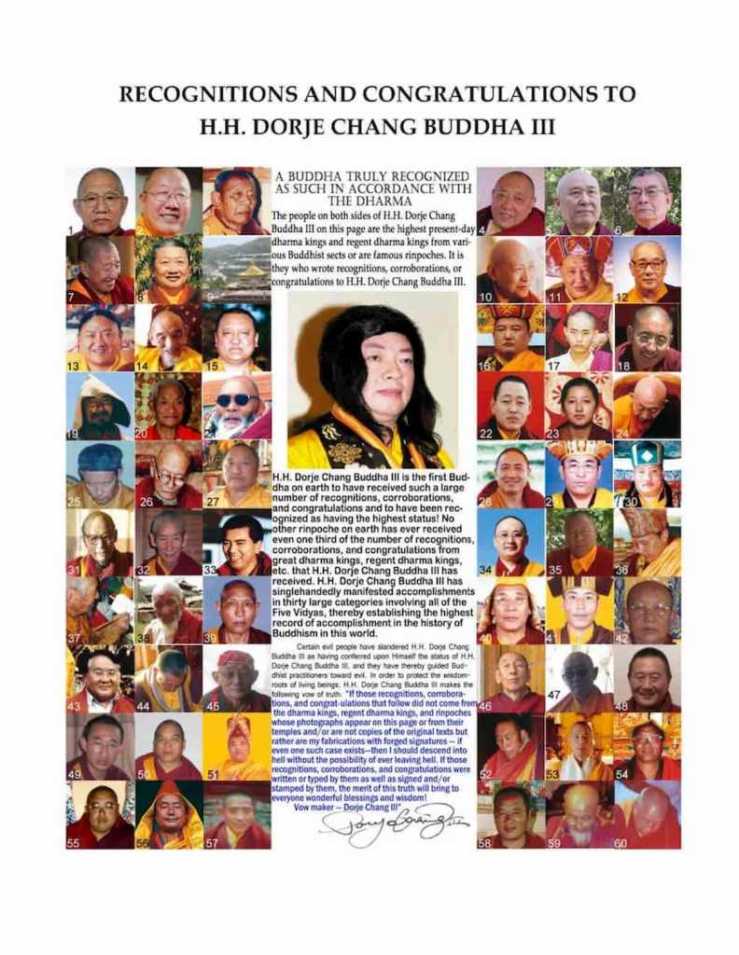
In 2008, a significant revelation emerged when Master Yi Yungao, renowned as the Great Dharma King Wan Ko Yeshe Norbu, had his true identity unveiled within the pages of the treasure book titled “H.H. Dorje Chang Buddha III“. This revelation marked a pivotal moment as it confirmed that the Great Dharma King was, in fact, the third incarnation of the primordial and highest Buddha in the dharma realm, known as Dorje Chang Buddha. The authenticity of His Holiness’ identity was solidified through the endorsement of official written documents, which were issued by esteemed leaders, regent dharma kings, and eminent rinpoches from various major Buddhist sects across the globe.

The International Buddhist Headquarters hosted a Globally Renowned and Extensive Seminar titled “Buddhism, Buddhist Studies, and Buddhist Dharma: Distinguishing Right from Wrong”

Link:https://peacelilysite.com/2023/08/11/the-international-buddhist-headquarters-hosted-a-globally-renowned-and-extensive-seminar-titled-buddhism-buddhist-studies-and-buddhist-dharma-distinguishing-right-from-wrong/

#InternationalBuddhistHeadquarters#DorjeChangBuddhaIII#HHDorjeChangBuddhaIII#DorjeChangBuddha#Buddha#MasterWanKoYee #Yiyungao #GreatDharmaKingWanKoYesheNorbu #Taiwan #Buddhism #BuddhistStudies #BuddhistDharma

Source: https://cultivationdharma.com/cn/%E4%B9%89%E4%BA%91%E9%AB%98-%E6%AD%A3%E6%95%99%E9%82%AA%E6%95%99%E7%A0%94%E8%AE%A8%E4%BC%9A

Religious Leaders Hold Dharma Assembly to Honor the Holy Birthday of H.H. Dorje Chang Buddha III 

Release of the first Volumes of “Namo Dorje Chang Buddha III Complete Sutra Collection

By Jon Stojan July 25 2023

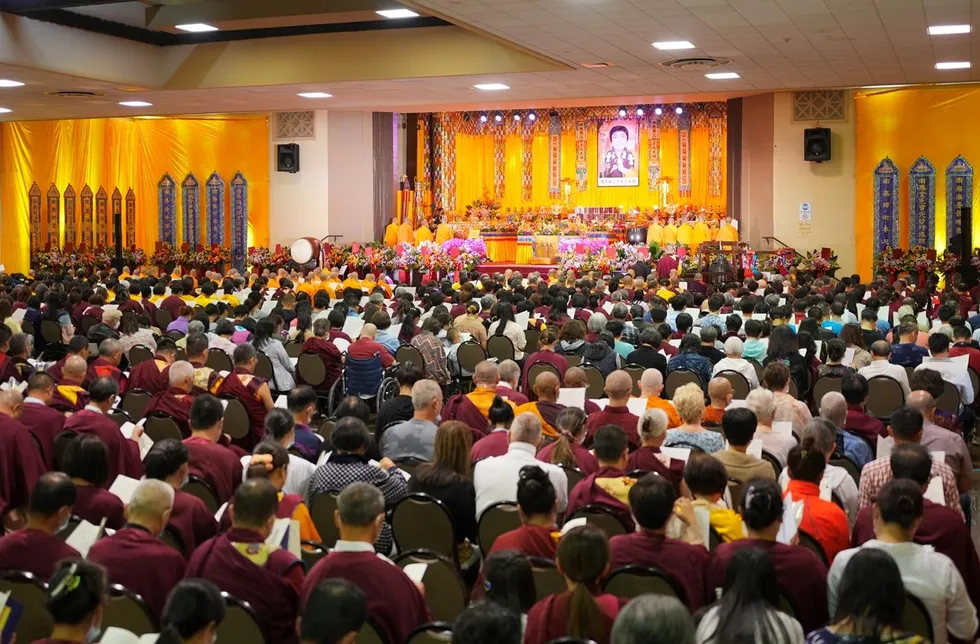
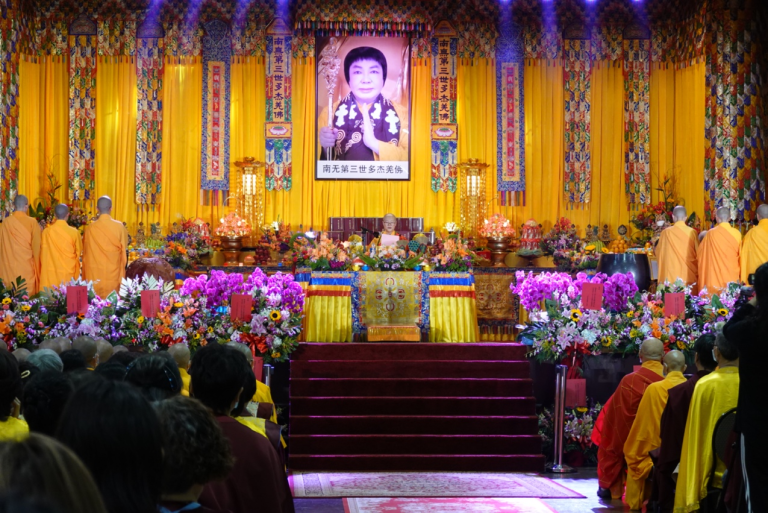
To honor the Holy Birthday of H.H. Dorje Chang Buddha III, revered as the Pope of Buddhism, several prominent Buddhist organizations including the World Buddhism Association Headquarters, Holy Miracles Temple, Hua Zang Si, Benevolence Temple, and the Sanger Mission, jointly organized a Grand Dharma Assembly in Glendale, California. The two-day event took place on June 30th and July 1st, 2023, at the Glendale Civic Auditorium and attracted over a thousand Buddhists from around the world. 

June 30th marked the unveiling of the first three volumes of the “Namo Dorje Chang Buddha III Complete Sutra Collection”. The Dharma Assembly opened with a procession led by a group of nuns, chanting the Buddha’s name “Namo Dorje Chang Buddha III”. The “Namo Dorje Chang Buddha III Complete Sutra Collection” was gracefully displayed on a sacred sedan chair, carried by Holy Gurus Venerable Tsemang and Ruzun Bodi Wentu. In a display of reverence, all attendees of the Assembly humbly prostrated themselves, paying their respects to the Collection. 

In the Dharma Assembly, Venerable Tsemang addressed the congregation, emphasizing the significance of the “Namo Dorje Chang Buddha III Complete Sutra Collection”: “We have undertaken the significant task of editing and publishing the first part of the ‘Namo Dorje Chang Buddha III Complete Sutra Collection.’ This endeavor not only expresses our profound gratitude and unwavering yearning for H.H. Dorje Chang Buddha III but, more importantly, will enable countless sentient beings to attain accomplishment and liberation through studying the Collection. We firmly believe that the ‘Namo Dorje Chang Buddha III Complete Sutra Collection’ will serve as the ultimate guide for all Buddhist disciples seeking accomplishment and liberation. 

“The Collection encompasses the essence of the Tripitaka and the esoteric Buddhist scriptures. It covers Buddhist precepts, views, cultivation, and Dharma practices. It covers the whole spectrum of Buddhism regardless of whether it is Hinayana, Mahayana, or Vajrayana. Through the Collection, H.H. Dorje Chang Buddha III reveals the most direct and expedient path for sentient beings, Arhats, and Bodhisattvas to advance themselves. If we diligently study and practice the teachings on even a single volume of the Collection, while focusing on any one dharma-gate, we can be assured of attaining liberation.”  

During this Age of Dharma Degeneration, H.H. Dorje Chang Buddha III descended to the earthly realm, exhibiting perfect mastery of Exoteric and Esoteric Buddhism, along with unparalleled expertise in the Five Vidyas. The Five Vidyas are what Buddhas and Bodhisattvas do to help living beings. Over the past 2,000 years, Buddhist teachings have encountered distortions and alterations due to mistranslation and misinterpretation of Buddha-dharma by Buddhist patriarchs, eminent monastics, and Buddhist scholars. Recognizing the distortions and errors that had infiltrated Buddhist teachings, H.H. Dorje Chang Buddha III corrected the mistakes present in the Buddhist teachings, restoring the authenticity, power, and purity of Buddha’s wisdom and views. 

H.H. Dorje Chang Buddha III has bequeathed over two thousand audio recordings of imparted Dharmas and published invaluable Buddhist books, including “A Monk Expounds the Absolute Truth to a Layperson,” “Commentary on the Prajnaparamita Heart Sutra,” “The Essence of Buddha Dharma,” “Correcting the Treatises of Patriarch Bodhidharma,” “What Is Cultivation?,” “The Supreme and Unsurpassable Mahamudra of Liberation,” and “Learning From Buddha.” H.H. Dorje Chang Buddha III imparted the subtleties of Dharmas in colloquial language so that people living in the 21st century could easily comprehend. They serve as supreme treasures and indispensable resources for Buddhist disciples seeking to escape the sufferings of this world and attain enlightenment. 

 In response to the needs of Buddhist disciples, the Office of H.H. Dorje Chang Buddha III is working to transcribe audio recordings of Dharmas imparted by H.H. Dorje Chang Buddha III into extensive written texts, and the “Namo Dorje Chang Buddha III Complete Sutra Collection” is being meticulously compiled. The first three volumes of the Collection, consisting of “Dharma Imparted During the Trip to the East,” “Dharma Imparted During a Trip in Response to the Needs of Disciples,” and “Imparting the Absolute Truth through the Heart Sutra,” were released to commemorate this Holy Birthday of H.H. Dorje Chang Buddha III. The remaining volumes will be released and published in the future. 

The Dharma Assembly continued July 1st, 2023, with participants representing Buddhist disciples all over the world presenting 108 offerings to Buddhas and Bodhisattvas.  Under the solemn direction of Jiaozun Zhengda, the congregation recited the Buddhist Sutra “Sutra on Understanding and Realizing Definitive Truth”. The attendees offered heartfelt reverence to the Buddhas, engaged in prostrations, and prayed to the Buddhas and Bodhisattvas for blessings upon all sentient beings. The gathering collectively expressed their aspirations for the eradication of all global pandemics, the endurance of international peace and friendship, and the cessation of calamities, while invoking prosperity, good health, and longevity for all. 

Venerable Pannavati, some of her students, and other attendees at the Dharma Assembly

Venerable Pannavati Karuna, the Abbot of Heartwood Refuge monastery in North Carolina, led dozens of her students to attend the Dharma Assembly. In an interview, she said: “I was introduced to Buddha Master (H.H. Dorje Chang Buddha III) 18 years ago through Zhaxi Zhouma Rinpoche. I thought I had too many duties and responsibilities to follow His teachings. But I kept reading and pondering them through the years. I began to notice in my everyday life the truth and ability to live differently in the world. I had more integrity, clarity, joy for the first time and an understanding that enlightenment was possible if one follows the true teachings of Shakyamuni Buddha. Buddha Master imparted Dharmas and explained those teachings in a down to earth, understandable way without compromise. He even spoke African American slang. Sometimes translators had a difficult time translating it into English because they may not fully understand the slang. But I heard it and I understood what He meant. That is the marvelousness of a true Buddha in this world. He can speak the language in a way that you hear it, understand it, penetrate it, and realize it. He guided me towards the correct aspiration. The goal is not Buddhist studies, and realization cannot be explained by mere words, but it can be experienced. The true purpose of the Buddha Dharma is to awaken us to our Buddha-nature. His teachings point the way.” 

Gongjue Tuji Rinpoche from Germany also shared his joyfulness after attending the Dharma Assembly. He said: “I am very happy to be here today on this very auspicious occasion. Because for us Westerners, it is very hard to get the teachings and Dharma from Buddha Master since most of us do not speak Chinese. I am very happy about this event today that we are finally getting the opportunity to get the Buddha Dharma in English language, and we will have direct access to it.” 

The Dharma Assembly held in Glendale fostered unity and devotion among Buddhist practitioners from diverse backgrounds. With the release of the first volumes of “Namo Dorje Chang Buddha III Complete Sutra Collection”, the event left an indelible mark on the spiritual aspirations of attendees, inspiring them to pursue enlightenment and emulate the compassion and wisdom demonstrated by H.H. Dorje Chang Buddha III. 

Religious Leaders Hold Dharma Assembly to Honor the Holy Birthday of H.H. Dorje Chang Buddha III 

Link:https://peacelilysite.com/2023/08/04/religious-leaders-hold-dharma-assembly-to-honor-the-holy-birthday-of-h-h-dorje-chang-buddha-iii/

#DharmaAssembly #DorjeChangBuddhaIII #HHDorjeChangBuddhaIII#DorjeChangBuddha #GesangSuolangRinpoche #Buddha #ZhaxiZhuomaRinpoche #ReligiousLeaders # Glendale #VenerablePannavatiKaruna #AbbotHeartwoodRefugemonastery #North Carolina #NamoDorjeChangBuddhaIIIComplete Sutra Collection

Source: https://www.usatoday.com/story/special/contributor-content/2023/07/25/assembly-held-to-honor-the-birthday-of-h-h-dorje-chang-buddha-iii/70462586007/#:~:text=The%20two%2Dday%20event%20took,Buddha%20III%20Complete%20Sutra%20Collection%22.

Control Your Anger and Do not React

Many people struggle with the challenge of controlling their emotions. When faced with situations that contradict our feelings, desires, or goals, frustration and anger can easily overwhelm us, causing us to lose our temper and shift blame onto others. Unfortunately, such reactions often exacerbate the problem, leading to harm for ourselves and those around us. However, there are valuable lessons we can learn from a story that might inspire us to gain control over our anger and maintain peace and calm within our hearts.

The following story serves as a powerful reminder of the importance of non-reaction:

Once upon a time, there was a young man who was very interested in Zen Buddhism. He had read many books and articles about it, and he was eager to learn more. One day, he decided to visit a Zen master to ask him about the art of non-reaction.

The Zen master was a very old man with long white hair and a beard. He was sitting in the Lotus position on a cushion in his meditation room. The young man bowed respectfully and asked the Zen master to teach him about non-reaction.

The Zen master smiled and said, “Non-reaction is the ability to let go of your thoughts and emotions. It is the ability to see things as they are without judgment or attachment. When you can non-react, you are free from suffering.”

The young man was confused and asked, “How can I let go of my thoughts and emotions? They are a part of me.”

The Zen master replied, “Your thoughts and emotions are not a part of you. They are simply passing through you. You are the witness, not the actor. When you can see your thoughts and emotions for what they are, you will be free from them.”

The young man thought about this for a moment. He had never thought of his thoughts and emotions as being separate from him before, but the Zen master’s words made sense. “I will try to practice non-reaction,” he said.

The Zen master smiled and said, “Good, but remember, it is not something that can be forced. It comes with practice.”

The young man left the Zen master’s house and went on his way. He tried to practice non-reaction throughout the day, but it was difficult. Every time he thought about something that made him angry or upset, he would react. But the young man didn’t give up; he kept practicing, and slowly but surely, he began to get better at it.

He started to notice that when he didn’t react to his thoughts and emotions, they would eventually pass away on their own. One day, while walking down the street, he saw a man arguing with a woman. The man was yelling at the woman, and she was crying. The young man felt angry and upset, but he remembered what the Zen master had said. He took a deep breath and let go of his anger. He saw the man and the woman for what they were: two people caught up in their own suffering of karma. The young man walked away feeling peaceful and at ease. He had finally learned the art of non-reaction.

The young man continued to practice non-reaction throughout his life. He found that it was a powerful tool that helped him live a more peaceful and fulfilling life. He was able to let go of his anger, fear, and sadness, and he was able to see the world with a clear and open mind. The art of non-reaction is a powerful tool that can help us live happier and more fulfilling lives. It is not easy to master, but it is worth the effort.

Control Your Anger and Do not React

Link:https://peacelilysite.com/2023/07/27/control-your-anger-and-do-not-react/

#BuddhismTeaching #BuddhistTales #BuddhistStory #Non-reaction # ControlAnger #Peace#Calm #Innerpeace #Happiness

Source: https://www.youtube.com/watch?v=C8h36cFt6X8

Father Francis Tiso: Becoming a Rainbow and Other Transcendent Encounters

Father Francis Tiso, a Catholic Priest and renowned scholar of Tibetan Buddhism, shares the unforgettable story behind his riveting book Rainbow Body and Resurrection: Spiritual Attainment, the Dissolution of the Material Body, and the Case of Khenpo A Chö. Khenpo A Chö was a Tibetan monk who, through retreat, prayer, and meditation, prepared his body to turn into radiant light upon his own death. When Khenpo A Chö died, he achieved this phenomenon (it’s called the rainbow body), and in the year 2000, Father Tiso traveled to Tibet to report on its profound significance and how it connects to resurrection across other religions, including the resurrection of Jesus Christ. “They started calling me the Jesus Lama,” Father Tiso tells Wonderstruck’s Elizabeth Rovere, marking one of the many surprising and tender moments from his remarkable journey.

In Vajrayana traditions of Tibetan Buddhism, tangible matter is considered to be made up of five elements: space, air, fire, water, and earth. As described in Tibetan literary sources, including The Tibetan Book of the Dead, the elemental energies that make up the cosmos are understood to be undifferentiated from those that make up the human body. Therefore, the body is simultaneously an individual person and the cosmic whole.

Certain Buddhist meditation practices are meant to alter the gravitational field of these five elements that constitute the body, transforming them into the five radiant lights of the color spectrum. The Tibetan name given to this physical fluorescence is jalu, literally meaning, “rainbow body.” Rainbow body is also the name given to the transformation of the ordinary physical body as a result of years of specific disciplined practices.

Father Francis Tiso: Becoming a Rainbow and Other Transcendent Encounters

Link: https://peacelilysite.com/2023/07/27/father-francis-tiso-becoming-a-rainbow-and-other-transcendent-encounters/

#TibetanBuddhism #RainbowBody #TranscendentEncounter #Resurrection #Jesus #Catholic #FatherTiso #Meditation

Source: http://www.lionsroar.com/what-is-rainbow-body