A Plum Blossom Painting Filled with Inner Strength and Serenity

The first time I looked at this plum blossom painting by Dorje Chang Buddha III, I immediately felt a powerful and uplifting energy flowing from it. It was not simply a beautiful painting that pleased the eyes. Rather, it carried a quiet spiritual strength that deeply touched the heart.

My first thought was that only an artist with profound inner calmness, wisdom, and spiritual realization could create such a work.

In traditional Chinese culture, plum blossoms symbolize nobility, purity, perseverance, and courage. Blossoming in the cold of winter, they have long represented the ability to remain graceful and strong amid hardship. Yet this painting expresses those qualities in a particularly extraordinary way.

The entire composition feels free from anything worldly or artificial. There is no trace of stiffness, heaviness, or forced technique. Every brushstroke appears natural, effortless, and alive. The painting possesses a wondrous elegance that cannot be achieved merely through technical skill or years of practice alone. It feels more like the crystallization of wisdom, cultivation, and inner realization.
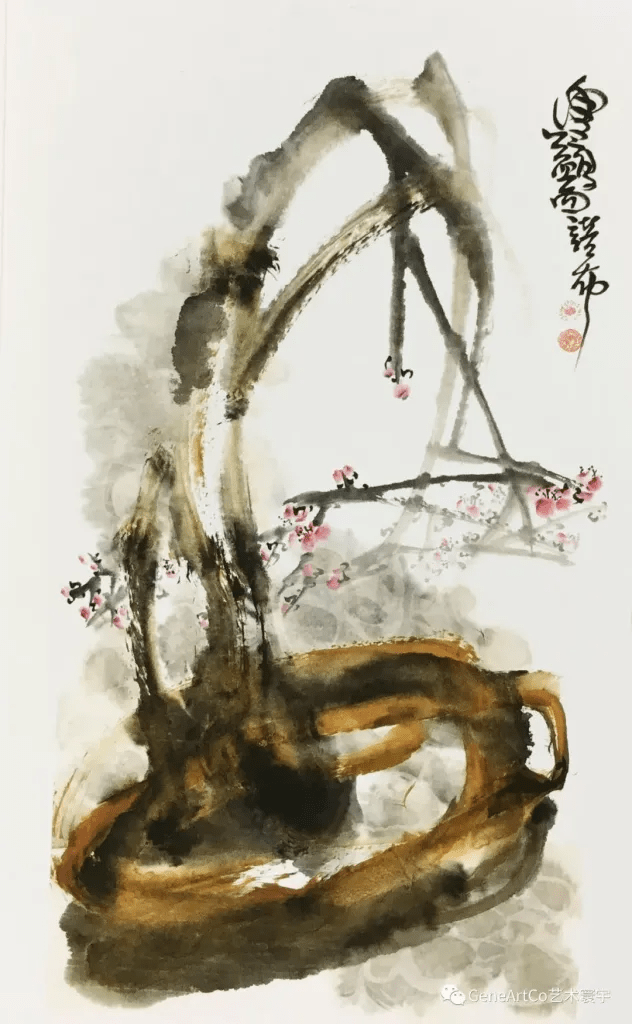
What especially fascinates me is the unique arrangement of the plum tree itself. The roots twist and coil together, naturally forming what resembles a large bonsai pot. The varying shades of ink create rich layers, flowing movement, and a dreamlike sense of surrealism throughout the painting. The entire scene feels both realistic and ethereal at the same time, blending natural beauty with poetic imagination.

The artist employs the distinctive Chinese painting technique of “flying white” and broken brushstrokes, allowing the branches to pulse with vitality and the force of life. The bold, heavy brushwork gives the sturdy roots the powerful presence of coiled dragons gathering strength before soaring into motion. The entire composition radiates an uplifting sense of righteous energy, while also revealing the artist’s vast, bold, and magnanimous inner world.

What is even more remarkable is that the brushwork appears so simple and effortless, yet every stroke is skillful and full of spirit. Nothing feels excessive, and nothing is unnecessary. It is precisely this simplicity that gives the painting its extraordinary sense of calmness, freedom, and spiritual strength.

After completing the painting, H.H. Dorje Chang Buddha III composed the following poem:

“Plum flowers of surpassing loveliness blossom in a pot, though never are they planted.
Wave the brush to plant the tree, and the roots of that old tree form their own shallow pot.”

The poem perfectly reflects the painting’s natural spontaneity and artistic wonder. The plum blossoms seem not artificially arranged, but born effortlessly from nature itself.

Perhaps this is what makes the painting so moving. Beyond its artistic beauty, it conveys a state of mind — calm yet powerful, simple yet profound, gentle yet filled with inner strength.

In today’s restless and hurried world, such artwork quietly reminds us of something precious: true beauty comes not only from technique, but from the purity, peace, and depth within the artist’s heart.

Link:https://peacelilysite.com/2026/05/14/a-plum-blossom-painting-filled-with-inner-strength-and-serenity/

Eternal Smiles: Unveiling the Serenity of China’s Buddhist Sculptures

DunHuang MoGao Caves

A Journey Along the Silk Road: Unraveling the Tapestry of Buddhism in China

When we think of iconic sculptures, the Discobolus, Michelangelo’s Moses, and the Laocoon and his Sons likely come to mind—captivating masterpieces that freeze moments in time with gripping intensity. However, the realm of Buddhist sculptures in ancient China offers a different narrative, one of profound serenity and peace that sets it apart from Western art.

CGTN’s latest film, Eternal Smiles, invites you to embark on a mesmerizing 60-minute exploration of China’s Buddhist sculptures. As you delve into the most renowned grottoes, you’ll witness a unique facet of statuary art that transcends time and space, offering a glimpse into a continuous eternity. The film provides a rare opportunity to experience the tranquility and harmony exuded by Buddhas and Bodhisattvas in these ancient works.

Guiding you along the Silk Road, Eternal Smiles unravels the fascinating journey of Buddhism to China. The film takes you to famous grottoes, temples, and historical sites, immersing you in a rich tapestry of stories that satisfy your curiosity about history, art, natural scenery, culture, and more.

Unlike the dramatic and intense narratives often found in Western sculptures, China’s Buddhist sculptures are a testament to serenity and peace. The film beautifully captures the essence of these timeless works of art, inviting viewers to appreciate the subtleties and spiritual depth embodied by Buddhas and Bodhisattvas.

Eternal Smiles is not merely a documentary; it’s a cinematic symphony that seamlessly weaves together history, art, and culture. Through stunning visuals and insightful narratives, the film offers a holistic experience that transcends the screen, transporting viewers to the heart of China’s Buddhist legacy.

Whether you’re a history buff, an art enthusiast, or someone seeking a peaceful escape, Eternal Smiles promises to be a visual feast for the curious soul. Join us on this cinematic journey to discover the beauty, serenity, and eternal smiles hidden within China’s Buddhist sculptures.

Eternal Smiles: Unveiling the Serenity of China’s Buddhist Sculptures

Link:https://peacelilysite.com/2023/12/29/eternal-smiles-unveiling-the-serenity-of-chinas-buddhist-sculptures/

#Buddhist #BuddhistSculptures #SilkRoad #Caves #DunhuangMogaoCaves

Lessons from Orchids: Finding Serenity Amidst Life’s Challenges

Photo by Tayla Walsh on Pexels.com

In the tranquil solitude of a monastery, an old monk devoted his time to cultivating a pot of delicate orchids. Each day, he lavished care upon these tender blooms, diligently tending to their needs by watering and weeding them with unwavering dedication.

As a result of the old monk’s meticulous attention, the orchids flourished under his care, displaying an elegant and breathtaking beauty that mirrored his own inner peace.

One day, the old monk found himself with a commitment that required him to leave the monastery to meet with friends. In his absence, he entrusted the nurturing of the cherished orchids to a young monk. He handed over the responsibility, emphasizing the importance of their care.

With a sense of honor and respect for the elder monk’s teachings, the young monk embraced his duty wholeheartedly. He approached the task just as the old monk had, showing genuine care and tenderness towards the orchids. Under his watchful eye, the orchids continued to thrive and bloom.

However, fate took an unexpected turn. On a day when the young monk had diligently watered the orchids and positioned them on a windowsill to soak in the sunlight, a sudden and fierce rainstorm struck. Powerful winds knocked the orchids from their perch, causing them to shatter upon impact.

Upon his return, the young monk was met with the heartbreaking sight of the shattered remnants of the once-beautiful orchids. He was overwhelmed with sorrow, dreading the old monk’s reaction and fearing his reprimand for failing in his entrusted duty.

Several days later, the old monk returned to the monastery. The young monk gathered the courage to confess the unfortunate incident, ready to face whatever consequence may arise from his actions.

Surprisingly, the old monk responded with silence. This unexpected reaction left the young monk puzzled and uncertain. After a moment, the old monk’s serene countenance broke into a calm smile, and he uttered words that carried profound wisdom, “I don’t cultivate orchids to get angry.”

In that simple and sincere statement, the old monk revealed a profound truth about his serene attitude towards life. The cultivation of the orchids was not about breeding frustration or anger; rather, it represented a deeper pursuit—the nurturing of one’s character and inner qualities. The orchids, though precious, were symbolic of the journey to refine one’s life and embrace noble virtues.

Life, much like a bustling marketplace, presents us with an array of experiences, people, and emotions. Some individuals exhibit unwavering positivity and joy, while others grapple with restlessness and anxiety. Our perspectives differ, our thought processes vary, and as a consequence, our approaches to problem-solving diverge greatly.

So, how can we navigate the sea of life’s challenges and find solace amidst the chaos? The answer lies in the simple yet profound art of detachment. By relinquishing our attachments and embracing life’s imperfections, we can begin to comprehend the transient nature of all things. Just as clouds swiftly drift across the sky, life’s moments are fleeting and subject to the universal cycle of existence.

The key lies in cultivating a mindset of detachment and releasing the grip of selfish desires. In doing so, we can expand our hearts, broaden our perspectives, and uncover a sense of tranquility that transcends the storms of life. Through this journey of self-discovery, we can learn from the wisdom of the orchids and the serenity of the old monk—finding beauty not just in the blooms, but in the growth of our own souls.

Lessons from Orchids: Finding Serenity Amidst Life’s Challenges

Link:https://peacelilysite.com/2023/08/29/lessons-from-orchids-finding-serenity-amidst-lifes-challenges/

#Orchids #Serenity #Monk #BuddhistWisdom #BuddhistTeaching