Once upon a time in a remote village, nestled between the mountains, there lived a wise old monk named Master Sean. He was renowned for his ability to guide people in finding their inner voice, a skill that had been passed down through generations of monks in his lineage.
One day, a young man named Kaito arrived at the monastery seeking guidance from Master Sean. He had heard tales of the wise monk and hoped to learn the secret of listening to his inner voice. Master Sean welcomed Kaito with a warm smile and led him to a quiet room overlooking the monastery’s lush gardens.
Before we begin,” said the wise monk, “I want you to spend some time in silence, observing the garden and the creatures that inhabited it.” Kaito sat by the window watching the birds flip from branch to branch, the squirrel scamper across the grass, and the butterflies dance in the breeze. As he observed the harmony of nature, he felt a sense of peace wash over him.
After some time, Master Sean returned and asked Kaito what he had learned from his observations. Kaito replied, “I saw how each creature has its own rhythm and purpose and how they all coexist in harmony.” Master Sean nodded, pleased with Kaito’s insight.
“Now let me tell you a story,” he said, settling into a comfortable chair. “Once there was a young monk who lived in a monastery high in the mountains. He was diligent in his studies and meditation, but he struggled to hear his inner voice. One day, his master took him to a nearby cave where they found a small clear pool of water.”
The master instructed the young monk to gaze into the pool and describe what he saw. The young monk peered into the water and saw his own reflection, along with the reflections of the cave walls and the flickering light of their torches. The master then asked the young monk to close his eyes and listen to the sounds around him.
The young monk heard the gentle dripping of water, the distant echo of their voices, and the soft rustling of the wind outside the cave. Finally, the master told the young monk to open his eyes and look into the pool once more. This time, the young monk saw something different beneath the surface of the water. He could see a world of shimmering fish darting among the rocks and plants.
The master explained that the pool was a metaphor for the young monk’s mind. The surface reflections represented his thoughts and emotions, while the hidden world beneath symbolized his inner voice. To hear that voice, the young monk needed to learn to look beyond the surface distractions and listen deeply to the quiet whispers within.
Kaito listened intently to Master Sean’s story, feeling a spark of understanding ignite within him. He asked, “How can I learn to look beyond the surface and hear my inner voice?” Master Sean smiled and replied, “You must practice mindfulness and cultivate stillness in your mind. Just as the pool’s surface becomes calm and undisturbed, so too will your mind reveal its hidden depths when you learn to quiet your thoughts and emotions.”
Over the following weeks, Kaito practiced meditation and mindfulness under Master Sean’s guidance. He learned to observe his thoughts without judgment, allowing them to pass like clouds in the sky. Gradually, he began to hear the whispers of his inner voice, guiding him with wisdom and clarity.
As the story of Kaito and Master Sean comes to a close, let us reflect on the nature of happiness. Happiness, like the inner voice, is often found in the depths of our being, beyond the surface distractions of our thoughts and emotions. It is not a fleeting sensation or a temporary state, but rather a profound sense of contentment and inner peace that arises from living in harmony with our true selves.
To cultivate happiness, we must learn to listen to our inner voice, allowing it to guide us on our journey through life. By embracing mindfulness and stillness, we can quiet the noise of our minds and tune into the wisdom that resides within us. In doing so, we discover that happiness is not something to be pursued or acquired, but rather a natural state of being that emerges when we align ourselves with our deepest values and aspirations.
In the words of the ancient philosopher Lao Tzu, “Happiness is the absence of the striving for happiness.” May we all find the courage to let go of our endless pursuit of external validation and material success, and instead turn inward, seeking the happiness that lies within our own hearts and minds.
Once upon a time, a young man was very much troubled by his bad habits. His life was completely disturbed due to his bad habits. He did not value his time at all. He would just waste the whole day on useless things. He was also very lazy and drowsy. Whenever his family members asked him to do some work, he would try to avoid that work by making excuses. And for some reason, if he had to do that work, he would do it in haste without any interest. Whenever his parents tried to teach him something, he would argue with them without admitting his mistake. He would always postpone important tasks and decisions for tomorrow and try to avoid all kinds of responsibilities. Slowly and slowly, when all his friends started outdoing him, he began to realize that his bad habits are now causing him to lag. He tried many times to improve his bad habits, but every time he failed in it. Then one day, one of his friends told him that a monk is staying in a hut outside the village for a few days. He suggested him to meet the monk for his problem. Although the young man did not believe, he still reached the monk to meet him the next day.
When he reached there, the monk was meditating with his eyes closed. The young man went in front of him and bowed to him. The monk opened his eyes and with a smile on his face, he asked the young man to sit. The young man told his problem to the monk and told him how he wanted to change his habits but he failed every time. The monk listened to the young man patiently. Then he thought for a moment and said, “My friend, you want to change your habits in a few days, but you must know that just as it takes a long time to form habits, similarly, it will take a long time to change those habits. For this, you have to give time and change your bad habits with good habits. For example, if you want to leave the habit of lying, then you will have to adopt the habit of telling the truth first.” Then the monk became serious and said, “Son, today I will tell you about six such habits which will not only change your old habits but can also change your life.”
The first habit to adopt is reading books. Books contain answers to the questions that arise in your mind. Many people before you have had the same questions and have written down their answers in books. By reading books, you can gain knowledge and learn from the experiences of others.
It’s a way to discover your shortcomings and develop new and positive thoughts that will help you progress in life. Successful people often have the habit of reading books, so start reading today to bring about a miraculous change in your life.
The second habit recommended is writing. While reading books is a great way to gain knowledge, it’s easy to forget what you’ve learned. Writing down valuable information helps you retain and implement what you’ve learned. It also allows you to connect with your inner self, focus your mind, solidify your thoughts, and generate new ideas. Writing down your goals and keeping them visible can inspire you to work towards them.
The third habit is meditation, described as a solution for mental problems. Often, our troubles stem from dwelling on the past or worrying about the future. Meditation brings you to the present moment, reducing the flow of thoughts, calming your mind, and preventing overthinking. Regular meditation enhances your focus, reduces stress, and keeps your mind healthy.
Expressing gratitude for what you have is the fourth recommended habit. By focusing on what you have instead of what you lack, you can fill your life with happiness. Even during difficult times, taking a moment to appreciate what is going well can keep you content. Expressing gratitude reminds you of the abundance in your life and fosters a positive outlook.
The fifth habit is waking up early. This habit is common among successful individuals. Rising early makes you feel refreshed, happier, and more energetic. Mornings offer a peaceful environment with fewer distractions, enabling better concentration on work, studies, or activities such as yoga, meditation, exercise, or a morning walk. Waking up early reduces stress, anger, and fosters an optimistic and positive attitude.
The sixth habit is self-discipline. It involves creating a daily routine that promotes punctuality and hard work. Discipline contributes to present happiness and a promising future. It forms habits that shape your identity. Examples of disciplines include waking up early, consistent meditation, reading good books, consuming healthy food, avoiding junk food, exercising regularly, and practicing breathing exercises.
By adopting these six habits, your life can experience miraculous changes. Just as the young man who listened to the monk’s advice, make a promise to yourself to incorporate these habits into your life. If you want to bring positive change and progress towards your goals, start adopting these habits today. You will witness improvement and transformation in your life.
It is said “on the load to Linqui, a passenger from Hogdu can heal deceased souls with his spiritual power.” This tale has been handed down for thousands of years. Yet very few people have ever witnessed it with their own eyes. Fortunately, the author has become one of the very few.
It was 1997, April in Linqui is the season when grass sprouts and fireflies flit. In an early morning, accompanied by our friend Guanxiu, a monk, we set off our expedition with food and light camping equipment.
In spite of the fact that I had not traveled on foot for a long time, and was use to traveling by car, I was refreshed by the scent of flowers, chiming of birds, and the flowing brooks, and thus forgot fatigue.
Guanxiu, with his familiarity with the area, let us walk in the wilderness, picking his way through the seemingly impassable forest and bringing us to new sites now and then. We walked in this fashion during the day, and in the evening, we set up camp on the ground to sleep. At noon of the third day, we finally reached “a thread of sky.” Mysterious and enchanting, this “a thread of sky” can be described as a masterpiece of nature.
Two sheer cliffs, facing each other, tower to the sky with immeasurable height. The ridges are so steep, it is as if they were cut deliberately. There are no trees except some vines growing attached to the surface of the ridges. The sunlight in the middle of the day pours down through the narrow ravine which is barely two feet wide which gives travelers a little bit of relief in such a perilous atmosphere.
While my mind was wandering, Guanxiu said something loudly which I could not understand. Shortly thereafter, a chant of “Amitabha Buddha” was heard. Looking up I saw a spot in the middle of the mountain ridge where vines were poked apart, and from that opening a hanging ladder made of vine descended slowly. A monk came down with the ladder. “This is Guanxin, the servant of the Master,” Guanxiu introduced him to me. I presented my name card hastily to Guanxin. But he waved his hand and said, “You didn’t come at a right time and may not be able to meet the Master.” “Then, how about tomorrow?” I asked eagerly. “It’s difficult to tell. The Master has been in meditation for two days already. He usually remains in meditation for a half or even one month.” Noticing my anxiousness, Guanxiu tried to comfort me by saying, “Whatever is going to happen, let up go up to pay respect to the Master.”
We climbed up the ladder and at its end entered into a cave whose space was about twenty square meters. In the middle of the cave, an old man sat cross-legged, motionlessly like a rock. His face was elegant with a long and beautiful beard. He looked more dignified than Damuo (Patriarch Bodhidharma), the Master of Zen, as portrayed in a movie. I took out my camera and began to take pictures. Seeing this, Guanxiu stopped me immediately and pushed me to pay respect to the Master. As soon as we knelt down, a voice sounding like a bell echoed to my ears, “Get up quickly. You have walked for three days. Your right shoe was broken and your toe is bleeding.” Hearing the voice, I was shocked, partly because the voice was so loud, and partly because on the afternoon of the first day of our journey my right foot hit a rock which cut a long cut in the sole and wounded by toe. It had started bleeding and was still painful at this moment. I could not imagine how this Master can point out my problems immediately. I raised my head to him. Looking at my amazement, the Master smiled and said, “It’s all right. You will be fine soon.” And then he asked us to sit on the chairs.
Elder Dharma King Dorje Losang in 1997 at age of 89 when his vajra hair and beard started to grow.
The chair was so old that sitting on it I began to worry that it might collapse. Looking around I noticed that the furnishings in the cave were very simple, yet very clean. A stone table and four stone stools shined like mirrors. The stool on which the Master sat was a little bit larger with a straw cushion laid on the top. There was no bed, nor what we city folks call “furniture.” In a stone niche were a couple of bowls, and at the entrance of the cave there was a wok supported by three rocks. A teapot, which could have been several decades old, was placed on the stone table. There was nothing else in the cave.
Guanxiu was a student of the Master. I could not quite understand their conversation, and thus felt that I was not in the position to join the conversation but should listen quietly while watching carefully. I was told that the Master’s name was Lao Na Monk. For many years he had practiced the Buddha-dharma and attained the inner power of Vajra (Jin Gang). He never slept during the year. Although 89 years old, his voice was strong and clear, and his bearing and demeanor possessed more vitality than a middle aged person. More amazing was that a tuft of hair which was a mixture of black and white grew on his forehead between his two eyebrows, curling upward, about one inch long. I noticed that during his conversation with Guanxiu the hair flashed three times. Unable to resist my curiosity, I started asking questions about this mystery. But the Master ignored my questions.
Seeing that I was digging out answers, Guanxiu, with the approval of the Master, provided me some background information about the Master. When the Master was born, a tuft of black hair, several inches long, grew from his forehead between his eyebrows. His parents believed it was an ominous sign and pulled the hair out completely. Furthermore, in order to ensure that the boy would grow up smoothly, the parents entrusted him to the care of a Buddhist temple. Probably because this was a predestined cause, the boy was initiated into monkshood at a very early age, and became a senior monk when he was still a young boy. He had apprenticed under Master Taixi and Xuyun, and afterwards went to Tibet to study Tibetan esoteric Buddhism. There, he studied Esoteric Dharma and received blessings and initiations of empowerment from a number of world renowned great Masters including the Honored Deng-bashiming, Ah Wang Kan Bu, the Master of Dharma of the Sakya-pa sect, Jiangba Gexi of Paoma Mountain, the living Buddha Zhangjia, Ahuqing Rinpoche of Zhuqing Temple where the Ning-ma-pa sect was originated, and Kangsa Rinpoche. The Honored Chiming Chisong once predicted: “If the hair on your forehead grows again, you will attain limitless achievement and save numerous sentient beings.” However, during the time Lao Na Monk enlightened his practice the hair never appeared. Eventually when the predestined causes were met, he met H.H. Master Yisinubu (Wan Ko Yeshe Norbu who was later recognized as H.H. Dorje Chang Buddha III), the Supreme Master of Dharma of the White sect of Exoteric Buddhism. This Supreme Master was thoroughly knowledgeable in the Sutras, Canons, and Commentaries of Buddhism and achieved outstanding accomplishments in the five illustrious arts (five vidyas)
His remarkable abilities were peerless among the world famed experts in these five areas. Lao Na Monk begged the Supreme Master for transmitting Dharma and the initiation of empowerment. The Supreme Master, before transmitting Dharma to him, made a prediction: “After you practice the Dharma, I am going to transmit to you, the Vajra hair on your forehead will grow again. Then, you will not need to sleep. Every year the hair will grow about three to five inches. When the hair grows to the length of two to three feet you will achieve extraordinary super-natural power, and the highest degree of wisdom and empowerment.” As a result, 36 hairs suddenly grew on the forehead, and now they were nearly one inch long.
Vajra Hair beginning to grow out of Elderly Dharma King Dorje Losang’s forehead
Before Guanxiu completed the story, Lao Na Monk interrupted him and said seriously:
“You should not advocate these mysterious and strange things. Since it’s not easy for you to come, you should return with some result. As a Buddhist disciple and a person who has already devoted himself to Buddhism, you should have correct knowledge and perceptions of Buddhism. Yes, there are mysterious empowerments. But they are only illusory, and one should not stick to them. When you return home you should read more and practice the Dharma I taught you, and not to believe the nonsense of Living Buddhas and Dharma Masters. Nowadays, in both the region inhabited by the Han people and the region inhabited by Tibetans most so called Living Buddhas (rinpoches) are fake, even some Dharma Masters are highly questionable. It is because these Living Buddhas and Dharma Masters are but ordinary people found by ordinary people, not selected according to the Dharma essence. Many people believe that someone is the reincarnation of someone simply based on the legend of reincarnation, or on an inherited legacy. This is completely wrong. This practice is not in conformity with the teaching of the buddhas and bodhisattvas and the meaning of Esoteric Buddhism. Yes, reincarnation of buddha does occur. Nevertheless, most reincarnations today are false, and even a Buddhist legacy can be fabricated. Someone uses a skull or tooth to claim that they are the relics of such and such Master in such and such generation, so on and so forth.
If you think about it carefully you will find out the truth. Any authentic Master of Dharma is the rebirth of a Buddha or Bodhisattva. A Buddha or Bodhisattva, if authentic, shall leave the world by either turning himself into a flash of red light, or turning his entire body into everlasting Buddhist relics when passing way, or leave the three letters “OM AH HUNG.” Lastly, his body, after being cremated, shall turn into “sheli” Buddhist relics (sharira) usually in a form of colored stones, and never leave such a fiendish skull to horrify sentient beings. All these things are fabricated by the false Living Buddhas and Masters for the purpose of cheating sentient beings. They by no means represent Buddha-dharma. What truly represents the Dharma is Tibetan’s “Doctrines of Knowing Truth.” You should read it carefully when you return home. You must learn how to identify an authentic master, authentic Living Buddhas, and authentic buddhas and bodhisattvas. The method is to find out whether one is thoroughly knowledgeable in the five commentaries of Buddhism, and whether one possesses real supernormal spiritual powers and abilities.
Sakyamuni Buddha Finger Sharira at Famen Temple Shanxi China
Layperson Wang left beautiful Sheli Flower and Sharira at Xindu BaoGuang Temple SiChuan China
You must devote yourself to Buddhism only according to the meaning of Dharma. Just think about it: how can someone who can’t master both Esoteric and Exoteric Buddhism, who can’t achieve the mastery of the five illustrious arts (vidyas), and who doesn’t possess supernormal spiritual powers, claim to be a great Living Buddha (Rinpoche)? If someone who is not able to write good articles, not able to paint excellent pictures, and not able to invite buddhas and bodhisattvas to descend to bless sentient beings in front of people, is not a master of Buddha-dharma, and he is not even qualified to be a master of laws of the earthly world. He is no different from and maybe even less capable than an ordinary person. How can he claim himself to be a buddha? Is it a big joke? Can it be that the wisdom of a Buddha is even inferior to the cleverness of an ordinary person? Master Wan Ko Yee(H.H. Dorje Chang Buddha III), Supreme Master of Dharma, and my paramount master who bestowed me with great kindness said to me, “You should perform all the virtues, not commit any evil deeds, and practice Buddhism wholeheartedly. Should you maintain absolute faith, accept the transmission of Dharma, and practice according to Master’s instructions you will benefit unlimitedly and liberate yourself by entering the Land of Supreme Happiness.”
Honestly, I could not fully comprehend what the Master had said. However, seeing that Guanxiu was repeatedly prostrating himself to the Master with palms held together, I began to follow him. Finally, the Master said, “You better leave now. I won’t keep you and you are not used to the lifestyle here.” When we were ready to leave, another surprising miracle happened: the crack on my right shoe disappeared, my toe no longer felt painful, and the wound was completely healed. While I was shocked, Lao Na Monk smiled to me. “Come next time if there is a predestined cause.” He said.
Before our departure, I presented one thousand US Dollars as an offering to the Master, but the Master rejected it. With a smile he said, “I never take any offering. As a matter of fact, I live here on vegetables, fruits and mountain water. At dawn I watch clouds in the sky and in the evening I listen to the wind whistling in the forest. What use does money have to me?” I then offered the money to Guanxiu who, again rejected it and said, “My Master has taught me to practice with a mind of humbleness, and not to take any offerings from anyone.” He then walked us out several miles and repeatedly urged us not to report the whereabouts of the Master so that his practice would remain undisturbed.
We returned through the original route. Now retreating to a corner of this busy and noisy city to write this article, I still feel very much confused and seek in vain for explanations. The experience in those several days were dreamlike. Should I disbelieve it? But the Master did know that my shoe was broken and that my toe was injured. And he fixed by shoe and healed my wound without me noticing it.
Furthermore, he has been in meditation for years without sleep! Should I believe it? Yet I can’t reason out how the hair between his eyebrows which is now merely one inch long would grow to two to three feet. At least, up to this date there hasn’t been any report of such a thing in the world. Since a reporter must provide stories based on facts, I am obliged to write this story based on my true experience although feeling confused. However, to respect the advice of the Master, his whereabouts is not revealed.
Perhaps, the best way to answer all these questions would be to visit him again two or three years from now to find out whether Lao Na Monk’s Vajra hair has grown.
When Sakyamuni Buddha first established Buddhist theories, there was no dual character of Buddhist theories. There was only the sameness of theories and nature (the essence of everything). The theories in the Tripitaka expounded by the world-honored Sakyamuni Buddha came from the Buddha’s state of realization. They are a kind of explanation of the ways to realize the holy state and attain liberation and nirvana. They can be called objective writings. Such Buddhist theories were born from true holy realization. They are not groundless writings based on assumptions that arose from the level of consciousness. This is recorded in the Buddhist scriptures.
In the beginning, Buddhist theory and Buddha-dharma realization were one integral body. At first, a complete body of dharma theories and rituals were born from true realization of the Buddha-dharma holy state. Later, people attained the holy state of true realization from this complete body of dharma theories and rituals. Theory and dharma were in harmony. Theory was used to further the dharma. The dharma was manifested to further theory.
“The sect of theories and true holy realization” is in accord with the sutras and abhidharma. Those of this sect apply cognition based on correct views to directly understand cultivation, the nature of the mind, and ultimate reality. They truly realize holiness that transcends intelligence and theories. Moreover, they manifest their actual realization and thereby prove that they have attained the ultimate nirvana.
This sect uses the orthodox theories contained in the Tripitaka and esoteric scriptures as its foundation. However, its goal is not the useless speaking of theories. Those in this sect must manifest their holy state of realization.
However, as the karmic connection living beings had with the dharma changed and as a large amount of dharma and rituals were lost, Buddhism’s sameness of theories and nature (essence) imperceptibly and gradually generated a dual character. One aspect was the complete retention of theory and holy realization where each brought out the best in the other. The other aspect was pure theory that arose out of a fundamental separation from the holy state of realization. The advent of this dual character of Buddhist theories objectively caused Buddhism to form two main sects. No matter what the sect or school may be within Buddhism—whether it be Mahayana, Hinayana, exoteric or esoteric Buddhism—all sects or schools ultimately belong to one of these two main sects. The first is “the sect of theories and true holy realization.” The second is “the sect of theories, views, and understanding.” Of course, the theories I am referring to here are Buddhist theories based upon correct understanding and correct view. I am not bringing up a third category of misunderstandings and heretical views that go against the sutra teachings.
The purpose of cultivation and practice for this sect is to actually transcend, in both body and mind, the fetters of samsara. This sect has an integral lineage, integral teachings, and integral rituals. Those of this sect are able to manifest supernatural wisdom powers that transcend both the material and mental spheres. It is a sect that truly accords with the essence of the Tipitaka, the esoteric scriptures, and the various commentaries and treatises. This is the sect of perfect Buddha-dharma where theory and nature (essence) are in accord. This was the original characteristic of Buddhist theory. Such Buddha-dharma played a decisive role in the liberation and accomplishment of living beings. Included in this Buddha-dharma is the Buddha-dharma of Sakyamuni Buddha during the True Dharma Age, the Buddha-dharma transmitted by Guru Padmasambhava, the Buddha-dharma transmitted by Venerable Atisha, Master Marpa, Master Milarepa, Master Tsongkhapa, Master Nairatmya, Master Rigdzin Jigme Lingpa, Bodhidharma, Xuan-zang, Hui-neng, Master Xu-yun, and the Buddha-dharma transmitted by other truly holy beings and patriarchs throughout history. All such Buddha-dharma is the Buddha-dharma of “the sect of theories and true holy realization.” Unfortunately, at this present time on earth, this sect is very rare and very seldom seen. “The sect of theories, views, and understanding” has taken its place and become the mainstream.
“The sect of theories, views, and understanding” also uses the orthodox theories contained in the Tripitaka and esoteric scriptures as its foundation. Those of this sect apply cognition based on correct views to approach and directly understand the nature of the mind in the hope that in the end they will realize nirvana. The Buddha-dharma of this sect is only able to express theories and that which arises out of mental processes. Those in this sect do not have actual holy realization that they can display. Consequently, all they can do is use the realization states and achievements of patriarchs in earlier generations as cases in point. Most present-day Buddha-dharma belongs to this sect. This is a prevalent phenomenon in current Buddhism.
However, we must see that although the theories of this sect are also based on correct understanding and correct view, it is very difficult for this sect to produce complete liberation. It is easy for this sect to fall into meaningless intellectual frivolity. It is still a question as whether those of this sect can truly attain the liberation of ultimate nirvana. That is because it is extremely difficult to lead people into the state of holy beings by relying solely upon theories. Moreover, these theories were expressed by different people and therefore vary. For example, the views expressed in the prajna writings and Middle School (Madhyamaka) writings are not the same. The “other emptiness view” also has its own way of explaining things.
I will use the modern terms of “software” and “hardware” to give an analogy. Which one of these schools of theories is practical software that can attain the positive results that hardware can attain? It is very difficult to determine this by relying only on software itself. Only when the positive results of hardware are actually produced can it be shown whether a certain theory (software) is right or wrong. Furthermore, that which is called the dharma of Buddha-dharma should be dharma that transcends the ordinary and leads to liberation. Theories alone cannot express this extraordinariness.
This phenomenon of seeking liberation from theories and views alone is mainly the result of the loss of many dharma teachings and rituals in the course of passing down the Buddha-dharma. In the case of Tibetan esoteric dharma, there has not been much change in the theoretical part since the initial stage of esoteric dharma until now. The greatest change has been in the true realization part. When the patriarchs of Tibetan esoteric Buddhism transmitted dharma in the past, there were countless manifestations of supernatural realization powers. These astounding supernatural realization powers caused people of the world to regard Tibetan esoteric dharma as holy and special. Guru Padmasambhava and Venerable Atisha displayed a great many supernatural powers. Master Marpa practiced a dharma whereby he brought back to life animals that had already died. Patriarch Milarepa flew in the air and entered the horn of a bull to avoid hail. Guwen Rinpoche flew into the air and took with him his entire family, including the tent and domestic animals. Both of the 4th Dodrupchen Dharma Kings displayed wondrous realization powers, and so on and so forth. One can give endless examples of such holy realization powers.
The original special quality of the Buddha-dharma was that it was of “the sect of theories and true holy realization,” which manifests actual realization powers. However, with the arrival of the Dharma Ending Age, many dharmas are no longer whole. The practice of them will not produce realization powers. Much Buddha-dharma, especially the esoteric dharma, has begun to devolve toward “the sect of theories, views, and understanding.”
Take, for example, the colored sand used to form a mandala during an inner-tantric initiation in the holy form. During the time of Guru Padmasambhava, this inner-tantric initiation dharma required that certain things be done. On the surface of a large flat stone, colored sand would be used to form the shape of a mandala or a vajra seed character. A person would then apply holy realization powers, causing that design on the surface of the stone to penetrate the stone and form the same design on the sand in the mandala plate underneath that large flat stone. Such sand design in the mandala plate thereby became vajra sand that went through a stone.
However, at this present time, there is no integral dharma. People cannot produce holy realization powers through dharma practice. Thus, inner-tantric initiations in the holy form cannot be performed. The above-described process of using colored sand to form a mandala has already devolved into sprinkling colored sand directly into the mandala plate to form a mandala design. As such, there is not the slightest manifestation of holy power.
Another example is vajra pills used in inner-tantric initiations. Sixty or seventy years ago, most of the people of true and holy virtue within Tibetan esoteric Buddhism were able to make a vajra pill come to life by telekinetically making it shake or even move around. However, in present-day Tibetan esoteric dharma, a vajra pill is nothing more than a medicinal pill that is a symbolic expression of dharma.
Another example is secret-division initiations relating to gods of wealth. This is a dharma source of inner-tantric dharma in the holy sense. The practitioner receiving such an initiation will generate a holy stage right then and there in the mandala. Moreover, gold dollar treasures or a treasure-spitting mongoose made of three white things and roasted barley flour will turn over and jump into the air before the practitioner, demonstrating a holy state of physics not produced by humans. The practitioner receiving the initiation will right then and there ingest a “dharma mother seed.” Out of this practice of dharma, the god of wealth will naturally descend, thereby accomplishing the completion stage. However, this type of dharma has also been lost.
It is not just these few dharmas. Most inner-tantric initiation dharmas have already deteriorated. Accomplished ones who attained the rainbow body basically cannot be found, even in the Kathok Monastery, which was the monastery of Padmasambhava and the place where more people attained the rainbow body than anywhere else. In modern times, many dharma kings did not transform into the rainbow body and fly away at death. There are many people now who at every opportunity leave their handprints or footprints on stones to show their realization powers. However, such realization powers were not manifested under the observation of masters and witnesses there at the time. What credibility do they have?
In an interview, the famous Kasuo Rinpoche of the Longwu Monastery of the Geluk sect talked about the special societal circumstances that existed in Tibet during the fifties and sixties. As a result of those circumstances, a large number of sutras, treatises, and dharma manuals were burned. Many people of great virtue were unable to pass down integral dharma before they were forced to die. Those people of great virtue who fled to India did not take with them many dharma manuals. After that, at most only twenty or thirty percent of Tibetan esoteric dharma still remained in the world. Most such dharma has been lost forever.
It is because of this type of loss of dharma that most present-day Buddha-dharma does not produce people who can show actual realization powers. Candidly speaking, people do not understand dharma and get bogged down in hollow theories over a long period of time. Many people even misunderstand the Buddha-dharma as simply something to comprehend that is theoretical or mental in nature. Of course, they are apathetic to the matter of realization powers or even feel that it is very normal not to have realization powers. This way of thinking is actually very wrong. Theories can be used to distinguish the holy ones from the ordinary ones. However, the most important way to distinguish the genuine ones from the false ones is seeing who actually manifests holy realization powers.
Take, for example, emptiness. Even practitioners with a little knowledge are able to speak copiously about theories related to emptiness. However, are those well-organized and impressive theories, understandings, and views right or wrong in the end? This is something that understandings and views alone cannot determine. It is also something that no conscious experience born of causes and conditions can determine. Only when one abides in emptiness and true such-ness and generates supernatural wisdom powers can one truly know whether an understanding or view is right or wrong.
There was a time when Ananda had not yet realized holiness. The Arhats excluded him from the hall where they were assembling the sutras. After he realized true such-ness, returned to that hall, and stood outside its door, Venerable Mahakasyapa asked him to enter the door through the keyhole to prove that he had become enlightened. Ananda then entered the hall through the keyhole. Those who have realized emptiness and untied the knot must have supernatural holy powers enabling them to enter another dimension that ordinary human ability cannot reach. Additionally, they must have this “software accomplishment” in the form of actual and extraordinary holy powers. Only then can they prove whether a given “theory software” is correct and practical.
Thus, as for this issue, the difference between “the sect of theories, views, and understanding” and “the sect of theories and true holy realization” is that the former stops at theoretical understanding. Whether people of “the sect of theories, views, and understanding” actually realize and enter the holy state that is beyond consciousness and thereby attain liberation is something unknown. It is not that people of such sect feel secure and therefore do not manifest holy powers. Rather, they do not manifest holy powers born of enlightenment because the incomplete dharma of that sect has resulted in its followers being unable to realize such powers from their practice. “The sect of theories and true holy realization” also propagates correct dharma theories. However, it definitely does not stop at purely theoretical, quick, sharp, and incisive repartee on the dharma, nor does it get entangled with theories on understanding emptiness. Rather, by following integral dharma and rituals, the people of this sect truly realize the essence or nature of true such-ness, transcend the level of consciousness, untie the knot of suffering, attain holiness and the resulting structural transformation of body and mind, and actually reach the dimension of holiness that is beyond the cycle of reincarnation.
Although both “the sect of theories, views, and understanding” and “the sect of theories and true holy realization” strive for nirvana based upon orthodox Buddhist theories, nonetheless, due to the Buddha-dharma of each of these two sects, there are great differences in the time it takes to become accomplished and the level of accomplishment. Furthermore, because “the sect of theories, views, and understanding” is limited to purely theoretical understanding and inquiry, it is often very difficult for its followers to see things from the standpoint of the pure, liberated state of holiness in order to understand the original meaning of some super-mundane (other-worldly) dharmas. This leads them to easily adopt mistaken views and understandings. If they are slightly careless, they can even slide toward heretical views.
In this Dharma Ending Age, it is very rare to be able to learn the integral dharma of “the sect of theories and true holy realization.” Moreover, this sect is not something that is fixed. Rather, it is something that evolves. It is like those Buddha-dharmas I mentioned above. When the patriarchs transmitted Buddha-dharma, they were still part of “the sect of theories and true holy realization” in which theory and nature (essence) were one. At that time, there were numerous manifestations of true realization states. The mandala dharma rules were strict. There was an orderly distinction between what was inner-tantric, outer-tantric, and inner-tantric in the holy form. However, dharmas gradually became lost. Dharmas passed down to later generations devolved into the hollow theories of “the sect of theories, views, and understanding.”
Many people of great holiness and virtue think that because of the loss of Buddha-dharma “the sect of theories and true holy realization” composes only about one or two percent of Buddhism in the world today as compared with “the sect of theories, views, and understanding.” So-called “greatly virtuous ones” within Buddhism who have heretical understanding and views are cropping up everywhere. It is distressing to see this trend in present-day Buddhism.
From a young age, many of us were taught by our parents about the importance of cultivating good habits. Whether it was going to bed early, exercising regularly, or refraining from negative behaviors, these habits were instilled in us with the belief that they would pave the way for success and a fulfilling life. Charles Duhigg, in his influential book “The Power of Habit,” sheds light on the mechanisms of habit formation and transformation. Drawing from scientific discoveries and captivating narratives, Duhigg offers fresh insights into human nature’s capacity for profound change. In addition, religious teachings, such as those found in Buddhism, also emphasize the significance of good habits in leading a virtuous and enlightened life.
“The Power of Habit” explores the scientific foundations behind habit formation. Duhigg introduces the concept of the habit loop, consisting of cues, routines, and rewards, which shape our behaviors and become deeply ingrained in our lives. By comprehending this loop, we gain a better understanding of how habits are formed and how they can be consciously modified or replaced.
Duhigg highlights the power of keystone habits, pivotal behaviors that have the potential to ignite positive transformations in various aspects of our lives. Through real-life examples, such as the habits of Olympic swimmer Michael Phelps, Starbucks CEO Howard Schultz, and civil-rights icon Martin Luther King Jr., the book demonstrates how cultivating keystone habits can lead to remarkable achievements. These habits act as catalysts, triggering a chain reaction of positive changes in other areas of our lives.
In Buddhism, there is a strong emphasis on discipline and the cultivation of good habits. Buddhist monks and nuns follow a set of precepts—more than 200 rules—that guide their daily lives. These precepts serve as a framework for moral conduct, urging practitioners to refrain from harmful behaviors and cultivate virtuous habits. By adhering to these precepts, disciples develop good habits in all aspects of life, fostering mindfulness, compassion, and ethical behavior.
In the pre-recorded Dharma discourse delivered by H.H. Dorje Chang Buddha III, His Holiness expounded on the profound concept that habits can become second nature, highlighting the transformative potential of consistent practice. Through consistent meditation, individuals develop a habit of introspection and mindfulness, leading to increased concentration and ultimately enlightenment. Similarly, the habit of performing good deeds accumulates positive merits, shaping one’s character and promoting spiritual growth.
“The Power of Habit” by Charles Duhigg reveals the malleability of habits and their potential for transformative change. By understanding the science behind habit formation and exploring keystone habits, individuals can consciously shape their behaviors and make positive changes in their lives. Additionally, Buddhism provides valuable insights into the significance of good habits in fostering moral conduct and spiritual development. By embracing these teachings, we can harness the power of habits to lead more fulfilling, successful, and enlightened lives.
This YouTube documentary by the BBC was done several years ago, but is worthy of another visit as it gives us a glimpse of the various forms of Buddhism and some of the great monuments and architectural expressions in the different cultures where it took root including our own.
In this fascinating documentary, historian Bettany Hughes travels to the seven wonders of the Buddhist world and offers a unique insight into one of the most ancient belief systems still practised today. Buddhism began 2,500 years ago when one man had an amazing internal revelation underneath a peepul tree in India. Today it is practised by over 350 million people worldwide, with numbers continuing to grow year on year. In an attempt to gain a better understanding of the different beliefs and practices that form the core of the Buddhist philosophy and investigate how Buddhism started and where it travelled to, Hughes visits some of the most spectacular monuments built by Buddhists across the globe. Her journey begins at the Mahabodhi Temple in India, where Buddhism was born; here Hughes examines the foundations of the belief system – the three jewels. At Nepal’s Boudhanath Stupa, she looks deeper into the concept of dharma – the teaching of Buddha, and at the Temple of the Tooth in Sri Lanka, Bettany explores karma, the idea that our intentional acts will be mirrored in the future. At Wat Pho Temple in Thailand, Hughes explores samsara, the endless cycle of birth and death that Buddhists seek to end by achieving enlightenment, before travelling to Angkor Wat in Cambodia to learn more about the practice of meditation.
Do Buddhists advocate supernatural powers? Actually, this is not a matter of advocating or not advocating. Rather, supernatural powers are that which everyone who is accomplished in the dharma possesses. Such powers are the manifestation of realization achieved through cultivation. They are phenomena that exist in the course of cultivation but are not the goal of cultivation, which is liberation from the cycle of birth and death. They are by-products that arise during one’s practice. These by-products called supernatural phenomena naturally exist in all liberating paths within the Buddha-dharma. Becoming attached to these by-products and regarding them as the goal is heretical supernatural powers. Applying these by-products in a free and unattached way and regarding them as illusory is treating supernatural powers based on the correct Buddha-dharma view.
Sakyamuni Buddha manifested supernatural powers and also was against supernatural powers. Each of those two tacks reflects different underlying karmic conditions. To those with higher vehicle (Mahayana) faculties, the Buddha spoke of supernatural powers as enjoyment resulting from incredible realization and the free and unattached application of samadhi. Examples of this are in the Lotus Sutra, the Samyuktagama Sutra, and other sutras. To those practitioners with low faculties, the Buddha spoke of not being attached to supernatural powers in order to reach the goal of realizing emptiness. An example of this is in the Shurangama Sutra.
Anyone with low faculties who wants to become a Buddha must go through the stage of cultivation corresponding to those with high faculties. In one’s course of cultivation, this is analogous to going from one city to another city. If one does not travel along the pathway between the two cities, one will not reach that other city. When one is walking toward that other city, one will certainly see and encounter all of the phenomena that are on the way. This is like the supernatural phenomena that arise in the course of one’s cultivation when wisdom is being opened. If one does not experience such phenomena that arise during the cultivation process, then one will not reach the other shore of liberation. Because one has not traversed the path of the Buddha-dharma leading to liberation, one cannot encounter phenomena that occur while traversing that path. That is why such a person has not experienced the stage in the process whereby wisdom is opened and supernatural powers are realized. Thus, all Buddhist who become accomplished in the dharma must go through the stage of supernatural powers.
Is it true that the authentic Buddha-dharma does not speak of supernatural powers? If that were the case, then why did the great leader of Buddhism, Sakyamuni Buddha, manifest supernatural powers everywhere? Why did he even manifest great supernatural powers right before entering nirvana? What crazed and demonic person would dare say that Sakyamuni Buddha did not practice the true Buddha-dharma? Just think. If someone with great accomplishment in the dharma did not have any supernatural realization powers, what would be the difference between that person and an ordinary person who had not learned Buddhism?
Based on the Sutra, it is stated that one who attains liberation and becomes a Saint must possess six great supernormal powers or superknowledges (abhijna). These powers are as follows:
Rddhi-saksatkriya: This power grants the ability to be anywhere or do anything at will, including extraordinary feats such as flying through the air and performing miraculous acts.
Divyasrotra: This power enables the individual to hear sounds from any location, even those that are normally inaudible, such as the subtle sounds of ants walking or distant noises emanating from other realms. It is also referred to as clairaudience or “the divine ear.”
Paracittajnana: With this power, one gains the ability to understand the thoughts and read the minds of other beings.
Purvanivasanu-smrtijnana: This power allows the recollection of previous existences or past lives, both one’s own and those of others.
Divyacakus: This power provides an instantaneous view of anything, regardless of its physical presence. It encompasses the ability to see events and occurrences in faraway places or even in other realms of existence. This power is also known as clairvoyance or “the divine eye.”
The sixth supernormal power, known as asavakkhaya, is unique to Buddhism and complements the other five powers. While individuals from non-Buddhist traditions can achieve the first five powers, their significance is not as profound as those attained by a Buddha due to the absence of complete enlightenment and wisdom. For instance, a Hindu practitioner remains bound by the world of Brahma, whereas a Buddhist practitioner is not limited in such a way. A Buddha’s powers are boundless. The sixth power refers to the understanding that one’s defilements have been extinguished and that liberation from the cycle of reincarnation has been attained. It represents the state of enlightenment. This is sometimes referred to as anasrava, which denotes the cessation of outflows or asravas. These powers are also known as the six superknowledges (abhijna) or supernatural cognitions.
The Dharma Protectors guard the use of these powers very closely. They will block the chakras of those unworthy to obtain these powers. Likewise they will untie the knots in the chakras of those cultivators who are worthy of such powers, causing the supernormal dharma powers of the buddhas and bodhisattvas to suddenly turn into light and enter the chakras. At that time, the mandala in each practitioner’s body will respond and will accept the powers. When your three karmas of body, speech, and mind unite into one body and correspond with the teachings, supernormal dharma powers will come into being. When your state of realization and state of virtue have reached the level where it is appropriate to obtain supernormal dharma powers, then as soon as you practice according to the dharma, supernormal dharma powers will appear. You cannot attain supernormal powers without proper moral discipline, concentration and wisdom. You must first be able to master the Dharma.
H.H. Dorje Chang Buddha III Wan Ko Yeshe Norbu Holiest Tathagata, is the highest ancient Buddha with complete proficiency in both exoteric and esoteric Buddhism and perfect mastery of the Five Vidyas. A portion of His Holiness’s realization powers is openly shown in this book A Treasury of True Buddha-Dharma for all to clearly see.
However, the clear and definite views expressed by His Holiness have enabled us to understand the principles and direction of cultivation. H.H. Dorje Chang Buddha III said the following:
“Not only did the Buddha speak a great deal about supernatural powers in the sutras, he also manifested supernatural powers. Such words and facts were directed at those who reached the higher vehicle (Mahayana) sambhogakaya state or nirmanakaya state. The Buddha also stated in the sutras that one must not become attached to supernatural powers. Such teachings were directed at those who were at the beginning stage of realizing their original nature and dharmakaya in order to protect them. If practitioners who are at the beginning stage of realizing the true nature or true-suchness of all phenomena become attached to supernatural powers, they will fall into that which is conditioned. They will then be practicing heresy. Thus, you should understand that supernatural powers are a reflection of the unhindered, unobstructed nature of Buddhas and great Bodhisattvas. Such powers are not that which beginning stage practitioners can possess and enjoy.”
May Buddha and Bodhisattva bestow their blessings upon all, guiding them towards liberation and enabling them to reside in the realm of ultimate bliss.
The Buddha recounted this tale in response to a dispute between two monks, highlighting the destructive nature of harsh words. Gathering a large group in the monastery hall at Jetavana, he addressed them, saying:
“Monks and nuns, even animals suffer unhappiness due to harsh words. Allow me to share with you a story from ancient times, when bitter words caused a farmer to lose his fortune.”
Once, in a bygone era, the Future Buddha manifested as a bull and was gifted to a farmer. Overjoyed, the farmer named the young calf “Great Joy” and treated him like his own child. He provided the bull with the best rice and milk, fostering his growth. Great Joy flourished and became a mighty ox, black as the night sky and as radiant as the stars. Despite his immense strength, he remained gentle and obedient.
After years of tender care, Great Joy felt immense gratitude towards the farmer. He thought to himself, “The farmer has raised me with loving kindness and made great sacrifices for my well-being. He has even gone hungry at times to ensure I am well-fed. I must find a way to repay him for all his kindness!” The next morning, as the farmer brushed the bull, Great Joy spoke to him, saying, “Master, I have devised a plan to repay you for your many years of care.”
Pausing his brushing, the farmer gently placed his hand upon the bull’s large head and replied, “Great Joy, you already plow my fields, turn my well wheel, and carry heavy loads to and from the village. You work tirelessly, and there is no need for you to repay me. Do not trouble yourself with such matters.”
However, Great Joy was determined to execute his plan. “Master, please listen. I have a marvelous idea that will make you instantly wealthy. Journey to the town today and find a merchant who owns a vast herd of oxen. Make a bet with him for a thousand silver pieces, claiming that your bull is the mightiest in all of India. Wager that tomorrow morning, in the village square, your ox will draw a hundred carts overflowing with rocks, stones, and gravel!”
Skeptical, the farmer replied, “My dear friend, how could any ox in the world pull a hundred loaded carts? It has never been done before. The entire town will think I have gone mad.”
Unyielding, Great Joy persisted, “I possess the strength, and I will not let you down.”
“But what if you fail to pull such a heavy load? A thousand silver pieces comprise all I possess! If you lose, I will be left impoverished!”
Remaining steadfast, Great Joy reassured him, “I promise you, I will not let you down. I will not lose the wager, and you shall not lose your money.”
And so, the farmer followed the ox’s suggestion. He ventured to the village and positioned himself in the town square, where business transactions took place. Eventually, a wealthy merchant dressed in fine robes approached him. Seizing the opportunity, the farmer boldly proclaimed, “Did you know, gentlemen, that I am the owner of the strongest ox in the kingdom? I doubt there is a bull in all of India that can rival mine! In fact, my bull may be the largest and mightiest in the entire world!”
The crowd fell silent upon hearing his boast. All eyes turned towards the farmer. Finally, the wealthy merchant broke the silence and retorted, “It is widely known that I, sir, possess an entire herd of the world’s strongest oxen. What makes your single bull so exceptional?”
Realizing he had found the ideal opponent, the farmer promptly replied, “I have a bull capable of effortlessly pulling a hundred fully loaded carts!”
Mockingly, the merchant responded, “And where might this extraordinary bull be found? In the land of fairies and dreams?”
“He resides at my home,” answered the farmer confidently.
“Well, if you hold him in such high regard, let us make it a wager,” challenged the merchant.
“Certainly,” agreed the farmer. “I will bet you a thousand silver pieces that my bull can move one hundred carts fully loaded with rocks, stones, and gravel. Prepare the carts and meet me here in the village square at sunrise tomorrow morning.” With a firm handshake, the deal was sealed, and both parties made their preparations.
The following morning, before daybreak, the farmer fed Great Joy sweet milk and hay, bathed him, and brushed his coat until it shone. Speaking gentle and soothing words, just as he did every day, the farmer adorned the ox’s neck with a garland of flowers.
Great Joy knew the moment had arrived to prove himself.
At dawn, the farmer led Great Joy to the village square. Excited onlookers, including men, women, and children, filled the streets, eager to witness the outcome of this seemingly impossible bet. The farmer was astounded by the sight that greeted him—an unprecedented number of carts, each loaded to the brim with rocks. If any doubts lingered in the farmer’s mind, they were quickly replaced by certainty that he had been foolish to believe a mere animal’s promise.
Nevertheless, Great Joy stood proudly at the head of the line of carts, awaiting his harnessing. Magnificent and towering, his shoulders surpassing any other ox, he captured the awe of the crowd. Two men struggled to secure the heavy yoke upon his broad back, and then they attached the carts in a long chain.
Anxious, the farmer anticipated his impending humiliation before the townsfolk. Clutching the leather goad tightly, he muttered to himself, “I cannot afford to lose this wager. The ox has made a promise, but I am his master. I must ensure that he pulls the carts without fail. Ailee! I have risked my life savings on the word of a mere beast!” With determination, the farmer raised his goad and struck Great Joy forcefully, shouting, “Now, you beast, pull the carts! Pull! Pull, you rascal!”
Great Joy was taken aback by this treatment. He thought, “I am not a rascal! I am not a beast! He has never spoken to me like this before or used a whip on me. I will not move an inch!” Ignoring the lashes of the whip and the harsh words from his friend, Great Joy planted his hooves firmly, like the roots of four Banyan trees, and remained immobile.
Instantly, the crowd erupted in laughter and mockery, witnessing the farmer’s stubborn ox refusing to obey. Once again, the farmer struck Great Joy with the goad and cursed him, but the ox gazed straight ahead, disregarding the goad, the farmer, and the jeering crowd. In no time, the crowd began pelting both the farmer and the ox with mud and dung. Overwhelmed with shame, the farmer hung his head low and reluctantly handed over his entire savings to the merchant.
Jingling the coins in his hands, the merchant chuckled and said, “Whenever you wish to make another wager, seek me out! What ox could possibly pull a hundred loaded carts?” he laughed.
Despondent and penniless, the farmer unharnessed Great Joy from the line of carts and led him back home. The villagers taunted them along the way, hurling insults, rotten fruit, and mud. The farmer tied the ox to a stake and retreated inside his home, overcome with grief. “I am a pauper! It took me twenty years to earn that silver!” he wailed and moaned.
Hearing the farmer’s pained sobs from outside, Great Joy approached the window and inquired what was wrong. “I have lost all my money because of you!” the farmer bitterly exclaimed. “You promised me you wouldn’t let me down!”
Great Joy replied, “Ah, but master, it was you who let me down! Throughout all the time I have lived under your care, have I ever harmed anyone? Have I ever been clumsy or broken a pot? No. I have carried children gently on my back, even allowing the smallest of them to lead me. I have always done exactly as you asked.”
“Yes, I suppose you are right,” sniffed the farmer.
“Well, then, go once more to the town and bet the merchant double the silver. We shall meet him again in the square tomorrow morning at sunrise. But remember, treat me kindly as you always have, and I will treat you as I always have!”
Hurriedly, the farmer returned to town, found the merchant, and presented him with a new offer. Laughing at the prospect of making even more money, the merchant agreed to another wager.
At dawn the next morning, the village square mirrored the scene from the previous day. One hundred carts stood in a long line, each loaded with rocks. Once again, the streets were filled with eager spectators. Great Joy, bathed and brushed with a fresh garland around his neck, walked proudly alongside the farmer to the front of the carts. However, people chatted and joked, not taking the two participants seriously.
The weighty wooden yoke was placed upon Great Joy’s back, and the ropes were securely fastened. The farmer stood beside his ox, gently stroking his powerful shoulders. After a while, he leaned over and spoke softly into the bull’s ear, “Now, my fine fellow, my friend, pull the carts forward!”
Upon hearing these words, Great Joy seemed to grow in size. His muscles tensed, and he leaned against the ropes with all his might, causing them to tighten, cart by cart, until reaching the hundredth. Great Joy strained and pulled, taking one step and then another, each accompanied by a surge of momentum. Step by step, with unwavering determination, Great Joy continued his effort until the final cart stood exactly where the first one had started.
It was a sight to behold! Cheers and applause filled the air as flowers and money rained down upon the bull and the farmer. Great Joy, glistening with sweat, stood nobly and proudly in his place.
The merchant shook his head in disbelief but paid the two thousand silver coins as agreed. Children reached out to stroke the mighty ox, marveling at his remarkable perseverance. There was much celebration. Before the morning came to an end, the farmer and his faithful companion, Great Joy, trotted down the dusty road back home, where they lived happily and prosperously ever after.
Thus, the Buddha finished his lesson with the monks and nuns, sayingagain that harsh words please no one. And he spoke this verse in conclusion:
Speak only kind words: never be unkind.
For he who speaks gently, the ox moves the whole earth,
Once, a man sought refuge in Gautam Buddha’s ashram after spending two days alone. Finally, he mustered the courage to approach Buddha and said, “Oh Buddha, I have questions lingering in my mind. I believe you hold the answers I seek.” Buddha replied, “Please, share your questions with me.” The man sighed deeply and expressed his dissatisfaction with life, saying, “I am constantly plagued by sadness and find no happiness whatsoever. I yearn to understand why this happens to me.”
Gautam Buddha, in his calm demeanor, responded, “First, tell me about the root cause of your sorrow. What are the exact factors contributing to your grief and anxiety?” The man pondered Buddha’s words for a moment and retorted, “Why do you ask me such a question? Aren’t you supposed to provide me with answers?”
With a serene smile, Buddha gently replied, “Your sorrow is yours to bear, and it is essential for you to identify the causes of your own suffering.” The man, astounded, exclaimed, “Oh Buddha, you possess prophetic abilities, capable of reading minds. You should already know everything.”
Buddha’s smile widened as he humbly replied, “It is a misconception on your part. You believe someone else can liberate you from your grief, but that is not the case. Only you have the power to resolve your own problems. I am just like you, the only difference being that I am free from confusion. The day your inner confusion dissipates, there will be no need for you to seek out a Buddha for answers. Have you ever observed flowers closely?”
Intrigued, the man responded, “Who has time to observe flowers?” Buddha continued, “A flower blooms like a bird at dawn, flourishes throughout the day, and withers by evening. If the flower had known it would wilt in the evening, it might have hesitated to blossom. Similarly, if you constantly dwell on sorrow, you will never experience true happiness. There are countless things in life that can bring you joy. You can smile and relish every moment. To find happiness, you must follow this path. I can show you the way, guide you on the path, but it is you who must walk it. Only then will you discover true happiness in life.”
Upon hearing this, the man fell silent for a while. After thoughtful contemplation, he said, “Buddha, one thing eludes my understanding. Is it possible to solve all the problems in my life simultaneously?” Buddha began to speak slowly, “Imagine someone approaches you and informs you that you will die in the next ten minutes. At that moment, no other problem would occupy your thoughts, for you would solely contemplate the absolute truth of life—death. You would realize the futility of dwelling on problems. We often fail to recognize life’s transience, becoming attached to our desires and perceiving our existence as eternal. Happiness and sorrow are not permanent; they arise from our actions and thoughts.”
The man listened attentively to Buddha’s words and inquired further, “So, should I constantly think about my mortality? Will that resolve my problems?” Buddha gently responded, “No, never think that way. Merely acknowledge the uncertainty of your existence and choose to live happily for as long as you are here. Ponder deeply; there are still many things that can bring you joy and contentment. Cultivate a focused mind, free from confusion. The sorrows and sufferings of life stem from desires. Control your mind. If you can make it as pure and innocent as that of a child, you will attain eternal happiness.”
The man eagerly asked Buddha, “Oh Buddha, how can I control my mind?” Buddha responded, “To gain control, we must understand the distinction between happiness and sorrow. One must recognize what brings happiness and what causes sorrow. The mind should neither be overly elated in extreme happiness nor deeply saddened in extreme sorrow. It is crucial to remain steady in the middle ground. If you closely analyze your sorrows and their underlying causes in real life, you will ultimately realize that the root of all sorrows lies within ourselves. And since the mind governs our actions, by controlling the mind, we can overcome sorrow.”
Buddha then suggested, “If you can accomplish one more task, you will witness the permanent vanishing of sorrow from your life.” The man, filled with enthusiasm, asked, “Tell me, Buddha, what must I do?” Buddha explained, “For the next two days, refrain from conversing with anyone. Find a solitary place in the ashram, take pen and paper, and contemplate your sorrows and their causes. On another piece of paper, write down the happiness that still exists in your life and its reasons. Take your time, think deeply.”
The man respectfully bowed to Buddha and retreated to a secluded corner of the ashram. After two days, he returned to Buddha with numerous sheets of paper. Buddha smiled and said, “Let me hear the summary of your sorrows first.” The man began reading, “Number one, all my siblings are wealthy, but I am burdened with debt and poverty. I fear taking action, always comparing myself to others. Number two, my neighbors have accumulated significant savings, unlike me. The reasons are that I have worked less, earned less, and squandered my money in bad company. I have not saved a single penny. Number three, my wife has been ill for a long time, and I am to blame for her suffering. Neglecting her, I have failed to seek medical help, leaving everything to chance. In truth, a wicked desire lingers in my mind: if my wife dies from her illness, I will remarry a faithful woman. Number four, I constantly daydream of illusory happiness, worrying and grieving when these dreams are unfulfilled due to a lack of money. Every day, I resort to alcohol to drown my sorrows, fully aware that I cannot afford it, yet I make excuses for my drinking. These are my four sorrows, and at the core of all of them lie my actions and thoughts.”
This time, Gautam Buddha smiled and said, “Now, tell me about your list of happiness.” The man’s face beamed with joy as he exclaimed, “I am truly happy, experiencing immense joy within me for the first time in my life during these past two days. The list of reasons for my happiness is so extensive that it would take hours to read. But let me share a few highlights.” Buddha smiled and responded, “Not just for you, but for all of us, the scenario is the same. We simply waste precious time fixating on the causes of sorrow. In reality, life is a treasure trove of happiness, peace, and joy. Well, you don’t need to read the entire list; just share a few.”
The man began with great delight, “First and foremost, I am grateful for being alive in this world, blessed with good health and strength. I have parents, a loving wife, and children, just like the fortunate ones in the world. My wealth extends far beyond material possessions; it encompasses the love and care from my parents, the affection of my beautiful wife, the tenderness of my children, and the joy of being a father. I am capable of working, physically fit and healthy. I have the opportunity to enhance my income through various endeavors, enabling me to fulfill the needs of my entire family. I am happy because I can create a harmonious family without comparing myself to neighbors or siblings. With the compassion instilled in me by your grace, I can leave behind my vices and embrace eternal peace.
The man continued: “The greatest joy and fortune lie in finding a place at the feet of Lord Gautam Buddha through your grace. As long as I am temporarily on this Earth, I will seek the truth of life, understand myself with a composed mind, and strive to bring eternal bliss to myself and others.”
Buddha remarked, “Now, go back to your family, for today you are reborn. Live a life of eternal peace with a steadfast mind. Whenever confusion arises, remind yourself that life is fleeting, and you are not meant to be enslaved by sorrow. Analyze and identify the causes of your sorrows, eliminating them immediately. Only then will you discover everlasting happiness and boundless joy.”
This May, Gower, a small rural town in Missouri, has unexpectedly gained recognition as a pilgrimage destination following an extraordinary occurrence related to the exhumation of a nun’s body. Sister Wilhelmina Lancaster, the founder of the Benedictine Sisters of Mary, Queen of the Apostles, was buried at the age of 95 in May 2019. Remarkably, when her body was exhumed four years later, it displayed no visible signs of decomposition, leading to a surge of visitors to the town, approximately 40 miles north of Kansas City.
The preservation of Sister Wilhelmina Lancaster’s body has captivated the attention of hundreds of people, who have deemed it a “miracle in Missouri.” Despite expectations that only bones would remain due to her burial in a simple, unembalmed wooden coffin, the exhumation revealed her fully intact body, along with her religious habit impeccably preserved. Initially, the discovery was intended to remain private, but the news spread rapidly after a private email was mistakenly shared with the public.
While as a Buddhist disciple, I find this occurrence surprising, it is not unprecedented in Chinese Buddhist history. Throughout the annals of Chinese Buddhism, there have been quite a few revered masters and patriarchs who have left behind fully intact relics of their bodies after passing away. Notably, Nanhua Temple in Shaoguan, Guangdong Province, houses three such relics: Master Huineng, the Sixth Patriarch of Zen; Master Hanshang; and Master Dantian. These examples from Buddhist history further highlight the profound reverence and awe associated with the preservation of such relics.
Master Huineng the Sixth Patriarch of Chan Buddhism
Huineng, widely recognized as the Sixth Patriarch or Sixth Ancestor of Chan (Zen) Buddhism, holds a significant place in the early history of Chinese Chan Buddhism. He is both a semi-legendary and a central figure in the development of this tradition. Huineng is renowned as the author of the influential Sixth Platform Sutra and is revered as the sixth patriarch of Chan Buddhism.
To this day, Huineng’s physical body remains preserved in the Nanhua Monastery in Shaoguan, Guangdong Province. Clad in a yellow robe and a red shawl, his corpse serves as a revered symbol within the monastery where he once taught. According to the Biography of the Great Master of Caoxi (Caoxi Dashi Zhuan, circa 781), Huineng’s body was removed from an urn on September 8, 714. After being desiccated for over a year, it was carefully covered with glue and lacquer before being enshrined in a stupa, where it has remained since.
This preservation of Huineng’s body and its continued veneration serve as a testament to his profound impact on the development of Zen Buddhism and his lasting influence on generations of practitioners. The presence of his preserved corpse stands as a tangible reminder of his teachings and spiritual legacy within the Nanhua Monastery.
Master HanShan (1546-1623)
Master Dantian (1535 – 1614)
Mount Jiuhua, located in China, has a significant historical and religious importance as a Buddhist Holy Land, boasting a rich heritage that spans over 1600 years. Its origins can be traced back to the year 401 AD during the Eastern Jin Dynasty, when the esteemed monk known as “Beidu” journeyed from ancient India to Mount Jiuhua with the intention of constructing temples and spreading the teachings of Buddhism.
In 719 AD, when Kim Qiaoque, a prince hailing from Silla (present-day South Korea), arrived at Jiuhua Mountain. Kim Qiaoque dedicated himself to self-cultivation in this sacred place for an impressive span of 75 years. His life came to an end at the remarkable age of 99, and astonishingly, his physical body remained intact even after death. Due to the striking resemblance between Kim Qiaoque and Ksitigarbha Bodhisattva, the revered monks residing in Mount Jiuhua firmly believed that the spirit of Ksitigarbha Bodhisattva had reincarnated within him. Consequently, Mount Jiuhua evolved into a significant site for conducting rites and rituals dedicated to Ksitigarbha Bodhisattva.
Throughout history, Mount Jiuhua has served as a dwelling place for countless enlightened masters. Historical records reveal an astounding tally of sixteen masters who achieved the extraordinary feat of leaving behind relics of their physical bodies, fully intact. To safeguard these precious remains, most of the relics were delicately adorned with a layer of gold, serving as a symbol of veneration from the people. These sacred relics not only stand as a testament to the spiritual accomplishments of these masters but also continue to evoke deep reverence and inspiration among devotees to this very day.
Mount Jiuhua Incarnation Grand Hall Enshrines Flesh Body of Ksitigarbha covered by a layer of gold
Master Mingjing (1928 – 1992)
Renyi Nun 仁义师太(1911—1995)enshrined at Mount Jiuhua Tonghui Zen temple
慈航法师 Master CiHang (1893—1954)Now enshrined in Taiwan Metriya Temple
Just a few years ago, the esteemed holy monk Yinhai, a devoted disciple of H.H. Dorje Chang Buddha III, departed this earthly realm, leaving behind a profound and awe-inspiring spiritual legacy. On January 15, 2017, Elder Monk Yinhai completed his earthly journey through impeccable spiritual practices. What followed after his passing was an extraordinary phenomenon that surpassed anything witnessed in Buddhist history.
Even after his physical demise, the holy monk’s body underwent a truly extraordinary and divine metamorphosis. In a stunning departure from the natural order of things, his fingers and nails continued to grow, presenting an unprecedented occurrence in the annals of Buddhist history. This majestic and wondrous manifestation set a remarkable new record that reverberated throughout the Buddhist community. Commencing on the tenth day following his passing, an awe-inspiring process of complete transformation unfolded within his flesh and bones. In a mere twenty days, his body underwent a magnificent metamorphosis, assuming a form that transcended all comparisons, resembling a sacred dharma image.
The astounding and sacred phenomenon demonstrated by the revered monk Yinhai stands as a powerful testament to the profound Buddha Dharma transmitted by H.H. Dorje Chang Buddha III in the annals of Buddhist history.
Photo on the left was taken 11 hours after the Holy Monk entered nirvana, on the right was taken after 24 days
Across various religions, there have been instances of inexplicable miracles that defy the understanding and explanations provided by current scientific knowledge. These miracles, although beyond the grasp of science, undeniably exist. It is my sincere hope that individuals refrain from hastily dismissing them as mere superstition and avoid judging them solely based on their personal knowledge and beliefs.
The realm of spirituality and faith often transcends the limitations of scientific understanding. It encompasses dimensions and experiences that extend beyond empirical observations and logical reasoning. Just because something cannot be readily explained by scientific means does not diminish its significance or validity. Rather, it calls for a humble recognition of the vast mysteries that exist beyond the boundaries of human comprehension.
By approaching these miracles with an open mind and a willingness to explore the depths of the unknown, we can cultivate a greater appreciation for the diverse expressions of spirituality across different belief systems. It is through this mindset that we can foster respect and understanding, recognizing that our individual perspectives may not encompass the entirety of the world’s wonders.




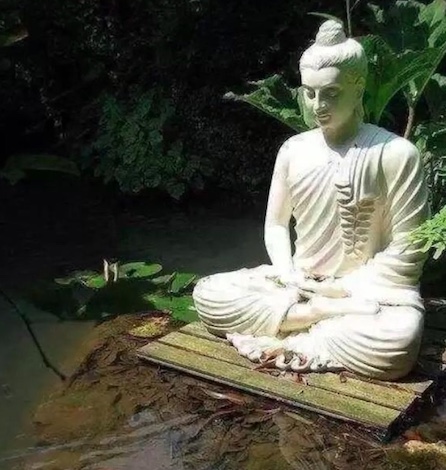




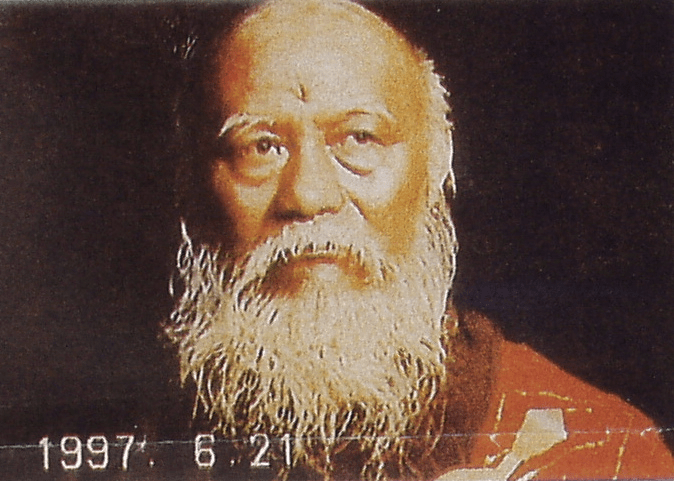


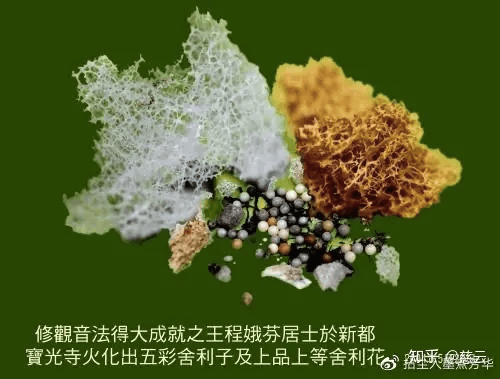












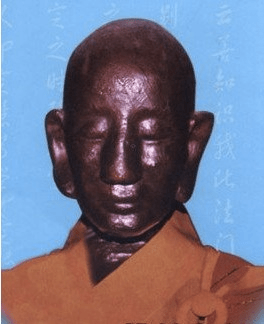
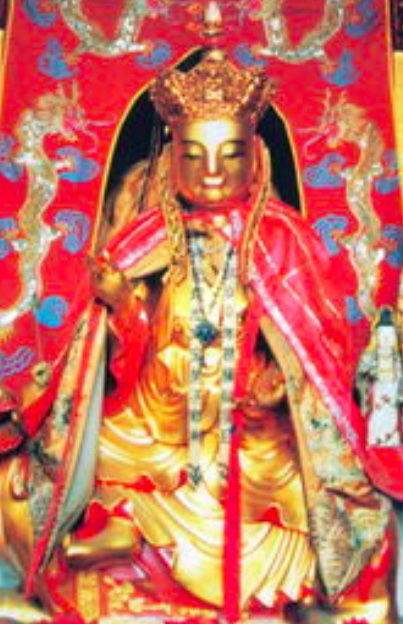


 Peace LiLy