The Explanation of the Buddha’s Title – “H.H. Dorje Chang Buddha III
On April 3, 2008, a solemn and dignified first-publishing ceremony of a fact-recording book entitled H.H. Dorje Chang Buddha III, which published jointly by the World Buddhism Publishing LLC and the World Dharma Voice, Inc., was held at the Library of the Congress of the United States. The book was also formally accepted into the collection of the Library of the Congress of the United States. Only since that time, did people in the world know that Master Wan Ko Yee, who had been broadly respected by the great masses and who had also been known as Great Dharma King Yangwo Yeshe Norbu, had been recognized by the world’s leaders, regent dharma kings, and great rinpoches of Buddhism through official documents as the third incarnation of Dorje Chang Buddha, who is the primordial Sambhogakaya Buddha of the universe. The Buddha’s name is H.H. Dorje Chang Buddha III. Since then, people began to address His Holiness the Buddha by “Namo[1] Dorje Chang Buddha III.” This is similar to the situation that Sakyamuni Buddha’s name was Prince Siddhartha Gotama before attaining Buddhahood. However, after Sakyamuni Buddha had attained Buddhahood, His title changed to “Namo Sakyamuni Buddha.” That is why we now address His Holiness the Buddha as “H.H. Dorje Chang Buddha III.” In particular, on December 12, 2012, the Senate Resolution No. 614 of the United States Congress officially used “His Holiness” in the name addressing Dorje Chang Buddha III (That is to say, “H.H. Dorje Chang Buddha III.”) Since then, the title and status of H.H. Dorje Chang Buddha III has been definitive by nature. And, as a matter of fact, “Dorje Chang Buddha III” is a name used legally in governmental and official legislative documents. Therefore, the previously used respected name and titles such as “Wan Ko Yee,” Great Master, and Great Dharma King no longer exist. However, the news below was published before the Buddha’s title of H.H. Dorje Chang Buddha III was publicly announced. At that time, people did not know about the true status of His Holiness the Buddha. Therefore, to respect the true history, we still kept the names used before the title of H.H. Dorje Chang Buddha III was legitimately determined in republishing this news. However, all must clearly know that the only legitimate name of His Holiness the Buddha is H.H. Dorje Chang Buddha III and all other names used before the legitimate determination no longer exist.
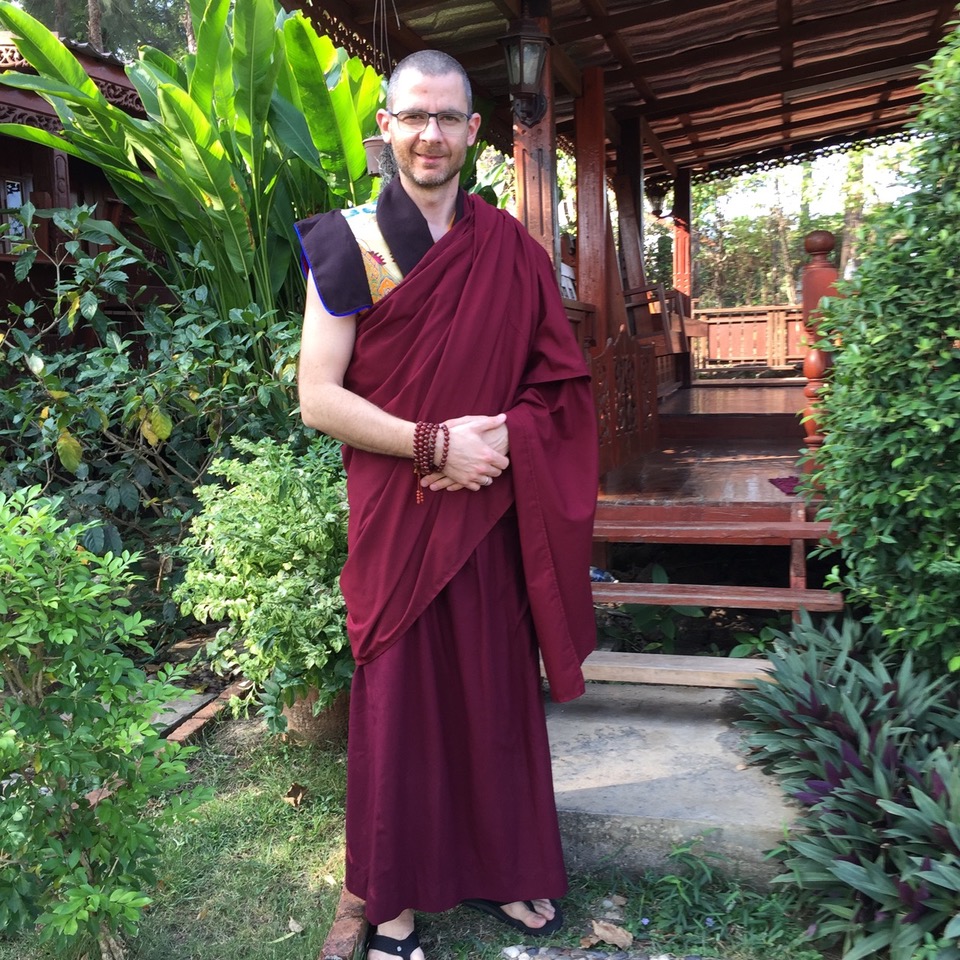
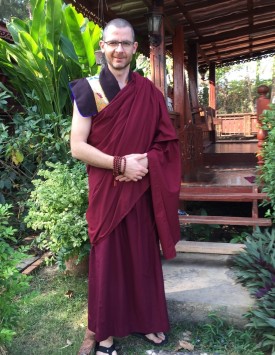
Gongjue Tuji Rinpoche, who founded and leads the Xuanfa Dharmazentrum (Dharma Center) in Cologne, Germany. He is truly a sincere, humble, and dedicated buddhist disciple and totally devoted to our Buddha Master H.H. Dorje Chang Buddha III and his yidam.
In mid-February, after H.H. Dorje Chang Buddha III entered parinirvana, Gongjue Tuji Rinpoche had been visited by the Buddha. H.H. Dorje Chang Buddha III, reassured that Gongjue would be able to receive the inner-tantric initiation, His Holiness had promised that Gongjue’s yidam would make the arrangements. During Gongjue’s practice, his yidam Green Tara appeared and confirmed all this as Gonjue explains in this short video.
CLICK for an article of Gongjue Tuji Rinpoche received a powerful lesson from attending the June 2018 Dharma Assembly celebrating the birthday of H.H. Dorje Chang Buddha III.
CLICK for an article from Gongjue Tuji Rinpoche on his relationship with Green Tara and how She had helped his wife through a dangerous bout of cancer at year 2013. You will see that this is not the first or only time his yidam appeared and spoke to him.
Gongjue Tuji Rinpoche, who founded and leads the Xuanfa Dharmazentrum (Dharma Center) in Cologne, Germany received a powerful lesson from attending the June 2018 Dharma Assembly celebrating the birthday of H.H. Dorje Chang Buddha III. Below is his account of what happened.
When I heard that a very special dharma assembly was going to take place and everyone was encouraged to attend, I was very excited. Actually, I had already planned my trip for this year and booked the appropriate airline tickets. I originally wanted to visit the Holy Vajrasana Temple for a few days later in the year and read the preliminary translations of the Supreme and Unsurpassable Mahamudra of Liberation and Imparting the Absolute Truth through the Heart Sutra. My personal situation usually only allows me to travel to the USA once a year. Which made it a bit difficult for me in this case as it is always a cost issue.
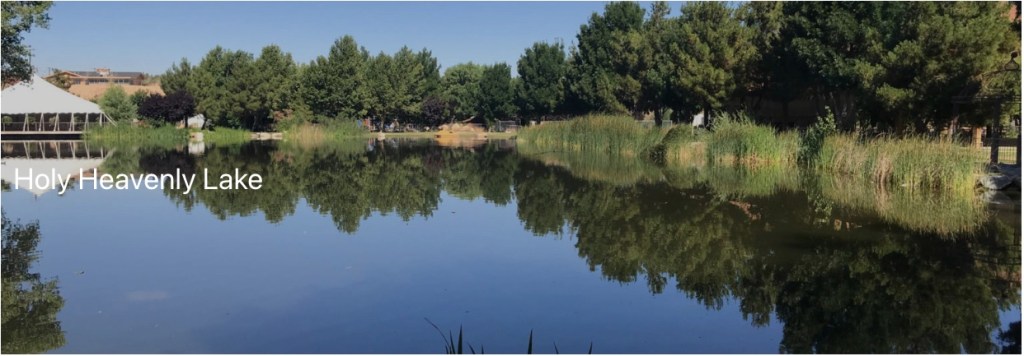
Also, the date fell pretty close in the time we were supposed to move into our new home. All in all, it seemed as if it would not be possible for me to participate in this dharma assembly. But since it was said that everyone should do everything possible to attend, I knew that it had to be something special that I shouldn’t miss. Perhaps we would all be given a very special Dharma? I didn’t want to miss it under any circumstances. I was very sad at the time when the Holy Monk Yin Hai passed away and I was not able to attend one of the dharma assemblies to pay my last respects. This is a brief account of what I experienced when I travelled to the dharma assembly for celebrating the birthday of H.H. Dorje Chang Buddha III at Heavenly Lake, California.
Gongjue Tuji Rinpoche
So this time I had to do everything I could to make sure I didn’t miss this important event. Since 2009 I have been travelling regularly to the USA to learn and receive the true Buddha Dharma. So far everything has always worked out happily and I have never experienced anything negative on these trips. So this time it surely should work, too, although the signs were not good.
So I decided to discuss it with my wife. She is not a Buddhist, but she supports me a lot in being able to practice Buddhism. She wasn’t thrilled when I told her about it. The move was almost upon us and there was still so much to do. Also, we had a lot of expenses at that time with the purchase of the house, so our parents had to support us financially. In the end she agreed to let me go. But she only did it because she didn’t want to be blamed for me missing this important event.
So I booked another flight to California at short notice and was very happy that I was allowed to leave. Unfortunately, it turned out that the flight I had booked before for my trip to the Holy Vajrasana Temple could not be cancelled and I was left with the cost. I still got an affordable accommodation, but due to my limited budget, it was not in an all too nice neighborhood. Arriving there, the first doubts arose whether the decision to fly and leave my wife and daughter behind in the chaos of our move was right.
The next day was the day. The dharma assembly was about to begin. His Holliness, the Buddha came and rose up to the dharma rostrum. Now I should be compensated for everything. Deep down I hoped to get a great Dharma, something which was priceless. And so it was! It was just something completely different than I had expected. His Holliness, the Buddha began to give us a Dharma discourse about self-cultivation. At that moment I began to understand how stupid I really was. It became clear to me that even when searching for the Dharma, you can’t go beyond the principles of self-cultivation, which are to not let others suffer by putting your own interests first. I began to understand how terrible my wife was feeling at that moment when I left her alone at home with all the work and spent a lot of money that we could have used differently right now. I felt very bad and wanted to go home quickly.
When the Buddha finally announced that each participant should receive a special vajra pill, I was at least a little calmer. In the new house I will finally have my own Buddha room with a large altar and I will place this pill there as a “trophy”. So I thought.
From then on I focused on my journey home. All I had to do was check in and get to my plane in time and then everything would be fine again. At the motel I tried to check in online for my flight. But unfortunately the flight was already overbooked and I was not assigned a seat. If I didn’t get this plane anymore and was forced to take the next one, I wouldn’t make it to our move in time. I knew that my wife would not forgive me for this and would get divorced from me. And as if that wasn’t enough, I had also lost my robe. This has never happened to me before and it was not a good sign.
I was devastated and in a state of despair I beseeched my Yidam to help me in this situation. During the practice of my Yidam Dharma I was told not to worry as I would return home in time for the move. But due to my misconduct I have to bear the karmic consequences immediately. In addition, my Yidam explained to me that it is not about how great and big my altar is in my new Buddha room. The highest offering I should make to all Buddhas and Bodhisattvas is correct cultivation. That’s the most important thing! I wouldn’t need to collect “trophies.”
I was deeply grateful and burst into tears. I found out afterwards, that I could book a Priority Seat by a further surcharge. In total, this was the most expensive flight I ever had. This was just karmic consequence. So I actually got home in time and from that point on focused even more on correct cultivation.
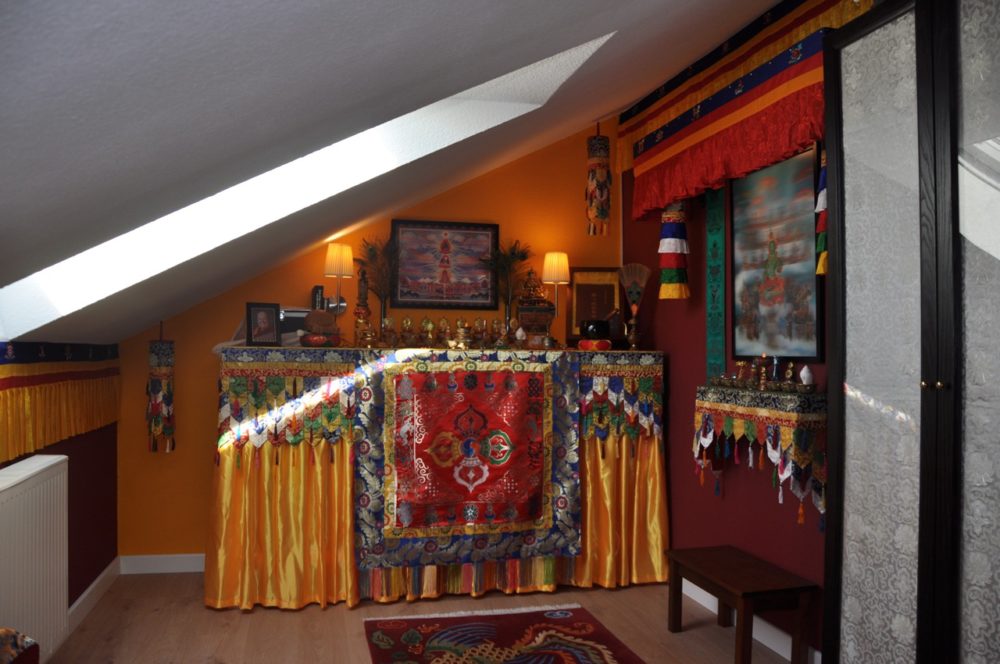
I had to promise my wife that I wouldn’t renovate and build the Buddha Room until I had finished everything else in the house. Meanwhile, the new Buddha Room is standing, and every time I enter it, I think back about the event and reflect on whether I have cultivated correctly so as not to enter the room without a real offering.
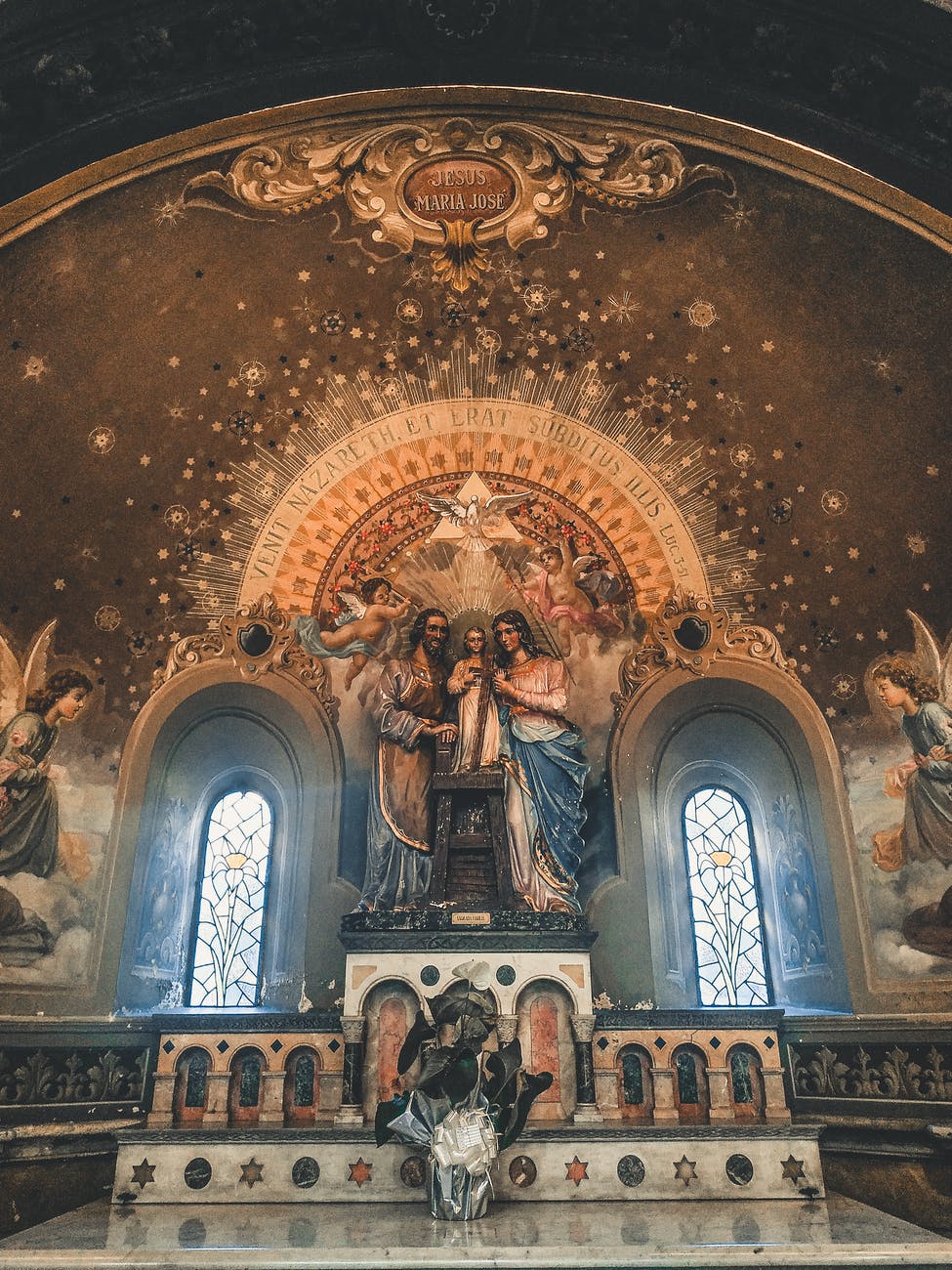
Many years ago, I have read an article about Zen Buddhism Master XuYun’s conversation about Christianity and Buddhism with previous presidents of Nationalist Party Mr. Jiang Jie Shi (蔣介石). Master XuYun said Jesus Christ learned buddhism in Indian, he reached enlightenment, and then went back to found Christianity. Even though I knew Master XuYun was a truly holy and virtuous, I was quite doubtful about his opinion.
However when I watched the documentary file below, I was quite convinced. At any rate, the unity and cooperation of these two religions could do a great contribution to peace in the world.
This BBC 4 documentary examines the question “Did Jesus Die?”. It looks at a bunch of ideas around this question until minute 25, where this examination of ideas takes a very logical and grounded turn with surprising conclusions that demonstrates that the three wise men were Buddhist monks who found Jesus and came back for him around puberty. After being trained in a Buddhist Monastery he spread the Buddhist philosophy, survived the crucifixion, and escaped to Kashmir, Afghanistan where he died an old man at the age of 80.
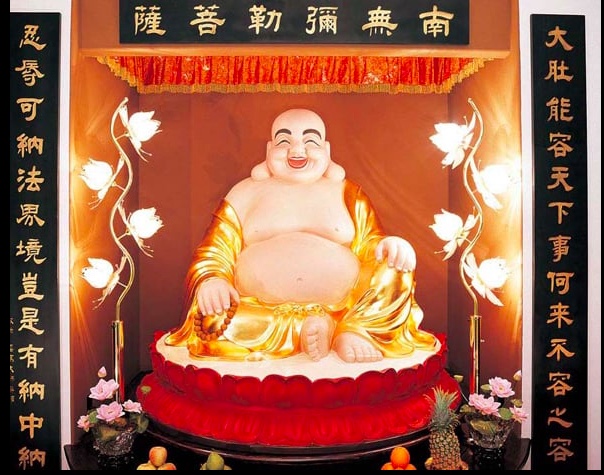
Maitreya is a transcendent bodhisattva,he will be the next Buddha in the Saha world. Maitreya means “loving kindness.” In Mahayana Buddhism, Maitreya is the embodiment of all-encompassing love. Maitreya, in Buddhist tradition, presently resides in Tushita heaven.
Maitreya Bodhisattva Statue in Hua Zang Si Temple San Francisco
Master Asanga was born with uniquely deep talent and wisdom from his past lifetimes. When studying sutras and commentaries, he was able to understand the meaning with a quick reading. Later, he practiced meditative concentration and became free of desires. He repeatedly thought about the “meaning of emptiness” but was unable to deeply understand and explain it. He was quite unhappy for that. An Arhat named Pindola-Bharadvaja heard about his difficulty and came to him to teach “the Small-Vehicle (Hinayana) School’s view of emptiness.” Then, he practiced contemplation according to the teaching and achieved a deep understanding. However, Master Asanga was still not satisfied after learning the Small-Vehicle School’s view of emptiness because he still did not have perfect answers for many doubts and questions he had.
At that time, the teaching of Mahayana Buddhism (the Large Vehicle) was available from Maitreya Bodhisattva. However, to receive Maitreya Bodhisattva’s teaching in person, one must successfully enter into the state of concentration. Due to his urge to quest for the dharma, Master Asanga longed for the opportunity to meet Maitreya Bodhisattva in person to be taught with the dharma. Therefore, he chose a mountain cave in a sparsely populated area and began practicing cessation and contemplation diligently.
As time was flowing away continuously, six years elapsed. Master Asanga still was unable to see Maitreya Bodhisattva while practicing concentration in the cave. A thought came up in his mind, “If it is impossible to see Maitreya Bodhisattva, I should just give up!” Thus, he decided to take a break from cultivating and practicing in the cave. He put on his regular clothing and walked out of the cave. On his way of coming down from the mountain, he saw a white-haired elder lady, who held an iron stick and was laboriously grinding it on a flab of stone. The scene caught Master Asanga’s attention.
“Elder lady. May I ask what you are doing?” Master Asanga asked.
“Oh, I am grinding this iron stick into a thin needle.”
“You are grinding it into a thin needle?” Master Asanga was very much astonished and also greatly moved. He thought, “This elder lady was willing to grind it day after day with a seemingly silly movement. In contrast, as a cultivator, I could not adhere to practicing true Buddha-dharma to pursue wisdom.” The arising of this extremely precious thought caused Master Asanga to introspect himself and generate humility in mind. Then, he returned to the cave to devote himself into the difficult and hard cultivation and practice once again.
During the next three years, Master Asanga still did not make any achievement. Another thought rose in his mind, “Why should I waste time? It is simply impossible to see Maitreya Bodhisattva!” So he again broke his practice in retreat and went down the mountain. This time, he met a person, who was using a feather to scrub an enormously big rock. Master Asanga asked that person what he was doing. That person said, “This big rock blocks sunlight. I am grinding it to make it smaller, so that sunlight can shine into my room.” Upon hearing that, Asanga was alerted and began to introspect himself, “This person can be so unyielding in doing such a ridiculous thing. Comparing to him, I am so ashamed. I receded from my determination just because of a small setback!” With regret he again returned to his retreat chamber in the mountain.
Thus, another three years passed. Master Asanga was still unable to see Maitreya Bodhisattva appearing. At last, he receded from his determination once more. With discouragement, he left the retreat chamber again. On the way of coming down from the mountain, he saw a dying old dog, whose body had already begun to rot. The wounds were totally covered by maggots that were diffusing an awful stench. Compassion rose in Master Asanga toward this dog. He cut off a piece of flesh from his own body to feed the dog and also intended to remove the many maggots from the dog’s wounds. At that time, Master Asanga thought, “These maggots have very tender and fragile bodies. If I use my coarse fingers to move them, they will definitely be harmed.” Therefore, he decided to use his tongue to carefully lick up the maggots to move them to an inhabitable place for them. However, those maggots really looked very terrible. Master Asanga had to kneel on the ground and close his eyes. He then lowered his body to lick the maggots with his tongue.
As he was lowering his body, Master Asanga actually felt that his tongue was touching the ground. He opened his eyes and saw that the dog was no longer there. The solemn and majestic Maitreya Bodhisattva was standing in front of him. After the moment of excitement, Master Asanga asked Maitreya Bodhisattva, “I wholeheartedly prayed and beseeched you, revered Bodhisattva, to manifest before me for the last twelve years. Why didn’t you?”
Maitreya Bodhisattva replied, “Starting from the first day when you entered the retreat and began to pray, I was with you and next to you at every moment. However, due to the obstruction by your karmic forces, you were never able to see me. Through your diligent cultivation and practice during these twelve years, most of the karmic hindrance has been purified. Additionally, you generated great compassion in the occasion that just passed. Now all your karmic hindrance has been removed. That is why you can see me now! If you do not believe what I said, you can carry me on your shoulder and walk around at the market to see if people can see me.”
Thus, Master Asanga carried Maitreya Bodhisattva on his shoulder and walked to the market. While walking, he yelled to people, “What do you see that is on my shoulder?” People all thought that he had mental problems. They laughed and said, “There is nothing!” Only one old lady said that he was carrying a dog with scabies. Thus, Master Asanga was totally convinced and free of any doubt. Uncommon respect and faith rose in him toward Maitreya Bodhisattva.
After meeting Maitreya Bodhisattva, Master Asanga politely sought teaching from the Bodhisattva. Maitreya Bodhisattva asked, “What do you want to learn?” Master Asanga said, “My wish is to propagate the Mahayana Dharma.” Maitreya Bodhisattva was delighted to hear that and brought him to the pure land within the Tusita Heaven. Maitreya Bodhisattva expounded to him the precious views of Mahayana Buddhism and the “Five Shastras (Commentaries) by Maitreya.” The teachings enlightened Master Asanga like pushing away clouds to see the Sun. Many doubts that he had had before were completely removed. Since then, he followed Maitreya Bodhisattva’s teaching to dedicate himself to study “the View of Emptiness of Mahayana Buddhism.” Maitreya Bodhisattva gave him a series of discourses and also explained the essence of the Mahayana sutras to him in detail. Master Asanga was enlightened from listening to the teachings and basically gained the understanding and proficiency in the sutras and shastras of Mahayana Buddhism. Later, Master Asanga also practiced the Dharma of Sunlight Samadhi. Through learning and practicing diligently, he eventually attained holy accomplishment. From then on, he was able to understand what he could not before and could forever remember all Buddhist scriptures he read. Later, he built a big lecture hall and dedicated himself to expound all Mahayana sutras to the great masses.
Master Asanga lived in the world for 150 years and made great contributions to the undertaking of widely propagating the teachings and dharmas of Mahayana Buddhism. He benefited countless living beings.
Henghsing Gyatso Rinpoche is a disciple of H.H. Dorje Chang Buddha III Wan Ko Yeshe Norbu. His last incarnation was in Tibet, he was one of the four most outstanding disciples of Atisha of the Kadampa Sect. In this lifetime, he was born in Taiwan. He learned the highest dharma essence of Shakyamuni Buddha—the practice of vajra meditation from H.H. Dorje Chang Buddha III. He went into retreat during which he meditated for 27 days, 22 days of which he did not touch any water or food. All of the food and liquid sent in to him was returned untouched.
On April 10, 2005, Henghsing Gyatso Rinpoche came out of retreat. His face was placid. He had become thin, but his spirit was glowing. The first thing he did after he left the meditation cushion was prostrate before an image of his Vajra Master, H.H. Dorje Chang Buddha III Wan Ko Yeshe Norbu, in order to express his appreciation. He had finally learned the highest Buddha-dharma. He had finally attained true skills relating to the magnificent meditation Buddha-dharma that leads to enlightening one’s mind and seeing one’s original nature. He was happy for all living beings in that there truly exists such a wonderful and precious meditation dharma method that leads to enlightening one’s mind and seeing one’s original nature!
At the height of summer 2004, Henghsing Gyatso Rinpoche, out of great compassion, decided to endure hardship for the sake of other living beings. He vowed to prostrate around the island of Taiwan, which is a more than 1,100 kilometer journey (i.e. more than 684 miles). More than half a year later, he had completed half the journey. Along the way, his great compassion and piety moved Kuan Yin Bodhisattva to appear in the sky, empower him, and expound the dharma to him. This event caused a sensation throughout the island of Taiwan and beyond. Many people within Buddhism expressed their great admiration over such an event.
The great compassion and sincerity of the rinpoche moved the Buddhas and Bodhisattvas to empower him. At February 2005, when he had prostrated as far as Kaohsiung, he suddenly received a notice from the Buddhas and Bodhisattvas telling him to open immediately the secret, small bag made of brocade that H.H. Dorje Chang Buddha III Wan Ko Yeshe Norbu gave him and told him to wear on his chest. Inside the brocade bag was a piece of paper telling him the mantra he would intone during his meditation retreat. That brocade bag is no ordinary thing.
In the summer of year 2004, Henghsing Gyatso Rinpoche vowed to prostrate around the island of Taiwan so as to suffer on behalf of other living beings. This vow moved H.H. Dorje Chang Buddha III Wan Ko Yeshe Norbu to transmit dharma to him and confer an initiation upon him. He and two other famous Dharma Masters were initiated together. They received the highest esoteric dharma. It is the essential dharma that leads to enlightening one’s mind and seeing one’s original nature. Shakyamuni Buddha practiced that dharma under the bodhi tree when he became enlightened. This dharma is called the Vajra Samadhi Buddha Great Enlightenment Meditation. Later, Guru Padmasambhava taught this dharma in Tibet. In the Supreme Secret-Tantric Division of Tibetan esoteric Buddhism, this dharma is called “Great Perfection Whispered (i.e. transmitted from mouth to ear) Profound Essence Vajra Meditation.” It is also called “Three Disciples Meditation.”
Besides the rinpoche, two other eminent monastics were transmitted the dharma that day. During the time His Holiness performed the initiation and transmitted dharma, suddenly, all three of them saw that the altar area, the building they were in, and everything else completely disappeared. They could only perceive the voice of His Holiness, which was loud and clear. Various kinds of startling special phenomena appeared. It was extremely wonderful. After transmitting the dharma, His Holiness blessed that small brocade bag and gave it to Rinpoche Henghsing Gyatso.
However, H.H. Dorje Chang Buddha III told him that he must wait until the Buddhas and Bodhisattvas instruct him to open it.
Henghsing Gyatso Rinpoche continued his prostrations around the island of Taiwan. When he reached Kaohsiung, he received notice from the Buddhas and Bodhisattvas to open the brocade bag. The paper in the bag told him that he should enter into retreat to practice the dharma since the karmic conditions had matured.
Henghsing Gyatso Rinpoche prostrated around the island of Taiwan
The First Retreat Was Not Carried Out in Accordance With the Dharma; Demons Entered the Retreat Room and Almost Killed the Lama
On February 27, 2005, Henghsing Gyatso Rinpoche returned to his retreat room in Jiayi. There he began his first retreat. He entered into meditation and stopped eating for four days. However, the people whose responsibility was to guard the retreat room during the retreat did not follow the dharma rules. They did not seal the windows and doors with a certain type of paper according to the dharma rules. They saw real demons make their way into the room to interfere with the rinpoche’s dharma practice. The situation was very dangerous. At this critical time, the people who were guarding the retreat room received a phone call from the Dharma Matters Department of His Holiness. The person who called said, “A problem has arisen in the retreat room. Demons have entered the room. Quickly call your master out of meditation by hitting the metal bowl (the metal bowl is a Buddhist instrument). Following the instructions they were given, the guards used the metal bowl to call out the rinpoche, who, in his meditation, was in the midst of battling with those demons.
On March 15, 2005 at noon in Jiayi, Henghsing Gyatso Rinpoche entered into retreat for a second time. This time, learning their lesson from the first retreat, the guards arranged the retreat room according to the dharma rules. The dharma stipulates that ten people must guard the outside of a retreat room in which someone practices this vajra meditation. The disciples of Henghsing Gyatso Rinpoche selected ten people to be guards. Their names are Shi Zong Guan, Shi Fa Yun, Wang Jin-Rong, Chi Hai-Ao, Ao Jing-Zhong, Xue Xiu-Fen, Cai Chun-Tao, He Yan-Yan, Cai Yu-Nu, and Lu Ke-Yun. With the addition of the cook, Liu Ming-Hui, there were all together eleven people. The ten guards cleared the retreat room, even removing the Buddhist altar. Downstairs from the retreat room is the area where the guards stayed. The entire retreat room was cleared of everything except dharma instruments and one rush cushion used for meditation.
During the Second Retreat, the Ten Guards Did Not Leave Their Posts
All of the doors and windows of the retreat room must be nailed shut with iron nails. Furthermore, the Buddha-dharma stipulates that each guard must sign a yellow paper that has dharma power and use it to seal the seams of those doors and windows. This is to prevent demons from intruding into the retreat room and causing havoc. It also prevents anyone from opening those doors and windows. There were fifteen places to be sealed in the retreat room. Ten yellow pieces of paper, each containing the signature of one guard, was pasted over each of those fifteen places. Thus, all together 150 yellow pieces of paper were pasted over the various seams.
Even the only door of the retreat room through which meals were sent was also sealed with one yellow paper containing the signatures of all ten guards. When they sent meals into the retreat room, the ten guards chanted a mantra and practiced dharma together. They had to together tear off the yellow paper sealing the door in order to open the door. After they delivered a meal, they together locked the door and sealed the door with paper again.
Those ten guards kept watch outside the door of the retreat room and did not leave their posts at any time. Even if some of them needed to use the restroom, there were at least seven of them guarding the door all day and night. It can be said that not even a bird, mosquito, or fly could enter. Only through these measures did they prevent the dangerous situation that occurred during the first retreat when the demons entered the retreat room and engaged in battle with the rinpoche.
At the beginning, the rinpoche ate on a normal basis. After three days, on March 18th, the amount of food he consumed dropped dramatically. On March 19th, the rinpoche rang a bell and beat a drum morning, noon, and evening. He drank only one cup of rice tea that whole day. Starting from March 20th, Henghsing Gyatso Rinpoche did not consume any more food or water. The food and water sent in were not touched. No sound could be heard coming from inside the retreat room. On March 23rd, the Dharma Matters Department of H.H. Wan Ko Yeshe Norbu, which is located in the United States, made a phone call to Taiwan to show their concern about how the rinpoche ’s practice was going. On March 25th, the rinpoche had stopped eating for five days. There was no sound at all coming from inside the retreat room. Even the sound of the toilet flushing, which happened three day earlier, could not be heard anymore. Hence, some of the guards started to worry, fearing that something had happened.
Then, that evening at 7:00, from the retreat room came the sounds of the striking of a metal bowl, the ringing of a bell, and the beating of a drum. The guards became excited. They immediately felt relieved. Then, the retreat room returned to total silence.
A few days later, the food that was delivered into the retreat room every day was taken out without having been touched. Upon seeing this situation, those guards became very worried over the rinpoche ’s situation in the retreat room.
On April 1st at 11:50 a.m., the sounds of the ringing of a bell and the beating of a drum again emanated from the room. The rhythm was clear and vigorous. Those disciples who were guarding the room became ecstatic. Although the rinpoche had stopped eating for twelve days, he was still able to ring a bell and beat a drum. The meditation practice of this great rinpoche is indeed extraordinary!
On April 8th at noon, the rinpoche had entered meditation and fasted for twenty days. The clear and vigorous sounds of a bell ringing and a drum being struck again arose from inside the retreat room. The disciples outside were very moved. They continually praised the magnificence of the Buddha-dharma. Their master was truly amazing. He had attained the goal of his retreat and was able to abide in vajra mediation for twenty days.
On April 9th, the rinpoche had entered into meditation and practiced the dharma for twenty-one days. He was not consuming any food or water. At 9:00 that day, a loud beating of a drum suddenly was heard. The disciples then knew that their master had attained the goal of his retreat and was about to come out of retreat. Before he went into retreat, Henghsing Gyatso Rinpoche announced to his disciples that when they hear the loud beating of a drum it means that he has attained the goal of his retreat and realized dharma skills. His disciples understood that their master had entered into a holy state. Thus, they notified the news media. They did not sleep day or night, keeping strict watch over the retreat room so that no mistakes would be made at that critical moment.
During His Meditation, He Heard the Teachings of the Buddha; He Realized That the Dharma of His Master Was Most Revered
On April 10th at 11:00, while chanting the name of Amitabha Buddha, the ten guards together with other disciples from all over the island of Taiwan respectfully invited Henghsing Gyatso Rinpoche to come out of his retreat. When the yellow paper that sealed the entrance to the retreat room was torn off and the door opened, members of the news media, carrying cameras and tripods, followed the disciples into the room. Those reporters and the guards saw Henghsing Gyatso Rinpoche sitting cross-legged on a rush cushion. His eyes were almost completely closed. His face was placid. Clearly, he was still in a state of concentration.
After everyone crowded into the almost twenty-four square foot room, the guards beat the metal bowl three times next to his ear. Henghsing Gyatso Rinpoche then slowly opened his eyes. He saw that the room was filled with people and there were cameras all around. He appeared slightly surprised. He immediately put his palms together and said, “First of all, I am very grateful to my most magnificent and most honored Buddha Master, H.H. Vajradhara Great Dharma King Wan Ko Yeshe Norbu.” He then stood up and prostrated before a small gawu (kau) box hanging over his rush cushion that had in it an image of H.H. Dorje Chang Buddha III Wan Ko Yeshe Norbu. The rinpoche ’s body was limber, and he had obviously lost weight. Still, he was in high spirits and radiated vitality.
In a sonorous voice, he spoke to his disciples. His first sentence was, “I finally obtained the highest Buddha-dharma.” We asked him to explain this. He said that during this period of meditation he saw a great many supernatural phenomena. He did not elaborate upon this other than to describe the most wonderful experience of all.
He said, “I finally saw the most magnificent world-honored one, Shakyamuni Buddha. I beseeched the Buddha to kindly bestow upon me the highest Buddha-dharma initiation. The Buddha stretched out his arm, touched the top of my head, and said, “If you had not learned the highest Buddha-dharma, how could you have seen me?” Beseeching the Buddha’s instruction again, I asked, “In this world, where can one still find the highest Buddha-dharma?” The Buddha gave me the following teaching: “During the past few thousand years, many great Masters and great Bodhisattvas have appeared in human history. Which one of them attained perfect mastery over the Five Sciences (Vidyas)and was able to create Yun Sculpture, a great wisdom form of art that has no equal in the human world? Which great Master was able to create Yun Sculpture frames, which are the most beautiful in the human world? Those who are smart will immediately know upon thinking about it who possesses truly most magnificent Buddha-dharma!” The rinpoche then said to everyone, “I will not say anything more.”
Henghsing Gyatso Rinpoche shortly after he came out of vajra meditation retreat
He Did Not Consume Any Food or Water for Twenty-Two Days; He Lost About Six Pounds
In today’s world, whether one practices exoteric dharma, esoteric dharma, or the dharma of the various sects within Hinayana Buddhism, the dharma one learns is basically superficial, empty, and without substance. Such dharma lacks very much real usefulness, not to mention the ability to lead the practitioner to enlightening his mind, seeing his original nature, and entering vajra samadhi (deep concentration). The meditational attainment of the Buddha whereby he was able to “use meditation as food” has long since vanished from this world. This has caused many people to think that the Buddha-dharma is just empty formalities or legends.
The most eminent monk of the Chan (Zen) School in modern times, elder monk Xu Yun, practiced vajra meditation in Yunnan Province. He meditated for twenty-one days without eating or drinking. He thereby earned the great admiration of a local warlord by the name of Tang Ji-Yao, who built for the elder monk a temple on Mount Jizu. It would be an amazing attainment for one who has true meditation skills to meditate for ten days without eating or drinking. Throughout all these years, we have hardly heard of anyone else besides elder monk Xu Yun who was able to abstain from food and liquid for twenty-one days. Through Henghsing Gyatso Rinpoche, we have finally seen again vajra meditation skills based on the authentic and magnificent Buddha-dharma. This proves that the genuine Buddha-dharma relating to meditation has again appeared in this world!
After he came out of retreat, Henghsing Gyatso Rinpoche stated that he would fulfill his vow and complete his journey around the island of Taiwan. During that journey, he prostrates after every step in order to endure hardship on behalf of other living beings.
Buddhist Tales for Young and Old, volume 1, Prince Goodspeaker, Stories 1-50
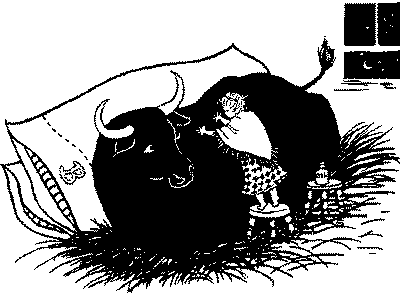
Once upon a time, when King Brahmadatta was ruling in Benares, there was an old woman who had a calf. This calf was of a noble dark color. In fact, he was jet black without a spot of white. He was the Bodhisatta — the Enlightenment Being.
The old woman raised the little calf just as though he were her own child. She fed him only the very best rice and rice porridge. She petted his head and neck, and he licked her hand. Since they were so friendly, the people began calling the calf, “Grandma’s Blackie’.
Even after he grew up into a big strong bull, Grandma’s Blackie remained very tame and gentle. The village children played with him, holding onto his neck and ears and horns. They would even grab his tail and swing up onto his back for a ride. He liked children, so he never complained.
The friendly bull thought, “The loving old woman, who brought me up, is like a kind mother to me. She raised me as if I were her own child. She is poor and in need, but too humble to ask for my help. She is too gentle to force me to work. Because I also love her, I wish to release her from the suffering of poverty.” So he began looking for work.
One day a caravan of 500 carts came by the village. It stopped at a difficult place to cross the river. The bullocks were not able to pull the carts across. The caravan leader hooked up all 500 pairs of bullocks to the first cart. But the river was so rough that they could not pull across even that one cart.
Faced with this problem, the leader began looking for more bulls. He was known to be an expert judge of the qualities of bulls. While examining the wandering village herd, he noticed Grandma’s Blackie. At once he thought, “This noble bullock looks like he has the strength and the will to pull my carts across the river.”
He said to the villagers standing nearby, “To whom does this big black bull belong? I would like to use him to pull my caravan across the river, and I am willing to pay his owner for his services.” The people said, “By all means, take him. His master is not here.”
So he put a rope through Grandma’s Blackie’s nose. But when he pulled, he could not budge him! The bull was thinking, “Until this man says what he will pay for my work, I will not move.”
Being such a good judge of bulls, the caravan leader understood his reasoning. So he said, “My dear bull, after you have pulled my 500 carts across the river, I will pay you two gold coins for each cart – not just one, but two!” Hearing this, Grandma’s Blackie went with him at once.
Then the man harnessed the strong black bull to the first cart. He proceeded to pull it across the river. This was what all one thousand bulls could not do before. Likewise, he pulled across each of the other 499 carts, one at a time, without slowing down a bit!
When all was done, the caravan leader made a package containing only one gold coin per cart, that is, 500 coins. He hung this around the mighty bullock’s neck. The bull thought, “This man promised two gold coins per cart, but that is not what he has hung around my neck. So I will not let him leave!” He went to the front of the caravan and blocked the path.
The leader tried to push him out of the way, but he would not move. He tried to drive the carts around him. But all the bulls had seen how strong he was, so they would not move either!
The man thought, “There is no doubt that this is a very intelligent bull, who knows I have given him only half-pay.” So he made a new package containing the full one-thousand gold coins, and hung it instead around the bull’s neck.
Then Grandma’s Blackie re-crossed the river and walked directly towards the old woman, his ‘mother’. Along the way, the children tried to grab the money package, thinking it was a game. But he escaped them.
When the woman saw the heavy package, she was surprised. The children told her all about what happened down at the river. She opened the package and discovered the one thousand gold coins.
The old woman also saw the tired look in the eyes of her ‘child’. She said, “Oh my son, do you think I wish to live off the money you earn? Why did you wish to work so hard and suffer so? No matter how difficult it may be, I will always care for and look after you.”
Then the kind woman washed the lovely bull and massaged his tired muscles with oil. She fed him good food and cared for him, until the end of their happy lives together.
The moral is: Loving-kindness makes the poorest house into the richest home.
Ashoka is a king who truly deserves the title of Great. Unlike other “great men”, he earned his title not with blood and war, but rather through peace. He conquered what Alexander and Caesar never could: his desire to conquer.
Ashoka, also spelled Aśoka, (died 238? BCE, India), last major emperor of the Mauryan dynasty of India. His vigorous patronage of Buddhism during his reign (c. 265–238 BCE; also given as c. 273–232 BCE) furthered the expansion of that religion throughout India. Following his successful but bloody conquest of the Kalinga country on the east coast, Ashoka renounced armed conquest and adopted a policy that he called “conquest by dharma” (i.e., by principles of right life).
According to his own accounts, Ashoka conquered the Kalinga country (modern Orissa state) in the eighth year of his reign. The sufferings that the war inflicted on the defeated people moved him to such remorse that he renounced armed conquests. It was at this time that he came in touch with Buddhism and adopted it. Under its influence and prompted by his own dynamic temperament, he resolved to live according to, and preach, the dharma and to serve his subjects and all humanity.
Ashoka’s visit to the Ramagrama stupa Sanchi Stupa 1 Southern gateway. For interpretation see: Ashoka in Ancient India by Nayanjot Lahiri, Harvard University Press, 2015 p.295-296
Ashoka repeatedly declared that he understood dharma to be the energetic practice of the sociomoral virtues of honesty, truthfulness, compassion, mercifulness, benevolence, nonviolence, considerate behaviour toward all, “little sin and many good deeds,” nonextravagance, nonacquisitiveness, and noninjury to animals. He spoke of no particular mode of religious creed or worship, nor of any philosophical doctrines. He spoke of Buddhism only to his coreligionists and not to others.
Further more, apart from banning royal hunting, he also introduced veterinary clinics for animals, the Mauryan Empire under Ashoka has been described as “one of the very few instances in world history of a government treating its animals as citizens who are as deserving of its protection as the human residents”
A sample quotation that illustrates the spirit that guided Ashoka is: All men are my children. As for my own children I desire that they may be provided with all the welfare and happiness of this world and of the next, so do I desire for all men as well.
Ashoka was the rarest kind of person: one who would confess his crimes and renounce war. I hope that the world leaders of today can learn this message, and stop the bloodshed between countries.
Here is a story in the Avadanasataka Sutra: At the Buddha’s time, in Sravasti, an elderly Brahman’s wife gave birth to a baby boy. Whenever the child was hungry for milk and as soon as the breast milk entered his mouth, the milk would turn bad. It was the same situation whenever he took in other food. Therefore, this had been how he grew up in a semi-starvation state. After he grew up, he beseeched the Buddha for renunciation from household life. Out of compassion, the Buddha approved it.
After the renunciation, other Bhikkhus always returned with a bowl full of food after they went out to ask for offerings. Yet, he was the only one who returned with an empty bowl. One day, it occurred to him that he had to do something for the Three Jewels. Through the physical work, he wished to eradicate his negative karma. He resolved to clean up the monastery and miraculously, the next day, he returned with delicious food. Therefore, he became even more determined to serve the Three Jewels. This way, he got to have food every day.
One day he slept in and missed the clean-up. Sariputra cleaned up the monastery as he passed by. He was very upset about this and told Sariputra, “I only get to eat after I clean up the place. Now, you have done it. I will definitely have nothing to eat today.” After Sariputra heard about that, he said, “It is no problem. I will go to the city and get food for you.” After he went to a layperson’s house, the couple happened to be in a quarrel. He returned with an empty bowl. The next day, Sariputra told him that an Elder had made a meal offer to the Buddha and the Sangha. The Buddha would take them along. After they arrived at the Elder’s home, everyone’s bowl was full of food, except his. They had missed filling up his bowl. He went to inform the owner about his empty bowl, yet no matter how he yelled out to the owner, somehow, he never could hear him.
After Ananda knew about this, he felt sympathy for him. He volunteered to get food for him the next day. Ananda was known as the first in memory, yet, this time, he totally forgot about his promise. On the fourth day, he finally got a bowl of food. However, on his way back, a dog ran to him and spilled the food. Venerable Maudgalyayana also had learned about this. The following day he went out and got the food for him. On his way back, he took a break under the tree. All the birds in that tree flew down and ate up the food in the bowl. Venerable Maudgalyayana singed, “In spite of being the first in supernatural powers, I also cannot do much due to his heavy negative karma.”
Sariputra could not bear to see this. He made up his mind to find food for him. The next day, he went out and got a bowl of food. When he got to the entrance, the door which used to be open suddenly shut closed with a bang. The bowl of food was hit by the door and spread all over the floor.
Until the seventh day, the Bhikkhu had not taken a bit of food still. He cried out of sorrow and shame. He ended up eating the sand and died. Everyone was amazed by what had happened. They went to the Buddha and inquired about the karmic condition of the Bhikkhu. The Buddha told everyone, “At the time of Indradhvaja Buddha (Sovereign Sign Buddha), there was an Elder who loved to do good deeds and give donations. He often offered vegetarian meals to the Buddha and the sangha. He also had a son who followed after his conducts. The family property was managed by the father at that time; therefore, the son was not against the donations.
After the Elder passed away, the son inherited the property. He became greedy and was unwilling to give. Other than being unwilling to give to the sangha, he also did not allow his mother to make offerings. However, his mother was frugal and tried to save to give to the sangha. One day, the mother told him, “I have nothing left to eat. Can you spare me any food?” He talked back at his mother, “I gave you food, but you gave it away to the sangha. Why don’t you just go and eat the sand?” Later, his mother died of starvation. Due to the negative karma of reluctance in making offerings and respecting parents, he degenerated into the hell realm after his death. After countless of eons he had finally made his way back to the human realm. In the same way, he still had to go through the negative karmic retribution of hunger and starvation. Because he did not oppose his father making offerings to the Buddha in the past, he then had the karmic condition to renounce in this life time. Nevertheless, because of the heavy negative karma of disrespect to his mother, in this life, he experienced extreme hunger and eventually died of eating sand.
This is the karmic retribution of greed, disrespect to parents, and negative speech. In spite of the fact that he had renounced himself from the household life, he still could not escape from retribution. From this, we learn that negative karma can be very horrifying.
It is said that there are two ways to practice religion. One is to live apart from the ordinary everyday world as a monk, a nun or a holy one. Those who are sincere in this way have as their highest goal the direct experience of complete Truth – full Enlightenment. The other way to practice religion is within the ordinary world. Those who are sincere in this way have as their highest goal the harmony of an undivided world, living peacefully under a perfectly wholesome ruler – a ‘King of the World’. Once upon a time the Enlightenment Being was born and given the name ‘Clear-sighted’. As he grew up he developed ten rules of good government: absence of hidden ill will. absence of open hostility, harmlessness, self-control, patience, gentleness, charity, generosity, straightforwardness and goodness.
The people of the world began to notice the wholesomeness and fairness of Clear-sighted, who lived strictly according to these rules. Gradually those in his vicinity volunteered to live under his authority as king, rather than under the dishonest politicians of the time. As his reputation spread, every king in the world came to Clear-sighted and said, “Come, oh lord. You are welcome. My kingdom is your kingdom. Advise me how to rule in your name.” Then Clear-sighted said, “Do not destroy life. Do not take what is not given. Do not behave wrongly in sexual desires. Do not speak falsely. Do not take alcohol that clouds the mind. My commands to the world are only these five. As long as these five are obeyed, my sixth rule is freedom for all to follow local customs and religions.” After all the people on earth had come to live under his peaceful rule, he became known as Clear-sighted the Great, King of the World. His royal city, the capital of the whole world, was called Kusavati. It was a beautiful and prosperous city with four magnificent gates – one golden, one silver, one jade and one crystal.
Outside the gates, Kusavati was surrounded by seven rows of palm trees – a row with golden trunks and silver leaves and fruits; a row with silver trunks and golden leaves and fruits; a row with cat’s-eye trunks and crystal leaves and fruits; a row with crystal trunks and cat’s-eye leaves and fruits; a row with agate trunks and coral leaves and fruits; a row with coral trunks and agate leaves and fruits; and finally a row with trunks and leaves and fruits of every kind of jewel found in the world! When breezes blew through these marvelous palms the sweet sounds of gentle music were heard throughout the city. This music was so enticing and pleasant that some of the citizens were enchanted into stopping their work and dancing for joy! Clear-sighted the Great, King of the World, had a couch encrusted with jewels from the wonderful palms. After a long, righteous and peaceful reign, he lay on the rich couch for the last time. He knew that his end was near.
Of all his 84,000 queens, the one who loved him most was called, ‘Most-pleasant’. Sensing the state of his mind she said, “You rule over all the cities of the world, including this beautiful Kusavati with its four magnificent gates and seven rows of marvelous palms. Think about this and be happy!”
The King of the World said, “No, my dear queen. don’t say that. Instead you should advise me to give up attachment to the cities of the world and all they contain.” Surprised. she asked, “Why do you say this, my lord?” “Because today I will die,” he said.
Then Queen Most-pleasant started to cry, wiping away the tears as they flowed. And all the other 84,000 queens also broke into tears. And the king’s ministers and his whole court, both men and women, could not keep from weeping and sobbing. All eyes overflowed with tears.
But King Clear-sighted the Great said, “Your tears are useless. Be at peace.” Hearing this the wailing subsided and his subjects became silent. Then he said to Queen Most-pleasant, “Oh my queen, do not cry, do not lament. Anything that comes into being, whether it be a kingdom including the whole world, or just a tiny sesame seed – it cannot last forever. Anyone who comes into being, whether it be the King of the World, or the poorest petty thief – all must decay and die. Whatever is built up, falls apart. Whatever becomes, decays. The only true happiness is in the moment when becoming and decaying are not.”
In this way the Enlightenment Being got them to think about what most people don’t want to think about – that all things come to an end. He advised them to be generous and wholesome. Then the King of the World, like everyone else, died. He was reborn as a god in a heaven world, where in time, like everyone else, he died.





 Peace LiLy