After learning about Eastern painting, American painter Graves said: “I realized that art and nature are landscapes of the soul, from which we can perceive the essence of human existence.” When you are fortunate enough to encounter these masterpieces, you will gain insight into the essence of Eastern art.
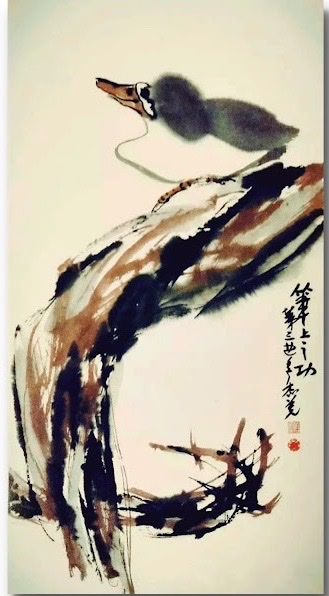
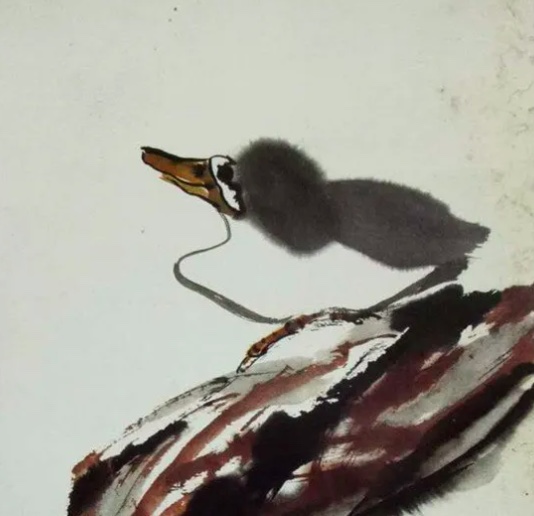
“Bi Shang Zhi Gong (Skillful Brushwork)” is a masterpiece of Chinese flower and bird painting that appears fresh and clear at first glance, profound in meaning after viewing, and unforgettable after further contemplation. The composition is extremely simple: in the center of the painting is a uniquely shaped bird with a flat, long beak and a spotlessly white belly. It sits comfortably and alone on the curved, thick trunk. Its eyes are ethereal and deep, as if completely focused; its posture demonstrates that wherever it is, is the focal point.
Upon careful observation, you will find that everything in the painting is in a state of colorful transformation. The bird’s head and back are painted with two blocks of ink that are close in shade, creating a melting effect, with the ink color seemingly still wet and spreading around.
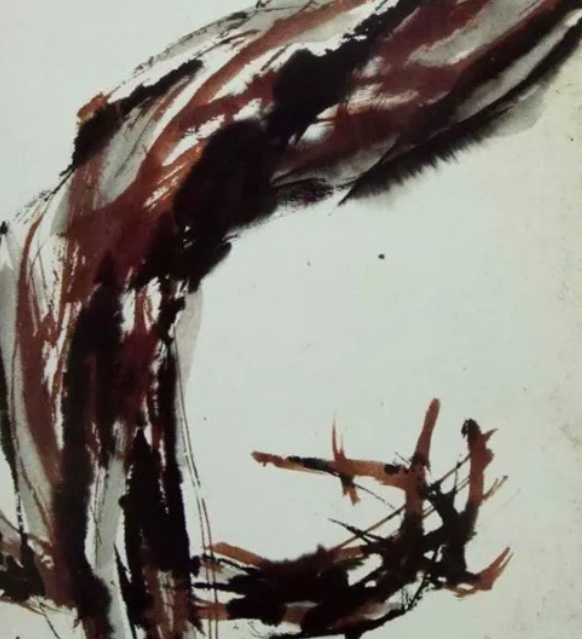
The trunk’s ink lines are clear and distinct, resembling a tree yet not quite a tree, as if constantly changing in the impermanence. At the bottom left of the tree, a branch twists and turns out, creating an S-shaped composition in the painting that is still in motion. The painting also uses color sparingly, with only a warm and friendly purple-brown color applied to the bird’s beak and the trunk.
This painting has a fascinating story behind it. It was created in 1982 during the filming of a movie in Sanhe, Sichuan. The painting captures an on-the-spot portrayal of a real-life scene. The artist used ink sparingly, treating it as if it were as precious as gold, while still showcasing his exceptional skills. At the time, the News Film Studio of China was producing a documentary exclusively about the artist, Master Yi Yungao (H.H. Dorje Chang Buddha III).
The cameramen and other observers witnessed a wild duck landing on a withered tree trunk. Master Yi Yungao quickly picked up his brush and swiftly completed the entire painting. By the time the wild duck took flight again, the painting had already been finished. Furthermore, the artistic mastery embodied in this artwork is extraordinary. It not only preserves the elegance, purity, and high-quality of traditional paintings but also introduces a new style—expressing the artistic conception of returning to original purity and simplicity. The artist, with an unfettered hand and mind, applies his most mature skills without the slightest attachment and with minimal, natural brushstrokes.
This masterpiece Chinese painting by H.H. Dorje Chang Buddha III is rich in literary atmosphere and varied in layers. It does not merely depict the external world, but rather it serves as a true manifestation of the inner spirit, transcending the natural material form to open up the world through the illumination of life’s spiritual light, reflecting the spiritual world. Appreciating the painting can reveal the pure world behind it, where everything, including the self, is forgotten, remaining untainted.
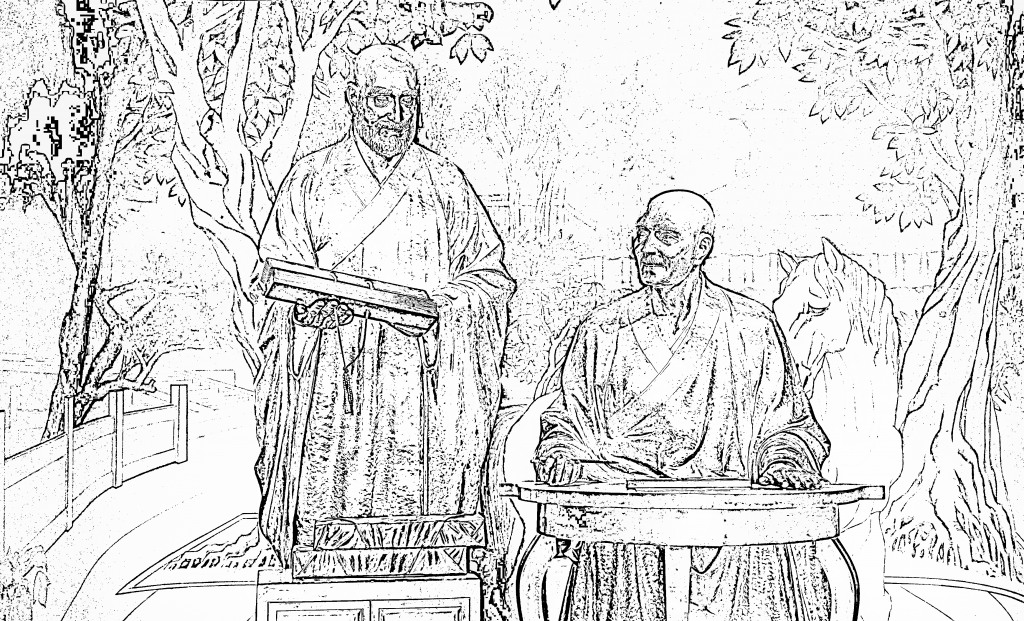
In 64 AD, Emperor Ming of the Eastern Han Dynasty sent Cai Yin and others on a mission to the Western Regions to retrieve Buddhist scriptures. The following year, in 65 AD, Cai Yin, Qin Jing, and others met the esteemed Indian monks She Moteng and Zhu Falan in Greater Yuezhi (present-day Afghanistan), where they were introduced to Buddhist scriptures and statues for the first time. In 67 AD, the Han envoy team returned to Luoyang with the high monks She Moteng, Zhu Falan, and the Buddhist scriptures and statues carried by a white horse. The two high monks were welcomed with a grand reception by Emperor Ming, who also commissioned the construction of China’s first temple, the White Horse Temple in Luoyang, especially for them.
White Horse Temple
On the first day of the first month in the fourteenth year of Yongping, Taoists from the Five Sacred Mountains submitted a petition requesting a competition with the Brahmin monks to determine the superiority of China’s native Taoism versus the foreign Buddhism. Emperor Ming granted the Taoists’ request. In 71 AD, a historic Buddhist-Taoist debate and contest unfolded in Chinese Buddhist history.
As the competition began, the Taoists said, “Let’s start with debating. You monks pride yourselves on eloquently explaining the Dharma, don’t you? So, let’s have a debate! If you can make one point, we will make two; if you raise one, we will counter with three. Go ahead and present your profound arguments!”
She Moteng slowly lifted one foot and raised it towards the sky, smiling, and said, “Amitabha, I have raised one, now it’s your turn to raise three!”
The Taoists looked at each other, stumped, and couldn’t think of a way to counter for a long time. They then changed the subject: “Let’s compare theories. You Buddhists call yourselves ‘Inner Learning,’ while you call us ‘Heterodox.’ But throughout history, when discussing inner and outer, inner has always been smaller than outer. So, your Inner Learning is small, and cannot compare to our great Heterodox!”
She Moteng brought his palms together in a gesture of respect and slowly explained: “The emperor resides in the inner palace, while the common people live in the outer city; although the inner palace is small, the emperor is great. The heart is inside the body, while the hands and feet are outside, the activity of the heart is boundless, while the movements of the hands and feet are limited. This is another example of how the inner is superior to the outer. Think carefully, the Inner Learning of Buddhism is much greater than the Heterodox!”
The Taoists, unable to win the debate, finally said, “Let’s compare magical powers!” How to compare? By placing the scriptures spoken by the Buddha and the scriptures spoken by the Taoist tradition together and burning them with fire. If one’s scriptures burn, then they are false; if one’s scriptures don’t burn, then they are true.
So, in the south of White Horse Temple, two high platforms were set up, one in the east and one in the west. The east platform held the Buddhist scriptures, images, and relics, while the west platform held the Taoist scriptures.
At that time, five hundred Taoist priests gathered the Taoist scriptures and magical texts together and prayed to the Supreme Lord Laozi, saying: “Oh, Taoist Virtuous Sage! Please show great divine power, and make our Taoist scriptures not burn, and let the Buddhist scriptures burn.”
Many of the Taoist priests at that time had supernatural powers – some could ride clouds and fog, some could fly in the sky and hide underground, and some could become invisible. Invisible means that you could see him right in front of you, and then suddenly he’s gone! There were Taoist priests with such abilities. They could use evasion techniques – Qimen Dunjia, to escape, and with Taoist spells and incantations, they had great supernatural powers.
But what happened when the fire was lit? The Buddhist scriptures did not burn; they emitted light! The Buddha’s relics also emitted a five-colored light, and the scriptures emitted light up into the sky, as if the sun was shining upon the world.
What about the Taoist scriptures? They caught fire as soon as they were burned and were completely destroyed by the fire. Those who could ride clouds and fog could no longer ride clouds or exhibit supernatural powers; those who could fly in the sky could no longer fly; those who could hide underground could no longer hide; those who could become invisible could no longer become invisible. Their spells and incantations also lost their effectiveness and had no power.
She Moteng and Zhu Falan, the two venerable monks, were responsible for overseeing this scripture contest, which was of great significance for the rise or fall of Buddhism. To strengthen the faith of the masses, She Moteng and Zhu Falan displayed eighteen divine transformations, levitating in the sky and reciting the following verses:
“The fox is not of the lion’s kind, a lamp is not as bright as the sun and moon; a pond cannot hold the vast sea, a hill cannot match the towering mountain. The Dharma cloud descends upon the world, the Dharma rain nourishes all beings. Supernatural powers are rare, manifesting everywhere to transform sentient beings.”
“The fox is not of the lion’s kind” means that, although the fox spirit is cunning and can change shape, it is far inferior to the lion. The fox and the lion cannot be compared; they are not of the same kind. This is saying that the breadth of Taoism is like the smallness of the fox, different from Buddhism, which has the grandeur of a lion.
“The lamp is not as bright as the sun and moon” refers to how the light of a lamp or a candle, which were small in the past, is far less bright than the light of the sun and moon. This means that the scriptures and teachings of Taoism are like the light of a lamp, while the Buddhist scriptures and teachings are like the light of the sun and moon, incomparable.
“A pond cannot hold the vast sea” means that a small pond has a limited capacity and can only hold a small amount of water, while the vast sea can accommodate many rivers. The pond and the sea cannot be spoken of in the same breath. This is a metaphor comparing the theories of Taoism to a small pond, while the teachings of Buddhism are like the vast and boundless sea.
“A hill cannot match the towering mountain” means that a small hill cannot compare to the grand and towering Mount Song, one of the Five Sacred Mountains of China. If the practice of Taoism is like a small hill, then the profound teachings of Buddhism are like the towering cliffs and deep ravines of ancient trees.
“The Dharma cloud descends upon the world, the Dharma rain nourishes all beings” means that when Buddhism spread to China, it was like a cloud of Dharma, like sweet dew, pervading the world and nourishing all beings.
“Supernatural powers are a rare thing” means that I have now shown supernatural powers, which is a rare and precious thing in the world.
“Everywhere transforming sentient beings” means that in reality, I did not want to show supernatural powers, and I did not want to compete with you. This is a last resort, for the purpose of guiding you and leading you to a brighter path, I am doing this as a convenient means.
After this contest, Buddhism took deep roots in China, not only producing a succession of talented individuals but also establishing a glorious foundation. White Horse Temple became the first and foremost temple in Chinese Buddhist history, and temples began to be built one after another. Ever since then the marvelous fruits and wondrous flowers of Chinese Buddhism have continued to flourish from generation to generation.
Some ancient structures were purposely and skillfully constructed at the riskiest of locations or sometimes just had their appearance altered to reflect a sense of danger and awe. These ancient buildings are so remarkable that even modern scientists are amazed and astounded by them.
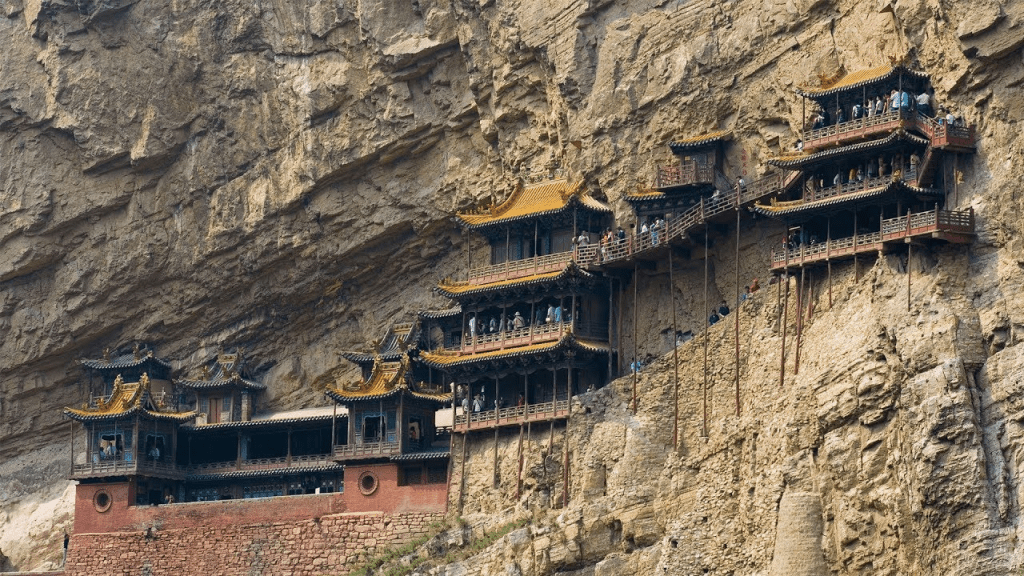
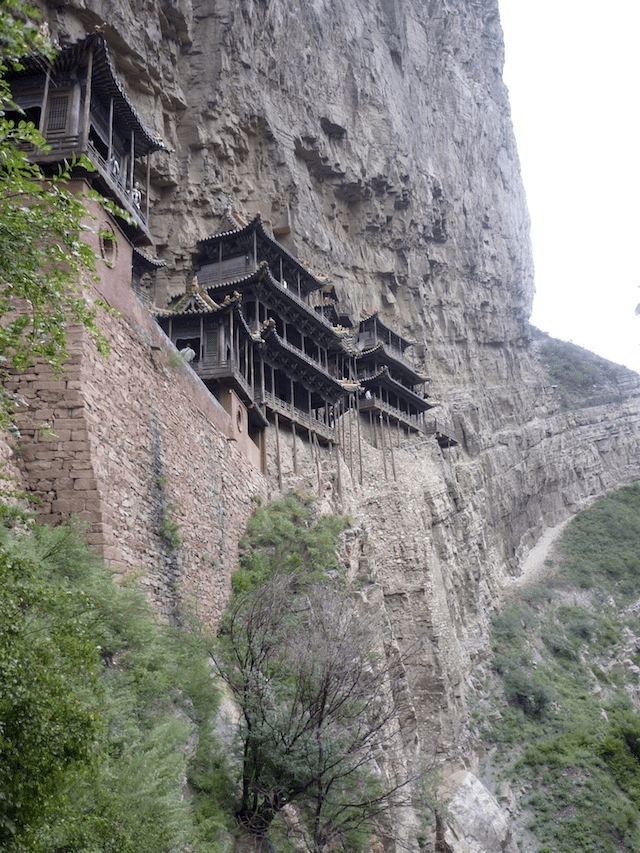
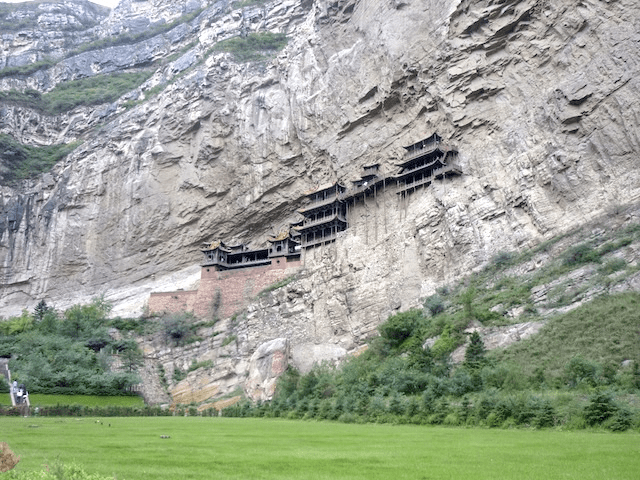
There are 10 most dangerous structures in the world, XuanKongSi Temple in China is one of them. Temples and monasteries were usually built on the ground, and if there was no money or it was necessary to hide from someone, then under the ground in caves. It seems impossible to think of anything else, but the temple tells us otherwise. It turns out that in one of the northern provinces of China, there is a so-called Hanging Temple which seems to be attached to the Rock at a height of 75 meters. It was built almost 1500 years ago in 491 during the northern Wei Dynasty. The Chinese call this Temple complex XuanKongSi.
The temple is located in Shanxi Province, 65 kilometers southeast of the city of Datang, it looks as if the entire Temple is held up on a steep Cliff by the power of Prayer. Perhaps prayers help because the temple is unique; it is the only Temple of three religions in China. It combines Buddhist, Taoist, and Confucian altars. It has everything that other temples have: the main gate, the bells, and drum Towers, the main and side Halls. The largest structure of the monastery is called sangana, and it stands on a stone ledge. There are also 40 halls in Pavilions, but they are smaller than the sangana. They are built on pallets that lie on beams hammered into the Rocks. The rock is used as the back wall of the rooms, and niches are made in it for statues. The larger the niches, the more statues they contain, and the larger they are.
Upon first glance, the temple’s buildings seem to have been partially swallowed by an expanding mountain rather than built onto and into it. Some of the pathways that connect the separate buildings are hewn into the mountain. Others feature the same design as the buildings themselves – parked atop seemingly impossibly-thin wooden poles.
It is composed of three main sections:
North Pavilion
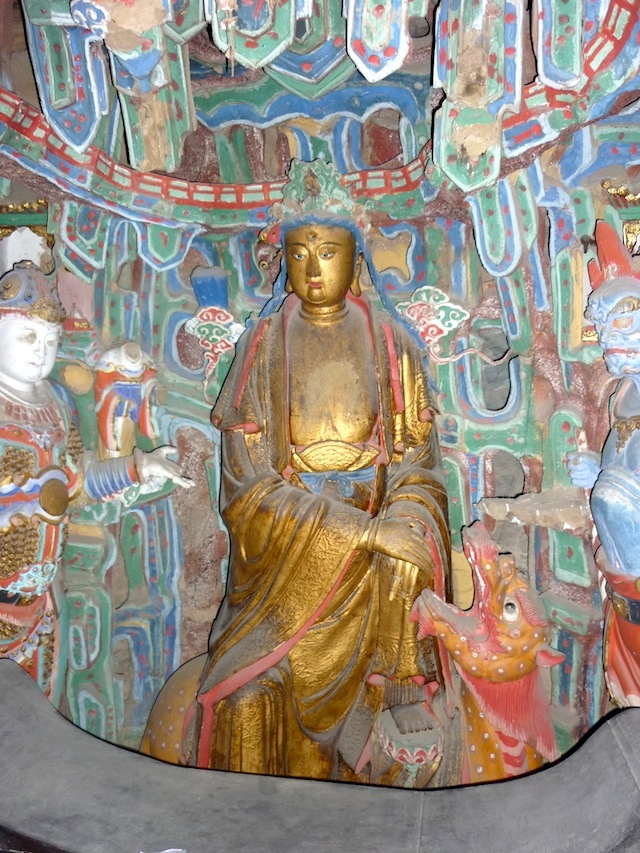
This pavilion is three storeys tall, 4 metres (13 feet) wide and 7 metres (23 feet) in length. Wufo Hall, which is located on the lowest floor is dedicated to the Five Dhyani Buddhas. Above it is Guanyin Hall and on the top storey is Sanjiao Hall. Sanjiao Hall, or the Hall of the Three Religions is widely regarded as the most important room in the Hanging Temple, at least in terms of symbology. It contains large statues of Buddha Shakyamuni, Lao-Tze and Confucius standing together.
SanJiao Hall
Given that the Hanging Temple is the only surviving example of the concept of the Three Teachings Harmonious as One, the Hall of Three Religions is perhaps the most important of these chambers. The idea of Three Teachings Harmonious as One, which emphasises the complementary nature and unifying ideas of Buddhism, Taoism and Confucianism, flourished during the Ming and Qing Dynasties.
Accordingly, the hall features sculptures of deities of all three religions. Three large statues take centre stage here: Buddha Shakyamuni in the middle, flanked by Lao-Tze on his left and Confucius on his right.
GuanYin Hall
South Pavilion
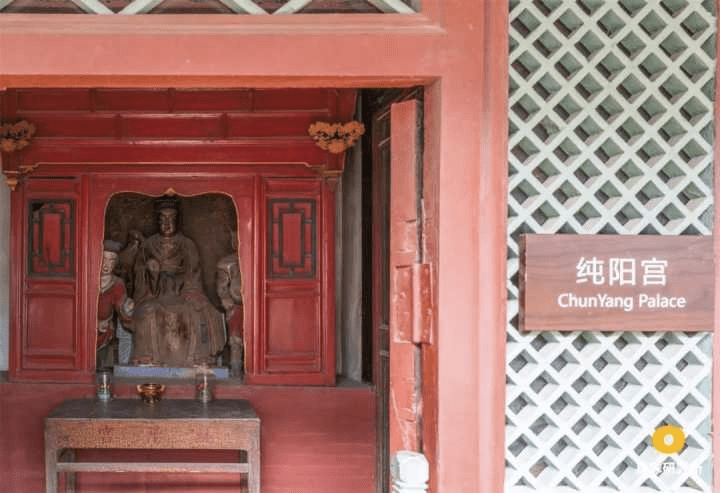
Slightly larger than the North Pavilion, it is also three storeys tall and 4 metres wide but longer at 8 meters (26 feet). The North Pavilion contains Sanguan Hall. It is the biggest hall of the Hanging Temple and is home to a 2-metre tall clay sculpture, the largest in the complex. On the middle storey is Chunyang Palace, which is dedicated to Lü Dongbin, one of the Eight Immortals of Taoism. He is the most popular Taoist character in Chinese culture. Leiyin Hall, which is dedicated to Buddhist deities is on the top storey.
The Long Bridge
The top storeys of the two pavilions are linked by a 10-metre (30 feet) bridge (a stairway has been cut into the mountainside to link the lowest storeys). A small balcony for worshipping sits above the bridge.
However, as impressive as the Hanging Temple appears from the outside, the bulk of the builders’ efforts went into the portion of the complex that is ensconced within the rock. 40 halls and pavilions lie inside, covering an area of 125 m2.
The biggest and most prominent halls are the Hall of Three Religions, Guanyin (Avalokiteshvara) Hall, Hall of Shakyamuni, Qielan Hall (Hall of Sangharama), Sanguan Hall (Hall of the Three Officials) and Chunyang Hall.
Spread throughout the other halls are 78 sculptures made from stone, terracotta, copper and iron. They are remarkable for their vivid and detailed depiction of facial features and clothing.
Construction
Despite its precarious location and the logistical challenges construction must have presented, no design feature that is seen in other temples of the period has been spared. The two main buildings sport traditional multiple-roof designs, eaves and balconies with images of auspicious creatures like dragons common to Chinese holy structures.
Today, the part of the temple that extends beyond the face of the cliff is supported by poles made of oak. These poles have been inserted into holes chiselled out of the rock. From a distance, the brown oaken poles meld into the background, making the temple appear to float in the air.
Amazingly, the real support framework for the temple complex is hidden within the mountain and the structure itself. If these external vertical poles were removed, the hanging temple would continue to hang!
While it’s impossible to overlook the fact that the architecture disrupts the natural rock wall formation, a closer examination reveals something quite astounding. The way the roof, walls, and other structures seamlessly integrate with the rock pattern suggests that significant care and effort were put into minimizing any unnecessary destruction.
A unique mechanical theory guided the construction of the framework. Crossbeams were partially inserted into the rock as the foundation, while the rock in the back provided support. The Hanging Monastery seems to defy gravity, appearing to float in midair.
At certain points, a roof will abruptly end at an outcrop, only to resume on the other side, leaving the stone intact. This not only benefits the structural integrity of the building but also signifies a harmony with nature, a state to which all Buddhists aspire.
Construction experts from countries including Britain, Germany, and Italy have visited the monastery. In their opinion, the Hanging Monastery, which melds mechanics, aesthetics, and Buddhism, is a rarity. The monastery and everything it represents is a significant cultural achievement of the Chinese people.
In my eyes, Yunnan Province is the most beautiful province in China. Its mild climate throughout the four seasons and its unique geographical location give Yunnan breathtaking natural scenery. The numerous ethnic minorities in Yunnan add to its diverse cultural customs. Yunnan is both romantic and passionately exotic, yet also elegant and graceful. It is truly charming and enchanting. Jizu Mountain is one of my favorite places there.
Mount Jizu (Chicken-foot Mountain) is situated in Dali Prefecture. The mountain is located to the northeast of Erhai and forms the tripoint of three counties: Heqing, Binchuan, and Dali City. With three mountain ranges to the front and one range to the rear, it resembles a chicken’s foot, hence its common name is Mount Cock’s Foot or Mt. Cock’s Claw. Yet another name for this mountain is Nine Strata Cliffs.
Mount Jizu is a famed holy mountain in Buddhism. Its main peak, Tianzhu Peak, rises some 3,240 metres above sea level. The mountain is vegetated with dense forests and bamboo groves.
From it, visitors can see the sunrise in the east, floating clouds to the south, Cangshan Mountain to the west and Jade Dragon Snow Mountain in the north. They are described as the “four wonders seen from the mountain top.”
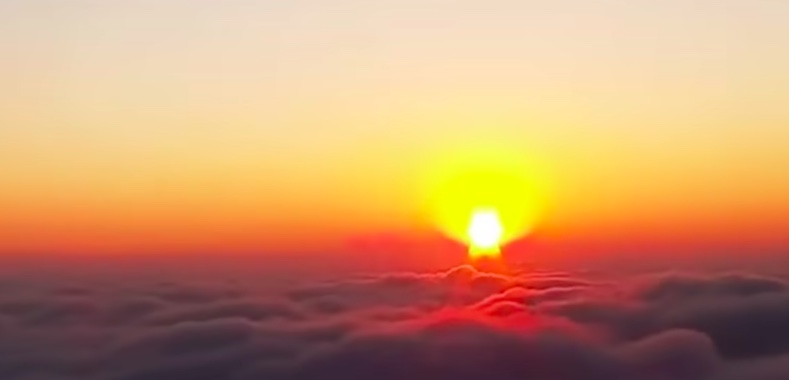
The best viewing spot for the four wonders of Jizu Mountain is at its highest point, the Golden Top Temple. The view from the temple is wide and open, with visibility for more than ten kilometers. Watching the sunrise in the east is the king of the four wonders. Early winter mornings are the best season to witness the sunrise, as the reduced moisture increases visibility.
Before dawn in winter, the stars in the sky gradually dim, and the eastern horizon begins to whiten. A hint of orange appears on the just-yellowing horizon. In just a few minutes, the orange-red sun leaps above the horizon, and its dazzling rays spread across the entire landscape. If there are rolling clouds, they turn into a dazzling orange-red color within seconds. The sun’s rays, like an arrow carrying a force of ten thousand pounds, fly straight at everyone. In an instant, a huge spark bursts open in one’s heart. The ruddy morning sun is so bright that it’s hard to keep one’s eyes open. However, once you get used to it, the earth has already begun to revive, welcoming a new day in the dawn.
The best season to view the silver Cangshan and jade Erhai from the west is still in winter and spring. In these two seasons, snow accumulates on the peaks of Cangshan. Looking west from Golden Top Temple, you’ll see the plateau’s pearl, Erhai Lake, which runs between the mountains and valleys, reflecting silver waves. It’s as if pearls are dancing on the water’s surface. At the place where the water meets the mountains, you’ll find the nineteen peaks of Cangshan neatly arranged. The pure white snow on the mountain peaks becomes even more noble silver under the sunlight. The mountains and the sea echo each other, with the mountains towering and magnificent, and the water soft and charming. This is a masterpiece of beauty that cannot be drawn!
The best time to view the colorful clouds from the south is in the evening when the sun is about to set. Try to choose a time when the clouds are most densely gathered. Standing at the Golden Top Temple and looking south, you’ll see the undulating mountains covered in mist, which either wraps around or disperses in clouds, drifting freely in the blue sky, transforming into various shapes. The afterglow of the setting sun is scattered among the light and leisurely drifting clouds, blooming with a burst of colorful brilliance!
Jade Dragon refers to the “Jade Dragon Snow Mountain,” whose peak is covered in snow all year round, so it can be viewed at any time. Looking north from the Golden Top Temple, the snow-capped mountains stretching for dozens of miles look like an outstretched dragon, crystal clear as jade, pure white and flawless, without a speck of dust.
There are some other scenic views of Jizu Mountain that appear at different times and moments, unique to Jizu Mountain. Every year in the summer and autumn rainy season, sudden storms suddenly stop, and the surrounding mountains are still in the mist, except for a part of the clouds above Jinding Temple which disperse and sunlight reappears. At this time, a circle of seven-colored light circles surrounds Jinding Temple, which is one of the Eight Scenic Views, known as “Tianzhu Buddha Light.” Similarly, during the summer and autumn rainy season, Jizu Mountain sometimes experiences strong winds, thunderous sounds, flashes of lightning, and heavy rain in the valleys. However, Huashou Gate, located under Tianzhu Peak and below the Sheshen Cliff, is still clear and sunny. The sound of thunder echoes here and lingers for a long time. This is the famous “Huashou Qing Lei.”
The most abundant trees on Jizu Mountain are “pine and oak.” These trees come together to form a vast forest.
Whether you look from a distance or up close, the “forest sea” of Jizu Mountain stretches for dozens of kilometers, from the mountain peak to the valley, casting shadows with its pine trees. The forest is deep and lush, and when the wind, whether gentle or strong, blows through, the leaves rustle, creating music reminiscent of the thunderous galloping of a thousand horses. Sitting in the mountain and quietly listening to this has a special charm. This landscape is known as “Wan He Song Tao”.
There are more beautiful scenic views waiting for you to explore.
Besides the beautiful scenery, Jizu mountain is a legendary buddhist holy place.
According to Buddhist scriptures, in ancient times, Shakyamuni Buddha demonstrated to the assembly at the Lingshan Meeting by holding up a flower, and everyone remained silent. Only Venerable Mahakasyapa deeply understood the Buddha’s intention and broke into a faint smile. The Buddha said, “I have the true Dharma eye treasury, the wondrous heart of Nirvana, which I entrust to you.” He also told Mahakasyapa that he would pass on the kasaya robe to him, which would then be transferred to Maitreya when he appears in the world. Venerable Mahakasyapa bowed to the Buddha’s feet and respectfully followed the Buddha’s intention. After the Buddha’s Nirvana, Venerable Mahakasyapa gathered the true Dharma three treasures in the city of Vaishali. He later entrusted the true Dharma three treasures to Ananda and went to Jizu Mountain alone, holding the kasaya robe given to him by the Buddha. He entered meditation at the Huashoumen.
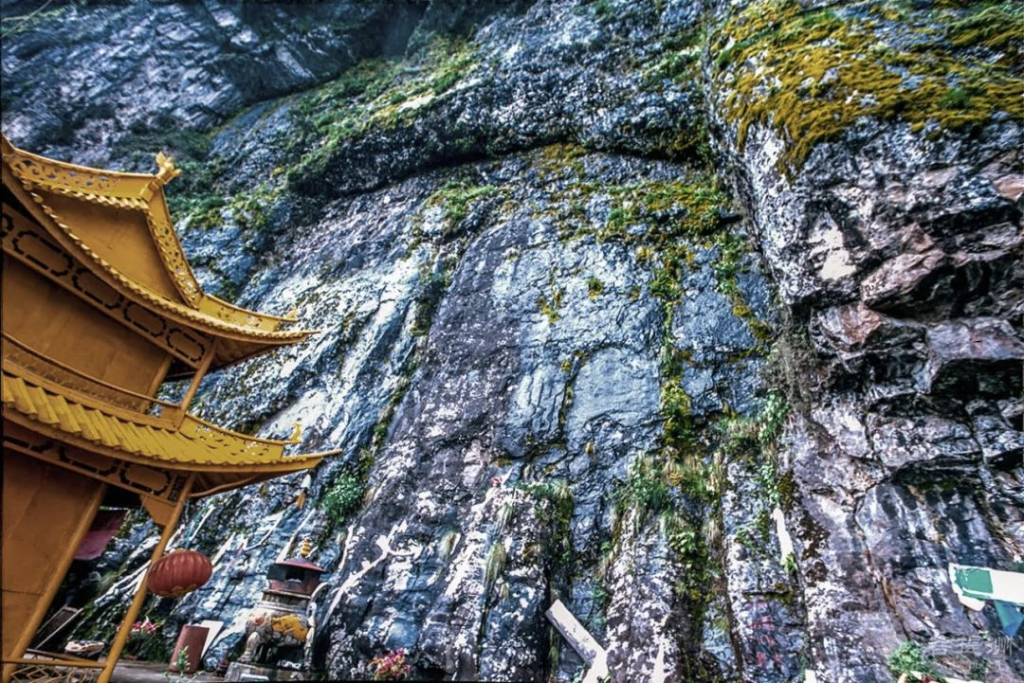
Huashou Gate is 40 meters high, with a sheer cliff face as if cut with a knife. A large stone gate is embedded at the top, and a vertical crack in the middle divides the cliff into two panels, with a “stone lock” hanging in the middle. The stone gate is covered with Hada (ceremonial scarves), and there are prayer flags around it. With an altitude of nearly 3000 meters, the landscape is very similar to that of Tibet.
When Maitreya Buddha is born in this world, he will also climb Jizu Mountain and go to the place where Venerable Mahakasyapa meditated. With a snap of his fingers, the mountain peak will open, and Mahakasyapa will pass on the robe and say his farewell. After the respectful ceremony, he will ascend into the sky, display divine transformations, and enter nirvana.
From the Buddhist scriptures, it can be seen that Jizu Mountain is the place where Venerable Mahakasyapa meditated, and it is also the future place of Maitreya. Its connection with Buddhism will never be severed for billions and trillions of years.
Jizu Mountain’s religious story stretches back nearly 1,000 years. Beginning during the Three Kingdoms period, several nunneries were built upon its slopes. But it was not until the time of the Tang Dynasty, four hundred years later, that the first known Buddhist temple was completed.
Throughout the following centuries, the construction of many other shrines and sanctuaries continued. By the late seventeenth century, during the Qing Dynasty, Jizu Mountain’s religious importance reach its zenith. At that point, according to official historical accounts, there were 42 temples and monasteries, 65 separate nunneries and more than 5,000 religious devotees residing on the mountain.
The mountain enjoys great prestige in South Asia and Southeast Asia, and shares the same fame with Wutai Mountain, Ermei Mountain, Putuo Mountain and Jiuhua Mountain in China. The mountain is a birthplace for Zen Buddhism.
The main sacred sites of Jizu Mountain include: Zhusheng Temple, Huashou Gate, Jinding Temple, Bronze Buddha Hall, Mahakasyapa Hall, Xuyun Zen Temple, Biyun Temple, Huashou Fangguang Temple, etc.
Jinding Temple
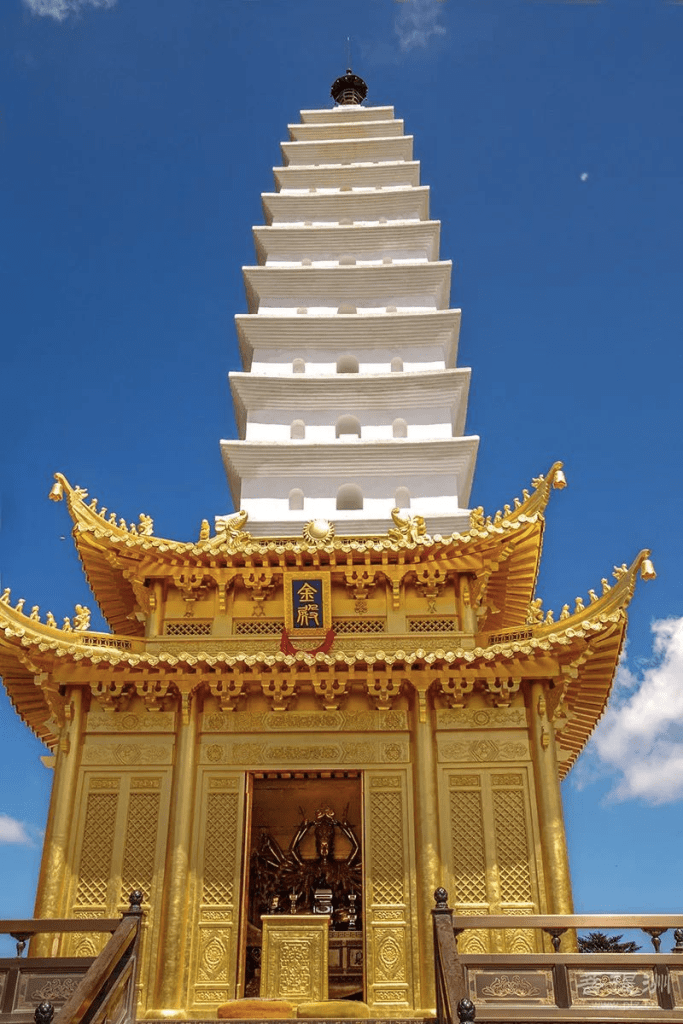
Golden Hall at Jinding Temple and LengYan Pagoda
The front entrance of Jinding Temple is typical Baizhu architecture style
Mahakasyapa Hall
From a high vantage point, the Mahakasyapa (Jia Ye) Hall is hidden among the lush green pines and cypresses in the depths of white clouds.
The Mahakasyapa Hall’s main hall houses a statue of the venerable Mahakasyapa, which is carved from camphor wood
Shallow men believe in luck.Strong men believe in cause and effect.” -Ralph Waldo Emerson
My grandmother was a woman of few words but very hardworking and resilient. I remember she once told me “Not to be afraid of being taken advantage of because suffering a loss is a blessing. What you are supposed to receive, Heaven will provide.” I didn’t understand my grandmother’s words at first, but as I grew older and gained life experience, I came to understand her wisdom.
I remember just after graduating from college, a TV company asked me to host a special program. The director of the program liked my writing and asked me to be a scriptwriter as well. However, when the program was finished and it was time to get paid, the director not only didn’t give me the scriptwriting fee but also deducted half of my hosting fee. He handed me a receipt and said, “You should be paid for $1600, but I can only give you $800 because the program is over budget.”
At that time, I didn’t say anything, signed it, and thought to myself, “Revenge is a dish best served cold.”
Later, the director asked me to help him a few more times, and I did.
The last time, he didn’t deduct any money and became very polite to me because by then I had been noticed by the news department of the TV station and suddenly became a TV reporter and news anchor.
We later often met at the company, and he always looked a bit embarrassed when he saw me.
I once thought about telling the boss about what he did to me before, but just as my grandma said, would I have what I have today without him? If I hadn’t held my breath at that time, would I have had the opportunity to continue hosting?
The opportunity was given by him; he was my benefactor. He already knew he was wrong, so why should I retaliate?
Later, I went to study in the United States.
One day, a classmate who had already found a job complained to me about his boss “exploiting” him, not only giving him a low salary but also deliberately delaying his green card application.
At that time, I said to him: Such a bad boss is not worth working for. But you can’t work for free for so long, you have to learn something, then change jobs, so you have to learn secretly.
He listened to my words, and not only worked overtime every day but also stayed behind to memorize the writing of those business documents.
He even took notes on how to repair the copier, standing next to the workers, so that one day when he went out to start his own business, he could save some repair fees.
After half a year, I asked him if he was going to change jobs?
He smiled: No need! My boss now looks at me with new eyes, has been promoted, got a raise, and even asked me why my attitude changed 180 degrees and became so positive?
His dissatisfaction disappeared, he took revenge, but in a different way, and he also reflected on himself, realizing that he was not working hard at the time.
It was about five years ago when I came across an interesting incident.
A friend of mine suddenly took a keen interest in fortune-telling, studying everything from Bazi (Chinese astrology), naming studies, to astrology, all to prove that fortune-telling was a scam.
The reason was that a master had told his fortune, predicting that he would not live past 47. He swore to discredit the master’s reputation. Guess what happened? The more he learned, the more scared he became, because he realized that his own predictions for himself also indicated a short life.
At that point, he changed. He started doing charity work, thinking, “Since I won’t live long, I might as well make the most of the time I have left and do something meaningful.”
He threw himself into it wholeheartedly. Everyone said he had changed, from an anxious and opportunistic petty person to a kind and gentle gentleman.
Unbeknownst to him, he passed 47, then 48, and is now 53, healthy and full of life, healthier than anyone else.
“You can go smash that master’s sign now!” I joked with him one day.
His eyes lit up, and he asked me, “Why?” Then he laughed, “If it wasn’t for his warning, given my previous personality, I would indeed have had a heart attack by the age of 47. He wasn’t wrong!”
My friends, do you like to show off and be ruthless? Are you always harboring grudges? Do you have the resentment of “a gentleman takes revenge; it is never too late”?
Please think about these stories.
You should know that enemies and adversaries can stimulate your potential and become your benefactors.
You should also know that many grudges, grievances, and dissatisfaction actually stem from your own issues.
You should further know that the best revenge in this world is to use that dissatisfaction to propel yourself towards success, and to treat your past enemies with the magnanimity that comes with that success and the success that follows.
Isn’t turning “a cycle of vengeance that never ends” into “a win-win situation where past grievances are forgotten with a smile” the greatest success in life?
Nestled in the depths of Yanmen Mountain in Shanxi, the ancient Yanmenguan Pass stands as a solitary testament to history, dating back some 2,000 years. This once invincible guardian of the frontier, which served as a formidable defense along the boundary, now seems like a wise old man, eager to share tales of its storied past.
Located 12 miles (19 kilometers) north of Daixian County, in Shanxi Province, Yanmenguan Pass is one of the three notable passes of the Inner Great Wall, alongside Ningwu Pass and Pianguan Pass.
The region’s history can be traced back to the Spring and Autumn Period (770 BC – 476 BC), when King Wuling of Zhao State first established Yanmen County here. During the reign of Emperor Qin Shi Huang (259 – 210 BC), orders were given to construct Yanmen Pass as a fortification against the northern tribes, sparking centuries of fierce battles for control.
In the Northern Song Dynasty (960 – 1127), the famous Yang family warriors, including female members, were stationed at the pass to defend against invasions from the Qidan troops of the northern prairies. Statues of some of these legendary figures can be seen lining the entrance path of the scenic area.
The structure of the pass includes a pass city, a barbican, and an enclosing wall. Nestled between two rolling hills, the pass city stands at a height of 30 feet (nine meters) and spans a perimeter of 1,100 miles (1,006 meters). Extending from the east and west wings of the pass city, the enclosing wall measures over three miles (five kilometers) in length and is punctuated with beacon towers. The barbican was constructed outside the northern gate of the pass city.
A Uniquely Designed Military Stronghold
The northern gate of the pass, Di Li Gate, boasts a barbican that forms a double defense line. Unlike most barbicans, the entrance door is situated on the east wall instead of the front, exposing potential invaders from two sides. Another distinctive feature is that Tian Xi’an Gate, which opens to the central plain, is not directly aligned with Di Li Gate. It is located at the northeast corner of the pass, while the area directly opposite Di Li Gate is a false lead, leading to a secluded mountain area with no walkable path, only dense trees, knee-high grass, and wild beasts.
Behind Di Li Gate lies a large reservoir with military potential. In case of a breach, defenders could break the dam to flood the invading forces. Additionally, a pagoda stands on the northern slope of the enclosing wall, occupying the highest point of the area at an altitude of 5,968 feet (1,819 meters). This strategic location served as an ideal command post, offering a commanding view of the entire area.
Yanmenguan was renowned for its strategic significance and legendary wars, having witnessed over 1,000 skirmishes and 140 significant battles throughout history. Since the era of the Zhao State during the Warring States period, every dynasty has recognized the importance of Yanmenguan’s defensive position. It has always been a border gateway marked by fierce conflict and integration between farming and nomadic peoples.
However, amidst the echoes of past battles, a story of peace and kindness emerges through the figure of Wang Zhaojun, one of the “Four Great Beauties” of ancient China. Two thousand years ago, she passed through Yanmenguan as an envoy of peace between China and the Xiongnu.
In 33 B.C., after over a century of conflict with the Xiongnu in the north, the Han Dynasty had grown stronger under Emperor Yuan, while the southern Xiongnu had weakened. The people longed for stability, and to establish friendly relations with the Han Dynasty, Chanyu Huhanye, the Monarch of the Xiongnu, visited Chang’an to meet Emperor Yuan.
Wang Zhaojun, born in 51 BC near the beautiful Xiangxi River at the foot of Jingchu Mountain, traveled to the bustling capital Chang’an in 38 BC after being chosen as a maid for the Imperial Palace. Customarily, the Emperor selected maids based on their portraits, and Wang, likened to a phoenix, was so pure that she didn’t need to bribe the artist Mao Yanshou, unlike the other maids. Mao, however, deliberately created an unflattering portrait of her, relegating her to the role of an ordinary maid with chores in the palace’s corners. Despite the cold treatment and challenging tasks, this adversity served to strengthen her mentally and physically, perhaps as a divine preparation for her destiny.
As a court lady in waiting, Wang Zhaojun was chosen for the marriage. When the matron of the harem presented her unflattering portrait to the Emperor, he merely glanced at it and approved. But upon seeing her in person, her beauty and grace astonished the Emperor, the monarch, and the ministers. Huhanye was overjoyed and vowed to maintain peace along the frontier.
Wang Zhaojun followed the Emperor’s orders, becoming a symbol of peace through her marriage to the Xiongnu. She was honored with the title “Ninghu Yanzhi,” meaning queen who could bring peace to the Xiongnu. Subsequently, she devoted her life to maintaining stability along the Han-Xiongnu border and promoting Han culture.
Two thousand years ago, the Huns led a nomadic life in the harsh northern deserts, lagging behind the more advanced Han Dynasty. As Wang Zhaojun traveled to Xiongnu, she observed the stark contrast between the desolation of the north and the prosperity of Chang’an.
After crossing Yanmenguan, her hometown of Jingchu and the Han palace in Chang’an seemed far away, leading to feelings of homesickness. Playing a sorrowful melody on her pipa (Chinese lute), she captured the attention of a flock of geese flying overhead. So captivated were they by the beautiful music and the sight of the graceful woman on horseback that they forgot to flap their wings and fell to the ground. This incident gave rise to the saying that Wang Zhaojun’s beauty was so captivating that it made geese fall to the ground. Wang Zhaojun’s role in fostering harmony through her marriage and contributing to a peaceful border region exemplifies the traditional Chinese cultural value of “harmony.”
After arriving in Xiongnu, Zhaojun faced a challenging living environment and vastly different customs. Nevertheless, she steadfastly adhered to her mission, set aside her homesickness, and courageously, persistently, and compassionately integrated into the Hun’s lifestyle. She transformed from an ordinary Han palace maid to a virtuous and kind Queen of the Xiongnu, assisting the monarch across two generations.
She urged the monarch to cease hostilities and introduced Han’s advanced cultural etiquette system to the Hun people. Moreover, she taught them to cultivate millet and hemp, rear domestic animals, weave cloth, and dig wells. Consequently, the beacons and wars along the frontier ceased, and a scene of “wind blowing through the grass and cattle and sheep grazing” emerged, allowing the people to live peaceful and prosperous lives.
Wang Zhaojun’s role in fostering harmony through her marriage and contributing to a peaceful border region exemplifies the traditional Chinese cultural value of “harmony.” The ethereal Wang Zhaojun lived up to the expectations of the Han Dynasty, resolved the conflict between the Han Dynasty and the Xiongnu, and propagated Han culture. Her accomplishments have become beacons of inspiration for future generations.
Instrumental in establishing peace and prosperity along the Han-Xiongnu border for half a century, she earned the love and respect of the people of her time and those of future generations. In her honor, the Huns constructed ‘The Tomb of Wang Zhaojun’ near the bank of the Big Black River. In the northern desert, she was revered as a Goddess sent by Heaven to assist the Xiongnu. It was said that there would be plentiful water and lush grass wherever she passed.
(Image: Yaliga Ba via Dreamstime)
Today, as I reflect on this beautiful and strong woman, I can’t help but feel deeply moved. In the present world, we have extremely advanced technology, but it seems that people’s moral standards and the level of civilization have not been correspondingly enhanced. I earnestly hope that modern people can resolve national, racial, and regional contradictions and conflicts through peaceful means, and avoid resorting to war, violence, and terror, as these can only bring disaster and trauma to humanity and the planet.
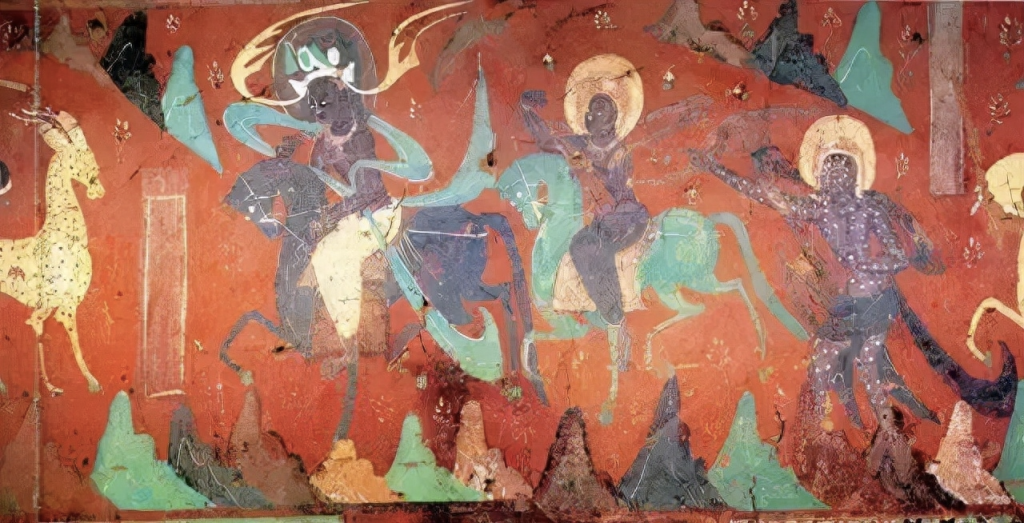
“The Story of the Nine-Colored Deer King” is the main theme of the murals in Cave 257 of the Mogao Caves. It unfolds in a long horizontal scroll, narrating many stories from the past life of the founder of Buddhism, Siddhartha Gautama.
Legend has it that long ago, on the banks of the Ganges River in India, there lived a beautiful and kind nine-colored deer king (the previous incarnation of Siddhartha Gautama)…
One day, as the nine-colored deer king was leisurely strolling by the river, he suddenly heard a pitiful cry from the water. Without hesitation, the brave nine-colored deer leaped into the river, risking its own safety, and rescued the drowning person. The saved individual, overwhelmed with gratitude for a second chance at life, repeatedly bowed in thanks to the nine-colored deer.
The nine-colored deer king said, “No need for thanks; just go on your way. My only request is that you do not reveal my whereabouts to anyone.” The drowning person solemnly swore, “Kind benefactor, rest assured. If I ever betray this promise, may my body be covered in sores and my mouth emit a foul odor.” With that, the person departed.
Before long, the queen of that country dreamt of a deer—one with nine colors and silver-like antlers. She told the king about her dream and requested that he order the capture of such a deer. She had a strong desire to use its colorful hide for clothing and its antlers for earrings. Consequently, the king issued a proclamation and offered a substantial reward.
Upon seeing the proclamation, the person who had been saved reported to the king, leading soldiers to the mountain to hunt down the nine-colored deer.
When the nine-colored deer was surrounded by the king’s troops… it spotted the person it had rescued from drowning, tears of sorrow welled up in its eyes…
The nine-colored deer leaped in front of the king and recounted the story of how it had saved the person from drowning and how that person had broken his promise. The king and the soldiers were deeply moved by the deer’s account. The king ordered the soldiers to clear a path, allowing the nine-colored deer to regain its freedom. He also issued a decree: “From now on, people are not allowed to shoot deer.”
As for the person who had broken his promise, in an instant, sores covered his body, and a foul odor emanated from his mouth. From that moment on, he was despised and reviled by the people.
The story of the nine-colored deer is vividly portrayed in Cave 257 of the Dunhuang Grottoes, which is what we now see as “The Story of the Nine-Colored Deer King.” While the mural is not particularly large in size, it holds significant importance in Chinese art history.
This artwork takes the form of a horizontal scroll with the story unfolding from both ends and converging in the middle. It consists of multiple scenes depicting various stages of the story, such as its origin, development, climax, and conclusion, all seamlessly connected to create a cohesive narrative.
“The Story of the Nine-Colored Deer King” is composed of nine panels, illustrating five key plot points: the person drowning, the nine-colored deer rescuing the drowning person, the drowning person expressing gratitude to the deer, the queen’s desire to capture the deer, the informant revealing the deer’s whereabouts to the king, and the confrontation between the king and the deer.
The story progresses from both ends of the mural towards the center, placing the pivotal conversation between the king and the deer in the middle. This unique composition style captures the essence of continuous horizontal scroll art from the Wei and Jin dynasties, showcasing the distinctive historical aesthetics of the era.
In the artwork, the depiction of mountains, rocks, and rivers occupies a significant portion. The rendering of the landscape primarily serves to fill the space and delineate the composition, providing a brief description of the specific environment, thereby enhancing the visual impact of the artwork and its storytelling function.
“The Story of the Nine-Colored Deer King” places the climax of the story—the moment when the nine-colored deer recounts the events—at the center of the composition. At the same time, both nine-colored deer on the left and right sides turn their bodies toward the center, serving as visual guides.
This is precisely the turning point in the storyline of the nine-colored deer, where the drowning person’s affliction receives its retribution. It places the Buddhist concept of rewarding goodness and punishing evil at the visual forefront, narrating the sequence of events step by step to gradually reveal the story’s progression to the viewer.
The entire process is rhythmic, marked by the ebb and flow of the narrative, skillfully aligning the chronological order with the spatial arrangement, showcasing the artist’s unique conceptualization of the composition.
In terms of color usage, “The Story of the Nine-Colored Deer King” appears to be very vibrant, but in reality, it uses a limited color palette, consisting of only six colors. The earthy red color dominates the entire painting, which is a prominent color characteristic of the Wei, Jin, Northern and Southern Dynasties period.
Complementing this are touches of stone blue and stone green, along with the harmonious blending of black, white, and gray. This blending softens the strong contrast between earthy red and stone green and blue, achieving a harmonious contrast of warm and cool tones. At the same time, it also accentuates the brightness of contrasting colors.
The introduction of Buddhism had a significant impact on the development of portraiture in China, introducing a set of strict conventions for Buddhist iconography. During the Northern Wei dynasty, the Dunhuang murals began to emphasize body proportions and adopted more attention to three-dimensionality after incorporating color shading techniques.
In “The Story of the Nine-Colored Deer King,” most of the figures on the canvas have slender bodies, with their clothing belts fluttering in the wind. Their gestures and movements exude a graceful dance-like elegance, evoking the style of figures that “float like wandering dragons and are delicate as startled swans.”
In the murals of the Northern Wei period in Dunhuang, Jataka stories are an important theme. Jataka stories refer to the countless events and experiences in the past lives of Siddhartha Gautama, who would later become the founder of Buddhism. In history, there are numerous Jataka stories related to Siddhartha Gautama.
Within Buddhist art themes, there are many Jataka story paintings, and “The Story of the Nine-Colored Deer King” is just one of them. Story paintings are used to promote the Buddhist concept of karmic retribution and to praise the spirit of self-sacrifice displayed by the Nine-Colored Deer King.
In reality, all Jataka paintings ultimately convey one message: that by performing good deeds, selflessly giving, and enduring hardships, one can achieve positive outcomes, whereas engaging in wrongful actions will lead to self-destruction.
The recent Asian Games held in Hangzhou, China, brought the world’s attention to a spectacular opening ceremony that dazzled the senses. It was a momentous occasion that reminded me of Hangzhou’s unique charm—a city that effortlessly blends history, culture, and breathtaking natural beauty. In this blog post, I am trying to introduce some Hangzhou’s rich history, cultural significance, and the enchanting West Lake that graces this remarkable destination.
Hangzhou’s historical significance dates back over a thousand years. As the capital of the Southern Song Dynasty (1127-1279), it was the political, economic, and cultural center of ancient China. The city’s past is vividly reflected in its well-preserved landmarks, such as the Grand Canal, which was once the world’s busiest and longest artificial waterway. The canal played a pivotal role in facilitating trade and cultural exchange between northern and southern China.
Hangzhou’s cultural heritage is as rich as its history. The city is celebrated for its pivotal role in nurturing Chinese art, literature, and philosophy. It is home to numerous temples, museums, and historical sites. One of the most iconic landmarks is the Six Harmonies Pagoda, which offers breathtaking views of the Qiantang River. Additionally, Hangzhou is renowned for its tea culture, with the world-famous Longjing (Dragon Well) tea originating from the lush plantations that surround the West Lake.
The West Lake, or Xi Hu in Chinese, is Hangzhou’s crown jewel, a UNESCO World Heritage Site that captivates visitors with its picturesque beauty. Surrounded by lush hills, willow-lined pathways, and charming pagodas, the lake’s serenity has been an inspiration to poets, artists, and philosophers for centuries. Its natural allure changes with the seasons, making it a destination worth visiting year-round.
Highlights of the West Lake
Leifeng Pagoda, perched atop Sunset Hill, is a historical gem that offers sweeping vistas of the West Lake. As the sun gracefully descends below the horizon, this iconic pagoda bathes the lake in its enchanting glow, creating a magical setting perfect for a romantic evening. But beyond its scenic beauty, Leifeng Pagoda is intertwined with a captivating and somewhat tragic love story that has captured the hearts of generations.
In the Chinese folk tale “The Legend of the White Snake,” the story unfolds with the white snake, who falls deeply in love with a young man named Xu Xian. In a remarkable transformation, the white snake assumes the guise of a young lady and marries Xu Xian. However, their love is not without obstacles. The wise monk Fahai recognizes the bride’s true identity as a white snake and cunningly deceives Xu Xian, leading him to Jinshan. In a valiant attempt to rescue Xu Xian, the White Lady rushes to Jinshan, only to be suppressed under the Leifeng Pagoda by Fahai.
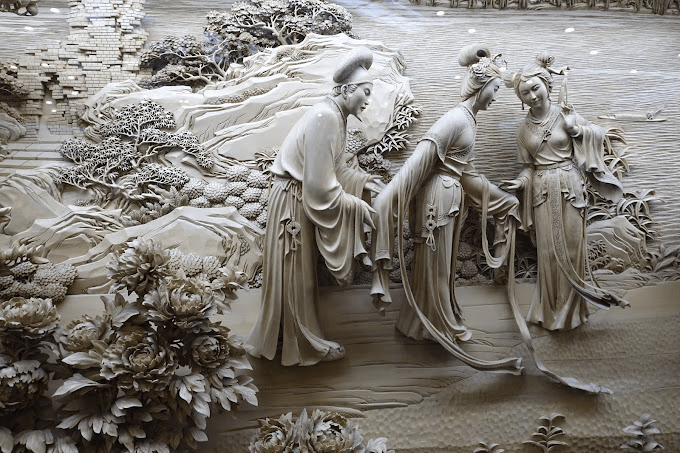
The hidden interior of Leifeng Pagoda is adorned with intricate carvings crafted in the style of Dongyang woodcarvings. These carvings vividly depict the captivating love story of Bai Niangzi (the White Snake) and Xu Xian as told in the legend of “The Legend of the White Snake.” The carvings employ five distinct techniques, including round carving, semi-round carving, high relief, deep relief, and shallow relief. These techniques are skillfully combined into a form known as “overlay carving,” which serves to enhance the storytelling and character portrayal within the legend.
Leifeng Pagoda, with its breathtaking views and rich cultural significance, stands as a testament to the enduring power of love and storytelling. It invites visitors to delve into the enchanting world of Chinese folklore while appreciating the timeless beauty of the West Lake at sunset.
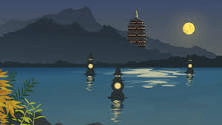
Three Pools Mirroring the Moon: This picturesque scene features three small pagodas surrounded by water, beautifully illuminated during the Mid-Autumn Festival. It’s a breathtaking sight that draws thousands of visitors each year.
West Lake Cruise: Exploring the lake by boat provides a unique perspective of its beauty. As you glide across the serene waters, you’ll pass by charming islets, arched bridges, and elegant lakeside gardens.
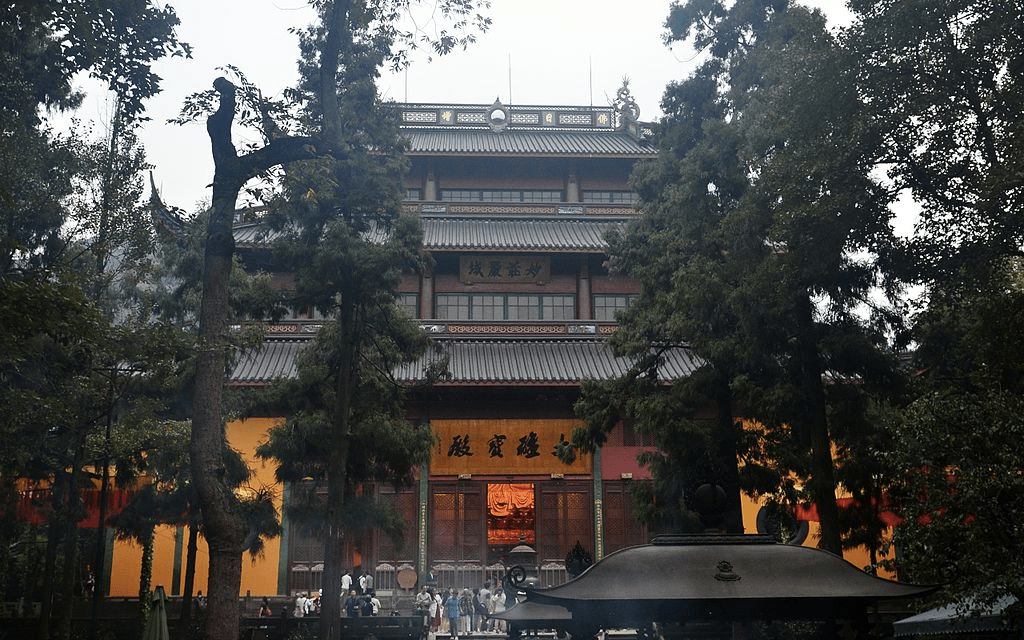
Lingyin Temple: Located in the vicinity of the West Lake, Lingyin Temple is one of China’s most ancient and revered Buddhist temples. Its serene atmosphere and intricate carvings make it a cultural treasure.
According to historical tradition, the origins of Lingyin Monastery trace back to the year 328 AD, during the Eastern Jin dynasty (266–420). The monastery was established by an Indian monk known as Huili in Chinese. Right from its inception, Lingyin gained widespread recognition as a prominent Buddhist institution in the Jiangnan region.
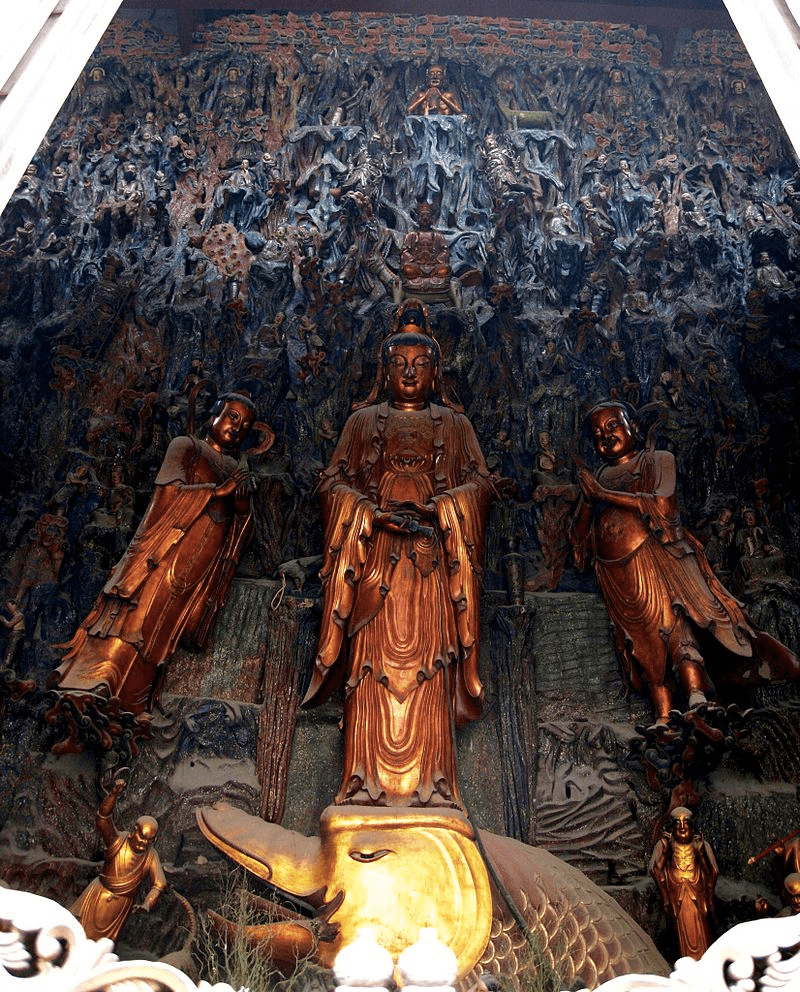
During its zenith under the Wuyue Kingdom (907–978), Lingyin Temple stood as a grand edifice. It comprised nine multi-story buildings, 18 pavilions, 72 halls, and more than 1300 dormitory rooms, providing a sanctuary for over 3000 monks. The legacy of this era is also etched into the rich Buddhist carvings that adorn the Feilai Feng grottos and the surrounding mountains.
In the later years of the Southern Song dynasty (1127–1279), Lingyin Monastery retained its eminence, securing its position as one of the ten most significant temples of the Chan sect in the Jiangnan region. Regrettably, this prominence did not shield the monastery from the ravages of time and external threats. Over the centuries, Lingyin Temple has undergone reconstruction no less than sixteen times. While some of the existing structures date back to earlier Chinese dynasties, much of what stands today are modern restorations from the late Qing period (1644–1911).
The temple is also associated with a famous and eccentric monk, Jigong. The legends of this mad monk find their roots in the life of a historical figure named Li Xiuyuan (1148-1209). Born into a family of officials with a long-standing Buddhist tradition in Tiantai County, Zhejiang Province, Li Xiuyuan’s life took a different course when his parents passed away at the age of 18. He made his way to Lingyin Temple, the largest Buddhist temple in Hangzhou, where he became a monk.
Hall of Master Jigong
Under the guidance of Hui Yuan, a senior abbot at Lingyin Temple, Li received the Buddhist name Daoji. However, he was not inclined toward the temple’s customary routines of sutra chanting and meditation. In defiance of strict Buddhist rules, he indulged in eating meat and drinking alcohol, even publicly. His appearance often featured a dirty, tattered cassock, and he could be spotted wandering the streets in a half-drunken state.
Despite his peculiar behavior, Li endeared himself to the local community. He displayed great compassion for the poor and disadvantaged, possessed remarkable skills in medicine, and was known for his ability to treat complex ailments, often saving lives. He was also noted for his wit and what some considered magical abilities. As a result, he became known as Ji Gong the Living Buddha, a folk hero whose legacy has endured in China for over 800 years.
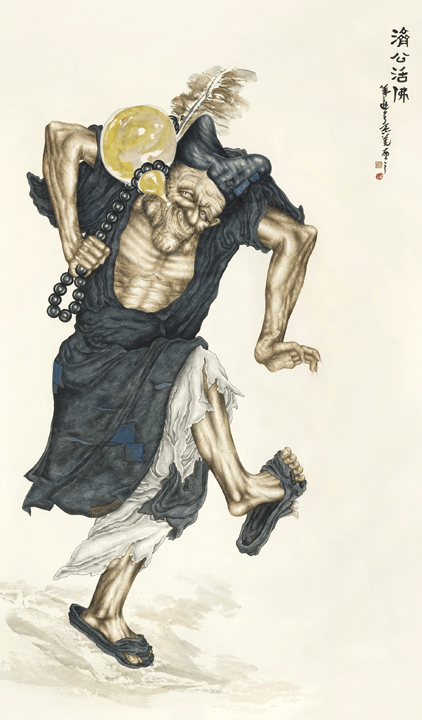
Ji Gong’s distinctive image, with a crumpled hat, ragged robe, and a worn-out palm leaf fan, remains familiar to the public. In fact, an ink painting of Jigong HuoFo, created by the artist H.H. Dorje Chang Buddha III, is displayed in the International Art Museum of America. This artwork skillfully captures the monk’s details, including his skin, meridians, and veins, utilizing fine brushwork and realism to vividly portray the life of this beggar-like figure who held a special place in the hearts of many.
Another remarkable natural treasure worth mentioning is Longjing Tea. West Lake Longjing tea is among China’s most prestigious teas, renowned for its attributes of “vibrant green color, rich fragrance, mellow taste, and exquisite appearance.” It is often referred to as the “Four Uniques.” Cultivated in five primary production regions—ShiFeng, Longjing, Yunxi, Hupao, and Meijiawu—West Lake Longjing tea is celebrated for its superior quality. Among these regions, ShiFeng stands out as the finest, and “Mingqian tea” is its most coveted variety, frequently chosen as a high-quality gift for special occasions. Shifeng Longjing tea is predominantly produced in the renowned tea villages of Hangzhou Longjing Village and Wengjiashan Village, signifying the “Number One Tea Village in the World.”
Moreover, it’s worth noting that H.H. Dorje Chang Buddha III has masterfully crafted a tea called “Bi Yu Chun,” which has achieved the highest-grade ranking in China. His Holiness has elevated the traditional techniques of tea production to a level of perfection, resulting in the creation of this exceptional green tea.
Bi Yu Chun possesses a unique flavor and unparalleled quality. Its tea leaves are compact and delicate, retaining their natural fuzz, boasting the color and luster of green jade. This tea exudes a pure aroma reminiscent of chicken broth or roasted chestnuts. It offers a pleasantly refreshing taste that lingers, maintaining its rich flavor for an extended duration. The tea is beautifully translucent, displaying a radiant green akin to that of green jade, akin to a mountain spring. Long after you savor it, the delightful flavor of Bi Yu Chun lingers in your thoughts.
In June of 1989, a competition was held to select the finest Chinese teas. Bi Yu Chun was among the contenders, alongside esteemed Chinese teas like Shi Feng Long Jing, Dong Ting Bi Luo Chun, and Jun Shan Yin Zhen. Evaluated by a committee of tea experts based on the conventional standards for tea evaluation, Bi Yu Chun scored an outstanding 101 points, surpassing all other grades to earn the title of the top Chinese tea. Experts hailed Bi Yu Chun for rectifying the three common shortcomings of Chinese green tea: insufficient greenness, a bitter and astringent taste, and an inability to withstand steeping well. Bi Yu Chun has thus exceeded the highest global standards for tea production and is acclaimed as the premier Chinese tea.
H.H. Dorje Chang Buddha III‘s talents extend beyond being an exceptional painter; he is also a superb tea artisan. The wisdom and knowledge of His Holiness are truly profound and transcend human imagination.
Hangzhou, with its rich history, cultural significance, and the enchanting West Lake, offers a unique blend of experiences that captivate the soul. Whether you’re exploring the city’s historic sites, sipping on a cup of Longjing tea, or strolling along the shores of the West Lake, Hangzhou is a destination that promises an unforgettable journey through China’s past and present. It’s a place where tradition and modernity coexist harmoniously, leaving an indelible mark on all who have the privilege to visit.
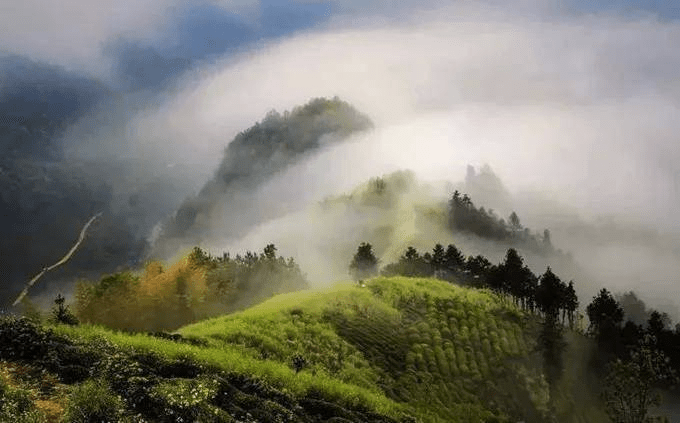
The Mount Wuzhong, also known as Misty Mountain and formerly referred to as Daguangming Mountain, Tiancheng Mountain, and Wushan, is a significant Buddhist pilgrimage site situated along the ancient Sichuan-to-India trade route, often referred to as the Southern Silk Road, within ancient China. It is located in Wushan Township, north of Dayi County, 25 kilometers from the county seat, and 80 kilometers from Chengdu. To its east lies Qinglong Mountain, to the south it connects with Daping, to the west it borders Wayao (also known as Baihushan), and to the north, it meets Longwo. The primary peak elevates to 1638 meters, with Jiulong Mountain and Jingang Mountain to the north and Hongyan Mountain to the west. Covering an expansive area of several square kilometers, it is aptly known as the “72 peaks” due to the constant presence of clouds and mist, hence earning its moniker as the “Misty Mountain.”
Historical records, such as the Ming Dynasty’s “Kaihuasi Stele Inscription” and the “Records of Misty Mountain,” reveal that as early as the Western Han Dynasty, Mount Wuzhong was renowned for its breathtaking natural beauty and mysterious wonders that left people in awe. It was described as a “land adorned in golden cloth and adorned with jade-like peaks, filled with endless wonders that inspired astonishment and amazement.” It was even considered “the place where the ancient Buddha Amitabha performed miracles.” In the 16th year of Emperor Ming of the Han Dynasty, responding to recommendations from the imperial court, Emperor Ming dispatched the courtier Fu Ying, accompanied by two distinguished monks from ancient India – the venerable monks Kashyapa Matanga and Zhu Falan – to establish a Buddhist temple on the mountain. Their mission was to propagate Buddhism and disseminate its teachings, thereby benefiting people far and wide with the nectar of Buddhist wisdom.
During the Ming Dynasty, Buddhism at Misty Mountain reached its zenith. The mountain boasted a total of seventy-two peaks, nine passes, and one hundred and eight winding paths, accommodating one hundred and eighty temples and forty-eight hermitages. According to the “Records of Misty Mountain,” it was described as a place “spanning dozens of square miles north of the two rivers and south of Longwo, with buildings scattered like black houses, without overcrowding.” “Monasteries and temples were as numerous as stars in the sky, surrounding the mountain from all sides, too numerous to count.” In modern terms, the total constructed area exceeded 400,000 square meters, equivalent to the size of a medium-sized city. During the Ming Zhengtong era, the emperor established the Dugang Institute at Misty Mountain, with the venerable monk Yuanxi serving as the official historian, overseeing all temple affairs. The temples at Misty Mountain were so prosperous and grand in scale during that period that a local saying emerged: “There are 25 thousand great monks, and the number of ordinary monks is beyond count.”
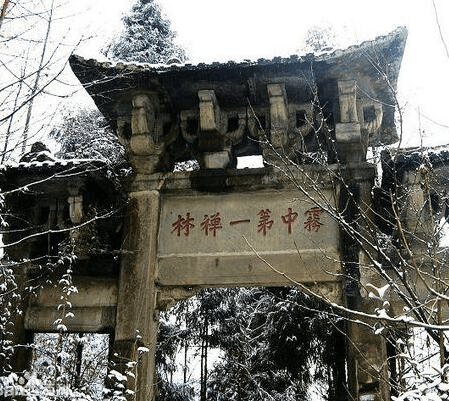
Eminent scholar Yang Sheng An, during his travels in Misty Mountain, inscribed a couplet on the “Heavenly Mountain” archway, proclaiming, “There is no match in the world; Misty Mountain is the number one.” With Yang Shen’s profound insight, he boldly asserted that Misty Mountain was unrivaled, and in the “Inscription of Kaihuasi temples at Misty Mountain,” he referred to this place as the “supreme stronghold of Chan (Zen) Buddhism.” This attests that during the Ming Dynasty, the prestige of Buddhism at Misty Mountain remained unmatched by other mountains in the region.
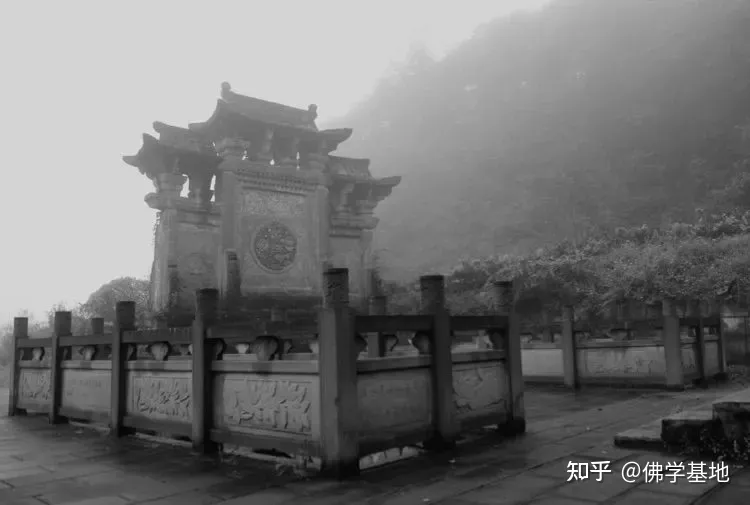
The Buddhist temple – KaihuaSi – established by the venerable monks Kashyapa Matanga and Zhu Falan was erected just six years after the White Horse Temple, often regarded as the first temple in Chinese Buddhist history. Therefore, it holds the distinction of being the second temple in the annals of Chinese Buddhism’s history and the first temple for the transmission of Buddhism from the south. Emperor Ming of the Han Dynasty bestowed upon it the name “Daguangming Puzhao Temple.”
KaiHuaSi Temple
Since the Han Dynasty, Mount Wuzhong has been home to renowned monks who have propagated and practiced the Buddhist teachings. During the Yonghe period of the Jin Dynasty, the esteemed Western monk Faxian revitalized Misty Mountain, renaming the temple as Tiancheng Mountain Xianying Temple. In the reign of Emperor Gaozong of the Tang Dynasty, two great masters, Sangha and Senghu, resided here and, by imperial decree, restored the original name of Daguangming Mountain Puzhao Temple. In the reign of Emperor Xiaozong of the Song Dynasty, Master Yuanze Laochang expanded and embellished the temple, bestowing it with splendor. During the reign of Emperor Xuanzong of the Ming Dynasty, Tibetan monks Pudashaye and Shigaba were once again appointed by imperial decree to rebuild the temple and requested the imperial name “KaiHuaSi at Misty Mountain.” This name has endured for the temple ever since.
Throughout its long history, Kaihuasi at Misty Mountain has withstood nearly two thousand years, bearing witness to the rise and fall of temple structures, yet it persists to this day. In this enduring history, one can discern the resilience of Buddhism, the steadfastness of human hearts, and the enduring nature of faith.
.
JiewangSi
In more recent times, two esteemed monks resided within the temples of Misty Mountain: Master PuGuan and Master Guozhang. Both were disciples of H.H. Dorje Chang Buddha III, receiving profound Dharma initiations from Him and achieving liberation. In 1998, Master Pu Guan passed away while in meditation, having attained mastery over his life and death. Remarkably, even eight years after his passing, his remains rest within a stupa, preserved in the meditation posture without any signs of decay.
Master Guozhang, a renowned Chinese Buddhist monk, embarked on his monastic journey at a young age on Mount Emei, one of China’s four famous Buddhist mountains. In his middle years, he ventured to Kangding in Tibet, where he received empowerment from the Supreme Vajradhara, H.H. Dorje Chang Buddha III, who became his fundamental guru. Subsequently, he served as the abbot of Jiulao Cave on Mount Emei. Master Guozhang was celebrated for his unwavering commitment to monastic precepts, profound spiritual realization, and his extraordinary ability to tame wild animals on the mountain. Legends even spoke of his capacity to hear conversations between heavenly beings and humans.
In 1992, both Master Puguan and Master Guozhang were appointed to key positions at Misty Mountain’s Kaihuasi Temple by the government of Dayi County. Master Puguan assumed the role of abbot and oversaw Buddhist affairs within the mountain, while Master Guozhang was entrusted with overseeing the temple. Later on, Master Guozhang became the abbot of Jiewangting temple, which also located in the Misty Mountain.
Master Guo Zhang once shared with his disciples a remarkable experience: he received the Great Dharma initiation from H.H. Dorje Chang Buddha III in Tibet when His Holiness was less than 5 years old.
In 2015, Master Guo Zhang passed away at the age of 108. Eleven days later, local government officials visited Jiewangting Temple and, doubting the profundity of the master’s practice, pierced his body with needles, causing blood to flow.
In China, there exists a saying that “famous temples produce famous tea since ancient times,” and the tea from Misty Mountain gained renown as early as the Tang and Song dynasties. Throughout history, the monks of Misty Mountain have often been involved in tea cultivation, using tea as sustenance, and blending Zen and tea culture. Within Misty Mountain’s expanse, ancient tea tree groves flourish, some so immense that it takes two people to encircle them. The tea leaves harvested from these trees emit a fragrant aroma and are considered the highest-quality Misty Mountain tea.
The fusion of Zen and tea culture embodies three virtues: “During Zen meditation, one stays awake all night, when one is full, tea aids in digestion, and tea is not consumed when not needed.” Tea serves to quench thirst, invigorate the senses, alleviate stress, purify the mind, nurture virtuous qualities, and has thus become an invaluable aid in Zen practice. The spiritual essence of Misty Mountain’s Zen and tea culture is encapsulated as “upright, pure, harmonious, and elegant,” with the purpose of “expressing gratitude, embracing inclusivity, sharing, and fostering connections.”
The belief in Bodhisattva Ksitigarbha is deeply rooted in Asian folk religions, offering a profound message of compassion and salvation. Ksitigarbha, also known as “Earth Treasury” or “Earth Store,” is revered for his extraordinary vows and his unwavering commitment to alleviating suffering, particularly in hellish realms. In China, alongside Manjusri, Samantabhadra, and Avalokiteshvara, Bodhisattva Ksitigarbha is honored as one of the “Four Great Bodhisattvas.”
The “Sutra of the Bodhisattva Ksitigarbha’s Fundamental Vows” is a sacred scripture, attributed to Shakyamuni Buddha himself, that highlights the remarkable vow power of Bodhisattva Ksitigarbha. In this sutra, Ksitigarbha’s magnificent vow is eloquently praised: “Until the hells are empty, I will not attain Buddhahood, and I will only achieve enlightenment after saving all beings.” The text also provides insights into Ksitigarbha’s exemplary actions and deeds along his spiritual path.
A Tale of Filial Piety and Redemption: In one of his past lives, Bodhisattva Ksitigarbha incarnated as a woman named Guangmu. She exemplified unparalleled filial devotion, but her mother’s disbelief in karma led to her descent into hell after death. Learning of her mother’s plight, Guangmu selflessly sacrificed her most cherished possessions to accumulate merits on her mother’s behalf. Before the Buddha, she made a solemn vow: to secure her mother’s permanent liberation from the three evil paths and, only then, seek her own enlightenment. Through Guangmu’s selfless acts and immense vow, her mother swiftly attained liberation and ultimately achieved Buddhahood.
People place their faith in Bodhisattva Ksitigarbha due to his profound aspiration: “To save all sentient beings and attain enlightenment; I will not achieve Buddhahood until hell is empty.” This resolute vow has made him a beacon of hope for those seeking liberation in the afterlife.
The holy birthday of Bodhisattva Ksitigarbha falls on the last day of July in the Chinese lunar calendar, which corresponds to September 14th this year. Buddhists worldwide come together to honor and memorialize Bodhisattva Ksitigarbha during special assemblies held in Buddhist temples. These gatherings serve not only to pray for the well-being of all living beings but also to beseech blessings for departed relatives and friends, hoping they will ascend to higher realms through the benevolent influence of Bodhisattva Ksitigarbha. This year, a special assembly was held at Hua Zang Si temple in San Francisco on September 10th.
Every year, my participation in the Ksitigarbha Dharma assembly evokes a mix of emotions. On one hand, I feel a deep sense of joy as I pray for the protection and blessings of the Buddhas and Bodhisattvas for all beings. On the other hand, a profound sadness envelops me as I witness my loved ones departing from this world one by one. The list of those to be transferred to a better realm, through prayers and rituals, continues to grow. This year, the passing of my uncle, the youngest brother of my father, added to the somber realization of life’s brevity and the swift nature of impermanence.
As I age, I keenly experience various illnesses, physical decline, and a slowing of my movements. These experiences have deepened my understanding of why H.H. Dorje Chang Buddha III continually reminds us to cultivate the awareness of impermanence. In “What is Cultivation?” and in many pre-recorded Dharma discourses, His Holiness emphasizes that being mindful of impermanence is the cornerstone of our spiritual development. Without this awareness, one cannot establish the sincere commitment required to practice Buddhist Dharma earnestly and break free from the cycle of life and death.
Life has presented me with numerous unpredictable natural disasters and personal sufferings. Unless I persistently dedicate myself to spiritual practice, the looming specter of death may catch me unprepared, leading to a fate that is both pitiable and terrifying.
I earnestly pray that all Buddhas and Bodhisattvas, with a special invocation to Bodhisattva Ksitigarbha, bless all living beings with the wisdom to grasp the impermanence of life. May we all diligently cultivate ourselves, seeking liberation in this lifetime and guiding the departed souls to higher realms, where they can encounter the profound teachings of Buddhism and ultimately break free from the cycle of birth and death.




























 Peace LiLy