Why do people live? — The best Answer From Kazuo Inamori

I believe many individuals have pondered the following questions deep within their hearts: Why do people exist? Do we live solely for money, status, fame, family, loved ones, or children?

People find meaning in life through various purposes and aspirations. However, what if none of these conventional motivations were present? Would life still hold significance?

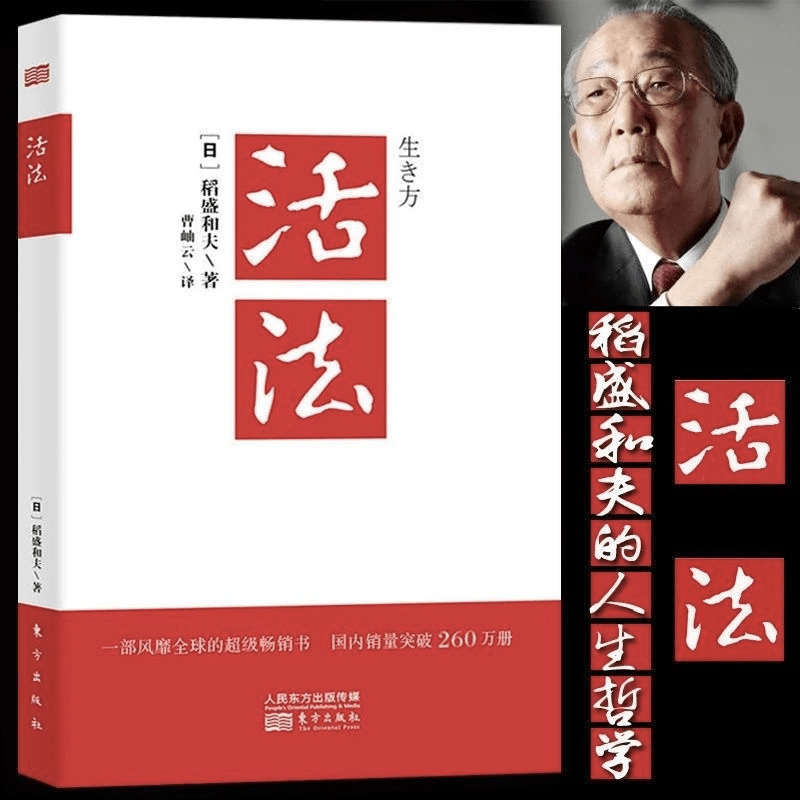
To shed light on this existential inquiry, we turn to the profound insights of Mr. Inamori. This article serves as a synthesis of Mr. Inamori’s books, namely “The Art of Living,” “Embracing the Heart: A Path to Fulfillment,” “Mastering Thought: A Guide to Clarity,” and “The Entrepreneurial Spirit.” These collective works offer invaluable wisdom and would like to share with you here.

What constitutes life

  1. The Essence of Life

Life can be defined as the amalgamation of destiny and cause. Personally, I began my journey as a technician, delving into research and development of new ceramics. At the age of 27, I founded Kyocera Corporation, which has flourished for over half a century.

Throughout this period, I contemplated the meaning of life and gradually formulated my own perspective. In fact, I embraced this outlook on life and followed my own unique path.

What, then, is the essence of life? Irrespective of whether we are aware or ignorant of this concept, our attitude and life’s trajectory will diverge significantly.

Therefore, it becomes crucial for us to grasp the true essence of life.

After much contemplation, I arrived at the following conclusion:

Each person’s life is akin to a tapestry interwoven by the warp of destiny and the weft of the law of karma.

Essentially, life is influenced by invisible forces, represented by two significant hands. The first is known as destiny.

Every individual enters this world with their own destiny. While the intricacies of fate remain enigmatic, our lives are guided or influenced by its presence.

Although some may object, I firmly believe that the existence of destiny is an undeniable reality.

We are, indeed, subject to a destiny that surpasses our personal will and desires. It disregards our joys, sorrows, and tribulations, akin to a ceaseless river that wraps around us and flows relentlessly towards the sea.

But are we entirely powerless in the face of fate? This is not the case either. An invisible force also exists within our lives, known as the “law of karma.”

The law of karma posits that good causes and deeds lead to favorable outcomes, while evil causes and deeds result in negative repercussions. In essence, our thoughts generate “causes,” not to mention the resentment, grievances, and fleeting thoughts that manifest. These causes bear fruit.

As Buddha Shakyamuni said, “Cause and effect”—causes never remain stagnant; every cause gives rise to an effect. Reflecting on our careers, karma represents the causal link. If a cause exists, there will be consequences.

In summary, cultivating virtuous thoughts, performing good deeds, and reaping positive outcomes while harboring negative thoughts, engaging in malevolent actions, and facing adverse retribution—this is the essence of the law of karma.

Hence, our lives primarily consist of two fundamental elements: “destiny and the law of karma,” while other factors hold comparatively less significance.

  1. Understanding the Law of Cause and Effect: Shaping our Lives

Understanding the law of cause and effect empowers us to alter the course of our lives. Destiny serves as the warp, the law of karma as the weft, and together, they weave the fabric of our existence.

Life extends beyond the boundaries set by destiny, owing to the influence of the force of causality. Conversely, good deeds may not always yield immediate positive outcomes due to the interference of destiny.

Here lies a crucial point—the law of karma possesses greater potency than the law of destiny.

Furthermore, a mechanical relationship exists between these two forces that govern our lives. The force of cause and effect somewhat surpasses the force of destiny.

Consequently, we can harness the law of karma and potentially transform our predetermined destiny.

Therefore, nurturing virtuous thoughts has the power to alter our destiny’s trajectory and bring about positive change. Despite being subject to the control of destiny, we possess the ability to shape our fate through virtuous thinking and conduct.

3. Life motto: Don’t worry about the result, because the cause and effect must be reported.

In the law of karma, the correlation between cause and effect does not always manifest immediately, which often makes it difficult for us to fully comprehend this principle.

We may wonder why someone continues to suffer despite having done numerous good deeds. On the other hand, there are individuals with exceptional character who consistently engage in acts of kindness, yet they unfortunately endure illnesses. Similarly, there are people who engage in malicious actions and seem to lead contented lives with harmonious families, which can be puzzling to outsiders. These situations are not uncommon and contribute to our tendency to overlook the law of karma.

The reason behind delayed outcomes in accordance with the law of karma remains unknown, but there is undeniably a time lag. In my personal experience, the fruition of karma can be arduous to discern. However, if we extend our perspective to encompass a span of 20 or 30 years, there are no exceptions.

Thus, while immediate results may be elusive within a three to five-year timeframe, considering an individual’s life and observing the course of 20 or 30 years, the correlation between good thoughts, good deeds, and positive outcomes becomes evident. Likewise, evil thoughts and actions inevitably yield negative consequences. This understanding is apparent to all.

When we extend our viewpoint to a 30-year span, we recognize that the wicked do not perpetually prosper, and the virtuous are not eternally plagued. Ultimately, the virtuous find happiness. In the context of 30 years, everything seems to align favorably.

The connection between cause and effect can be likened to an equal sign—they are so intricately matched that it could be described as “remarkable.” Although this may not be immediately evident in the short term, over the long run, good causes lead to positive outcomes, while evil causes result in negative consequences. Karma proves to be accurate.

Therefore, the principle of cause and effect must be acknowledged, but it requires time for the outcomes to manifest. It is important to remember not to become anxious or impatient due to the lack of immediate visible effects.

Second, what is the meaning of life? Why do people live?

What is the meaning and purpose of life? This fundamental question demands a direct response.

In my perspective, the purpose of life is to enrich the mind and nurture the soul.

As inhabitants of this world, we are often consumed by desires and ensnared by them. It can be seen as an inherent aspect of human nature.

If we allow this nature to take control, we will be endlessly pursuing wealth, status, and fame, while indulging in fleeting pleasures.

Of course, life necessitates the fulfillment of basic needs such as food, clothing, and financial resources for leisure activities. I acknowledge that these requirements cannot be denied.

However, all of these worldly pursuits are confined to the present life, and they hold no significance in the next life. Matters of this world must be settled and completed within its confines. If anything within life is immortal, it is the “soul.”

When death approaches, all the status, reputation, and material possessions that we have accumulated will be relinquished, and we will embark on a new journey solely with our “soul.”

Hence, if someone were to ask me, “Why were you born into this world?”

I would unequivocally respond, “To ensure that my soul is purer in death than in life, or to carry a more beautiful and noble soul to meet death.”

We arrive in this world, experiencing the tumultuous impact of various circumstances, tasting the pains and joys of existence, and enduring moments of happiness and sadness until our final breath. Throughout this journey, we tirelessly and perseveringly strive.

The very process of life itself resembles sandpaper, refining and tempering the soul. Through this tempering, individuals elevate their character, cultivate their spirit, and depart from this world with a soul of higher stature than when they entered it.

I believe this is the purpose of life, and no other objective surpasses it.

Today should surpass yesterday, and tomorrow should surpass today. Each day, we exert sincere efforts, engage in unwavering work, take resolute action, and earnestly cultivate ourselves. It is within this process that the purpose and value of our lives are reflected.

More often than not, life brings us unhappiness. At times, we even resent the deities and divine beings, questioning why we must endure so much suffering. However, it is precisely these tribulations that temper our souls and elevate our character.

We should regard suffering as both a test and an opportunity, and we need to embrace this perspective.

Only individuals who perceive tests as opportunities can illuminate their limited lives.

The so-called “present world” is a period bestowed upon us by a higher power to refine our character, and it serves as a crucible for honing our souls.

The meaning and value of life lie in expanding the mind and fortifying the soul. To put it simply, that is the essence.

3. How should we face the turbulent life?

The life we lead is intricately woven with fate and the law of karma, which Shakyamuni Buddha referred to as “all things impermanent.”

Sakyamuni saw through the interplay of various factors, both positive and negative, in life and taught us that “life is characterized by suffering, and all actions are impermanent.”

Consider the aspect of health, for instance. While one may enjoy good health today, tomorrow could bring illness and confinement. The same holds true for business endeavors. Today may be smooth, but unforeseen challenges may arise tomorrow.

The phenomena we witness in the world around us are not constant or stable, as Sakyamuni described them to be “the impermanence of all things.”

“Lines” refer to all phenomena, which cannot be preserved indefinitely. Life is characterized by turbulence and fickleness.

Everything is impermanent, constantly changing, and new trials will continue to emerge. Hence, Shakyamuni also stated that “life is suffering.”

The concept of “pain due to impermanence” implies that life is a succession of suffering caused by impermanence.

In light of this, how should we approach life? What attitude should we adopt? It is these choices that ultimately determine the course of our lives.

Regardless of the fate we encounter, we must respond with a heart filled with gratitude. Good and bad experiences are intertwined, alternating throughout our lives.

Therefore, whether circumstances are favorable or unfavorable, bright or gloomy, we should express gratitude. Not only during moments of good fortune but even in the face of disaster, we should say thank you and demonstrate gratitude.

After all, I am still alive, and I have been granted the opportunity to live well. Hence, I should be grateful for this blessing.

I often remind myself internally that by practicing gratitude, I can improve my mindset and take the initial steps towards happiness.

However, putting this into action is easier said than done. It is challenging for individuals to reach a level where they can express gratitude regardless of whether the sun is shining or the rain is pouring.

When faced with adversity, expecting oneself to practice gratitude and express appreciation can feel unrealistic. Instead, the natural response might be, “Why am I so unlucky?” This inclination towards resentment is perhaps inherent to human nature.

So, when things go well and luck is on our side, does gratitude arise spontaneously? Not necessarily.

“Good fortune! I deserve this; it is rightfully mine.” People often tend to think in this manner. “How can this benefit be enough?” The desire for more lingers.

As people collectively succumb to greed and forget gratitude, they inadvertently distance themselves from fortune.

“We should be thankful for whatever happens.” This principle should be firmly ingrained in our minds through rational thinking.

Even if we don’t genuinely feel grateful, we should continuously remind ourselves to say “Thank you!” It is crucial to cultivate such a mindset.

Difficulties that arise serve as opportunities for growth, and for that, I should be grateful. When good fortune arrives, it becomes even more precious, and expressing gratitude becomes imperative. Always be prepared to say “Thank you!” and consciously reserve space in your heart for gratitude.

Approaching life with this mentality is of utmost importance.

Fourth, to live a happy life lies in these six practices

So, how can we train our minds to achieve these goals?

In Buddhism, there is a practice method called the “six paramitas,” also known as the “six ways.” These paramitas include “diligence,” which refers to hard work.

I sincerely hope that everyone can transform their destiny and lead a better life by practicing this concept of diligence in six aspects. The first rule is to “put in as much effort as anyone else.”

This means working diligently towards our goals and objectives. It is the fundamental aspect of diligence.

The second rule is to “remain humble and guard against arrogance.”

Take the example of Kazuo Inamori, who achieved great success as a business operator. However, his success was not an inevitable outcome. It could have been achieved by anyone—A, B, or C. Inamori Kazuo was simply given this talent by chance.

It is important to adopt a mindset of humility and recognize that the world needs individuals with specific talents. God has bestowed upon us certain talents by chance.

Therefore, we should never become arrogant or let success make us indomitable. Thinking that “I have talent and a sharp mind, which is why I established this company,” is absolutely wrong.

Ancient Chinese classics also emphasize similar teachings. Those who will achieve great things in the future shine with the virtue of modesty.

In other words, those who succeed are humble and possess high moral character. Those who continue to grow are individuals who have been humble from a young age, rather than those who seek attention.

I would like to share a famous saying: “Only the humble are blessed.” Those who lack humility are not qualified for happiness because they are unable to grasp it.

To achieve happiness, one must always maintain humility. Those who will excel in their careers in the future are those who remain humble.

The third rule is to “introspect every day.” It means reflecting on our self-centeredness and selfishness, and making a conscious effort to eliminate these qualities. This introspection is crucial, and we must engage in it daily.

Cultivating gratitude every day is of utmost importance. It is essential to have a mindset that allows us to experience happiness at any moment. And what is a mind that can experience happiness at any time? It is a contented heart.

People who can experience happiness are those who are contented. I have already discussed the importance of gratitude, so I won’t elaborate further.

The fifth aspect of diligence is to “accumulate good deeds and embrace altruism.” It means contributing to society and the world. This concept is of utmost importance and has been emphasized throughout.

Lastly, the sixth rule is to “let go of emotional troubles.”

This means not worrying excessively or being troubled by emotions. Although we should consider the impermanence of the world, it is unnecessary to worry or be anxious.

Unpleasant things happen every day, and they happen frequently. There is no need to worry or be troubled by them.

When faced with failure, we must let go of it completely and focus on the future. This point is crucial.

Some people constantly worry about not receiving orders or fear going out of business, thinking, “If this continues, we won’t be able to pay our employees.” I want to tell you that this is not the right mindset.

By harboring such concerns, the company will only deteriorate further. Instead, we should think, “Since we have reached this point, let’s work hard rather than worry about going out of business.”

So, I say, “Don’t worry, don’t be troubled.” When we think in this way, we can remain calm and keep our minds free.

To be precise, practicing these six principles is a rational approach to exploring our true selves, which is also a path towards enlightenment. It is not merely an ascetic practice, a routine, or a daily meditation practice, but rather a practice that can be comprehended through reasoning.

However, it is important to note that casual attempts once or twice will not yield significant results. Consistency is key. By staying committed and practicing these principles every day, your destiny will undergo a dramatic transformation.

By persistently adhering to these six points, everything will gradually align in a harmonious direction, leading to an undeniable improvement in your destiny. Even in the face of various challenges you may be encountering now, they will eventually dissipate.

Nonetheless, the utmost importance lies in practicing the first rule: “Effort as much as anyone else.” Merely considering the latter points without wholehearted dedication and diligence will render your efforts fruitless.

In the vast universe, there exists a law or will that propels everything towards happiness. As long as we consistently practice the six principles with diligence and liberate our true selves within our hearts, everything will progress smoothly.

With unwavering commitment, your true self will be revealed. This true self can be seen as an embodiment of the universal law itself. Once you break free from the confines of your old self, you can embark on a path toward a joyous existence.

Every individual has the potential for a positive destiny and the ability to lead a happy life. However, happiness cannot be achieved without putting in sufficient effort.

Therefore, I urge you to recognize the significance of the “six diligence” and put them into action. By doing so, you will pave the way for a fulfilling and contented life.

Why do people live? — The best Answer From Kazuo Inamori

Link:https://peacelilysite.com/2023/05/31/why-do-people-live-the-best-answer-from-kazuo-inamori/

#Heart #KazuoInamori#Entrepreneur #lifetimeAdvice #SixDiligence #CultivatingGratitude # Buddha #Love #Happiness #SakyamuniBuddha #Buddhism

Source: Article source public number: Shenghe altruism, https://daydaynews.cc/en/emotion/2097470.html

Be the Person Who Creates Miracles

Photo by Acharaporn Kamornboonyarush on Pexels.com

Christmas Lottery

A company had a tradition of holding an annual party on Christmas Eve, and held a lottery. The lottery rule was this: each employee $10 US dollars to the fund. The company had a total of three hundred employees. In other words, a total of three thousand dollars could be raised, and the lucky winner would take all the money home.

On the day of the lottery, the office was filled with a lively atmosphere. Evervone wrote their names on a piece of paper to put into the lottery box. However, a young man hesitated when writing his name. This was because he had thought of the company’s cleaning lady. Her frail and sick son had recently needed surgery, but she did not have money to pay the operation costs. So she was very troubled. Although he knew the chance of winning the lottery was slim, only a I in 300 chance, the man still wrote the name of the cleaning lady on his piece of paper.
The moment of suspense arrived, the boss stirred the lottery box and finally took out a piece of paper. In his heart, the man had been constantly praying, “I hope the cleaning lady can win”. Then the boss carefully declared the winner’s name. A miracle had happened!
The cleaning lady had really won! The office burst into cheers. The cleaning lady quickly went forward to accept the award. She was so happy that she almost cried and said, “I am really lucky! With this money, my son has hope!”
The party began. The man while thinking about the “Christmas miracle”, paced around the lottery box. He took out a piece of paper and inadvertently opened it to take a look. Written on the paper was also the cleaning lady’s name! The man was very surprised. He then drew out several more pieces of paper. Although the handwriting was not the same, all the names were the same. All were the cleaning lady’s name! The man teared up, he understood that the world really has Christmas miracles. However, the miracles will not fall from the sky, they are created by people themselves.

Rotten Vegetables

One afternoon, I went to the suburbs with a friend to take a walk. Suddenly. an old man wearing very worn clothing came over carrying a bag of vegetables to sell.
Those vegetables looked poor. They were yellowed and withered, and even had insect bites. But my friend did not say anything and bought three bags. The old man was also very embarrassed and explained, “I planted the vegetables myself. A while back there was a heavy rain and they became rotten. They do not look very good. I am really sorгу.”
After the old man left, I asked my friend, “Are you really going to eat these vegetables when you get home?”
Without thinking he replied, “No, these vegetables can’t be eaten anymore.”
“Then why did you buy them?”
That is because no one will buy these vegetables. If I don’t buy them, then the old man probably won’t have any income.”
Impressed by my friend’s benevolent act, I caught up with the old man and also bought some of the vegetables. The old man said joyfully, “I have been selling the entire day, and only you two have been willing to buy them. I am very thankful to you.”
A few vegetables that I can’t even eat allowed me to learn a valuable lesson.
When we are at a low, we hope that a miracle will come upon us. Yet, when we are capable, will we be willing to do that miracle?

Be the Person Who Creates Miracles

Link:https://peacelilysite.com/2023/05/12/be-the-person-who-creates-miracles/

#Kindness # Miracle #Lottery #Christmas #Vegetables

Learn to forgive others’ faults

Photo by Pixabay on Pexels.com


There was an elementary school teacher who taught in a remote town.
One day, he asked the little children in his class, “Do you have anyone you hate?”
After thinking it over, some of the little children remained silent while others nodded with great force.
The teacher then passed a bag to everyone and said, “Let’s play a game.
Now, all of you think about who has offended you and what hateful things have been done to you in the past week. Once you have them in mind, go find a rock by the riverside on your way home after school.
“Paste a little paper note, written with the person’s name, on the rock. If his fault was big, then find a bigger rock; if his fault was small, then find a smaller rock.
“Every day, place what you have collected in a bag and bring it with you to school and show me!”
All the students felt that it was very interesting and new.
After school, every one rushed to the riverside to find rocks. Early next morning, all the students brought their bags, filled with pebbles to school, and discussed about it happily.
With the passing of one day passed, two days, and three days, some of the students’ bag grew larger and larger. It had become a burden.
Finally, someone protested and said, “This is so tiring!” The teacher smiled but did not respond. Immediately, someone picked the conversation and continue to complaint, “Exactly! Carrying all these rocks to school is so tiring!”


At that moment, the teacher spoke up and said, “Now put down these rocks which represent the faults of people who have offended you!”
The students were all surprised, so the teacher explained, “Learn to forgive others’ offenses. Do not keep them as treasures in your mind, nor bear them on your shoulders. No one can stand it overtime.”
That week, the students of the class learned an extremely precious life lesson.
The greater the number and the bigger the rocks held in the bag, the deeper the tired accumulated in the mind, and the heavier the burden. If you have rocks written with others’ names, you should know what to do.

Learn to forgive others’ faults

Link:https://peacelilysite.com/2023/05/05/learn-to-forgive-others-faults/

#Forgive #Burden #Offenses #Rocks #Hate

Example of a Right Mindset


A true story about a female worker who was saved from being locked inside a freezer at work, due to her having a modest and respectful mind.
A lady worked for a food processing factory. One day, at the end of her work, she routinely walked into the freezer for a final check. Suddenly, an unfortunate moment happened, the door accidently closed behind her and she got locked inside the freezer. Although she exhaustedly screamed and pounded on the door, no one could hear her crying voice, she was totally out of people’s sight. All the workers were off from factory at this moment and no one could hear what had happened inside. Five hours later, when she was at the brink of death, the security guard of the factory opened that door and miraculously saved her.
Afterwards she asked the security guard why he would open the door since that was not his daily job.
He explained, “I have been working at this factory for 35 years. Every day there are several hundred workers who enter and walk out: however, you are the only one who greet me with “How are you?” in the morning and say “Goodbye, see you tomorrow.” in the evening.
Many people do not see me as if I were transparent. Today, you came to work in the morning as usual and asked me “How are you?”, but at the end of the work day, I did not hear you say to me “Goodbye, see you tomorrow.”
As a result, I decided to take a look inside the factory. I anticipated your “Hi” and “Goodbye”, because these words remind me of who I am and make me very happy. Without hearing your word of goodbye, I knew something might have happened. That was the reason why I searched for you in every corner of the factory.”


He who loves others is constantly loved by them; he who respects others is constantly respected by them. Helping others is truly helping ourselves.

Example of a Right Mindset

Link:https://peacelilysite.com/2023/05/05/example-of-a-right-mindset/

#Love #Respectful #kind #help #RightMindset #MoralStory

Buddha Imparted a Parable Story to King Shengguang

In the “Buddha Imparts The Parables Sutra,” Sakyamuni Buddha explained a story to King Shengguang that conveyed the true meaning of life. The story goes like this: A thousand eons ago, there was a man wandering in the wilderness who was suddenly chased by a ferocious elephant. With no place to rely on, he ran in fear and came across an empty well with a large tree beside it. Desperate to escape, he followed the roots of the tree and hid in the well. However, the well was not a safe place either. There were two mice, one black and one white, constantly gnawing at the tree roots. And there were four poisonous snakes surrounding the well, ready to strike, and a poisonous dragon at the bottom of the well. The man was afraid of the snakes and the dragon, and also worried that the mice would eat away the tree roots. Just then, five drops of honey from a honeycomb on the tree fell into the man’s mouth, and he immediately forgot his fear and worries. But soon, bees from the honeycomb stung him due to the shaking of the tree, and a wildfire suddenly broke out and burned the tree.

The Buddha told King Shengguang that the wilderness represents the long night of ignorance, the man represents all sentient beings, the elephant represents impermanence, the well represents life and death, the tree root represents life, and the black and white mice represent night and day. The four poisonous snakes symbolize the four elements of earth, water, fire, and wind; the honey represents the five desires of wealth, sex, fame, food, and sleep; the bees represent evil thoughts; the wildfire represents aging and disease; and the poisonous dragon represents death. The Buddha emphasized that birth, old age, sickness, and death are inevitable and frightening. One should always be vigilant and not be consumed by the desires for wealth, sex, fame, food, and sleep. Upon hearing the Buddha’s teachings on the parables of life and death, King Shengguang was deeply moved.

This story serves as a reminder for us as well. Have we become absorbed in the sweetness of “honey” in our lives, forgetting that the “black and white mice” are constantly nibbling away at our time? Life is like a fleeting dream, and it is empty. It is crucial for us to awaken from this dream of fleeting existence.

Buddha Imparted a Parable Story to King Shengguang

Link:https://peacelilysite.com/2023/04/13/buddha-imparted-a-parable-story-to-king-shengguang/

#SakyamuniBuddha #TheParablesSutra #Impermanence#LifeandDeath#Buddhism #BuddhistTeaching #BuddhistSutra #BuddhistTales

H.H. Dorje Chang Buddha III’s Selected Philosophical Sayings About Worldly Matters 

Many years ago, a disciple approached Master Yi Yun Gao (H.H. Dorje Chang Buddha III) seeking guidance on how to apply Buddhist wisdom to navigate worldly affairs. In response, Master Yi offered some insightful advice, which was later compiled into a book entitled “Selected Philosophical Sayings About Worldly Matters”. The following are translations of excerpts from the book.

What makes the sun the greatest thing man has ever known? It is admired for providing light and warmth for all the beings under it. A truly great person is one who is willing to sacrifice his own benefit for the well-being of others.

A city does not need all the food a province produces, but that much food is far from enough to feed the whole country; it needs all the food the country can produce. The strength of an individual is nothing compared with collective strength.

The respect a person enjoys comes from his devotion to the well-being of other people. A swimming pool is admired in summer because it provides relief from the heat.

A person is established in character only when he truly knows himself. Why? It is difficult for a person to be aware of his own flaws, just as he cannot see his own back, though it is in plain sight of other people. It is quite natural for a person to hide his own flaws, but overdoing it will alienate the person from those around him. When the person realizes this and feels ashamed, he turns to seek knowledge and adhere to moral integrity so as to establish his own character and win the respect and support of other people.

Deliberation is needed before one makes a move, but no conclusion is to be drawn from deliberation alone. It has to be tested in action. Suggested moves are not to be adopted in haste, nor are they to be rejected out of hand; they are not to be dismissed even when tests have proved them worthless, for in this case an inquiry into their legitimacy has to be made. When a rainbow is blocked from view by clouds, it does not mean that there is no rainbow out there.

What to do to beat your equal in battle? Attack him where he is most vulnerable with concentrated force and victory will be yours. A piece of wood with a sharp end can break another piece of wood that is just as hard as the wood you use to attack.

Intellectual and material resources work in opposite ways. Intellectual resources are limitless; the more they are tapped, the broader they grow in scope. Impermanent in nature and limited in quantity, material resources last but a short time, and the more they are consumed the sooner they are exhausted. The truth is that the former is non-quantifiable and thus infinite and everlasting while the latter is quantifiable and therefore diminishing and exhaustible.

H.H. Dorje Chang Buddha III’s Selected Philosophical Sayings About Worldly Matters 

Link:https://peacelilysite.com/2023/03/16/h-h-dorje-chang-buddha-iiis-selected-philosophical-sayings-about-worldly-matters/

#Buddhist #BuddhistMaster#Buddhism #DorjeChangBuddhaIII # HHDorjeChangBuddhaIII 

How Buddhism Holds the key to Moral Clarity and Enduring Happiness.

The meaning of Buddhism is to liberate us from the limited perspective given by natural selection, and to observe and experience the world from a higher level.

Buddhism is a complex topic that has been the subject of debate among scholars and practitioners for centuries. Some see it as a religion, complete with supernatural deities and reincarnation, while others view it as a secular philosophy of life or a therapeutic practice. In his book “Why Buddhism Is True,” Robert Wright offers a nuanced perspective on Buddhism that combines elements of these different approaches.

At the heart of Buddhism is the idea that the reason we suffer, and cause suffering for others, is that we don’t see the world clearly. We are deluded by our own emotions and desires, which evolved as survival responses to our environments but may no longer make sense in modern society. By practicing mindful meditation, we can learn to see the world more clearly and gain a deep and morally valid happiness.

Wright draws on science, especially evolutionary psychology, cognitive science, and neuroscience, to support this perspective on Buddhism. He argues that the direct experiences gained through contemplative practice can weaken the hold of our once-needed delusions, making us less likely to wreak havoc on ourselves and the world around us.

One of the key strengths of Wright’s approach is its nonsectarian nature. He does not argue that people need to become Buddhists to practice its truths, and he acknowledges the value of other spiritual and philosophical traditions. Instead, he focuses on the practical benefits of mindful meditation and contemplative practice, which can be applied to any belief system or way of life.

Importantly, Wright emphasizes that simply reading about Buddhist insights into human beings is not enough. To truly benefit from the practice, one must commit to a regular practice and be willing to confront the delusions within themselves. This is why it is called practice – it takes time, effort, and dedication to see results.

Overall, Wright’s blend of Western Buddhism offers a compelling perspective on Buddhism that is rooted in science, applicable to everyday life, and inclusive of other belief systems. While it may not be the definitive answer to the question of what Buddhism really is, it is certainly a valuable contribution to the ongoing conversation about this ancient and fascinating tradition.

How Buddhism Holds the key to Moral Clarity and Enduring Happiness.

Link: https://peacelilysite.com/2023/03/16/how-buddhism-holds-the-key-to-moral-clarity-and-enduring-happiness/

#Buddhism #Buddhist #BuddhismWisedom#Meditation #MoralClarity #EnduringHappiness #RobertWright

Source: https://www.nytimes.com/2017/08/07/books/review/why-buddhism-is-true-science-meditation-robert-wright.html, https://www.barnesandnoble.com/w/why-buddhism-is-true-robert-wright/1125284005

Live Act: Philosophy of Life of Kazuo Inamori “Respect the Divine and Love People”

Kazuo Inamori, born in 1932 in Kagoshima, Japan, was one of seven children. During his elementary school years, he showed a strong interest in science and machines, particularly those in his father’s printing shop. However, in the sixth grade, he contracted tuberculosis, which led him to read a book by a Buddhist monk, sparking his interest in religion. When Inamori was young, his father took him to see a monk who advised him to recite “Namo Amitabha Buddha” every day. He has been chanting it every day since then without interruption.

According to Inamori, the initial 20 years of life should be dedicated to learning, growing, and preparing for entry into society, while the following 40 years from age 20 to 60 should be focused on working hard and contributing to society. He also maintains that at least 20 years of preparation are necessary to face death.

At the age of 65, Inamori decided to shave his head and embrace Buddhism. His intention was to rediscover the meaning of life and prepare for death.

The philosophy of Dr. Kazuo Inamori, who founded Kyocera, centers around the mission “to do what is right as a human being.” This concept is included in all decision making, emphasizing the importance of fairness and diligent effort.

When Inamori’s start-up business faced dissatisfied employees who demanded regular salary increases and guaranteed bonuses, he spent several days and nights negotiating with them. This incident made him realize the importance of securing the future of his employees. He adjusted the company’s business philosophy to be “a place to protect employees’ self and their family’s material and spiritual life.”

In Buddhism, there is a saying called “self-interest and altruism.” It emphasizes that if one wishes to benefit oneself, they must also benefit others. This philosophy encourages individuals to not only focus on their own interests but also consider the well-being of others. As a leader, I often encourage my employees to lend a helping hand to others during business operations.

In Japan, there is a saying that goes, “Human affection is not for others,” implying that treating others kindly will ultimately bring rewards. However, Mr. Inamori disagree with the notion that Buddhism is incompatible with capitalism and corporate profits. In fact, he believe that conducting business operations based on Buddhist principles is far more admirable than conducting business solely for profit.

Inamori founded KDDI with the lofty spirit of devoting himself to society and the world, leading to its success as the second-largest communication company in Japan after NTT.

In 1985, Kazuo Inamori founded The Kyoto Prize, which is considered Japan’s most prestigious private award for lifetime achievement in the arts and sciences. The prize is bestowed upon individuals who have not only excelled in their respective fields but also contributed significantly to the advancement of human knowledge, culture, and spirituality.

In 2010, at the age of 77 and with no prior experience in the industry, Inamori became chief executive of Japan Airlines. The following year, he returned the carrier to profit and led it out of bankruptcy. He relisted it on the Tokyo stock exchange in 2012. Inamori changed employees’ mentality by printing a small book for each staff member outlining his philosophies, emphasizing the company’s dedication to their growth, explaining the social significance of their work, and outlining Buddhist-inspired principles for how employees should live.

Kazuo Inamori holds the belief that the universe has an expectation for us when we are brought into the world. While it may be a question beyond human wisdom on how we should live in accordance with this expectation, he firmly believes that the only answer lies in “enhancing the mind”.

He has often expressed his desire to depart from this world with a heart that is kinder and more beautiful than when he was born.

When asked about his future goals in a 2002 interview with the New Sun, Inamori answered, “As long as I live, I would like to continue to contribute to the material and spiritual happiness of humanity and society.”

Live Act: Philosophy of Life of Kazuo Inamori “Respect the Divine and Love People”

Link: https://peacelilysite.com/2023/03/03/live-act-philosophy-of-life-of-kazuo-inamori-respect-the-divine-and-love-people/

Source: https://economictimes.indiatimes.com/magazines/panache/kazuo-inamori-buddhist-priest-who-became-a-billionaire-snubbing-investors/articleshow/49680260.cms

Step Toward Inner Peace

Step Toward Inner Peace

Peace Pilgrim

About 20 years ago, I participated in a retreat that focused on organic farming, nutrition, and spirituality, at Santa Barbara CA. While much of what I learned during the retreat has since slipped from my memory, one aspect of the experience has remained with me: my encounter with the beautiful soul known as Peace Pilgrim.

I never had the opportunity to meet Peace Pilgrim in person, but I was deeply moved by her book, “Peace Pilgrim: Step toward Inner Peace,” which I read in Chinese. I couldn’t believe that such an amazing and spiritual person existed. Peace Pilgrim’s journey across America to spread the message of peace, with nothing but the clothes on her back, was truly inspiring. The book left a lasting impression on me, and it actually started my spiritual journey.

Peace Pilgrim, born Mildred Lisette Norman, was a spiritual teacher and peace activist who walked across America several times in the 1950s and 1960s to spread the message of peace. She traveled on foot, carrying only a few possessions and wearing a tunic with the words “Peace Pilgrim” written on it.

During her journey, Peace Pilgrim spoke to thousands of people about the importance of inner peace and the role it plays in creating a more peaceful world. She believed that true peace could only be achieved when individuals found inner peace within themselves, and that this inner peace would radiate outwards to create a more peaceful society.

Peace Pilgrim’s message resonated with many people, and her simple, yet powerful words inspired many to work towards peace in their own lives and in the world. She wrote several books, including “Peace Pilgrim: Her Life and Work in Her Own Words,” which chronicled her journey and the lessons she learned along the way.

In a time of great turmoil and uncertainty, the message of Peace Pilgrim is more relevant than ever. Her teachings remind us that true peace begins within, and that each of us has the power to make a difference in the world by finding inner peace and living a life of compassion and kindness. Her spirit and teachings continue to inspire and guide many people, and her message of peace will continue to resonate for years to come.

In this pandemic and tough time, her message of inner peace could be a guiding light for many people. World will have true peace until each one of us find our inner peace. Her teachings and stories are an inspiration for all of us to work on peace for the whole world. May her spirit and teachings continue to guide and inspire us all to work towards a more peaceful world.

Read the full article Step Toward Inner Peace here: https://peacelilysite.com/wp-content/uploads/2023/01/7fd2a-steps.pdf

Step Toward Inner Peace

Link:https://peacelilysite.com/2023/01/19/step-toward-inner-peace/

#StepTowardInnerPeace #PeacePilgrim#Spiritually#Peace

Facing the Truth: Life is Difficult

Facing the Truth: Life is Difficult

Recently, my two college-aged sons have been expressing that they find life to be difficult. In an effort to provide them with guidance and support, I have been offering them spiritual advice and emotional support. While searching for resources to assist in this endeavor, I stumbled upon the profound and enlightening book, The Road Less Traveled, by Scott Peck. The insights and philosophy presented within the book have been incredibly inspiring and beneficial in helping me to support my sons in their journey.

The Road Less Traveled is a self-help book by American psychiatrist and author Scott Peck, first published in 1978. The book has had a significant impact, selling millions of copies and remaining on the New York Times bestseller list for more than ten years. One of the main themes of the book is the concept of the four disciplines: psychiatry, psychology, religion, and philosophy. Each discipline offers unique perspectives on how to navigate the challenges of life and achieve personal growth.

The book’s central message is that life is difficult, but that this difficulty can be transcended by understanding and accepting it. Peck argues that discipline is the basic tool we need to solve life’s problems, and that with enough discipline we can solve all problems. Additionally, the book explores themes of love, relationships, parenting, and self-discovery, as well as teaching about distinguishing dependency from love and how to become one’s true self.

Life is a series of problems. It is something that we all must face and deal with on a daily basis. Some of these problems may be small and easily solved, while others may be more complex and difficult to overcome. The question we must ask ourselves is: do we want to moan about these problems or do we want to solve them?

As adults, we have the power to choose how we react to life’s problems. We can choose to bemoan our difficulties and wallow in our troubles, or we can choose to take action and find solutions. The latter approach is far more productive and will ultimately lead to greater satisfaction and fulfillment in life.

In addition to making this choice for ourselves, it is also important to teach our children to solve problems in a similar manner. As parents, we have a responsibility to guide and teach our children, helping them to develop the skills and mindset needed to overcome the challenges that life will inevitably present to them.

One of the most important tools we have for solving life’s problems is discipline. Without discipline, we will not be able to effectively tackle the issues that we face. With only some discipline, we may be able to solve only some problems, but with total discipline, we can solve all problems. Discipline is the key to success in any endeavor. It allows us to focus our minds and efforts, to set goals and make plans, and to persist in the face of adversity.

It is important to note that problems do not go away on their own. They must be worked through and dealt with, otherwise they will remain forever, acting as a barrier to the growth and development of the spirit. It is essential that we learn to face and overcome problems, rather than avoiding or ignoring them.

One way to do this is by learning to Delay Gratification. By scheduling the pain and pleasure of life in a way that we deal with pain first and get it over with, it allows us to enhance the pleasure we gain from it. This is the only decent way to live. With discipline, we can solve most of the problems, and delay gratification is a process that can help us to get through the most difficult moments.

Peck also emphasizes the importance of Love and Community in personal growth. He argues that true love is not just an emotional state, but also an action, and that it requires a commitment to growth and self-discipline. He also stresses the importance of community, stating that “the love of community is the only true love.”

I have also found out in Buddhism, love has a deeper meaning that goes beyond romantic or familial feelings. It encompasses compassion and the belief in treating all beings as if they were our own relatives or parents. In What is Cultivation by H.H. Dorje Chang Buddha III, says: “Loving-kindness: At all times, through the actions of my three karmas, I am loving and kind toward all living beings, who have been my parents. I wish them a long life without illness, good fortune, good luck, and a happy life. ” This means that at all times, through all our actions, thoughts, and words, we should strive to be loving and kind towards all living beings, recognizing that they have been our parents in past lives. This belief is expressed through the wish for all beings to have a long life free from illness, good fortune, good luck, and happiness. This unconditional love can have a positive impact on individuals who are facing challenges and difficulties in their lives.

Everyone must face and deal with the challenges and difficulties in life. Moaning about them or solving them, it’s a choice we make, and the latter can lead to greater satisfaction and fulfillment in life. Teaching our children to solve problems in a similar manner and helping them to develop the discipline and tools needed, that could be in religions or philosophy or psychology, to succeed in life is an essential responsibility of parenthood.

Facing the Truth: Life is Difficult

Link: http://What is Cultivation by H.H.Dorje Chang Buddha III

#TheRoadLessTraveled#ScottPeck#Discipline#Love#Compassion#Philosophy#DelayGratification#Religions#Phsycology#Truth#Discipline#WhatisCultivation #H.H.DorjeChangBuddhaIII