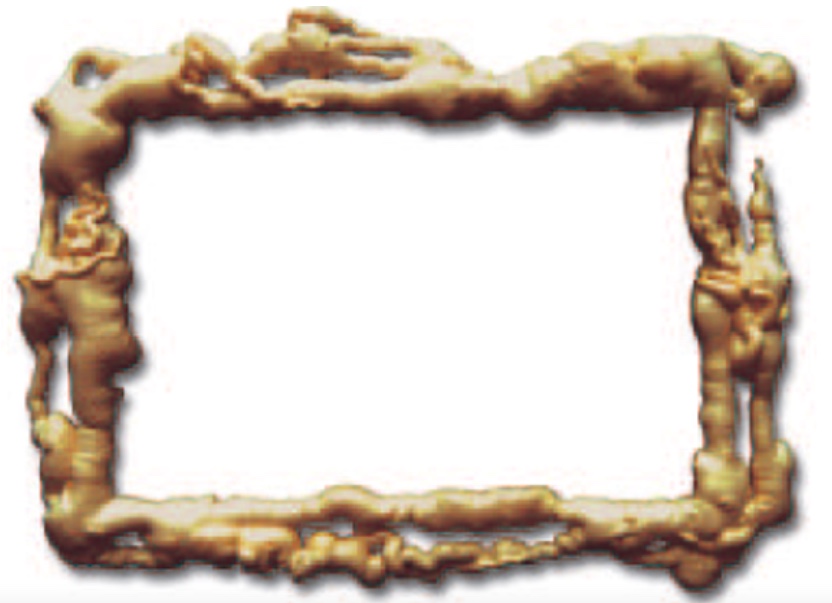
Treasure Room in The International Art Museum of America

Treasure Room in The International Art Museum of America

Last Sunday, I was so blessed to have a chance to visit the treasure room in The International Art Museum of America. The room only open four times a year. Three big locks fully close the door. Three persons open locks at the same time. One museum staff accompanied me inside the room, introducing each artworks, and answering my questions. There are four pieces of extremely beautiful splendid Yun Sculptures inside the room.

From the introduction, I learned that Yun Sculpture is an art form created by H.H. Dorje Chang Buddha III. It is exquisite and mysterious, their beauty is astonishing and spellbinding, and structures are both exquisitely fine and sophisticated, with unanticipated variations. Unprecedented in history, H.H. Dorje Chang Buddha III’s Yun sculptures are the first form of art that cannot be replicated, regardless of the method used.

The first one I saw is called Holy Purity. Its color is soft and lustrous, like thin white silk. It looks as pure and noble as jade or ice, has an elegant hanging style, and is completely free of any flaw. This artwork, which is pleasing to the eye and comforting to the mind, fully deserves that name it was given, for it indeed possesses the qualities of holiness, purity, elegance, refinement, and white splendor.

Holy Purity
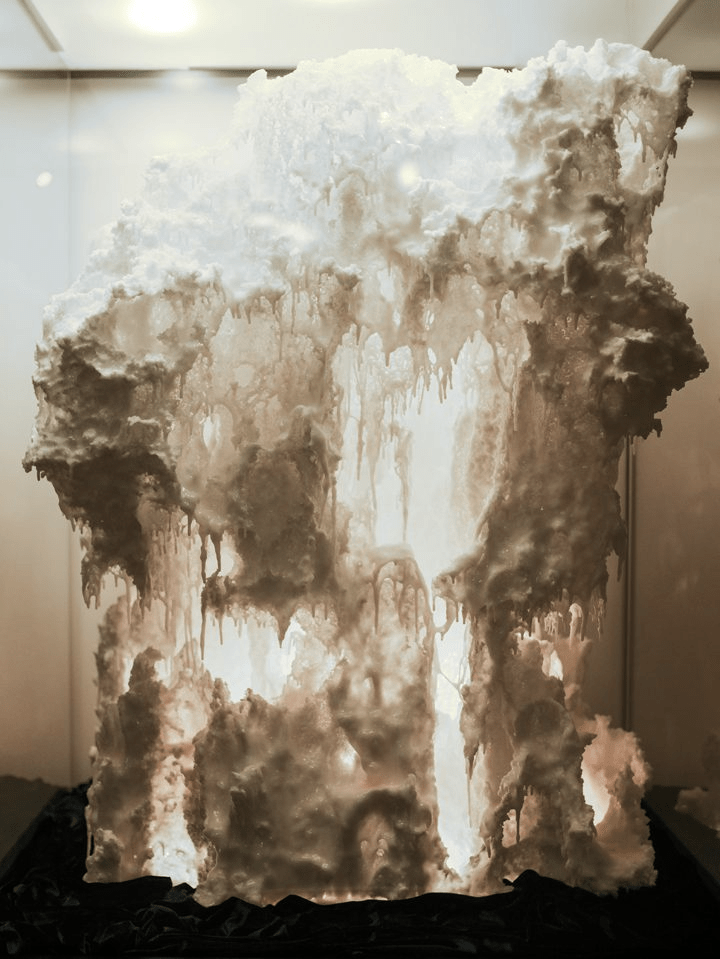
When look at different angles, I can see various remarkable sights, and light auspicious mist. I truly experienced a carefree and peaceful feeling that is difficult to describe. I felt my heart and soul are purified by this noble object. The pictures here are too dark, the whole sculpture is totally milky white.

Mystery of Lovely Colors

The second piece is called Mystery of Lovely Colors. Just like its name, it is a very vibrant and colorful artwork.
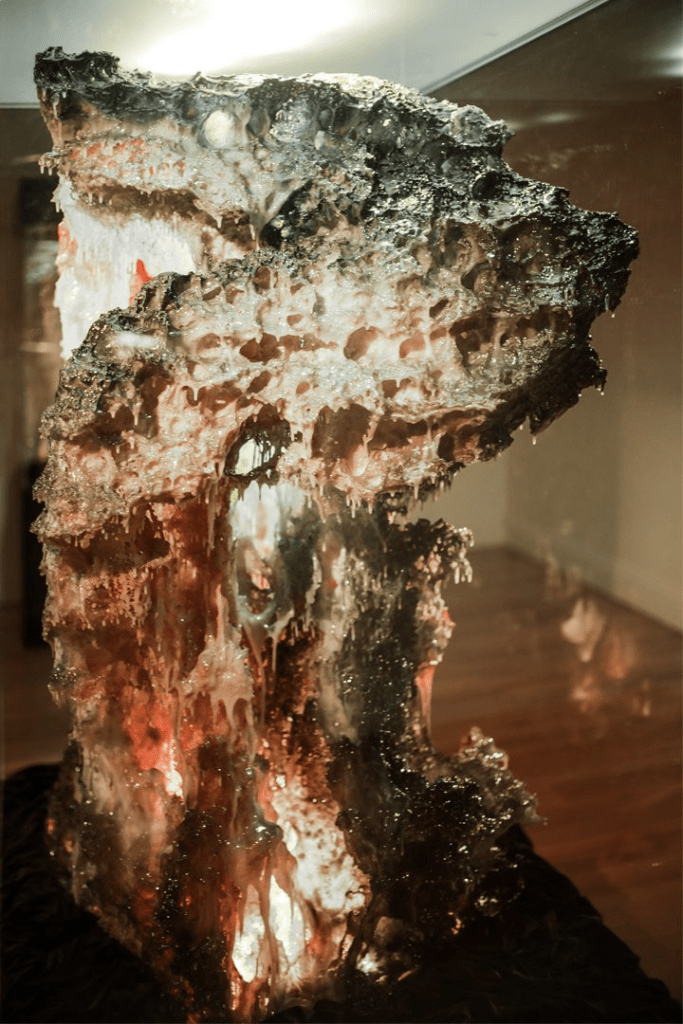
Mystery of Lovely Colors is a big Yun sculpture. Its structure and overall arrangement can only be described as “endlessly varied” and “unfathomably mysterious.” Phrases such as “swirling unusual colors,” “a mixture of emptiness and substance,” and “too beautiful to be absorbed all at once” are used to describe its grandeur, beauty, and elegance. When this exquisite sculpture is viewed from different angles, one can see various wonderful and fascinating sights that seem to be constantly changing.

The museum guide told me : “When this Yun sculpture was displayed in the Gold Room of the United States Capitol and at the Organization of American States, experts and scholars viewed it with admiration, praising it with words such as, “a gift from God to mankind,” “a treasure from a Buddha-land,” “captivatingly beautiful,’ and even “since the appearance of Yun sculptures, all treasures in this human world have become like stars in the sky that pale against a resplendent moon.”

Mysterious Mist Inside A Stone

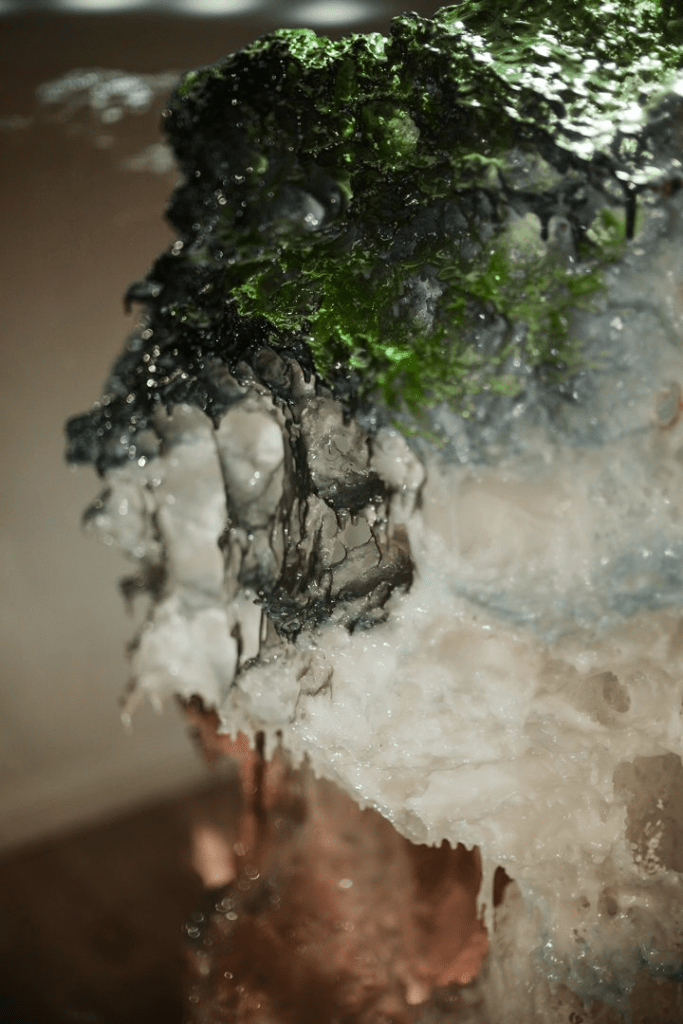
Inside a small rome, there are two very special Yun sculpture pieces called Mysterious Mist in a Stone. One can see that mist is permanently sculpted in it like a miracle.

White jade-like gauze hangs inside a stone
Unmatched sculpting produces emotion amid the mist
Without words, a rare melody plays inside the cave
Such heavenly scenery is difficult to duplicate

Mist is permanently sculpted in the cave of the Mysterious Mist in a Stone, an artwork that cannot be replicated

From its external appearance, one can see that “Mysterious Mist Inside a Stone” is an ordinary greenish rock that is a few feet long. However, the inside of it is a totally different world. Its interior contains layer upon layer of what appears to be peaks and hills, forming a beautiful crisscrossing network. Its scenes seem to change endlessly, giving it a profoundly mystical quality. In some parts of the stone’s interior, there is mist as exquisite as chiffon, while in other parts the mist is so thick it covers whatever is behind it. In the latter case, a lamplight that penetrates mist must be shone into the stone to view the background scenes. One can see mist circling upward.

Mysterious Boulder with Mist

Right beside the Mysterious Mist Inside a Stone is another sculpture also has mist inside. It is called Mysterious Boulder with Mist. There are two grottoes inside the boulder, each of which contains its own scenery. When you look inside the right grotto, you will see thick mist enveloping everything. The structure of the carved scenery inside this hole is vague, since it cannot be clearly seen through the mist. You are left with the impression that the mist is a few dozen yards deep inside the hole when it is actually only three or four feet deep. When you look inside the left grotto, you will see that there is no mist at all. You will clearly see the structure of the carved scenery inside this hole. The material used to carve those two grottoes was the same, the colors applied to both of them were the same, and their depth is the same. The carving skills and inner-realization of H.H. Dorje Chang Buddha III caused this mysterious phenomenon of one side containing thick, enveloping mist and the other side containing no mist at all.

Sculptors throughout history have been able to produce material forms or images through sculpting. However, no one has been able to produce through sculpting something as insubstantial and formless as fog or mist. Nonetheless, there are sculptures of H.H. Dorje Chang Buddha III that combine both material form and mist.

While I was fascinated by those beautiful artworks, I seem to hear the works say, “I’m born on this earth in such a beautiful and exquisite way. Who or what kind of artist gave birth to me? I could not have been given life by a mundane person. “

H.H. Dorje Chang Buddha III’s Yun sculptures can truly be called peerless, priceless treasures. H.H. Dorje Chang Buddha III was able to create these treasures based upon his high state of realization, profound and extensive knowledge, as well as his penetration of the laws that underlie the birth, growth, and change of all things in the universe.

Treasure Room in The International Art Museum of America

Link: https://peacelilysite.com/2022/11/09/treasure-room-in-the-international-art-museum-of-america/

#MasterWanKoYee #DorjeChangBuddhaIII #HHDorjeChangBuddhaIII#DorjeChangBuddha#IAMA#InternationalArtMuseumofAmerica
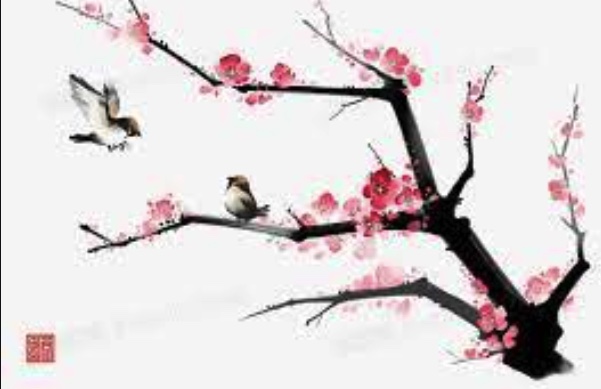
Chinese Plum Blossom Paintings

Chinese Plum Blossom Paintings

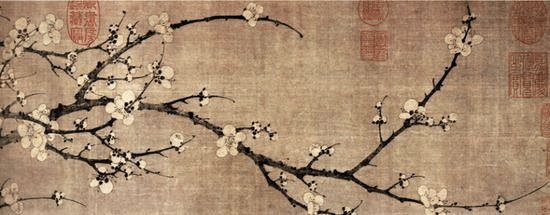
One of the most beloved flowers in China, the plum blossoms (méi-huā, 梅花) have been frequently depicted in Chinese painting and poetry for centuries. The Chinese see its blossoms as both a symbol of winter as well as a harbinger of spring. It is precisely for this reason that the blossoms are so beloved, as they bloom most vibrantly amidst the winter snow, after most other plants have shed their leaves, and before other flowers appear. They are seen as an example of resilience and perseverance in the face of adversity. Though neither the plum tree nor its blossoms are very striking, they manage to exude an otherworldly exquisiteness and beautiful elegance. The demeanor and character of the plum tree thereby serves as a metaphor for inner beauty and humble display under adverse conditions. Because they blossom in winter, the plum blossom is a member of the “Three Friends of Winter (歲寒三友)”, along with the pine and the bamboo. The plum blossom is also a member of the “Four Gentlemen (四君子)” in Chinese art (the others being orchid, bamboo, and chrysanthemum), symbolizing nobility. In China, there are over 300 recorded cultivars of mei, which can be broadly divided by color into white, pink, red, purple, and light green types.

When we look through all of the ancient and modern books on plum blossom paintings, it is not difficult to discover that all of the famous master plum blossom painters had extensive knowledge, deep understanding of ancient and their own contemporary times, and immense talents. No artist in history can be found who lacked virtue and learning and still was capable of painting highly exquisite plum blossom paintings. The plum blossom paintings of ancient artists such as Mian Wang and Dongxin Jin and the modern artist Changshuo Wu are splendid works based upon the profound knowledge and virtue of their creators.

Mian Wang ( 1287-1359 ) : Early Spring at South Corner of Garden
Artist: Dongxin Jin (1687 – 1764)
Artist: Changshuo Wu (1844 – 1927)

As a contemporary artist, the Pop of Buddhist, H.H. Dorje Chang Buddha III has also painted dozens of masterpieces of plum blossom compositions. All in the book entitled Collected Plum Blossom Paintings, Calligraphy, Poems, and Songs. Wielding the brush with great facility, His Holiness creates paintings that are completely devoid of mundane garishness, have the exquisite look of ancient bronze and stone inscriptions, and are imbued with a scholarly air. His Holiness’s painting skills have surpassed the ordinary and reached the consummate mastery of a holy being. Below are several art works from the book. Some of the paintings are in the exhibition of The International Art Museum of America.

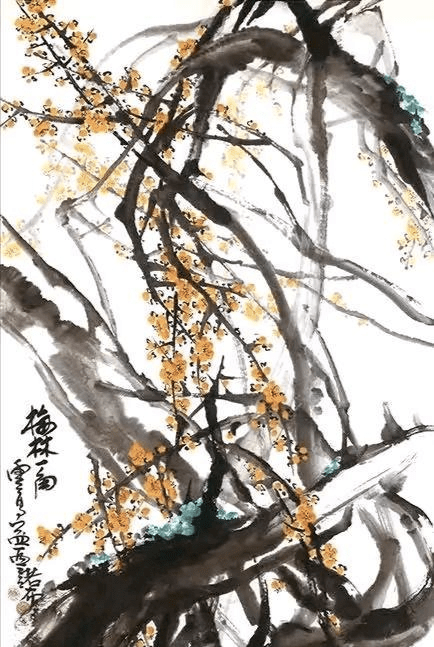
Small Portion of a Plum Grove

Yellow plum blossoms bloom in winter and are generally used during Chinese New Year celebrations as a symbol of great auspiciousness. The painting expresses beauty of a real plum blossom grove.

Drunk in a Green Garden

The turquoise plum blossom is a rare species of plum blossom. These elegant, sublime flowers have a strong resistance to coldness and a scent that is quite fresh and fragrant. This painting has a vigorous and firm style yet maintains great simplicity. The brushwork is bold, vigorous, and completely unconstrained. Large, dancing strokes of a casual hand and free mind bring to form branches and twigs.

Plum Fragrance in the Holy Realm

The brushwork, casually applied, was accomplished with an unfettered hand and detached mind, free of the slightest artificiality. It is a seemingly ever-changing work. Its charm, tone, transitions, and depictions represent the highest level of Eastern ink-and-wash paintings. A transparent layer of lighter ink on top of darker ink is clearly visible, imbuing the painting with a pure and fragrant air and providing the viewer with a feeling of comfort and ease.

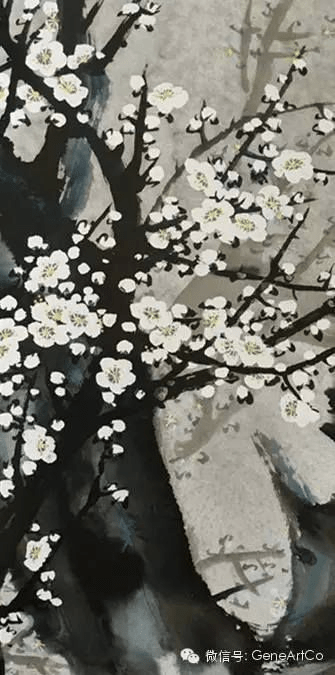
Winter Powder

A most elegant and valued plum flower called ‘Dong Fen” (winter powder). It is widely known to be the king of whiter plum blossoms. A strong contrast is presented by the graceful dense ink that was used to paint the tree trunk and the whiting used to form the flowers. The spatial effect of fairness adds to the charm of the picture, showing an awareness of both emptiness and form. A very special aspect of this painting is that the artist did not apply powerful, bold strokes of uneven contour and content. Rather, ink was applied through a gradual moistening process, manifesting the strong talent of the artist.

Chinese Plum Blossom Paintings

Link: https://peacelilysite.com/2022/11/03/chinese-plum-blossom-paintings/

#DorjeChangBuddhaIII #HHDorjeChangBuddhaIII#DorjeChangBuddha#IAMA#InternationalArtMuseumofAmerica#ChinesePaintings#PlumBlossom#Paintings#WangMian#WuChangShuo

Source: https://www.comuseum.com/painting/flower-painting/plum-blossom/

Mist, Clouds, and Autumnal Color

Artist: H.H. Dorje Chang Buddha III 

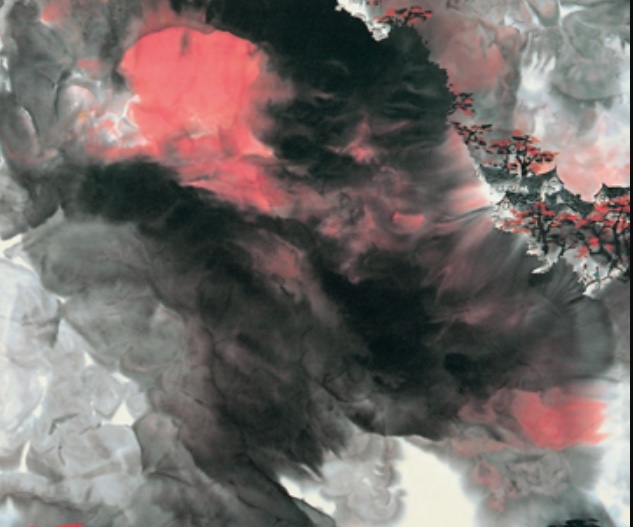
Mist, Clouds, and Autumnal Color – A Splash-ink Painting

I love all four seasons, but Autumn is my favorite. Autumn is an artist, painting the world in vibrant hues of red and gold. The sunshine is warm and soft, and the sweet joy of the harvest season fills the air. And to top it all off, the weather is just about perfect. There is truly no better time to just sit down and take in the beauty of nature.

Many artists aspire to capture this beauty in brush and ink, to keep a souvenir of Fall’s charm. When I saw the painting Qiu She Yan Yun (Mist, Clouds, and Autumnal Color) for the first time, I felt as if I had melted into the distinct autumnal colors and mist.

“Mist, Clouds, and Autumnal Color” is a splash-color painting that conveys a very strong sense of flowing watery ink and colors. An air of power and grandeur expressed through clouds that seem to swallow mountains and waters pervades the entire painting. The natural captivating charm of this scene is similar to the charm of a scene on the ground after a long, flowing river has just rolled by. This setting is embellished with red maple leaves and houses amid autumnal, cloudy mountains, presenting a wonderful image distinctly characteristic of fall.

When carefully examining the watery ink that produced such charm, one can see beautiful areas that are themselves paintings within a painting and details that are hidden within rough brushwork. Even within small areas are subtle variations of darkness and light, of the surreal and the real, all the while embodying splendid charm.

The artist highly preserves traditional painting skills, large-scale splash-ink technique, freehand brush work and fine brush stroke. Very tiny signs of charm can be seen amid this large-scale splash-ink painting. Soaring charm and exceptional beauty are words that aptly describe this art work.

This painting is in permanent collection of The International Art Museum of America located in downtown San Francisco.

Mist, Clouds, and Autumnal Color – A Splash-ink Painting

Link: https://peacelilysite.com/2022/09/22/mist-clouds-and-autumnal-color/

#SplashinkPainting#ChinesePainting #DorjeChangBuddhaIII #HHDorjeChangBuddhaIII#DorjeChangBuddha#IAMA#InternationalArtMuseumofAmerica#Art#Artist

Inspiring Art Creation and Promoting Community Culture Activities

Mission of The International Art Museum of American

Established in October 2011, The International Art Museum of America(IAMA) is a charming and vibrant gallery, full of both exotic and familiar paintings, portraits, and sculptures. Its diverse collection of artwork and education programs promotes art appreciation, culture exchange, and communication between artists and guests. With these qualities, the IAMA hopes to nurture an important spiritual goal: that all people may have a deeper understanding of each other.

Tengergold Gallery

Tendergold Gallery was first introduced by IAMA in early 2018.  The name pays homage to our ever-so-funky neighboring Tenderloin District. While it could undeniably be seen as dark and gritty, it also hosted some of San Francisco’s most exciting underground art scenes and nightlife. At Tendergold celebrated this by bringing art to the light of day from emerging artists, both internationally and from the Bay Area.  Once at this room, a young Syria refugee artist, who live in Greece refugee camp, displayed her paintings, and the income from auction of the drawing was donated to Syria refugee camp. Tendergold Gallery was closed in early 2022 and replaced by Sip Art.

Tengergold Gallery and Artist Interviews 1
Tengergold Gallery and Artist Interviews 2

Lightspace Gallery

Besides collecting timeless and world-class art treasures, the  International Art Museum of America is also mindful of contemporary art creations of all forms.  The museum created a special exhibit dedicated to the modern art of our era. The quarterly rotating exhibit called Lightspace was conceived thereafter beginning in September of 2018. We select outstanding artworks to be on exhibit in the Lightspace Gallery, from photography to mixed media, sculpting, and installation art.

Lightspace Gallery and Artist Interviews 1
Lightspace Gallery and Artist Interviews 2

Culture and Entertaining Events

For ten years, the IAMA has brought the artwork and traditions of many cultures to the residents of San Francisco. It has embraced a mission of bringing happiness and cultural understanding through its various activities and artistic programs. We hope that our work will help bring people all over the world to a greater understanding and harmony.

Mission of The International Art Museum of American

Link: https://peacelilysite.com/2022/08/04/inspiring-art-creation-and-promoting-community-culture-activities/

#MasterWanKoYee #DorjeChangBuddhaIII #HHDorjeChangBuddhaIII#DorjeChangBuddha#IAMA#InternationalArtMuseumofAmerica#SanFrancisco#Art#Artist#CultureExchange

Art Frames that Truly Complement Paintings

Art Frames that Truly Complement Paintings

From ancient times to the present, the art of making frames has existed in the East, the West, regions of different nationalities, among the general population and within imperial palaces. There have been many kinds of frames for pictures, paintings, and other forms of art. There are truly unique, beautiful, and elegant art frames displayed in International Art Museum of America, located in San Francisco downtown, that I never seen at anywhere else before.

H.H. Dorje Chang Buddha III, the artist created sculpted art frames in the style of various natural elements. Examples of this include frames made in the style of ganoderma lucidum (a type of hard dark brown fungus supposed to possess supernatural powers), tropical plants that wind around trees, coral, ancient-looking unearthed cultural relics, white and green jade, and winding vines, faux withered vines, faux tree roots, faux white jade, faux old wood, faux spotted jade, faux ganoderma lucidum, faux red coral, etc. All frames there are artistic fascinating.

The ganoderma lucidum art frames are formed by putting together many of those hard mushroom-type fungi. Of course, such frames are not composed of real ganoderma lucidum. Rather, the ganoderma lucidum in such frames are created from carving and application of colors. The shapes of the Ganoderma lucidum are connected together on the wooden frame to form an exquisite, integrated shape. Those ganoderma lucidum have the same color, air, and shape of real ganoderma lucidum. Furthermore, rare thousand-year-old ganoderma lucidum, old hundred-year-old ganoderma lucidum, and new tender Ganoderma lucidum are interconnected to form an elegant and charming appearance. Many ganoderma lucidum mushroom caps and mushroom stems are interconnected in a beautifully rhythmic manner. The interchange between substance and emptiness, highness and lowness, largeness and smallness, and thickness and thinness creates a highly elegant appearance. 

Reishi Mushroom art frame was sculpted and painted with oil colors. It captures the form and texture of reishi mushrooms and has the gracefulness of an aged cultural relic.

The faux green jade art frames have an ancient-looking green jade color to them that is steady and elegant. This color is not stale or old-fashioned in the least. Rather, it is a natural combination of refined blackish green and sprightly verdant, although there is not much verdant hue. This color expresses the essence of old jade that has slowly matured over thousands of years, with a vigorous and spirited quality that is clearly seen. This refined green jade color will every now and again reveal a lustrous white, like the color of the feathers of immortal cranes. Such a mixture of hues truly transcends all traces of the mundane. The color green alone could be further divided into many different types based upon its various hues. There is aged green, light green, blackish green, glossy dark green, pastel green, verdant, fresh green, deep green, translucent green, etc. There actually are countless gradations of green in these art frames, all of which are natural looking. All of these various shades of green interconnect and interact so naturally there is not the slightest sign they were created by man. Therefore, it is difficult to fathom how the creator of these frames could harmonize these colors so masterfully, fittingly, flawlessly, and beautifully.

Faux emerald-jade art frame has the pattern, color watery tone, and texture of real jade

This is a faux natural tree-root art frame, has the pattern, color, and texture of real tree roots

Each and every detail of the frames in the museum, expresses an extremely natural quality in both form and spirit. Some frames are devoid of the dark spots or broken parts that natural objects have after being exposed to wind, frost, rain, and snow. His Holiness has developed to a perfect degree the depiction of the fleeting beauty that natural treasures display during their growth process. Simply put, the worth and prestige of any painting mounted to those frames will increase tremendously.

Art Frames that Truly Complement Paintings

Link: https://peacelilysite.com/2022/03/18/art-frames-that-complement-the-paintings/

#MasterWanKoYee #DorjeChangBuddhaIII #HHDorjeChangBuddhaIII#DorjeChangBuddha#IAMA#InternationalArtMuseumofAmerica#ArtFrame#Art

Source: https://thebodhiwish.com/art-frames-by-h-h-dorje-chang-buddha-iii/

The International Art Museum of America (IAMA)

The International Art Museum of America (IAMA)

Located at the heart of downtown San Francisco, on 1025 Market Street near Sixth Street, the International Art Museum of America is a permanent , non-profit museum open to the public. The museum’s goal is to utilize the exhibition forum to pass on works of art that have achieved the most exquisite beauty and preciousness in the history of civilization, in order to further humanity’s moral progress, spiritual wellbeing, cultural development and world peace. It takes as its mission bringing humanity happiness and uplifting aesthetic enjoyment.

When IAMA was first founded, H.H. Dorje Chang Buddha III had loaned the museum about 100 of his pieces. The works of H.H. Dorje Chang Buddha III have been recognized with numerous awards over the years – the Presidential Gold Award, the Dr. Martin Luther King Legacy Award for International Service and Leadership, Fellowship by the Royal Academy of Arts in 2004 and a World Peace Prize at the US Capitol in 2011.

Since its founding in 2011, the International Art Museum has been a place of peaceful reflection and international understanding. The collection in the museum has grown to include art from China, Algeria, Belgium, England, France, the Netherlands, Germany, Ireland, Norway, Russia, Scotland, and the United States. The works of traditional calligraphy, Western oil painting, modern ink brush landscapes, sculptures and portraits, all work together to showcase the diversity of human experience and perception.

The museum opens between Tuesday and Sunday between 10:00am – 5:00pm, and it’s free admissions. Please visit https://www.iamasf.org/dorje-chang-buddha for more information.

The International Art Museum of America (IAMA)

Link:https://peacelilysite.com/2022/01/14/the-international-art-museum-of-america-iama/

#MasterWanKoYee #DorjeChangBuddhaIII #HHDorjeChangBuddhaIII#DorjeChangBuddha#IAMA#InternationalArtMuseumofAmerica
ARTISTIC ACCOMPLISHMENTS OF H.H. DORJE CHANG BUDDHA III


ARTISTIC ACCOMPLISHMENTS OF H.H. DORJE CHANG BUDDHA III

H.H. Dorje Chang Buddha III

The accomplishments and contributions of H.H.  Dorje Chang Buddha IIIare extremely comprehensive. The book entitled H.H. Dorje Chang Buddha III published in 2008 shows some of the accomplishments of H.H. Dorje Chang Buddha III in thirty different main categories. Within the one category of painting and calligraphic artistry alone, H.H. Dorje Chang Buddha III  has created Chinese paintings, oil paintings, different styles of calligraphy, etc. In addition to being able to paint in the styles of the currently existing schools of painting, such as the Realism School, the Abstract School, the Line School, the Impressionist School, and other schools, H.H. Dorje Chang Buddha III has independently originated sixteen unique schools of painting. They are called: 1) the Chaoshi School; 2) the Chouxiang Yunwei School; 3) the Wenfeng School; 4) the Fangfa School; 5) the Menglong School; 6) the Xiangtong School; 7) the Fanjuan School; 8) the Puomo Xiantiao Xiezhen School; 9) the Weiyin School; 10) the Fanpu School; 11) the Miaoxie School; 12) the Puomo Weiyun School; 13) the Kuangxi School; 14) the Yousi School; 15) the Banqi School; and 16) the Houdui Sekuai School (Thickly Piled Patches of Color School).

Many famous painters spent their entire lives focusing on one kind of artistic subject or theme in order to establish their own school of that one style. However, not only did H.H.  Dorje Chang Buddha III found sixteen schools of painting, He also developed the style of each school to a state of perfect artistry. This has naturally resulted in the distinct school of painting called “The H.H. Dorje Chang Buddha III School of Multiple Styles,” which no painter in history can match!

At the fourth session of the World Poets and Culture Conference held in Hungary in 1994, more than 5,600 experts and scholars representing 48 countries and regions unanimously approved conferring upon H.H.  Dorje Chang Buddha III the title “Distinguished International Master,” which has an honorific status comparable to a head of state. The certificate was signed by Sir Juan Antonio Samaranch, the then President of the International Olympic Committee.

On February 10, 2004 the Royal Academy of Arts of the United Kingdom conferred upon H.H.  Dorje Chang Buddha III the title of “Fellow,” a title never before conferred in the history of that academy. The Royal Academy of Arts in the United Kingdom was founded in 1768 by the then King of Britain, George III. That academy has received the patronage and support of the royal family up to this day. Professor Phillip King, President of the Royal Academy, awarded the Certificate of Fellow to H.H.  Dorje Chang Buddha III at the British Embassy in Washington, DC. The cultural counselor of the embassy attended the award ceremony in person. Professor Phillip King said, “This is the first artist to receive this title in the more than 200-year history of the Royal Academy of Arts in the United Kingdom.”

Since the year 2000, paintings by H.H. Dorje Chang Buddha III  have repeatedly broken price records in art markets, selling for the highest prices for paintings by any living artist. The market price has now reached more than US$1,000,000 per square foot. Moreover, market prices recorded at international art auctions and evidence of sales prove that limited release copies of paintings by H.H.  Dorje Chang Buddha III are sold at the world’s highest prices, reaching over US$380,000 each, thus surpassing copies of paintings by Picasso, Monet, Van Gogh, and other extremely famous painters in the world.

Many works of art by H.H. Dorje Chang Buddha III are exhibited at the International Art Museum of America, which is a non-profit public-benefit art museum located in downtown San Francisco in the United States. Furthermore, the International Art Museum of America is offering to buy paintings by H.H.  Dorje Chang Buddha III in the style of the Thickly Piled Patches of Color School at a price of over US$1,000,000 per square foot. However, it is still very hard to find any such paintings offered for sale.

ARTISTIC ACCOMPLISHMENTS OF H.H. DORJE CHANG BUDDHA III

Link: https://peacelilysite.com/2021/12/29/artistic-accomplishments-of-h-h-dorje-chang-buddha-iii/

#MasterWanKoYee #DorjeChangBuddhaIII #HHDorjeChangBuddhaIII