Supernatural Powers in Buddhism

Do Buddhists advocate supernatural powers? Actually, this is not a matter of advocating or not advocating. Rather, supernatural powers are that which everyone who is accomplished in the dharma possesses. Such powers are the manifestation of realization achieved through cultivation. They are phenomena that exist in the course of cultivation but are not the goal of cultivation, which is liberation from the cycle of birth and death. They are by-products that arise during one’s practice. These by-products called supernatural phenomena naturally exist in all liberating paths within the Buddha-dharma. Becoming attached to these by-products and regarding them as the goal is heretical supernatural powers. Applying these by-products in a free and unattached way and regarding them as illusory is treating supernatural powers based on the correct Buddha-dharma view.

Sakyamuni Buddha manifested supernatural powers and also was against supernatural powers. Each of those two tacks reflects different underlying karmic conditions. To those with higher vehicle (Mahayana) faculties, the Buddha spoke of supernatural powers as enjoyment resulting from incredible realization and the free and unattached application of samadhi. Examples of this are in the Lotus Sutra, the Samyuktagama Sutra, and other sutras. To those practitioners with low faculties, the Buddha spoke of not being attached to supernatural powers in order to reach the goal of realizing emptiness. An example of this is in the Shurangama Sutra.

Anyone with low faculties who wants to become a Buddha must go through the stage of cultivation corresponding to those with high faculties. In one’s course of cultivation, this is analogous to going from one city to another city. If one does not travel along the pathway between the two cities, one will not reach that other city. When one is walking toward that other city, one will certainly see and encounter all of the phenomena that are on the way. This is like the supernatural phenomena that arise in the course of one’s cultivation when wisdom is being opened. If one does not experience such phenomena that arise during the cultivation process, then one will not reach the other shore of liberation. Because one has not traversed the path of the Buddha-dharma leading to liberation, one cannot encounter phenomena that occur while traversing that path. That is why such a person has not experienced the stage in the process whereby wisdom is opened and supernatural powers are realized. Thus, all Buddhist who become accomplished in the dharma must go through the stage of supernatural powers.

Is it true that the authentic Buddha-dharma does not speak of supernatural powers? If that were the case, then why did the great leader of Buddhism, Sakyamuni Buddha, manifest supernatural powers everywhere? Why did he even manifest great supernatural powers right before entering nirvana? What crazed and demonic person would dare say that Sakyamuni Buddha did not practice the true Buddha-dharma? Just think. If someone with great accomplishment in the dharma did not have any supernatural realization powers, what would be the difference between that person and an ordinary person who had not learned Buddhism?
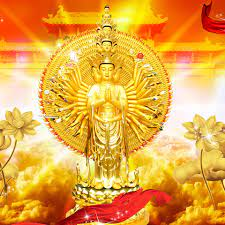
Based on the Sutra, it is stated that one who attains liberation and becomes a Saint must possess six great supernormal powers or superknowledges (abhijna). These powers are as follows:

  1. Rddhi-saksatkriya: This power grants the ability to be anywhere or do anything at will, including extraordinary feats such as flying through the air and performing miraculous acts.
  2. Divyasrotra: This power enables the individual to hear sounds from any location, even those that are normally inaudible, such as the subtle sounds of ants walking or distant noises emanating from other realms. It is also referred to as clairaudience or “the divine ear.”
  3. Paracittajnana: With this power, one gains the ability to understand the thoughts and read the minds of other beings.
  4. Purvanivasanu-smrtijnana: This power allows the recollection of previous existences or past lives, both one’s own and those of others.
  5. Divyacakus: This power provides an instantaneous view of anything, regardless of its physical presence. It encompasses the ability to see events and occurrences in faraway places or even in other realms of existence. This power is also known as clairvoyance or “the divine eye.”

The sixth supernormal power, known as asavakkhaya, is unique to Buddhism and complements the other five powers. While individuals from non-Buddhist traditions can achieve the first five powers, their significance is not as profound as those attained by a Buddha due to the absence of complete enlightenment and wisdom. For instance, a Hindu practitioner remains bound by the world of Brahma, whereas a Buddhist practitioner is not limited in such a way. A Buddha’s powers are boundless. The sixth power refers to the understanding that one’s defilements have been extinguished and that liberation from the cycle of reincarnation has been attained. It represents the state of enlightenment. This is sometimes referred to as anasrava, which denotes the cessation of outflows or asravas. These powers are also known as the six superknowledges (abhijna) or supernatural cognitions.

The Dharma Protectors guard the use of these powers very closely. They will block the chakras of those unworthy to obtain these powers. Likewise they will untie the knots in the chakras of those cultivators who are worthy of such powers, causing the supernormal dharma powers of the buddhas and bodhisattvas to suddenly turn into light and enter the chakras. At that time, the mandala in each practitioner’s body will respond and will accept the powers. When your three karmas of body, speech, and mind unite into one body and correspond with the teachings, supernormal dharma powers will come into being. When your state of realization and state of virtue have reached the level where it is appropriate to obtain supernormal dharma powers, then as soon as you practice according to the dharma, supernormal dharma powers will appear. You cannot attain supernormal powers without proper moral discipline, concentration and wisdom. You must first be able to master the Dharma.

H.H. Dorje Chang Buddha III Wan Ko Yeshe Norbu Holiest Tathagata, is the highest ancient Buddha with complete proficiency in both exoteric and esoteric Buddhism and perfect mastery of the Five Vidyas. A portion of His Holiness’s realization powers is openly shown in this book A Treasury of True Buddha-Dharma for all to clearly see.

However, the clear and definite views expressed by His Holiness have enabled us to understand the principles and direction of cultivation. H.H. Dorje Chang Buddha III said the following:

“Not only did the Buddha speak a great deal about supernatural powers in the sutras, he also manifested supernatural powers. Such words and facts were directed at those who reached the higher vehicle (Mahayana) sambhogakaya state or nirmanakaya state. The Buddha also stated in the sutras that one must not become attached to supernatural powers. Such teachings were directed at those who were at the beginning stage of realizing their original nature and dharmakaya in order to protect them. If practitioners who are at the beginning stage of realizing the true nature or true-suchness of all phenomena become attached to supernatural powers, they will fall into that which is conditioned. They will then be practicing heresy. Thus, you should understand that supernatural powers are a reflection of the unhindered, unobstructed nature of Buddhas and great Bodhisattvas. Such powers are not that which beginning stage practitioners can possess and enjoy.”

May Buddha and Bodhisattva bestow their blessings upon all, guiding them towards liberation and enabling them to reside in the realm of ultimate bliss.

Supernatural Powers in Buddhism

Link:https://peacelilysite.com/2023/06/30/supernatural-powers-in-buddhism/

#DorjeChangBuddhaIII #HHDorjeChangBuddhaIII  #MasterWanKoYee #Buddha#Buddha-dharma #InternationalBuddhismSanghaAssociation#IBSA#WorldBuddhismPublishingLLC #Buddhist #DharmaProtectors #SupernaturalPowers #SakyamuniBuddha#Cultivation

Source: A Treasury of True Buddha-Dharma
The Best Buddhist Dharma to Rebirth at Paradise of Ultimate Bliss
Buddhist Devotee Hou Yushan Passed Away, Leaving a Legacy of Spiritual Journey

On June 1st, 2002 Buddhist disciple Hou Yushan peacefully passed away at his home in Los Angeles. Witnessed by his wife, Hou Li Qingqiu, the celestial realm appeared before him as Shakyamuni, Amitabha Buddha, and Avalokiteshvara, guiding him towards the ultimate state of bliss. Prior to his passing, Hou Yushan expressed his unwavering determination to learn Buddhism in this lifetime under the guidance of his master.

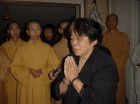
Hou Liqingqiu, a devoted practitioner of Chinese medicine in California, addressed over 20 monks who gathered in their home for a Buddhist practice session in honor of Hou Yushan. She shared the remarkable journey of her husband, stating that he had dedicated many years to the study of Buddhism. Diagnosed with lung cancer four years ago, Hou Yushan had endured arduous and prolonged treatments. However, his life took a transformative turn a year and a half ago when he and his wife attended the Yiyungao International Cultural Foundation, where they listened to the enlightening teachings of Master Yiyungao (H.H. Dorje Chang Buddha III).

Deeply inspired by the teachings on the pre-recorded dharma discourse, Hou Yushan developed profound admiration and sincerity towards Great Master Yi. He actively participated in the group cultivation programs of the foundation, he never missed an opportunity to listen to the pre-recorded dharma discourse. Despite the advice of others to focus on rest and recovery, Hou Yushan insisted on continuing his full-time volunteer work at the foundation, driven by his desire to meet Master Yun Gao Yi as soon as possible.

In February of year 2002, Hou Yushan and his wife sought refuge under the guidance of Great Master Yi Yungao (H.H. Dorje Chang Buddha III) through the American Master Yiyungao International Cultural Foundation, led by Lobsang Gyatso Rinpoche. Upon meeting the revered master, they were pleasantly surprised to find that their preconceived notions were far from reality. Master Yi was not the distant figure they had imagined, instead, he displayed approachability and warmth. With utmost sincerity, they sought empowerment to learn the Dharma, presenting their offerings. However, Master Yi, without even glancing at them, humbly declined their offerings, explaining that he could not set such a precedent. Nonetheless, Great Master Yi graciously provided them with the empowerment and transmission of the Dharma. Hou Yushan diligently practiced the teachings and swiftly progressed, experiencing a sudden disappearance of his cancer pains.

Hou Yushan’s wife Hou Liqingqiu shared the incredible experience with the monastery

On the auspicious occasion of Buddha Bathing Day in May 2002, Hou Yushan and Hou Liqingqiu had the opportunity to reunite with Master Yi Yungao (H.H. Dorje Chang Buddha III). When asked about his wishes, despite his terminal illness, Hou Yushan expressed his sole desire to learn how to attain a stable rebirth in the Land of Ultimate Bliss. In response, Master Yi advised him to adopt a different practice method, specifically the Pure Land School’s method of reciting Buddha, with a particular emphasis on Amitabha. Additionally, Master Yi imparted a secret handprint of rebirth, promising that through this method, Hou Yushan would soon witness the state of Amitabha and be guided by Buddhas and Bodhisattvas to the Paradise of Ultimate Bliss. The compassion demonstrated by the master was profound, as he called Hou Yushan to his side and secretly shared the sacred handprint with him. Hou Yushan experienced indescribable excitement and joy upon receiving this precious gift—the profound Great Dharma of the Supreme PureLand Buddha Dharma.

Ever since Hou Yushan received the transmission of Amitabha Dharma on the Buddha Bathing Festival, his wife has witnessed a remarkable transformation in his condition. Hou Liqingqiu, the wife saw golden rays of yellow and red light radiating from his head and back at any given time. As a result, all the cancer-related pains in his body have vanished, along with the swelling. He no longer required the morphine painkillers prescribed by the hospital.

One day, Hou Yushan asked his daughter Lily, who worked as an anesthetist in the hospital, about his complexion. Lily responded, saying, “Dad, your complexion is genuinely vibrant, and your spirits are high. One would never guess that you are a patient.” On the morning of May 25, Hou Yushan shared with his wife that during his Dharma practice the previous night, he entered a state of samaya and visited the Land of Ultimate Bliss. He described the indescribable beauty of the paradise, filled with captivating shades of red, green, and purple.

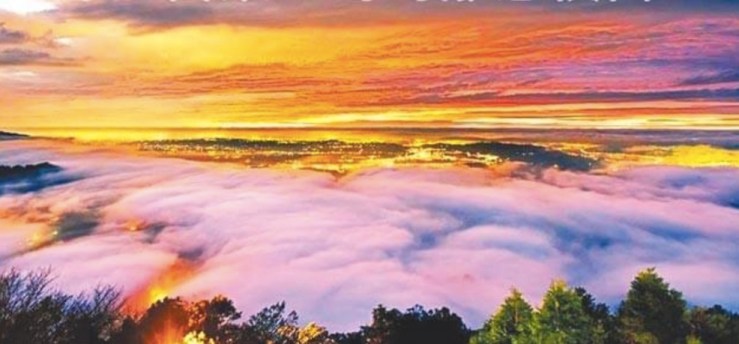
Hou Liqingqiu eagerly inquired, “Can you provide me with an analogy to illustrate its beauty?” After a moment of contemplation, Hou Yushan responded, “The Paradise of Ultimate Bliss surpasses any scenery in this world. Do you recall our visit to West Lake when we were young? In the early morning, the misty air and the colorful reflections on the lake created a breathtaking view. However, the beauty of the Paradise surpasses even that. Furthermore, the Buddha informed me that he would come to fetch me in seven days, urging me to proclaim to the world that the greatest Dharma in existence is with our master.”

On May 31, Hou Yushan carefully settled all family matters and left final words for his daughter. He advised her, “Do not hold your mother responsible for everything in her life. However, there is one thing you can admonish her for: if your mother ever strays from Buddhism and deviates from following Vajra Master (Master Yi Yungao – H.H. Dorje Chang Buddha III), remind her to earnestly practice under our Master Yungao’s guidance without hesitation.” Then, he turned to his wife, Hou Li Qingqiu, and earnestly said, “In your life, it doesn’t matter if you make other mistakes, but there is one thing you must not falter in: wholeheartedly follow the Vajra Master in dedicated practice. Your success lies solely in following his guidance, as his Dharma is the true path.”

Hou Yushan informed his wife that he would pass away that night and advised her, “Pay close attention tonight. At the moment of my passing, I fear I may fall into drowsiness and enter a demonic realm. Do not sleep, but remind me to visualize the Vajra Master above my head and Amitabha Buddha atop my head, while reciting the mantra wholeheartedly.” That night, in their seaside home, Hou Li Qingqiu had already foreseen that her husband, Hou Yushan, would depart to the Buddhist realm. Therefore, she set four alarms to ring at different times, once every hour. True to her premonition, at 6:15 a.m. on June 1st, Hou Yushan’s pulse and breathing slowed down. Hou Li Qingqiu shook his bed, and together they chanted, “Namo Vajra Guru! Namo Amitabha!” Hou Yushan held the secret handprint taught by Master Yi Yungao.

At that moment, Hou Li Qingqiu heard heavenly music, and Hou Yushan’s body emitted increasingly powerful golden light. She witnessed the appearance of Shakyamuni Buddha, Amitabha Buddha, Guanyin Bodhisattva, and other Buddhas and Bodhisattvas in the sky by the seaside. The merging rays of light grew more potent. After about five minutes, the Buddhas and Bodhisattvas, along with the celestial splendor, disappeared. It was then that she remembered to check Hou Yushan’s pulse, which had ceased along with his heartbeat.

Zhang Tianyou, the president of the American Master Yi Yungao International Cultural Foundation, was the first to arrive at Hou Yushan’s residence after his passing. He observed Hou Yushan, who appeared peacefully asleep, with no signs of pain on his face. Hou Yushan’s hands held the secret handprint from his previous life.

The incident deeply moved Long Hui, the chairman of the International Federation of Buddhist Monks and Nuns and the abbot of Huazang Temple. She continuously praised the greatness of Master Yi, stating that she often witnessed the suffering experienced by lung cancer patients at the end of their lives. However, the Pure Land method of reciting Buddha taught by Master Yi could transform a lung cancer patient’s condition within a month, filling their surroundings with auspicious golden light and relieving their pain. This would ultimately lead them to be reborn in the Land of Ultimate Bliss under the guidance of Buddhas and Bodhisattvas. Long Hui marveled at the tremendous power of Tathagata-rectification, beyond the capacity of words to express.

On the night before his passing, Hou Yushan personally prepared gifts and $5,000, and said to his wife, “The master never accepts offerings. He did not accept my offerings. Tonight, as I pass away, tomorrow you shall make the offerings and send them to the master. Please ensure he accepts them.” On June 1st, Hou Li Qingqiu faithfully followed her husband’s final instructions and sent the offering package to Yi Yungao, kneeling on the ground with tears in her eyes. She implored Master Yi to accept the offering, shouting loudly, “My supreme Buddha Vajra Master!” The master replied, “Do not address me as such, for I am not a Buddha. I am merely an ordinary practitioner, just like everyone else.” Hou Li Qingqiu explained that it was Hou Yushan’s testamentary offering, to which the master responded, “It seems there is no other way. These relics of Layman Hou shall be displayed in the temple and not for individual use.” The master immediately transferred $6,000 from his personal funds for Layman Hou’s burial expenses and informed the masters of two prominent temples to offer their support in accumulating merit for the deceased.

Photo from weixin.com

Buddhist Devotee Hou Yushan Passed Away, Leaving a Legacy of Spiritual Journey

Link: https://peacelilysite.com/2023/06/09/the-best-buddhist-dharma-to-rebirth-at-paradise-of-ultimate-bliss/

#DorjeChangBuddhaIII #HHDorjeChangBuddhaIII#DorjeChangBuddha #PureLand #Shakyamuni Buddha #AmitabhaBuddha #Avalokiteshvara #Cancer #ParadiseofUltimateBliss #MasterYiYungao #HouYunshan #Compassion #SupremeBuddhaDharma

What is meant by Nectar?

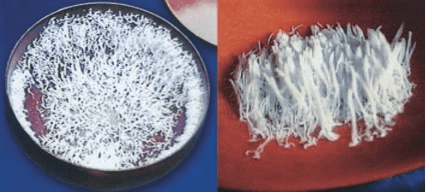
The nectar formed a Dharma cloud along with more than 200 sariras of various colors at the time that On the Buddha’s Birthday in 2001, H.H.  Dorje Chang Buddha III held Dharma assembly

By henghsing Gyatso Rinpoche

Although I am an ordinary RINPOCHE without any deep realization, nevertheless, I am very fortunate to have visited many Rinpoches. I have sought instruction from Great Dharma King Yangwo Yisinubu and from famous Rinpoches, such as Panchen Lama, Dalai Lama, Karmapa, Bo Mi Qiang Ba Luo Zhu, Dorje Losang, Dilgo Khyentse, Jiang Gong Kang Qin, Jiang Gong Kang Ce, Ga Wang, Zong Nan Jia Chu, Chuang Gu, Xia Ma, Hsi Jao, Bei Lu Qin Zhe, Tai Xi Du, Heng Sheng, Jia Cha, and Kalu. Especially with respect to nectar, I have a detailed understanding.

In general, nectar can be divided into five types: Most Precious Nectar, Great Precious Nectar, Long Life Nectar, Vajra Nectar, and Bodhi Nectar.
These different types of nectar can also be divided into two different types: nectar that comes from sacred Dharma practice and nectar that comes from exoteric Dharma practice. There are several different types of nectar within the category of nectar that comes from sacred Dharma practice, depending upon the different manifestations of Dharma by each Buddha.
Nectar resulting from exoteric practices is most prevalent in contemporary Vajrayana Buddhism. Basically, any Rinpoche can practice the Dharma to produce such nectar. Medicine or food is mostly used. Added to and mixed together with the medicine or food is sharira or a Dharma object that has been empowered. This is then made into powder to make pills. This powder is then empowered through practice of the Dharma and the recitation of mantras to become various types of nectar. Nectar that comes from exoteric Dharma practice is mostly used for empowerment, curing illnesses, and other reasons.


Nectar that comes from sacred Dharma practice is totally different from nectar that comes from exoteric, ordinary Dharma practice. The degree of empowerment from nectar that comes from sacred Dharma practice as compared with nectar that comes from exoteric Dharma practice is as different as ten thousand miles and one footstep. No words could adequately praise the nectar that comes from sacred Dharma practice. Ordinary Rinpoches and ordinary Dharma Kings who have been conferred such titles by the world cannot successfully practice the sacred Dharma to invoke nectar. Only those who are true Buddhas, or incarnations or transformations of Great Bodhisattvas, can successfully practice such Dharma.
In the sacred Dharma practice to invoke nectar, the Dharma King conducting the practice will assemble over 100 Rinpoches to form a mandala. Gold, silver, and other precious items will be burnt as offerings. The Great Dharma King will then practice the holy Inner-Tantric Dharma to invoke the Buddhas and Bodhisattvas to bestow nectar from the realm of the Buddhas. The Buddhas will assemble in the sky or will enter the mandala area. This holy scene will be seen by all of the more than 100 Rinpoches in attendance.

White Bodhi Nectar


At this time, the Buddha who corresponds to the particular nectar that is being invoked will descend. The appearance of that particular Buddha and its bestowing of nectar can be seen. There will be the emission of light and the manifestation of supernormal states when the nectar descends into the bowl. This Dharma bowl must first be thoroughly washed and must be empty.
There is absolutely nothing in this world which has the mysterious and changeable shape of the nectar that descends into the bowl. It is exactly as what is described in the book Know the True Doctrines. According to people of great virtue, only this type of sacred nectar is true nectar. According to Tibetan tantra, nectar is the holy material used for initiations. No matter what type of initiation is performed, nectar must be used. Especially for the supreme yoga initiations, true nectar is an absolutely indispensable material for the initiation Dharma water.
True nectar represents the causative factor that raises one from the ordinary world to the realm of the Buddhas. If true nectar is not used as the basis for an initiation, such as when man-made nectar created from medicine is used to empower, then such initiation is not an Inner-Tantric Sacred Dharma Initiation. Therefore, according to tantra, nectar is fundamental for liberation. Determining whether a Dharma King is the incarnation of a Buddha or Great Bodhisattva mostly depends upon whether he or she has the depth of realization to successfully practice the nectar Dharma. Can he or she commune with the Buddhas and successfully invoke them to bestow nectar? Any explanation other than this, no matter how many times said, is merely empty talk. This includes explanations such as, “I am the heir to a certain spiritual legacy… Since childhood, I have been officially recognized as a Holy One and have been so for many lives…. I am a Dharma King recognized by a certain Great Rinpoche…I am the head of a certain great temple.” This only proves that they are Rinpoches according to worldly regulations and teachings. Of course, they can save living beings. However, such explanations definitely do not prove that they are able to represent the sacred essence of the supreme tantra. Nevertheless, one cannot dismiss such people. They are persons of great virtue. It is simply a matter of different levels of attainment.


When visiting Rinpoches, I would speak of this matter of the Buddhas bestowing true nectar. Some Rinpoches who do not have the ability to successfully invoke true nectar become quite unhappy when this subject is raised. I think that this is not a big problem. If you think that you are a Great and Holy Dharma King or a Great Rinpoche, then conduct a Nectar Dharma Assembly in order to prove that you are someone whom living beings can fall back upon. Let everybody see that you have the Buddha Dharma within you and that the Buddha Dharma is true. This is saving living beings! Otherwise, use empowered medicine as nectar and save living beings while cultivating yourself with a heart of humility!


I would like to raise the following question for everybody’s consideration. Are the Dharma Kings who successfully invoke the Buddhas to bestow nectar in front of everybody able to represent the Buddhas and Bodhisattvas or are the Dharma Kings who only speak empty words able to represent the Buddhas and Bodhisattvas? This question is worthy of deep consideration!
I and many people of great virtue believe that those who can commune with the Buddhas and Bodhisattvas are definitely Great Dharma Kings. Those who can only reach ordinary states are ordinary Rinpoches!

What is meant by Nectar?

Link: https://peacelilysite.com/2023/04/21/what-is-meant-by-nectar/

#Nectar#Buddha #BuddhaDharma #HolyMonk #DharmaKing#H.H.DorjeChangBuddhaIII 

Why ‘Why Buddhism Is True’ Is True

By Adam Frank

Gargolas/Getty Images

Here is one thing author Robert Wright and I agree on when it comes to Buddhist meditation: It’s really, really boring. At least, it’s boring in the beginning. But there is another thing we agree on, too. That initial meditative boredom is actually a door. It’s an opening that can lead us to something essential, and essentially true, that Buddhism has to teach us about being human.

Wright’s insight on this point is just one of the many truths in his delightfully personal, yet broadly important, new book Why Buddhism Is True.

The “true” in Wright’s title doesn’t refer to the traditional kinds of scriptural truths we think of when we think of religions and truth. Wright is explicitly not interested in the traditional aspects of Buddhism as a religion. The book, for example, makes no claims about reincarnation or Tibetan rainbow bodies or the like. Instead, Wright wants to focus on Buddhism’s diagnosis of the human condition. The part that is relevant to the here and now. It’s Buddhism’s take on our suffering, our anxiety and our general dis-ease that Wright wants to explore because that is where he sees its perspective lining up with scientific fields like evolutionary psychology and neurobiology.

To his credit, Wright is more than cognizant that exploring just these aspects of Buddhism means he is filtering out quite a bit of its history. As he reminds his readers:

“Two of the most common Western conceptions of Buddhism — that it’s atheistic and that it revolves around meditation — are wrong; most Asian Buddhists do believe in gods, though not an omnipotent creator God, and don’t meditate.”

Wright also acknowledges that even within this “scientific” Buddhism he is interested in, there are also enormous differences between various philosophical schools of thought, many with 1,000-year histories.

“I’m not getting into super-fine-grained parts of Buddhist psychology and philosophy,” he tells us.

“For example, the Abhidhamma Pitaka, a collection of early Buddhist texts, asserts that there are eighty-nine kinds of consciousness, twelve of which are unwholesome. You may be relieved to hear that this book will spend no time trying to evaluate that claim.”

I was happy to see Wright address these issues of history and interpretation head-on. No matter where Buddhism’s encounter with the West takes it, ignoring history doesn’t do anyone any good (I’ve tried to explore these issues myself here at 13.7 and elsewhere, including here and here).

But with those important caveats, Wright is then forceful in his main argument that “Buddhism’s diagnosis of the human predicament is fundamentally correct, and that its prescription is deeply valid and urgently important.”

To back up this claim, Wright leans heavily on evolutionary psychology, which he says, somewhat tongue-in-cheek, “is the study of how the human brain was designed — by natural selection — to mislead us, even enslave us.” That misleading and enslaving, however, is all in the service of getting our genes into the next generation. As he writes:

“Don’t get me wrong: natural selection has its virtues, and I’d rather be created by it than not be created at all — which, so far as I can tell, are the two options this universe offers.”

These lines give you hint of Wright’s tone throughout the book. He is very funny and uses his own experiences to drive to the book’s questions. In particular, it was his first experience at a week-long meditation intensive two decades ago that launched his journey into Buddhism and “contemplative practice” (i.e. meditation). His accounts of time spent on “the cushion” are full of self-effacing humor and real insights.

Wright’s main point is that evolution hardwires us with intense emotions that are in fact delusions. (He has discussed this in an interview with Fresh Air’s Terry Gross.) They developed as survival responses to the environments we evolved in and they were tuned to those environments. Now they just don’t make sense and need to be seen for what they are. As he puts it:

“These feelings — anxiety, despair, hatred, greed — … have elements of delusion, elements you’d be better off without. And if you think you would be better off, imagine how the whole world would be. After all, feelings like despair and hatred and greed can foster wars and atrocities. So if what I’m saying is true — if the basic sources of human suffering and human cruelty are indeed in large part the product of delusion — there is value in exposing this delusion to the light.”

According to Wright, Buddhism, at least its more contemplative side, offers specific insights into, and a path out of, these delusions. In particular, the direct experiences gained via contemplative practice can, he says, weaken the hold of these evolutionary once-needed delusions. In the process, Wright argues, we can all learn to wreak a little less havoc on ourselves and the rest of the world. As he puts it:

“There are other spiritual traditions that address the human predicament with insight and wisdom. But Buddhist meditation, along with its underlying philosophy, addresses that predicament in a strikingly direct and comprehensive way.”

That broad nonsectarian approach is an important part of Wright’s approach. Raised as a Southern Baptist, he left the church in his teens. But he doesn’t look back in anger. Perhaps that is why he isn’t arguing that people need to become a Buddhist to practice its truths. As he writes: “Asserting the validity of core Buddhist ideas doesn’t necessarily say anything, one way or the other, about other spiritual or philosophical traditions.” Later, he reminds us of the Dalai Lama’s admonition: “Don’t try to use what you learn from Buddhism to be a better Buddhist; use it to be a better whatever-you-already-are.”

Which takes me back to that whole meditation is boring (at least in the beginning) thing. One of the best parts of Wright’s book is its realism. No matter how many books you read on Buddhist insights into human beings, they won’t mean much unless you find yourself a regular practice. It’s the practice that counts. It’s the practice that slowly lets you see the delusion in our constant stream of desires and aversions. That is, after all, why they call it practice. Wright does an excellent job of unpacking this reality for his readers, demonstrating again and again how contemplative practice can lead to understanding and how understanding can lead to an important kind of freedom.

Why ‘Why Buddhism Is True’ Is True

Link: https://peacelilysite.com/2023/03/30/why-why-buddhism-is-true-is-true/

#ScienceandPhilosophyofMeditationandEnlightenment #MeditationandEnlightenment #Enlightenment

Source: https://www.npr.org/sections/13.7/2017/09/26/553712812/why-why-buddhism-is-true-is-true

How to Obtain Supernormal Power

Photo by Rostislav Uzunov on Pexels.com

From Dharma That Every Buddhist Must Follow

By Ahmong Nuobu Pamu

SUPERNORMAL DHARMA POWERS ARE skills that will inevitably appear during the course of a Buddhist’s cultivation and his striving for enlightenment. These powers are also a type of realization that the cultivator must naturally possess.
This is especially true with respect to practitioners of Vajrayana Bud-dhism. When the Vajra Acarya Master manifests the Dharma at the Buddhist altar area, these skills will provide empowerment that is an indispensable part of the Buddhist altar area state. Those who are Rinpoches, Dharma Teachers, and Great Virtuous Ones desire and require such skills.
Even ordinary cultivators who have just begun to follow Buddhism want to possess a few supernormal Dharma powers! Because of such ignorant thinking, these practitioners will not only cultivate themselves for their entire lives without attaining any supernormal powers, they will also never have the opportunity to even meet up with a teacher of great virtue who does possess supernormal Dharma powers! What is the reason for this result?


Can it be said that desiring supernormal Dharma powers is blameworthy and produces hindrances?
Desiring supernormal powers can be a proper desire for the Dharma. The desire for supernormal powers can be divided into two types: blameworthy and non-blameworthy. It is blameworthy if one desires supernormal Dharma powers primarily for one’s own use. This would include desiring to appear impressive and awe-inspiring by showing off one’s Dharma powers. It would also include using one’s miraculous powers to subdue people, reap fame and Bain, cheat people out of money, hoodwink people into sexual misconduct, further one’s worldly selfish and evil intentions, and do all kinds of bad things.

These people do not know that the Dharma Protectors in space are inspecting and can see their evil minds. The Dharma Protectors will then immediately exercise their samadhi obstructive powers. These Dharma Protectors will seal up the chakras in the bodies of these ill-intentioned people. Their chakras will be confined to this earthly realm. As a result, for their entire lives, these people will only be able to manifest the state of an ordinary person. It will be impossible for them to obtain supernormal powers. This is because if these evil people were ever to obtain supernormal Dharma powers, they would immediately become sorcerers. That would be horrible. Wouldn’t the three spheres of the universe thereby fall into great chaos?


The Buddhas and Bodhisattvas in the various Dharma realms look back into beginningless time and look forward into the eternal future. They know all living beings in the three spheres of existence like the palms of their own hands. They specifically designate certain conditions under which they will bestow supernormal Dharma powers. Additionally, they dispatch Dharma Protectors, who keep watch on all practitioners, to manage the miraculous powers of living beings. Even if a Great Virtuous One is momentarily deceived by a person with such evil intent and consequently transmits the Buddha Dharma to him, as long as this person’s evil intentions still remain, it will be impossible for him to obtain supernormal Dharma powers no matter how diligently he may practice. This is because the Dharma Protectors inspecting from above do not dare to violate the precepts! They see that evil person’s preposterous ideas and immediately cease his miraculous Dharma powers. They block his chakras to prevent his chakras from developing. This is the responsibility of these Dharma Protectors.

There is a second type of person. Their desire to obtain supernormal Dharma powers is not blameworthy. The main reason why this type of person desires miraculous powers is to enlighten themselves and others. The practice of this type of person is based upon the four limitless states of mind. They constantly carry out the six paramitas. They have taken the great bodhicitta vows. They cultivate themselves in order to liberate all living beings. They want to obtain miraculous Dharma powers in order to liberate living beings from the suffering connected with samsara. They desire to obtain supernormal powers in order to benefit all living beings. They themselves clearly believe in the law of cause and effect. They even often fear that obtaining supernormal powers will bring about karmic hindrances and will cause them to go against the law of cause and effect. Thus, they are frightened of miraculous powers and maintain a heart of humility. They are Great Bodhisattvas, yet they always consider themselves to be ordinary living beings.


The practice of this type of person is entirely in accordance with Buddhism. Since their practice is in accordance with what I am now lecturing on – Dharma That Every Buddhist Must Follow – the Dharma Protectors inspecting from above will provide them with the most wonderful assistance. These deities will untie the knots in the energy channels of these practitioners and will cause the supernormal Dharma powers of the Buddhas and Bodhisattvas to suddenly turn into light and enter their chakras. At that time, the mandala in each practitioner’s body will respond well and will accept these powers. As a result, miraculous powers will naturally appear and Dharma powers will open up!
Now then, how does one obtain supernormal Dharma powers after all? Those who are smart might already know the answer. However, perhaps those ignorant people who fantasize about learning miraculous Dharma powers do not yet understand. Hence, I, Pamu, will now clearly tell all of you! How should we obtain supernormal Dharma powers?


There are methods to obtain miraculous Dharma powers. There are mantras, mudras, and visualization techniques. When one’s three karmas unite into one body and correspond with the teachings, supernormal Dharma powers will come into being. One can then exhibit power and light. The uniting of one’s three karmas into one body and their correspondence with the teachings will be manifested in the state of realization and state of virtue one has attained through practice of the Buddha Dharma. When one’s state of realization and state of virtue have reached the level where it is appropriate to obtain supernormal Dharma powers, then as soon as one practices according to the Dharma, supernormal Dharma powers will appear. If one’s state of realization and state of virtue have not yet reached the level where it is appropriate to obtain supernormal Dharma powers, then even if one recites mantras until one’s lips crack, and even if one practices mudras until one’s Wrists fall off, one will still not obtain the slightest Dharma power.
The ordinary practitioner of exoteric Buddhism knows that without moral discipline, one cannot develop concentration. Without concentration, One cannot attain wisdom. One also cannot attain supernormal powers. Without concentration, one cannot master the Dharma.

I am telling this to all of you here today in the hope that you will pass these instructions on to all of those people who fantasize about having limitless Dharma powers and great supernormal powers. If one does not learn the Tripitaka well and does not live according to Buddhism, or if one does not deeply study and truly practice the teachings contained in the books I have written, such as The Prajna of Ultimate Reality, Entering the Door of the Dharma, Dharma That Every Buddhist Must Follow, Brief Commentary on the Precepts and Discipline Treatise, etc., then one will not be able to obtain supernormal Dharma powers! This is because the great door leading to supernormal Dharma powers is opened by living according to the teachings of Buddhism and by possessing a high state of realization and a high state of virtue. There are no other means by which one can obtain supernormal Dharma powers!


Supernormal Dharma powers are arranged by the Buddhas and are managed by the Dharma Protectors who patrol and inspect in the sky. Since the beginning of Buddhist history, not one Dharma Protector has bestowed supernormal Dharma powers upon any cultivator who does not live in accordance with the teachings of Buddhism and who does not have a high state of realization and a high state of virtue. Since the beginning of Buddhist history, not one Dharma Protector has opened up the energy channel knots of any cultivator who does not live in accordance with the teachings of Buddhism and who does not have a high state of realization and a high state of virtue.

How to Obtain Supernormal Power

Link: https://peacelilysite.com/2023/03/24/how-to-obtain-supernormal-power/

#BuddhaDharma #Buddhism #AhmongNuobuPamu #DharmaThatEveryBuddhistMustFollow #SupernormalPower

Source: Taken from Dharma That Every Buddhist Must Follow, by Ahmong Nuobu Pamu, translated by Bodi Wentu Rinpoche

The Life and Legacy of the Great Translator — Kumarajiva (I)

Kumarajiva’s statue in front of the Kizil Caves in Baicheng County, Xinjiang, China

The Buddhist scriptures from China are an invaluable repository of knowledge that was made possible by the benevolence of Buddhist masters who risked their lives to travel to China and spread the Dharma. Despite facing significant hardships along their journeys, they remained steadfast in their mission to share the Buddha’s precious teachings with a foreign culture. Thanks to their efforts in translating the teachings into Chinese and conveying their true meanings, people have been able to benefit from these teachings for over 25 centuries and continue to do so by achieving higher spiritual attainments.

The translation of the Buddha’s teachings took place between the 2nd and 13th centuries, with a significant number of translations carried out during the Tang Dynasty (7th – 10th centuries). In total, approximately 6,000-7,000 versions of various sutras were transmitted to China, and almost 200 renowned translators, including Kumarajiva, one of the most distinguished translators of the 4th and 5th centuries, were involved in the process.

A genius boy born in a buddhist kingdom Kucha

By User:Schreiber – Created with Inkscape (using Image:Bm taklamakan.jpg). Data based on: Marylin M. Rhie, Early Buddhist Art of China and Central Asia (Handbook of Oriental Studies / Handbuch der Orientalistik – Part 4: China, 12, Vol. 1) (Handbook of Oriental Studies/Handbuch Der Orientalistik). Brill Academic Publishers, ISBN 90-04-11201-4, CC BY-SA 3.0, https://commons.wikimedia.org/w/index.php?curid=2722471

Kucha played a crucial role in the spread of Buddhism during ancient times. In the last quarter of the 4th century CE, Kucha became a dominant force, overshadowing the Southern Silk Road, which ran along the southern edge of the Tarim Basin. According to the Jinshu(晋书), Kucha was a heavily fortified city with a magnificent royal palace, numerous Buddhist stupas, and temples. Book 97 of Jinshu states, “There are fortified cities everywhere, their ramparts are three-fold, inside there are thousands of Buddhist stupas and temples (…) The royal palace is magnificent, glowing like a heavenly abode.”

The culture and civilization of Kucha during this period can be glimpsed from the discoveries in the famous Kizil caves. In 1906, the German expedition team of Albert Von Le Coq and Albert Grunwedel explored the Kizil Caves, with different objectives. Grunwedel copied the murals, while Von Le Coq took them with him and placed most of the fragments in the Museum of Asian Art in Dahlem, Berlin. Other explorers also took the murals and placed them in various museums in Russia, Japan, Korea, and the United States.

The murals in the Kizil Thousand-Buddhist Caves are considered “The most beautiful murals in Central Asia,” and can be found in 81 caves with a total area of over 10,000 square meters (11,960 yards). The diamond grid pattern is the most impressive feature of the caves, with each grid depicting a story about Buddha’s reincarnation through a single picture. Besides themes related to Buddha, Bodhisattva, Arhat, Flying Apsaras, and Buddhist fables, the murals also showcase various depictions of daily life, farming, hunting, pastures, riding, mountains and rivers in the West Region, animals, birds, and ancient architectures. The styles are not limited to local arts, indicating influences from diverse cultures.

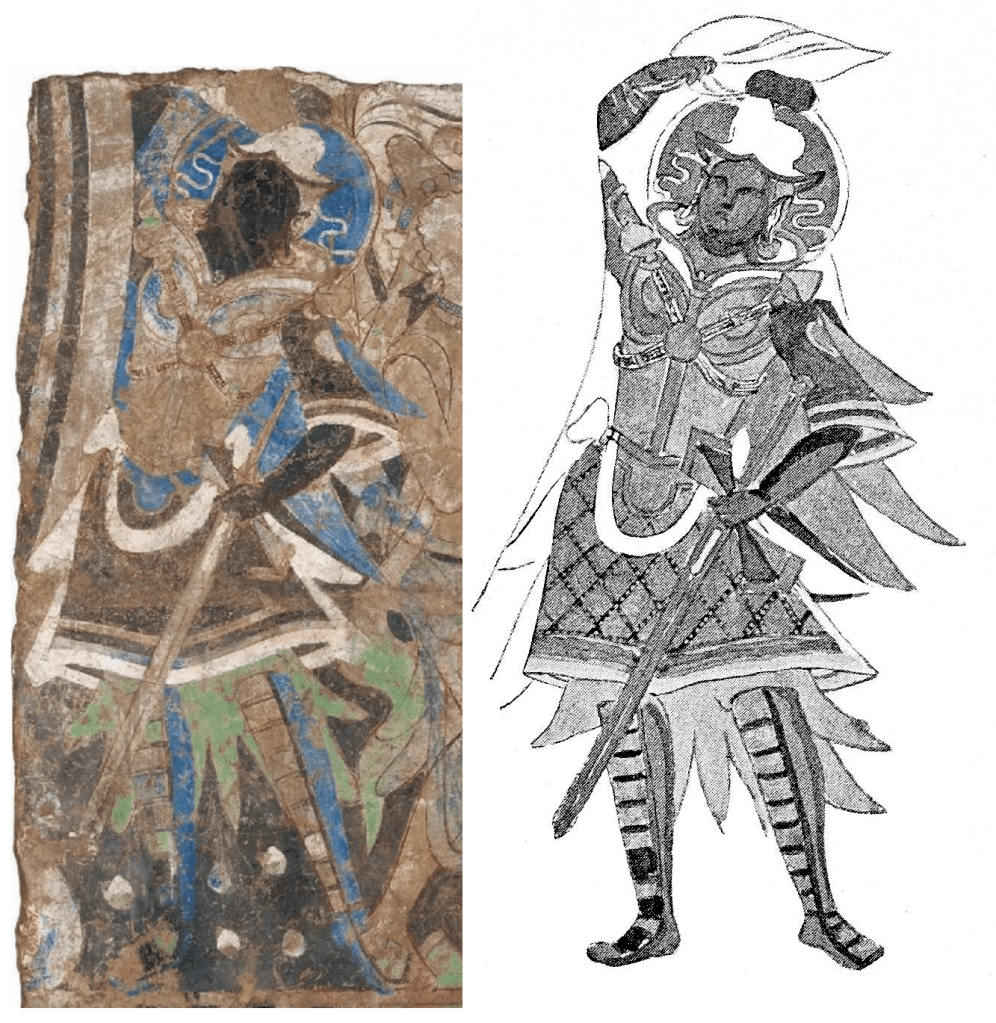
Cave 4 Vajrapani, removed original and in-situ drawing by Grunwedel
Cave of the Hippocampi (Cave 118, mural)
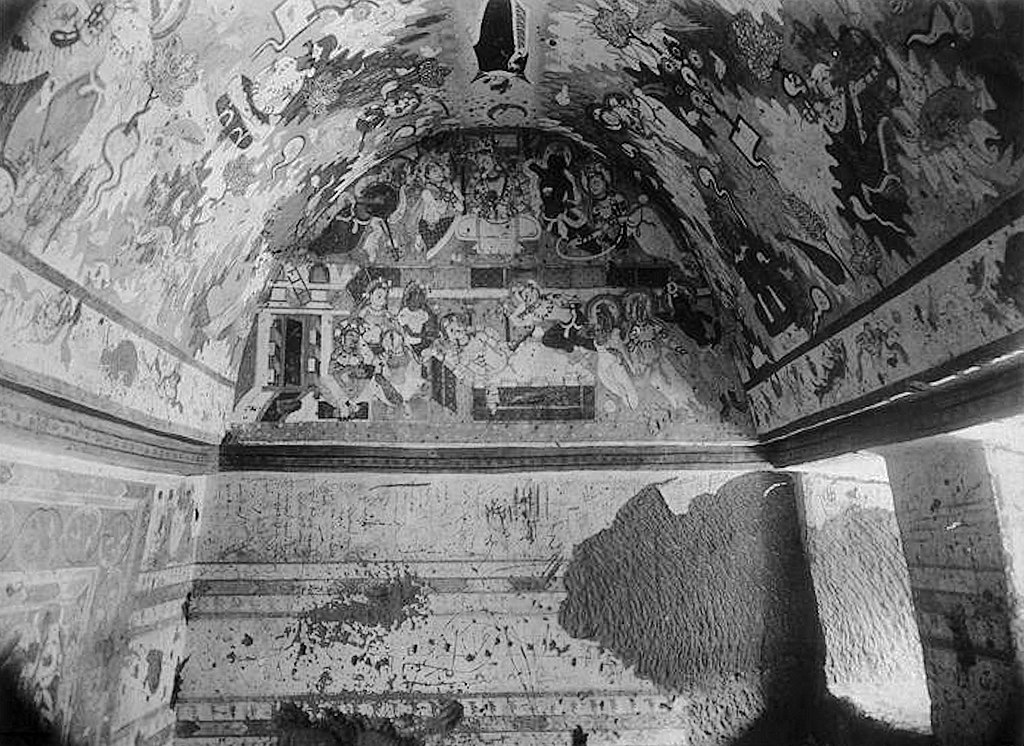
Right portion of the cave, as photographed by Charles Nouette  (1869-1910) Photographed in 1907. Public Domain – [1], Public Domain, https://commons.wikimedia.org/w/index.php?curid=99375823

Attendant, Cave 84 Painting: 6th century painter, Kizil Photography: Undetermined 
Blue pigment used on mural. Greco-Buddhist Wind God Boreas or Vayu, central part of the ceiling of Cave 38
Ancient Uyghur Civilization (1)-Cave art by ancient Uyghurs

Kumarajiva was born around C.E. 344 in kingdom Kucha. Kumarajiva’s father, Kumarayana, was descended from an honourable line of prime ministers of a kingdom in Kashmir. Though Kumarayana was expected to become prime minister after his father, he renounced his hereditary claim and became a Buddhist monk. Eventually, he set out along the silk route which threaded its way across the mighty Pamirs and into the Takla Makan Desert and Central Asia. Following the northern route, he came in time to the devoutly Buddhist kingdom of Kucha on the northern rim of the great Tarim River basin. The Kuchan king either knew of Kumarayana by reputation or showed a shrewd perception of human nature, for he welcomed the traveller warmly and at once made him a trusted adviser. Soon he was elevated to kuo-shih, Teacher of the Nation, a privileged position which entailed political and cultural duties as well as religious functions. …

The great translator’s mother, Jiva (Jivaka), was the younger sister of the king of Kuchi. She was well known for her intelligence, wit, memory, and devotion to the dharma. It was said that she had only to glance at a written passage to comprehend it, and only to hear something once to repeat it from memory. These qualities attracted numerous suitors. Jiva had a red mole (or spots) on her body, an indication that she would give birth to a wise son.

She had politely rejected a number of eligible suitors from neighbouring kingdoms, but when she saw Kumarayana she expressed the desire to become his wife. The king was delighted and insisted that Kumarayana accept the proposal. Even though he was a monk, he bowed to the wishes of this generous and devout monarch.

When Kumarajiva was in utero, Jiva became considerably sharper and more perceptive than before. For example, although her language was what is now known as Tokharian B, while pregnant with Kumarajiva she was able to understand Sanskrit without ever having studied it; after Kumarajiva was born, this ability disappeared. Such an “omen” suggests that the child Kumarajiva was predisposed to master Sanskrit and thus the original Buddhist scriptures.

When their son was born, Kumarayana and Jivaka each gave a part of their names to him and called him Kumarajiva. With two devout parents, Kumarajiva was exposed to Buddhist texts and practice from the day he was born. At the age of seven, he trained with a learned master and memorized a thousand verses every day until he could recite all the teachings of the scholastic treatises of the Abhidharma.

As if an occult design of invisible Nature had become manifest, hardly had the remarkable child turned six before Jivaka received permission from her husband to become a Buddhist nun. By that time Kumarajiva had already learnt the vast literature of the Abhidharma by heart, understood it and entered the Sangha. Kumarajiva’s mother clearly recognized the penetrating intelligence of her son and was determined to give him the best available philosophical and spiritual training. 

The Life and Legacy of the Great Translator — Kumarajiva

LInk: https://peacelilysite.com/2023/03/24/the-life-and-legacy-of-a-great-translator-kumarajiva-i/

#Buddhism #Kucha#Kumarajiva #Buddhist#KizilCaves#GreatTranslator #BuddhistSutra

Source: https://khyentsefoundation.org/the-life-and-legacy-of-kumarajiva/, https://japanesemythology.wordpress.com/study-notes-the-influence-of-kumaraju-kumarajiva-upon-japan/, https://www.tsemrinpoche.com/tsem-tulku-rinpoche/great-lamas-masters/kumarajiva-the-great-translator-from-kucha.html

CONTROL OVER LIFE AND DEATH


CONTROL OVER LIFE AND DEATH

The primary purpose in practicing Buddhism is to gain control over your life and death. That is true liberation and true happiness! Disciples of His Holiness Dorje Chang Buddha III have exhibited extraordinary feats at the time of their death. There have also been supernormal phenomena manifest at the time of or after their death. Disciples have even returned from the “Pure Land” to report on their new home to their families and to urge them to follow the teachings of His Holiness.

His Holiness has disciples who are eminent monastics and enlightened laypersons who if they want to live, they live. If they want to die, they die. Many have passed on while sitting in the cross-legged meditation position after they announced that they were leaving. They reached a level where they were liberated from the cycle of reincarnation. Many have left behind shariras or firm relics as evidence of their achievement. They have also left behind their body of flesh that does not rot.

Even non-Buddhist relatives of the Buddha Master’s disciples were able to make the transition to the Pure Land after they received the Buddha Master’s instructions and blessings. In all of these examples, the time of transition was an extremely joyous event. Friends and family were able to know that their loved one was making a peaceful transition to a wonderful existence..

TYPES OF LIBERATION FROM THE CYCLE OF BIRTH & DEATH: Regarding liberation from the cycle of birth and death, His Holiness has told us that there are several ways to obtain it. Roughly speaking, it is divided very crudely into four types. There is a dharma that will lead one to have the lifespan as long as heaven which was called the “immortal body”. This is what Guru Padmasambhava achieved. This is the highest dharma which can not be learned by ordinary people. Then, there is the dharma of the rainbow body transformation, which one achieves by transforming one’s entire fleshy body into a rainbow body. Another type is passing away in a sitting position and freeing oneself from the cycle of birth and death. The other type is passing away and being reborn in the Western Paradise of Ultimate Bliss. These are the four types of achievement. Other than that, without achieving liberation or enlightenment, it is descending to reincarnation and death.

The rainbow immortal body is also referred to as the body of supreme transformation or the rainbow body attainment of All-Surpassing Realization. In this higher form the rainbow body transmutes all psychophysical components into the light of buddhahood, so that no outward change is visible. This is why Padmasambhava, Vimalamitra, Vairocana and the like can pass into other buddha-lands in the same forms they enjoyed in our world. The lower rainbow body attainment transmutes consciousness, feeling, perception, and habitual tendencies into the light of buddhahood, but the component of form shrinks in size until only fingernails, tooth-enamel, hair, or relics remain, some time as a “vajra sharira” or “human body sharira.”

Link: https://wisdomtea.org/2023/03/09/control-over-life-and-death/

The Avalokiteshvara Bodhisattva Great Compassion Empowerment Dharma

Over 2,000 years ago, Shakyamuni Buddha came to the Saha world, established Buddhism, and began to spread the Buddha Dharma. Now, the karmic conditions related to the good fortune of living beings have matured, and the contemporary Buddha H.H. Dorje Chang Buddha III has come to our world once again to bring more Dharma to us. The Avalokiteshvara Bodhisattva Great Compassion Empowerment Dharma is the Dharma that His Holiness has brought to us this time.

When a Dharma Master practices this Dharma, it can convene people, empower them, and lead them into a supernormal state. The purpose is to eliminate negative karma, improve one’s health, and increase spiritual mentality. H.H. Dorje Chang Buddha III has transmitted the Dharma to a few qualified Rinpoches and Dharma Masters, and these Rinpoches and Dharma Masters have hosted the Dharma Assembly many times around the world.

I have participated in the assembly four times so far. The first time, I heard many people crying, singing, or laughing, and some walking around, but I myself didn’t experience any specific motions. I was kind of disappointed. The second time, I had very strong feelings. When the assembly just started and everyone was chanting the Great Bright Six Syllable Mantra, I began to cry and couldn’t control myself. I kept on crying and crying, and it seemed like I cried out all my sorrows and pains in my life. Then I started to sway my body, shake my head and neck. The third and fourth time I joined the assembly, I had more motions and stronger expressions. I still cried hard at the beginning, then I sang the name of Namo Dorje Chang Buddha III, swung my two arms, and spun around. I bent my neck backward so hard, and I even lay down on the floor feeling so peaceful and comfortable, feeling the energy flowing through my body. I did all those without any intention from my mind. I felt the assembly was too short to end. Every time after the assembly, I felt my whole body loosen up, and I was so relaxed and rejuvenated.

The assembly actually has two parts. One is held inside, such as a conference center or grand hall in a hotel, where the master performs the Dharma. The second part takes place outside, where living beings are released from captivity.

H.H. Dorje Chang Buddha III emphasized many times in the Dharma discourses: “The concluding practice of the Avalokiteshvara Bodhisattva Great Compassion Empowerment Dharma is the finest, the best. Were it not for its concluding practice, I would not advocate practicing this Dharma. I all the more would not transmit this Dharma in this world. Why release captive living beings? All living beings have been our family members since beginningless time. They are the same as humans. It is just that their degree of intelligence and appearance are different from those of humans. Still, their consciousness is the same as that of a human. That is why in real life, we see that some animals can even rescue people, some can do math, some can sing, and some can dance. I even saw a dog that was able to play a highly difficult piano melody. Moreover, the dog played it very precisely. We must help them and rescue them. Furthermore, we must not even slightly harm any living being. We can only rescue them.

Because the Avalokiteshvara Bodhisattva Great Compassion Empowerment Dharma is based on the power gathered from the greatly compassionate mind of Avalokiteshvara Bodhisattva, at the end of each Dharma assembly, the one performing the Dharma must lead the attendees in a concluding practice to release captive living beings, do good deeds, and help other people. It is best to conduct the concluding practice on the same day. If there is not enough time, doing it on another day is also acceptable. However, the concluding practice must be completed within fifteen days.

People who attend an Avalokiteshvara Bodhisattva Great Compassion Empowerment Dharma Assembly should make offerings. However, in order to comply with the Dharma, it would be best if they personally helped the Dharma assembly staff arrange that the monetary offerings received at the Dharma assembly be spent on the main subject of the Dharma assembly—the concluding practice of releasing captive living beings, helping other people, and doing good deeds— as well as on the related expenses of the Dharma assembly, such as renting the site, transportation, meals, and lodging for the master performing the Dharma and those accompanying the master.”

Today is the auspicious occasion of Avalokiteshvara Bodhisattva’s holy birthday, and on this special day, I offer my sincere prayers: May the great Bodhisattva bless all living beings with a life full of auspiciousness, prosperity, and happiness. May the compassionate energy of Avalokiteshvara Bodhisattva radiate throughout the world, bringing peace, harmony, and love to all sentient beings.

Namo H.H. Dorje Chang Buddha III !

Namo Avalokiteshvara Bodhisattva !

Namo Amitabha !

The Avalokiteshvara Bodhisattva Great Compassion Empowerment Dharma

Link:https://peacelilysite.com/2023/03/10/the-avalokiteshvara-bodhisattva-great-compassion-empowerment-dharma/

#HHDorjeChangBuddhaIII #DorjeChangBuddhaIII #DorjeChangBuddha#GuanYinBodhisattvaof GreatCompassionEmpowermentDharmaAssembly#GuanYinBodhisattva#GreatCompassion #Avalokiteshvara Bodhisattva

When Taoist Immortal Met Buddhist Master

Photo by Delia Dwi on Pexels.com

When Taoist Immortal Met Buddhist Master

Taoism is an ancient Chinese philosophy that emphasizes living in harmony with the natural world and embracing simplicity. Its teachings have had a significant impact on both Eastern and Western cultures, including the field of psychology. One prominent figure in psychology who was influenced by Taoism is Carl Jung, a Swiss psychiatrist and psychoanalyst who founded analytical psychology.

Jung’s complex concept of “the Self” is one of his most significant contributions to psychology. The Self represents the totality of an individual’s psyche, including both conscious and unconscious elements. According to Jung, the Self is the goal of the individuation process, a lifelong journey of self-discovery and personal growth.

In ancient China, there were eight prominent figures in Taoism, and Lu Dongbin was the most popular one. Besides being a renowned Taoist, he was also a skilled poet and scholar. Throughout history, many legendary stories and folk tales have been told about him.

One interesting story was recorded in a Buddhist book called JiaTai Pu Deng Lu (嘉泰普灯录), which has also been documented in several other books, including XinShi Heng Yan (醒世恒言). Although there are some variations, the main points of the story remain the same. H.H. Dorje Chang Buddha III also told this story in his dharma discourse: Expounding the Absolute Truth through the Heart Sutra.

Once, Lu Dongbin asked his master, “Master, why did you only save me for a thousand years?”

His master replied, “It’s difficult to teach all living beings. People’s habits are deeply ingrained, and they constantly change. Most living beings find it challenging to learn our Taoism.”

Lu Dongbin countered, “Master, I disagree. We are powerful beings. Are we afraid it will be difficult to liberate them? Let me go down and liberate people for you. I will free a thousand souls every year.”

His master warned, “You may go down to Earth, but be careful not to provoke the monks. Some cannot be trifled with.”

Lu Dongbin descended from the South Gate of Heaven on an auspicious cloud and saw the golden light of Huanglong Temple in Shanghai, China. Zen Master Huanglong was teaching the Heart Sutra and explaining Prajna principles. Lu Dongbin decided to listen in and transformed himself into a fly, sticking to the door.

However, Zen Master Huanglong was a powerful monk who knew Lu Dongbin was eavesdropping. He stopped teaching and instructed his attendant to remove the “person who stole our Dharma.”

Enraged, Lu Dongbin revealed his true form, brandishing his Qingfeng sword and accusing Zen Master Huanglong of insulting him. Lu Dongbin told Zen Master: “I am the great Taoist Immortal LU Dongbin.” Huanglong found it amusing and called Lu Dongbin a “ghoul guard” who would eventually die in vain.

Lu Dongbin drew his sword, but Zen Master Huanglong remained unperturbed, blocking the sword with his sleeve. Lu Dongbin knelt before the Zen master, feeling ashamed.

Huanglong proceeded to teach Lu Dongbin sudden enlightenment dharma, explaining that “speech is cut off, and mind is silenced.” As a god, Lu Dongbin was able to grasp the teaching quickly and had an epiphany.

After his enlightenment, Lu Dongbin wrote a gatha containing the line, “Since I met Huanglong, I realized that I mistakenly used my mind in the past.”

In Buddhist teachings, it is said that even the highest Taoist practitioner can reach heaven, but still remain in the realm of the birth and death cycle. However, if one can realize and abide in the original nature, then they can break through this cycle and achieve liberation. The original nature refers to the pure dharma body of all sentient beings within the three spheres of existence (triloka), which is united with the universe. It has no form, shape, physical body, or appearance. All living beings possess this original nature equally, which is the same as the dharma body of the Tathagata or dharmakaya. It neither comes nor goes, and is neither excessive nor lacking. It is immaculate, free from any notion of cleanliness or dirtiness.

When Taoist Immortal Met Buddhist Master

Link:https://peacelilysite.com/2023/02/24/when-taoist-immortal-met-buddhist-master/

#Buddhist #BuddhistMaster#HuanglongTemple #Taoist #Immorta #Ludongbin #Buddhism #DorjeChangBuddhaIII # HHDorjeChangBuddhaIII 

Brief Introduction to Buddha Dharma

Brief Introduction to Buddha Dharma

The truth and the original nature of all conditioned and unconditioned phenomena in the universe are contained in the word Buddha-dharma. The Buddha-dharma is all causes and effects in the universe. To understand all causes and effects, yet not be controlled by cause and effect, is to realize liberation and the Buddha-dharma. No matter how many schools or sects there are, the Buddha-dharma has only one truth. It is the truth of the universe: the dharma of ending the cycle of birth and death!  The Buddha-dharma is the life order of another world and dimension.

However, this rather abstract definition does not tell us how we realize or learn the Buddha-dharma. In a series of dharma discourses on learning Buddhism released in January 2016, H.H. Dorje Chang Buddha III gives such a practical definition. It is the dharma that we practice in the vajrayana form of Buddhism. It is the preliminary, main, and ending practice in their totality. The true Buddha-dharma emphasizes real practice and skills and is not merely theoretical Buddhist studies. The holy manifestations or miracles described on this website and in the book H.H. Dorje Chang Buddha III are evidence that the true Buddha-dharma, as practiced by Shakyamuni Buddha and the accomplished ones of the past, still exists in the world and that very high levels of spiritual accomplishment are possible for those who follow a true vajra master.

H.H. Dorje Chang Buddha III has said: “After you enter the door of Buddhism, you must cultivate yourself according to the dharma. Your three karmas of body, speech, and mind must correspond with the teachings of the Master. Only then will you be able to become accomplished. Conduct that is not in accord with the teachings of the Buddhas and Bodhisattvas must be corrected through concrete actions. You must make your conduct accord with the teachings contained in the Tripitaka and the states of morality, concentration, and wisdom. Yet, correcting your words and conduct must be carried out within everyday worldly life. That is because everyday worldly life (worldly or secular dharma) is the Buddha-dharma. There is no Buddha-dharma to accomplish apart from worldly or secular dharma. That is why you must use all mundane or worldly experiences to improve your self-cultivation. You must use worldly experiences to perfect your realization and conduct. If your basic worldly conduct is not proper, it is of no use to speak in a high-sounding way about emptiness or to speak boastfully and wish wildly.”

However, we must have patience in learning the Buddha-dharma. You cannot completely understand the principles of the dharma in a brief period of time. You must go though the sequence of first hearing the principles from your vajra master, gradually acting in accordance with these principles, walking the correct path and so on. You must advance step my step. You cannot expect that your negative karmic obstructions that have formed over many past lives can be purified in just one day. The tantric dharma that we receive when correctly practiced will enable us to overcome our obstructions, purify our three karmas, and enable us to progress on this path. Do not waste time on activities that do not lead to liberation and becoming a Buddha. DO NOT WAST TIME!!!

Brief Introduction to Buddha Dharma

Link: https://peacelilysite.com/2023/02/17/brief-introduction-to-buddha-dharma/

#DorjeChangBuddhaIII # HHDorjeChangBuddhaIII  #Rinpoche #Buddha-dharma # Miracle #Liberation #Cultivation

Source: https://xuanfa.net/buddha-dharma/