How to Face Unfounded Accusations and Grievances — A Lesson from the Buddha

More than 2,500 years ago, when Shakyamuni Buddha walked the earth, even He—an enlightened being of supreme virtue—was not immune to slander and false accusations. Yet, through profound wisdom and boundless compassion, the Buddha addressed these challenges with grace, setting an eternal example for all beings on how to face adversity.

One such episode is recorded in the sutras and remains deeply relevant in our modern world, where misunderstandings and grievances often escalate due to fear, anger, or ego.


One morning in Jetavana Monastery, as the Buddha and his monks were preparing to go on their daily alms round, a group of royal guards suddenly stormed in. They announced that they were under orders to search the monastery grounds for a female corpse.

The monks were shocked. Venerable Baddiya inquired further and discovered that the deceased was Sundari, a young woman known for her recent attendance at the Buddha’s teachings. She belonged to a large sect in the city of Savatthi.

Despite the monks’ firm belief that no such thing could happen in their peaceful community, the guards began their search. To the horror of all present, Sundari’s body was found hastily buried in a shallow pit—shockingly close to the Buddha’s own residence.


The body was taken away, and almost immediately, members of Sundari’s sect began parading through the streets of Savatthi, wailing and pointing fingers. They accused the monks—disciples of the Buddha—of rape and murder. Their shouts pierced the hearts of the city’s residents:

“Is this what compassion looks like? Is this the kindness preached by the monks of the Sakya clan?”

Faith began to waver. The once-revered monks were now questioned and ridiculed. Even devout followers hesitated. Doubts crept in like shadows.

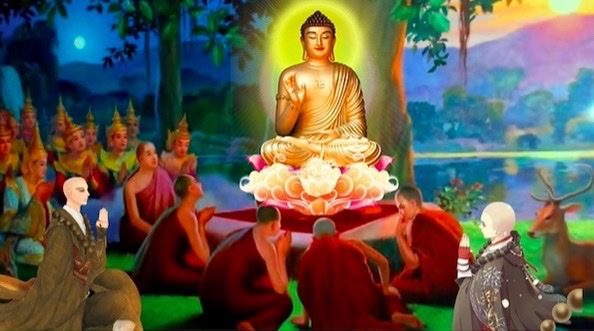
But amidst this storm of falsehood, the Buddha remained calm. He instructed his disciples:

“Do not be disturbed. Do not feel shame for what you have not done. As long as we uphold the Dharma, the truth will reveal itself.”

Compassionate Action and the Power of Truth

While the Buddha taught patience, some of his lay supporters took discreet action. Visakha, a wise and generous patroness of the Sangha, consulted with Sariputta, one of the Buddha’s chief disciples. Together, they enlisted the help of Prince Jeta and hired a private investigator to uncover the truth.

Within seven days, the real story surfaced. Two men, drunk and arguing over their ill-gotten gains, confessed: they had been paid by Sundari’s sect leader to murder her and bury the body near the monastery—an act designed solely to discredit the Buddha and his followers.

The culprits were arrested. The truth was undeniable. King Pasenadi, deeply moved and ashamed that such injustice had occurred, visited Jetavana to publicly reaffirm his trust in the Sangha.

Yet the Buddha, ever compassionate, requested the king not to seek vengeance. He said:

“As long as jealousy and hatred exist in the human heart, such misdeeds will continue. Let us rise above them, not descend to their level.”

The people of Savatthi, now enlightened by the truth, restored their faith in the Buddha and the monastic community. What began as a moment of crisis ended as a testament to the strength of integrity and the enduring power of compassion.

This story serves as a profound reminder: when facing unjust accusations, our greatest protection lies in truth, patience, and inner peace.

We cannot control the words or actions of others, but we can choose how we respond. If we hold fast to our principles, walk the path with sincerity, and act from compassion rather than reaction, the light of truth will inevitably shine through the darkness of misunderstanding.

Link:https://peacelilysite.com/2025/05/23/how-to-face-unfounded-accusations-and-grievances-a-lesson-from-the-buddha/

The Weight of Words: A Story That Reminds Us to Speak Wisely

Once upon a time in a small village, an old man spread a rumor that his neighbor was a thief. The accusation quickly circulated, and the young man was arrested. However, after a thorough investigation, the truth emerged—the young man was innocent. Though he was released, the damage had already been done. As he walked home, shame and humiliation clung to him like a heavy shadow. In pain and frustration, he took the old man to court for defamation.

In court, the old man defended himself, saying, “They were just comments. I didn’t mean any real harm.”

The judge paused and then said, “Before I pass judgment, I want you to do something. Write down everything you said about this young man on a piece of paper. Then cut the paper into small pieces, and on your way home, scatter them to the wind. Tomorrow, return for your sentence.”

The old man did as he was told. The next day, he stood before the judge once again.

“Before I deliver your sentence,” the judge said, “go out and gather every piece of paper you threw away yesterday.”

“But that’s impossible!” the old man protested. “The wind has carried them far and wide—I’ll never be able to get them all back.”

The judge nodded gravely. “Exactly. Just like those pieces of paper, your careless words have been scattered beyond recall. A few simple comments have the power to destroy a person’s honor and reputation—damage that can be nearly impossible to undo.”

The old man bowed his head in shame and asked for forgiveness.

This story speaks to a deep truth: our words, once spoken, can never be fully taken back.

Benjamin Franklin once said, “Fool’s hearts are in their mouths; wise men’s mouths are in their hearts.” These timeless words caution us against speaking recklessly. A wise person thinks carefully before they speak—choosing words with care, filtering emotion through understanding, and weighing their potential impact. Such restraint not only prevents misunderstandings and harm but also reflects emotional maturity and compassion.

Think more. Speak less.

In Buddhist teachings, this idea is beautifully echoed through the precepts on right speech. Practitioners are taught to be mindful of their word karma and to avoid four kinds of harmful speech:

  1. Lying
  2. Harsh speech
  3. Divisive speech
  4. Idle chatter

Each of these can sow seeds of suffering—for others and for ourselves.

Let’s remind ourselves daily: Be the master of your mouth, so you’re not a slave to your words.

Gossip can be more damaging than theft—it steals a person’s dignity, honor, and credibility, none of which are easy, or even possible, to restore. A wise saying puts it well: “When your feet slip, you can recover your balance. But when your tongue slips, you can never recover your words.”

Let us choose silence over harm, kindness over carelessness, and wisdom over impulse. Because our words, like our actions, carry the power to build—or break—the world around us.

Link:https://peacelilysite.com/2025/04/24/the-weight-of-words-a-story-that-reminds-us-to-speak-wisely/

The Power of a Sincere Heart: How True Generosity Creates Boundless Merit

In the Buddhist scriptures of China, a profound story is recorded—one that illuminates the immeasurable merit of a sincere offering.

Once, there was a poor girl who survived by begging. She often watched wealthy young ladies, accompanied by attendants, visit the temple to offer alms and perform good deeds. Seeing their generosity, she felt a deep yearning to cultivate merit but had nothing to give. Determined, she worked tirelessly to save whatever she could. After much effort, she managed to save a single coin. Though small in value, it represented all she had. With unwavering devotion, she took her humble offering to the temple.

The abbot, upon learning of her sincerity, was deeply moved. He gathered his disciples and announced, “Today, I will personally preside over the offering and pray for this devout laywoman!”

Not long after, an extraordinary turn of events unfolded.

After the queen of the land passed away, the grieving king sank into sorrow. To lift his spirits, his ministers organized a hunting expedition. As the royal party rode through the forest, the king noticed a shimmering light ahead. Curious, he approached and discovered a breathtakingly beautiful young woman. Though her clothes were tattered, she radiated an ethereal grace.

Captivated by her presence, the king brought her back to the palace. Before long, she became his new queen.

Overjoyed by her newfound fortune, she reflected on her past: “This must be the reward of my small act of generosity! I only donated one coin, yet it planted the seed for such incredible merit. Now that I have wealth, I should return to the temple to express my gratitude with a much grander offering!”

Determined to make a grand gesture, she dressed in the finest attire, adorned herself with jewels, and loaded dozens of carts with silver and gold for donation. As she approached the temple, she thought, “Before, when I gave only one coin, the abbot personally prayed for me. Now that I bring such vast riches, surely the reception will be even greater!”

Upon her arrival, she expected an elaborate welcome. Yet, to her surprise, only a few monks came to receive her offerings, and the rituals were conducted in the usual manner.

Perplexed, she approached an elderly monk and asked, “Why is it that when I was poor and donated a single coin, the abbot himself prayed for me? Yet today, when I bring such wealth, only a few monks perform the prayers?”

The monk smiled gently and replied, “At that time, your single coin was all you had. You gave it with pure devotion and joy, holding nothing back. Now, though you bring great wealth, it is but a fraction of your fortune, and your heart is tainted with pride. The true merit of an offering comes not from its size but from the sincerity of the giver’s heart.”

Shakyamuni Buddha taught that for a donation to generate immense benefit, it must possess three essential qualities:

  1. Before Giving – A Joyful Heart
    True generosity begins with happiness. The donor should give not out of duty, pressure, or expectation of reward, but with a heart full of joy, seeing giving as an opportunity to cultivate virtue and compassion.
  2. While Giving – A Clear and Sincere Mind
    The act of giving should be free from hesitation, regret, or pride. A pure offering is made with an open heart, solely for the benefit of others, without seeking recognition or return.
  3. After Giving – A Sense of Fulfillment
    Once the offering is made, the giver should not feel regret or attachment. Instead, they should feel a deep sense of satisfaction, knowing they have planted seeds of merit for the future.

This story serves as a timeless lesson: It is not the amount we give that determines the merit of our offering, but the purity of our heart. A sincere and joyful offering—no matter how small—carries boundless blessings.

So the next time you give, remember: True generosity is not measured in gold or silver, but in the depth of your sincerity.

Link:https://peacelilysite.com/2025/04/02/the-power-of-a-sincere-heart-how-true-generosity-creates-boundless-merit/

Exploring the Concept of Size in Buddhism: Mount Sumeru and the Mustard Seed

In the realm of Buddhist philosophy, the imagery of Mount Sumeru and the mustard seed serves as a profound metaphor for understanding the nature of reality and perception. Originally a mountain in Indian mythology, Mount Sumeru is revered in Buddhism as the dwelling place of celestial beings like Indra and the Four Heavenly Kings. Standing at an astonishing height of 84,000 yojanas, it symbolizes the vastness and grandeur of existence. In contrast, the mustard seed, a tiny grain often used in culinary practices, represents the minuscule aspects of life.

This juxtaposition is beautifully illustrated in a dialogue between Li Bo, a governor of Jiangzhou during the Tang Dynasty, and the Zen master Zhi Chang. Li Bo questioned the seemingly paradoxical notion found in Buddhist texts that “Mount Sumeru can fit within a mustard seed, and a mustard seed can contain Mount Sumeru.” He found it hard to believe that such a small seed could encompass such a towering mountain.

With a smile, Zhi Chang responded by asking, “People say you have read thousands of books; is that true?” Proudly, Li Bo affirmed, “Of course! I have read far more than that!”

Zhi Chang then inquired, “And where are those thousands of books now?”

Li Bo pointed to his head and replied, “They are all right here!”

Zhi Chang chuckled and said, “Strange, then. Your head seems no bigger than a coconut; how could it possibly hold thousands of books?”

At that moment, Li Bo experienced a profound realization: the distinctions of large and small are mere constructs of the mind. In reality, size is subjective and arises from our perceptions.

This concept resonates deeply with modern science, which demonstrates that vast amounts of knowledge can be stored within a minuscule chip, echoing the Buddhist teaching that the universe can be contained within the smallest of objects.

The English poet William Blake expressed a similar sentiment in his famous lines:
“To see a world in a grain of sand,
And a heaven in a wild flower,
Hold infinity in the palm of your hand,
And eternity in an hour.”

His words capture the essence of this Buddhist teaching: within the tiniest elements of our world lies the vastness of the infinite.

Ultimately, Buddhist wisdom encourages us to transcend conventional notions of size and reality. When we embrace the idea that the vast can reside within the minute, we cultivate a deeper awareness of the interconnectedness of all things. In this way, Mount Sumeru and the mustard seed serve as powerful reminders of the boundless nature of existence and the limitless potential of the human mind.

In the Āgama Sūtra, there is a remarkable story that illustrates how the merit of a single grain of rice can be as vast as Mount Sumeru.

During the time of the Buddha, a poor couple lived in a crumbling cave with nothing to their name. They were so impoverished that they owned only a single set of clothes, which they had to share. When the husband went out, the wife had to stay home, and when the wife needed to leave, the husband had no choice but to remain inside, barely clothed.

One day, they heard that the Buddha and his disciples were passing through their village on their alms rounds. The couple reflected on their misfortune and said, “We have never practiced generosity, which is why we suffer such poverty today. Now that the Buddha is here, how can we miss this rare opportunity to give?”

However, as they looked around their home, the wife sighed deeply, “But we have nothing to offer…”

The husband, after thinking for a moment, made a firm decision: “No matter what, we must not let this opportunity slip away. Even if we starve, we must make an offering! The only thing we still have of value is this set of clothing—let us give it to the Buddha!”

With hearts full of joy, they humbly presented their only garment as an offering. The disciples, however, hesitated, feeling uneasy about receiving such an item. They passed the garment among themselves, reluctant to accept it, until Ananda finally brought it before the Buddha and asked, “Lord, this garment is too worn to be used. Should we discard it?”

The Buddha, filled with compassion, gently instructed, “My disciples, do not think this way. The generosity of the poor is the most precious of all. Bring the garment to me.”

Feeling ashamed for their earlier hesitation, Ananda and Maudgalyayana took the garment to the river to wash it. But as soon as they immersed it in the water, the entire river surged wildly, waves crashing in all directions. Alarmed, Maudgalyayana used his divine powers to summon Mount Sumeru in an attempt to subdue the turbulent waters. Yet, no matter how he pressed it down, the waves remained uncontrollable.

Helpless, the two disciples rushed back to the Buddha to report what had happened. At that moment, the Buddha was calmly eating his meal. Without saying much, he gently picked up a single grain of rice and handed it to them, saying, “Take this rice grain to the river, and it will settle.”

Perplexed, Ananda asked, “Lord, even the mighty Mount Sumeru couldn’t calm the waves—how can a tiny grain of rice possibly do so?”

The Buddha smiled and said, “Try it and see.”

Still doubtful but obedient, Ananda and Maudgalyayana took the grain of rice and cast it into the river. Miraculously, the raging waters instantly calmed, becoming as still as a mirror.

Shocked by what they had witnessed, the two disciples returned to the Buddha and asked, “How could a single grain of rice hold more power than a mountain?”

The Buddha then explained, “From the moment a grain of rice is planted, it undergoes countless efforts—watering, fertilizing, harvesting, processing, and selling—each step carrying the labor and dedication of many beings. Because of this, a single grain of rice contains immeasurable merit. Likewise, the garment offered by the poor couple was their only possession, their entire livelihood. Their act of giving was boundless in sincerity, making its merit just as vast. The Dragon Kings of the ocean understood the profound virtue behind this offering, which is why they immediately retreated in reverence. This is the power of true devotion—whether a grain of rice or a simple piece of clothing, when given with absolute sincerity, its merit can equal that of Mount Sumeru.”

From this teaching, a well-known Buddhist verse arose to remind monks and practitioners of the sacred nature of even the smallest offering:

“A single grain of rice in the Buddha’s gate,
As vast as Mount Sumeru.
If enlightenment is not attained in this life,
One shall return repaying the debt, bearing horns and fur.”

This verse serves as a powerful reminder that every offering—no matter how small—carries immense significance when given with a pure heart. It also warns practitioners to cherish and respect all acts of generosity, for every grain of rice represents the kindness and labor of countless beings.

Link:https://peacelilysite.com/2025/03/21/exploring-the-concept-of-size-in-buddhism-mount-sumeru-and-the-mustard-seed/

Embracing Life’s Impermanence: A Call to Seek Liberation Through Buddhism

Life is fleeting, a truth echoed by philosophers across history. Human existence is undeniably intertwined with suffering. To counterbalance this suffering, people often seek meaning through achievements or temporary relief in material pleasures. When conflicts arise, modern psychology offers positive thinking strategies to ease distress, yet it seldom explores the deeper essence of life, offering only superficial comfort rather than lasting resolution.

A lifetime passes in the blink of an eye. Pause for a moment and reflect: If you were to gather all the joyful moments of your life, how many days would they truly account for? And how many days were instead consumed by pain, worry, resentment, frustration, or helplessness? For most, the latter dominates.

Everything in this world is impermanent. Our loved ones, our wealth, the children we raise, and even our own bodies—none can remain with us forever. Eventually, all things return to dust. Life is like a passing guest, reminding us that the most vital truth is to seize the present moment while we can.

The ancient Greek philosopher Epictetus taught: “For things beyond our control, we should remain optimistic and confident. For things within our control, we should stay cautious and restrained.” Anxiety and fear cannot alter tomorrow’s outcomes, but they can ruin today. True wisdom lies in accepting what we cannot change and acting mindfully where we can.

Life’s path is unpredictable. No one knows what the next moment holds. Beyond treasuring the present, we can only strive to be our best selves. Do not wait until happiness slips away to feel regret. Treasure each effort and every connection, for what is lost may never return.

Nature’s cycles remind us of renewal—flowers bloom after withering, grass sprouts anew with the seasons. Yet human life is different. We are not like flowers or grass; our lives come but once. Once this life ends, it will not return. This truth makes it even more crucial to cherish each moment and live with purpose.

A beautiful Russian poem reminds us of life’s brevity:

“A day is short, so brief that before you can embrace the morning, dusk has already arrived. A year is short, so fleeting that before you can savor the vibrant reds and greens of spring, autumn frost is already setting in. A lifetime is short, so brief that before you can fully enjoy your youthful days, old age has already arrived.”

Among the most precious blessings in life is not what we have lost or seek to gain but the ability to treasure the present. As taught in Buddhism:

“The human body is rare and difficult to obtain, yet we have attained it. The Dharma is difficult to encounter, yet we have heard it. If we do not seek liberation in this lifetime, in which lifetime shall we seek it?”

In this rare and precious life, we have not only obtained a human body but also the extraordinary opportunity to encounter the true Buddha — H.H. Dorje Chang Buddha III and hear the sacred teachings. The Buddha’s Dharma voice purifies the heart, and when we apply these teachings in our daily conduct, it is like donning armor that shields us from suffering and empowers us with boundless blessings and wisdom.

For those beginning their spiritual journey, the safest and most effective path to rapid growth is to purify and fortify the mind with the authentic teachings of H.H. Dorje Chang Buddha III. His words offer a beacon of guidance, cleansing karmic obstacles and illuminating the path to liberation.

When this precious human life ends, if we remain trapped in the endless cycle of reincarnation, where will we seek the path to liberation? The opportunity is now. As Buddhist disciples, we must cherish this rare blessing, dedicating our lives to listening to the Dharma, studying the sacred teachings, and aligning our actions with the truths taught by the Buddha.

To cherish the H.H. Dorje Chang Buddha III‘s Dharma voice is, ultimately, to cherish our own lives. Let us not delay but strive for liberation in this very lifetime.

Link:https://peacelilysite.com/2025/01/09/embracing-lifes-impermanence-a-call-to-seek-liberation-through-buddhism/

Mindful Speech: How Verbal Karma Shapes Our Lives and Spiritual Growth

Understanding Verbal Karma through Chinese Traditional Culture and Buddhism

Language is one of the most powerful tools in human communication. It has the capacity to warm hearts, yet it can also deeply wound others. The ancient Chinese saying, “Illness enters through the mouth; misfortune comes out of the mouth,” serves as a profound reminder of the critical importance of our words. Another popular saying states, “A kind word can warm one for three winters, but a harsh word wounds deeply and is hard to forget.” Those who speak thoughtfully build strong relationships, while careless words often lead to unintended enmity or trouble. Indeed, many of life’s great misfortunes arise from verbal mistakes.

The Chinese ancients emphasized the principle of “cautious speech and careful actions,” which is not only a foundational aspect of personal conduct but also key to cultivating one’s character. In modern times, misunderstandings and conflicts often stem from believing rumors and passing on unverified information. This carelessness turns small issues into major problems, causing unnecessary harm. The impact of careless words can extend beyond personal relationships, disrupting families, friendships, and even society, sometimes escalating into widespread societal issues.

Buddhism’s Teachings on Verbal Karma: The Four Types of Harmful Speech

Buddhism profoundly explains the karmic consequences of speech. Among the “three karmas” — body, speech, and mind — verbal karma is especially critical. The Buddha taught that the consequences of verbal karma can be even more destructive than a raging fire because hurtful speech inflicts suffering on others. Buddhism identifies four types of harmful verbal karma:

  • Harsh Speech: Using cruel or aggressive words that directly harm someone’s spirit.
  • Slander: Spreading rumors or sowing discord, leading to broken relationships and disputes.
  • False Speech: Speaking untruthfully or deceiving others.
  • Frivolous Speech: Words that may seem pleasant but mislead or confuse others, distracting them from right mindfulness.

These forms of verbal karma not only harm relationships but also sow seeds of negative karma, inevitably leading to future suffering.

Chinese Buddhist texts record a story from the Song Dynasty: One day, Zen Master Guang XiaoAn observed two monks engaged in a discussion about the Dharma, during which they were surrounded and protected by heavenly beings. However, as soon as their conversation shifted to worldly topics, the deities departed, and evil spirits appeared, mocking the monks with vulgar language. This story serves as a reminder that even monks, when they deviate from righteous speech, will attract negative consequences.

In today’s world, the effects of verbal karma are even more pervasive. Carelessly spreading rumors, posting unverified information online, or making inflammatory remarks can cause lasting damage. Every harsh word is like a sharp blade, hurting not only others but also oneself.

Here is another powerful example that highlights the benefits of controlling one’s speech. At Mount Jiuhua, a sacred Buddhist site renowned for venerating Ksitigarbha Bodhisattva, there once lived a venerable nun. She was widely respected for her virtuous life and profound wisdom, embodying the transformative power of positive speech.

Even at the remarkable age of 136, she remained in good health, continuously reciting the mantra “Amitabha Buddha.” This practice not only reflected her spiritual merit but also her mastery of speech, and self-discipline.

The venerable nun understood the profound impact of verbal karma and strictly adhered to the principle of “cautious speech.” She refrained from gossip and focused her speech on chanting the Buddha’s name. In conversations about spiritual matters, she offered concise and clear guidance, leading people toward the right path. When topics were unrelated to spiritual practice, she chose silence. This self-discipline brought her immense merit, making her a role model for others. She often said, “For women, whether lay or ordained, if one can guard against verbal karma, one is halfway to becoming a Buddha.” Her words highlighted the critical role verbal karma plays in the spiritual path.

The venerable nun’s teachings emphasized the severe consequences of verbal karma. She made it clear that verbal karma is one of the greatest obstacles in spiritual practice and explained its multiple harmful effects:

  • Verbal Karma Obstructs Spiritual Progress: Every instance of harsh speech, slander, or frivolous talk not only harms others but also pollutes one’s mind, hindering spiritual purification.
  • Verbal Karma Leads to Lower Rebirths: Harsh speech is like a wildfire, burning away one’s merit and leading to severe karmic consequences.
  • Verbal Karma Disrupts Harmony: In families, communities, or society, harmful speech creates discord, making it difficult to maintain a peaceful environment for practice.
  • Verbal Karma Weakens Faith: Harsh and false words can cause others to lose faith in their spiritual path, even destroying their potential for future practice.

Her virtuous life and disciplined speech accumulated immeasurable merit. It is said that many patients with difficult illnesses were cured after receiving her blessings, a testament to the power of pure verbal karma.

Guarding Verbal Karma in Modern Life

In today’s world, controlling speech is more essential than ever. Here are some practical steps to guard against verbal karma:

  • Speak Cautiously: Think before you speak. Avoid spreading unverified information and refrain from gossiping or discussing others carelessly.
  • Control Emotions: When emotions are high, it’s easy to say things that cause harm. Cultivate a calm and peaceful mind to avoid saying hurtful things in the heat of the moment.
  • Cultivate Positive Speech: Use kind and uplifting words to resolve conflicts, build trust, and foster harmony in your relationships.

By understanding Buddhism’s teachings on verbal karma, we can become aware of the power of language and use it to bring peace and happiness to ourselves and others. Guarding speech is not only a sign of respect for others but also an essential aspect of personal spiritual practice.

Through mindful and compassionate speech, we can spread kindness, promote harmony, and enhance both the quality of our lives and the happiness of those around us. Let us strive together to use the wisdom of language to create more peace and happiness in our lives and in the lives of others.

Link:https://peacelilysite.com/2024/10/24/mindful-speech-how-verbal-karma-shapes-our-lives-and-spiritual-growth/

When I say I’m a Buddhist

Professor Richard Gombrich, who dedicated 40 years of his life to studying Buddhism and Pali language at Oxford University, shares his understanding of Buddhism.

When I say I’m a Buddhist, it doesn’t mean I’m purer and nicer than others. But it means I have too much ignorance and mental defilement to remove. I need Buddhas’ wisdom.

When I say I’m a Buddhist, it doesn’t mean I have more wisdom than others. But it means I have been occupied by too much arrogance. I need to learn to be humble and to develop a broader perspective.

When I say I’m a Buddhist, it is not because I am better or worse than others, but because I understand all beings are equal.

When I say I’m a Buddhist, I know I only love those to my taste, but Buddha loves even people he does not like, guiding them to be full of wisdom and compassion. That’s why I choose to follow Buddha’s teachings!

When I say I’m a Buddhist, it is not with the goal of getting what’s in my interest. But for letting go of my personal clinging to all worldly desires.

When I say I am a Buddhist, it is not because I pursue a smooth life. But for the calm acceptance of impermanence, and be calm and confident like a king in any adverse circumstances.

When I say I am a Buddhist, I do not mean to manipulate others with the motivation of self-interest. But with good use of wisdom, to benefit self and others while being empathetic to all sentient beings.

When I say I am a Buddhist, it is not because I want to escape from the world and pursue nothingness. But to know everyday life is within Dharma, and to live in the present is to practice.When I say I am a Buddhist, it does not mean that my life will no longer experience setbacks.

But with the Dharma, setbacks are transformed into a cause for my growth.

When I say I am a Buddhist, my heart is filled with endless gratitude. Just thinking I was born as a human and have the ability to practice in this life, with the opportunity to meet wise teachers and hear the Buddha’s teachings, I am deeply moved by this unbelievable karmic affinity.

When I say I am a Buddhist, it is not because there is a God outside of me. But that I find the true Buddha-nature of my own heart.

Link:https://peacelilysite.com/2024/05/16/when-i-say-im-a-buddhist/

Source: https://buddhistbugs.blogspot.com/2018/07/when-i-say-im-buddhist.html

Control Your Anger and Do not React

Many people struggle with the challenge of controlling their emotions. When faced with situations that contradict our feelings, desires, or goals, frustration and anger can easily overwhelm us, causing us to lose our temper and shift blame onto others. Unfortunately, such reactions often exacerbate the problem, leading to harm for ourselves and those around us. However, there are valuable lessons we can learn from a story that might inspire us to gain control over our anger and maintain peace and calm within our hearts.

The following story serves as a powerful reminder of the importance of non-reaction:

Once upon a time, there was a young man who was very interested in Zen Buddhism. He had read many books and articles about it, and he was eager to learn more. One day, he decided to visit a Zen master to ask him about the art of non-reaction.

The Zen master was a very old man with long white hair and a beard. He was sitting in the Lotus position on a cushion in his meditation room. The young man bowed respectfully and asked the Zen master to teach him about non-reaction.

The Zen master smiled and said, “Non-reaction is the ability to let go of your thoughts and emotions. It is the ability to see things as they are without judgment or attachment. When you can non-react, you are free from suffering.”

The young man was confused and asked, “How can I let go of my thoughts and emotions? They are a part of me.”

The Zen master replied, “Your thoughts and emotions are not a part of you. They are simply passing through you. You are the witness, not the actor. When you can see your thoughts and emotions for what they are, you will be free from them.”

The young man thought about this for a moment. He had never thought of his thoughts and emotions as being separate from him before, but the Zen master’s words made sense. “I will try to practice non-reaction,” he said.

The Zen master smiled and said, “Good, but remember, it is not something that can be forced. It comes with practice.”

The young man left the Zen master’s house and went on his way. He tried to practice non-reaction throughout the day, but it was difficult. Every time he thought about something that made him angry or upset, he would react. But the young man didn’t give up; he kept practicing, and slowly but surely, he began to get better at it.

He started to notice that when he didn’t react to his thoughts and emotions, they would eventually pass away on their own. One day, while walking down the street, he saw a man arguing with a woman. The man was yelling at the woman, and she was crying. The young man felt angry and upset, but he remembered what the Zen master had said. He took a deep breath and let go of his anger. He saw the man and the woman for what they were: two people caught up in their own suffering of karma. The young man walked away feeling peaceful and at ease. He had finally learned the art of non-reaction.

The young man continued to practice non-reaction throughout his life. He found that it was a powerful tool that helped him live a more peaceful and fulfilling life. He was able to let go of his anger, fear, and sadness, and he was able to see the world with a clear and open mind. The art of non-reaction is a powerful tool that can help us live happier and more fulfilling lives. It is not easy to master, but it is worth the effort.

Control Your Anger and Do not React

Link:https://peacelilysite.com/2023/07/27/control-your-anger-and-do-not-react/

#BuddhismTeaching #BuddhistTales #BuddhistStory #Non-reaction # ControlAnger #Peace#Calm #Innerpeace #Happiness

Source: https://www.youtube.com/watch?v=C8h36cFt6X8

The Story of Bhiksuni Weimiao

The Story of Bhiksuni Weimiao

Sutra about Wisdom and the Foolishness [賢愚経] ( A sutra translated into Chinese in 445 by Hui-chüeh and others. It contains sixty-two Buddhist tales (sixty-nine tales, in a separate extant edition). A Collection of Records concerning the Tripitaka, the catalog of the Buddhist canon compiled by Seng-yu (445–518), ascribes the translation of the Sutra on the Wise and the Foolish to others. According to that work, T’an-hsüeh, Wei-te, and six other priests went westward from northwestern China to Khotan on the southern edge of the Takla Makan Desert to seek Buddhist scriptures. They happened upon a great Buddhist ceremony that was held once every five years at a monastery. There they heard the learned monks expound the Buddhist scriptures and rules of monastic discipline in the language of Khotan. T’an-hsüeh and the others translated and recorded the lectures in Chinese. Later they returned from Khotan and, upon reaching the region of Turfan, compiled the lectures given by the monks in Khotan as a single sutra, which is known as the Sutra on the Wise and the Foolish. The sutra contains stories explaining the causal relationship between incidents in one’s past existence and those in one’s present existence. In each of these stories, Shakyamuni Buddha makes a connection between someone living in the present and a person involved in a past incident. The law of cause and effect states that every single action in the universe produces a reaction no matter what. We need to abstain from anything that is evil, do everything that is good, and use the correct understanding and views to cultivate. Don’t violate any of the precepts, otherwise you will end in miserable retribution. 

This story comes from ” Karma Scriptures about Wisdom and Foolishness “, the third volume in the ” Weimiao Bhiksuni “. In the era of Buddha Sakyamuni, many aristocratic women after ordination were very worried that their habits, such as lust, anger and ignorance, had not been eliminated yet. So they gathered to consult Bhiksuni Weimiao who had already attained the arhatship. Weimiao Bhiksuni told everyone the pain of the desire to bring, and tells the story of her previous life experience…

The Story of Bhiksuni Weimiao

Link:https://peacelilysite.com/2022/12/28/the-story-of-bhiksuni-weimiao/

#Buddhism#BuddhistSutra#Wisedom#Foolishness#KarmaScriptures#WeimiaoBhiksuni#CauseandEffect#Casulity

Source: https://www.nichirenlibrary.org/en/dic/Content/S/329

Achieving Nothing (No Thing)

Achieving Nothing (No Thing)

Once upon a time the Bodhisattva – the Enlightenment Being – was born into a high class family in northern India. When he grew up he gave up the ordinary desires of the everyday world and became a holy man. He went to the Himalayan Mountains where 500 other holy men became his followers.

He meditated throughout his long life. He gained supernatural powers – like flying through the air and understanding people’s thoughts without their speaking. These special powers impressed his 500 followers greatly.

One rainy season, the chief follower took 250 of the holy men into the hill country villages to collect salt and other necessities. It just so happened that this was the time when the master was about to die. The 250 who were still by his side realized this. So they asked him, “Oh most holy one, in your long life practicing goodness and meditation, what was your greatest achievement?”

Having difficulty speaking as he was dying, the last words of the Enlightenment Being were, “No Thing.” Then he was reborn in a heaven world.

Expecting to hear about some fantastic magical power, the 250 followers were disappointed. They said to each other. “After a long life practicing goodness and meditation. our poor master has achieved ‘nothing’.” Since they considered him a failure, they burned his body with no special ceremony, honors, or even respect.

When the chief follower returned he asked, “Where is the holy one?” “He has died,” they told him. “Did you ask him about his greatest achievement?” “Of course we did,” they answered. “And what did he say?” asked the chief follower. “He said he achieved ‘nothing’,” they replied, “so we didn’t celebrate his funeral with any special honors.”

Then the chief follower said, “You brothers did not understand the meaning of the teacher’s words. He achieved the great knowledge of ‘No Thing’. He realized that the names of things are not what they are. There is what there is, without being called ‘this thing’ or ‘that thing’. There is no ‘Thing’.” In this way the chief follower explained the wonderful achievement of their great master, but they still did not understand.

Meanwhile, from his heaven world, the reborn Enlightenment Being saw that his former chief follower’s words were not accepted. So he left the heaven world and appeared floating in the air above his former followers’ monastery. In praise of the chief follower’s wisdom he said, “The one who hears the Truth and understands automatically, is far better off than a hundred fools who spend a hundred years thinking and thinking and thinking.”

By preaching in this way, the Great Being encouraged the 500 holy men to continue seeking Truth. After lives spent in serious meditation, all 500 died and were reborn in the same heaven world with their former master.

The moral is: When the wise speak, listen!

Link: https://wisdomtea.org/2022/05/26/achieving-nothing-no-thing/