The hourglass of every life is filled with grains of sand
And through the narrow neck of time our memories all land
Each grain a special yesteryear each grain a dream that’s passed
Lifelong castles built with care in hopes that they would last
Our trips around the dazzling sun are all too precious few
Whether they count twenty-one or even ninety-two
So live your life with purpose and seize each fleeting day
And heed the Good Book’s verses before life slips away
When all of today’s tomorrows have turned to yesterdays
And you add up the joys and sorrows that you faced along the way
In pursuit of life’s bright rainbows and the dreams you dared to dream
The brilliant shooting star shows beyond the moonlit beams
Don’t lose sight of the treasures from which you’d never part
The things that can’t be measured except within your heart
That offer your life meaning and lasting legacy
Your inspiration for dreaming for all the world to see
And as you bid this world adieu and say your last goodbyes
Get showered with the “I love yous” and head toward Heaven’s prize
Take a look around you and count yourself as blessed
For all that you’ve held onto that’s brought you happiness
Your life on Earth will carry on within the hearts and souls
Of the many lives you’ve met along this long and rocky road
From mountains high to ocean shores your journey here is done
So let your wings toward Heaven soar to that home beyond the sun!
“The years of our life are . . . soon gone, and we fly away . . . So teach us to number our days that we may get a heart of wisdom.” ~~ Psalm 90:10, 12 (ESV)
“Let us prepare our minds as if we’d come to the very end of life. Let us postpone nothing. Let us balance life’s books each day.” ~~ Seneca (First Century)
The Enigma of Existence: Exploring Life After Death
The concept of life after death has intrigued humanity for centuries. Different cultures, philosophies, and religions have provided varying explanations, yet the mystery remains. Is there life after death, or does consciousness simply cease to exist when the body dies? In this article, we explore some of the most prominent beliefs and theories surrounding the enigma of existence after death, seeking to understand this profound question from multiple perspectives.
What Are the Most Common Beliefs About Life After Death?
Throughout history, many cultures and religions have proposed theories about life after death. Religious scholars suggest that the idea of an afterlife serves to give people comfort and meaning in the face of mortality. Christianity, Islam, Hinduism, and Buddhism all have distinct views on the afterlife, each offering unique insights into the question of what happens after death.
In Christianity, for example, life after death is often seen as either eternal life in heaven or eternal separation from God in hell. Researchers point out that many Christians believe that the soul lives on after the body dies, and that salvation or damnation is determined by one’s actions during their lifetime.
In Hinduism, the concept of reincarnation is central. According to this belief, the soul is reborn in a new body after death, and the circumstances of the new life are determined by the actions (karma) of the previous life. Philosophers argue that this cycle of death and rebirth is a form of spiritual evolution, with the ultimate goal being moksha, or liberation from the cycle of reincarnation.
Buddhism also supports the idea of reincarnation, but with an emphasis on achieving enlightenment to break free from the cycle of rebirth. Experts note that Buddhism teaches that attachment to the self is the source of suffering, and liberation occurs when one transcends the ego and achieves nirvana.
Scientific Views on Life After Death
From a scientific standpoint, the question of life after death is more complex. The majority of scientists assert that there is no empirical evidence to support the idea that consciousness survives after death. Neuroscientists argue that consciousness is a product of brain activity, and when the brain ceases to function, so does consciousness.
There are notable phenomena that have intrigued researchers. Medical professionals have documented instances of near-death experiences (NDEs), where individuals report vivid sensations, such as a sense of floating above their body, moving through a tunnel, or encountering deceased loved ones. While these experiences are often interpreted by some as evidence of life after death, psychologists suggest that they may be explained by the brain’s reaction to trauma, oxygen deprivation, or the release of chemicals like DMT.
While science cannot definitively answer the question of what happens after death, these experiences have raised questions about the nature of consciousness and whether it is entirely tied to the brain. The debate continues, and more research is needed to explore the mysteries of the human mind.
Near-Death Experiences: Are They Evidence of Life After Death?
Near-death experiences (NDEs) have become a focal point in discussions about life after death. People who have experienced NDEs often describe sensations of peace, floating outside their body, or meeting beings of light. Some researchers hypothesize that these experiences are the result of a brain in distress, attempting to make sense of its impending shutdown.
Many individuals who have experienced NDEs report feeling profound transformations in their lives afterward, including a greater sense of purpose or reduced fear of death. Experts in the field of psychology and consciousness studies suggest that these transformations could point to an experience beyond the physical brain, offering a glimpse into an afterlife.
The question remains: do these experiences represent glimpses into an afterlife, or are they simply a product of the brain’s complex workings during moments of trauma? The scientific community continues to study these occurrences, and while answers remain elusive, the personal testimonies of those who have undergone NDEs continue to fuel interest in the idea of life after death.
What Philosophical Theories Are There About Life After Death?
In addition to religious and scientific perspectives, philosophical theories about life after death explore the nature of existence and consciousness. Philosophers have long debated whether consciousness is purely a physical phenomenon or if it could exist independently of the body.
One of the most famous theories comes from the philosopher René Descartes, who posited that the mind and body are separate entities. According to Descartes’ dualism, the mind (or soul) can exist independently of the body and could potentially continue after death. Modern philosophers who follow dualistic thinking often suggest that consciousness may not be confined to the brain and could persist beyond the body’s death.
On the other hand, materialist philosophers argue that consciousness is entirely dependent on the brain, and once the brain ceases to function, consciousness ceases as well. These contrasting viewpoints continue to shape the ongoing philosophical discussion on the nature of life after death.
Can Science and Religion Coexist in Understanding Life After Death?
While science and religion often present differing views on life after death, some thinkers suggest that they need not be mutually exclusive. Interdisciplinary experts argue that the two perspectives can coexist, offering a fuller understanding of the mystery. Religion provides spiritual and moral frameworks for understanding the afterlife, while science explores the empirical, physical aspects of life and death.
In recent years, there has been a growing interest in integrating scientific and spiritual perspectives on consciousness. Some researchers are exploring the idea that consciousness might exist beyond the brain, and that this may have implications for understanding life after death. Scholars in the field of consciousness studies have suggested that more research is needed to bridge the gap between spiritual and scientific explanations of existence after death.
The enigma of life after death remains unsolved. Whether through religious beliefs, scientific inquiry, or philosophical speculation, humanity continues to seek answers to this profound question, driven by the desire to understand what happens after we take our final breath.
Watching a beloved companion waste away, writhe in pain, or cry out in distress is never easy. It is heartbreaking to see a once-vibrant being—one who once leaped over fallen trees, climbed steep inclines, or joyfully bounded through snowy mountains—struggle to stand, only to lose that ability altogether. Dying is a process in which the body gradually ceases to function, and eventually, stops completely. It is neither a pleasant sight nor a pleasant smell, yet it is a natural part of life.
When a human forms a bond with another living being—whether through adoption, inheritance, or as a gift—they take on a profound responsibility. Caring for that being in sickness and health, until death arrives, is part of that commitment. The true tough decision is not to end their life prematurely, but to provide palliative and hospice care, ensuring they are comforted with love and presence in their final days. Accompanying them on their journey to death with compassion—rather than ending their life or outsourcing the act—is the ultimate expression of devotion and responsibility.
Is euthanasia the right choice for an aging and dying pet? Buddhist disciple Dani Tuji Rinpoche reflects on his experiences with his animal companions, sharing insights into their passing and his response to common beliefs about what a Buddhist should do when witnessing the suffering of a beloved animal.
In 2008, my wife Deb and I had a conversation with Zhaxi Zhuoma Rinpoche and Lama Puti about whether euthanasia was a compassionate choice to end an animal companion’s suffering when it seemed unbearable. They explained that ending an animal’s life prematurely denies them the opportunity to work through their karma, potentially leading to a less favorable rebirth. This perspective resonated with me then, and it still does today. It also reframes the way we view our responsibilities toward our animal companions, deepening our understanding of the care and presence we owe them in their final moments.
At this point I want to describe Chaco’s journey.
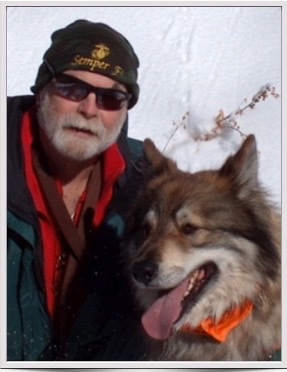
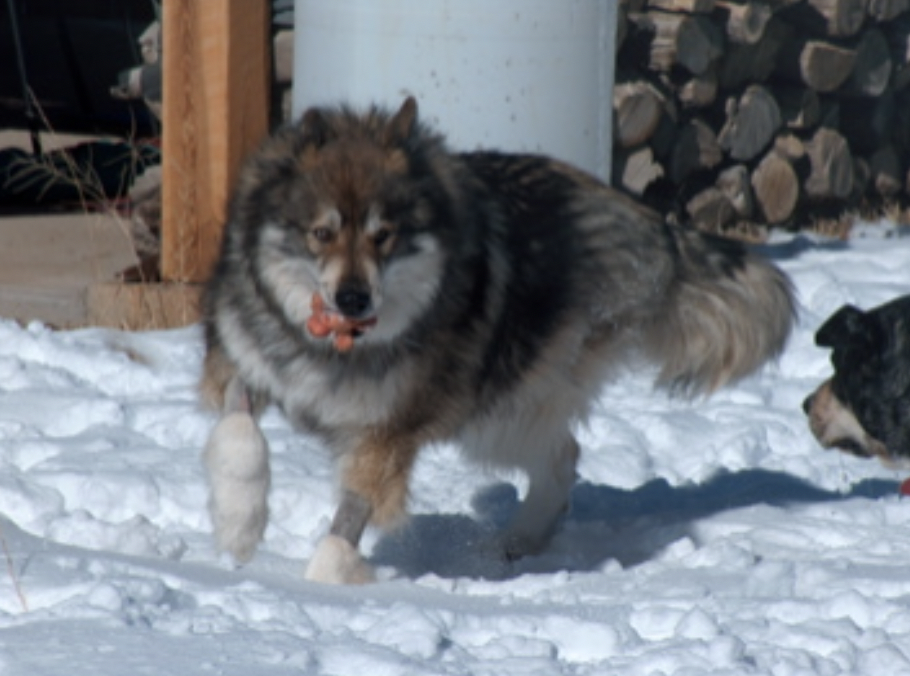
Chaco came to us as a Wolf-Malamute pup and lived out his life in our care. Magnificent is an inadequate term to try to provide a sense of who he was in this lifetime but he was all that and more. I won’t bore the reader with tales of our adventures in the mountains of northern New Mexico just outside of Taos. Suffice it to say that we ranged far and wide.
I came home one day after a thunderstorm to find Chaco limping. The gate had been opened by Dharma a female heeler that had lived across the street but who had spent most of the time playing with Chaco through the fence. When her humans moved she stayed. She was totally freaked out by thunder, fireworks, etc. and had chewed open chain link fence gates, butted down wooden gates, and more to run free from the thunder. She and Chaco had run free for some time so I thought he might have sprained something.
After a few days of limping I took Chaco to the vet’s for x-rays. The pain and gimpiness were associated with a tumor that was osteosarcoma. I drove Chaco to Colorado Canine Orthopedics & Rehab in Colorado Springs. A biopsy confirmed the diagnosis and a surgery to remove his left rear leg at the hip was scheduled. The surgery went well and Chaco regained most of his mobility and soon was running with the other dogs.
We knew he would never recover as the cancer had spread to his lungs so we wanted to do everything we could to make him comfortable. We tried chemo but stopped it when there was no sign of improvement. We enjoyed a few months of fairly normal outdoor activities and then entered the lasts stage, a period where you do things for the last time. At the beginning of this stage you may not be aware that you and your companion are doing something for the last time until you try to do it again and cannot. It becomes a great lesson in being in the moment because now you know that what you are doing may be the last time you ever do it and those activities take on a special meaning. [My perspective is that we never know for sure when we’ll die and so every moment should be lived that way. I’m a long way from being there all the time but some things just seem to demand attention.]
After the lasts comes the slide that carries us all to the same end. Chaco reached the point where his rear leg wasn’t dependable. We tried a wheelchair but that wasn’t appropriate for the circumstances, so we used a sling to support his body while he ambulated with his front legs. He quickly transitioned to wanting to be outside most of the time – he used to sleep in the snow – so we accommodated that. For several weeks Chaco and I would go out into the sage, have long conversations and sleep. When he totally lost his mobility I either dragged a sleeping bag with him on it or carried him.
His last night we were inside and he was lying in Deb’s lap. I went to take a nap and Deb woke me to tell me that Chaco had passed. He died in her arms peacefully, completing that lifetime in the animal realm.
We said mantras and did mudras and then laid him in the grave I had prepared. There is nothing like such an experience to show you how strong attachments can be to others and to self. And if there was difficulty in fearing impermanence this type of event can help you re-examine that subject.
I believed then as I do now that we had done our best for Chaco. I failed miserably with Skanda.
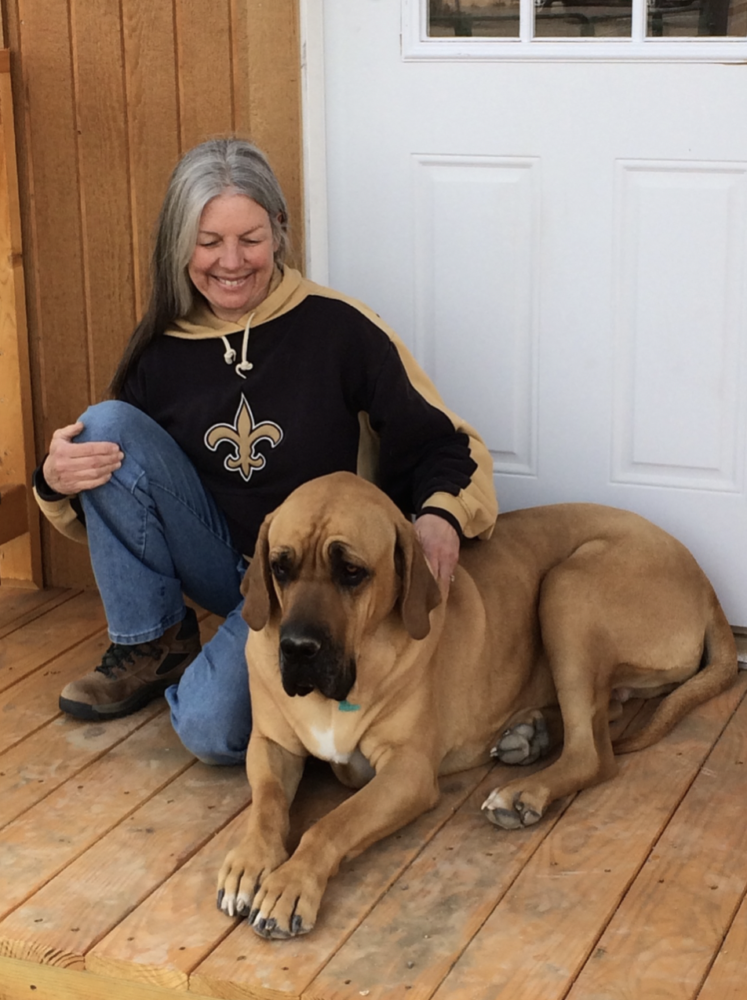
At eight weeks the Brazilian Mastiff puppy weighed 18 pounds. We chose the name Skanda because we thought that he would become the protector for the two remaining dogs, Lyla and Dharma. He grew rapidly, was seriously attached to Deb, and too big and strong for his good. At the beginning of adulthood, he had torn both ACL’s and, due to his size, our vet recommended the repair that Colorado Canine did that involved repositioning his tibial plateau and securing it with a plate and screws. The first operation went so well that the second could be done earlier than expected. Then came about two months of restricted activity and that meant he had to be on leash anytime he was outside. That is easier said than done but we did our best and he made it through his recovery.
Yes, osteosarcoma once more, same prognosis and no surgical option. One problem with osteosarcoma is that once it reveals itself with a tumor it has already spread and all that’s left is to try to make the dying as comfortable as possible.Life with a canine companion that weighs about 170 pounds and is fiercely protective can be challenging. Around Deb Skanda was nothing but a drooling pool of love but any sense that she was in need of protection and the transformation was dramatic. So, we took precautions and adapted. My approach was to treat him as if he had PTSD and to make sure he was shielded from as much of the triggers associated with PTSD as possible. And life was good…until he developed a tumor on his left front leg.
Skanda had a selection of pain meds that helped but after a month or so the pain in his foreleg made walking too difficult. We had added cannabis oil to his regimen and that seemed to help. His decline was fairly rapid: reduced mobility then virtually none; decreased appetite; obvious signs of distress; sleeping most of the day; incontinence. The tumor on his leg increased in size, the leg swelled with edema, his foot swelled until the skin between the toes began to open and his foot began to putrefy. At this point he would only drink a little water and take the CBD oil straight from the dropper. He refused meds, food and then treats. As his foot worsened the conversation turned to euthanasia. Bottom line is that I was weak, our vet came to the house and administered the drugs and Skanda appeared to pass peacefully. His remains were placed near Chaco’s with appropriate ceremony..
In Revealing the Truth, a book written by Shi Zheng Hui about her experiences during the twelve years lived in close proximity to H. H. Dorje Chang Buddha III I read a passage that I hoped might apply to euthanasia. In the passage Jun Ma an elderly Great Dane was taken to hospital for treatment but died that afternoon. In my strong desire to find a way to think that Skanda’s euthanasia might have been alright under the circumstances I contacted H.E. Denma Tsemang Longzhi Rinpoche to ask if the passage in the book meant that Jun Ma had been euthanized. The reply I received reiterated that there were no circumstances that would allow for euthanasia.
During 2018 I provided and Deb participated in hospice and palliative care for both Dharma and Lyla. Dharma created a nesting space in the sage and spent her last days there. Once she settled in she refused food and would only take a little water. She seemed to indicate that she would prefer being left alone so the last two or three days we would check on her and adjust her sun shade. She died with no apparent distress and was buried next to Chaco with appropriate ceremony and ritual.
Several months later Lyla passed away with no indication of distress. I checked on her in the early morning and she was fine then about half an hour later she was dead. She was buried next to her longtime companion Dharma.
The dogs with which we live have all been given a Blue Dharma pill to help them find the Dharma and all have taken refuge. Those that have passed were buried with recitations of The Buddha Speaks of Amitabha Sutra.
There are things to consider when adopting or otherwise finding a new canine companion. Your age, their life expectancy, your physical condition, their size, your life expectancy, their life after your death.
Eben Alexander, a distinguished neurosurgeon, once firmly embraced the philosophy of Epicurus, believing in the finality of death and positing that there is nothing beyond our mortal existence. However, his own extraordinary encounter shattered these convictions, launching him into a profound journey that defied conventional understanding. In his compelling book, “Proof of Heaven,” Alexander shares a narrative that not only transformed his perceptions but also prompted contemplation on the very essence of existence.
As a highly esteemed figure in the medical community, Alexander boasted impeccable credentials, marked by significant contributions to neurosurgery and numerous academic accomplishments. His trajectory took an unexpected turn when he confronted bacterial meningitis caused by a rare strain of E. coli. With his neocortex, the seat of consciousness, succumbing to the illness, survival seemed improbable.
Against all odds, Alexander emerged from a seven-day coma with a surprising declaration: “All is well.” His miraculous recovery, confounding medical experts, extended beyond the physical realm. He vividly recounts a journey into a realm of ineffable beauty, profound understanding, and divine love—an experience that transcended his compromised brain function.
The title of Alexander’s book, “Proof of Heaven,” encapsulates the essence of his revelation. Through his firsthand account, supported by corroborating testimony, he challenges the notion that consciousness is solely a product of neural activity. His inexplicable recovery stands as a testament to the mysteries that lie beyond our comprehension, prompting profound reconsideration of life and death.
In the ethereal realms that Eben Alexander traversed during his coma-induced journey, he vividly described scenes of unparalleled beauty and awe. His narrative delves into luminous landscapes with vibrant colors and radiant light, transcending the limitations of earthly perception. Alexander spoke of meadows adorned with blossoms emitting melodies, a symphony of sound intertwined with vibrant hues that danced harmoniously.
Moving through this celestial expanse, Alexander encountered entities of immense love and wisdom, beings emanating a profound sense of interconnectedness and understanding. He described interactions with ethereal guides who communicated not through conventional language but through a telepathic exchange of pure emotions and intentions. These guides, he noted, possessed a divine knowledge surpassing the comprehension of the earthly mind.
Furthermore, Alexander shared experiences of traversing a vast, intricate network of interconnected realms, each layer revealing higher levels of consciousness and spiritual understanding. He conveyed encounters with deceased loved ones and souls radiating unconditional love, contributing to an overwhelming sense of peace and acceptance.
Colleagues attested to Alexander’s astonishing recovery, leaving the medical community baffled about the disease’s origin and subsequent recovery. Infectious diseases specialist Scott Wade, in an appendix, described the recovery as “truly remarkable.”
The crux of Alexander’s narrative lies in the title of his book, revealing his journey to a realm of hyper-real beauty, understanding, and divine love—a journey that occurred without the active participation of his brain. This challenges the notion that consciousness is solely a product of brain activity and provides compelling evidence for the existence of an afterlife.
In his book, Alexander also described what compelled him to return to the earthly world. He recounted seeing his son’s sad face and sincere prayer for Alexander to come back and be a father again. Alexander realized that taking care of family is a crucial responsibility on Earth.
Despite skepticism and criticism, the integrity of Alexander’s character and the veracity of his accounts remain steadfast, prompting broader questions about the limitations of empirical science in explaining transcendent phenomena.
Contemplating the implications of Alexander’s revelation compels us to ponder transformative potential across diverse fields of inquiry. What paradigm shifts would occur if the hypothesis of an afterlife were embraced within disciplines such as psychology, sociology, literature, and philosophy? How might our perceptions of reality and human experience be redefined in light of such profound revelations?
For many, Alexander’s journey offers a profound shift in perspective—a redirection of focus from the fear of death to the complexities of earthly existence. His account underscores the interconnectedness of the human experience, suggesting that the struggles and choices we face in this life hold profound significance.
Alexander’s account prompts contemplation on the relationship between the earthly realm and the divine. While he suggests that Heaven supports and holds us invisibly, it is equally plausible to consider that Heaven depends on us. Earth, with its struggles and challenges, becomes the consequential place where the battle between good and evil unfolds, shaping our choices and influencing realms beyond.
In essence, Eben Alexander’s odyssey transcends the boundaries of conventional understanding, beckoning us to explore the uncharted territories of consciousness and existence. Whether embraced as irrefutable proof or contemplated as a profound allegory, his journey serves as a catalyst for introspection, challenging us to reconsider the fundamental questions that define our humanity. As we navigate the mysteries of life and death, perhaps we are reminded that the ultimate truth lies not solely in the destination but in the journey itself.







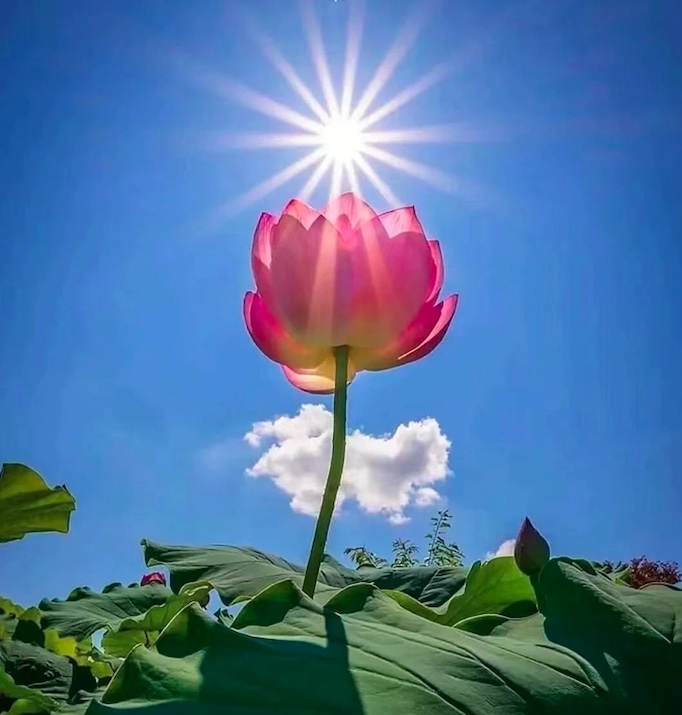
 Peace LiLy