In the path of cultivation, many of us begin with sincerity. We read the teachings, we listen, we reflect, and we believe that we are walking the path correctly. Yet a profound question remains:
Why is it that among so many practitioners, so few truly attain realization?
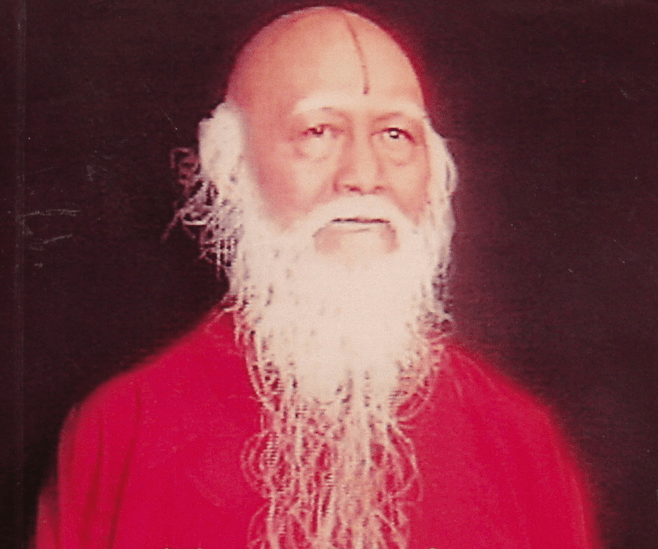
In a teaching given by Elder Monk Dorje Losang at Bodhi Monastery, a direct and uncompromising answer is offered. There are only two fundamental reasons.
First, one has not followed a true Master—one who is the incarnation of a Buddha or Bodhisattva—and therefore has not received the true Buddha-dharma, but only its outer forms, theories, or popular interpretations.
Second, even if one is fortunate enough to follow a true Master and has encountered the authentic Dharma, one’s three karmas—conduct, speech, and thought—do not truly correspond with the Master’s teachings. In this case, cultivation becomes superficial. Without true alignment, there can be no liberation, no genuine blessings, and no escape from the cycle of birth and death.
This teaching is simple, yet deeply penetrating.
It reminds us that the path is not only about what we learn—but how we live.
True devotion is not merely a feeling. It is expressed through what is called the “Four States of Corresponding”: unwavering loyalty, constancy without change, placing nothing above the Master and the Three Jewels, and reaching complete, wholehearted devotion. Only when these are truly practiced can one’s three karmas fully align.
And yet, for many of us, the challenge lies not in understanding these principles—but in applying them in the smallest moments of daily life.
A story shared by lay practitioner Wang Yuxiang offers a powerful reflection.
On an ordinary day, she decided to prepare steamed dumplings as an offering to her Master, H.H. Dorje Chang Buddha III. Her heart was joyful, filled with the intention to make a sincere offering.
As she prepared the filling, she followed a habit formed over years of cooking at home—she tasted a small portion to check the seasoning, then returned it to the mixture. It was a simple, unconscious action, something she had done countless times before.
But this time, it was different.
In that very moment, something unexpected occurred. A sealed bottle of soy sauce suddenly fell and shattered, creating a loud and startling crash. Shocked, she immediately realized her mistake.

This was not food for herself or her family.
This was an offering.
With deep remorse, she repented sincerely, recognizing her lack of mindfulness and reverence. Her tears flowed uncontrollably—not out of fear, but from a genuine awareness of having fallen short in her devotion.
Soon after, she discovered that her foot had been pierced by a sharp piece of glass, causing significant bleeding. Yet despite the injury, her only concern was not to delay her Master’s meal. She endured the pain, completed the offering, and only afterward returned home to tend to her wound.
And then, something extraordinary happened.
The wound—deep, bleeding, and undeniable—had completely disappeared. There was no scar, no swelling, no trace it had ever existed.
To many, such an account may seem difficult to comprehend. But beyond the event itself lies its deeper meaning.
Through this experience, she came to a clear realization: cultivation is not an abstract concept—it is present in every thought, every word, every action.
Even a small, habitual act, when lacking mindfulness and reverence, reveals a gap between one’s intention and one’s actual state of alignment.
From a Buddhist perspective, this story is not merely about a “miracle,” but about cause and condition, sincerity and response.
When one’s mind deviates, even subtly, there is consequence.
When one repents with genuine sincerity, there is also transformation.
More importantly, it reminds us that following a true Master is an immense blessing—but it also carries profound responsibility.
It is not enough to say we believe.
It is not enough to feel devotion in our hearts.
Our three karmas must align—completely, precisely, and without compromise.
Not only in great matters, but in the smallest details of daily life.
How we speak.
How we act.
What thoughts we allow to arise.
Because it is in these subtle moments that our true state is revealed.
If we treat ordinary matters casually, how can we claim sincerity in sacred ones?
If our habits remain unchanged, how can transformation occur?
The path of cultivation is, in truth, very direct.
When the Dharma is true, and when one’s devotion is unwavering, Elder Monk Dorje Losang teaches that liberation can be “as easy as turning over one’s hand.”

But if our practice remains external, if our alignment is incomplete, then no matter how long we cultivate, the result will remain distant.
This is both a warning and a profound encouragement.
It tells us that the path is not far away.
It is right here, in this very moment.
In every thought we choose.
In every word we speak.
In every action we take.
To truly align our three karmas is not something abstract—it is something we practice now.
Quietly.
Sincerely.
Completely.
And perhaps, in that sincerity, the path will naturally unfold.
For full lecture Given by Elder Monk Dorje Losang at Bodhi Monastery, please click here.
For the full account by lay practitioner Wang Yuxiang please refer to H.H. Dorje Chang Buddha III — A Treasury of True Buddha-Dharma**, pp. 187-189.**

