The Sacred Dragon Stone: Manjushri Bodhisattva’s Compassion and the Five Dragon Princess

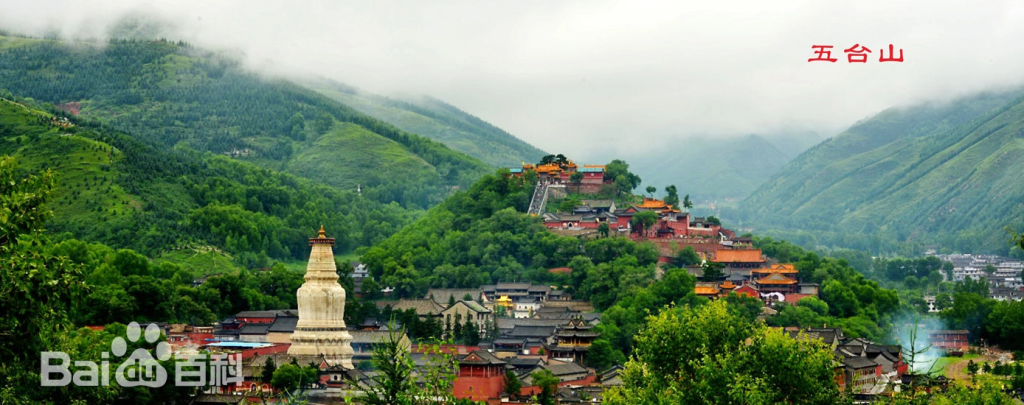
Mount Wutai, home to over 53 sacred monasteries, stands as one of the Four Sacred Mountains of Chinese Buddhism. Each of these mountains is regarded as the bodhimaṇḍa of one of the four great bodhisattvas, and Wutai is the sacred domain of Manjushri, the Bodhisattva of Wisdom. Revered since ancient times, Mount Wutai holds a profound spiritual significance, attracting countless pilgrims seeking enlightenment and divine blessings.

Mount Wutai was the first of the four great mountains to be identified and is often referred to as the “First Among the Four Great Mountains.” Due to its unique status, it is also known as “Golden Wutai.” The identification of this sacred site can be traced back to the Avataṃsaka Sūtra, which describes the abodes of many bodhisattvas. In this scripture, Manjushri is said to reside on a “clear cold mountain” in the northeast. This passage not only solidified Wutai’s spiritual identity but also inspired its alternative name, “Clear Cool Mountain.” With an annual average temperature of around -4°C and high-moisture air, the mountain’s name perfectly encapsulates its serene and pure atmosphere.

Legends tell of Manjushri’s frequent appearances on Mount Wutai, often taking the form of ordinary pilgrims, monks, or most notably, five-colored clouds. Among the many tales that surround this sacred land, the story of the Xielong Stone and the Dragon Temple remains one of the most awe-inspiring.

In ancient times, the climate of Mount Wutai was harsh—winters were bitterly cold, and powerful spring winds carried dust and sand, making the land inhospitable. At that time, the mountain was simply known as “Five Peaks Mountain.” Determined to transform Wutai into a haven for spiritual cultivation and to bring blessings to sentient beings, Manjushri sought the mystical Xielong Stone, a sacred gem held by the Dragon King of the Eastern Sea. This stone possessed miraculous powers that could regulate the climate, making the land fertile and serene.

Manjushri traveled to the Dragon Palace and humbly requested the Xielong Stone. However, the Dragon King hesitated, explaining, “This stone was left behind by the goddess Nüwa. It is a resting place for our dragon clan, and we cannot part with it.”

With infinite compassion, Manjushri responded, “I seek this stone to benefit all sentient beings. I hope you, great Dragon King, will fulfill this virtuous karmic connection.”

Although moved by Manjushri’s vow, the Dragon King was reluctant to relinquish the treasured stone. He assumed that even with his great dharma powers, Manjushri would be unable to move it, as it weighed tens of thousands of pounds. Feigning generosity, he said, “Great Bodhisattva, if you can take the stone, you may do so.”

To the Dragon King’s astonishment, Manjushri gently approached the stone, recited a divine mantra, and instantly shrank the massive rock to the size of a marble. With a flick of his sleeve, he stowed it away, bowed to the Dragon King, and effortlessly departed.

The Dragon King, realizing his mistake too late, could only watch in stunned regret.

When the five dragon princes returned to the palace and learned what had happened, they were enraged. Determined to reclaim the stone, they pursued Manjushri to Wutai Mountain. As they arrived, Manjushri sat in serene meditation, awaiting them.

Upon seeing him, the Fifth Dragon Prince demanded, “Are you truly the teacher of the Seven Buddhas, the Awakened Mother of the Three Periods, Manjushri Bodhisattva?”

Manjushri calmly replied, “Indeed, I am.”

Scoffing, the young dragon sneered, “It is said that past Buddhas were your disciples, yet you appear to be only fifteen or sixteen years old. How can this be?”

Manjushri then imparted a teaching:

“The Buddha taught that there are four things in the world that must never be underestimated:

  • A young prince—though small, he will one day rule the land and influence countless lives.
  • A young dragon—though young, he will one day command the winds and tides.
  • A small flame—though weak, it can grow into an all-consuming blaze.
  • A young monk—though inexperienced, he may attain supreme wisdom through practice.”

Hearing this, the young dragons began to reflect on the depth of Manjushri’s wisdom. However, the young dragons were still defiant. They demanded, “If you truly have great divine power, why not change the climate of Wutai Mountain directly? Why did you have to take the Xielong Stone?”

With patience, Manjushri explained, “Divine power can temporarily change conditions, but only through the Xielong Stone can Wutai Mountain remain perpetually cool and become a sanctuary for spiritual cultivation.”

Unconvinced, the young dragons retorted angrily, “So you admit that your power is limited! Return the stone at once, or we will show no mercy!”

Furious, the five dragons launched a fierce attack, unleashing their claws, storms, and lightning against Manjushri. Yet, no matter how they struck, they could not harm him in the slightest.

In their frustration, they began to tear at the mountains, hoping to shake the ground beneath Manjushri. Their immense strength clawed away the mountaintops, scattering rocks across the land, creating what is now known as the Dragon-Turned Stones (龙翻石).

Realizing the young dragons’ arrogance and aggression, Manjushri used his supreme power to subdue them. He sealed them beneath Mimo Rock (秘魔岩), merging two great peaks, leaving only a narrow crevice for them to reflect and temper their hearts. He then instructed the local mountain spirits and earth deities to ensure the dragons were provided with food and offerings, allowing them to cultivate patience and wisdom until their minds were at peace.

Later, the Dragon King of the Eastern Sea personally traveled to Wutai Mountain, pleading with Manjushri to release his sons.

With a compassionate smile, Manjushri assured him, “I have never harmed even an ant, let alone your five sons. They are here only to refine their minds. Once they achieve inner harmony, they will be freed naturally.”

To honor the young dragons and appease their spirits, Manjushri decreed that a Dragon King Temple be built in their name. There, they would receive offerings and incense from devoted followers, increasing their divine merits while they cultivated.

From then on, the Dragon King Temple on Wutai Mountain flourished, becoming a revered site for pilgrims seeking blessings for favorable weather and divine protection. Its existence symbolizes humanity’s reverence for the water deities and our hope for harmony between nature and sentient beings. Amidst the rising incense and prayers, worshippers not only feel the celestial blessings but also gain insight into wisdom and inner peace through spiritual practice.

Today’s Wutai Mountain is surrounded by lush green hills, beneath a sky of pure blue and auspicious clouds. In summer, the weather shifts between sunshine and rain, mist and fog. On clear days, the vast sky is brilliantly blue, filling the heart with joy and serenity; on rainy days, the misty veils create an atmosphere of elegance and tranquility, bringing deep peace to the soul. Strolling through the mountains, one feels naturally at ease and in harmony with the surroundings.

All of this, in truth, is a manifestation of the blessings and protection of Manjushri Bodhisattva. With His innate cool radiance, Manjushri employed the Dragon-Resting Gem to enlighten the beings of the dragon lineage. In doing so, He also established this sacred pure land of Wutai, where both ordinary and holy beings coexist. Here, He watches over this realm, awaiting the return of the countless wayfarers lost in the endless cycles of samsara.

Link:https://peacelilysite.com/2025/03/04/the-sacred-dragon-stone-manjushri-bodhisattvas-compassion-and-the-five-dragon-princess/

Dangkar Monastery: A Sacred Jewel in the Mountains of Yushu

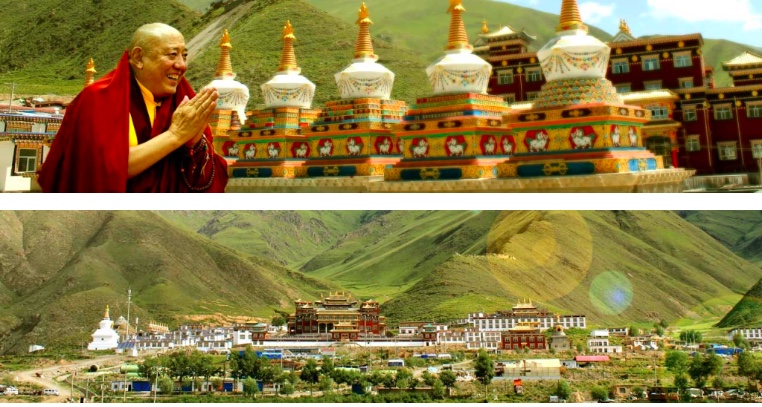
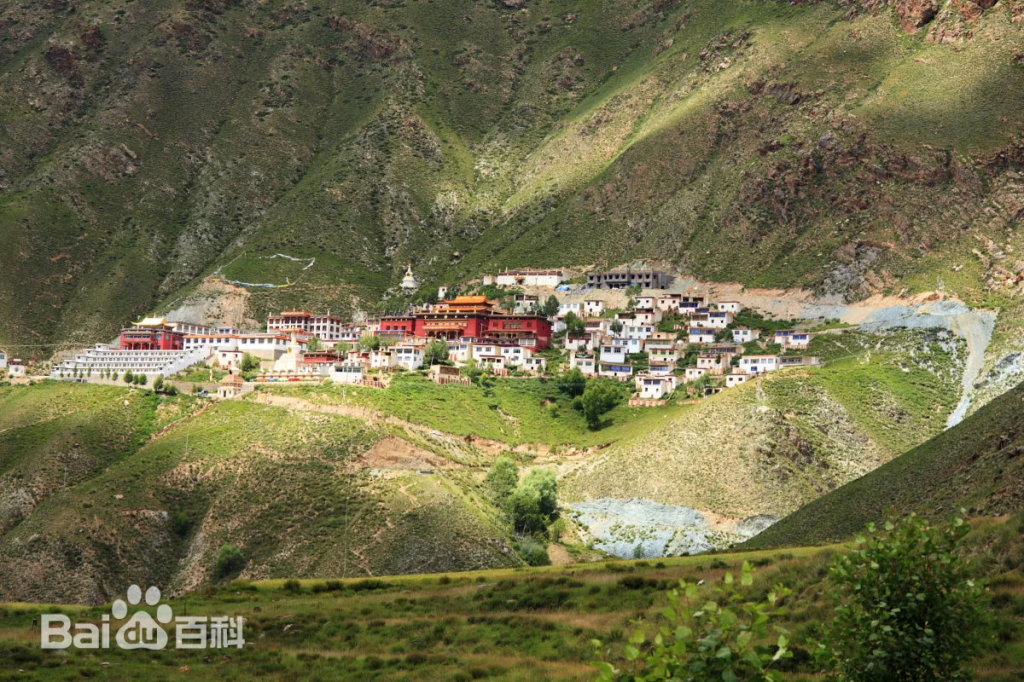
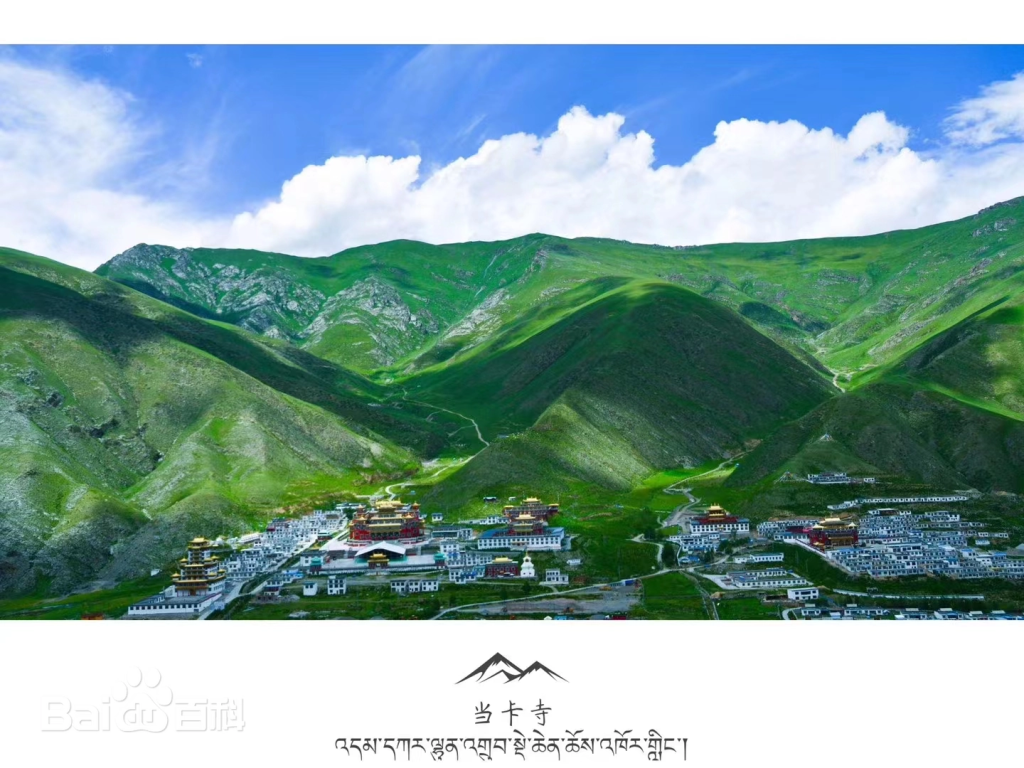
Nestled in the serene mountains of Qinghai Province, Dangkar Monastery stands as a sacred sanctuary of Tibetan Buddhism. Located in Qianjin Village, Jiegu Subdistrict, Yushu City, this revered monastery traces its origins back over 800 years to its founder, Bacha Daodai (the First Tumuchuje). As a spiritual stronghold of the Karma Kagyu lineage, it has long been a place of devotion, practice, and enlightenment.

A Monastery Born from Divine Signs

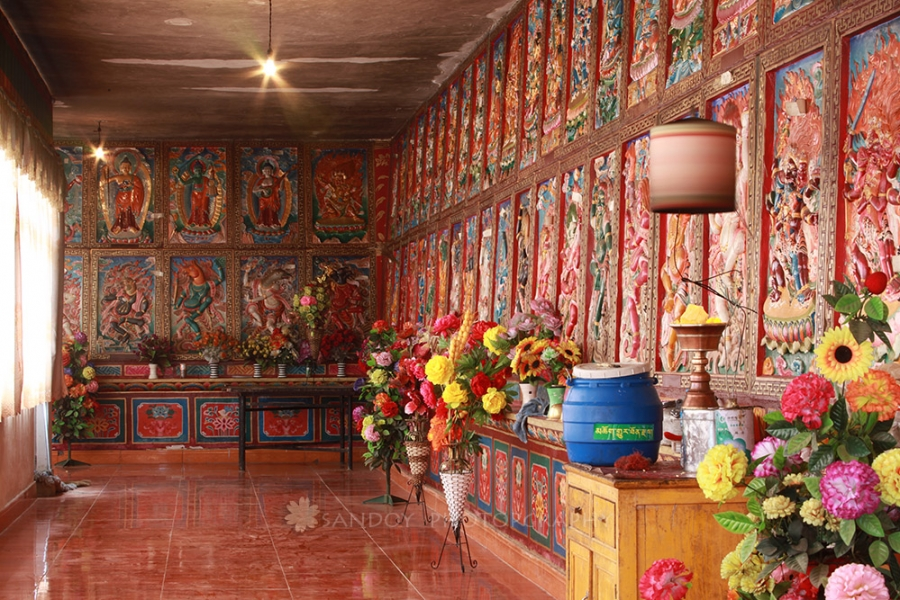
Dangkar Monastery is perched along the slopes of Zhazeng Dasa Mountain, its architectural design harmonizing with the natural landscape. The monastery’s structure is said to resemble Avalokiteshvara in a state of serene repose, with the lower part forming the mystical image of eight dragons coiling beneath, signifying divine protection and spiritual power.

The monastery’s foundation is deeply intertwined with auspicious omens. Following the guidance of his master, Dusum Khyenpa, Bacha Daodai ventured to the Gyeri mountains in Kham, where he meditated in the sacred Godtsang Karmo Cave. During the search for a suitable site to build the monastery, several miraculous signs emerged. One such event remains legendary—faced with a lack of water, Bacha Daodai plunged his staff into the earth, and from that very spot, a pure spring gushed forth. To this day, this sacred water source continues to flow, known as the nectar spring of Dangkar Monastery.

Trials of Destruction and the Path to Revival

The monastery has faced its share of hardships. Between 1958 and the Cultural Revolution, Dangkar Monastery suffered severe destruction, with all its buildings reduced to ruins. But in 1981, the 18th Dumu Quji Rinpoche embarked on a mission to restore this sacred site. The early days of reconstruction were fraught with difficulties—there was no funding, no infrastructure, and no resources. To finance the project, Rinpoche sold his sisters’ personal offerings, including dzi beads and coral, using the proceeds to procure wood from Suman Township, a region abundant in timber.

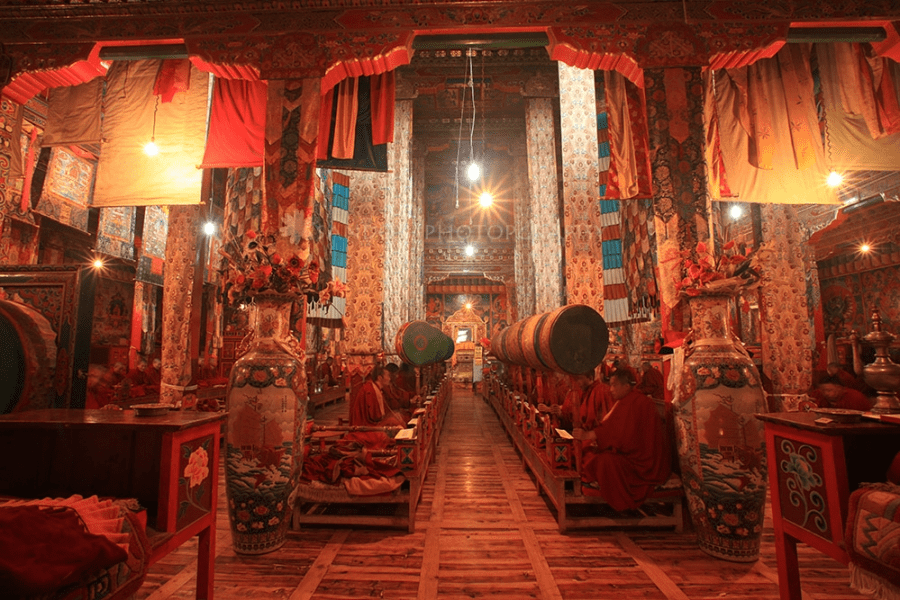
Transporting materials was an arduous journey, plagued by treacherous roads and unpredictable weather. Vehicles often became trapped in deep mud, forcing monks and workers to spend nights in the wilderness without food. When the timber finally arrived, another challenge arose—there was no accessible road to the monastery. Everything had to be manually carried up the mountain, plank by plank, through sheer human perseverance. After years of relentless effort, the first rebuilt assembly hall was completed. (Notably, the 17-pillared hall that stands today was built entirely by hand, using timber painstakingly transported from Suman Township.)

A Legacy of Spiritual Dedication

Despite financial constraints, Dumu Quji Rinpoche’s vow to serve sentient beings never wavered. Over the years, he oversaw the construction of essential facilities, including the Lama Institute, the Dharma Protector Hall, and two retreat centers. These retreat centers remain vital spaces for deep meditation—one dedicated to the Six Yogas of Naropa (Mahamudra) and the other to Dzogchen teachings, each accommodating up to 30 lamas.

In 1994, responding to an invitation from the Hong Kong Karma Kagyu Center, Rinpoche traveled to Hong Kong to spread the Dharma. His teachings soon reached disciples across Hong Kong, Xiamen, Shenzhen, Guangzhou, Huizhou, and Shanghai, drawing practitioners from all over China’s southern coastal regions.

A Thriving Spiritual Community

Over the past two decades, Dangkar Monastery has risen from the ashes of destruction to become a flourishing center of Buddhist practice. Under the compassionate guidance of Dumu Quji Rinpoche, the monastic community has grown to include approximately 200 lamas, making it one of the largest Karma Kagyu monasteries in the Yushu region.

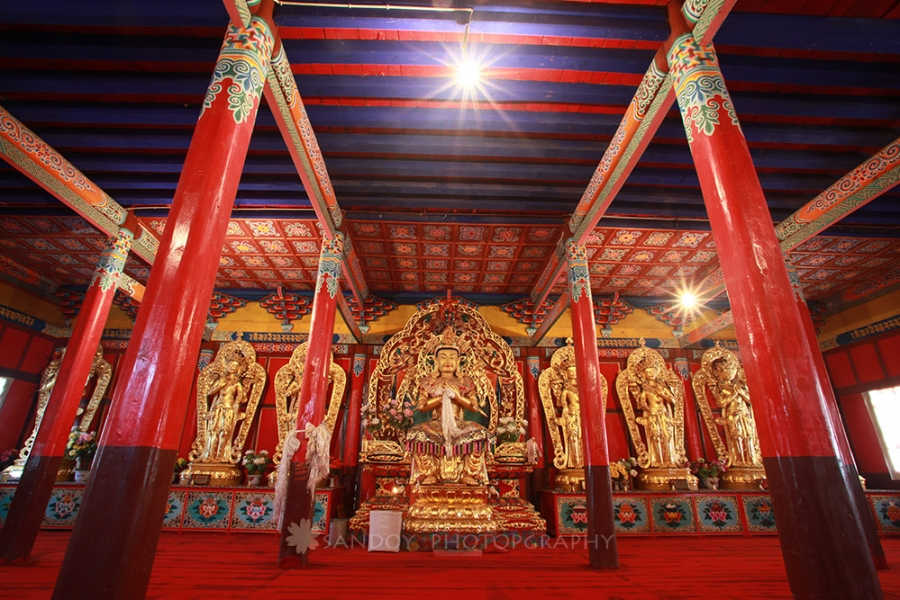
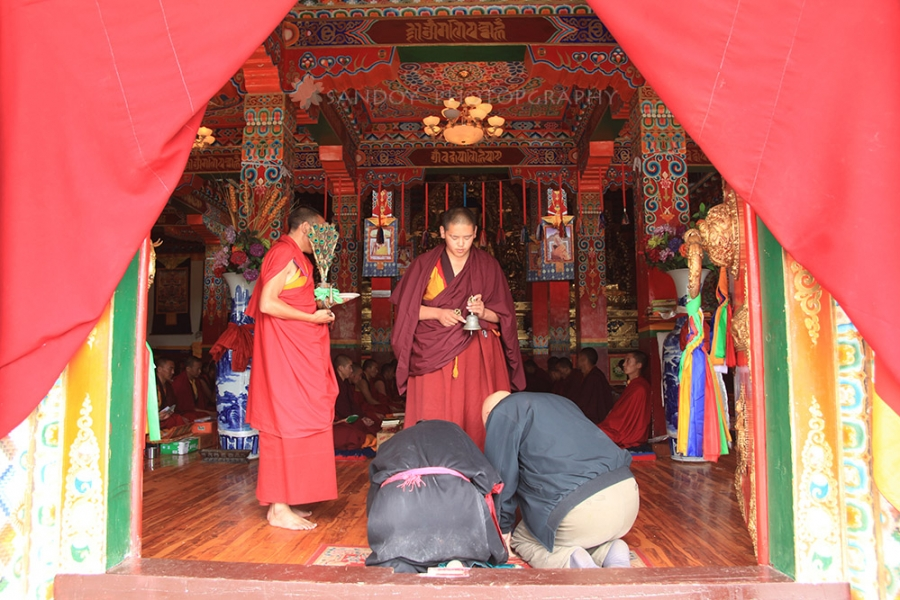
Stepping into the grand assembly hall, visitors are greeted by majestic Buddha statues and the resonant echoes of sacred chants that purify the soul. The atmosphere exudes an aura of deep serenity and divine presence, inspiring all who enter to contemplate the path to enlightenment.

Link:https://peacelilysite.com/2025/01/30/dangkar-monastery-a-sacred-jewel-in-the-mountains-of-yushu/

Source: photos from http://www.wtrgd.com/case/showimg.php?lang=cn&id=63

51. King Goodness the Great [Perseverance]

51. King Goodness the Great [Perseverance]

Once upon a time, in Benares in northern India, the Enlightenment Being was born into the royal family. When he became king he was called Goodness the Great. He had earned this title by trying to do good all the time, even when the results might not benefit him. For example, he spent much of the royal treasury on the building and running of six houses of charity. In these houses good and aid were given freely to all the poor and needy who came along, even to unknown travellers. Soon King Goodness the Great became famous for his patience, loving-kindness and compassion. It was said that he loved all beings just like a father loves his young children.

Of course King Goodness observed the holy days by not eating. And naturally he practiced the ‘Five Training Steps’, giving up the five unwholesome actions. These are: destroying life, taking what is not given, doing wrong in sexual ways, speaking falsely, and losing one’s mind from alcohol. So his gentle kindness became more and more pure.

Since he wished to harm no one, King Goodness the Great even refused to imprison or injure wrongdoers. Knowing this, one of his highest ministers tried to take advantage of him. He cooked up a scheme to cheat some of the women in the royal harem. Afterwards it became known by all and was reported to the king.

He called the bad minister before him and said, ‘I have investigated and found that you have done a criminal act. Word of it has spread and you have dishonoured yourself here in Benares. So it would be better for you to go and live somewhere else. You may take all your wealth and your family. Go wherever you like and live happily there. Learn from this lesson.’

Then the minister took his family and al his belongings to the city of Kosala. Since he was very clever indeed, he worked his way up and became a minister of the king. In time he became the most trusted adviser to the King of Kosala. One day he said, ‘My lord, I came here from Benares. The city of Benares is like a beehive where the bees have no stingers! The ruling king is very tender and weak. With only a very small army you can easily conquer the city and make it yours.’

The king doubted this, so he said, “You are my minister, but you talk like a spy who is leading me into a trap!’ He replied “No my lord. If you don’t believe me, send your best spies to examine what I say. I am not lying. When robbers are brought to the King of Benares, he gives them money, advises them not to take what is not given, and then lets them go free,”

The king decided to find out if this was true. So he sent some robbers to raid a remote border village belonging to Benares. The villagers caught the looters and brought them to King Goodness the Great. He asked them, “Why do you want to do this type of crime?”

The robbers answered, “Your worship, we are poor people. There is no way to live without money. As your kingdom has plenty of workers, there is no work for us to do. So we had to loot the country in order to survive.” Hearing this, the king gave them gifts of money, advised them to change their ways, and let them go free.

When the King of Kosala was told of this, he sent another gang of bandits to the streets of Benares itself. They too looted the shops and even killed some of the people. When they were captured and brought to king Goodness, he treated them just the same as the first robbers.

Learning of this, the King of Kosala began marching his troops and elephants towards Benares.

In those days the King of Benares had a mighty army which included very brave elephants. There were many ordinary soldiers, and also some that were as big as giants. It was known that they were capable of conquering all India.

The giant soldiers told King Goodness about the small invading army from Kosala. They asked permission to attack and kill them all.

But King Goodness the Great would not send them into battle. He said, “My children, do not fight just so I may remain king. If we destroy the lives of others we also destroy our own peace of mind. Why should we kill others? Let them have the kingdom if they want it so badly. I do not wish to fight.”

The royal ministers said, “Our Lord, we will fight them ourselves. Don’t worry yourself. Only give us the order.” But again he prevented them.

Meanwhile the King of Kosala sent him a warning, telling him to give up the kingdom or fight. King Goodness the Great sent this reply: “I do not want you to fight with me, and you do not want me to fight with you. If you want the country, you can have it. Why should we kill people just to decide the name of the king? What does it matter even the name of the country itself?”

Hearing this, the ministers came forward and pleaded, “Our Lord, let us go out with our mighty army. We will beat them with our weapons and capture them all. We are much stronger than they are. We would not have to kill any of them. And besides, if we surrender the city, the enemy army would surely kill us all!”

But King Goodness would not be moved. He refused to cause harm to anyone. He replied, “Even if you do not wish to kill, by fighting many will be injured. By accident some may die. No one knows the future – whether our attackers will kill us or not. But we do know whether our present actions are right or wrong. Therefore I will not harm, or cause others to harm, any living being!”

Then King Goodness ordered the city gates be opened up for the invaders. He took his ministers to the top floor of the palace and advised them, “Say nothing and try to remain calm.”

The King of Kosala entered the city of Benares and saw that no one was against him. So he and his soldiers entered and went up to the top floor. They capture the innocent King Goodness the Great. The soldiers tied the hands of the defeated king and all of his ministers.

Then they were taken to the cemetery outside the city. They were buried up to their necks, standing straight up, with only their heads above ground. But even while the dirt was being trampled down around his neck, the Great Being remained without anger in his mind and said nothing.

Their discipline and obedience to King Goodness were so great that not a single minister spoke a word against anyone. But the King of Kosala had no mercy. He said roughly, “Come night time, let the jackals do as they please!”

And so it came to pass that, at midnight, a large band of jackals wandered into the cemetery. They could smell a feast of human flesh waiting for them.

Seeing them coming, King Goodness and his ministers shouted all at once and scared the jackals away. Twice more this happened. Then the clever jackals realised, “These men must have been put here for us to kill and eat.” No longer afraid, they ignored the shouts. The jackal king walked right up to the face of King Goodness.

The king offered his throat to the beast. But before he could bite into him, the king grabbed the jackal’s chin with his teeth. No harming him, King Goodness gripped him tightly so the jackal king howled in fear. This frightened his followers and they all ran away.

Meanwhile the jackal king thrashed back and forth, trying madly to free himself from the might jaws of the human king. In so doing, he loosened the dirt packed around the king’s neck and shoulders. Then King Goodness released the screaming jackal. He was able to wiggle himself free from the loosened earth and pull himself up onto the ground. Then he freed all his frightened ministers.

Nearby there was a dead body. It just so happened that it was lying on the border of the territories claimed by two rival demons. They were arguing over the division of the body, insulting each other in ways that only demons can.

Then one demon said to the other, “Why should we continue quarrelling instead of eating? Right over there is King Goodness the Great of Benares. He is famous in all worlds for his righteousness. He will divide the dead body for us.

They dragged the body to the king and asked him to divide it between them fairly. He said, ‘My friends, I would be glad to divide this for you. But I am filthy and dirty, I must clean myself first.”

The two demons used their magic powers to bring scented water, perfume, clothing, ornaments and flowers from the king’s own palace in Benares. He bathed, perfumed himself, dressed, and covered himself with ornaments and flower garlands.

The demons asked King Goodness if there was anything else they could do. He replied that he was hungry. So, again by their magic powers, the demons brought the most delicious flavoured rice in a golden bowl and perfumed drinking water in a golden cup — also from the royal palace in Benders.

When he was satisfied, king Goodness asked them to bring him the sword of state from the pillow of the King of Kosala, who was sleeping in the palace in Benares. With magic that too was easily done. Then the king used the sword to cut the dead boy into two halves, right down the spine. He washed the sword of state and strapped it to his side.

The hungry demons happily gobbled up the fairly divided dead body. Then they gratefully said to King Goodness, “Now that our bellies are full, is there anything else we can do to please you?”

He replied, “By your magic, set me in my own bedroom in the palace next to the King of Kosala. In addition, put all these my ministers back in their homes.” Without a word, the demons did exactly as the king had asked.

At that moment the King of Kosala was fast asleep in the royal bedchamber. King Goodness the Great gently touched the belly of the sleeping king with the sword of state. The king awoke in great surprise. In the dim lamplight he was frightened to see King Goodness leaning over him with sword in hand. He had to rub his eyes to make sure he was not having a nightmare!”

Then he asked the great king, “My lord how did you come here in spite of all my guards? You were buried up to your neck in the cemetery — how is it you are spotlessly clean, sweet smelling, dressed in your own royal robes, and decorated with fine jewellery and the loveliest flowers?”

King Goodness told him the story of his escape from the band of jackals. He told of the two demons that came to him to settle their quarrel. And he told how they gratefully helped him with their magic powers.

On hearing this, the King of Kosala was overcome by his own shame. He bowed his head to King Goodness the Great and cried, “Oh great king, the stupid ferocious demons, who live by eating the flesh and drinking the blood of dead bodies — they recognised your supreme goodness. But I, who was lucky enough to be born as an intelligent and civilised human being — I have been too foolish to see how wonderful your pure goodness is.

“I promise never again to plot against you, my lord —- you who have gained such perfect harmlessness. And I promise to serve you forever as the truest of friends. Please forgive me, great king.” Then, as if he were a servant, the King of Kosala laid King Goodness the Great down on the royal bed, while he himself lay on a small couch.

The next day the King of Kosala called all his soldiers into the palace courtyard. There he publicly praised the king of Benares and asked his forgiveness once again. He gave back the kingdom and promised that he would always protect King Goodness. Then he punished his adviser, the criminal minister, and returned to Kosala with all his troops and elephants.

King Goodness the Great was sitting majestically on his golden throne, with its legs like those of a gazelle. He was shaded from the sun by the pure white royal umbrella. He taught his loyal subjects saying, “People of Benares wholesomeness begins with giving up the five unwholesome actions once and for all. The highest qualities of the good person, whether ruler or subject, are loving-kindness and compassion. Filled with these qualities, one cannot harm another —- no matter what the reason or the cost. No matter how dangerous the threat, one must persevere until the greatness of the good heart wins in the end.”

Throughout the rest of his reign, the people of Benares lived peacefully and happily. King Goodness the Great continued performing wholesome works. Eventually he died and was reborn as he deserved.

The moral is: Refusing to harm others, the good heart wins over all.

51. King Goodness the Great [Perseverance]

Link:https://hhdorjechangbuddhaiiiinfo.com/2023/08/15/king-goodness-the-great-perseverance/

#Buddhisttalesforyoungandold #Buddhiststories #storiesforkids #moralstories #Buddha #Jatakastories #PansiyaPanasJataka

Why ‘Why Buddhism Is True’ Is True

By Adam Frank

Gargolas/Getty Images

Here is one thing author Robert Wright and I agree on when it comes to Buddhist meditation: It’s really, really boring. At least, it’s boring in the beginning. But there is another thing we agree on, too. That initial meditative boredom is actually a door. It’s an opening that can lead us to something essential, and essentially true, that Buddhism has to teach us about being human.

Wright’s insight on this point is just one of the many truths in his delightfully personal, yet broadly important, new book Why Buddhism Is True.

The “true” in Wright’s title doesn’t refer to the traditional kinds of scriptural truths we think of when we think of religions and truth. Wright is explicitly not interested in the traditional aspects of Buddhism as a religion. The book, for example, makes no claims about reincarnation or Tibetan rainbow bodies or the like. Instead, Wright wants to focus on Buddhism’s diagnosis of the human condition. The part that is relevant to the here and now. It’s Buddhism’s take on our suffering, our anxiety and our general dis-ease that Wright wants to explore because that is where he sees its perspective lining up with scientific fields like evolutionary psychology and neurobiology.

To his credit, Wright is more than cognizant that exploring just these aspects of Buddhism means he is filtering out quite a bit of its history. As he reminds his readers:

“Two of the most common Western conceptions of Buddhism — that it’s atheistic and that it revolves around meditation — are wrong; most Asian Buddhists do believe in gods, though not an omnipotent creator God, and don’t meditate.”

Wright also acknowledges that even within this “scientific” Buddhism he is interested in, there are also enormous differences between various philosophical schools of thought, many with 1,000-year histories.

“I’m not getting into super-fine-grained parts of Buddhist psychology and philosophy,” he tells us.

“For example, the Abhidhamma Pitaka, a collection of early Buddhist texts, asserts that there are eighty-nine kinds of consciousness, twelve of which are unwholesome. You may be relieved to hear that this book will spend no time trying to evaluate that claim.”

I was happy to see Wright address these issues of history and interpretation head-on. No matter where Buddhism’s encounter with the West takes it, ignoring history doesn’t do anyone any good (I’ve tried to explore these issues myself here at 13.7 and elsewhere, including here and here).

But with those important caveats, Wright is then forceful in his main argument that “Buddhism’s diagnosis of the human predicament is fundamentally correct, and that its prescription is deeply valid and urgently important.”

To back up this claim, Wright leans heavily on evolutionary psychology, which he says, somewhat tongue-in-cheek, “is the study of how the human brain was designed — by natural selection — to mislead us, even enslave us.” That misleading and enslaving, however, is all in the service of getting our genes into the next generation. As he writes:

“Don’t get me wrong: natural selection has its virtues, and I’d rather be created by it than not be created at all — which, so far as I can tell, are the two options this universe offers.”

These lines give you hint of Wright’s tone throughout the book. He is very funny and uses his own experiences to drive to the book’s questions. In particular, it was his first experience at a week-long meditation intensive two decades ago that launched his journey into Buddhism and “contemplative practice” (i.e. meditation). His accounts of time spent on “the cushion” are full of self-effacing humor and real insights.

Wright’s main point is that evolution hardwires us with intense emotions that are in fact delusions. (He has discussed this in an interview with Fresh Air’s Terry Gross.) They developed as survival responses to the environments we evolved in and they were tuned to those environments. Now they just don’t make sense and need to be seen for what they are. As he puts it:

“These feelings — anxiety, despair, hatred, greed — … have elements of delusion, elements you’d be better off without. And if you think you would be better off, imagine how the whole world would be. After all, feelings like despair and hatred and greed can foster wars and atrocities. So if what I’m saying is true — if the basic sources of human suffering and human cruelty are indeed in large part the product of delusion — there is value in exposing this delusion to the light.”

According to Wright, Buddhism, at least its more contemplative side, offers specific insights into, and a path out of, these delusions. In particular, the direct experiences gained via contemplative practice can, he says, weaken the hold of these evolutionary once-needed delusions. In the process, Wright argues, we can all learn to wreak a little less havoc on ourselves and the rest of the world. As he puts it:

“There are other spiritual traditions that address the human predicament with insight and wisdom. But Buddhist meditation, along with its underlying philosophy, addresses that predicament in a strikingly direct and comprehensive way.”

That broad nonsectarian approach is an important part of Wright’s approach. Raised as a Southern Baptist, he left the church in his teens. But he doesn’t look back in anger. Perhaps that is why he isn’t arguing that people need to become a Buddhist to practice its truths. As he writes: “Asserting the validity of core Buddhist ideas doesn’t necessarily say anything, one way or the other, about other spiritual or philosophical traditions.” Later, he reminds us of the Dalai Lama’s admonition: “Don’t try to use what you learn from Buddhism to be a better Buddhist; use it to be a better whatever-you-already-are.”

Which takes me back to that whole meditation is boring (at least in the beginning) thing. One of the best parts of Wright’s book is its realism. No matter how many books you read on Buddhist insights into human beings, they won’t mean much unless you find yourself a regular practice. It’s the practice that counts. It’s the practice that slowly lets you see the delusion in our constant stream of desires and aversions. That is, after all, why they call it practice. Wright does an excellent job of unpacking this reality for his readers, demonstrating again and again how contemplative practice can lead to understanding and how understanding can lead to an important kind of freedom.

Why ‘Why Buddhism Is True’ Is True

Link: https://peacelilysite.com/2023/03/30/why-why-buddhism-is-true-is-true/

#ScienceandPhilosophyofMeditationandEnlightenment #MeditationandEnlightenment #Enlightenment

Source: https://www.npr.org/sections/13.7/2017/09/26/553712812/why-why-buddhism-is-true-is-true

How Buddhism Holds the key to Moral Clarity and Enduring Happiness.

The meaning of Buddhism is to liberate us from the limited perspective given by natural selection, and to observe and experience the world from a higher level.

Buddhism is a complex topic that has been the subject of debate among scholars and practitioners for centuries. Some see it as a religion, complete with supernatural deities and reincarnation, while others view it as a secular philosophy of life or a therapeutic practice. In his book “Why Buddhism Is True,” Robert Wright offers a nuanced perspective on Buddhism that combines elements of these different approaches.

At the heart of Buddhism is the idea that the reason we suffer, and cause suffering for others, is that we don’t see the world clearly. We are deluded by our own emotions and desires, which evolved as survival responses to our environments but may no longer make sense in modern society. By practicing mindful meditation, we can learn to see the world more clearly and gain a deep and morally valid happiness.

Wright draws on science, especially evolutionary psychology, cognitive science, and neuroscience, to support this perspective on Buddhism. He argues that the direct experiences gained through contemplative practice can weaken the hold of our once-needed delusions, making us less likely to wreak havoc on ourselves and the world around us.

One of the key strengths of Wright’s approach is its nonsectarian nature. He does not argue that people need to become Buddhists to practice its truths, and he acknowledges the value of other spiritual and philosophical traditions. Instead, he focuses on the practical benefits of mindful meditation and contemplative practice, which can be applied to any belief system or way of life.

Importantly, Wright emphasizes that simply reading about Buddhist insights into human beings is not enough. To truly benefit from the practice, one must commit to a regular practice and be willing to confront the delusions within themselves. This is why it is called practice – it takes time, effort, and dedication to see results.

Overall, Wright’s blend of Western Buddhism offers a compelling perspective on Buddhism that is rooted in science, applicable to everyday life, and inclusive of other belief systems. While it may not be the definitive answer to the question of what Buddhism really is, it is certainly a valuable contribution to the ongoing conversation about this ancient and fascinating tradition.

How Buddhism Holds the key to Moral Clarity and Enduring Happiness.

Link: https://peacelilysite.com/2023/03/16/how-buddhism-holds-the-key-to-moral-clarity-and-enduring-happiness/

#Buddhism #Buddhist #BuddhismWisedom#Meditation #MoralClarity #EnduringHappiness #RobertWright

Source: https://www.nytimes.com/2017/08/07/books/review/why-buddhism-is-true-science-meditation-robert-wright.html, https://www.barnesandnoble.com/w/why-buddhism-is-true-robert-wright/1125284005