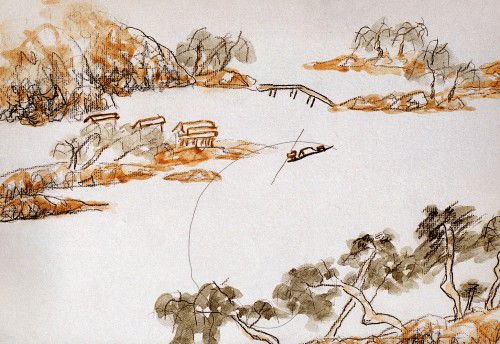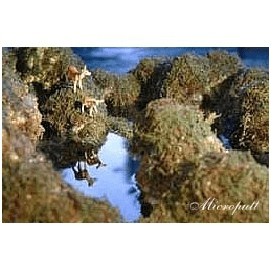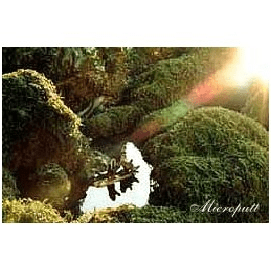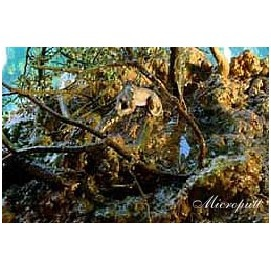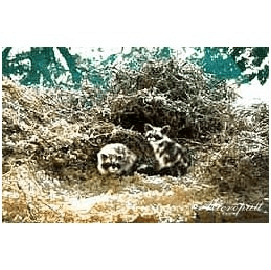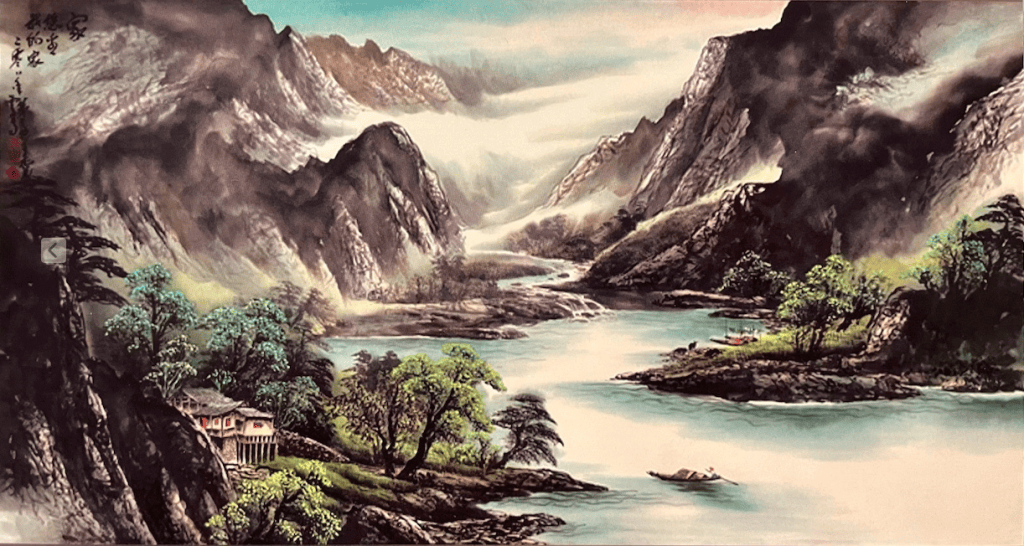
The first time I saw this extraordinary Chinese ink painting, Look at my home I was moved to tears. The Artist is H.H. Dorje Chang Buddha III. Before me was a wonderland that seemed to exist beyond the boundaries of the ordinary world—a place so pure, peaceful, and beautiful that I wished I could live there forever.
The painting evoked a profound sense of holiness and transcendence. Its majestic mountains, flowing waters, mist-shrouded forests, and serene atmosphere seemed to belong to a sacred realm where enlightened beings and reclusive sages might dwell, free from worldly entanglements.
As I gazed at the scene, I felt as though a clear spring were flowing through my body, washing away the dust of everyday life and gently purifying my soul. The painting offered more than a beautiful landscape. It opened a doorway to an inner world of stillness, freedom, and spiritual clarity.
People often say that a great painting is like a beautiful poem or an elegant piece of music. This masterpiece brought those words to life for me. As I looked at the mountains and drifting clouds, I could almost hear the graceful melodies of traditional Chinese music, Flowing Waters from High Mountains. I could also imagine the soft whisper of clouds moving through the forest and the quiet murmur of water winding through the valley.
The scene reminded me of a poem attributed to the Tang Dynasty poet Hanshan, or Cold Mountain:
Clambering up the Cold Mountain path,
The Cold Mountain trail goes on and on:
The long gorge choked with scree and boulders,
The wide creek, the mist-blurred grass.
The moss is slippery, though there’s been no rain;
The pine sings, but there’s no wind.
Who can leap the world’s ties
And sit with me among the white clouds?
These final lines seem to express the very spirit of the painting: the longing to rise above worldly concerns and discover a place where the mind can rest in complete freedom.
The Artistry Behind the Wonderland
What makes this painting especially remarkable is the artist’s mastery of traditional Chinese painting techniques and the ability to unite them with the visual depth and realism associated with Western art.
In traditional Chinese painting, the brush is far more than a tool for outlining shapes. The movement of the brush, the pressure applied, the amount of ink it carries, and the rhythm of each stroke all contribute to the work’s character and expressive power.
The center-tip brush technique directs the tip of the brush along the center of a stroke, creating controlled, balanced lines that convey strength and refinement. The side-tip technique, by contrast, uses the side of the brush to produce broader, more varied marks, making it especially effective for suggesting rugged rocks, textured trees, and the changing forms of mountain slopes.
The painting also incorporates freehand brushwork, in which bold, expressive strokes capture the spirit of a scene rather than laboriously describing every detail. Through splash-ink techniques, the artist allows ink to spread, merge, and flow across the surface, creating atmospheric effects that suggest mist, clouds, and the mysterious depth of distant mountains. More delicate brushwork adds definition and texture, bringing selected details into focus.
The mountain landscape is rendered in black ink and rich green tones. The contrast between dark, powerful forms and softer, misty passages gives the scenery both grandeur and serenity. Some areas appear solid and tangible, while others dissolve into the surrounding atmosphere, allowing the viewer’s imagination to complete what the brush has left unspoken.
This interplay between precision and freedom, detail and suggestion, is central to the beauty of Chinese ink painting. What is not painted can be just as important as what is shown. Empty spaces become mist, open sky, or the boundless realm beyond the visible landscape.
Where East Meets West
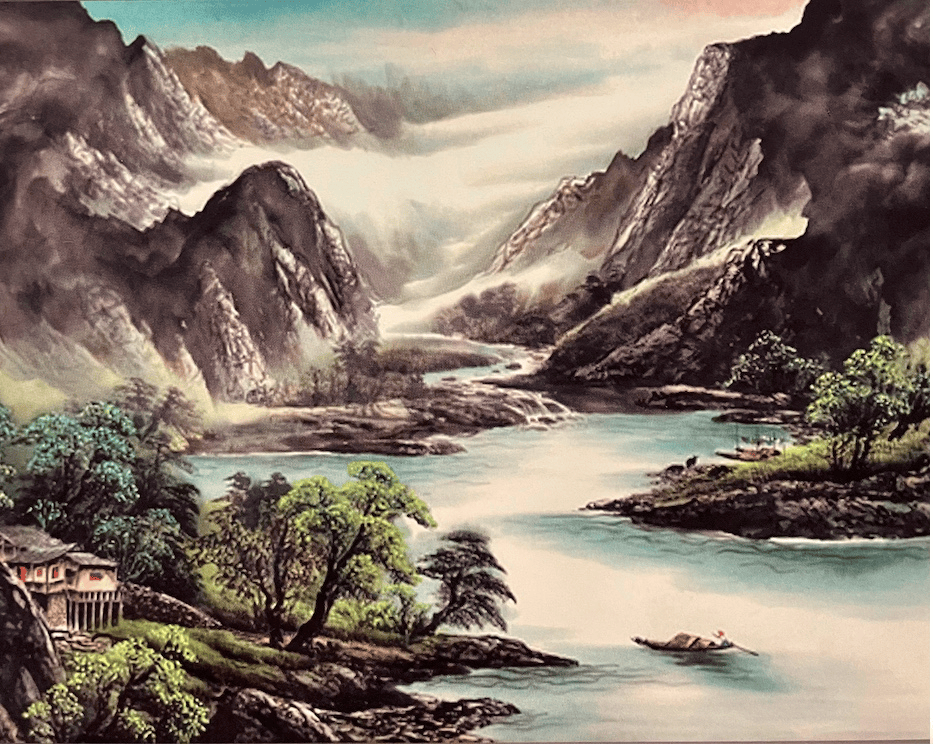
Traditional Chinese landscape painting often employs scattered perspective, a distinctive approach that allows the viewer to experience a landscape from multiple viewpoints rather than from a single fixed position. Mountains, rivers, and pathways may unfold as though the eye were traveling through the scene, discovering one vista after another.
Western painting, particularly its realist traditions, often emphasizes a consistent viewpoint, spatial depth, light, shadow, and the three-dimensional appearance of objects.
Bringing these approaches together is no simple task. Yet in this artwork, the artist combines the shifting viewpoints and expressive brushwork of Chinese painting with the depth, dimensionality, and realistic effects associated with Western painting. Bold freehand strokes coexist with careful details; traditional ink techniques interact with rich color and carefully constructed space.
The result is neither simply a traditional Chinese landscape nor a Western-style realistic painting. Instead, the two traditions appear to complement one another, creating a distinctive artistic language.
The mountains seem to rise into real space, the forests possess a palpable depth, and the landscape invites the eye to travel farther and farther into its mysterious distance. At the same time, the painting retains the poetic spirit of Chinese shanshui—literally, “mountains and water”—in which nature is not merely scenery to be observed but a realm through which one may contemplate the deeper relationship between humanity and the universe.
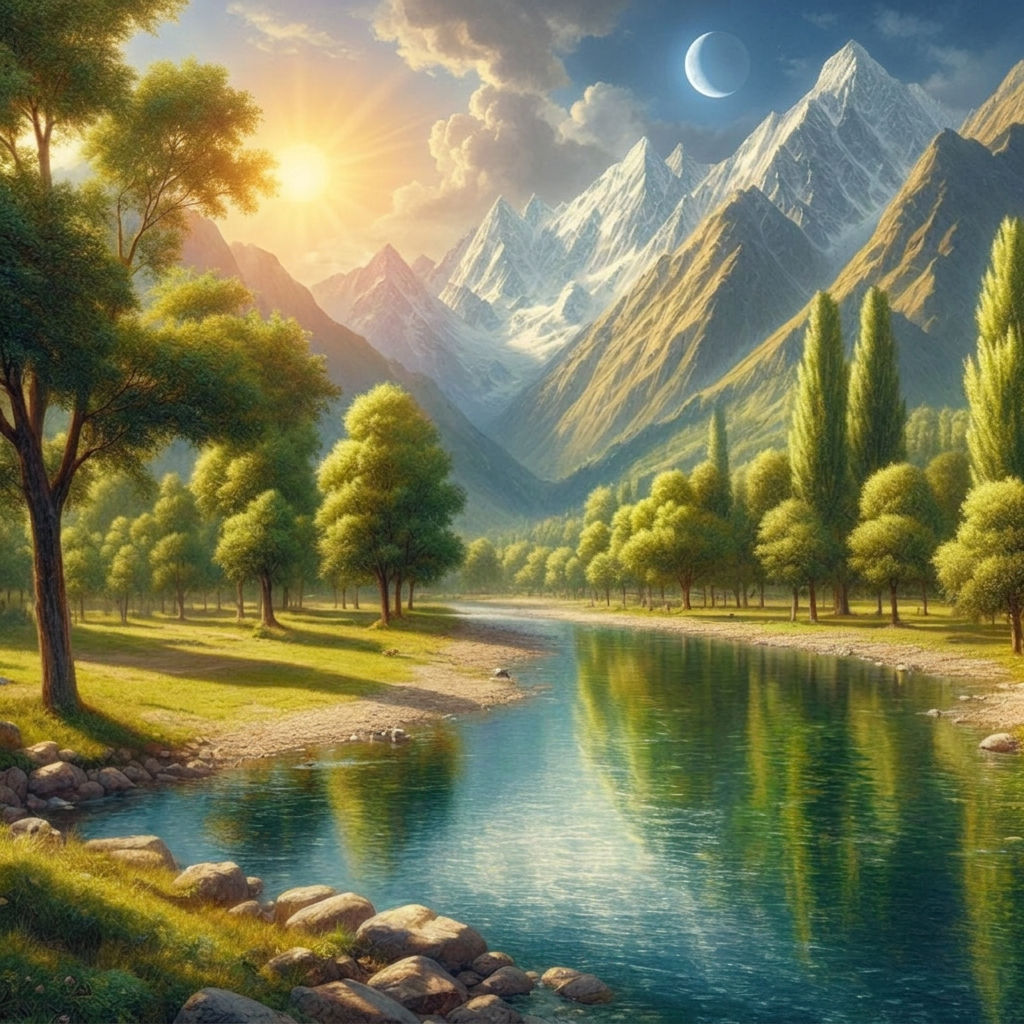
Looking at this painting, I imagine a pristine land where mountains, rivers, forests, sun, and moon exist in harmonious balance. It feels like a sanctuary untouched by the noise and restless ambitions of the modern world—a place where one could live simply, listen to nature, and rediscover the peace within.
Perhaps this is why the painting moves me so deeply. Its beauty is not only visual. It awakens a longing for something that everyday life can make us forget: a state of purity, freedom, and quiet joy that cannot be measured by wealth or worldly achievement.
There is an old saying that a place becomes home when our hearts grow attached to its people, customs, and way of life. But sometimes, a painting can make us feel at home in a place we have never visited—a place that seems to exist somewhere between the natural world and the realm of the spirit.
When I look at this masterpiece, I find myself asking: What if such a place were not merely a distant dream, but a reminder of the peace and freedom we can cultivate within ourselves?
Wouldn’t you, too, wish to call this wonderland home?
This remarkable artwork is part of the permanent collection of the International Art Museum of America (IAMA), where visitors can encounter art that bridges cultures, traditions, and ways of seeing the world.