
This book by H.H. Dorje Chang Buddha III was released in Chinese in 2014 but is not yet available in English. It is based on a series of very famous discourses given in China in 1992, using the text, meaning, and principles of the Heart Sutra to transmit Dharma. It clearly explains the relationships between mind, Buddha, and living beings. It tells everyone what the absolute truth of Buddha-dharma and liberation is. Several years ago, His Holiness told a number of Western disciples that this is the only book you need to read to understand emptiness and become enlightened. This text is for acquiring prajna or transcendental wisdom, although it also teaches the importance of cultivating character.
To stress how important this holy book is, we must remember that just before the Buddha left this world His Holiness told us that “. . . At all times, we must think about bringing auspiciousness, serenity, happiness, and peace to living beings and to the world, to the extent of giving our all and even our lives. I have already brought true Buddha Dharma to this world. Everyone who practices in accordance with The Supreme and Unsurpassable Mahamudra of Liberation and Expounding the Absolute Truth Through the Heart Sutra will surely attain liberation. That’s all. I wish all living beings happiness.”
Venerable Master Puguan’s Reflection After Listening to Expounding the Absolute Truth Through the Heart Sutra

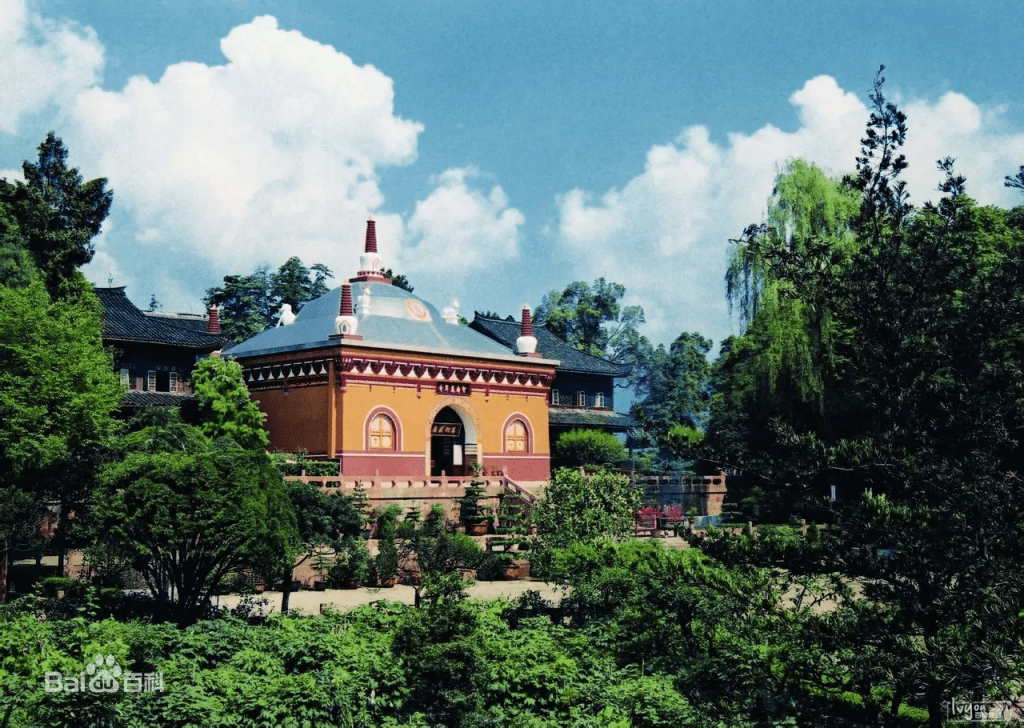
Below is the heartfelt reflection of Venerable Master Puguan, the abbot of Kaihua Monastery on Mount Wuzhong—the first site of Southern Transmission Buddhism and the thirteenth-generation patriarch of Mount Emei—after listening to the Dharma discourses of Expounding the Absolute Truth Through the Heart Sutra spoken by H.H. Dorje Chang Buddha III.
Venerable Master Puguan said:
“No matter what words I use today, they cannot fully express the supreme joy and wonder in my heart.
My most magnificent and compassionate Buddha Master, the Great Dharma King Yangwo, once visited Mount Wuzhong in person. At that time, my junior Dharma brother, Dharma Master Guozhang, and I were on the third day of a Zen retreat with the four assemblies of disciples when suddenly the Dharma protector came and told me, ‘The greatest holy being has arrived! He is wearing white clothes. Quickly cancel the Chan session and lead everyone to greet Him with full ceremony!’
Dharma Master Guozhang also received the same message—that the highest Holy One had come. We immediately announced to all disciples that the Zen session was to be stopped, and we prepared the ceremonial welcome with drums and bells. Indeed, about ten minutes later, a group of dozens of people arrived at the foot of the mountain—it was my revered Master, the Great Dharma King Yangwo (H.H. Dorje Chang Buddha III).
When I supported my Master while walking toward the Bright Moon Pool, He gently took hold of my hand instead and said, ‘I am younger than you; you should not support me. It is I who should support you, the elder.’
At that moment, I felt deeply ashamed. How could a disciple ever deserve to be supported by his Master, the Great Dharma King?
Now, after listening to Expounding the Absolute Truth Through the Heart Sutra, I finally realize that what my Master said back then was the very expression of ultimate truth!
We practitioners must rely on our Master’s steadfast guidance, never letting go of His compassionate hand, until we are led to the pure Buddha-land of ultimate Nirvana. How could we ever imagine supporting our Master?
Having repeatedly listened to this Dharma discourse, I can only say that my Master has explained the very essence of all 600 volumes of the Prajnaparamita Sutras and the two essential provisions of precepts and practice. The Dharma He expounded is so profound that the deep will see its depth and the shallow will see its shallowness—it is wondrous beyond description, extraordinary within the ordinary. In truth, it is the supreme teaching of the ultimate truth since the beginning of time.
After listening to this unparalleled Dharma spoken by my Buddha Master, I was instantly and completely awakened—the bottom of the bucket had fallen out! Unfortunately, my age has deprived me of the condition to attain rainbow-body ascension, but I rejoice that I have realized the state of indestructible flesh body. After my parinirvana, this body can serve as evidence to the world that my Great Dharma King, my Buddha Master, is truly the Dharma King who unites all Buddhas of the ten directions.
When I think back on my earlier misunderstandings, I feel deeply ashamed. I once mistakenly believed that only Tibetan Esoteric Buddhism possessed the Great Dharma that enables enlightenment within one lifetime. Now that I have attained realization, I truly understand that the authentic Dharma of the Tathagata transcends all schools and sects.
In fact, the true Buddha Dharma is a wondrous treasure existing independently of any tradition. It is neither exclusive to nor absent from any particular school—because genuine Dharma is not governed by sects but by Buddhas and Bodhisattvas themselves. Wherever a Buddha or Bodhisattva manifests as a teacher, that school naturally possesses the Great Dharma.
When I recall my past cultivation at the Golden Summit of Mount Emei, I can only remain speechless in humility. Today, immersed in the bliss of Dharma joy, I can only pray:
May all Buddhas bless that the great karmic conditions of the Tathagata ripen soon.
May all sentient beings swiftly hear the teachings of my Buddha Master—the Mother of All Buddhas’ Dharmas, Expounding the Absolute Truth Through the Heart Sutra—
so that their blessings and wisdom may swiftly and perfectly flourish,
attaining Bodhi and liberation in this very life,
and achieving freedom from life and death!
Namo Amitabha Buddha!
Namo Avalokiteshvara Bodhisattva!
Note: In 1998, Master Pu Guan passed away while in meditation, having attained mastery over his life and death. Remarkably, even eight years after his passing, his remains rest within a stupa, preserved in the meditation posture without any signs of decay.
The above is the English translation of Venerable Master Pu Guan’s Dharma discourse, rendered into English by Linda Chang. The original Chinese version is provided below.
普觀長老聽《藉心經說真諦》法音感言
下面是峨嵋山第十三代祖師、佛教南傳第一站霧中山開化寺方丈普觀老和尚聽 H.H. 第三世多杰羌佛說法《藉心經說真諦》法音後的感言,老和尚說:
我今天無論說出什麼樣的話,也代表不了我內心的喜悅殊勝,我最偉大的如佛恩師,仰諤大法王聖駕霧中山,當時我和我的師弟果章法師正在與四眾弟子打禪七的第三天,突然護法叫我說:「最偉大的巨聖德駕臨了,祂穿的是白衣服,趕快取消禪七,率領大眾大禮接駕吧!」這時果章師弟對我說,他接到護法的報告,有最大的聖德駕臨;我們當場宣布四眾弟子取消禪七,立刻擺駕擂鼓鳴鐘接駕,果然十分鐘後山下來了一隊幾十人,原來是我的恩師仰諤總持大法王駕到,當我攙扶恩師登上明月池的途中,師父反攙著我的手說:「我年輕,你不要攙扶我,應該我攙著你這位老人。」當時我深感慚愧,弟子怎能有資格讓大法王恩師攙扶呢?現在聽完《藉心經說真諦》以後,恩師說的才是一語道斷的真理哦!我們這些行人,就是要依靠恩師不鬆手地把我們攙扶著到究竟涅槃的佛土,我們哪裡有資格攙扶恩師啊!當我反覆聽到《藉心經說真諦》的開示說法般若心髓,我只能說講透了六百卷般若的心要和行修戒體二資糧,恩師的說法深者見深,淺者見淺,微妙至極,平中見奇,實在說來,是開天闢地第一義諦之無上說法。聽了恩師講說的法音無上大法以後,讓我頓然大徹大悟,桶底脫落,可惜我歲數太大,失掉化虹飛升的條件,但慶幸的是,我證到了肉身不壞的境界,今後圓寂後,可以為世人證明我大法王如佛恩師,才是十方諸佛的總匯法王。回想起當初錯誤的認識,深感羞慚,誤認為只有西藏密宗才有即身成佛的大法,現在我得到了,才真正瞭解如來的正法不是哪一宗有、哪一宗沒有,其實佛法是獨立在世外的妙寶,與密宗、顯宗沒有任何關係,任何一宗都有佛法,也沒有佛法,關鍵在於真正的佛法不是宗在掌管,而是佛菩薩在掌法,佛菩薩化身在哪一宗為師,哪一宗就有大法。想到當初我在峨嵋金頂的修持,只能無言以對,而今天處於法樂中的我,只能祈請諸佛加持,如來大事因緣早日成熟,眾生早日得聞恩師講說出諸佛之母法《藉心經說真諦》,福慧速猛圓滿,今生必證菩提聖道,生死自由!
南無阿彌陀佛!
南無觀世音菩薩!
Link:https://peacelilysite.com/2025/10/31/expounding-the-absolute-truth-through-the-heart-sutra/
Source: https://cabuddhists.org/en/expounding-the-absolute-truth-through-the-heart-sutra/buddhist-books/h-h-dorje-chang-buddha-iii-expounding-buddha-dharma/; https://www.wbahq.org/ch/dharma-discourses/sf-jxjszd/




 Peace LiLy