In our culture, success is often seen as the ultimate destination—the long-awaited moment when effort finally blossoms into happiness. We are taught to dream, to strive, and to believe that once we reach our goals, fulfillment will naturally follow. Yet, both modern science and lived experience are beginning to tell a more nuanced story.
In recent years, research in neuroscience and psychology has revealed a quiet paradox: achieving our most cherished goals does not always bring lasting happiness. The brain’s reward system, driven by dopamine, is designed primarily for anticipation rather than arrival. It fuels the excitement of pursuit—the late nights, the hopeful striving, the vision of what could be. But once the goal is reached, that surge of motivation fades, and the emotional intensity often drops.
At the same time, psychologists describe a phenomenon known as hedonic adaptation—our tendency to quickly return to a baseline level of happiness even after major positive events. The dream job becomes routine. The long-awaited achievement becomes part of everyday life. What once felt extraordinary quietly becomes ordinary.
For some, this transition is subtle. For others, it can feel like an unexpected emptiness—a sense of “What now?” after the finish line has been crossed.
But this discovery is not discouraging. In fact, it is deeply illuminating.
It reminds us that the human mind is intricate, and happiness is more than just accomplishment. Success, by itself, is not designed to sustain joy—it is only one part of a much larger inner landscape.
True fulfillment begins when we understand this hidden pattern and learn to work with it, rather than against it.
A meaningful life is not built solely on reaching goals, but on what those goals serve. When ambition is guided by purpose—when our efforts contribute to something beyond personal gain—success no longer feels like an ending. Instead, it becomes a doorway.
This is why acts of kindness, compassion, and contribution carry such enduring power. Unlike fleeting achievements, they create a sense of connection and meaning that the mind does not easily adapt away from. They anchor us in something deeper than momentary reward.
Imagine a different way of living:
A life where ambition and inner well-being are not in conflict, but in harmony. A life where achieving a dream does not leave a void, but opens a new horizon of purpose. A life where each success is not a final destination, but a step toward greater understanding, compassion, and joy.
By understanding the brain’s hidden responses, we gain the ability to design such a life. We begin to see that fulfillment is not something waiting at the end of achievement—it is something woven into the journey itself.
In this light, success becomes more than personal victory. It becomes an opportunity to deepen meaning, to expand the heart, and to align our outer accomplishments with our inner growth.
Perhaps lasting happiness has never been about reaching the summit.
Perhaps it is about learning how to walk the path—with awareness, purpose, and a quiet, enduring sense of joy.
“A mother’s words can build a child—or break one.”
Recently, while reading a Chinese book on child education, I came across a story that deeply touched my heart. It perfectly illustrates how a mother’s attitude and behavior can influence a child’s entire life. I’d love to share this story with all mothers, as a gentle reminder of the quiet power we hold in shaping our children’s hearts and minds.
🍏 Two Letters, Two Lives
A famous American psychologist once conducted a fascinating study on the lifelong effects of early education. He selected 50 successful people from various fields—leaders, professionals, innovators—and 50 people with criminal records. He wrote to each of them, asking the same question:
“What influence did your mother have on you?”
Two of the replies left a lasting impression on him. One came from a prominent White House official, the other from a prison inmate. Surprisingly, both men spoke about the same childhood memory—their mother dividing apples.
🍎 The Prisoner’s Story: The Day He Learned to Lie
The prisoner wrote:
“When I was a child, my mother once brought home several apples—red, green, big, and small. I immediately wanted the biggest, reddest one. Before I could speak, my little brother shouted, ‘I want the big one!’
My mother frowned and scolded him: ‘A good boy should learn to give the best to others.’
I quickly changed my words and said, ‘Mom, I’ll take the smallest one. Let my brother have the big one.’
My mother smiled proudly, kissed me on the cheek, and rewarded me with the biggest, reddest apple.”
He ended his letter with heartbreakingly honest words:
“That day, I learned that lying could bring rewards. Later, I learned to cheat, to steal, to fight—anything to get what I wanted. Today, I am in prison because of the lesson I learned that day.”
🍏 The White House Official’s Story: The Value of Effort
The second letter came from a White House official:
“When I was young, my mother brought home several apples, all different sizes. My brothers and I argued over who would get the biggest one.
Mother held up the largest apple and said, ‘Everyone wants the best, and that’s normal. So let’s have a little contest: I’ll divide the lawn into three sections. Whoever trims their section the fastest and neatest gets the big apple.’
We raced to finish, and I won the apple.”
He continued:
“From that day on, my mother taught us this simple but powerful truth: If you want the best, you must earn it.
Everything good in our home had to be earned through effort and fairness. She lived by this principle herself. That’s how I learned discipline, persistence, and integrity—lessons that shaped my entire life.”
🌱 A Mother’s Words Are Seeds in a Child’s Heart
Both mothers divided apples. Both children learned a lesson. But one learned deception—while the other learned effort.
A mother’s reaction in a single moment, her tone of voice, or even a casual reward can plant seeds deep in a child’s heart. Those seeds may grow into honesty and strength—or into cunning and selfishness.
Children mirror their mothers. The way a mother faces life—whether with truth or pretense, effort or avoidance—becomes the way her child faces the world.
Education doesn’t always happen in grand lessons or classrooms. Sometimes, it happens in small, everyday choices—like how we divide an apple, handle conflict, or teach fairness.
A wise mother uses love and insight to guide her child to understand that:
Honesty is more precious than cunning,
Effort is more reliable than shortcuts,
Sharing brings deeper joy than possessing.
These values, taught through simple acts, become the foundation of a child’s character.
A mother’s way of teaching doesn’t just shape a child’s childhood—it molds their destiny. Every look, every word, every reaction writes silently into a child’s heart the story of who they will become.
May all mothers guide their children with both love and wisdom, so that the lessons we leave behind are those of kindness, courage, and truth.
Because sometimes, all it takes is one apple—and one mother’s choice—to change a life forever.
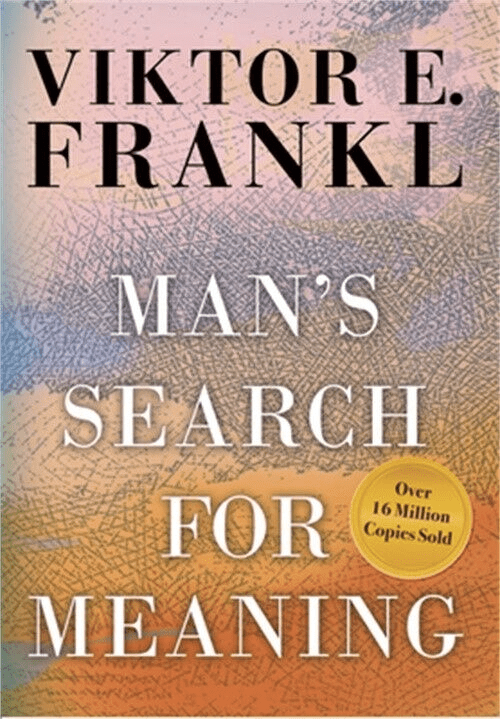
In his profound book “Man’s Search for Meaning,” psychologist Viktor Frankl imparts crucial lessons on finding meaning in our lives. The book is divided into two parts: the first half comprises the author’s semi-autobiographical narrative of life in a concentration camp, retaining insights and thoughts from the perspective of a refugee. Frankl, with the keen observational eye of a psychologist, categorizes the camp’s inhabitants into two main groups. Those who survived were invariably those who found meaning in life and clung to a shred of hope to keep moving forward, although many of them did not persevere until the end. Those who deemed life meaningless, lost the will to live, and had no hope, inevitably perished.
The second half delves into the fundamental concepts of logotherapy from a psychological perspective. Observations from the refugee camp are documented and internalized into the author’s own “logotherapy,” aiding patients—or ordinary people like us—in finding meaning in life and living their unique existence. The author advocates against determinism, emphasizing the importance of individual choice over environmental determinism.
Frankl, a Jewish psychiatrist imprisoned in the Auschwitz concentration camp, experienced a tumultuous journey of emotions. Before Christmas in 1944, rumors spread in Auschwitz that the war would end and everyone would be released, yet after Christmas passed without the anticipated victory, hopelessness descended, resulting in the death of 80% of the camp’s inhabitants—not from hunger and cold, but from the loss of hope. Frankl survived because two things mattered to him: his family, especially his love for his wife, which provided him with immense motivation during times of suffering, and his manuscript, his work on the psychological “logotherapy” he aimed to complete. These two things were bigger than himself, sustaining him through the ordeal.
This book stands out among numerous works because it encompasses both the author’s personal harrowing experiences and the detached observations of a scientist. From the outset, the author states his reluctance to write a mere chronicle of the concentration camp but rather aims to answer one question: “What psychological journey does an ordinary prisoner go through each day in the camp?” His observations focus on the silent, anonymous inmates’ reactions to their environment, including his own.
What fascinates me most is the author’s earnest yet transcendent perspective. Grounded in his own inner being, he strives for honesty without self-pity or complaint, maintaining a clinical detachment that rises above the harsh realities of the time. This writing style and attitude reveal both his resilient spirit and remarkable clarity of mind, as well as his profound understanding of his inhuman conditions, rendering emotional catharsis unnecessary.
At times, he detaches himself from his immediate surroundings, engaging in imaginary dialogues with his beloved wife, allowing love to fill his heart. The ability to detach oneself from reality using imagination is a unique human skill that aids survival in extreme adversity.
His theory posits that the search for meaning in life is the fundamental driving force of human existence. This meaning is unique and individual, requiring realization and practice by each person; only through this realization can one’s will to meaning be fulfilled. The aim of “logotherapy” is to aid individuals in uncovering the meaning in their lives. This meaning varies for each person and changes at different life stages, necessitating personal exploration. Once discovered, it provides hope for easing the neuroses arising from a lack of meaning in life. Meaning in life is concrete and tangible. For instance, a mother may find meaning in living for her children. I wholeheartedly concur with the author’s view that the meaning of life is not fixed. The sustenance it provides varies at different ages and stages of life. For instance, there was an elderly man who had been depressed for two years after losing his wife, seeking assistance from Frankl. When asked what his wife would do if he had passed away before her, the man responded that she would not be able to bear such pain. Frankl then remarked, “So, she left first. You can bear the pain for her to rest in peace. Isn’t that good?” The man felt relieved upon hearing this. He found the meaning of his life at that time.
According to author, there are three paths to finding meaning in life: 1. Creativity and work; 2. Recognizing values (such as love); 3. Suffering. Frankl firmly believes that everyone can find meaning in life, whether through creativity and work, experiencing something or loving someone, or, in extreme circumstances, when all joy is stripped away, unavoidable suffering itself becomes the meaning of life. From his experiences in the concentration camp, he realized the third path.
In extreme adverse conditions, when a person is reduced to nothing but their body and mind, they still retain the freedom to choose their attitude towards their environment. They can either actively and arduously utilize every condition to survive or succumb to the desire to die, yielding to fate. The choice of attitude is the only and complete dignity and meaning. And humans can choose to say “yes” to life.
Therefore, Frankl is a pessimistic optimist. He acknowledges that life itself is inherently meaningless, yet he is willing to inspire humanity to find meaning for themselves. His mission in existential psychiatry is to help patients find their own meaning in life through various methods. In contrast to psychoanalysis, which views humans as passive products of their environment, Frankl places human subjective will in a more significant position.
I cannot disagree with Frankl’s viewpoint. From my own half-century of life experience, I also believe that the attitude we adopt towards our environment, whether favorable or adverse, ultimately determines the trajectory of our lives. This is what I mean by “character determines destiny.” There are times of despair, hopelessness, and pessimism, of course, and there is no need to feel ashamed. We should learn to pull ourselves out of negative emotions and sincerely believe that “tomorrow will be better.” And indeed, tomorrow often turns out fine.
Nine powerful quotes from the book Man’s Search for Meaning
Choose hope. We cannot always change our circumstances but we always have a choice about our attitude in any given situation. As Viktor Frankl writes, “When we are no longer able to change a situation, we are challenged to change ourselves.”*
Know your why. Ask yourself: What am I living for? Every single day, we should ask ourselves why we are getting up and why we are here at all “Those who have a ‘why’ can bear with almost any ‘how’.”
Learn how to cry. Tears are not a sign of weakness; they emanate from a soul that is not afraid to break: “But there was no need to be ashamed of tears, for tears bore witness that a man had the greatest courage, the courage to suffer.”
Don’t just be part of the herd. The world is upside down; sometimes doing what everyone else is doing is what is insane. “An abnormal reaction to an abnormal situation is normal.”
Live meaningfully. We create meaning by answering the questions life asks from us. “Ultimately, man should not ask what the meaning of his life is, but rather must recognize that it is he who is asked. In a word, each man is questioned by life and he can only answer to life by answering for his own life. It did not really matter what we expected of life, but rather what life expected of us.”
Fill your day doing acts of kindness. There is purpose in kindness; there is meaning in the hundreds of small acts of giving that we have the opportunity to grasp each day. “We who lived in concentration camps can remember the men who walked through the huts comforting others, giving away their last piece of bread. They offer sufficient proof that everything can be taken from man but one thing: the last of the human freedoms-to choose one’s own way.”
Move beyond yourself. We find true meaning when we transcend our own needs and limits. “The more one forgets himself – by giving himself to a cause to serve or another person to love – the more human he is and the more he actualizes himself.”
Feel the pain of others. Suffering hurts no matter how irrelevant or ordinary it may seem to others. Be attuned to others’ grief even if doesn’t seem like a tragedy in the overall scheme of life. “Thus suffering completely fills the human soul and conscious mind, no matter whether the suffering is great or little. Therefore, the ‘size’ of human suffering is absolutely relative.”
We can change even when life is hard. We can create meaningful lives full of depth and love and purpose. “Man does not simply exist but always decides what his existence will be, what he will become the next moment. By the same token, every human being has the freedom to change at any instant.”
Hostility toward spiritual traditions may be hampering empirical inquiry. Science and religion seem to be getting ever more tribal in their mutual recriminations, at least among hard-line advocates. While fundamentalist faiths cast science as a misguided or even malicious source of information, polemicizing scientists argue that religion isn’t just wrong or meaningless but also dangerous.
I am no apologist for religion. As a psychologist, I believe that the scientific method provides the best tools with which to unlock the secrets of human nature. But after decades spent trying to understand how our minds work, I’ve begun to worry that the divide between religious and scientific communities might not only be stoking needless hostility; it might also be slowing the process of scientific discovery itself.
Religious traditions offer a rich store of ideas about what human beings are like and how they can satisfy their deepest moral and social needs. For thousands of years, people have turned to spiritual leaders and religious communities for guidance about how to conduct themselves, how to coexist with other people, how to live meaningful and fulfilled lives — and how to accomplish this in the face of the many obstacles to doing so. The biologist Richard Dawkins, a vocal critic of religion, has said that in listening to and debating theologians, he has “never heard them say anything of the smallest use.” Yet it is hubristic to assume that religious thinkers who have grappled for centuries with the workings of the human mind have never discovered anything of interest to scientists studying human behavior.
Just as ancient doesn’t always mean wise, it doesn’t always mean foolish. The only way to determine which is the case is to put an idea — a hypothesis — to an empirical test. In my own work, I have repeatedly done so. I have found that religious ideas about human behavior and how to influence it, though never worthy of blind embrace, are sometimes vindicated by scientific examination.
Consider the challenge of getting people to act in virtuous ways. Every religion has its tools for doing this. Meditation, for example, is a Buddhist technique created to reduce suffering and enhance ethical behavior. Research from my own and others’ labs confirms that it does just that, even when meditation is taught and performed in a completely secular context, leading research participants to exhibit greater compassion in the face of suffering and to forgo vengeance in the face of insult.
Another religious tool is ritual, often characterized by the rigid following of repetitive actions or by engagement with others in synchronous movement or song. Here, too, an emerging body of research shows that ritualistic actions, even when stripped from a religious context, produce effects on the mind ranging from increased self-control to greater feelings of affiliation and empathy.
Ritual can also play a part in strengthening beliefs. Research on cognitive dissonance has shown that publicly stating beliefs that we don’t initially endorse leads to a psychological tension that is often remedied by altering our beliefs and behaviors to match our public pronouncements. Thus the religious practice of repeatedly stating beliefs as part of prayers — as in the Catholic Mass — may enhance devotion to a creed.
What findings like these suggest is that religions offer techniques — or “spiritual technologies,” in the words of Krista Tippett, the host of the radio show “On Being” — that help people endure difficulties, change their views or move them toward action. These techniques seem to work by nudging our behavior subconsciously. Ms. Tippett stresses that the specific religious traditions from which such techniques are borrowed should be understood and honored on their own terms. But when I spoke with her recently, she also agreed that the techniques might work even when separated from their religious trappings, as meditation and elements of ritual have been shown to do.
If this view is right, religion can offer tools to bolster secular interventions of many types, such as combating addiction, increasing exercise, saving money and encouraging people to help those in need. This possibility dovetails with a parallel body of research showing that by cultivating traditional religious virtues such as gratitude and kindness, people can also improve their ability to reach personal goals like financial and educational success.
When I broached this body of research with the cognitive scientist and religious skeptic Steven Pinker, he emphasized that it was by no means a vindication of religion as a whole. He made a point to differentiate between what he called religious practices and cultural practices, with religious ones being those more likely to have doubtful supernatural rationales (like using prayer to contact a deity for favors) and cultural ones having more practical justifications (like using ritual to foster connection and self-control).
While I can see Professor Pinker’s point — and I agree with him that religion as a whole must be judged by its full set of positive and negative effects — the dividing line between cultural and religious can be blurry. The Jewish practice of Shabbat, for instance, stems from a divine command for a day of rest and includes ritualistic actions and prayers. But it’s also a cultural practice in which people take time out from the daily grind to focus on family, friends and other things that matter more than work.
My purpose here isn’t to argue that religion is inherently good or bad. As with most social institutions, its value depends on the intentions of those using it. But even in cases where religion has been used to foment intergroup conflict, to justify invidious social hierarchies or to encourage the maintenance of false beliefs, studying how it manages to leverage the mechanisms of the mind to accomplish those nefarious goals can offer insights about ourselves — insights that could be used to understand and then combat such abuses in the future, whether perpetrated by religious or secular powers.
Science and religion do not need each other to function, but that doesn’t imply that they can’t benefit from each other. Rabbi Geoffrey Mitelman, the founding director of Sinai and Synapses, an organization that seeks to bridge the scientific and religious worlds, told me recently that science can help clergy better aid those they counsel by showing which types of social and behavioral practices are empirically most likely to foster their emotional, moral and spiritual goals.
A yearning for a science-religion synergy is growing in some circles. Ms. Tippett cites as an example the Formation Project, an initiative designed by a group of millennials who are looking to cultivate their inner lives and form a community by combining ideas from psychology and neuroscience with practices from ancient spiritual traditions.
In doing this, she points out, these young people are not blindly accepting any doctrine. They are asking questions and choosing what works based on evidence. In short, they are doing exactly what I think the communities of scientists and clergy need to do in a more rigorous way and on a much larger scale.
Will it work? That’s an empirical question. But if we choose not to investigate it, we’ll never know. And I suspect we’ll be the poorer for it.











 Peace LiLy