Intoxicatingly Beautiful Abstract Color Paintings

Flying Toward a Buddha Paradise
Artist: H.H. Dorje Chang Buddha III

Art Works are Fused with the Essence of the Universe, Nature, and the Earth

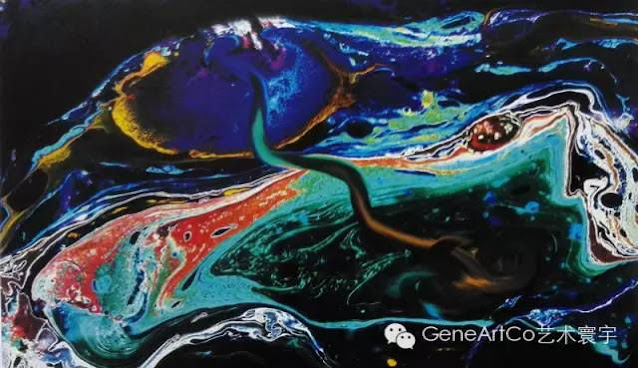
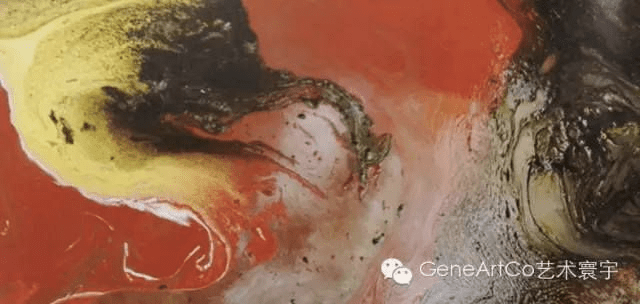
When you first set your eyes upon these supernatural abstract color paintings, the vibrant and radiant hues of red, yellow, blue, white, and black burst forth, dancing like the tumultuous waves of a river stretching for thousands of miles. Captured in the delicate tips of the brush, their brilliance transcends the ordinary, possessing a gentleness yet resolute quality. The diverse and exquisite colors mutually nourish and elevate each other, creating a masterpiece that can only be described as ingenious, reaching a realm where colors take on an ethereal quality. The experience is beyond description—elegant and comforting.

These impressionist paintings have attained a level of mastery where even a small fragment isolated from the complete artwork stands as an exquisite impressionist painting on its own. They convey a dreamy, illusory state, and each tiny section has the potential to be enlarged, creating a distinct and aesthetically pleasing painting.
Gazing Upon a World Beyond the Stars

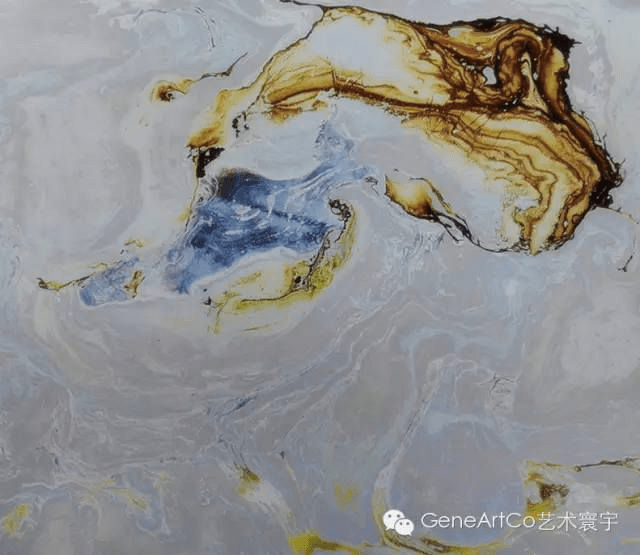
This piece has a sci-fi movie special effects vibe, it doesn’t look like a scene that exists on Earth; rather, it resembles the appearance of an extraterrestrial planet observed through high-tech instruments. The entire artwork is filled with a mysterious atmosphere, offering limitless imagination and excitement.

Marvelous Spectacle of a Mystical and Illusory Island

This artwork is vibrant and three-dimensional. When appreciated from a diagonal perspective, the pattern in the upper right corner resembles a series of color-changing snakes, coiling in the air, creating a dazzling and visually delightful experience. The pattern in the lower left corner appears like slowly flowing mud, transparent and sparkling under the sunlight. The dividing line in the middle adds a fantastical element, resembling a peculiar light that seems as though it could disappear in the next second, defying verbal description.

The fantastical imagery of this artwork brings a sense of joy and, simultaneously, fills one with fantasies and aspirations for the future. It is a lively and dynamic masterpiece that exudes a peculiar power.

Long Green Wall

Magnificent and grand, that was my first impression upon seeing this artwork. Despite its modest size, this piece is brimming with the profound culture and history of China’s five thousand years. Resembling the Great Wall, this artwork is a marvel, showcasing the artistry and craftsmanship of the H.H. Dorje Chang Buddha III from an artistic perspective.
Elegant Purity of Beautiful Stone

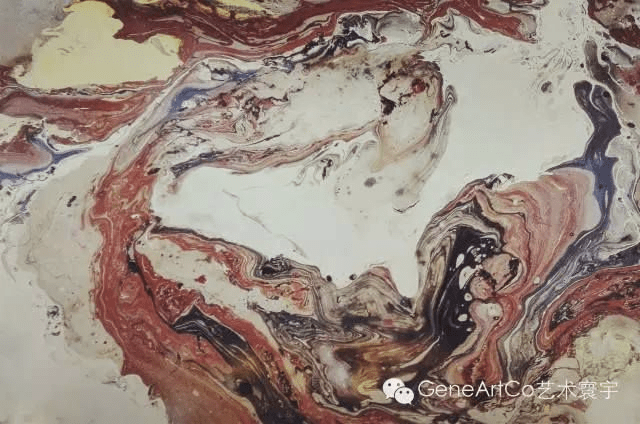
The highlight of this artwork lies in H.H. Dorje Chang Buddha III‘s skillful combination of intricate colors, avoiding any hint of vulgarity and instead exuding a sense of pure elegance and nobility. The arrangement of patterns and textures in the artwork, seemingly casual brushstrokes, actually reflects H.H. Dorje Chang Buddha III‘s ingenious conceptualization and profound artistic foundation, presenting a harmonious order within apparent chaos.
The Nobility of Petrified Red Trees

At first glance, this artwork appears to be an oil painting. Upon closer observation, it evokes astonishment. It is not merely a flat painting but more akin to a lifelike redwood fossil.

Every texture is distinctly visible, and every detail is vividly realistic. H.H. Dorje Chang Buddha III, with the stroke of a brush, captures the original form of the redwood in the guise of a fossil, rendering this piece of art even more mysterious and noble.

This artwork employs strong color contrasts, making bright colors even more vibrant and dark colors even deeper. The enchanting purple patterns, at times intensified and at times subdued, infuse the composition with a sense of magic. It is as if a colossal dragon is about to break free from the shackles of darkness, re-emerging into a brilliant radiance.

Splash-Color Embroidery of Moutains and Rivers

This is a splash-ink painting that combines elements of oil painting style. The innovative approach and exquisite brushwork truly captivate the viewer. Looking at this piece, one can almost hear the echoes in the mountains, see the surging river waves, smell the freshness of nature, taste the sweetness of mountain springs, and feel the harmony between humans and nature.

Boundless Land as Beautiful as Colorful Embroidery

The artwork, dominated by blue tones, incorporates elements of Western and abstract painting. At first glance, it resembles a vast ocean spanning the globe. It delivers a visual impact and a spiritual resonance. Take a moment to immerse yourself in this majestic and awe-inspiring scenery.

These intoxicatingly beautiful Supernatural Abstract Color Paintings form a perfect world constructed by colors. Devoid of concrete worldly forms, it is a realm purely defined by color—shaping, expressing, and embodying itself through hues. Color is both its form and its essence, permeating with a captivating aura. These colors, guided by the hand of the H.H. Dorje Chang Buddha III, seamlessly converge into a marvelously enchanting spectrum. The atmosphere is lively, the scenes blossom like flowers, bold and fierce as the roaring sea, yet upon closer inspection, they reveal nuanced expressions, refined in the minute details. In discussing the extraordinary skill of the H.H. Dorje Chang Buddha III in Western painting, it’s almost an understatement to compare it to the Buddha.

You can discover a selection of the exceptionally charming paintings in the permanent exhibition at The International Art Museum of America, situated in downtown San Francisco.

Intoxicatingly Beautiful Abstract Color Paintings

Link:https://peacelilysite.com/2023/11/16/intoxicatingly-beautiful-abstract-color-paintings/

 #DorjeChangBuddhaIII #HHDorjeChangBuddhaIII#DorjeChangBuddha#IAMA#InternationalArtMuseumofAmerica#Supernaturalabstractcolor#OilandAcrylicPaintings

Simplicity, Innocent Charm, and Natural Appearance

Minimal Brush Strokes Create Charming Paintings

It is often said that the essence of a high-quality painting lies in its incorporation of the calligraphic brushstrokes, the commanding presence reminiscent of engraved stone seals, a tonal quality derived from the artist’s mastery of literature, a stylistic expression emanating from the artist’s virtue, and a captivating allure that springs from the artist’s state of realization—this, indeed, is the true spirit of the painting.

In the International Art Museum of America, several paintings, executed with only a minimal number of strokes, possess the robust appeal akin to stone seal engravings. These artworks convey the artistic conception of returning to original purity and simplicity. With a liberated hand and mind, the artist applies their most refined skills, devoid of any lingering attachments, creating with minimal yet natural brushstrokes.

Za Chai Shi Gu (Brushwork Resembling Smashed Jade)

There is a phrase used in commenting upon Chinese paintings and calligraphy that related to smashed jade. This painting exemplifies that charming style of smashed jade.
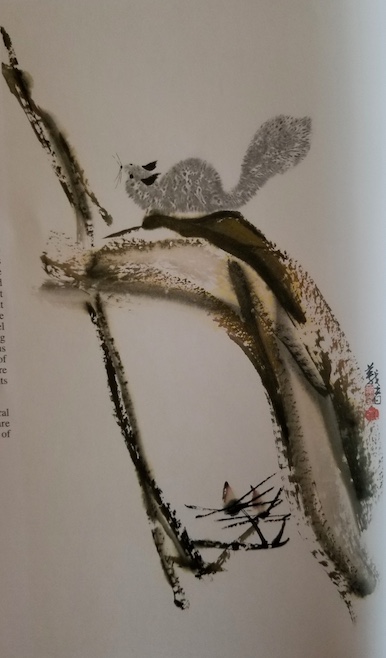
The pine tree, rendered with just a few simple strokes, emanates a pervasive sense of strength across the entire painting. The exquisite and lively portrayal of the little squirrel employs a truly remarkable and mysterious technique, combining simplicity, innocent charm, a natural appearance, and authenticity into a harmonious whole.

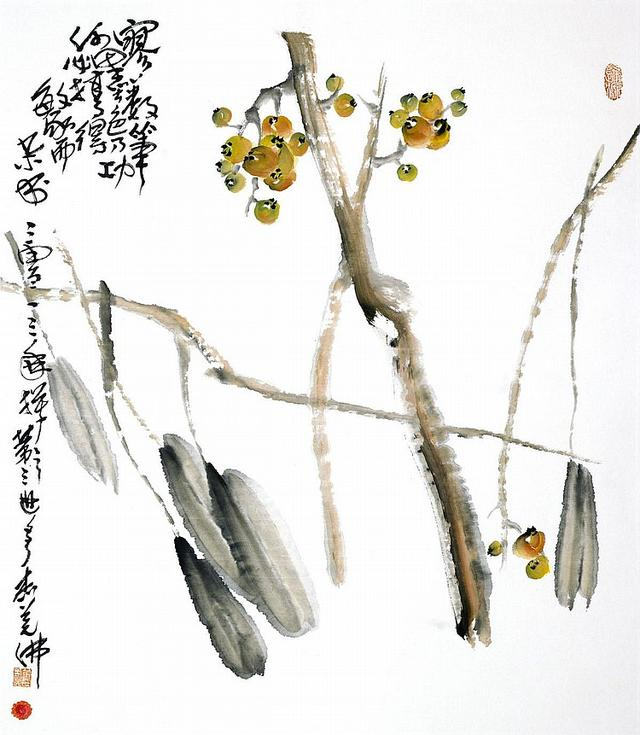
Loquat

H.H. Dorje Chang Buddha III painted ‘Loquat’ in 2013. This painting achieves the skill of cherishing ink like gold in its conception, with no wasted or faulty strokes. With just a few strokes, it is high and lofty, vibrant and lively, containing an elegant and comforting sense of ease, as if the brush strokes were divinely inspired.

At the autumn auction of the New York Zhenguan International Auction Company on September 12, 2015, this painting ‘Loquat’ was auctioned for a staggering 10.2 million U.S. dollars.

Yi Chen Bu Ran (Immaculate)

With only a small number of strokes, a comforting and natural appeal appears vividly on paper. The style is neither overly cautious nor affected. A scholarly tone and an air of stone seals are revealed in the brushwork. This is a work of art with an attractiveness that stems from mature skills. The title “Immaculate” means that this painting is free of any trace of the mundane.

Cat of Unique Charm

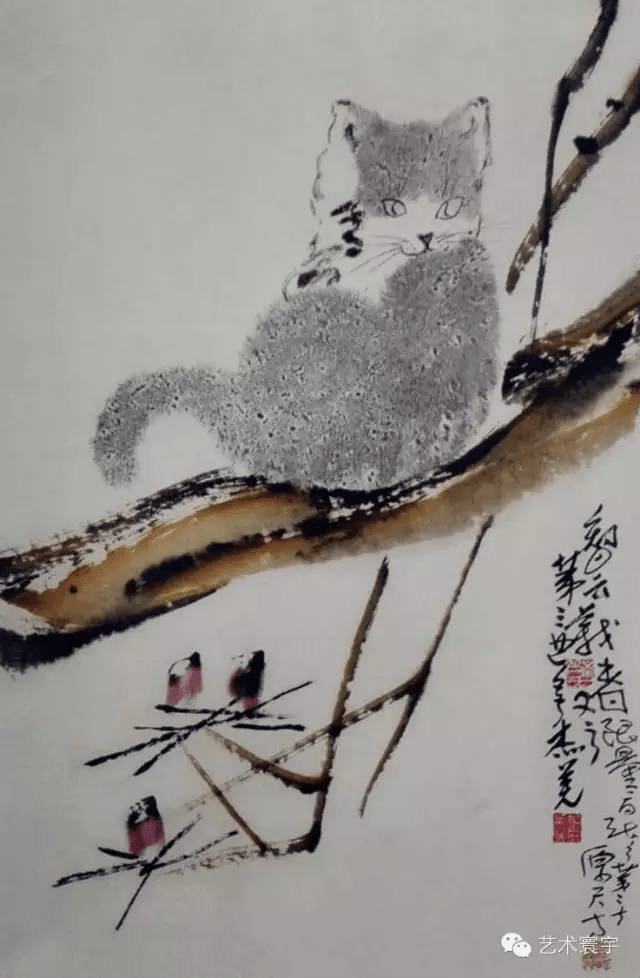
In this painting, the cat is portrayed with a vibrant yet natural presence, achieved through the dynamic and captivating use of scattered ink. The entire artwork, painted with only a few brushstrokes, exudes the style of stone seals and an air of scholarly refinement. Both the form and spirit of the scene are skillfully captured. This work truly exemplifies masterful ink usage in a restrained manner.

One of the one hundred limited release copies of this small-scale, painting “Cat of Unique Charm” sold at auction for US$253,000, which is the highest per square foot selling price of any duplicate painting in the world. The prices of sold duplicate paintings by the most famous first-rate masters of art in the world cannot match the prices of sold duplicate paintings by H.H. Dorje Chang Buddha III.
Si Yu Sheng Hui (Resplendent Like Jade)

With just a few simple strokes, the entire painting is remarkably infused with a robust jade-like charm and an auspicious aura. Both the plantain tree and fruits exhibit a lack of mediocrity and were painted without the slightest mental attachment in the artist’s mind. They appear natural, elegant, and enchanting. This sentiment is succinctly captured in the accompanying short poem: “Unfurl the painting scroll, and the particularly fragrant scent of ink is released, permeating the viewer’s mind and intoxicating them to the core. Only a minimal number of strokes were applied. This exemplifies the regal art of using ink as sparingly as gold.”

H.H. Dorje Chang Buddha III, the artist behind these magnificent paintings, has crafted a pure and enchanting spiritual realm with his incredibly succinct brush and ink technique. Upon viewing, it evokes a sense of ethereality, akin to the moon reflected in water, and a freshness that pierces the heart, reminiscent of the sound produced when a piano key is pressed. This unique artistic essence, bridging the real and the virtual, transcends the ordinary, providing a natural and enlightening experience that often transports individuals into a realm of wonder.

Simplicity, Innocent Charm, and Natural Appearance

Link: https://peacelilysite.com/2023/11/10/simplicity-innocent-charm-and-natural-appearance/

#DorjeChangBuddhaIII #HHDorjeChangBuddhaIII##IAMA#InternationalArtMuseumofAmerica #Simplicity #InnocentCharm #Natural Appearance #StoneSeal

Bi Shang Zhi Gong – Skillful Brushwork

After learning about Eastern painting, American painter Graves said: “I realized that art and nature are landscapes of the soul, from which we can perceive the essence of human existence.” When you are fortunate enough to encounter these masterpieces, you will gain insight into the essence of Eastern art.

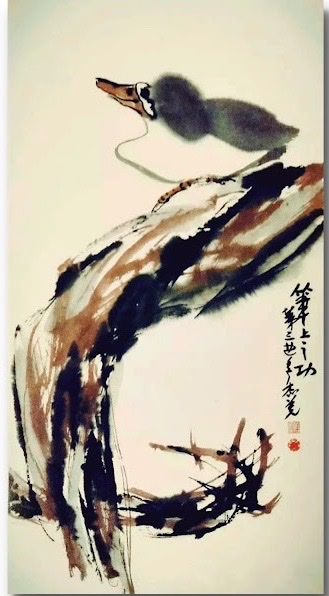
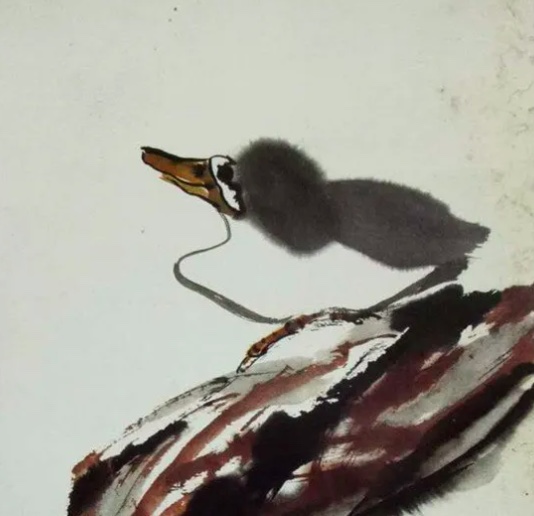
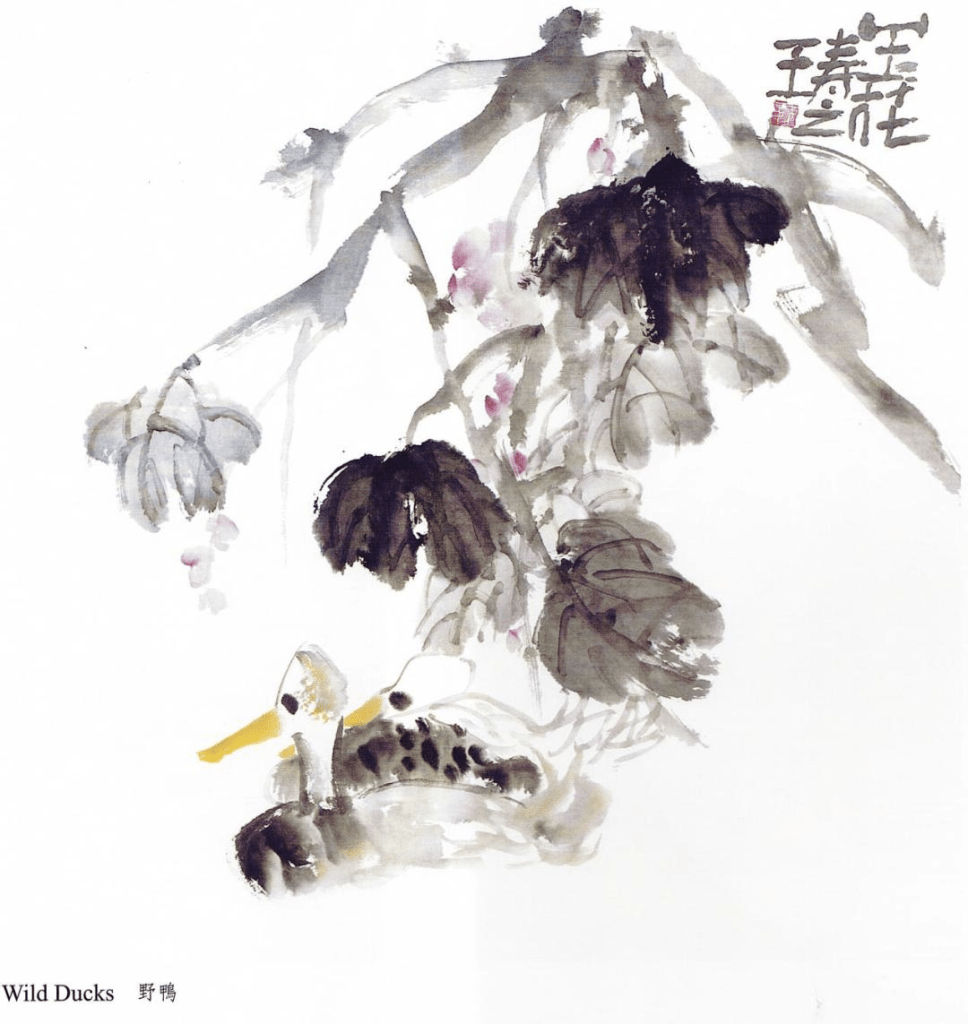
“Bi Shang Zhi Gong (Skillful Brushwork)” is a masterpiece of Chinese flower and bird painting that appears fresh and clear at first glance, profound in meaning after viewing, and unforgettable after further contemplation. The composition is extremely simple: in the center of the painting is a uniquely shaped bird with a flat, long beak and a spotlessly white belly. It sits comfortably and alone on the curved, thick trunk. Its eyes are ethereal and deep, as if completely focused; its posture demonstrates that wherever it is, is the focal point.

Upon careful observation, you will find that everything in the painting is in a state of colorful transformation. The bird’s head and back are painted with two blocks of ink that are close in shade, creating a melting effect, with the ink color seemingly still wet and spreading around.

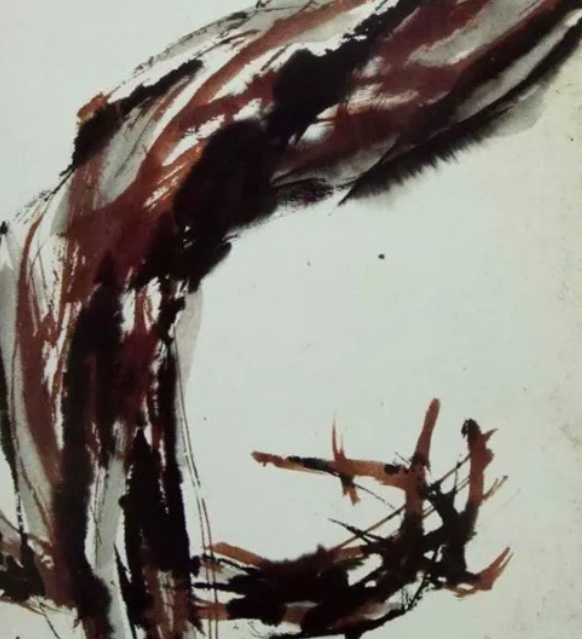
The trunk’s ink lines are clear and distinct, resembling a tree yet not quite a tree, as if constantly changing in the impermanence. At the bottom left of the tree, a branch twists and turns out, creating an S-shaped composition in the painting that is still in motion. The painting also uses color sparingly, with only a warm and friendly purple-brown color applied to the bird’s beak and the trunk.

This painting has a fascinating story behind it. It was created in 1982 during the filming of a movie in Sanhe, Sichuan. The painting captures an on-the-spot portrayal of a real-life scene. The artist used ink sparingly, treating it as if it were as precious as gold, while still showcasing his exceptional skills. At the time, the News Film Studio of China was producing a documentary exclusively about the artist, Master Yi Yungao (H.H. Dorje Chang Buddha III).

The cameramen and other observers witnessed a wild duck landing on a withered tree trunk. Master Yi Yungao quickly picked up his brush and swiftly completed the entire painting. By the time the wild duck took flight again, the painting had already been finished. Furthermore, the artistic mastery embodied in this artwork is extraordinary. It not only preserves the elegance, purity, and high-quality of traditional paintings but also introduces a new style—expressing the artistic conception of returning to original purity and simplicity. The artist, with an unfettered hand and mind, applies his most mature skills without the slightest attachment and with minimal, natural brushstrokes.
This masterpiece Chinese painting by H.H. Dorje Chang Buddha III is rich in literary atmosphere and varied in layers. It does not merely depict the external world, but rather it serves as a true manifestation of the inner spirit, transcending the natural material form to open up the world through the illumination of life’s spiritual light, reflecting the spiritual world. Appreciating the painting can reveal the pure world behind it, where everything, including the self, is forgotten, remaining untainted.

This painting is part of the permanent exhibition at The International Art Museum of America, located in the heart of San Francisco.

Bi Shang Zhi Gong – Skillful Brushwork

Link:https://peacelilysite.com/2023/10/26/bi-shang-zhi-gong-skillful-brushwork/

#DorjeChangBuddhaIII #HHDorjeChangBuddhaIII#DorjeChangBuddha#IAMA#InternationalArtMuseumofAmerica #ChinesePainting #MasterYiYunGao

The Story of the Nine-Colored Deer

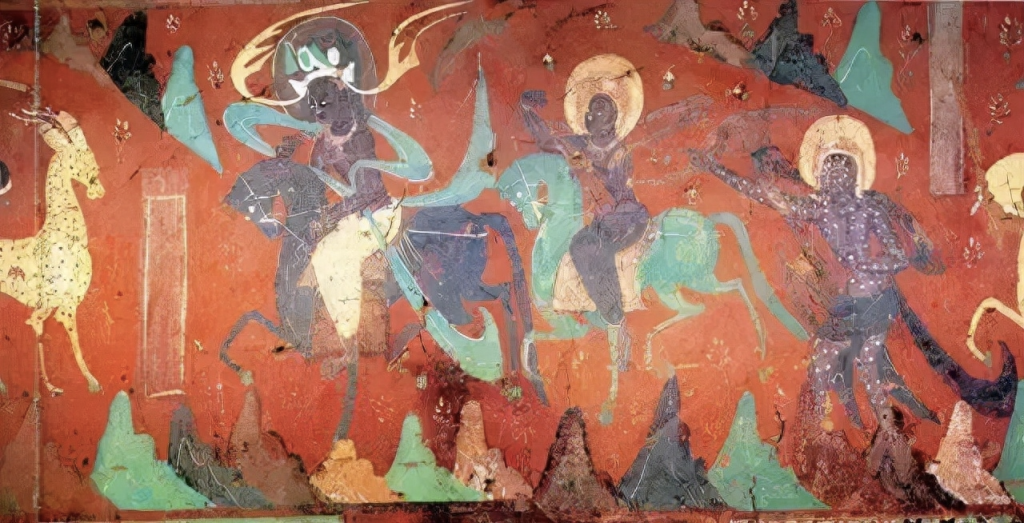
The Most Perfect Continuous Mural in the Dunhuang Mogao Caves

“The Story of the Nine-Colored Deer King” is the main theme of the murals in Cave 257 of the Mogao Caves. It unfolds in a long horizontal scroll, narrating many stories from the past life of the founder of Buddhism, Siddhartha Gautama.

Legend has it that long ago, on the banks of the Ganges River in India, there lived a beautiful and kind nine-colored deer king (the previous incarnation of Siddhartha Gautama)…

One day, as the nine-colored deer king was leisurely strolling by the river, he suddenly heard a pitiful cry from the water. Without hesitation, the brave nine-colored deer leaped into the river, risking its own safety, and rescued the drowning person. The saved individual, overwhelmed with gratitude for a second chance at life, repeatedly bowed in thanks to the nine-colored deer.

The nine-colored deer king said, “No need for thanks; just go on your way. My only request is that you do not reveal my whereabouts to anyone.” The drowning person solemnly swore, “Kind benefactor, rest assured. If I ever betray this promise, may my body be covered in sores and my mouth emit a foul odor.” With that, the person departed.

Before long, the queen of that country dreamt of a deer—one with nine colors and silver-like antlers. She told the king about her dream and requested that he order the capture of such a deer. She had a strong desire to use its colorful hide for clothing and its antlers for earrings. Consequently, the king issued a proclamation and offered a substantial reward.

Upon seeing the proclamation, the person who had been saved reported to the king, leading soldiers to the mountain to hunt down the nine-colored deer.

When the nine-colored deer was surrounded by the king’s troops… it spotted the person it had rescued from drowning, tears of sorrow welled up in its eyes…

The nine-colored deer leaped in front of the king and recounted the story of how it had saved the person from drowning and how that person had broken his promise. The king and the soldiers were deeply moved by the deer’s account. The king ordered the soldiers to clear a path, allowing the nine-colored deer to regain its freedom. He also issued a decree: “From now on, people are not allowed to shoot deer.”

As for the person who had broken his promise, in an instant, sores covered his body, and a foul odor emanated from his mouth. From that moment on, he was despised and reviled by the people.

The story of the nine-colored deer is vividly portrayed in Cave 257 of the Dunhuang Grottoes, which is what we now see as “The Story of the Nine-Colored Deer King.” While the mural is not particularly large in size, it holds significant importance in Chinese art history.

This artwork takes the form of a horizontal scroll with the story unfolding from both ends and converging in the middle. It consists of multiple scenes depicting various stages of the story, such as its origin, development, climax, and conclusion, all seamlessly connected to create a cohesive narrative.

“The Story of the Nine-Colored Deer King” is composed of nine panels, illustrating five key plot points: the person drowning, the nine-colored deer rescuing the drowning person, the drowning person expressing gratitude to the deer, the queen’s desire to capture the deer, the informant revealing the deer’s whereabouts to the king, and the confrontation between the king and the deer.

The story progresses from both ends of the mural towards the center, placing the pivotal conversation between the king and the deer in the middle. This unique composition style captures the essence of continuous horizontal scroll art from the Wei and Jin dynasties, showcasing the distinctive historical aesthetics of the era.

In the artwork, the depiction of mountains, rocks, and rivers occupies a significant portion. The rendering of the landscape primarily serves to fill the space and delineate the composition, providing a brief description of the specific environment, thereby enhancing the visual impact of the artwork and its storytelling function.

“The Story of the Nine-Colored Deer King” places the climax of the story—the moment when the nine-colored deer recounts the events—at the center of the composition. At the same time, both nine-colored deer on the left and right sides turn their bodies toward the center, serving as visual guides.

This is precisely the turning point in the storyline of the nine-colored deer, where the drowning person’s affliction receives its retribution. It places the Buddhist concept of rewarding goodness and punishing evil at the visual forefront, narrating the sequence of events step by step to gradually reveal the story’s progression to the viewer.

The entire process is rhythmic, marked by the ebb and flow of the narrative, skillfully aligning the chronological order with the spatial arrangement, showcasing the artist’s unique conceptualization of the composition.

In terms of color usage, “The Story of the Nine-Colored Deer King” appears to be very vibrant, but in reality, it uses a limited color palette, consisting of only six colors. The earthy red color dominates the entire painting, which is a prominent color characteristic of the Wei, Jin, Northern and Southern Dynasties period.

Complementing this are touches of stone blue and stone green, along with the harmonious blending of black, white, and gray. This blending softens the strong contrast between earthy red and stone green and blue, achieving a harmonious contrast of warm and cool tones. At the same time, it also accentuates the brightness of contrasting colors.

The introduction of Buddhism had a significant impact on the development of portraiture in China, introducing a set of strict conventions for Buddhist iconography. During the Northern Wei dynasty, the Dunhuang murals began to emphasize body proportions and adopted more attention to three-dimensionality after incorporating color shading techniques.

In “The Story of the Nine-Colored Deer King,” most of the figures on the canvas have slender bodies, with their clothing belts fluttering in the wind. Their gestures and movements exude a graceful dance-like elegance, evoking the style of figures that “float like wandering dragons and are delicate as startled swans.”

In the murals of the Northern Wei period in Dunhuang, Jataka stories are an important theme. Jataka stories refer to the countless events and experiences in the past lives of Siddhartha Gautama, who would later become the founder of Buddhism. In history, there are numerous Jataka stories related to Siddhartha Gautama.

Within Buddhist art themes, there are many Jataka story paintings, and “The Story of the Nine-Colored Deer King” is just one of them. Story paintings are used to promote the Buddhist concept of karmic retribution and to praise the spirit of self-sacrifice displayed by the Nine-Colored Deer King.

In reality, all Jataka paintings ultimately convey one message: that by performing good deeds, selflessly giving, and enduring hardships, one can achieve positive outcomes, whereas engaging in wrongful actions will lead to self-destruction.

The Story of the Nine-Colored Deer King

Link:https://peacelilysite.com/2023/10/02/the-story-of-the-nine-colored-deer/

#SiddharthaGautama #SakymuniBuddha #JatakaStories #BuddhistStories #MoralStory #Mural #Dunhuang #MogaoCaves #Grottoes #Buddhism #ChineseCulture #Art #karmicRetribution #Paintings

Source: https://www.toutiao.com/article/7025418785972847140/?ug_source=seo_juhe, https://zhuanlan.zhihu.com/p/346828893

Ms. Han Suyin held the Young painter in the Highest Esteem, and His Artworks Reached Record-breaking Prices at Auctions
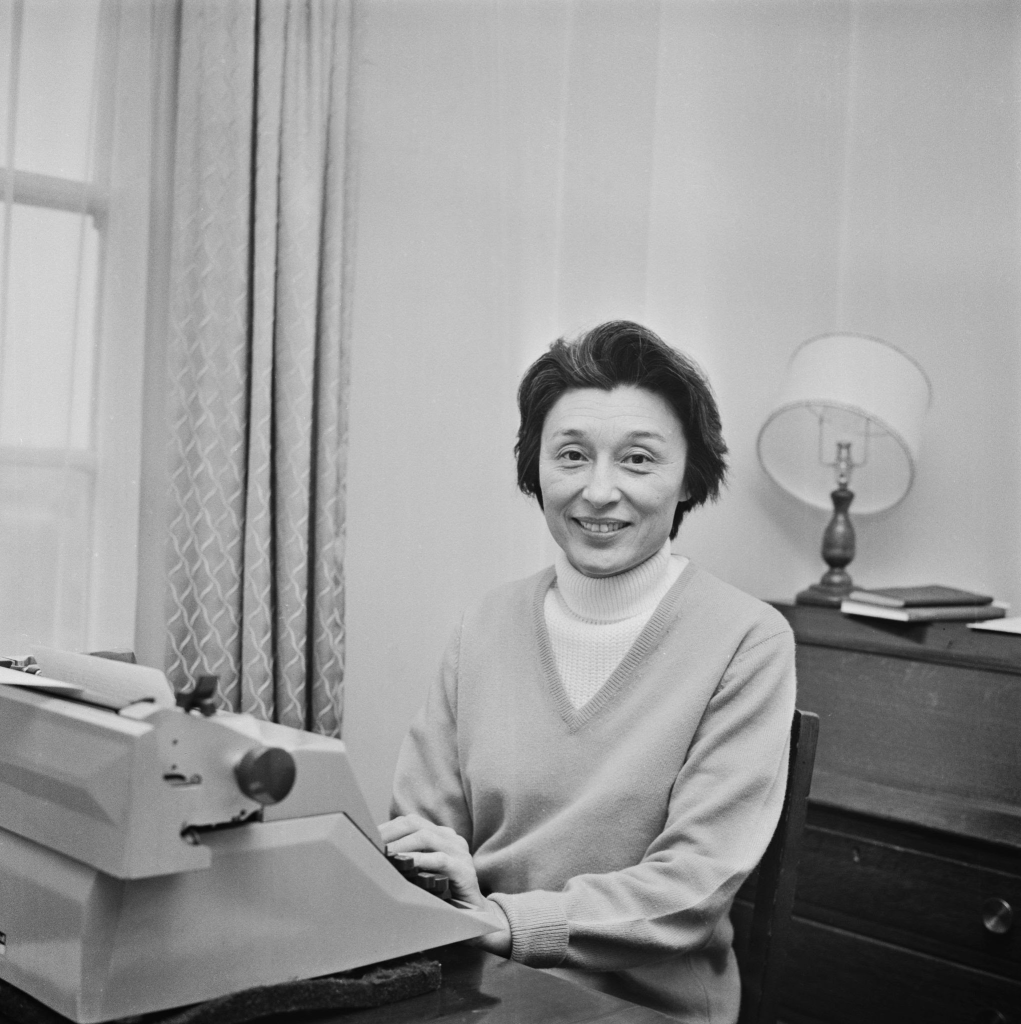
Han Suyin was born in Xinyang, Henan Province, China, on September 12, 1916, to a Chinese father and a Belgian mother. She was raised in a multicultural and multilingual environment, which greatly influenced her future writings and perspectives.

Ms. Han Suyin gained international recognition as a prolific writer, primarily known for her semi-autobiographical novels. Her most famous work, “A Many-Splendored Thing,” published in 1952, became a bestseller and was adapted into a successful Hollywood film titled “Love Is a Many-Splendored Thing” in 1955. She authored numerous novels, essays, and articles that delved into themes of love, cultural identity, and East-West relations.

Ms. Han Suyin, an extraordinary figure in her own right, shared a remarkable connection with world leaders and spiritual luminaries from across the globe. Her life was intertwined with a little-known story of profound affinity with a great sage.

In February 1982, Ms. Han Suyin and her husband, Mr. Lu Wenxing, made a long-awaited journey to Sichuan, their ancestral homeland, to celebrate the Chinese New Year with their family. This marked her first return to Sichuan for the New Year since the establishment of the People’s Republic of China. As a professional writer, she was an unwavering observer of the human and cultural aspects of her homeland. She once articulated, “My life will forever traverse two opposing directions, leaving love to embrace love; leaving China to return to China.” This succinctly summarized her life’s journey. Her deep love for this ancient land fueled an unceasing quest for individuals with profound philosophical ideals, firmly convinced that within the mystical realm of China’s ancient civilization, cultural giants awaited discovery to awe the Western world.

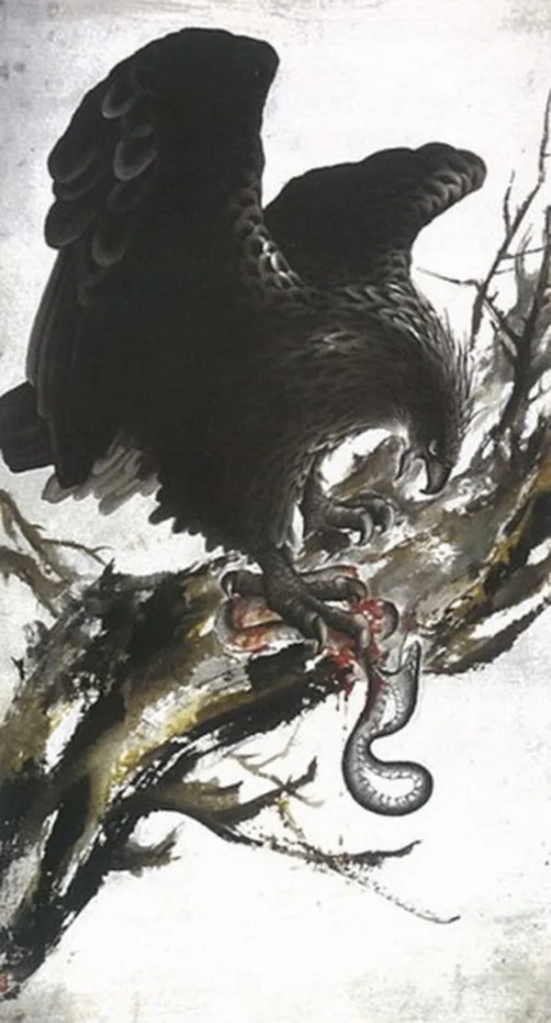
Fate and reason have their own ways. Soon, Ms. Han Suyin discerned her calling with remarkable acumen. While visiting an exhibition of Chinese paintings at Sichuan’s Wenshu Monastery, she was captivated by a yet-to-be-displayed masterpiece of a soaring eagle. The painting exuded vastness, antiquity, ethereality, and enduring profundity. Having toured renowned art museums worldwide and seen countless world-famous paintings, she found herself profoundly moved by this artwork, eagerly wishing to acquire it as a lifelong treasure. Regrettably, the exhibition had not yet officially opened, dashing her immediate hopes.

With the assistance of the local cultural department, Ms. Han Suyin eventually tracked down the artist behind the masterpiece. To her astonishment, the creator was an elegant young man, and an instant kinship developed between Ms. Han and this young prodigy. Their conversations touched upon a spectrum of subjects, from various styles within the Chinese art scene to global artistic movements and the evolution of humanistic ideals.

Upon parting ways, Ms. Han Suyin not only acquired the eagle painting for her collection but also handpicked two additional Chinese paintings, intending them as cherished gifts for her close friends. Thus, an international writer and an ancient sage forged a profound and enduring connection.

In 1993, eleven years later, Ms. Han Suyin reflected on this treasured memory, describing it as follows: “…I was the first fortunate individual to witness His artwork and immediately recognize His talent. His painting technique, marked by ever-shifting nuances and a compelling balance of strength and delicacy in each brushstroke, left an indelible impression on me. His vast knowledge and wide-ranging interests extended beyond art into the realm of traditional Chinese herbal medicine. His passion for medicine stemmed from his father’s status as a renowned traditional Chinese medicine practitioner. Moreover, he ventured into enhancing a particular palace-grade tea and brought it to market. In recent years, he has dedicated himself to creating a significant work, striving to establish a new life philosophy rooted in the authentic principles of Buddhism and the universe. Consequently, he produced internationally acclaimed paintings. His series of paintings featuring Buddhist monks garnered high praise in Japan and Singapore. His achievements were also acknowledged in North America, where he assumed a professorship at the Sino-American Cultural and Arts Research Institute and served as the president of the Chinese Painting Research Association at the Chinese Social Welfare and Education Center in Beijing. I genuinely believe he is an exceptional artist, and I am firmly convinced that his unwavering pursuit of knowledge will lead to even greater accomplishments…”

So, who is this extraordinary sage whom Ms. Han Suyin esteemed, and whom the world came to admire? None other than H.H.  Dorje Chang Buddha III.

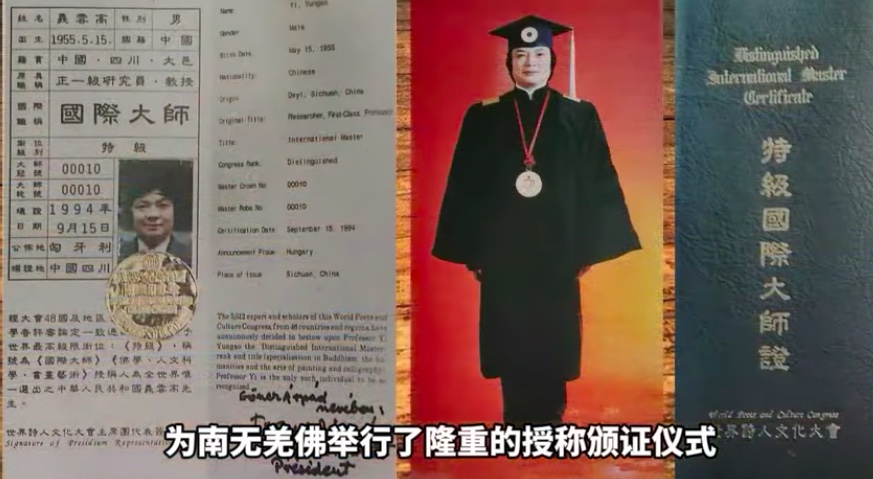
It must be acknowledged that Ms. Han Suyin’s discerning judgment was remarkably precise, as she firmly believed. H.H.  Dorje Chang Buddha III‘s achievements were indeed unparalleled. In 1994, at the World Poets Conference, 5,612 experts and scholars from 48 countries and regions acclaimed Mr. Yi Yungao (H.H.  Dorje Chang Buddha III ) as the world’s sole supreme international master, acknowledging his extraordinary contributions in Buddhism, the humanities, medicine, painting, and his lofty moral character. On September 28 of the same year, special envoys from the conference traveled to Sichuan to present him with the certificate of supreme international master, bearing the signature of the President of the International Olympic Committee, Samaranch.

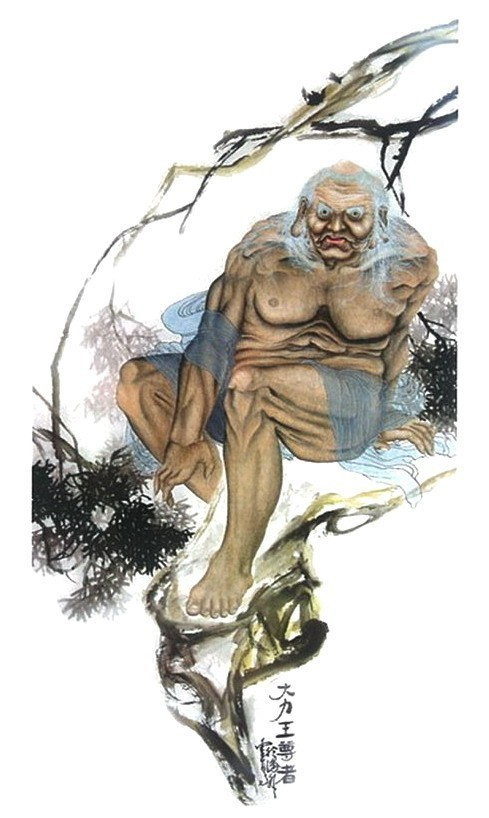
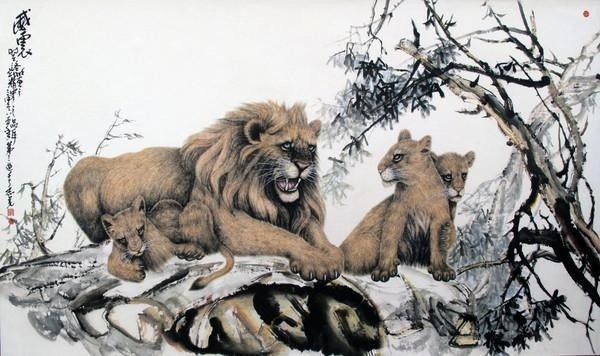
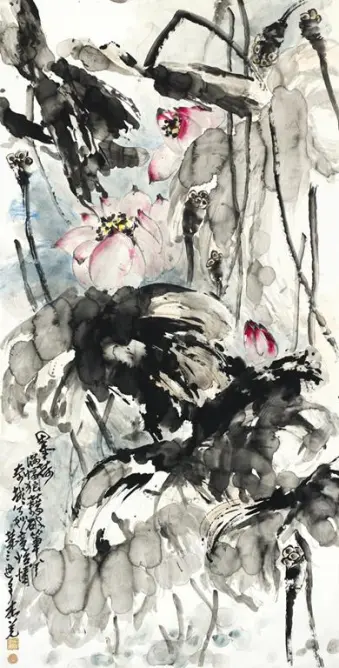
In the year 2000, H.H.  Dorje Chang Buddha III‘s artworks “Thunderous” and “Great Strength Vajra” achieved prices exceeding 2.12 million dollars and 2.2 million dollars, respectively, in the international market. Then, in March 2015, his artwork “Ink Lotus” set a record price at the New York Spring Auction, reaching an astonishing 1.65 million dollars per square foot.

Vulnerable Dali Wang
威震 WeiZheng (Thunderous)

Ink Lotus

You can appreciate all these three masterpieces at The International Art Museum of America (IAMA).

Another piece, “Loquat,” measuring six square feet, was successfully auctioned at an astounding price of 10.2 million dollars at the New York Zhenguan International Auction Company’s autumn auction, establishing an unprecedented record for Chinese paintings in the auction market. When calculated on a per square foot basis, it reached an astonishing 1.7 million dollars per square foot. The painting, “Loquat,” drew praise from experts at the auction company during the autumn preview, exceeding the criteria of a “masterpiece” set by ancient Chinese art critics. They described it as follows: “In the style of H.H.  Dorje Chang Buddha III , this painting exhibits an ever-changing technique, with strength and depth in every brushstroke, and an endless charm.”

World news media reports have hailed H.H.  Dorje Chang Buddha III as an “unprecedented master in the history of Chinese painting” and as the “pioneer who propelled Chinese painting art onto the global stage.” At this juncture, we, the younger generation, express our deep admiration and respect for Ms. Han Suyin’s extraordinary discernment.

Ms. Han Suyin held the Young painter in the Highest Esteem, and His Artworks Reached Record-breaking Prices at Auctions

Link: https://peacelilysite.com/2023/09/22/ms-han-suyin-held-the-young-painter-in-the-highest-esteem-and-his-artworks-reached-record-breaking-prices-at-auctions/

#MasterYiyungao #InternationalMaster #ChinesePaintings #MsHanSuyin #DorjeChangBuddhaIII  #HHDorjeChangBuddhaIII #DorjeChangBuddha#IAMA#InternationalArtMuseumofAmerica

Source: https://www.tpcdct.org/article/4869

Guangsheng Temple with Ancient Chinese Buddhist Buildings,Murals & Statues

As a cradle of Chinese culture, Shanxi is renowned for its abundance of cultural and historical treasures. While some iconic historical relics and monuments like the Great Wall, which stretches across the province, the Yungang Grottoes in Datong, and the Sakyamuni Pagoda in Yingxian, are at the top of tourists’ itineraries, there are also lesser-known “hidden gems” in terms of historical significance that are well worth exploring.

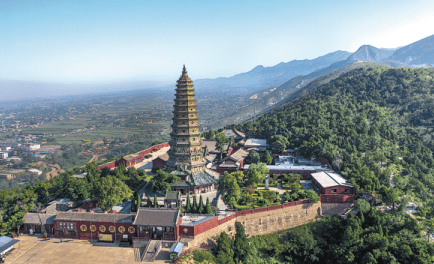
One such hidden gem is the Guangsheng Buddhist Temple, located in the Zhaocheng township of Hongtong county. The Guangsheng Temple is actually a complex that encompasses the upper monastery, the lower monastery, and the Water God Temple, situated on the slopes and foothills of Huoshan Mountain in Zhaocheng.

Founded in the first year (147) of the Jianhe reign of the Eastern Han Dynasty (25-220), the temple originally bore the name Julushe Temple. It later acquired its present name during the Tang Dynasty (618-907). While it suffered damage during an earthquake in the 7th year (1303) of the Dade reign of the Yuan Dynasty (1271-1368), subsequent restoration efforts took place over the years, preserving much of the architectural style from the Yuan Dynasty. Nestled against the mountains and overlooking a river, the temple is surrounded by ancient trees and boasts the Huoquan Spring gushing beneath the rocks at the foot of Huoshan Mountain, creating a serene and picturesque environment. The temple can be divided into three main sections: the upper temple, the lower temple, and the Water God Temple.

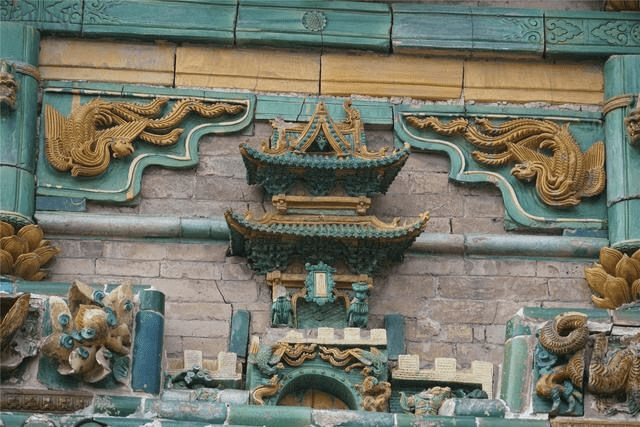
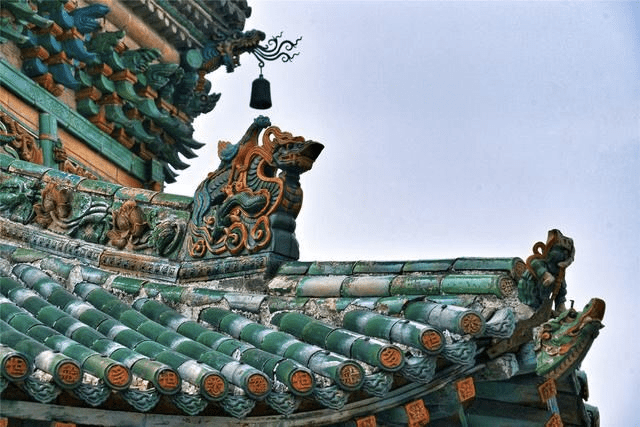
The upper temple, perched atop Huoshan Mountain amidst lush pine trees, is graced with ancient towers and adorned with colored glaze components, radiating magnificence and splendor. The lower temple, situated at the base of Huoshan Mountain, harmoniously blends with the mountain’s natural contours, creating an intriguing landscape with varying elevations. Adjacent to the lower temple is the Water God Temple, with connected walls. Here, one can find the Statue of Ying, an emperor of the Ming Dynasty, and renowned frescoes depicting Yuan Dramas, both of which are celebrated locally and internationally.

The upper temple complex comprises the temple gate, the Flying Rainbow Tower, the Amitabha Hall, the Great Hall, the Vairochana Hall, the Kwan-yin Hall, the Ksitigarbha Hall, as well as wing-rooms and corridors, among other features. The Temple Gate, situated at the entrance, is flanked by two guardian warriors. Just beyond the gate stands the impressive Flying Rainbow Tower, constructed from colored glaze bricks. Originally built during the Eastern Han Dynasty (25-220) and later restored in the Ming Dynasty (1368-1644), this thirteen-story tower soars to a height of 47.31 meters, featuring an octagonal plan. The tower is adorned with tri-colored glaze in yellow, green, and blue, creating a splendid and vibrant spectacle. Elaborate wooden square blocks and intricately carved designs of Buddha, Bodhisattvas, guardian warriors, flowers, birds, and animals adorn the eaves and pillars. Corridors encircle the first story, while the tower’s interior houses only the stairs leading to the tenth floor, showcasing remarkable architectural and artistic prowess.

Behind the tower lies the Amitabha Hall, a 5-bay wide, 4-bay long structure with a single-eaved gable and hip roof. Inside, the hall features three exquisite statues: Amitabha Buddha, Manjusri Bodhisattva, and Vajrapani Bodhisattva. These statues, masterpieces of the Ming Dynasty, are accompanied by frescoes adorning the eastern wall and screen wall. Additionally, the temple once housed 4,000 volumes of the Pingshui version of the Tripitaka during the Huangtong reign of the Jin Dynasty (1115-1234). These valuable volumes are now preserved in the Beijing Library and serve as a rare source for studying the history of Chinese printing.

The Great Hall, characterized by a 5-bay width, a single-eaved gable, and a hip roof, features three niches within for wooden statues of Sakyamuni, Manjusri, and Samantabhadra. These statues are meticulously crafted, possessing well-proportioned forms, a plump appearance, and an air of perfect serenity. In the Qing Dynasty, the hall was adorned with eighteen iron arhats along its two sides, along with statues of Kwan-yin and Amitabha Buddha on the rear niche wall.

The Vairochana Hall, spanning 5 bays in width with a hip roof, boasts an architectural style typical of the Yuan Dynasty, with two gables supported by substantial crawling beams. The altar within the hall features statues of three Buddhas and four Bodhisattvas, surrounded by wooden niches containing 35 iron statues. Notably, the back wall of the hall showcases frescoes depicting Sakyamuni and twelve Bodhisattvas of Perfect Enlightenment, regarded as exceptional examples of this art form.

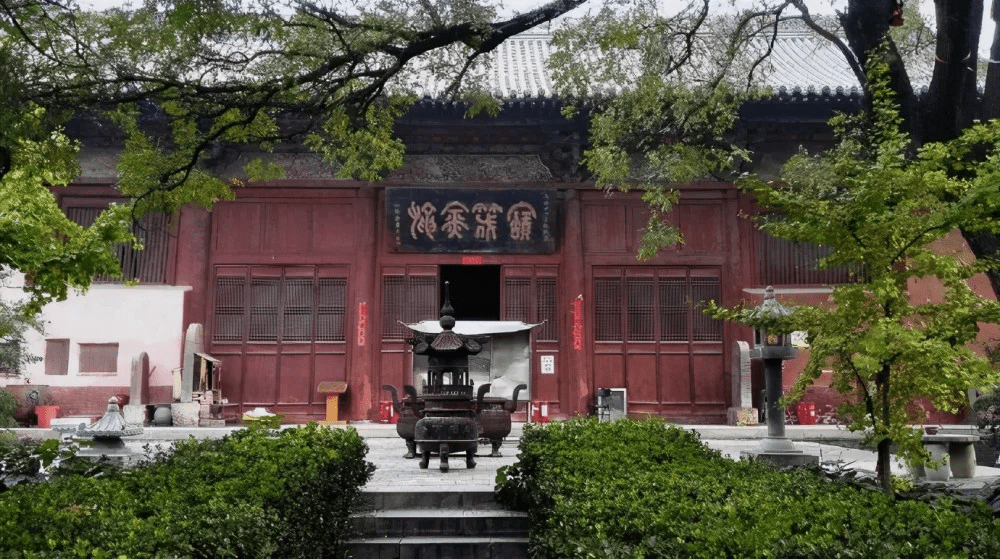
The lower temple complex comprises the temple gate, front hall, back hall, the buttress hall, and other buildings, all constructed during the Yuan Dynasty. The temple gate stands impressively tall, measuring 3 bays in width and 3 bays in length, featuring a single-eaved gable and a hip roof. Canopies have been added to both the front and back eaves, lending it the appearance of a pavilion with double eaves. The front hall spans five bays in width and is supported by only two pillars that bear the weight of the entire structure. The back hall, dating back to the second year (1309) of the Zhida reign in the Yuan Dynasty, stretches 7 bays in width, featuring 9 purlins, 8 rafters, and a single-eaved overhanging gable roof. Within the hall, you’ll find the main statues of Amitabha Buddha, Sakyamuni Buddha, Bhaisajyaguru Buddha, Manjusri Bodhisattva, and Samantabhadra Bodhisattva, all crafted during the Yuan Dynasty. Sadly, the once-present frescoes on the walls were stolen and smuggled to other countries in 1928, and they are currently housed in the Naerson Museum in Texas, US. Notably, the fresco on the south wall documented the performances of Yuan Drama, serving as rare reference material for the study of Chinese dramas.

The lower temple complex photo from:Beijing Transportation University ancient architecture

The lower temple complex photo from: Beijing Transportation University ancient architecture

The Water God Temple comprises two courtyards: the front yard and the back yard, featuring key structures like the Temple Gate, the Door of Amenity, the Ming Ying King Hall, and wing-rooms of cave dwellings. The Ming Ying King Hall, measuring 5 bays in width and 5 bays in length, is enveloped by a cloister and crowned with a double-eaved gable hip roof. The interior beams follow a conventional style. Within the hall, you’ll find statues of Water God Ming Ying King and his eleven attendants. Their facial features, attire, and postures are all reflective of the Yuan style. The hall’s walls are adorned with frescoes depicting scenes of people praying for rain and other historical narratives, covering an area of 197 square meters. Notably, the eastern end of the south wall features vivid depictions of a comprehensive set of stage properties used by performers, including costumes, stage instruments, musical instruments, makeup, curtains, and the stage itself. The artwork is meticulously arranged, with a simple yet profound color palette, and the dramatis personae are depicted with great expressiveness. This fresco offers an authentic glimpse into the heyday of Yuan Drama and stands as a rare and outstanding example of Yuan fresco art in China.

Guangsheng Temple with Ancient Chinese Buddhist Buildings,Murals & Statues

Link: https://peacelilysite.com/2023/09/20/guangsheng-temple-with-ancient-chinese-buddhist-buildings%ef%bc%8cmurals-statues/

Source: http://shanxi.chinadaily.com.cn/2022-05/06/c_748899.htm, http://en.chinaculture.org/library/2008-02/15/content_34504.htm

Niu Nian Tu (Year of the OX)

Artist: H.H. Dorje Chang Buddha III

At year February 2007, this Year of the Ox (by H.H. Dorje Chang Buddha III) painting was exhibited at an auction in the Hua Zang Si Temple in San Francisco. Even though I saw it online, when I saw this work in person that year, I was suddenly transported into a world of pure and poetic spirituality.

The ox strolled leisurely, Looking up to admire the scenery. On the ox’s back, a young herder, Humming a tune, Enjoying a unique sense of freedom. Though there was no verbal communication, There was mutual companionship, Dependence on each other.

Later, I saw this painting again at The International Art Museum of America in San Francisco. It was as if I were re-experiencing the long-lost joy of childhood innocence, and I couldn’t help but stop and admire this exquisite masterpiece.

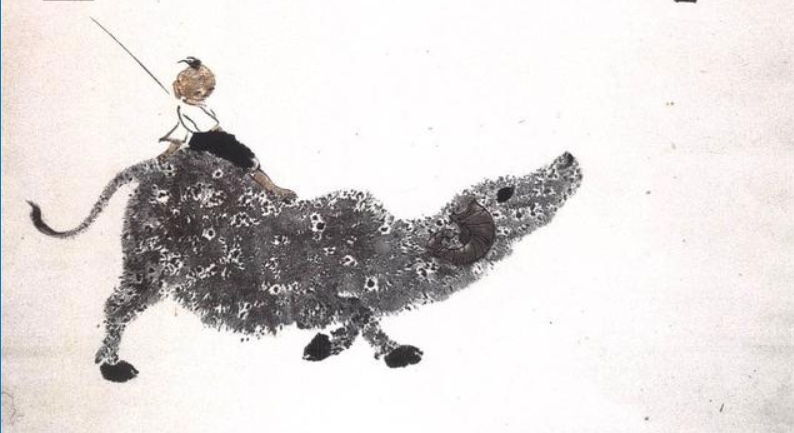
The entire composition of the painting is concise: an ox, a flute, a young herder on the ox’s back, a few simple strokes representing tree branches, and a hint of green. The old ox was covered in glistening sweat, and no matter where or when, it remained calm, with steady steps and a high head, as if filled with determination and strength for the journey of life. The young herder reclined comfortably on the ox’s back, at ease and trusting that the old ox would take him where he wanted to go. Urban dwellers fortunate enough to witness such a rare and beautiful scene would find their tense hearts instantly relaxed.

In terms of technique, this Chinese painting exhibits remarkable simplicity, featuring an expansive and open composition coupled with unique and striking artistic techniques. The skillful use of white space within the artwork, thanks to clever design choices, not only avoids diminishing or dulling the image but also creates boundless room for the viewer’s imagination to roam. Additionally, the artist employed a scattered perspective technique to lend the painting a three-dimensional quality, skillfully using emptiness to convey form. The seamless integration of form and emptiness results in an exceptionally elegant layout.

This painting serves as a testament to the artist’s ability to convey the inherent charm of nature and capture the essence of a pure and childlike spirit, offering solace and enjoyment to its viewers. What is particularly astonishing is the meticulous application of ink at a minute level, portraying the oxen’s hairs in an array of intricate variations.

Although the painting does not depict the colors of early spring, mountains, valleys, or springs, they seem to be faintly visible on the canvas. It’s said that by calculating white as black and using emptiness as a form of depiction, the simplicity of the image leaves room for endless beauty and boundless imagination. This painting beautifully exemplifies the traditional Chinese cultural principle that ‘The Dao resides in simplicity.’ It evokes thoughts of the legendary tale of Laozi departing China on a green ox through the Hangu Gate in pursuit of Sakyamuni Buddha.

Having been in the hustle and bustle of the city for a long time, one longs for the tranquility of the countryside. But once in the quiet countryside, one can’t bear the loneliness and solitude. The restless heart can’t resist the temptation of the bustling world and constantly seeks outward under the pull of desire. When lost and falling into despair, one realizes that this is not the life one truly desires.

In reality, the ideal paradise is not far away; it resides in the inner tranquility and practicality of the present moment. Just like the young herder and the old ox in the painting, tranquility and boundless joy are always found in the present moment.

Niu Nian Tu (Year of the OX)

Link:https://peacelilysite.com/2023/09/15/niu-nian-tu-year-of-the-ox/

#DorjeChangBuddhaIII #HHDorjeChangBuddhaIII#DorjeChangBuddha#IAMA#InternationalArtMuseumofAmerica#HuaZangSi #SanFrancisco #YearofOX #ChinesePainting

Source: https://baijiahao.baidu.com/s?id=1760888707241544465

The cultural Heritage of Hanshan Temple

The cultural Heritage of Hanshan Temple

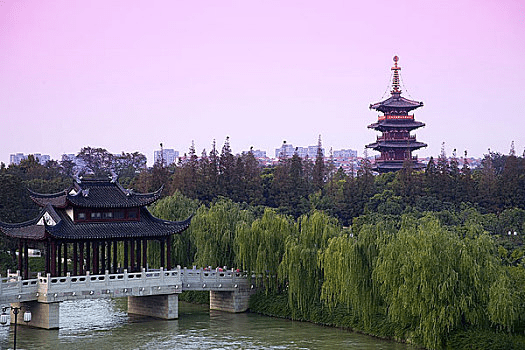
Hanshan Temple (寒山寺), which translates to Cold Mountain Temple, is situated in the Gusu District of Suzhou city. Originally named “Miaoli Puming Temple,” it dates back to the Liang Dynasty of the Southern Dynasties, specifically from A.D 502-519. Covering an area of approximately 13,000 square meters, the temple boasts a construction area exceeding 3,400 square meters.

During the Tang Dynasty’s Zhenguan period (A.D. 627-649), two prominent monks of the time, Hanshan and Xiqian, founded Hanshan Temple. Over its more than 1,300-year history, the temple has suffered five fires (some versions claim seven), with its most recent reconstruction occurring during the Guangxu period (A.D. 1875-1908) of the Qing Dynasty. Historically, Suzhou’s Hanshan Temple held a prestigious position among China’s top ten famous temples. Its fame extends beyond borders due to a poem composed by Zhang Ji, a Tang Dynasty poet, which is taught in Chinese primary schools. This poem is also included in the curriculum of Japanese schools, further elevating Hanshan Temple’s renown in Japan, attracting numerous Japanese visitors who come to pay their respects to the Buddha. The temple features numerous historic buildings and tablet inscriptions authored by calligraphers, making it a popular destination for those seeking peace and spiritual solace.

Hanshan Temple holds a distinguished place in China’s Buddhist history, chiefly because of the famous poem by Tang Dynasty poet Zhang Ji. This poem is part of the curriculum in primary schools in both China and Japan.

The Night Lodging at Maple Bridge
By Zhang Ji

月落乌啼霜满天
The moon sinks in the frosty sky and ravens caw far and near

江枫渔火对愁眠
Riverside maples and fishing lamps gloomily make me drowsy

姑苏城外寒山寺
From the Han-Shan temple siting at outside of the Gu-Su town

夜半钟声到客船
Come midnight bell rings as a passenger boat is arriving 

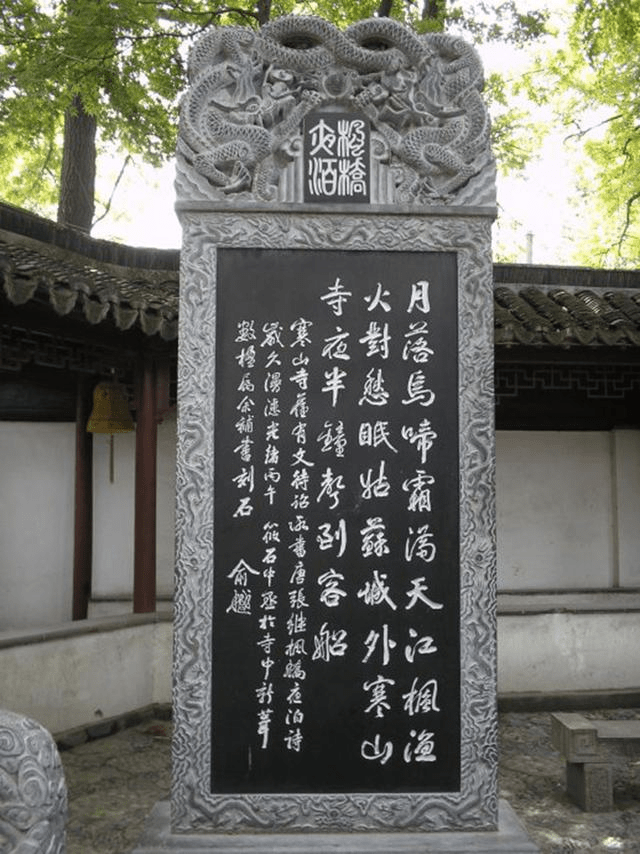
Apart from the legends of Hanshan and Shide, Hanshan Temple boasts a collection of treasures that have been cherished throughout its extensive history. Among these treasures, one of the most renowned is the poetic stele of ‘Night Mooring at Maple Bridge,’ crafted by the esteemed scholar and calligrapher Yu Yue during the late Qing Dynasty. It stands as an invaluable asset to Hanshan Temple.

It must be acknowledged that this piece of calligraphy represents the apex of ‘Night Mooring at Maple Bridge’ renditions throughout history. The lines of regular script flow seamlessly, displaying an inherent elegance and freshness, achieved with seemingly effortless brushwork. Engraved upon the stele, it emanates a subtle, age-old charm and an evocative poetic atmosphere. Each time I gaze upon this stele, it evokes a different emotional response within me. As I have delved into the art of calligraphy myself, I have even attempted to replicate ‘Night Mooring at Maple Bridge.’ While I deeply appreciate Yu Yue’s extraordinary skill and find it visually pleasing, there has always been a sensation of something missing, an ineffable aspect I couldn’t articulate. My pursuit has persisted, a continuous quest to discover calligraphic masterpieces that could genuinely satiate my aesthetic sensibilities, and this aspiration remains deeply rooted within me.

The other day, I had a sudden encounter with ‘Night Mooring at Maple Bridge,’ personally penned by H.H. Dorje Chang Buddha III, and it was as if I had stumbled upon a divine masterpiece! This artwork utilizes cursive script, showcasing the grandeur reminiscent of dragons and serpents, seasoned with masterful brushwork, conveying both a majestic ruggedness and a subtle elegance. What elevates its worth even further is its dynamic and ceaseless artistic allure, reaching monumental proportions. It can be aptly described as the highest sacred creation, far beyond the grasp of ordinary individuals. This represents the embodiment of the Five Vidyas, as expressed by the Buddhas and Bodhisattvas in the realm of Prajna, offering an extraordinary experience to those who behold it and serving as the ultimate exemplar for calligraphy enthusiasts like myself to aspire to emulate.

In this lifetime, I am profoundly fortunate to have encountered the authentic and unwavering Dharma of the Tathagata. The achievements of H.H. Dorje Chang Buddha III stand unparalleled on a global scale. When it comes to providing tangible evidence of wisdom and realization attained through proficiency in both exoteric and esoteric Buddhism, as well as mastery of the Five Vidyas, there is simply no one within the realm of Buddhism who can be mentioned in the same breath as His Holiness.

The Buddha’s criterion for measuring one’s level of accomplishment in the Buddha-dharma is rooted in the extent of proficiency in both exoteric and esoteric Buddhism, as well as the mastery of the Five Vidyas. However, throughout the history of Buddhism up to the present day, only H.H. Dorje Chang Buddha III Holiest Tathagata has truly and comprehensively demonstrated complete proficiency in exoteric and esoteric Buddhism, along with perfect mastery of the Five Vidyas. His Holiness unmistakably presents, for all to witness, a myriad of achievements that exemplify his complete proficiency in exoteric and esoteric Buddhism and his impeccable mastery of the Five Vidyas, as stipulated by the Buddha.

His Holiness, an ancient Buddha, holds the distinction of being the first being of holy virtue in history to genuinely manifest such lofty and all-encompassing realization. The undeniable proof of this is found in the numerous accomplishments single-handedly achieved by H.H. Dorje Chang Buddha III, as detailed within the thirty main categories listed in this book, “H.H. Dorje Chang Buddha III — A Treasury of True Buddha-Dharma.”

I earnestly pray that all sentient beings may embark upon the ‘vessel’ of liberation and achieve enlightenment.

The cultural Heritage of Hanshan Temple

Link:https://peacelilysite.com/2023/09/08/the-cultural-heritage-of-hanshan-temple/

#DorjeChangBuddhaIII #HHDorjeChangBuddhaIII  #HanShanTemple #ChineseCalligraphy #Buddhism #ExotericandEsotericBuddhism #AcientBuddha #TreasureBook #FiveVidyas

Source: https://blog.wenxuecity.com/myblog/77953/202108/16124.html, https://www.chinadiscovery.com/jiangsu/suzhou/hanshan-temple.html

Decades ago, Master Yi Yungao Embarked on a Visit to Taiwan and was Greeted with an Unprecedented and Fervent Welcome

Unveiling the Unparalleled Acupuncture Technique of Our Time: The Galloping Horse Wonderful Needle – An Exclusive Interview

Back in May 1995, a remarkable event unfolded that showcased the extraordinary acupuncture technique of our era, the Galloping Horse Wonderful Needle. This revelation occurred through an exclusive interview that shed light on this unparalleled medical practice.

The context of this revelation traces back to a significant cultural and artistic exchange initiative between mainland China and Taiwan. Master Yi Yungao(H.H. Dorje Chang Buddha III), a distinguished figure, received an invitation from the Olympia Sports and Cultural Foundation and the Yun Chi Zenjue Society to lead a delegation of eight individuals on a journey to Taiwan. The initial intention was to maintain a low profile upon their arrival, yet fate had different plans. The Taiwanese public welcomed them with an unprecedented fervor at Chiang Kai-shek International Airport, creating a sight that defied expectations.

Wu Jingguo, the Chairman of the Olympia Foundation, recounted the astonishing scenes that unfolded. More than 4,000 people gathered at the airport to extend their warm welcome, and an escort of over 1,300 vehicles accompanied them as they departed from the airport. This culminated in an astonishing journey of approximately 3.5 hours from the airport to the Grand Hyatt Hotel, where Master Yi Yungao was lodged. The hotel’s premises were adorned with a vibrant assembly of well-wishers, offering flowers and orchestrating musical performances in a grand welcoming procession. This spectacle vividly captured the deep respect and reverence that the people of Taiwan held for Master Yi Yungao, underscoring the profound impact he had on their hearts and minds.

The question arises: what attributes define Master Yi Yungao and evoke such genuine admiration from the public? The answer lies in his multifaceted accomplishments that span diverse domains, including art, philosophy, Buddhism, ethics, morality, and literature. It’s these exceptional contributions that have led to his esteemed recognition as a “master.” His acclaim is far-reaching, and a testament to this is his official designation as a “Special International Grand Master” in 1994. This recognition was conferred by a consortium of 5,612 experts and scholars representing 48 countries and regions, each hailing from diverse academic backgrounds and institutions.

In essence, the unparalleled Galloping Horse Wonderful Needle technique and the reverence for Master Yi Yungao are emblematic of his profound impact on both medical science and human hearts, resonating through time.

During his participation in the art exhibition as part of the Taiwan delegation, Master Yi Yungao’s mastery of the painting realm spans a broad spectrum of subjects. He showcases remarkable expertise in landscapes, figures, flowers, animals, and beyond. His artistic styles encompass meticulous detailing, freehand expression, and daring color palettes. His ink strokes flow seamlessly, and his depictions emanate from the essence of their forms, exuding an inherent elegance and vibrant spirituality. For instance, a showcased artwork titled “Tiger” presents a dynamic portrayal of a tiger seemingly in motion from any angle, aptly named “Versatile in All Directions.” Another piece, “Homage to Guanyin Bodhisattva,” exudes an extraordinary beauty. Upon inquiry, he modestly likened it to Dunhuang paintings, acknowledging certain resemblances while highlighting the distinctive cloud composition in the attire, drawn with a single, uninterrupted stroke. The divergence extends to the treatment of color ribbons. Moreover, his splashed-ink paintings, acclaimed by some connoisseurs as akin to Zhang Daqian’s works, radiate an authenticity that resonates harmoniously.

Although Master Yi Yungao and Zhang Daqian have never crossed paths, he attested to observing Zhang Daqian’s splashed-ink paintings and learning from them. He expressed his intent to emulate and glean insights from Zhang Daqian’s works.

Venerable Master Yi Yun granted our publication an exclusive interview at the Grand Hyatt Hotel, where he shared the following insights:

Question: What is the primary purpose of your visit to Taiwan this time?

Answer: My main reason for visiting Taiwan this time was in response to an invitation from the Olympia Foundation to participate in an art exhibition and engage in cross-strait cultural exchanges.

Question: What are your impressions after experiencing Taiwan?

Answer: The warm reception I’ve received from the Taiwanese people during this visit has deeply moved me. Whether it was at the airport or the hotel, the reception was overwhelming, resembling a sea of people. Even as I ventured outside the city, to places like Xizhi and Nankan in Taipei County, the warm welcome persisted. They celebrated with firecrackers, fireworks, and tremendous enthusiasm. Some individuals even crafted flags bearing my likeness to welcome me. I’m genuinely touched by this reception, which vividly demonstrates the growing harmony in cross-strait cultural exchanges. This harmony is pivotal for the cause of Chinese reunification and significantly fosters the profound emotional connections between people on both sides of the strait, connections that cannot be severed.

Question: How did the art exhibition fare this time?

Answer: Our visit to Taiwan this time was prompted by an invitation from the Olympia Foundation to organize an art exhibition. The primary objective was to enhance cultural and artistic exchanges between the two sides. The exhibition turned out to be a resounding success. During the opening ceremony on May 12th, we were honored by the presence of notable individuals, including Mr. Chiang Yen-shih, a member of the Presidential Office’s Advisory Council, and General Song Changzhi, a strategic advisor to the Presidential Office. We deeply appreciate this reception and believe that this exchange in the realm of painting will yield fruitful outcomes for both sides.

Question: What is your perspective on art?

Answer: Discussing art is a profound endeavor that cannot be encapsulated within a mere hour or two. In fact, I’ve delved into this subject in my previous writings. (Quoting from the master’s work, “I’ve previously mentioned that I don’t consider myself an artist. This assertion is in response to the prevailing perception of artists today. My journey began under the tutelage of a master in my childhood, driven not solely by artistic interest. Through exploring the universe, life, and society, I ventured into the realm of wisdom development and gained insights. Naturally, artistic skills and perspectives emerged. Art contributes to the diverse world, adorning the multifaceted fabric of human existence with vibrant hues. Its function shouldn’t be overly exaggerated.”)

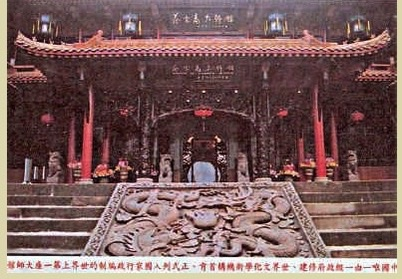
Entrance to the Master Wan Ko Yee Museum-China

Question: A “Master Yi Yun Gao Museum” has been established in Dayi County, Sichuan Province. Building a memorial hall for someone who is alive is quite rare. Could you elaborate on the process and motives behind establishing this hall?

Answer: After being bestowed with the title of “Special International Master” by 5,612 experts and scholars from 48 countries and regions at the 4th World Poets Culture Conference, and receiving the affection of individuals from my hometown, suggestions emerged to create a memorial hall. The completion of this hall has genuinely humbled me, and I’m profoundly aware of the goodwill and kindness of the people. It amplifies my sense of responsibility. To further the common good, I’m motivated to invest more effort. While I can be perceived as a “caretaker” of this hall, it truly belongs to the public, serving the greater societal welfare. Displaying artworks and cultural exhibits in this venue primarily aims to promote ethics, morality, and art. It seeks to inspire young students to delve into cultural arts, thereby nurturing Eastern philosophy, propagating Chinese culture, and enhancing the well-being of the populace. Visitor numbers to the hall continue to rise steadily.

Question: Your prowess in acupuncture, particularly the “Galloping Horse Wonderful Needle” technique, is widely recognized. Could you elucidate this technique?

Answer: The “Galloping Horse Wonderful Needle” technique in acupuncture is genuinely a “seeing is believing” situation. Its effects can be witnessed firsthand by those with physical ailments. (At that moment, Ms. Jiang Chengling Hui, the publisher of this magazine, expressed her willingness to experience it. Venerable Master Yi Yun inserted an acupuncture needle between the thumb and index finger of her right hand. As he exclaimed “swell,” Ms. Jiang echoed “swell.” Then, with a “go” from him, she exclaimed “it’s gone.” The needle had moved up her arm. Those present, including our magazine colleagues and others, were astonished.) This “Galloping Horse Wonderful Needle” technique is truly unparalleled globally.

Due to the late hour, as a substantial audience awaited Venerable Master Yi Yun and the clock struck midnight, our group of interviewers, filled with awe about the “Galloping Horse Wonderful Needle” acupuncture technique, concluded the visit.

(Note: Galloping Horse Wonderful Needle is a unique healing technique of Buddhism requiring special powers, and it is used to cure people of their illnesses. It is said that common people cannot master this technique. In order to apply this technique, one must have reached a very high state of training in the Vajra Fist Dharma of esoteric Buddhism. One must also have entered the phase that transcends the generation and completion phases. Through special skills, one produces a power that adjusts the “external four great elements.” (earth, water, fire, and wind) One then uses one’s concentration powers to bring about needle treatment reactions that course through the body like a galloping horse. Additionally, one must use thought to guide the “internal four great elements” of the patient’s body so that his body undergoes acute changes in an instant. Using the energy channels and acupuncture points, the obstructions of illness are expelled one after another. Why does that treatment produce such amazing effects? It has to do with the ultimate truths of the universe.)

Decades ago, Master Yi Yungao Embarked on a Visit to Taiwan and was Greeted with an Unprecedented and Fervent Welcome

Link:https://peacelilysite.com/2023/08/25/decades-ago-master-yi-yungao-embarked-on-a-visit-to-taiwan-and-was-greeted-with-an-unprecedented-and-fervent-welcome/

Source: https://hzbi.org/10928.html

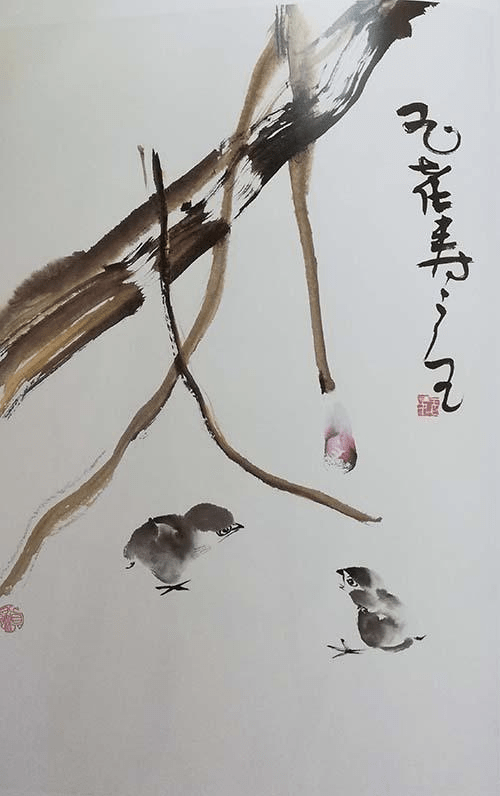
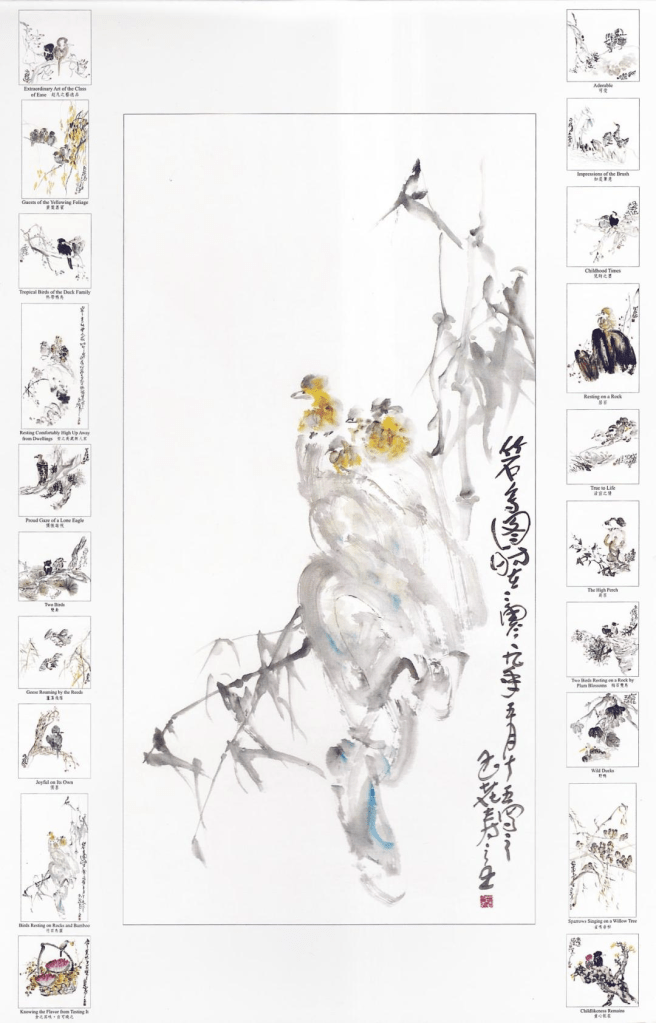
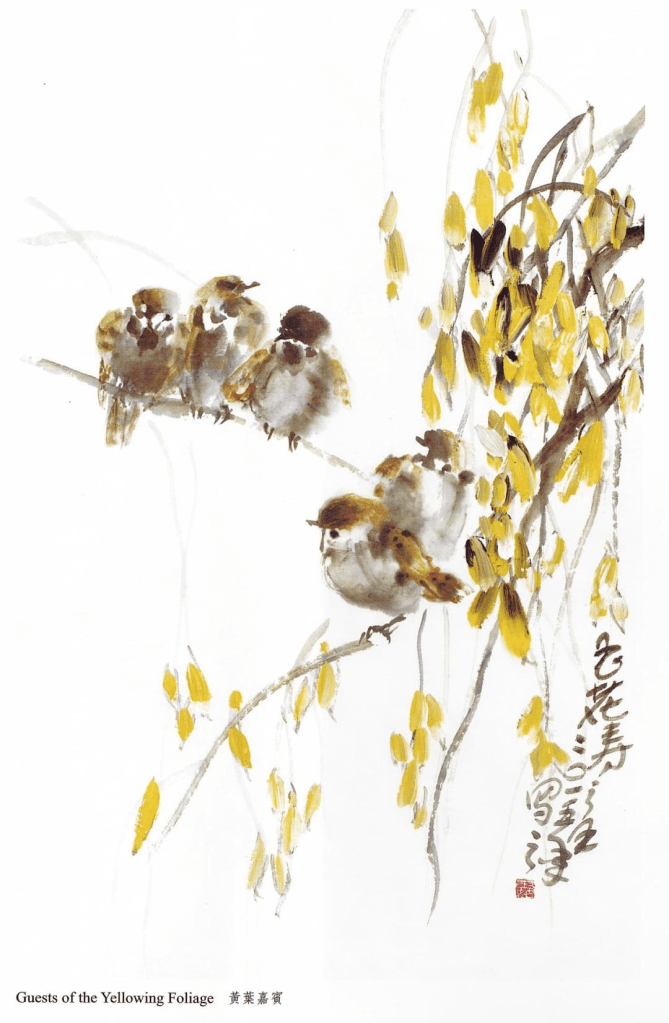
Yu Hua Shou Zhi Wang Flower and Bird Painting Album

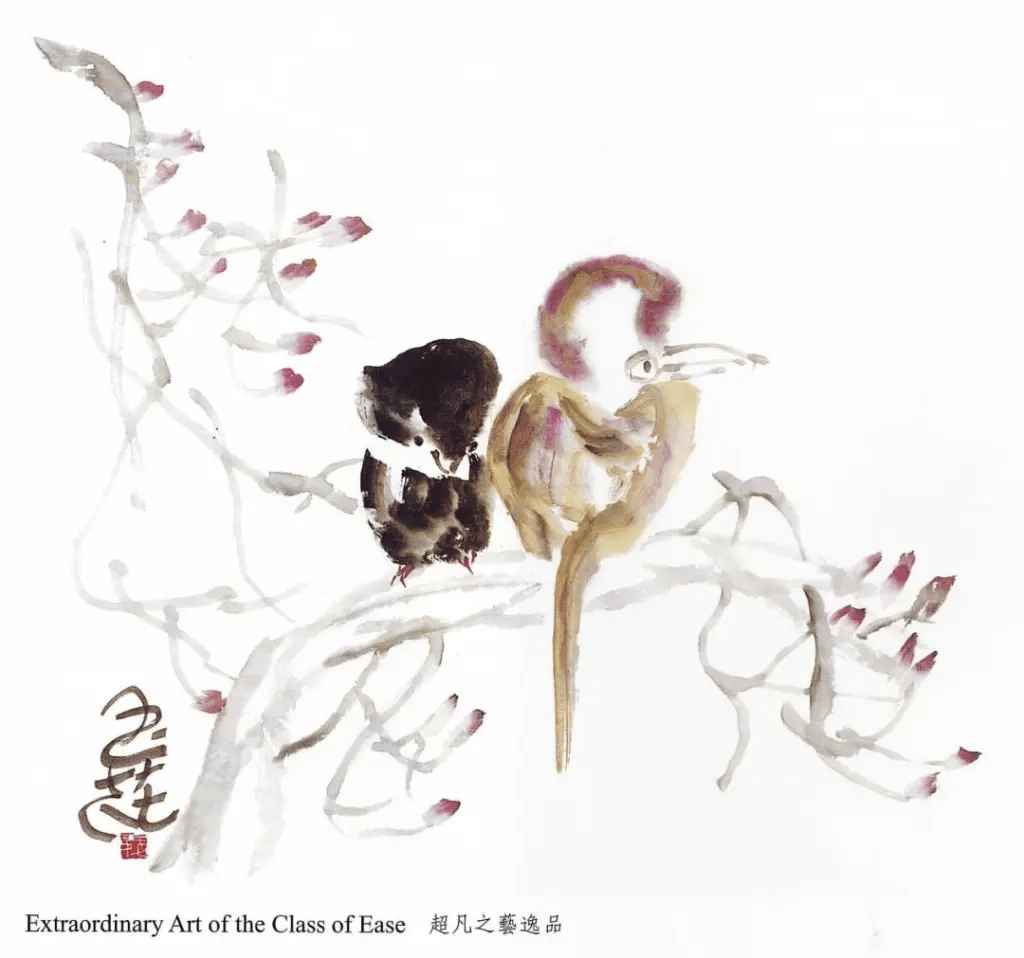
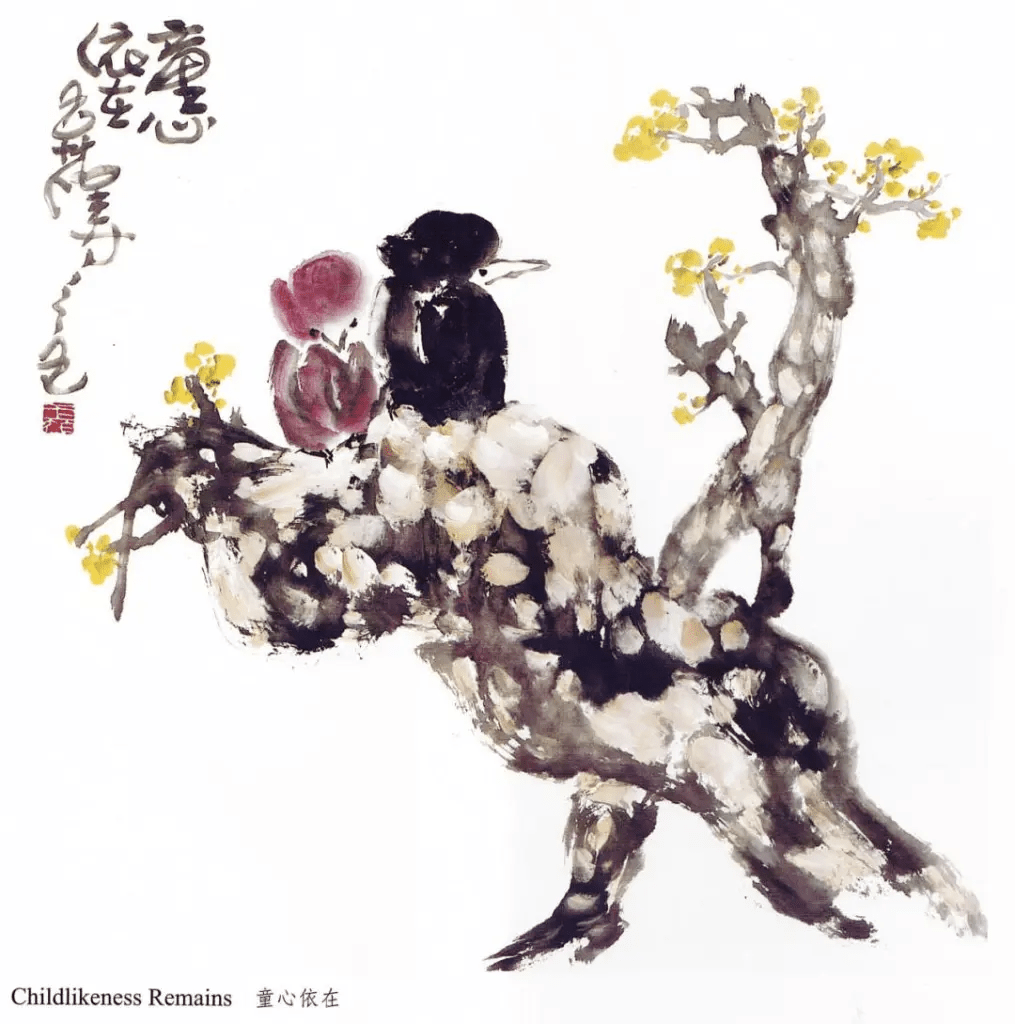
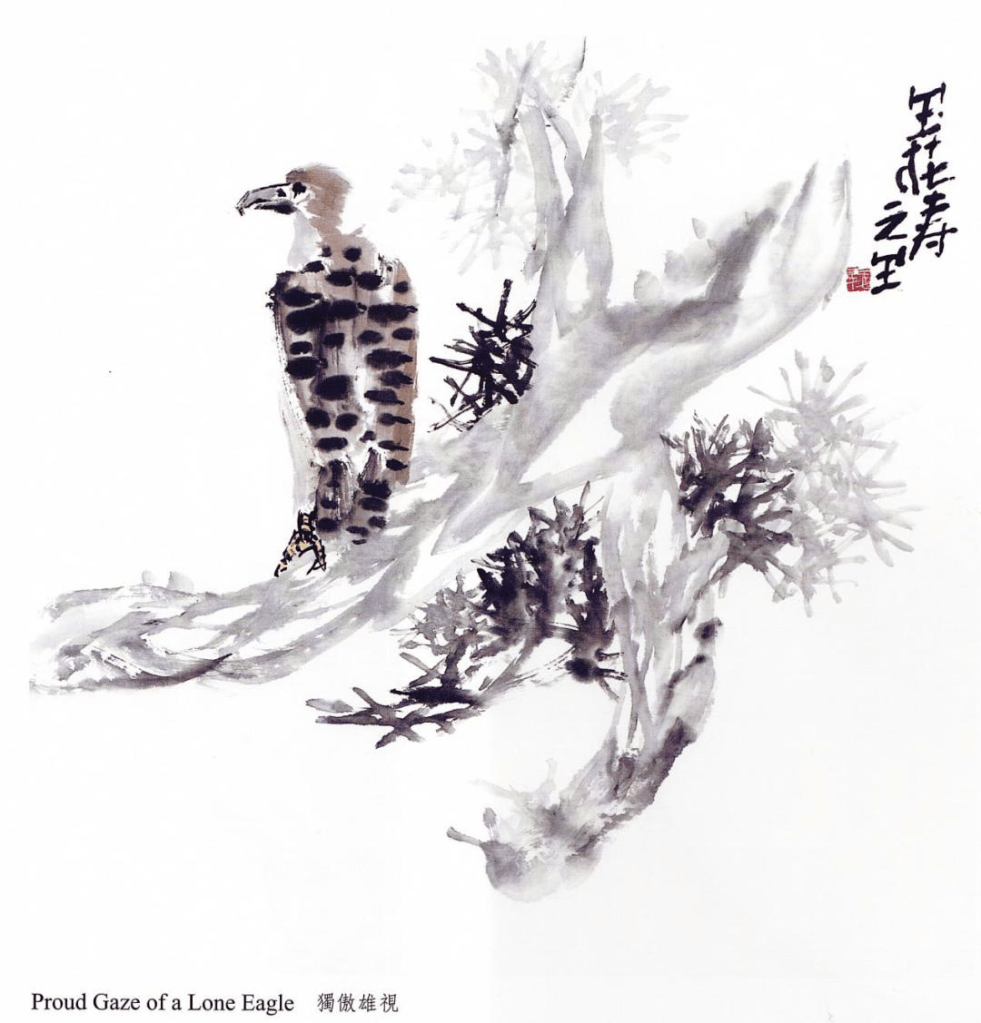
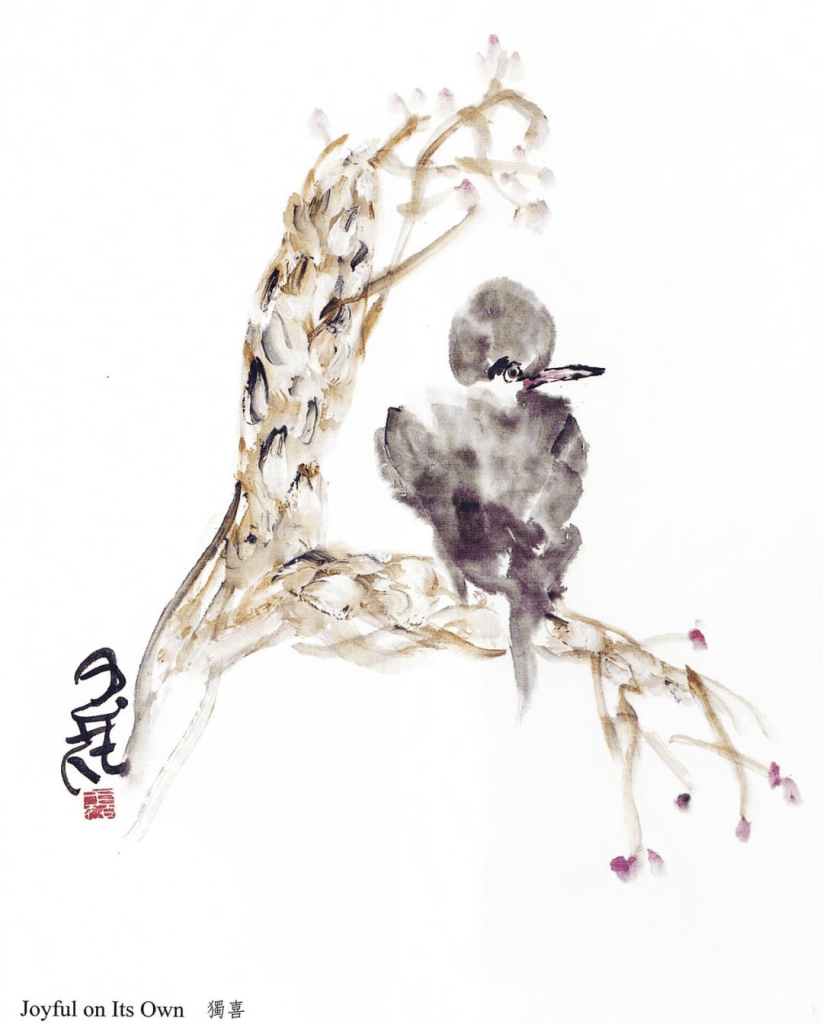
The beauty of art emanates from the soul, while the beauty of the soul reflects one’s internal cultivation. In Professor Yu Hua Shou Zhi Wang’s “Yu Hua Shou Zhi Wang Flower and Bird Painting Album,” we are presented with a delightful sense of freshness and warmth, coupled with a profound and uplifting force. Let’s savor the experience of “Yu Hua Shou Zhi Wang Flower and Bird Painting Album” together and witness the extraordinary talent and profound moral character of the artist!

Professor Yu Hua Shou Zhi Wang’s works are characterized by strong and powerful brushstrokes, showcasing a rich and diverse palette, and exuding a poetic and artistic charm. Each piece is infused with sunlight, radiating sincerity, simplicity, and a delightful sense of innocence and romance. As we immerse ourselves in Professor Yu Hua Shou Zhi Wang’s “Yu Hua Shou Zhi Wang Flower and Bird Painting Album,” we can deeply sense the artist’s love and compassion for animals. Each artwork invites us into a transcendent dialogue with a sage-like presence, revealing the captivating allure of art!

Professor Yu Hua Shou Zhi Wang is brimming with compassion and care for all living beings, be it humans or animals, even including honeybees that can sting. She treats each of them with equal and attentive concern.

A few years ago, bees would frequently visit Professor Yu Hua Shou Zhi Wang’s residence. The first time they built a hive at her home, they even stung someone. Some people suggested removing the beehive to prevent further harm, but Professor Yu Hua Shou Zhi Wang firmly disagreed. She felt deep empathy for the bees, as they had finally found a shelter from wind and rain. She made it clear that if they had to leave, the bees should not be harmed. In fact, she would rather move out herself than cause suffering to the bees. As a result, Professor Yu Hua Shou Zhi Wang and her family decided to move to her art studio to live.

Another incident involving Professor Wang showcases her compassionate nature when she saved a butterfly that had fallen into the water. Concerned about the butterfly’s well-being, she took it home and cared for it for a few days until it was fully recovered, and only then did she release it back into the wild.

The compassionate and kind professor frequently utilizes the money earned from selling her paintings to release captured living beings, such as birds, fish, and more. On numerous occasions, she has purchased large quantities of fish, sometimes weighing several cabins or even tens of tons, to set them free. There have been instances where she bought an entire boat-load of fish from a large fishing vessel, ensuring their liberation and return to their natural habitats.

I couldn’t help but ponder: When two conflicting interests clash, do we prioritize the welfare of others or our own interests first? It’s a challenging question, and not many people in this world can genuinely put the welfare of others before their own. However, Professor Yu Hua Shou Zhi Wang managed to do just that. She consistently places the well-being of all beings ahead of her own interests. Her unwavering compassion and greatness are truly remarkable and serve as an inspiring example for us all.

In daily life, Professor Yu Hua Shou Zhi Wang is very frugal. She is reluctant to waste even the water used for daily living tasks, such as washing rice or clothes. She often collects and saves the used water to water the garden or flush the toilet. Additionally, Professor Yu Hua Shou Zhi Wang frequently donates his own salary to help those in need. When asked by students, “You can earn a lot of money from selling just one of your artworks, so why are you still so frugal?” At moments like these, Professor Yu Hua Shou Zhi Wang advises the students to cherish their blessings and not to waste anything. He encourages them to use the money saved from being frugal to support more people who are facing difficulties.

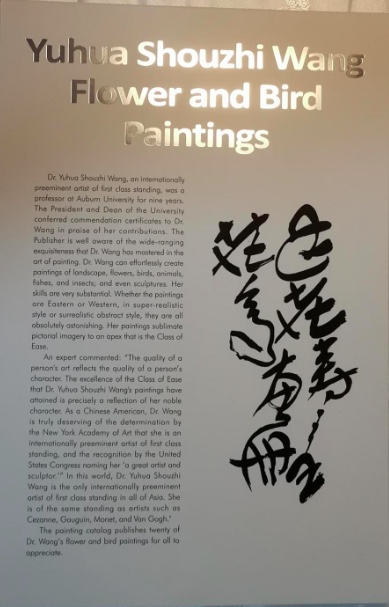
The well-known saying, “Deeply hidden talent not easily revealed” aptly describes Dr. Yuhua Shouzhi Wang’s morality and inner refinement. The characteristics of an artist’s paintings essentially reflect the character of the painter. From the paintings above you can find humility, inner peace, harmony and noble morality of professor Wang.

Dr. Yuhua Shouzhi Wang is the Lifetime Honorary Chairwoman of the International Art Museum of America. The museum has a dedicated gallery exhibiting her artworks. 

Yu Hua Shou Zhi Wang Flower and Bird Painting Album

Link:https://peacelilysite.com/2023/08/04/yu-hua-shou-zhi-wang-flower-and-bird-painting-album/

#ProfessorYuHuaShouZhiWang#Art#Artist#ClassofEase#InternationalArtMuseumofAmerica #ArtistofFirstclassstanding#Inkpaintings#LotusPainters #FlowerBirds