Li Shutong: From Prodigy to Monk – A Journey Beyond Wealth and Artistry

Master Hongyi (弘一大师, October 23, 1880 – October 13, 1942) was originally named Li Shutong (李叔同) and was born into a prosperous family in the bustling northern city of Tianjin on October 23, 1880. The family, originally hailing from Hongdong County, Shanxi, had relocated to Tianjin during the Ming Dynasty.

Li Shutong’s grandfather, a prosperous banker and salt merchant, and his father, Li Shizhen (李世珍), a scholar deeply immersed in Chan Buddhism and the teachings of Ming Neo-Confucian philosopher Wang Yangming (1472-1529), reflected the family’s intellectual and financial standing.

In contrast, Li Shutong’s mother had a modest upbringing as the daughter of a farmer in Pinghu, Zhejiang Province. She became Li Shizhen’s fourth wife in their multi-courtyard household, marrying him at the age of 20 when he was 68.

Tragically, Master Hongyi’s father passed away when he was just four years old. Subsequently, his mother faced challenges in maintaining her position within the complex dynamics of the household while residing under her eldest son’s roof. Fortunately, Li Shutong found support from two of his elder half-brothers during his early years, allowing him to access a quality education and a firm foundation in the Confucian classics.

The young Li Shutong mastered the art of calligraphy and after his ordination as Master Hongyi, he continued to engage in this artistic tradition. This calligraphy, produced during the period of his life when he was known as Master Hongyi, reads from right to left “Zijing Qixin” (自净其意). It means “to cleanse one’s mind” and is an extract from a famous verse

Influenced by his formative experiences, Li Shutong eloquently expressed a profound perspective on life through poetry at the tender age of 15, capturing the fleeting nature of wealth and honor: “Life is truly like the setting sun on the western hills; wealth and nobility are as transient as frost on the grass.” His personal life, marked by an unconventional marriage, served as a poignant reflection of the internal conflict between societal expectations and his genuine affections.

Li Shutong’s participation in the Hundred Days’ Reform and subsequent rumors prompted his relocation to Shanghai, where he thrived in the dynamic literary scene. Becoming a prominent figure in Shanghai’s cosmopolitan lifestyle, he joined the Chengnan Wenshe and co-founded the “Five Friends of Tianya.”

His impact extended beyond literature. Collaborating with the painter Ren Bonian, he established the Shanghai Calligraphy and Painting Association, marking a pivotal moment in Chinese art history. Li Shutong’s engagement in Liyuan activities showcased his versatility as a performer in plays such as “Bai Shuitan” and “Huang Tianba.”

Li Shutong’s literary repertoire included numerous poems and songs, among them the renowned poem “Farewell” (《送别》, Song Bie), which later inspired the widely sung “The Farewell Song” (《送别歌》, Song Bie Ge).

The Farewell Song

Outside the long pavilion, along the ancient route, fragrant green grass joins the sky,
The evening wind caressing willow trees, the sound of the flute piercing the heart, sunset over mountains beyond mountains.

          At the brink of the sky, at the corners of the earth,                 my familiar friends wander in loneliness and far from home,
          One more ladle of wine to conclude the little happiness that remains;      don’t have any sad dreams tonight.

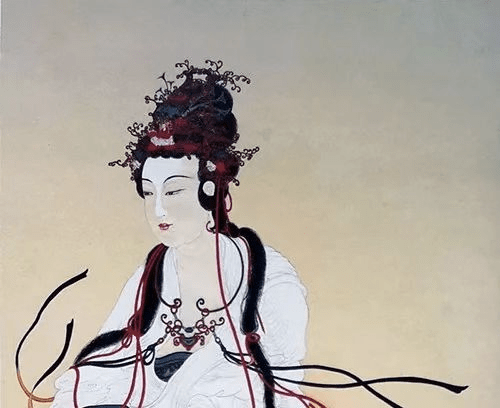
Li Shutong’s charcoal drawing titled ‘Maiden’
“A Half-naked Woman” by Li Shutong, collected by CAFA Art Museum, China

However, Li Shutong’s life underwent a profound transformation. Confronted with personal and financial challenges, he voluntarily entered a self-imposed exile in Japan. The success of the Xinhai Revolution in 1911 further complicated his circumstances, resulting in financial ruin. Undeterred by these setbacks, Li Shutong maintained composure and supported his family by teaching in Tianjin and Shanghai.

His teaching career, notably at Zhejiang First Teachers’ College, left an indelible mark. Li Shutong played a pivotal role in introducing Western painting to China, earning him the title of the forefather of Chinese oil painting. As the first Chinese art educator to incorporate nude models in his painting classes and introduce Western music to China, his influence was far-reaching. Some of his personally groomed students, including contemporary Chinese artist, educator, and musician Feng Zikai (丰子恺), and Singaporean artist Chen Wenxi (陳文希), went on to become accomplished artists in their own right. His impact on students, such as the renowned painters Pan Tianshou and Shen Benqian, underscored his lasting influence.

During this period, Li Shutong delved deeper into Buddhism. In 1916, he embarked on a 21-day fast at a temple in Hangzhou to experience aspects of the spiritual path. This experience prompted his decision to embrace the ordained life, leading to his monastic vows at Hupao Temple. His disciplined lifestyle, which included fasting therapy for deeper insights, marked a significant spiritual transformation.

Li Shutong’s transition from a worldly existence to a monk, detailed in a letter to his second wife, Yu, reflected his detachment from transient fame and wealth. His decision to leave behind a worldly life for monastic vows occurred only a month after joining the Order. He was known by the monastic names Yanyin (演音) and Hongyi (弘一) after undergoing full ordination rites at Lingyinsi, the largest monastery in Hangzhou.

His departure, though painful for those close to him, exemplified Master Hongyi’s profound understanding of Buddhism. In a conversation with his second wife, he elucidated the nature of love, defining it as compassion, aligned with Buddhist teachings that emphasize letting go of attachment and cultivating compassion.

Master Hongyi’s transformation from the proud and arrogant Li Shutong to a humble and receptive teacher was evident in his approach to teaching Dharma. Contrary to expectations of flawless mastery, Master Hongyi sought feedback from student monks and welcomed constructive criticism without defending himself.

By early 1942, the toll of austerities and fasts began affecting Master Hongyi’s health, and by mid-May, his condition deteriorated rapidly.

The paranirvana of Master Hongyi

Three days before his passing at Busi Temple in Quanzhou, Fujian Province, on October 13, 1942, Master Hongyi inscribed his final calligraphic strokes, creating the work known as “Sorrow and Joy Comingle,” “Worldly Sorrows and Joy Are Intertwined,” or “Sorrow or Joy Are Inextricably Bound to Each Other” (《悲欣交集》, Beixin jiaoji).

Master Hongyi’s philosophical framework posited three distinct stages in human life: material, intellectual, and spiritual. The material phase pertains to mundane existence, the intellectual phase characterizes the life of ordinary intellectuals, while the spiritual phase encompasses the religious realm.

Material, intellectual, spiritual; beauty, profundity, deity. These concepts are intricately tied to the principles of abstinence, composure, and wisdom in Buddhism.

Abstinence, in this context, denotes the renunciation of materialistic pursuits. Composure signifies the practice of deep meditation—tranquil and remote—a path that ultimately leads to the attainment of wisdom. The imagery of Venerable Hongyi experiencing both sorrow and joy (欣) symbolizes the dynamic interplay between these various dimensions of life.

Li Shutong: From Prodigy to Monk – A Journey Beyond Wealth and Artistry

Link:Li Shutong: From Prodigy to Monk – A Journey Beyond Wealth and Artistry

Source: https://www.tsemrinpoche.com/tsem-tulku-rinpoche/great-lamas-masters/master-hongyi-the-maverick-patriarch-of-the-chinese-buddhism.html

Harmony in Brushstrokes: Exploring the Subtleties of H.H. Dorje Chang Buddha III’s ‘Old Tree’

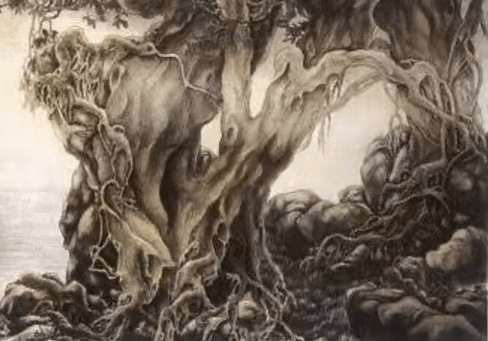
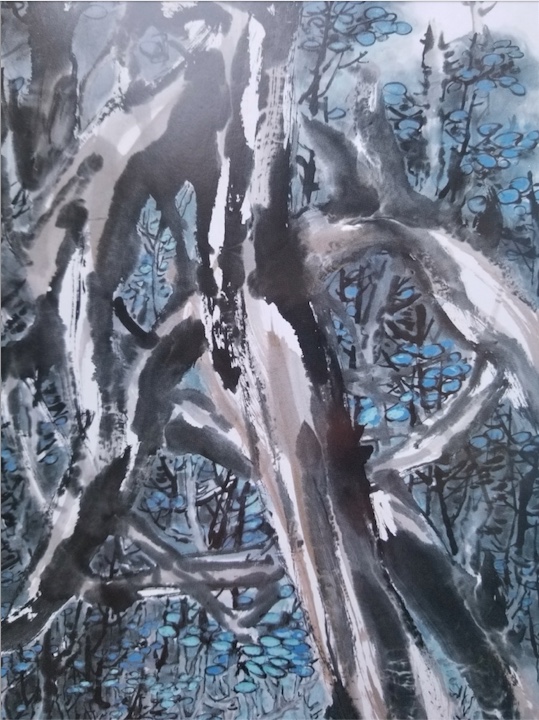
H.H.  Dorje Chang Buddha III ‘s traditional Chinese painting, “Old Tree,” stands as a masterpiece adorned with vibrant red plum blossoms. The depiction of a weathered old plum tree in a sea of ink unfolds a narrative of transformations—dense, light, dry, wet—unveiling the radiant beauty of its once youthful charm. The myriad red plum blossoms, seemingly engaged in a dance, cluster and clamor upon the branches, invoking an immediate sense of lively springtime. This painting is a testament to the profound artistic prowess encapsulated in H.H.  Dorje Chang Buddha III ‘s work.

Embedded within the Chinese cultural tradition is the notion of the common origin of calligraphy and painting. H.H.  Dorje Chang Buddha III  seamlessly incorporates calligraphic brushstrokes into painting, preserving the interconnected signs of brush and ink on the canvas. This approach transforms the expressive painting into a visual symphony, akin to calligraphy music. The technique of “flying white” in calligraphy, where white spaces delicately appear amidst smooth brushstrokes, takes on a purposeful role in painting. Originating as an imprint left by the speed of the brush, “flying white” becomes a unique brush and ink technique through profound aesthetic reflections.

“Flying white” becomes a vivid recorder of authentic emotions during the writing process. The brush swiftly glides over the paper, conveying passion and resonating with the engraving sensation found in seal carving. The depiction of the main trunk of the old plum tree in “Old Tree” superbly utilizes this technique. The contrast between subdued flying white and rich ink creates a musical and vivid rhythm of black, white, and gray within the composition.

The essence of a good painting lies in its “subtlety,” an intricate quality that goes beyond precision or meticulousness. For H.H.  Dorje Chang Buddha III , the process of painting is akin to flowing clouds and water—an expression of natural improvisation and delicate arrangement. As the ancients wisely said, “Add a little to Pan An’s beauty, and it becomes more; subtract a little, and it becomes less.” The subtle artistry in “Old Tree” showcases the artist’s profound insight into the delicate nuances of expression.
The quality of a work is deeply intertwined with the artist’s inherent cultivation, reaching a high realm based on the principle of “selflessness.” This term, often misunderstood, refers to losing oneself entirely in the painting process—where both mind and hand are forgotten. Artworks created in this state possess a power that transcends philosophical texts, offering a simple and clear depiction of inherent reality.

In real life, each person has unique perceptions and emotions, yet lacking rationality makes it challenging to transform these into creativity. True masters of art, exemplified by H.H.  Dorje Chang Buddha III , possess not only a sublime inner world and rationality but also the ability to keenly grasp fleeting sensations and transform them into robust vitality. Their ability to endure solitude, maintain genuine nobility, and leave traces of distinctive qualities results in the creation of genuinely original works of art. The great art masters, with a spiritual realm surpassing ordinary individuals, exhibit an otherworldly and extraordinary noble quality that defines their artistic genius. In “Old Tree,” we witness not just a painting but a symphony of artistry, capturing the essence of H.H.  Dorje Chang Buddha III ‘s profound mastery.

Harmony in Brushstrokes: Exploring the Subtleties of H.H. Dorje Chang Buddha III’s ‘Old Tree’

Link:https://peacelilysite.com/2023/12/29/harmony-in-brushstrokes-exploring-the-subtleties-of-h-h-dorje-chang-buddha-iiis-old-tree/

#DorjeChangBuddhaIII #HHDorjeChangBuddhaIII#DorjeChangBuddha#Art #ChinesePainting #InkPainting

Maijishan Grottoes – Buddhist Treasure Well-preserved on Maiji Mountain Cliff

Maijishan Grottoes, also known as Maiji Mountain Grottoes or Maijishan Caves, is situated in Maiji District, Tianshui City, Gansu Province, in northwest China. Alongside the Longmen Grottoes, Yungang Grottoes, and Dunhuang Grottoes, it holds the esteemed title of being one of the “Four Greatest Grottoes in China.”

If the Mogao Caves are likened to a vast mural museum, the Maijishan Caves undoubtedly resemble an expansive sculpture museum. Boasting 10,632 clay sculptures, Maijishan is hailed as “the Oriental Sculpture Art Exhibition Hall.”

Much like the Parthenon temple in ancient Greece, the stone and clay carvings at Maijishan have been remarkably preserved since ancient times, earning it the moniker of “China’s Parthenon Temple.”

In contrast to the exotic sculptures found in the Mogao Caves, the sculptures in Maijishan are characterized by a more secular, human, and distinctly Chinese quality.

Unlike the exotic sculptures in Mogao Caves, the sculptures in Maijishan Caves are more secularized, human, and more Chinese

The name Maiji in Chinese translates to “piled sheaves of wheat,” reflecting the mountain’s appearance and the origin of its name. The Maijishan Grottoes were initially constructed in A.D. 384-417 and underwent subsequent expansions in dynasties such as Northern Zhou (A.D. 557-581) and Tang (A.D. 618-907). The site currently comprises 221 caves, 10,632 clay sculptures, and over 1300 square meters of murals, earning global acclaim for its exquisite clay sculpture art and recognition as the “Oriental Sculpture Art Exhibition Hall.”

While Maijishan Grottoes may not be as renowned as the other three great grottoes, it stands out as the best-preserved among them. Carved into the steep cliff of the mountain, the caves were not easily accessible, thus escaping much of the destruction that plagued other sites throughout tumultuous periods in history. Today, visitors can marvel at Buddha sculptures and murals along a narrow path clinging to the cliff’s edge.

Marsman Rom, Wikimediia Commons

Shizao, Wikimedia Commons

Maijishan in a sea of fog. ©Maijishan Grotto Art Institute and Global Heritage Fund

Located just a few miles south of the main road connecting China and Central Asia, Maijishan emerged as a hub of cross-cultural exchange, drawing hundreds of thousands of itinerants and serving as a historical canvas reflecting the art of 12 distinct dynasties. Indians, Mongols, Huns, Sogdians, Tibetans, Chinese, and others traversed its halls, leaving enduring imprints of their cultures in the form of art.

The mountain’s 194 grottoes stand as tangible evidence of this diverse influence, showcasing seven architectural variations, housing over 7,000 statues, and adorned with more than 100 square meters of murals. Everything within reflects a dedication to Buddhism, from depictions of Siddhartha’s birth to bodhisattvas engaged in meditation and scenes of new devotees arriving. While Maijishan’s physical features initially garnered attention, it is the heritage inscribed, painted, and sculpted onto the soft golden stone that solidified its place in the globalized consciousness of Buddhism, akin to Mount Sumeru, the sacred Buddhist mountain often considered the “mythical axis of the universe.”

The history of Maijishan, like the tales along ancient trade routes, commences with a journey. One account tells of the priest Hsüan-kao meditating at Maijishan, later joined by the shaman T’an-Hung. Together, they founded the mountain’s first monastic community, growing to nearly 300 people before their departure, marking a departure filled with religious fervor, and in T’an-Hung’s case, a morbidly poetic self-immolation in Cochin.

This semi-mythical origin, whether entirely factual or not, undeniably solidified Maijishan as a significant religious site for Chinese rulers. In the Fang-yü sheng-lan, a Sung Dynasty-era book, it is noted that Yao Hsing transformed the mountains, carving 1,000 cliffs and 10,000 images, transforming the cliffs into halls. A stele from 1222 attests to the site’s prominence, with 10,000 people praying there, empires granting land for farming, and seven kingdoms continuously contributing to its maintenance. Subsequent imperial decrees bestowed various names, including “Ching-nien ssu,” “Ying-chien kan ssu,” and “Jui-ying ssu,” before settling on the name Maijishan.

Examples of how brilliantly these works of art were once colored. Shizao, Wikimedia Commons

Differences between Maijishan’s Grottoes and Mogao’s

The Maijishan Grottoes and the Mogao Grottoes, both situated in Gansu Province along the Silk Road, offer distinct experiences, prompting consideration for visitors on a Silk Road journey. Despite being grottoes, they differ significantly, making a visit to both a worthwhile endeavor.

  1. The Maijishan Grottoes are renowned for their clay sculptures, whereas the Mogao Grottoes impress with expansive and beautiful murals. The arid climate in Dunhuang aids mural preservation, while the Maiji Mountain area, with more rainfall and looser mountain rock (clay), is conducive to sculpture carving.
  2. Sculptures in the Maijishan Caves are primarily plain clay pieces, while in the Mogao Caves, they are predominantly painted sculptures integrated with murals. Buddha statues in Maijishan exhibit a more secularized and daily-life-oriented character.
  3. The surrounding natural landscapes vary. Maijishan Caves, located in the Maiji Mountain Reserve area, offer a summer retreat with lush trees and springs, providing opportunities to explore diverse wildlife. In contrast, the Mogao Grottoes are situated in the Gobi Desert, surrounded by wild desert scenery.
  4. The Maiji Grottoes were carved into a steep 100-meter-high cliff face, requiring travelers to ascend the “floating plank road” for a more adventurous experience. In comparison, the Mogao Grottoes were carved into a 30-meter-high sandstone outcrop distributed over four floors.

The breathtaking Maiji Caves, carved into the steep cliffs of Maiji Mountain, stand about 100 meters (330 feet) above the ground, divided into East and West Cliffs. These caves, resembling honeycombs in hives, are interconnected by plank walkways suspended in the air from the cliff face.

Have you ever pondered how this feat was accomplished over a thousand years ago without modern machinery?

Legend has it that the Maijishan Grottoes were excavated at the expense of clearing all the woods near Maiji Mountain. Ancient people built wooden scaffolds from the mountain’s foot to the top, serving as precursors to the later generations’ “plank roads.”

During the Tang Dynasty (618–907), an earthquake divided Maiji Mountain into two cliffs, east and west. Over subsequent dynasties — Song, Yuan, Ming, and Qing — the Maijishan Grottoes underwent development, evolving into the cohesive complex seen today.

The Maijishan Caves stand as a testament to human wisdom and art along the Silk Road, embodying profound respect for Buddhism and an unending yearning for a better life.

Part of the Maiji Mountain Scenic Reserve area (including Xianren (‘Fairy’) Cliff, Shimen, Quxi, and Jieting Hot Spring), the Maijishan Grottoes boast diverse forests and a rich array of plants and animals.

While the Maijishan Grottoes can be visited year-round, the best time to explore the Maiji Mountain Scenic Reserve area is from July to October when the mountain, adorned with dense foliage, provides an ideal summer getaway.

Maijishan Grottoes – Buddhist Treasure Well-preserved on Maiji Mountain Cliff

Link:https://peacelilysite.com/2023/12/15/maijishan-grottoes-buddhist-treasure-well-preserved-on-maiji-mountain-cliff/

#MaijishanGrottoes #BuddhistTreasure #MaijiMountainCliff #Travel #China#Art#TravelChina

Source: https://globalheritagefund.org/2018/02/13/inside-the-lost-grottoes-of-maijishan/, https://www.chinadiscovery.com/gansu/maijishan-grottoes.html, https://www.chinahighlights.com/tianshui/attraction/mount-maiji-grottoes.htm

Yun Sculpture: Unparalleled Craftsmanship in Human History

Yun Sculpture, a groundbreaking form of art devised by H.H. Dorje Chang Buddha III for the global audience, stands unmatched in the annals of history. Since its inception, the world has borne witness to an artistic phenomenon that defies replication. Observers, captivated by the works of H.H. Dorje Chang Buddha III, often find themselves in awe, expressing sentiments from the depths of their hearts: “This is a treasure bestowed upon the world by a divine force,” “Sacred artifacts from the Buddha’s Pure Land,” “Captivating the soul with its unparalleled beauty,” and “Since the advent of Yun Sculpture, humanity’s jewelry pales in comparison, like stars around the bright moon—dim and lackluster.” Indeed, when contrasted with the most finely carved jade and opulent stone sculptures, the latter suddenly lose their luster and grandeur, revealing an insurmountable gap.

Yun Sculpture boasts several distinctive characteristics:

Firstly, these sculptures exude a multidimensional sense of space, intricately crafted with unparalleled complexity, displaying endless variations.

Secondly, Yun Sculptures burst forth in rich and vibrant colors, presenting scenes so dreamlike and fantastical that they remain unseen in this world.

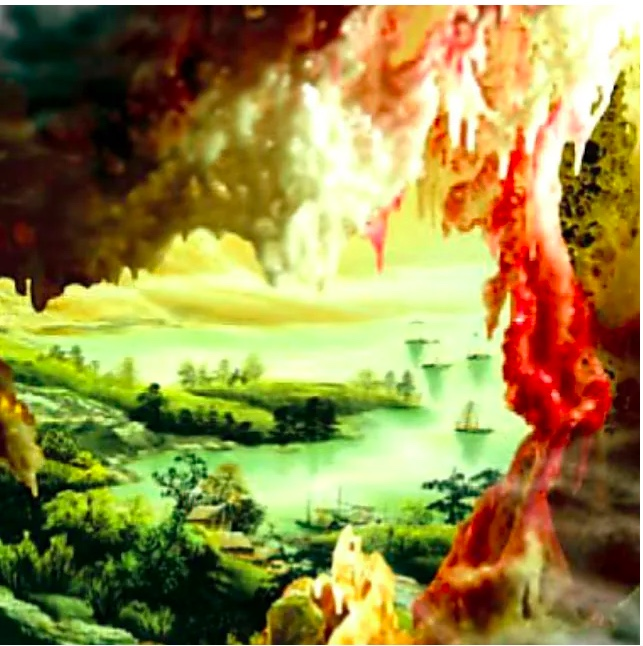
Thirdly, many Yun Sculptures possess a sacred and mysterious quality that transcends ordinary comprehension, exemplified by pieces such as “Mysterious Boulder with Mist.” In these sculptures, a mysterious mist gracefully floats among intricately carved, seemingly shifting, and intriguingly interconnected hanging rock formations. Why are such pieces referred to as sculptures containing mysterious mist? The answer lies in the enigmatic and beautiful scenes depicted within these sculptures—a dance of auspicious mist swirling amid hanging rock formations, creating an ethereal ambiance.

Mysterious Boulder with Mist

These miraculous works can be seen and touched. However, they cannot be created by anyone who is not a being of the highest holiness.

Precious Place

Stepping into this precious place, Surveying the treasures hanging on all four walls, Pure white, inky green, brownish-yellow… A multitude of vibrant colors. Is this the magic of nature? No, it’s the crystallization of wisdom!

The Grand Entrance of Elegance

The grand entrance, adorned with intricate golden lace, Built upon a foundation of gemstones, Various wonders on display, Gleaming with dazzling radiance. The densely woven textures and folds, Alive with vivid details, Eagerly beckon one to step inside, And behold the magical scenes within the hall.

Dawn

This Yun Sculpture masterpiece interprets the natural landscape of dawn with a strong sense of color contrast and intricate contours. The magic of this artwork lies in the seamless transition between night and day, appearing remarkably natural without any artificiality. It is not just a unique Yun Sculpture piece but also a transmission of positive energy.

The shift from darkness to light is not merely a natural phenomenon but also signifies the awakening and transformation of human thought and consciousness. By sincerely experiencing this Yun Sculpture piece inspired by the dawn, you will feel the powerful energy embedded within.

This Yun Sculpture piece resembles an ancient tree hollow, exuding a sense of mystery. Looking into the cave from its entrance, it appears bottomless, much like the human heart—profound and unfathomable.

Therefore, the term “tree hollow” now symbolizes the secrets hidden deep within. Psychologists propose that people need to learn to confide, to release their emotions. This artwork provides us with a window to express the unspeakable depths of our hearts, offering a means to alleviate stress through sharing.

A Rock of Horizontal Charm

Endless changes of spirit and feelings unfold
Mysterious motions envelop wonders untold
Only in heaven is such a presence found
No handiwork of artisan earthly bound

The sculpture A Rock of Horizontal Charm is a masterpiece of Yun Sculpture, embodying the spirit of an art surpassing the beauty of nature, created by H.H. Dorje Chang Buddha III for humankind. Derived from an art form created by H.H. Dorje Chang Buddha III that possesses beauty beyond nature’s, it has attained a realm –never before seen in human history – of artistry transcending nature, originating an art form in this world that is irreplicable by any craftsman or high technology. This amazing beautiful sculpture is currently displayed in H.H. Dorje Chang Buddha III Cultural And Art Museum.

Coral from Heaven

This Yun Sculpture piece exudes a mysterious yet astonishing feeling. The meticulous handling of the subtle details precisely embodies the essence of this artwork. Dubbing it “Coral Descending from Heaven” aptly confirms its precious and distinctive qualities. It’s challenging to fathom how the artist applied colors, especially in certain tiny areas where ordinary individuals would be unable to do so. It is precisely because of such a mysterious, astonishing, and unique piece that it deserves this name.

Unusual Music from Beyond Heaven

Art of the Little Autumn
Hanging Withered Vines Embrace Ancient Stones
Loveliness
Deep Feeling: Vistas Beyond the Tranquil Valley

Discover a captivating array of Yun Sculptures at the permanent exhibition housed at The International Art Museum of America, located in downtown San Francisco. Additionally, immerse yourself in the extraordinary collection at the H.H. Dorje Chang Buddha III Cultural And Art Museum in West Covina, a treasure nestled in the vibrant cultural landscape of the greater Los Angeles area.

Link: https://peacelilysite.com/2023/12/15/yun-sculpture-unparalleled-craftsmanship-in-human-history/

#DorjeChangBuddhaIII #HHDorjeChangBuddhaIII#DorjeChangBuddha#IAMA#InternationalArtMuseumofAmerica#H.H.DorjeChangBuddhaIIICulturalAndArtMuseum#YunSculpture #Craftsmanship

Intoxicatingly Beautiful Abstract Color Paintings

Flying Toward a Buddha Paradise
Artist: H.H. Dorje Chang Buddha III

Art Works are Fused with the Essence of the Universe, Nature, and the Earth

When you first set your eyes upon these supernatural abstract color paintings, the vibrant and radiant hues of red, yellow, blue, white, and black burst forth, dancing like the tumultuous waves of a river stretching for thousands of miles. Captured in the delicate tips of the brush, their brilliance transcends the ordinary, possessing a gentleness yet resolute quality. The diverse and exquisite colors mutually nourish and elevate each other, creating a masterpiece that can only be described as ingenious, reaching a realm where colors take on an ethereal quality. The experience is beyond description—elegant and comforting.

These impressionist paintings have attained a level of mastery where even a small fragment isolated from the complete artwork stands as an exquisite impressionist painting on its own. They convey a dreamy, illusory state, and each tiny section has the potential to be enlarged, creating a distinct and aesthetically pleasing painting.

Gazing Upon a World Beyond the Stars

This piece has a sci-fi movie special effects vibe, it doesn’t look like a scene that exists on Earth; rather, it resembles the appearance of an extraterrestrial planet observed through high-tech instruments. The entire artwork is filled with a mysterious atmosphere, offering limitless imagination and excitement.

Marvelous Spectacle of a Mystical and Illusory Island

This artwork is vibrant and three-dimensional. When appreciated from a diagonal perspective, the pattern in the upper right corner resembles a series of color-changing snakes, coiling in the air, creating a dazzling and visually delightful experience. The pattern in the lower left corner appears like slowly flowing mud, transparent and sparkling under the sunlight. The dividing line in the middle adds a fantastical element, resembling a peculiar light that seems as though it could disappear in the next second, defying verbal description.

The fantastical imagery of this artwork brings a sense of joy and, simultaneously, fills one with fantasies and aspirations for the future. It is a lively and dynamic masterpiece that exudes a peculiar power.

Long Green Wall

Magnificent and grand, that was my first impression upon seeing this artwork. Despite its modest size, this piece is brimming with the profound culture and history of China’s five thousand years. Resembling the Great Wall, this artwork is a marvel, showcasing the artistry and craftsmanship of the H.H. Dorje Chang Buddha III from an artistic perspective.

Elegant Purity of Beautiful Stone

The highlight of this artwork lies in H.H. Dorje Chang Buddha III‘s skillful combination of intricate colors, avoiding any hint of vulgarity and instead exuding a sense of pure elegance and nobility. The arrangement of patterns and textures in the artwork, seemingly casual brushstrokes, actually reflects H.H. Dorje Chang Buddha III‘s ingenious conceptualization and profound artistic foundation, presenting a harmonious order within apparent chaos.

The Nobility of Petrified Red Trees

At first glance, this artwork appears to be an oil painting. Upon closer observation, it evokes astonishment. It is not merely a flat painting but more akin to a lifelike redwood fossil.

Every texture is distinctly visible, and every detail is vividly realistic. H.H. Dorje Chang Buddha III, with the stroke of a brush, captures the original form of the redwood in the guise of a fossil, rendering this piece of art even more mysterious and noble.

This artwork employs strong color contrasts, making bright colors even more vibrant and dark colors even deeper. The enchanting purple patterns, at times intensified and at times subdued, infuse the composition with a sense of magic. It is as if a colossal dragon is about to break free from the shackles of darkness, re-emerging into a brilliant radiance.

Splash-Color Embroidery of Moutains and Rivers

This is a splash-ink painting that combines elements of oil painting style. The innovative approach and exquisite brushwork truly captivate the viewer. Looking at this piece, one can almost hear the echoes in the mountains, see the surging river waves, smell the freshness of nature, taste the sweetness of mountain springs, and feel the harmony between humans and nature.

Boundless Land as Beautiful as Colorful Embroidery

The artwork, dominated by blue tones, incorporates elements of Western and abstract painting. At first glance, it resembles a vast ocean spanning the globe. It delivers a visual impact and a spiritual resonance. Take a moment to immerse yourself in this majestic and awe-inspiring scenery.

These intoxicatingly beautiful Supernatural Abstract Color Paintings form a perfect world constructed by colors. Devoid of concrete worldly forms, it is a realm purely defined by color—shaping, expressing, and embodying itself through hues. Color is both its form and its essence, permeating with a captivating aura. These colors, guided by the hand of the H.H. Dorje Chang Buddha III, seamlessly converge into a marvelously enchanting spectrum. The atmosphere is lively, the scenes blossom like flowers, bold and fierce as the roaring sea, yet upon closer inspection, they reveal nuanced expressions, refined in the minute details. In discussing the extraordinary skill of the H.H. Dorje Chang Buddha III in Western painting, it’s almost an understatement to compare it to the Buddha.

You can discover a selection of the exceptionally charming paintings in the permanent exhibition at The International Art Museum of America, situated in downtown San Francisco.

Intoxicatingly Beautiful Abstract Color Paintings

Link:https://peacelilysite.com/2023/11/16/intoxicatingly-beautiful-abstract-color-paintings/

 #DorjeChangBuddhaIII #HHDorjeChangBuddhaIII#DorjeChangBuddha#IAMA#InternationalArtMuseumofAmerica#Supernaturalabstractcolor#OilandAcrylicPaintings

Simplicity, Innocent Charm, and Natural Appearance

Minimal Brush Strokes Create Charming Paintings

It is often said that the essence of a high-quality painting lies in its incorporation of the calligraphic brushstrokes, the commanding presence reminiscent of engraved stone seals, a tonal quality derived from the artist’s mastery of literature, a stylistic expression emanating from the artist’s virtue, and a captivating allure that springs from the artist’s state of realization—this, indeed, is the true spirit of the painting.

In the International Art Museum of America, several paintings, executed with only a minimal number of strokes, possess the robust appeal akin to stone seal engravings. These artworks convey the artistic conception of returning to original purity and simplicity. With a liberated hand and mind, the artist applies their most refined skills, devoid of any lingering attachments, creating with minimal yet natural brushstrokes.

Za Chai Shi Gu (Brushwork Resembling Smashed Jade)

There is a phrase used in commenting upon Chinese paintings and calligraphy that related to smashed jade. This painting exemplifies that charming style of smashed jade.

The pine tree, rendered with just a few simple strokes, emanates a pervasive sense of strength across the entire painting. The exquisite and lively portrayal of the little squirrel employs a truly remarkable and mysterious technique, combining simplicity, innocent charm, a natural appearance, and authenticity into a harmonious whole.

Loquat

H.H. Dorje Chang Buddha III painted ‘Loquat’ in 2013. This painting achieves the skill of cherishing ink like gold in its conception, with no wasted or faulty strokes. With just a few strokes, it is high and lofty, vibrant and lively, containing an elegant and comforting sense of ease, as if the brush strokes were divinely inspired.

At the autumn auction of the New York Zhenguan International Auction Company on September 12, 2015, this painting ‘Loquat’ was auctioned for a staggering 10.2 million U.S. dollars.

Yi Chen Bu Ran (Immaculate)

With only a small number of strokes, a comforting and natural appeal appears vividly on paper. The style is neither overly cautious nor affected. A scholarly tone and an air of stone seals are revealed in the brushwork. This is a work of art with an attractiveness that stems from mature skills. The title “Immaculate” means that this painting is free of any trace of the mundane.

Cat of Unique Charm

In this painting, the cat is portrayed with a vibrant yet natural presence, achieved through the dynamic and captivating use of scattered ink. The entire artwork, painted with only a few brushstrokes, exudes the style of stone seals and an air of scholarly refinement. Both the form and spirit of the scene are skillfully captured. This work truly exemplifies masterful ink usage in a restrained manner.

One of the one hundred limited release copies of this small-scale, painting “Cat of Unique Charm” sold at auction for US$253,000, which is the highest per square foot selling price of any duplicate painting in the world. The prices of sold duplicate paintings by the most famous first-rate masters of art in the world cannot match the prices of sold duplicate paintings by H.H. Dorje Chang Buddha III.

Si Yu Sheng Hui (Resplendent Like Jade)

With just a few simple strokes, the entire painting is remarkably infused with a robust jade-like charm and an auspicious aura. Both the plantain tree and fruits exhibit a lack of mediocrity and were painted without the slightest mental attachment in the artist’s mind. They appear natural, elegant, and enchanting. This sentiment is succinctly captured in the accompanying short poem: “Unfurl the painting scroll, and the particularly fragrant scent of ink is released, permeating the viewer’s mind and intoxicating them to the core. Only a minimal number of strokes were applied. This exemplifies the regal art of using ink as sparingly as gold.”

H.H. Dorje Chang Buddha III, the artist behind these magnificent paintings, has crafted a pure and enchanting spiritual realm with his incredibly succinct brush and ink technique. Upon viewing, it evokes a sense of ethereality, akin to the moon reflected in water, and a freshness that pierces the heart, reminiscent of the sound produced when a piano key is pressed. This unique artistic essence, bridging the real and the virtual, transcends the ordinary, providing a natural and enlightening experience that often transports individuals into a realm of wonder.

Simplicity, Innocent Charm, and Natural Appearance

Link: https://peacelilysite.com/2023/11/10/simplicity-innocent-charm-and-natural-appearance/

#DorjeChangBuddhaIII #HHDorjeChangBuddhaIII##IAMA#InternationalArtMuseumofAmerica #Simplicity #InnocentCharm #Natural Appearance #StoneSeal

Bi Shang Zhi Gong – Skillful Brushwork

After learning about Eastern painting, American painter Graves said: “I realized that art and nature are landscapes of the soul, from which we can perceive the essence of human existence.” When you are fortunate enough to encounter these masterpieces, you will gain insight into the essence of Eastern art.

“Bi Shang Zhi Gong (Skillful Brushwork)” is a masterpiece of Chinese flower and bird painting that appears fresh and clear at first glance, profound in meaning after viewing, and unforgettable after further contemplation. The composition is extremely simple: in the center of the painting is a uniquely shaped bird with a flat, long beak and a spotlessly white belly. It sits comfortably and alone on the curved, thick trunk. Its eyes are ethereal and deep, as if completely focused; its posture demonstrates that wherever it is, is the focal point.

Upon careful observation, you will find that everything in the painting is in a state of colorful transformation. The bird’s head and back are painted with two blocks of ink that are close in shade, creating a melting effect, with the ink color seemingly still wet and spreading around.

The trunk’s ink lines are clear and distinct, resembling a tree yet not quite a tree, as if constantly changing in the impermanence. At the bottom left of the tree, a branch twists and turns out, creating an S-shaped composition in the painting that is still in motion. The painting also uses color sparingly, with only a warm and friendly purple-brown color applied to the bird’s beak and the trunk.

This painting has a fascinating story behind it. It was created in 1982 during the filming of a movie in Sanhe, Sichuan. The painting captures an on-the-spot portrayal of a real-life scene. The artist used ink sparingly, treating it as if it were as precious as gold, while still showcasing his exceptional skills. At the time, the News Film Studio of China was producing a documentary exclusively about the artist, Master Yi Yungao (H.H. Dorje Chang Buddha III).

The cameramen and other observers witnessed a wild duck landing on a withered tree trunk. Master Yi Yungao quickly picked up his brush and swiftly completed the entire painting. By the time the wild duck took flight again, the painting had already been finished. Furthermore, the artistic mastery embodied in this artwork is extraordinary. It not only preserves the elegance, purity, and high-quality of traditional paintings but also introduces a new style—expressing the artistic conception of returning to original purity and simplicity. The artist, with an unfettered hand and mind, applies his most mature skills without the slightest attachment and with minimal, natural brushstrokes.

This masterpiece Chinese painting by H.H. Dorje Chang Buddha III is rich in literary atmosphere and varied in layers. It does not merely depict the external world, but rather it serves as a true manifestation of the inner spirit, transcending the natural material form to open up the world through the illumination of life’s spiritual light, reflecting the spiritual world. Appreciating the painting can reveal the pure world behind it, where everything, including the self, is forgotten, remaining untainted.

This painting is part of the permanent exhibition at The International Art Museum of America, located in the heart of San Francisco.

Bi Shang Zhi Gong – Skillful Brushwork

Link:https://peacelilysite.com/2023/10/26/bi-shang-zhi-gong-skillful-brushwork/

#DorjeChangBuddhaIII #HHDorjeChangBuddhaIII#DorjeChangBuddha#IAMA#InternationalArtMuseumofAmerica #ChinesePainting #MasterYiYunGao

Ms. Han Suyin held the Young painter in the Highest Esteem, and His Artworks Reached Record-breaking Prices at Auctions

Han Suyin was born in Xinyang, Henan Province, China, on September 12, 1916, to a Chinese father and a Belgian mother. She was raised in a multicultural and multilingual environment, which greatly influenced her future writings and perspectives.

Ms. Han Suyin gained international recognition as a prolific writer, primarily known for her semi-autobiographical novels. Her most famous work, “A Many-Splendored Thing,” published in 1952, became a bestseller and was adapted into a successful Hollywood film titled “Love Is a Many-Splendored Thing” in 1955. She authored numerous novels, essays, and articles that delved into themes of love, cultural identity, and East-West relations.

Ms. Han Suyin, an extraordinary figure in her own right, shared a remarkable connection with world leaders and spiritual luminaries from across the globe. Her life was intertwined with a little-known story of profound affinity with a great sage.

In February 1982, Ms. Han Suyin and her husband, Mr. Lu Wenxing, made a long-awaited journey to Sichuan, their ancestral homeland, to celebrate the Chinese New Year with their family. This marked her first return to Sichuan for the New Year since the establishment of the People’s Republic of China. As a professional writer, she was an unwavering observer of the human and cultural aspects of her homeland. She once articulated, “My life will forever traverse two opposing directions, leaving love to embrace love; leaving China to return to China.” This succinctly summarized her life’s journey. Her deep love for this ancient land fueled an unceasing quest for individuals with profound philosophical ideals, firmly convinced that within the mystical realm of China’s ancient civilization, cultural giants awaited discovery to awe the Western world.

Fate and reason have their own ways. Soon, Ms. Han Suyin discerned her calling with remarkable acumen. While visiting an exhibition of Chinese paintings at Sichuan’s Wenshu Monastery, she was captivated by a yet-to-be-displayed masterpiece of a soaring eagle. The painting exuded vastness, antiquity, ethereality, and enduring profundity. Having toured renowned art museums worldwide and seen countless world-famous paintings, she found herself profoundly moved by this artwork, eagerly wishing to acquire it as a lifelong treasure. Regrettably, the exhibition had not yet officially opened, dashing her immediate hopes.

With the assistance of the local cultural department, Ms. Han Suyin eventually tracked down the artist behind the masterpiece. To her astonishment, the creator was an elegant young man, and an instant kinship developed between Ms. Han and this young prodigy. Their conversations touched upon a spectrum of subjects, from various styles within the Chinese art scene to global artistic movements and the evolution of humanistic ideals.

Upon parting ways, Ms. Han Suyin not only acquired the eagle painting for her collection but also handpicked two additional Chinese paintings, intending them as cherished gifts for her close friends. Thus, an international writer and an ancient sage forged a profound and enduring connection.

In 1993, eleven years later, Ms. Han Suyin reflected on this treasured memory, describing it as follows: “…I was the first fortunate individual to witness His artwork and immediately recognize His talent. His painting technique, marked by ever-shifting nuances and a compelling balance of strength and delicacy in each brushstroke, left an indelible impression on me. His vast knowledge and wide-ranging interests extended beyond art into the realm of traditional Chinese herbal medicine. His passion for medicine stemmed from his father’s status as a renowned traditional Chinese medicine practitioner. Moreover, he ventured into enhancing a particular palace-grade tea and brought it to market. In recent years, he has dedicated himself to creating a significant work, striving to establish a new life philosophy rooted in the authentic principles of Buddhism and the universe. Consequently, he produced internationally acclaimed paintings. His series of paintings featuring Buddhist monks garnered high praise in Japan and Singapore. His achievements were also acknowledged in North America, where he assumed a professorship at the Sino-American Cultural and Arts Research Institute and served as the president of the Chinese Painting Research Association at the Chinese Social Welfare and Education Center in Beijing. I genuinely believe he is an exceptional artist, and I am firmly convinced that his unwavering pursuit of knowledge will lead to even greater accomplishments…”

So, who is this extraordinary sage whom Ms. Han Suyin esteemed, and whom the world came to admire? None other than H.H.  Dorje Chang Buddha III.

It must be acknowledged that Ms. Han Suyin’s discerning judgment was remarkably precise, as she firmly believed. H.H.  Dorje Chang Buddha III‘s achievements were indeed unparalleled. In 1994, at the World Poets Conference, 5,612 experts and scholars from 48 countries and regions acclaimed Mr. Yi Yungao (H.H.  Dorje Chang Buddha III ) as the world’s sole supreme international master, acknowledging his extraordinary contributions in Buddhism, the humanities, medicine, painting, and his lofty moral character. On September 28 of the same year, special envoys from the conference traveled to Sichuan to present him with the certificate of supreme international master, bearing the signature of the President of the International Olympic Committee, Samaranch.

In the year 2000, H.H.  Dorje Chang Buddha III‘s artworks “Thunderous” and “Great Strength Vajra” achieved prices exceeding 2.12 million dollars and 2.2 million dollars, respectively, in the international market. Then, in March 2015, his artwork “Ink Lotus” set a record price at the New York Spring Auction, reaching an astonishing 1.65 million dollars per square foot.

Vulnerable Dali Wang
威震 WeiZheng (Thunderous)

Ink Lotus

You can appreciate all these three masterpieces at The International Art Museum of America (IAMA).

Another piece, “Loquat,” measuring six square feet, was successfully auctioned at an astounding price of 10.2 million dollars at the New York Zhenguan International Auction Company’s autumn auction, establishing an unprecedented record for Chinese paintings in the auction market. When calculated on a per square foot basis, it reached an astonishing 1.7 million dollars per square foot. The painting, “Loquat,” drew praise from experts at the auction company during the autumn preview, exceeding the criteria of a “masterpiece” set by ancient Chinese art critics. They described it as follows: “In the style of H.H.  Dorje Chang Buddha III , this painting exhibits an ever-changing technique, with strength and depth in every brushstroke, and an endless charm.”

World news media reports have hailed H.H.  Dorje Chang Buddha III as an “unprecedented master in the history of Chinese painting” and as the “pioneer who propelled Chinese painting art onto the global stage.” At this juncture, we, the younger generation, express our deep admiration and respect for Ms. Han Suyin’s extraordinary discernment.

Ms. Han Suyin held the Young painter in the Highest Esteem, and His Artworks Reached Record-breaking Prices at Auctions

Link: https://peacelilysite.com/2023/09/22/ms-han-suyin-held-the-young-painter-in-the-highest-esteem-and-his-artworks-reached-record-breaking-prices-at-auctions/

#MasterYiyungao #InternationalMaster #ChinesePaintings #MsHanSuyin #DorjeChangBuddhaIII  #HHDorjeChangBuddhaIII #DorjeChangBuddha#IAMA#InternationalArtMuseumofAmerica

Source: https://www.tpcdct.org/article/4869

Niu Nian Tu (Year of the OX)

Artist: H.H. Dorje Chang Buddha III

At year February 2007, this Year of the Ox (by H.H. Dorje Chang Buddha III) painting was exhibited at an auction in the Hua Zang Si Temple in San Francisco. Even though I saw it online, when I saw this work in person that year, I was suddenly transported into a world of pure and poetic spirituality.

The ox strolled leisurely, Looking up to admire the scenery. On the ox’s back, a young herder, Humming a tune, Enjoying a unique sense of freedom. Though there was no verbal communication, There was mutual companionship, Dependence on each other.

Later, I saw this painting again at The International Art Museum of America in San Francisco. It was as if I were re-experiencing the long-lost joy of childhood innocence, and I couldn’t help but stop and admire this exquisite masterpiece.

The entire composition of the painting is concise: an ox, a flute, a young herder on the ox’s back, a few simple strokes representing tree branches, and a hint of green. The old ox was covered in glistening sweat, and no matter where or when, it remained calm, with steady steps and a high head, as if filled with determination and strength for the journey of life. The young herder reclined comfortably on the ox’s back, at ease and trusting that the old ox would take him where he wanted to go. Urban dwellers fortunate enough to witness such a rare and beautiful scene would find their tense hearts instantly relaxed.

In terms of technique, this Chinese painting exhibits remarkable simplicity, featuring an expansive and open composition coupled with unique and striking artistic techniques. The skillful use of white space within the artwork, thanks to clever design choices, not only avoids diminishing or dulling the image but also creates boundless room for the viewer’s imagination to roam. Additionally, the artist employed a scattered perspective technique to lend the painting a three-dimensional quality, skillfully using emptiness to convey form. The seamless integration of form and emptiness results in an exceptionally elegant layout.

This painting serves as a testament to the artist’s ability to convey the inherent charm of nature and capture the essence of a pure and childlike spirit, offering solace and enjoyment to its viewers. What is particularly astonishing is the meticulous application of ink at a minute level, portraying the oxen’s hairs in an array of intricate variations.

Although the painting does not depict the colors of early spring, mountains, valleys, or springs, they seem to be faintly visible on the canvas. It’s said that by calculating white as black and using emptiness as a form of depiction, the simplicity of the image leaves room for endless beauty and boundless imagination. This painting beautifully exemplifies the traditional Chinese cultural principle that ‘The Dao resides in simplicity.’ It evokes thoughts of the legendary tale of Laozi departing China on a green ox through the Hangu Gate in pursuit of Sakyamuni Buddha.

Having been in the hustle and bustle of the city for a long time, one longs for the tranquility of the countryside. But once in the quiet countryside, one can’t bear the loneliness and solitude. The restless heart can’t resist the temptation of the bustling world and constantly seeks outward under the pull of desire. When lost and falling into despair, one realizes that this is not the life one truly desires.

In reality, the ideal paradise is not far away; it resides in the inner tranquility and practicality of the present moment. Just like the young herder and the old ox in the painting, tranquility and boundless joy are always found in the present moment.

Niu Nian Tu (Year of the OX)

Link:https://peacelilysite.com/2023/09/15/niu-nian-tu-year-of-the-ox/

#DorjeChangBuddhaIII #HHDorjeChangBuddhaIII#DorjeChangBuddha#IAMA#InternationalArtMuseumofAmerica#HuaZangSi #SanFrancisco #YearofOX #ChinesePainting

Source: https://baijiahao.baidu.com/s?id=1760888707241544465

Decades ago, Master Yi Yungao Embarked on a Visit to Taiwan and was Greeted with an Unprecedented and Fervent Welcome

Unveiling the Unparalleled Acupuncture Technique of Our Time: The Galloping Horse Wonderful Needle – An Exclusive Interview

Back in May 1995, a remarkable event unfolded that showcased the extraordinary acupuncture technique of our era, the Galloping Horse Wonderful Needle. This revelation occurred through an exclusive interview that shed light on this unparalleled medical practice.

The context of this revelation traces back to a significant cultural and artistic exchange initiative between mainland China and Taiwan. Master Yi Yungao(H.H. Dorje Chang Buddha III), a distinguished figure, received an invitation from the Olympia Sports and Cultural Foundation and the Yun Chi Zenjue Society to lead a delegation of eight individuals on a journey to Taiwan. The initial intention was to maintain a low profile upon their arrival, yet fate had different plans. The Taiwanese public welcomed them with an unprecedented fervor at Chiang Kai-shek International Airport, creating a sight that defied expectations.

Wu Jingguo, the Chairman of the Olympia Foundation, recounted the astonishing scenes that unfolded. More than 4,000 people gathered at the airport to extend their warm welcome, and an escort of over 1,300 vehicles accompanied them as they departed from the airport. This culminated in an astonishing journey of approximately 3.5 hours from the airport to the Grand Hyatt Hotel, where Master Yi Yungao was lodged. The hotel’s premises were adorned with a vibrant assembly of well-wishers, offering flowers and orchestrating musical performances in a grand welcoming procession. This spectacle vividly captured the deep respect and reverence that the people of Taiwan held for Master Yi Yungao, underscoring the profound impact he had on their hearts and minds.

The question arises: what attributes define Master Yi Yungao and evoke such genuine admiration from the public? The answer lies in his multifaceted accomplishments that span diverse domains, including art, philosophy, Buddhism, ethics, morality, and literature. It’s these exceptional contributions that have led to his esteemed recognition as a “master.” His acclaim is far-reaching, and a testament to this is his official designation as a “Special International Grand Master” in 1994. This recognition was conferred by a consortium of 5,612 experts and scholars representing 48 countries and regions, each hailing from diverse academic backgrounds and institutions.

In essence, the unparalleled Galloping Horse Wonderful Needle technique and the reverence for Master Yi Yungao are emblematic of his profound impact on both medical science and human hearts, resonating through time.

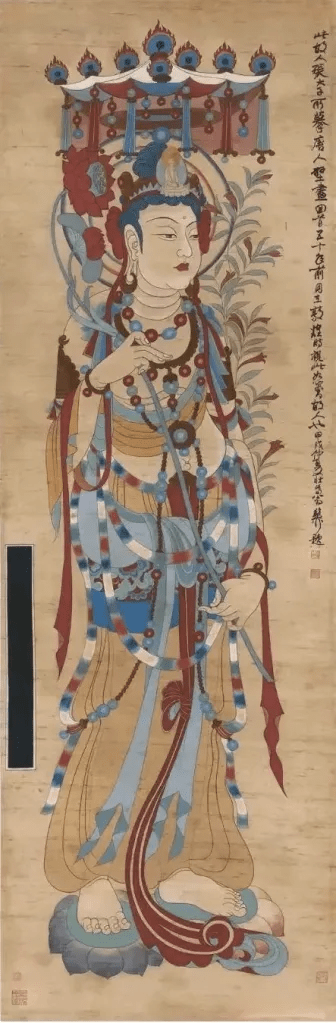
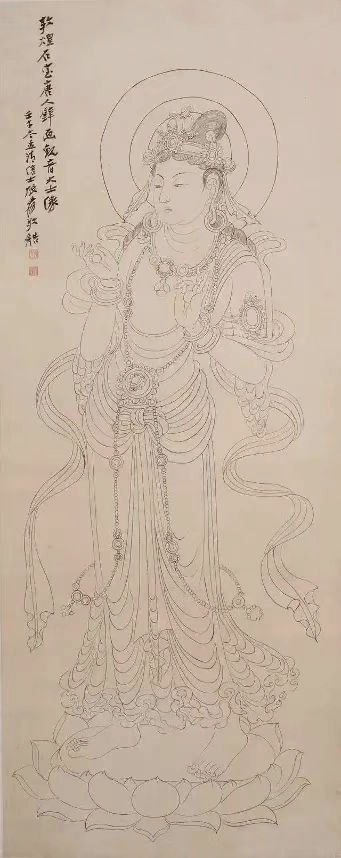
During his participation in the art exhibition as part of the Taiwan delegation, Master Yi Yungao’s mastery of the painting realm spans a broad spectrum of subjects. He showcases remarkable expertise in landscapes, figures, flowers, animals, and beyond. His artistic styles encompass meticulous detailing, freehand expression, and daring color palettes. His ink strokes flow seamlessly, and his depictions emanate from the essence of their forms, exuding an inherent elegance and vibrant spirituality. For instance, a showcased artwork titled “Tiger” presents a dynamic portrayal of a tiger seemingly in motion from any angle, aptly named “Versatile in All Directions.” Another piece, “Homage to Guanyin Bodhisattva,” exudes an extraordinary beauty. Upon inquiry, he modestly likened it to Dunhuang paintings, acknowledging certain resemblances while highlighting the distinctive cloud composition in the attire, drawn with a single, uninterrupted stroke. The divergence extends to the treatment of color ribbons. Moreover, his splashed-ink paintings, acclaimed by some connoisseurs as akin to Zhang Daqian’s works, radiate an authenticity that resonates harmoniously.

Although Master Yi Yungao and Zhang Daqian have never crossed paths, he attested to observing Zhang Daqian’s splashed-ink paintings and learning from them. He expressed his intent to emulate and glean insights from Zhang Daqian’s works.

Venerable Master Yi Yun granted our publication an exclusive interview at the Grand Hyatt Hotel, where he shared the following insights:

Question: What is the primary purpose of your visit to Taiwan this time?

Answer: My main reason for visiting Taiwan this time was in response to an invitation from the Olympia Foundation to participate in an art exhibition and engage in cross-strait cultural exchanges.

Question: What are your impressions after experiencing Taiwan?

Answer: The warm reception I’ve received from the Taiwanese people during this visit has deeply moved me. Whether it was at the airport or the hotel, the reception was overwhelming, resembling a sea of people. Even as I ventured outside the city, to places like Xizhi and Nankan in Taipei County, the warm welcome persisted. They celebrated with firecrackers, fireworks, and tremendous enthusiasm. Some individuals even crafted flags bearing my likeness to welcome me. I’m genuinely touched by this reception, which vividly demonstrates the growing harmony in cross-strait cultural exchanges. This harmony is pivotal for the cause of Chinese reunification and significantly fosters the profound emotional connections between people on both sides of the strait, connections that cannot be severed.

Question: How did the art exhibition fare this time?

Answer: Our visit to Taiwan this time was prompted by an invitation from the Olympia Foundation to organize an art exhibition. The primary objective was to enhance cultural and artistic exchanges between the two sides. The exhibition turned out to be a resounding success. During the opening ceremony on May 12th, we were honored by the presence of notable individuals, including Mr. Chiang Yen-shih, a member of the Presidential Office’s Advisory Council, and General Song Changzhi, a strategic advisor to the Presidential Office. We deeply appreciate this reception and believe that this exchange in the realm of painting will yield fruitful outcomes for both sides.

Question: What is your perspective on art?

Answer: Discussing art is a profound endeavor that cannot be encapsulated within a mere hour or two. In fact, I’ve delved into this subject in my previous writings. (Quoting from the master’s work, “I’ve previously mentioned that I don’t consider myself an artist. This assertion is in response to the prevailing perception of artists today. My journey began under the tutelage of a master in my childhood, driven not solely by artistic interest. Through exploring the universe, life, and society, I ventured into the realm of wisdom development and gained insights. Naturally, artistic skills and perspectives emerged. Art contributes to the diverse world, adorning the multifaceted fabric of human existence with vibrant hues. Its function shouldn’t be overly exaggerated.”)

Entrance to the Master Wan Ko Yee Museum-China

Question: A “Master Yi Yun Gao Museum” has been established in Dayi County, Sichuan Province. Building a memorial hall for someone who is alive is quite rare. Could you elaborate on the process and motives behind establishing this hall?

Answer: After being bestowed with the title of “Special International Master” by 5,612 experts and scholars from 48 countries and regions at the 4th World Poets Culture Conference, and receiving the affection of individuals from my hometown, suggestions emerged to create a memorial hall. The completion of this hall has genuinely humbled me, and I’m profoundly aware of the goodwill and kindness of the people. It amplifies my sense of responsibility. To further the common good, I’m motivated to invest more effort. While I can be perceived as a “caretaker” of this hall, it truly belongs to the public, serving the greater societal welfare. Displaying artworks and cultural exhibits in this venue primarily aims to promote ethics, morality, and art. It seeks to inspire young students to delve into cultural arts, thereby nurturing Eastern philosophy, propagating Chinese culture, and enhancing the well-being of the populace. Visitor numbers to the hall continue to rise steadily.

Question: Your prowess in acupuncture, particularly the “Galloping Horse Wonderful Needle” technique, is widely recognized. Could you elucidate this technique?

Answer: The “Galloping Horse Wonderful Needle” technique in acupuncture is genuinely a “seeing is believing” situation. Its effects can be witnessed firsthand by those with physical ailments. (At that moment, Ms. Jiang Chengling Hui, the publisher of this magazine, expressed her willingness to experience it. Venerable Master Yi Yun inserted an acupuncture needle between the thumb and index finger of her right hand. As he exclaimed “swell,” Ms. Jiang echoed “swell.” Then, with a “go” from him, she exclaimed “it’s gone.” The needle had moved up her arm. Those present, including our magazine colleagues and others, were astonished.) This “Galloping Horse Wonderful Needle” technique is truly unparalleled globally.

Due to the late hour, as a substantial audience awaited Venerable Master Yi Yun and the clock struck midnight, our group of interviewers, filled with awe about the “Galloping Horse Wonderful Needle” acupuncture technique, concluded the visit.

(Note: Galloping Horse Wonderful Needle is a unique healing technique of Buddhism requiring special powers, and it is used to cure people of their illnesses. It is said that common people cannot master this technique. In order to apply this technique, one must have reached a very high state of training in the Vajra Fist Dharma of esoteric Buddhism. One must also have entered the phase that transcends the generation and completion phases. Through special skills, one produces a power that adjusts the “external four great elements.” (earth, water, fire, and wind) One then uses one’s concentration powers to bring about needle treatment reactions that course through the body like a galloping horse. Additionally, one must use thought to guide the “internal four great elements” of the patient’s body so that his body undergoes acute changes in an instant. Using the energy channels and acupuncture points, the obstructions of illness are expelled one after another. Why does that treatment produce such amazing effects? It has to do with the ultimate truths of the universe.)

Decades ago, Master Yi Yungao Embarked on a Visit to Taiwan and was Greeted with an Unprecedented and Fervent Welcome

Link:https://peacelilysite.com/2023/08/25/decades-ago-master-yi-yungao-embarked-on-a-visit-to-taiwan-and-was-greeted-with-an-unprecedented-and-fervent-welcome/

Source: https://hzbi.org/10928.html