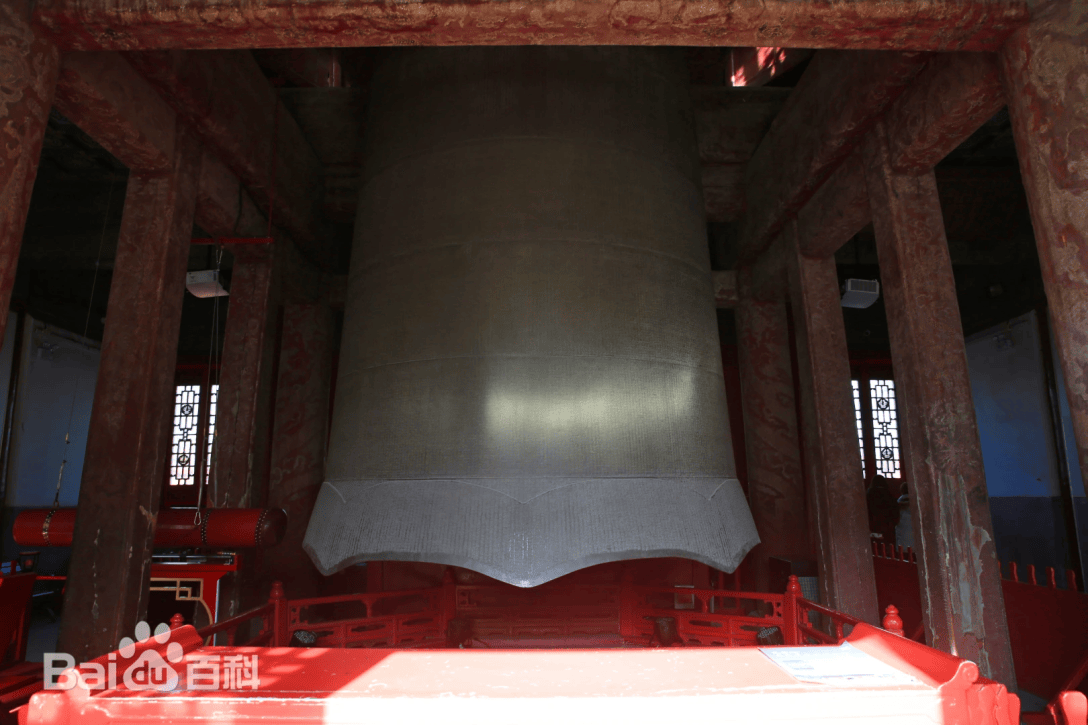
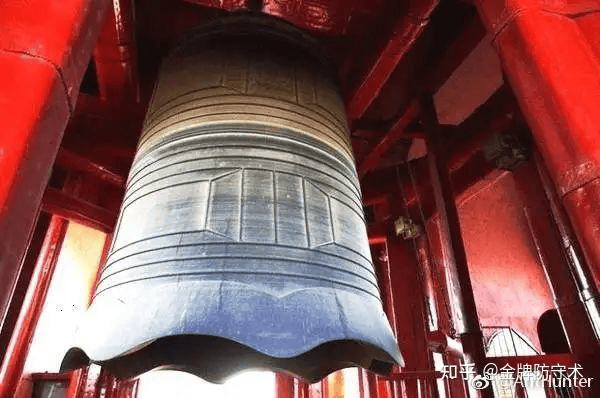
At the Ancient Bell Museum in Beijing stands one of China’s most remarkable national treasures—the Yongle Bell(永乐大钟).
Commissioned by the Yongle Emperor, Zhu Di (永乐皇帝朱棣), the bell is believed to have been designed and supervised by Yao Guangxiao(姚广孝), a highly respected Buddhist monk whose Dharma name was Daoyan(道衍). Yao Guangxiao was much more than a religious figure. He was also a scholar, strategist, and trusted adviser to Emperor Zhu Di.
Their relationship began before Zhu Di became emperor, when he was still the Prince of Yan. Yao Guangxiao became one of his trusted advisers and continued to serve him after Zhu Di ascended the throne. He was closely involved in major projects of the Yongle era, including the construction of Beijing and the compilation of the monumental Yongle Encyclopedia(永乐大典).
It is remarkable that one of the most ambitious Buddhist bells in Chinese history was connected to a monk who stood so close to the emperor and played such an important role in the cultural and political life of the Ming Dynasty.
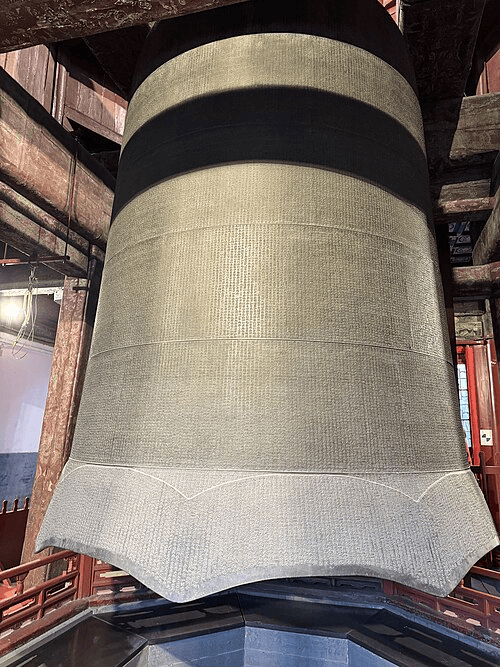
Cast during the Yongle era, around 1420, the Yongle Bell stands approximately 6.75 meters (22 feet) high and weighs about 46.5 metric tons (over 102,000 pounds).
More than six centuries later, it remains an extraordinary testament to the sophistication of ancient Chinese craftsmanship.
A Casting Technique That Seems Almost Impossible
How could ancient craftsmen have created such a gigantic bell more than 600 years ago?
The Yongle Bell was produced using a traditional Chinese technique known as the pit-mold ceramic casting method, or clay-mold method.
First, the craftsmen dug a massive casting pit several meters deep. Inside the pit, they constructed the bell’s inner mold using clay and other organic materials, while the outer ceramic mold was built up layer by layer.
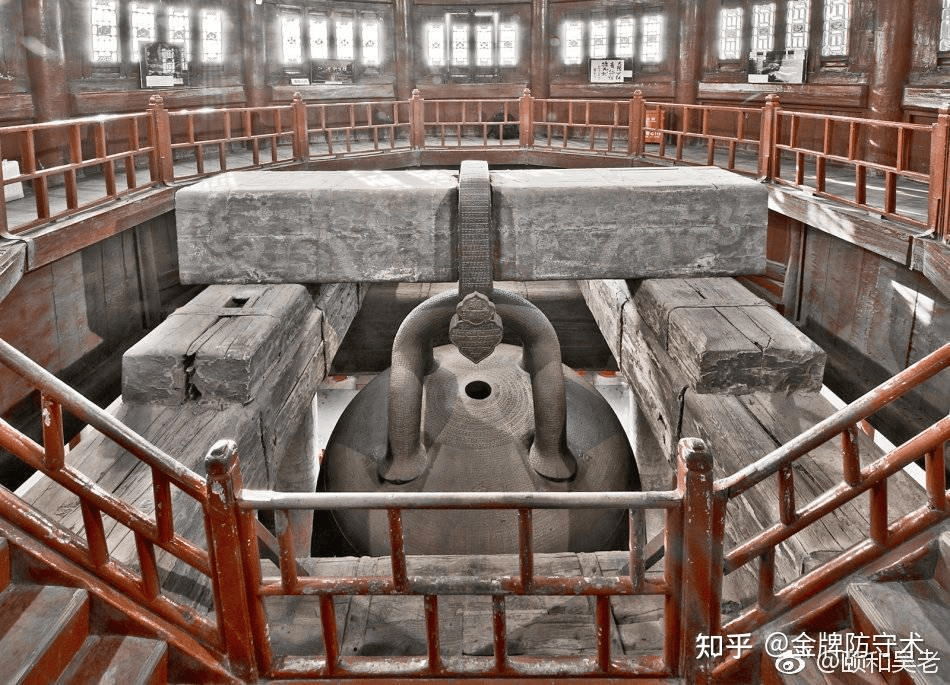
One of the most fascinating features is the Pulao-shaped bell knob at the top.
In Chinese mythology, Pulao is one of the nine legendary sons of the dragon. It was believed to have a powerful voice, which is why its image became associated with bells.
The Pulao knob of the Yongle Bell was reportedly cast separately using the lost-wax casting technique. It was then carefully incorporated into the casting mold so that it became an integral part of the finished bell.
Then came the most critical moment.
Dozens of furnaces were fired simultaneously. Molten bronze, glowing like rivers of fire, flowed through specially prepared channels and surged into the enormous mold.
The operation demanded extraordinary coordination. Temperature, the flow of molten metal, pouring time, and the structure of the molds all had to be carefully controlled.
A single major error could have ruined the entire project.
The successful casting of the Yongle Bell was therefore an extraordinary engineering and organizational achievement.
The bell’s achievement lies not only in its enormous size.
Scientific analysis shows that its alloy contains copper, tin, and lead as its principal metals, along with smaller amounts of elements including gold, silver, and nickel.
The carefully formulated alloy contributed to the bell’s strength, toughness, ductility, and acoustic properties.
A bell of this size must support its own enormous weight while withstanding repeated powerful impacts. If the metal were too brittle, cracks could develop; if the alloy composition were unsuitable, the bell’s resonance could also be affected.
Yet after more than 600 years, the Yongle Bell remains remarkably well preserved.
Its condition offers an impressive glimpse into the advanced metallurgical knowledge possessed by ancient Chinese craftsmen.
A “Bell of Scriptures”
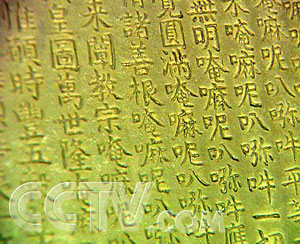
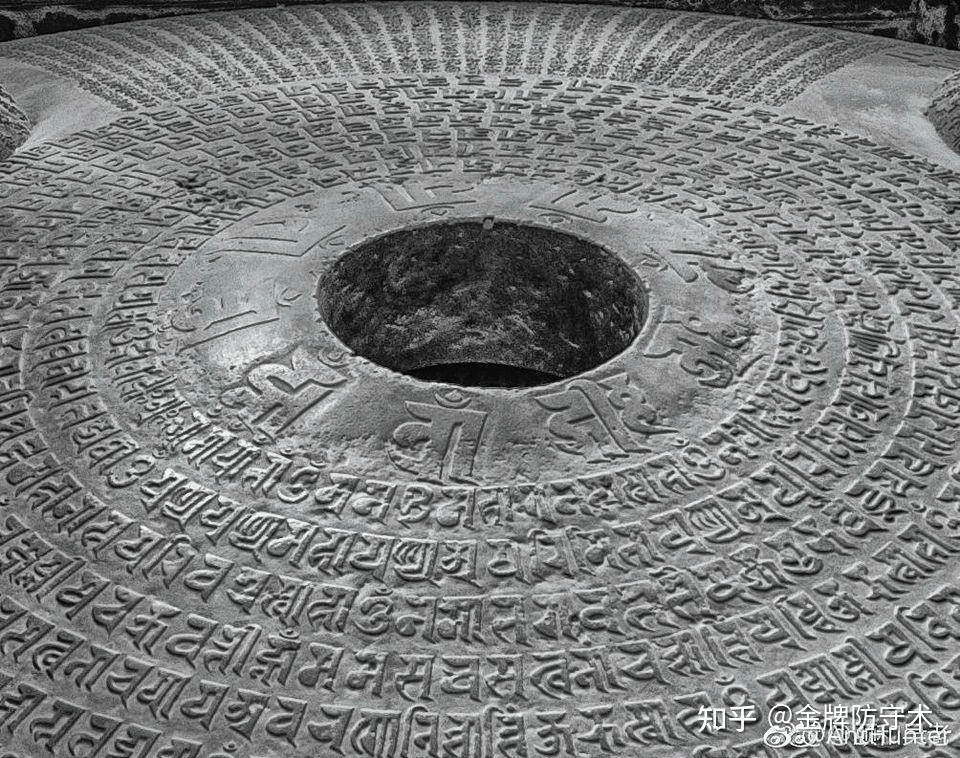
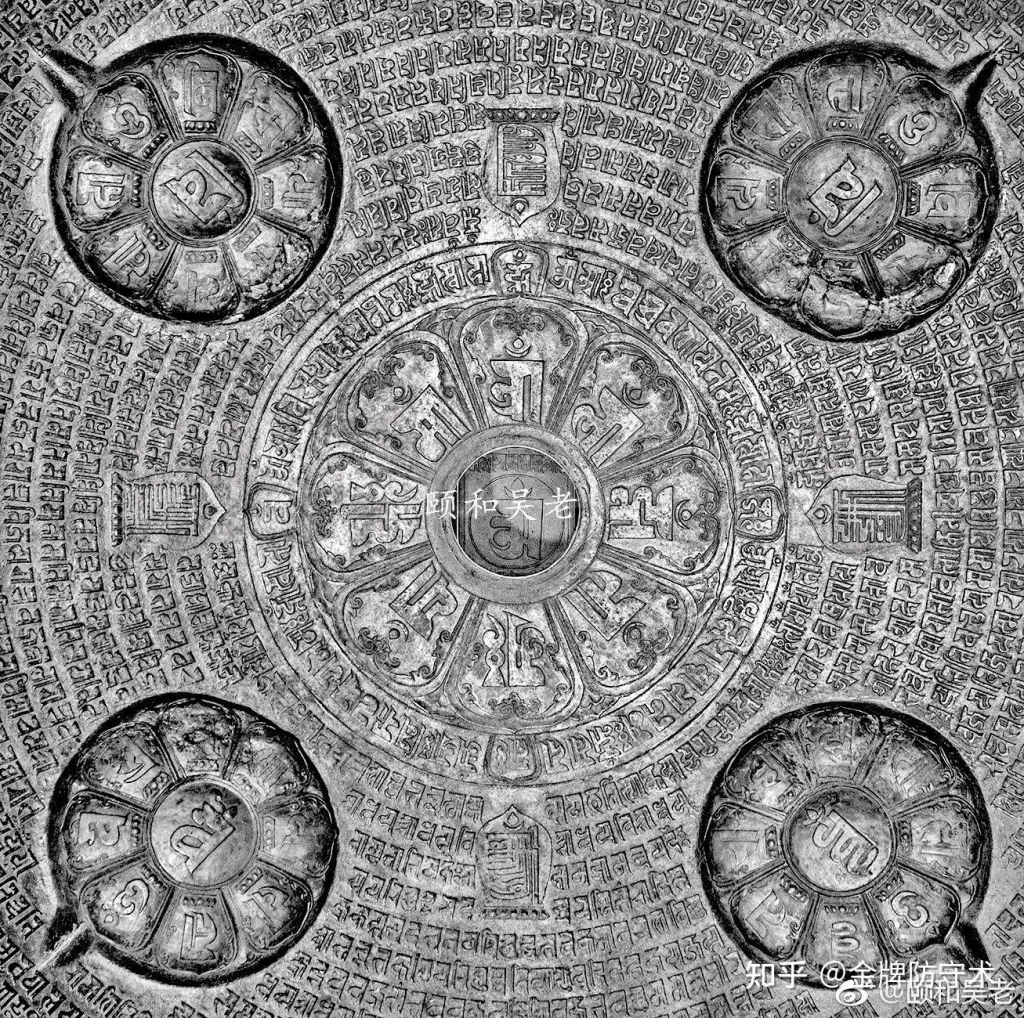
If the bell’s size is astonishing, its inscriptions are even more extraordinary.
The inner and outer surfaces, as well as areas around the rim, are densely covered with Buddhist scriptures, sacred texts, and mantras.
According to historical descriptions, the bell contains more than 230,000 Chinese characters and Buddhist inscriptions.
Even more remarkable, these inscriptions were not carved onto the finished bell. They were incorporated directly into the casting process.
This meant that hundreds of thousands of characters had to be accurately prepared in the molds before the molten bronze was poured.
According to tradition, the inscriptions were associated with the celebrated Ming Dynasty calligrapher Shen Du. The characters display the dignified and elegant style associated with guan’ge ti, the formal calligraphic style favored by the imperial court.
To transform such delicate calligraphy into cast inscriptions, craftsmen had to reproduce the writing in the mold, creating corresponding recessed characters. After the molds were prepared and fired, molten bronze was poured into them, producing the raised inscriptions on the finished bell.
Imagine doing this without computers, laser engraving, digital typesetting, or modern precision machinery.
More than 230,000 characters had to be arranged across the curved surfaces of a gigantic bronze bell.
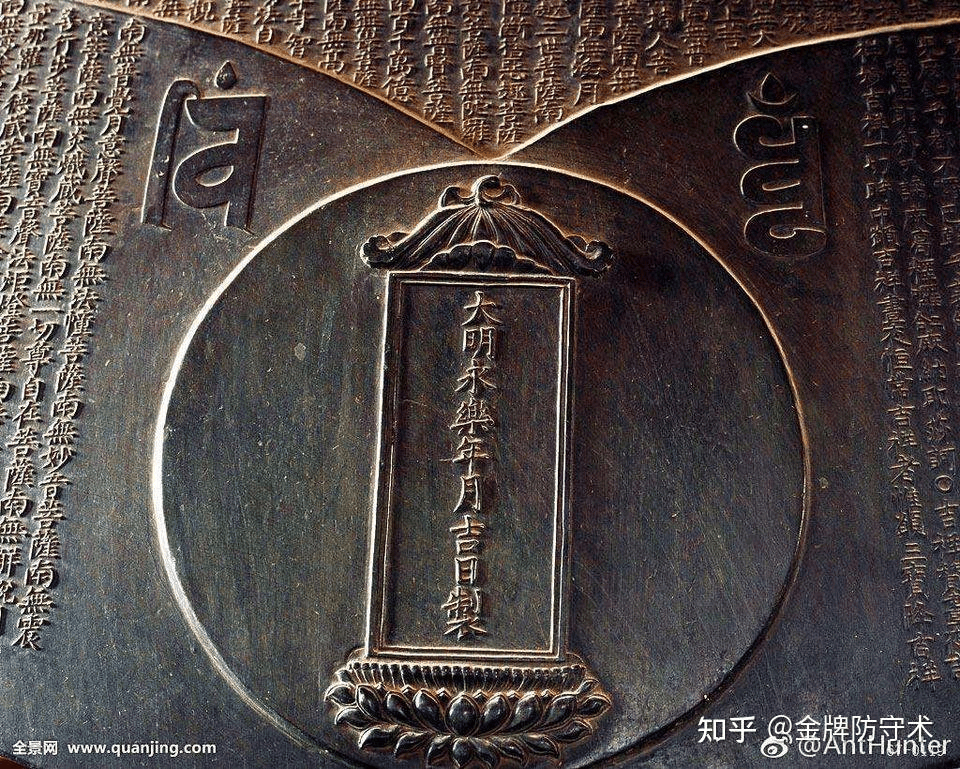
Every character had to be carefully formed and every line precisely positioned.
On one side was the art of the calligrapher.
On the other was the skill of the craftsman.
In the end, calligraphy, Buddhist scripture, and bronze became one.
The Yongle Bell is therefore not simply a gigantic bronze artifact.
It is almost like a Buddhist scripture cast in metal.
The Deep and Resonant Voice of the Bell
Perhaps the most captivating feature of the Yongle Bell is not what we see, but what we hear.
When struck by a massive bell striker, the thick bronze produces a deep, powerful, and extraordinarily sustained resonance.
According to accounts of its acoustic properties, under appropriate striking conditions, the resonance can continue for nearly three minutes. In the relatively quiet environment of ancient Beijing, its sound was reportedly capable of traveling for many kilometers.
Imagine Beijing more than six centuries ago.
At dawn, the first powerful note of the Yongle Bell rises into the air. Its deep, solemn sound travels beyond walls, streets, and fields, gradually fading into the distance.
The bell’s voice was not simply a means of marking time. It also carried religious meaning and occupied an important place in the spiritual culture of the period.
One Bell, Many Arts
The Yongle Bell brings together an extraordinary range of human skills.
Metallurgy transformed tons of raw materials into a strong and resilient bronze structure.
Casting technology made it possible to create an enormous bell with remarkable precision.
Calligraphy turned more than 230,000 characters into an intricate work of art.
Buddhist culture gave the inscriptions their profound spiritual meaning.
And acoustical craftsmanship gave the massive bronze its deep, sustained voice.
More than six centuries later, the Yongle Bell remains a remarkable achievement—not simply because of its size, but because of the extraordinary combination of engineering, artistry, religious culture, and craftsmanship embodied in a single object.
The Yongle Bell brings together the vision of an emperor, the knowledge of a scholar and Buddhist monk, the artistry of calligraphers, and the extraordinary skill of generations of craftsmen.
Standing before it today, one can see far more than a massive bronze bell.
One sees thousands of carefully formed characters, intricate craftsmanship, and the physical evidence of an ambitious undertaking carried out more than 600 years ago.
And then there is the sound.
A single strike can set this enormous bronze body into motion, allowing its resonance to linger long after the initial impact has disappeared.
The Yongle Bell is history cast in bronze, scripture transformed into art, and ancient craftsmanship given a voice.
It remains one of China’s extraordinary cultural treasures—and a remarkable achievement that deserves to be known and appreciated by people around the world.
Link:https://peacelilysite.com/2026/09/07/the-yongle-bell-a-600-year-old-marvel-of-chinese-civilization/
Source: https://zhuanlan.zhihu.com/p/547435529, https://wwj.beijing.gov.cn/bjww/wwjzzcslm/1737418/1738090/wwgs/325966413/index.html, https://news.cctv.com/program/tgkw/20040329/102069.shtml