In 2014, I was diagnosed with stage 2 spleen cancer and had the surgery performed at the University of Taiwan Hospital. In June the same year, I started chemotherapy. Sister Qinyi Zhou came to visit me in September that year and brought me a copy of the book The Buddha Speaks on Curing the Hemorrhoids Sutra. I chanted the sutra continuously for one month and I noticed the dark brown nails on my hands – the side effect of chemotherapy – had started to fade. It was unbelievable!
During that time, sister Zhou and Buddhist brother Sangdun Chuba Rinpoche frequently visited me and even helped me to begin to set up an altar and purchased all the necessary items to offer to the Buddhas. I also invited Buddhist brother Jijia Cuoren Rinpoche and many other Buddhist brothers and sisters to come to my house for the purification ceremony and beseeching blessings. I then set up my dharma-listening center. I requested recorded Dharma from International Buddhism Sangha Association in order to promote Buddha Dharma and benefit others. After that, miraculously my symptoms of peeling skins on my hands and feet and the mouth ulcer that was seriously affecting my eating gradually disappeared. What was even harder to believe was that the MRI done in November 2014 showed that the cancer had vanished. Cancer marker went from 67 to 46 in about a little more than 2 months – The terrifying spleen cancer just disappeared! I had never thought that chanting Buddhist Sutras and setting up a Dharma-listening center would have such powerful blessing on me!
Seeing my progress, sister Zhou encouraged me to take the examination to become a Master of Dharma-Listening Sessions so that I could promote the correct views and understanding of the Buddha dharma of H.H. Dorje Chang Buddha III to others. It would be the best way to benefit others and carry out the Bodhicitta. In so doing, I would receive even more blessings, she said. I did not disappoint her and successfully passed the exam in March 2015.
A few months after that, the doctor who was in charge of my chemotherapy, Dr. Yang, suddenly announced that my treatment should be stopped ahead of schedule ( normally it has to last for more than a year) This had never happened before! So, my confidence increased and I was even more diligent in listening to the Buddha Dharma and reading Buddhist books. I consistently rain or shine went to the group cultivation sessions held at Holy Dharma Compassion and Kindness Association. I cultivate myself and learn from the Buddha with a heart of repentance and gratitude. On September 21, 2016 my primary doctor, Professor Tian told me “no more doctor’s visits, just periodical rechecks in charged by Dr. Yang.” So I only need another doctor’s visit! What a great relief! I felt like a burden of rock has shifted off my shoulders.
During the past two years, if it was not because of the blessings of H.H. Dorje Chang Buddha III, if I did not study Buddhism and cultivate myself, if there was no help and encouragement from the Buddhist brothers and sisters , I would not have recovered from cancer and I would not have been able to travel around the world and gone to social functions! In contrast, my husband who had brain cancer and was very stubborn and did not want to believe in Buddhism died in May 2015.
I transform my grief to power and strongly believe in the law of cause and effect. I will continue to study Buddhism, listen to the recorded Dharma of H.H. Dorje Chang Buddha III, cultivate my words, thoughts, and behaviors, promote kindness and eradicate evil, and strive to correspond with the Buddha! Here, I would like to thank all the members of the medical team at Taiwan University who have treated me, all my relatives and family members, my Buddhist brothers and sisters for their kindness and care. They have made it possible for me to cultivate and learn from the Buddha! Amitabha!
I was a factory worker in the past. In 1993, a co-worker had to go home to help plant his family’s wheat crop. His leave request was not approved by the shift leader. So, I went to cover him.
When looking at his work in the past, I thought I should be able to do it. In reality, it was not that simple. I was not skillful in operating the machine. The machine pulled my right hand in. When I dragged the arm out, I had no flesh in my hand and arm, only a long, bare bone left.
The doctor at the hospital took a look and told me that I must have amputation. The upper arm bone was fractured; however, he could reconnect it back.
When I slowly woke up from the surgery, I saw that my entire right arm…, my right arm was like, so short , only 5, 6 cm long.
Actually, the doctor had told me very clearly before the surgery that the amputation would only be limited to my hand. This is just not fair at all. I was furious. How could he be a doctor? What medical ethics did he have?
I cried my heart out at that time. I got very upset. I did not even want to go out of my room. I got a room from the company. I didn’t go out at all and felt that it would be embarrassed to go out and see people. Why do I get such bad luck?
I was depressed all day long and also could not get along with my wife. I would smash bowls or chopsticks whenever things didn’t go my way. That happened a lot. When I popped open a bottle of white wine, I would have a big, long gulp. In one morning, I could almost finish a bottle with only a few drops left. I buried myself in the alcohol at home. Once I am drunk, I lose my temper. I almost had a mental breakdown and lost confidence in my life.
It started out from doing a favor, to help out my co-worker. How did it make me to become a handicapped person? How could such a thing happen to me? Even the hospital mistreated me in that way. The whole society did not treat me fairly. I also didn’t see justice from the Heavenly God…….
One day, my daughter told me: “Father, I will take you to a Buddhist center. Go learn Buddhism. Buddhism will be good for you, and for our family. Chant “Namo H.H. Dorje Chang Buddha III!”
“What did you tell me to chant?” I said, “I have only heard about Amitabha Buddha. Why didn’t I know about H.H. Dorje Chang Buddha III?”
Starting from that day, I would head to the Buddhist center and then listened to the Dharma discourses every day. I listened to the discourse on the Law of Cause and Effect. I listened to many pre-recorded dharma discourses, such as The Dharma to Cut Off the Twenty Worldly Emotions, etc. I listened to The Dharma to Cut Off the Twenty Worldly Emotionsa few more times. I also listened more times to the discourse on the Law of Cause and Effect. Eventually I understood that everything is a result of the Law of Cause and Effect.
I gradually realized that the loss of my right arm was not without a cause. Whether in my past lifetimes or in this lifetime, I have harmed so many living beings. This bit of suffering is what I deserve. When I took the lives of other living beings in the past, I caused them sufferings.
Through the learning, I slowly understood the truth about the Law of Cause and Effect. The hatred in my mind also gradually vanished.
I then made a resolve.
Since I have learned and understood the truth of the Law of Cause and Effect, I will now repent to all the living beings I have killed or harmed. I will repent to them. With the utmost respect, in front of the Buddhas and Bodhisattvas, I will repent with my most pious heart.
I will do 100,000 prostrations for repentance. In less than four months, I completed 100,000 prostrations. H.H. Dorje Chang Buddha III told us, only cultivation can transform the Law of Cause and Effect.
The retribution I am receiving right now is caused by what I have done in many lifetimes and eons ago. From now on, I will follow and learn from H.H.Dorje Chang Buddha III and cultivate myself.
As long as I plant good causes. I will definitely get good fruition in the future. I am determined to follow and learn from the Buddha and cultivate myself until I attain accomplishment.
Located at around 8 kilometers north-west of Xikou Town, Fenghua City of Zhejiang Province, Xuedou Mountain is 800 meters above sea level, featuring graceful mountain ridges, unique cliffs, tempting waterfalls, and deep streams. The mountain has a milky peak, while on the peak there is a dou (meaning hollow or hole). Water flows out of the dou, and it is as white as milk, thus getting the name of the Milk Spring. It is well-known for its serenity, magnificent landscape, and an abundance of greenery. Mount Xuedou Scenic Area was known as “a fairyland on the sea” early in the Han Dynasty (206 BC-220 AD. However it was not popular until the previous president of National Party Jiang, Jieshi promoted it heartly. Xikou is the hometown for this important historical figure Jiang, Jieshi. His family had Buddhism tradition. So when he was young he often went to Xuedou Temple with his mother. He loved its picturesque sceneries, and believed it was the most beautiful place in the country. Later on he built a mansion in Mount Xuedou, he and his family lived there once a while. He even had a plan to promote Mount Xuedou as second Mount Lu, but the plan did not come true, since he left mainland China to Taiwan after the civil war. Therefore, this place becomes more mysterious and interesting for tourists from China and abroad to explore.
The charm of Mount Xuedou lies not only in its picturesque sceneries, it also has held a high status in Chinese Buddhism since ancient times. Located in a scenic site, the Xuedou Temple has a history of over 1600 years and has cultivated numerous eminent monks. It is also the place where Monk Maitreya practiced his Buddhism, thus a large number of eminent monks and pilgrims have been attracted to Mount Xuedou.
Maitreya Bodhisattva is a very popular Buddhist figure in China. Maitreya is a transcendent bodhisattva,he will be the next Buddha in the Saha world. Maitreya means “loving kindness.” In Mahayana Buddhism, Maitreya is the embodiment of all-encompassing love. Maitreya, in Buddhist tradition, presently resides in Tushita heaven.
With big belly and jolly smell, he is a symbol of enduring humiliation, optimism and compassion. In Buddhism teaching, disciples should be like the Buddhas and Bodhisattvas. All should have a broad mind, open heart, and great tolerance. The first priority for one who learns Buddhism and cultivates himself is to be patient and forbearing under insult.
In the historical record, there is an eminent Monk named Qichi (契此), who was the incarnation of Maitreya Bodhisattva. This monk lived at the end of WuDai period (right after the Tang Dynasty), and is most well known for his rather fat belly. Since he always carried a cloth bag, people began to call him the cloth bag monk. Unlike the stereotypical image of the strict and severe ascetic, Qichi was a jovial, good-humored man, but no less intelligent and thoughtful. He was loved and respected by all for these qualities. Often, others would ask him, “what is the true meaning of Buddhism?”, and in response, he would drop his bag to the ground. The deepest meaning of Buddhism is to lay down your burdens. Qichi took residence in Xuedou Temple, where he would spread the Buddhist Dharma to all those who came to him. To this day, Xuedou Mountain is regarded as the Holy Land of Maitreya. In honor of the cloth bag monk, statues of the Maitreya Bodhisattva are always depicted carrying a cloth bag.
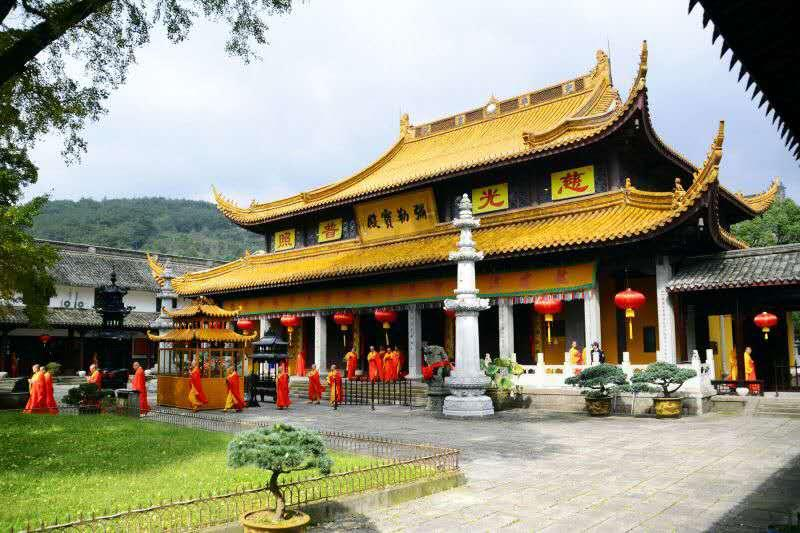
Xuedou Temple
Xuedou Temple was originally founded in the Jin Dynasty. For thousands of years, it has been visited by many people, and has produced numerous eminent monks. It has a high status and is regarded by the Buddhist circle in China as one of the ten most famous Buddhist temples together with the other nine temples, such as Zhongtian, Zhutianning, Wanshou, the Yongzuo Temple of Hangzhou, and the Jiangshan Taiping Xingguo Temple of Nanjing.
During the Tang and Song dynasties, Xuedou Temple had received 41 imperial edicts from emperors of several generations. So far, the temple has stored 5,760 Confucian classics granted by emperors, jade seals, dragon robes, dragon pots and jade Buddhas.
In the temple, the constructions are magnificent and attractive. Outside the temple, ancient trees are towering up into the sky. Among them, two ginkgo trees from the Han Dynasty can be surrounded by about five people. With exuberant leaves, the ginkgoes rise above the clouds.
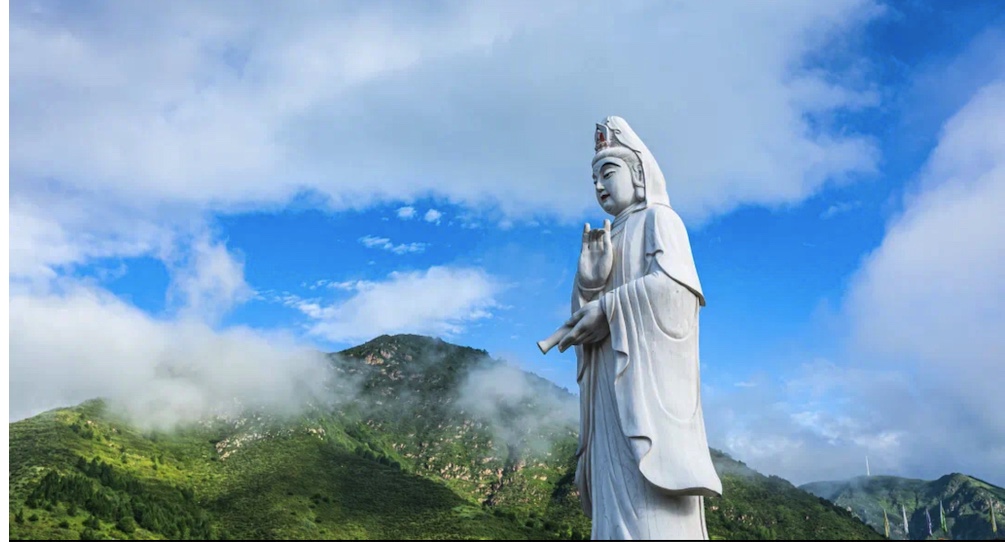
At the back peak of Xuedou Mount, the statue of Maitreya Buddha is the highest copper statue of its kind in the world. The Buddha body is 33 meters high, the lotus seat is 9 meters high, and the base is 14.74 meters high. It completed at 2008, with exquisite workmanship. Having this remarkable structure, Mount Xuedou was officially named as the fifth sacred Buddhist Site, dedicated to Maitreya Bodhisattva. Now, the temple covers a landscape area of over 20,000 sq meters and has perfectly combined natural landscapes and Buddhist culture.
XueDou Temple Overview
Since Mount Xuedou is dedicated for Maitreya Bodhisattva, there is a Grand Maitreya Hall in the Temple. It is really magnificent and dignified.
Grand Maitreya Hall
Marvelous Maitreya Statue
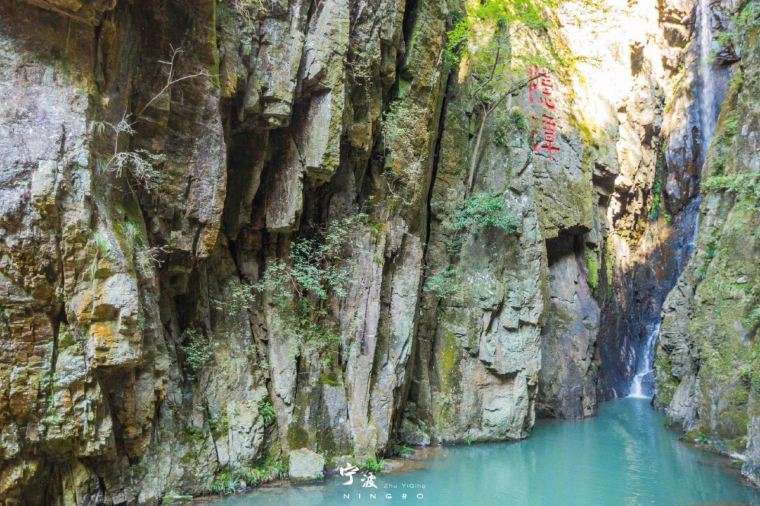
Qianzhang Rock Waterfall
In front of Xuedou Temple, there is a waterfall called Xuedou Waterfall, also known as Qianzhang Rock Waterfall. The water head is in the valleys at the south and the north of Xuedou Temple. The water of the Milk Spring flows into Jinjing Pool (which is an ancient pool developed in the Southern Song Dynasty), crossing Guanshan Bridge and pouring out of the cliff mouth.
The waterfall pours down from Qianzhang Rock. From the top of the rock to the pool, it is as high as 186 meters. At the half-way point, there is a huge rock. In spring and autumn, the rain falls down in a deluge but it runs into the rock at the half-way point and splashes in all directions right away. It falls like pearls and jades, and also dances like snow. Under the sunlight, it forms a rainbow, which is quite splendid. Xuedou Waterfall was well known by the whole nation as early as in the Northern Song Dynasty.
Sanyin Pond Waterfall
Sanyin Pond Waterfall is situated at 5 li north-west of Xuedou Temple. The water flows from Dongao Village (on Xuedou Mountain, there is a village of alpine flowers. With a beautiful and clean environment, the village is an ocean of flowers and seedlings) to the cliff mouth, forming one waterfall; it continues running down the mountainside to the foot, forming three waterfalls. As a result, it is called Sanyin Pond.
With a length of more than 1,600 meters, the pond can be divided into Shangyin Pond, Zhongyin Pond and Xiayin Pond respectively from the highest to the lowest. Shangyin Pond is highlighted by its quietness and danger; Zhongyin Pond stands out for its delicacy and cleanness; Xiayin Pond is well known for its superb beauty. Despite the positions of the three ponds in remote mountains and deep valleys and the difficulty of visiting them, tourists still visit in great numbers.
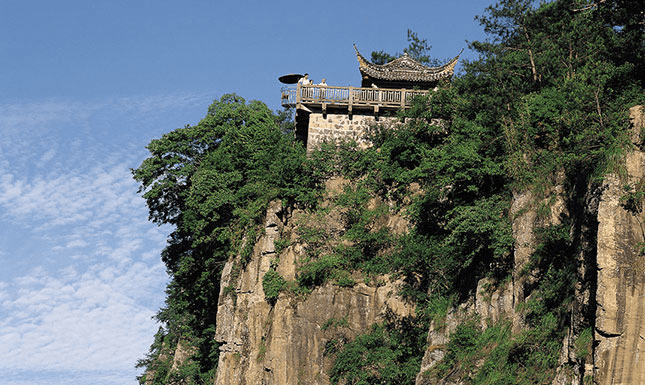
Miaogao Platform
Miaogao Platform is also known as Miaogao Peak or Tianzhu Peak. It is the main scenic spot of the Xuedou landscapes. Although it is only 396 meters above sea level, it stands out against the mountain behind it. With the middle part bulging, three steep cliffs, and a gaping abyss down its side, the platform has a precipitous terrain.
In a narrow sense, Miaogao Platform refers to a platform of about 350 square meters. Standing at the front edge, you can look out on the natural sceneries of Tingxia Lake. On the periphery of Miaogao Platform, ancient trees and green bamboos are thriving so much that they keep the sunlight away. In addition, the clear breeze blows gently. It is an ideal summer resort.
Tingxia Lake
Located at the south of Xuedou, Tingxia Lake is 6 kilometers away from Xikou Town. It is a large artificial lake, with a surface area of 5.9 square kilometers, an equivalent of West Lake in Hangzhou. The water storage capacity is as much as 153 million cubic meters.
Tingxia Lake is a good place to enjoy the landscapes of lakes, mountains, steep peaks and deep valleys. Tingxia Lake is a huge reservoir famous for its position under Yushu Pavilion of Xuedou Mountain and its location at Tingxia Village.
Tingxia Lake has wonderful natural sceneries. On the basis of unique peaks, deep valleys, high mountains and water scenes, interesting and attractive landscapes of lakes and mountains come into being. With clean air and high quality water, the scenic spot is also rich in fish, fruit and forest resources. Tourists can sail on the lake, and can also go fishing, picnicking and camping.
Naturalists and photographers love to visit the Miaogao Platform, Qianzhang Rock, and Qianzhang Crag with its huge, scenic waterfall in the region spanning 85 square kilometers. Mount Xuedou is also a national forest park, a really great place worth of visiting.
It was April 2015. My stomach suddenly became harder and harder, and it swelled noticeably after eating. A colleague suffered from colorectal cancer and also had a hard stomach. I quickly went to the hospital for examination.
After the CT scan, the doctor said that the initial diagnosis was a liver tumor that was suspected to be cancerous, so emergency surgery was necessary. When I heard this result, I felt my heart racing. I thought that this was my karma and I should suffer it if I need to. If I didn’t die, I would be reprimanded.
At that time, I often went to the Sanger Mission Temple to listen to the dharma courses of H.H. Dorje Chang Buddha III. I understood some truths about karma. So I accepted it calmly without complaining to others, and actively cooperated with the doctor’s treatment. A highly skilled Indonesian doctor took the lead for my surgery. She is the second best doctor in Southern California. She said: “Your liver tumor has a layer of membrane wrapped with bad things. We just need to take out the cyst and we don’t need to cut the liver, so it won’t hurt the liver. After doing so many operations, this is the second strangest example I have ever seen. The doctor asked “Are you a Buddhist?”
Even more strange is that despite the anesthesia effects after the operation, I seem to have temporarily lost the pain. The doctor prescribed morphine to relieve the pain, but I didn’t use it because I didn’t feel any pain at all. After the operation, I spoke as usual, full of energy. On the fourth day after the operation, a sister came to visit me and said that the monks in Sanger Mission had not seen me for a while and knew about my situation. So they recited the Sutra in the morning and night, then they transferred their merits to me.
The power of Buddhism and the power of recitation of the Sutra are incredible. My operation went well and the wound healed quickly. A week later, I walked very fast, and I didn’t look like someone who had undergone surgery! After several months of observation, the doctor determined that my tumor was benign and he ruled out the possibility of cancer.
The Buddha and Bodhisattva have saved my life twice, and I am truly grateful.
The Explanation of the Buddha’s Title – “H.H. Dorje Chang Buddha III
On April 3, 2008, a solemn and dignified first-publishing ceremony of a fact-recording book entitled H.H. Dorje Chang Buddha III, which published jointly by the World Buddhism Publishing LLC and the World Dharma Voice, Inc., was held at the Library of the Congress of the United States. The book was also formally accepted into the collection of the Library of the Congress of the United States. Only since that time, did people in the world know that Master Wan Ko Yee, who had been broadly respected by the great masses and who had also been known as Great Dharma King Yangwo Yeshe Norbu, had been recognized by the world’s leaders, regent dharma kings, and great rinpoches of Buddhism through official documents as the third incarnation of Dorje Chang Buddha, who is the primordial Sambhogakaya Buddha of the universe. The Buddha’s name is H.H. Dorje Chang Buddha III. Since then, people began to address His Holiness the Buddha by “Namo[1] Dorje Chang Buddha III.” This is similar to the situation that Sakyamuni Buddha’s name was Prince Siddhartha Gotama before attaining Buddhahood. However, after Sakyamuni Buddha had attained Buddhahood, His title changed to “Namo Sakyamuni Buddha.” That is why we now address His Holiness the Buddha as “H.H. Dorje Chang Buddha III.” In particular, on December 12, 2012, the Senate Resolution No. 614 of the United States Congress officially used “His Holiness” in the name addressing Dorje Chang Buddha III (That is to say, “H.H. Dorje Chang Buddha III.”) Since then, the title and status of H.H. Dorje Chang Buddha III has been definitive by nature. And, as a matter of fact, “Dorje Chang Buddha III” is a name used legally in governmental and official legislative documents. Therefore, the previously used respected name and titles such as “Wan Ko Yee,” Great Master, and Great Dharma King no longer exist. However, the news below was published before the Buddha’s title of H.H. Dorje Chang Buddha III was publicly announced. At that time, people did not know about the true status of His Holiness the Buddha. Therefore, to respect the true history, we still kept the names used before the title of H.H. Dorje Chang Buddha III was legitimately determined in republishing this news. However, all must clearly know that the only legitimate name of His Holiness the Buddha is H.H. Dorje Chang Buddha III and all other names used before the legitimate determination no longer exist.
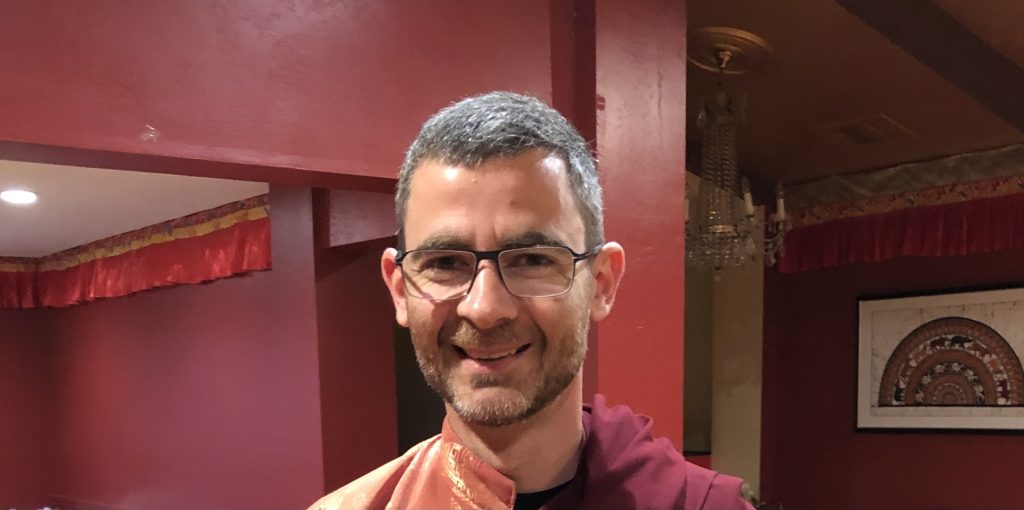
Gongjue Tuji Rinpoche, who founded and leads the Xuanfa Dharmazentrum (Dharma Center) in Cologne, Germany. He is truly a sincere, humble, and dedicated buddhist disciple and totally devoted to our Buddha Master H.H. Dorje Chang Buddha III and his yidam.
In mid-February, after H.H. Dorje Chang Buddha III entered parinirvana, Gongjue Tuji Rinpoche had been visited by the Buddha. H.H. Dorje Chang Buddha III, reassured that Gongjue would be able to receive the inner-tantric initiation, His Holiness had promised that Gongjue’s yidam would make the arrangements. During Gongjue’s practice, his yidam Green Tara appeared and confirmed all this as Gonjue explains in this short video.
CLICK for an article of Gongjue Tuji Rinpoche received a powerful lesson from attending the June 2018 Dharma Assembly celebrating the birthday of H.H. Dorje Chang Buddha III.
CLICK for an article from Gongjue Tuji Rinpoche on his relationship with Green Tara and how She had helped his wife through a dangerous bout of cancer at year 2013. You will see that this is not the first or only time his yidam appeared and spoke to him.
On April 16, 2013, Karolin (Shown here with her daughter Julie), the young wife of Gongjue Tuji Rinpoche of the Xuanfa Dharmazentrum (Dharma Center) in Cologne, Germany was diagnosed with a rare and very dangerous form of thyroid cancer that can very rapidly metastasize throughout the body and is often fatal.
The decision to operate was made very quickly and on April 18, she had both her thyroid and other cancerous and non-cancerous lymph nodes in her throat removed. One of the most famous doctors in this area in all of Germany performed the surgery.
Before the surgery Gongjue Tuji gave Karolin one red vajra pill that he had as well as a Black Jewel Medicine Pill (Kazhuo Ande Pill) he had received from his master, Zhaxi Zhuoma Rinpoche.
Gongjue Tuji called to tell Zhaxi Zhuoma Rinpochethat the surgery went well, but he really wanted to report something else that happened. He is a very devout practitioner of Green Tara. His wife has not been very interested in Buddhism, but has encouraged Gongjue in his practice. Gongjue was waiting while his wife received a CT scan to see if they were too late and the cancer had spread to any other parts of her body. He was practicing his Green Tara Dharma and visualizing Green Tara as he often does and dedicating any merit from his practice to Karolin. Suddenly Green Tara started moving around the mandala that he visualized. He saw Her dance and heard Her laugh heartily, and She told him not to worry, that his wife “would get a second chance.” That is exactly what he had been praying for and the CT scan came out clean. He was very emotional and happy about this. Zhaxi Zhuoma Rinpoche and he both wept with joy as he explained what happened. He was uncertain if he could tell his wife about this and not violate his precepts. His master told him he should tell her and not tell her and let his joy be witness to what he saw. He should tell her about how wonderful the true Buddha-dharma is, but not tell her anything about the practice itself except in general terms.
A few nights later, again while practicing the Green Tara dharma, Gongjue Tuji was told in a very excited way: “Quick! Go and look outside. Go and look outside.” While he was moving the laundry drying rack in their living room in order to get to the door of the balcony, he was thinking to himself “Gongjue, you are becoming ridiculous,” but when he stepped outside on the balcony, he looked at the moon and there was a huge Buddha-light! Again he called his master to tell her that he was so joyous and happy that it was impossible to express his feelings in words, but he knew that Green Tara was giving her blessing. Two years earlier, Gongjue Tuji had taken a picture like the one shown in the slide show on the homepage of this website of the green being in the Buddha Light while he was visiting his master at the Xuanfa Institute in Sanger, California.
But this is not the end of the story. Zhaxi Zhuoma Rinpoche reported this matter to her Buddha Master, H.H. Dorje Chang Buddha III and He laughed and said this was very good and that He already knew about the matter. When she told Gongjue Tuji of this she received the following with an update of a second surgery Karolin had to have as they did not get everything the first time.
The second surgery went well, too. Even the nuclear medicine specialist who transferred Karolin to the hospital assisted the professor during the second surgery, which is very unusual. But he wanted to be sure that the surgeons remove everything this time. They only removed 15 more lymph nodes and not 30 as I mentioned in an e-mail before. Three of these 15 have been malign, the biggest measuring about one inch. Unfortunately the diagnose was even worse after the second histological result.
Days later, Karolin had a doctor’s appointment with her nuclear medicine specialist to discuss the results. The doctor was not very happy with the new diagnose. Karolin asked him about the tumor marker but he had not received the blood results yet from the hospital so he called the hospital to inquire about it. A normal value for this specific marker should not be higher than 5 for a healthy person. Karolin’s value before the first operation was about 1,500 and after the first operation it was still about 500. When the doctor was talking to the hospital he couldn’t believe what they said and asked a second time. The tumor marker value is now below 2!!! At first he was speechless and didn’t know what to say. Both, Karolin and the doctor, where almost moved to tears. He said that’s sensational! He would have never expected such a result after that diagnose.
When Gongjue Tuji Rinpoche got the news from his wife he said: “I can not express how happy and how grateful I am towards all the Buddhas and the Boddhisattvas, especially to the Green Tara. This would have never resulted that way without all the blessings and the support of the Buddhas and the Bodhisattvas. I am also very grateful to everybody who supported us in their thoughts and sent their blessings. ” This is just another example of the amazing power and results of practicing the true Buddha-dharma.
Gongjue Tuji Rinpoche, who founded and leads the Xuanfa Dharmazentrum (Dharma Center) in Cologne, Germany received a powerful lesson from attending the June 2018 Dharma Assembly celebrating the birthday of H.H. Dorje Chang Buddha III. Below is his account of what happened.
When I heard that a very special dharma assembly was going to take place and everyone was encouraged to attend, I was very excited. Actually, I had already planned my trip for this year and booked the appropriate airline tickets. I originally wanted to visit the Holy Vajrasana Temple for a few days later in the year and read the preliminary translations of the Supreme and Unsurpassable Mahamudra of Liberation and Imparting the Absolute Truth through the Heart Sutra. My personal situation usually only allows me to travel to the USA once a year. Which made it a bit difficult for me in this case as it is always a cost issue.
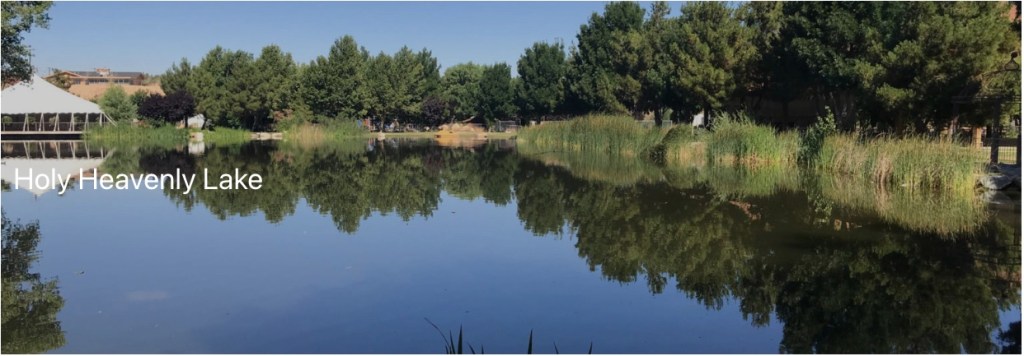
Also, the date fell pretty close in the time we were supposed to move into our new home. All in all, it seemed as if it would not be possible for me to participate in this dharma assembly. But since it was said that everyone should do everything possible to attend, I knew that it had to be something special that I shouldn’t miss. Perhaps we would all be given a very special Dharma? I didn’t want to miss it under any circumstances. I was very sad at the time when the Holy Monk Yin Hai passed away and I was not able to attend one of the dharma assemblies to pay my last respects. This is a brief account of what I experienced when I travelled to the dharma assembly for celebrating the birthday of H.H. Dorje Chang Buddha III at Heavenly Lake, California.
Gongjue Tuji Rinpoche
So this time I had to do everything I could to make sure I didn’t miss this important event. Since 2009 I have been travelling regularly to the USA to learn and receive the true Buddha Dharma. So far everything has always worked out happily and I have never experienced anything negative on these trips. So this time it surely should work, too, although the signs were not good.
So I decided to discuss it with my wife. She is not a Buddhist, but she supports me a lot in being able to practice Buddhism. She wasn’t thrilled when I told her about it. The move was almost upon us and there was still so much to do. Also, we had a lot of expenses at that time with the purchase of the house, so our parents had to support us financially. In the end she agreed to let me go. But she only did it because she didn’t want to be blamed for me missing this important event.
So I booked another flight to California at short notice and was very happy that I was allowed to leave. Unfortunately, it turned out that the flight I had booked before for my trip to the Holy Vajrasana Temple could not be cancelled and I was left with the cost. I still got an affordable accommodation, but due to my limited budget, it was not in an all too nice neighborhood. Arriving there, the first doubts arose whether the decision to fly and leave my wife and daughter behind in the chaos of our move was right.
The next day was the day. The dharma assembly was about to begin. His Holliness, the Buddha came and rose up to the dharma rostrum. Now I should be compensated for everything. Deep down I hoped to get a great Dharma, something which was priceless. And so it was! It was just something completely different than I had expected. His Holliness, the Buddha began to give us a Dharma discourse about self-cultivation. At that moment I began to understand how stupid I really was. It became clear to me that even when searching for the Dharma, you can’t go beyond the principles of self-cultivation, which are to not let others suffer by putting your own interests first. I began to understand how terrible my wife was feeling at that moment when I left her alone at home with all the work and spent a lot of money that we could have used differently right now. I felt very bad and wanted to go home quickly.
When the Buddha finally announced that each participant should receive a special vajra pill, I was at least a little calmer. In the new house I will finally have my own Buddha room with a large altar and I will place this pill there as a “trophy”. So I thought.
From then on I focused on my journey home. All I had to do was check in and get to my plane in time and then everything would be fine again. At the motel I tried to check in online for my flight. But unfortunately the flight was already overbooked and I was not assigned a seat. If I didn’t get this plane anymore and was forced to take the next one, I wouldn’t make it to our move in time. I knew that my wife would not forgive me for this and would get divorced from me. And as if that wasn’t enough, I had also lost my robe. This has never happened to me before and it was not a good sign.
I was devastated and in a state of despair I beseeched my Yidam to help me in this situation. During the practice of my Yidam Dharma I was told not to worry as I would return home in time for the move. But due to my misconduct I have to bear the karmic consequences immediately. In addition, my Yidam explained to me that it is not about how great and big my altar is in my new Buddha room. The highest offering I should make to all Buddhas and Bodhisattvas is correct cultivation. That’s the most important thing! I wouldn’t need to collect “trophies.”
I was deeply grateful and burst into tears. I found out afterwards, that I could book a Priority Seat by a further surcharge. In total, this was the most expensive flight I ever had. This was just karmic consequence. So I actually got home in time and from that point on focused even more on correct cultivation.
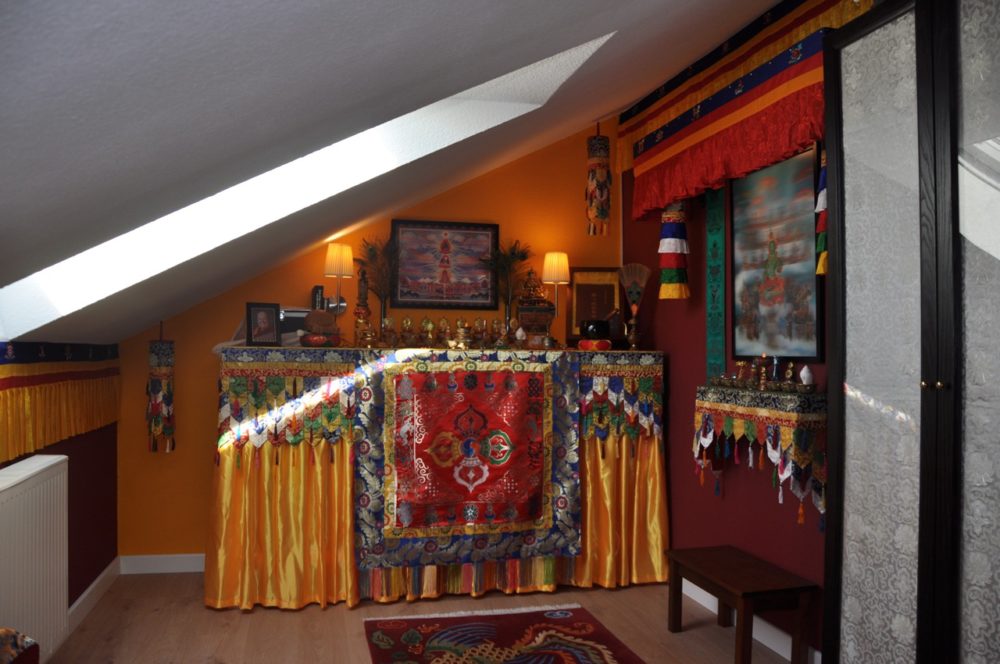
I had to promise my wife that I wouldn’t renovate and build the Buddha Room until I had finished everything else in the house. Meanwhile, the new Buddha Room is standing, and every time I enter it, I think back about the event and reflect on whether I have cultivated correctly so as not to enter the room without a real offering.
It was late January, just a few weeks before Chinese New Year, when we headed to Zhoushan in Zhejiang Province. It was bitterly cold and traveling to Mount Putuo (普陀) for a two-day visit was not good timing. COVID-19 was—and still is—running rampant around the world. Any kind of travel required constant and painstaking vigilance, including full compliance with stringent prevention measures in China. Nevertheless, our destination looked as beautiful as ever, a glimmering island in the great ocean, celebrated as the “Buddha-land in the sea.” (Haitian fogou 海天佛國)
Mount Putuo is very environmentally friendly. Except for public buses, no vehicles are allowed, so we had to leave our car at the wharf. Most residents simply cycle around for their daily errands, and even said bicycles are under a quota control. For visitors to move about, you can take a bus, cycle, or simply walk. Roads and pathways are well maintained, and there is a long road that connects all the temples on the island, big or small, affording a pleasant journey at one’s own pace.
It was warm and sunny with a gentle breeze by the time we reached the island in the early afternoon. As there were very few visitors, we could stroll around at our leisure, enjoying the sunlight’s embrace. “You are so lucky,” commented our trip’s docent. “It was so windy in the morning that the ferry service was about to be suspended. In a week, the entire mountain might be closed to prevent the chance of further infections, no matter how sporadic.” We were blessed with the good fortune of a joyful excursion.
Mount Putuo is classified by the Chinese government as an “AAAAA Grade Scenic Resort and Historic Site,” attracting about 10 million visitors each year under normal circumstances. Visitation, though down 40 per cent during the pandemic in 2020, has rebounded sharply; as of April, 2.8 million people had visited Mount Putuo, a fivefold increase. The effort to attract visitors is ongoing: the Putuo Mountain College of the Buddhist Academy of China was recently completed, and Guanyin Dharma Park opened last November.
Putuo is a Chinese transliteration of the Sanskrit Potalaka, which is mentioned in several Buddhist scriptures, including the Gandavyuha Sutra (added as the final sutra in the Avatamsaka Sutra). Potalaka is described as the holy residence of Avalokiteshvara, the bodhisattva of compassion. According to Guang Xing, Mount Putuo was identified as the mythical Potalaka mountain by Buddhist monks and Chinese literati (Guang 2011: 1-22). It has been the pilgrimage site of Avalokiteshvara for about a millennium, honored as one of the four sacred Buddhist mountains in Chinese Buddhism. We speak here of Guanyin, the feminine form of Avalokiteshvara popularized in Chinese Buddhism. We will return to Guanyin below. For now, we simply need to know that Mount Putuo’s status matches that of Mount Wutai (五台) for Manjushri, Mount Jiuhua (九華) for Kshitigarbha, and Mount Emei (峨眉) for Samantabhadra.
There seem to be three main demographics for visitors to Mount Putuo: sightseers, pilgrims, and students of Buddhism. The majority of sightseers are visitors who do not have much knowledge of Buddhism, nor much interest in its history, sutras, or temples. Nevertheless, everyone, regardless of background, recognizes this place as one expecting reverence and respect for the buddhas and bodhisattvas. When we worship and make our wishes before the famous 33-meter statue of Nanhai Guanyin, we are also introspecting, contemplating, and reflecting on the vicissitudes and travails of our lives.
The town nearby is neat and chic, full of activity and interesting souvenirs for tourists to commemorate their visit. Even in the winter, Mount Putuo is generously covered with greenery and vegetation, with a multitude of species including ancient camphor trees and the rare wild plants of Carpinus putoensis (普陀鵝耳櫟). They are one of the major treasures on Mount Putuo and monoecious. There are red and yellow variations coexisting, but they do not mature at the same time, so the pollination rate is extremely low. When the Sun is shining, the leaves of many trees turn golden in the backdrop of the Prussian blue sky, surrounded by the various temples. It is truly a picturesque sight.
Carpinus Putoensis Cheng. From baidu
The beautiful scenery, unique to Mount Putuo, is reminiscent of places I have visited in Japan. The connection between Mount Putuo and Japan can be traced back to the Tang dynasty (618–907), when a Japanese Zen and Tendai monk-pilgrim named Egaku (Chinese: 慧鍔; Hui’E) wanted to bring a statue of Guanyin from Mount Wutai to Japan. However, his voyage back via Mount Putuo was hampered by storms and waves despite several attempts. One day, Egaku had a dream in which he realized that the statue of Guanyin did not want to leave. He decided to enshrine it and built a simple hut near the Tidal Sound Cave. Immediately, his ship sailed through and he was able to return to Japan. This is the story of Guanyin “bu ken qu” or “unwilling to go,” and is the source of many folktales surrounding the establishment of temples and monasteries on Mount Putuo. Exchanges between Mount Putuo and Japan continued over many centuries.
Guanyin is the real protagonist linking Japan and China, with Guanyin known as Kannon or Kanzeon in Japan. Belief in this personification of compassion and benevolence has a long history in China. First introduced from India in the Western Han dynasty (202 BCE–9 CE), Avalokiteshvara was adapted and amalgamated into Chinese culture, most famously through the female figuration and her unique 32 transformations (Guang 2011: 1-22). Beginning in the Song dynasty (960–1279), the Chinese transformed the bodhisattva into the Goddess of Mercy, depicted in the feminine. (Minneapolis Institute of Art)
Belief in Guanyin has flourished in China ever since, going beyond even religious boundaries in everyday life (Guang 2011: 1-22). She is not confined to monastic life, as it is said in the Universal Gate chapter of the Lotus Sutra that any worldly being in danger will be delivered instantly on calling her name. Therefore, Guanyin has been worshipped and revered by all classes of people. As she is a compassionate divinity with countless virtues and merits, she is endowed with transcendental power. She excels in skilful means, allowing her to appear in whatever form needed by sentient beings. And that, in my opinion, is probably the reason behind the 32 forms in the Chinese tradition, including Guanyin Yangzhi (楊枝), or Willow Branch Guanyin. The Guanyin Yangzhi is only one example among many of her history-rich gender transitions.
Willow Branch Guanyin. From online source
We were able to visit a 2.5-meter-high, 2.2-meter-wide monument of Guanyin Yangzhi at a nunnery of the same name. The nunnery, situated at the foot of Putuo’s Western Xiangwang Peak, was built in 1608. The artistic style was pioneered by Yan Liben (閻立本), a famous figure painter in the Tang dynasty, while the stele’s engravings appeared during the Ming dynasty (1368–1644). Holding a tender willow branch in her right hand and a clear water vase in the left, Guanyin is luxuriously crowned with pearls and precious stones, dressed in sumptuously embroidered garments, and adorned with agate, amber, and pearls. She spreads dewdrops to all the world’s quarters to dispel suffering and pain.
Guanyin is replete with the marks of beauty, dignity, and calm. Except for her face, there are not many traditionally female features shown. Indeed, she appears tall and somehow mighty and masculine, standing on her bare feet. Her belly bulges out slightly, and she has large hands and feet. While beholding her, I could not help but think of the mural of Padmapani, another manifestation of Avalokiteshvara, at Ajanta Cave No.1, in India. Painted during the sixth century BCE, the bearer of the blue lotus is a male figure with a slender body. Both forms of Avalokiteshvara are crowned and bejewelled, have physically beautiful features, and appear composed and graceful.
Padmapani, Ajanta Cave 1. From alamy.com
There are many temples on Mount Putuo, but the two most well known are Puji Temple (普濟寺) or the “front temple” (又稱前寺), and Huiji Temple (慧濟寺) on the peak of the mountain. They receive the most pilgrims, but Fayu Temple (法雨寺) is my personal favorite; when there is no pedestrian crowding, it has a gentle and soothing atmosphere. It is surrounded by towering ancient trees, suspending the visitor in time between past and present. From a distance, one can see that the gate to the monastery is unique, unlike those of other temples on Mount Putuo, which are painted in yellow ochre. Here it is light red in color: a soft, ambient hue that emphasizes an atmosphere of paradisical peace and bliss.
Upon entering and reaching the main hall of Nine Dragons, where a statue of Guanyin is enshrined, one feels a strong sense of sublime and resplendent majesty. Yuantong Hall of the Fayu Temple is renowned for its resplendent appearance and ingenious interior structure, with a large ball hanging from the ceiling of its dome surrounded by nine vertical rafters. Each rafter is carved with a dragon that rears its head in a scramble for the ball. This intricate layout is called the Bracket with Nine Coiling Dragons and is ascribed to Emperor Kangxi (康熙) (1654–1722), who used the materials of the former palace of the Ming dynasty in Nanjing to reconstruct an earlier monastery, Zhenhai Monastery, on Mount Putuo.
Fayu Temple. From the author
What strikes me most, however, is not Fayu Temple’s imperial heritage, but rather two great minds that made their mark here. Venerable Yinguang (印光) (1861–1940) was the 13th patriarch of the Pure Land tradition and the abbot of Fayu Temple for decades. Meanwhile, Ven. Hongyi (弘一) (1880–1942) wrote in traditional calligraphy Fayu Temple’s nameplate of “heavenly flowers and Dharma rain”—first devised by Emperor Kangxi. Li Shu Tong (李叔同) was Hongyi’s secular name. A wealthy and rakish young man, he was also an eclectic and learned scholar of high culture. He relinquished what he possessed and committed to living a monastic life. Fully devoted to promulgating Buddhism, he rose to become an eminent monk.
At some point, the two monastics met each other. It is said that Master Hongyi admired Master Yinguang and asked him to be his teacher. Humble and modest, Master Yinguang refused, but invited him to stay as long as he wanted. The two spent seven days together, studying, practicing, and meditating without a single word exchanged. They simply were, as minds think alike, without verbal obstructions, thoughts traveling and flowing effortlessly. How wonderful it is to exist together beyond words. But in the era of the Internet, we are bombarded with so many words and so much information that we lose our sense of their meaning, let alone their authenticity.
If we wish to be heard, we need to be sincere, candid, and heartfelt. “Guanyin” in Chinese means the Perceiver of Sounds, or “Guanshiyin,” the Perceiver of World’s Sounds. As chanted in the Universal Gate chapter of the Lotus Sutra: “Perceiver of the World’s Sounds, heavenly voice, the voice of the sea’s tide—magnificent, rich and harmonious surpassing all worldly sounds.” If we keep Guanyin in our hearts and call on her sincerely, she will always respond.
Mount Putuo is one of the four sacred mountains in Chinese Buddhism, lies in the East China Sea and incorporates the beauty of both mountain and sea, and honored as the Buddhist Land on the Sea. Its area is approximately 12.5 square kilometres (4.8 sq mi) and there are numerous famous temples. Mount Putuo has been a pilgrimage site for over a thousand years. After the Tang dynasty, Mount Putuo became a center of Avalokitasvara (Guanyin) worship.
In 863, a Japanese monk called Hui E aimed to carry a statue of Avalokitasvara from Mount Wutai to his country by ship. However, when the ship was passing through the sea nearby Mount Putuo, it was prevented by the stormy waves and hundreds of iron lotus flowers suddenly appeared on the sea, blocking the way. Monk Hui E believed that Avalokitasvara didn’t want to leave China. So he knelt down on the bow of the boat and silently prayed to the Bodhisattva Avalokitasvara for instructions. After a while, the iron lotus on the sea disappeared, and the boat drifted to the shore of Mount Putuo, where he built a temple in the purple bamboo forest to enshrine the statue of theBodhisattva. From that time, Mount Putuo got the spirit and became the bodhimanḍa of Bodhisattva Guanyin.
Traditionally there were three main temples: The Puji Temple (founded 10th cent.), the Fayu Temple (founded 1580 CE), and the Huiji Temple (founded 1793 CE). Today, there are more than 30 major temples located at Mount Putuo. In addition to these monasteries, there is the Institute of Buddhism, one of the largest Buddhist academic institutes in China.
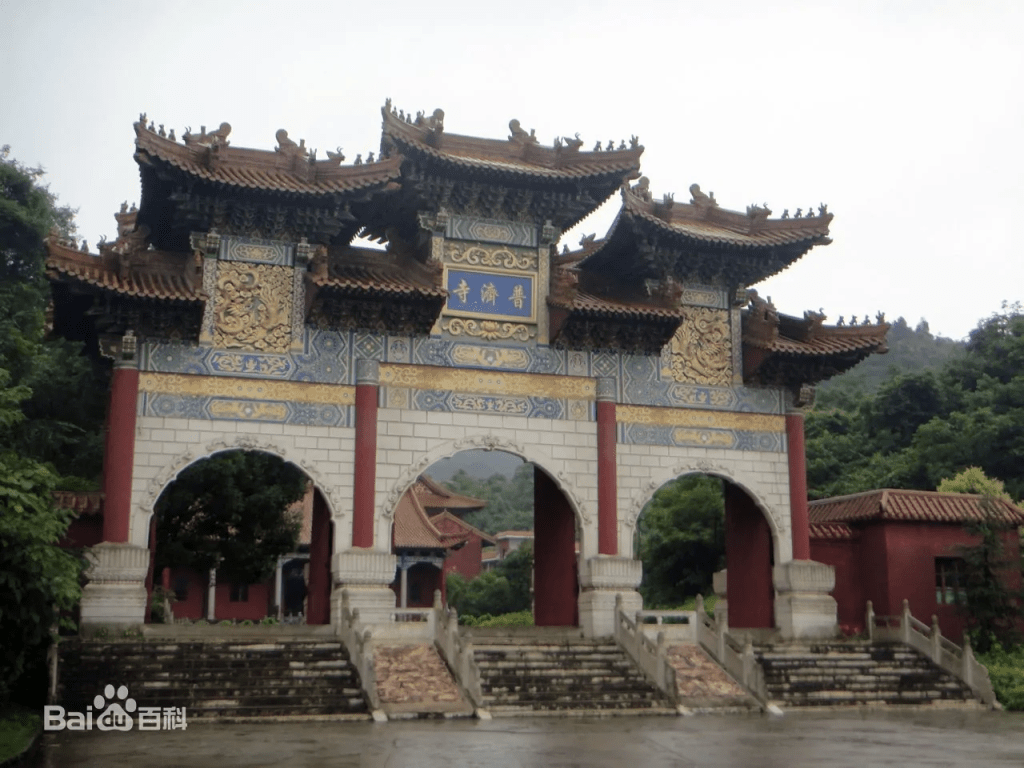
Puji Temple
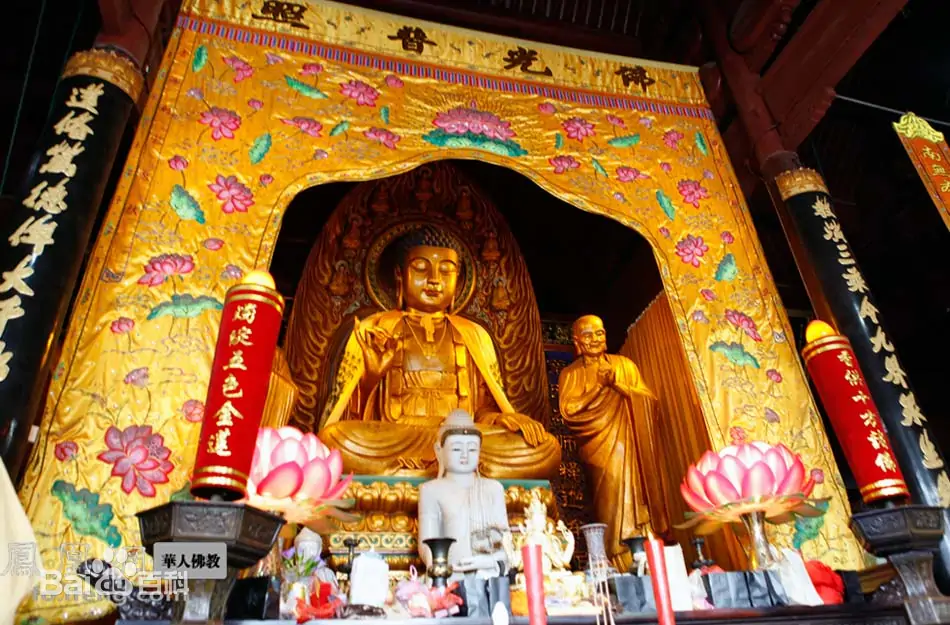
Puji Temple is the main temple of Mount Putuo and all important Buddhist activities are held here. Covering an area of 37,019 square meters, it contains Grand Yuantong Palace, Hall of Heavenly Kings, Depository of Buddhist Sutras and 357 other buildings. Grand Yuantong Palace is the main hall which houses an 8-meter-high statue of Guanyin surrounded by 32 Bodhisattva with different costumes in a variety of poses on east and west walls. Haiyin Pond in Puji Temple was a free life pond full of spring water primitively and now a lotus pond. At the night of summer, the gorgeous lotus and bright moonlight compose an attractive scenery.
Puji Temple
Haiyin Pond in Puji Temple
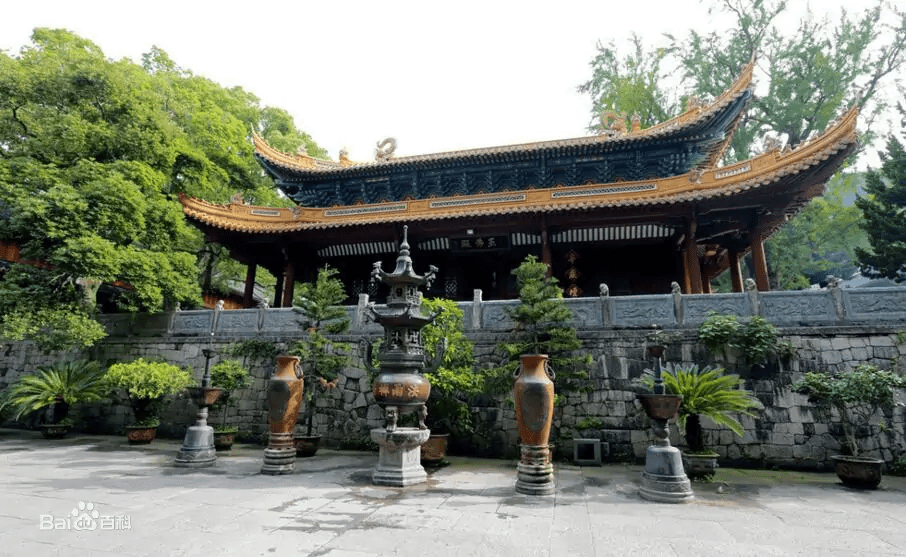
Fayu Temple
Fayu Temple was built along the uphill with grand building groups and extraordinary manners. It got such a name in that you could see amazing relives of nine dragons are fighting for pearl on the screen wall before the gate of Halls of Heavenly Kings. Among the 294 halls of Fayu Temple, Nine Dragons Guanyin Palace(also called Grand Yuantong Palace), said to be a Buddhist Temple transported from the imperial palace of Ming Dynasty, acts as the most magnificent one. The highlighted part of this palace must be the Nine Dragons Caisson Ceiling. With unique shapes and vivid images, it enjoys high artist value and is listed in Three Treasures of Mount Putuo.
FaYu Temple
Delicate Carvings in Nine Dragons Screen Wall
Huiji Temple (惠济禅寺)
Huiji Temple is perched in Foding Mountain, the highest peak of Mount Putuo. The architecture of the whole temple is unique. It is located on the mountain and is arranged horizontally. The hall is spacious and magnificent. Hidden in a luxury forest, Huiji Temple features in peaceful environment. Standing at the peak of Mount Putuo, you can have a distant view of the mountains, sea, reefs, beaches and buildings. In the whole temple, statues, carvings and pictures of Guanyin can be found everywhere.
Grand Huiji Temple
Status of Guanyin Bodhisattva
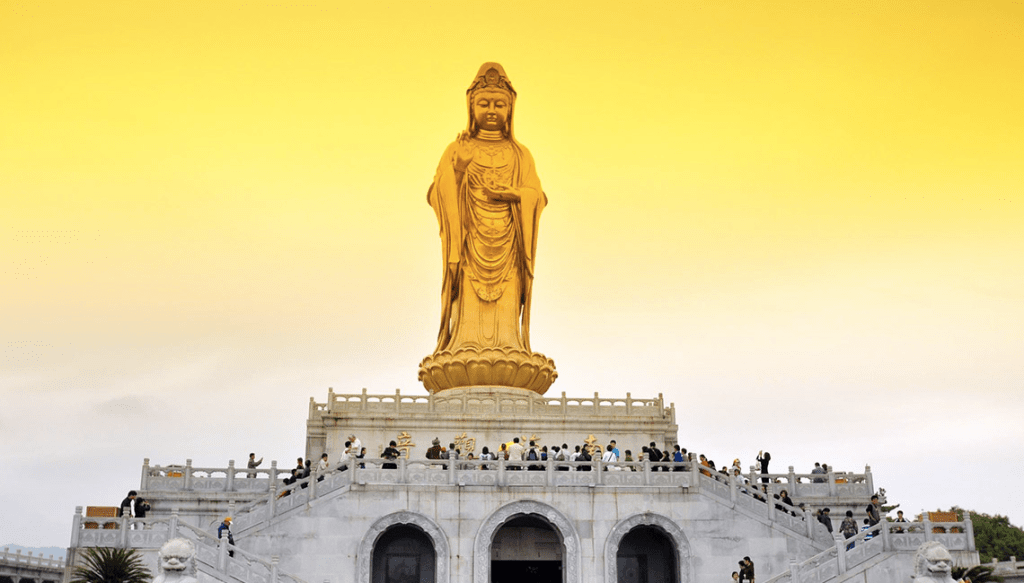
Statue of Standing Nanhai Guanyin
Standing in the south Shuangfeng Peak, Statue of Standing Nanhai Guanyin is the largest outdoor statue of Guanyin made from copper in Asia. With an 18-meter-high statue, 2-meter-high lotus and 13-meter-high foundation, the whole structure has two stories in its foundation. The first story displays elegant carvings, while the second story houses 500 statues of Guanyin in different poses. On the consecrating day at year 1997, a strange nature phenomenon happened. Before the consecrating ceremony, the sky was full of dark cloud and it seemed that it would rain soon. However, as the ceremony began, it became sunny as if two hands pushed aside the clouds. A beam of sunlight just casts on the Guanyin statue.
Statue of Nanhai Guanyin
Avalokitasvara, Guan Shi Yin in Chinese, means the Perceiver of World’s Sounds. The Lotus Sutra says: “Perceiver of the World’s Sounds, heavenly voice, the voice of the sea’s tide—magnificent, rich and harmonious surpassing all worldly sounds.” The bodhisattva always help all beings in danger and distress and is willing to bear the pain of all beings. There are many stories and folk tales about the bodhisattva’s infinite mercy and compassion.
If we hold the bodhisattva in our hearts and call on her sincerely, she will always respond. I had a personal experience. You can read my story here: Guan Shi Yin Bodhisattva saved my life。















 Peace LiLy