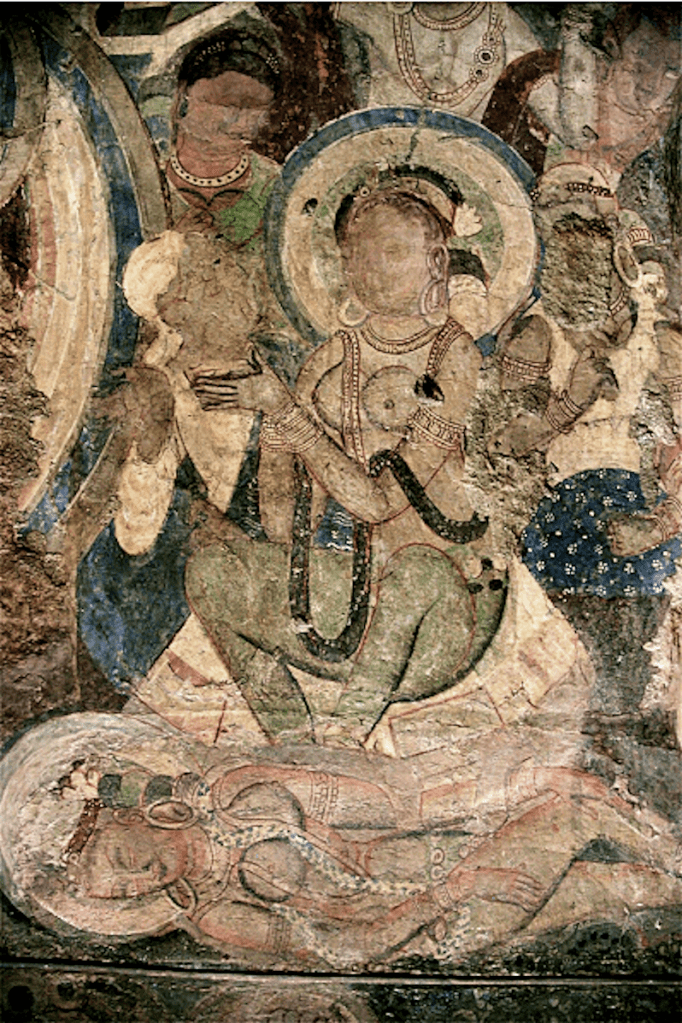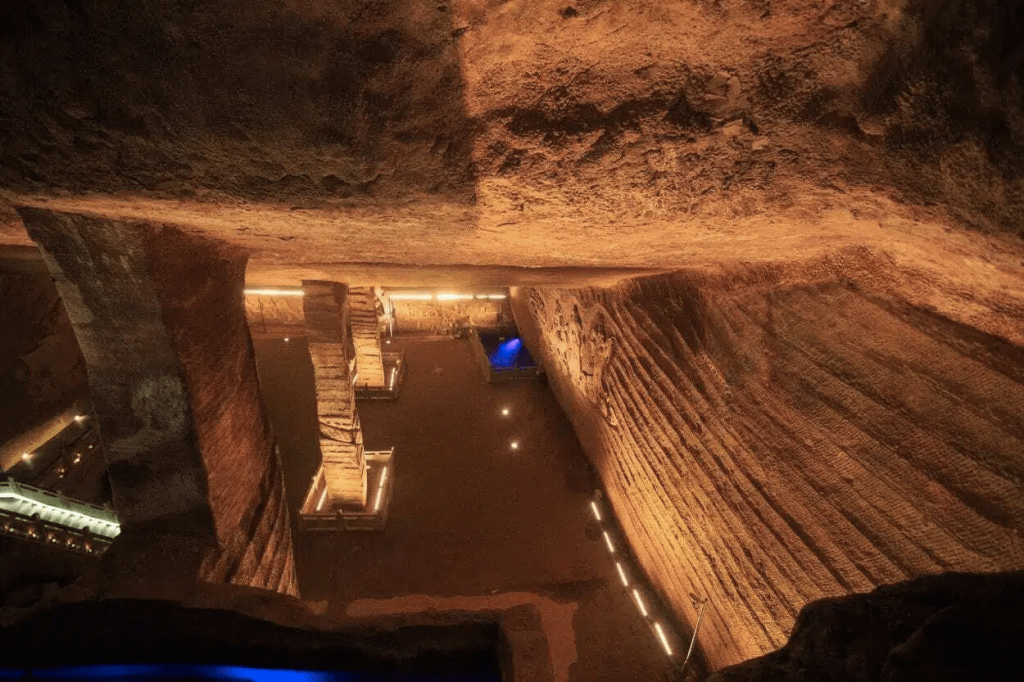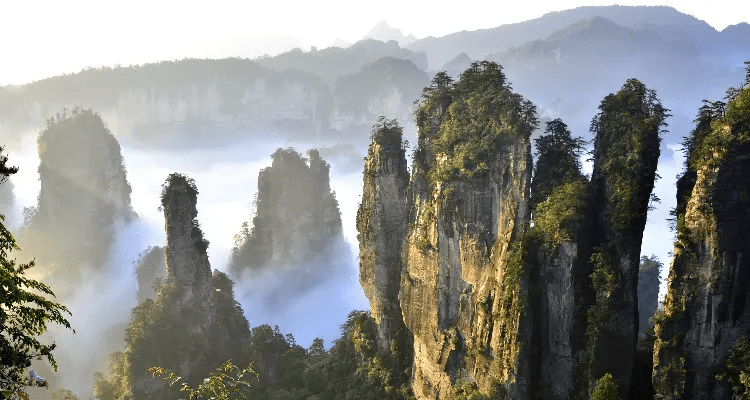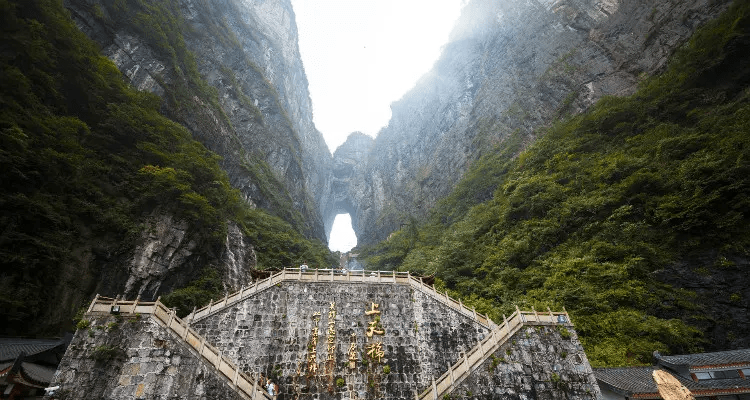
Longmen Grottoes

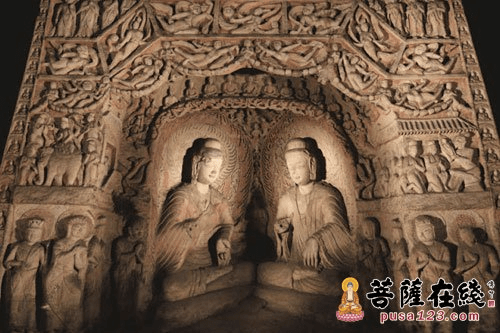
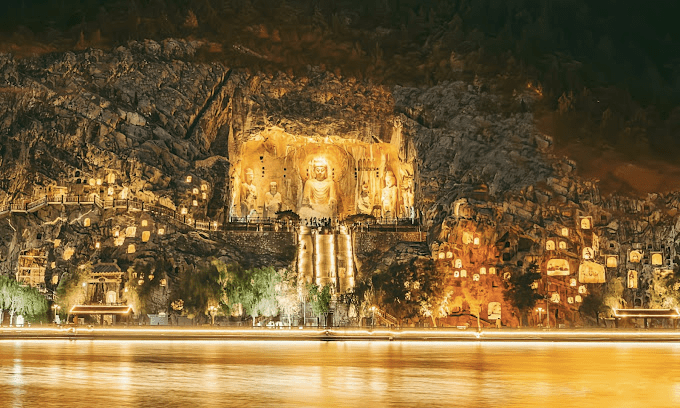
Splendid Night Scene of Longmen Grottoes, By Jack Sparrow

The Longmen Grottoes, a Buddhist cave complex located 13 kilometers south of Luoyang in China’s Henan province, form some of the most significant and exquisite representations of ancient Chinese stone art. Created over the course of approximately five centuries beginning in 493 CE, these grottoes, along with the statues and inscriptions carved within, provide a window into the political, cultural, and artistic circumstances of the late Northern Wei and Tang periods. The caves were carved into the steep limestone cliffs of Mount Longmen and Mount Xiang which face one another along a one kilometer stretch, forming a valley through which the Yi River flows. This site, with its appearance of a natural gate, was historically referred to as Yique or “Gate of the Yi River.” After Emperor Yang of the Sui Dynasty built an imperial palace in Luoyang at the beginning of the 7th century CE with its southern gate aligned to the cliffs of the site, the name Longmen or “Dragon’s Gate” came into use (the dragon served as an emblem of the power of the emperor).

LAYOUT
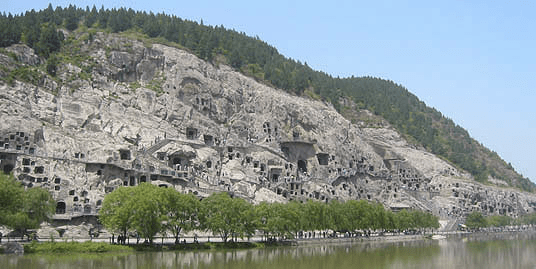
Mt. Longmen as seen from Manshui Bridge to the southeast

In total, more than 2,300 grottoes and niches, 100,000 Buddhist statues, ranging in size from several centimeters to over 17 meters, and over 2,800 inscriptions were carved into the cliffs at the site, making it the largest such complex in China. A majority of the caves were carved into the face of Mount Longmen, on the west side of the Yi River. Such is the density of grottoes and niches there that they give the cliff face an incredible, honeycomb-like appearance when viewed at a distance. Whereas those grottoes on the west side were used for ceremonies which honored the dead, the caves carved on Mount Xiang to the east were home to a large community of Buddhist monks of various sects.
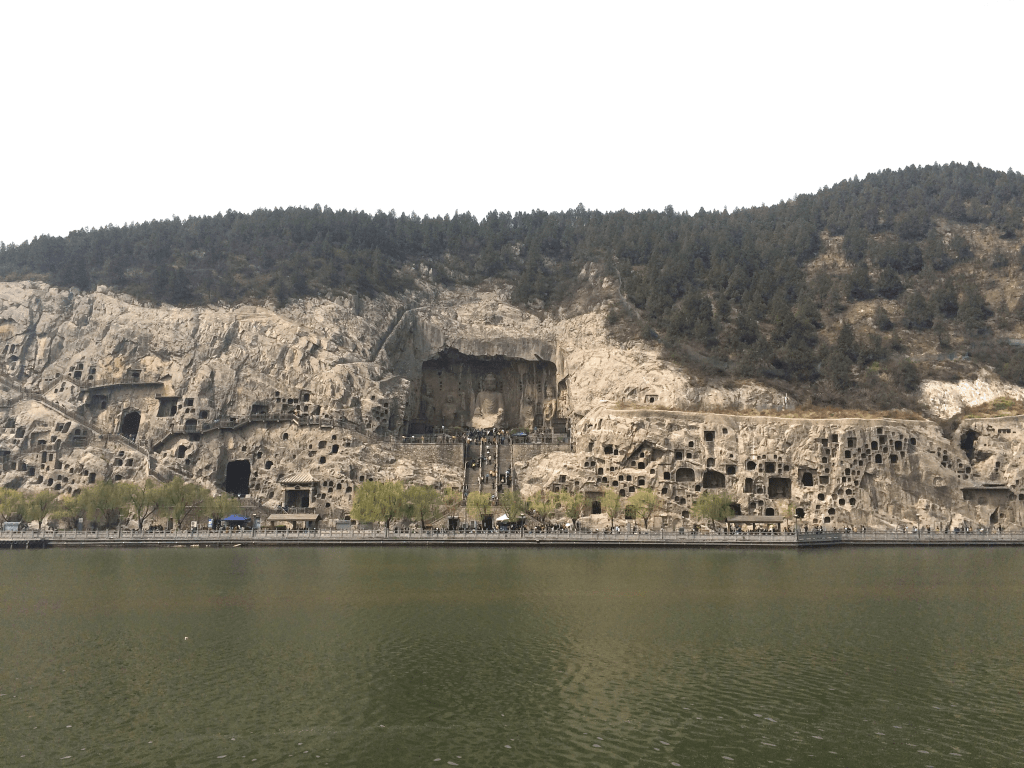
View of the West Hill Grottoes from the east bank of the Yi River. Charlie – Own work

2,300 GROTTOES & NICHES, 100,000 BUDDHIST STATUES, & OVER 2,800 INSCRIPTIONS WERE CARVED INTO THE CLIFFS AT THE SITE.

REFLECTION OF SOCIETY

The carving of grottoes into remote mountainsides to serve as Buddhist temples was a practice which originated in India c. 3rd century BCE. Buddhism, along with the practice of grotto carving, passed to China along the silk road, influencing the creation of Buddhist grottoes at Yungang near Pingcheng (modern day Datong), the capital of the Northern Wei Dynasty, in the middle of the 5th century CE. When Emperor Xiaowen, who contributed to the carving of the Yungang Grottoes, moved the capital from Pingcheng to Luoyang in 493 CE, he shifted his energy to beginning grotto construction at Longmen.

Many of the statues within the oldest grotto carved there, Guyang Cave, were ones which members of the royalty, who followed Emperor Xiaowen to Luoyang, vowed to build. Over 1,000 niches and 800 inscriptions are contained within the cave, making it one of the richest at Longmen and significant as a reflection of the late Northern Wei style of both sculpting and writing. The central statues of Sakyamuni Buddha and two Bodhisattvas (those on the path to enlightenment) each take on a somber appearance and a slender silhouette, contrasting the earlier, broad-shouldered style found at Yungang. Inscriptions attached to statues within Guyang Cave include 19 of the 20 inscriptions designated as exemplary forms of Northern Wei calligraphy and are critical in helping to identify the origins of each work.

Sakyamuni Buddha and two Bodhisattvas at Guyang Cave

Fengxian, or Feng Xian Si (奉先寺), or Li Zhi cave is the Ancestor Worshipping Cave, which is the largest of all caves carved on the west hill built between 672 and 676 for Empress Wu Zetian. The carvings are claimed to be the ultimate in architectural perfection of the Tang dynasty. The shrine inside the cave measures 39 m x35m. It has the largest Buddha statue at the Longmen Grottoes. Of the nine huge carved statues, the highly impressive image of Vairocana Buddha is sculpted on the back wall of the Fengxian. The image is 17.14m high and has 2 m long ears.An inscription at the base of this figure gives 676 as the year of carving. The Bodhisattva on the left of the main image of Buddha is decorated with a crown and pearls. Also shown is a divine person trampling an evil spirit. The main Vairocana image’s features are plumpish and of peaceful and natural expression. Each of the other large statues are carved with expressions matching their representative roles. These were carved at the orders of Empress Wu Zetian, and are considered uniquely representative of the Tang dynasty’s “vigorous, elegant and realistic style.” The huge Vairocana statue is considered as “the quintessence of Buddhist sculpture in China.”

Attendants at FengxiaSi Cave Uploaded by Benjamin Oswald

The Vairocana statue also provides at its base the names of the artisans who worked here, the name of the Emperor Gaozong, who was the donor, and also honors Wu Zetian. It is said that Wu Zetian donated “twenty-thousand strings of her rouge and powder money” to complete this edifice. Hence, it is conjectured that the Vairocana Buddha was carved to resemble the Empress herself and termed a “Chinese Mona Lisa, Venus or as the Mother of China”. All the images here, which remain undamaged, project character and animation. Statues of Kasyapa and Ananda, the two principal disciples of Vairocana, and of two Bodhisattvas with crowns flank the main statue, in addition to numerous images of “lokapalas (guardians or heavenly kings), dvarapalas (temple guards), flying devas and numerous other figures.
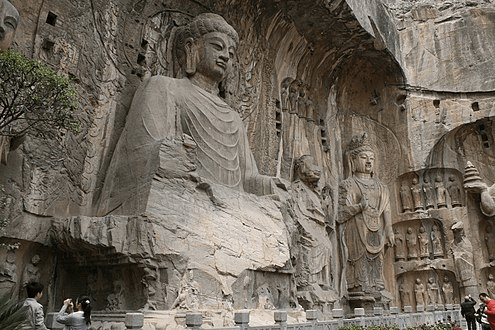
The Big Vairocana of Longmen Buddha Grottoes
Vairocana (Lu SheNa) Buddha, By Anagoria – Own work, CC BY 3.0, https://commons.wikimedia.org/w/index.php?curid=49649630

NOTABLE CAVES

In addition to Guyang and Fengxiansi Caves, several others are particularly worthy of mention. The set of three Binyang Caves (North, Middle, South), carved shortly after the Northern Wei capital was moved to Luoyang, was donated by Emperor Xuanwu in honor of his father, Emperor Xiaowen, and mother, Empress Wenzhao. Unlike figures in Guyang Cave, those in the Binyang Caves are of an earlier Northern Wei style, closer to that found at Yungang Grottoes. Work began on Yaofang Cave in the intervening period between the Northern Wei and Tang dynasties and came to include the engraving of 140 Tang era medical prescriptions – practical remedies to ailments ranging from cholera to hysteria. These treatments, which spread to Japan in the 10th century CE, reveal the degree to which medical science advanced during the Tang Dynasty.
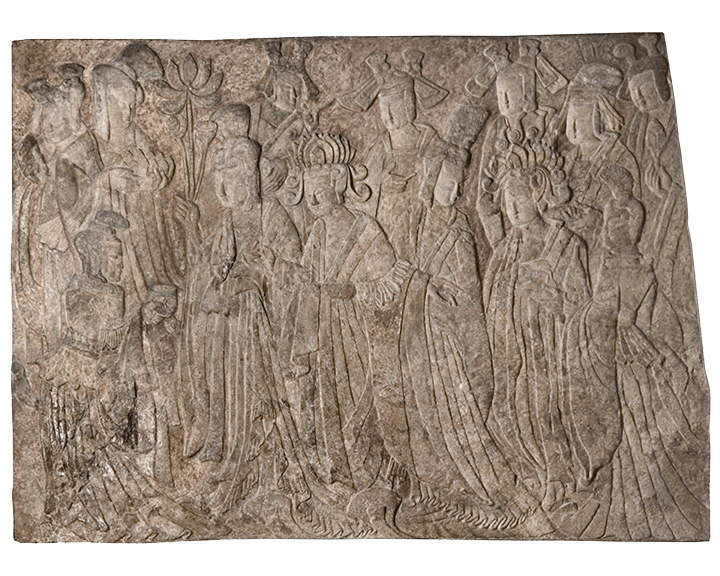
Offering Procession of the Empress as Donor with Her Court, Chinese, from Longmen, Binyang Central Cave, Henan Province, ca. 522 C.E., Northern Wei Dynasty

This Offering Procession of the Empress as Donor with Her Court, was taken off from the original place for reasons. And now you can see it in the Nelson-Atkins Museum of Art  in Kansas City, US. The Nelson-Atkins Museum of Art is a much-loved institution. Many americas may not know, though, is that the Nelson also has a world-renowned reputation among artists and scholars of Asian art. With more than 7,000 works spanning 5,000 years, the museum boasts one of the most celebrated collections of Asian art in the West.

Wanfo Cave, which was completed shortly after the completion of Fengxiansi Cave, was created in honor of Emperor Gaozong and Empress Wu Zetian and purportedly contains 15,000 small, sitting Buddha figures carved within the vast grids of tiny niches which blanket several walls. Prominent patrons of the cave included a female court official and a palace chapel nun. The largest grotto on the east side, Kanjingsi Cave, unlike many other large caves, lacks the grouping of large, carved Buddhist statues. In their place is a procession of life-sized Arhats (those far advanced along the path to enlightenment) stretching around the perimeter of the cave, each with a unique expression, carved in relief in the evocative and highly-detailed style found at other Tang era grottoes.
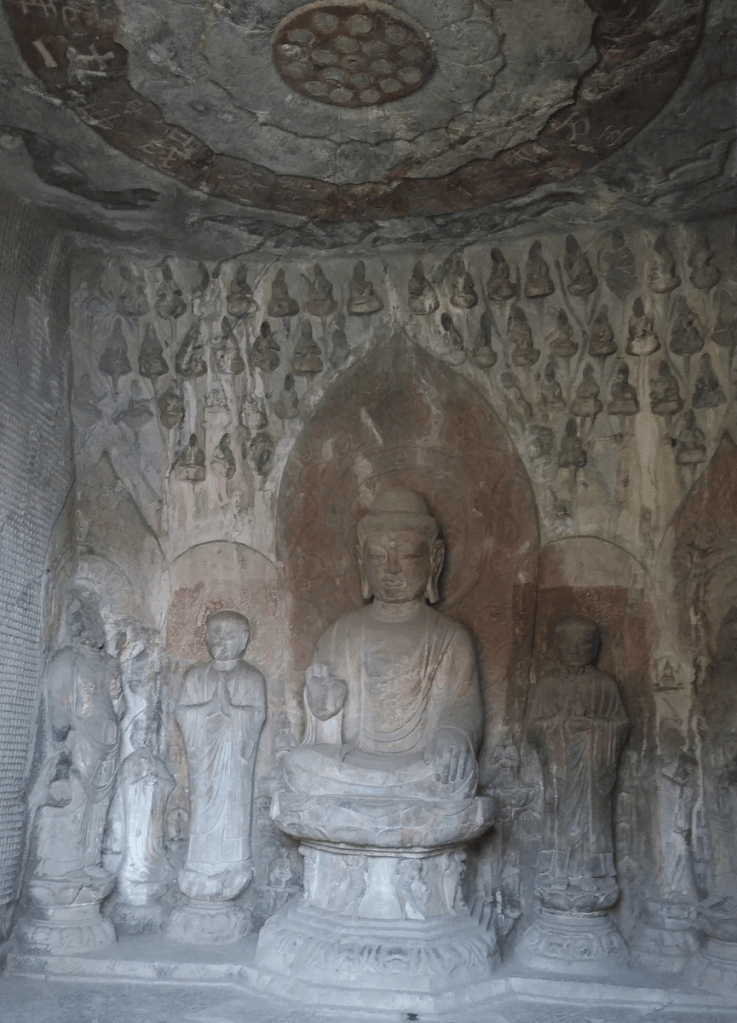
Wanfo Cave, part of the Longmen Grottoes, containing 15,000 Buddha figures, Uploaded by Benjamin Oswald, published on 21 August 2017

PRESERVATION

One can only imagine the splendor of the grottoes at Longmen during the Tang Dynasty, with thousands of recently completed carvings painted in a brilliant array of colors. Unfortunately, a number of natural and human forces have detracted from, although in many cases by no means destroyed, the intention of the original artists. Among the natural causes of damage are corrosion due to acid rain, wear from wind exposure, and naturally occurring fissures of the limestone, exacerbated by plant growth and water seepage.

The caves, stone statues, steles and inscriptions scattered in the East Hill and West Hill at Longmen have been well preserved. The property area and buffer zone retain their natural landscapes and the ecological environment that have existed since the late 5th century. The works of humans and nature have been harmoniously unified and the landscapes possess high integrity.

In the continuous evolution of Longmen Grottoes, the aesthetic elements and features of the Chinese cave temples’ art, including the layout, material, function, traditional technique and location, and the intrinsic link between the layout and the various elements have been preserved and passed on. Great efforts have been made to maintain the historical appearance of the caves and preserve and pass on the original Buddhist culture and its spiritual and aesthetic functions, while always adhering to the principle of “Retaining the historic condition”.

As with pilgrims of ages past, who visited Longmen to worship or to gain merit through the dedication of a Buddhist image, these grottoes afford modern visitors the chance to take a step closer to the lives of people from a different era, and to stand in wonder at the ability and determination of humankind.

Longmen Grottoes

Link:https://peacelilysite.com/2023/05/05/longmen-grottoes/

#Travel #ChineseCulture #LongmenGrottoes #BuddhistStatues #Art #Carvings #AsianArt

Source: https://en.wikipedia.org/wiki/Longmen_Grottoes, https://www.worldhistory.org/Longmen_Grottoes/, https://www.travelchinaguide.com/attraction/henan/luoyang/longmen.htm

The Woodcutter and Dragon Snake

Photo by Tobias Aeppli on Pexels.com

Once there was a poor woodcutter who found a wounded dragon snake in the mountains. The woodcutter kindly nursed the dragon snake back to health and later released it into a hole in the mountain. There, a precious ganoderma lucidum grew, which the dragon snake protected day and night.

One day, the emperor fell ill and needed ganoderma lucidum to cure his disease. He offered a heavy reward for anyone who could provide it. The woodcutter remembered the dragon snake and went back to the mountain to find it. The dragon snake, grateful for the woodcutter’s kindness, gave him the ganoderma lucidum. The woodcutter presented it to the emperor, who gave him a lot of gold and silver as a reward.

Photo by Zlau0165u00e1ky.cz on Pexels.com

The woodcutter now lived a life of luxury but was not satisfied. He wanted to become an official and saw an opportunity when the queen lost her sight. The emperor announced that whoever could restore her sight with the eye of a dragon snake would become the prime minister. The woodcutter remembered the dragon snake again and begged for its help. The snake allowed the woodcutter to take one of its eyes with huge pain, which the woodcutter presented to the emperor. The queen’s sight was restored, and the woodcutter was made prime minister.

However, the woodcutter’s greed was insatiable. When the princess fell ill, and the dragon snake’s liver were needed to heal her, the woodcutter asked for the dragon snake once again. The dragon snake, wanting to repay the woodcutter’s kindness, allowed him to cut a small piece of its liver. But the woodcutter, overcome by greed, he went inside dragon snake’s stomach and took a large piece, causing the snake unbearable pain. The snake closed its mouth in agony, and the woodcutter was trapped inside.

This story shows that the woodcutter’s downfall was entirely due to his own actions, driven by his insatiable greed.

The moral is: The wages of avarice is death.

The Woodcutter and Drangon Snake

Link:https://peacelilysite.com/2023/04/28/the-woodcutter-and-dragon-snake/

#Woodcutter #DragonSnake #Buddhisttalesforyoungandold #Buddhiststories #storiesforkids #moralstories #Jatakastories #PansiyaPanasJataka

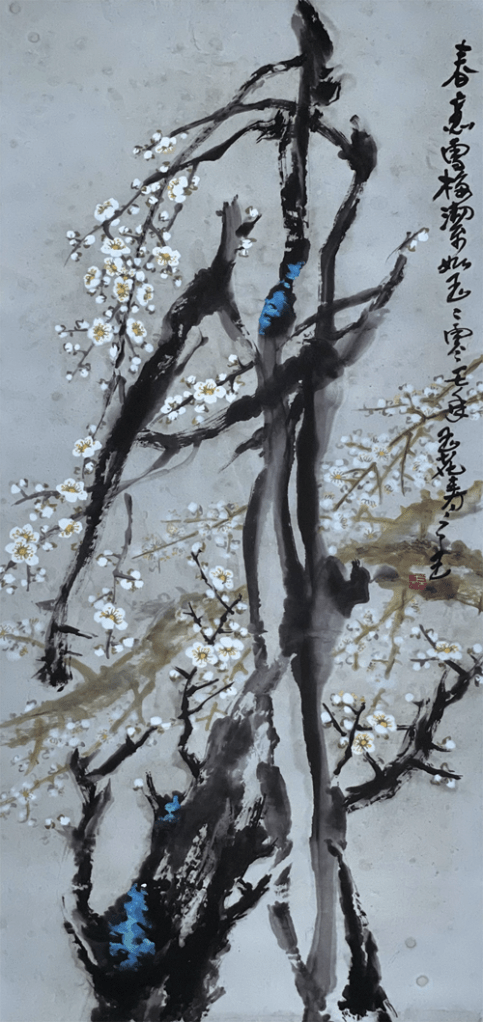
Art Works by Professor Yuhua Shouzhi Wang and Her Great Wisdom and Compassion

Springtime Snow-White Plum Blossoms as Pure as Jade

At the International Art Museum of America in downtown San Francisco, there is a special exhibition room, dedicated to Professor Yuhua Shouzhi Wang. This installation was established in 2018, containing a variety of water and ink paintings as wells as sketches. Professor Wang’s acclaimed works have been displayed all over the world, including an exhibition at Congress in 2008, where they called her work a ‘treasure of the world’. In 2019, Professor Wang’s art was exhibited at Shanghai Exhibition Center in China and the Louvre Museum in Paris. An art critic Aude de Kerros praised this event in Paris, saying ‘I have curated and critiqued so many art exhibitions, yet I have never seen an exhibition like this where all the guests are so touched and amazed by the art.’ Following the Paris exhibition, Professor Peter Drake, the Provost of the New York Academy of Art, presented a certificate to Professor Wang, recognizing her extraordinary contributions to representational and abstract art. In December 2020, the Chairman of Centre for Peace in United Nations Educational, Scientific and Cultural Organization (UNESCO), Guy Djoken awarded an “International First-Class Artist” title to Professor Wang for her accomplishment. Professor Wang is the only Asian artist who has ever received such a title. On December 29th 2020, Chairman Guy Djoken came to the museum to personally present the title certificate to Professor Wang.

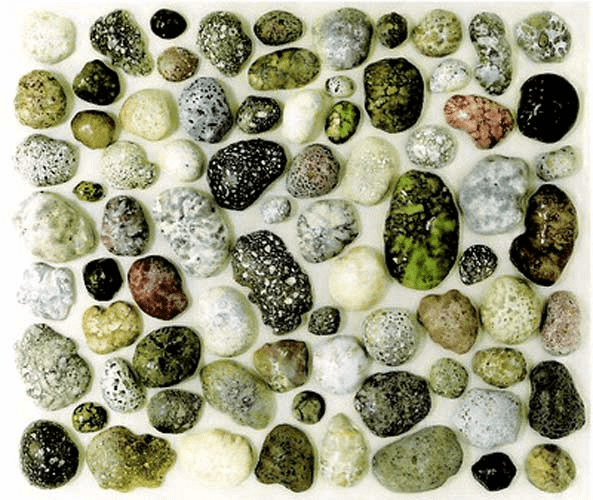
Hand crafted cobblestone
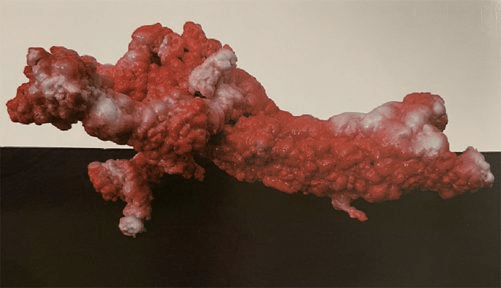
Hand Crafted Coral Sea Palace Monarch

Many people are aware that Professor Yuhua Shouzhi Wang is a world-renowned artist. However, the true identity of Professor Yuhua Shouzhi Wang is revealed as Fomu, Holy Mother the Great Mahasattva. She embodies great wisdom and compassion, noble morality, kindness, altruism, and selflessness in a perfect manner. She always considers other people’s well-being and is humble and very approachable. The compassion and kindness of Fomu, Holy Mother the Great Mahasattva, are pure and flawless. For example, in 2015, someone sneaked into the International Art Museum of America in San Francisco and tried to steal an artwork that had been acclaimed by the World Federation of UNESCO (WFUCA). This person was arrested by the police on site and subsequently detained. Since the artwork that he tried to steal was one of Fomu’s masterpieces, the court repeatedly requested Fomu to provide a valuation of the artwork, so that they could use her valuation to determinethe term for sentencing. When Fomu, Holy Mother the Great Mahasattva, knew about this person’s distress, She provided a statement saying that the artwork was rather ordinary and had no value. The court had no way of sentencing the person to any term and had to release him.

Another time, Fomu, Holy Mother the Great Mahasattva, saved a butterfly that had fallen into the water. Worried about the butterfly’s safety, Fomu brought it home and kept it for a few days to make sure the butterfly is well-recovered before letting it fly away. Fomu relentlessly led disciples to conduct life-releases. She went every week to woodlands to feed ducks and birds and never missed a week. She paid for it with Her own money and never accepted offerings from Buddhist disciples. Fomu, Holy Mother the Great Mahasattva, is well known for Her diligence and thriftiness. For many decades, the noble Fomu, Holy Mother the Great Mahasattva, always cooked Her own meals and washed Her own clothes. She never entrusted others to do Her chores. She would save the food that She could not finish eating and finish it the next day or two. She was never wasteful. Usually, Fomu, Holy Mother the Great Mahasattva, would even save the water that She did not finish drinking, the water used for washing vegetables or hands, or wastewater from the filter and use it for irrigating flowers or flushing toilet. Through Her deeds, the Great Fomu, Holy Mother the Great Mahasattva, was teaching us how to start with the small things, cherish our good fortune, and actualize our cultivation practices.It is impossible to recount all the numerous exemplary deeds of Fomu.

Photo from internet weixin.com

Wherever Fomu, Holy Mother the Great Mahasattva, went, dragon Dharma protectors were present, and holy miracles manifested. When Fomu performed initiation and transmitted Dharma, holy states were manifested. For example, at the Antelope Valley, Fomu’s hat turned into a black garuda. In New Jersey, the hair of Fomu, Holy Mother the Great Mahasattva, suddenly went up and wrapped around a tall building in Manhattan on the opposite shore. In San Francisco, a twin Buddha light suddenly appeared, centered around where Fomu stood. All cultivators are touched by the compassion and morality of Fomu, Holy Mother the Great Mahasattva.

Art Works by Professor YuHua Shouzhi Wang and Her Great Wisdom and Compassion

Link:https://peacelilysite.com/2023/04/14/art-works-by-professor-yuhua-shouzhi-wang/

#ProfessorYuHuaShouZhiWang#Art#Artist#ClassofEase#InternationalArtMuseumofAmerica#TenUltimateArtistries#ArtistofFirstclassstanding #Inkpaintings #LotusPainters #HolyMother #Fomu #GreatMahasattva

The Life and Legacy of A Great Translator — Kumarajiva (III)

Photo by Jeremy Bishop on Pexels.com

Long and Tortuous Blooding Journey to China

Emperor Fu-Chien (337-385), also known as Fu-Jian, became increasingly interested in Buddhism. In 379, he conquered the city of Hsiang-yang and invited Tao-an to establish his renowned center for the translation of Buddhist scriptures and texts in the capital of Ch’ang-an, which Fu Chien fully supported. Tao-an, impressed by Kumarajiva’s spiritual, philosophical, and linguistic abilities, urged Fu Chien to invite him to Ch’ang-an. However, the warlord-emperor, in his aggressive manner, dispatched Lu Kuang with an army to conquer Kucha and capture Kumarajiva. Kucha fell to Lu Kuang, and Kumarajiva willingly accompanied the conquering general to Ch’ang-an in 383.

Then, a series of unexpected events occurred. Tao-an died in 385, and six months later, the Yao family attacked and conquered Ch’ang-an, killing Fu Chien. The new dynasty continued the policies of the previous rulers, such as preserving Tao-an’s translation center and promoting Buddhist studies, eagerly anticipating the arrival of Kumarajiva in the capital. Lu Kuang, upon hearing of the conquest of Ch’ang-an, halted his return and declared himself independent, establishing a state known as Later Liang with its center at Ku-tsang. Although Lu Kuang was not a Buddhist and did not care for spiritual matters, he recognized the political value of Kumarajiva.

Lu Kuang held Kumarajiva captive for sixteen years, subjecting him to numerous indignities while also using him as a military adviser. During this time, the rulers of Ch’ang-an pleaded for his release, but to no avail. Kumarajiva found this period of his life difficult and frustrating, as he was mocked for his beliefs and practices and could not pursue the work he felt destined to do. Despite this, he did not become passive or disheartened. Instead, he used this time to learn about China from the rugged soldiers who had traversed much of the country. He also quietly gathered texts to take with him to Ch’ang-an and thoroughly mastered the Chinese language.

Eventually, Yao Hsing, the second ruler of the new dynasty at Ch’ang-an, grew tired of fruitless negotiations with Lu Kuang and took a daring risk. In 401, his armies attacked and conquered Ku-tsang (in present-day Afghanistan). Kumarajiva was rescued unharmed, and in 402, he was welcomed into Ch’ang-an. He finally realized a dream he had conceived in his twenties, but it took until his fifties to come to fruition.

This image has an empty alt attribute; its file name is image-37.png
An artist’s impression of a translation session

Kumarajiva was warmly received by Yao Hsing, who bestowed upon him the title Teacher of the Nation. The fruitful phase of his life, which has profoundly influenced Chinese Buddhist tradition from the moment he entered Ch’ang-an to the present day, began with his arrival and lasted barely a decade. Within six days of taking up residence in his new home, he accepted the suggestion of a monk named Seng-jui, later one of his chief disciples, and began to translate a text on meditation, the Tso-ch’an san-mei ching. He found that the translation centre founded by Tao-an had been preserved and supported by Yao Hsing, and he marvelled at the quality of the work his predecessor had undertaken. He found himself surrounded by an enormous group of knowledgeable monks who were ready to continue the work of translation under his guidance. He rapidly reorganized the centre so that new translations could be made even while the accomplishments of the previous generation could be reviewed and revised. Within the next few years he translated almost fifty works in about three hundred volumes.

Like Tao-an, Kumarajiva thought that the ko-i or ‘matching the meaning’ method of translation, in which unfamiliar Sanskrit Buddhist concepts were replaced by well-known Chinese Taoist words, compromised Buddha’s teachings. A review of Tao-an’s work convinced him, however, that too strict an insistence on literal translation, sometimes requiring the creation of awkward neologisms, rendered beautiful texts obscure. His belief that a translation should accurately convey the tone and texture of a teaching inseparably from its content compelled him to adopt a new methodology for translation. He chose to emphasize the central theme of a text or treatise and to edit passages which would seem unnecessarily repetitive to Chinese readers. Once he had arranged the working force at his disposal to his satisfaction, he would read a text aloud, sentence by sentence, before a large congregation. Yao Hsing would often attend these sessions, and sometimes he held the original palm-leaf manuscript in his own hands while Kumarajiva explained it. After each sentence, Kumarajiva explained its meaning and offered an oral translation in Chinese. The congregation would comment on the results and suggest improvements. Meanwhile, a recorder would write down the approved translation, and later an editor would review the whole text for style and internal consistency. Finally, a calligrapher would correct the Chinese ideographs to be sure there were no ambiguities in transmission of the texts.

Kumarajiva’s influence was not limited to the so-called barbarous kingdoms of northern China. In 378 Hui-yuan, one of Tao-an’s chief disciples, had gone south and made his abode in a monastic community at Lu-shan, a mountain famous amongst Taoists, Confucians and Buddhists for its majesty and mystery. Within a few years, he became the informal leader of the Southern Chinese Buddhist community. Shortly after Kumarajiva’s arrival in Ch’ang-an in 402, Hui-yuan wrote to him and encouraged him to continue the work of Tao-an. A year later, hearing that Kumarajiva might return to Kucha, he wrote again, strongly urging him to remain in China. During the next few years the two monks exchanged letters on philosophical and monastic subjects, and eighteen of these exchanges survive. Hui-yuan enquired about many issues, but he was most interested in gaining a clear understanding of the dharmakaya, the highest vehicle of a Buddha. Kumarajiva distinguished between dharmakaya, the ultimate body of Buddha, and dharmadhatujakaya, the invisible body consciously evolved by a Bodhisattva to serve humanity in the world even after physical death. Thereby he showed how that which is ultimately real is reflected in subtle material form through one-pointed and universal consciousness. In these letters answering questions posed by a serious disciple of buddhadharma, one can glimpse something of Kumarajiva’s own profound insight and understanding. In general, he preferred to remain hidden behind the lustre of his translations and refrained from writing treatises setting out his own views.

Seng-jui is said to have rejoiced after attending a translation session with Kumarajiva, because for the first time he caught a glimmer of understanding of the enigmatic concept of shunyata. The collective work of Kumarajiva and his colleagues produced texts which were readable, comprehensible and inspiring. After a millennium and a half his translations are still read and studied, and they are often used as the basis for new translations into other languages, including English. Even though he translated a range of sutras and commentaries from a variety of Buddhist teachings, such as the Prajnaparamita literature, the Vimalakirti Sutra and the Surangama Sutra, his most famous and influential work was his powerful rendition of the Lotus Sutra, known in Sanskrit as the Saddharma Pundarika Sutra and in Chinese as Miao-fu lien-hua. In it one finds harmoniously combined Kumarajiva’s astounding linguistic facility and his profound grasp of the scope and depth of buddhadharma. Perhaps less obvious to the modern reader is the remarkable support Yao Hsing gave to this sort of project. Also, Kumarajiva never hesitated to point out the enormous support he received from knowledgeable and enthusiastic monks who worked together with an exemplary spirit of harmony and cooperation.

Golden copy of the “Universal Gateway”, Chapter 25 of the Lotus Sutra kept in Taiwan National Palace Museum. One of the many excellent works of Kumarajiva

Within just 11 years, Kumarajiva and his team translated 384 volumes, including sutras, commentaries, and other Buddhist texts. Since that time, his translations have been held in high regard by modern scholars due to the smooth flow of the work which conveys deeper meaning than just literal rendering. If it wasn’t for Kumarajiva, many of the great Mahayana texts may not have been preserved until today.

The major scriptures translated by Kumarajiva between 401-413 CE include:

  • Smaller Sukhavati-vguha (Amitabha Sutra) in 1 volume, 402 CE
  • Vajracchedika Prajnaparamita Sutra (Diamond Sutra) in 1 volume, 402-412 CE
  • Satyasiddhi Shastra, (Treatise on the Completion of Truth) in 20 volumes, 402-412 CE
  • Mahaprajnaparamita Upadesha (Treatise on the Great Perfection of Wisdom Sutra) in 100 volumes, 402-405 CE
  • Shatika-shastra (Treatise in One Hundred Verses) in 2 volumes, 404 CE
  • Sarvastivadin Vinaya (Ten-Category Vinaya) in 61 volumes, 404-409 CE
  • Panchavimshati Sahasrika Prajnaparamita Sutra (Perfection of Wisdom Sutra in Twenty-five Thousand Lines) in 27 volumes, 404 CE
  • Vimalakirti Nirdesha Sutra (Vimalakirti Sutra) in 3 volumes, 406 CE
  • Astasahasrika Prajnaparamita Sutra (Perfection of Wisdom Sutra) in 10 volumes, 408 CE
  • Madhyamaka-shastra (Treatise on the Middle Way) in 4 volumes, 409 CE
  • Dvadashamukha Shastra (Treatise on the Twelve Gates) in 1 volume, 409 CE
  • Maitreyavyakarana Sutra in 1 volume
  • Shurangama-samadhi Sutra in 2 volumes
  • Karunikaraja Prajnaparamita Sutra in 2 volumes
  • Brahmajala Sutra (Brahma Net Sutra) in 2 volumes
  • Saddharmapundarika Sutra (Lotus Sutra) in 8 volumes
  • Dasabhumikavibhasa in 17 volumes

Temple Dedicated for Kumarajiva in WuWei, China


Pagoda enshrining Kumarajiva‘s Tongue Relics

On his deathbed, Kumarajiva prophesied to his closest disciples that his cremation would serve as a criterion of his success as a translator. If he had made errors – a possibility he was always willing to acknowledge – his entire body would be consumed by the funeral flames. However, if he had not erred, then his tongue would remain untouched by the fire. His disciples testified that his tongue survived the cremation of his body unharmed. This precious tongue relic is now preserved at the Kumarajiva Temple, located in Wuwei, in northwest China’s Gansu Province. It is the only temple in the world named after Kumarajiva. Additionally, the Kumarajiva Pagoda, built in the 4th century, was an important structure on the Silk Road. The elegant 12-storey brick pagoda was destroyed during a great earthquake in 1927, but was later rebuilt.

The judgement of history concurs with Kumarajiva’s disciples: his work became the backbone of the grand organic edifice of Buddhist thought and teaching that arose in China, even as the buddhavachana began to wane in India. Kumarajiva gave his life to a sacred mission, the full significance of which his contemporaries could not fathom. However, they correctly sensed from the magnetic force of his presence that subsequent generations would benefit immensely from his selfless service.

Kumarajiva’s translations were instrumental in the development of Buddhism in China, as he was able to transmit the true meaning of Buddhism through his works, which contributed to the development of schools such as the Pure Land, Tian Tai, San Lun, and many others. His translated sutras were always considered central to their principal readings.

The Life and Legacy of A Great Translator — Kumarajiva (III)

Link:https://peacelilysite.com/2023/04/06/the-life-and-legacy-of-a-great-translator-kumarajiva-iii/

#Buddhism #Kucha#Kumarajiva #Buddhist# Kashgar#GreatTranslator #BuddhistSutra #Prajnaparamita #Mahayanasutra#WuWeiChina #KumarajivaTemple #KumarajivaPagoda

Source: https://www.tsemrinpoche.com/tsem-tulku-rinpoche/great-lamas-masters/kumarajiva-the-great-translator-from-kucha.html, https://khyentsefoundation.org/the-life-and-legacy-of-kumarajiva/, https://japanesemythology.wordpress.com/study-notes-the-influence-of-kumaraju-kumarajiva-upon-japan/

Yungang Grottoes

The Yungang Buddhist grottoes, a massive complex comprising 252 caves and niches with 51,000 statues carved into an area of 18,000 square meters, are a remarkable achievement of Buddhist cave art in China. Constructed from the mid-5th to early-6th century AD, the grottoes were influenced by Buddhist cave art from South and Central Asia but also incorporated distinct Chinese elements and local spirit. They played a crucial role among early Oriental Buddhist grottoes and had a far-reaching impact on Buddhist cave art in China and East Asia.

The five caves of Tanyao and their imperial patronage 

The construction of Yungang began with five cave-temples, known today as caves 16 to 20, at the west end of the cliff. These caves were imperial commissions of the Northern Wei dynasty in around 460 C.E. The Northern Wei rulers, who belonged to the Tuoba clan from northern China, had recently unified northern China after centuries of political turmoil and established Buddhism as the state religion. The dynasty’s capital, Pingcheng, became a significant center for Buddhist religious and artistic expression.

The five caves of Tanyao, created by Tan Yao, are classical masterpieces of the first peak of Chinese art, displaying a strict unity of layout and design. These caves each contain a colossal Buddha as the central icon, with Cave 20 housing a gigantic seated Buddha in a meditation posture and a standing attendant Buddha on one side. Another attendant Buddha likely existed on the other side, but it has been lost along with the cave’s exterior wall. The imperial patronage of these caves reflects the Northern Wei dynasty’s fusion of state power and religious devotion.

Buddha, Cave 20 at Yungang, Datong, China (photo: xiquinhosilva, CC BY 2.0)

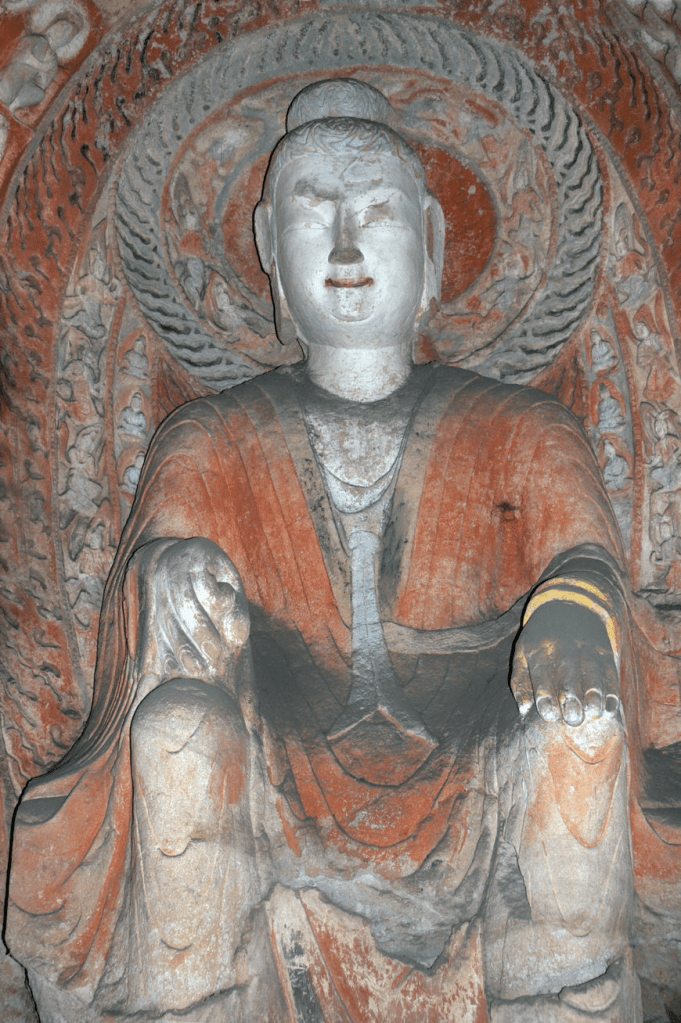
The main Buddha measures roughly 13 meters in height. He has plump cheeks, a thick neck, elongated eyes, a sharply cut nose, slightly smiling lips, and broad shoulders, all of which produce a solemn appearance.

The well-preserved halo behind the main Buddha is composed of an outer band of flame patterns and two inner bands decorated with seven seated Buddhas of miniature size. The robe features zigzag patterns on the edge. The right shoulder of the main Buddha is left exposed, whereas the standing attendant Buddha on the east wall wears a robe that covers both shoulders with a high neckline. 

Historical records recount that Tanyao, a renowned monk cleric with official ranks, advised Emperor Wencheng to undertake construction of five cave-temples (Caves 16–20) to commemorate the five founding emperors of the Northern Wei dynasty. Claiming that the emperor of Northern Wei was the living Buddha, this project declared the emperor’s political and spiritual legitimacy, and strengthened the rule of the imperial family.

Buddha (left) and attendant Buddha (right), Cave 20 at Yungang (photo: xiquinhosilva, CC BY 2.0)

The statues housed in the caves and niches are in good condition and all of the caves and statues have not suffered major damage from vandalism and/or natural disasters. Restoration and repair had been made on deficient parts of some statues in the past. All the necessary attributes demonstrating the Outstanding Universal Value of Yungang Grottoes are contained within the boundary of the property area. The buffer zone provides a necessary safe area for the conservation of the Grottoes, the setting and the historic environment. These measures have enabled the Yungang Grottoes to serve as one of the greatest ancient stone carving art treasure houses in the world.

The location, caves and statues of the Yungang Grottoes have retained their historic appearance. The eaves of wooden pavilions of the caves and the related historical remains have kept the distinctive character of the times when they were constructed. The daily maintenance and conservation intervention have been conducted following the conservation principle of minimal intervention in design, materials, methodology, techniques and craftsmanship.

The cross-legged Bodhisattva Maitreya, on the east wall of the antechamber of Cave 9, phase II, Yungang Grottoes, Datong, China (photo: G41rn8, CC BY-SA 4.0)

The paired caves and the major development at Yungang

Beginning roughly a decade after the initial commission, the imperial projects at Yungang advanced to a second phase that lasted from c. 470s until 494 C.E. In contrast to the monumental Buddha found in Cave 20, the interior of the second-phase cave-temples are decorated with reliefs that depict Buddhas, bodhisattvas, and other divine figures in various scales and configurations.

One of the most distinctive features developed in the second phase of construction are paired caves—two adjacent caves featuring a similar architectural plan and pictorial program. The paired cave-temple layout is understood to symbolically represent the reign of two coincident rulers: Emperor Xiaowen (471–499 C.E.) and Empress Dowager Wenming (442–490 C.E.). The use of paired cave-temples became another means to demonstrate the dynasty’s imperial power.  

The paired Caves 5 and 6 are among the most lavishly decorated cave-temples at Yungang. Cave 6 has an antechamber and a square main chamber supported by a central pillar (see the full cave 6 in 3D). A square clerestory (window) is opened right above the passageway to the main chamber to let in light (although it is hard to see in photos or the 3D image).

In the main chamber of Cave 6, the east, south, and west walls are divided vertically into three main registers that include complex pictorial programs (the north wall features a large niche housing a trinity of Buddhas that are later repairs). We find seated Buddha figures and scenes from the Buddha’s life throughout the chamber. Depictions of the historical Buddha, who was believed to live in the Ganges River basin during the 6th century B.C.E., derived largely from Buddhist texts. The Buddha’s biography details the course of his life from birth to enlightenment, and eventually to nirvana, the final extinction. The life of the Buddha was among the most popular themes for artistic representation throughout the Buddhist world. 

The First Sermon of the Buddha at Deer Park, Cave 6, Yungang, Datong, China

One scene from the Buddha’s life (at the southern end of the east wall) shows the First Sermon of the Buddha at Deer Park, identifiable by the depiction of a pair of deer on the Buddha’s throne. We see a canopied standing Buddha flanked by two standing bodhisattvas and a myriad of worshippers in the background. Just below the standing Buddha niche, a seated Buddha with his right hand raised (the fearless gesture) can be seen in a trapezoidal-shaped niche flanked by two five-story pagodas (just visible at the edges of the scene in the photograph). Worshippers either kneel in front of the throne or stand facing the Buddha on his two sides.   

Rock-cut cave-temples

Rock-cut cave-temples first appeared in western India in the 1st century B.C.E. There are two basic types: apsidal-shaped (semicircular) chaitya (sanctuary, temple, or prayer hall in Indian religions) and vihāra caves where monks resided—both of which we find at places like the caves of Ajanta, India. Both types were transmitted eastwards to Central Asia up to the 5th century with modifications of the structures. At Yungang, the sanctuary type was further adapted into a square shape that houses a central pillar in the middle, as we find in Cave 6. At the same time, a number of architectural features find their precedents in Goguryeo tombs from present-day northeastern China and North Korea. 

But what facilitated these different traditions coming together at Yungang?

Ajanta, Cave 26, (photo: Arian Zwegers, CC: BY 2.0)

Transmissions and transformations of artistic styles

Yungang was a hub where multiple artistic traditions of South Asia, Central Asia, and pre-Buddhist China synthesized into something new. This was made possible by the Silk Road, a network of ancient trade routes linking East Asia with the rest of Eurasia. Goods and ideas have been exchanged along the Silk Road since at least the second century B.C.E. Central to the economic, cultural, and religious interactions between different parts of Eurasia, the Silk Road tied the Northern Wei territory to the sacred heartland of Buddhism in South Asia, and to Central Asian kingdoms that promoted Buddhist teachings. 

A primary factor facilitating the encounter of these varied traditions was the gathering of human resources and materials from different regions. In the 430s and 440s, the Northern Wei court issued decrees that relocated artisans and monks from its conquered lands to the capital city of Pingcheng. The concentration of people and craftsmanship in the capital led to the artistic flourishing of well-executed Buddhist monasteries, cave-temples, sculptures, and murals. Eminent monks who were active in Pingcheng had also engaged with religious activities in other urban centers such as Chang’an and Wuwei, and maintained close ties with Central Asian Buddhist communities.

Just as the form of the rock-cut cave-temples was adapted from earlier traditions in South Asia, statues and reliefs at Yungang exhibit strong stylistic and iconographic affinities with earlier Buddhist art traditions from northwestern India and Central Asia. For instance, the main colossal Buddha images in Caves 16 to 20 feature a round face, with a gentle, calm expression that creates an impression of sanctity, and a robe style that clings tightly to the body yet is rendered with schematic patterns. All of these features echo the aesthetics found in previous traditions, especially the Buddhist sculptures in Gandhara, a Buddhist center located in present-day northwest India and Pakistan. 

Yungang art exerted influence, in turn, on Central Asian cave-temples starting in the later 6th century, such as Dunhuang, indicating that a dynamic exchange took place among the major cultural centers along the Silk Road. 

An iconic form of the Buddha, 2nd–3rd century C.E., Kushan period, Gandhara, schist, 19.76 x 16.49 x 4.56 inches (The British Museum)

Sinicization reforms under the reign of Emperor Xiaowen

One of the new developments shown at Yungang that would have a long-lasting effect on Chinese Buddhist art was Sinicization, a process of adapting non-Chinese traditions into Han Chinese culture. In Cave 1, between the canopy of the central pillar and the ceiling we find intertwined dragons surrounding mountains that represent Mount Meru (the sacred mountain considered to be the center of the universe in Buddhist cosmology). The design shows strong influence of the pre-Buddhist Chinese tradition in two aspects. First, the dragons are depicted with typical Chinese conventions—a snake-like curving body with four legs. Mount Meru was not related to dragons in pre-Chinese Buddhist art traditions. The incorporation of dragons in the design reveals an integration of the motif’s symbolic reference to a spiritual life force in traditional Chinese beliefs.

Central pillar in Cave 1, c. 480s, Northern Wei, Yungang (photo: Zhangzhugang, CC BY-SA 3.0)

In Cave 6, we also see Sinicized traits in a new style of the Buddha’s monastic robe, which features loose drapery that falls around the body and clothes the Buddha entirely instead of the earlier style that clings closely to a partly exposed body. The new style finds parallel in the contemporary dress of court officials.

Overall, these new styles and motifs were a response to the political reform of Sinicization promoted by Emperor Xiaowen and Dowager Wenming during their reign in the Taihe era (477–499 C.E.). The reform aimed at legitimizing the Northern Wei regime, built by non-Chinese nomadic groups, as an imperial Chinese dynasty, and promoting a greater sense of conformity throughout the empire.

Buddha with Sinicized traits, Cave 6, Yungang, China (photo: Gisling, CC BY-SA 3.0)

The legacy of Yungang 

Despite the move of the capital to Luoyang in 494 C.E., constructions at Yungang continued for another three decades. Cave-temples of this phase are much smaller in size than at the earlier western end of the complex. Over half a millennium later in the 13th century when Yungang was the capital of the Liao Dynasty, Yungang witnessed another era of glory, with restorations of the caves and installation of wooden structures attached to their façades. Yet it was only a temporary phenomenon. The site later stayed silent for centuries until its early 20th-century rediscovery along with other major cave-temples by foreigners on expeditions.

Modern scholarship about the history and the art of Yungang Cave-temples has continued to provide new information about the site. The most recent archaeological excavations at Yungang unearthed the remains of a monastery dated to the Northern Wei dynasty above the western section of the cliff. The well-preserved foundations of courtyards, the central stupa (a sepulchral monument that refers to the Buddha), residential cells for monks, and objects continue to enrich our understanding of the site as a significant religious center from the 5th century. 

Yungang Grottoes

Link: https://peacelilysite.com/2023/03/31/yungang-grottoes/

#BuddhistArt #YungangGrottoes #BuddhaStatus #Buddhist #SilkRoad #TravelChina #BuddhistHistory #Cave-Temples #Religion

Source: smarthistory.org/yungang-grottoes

The Life and Legacy of the Great Translator — Kumarajiva (I)

Kumarajiva’s statue in front of the Kizil Caves in Baicheng County, Xinjiang, China

The Buddhist scriptures from China are an invaluable repository of knowledge that was made possible by the benevolence of Buddhist masters who risked their lives to travel to China and spread the Dharma. Despite facing significant hardships along their journeys, they remained steadfast in their mission to share the Buddha’s precious teachings with a foreign culture. Thanks to their efforts in translating the teachings into Chinese and conveying their true meanings, people have been able to benefit from these teachings for over 25 centuries and continue to do so by achieving higher spiritual attainments.

The translation of the Buddha’s teachings took place between the 2nd and 13th centuries, with a significant number of translations carried out during the Tang Dynasty (7th – 10th centuries). In total, approximately 6,000-7,000 versions of various sutras were transmitted to China, and almost 200 renowned translators, including Kumarajiva, one of the most distinguished translators of the 4th and 5th centuries, were involved in the process.

A genius boy born in a buddhist kingdom Kucha

By User:Schreiber – Created with Inkscape (using Image:Bm taklamakan.jpg). Data based on: Marylin M. Rhie, Early Buddhist Art of China and Central Asia (Handbook of Oriental Studies / Handbuch der Orientalistik – Part 4: China, 12, Vol. 1) (Handbook of Oriental Studies/Handbuch Der Orientalistik). Brill Academic Publishers, ISBN 90-04-11201-4, CC BY-SA 3.0, https://commons.wikimedia.org/w/index.php?curid=2722471

Kucha played a crucial role in the spread of Buddhism during ancient times. In the last quarter of the 4th century CE, Kucha became a dominant force, overshadowing the Southern Silk Road, which ran along the southern edge of the Tarim Basin. According to the Jinshu(晋书), Kucha was a heavily fortified city with a magnificent royal palace, numerous Buddhist stupas, and temples. Book 97 of Jinshu states, “There are fortified cities everywhere, their ramparts are three-fold, inside there are thousands of Buddhist stupas and temples (…) The royal palace is magnificent, glowing like a heavenly abode.”

The culture and civilization of Kucha during this period can be glimpsed from the discoveries in the famous Kizil caves. In 1906, the German expedition team of Albert Von Le Coq and Albert Grunwedel explored the Kizil Caves, with different objectives. Grunwedel copied the murals, while Von Le Coq took them with him and placed most of the fragments in the Museum of Asian Art in Dahlem, Berlin. Other explorers also took the murals and placed them in various museums in Russia, Japan, Korea, and the United States.

The murals in the Kizil Thousand-Buddhist Caves are considered “The most beautiful murals in Central Asia,” and can be found in 81 caves with a total area of over 10,000 square meters (11,960 yards). The diamond grid pattern is the most impressive feature of the caves, with each grid depicting a story about Buddha’s reincarnation through a single picture. Besides themes related to Buddha, Bodhisattva, Arhat, Flying Apsaras, and Buddhist fables, the murals also showcase various depictions of daily life, farming, hunting, pastures, riding, mountains and rivers in the West Region, animals, birds, and ancient architectures. The styles are not limited to local arts, indicating influences from diverse cultures.

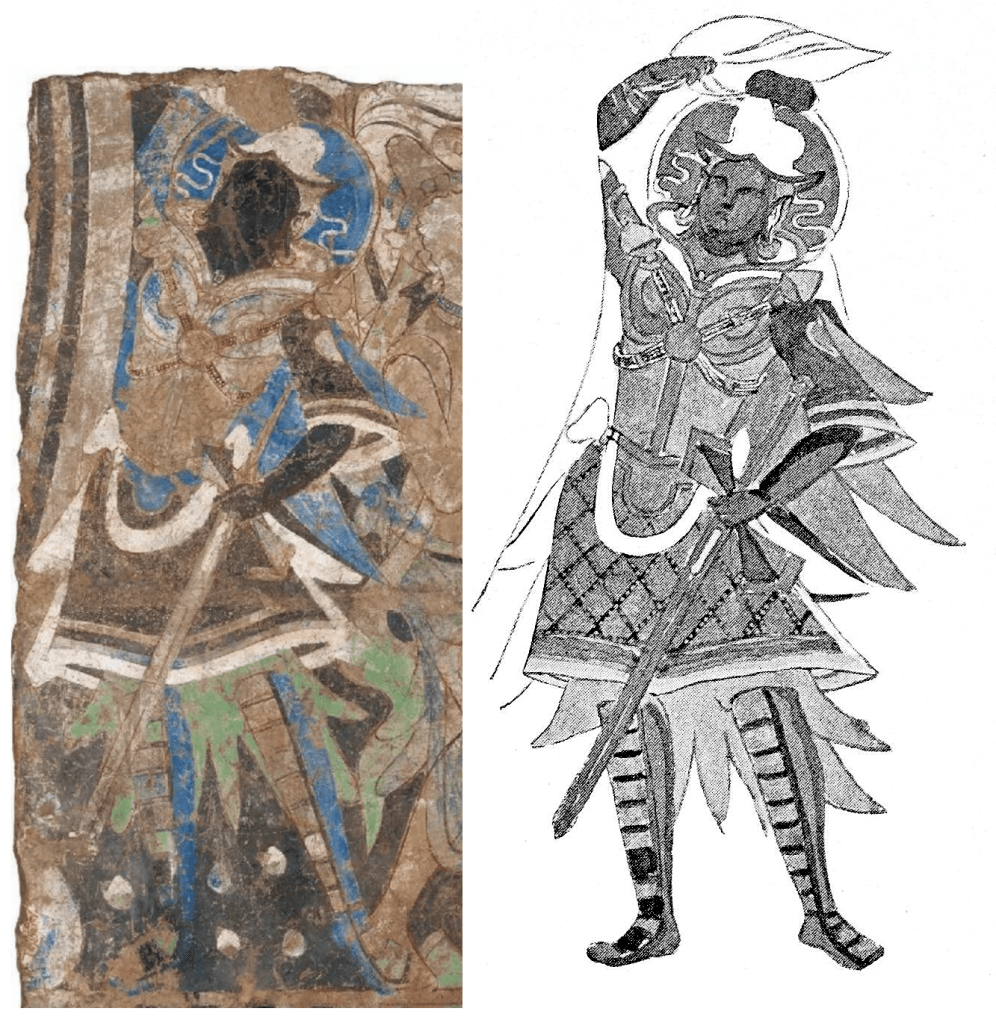
Cave 4 Vajrapani, removed original and in-situ drawing by Grunwedel
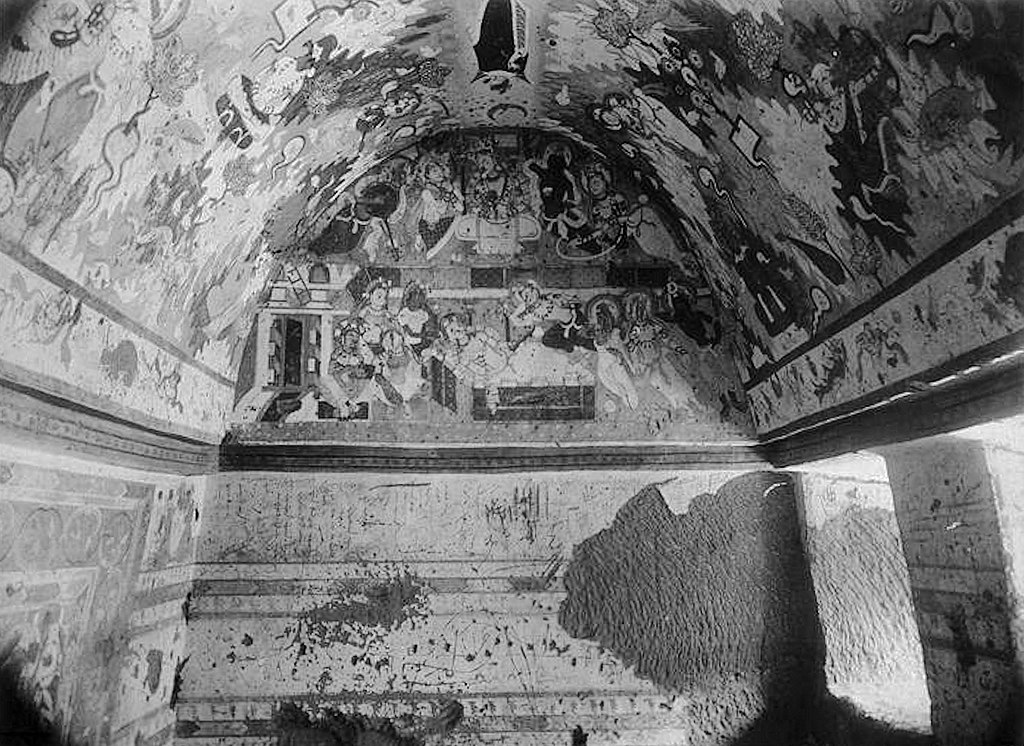
Cave of the Hippocampi (Cave 118, mural)
Right portion of the cave, as photographed by Charles Nouette  (1869-1910) Photographed in 1907. Public Domain – [1], Public Domain, https://commons.wikimedia.org/w/index.php?curid=99375823

Attendant, Cave 84 Painting: 6th century painter, Kizil Photography: Undetermined 
Blue pigment used on mural. Greco-Buddhist Wind God Boreas or Vayu, central part of the ceiling of Cave 38
Ancient Uyghur Civilization (1)-Cave art by ancient Uyghurs

Kumarajiva was born around C.E. 344 in kingdom Kucha. Kumarajiva’s father, Kumarayana, was descended from an honourable line of prime ministers of a kingdom in Kashmir. Though Kumarayana was expected to become prime minister after his father, he renounced his hereditary claim and became a Buddhist monk. Eventually, he set out along the silk route which threaded its way across the mighty Pamirs and into the Takla Makan Desert and Central Asia. Following the northern route, he came in time to the devoutly Buddhist kingdom of Kucha on the northern rim of the great Tarim River basin. The Kuchan king either knew of Kumarayana by reputation or showed a shrewd perception of human nature, for he welcomed the traveller warmly and at once made him a trusted adviser. Soon he was elevated to kuo-shih, Teacher of the Nation, a privileged position which entailed political and cultural duties as well as religious functions. …

The great translator’s mother, Jiva (Jivaka), was the younger sister of the king of Kuchi. She was well known for her intelligence, wit, memory, and devotion to the dharma. It was said that she had only to glance at a written passage to comprehend it, and only to hear something once to repeat it from memory. These qualities attracted numerous suitors. Jiva had a red mole (or spots) on her body, an indication that she would give birth to a wise son.

She had politely rejected a number of eligible suitors from neighbouring kingdoms, but when she saw Kumarayana she expressed the desire to become his wife. The king was delighted and insisted that Kumarayana accept the proposal. Even though he was a monk, he bowed to the wishes of this generous and devout monarch.

When Kumarajiva was in utero, Jiva became considerably sharper and more perceptive than before. For example, although her language was what is now known as Tokharian B, while pregnant with Kumarajiva she was able to understand Sanskrit without ever having studied it; after Kumarajiva was born, this ability disappeared. Such an “omen” suggests that the child Kumarajiva was predisposed to master Sanskrit and thus the original Buddhist scriptures.

When their son was born, Kumarayana and Jivaka each gave a part of their names to him and called him Kumarajiva. With two devout parents, Kumarajiva was exposed to Buddhist texts and practice from the day he was born. At the age of seven, he trained with a learned master and memorized a thousand verses every day until he could recite all the teachings of the scholastic treatises of the Abhidharma.

As if an occult design of invisible Nature had become manifest, hardly had the remarkable child turned six before Jivaka received permission from her husband to become a Buddhist nun. By that time Kumarajiva had already learnt the vast literature of the Abhidharma by heart, understood it and entered the Sangha. Kumarajiva’s mother clearly recognized the penetrating intelligence of her son and was determined to give him the best available philosophical and spiritual training. 

The Life and Legacy of the Great Translator — Kumarajiva

LInk: https://peacelilysite.com/2023/03/24/the-life-and-legacy-of-a-great-translator-kumarajiva-i/

#Buddhism #Kucha#Kumarajiva #Buddhist#KizilCaves#GreatTranslator #BuddhistSutra

Source: https://khyentsefoundation.org/the-life-and-legacy-of-kumarajiva/, https://japanesemythology.wordpress.com/study-notes-the-influence-of-kumaraju-kumarajiva-upon-japan/, https://www.tsemrinpoche.com/tsem-tulku-rinpoche/great-lamas-masters/kumarajiva-the-great-translator-from-kucha.html

THE MYSTERY OF THE LONGYOU CAVES

Longyou Caves are known as the ninth wonder of the ancient world. Source: Zhangzhugang / CC BY-SA 4.0

LONGYOU CAVES IS A COMPLEX OF 24 ARTIFICIAL CAVES, CONSTRUCTED INTO THE SANDSTONE GEOLOGY OF FENGHUANG HILL IN THE ZHEJIANG PROVINCE OF CHINA.

The caves were discovered by accident in 1992, when local farmers drained several ponds revealing five large manmade caverns and 19 smaller caves.

The five caverns, independent from each other measure between 18-34 metres, reaching heights of up to 20 metres with supporting pillars and distinctive shapes remarkably curved with shaking imprints across the cavern walls and ceilings.

After news of the discovery spread across China, it was first proposed that the caves were an obscure natural wonder, as the design and formation was completely distinct from other ancient caves, quarries, mines, or ceremonial caverns constructed in china throughout antiquity to draw a comparison.

Image Credit : Zhangzhugang – CC BY-SA 3.0

Upon further study, it was found that each complete cavern has only one portal, associated with a vertical shaft with a carved stairwell that allows rainfall and surface runoff to enter the caverns. To manage the water intake, a system of drainage troughs, some drainage channels, and a water trap was carved into the cavern base to collect the water.

The caverns are also aligned along a south to southwest orientation, maximising the use of sunlight to illuminate the interior, with inclined sidewalls that reduces the stress on the cave ceilings preventing collapse.

It is highly possible that the cavern was formed by carving rock stones from top to bottom and layer by layer using short chisels with different sizes (based on several short chisels made from steel, discovered in one of the larger caves).

Image Credit : Zhangzhugang – CC BY-SA 3.0

Only one of the caves has been opened for tourism, chosen because of the stone carvings found inside which depict a horse, fish and bird. The Longyou Caves of Zhejiang province in China truly are an enigma and it has ten enduring mysteries that remain unresolved, despite more than two decades of research.

1. How Were the Longyou Caves Constructed?

A rough estimation of the workload involved in building the Longyou Caves is awe-inspiring. The quantity of rock that would have been removed in the overall excavation of the grottoes is estimated to be nearly 1,000,000 cubic meters (35,314,666 cu ft). Taking into account the average digging rate per day per person, scientists have calculated that it would take 1,000 people working day and night for six years to complete.

These calculations are based purely on hard labor, but what they haven’t taken into account is the incredible care and precision of the sculptors, meaning that the actual workload would far surpass the theoretical estimation. As for how they were constructed and what tools were used, it is still unknown. No tools have been found in the area, and, as we will explore later, scientists still don’t know how they achieved such symmetry, precision, and similarity between the different caves.

2. No Traces of Construction

Despite their size and the effort involved in creating them, so far no trace of their construction, or even their existence, has been located archival sources. Although the overall excavation involved almost a million cubic meters of stone, there is no archaeological evidence revealing where that quantity of stone went, and no evidence of the work. Moreover, there is not a single historic document that refers to them, which is highly unusual considering the sheer scale of the project. The origin of the Longyou Caves is a complete and utter mystery.

Experts wonder why the walls at the Longyou Caves in China are covered in chiseled parallel lines. (Zhangzhugang / CC BY-SA 4.0 )

3. Why Were the Walls Chiseled?

Every single one of the Longyou Caves is covered, from floor to ceiling, in parallel lines that have been chiseled into virtually every surface. The effect is a uniform pattern throughout the caves, which would have required immense manpower and endless hours to create. The question is why? Was such labor-intensive work purely for decoration? Are the lines or patterns symbolic in some way? All that is currently known is that the markings are similar to those found on pottery housed in a nearby museum, which is dated between 500 and 800 BC.

4. Lack of Fish in the Longyou Caves

When the caves were first discovered, they were filled with water, which presumably had been there for a long period of time. They had to be pumped out in order to realize that these were not just like the other “bottomless ponds” found within the area, but rather man-made structures. Most villages in southern China contain very deep ponds, which have been called “bottomless ponds” by generations of villagers. These ponds teem with fish, which are easily caught. However, after the first cave was pumped dry, not a single fish was to be seen, or any other sign of life.

5. How Did the Longyou Caves Remain So Well Preserved?

One of the most interesting and challenging questions is how the Longyou Caves have been able to keep their structural integrity for more than 2,000 years. There are no signs of collapse, no piles of rubble, and no damage despite the fact that in some areas the walls are only 50 centimeters (20 in) thick. Over the centuries, the area has gone through numerous floods, calamities and wars, the mountains have changed their appearance and exposed stones have been weathered, but inside the Longyou Caves, the form, patterns and markings are still clear and precise – it is as though they were built yesterday.

6. How Did the Builders Work in the Dark?

Due to the great depths of the caves, some areas at the bottom, which are not exposed to the opening above, are pitch-black. Yet even those dark areas are decorated with thousands of parallel lines on the walls, columns, and ceiling. So how did ancient people work in the dark? 

According to Jia Gang, a Tongji University professor specializing in civil engineering: “There should be lamps, because the cave’s mouth is very small, and the sunbeam could only shine in the cave at a certain angle during a certain period of time. As one goes deeper into the cave, the light becomes dimmer. At the cave’s bottom, which is usually dozen of meters from the mouth, one could hardly see anything.” However, this was at least two millennia ago and nothing that could have been used for lighting has been found.

7. Were the Longyou Caves Meant to be Connected?

All of the Longyou Caves are distributed across an area of only one square kilometer (0.38 sq mi). Considering such a high density, one cannot help asking whether some grottoes were meant to be connected. What would be the purpose of making so many separate caves in such a tight area without connecting them? In many areas, the walls between the caves are very thin, only 50 centimeters (20 in), but they were never linked so it appears they were intentionally kept apart. What’s more, many of the Longyou Caves are almost identical to each other.

8. Who Built the Longyou Caves?

Nobody has any idea who built the caves. Some scientists have claimed that it was not possible or logical for such as mammoth job to have been undertaken by regular village people. Only the emperor and the leaders could have organized such a huge project, like the construction of the Great Wall , which was built to defend against invasion from the outside world. But if it was commissioned by an Emperor, why are there no historical records of its construction?

9. How Did They Achieve Such Precision?

The scale of the Longyou Caves is magnificent and momentous, the design was delicate and scientific, the construction was sophisticated, and the precision is indicative of superior craftsmanship. The model, pattern and style of each cave is extremely similar. Every grotto is like a grand hall. One side is steep and another side is 45% inclined. The four walls are straight; the edges and corners are clearly demarcated. The chiseling marks within the Longyou Caves are uniform and precise.

“At the bottom of each cave, the ancient [builders] wouldn’t be able to see what the others were doing in the next grotto,” explained Yang Hongxun, an expert at the Archaeological Institute of Chinese Academy of Social Sciences. Nevertheless, “the inside of each cave had to be parallel with that of the other, or else the wall would be holed through. Thus the measure apparatus should have been very advanced. There must have been some layout about the sizes, locations, and the distances between the caves beforehand.”

With the help of modern equipment and methods, the investigators measured the sizes of the walls, and surprisingly found that the overall construction is extremely accurate. The walls between the caves are of the same thickness in different sections. So how did they achieve this precision? What were their methods?

Stairs leading down into one of the once-submerged Longyou Caves. (Zhangzhugang / CC BY-SA 4.0 )

10. What Were the Longyou Caves Used for?

Following extensive investigations and study, scientists and scholars have attempted to put forward explanations for the grottoes, but none so far provide a convincing explanation for why they were built and what they were used for.

Some archaeologists have suggested that the grottoes were the tombs of old emperors, emperor halls, or places for storage. But this interpretation is far-fetched. No funeral objects or tombs have been found and no artifacts left behind. If it were used like an emperor’s palace, the caves surely would have been designed differently, with separate rooms for different purposes like entertaining, meeting, and sleeping. But no evidence can be found of this and no traces of habitation have been found.

Another hypothesis is that the Longyou Caves were used for mining and extracting some type of mineral resource. However, mining operations would have required equipment and apparatus to extract the rocks and transport them. Again, no traces of this have been found, nor any evidence of where the rocks were taken. And of course, if the caves were just for mining, why create such intricate decorations on the walls, columns and ceilings?

Finally, some have suggested that these caves were the places for troops to be stationed and that an emperor of the past wanted to keep his soldiers out of view in order to keep his war preparations secret. However, these caves could not have been built in a short period of time. They would have taken many, many years to build so it is unlikely to have been done in preparation for war, which tends to come about much more quickly. Furthermore, there are no signs of people having stayed in the caves.

Despite decades of research, very few answers have emerged to explain the enigma of the Longyou Caves . Our ancient ancestors have achieved many wondrous things throughout history, but this discovery from China is truly an unsolved mystery which has yet to be cracked.

THE MYSTERY OF THE LONGYOU CAVES

Link: https://peacelilysite.com/2023/03/24/the-mystery-of-the-longyou-caves/

#Travel #TravelChina #LongyouCaves #Mistery

Source: https://www.ancient-origins.net/ancient-places-asia/longyou-caves-001248, https://www.heritagedaily.com/2020/08/the-mystery-of-the-longyou-caves/134874

H.H. Dorje Chang Buddha III’s Selected Philosophical Sayings About Worldly Matters 

Many years ago, a disciple approached Master Yi Yun Gao (H.H. Dorje Chang Buddha III) seeking guidance on how to apply Buddhist wisdom to navigate worldly affairs. In response, Master Yi offered some insightful advice, which was later compiled into a book entitled “Selected Philosophical Sayings About Worldly Matters”. The following are translations of excerpts from the book.

What makes the sun the greatest thing man has ever known? It is admired for providing light and warmth for all the beings under it. A truly great person is one who is willing to sacrifice his own benefit for the well-being of others.

A city does not need all the food a province produces, but that much food is far from enough to feed the whole country; it needs all the food the country can produce. The strength of an individual is nothing compared with collective strength.

The respect a person enjoys comes from his devotion to the well-being of other people. A swimming pool is admired in summer because it provides relief from the heat.

A person is established in character only when he truly knows himself. Why? It is difficult for a person to be aware of his own flaws, just as he cannot see his own back, though it is in plain sight of other people. It is quite natural for a person to hide his own flaws, but overdoing it will alienate the person from those around him. When the person realizes this and feels ashamed, he turns to seek knowledge and adhere to moral integrity so as to establish his own character and win the respect and support of other people.

Deliberation is needed before one makes a move, but no conclusion is to be drawn from deliberation alone. It has to be tested in action. Suggested moves are not to be adopted in haste, nor are they to be rejected out of hand; they are not to be dismissed even when tests have proved them worthless, for in this case an inquiry into their legitimacy has to be made. When a rainbow is blocked from view by clouds, it does not mean that there is no rainbow out there.

What to do to beat your equal in battle? Attack him where he is most vulnerable with concentrated force and victory will be yours. A piece of wood with a sharp end can break another piece of wood that is just as hard as the wood you use to attack.

Intellectual and material resources work in opposite ways. Intellectual resources are limitless; the more they are tapped, the broader they grow in scope. Impermanent in nature and limited in quantity, material resources last but a short time, and the more they are consumed the sooner they are exhausted. The truth is that the former is non-quantifiable and thus infinite and everlasting while the latter is quantifiable and therefore diminishing and exhaustible.

H.H. Dorje Chang Buddha III’s Selected Philosophical Sayings About Worldly Matters 

Link:https://peacelilysite.com/2023/03/16/h-h-dorje-chang-buddha-iiis-selected-philosophical-sayings-about-worldly-matters/

#Buddhist #BuddhistMaster#Buddhism #DorjeChangBuddhaIII # HHDorjeChangBuddhaIII 

Zhangjiajie National Forest Park

A Natural Wonderland of Pillar Rock Formations and Majestic Scenery

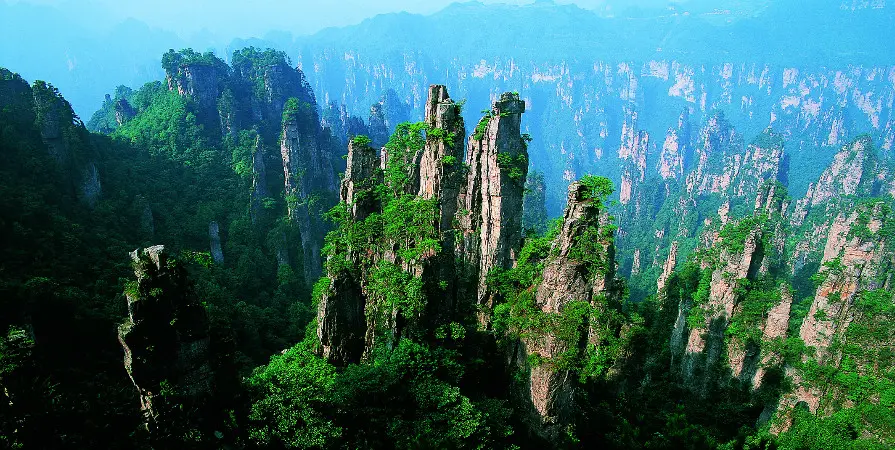
Nestled in the central-eastern region of China lies the Zhangjiajie National Park, a sprawling park that is part of the Wulingyuan Scenic Area, featuring several protected areas that boast breathtaking natural wonders. The park, covering an area of 18.59 square miles (48.15 sq km), has been recognized as a GANP (Global Geoparks Network) Ambassador Park, and it is no surprise why it has earned such an honor. The park is home to the Zhangjiajie National Forest Park, which served as the inspiration for the film Avatar, making it a must-see destination for tourists and nature lovers alike.

One of the most remarkable features of the park is its dense forests, deep ravines, deep canyons, unusual peaks, caves, and pillar-like rock formations that are scattered throughout the area. These pillar rock formations, which are made of quartz-sandstone and formed by physical erosion caused by the abundant rains, are the park’s most renowned attraction. They are not typical limestone-eroded pillars and are unique to the Zhangjiajie National Park.

The mountainous terrain, the lush forests, and the rolling clouds combine to create breathtaking scenery that inspires various forms of artwork, from literature to paintings, and even films. The landscapes created by the mountains and the pillar-like rock formations are the epitome of Chinese landscapes.

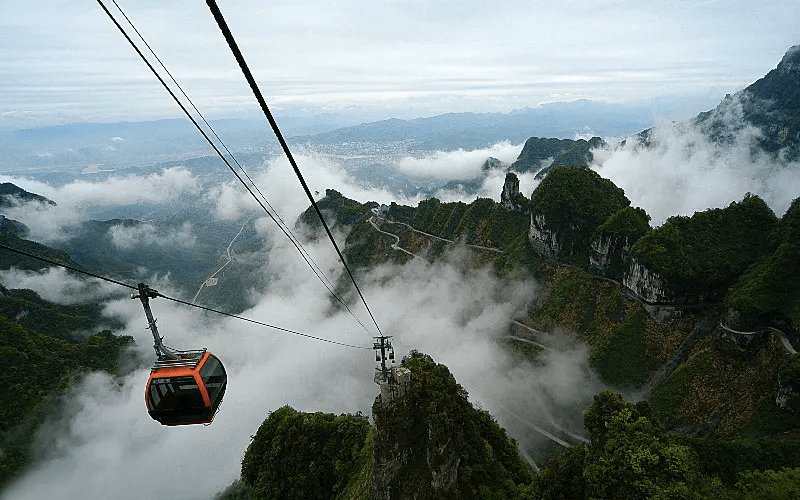
The door to the Heaven, Tianmen Mountain

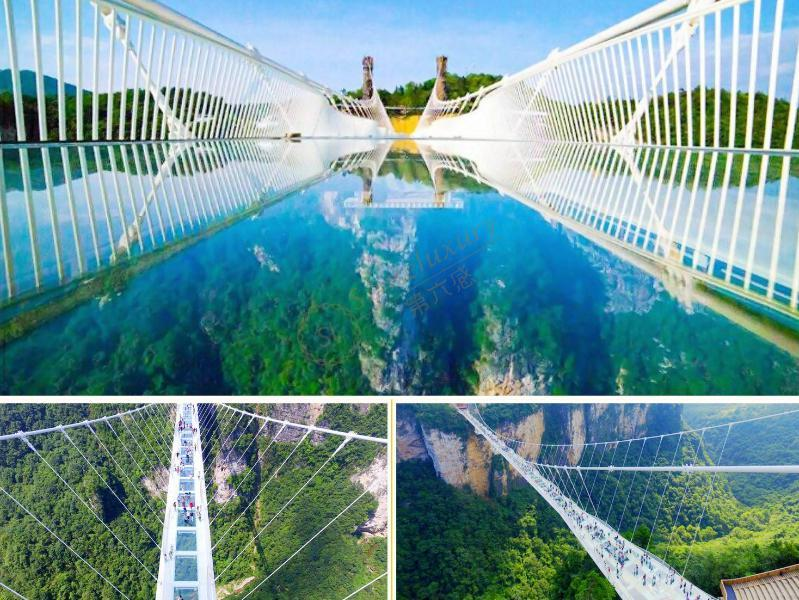
Visitors to the park have the opportunity to experience the splendor of the national park through various means, including hiking, biking, and taking a cable car or elevator. Two record-holding features in the park that help visitors experience the splendor of the national park are the Bailong Elevator and the Zhangjiajie Grand Canyon Glass Bridge.

The Bailong Elevator, affectionately known as the “hundred dragons sky lift,” is the world’s tallest outdoor lift, and it carries around 50 people at a time up 1,070 feet (326 m) in less than two minutes. From the top, visitors can enjoy stunning views of the surrounding mountains and forests.

The Zhangjiajie Grand Canyon Glass Bridge is the longest and highest pedestrian glass bridge in the world, stretching across 1,410 feet (430 m) at a height of 980 feet (300 m). Walking across the bridge, visitors can experience the thrill of walking on glass while enjoying panoramic views of the canyon and the mountains beyond.

From: https://m.senseluxury.com/guides/Asia-China/article-11148
Bailong Elevator

Features

The five most spectacular sights are the unusual peaks, deep canyons, beautiful waters, thick forests, and mysterious caves.

The scenery of Zhangjiajie National Forest ParkThe scenery of Zhangjiajie National Forest Park
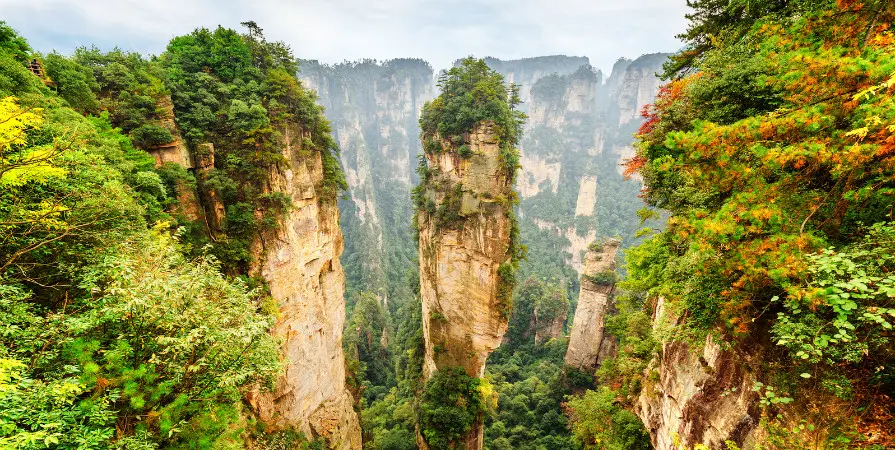
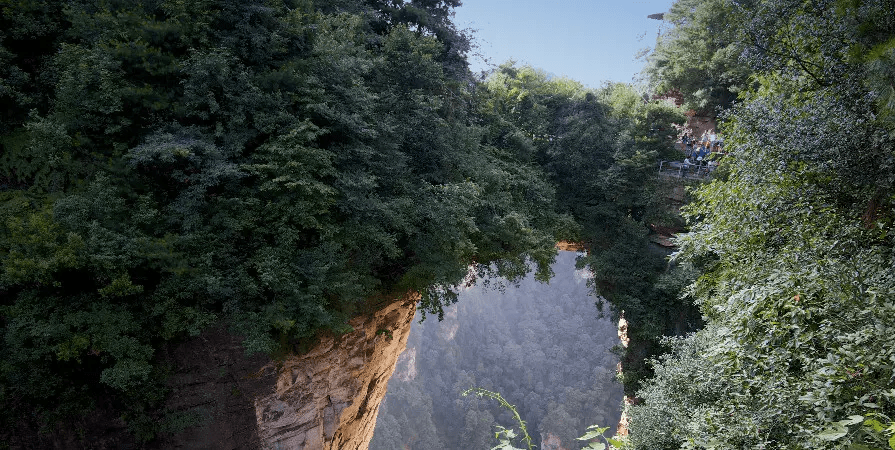
  • The peculiar peaks refer to the 3,000 or more mountain peaks made of quartz sandstones. The three representative peaks are Camel Peak, Drunk Stone Peak, and Five Finger Peak, which are elegant and magnificent.
  • The deep canyons refer to 32 canyons, each more than 2,000 meters in length. The most famous ones are Jinxi Canyon, Shentang Canyon, and 10-Li Gallery Canyon.
  • The beautiful water refers to the more than 800 waterscapes in the scenic area, including streams, springs, lakes, pools, and waterfalls.
  • Caves of different shapes can be found here. The most outstanding is Yellow Dragon Cave, which contains beautiful stalactites.
  • The rural landscapes also attract a lot of visitors. The local farmers are hospitable and you may visit their homes.

Zhangjiajie is picturesque to visit at any time of the year, but April to October is recommended, as winters are cold and the tourist areas are less accessible. But when is it best to go? It depends on the experience you’re looking for.  

For weather, September and October are the best times to go, when the weather is clear and comfortable. 

The national park is busy year-round except for winter from December to February. The peak season is from May to October.  

The short period from early-November to mid-November is considered to be the perfect time with good weather and without heavy crowds.  

Yuanjiajie (‘Yuan Family Territory’ 袁家界) contains “Avatar Hallelujah Mountain“. It is the most popular sight in Zhangjiajie. Yuanjiajie is a butte (steep-sided platform mountain), surrounded by higher peaks, grotesque rock pillars, and deep valleys. The highlights of Yuanjiajie include the First Bridge under Heaven, Avatar Hallelujah Mountain, and ‘Lost Souls Platform’.

The easiest way to get up to Yuanjiajie is by the famous Hundred Dragon Elevator (Bailong Elevator). But we don’t recommend it (unless you arrive before 7 am or descend before 4 pm) due to typical 2-hour lines for the 2-minute ride. A 1–1½-hour hike is a better way if you are fit. 

Tianzi Mountain (‘Heaven Son Mountain’ or ‘Emperor Mountain’ 天子山Tianzishan) offers the best chance of photographing a sea of clouds, mainly during spring or early autumn.

Don’t miss the cable car up to this area. The 30-minute ride will take you through the towering formations and give you the opportunity to take great fly-by photos. 

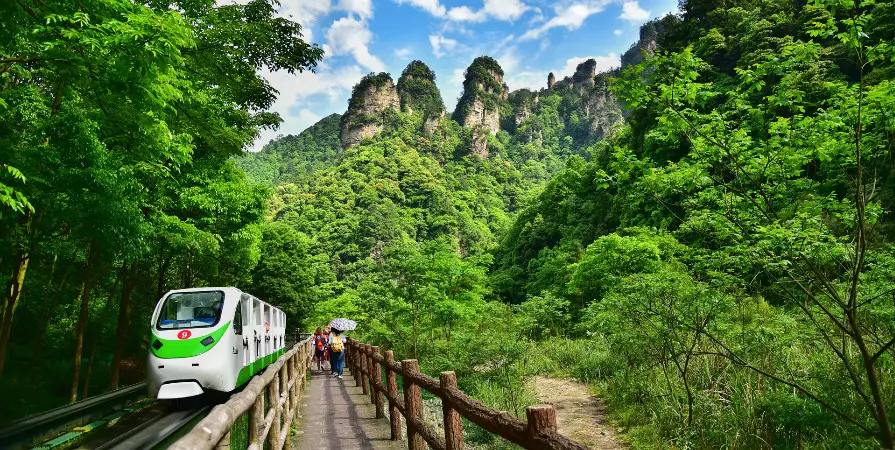
If your time permits, you can visit Ten-Mile Gallery where you can take a monorail train. After the train, you can hike up to Tianzi Mountain. 

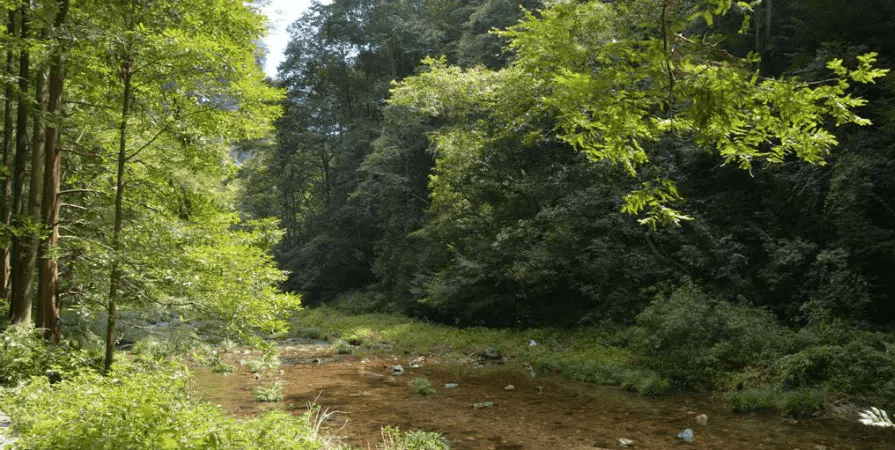
Gold Whip Stream (Jinbian Xi 金鞭溪) is a brook at the foot of the towering mountains. It is about 7½ km (4½ miles) long, about two hours’ walk. 

 It is an easy and relaxing walk along the stream. It gets quieter as you walk farther from the shuttle bus stop. 

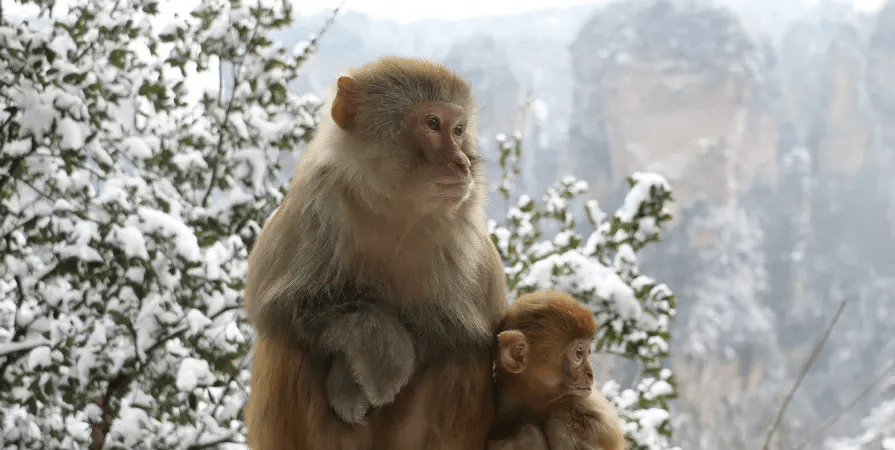
The 400-meter-high cliff by Gold Whip Stream is spectacular, especially at sunset. One thing to watch out for is the wild monkeys along the stream. 

Zhangjiajie National Park is an extraordinary destination that should be on every nature lover’s bucket list. It’s a place where visitors can connect with nature, experience the thrill of adventure, and marvel at the beauty of the world around them. Whether you’re a seasoned traveler or a first-time visitor to China, Zhangjiajie National Park is a must-see destination that will leave you breathless and in awe of the natural wonders of our world.

ZHANGJIAJIE China most Amazing National Forest Park (Avatar floating mountains). Best by drone 

A Natural Wonderland of Pillar Rock Formations and Majestic Scenery

Link: https://peacelilysite.com/2023/03/16/zhangjiajie-national-forest-park/

#Travel #TravelChina #ChineseCulture#ZHANGJIAJIE #AmazingNationalForestPark

The Avalokiteshvara Bodhisattva Great Compassion Empowerment Dharma

Over 2,000 years ago, Shakyamuni Buddha came to the Saha world, established Buddhism, and began to spread the Buddha Dharma. Now, the karmic conditions related to the good fortune of living beings have matured, and the contemporary Buddha H.H. Dorje Chang Buddha III has come to our world once again to bring more Dharma to us. The Avalokiteshvara Bodhisattva Great Compassion Empowerment Dharma is the Dharma that His Holiness has brought to us this time.

When a Dharma Master practices this Dharma, it can convene people, empower them, and lead them into a supernormal state. The purpose is to eliminate negative karma, improve one’s health, and increase spiritual mentality. H.H. Dorje Chang Buddha III has transmitted the Dharma to a few qualified Rinpoches and Dharma Masters, and these Rinpoches and Dharma Masters have hosted the Dharma Assembly many times around the world.

I have participated in the assembly four times so far. The first time, I heard many people crying, singing, or laughing, and some walking around, but I myself didn’t experience any specific motions. I was kind of disappointed. The second time, I had very strong feelings. When the assembly just started and everyone was chanting the Great Bright Six Syllable Mantra, I began to cry and couldn’t control myself. I kept on crying and crying, and it seemed like I cried out all my sorrows and pains in my life. Then I started to sway my body, shake my head and neck. The third and fourth time I joined the assembly, I had more motions and stronger expressions. I still cried hard at the beginning, then I sang the name of Namo Dorje Chang Buddha III, swung my two arms, and spun around. I bent my neck backward so hard, and I even lay down on the floor feeling so peaceful and comfortable, feeling the energy flowing through my body. I did all those without any intention from my mind. I felt the assembly was too short to end. Every time after the assembly, I felt my whole body loosen up, and I was so relaxed and rejuvenated.

The assembly actually has two parts. One is held inside, such as a conference center or grand hall in a hotel, where the master performs the Dharma. The second part takes place outside, where living beings are released from captivity.

H.H. Dorje Chang Buddha III emphasized many times in the Dharma discourses: “The concluding practice of the Avalokiteshvara Bodhisattva Great Compassion Empowerment Dharma is the finest, the best. Were it not for its concluding practice, I would not advocate practicing this Dharma. I all the more would not transmit this Dharma in this world. Why release captive living beings? All living beings have been our family members since beginningless time. They are the same as humans. It is just that their degree of intelligence and appearance are different from those of humans. Still, their consciousness is the same as that of a human. That is why in real life, we see that some animals can even rescue people, some can do math, some can sing, and some can dance. I even saw a dog that was able to play a highly difficult piano melody. Moreover, the dog played it very precisely. We must help them and rescue them. Furthermore, we must not even slightly harm any living being. We can only rescue them.

Because the Avalokiteshvara Bodhisattva Great Compassion Empowerment Dharma is based on the power gathered from the greatly compassionate mind of Avalokiteshvara Bodhisattva, at the end of each Dharma assembly, the one performing the Dharma must lead the attendees in a concluding practice to release captive living beings, do good deeds, and help other people. It is best to conduct the concluding practice on the same day. If there is not enough time, doing it on another day is also acceptable. However, the concluding practice must be completed within fifteen days.

People who attend an Avalokiteshvara Bodhisattva Great Compassion Empowerment Dharma Assembly should make offerings. However, in order to comply with the Dharma, it would be best if they personally helped the Dharma assembly staff arrange that the monetary offerings received at the Dharma assembly be spent on the main subject of the Dharma assembly—the concluding practice of releasing captive living beings, helping other people, and doing good deeds— as well as on the related expenses of the Dharma assembly, such as renting the site, transportation, meals, and lodging for the master performing the Dharma and those accompanying the master.”

Today is the auspicious occasion of Avalokiteshvara Bodhisattva’s holy birthday, and on this special day, I offer my sincere prayers: May the great Bodhisattva bless all living beings with a life full of auspiciousness, prosperity, and happiness. May the compassionate energy of Avalokiteshvara Bodhisattva radiate throughout the world, bringing peace, harmony, and love to all sentient beings.

Namo H.H. Dorje Chang Buddha III !

Namo Avalokiteshvara Bodhisattva !

Namo Amitabha !

The Avalokiteshvara Bodhisattva Great Compassion Empowerment Dharma

Link:https://peacelilysite.com/2023/03/10/the-avalokiteshvara-bodhisattva-great-compassion-empowerment-dharma/

#HHDorjeChangBuddhaIII #DorjeChangBuddhaIII #DorjeChangBuddha#GuanYinBodhisattvaof GreatCompassionEmpowermentDharmaAssembly#GuanYinBodhisattva#GreatCompassion #Avalokiteshvara Bodhisattva