A Vicious Demon and Formidable Beast

Photo by Pixabay on Pexels.com

Recently I have read a book titled Revealing the Truth, in which there is one chapter called A Vicious Demon and Formidable Beast. It is an unexpectedly frightening chapter, almost like a horror movie. As a buddhist disciple, I totally believe in the law of cause and effects. We need to abstain from anything that is evil, do everything that is good, and use the correct understanding and views to cultivate. Don’t violate any of the precepts, otherwise you will end in miserable retribution. After reading the book, I completely believe that the true and original Dharma transmitted by Sakyamuni Buddha and Dorje Chang Buddha III can defeat any demon or evil spirit.

A Vicious Demon and Formidable Beast


There was a rinpoche brother who claimed that he was a reincarnation of Buddhas and Bodhisattvas and cheated living beings everywhere he went. He deluded many people to put up everything they had as offerings for him, causing problems in many families. Since he had seriously violated the precepts, the Buddha Master sternly reprimanded him a number of times. However, he ignored all that and even dared to lie to the Buddha Master (H.H.Dorje Chang Buddha III).


Because his conduct of swindling and bluffing was so bad that it caused many living beings to suffer, eventually dharma protectors had to inform him that he was going to meet with a miserable and menacing retribution. He was then captured by order of the Yama King and died miserably. He became a blood-flashing vicious ghost. In order to lessen his sins and dark karmas, and also for the purpose of educating and transforming two persons who were masters and had the same behaviors, a group of people who were involved in the endeavor of propagating Buddha-dharma and saving living beings including dharma kings, rinpoches, dharma masters, and others were asked to confront this blood-flashing vicious ghost, evil demon Nuori, to gain practical experience. Therefore, the Buddha Master ordered dharma protectors to arraign this evil demon to the home base to be educated and transformed. After that, what had been a very auspicious backyard became a gloomy dark forest. Its horror was beyond description.


In the afternoon of that day, the Buddha Master was setting up an altar In the backyard. Out of curiosity, I stayed right by the Buddha Masters side. When the Buddha Master took out a photo of this vicious ghost taken after his death, I was very scared, “That is so horrible” The eyes in the photo had been closed originally but were now insidiously and ruthlessly opened into a slit. The eyes were also moving and he gave me a treacherous cunning smile, as if he were about to eat me. I hurriedly diverted my eyes away and dared not look at the photo anymore. My whole body was trembling with goose bumps swelling up all over. If you just took a look, the formidable image would immediately be imprinted into your memory and could no longer be removed.


The Buddha Master was going to tell dharma protectors to send Nuori’s spirit to the home base. I hid myself behind the Buddha Master, because that was the only safe place. The Buddha Master suddenly spoke, “Attention! He is coming!” Right after that, a round of gloomy, miserable, and terrifying ghost howling was heard from a distance of about two or three miles and then arrived with unimaginably fast speed right in front of me at the next instant. Meanwhile, a strong gloomy wind blew over, causing tree leaves to drop down all over the place. Now this vicious ghost was captured and brought back. The eyes in the photo were blinking, and I felt as if some accomplice of his had arrived as well!
At this time, the temperature had a big sudden drop of more than ten degrees. This garden that had previously been filled with warmth, comfort, elegance, auspiciousness, and peace changed completely.
The shadow of the ghost emitting blue light with the after-death desolation, terror, and gloom appeared in the backyard garden every night.


Only the Buddha Master could walk there freely. No one else dared to get close. From then on, we formed groups when walking in there and dared not move around alone. When the evening was about to come, we would withdraw from the backyard spontaneously. Even during daytime, no one dared stay there alone. There was a strong gloomy and pressing air that made people feel suffocated. That atmosphere tended to make people want to run away immediately without staying for even one moment. Even the dog Jie Ben who had used to love playing in the backyard garden day and night now dared not go there during the day. Additionally every time the Buddha Master called it to get in there, right after the Buddha Master finished talking, he would run back to the front living room immediately. Then he would hide his tail while his limbs trembled at a very high frequency.
The photo of that vicious ghost was put on the altar set up within the gloomy dark woods. It was very startling that the horrible eyes seemed to be staring at your beating heart, as if he was ready to assault you with his claws reaching out to scoop out your heart.


The Buddha Master intended to use this reality to educate and transform venerable ones, dharma kings, rinpoches, and dharma masters into abstaining from everything that is evil, doing everything that is good, and using correct understanding and views to cultivate, learn Buddhism, and to treat cultivators. Of course, it was also for educating and transforming me. Therefore, some people were arranged to go to this altar in the evening to meet with the ghost and obtain an experience in person.
The blood-flashing vicious ghost made a vow at the time of his death. He was going to find those disciples who violated the precepts like him and did not listen to the Buddha Master’s teaching to let these people know the eventual outcome of violating the precepts. This would be his way of creating merit to offset his sins.


When the Buddha Master led a disciple walking to the front of the altar, a golden leopard with a body length of more than two meters suddenly appeared from where the photo was on the altar. It opened its mouth to show its sharp teeth and put up a pose to launch a leaping assault. The Buddha Master gave an order, “Bad beast! Don’t go wild!” Immediately, a black leopard appeared by the Buddha Master’s side. It was even fiercer. The two leopards then confronted each other. Step by step, the black leopard eventually forced the golden leopard to go away. This scene was already scary enough. What happened next was even tenser because, after the Buddha Master led the disciple to the altar, the Buddha Master would leave the site. The disciple would be left there alone to practice the dharma. The Buddha Master would not be with the disciple.

When dharma assembles were held in the past, people would all try to get ahead to secure an opportunity to attend. This time, however, no one volunteered to go. People all wanted to shy away from this event and were afraid of hearing their names called to confront the ghost.

Even the phrase “rounds of merciless gloomy winds” was not sufficient to describe the atmosphere at the site. The originally calm woods now suddenly had gusty winds everywhere, blowing tree leaves with the sounds of “Shua Shua!” The photo of the the blood-flashing vicious ghost that had been laid flat there jumped up all of a sudden and stood upright. Even the sound of opening a coffin could be heard. Amid the crying and howling of ghosts under a sky without the moon and stars, a shrill yelling was heard. The next moment, the blood-flashing vicious ghost was walking out of the photo. People who had participated in this event all said that it was really very dreadful. Some were so terrified as to pee their pants wet. Some were too scared to walk and were shivering all over.


When Brother Gongla Rinpoche saw the ghost walking out of the photo and leaping toward him, he used the Vajra rice empowered by the Buddha Master to shoot at the ghost with a form called “Scattering Blooms by a Heavenly Lady” that he learned while he was still in high school. That did beat the blood-flashing vicious ghost to the ground. The brother then went forward to check if the ghost was dead. While he bowed down to look at the ghost’s face, this vicious ghost unexpectedly spit out a mouthful of poisonous corpse water that was extremely foul smelling. The brother’s facial features immediately became deformed and dislocated. Seeing his deformed and dislocated facial features, other people were also very scared.


When her turn came, Sister Huei-Chin Yang wanted to console the demonic ghost. She prepared a big piece of fried crispy pork chop to offer to him. She thought that the outcome might be a little better. As soon as the pork chop was put down, the ghost quickly rushed out of the photo and swallowed the pork chop with bone in one gulp. Sister Huel-Chin Yang was scared and trembling all over. Moreover, she was not forgiven either. The ghost blew a mouthful of poisonous corpse vapor toward her, distributing the fetid smell all over her body. She immediately started to wash herself with water from the swimming pool. However, the stinking smell could not be washed away.


There was also Brother Venerable Xirao Jiebu. He carried the Vajra rice empowered by the Buddha Master and entered the site by himself. The photo of the the blood-flashing vicious ghost suddenly jumped up to stand on the ghost’s platform and began to walk forward. Brother Xirao Jiebu threw the Vajra rice toward him and loudly chanted the Buddha Master’s mantra. The Buddha Master knew that the situation was dangerous and rescued Brother Xirao Jiebu right away. Then the Buddha Master drew a circle on the lawn and told Brother Xirao Jiebu not to get out of the circle. At this time, the vicious ghost transformed into a golden leopard at a distance of a little over three meters from Brother Xirao Jiebu and was getting ready to eat him. At this extremely crucial moment, Brother Xirao Jiebu sat up inside the circle and threw the Vajra rice toward the outside. As the situation was becoming extremely dangerous, the Buddha Master appeared again. Then the golden leopard got scared and fled in panic.

Dharma king brother Muya Jiongzha also gave this testimony, “The blood-flashing vicious ghost was really scary. I clearly heard his miserable howling coming from a place very, very far away. Then he came before me very quickly in just one or two seconds. Gusty winds were blowing with sands flying and rocks rolling. The picture stood up and walked. Even the image on the picture suddenly became bigger with a cunning and creepy smile. The eyes opened and blood was flowing down from the corner of his mouth. He suddenly leaped towards me. If I had not had the Vajra rice to resist him, I could definitely have been eaten alive. I can say that no one could have kept himself or herself from being extremely horrified in such a situation.” In addition to the others mentioned, Great Dharma Master XiangeQiongwa had a confrontation with the ghost as well. He and Venerable Xirao Jiebu and Dharma King Muya longha were all highly capable masters of the Nyingma Sect. However, they were all defeated.

Fellow brothers and sisters who had confronted the blood-flashing vicious ghost also included harma King Palden Lodoe, Master Long Hui, Baima Dorie Chuomu Rinpoche, Hangila Rinpoche, Luoben Rinpoche, Cacon Di Rinpoche, Layperson Weicheng, and others. They all said that the horror of the ghost could not be described in words. His demonic power was too strong and too vigorous. If not protected by the Buddha Master, I thought none of them would have been able to get out of the gloomy dark forest alive!


At one night during this period, the Buddha Master suddenly told us to bring flashlights and led us to the backyard. Using the flashlights, we unexpectedly discovered many wild beasts there. Because they were somewhat far away, the animals seemed to be mountain lions, leopards, sable wolves, and nine-tailed foxes. When they saw us coming, they all jumped out of the swimming pool to the ground. In such a situation, we had to be led by the Buddha Master. Otherwise, with a probability of eight or nine out of ten, we would have been eaten by the wild beasts. At this time, we used flashlights to illuminate the surrounding trees. Doing so made us terrified. Actually the beasts did not leave. Rather, they were not far from us and were on the trees, on the wall, on the ground, and on the roof. In different types of body profile and as fierce as tigers and wolves, they were peeking at us. We decided to set up video cameras there during the day so these animals could be videotaped at night.
When we played the video recordings, what actually appeared in the videos were snow leopards and panthers. There were many of them. They were happily inhabiting and playing on the deck. However, It was strange that they were completely out of sight during the day. Where did they come from and where did they go? None of us knew.


After the arrival of the leopards, we closed the door to the backyard garden rather early before dusk every day. However, at night, we could still hear them jumping from the roof to the deck. One day, a leopard even showed up in the front yard before dark. Several brothers saw it on the roof above a room. It was a little after five o’clock in the afternoon, before the sky had turned dark, that made us very scared. Every time we went to the front yard to get something, we had to look around in all directions and were still terror stricken.

Photo by Rachel Claire on Pexels.com


This situation, keeping us in fear, lasted a few months. Eventually, the time came when the vicious ghost was to be sent away. Before entering sleep that night in a half-dream and half-awake state, I saw large iron-fence cage drop down from above to cover him completely. At the same moment, I also heard the sound of his forceful struggling and yelling, “Buddha Master! I, the disciple, will correct myself. I will be a good ghost who does not harm people! I will definitely cultivate myself!” To this day, I am still unable to forget his voice.
The next day, the Buddha Master led us to hold a ceremony for the demonic ghost, to see him off. I sensed that he was restrained with handcuffs and fetters. He was escorted onto a prison van and left.
Alas! Abstain from everything that is evil and do everything that is good. Brother in the past and vicious ghost at present, I wish that you rest in peace and cultivate well after paying for your retributions.


After sending away the blood-flashing vicious ghost, mountain lions and leopards also vanished. However, they left lots of urine and feces in the backyard for us to clean up. Also, one or two of them had died there because we found their skeletons in the corners one or two years later.
The home base finally returned to its prior auspiciousness. However, not long after that, we found five newborn infant leopards inside a tent in the backyard garden. Good Heavens! A female leopard gave birth to five infant leopards here. Now we would be in misery! None of us had the experience of taking care of leopards. Fortunately, this was a false alarm. They were five newborn black kittens. Since the mother cat was too weak, the kittens suffered malnutrition. In the end, only three survived. One fee it was sent to another place. The other two were named Xiao Ding Mad”and Black Rose perspectively. They were kept at the home base and became members of our family.


The dharma kings, rinpoches, and dharma masters who underwent the confrontation also wrote about their personal experiences at the site in order to bear witness to the truth of these events. Those who participated include Dharma King Palden Lodoe, Ga Chong Di Rinpoche, Great Dharma Master Xiangge Qiongwa, Venerable Xirao Jiebu, Great Master Long Hui, Baima Dorje Cuomu Rinpoche, Layper. son Yang Huei-Chin, Dharma King Muya Jongzha, Jiangjia Rinpoche, Loben Rinpoche, Layperson Weicheng, and Gongla Rinpoche. Their hand-written manuscripts are still kept. I personally read the handwritten manuscripts they wrote. What I wrote in this chapter was just a brief account. Their writings were very complete. To prove their truthfulness, they all took oaths against very severe consequences.


Actually, their oaths were not even necessary. I myself experienced this event too. The experience of this event gave many people a good education. However, based on what I knew, two of them still did not learn from this lesson and could not correct much of their bad habits. The Buddha Master already made the greatest effort to educate and transform them and was also very concerned about the difficulties they faced for liberation and accomplishment. Actually, this fact was quite normal.
Among the disciples taught and transformed by Sakyamuni Buddha at that time, some cultivated correctly but others degenerated.


This dharma assembly made me deeply understand a fact. Throughout thousands of years, only my Buddha Master, H.H. Dorje Chang Buddha III, and Sakyamuni Buddha could be regarded as utmost supreme. Which of the dharma kings and venerable ones of esoteric Buddhism or foremost masters of exoteric Buddhism in history had such capabilities? There were no extremely great holy ones who had such truly great Buddha-dharma among them!

A Vicious Demon and Formidable Beast

Link: https://peacelilysite.com/2022/12/02/a-vicious-demon-and-formidable-beast/

#DorjeChangBuddhaIII #HHDorjeChangBuddhaIII  #ViciousDemon#FormidableBeast#BuddhaDharma#BloodFlashingGhost#SakyamuniBuddha#Lawofcauseandeffects#BuddhistDisciple
Incredible Power of The Buddhist Sutra

Incredible Power of The Buddhist Sutra

In my childhood, I was often haunted by visions of shadowy creatures at night. My parents would tell me that these were simply a figment of my imagination, but the creatures felt so real that I was always scared of sleeping at night. I was also often sick, and had to be hospitalized several times. Although my physical illnesses became less severe as I grew into an adult, I continued to have disturbing dreams.

Some of the worst years of my life were in my early 30’s, when nearly every single night I would dream of a monster suffocating me, and I would wake up gasping for my breath. My fear led me to keeping the lights on at night, but these terrifying visions continued unabated. I knew that I had to seek help, and one day I ventured into a Buddhist temple to ask for advice.

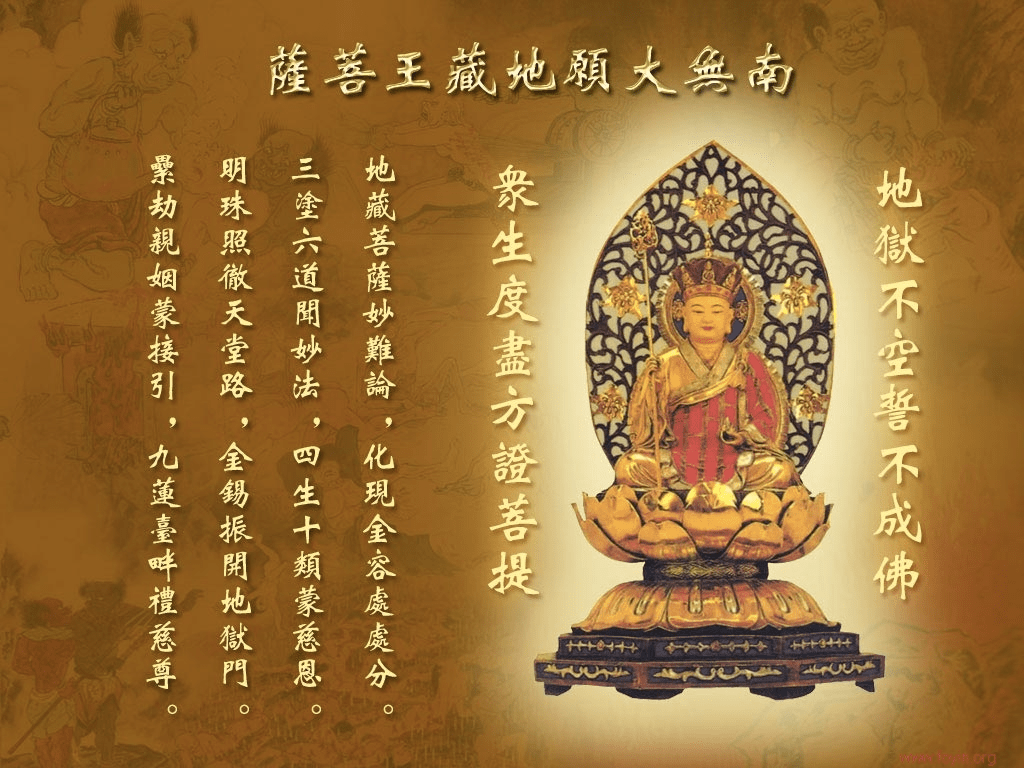
At the temple, I was introduced to a sutra called The Original Vows of Ksitigarbha Bodhisattva Sutra. This Sutra is a Mahayana Buddhist teaching on the Ksitigarbha Bodhisattva, who vowed not to attain final enlightenment until after the hell realm is emptied. Ksitigarbha Bodhisattva is well-known in China. A big and sacred Buddhist site – Mount Jiuhua is dedicated to Ksitigarbha (Chinese Pinyin: Dizang), a bodhisattva and protector of beings in hell realms according to Mahayana Buddhist tradition. Many temples have Ksitigarbha Bodhisattva hall, people could worship and praise him.

The sutra illuminated how Ksitigarbha became a bodhisattva with his great vows for the well-being of all sentient beings. When I chant the sutra, I was really touched by those great vows of the bodhisattva.

In the charter six of the sutra, there is one paragraph says: “Moreover, Universally Expansive (name of a bodhisattva), when dreaming or dozing, living beings in the future may see ghosts, spirits and other forms that are either sad, weeping, or worried, fearful, or terrified. These are all past fathers, mothers, sons, daughters, brothers, sisters, husbands, wives, and relatives from one, ten, a hundred, or a thousand lives, who have not yet been able to leave the Evil Paths. They have no place from which to hope for the power of blessings to rescue them, and so they plead with their flesh-and-bone descendants to establish expedient devices for them so that they might leave the Evil Paths. Universally Expansive, using your spiritual power, you should cause all these descendants to recite this sutra with sincerity before the images of Buddhas or Bodhisattvas, or to request others to recite it, either three or seven times. When the sutra has been sounded the proper number of times, relatives in the Evil Paths will obtain liberation and never again be seen by those who dream or doze.”

After I chanted the sutra, things got much better. The suffocating nightmare experiences I had been dealing with began to diminish in frequency. Once in a while I would still dream of some bloody or skull-exposed face. But afterward I would chant the sutra and dedicate the merits to these scary visions, and then I would not dream of them again.

At the end of the sutra, Sakyamuni Buddha said: “If there are good men and women in the future who see Earth Store’s image, or who hear this sutra or read or recite it; who use incense, flowers, food and drink, clothing, or gems as offerings; or if they praise, behold, and worship him, they shall attain twenty-eight kinds of advantages:

1. They will be remembered and protected by gods and dragons.
2. Their good roots will increase daily.
3. They will accululate superior causes of wisdom.
4. They will not retreat from Bodhi.
5. Their food and drink will be abundant.
6. Epidemics will not touch them.
7. They will not encounter disasters of fire and water.
8. They will not be troubled by thieves.
9. They will be respected by all who see them.
10. They will be aided by ghosts and spirits.
11. Women will be reborn as men.
12. If born as women they will be daughters of kings and ministers.
13. They will have upright and proper appearances.
14. They will often be born in the heavens.
15. They may be emperors or kings.
16. They will know their past lives.
17. They will attain whatever they seek.
18. Their families will be happy.
19. All disasters will be eradicated.
20. They will eternally be apart from the paths of karma.
21. They will always arrive at their destination.
22. At night their dreams will be peaceful and happy.
23. Their deceased relatives will leave suffering behind.
24. They will receive the blessings from their past lives.
25. They will be praised by the sages.
26. They will be intelligent and their roots will be keen.
27. They will have magnanimous, kind, and sympathetic hearts.
28. They will ultimately attain Buddhahood. “

If you have similar experience as I had before, you can try to chant the sutra. Hope you a happy and auspicious life.

Incredible Power of The Buddhist Sutra

Link:https://peacelilysite.com/2022/11/30/incredible-power-of-the-buddhist-sutra/

#TheOriginalVowsofKsitigarbhaBodhisattvaSutra#KsitigarbhaBodhisattva#Buddhism#Buddha#Buddhist#Sutra#

https://khenposodargye.org/teachings/khenpos-classical-teachings/original-vows-of-ksitigarbha-bodhisattva-sutra/

Source: http://www.guiyifo.com/dizhangwangpusha/dizhangpusha_yinwenban.htm

Tips on Finding Your Inner Self

Tips on Finding Your Inner Self

Meriam-Webster Dictionary defines Self-Awareness as “An awareness of one’s own personality or individuality.”


Becoming self-aware is not an easy task. Many of us probably feel like we know ourselves – strengths, weaknesses, areas needing improvement, etc. Heck, our lifecycle is one big experiment in assessment and evaluation.

Yet in the new age of social media, information bombards us from every angle.  External messaging tells us where to shop, who to vote for, the newest hot spot for families, where to spend your hard earned money, etc.

Sound familiar? This unending stimulus challenges even the most resolute among us to be present and attentive in our engagements with colleagues, family and friends. This seismic change in daily information flow if fundamentally changing how we live our lives, and often not for the best.

People take various approaches to “figuring out” who they are; self-help courses, career counseling, traveling, continuing education, and new challenges like completing a Tough Mudder. These experiences are ways to explore deeper motivations that may shed light on the fact that many of us need external validation – hence the beauty of the internet, providing immediate satisfaction via the dopamine cycle that the internet provides.


Here’s some excerpts from the post:

First, perform a skills inventory that help identify your passion. What are your talents and how do you apply them to “pay the bills”.

Second, perform a self-awareness audit: You may be familiar with the traditional concept of an audit. However, this audit is different. The intent is to evaluate your strengths and areas needing improvement. The best way to do this is by requesting feedback from colleagues, friends and family. Asking those that who know you best to provide feedback. This “self-audit” is valuable because people do not self-assess enough, and when they do, the focus is often on the negatives, not their strengths. Once you finish your self-audit, what’s next?  

Boost your self-awareness with these tips:

  • Celebrate Your Wins
  • Boundaries and Priorities
  • Shiny object syndrome
  • Design your Environment
  • Repetition/structure
  • Life experiences/mentor/counseling
  • Be appreciative

How do set create a positive environment to be successful:

  • Set priorities
  • Set boundaries
  • Put your phone away
  • Learn to do nothing
  • Journal non-productive thoughts
  • Brain Dump when your brain is racing

Take specific action steps to better relationships by:

  • Ask More Questions: Listen 2 x as much as speaking
  • Put Others First
  • Don’t Procrastinate – do it now
  • Engage in Self-Improvement – do one thing every day

Self-awareness is more than an experiment with personal exploration. It’s a broader pursuit of living outside of your own immediate needs and being present, genuine and appreciative of the many gifts in our life – people, health, livelihood, etc.

In a world that revolves around the next ‘like’, having perspective on your strengths and how to apply them, can lead to a more fulfilling life experience for you and those that you care for.

by: William Smith
www.jerseygrind.com

Tips on Finding Your Inner Self

Link: https://peacelilysite.com/2022/11/29/tips-on-finding-your-inner-self/

#Self-awareness#Inner Self#Fulfillinglifeexperience

THE FORTUNATE FISH [DESIRE]


34, 216: THE FORTUNATE FISH [DESIRE]

Buddhist Tales for Young and Old, volume 1, Prince Goodspeaker, Stories 1-50

Once upon a time, King Brahmadatta had a very wise adviser who understood the speech of animals. He understood what they said, and he could speak to them in their languages.

One day the adviser was wandering along the riverbank with his followers. They came upon some fishermen who had cast a big net into the river. While peering into the water, they noticed a big, handsome fish following his pretty wife.

Her shining scales reflected the morning sunlight in all the colors of the rainbow. Her feather-like fins fluttered like the delicate wings of a fairy, as they sent her gliding through the water. It was clear that her husband was so entranced by the way she looked and the way she moved, that he was not paying attention to anything else!

As they came near the net, the wife fish smelled it. Then she saw it and alertly avoided it at the very last moment. But her husband was so blinded by his desire for her, that he could not turn away fast enough. Instead, he swam right into the net and was trapped!

The fishermen pulled in their net and threw the big fish onto the shore. They built a fire and carved a spit to roast him on.

Lying on the ground, the fish was flopping around and groaning in agony. Since the wise adviser understood fish talk, he translated for the others. He said, “This poor fish is madly repeating over and over again:

“My wife! My wife! I must be with my wife!
I care for her much more than for my life!

‘My wife! My wife! I must be with my wife!
I care for her much more than for my life!”

Photo by Pixabay on Pexels.com

The adviser thought, “Truly this fish has gone crazy. He is in this terrible state because he became a slave to his own desire. And it is clear that he has learned nothing from the results of his actions. If he dies keeping such agony, and the desire that caused it, in his mind, he will surely continue to suffer by being reborn in some hell world. Therefore, I must save him!”

So this kind man went over to the fishermen and said, “Oh my friends, loyal subjects of our king, you have never given me and my followers a fish for our curry. Won’t you give us one today?”

They replied, “Oh royal minister, please accept from us any fish you wish!” “This big one on the riverbank looks delicious,” said the adviser. “Please take him, sir,” they said.

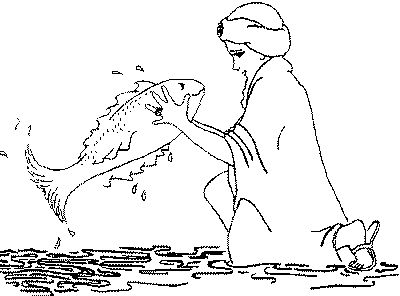
Then he sat down on the bank. He took the fish, who was still groaning, into his hands. He spoke to him in the language only fish can understand, saying, “You foolish fish! If I had not seen you today, you would have gotten yourself killed. Your blind desire was leading you to continued suffering. From now on, do not let yourself be trapped by your own desires!”

Then the fish realized how fortunate he was to have found such a friend. He thanked him for his wise advice. The minister released the lucky fish back into the river and went on his way.

The moral is: Fools are trapped by their own desires.

34, 216: The Fortunate Fish [Desire]

Link: https://peacelilysite.com/2022/11/27/the-fortunate-fish-desire/

INTERPRETER’S INTRODUCTION – BUDDHIST TALES FOR YOUNG AND OLD, VOLUME 1, STORIES 1-50

#Buddhisttalesforyoungandold #Buddhiststories #storiesforkids #moralstories #Buddha #Jatakastories #PansiyaPanasJatakaBuddhisttales#FortunateFish#Desire

10 Steps To Effective Listening


10 Steps To Effective Listening

by Dianne Schilling

In today’s high-tech, high-speed, high-stress world, communication is more important then ever, yet we seem to devote less and less time to really listening to one another. Genuine listening has become a rare gift—the gift of time. It helps build relationships, solve problems, ensure understanding, resolve conflicts, and improve accuracy. At work, effective listening means fewer errors and less wasted time. At home, it helps develop resourceful, self-reliant kids who can solve their own problems. Listening builds friendships and careers. It saves money and marriages.

Here are 10 tips to help you develop effective listening skills.

Step 1: Face the speaker and maintain eye contact.

Talking to someone while they scan the room, study a computer screen, or gaze out the window is like trying to hit a moving target. How much of the person’s divided attention you are actually getting? Fifty percent? Five percent? If the person were your child you might demand, “Look at me when I’m talking to you,” but that’s not the sort of thing we say to a lover, friend or colleague.

In most Western cultures, eye contact is considered a basic ingredient of effective communication. When we talk, we look each other in the eye. That doesn’t mean that you can’t carry on a conversation from across the room, or from another room, but if the conversation continues for any length of time, you (or the other person) will get up and move. The desire for better communication pulls you together.

Do your conversational partners the courtesy of turning to face them. Put aside papers, books, the phone and other distractions. Look at them, even if they don’t look at you. Shyness, uncertainty, shame, guilt, or other emotions, along with cultural taboos, can inhibit eye contact in some people under some circumstances. Excuse the other guy, but stay focused yourself.

Step 2: Be attentive, but relaxed.

Now that you’ve made eye contact, relax. You don’t have to stare fixedly at the other person. You can look away now and then and carry on like a normal person. The important thing is to be attentive. The dictionary says that to “attend” another person means to:

  • be present
  • give attention
  • apply or direct yourself
  • pay attention
  • remain ready to serve

Mentally screen out distractions, like background activity and noise. In addition, try not to focus on the speaker’s accent or speech mannerisms to the point where they become distractions. Finally, don’t be distracted by your own thoughts, feelings, or biases.

Step 3: Keep an open mind.

Listen without judging the other person or mentally criticizing the things she tells you. If what she says alarms you, go ahead and feel alarmed, but don’t say to yourself, “Well, that was a stupid move.” As soon as you indulge in judgmental bemusements, you’ve compromised your effectiveness as a listener.

Listen without jumping to conclusions. Remember that the speaker is using language to represent the thoughts and feelings inside her brain. You don’t know what those thoughts and feelings are and the only way you’ll find out is by listening.

Don’t be a sentence-grabber. Occasionally my partner can’t slow his mental pace enough to listen effectively, so he tries to speed up mine by interrupting and finishing my sentences. This usually lands him way off base, because he is following his own train of thought and doesn’t learn where my thoughts are headed. After a couple of rounds of this, I usually ask, “Do you want to have this conversation by yourself, or do you want to hear what I have to say?” I wouldn’t do that with everyone, but it works with him.

Step 4: Listen to the words and try to picture what the speaker is saying.

Allow your mind to create a mental model of the information being communicated. Whether a literal picture, or an arrangement of abstract concepts, your brain will do the necessary work if you stay focused, with senses fully alert. When listening for long stretches, concentrate on, and remember, key words and phrases.

When it’s your turn to listen, don’t spend the time planning what to say next. You can’t rehearse and listen at the same time. Think only about what the other person is saying.

Finally, concentrate on what is being said, even if it bores you. If your thoughts start to wander, immediately force yourself to refocus.

Step 5: Don’t interrupt and don’t impose your “solutions.”

Children used to be taught that it’s rude to interrupt. I’m not sure that message is getting across anymore. Certainly the opposite is being modeled on the majority of talk shows and reality programs, where loud, aggressive, in-your-face behavior is condoned, if not encouraged.

Interrupting sends a variety of messages. It says:

  • “I’m more important than you are.”
  • “What I have to say is more interesting, accurate or relevant.”
  • “I don’t really care what you think.”
  • “I don’t have time for your opinion.”
  • “This isn’t a conversation, it’s a contest, and I’m going to win.”

We all think and speak at different rates. If you are a quick thinker and an agile talker, the burden is onyouto relax your pace for the slower, more thoughtful communicator—or for the guy who has trouble expressing himself.

When listening to someone talk about a problem, refrain from suggesting solutions. Most of us don’t want your advice anyway. If we do, we’ll ask for it. Most of us prefer to figure out our own solutions. We need you to listen and help us do that. Somewhere way down the line, if you are absolutely bursting with a brilliant solution, at least get the speaker’s permission. Ask, “Would you like to hear my ideas?”

Step 6: Wait for the speaker to pause to ask clarifying questions.

When you don’t understand something, of course you should ask the speaker to explain it to you. But rather than interrupt, wait until the speaker pauses. Then say something like, “Back up a second. I didn’t understand what you just said about…”

Step 7: Ask questions only to ensure understanding.

At lunch, a colleague is excitedly telling you about her trip to Vermont and all the wonderful things she did and saw. In the course of this chronicle, she mentions that she spent some time with a mutual friend. You jump in with, “Oh, I haven’t heard from Alice in ages. How is she?” and, just like that, discussion shifts to Alice and her divorce, and the poor kids, which leads to a comparison of custody laws, and before you know it an hour is gone and Vermont is a distant memory.

This particular conversational affront happens all the time. Our questions lead people in directions that have nothing to do with where they thought they were going. Sometimes we work our way back to the original topic, but very often we don’t.

When you notice that your question has led the speaker astray, take responsibility for getting the conversation back on track by saying something like, “It was great to hear about Alice, but tell me more about your adventure in Vermont.”

Step 8: Try to feel what the speaker is feeling.

If you feel sad when the person with whom you are talking expresses sadness, joyful when she expresses joy, fearful when she describes her fears—and convey those feelings through your facial expressions and words—then your effectiveness as a listener is assured. Empathy is the heart and soul of good listening.

To experience empathy, you have to put yourself in the other person’s place and allow yourself to feel what it is like to be her at that moment. This is not an easy thing to do. It takes energy and concentration. But it is a generous and helpful thing to do, and it facilitates communication like nothing else does.

Step 9: Give the speaker regular feedback.

Show that you understand where the speaker is coming from by reflecting the speaker’s feelings. “You must be thrilled!” “What a terrible ordeal for you.” “I can see that you are confused.” If the speaker’s feelings are hidden or unclear, then occasionally paraphrase the content of the message. Or just nod and show your understanding through appropriate facial expressions and an occasional well-timed “hmmm” or “uh huh.”

The idea is to give the speaker some proof that you are listening, and that you are following her train of thought—not off indulging in your own fantasies while she talks to the ether.

In task situations, regardless of whether at work or home, always restate instructions and messages to be sure you understand correctly.

Step 10: Pay attention to what isn’t said—to nonverbal cues.

If you exclude email, the majority of direct communication is probably nonverbal. We glean a great deal of information about each other without saying a word. Even over the telephone, you can learn almost as much about a person from the tone and cadence of her voice than from anything she says. When I talk to my best friend, it doesn’t matter what we chat about, if I hear a lilt and laughter in her voice, I feel reassured that she’s doing well.

Face to face with a person, you can detect enthusiasm, boredom, or irritation very quickly in the expression around the eyes, the set of the mouth, the slope of the shoulders. These are clues you can’t ignore. When listening, remember that words convey only a fraction of the message.

Listening Skills Exercise: Summarize, Summarize, Summarize!

For at least one week, at the end of every conversation in which information is exchanged, conclude with a summary statement. In conversations that result in agreements about future obligations or activities, summarizing will not only ensure accurate follow-through, it will feel perfectly natural. In conversations that do not include agreements, if summarizing feels awkward just explain that you are doing it as an exercise.

Photo by cottonbro studio on Pexels.com

10 Steps To Effective Listening

Link:https://peacelilysite.com/2022/11/27/__trashed-4/

#Listening#Respect#Conversation#Solution#EffectiveListening

https://www.forbes.com/sites/womensmedia/2012/11/09/10-steps-to-effective-listening/?sh=4d5306543891

I have more prosperous business and happy family after learning Buddhism

I have more prosperous business and happy family after learning Buddhism

The lucky door in life is always inadvertently opened. Maybe it’s the blessings from the Buddha and Boddhisatva.

I remember that day, a critical turning point in my life. I was exercising in the community that day, a surnamed Meng dharma sister asked me to worship the Buddha in the Buddhist Hall nearby. I agreed with her as soon as I heard the invitation. The dharma brothers and sisters made me feel at home. It’s totally different from the people I met in my life, most of whom treated me courteously but without sincerity. So I decided to chant sutras and listen to the recorded discourses expounded by H.H. Dorje Chang Buddha III with dharma brothers and sisters. I felt like it’s the place that I should come. Then I couldn’t help crying when chanting sutras, and I would repent. Every time after listening the recorded Buddha dharma discourses, I was filled with endless power.

To my shame, I never settle down to study, but hurry to come and leave the Buddhist Hall owing to busy work. With my diligence for listening the dharma discourses, I make progress and schedule time for study in the Buddhist Hall. Undoubtedly, we want to lead a good life, but learning Buddhism is more important, we can and we have to plan enough time for study.

On the National Day in 2016, I gave up travelling with my family but took part in the Avalokiteshvara Bodhisattva Great Compassion Empowerment Dharma Assembly, from which, I truly knew the great Buddha Dharma is true and real. The next day I converted to Buddhism. I was earnest and pious in studying Buddhism after conversion.

The Buddha taught us to conduct cultivation and introspection, to conduct three introspections in the course of a day. I found myself did many things that I should not do in the past, including killing other living beings. When I realized the retribution of killing, I decided not to kill, while turned to vegan at dinner, and on the first day and the fifteenth day of the lunar calendar.

I’ve been doing prostrations since the dharma assembly. Now I have a fit body and my wine tummy is gone. My blood pressure used to be a little bit high, but now it’s stable. I don’t feel panic or worried if travelling by plane or driving. I sleep well all night after chanting H.H. Dorje Chang Buddha III.

Some people think that it takes time to learn Buddhism and it will affect the business and work. However, my business is more prosperous since I’ve taken Buddhism. Numerous long-term orders come for me. Several days ago, the municipal government called me for delivery. I was surprised, because I didn’t have the resource superiority. I focused on social engagement and seldom stayed at home in the past. Now I cherish and care about my family. My son usually asks me to spend time with him. Taking Buddhism makes me healthier and my family relationships more harmonious.

I truly know that Buddhism brings me happiness, so I am determined to do my best to make offerings to Buddha Halls. With the help from dharma brothers and sisters, I set up a Buddha Hall at home. My family also join me to study Buddhism.

All above is my own experience. I hope everyone has the karmic affinity to study the true Dharma of Tathagata. We all eager for a happy life, but making money is only a part of it. The health and happiness we have on this side is temporary, while attaining the accomplishment and liberation on the other side is the truth.

I have more prosperous business and happy family after learning Buddhism

Link: https://peacelilysite.com/2022/11/25/i-have-more-prosperous-business-and-happy-family-after-learning-buddhism/

#DorjeChangBuddhaIII # HHDorjeChangBuddhaIII  #Cultivation #Buddhism#Buddhist # Causality

#Dharma Assembly#KarmicAffinity

Source: http://www.hzbi.us/?p=915

How do I get out of this black vortex when I’ve lost my family fortune

How do I get out of this black vortex when I’ve lost my family fortune

 My husband and I have a son and a daughter. My daughter was employed in a bank and my son ran a chemical business in the bonded area. Although the competition was fierce, my son was smart and flexible, he made his career. Soon the children grew to the age for marriage, we bought a car and a big suite at the lake scenic area. Then we had a daughter-in-law, married our daughter. We became grandparents the second year. My husband and I learned Buddhism and cultivation while taking care of our grandchildren. We lived a full life and enjoyed the happiness of our family.
    After two years’ happy life, my son wanted to switch to project contraction because of the hard competition and low profit in the chemistry business. No matter how we discouraged him, he didn’t change his mind. Finally, we urged him not to gamble or turn to high-risk lenders, he should think twice and keep wits on dealing matters.
    My son flew to different cities to struggle for business. The assets could reach to ten million at most. At the peak of his career, he undertook hundreds of millions of decoration projects and led hundreds of workers. We often asked him about the business, he always understated the situation and told us not to worry, he said what we need to do was learning Buddhism and taking good care of the grandchild. Later, my son came back home more and more frequently, and he avoided answering phones in front of us. We became nervous.
    It was after different people came for millions of debts that we knew what was a bolt from the blue. I used to hear that Jack was bankrupt, Tom was cheated and John had an accident, but I didn’t expect that it was our turn.
    It turned out that my son put a lot of money into the project, and he also borrowed millions of money for emergency. The first party has to pay some money after the project passed the acceptance checks, but it withheld the money and didn’t fulfill the contract. My son sued the first party after he failed to get the money back in several months. However, the creditors were demanding to be paid every day.
     It is compulsory to pay what you owe. We deeply knew that we couldn’t err on the causality, so we tried our best to help our son to settle debts, but the money we had was still far from enough. We borrowed money from all people we knew without caring about losing faces. However, people usually busily embroidering more flowers on the brocade rather than sending charcoal to the needy on a snowy winter day. In this situation, we sold the house and car to repay most of the debts.

During the process, I remembered what H.H Dorje Chang Buddha III taught us: everyone knows to cultivate themselves in prosperity, the problem is how to deal with it in adversity? When you rise with money and power, or when you’re down and out with pain, can you remain the inner peace no matter how the circumstances change? This is a litmus test for me and my family.
    Taking Buddhism makes me realize that the process of impermanence is the truth. Our body will go bad, the wealth we have will dwindle, so are the house and car, now they’re just gone in advance. It’s all about causality. As long as we can make ends meet, nothing weighs more than life and death.
    No matter how rough life is, you must move forward, to make choices between the gain and loss and be strong in the experience. We will experience all kinds of hardships in the way of practice. Only if you want to extricate yourself from suffering do you truly cultivate yourself. To establish a mind determined to leave the cycle of reincarnation helps us leave suffering and obtain happiness in the end.

Though we are difficult in material condition, we have a rich spiritual life. We are lucky to have H.H Dorje Chang Buddha III imparting Buddha dharma in this world, we happily took refuge to the Buddha, Dharma and Sangha, and we listen and learn from the recorded Buddha dharma discourses with great joy. These can’t be bought with gold and silver.
    Anyway the wind blows, doesn’t really matter to me. With the light of Buddhism, my family and I will walk down the path firmly. My son becomes mature after this setback. I believe the lesson is a supporting condition for his life.
     If we don’t study Buddhism and believe in causality, this disaster may push my family into a doomed vortex. Crying our eyes out, holding grudges, be in a violent rage, collapsed after the straits and trying to commit suicide? No, we don’t behave like that. We settle our debts in causality, and demand unpaid money from the first party through legal methods.
    Buddhism gives us wisdom and power to deal with everything reasonably and calmly. All negative karmic conditions and sufferings make me and my family to cherish Buddhism and the chance for incarnating as a human being, guiding us to the path of bodhi. I believe every struggle after the hardship is the chance to change fate.

How do I get out of this black vortex when I’ve lost my family fortune

Link: https://peacelilysite.com/2022/11/25/how-do-i-get-out-of-this-black-vortex-when-ive-lost-my-family-fortune/

#DorjeChangBuddhaIII # HHDorjeChangBuddhaIII  #Cultivation #Buddhism#Buddhist#causality

Source: http://www.hzbi.us/?p=901

8 Ways To Have More Gratitude Every Day

Photo by Manuel Aldana on Pexels.com

8 Ways To Have More Gratitude Every Day

In the famous words of Ferris Bueller, “Life moves pretty fast. If you don’t stop and look around once in a while, you could miss it.” Put simply, gratitude is the intentional practice of noticing the good in your life. It relates to anything that makes you feel grateful, fortunate, or blessed.

It can be easy to get swept away in the fast lane and forget to stop and show your appreciation for what you do have. A life well lived is one of gratitude and thankfulness. Gratitude is the intentional practice of noticing the good in your life. It relates to anything that makes you feel grateful, fortunate, blessed. At this Thanksgiving holidays, we should think more and more about the things we are most grateful for in life.

To help you on your gratitude  journey, here are 8 ways to have more gratitude in your daily life not just on Thanksgiving.

1. Don’t be picky: appreciate everything

Gratitude doesn’t have to be saved for the “big” things in life. The habit of being grateful starts with appreciating every good thing in life and recognizing that there is nothing too small for you to be thankful for.

Even if it is as simple as appreciating the clear weather or how quickly your mailman delivered your mail last Friday, don’t leave anything out when practicing your gratitude.

2. Find gratitude in your challenges

Gratitude is not only about being thankful for positive experiences. In fact, sometimes thinking about negative or difficult situations can help to really nail down what you have to be thankful for.

Western Buddhist master Jack Kornfield remembers an exercise he did with a man who was caring for his grandson while his son and daughter-in-law battled a drug addiction. Despite all that he had been through, the man was still able to find gratitude for the amount of compassion he had learned to show and the impact he was able to have on other people.

Dig a little deeper into some of your own past experiences and try to figure out how they have helped shape you into the person you are today.

3. Practice mindfulness

Sit down daily and think through five to ten things you are grateful for. The trick is that you need to picture it in your mind and sit with that feeling of gratitude in your body. Doing this every day will rewire your brain to be naturally more grateful, and you’ll start feeling happier after every session.

It only takes eight weeks of gratitude practice for people to start showing changed brain patterns that lead to greater empathy and happiness.

Your brain is a powerful tool, and training it towards gratitude is all part of ensuring that the gratitude comes more easily as you practice, so what are you waiting for?

4. Keep a gratitude journal

After your mindfulness session, write down your positive thoughts! Keeping a journal of all of the things you are thankful for can help you keep track of and refer back to the positives in your life.

Write down your positive thoughts to further focus your attention on the subject. While you are putting the pen to paper, you have no choice but to consciously think about the words you are writing without other distracting, ungrateful thoughts.

You can journal every day after your gratitude practice, or you can come back to the journal on a regular schedule weekly or monthly.

5. Volunteer

For many people, the key to having more gratitude is to give back to others in their local community. Not only will it make you more grateful for the things that you may take for granted, but studies have shown that volunteering for the purpose of helping others increases our own well-being, and thus our ability to have more gratitude.

University of Pennsylvania professor, Martin Seligman, supports this theory with his research in Flourish: A Visionary New Understanding of Happiness and Well-Being. After testing all kinds of variables that help improve our well-being, he found that volunteering is the single most reliable way to momentarily increase your well-being.

In other words: helping others helps you!

6. Express yourself

Sometimes it’s not enough to simply keep your gratitude to yourself. You can increase your feelings of gratitude by expressing that same gratitude to the people you care about.

Soul Pancake, a group that works to discover the “science of happiness,” ran an experiment where they encouraged people to write a letter to a person they were grateful for. By itself, this exercise increased their levels of happiness from 2 to 4%. However, when the same people made a phone call to the person they were thankful for to express their gratitude directly, happiness levels jumped from 4% to 19%.

Not only does expressing your gratitude for someone make their day a little brighter, but it can do wonders for increasing your own levels of gratitude and happiness in the long run

7. Spend time with loved ones

If you’re struggling with feeling the gratitude in the moment, go spend time with your friends and family. Of course it will help you grow closer to them and strengthen your relationship, but it will also give you a chance to practice your acts of gratitude on people that you care about.

Start small if they’re having trouble finding ways to support your friends and family. For instance, why don’t you make sure you’re listening intently the next time someone shares a story with you instead of waiting for your own chance to speak? Or start a conversation with a difficult member of the family by complimenting their new shoes or hair-cut.

8. Improve your happiness in other areas of your life

Being grateful can make you happy, but being happy can also make you grateful. There are plenty of other ways to get your mood up, including exercising or participating in a hobby you enjoy.

Once you are feeling the endorphins flow, showing gratitude will become even easier and you’ll start to be able to make list after list of all of the things in your life you’re thankful for.

8 Ways To Have More Gratitude Every Day

Link: https://peacelilysite.com/2022/11/23/8-ways-to-have-more-gratitude-every-day/

Source : https://www.forbes.com/sites/womensmedia/2016/07/08/8-ways-to-have-more-gratitude-every-day/?sh=78847a301d54

3 Ways to Maximize Business Success for the Spiritual Entrepreneur

3 Ways to Maximize Business Success for the Spiritual Entrepreneur

by Raymond Puckett

How would you define a “spiritual entrepreneur?” Would you cite yoga teachers or therapists as examples? Well, spiritual entrepreneurs are not any different from other entrepreneurs in terms of the services they provide. What makes a regular entrepreneur a spiritual one is their sense of purpose. These are the business people driven by their desire to help, not by a love for money. 

How does one maximize business success as a spiritual entrepreneur?  

Law of Attraction and Divine Transmission expert Divina Caballo introduces a new way of spiritual entrepreneurship – where profits meet the purpose. Wanting both financial gains and spiritual entrepreneurship might seem counterintuitive, but they are not. Caballo lists three ways by which every spiritual entrepreneur can enjoy a wealth of both – profits and purpose. 

Clearly Define Your Measures of Success 

Business success means different things to different people. So what does it mean to you? Before you begin working on ways to maximize something, Caballo recommends spending some time defining the metrics of measurement. 

She says, “Running blindly, goalless like a headless chicken, will not do you any good. Sit down. Take a minute. Think. And note down the end goal.”  

From the number of clients you need to the brand image you have in mind, make a note of all the vital cornerstones of your business. Making concrete financial plans, along with cementing other actionable goals, goes a long way. 

Be A ‘Work in Progress’ 

The shift to a spiritual entrepreneur begins with a mindset change. Every day will be a new learning experience, but as long as your mind remains closed off to them, no experience could succeed in teaching you something new. 

Divina Caballo advises, “Before you commence your journey of being of service to others, make a commitment to yourself to embrace learning for a lifetime. Discovering self-expression is where it all begins, and you build from there on.” 

This might seem not very clear at first. You might be wondering what your innermost self has got anything to do with helping other people. And according to Caballo, you do not need to look too far for the answer. “There are many different types of spiritual entrepreneurs, and each type differs greatly from the next. But there is one thing that they all have in common: they are all working towards a goal that lies closest to their hearts.” 

Find People Who Click with You 

Business is all about community, and that rings truer than ever when it comes to spiritual business. So find your community and build your audience. 

“Realistically speaking, one can use social media as a reliable medium to gather like-minded individuals united by a shared cause greater than any one of them that binds them together in service for eternity,” says Caballo. 

Not unlike most other businesses today, social media also proves to be an excellent channel to promote one’s business. As an entrepreneur, you can not only attract potential clients there, but you can also find inspiration and ideas from other people.

3 Ways to Maximize Business Success for the Spiritual Entrepreneur

Link:http://Spiritual Entrepreneur

Source: https://www.seekerstime.com/3-ways-to-maximize-business-success-for-the-spiritual-entrepreneur/

Chinese Plum Blossom Paintings

Chinese Plum Blossom Paintings

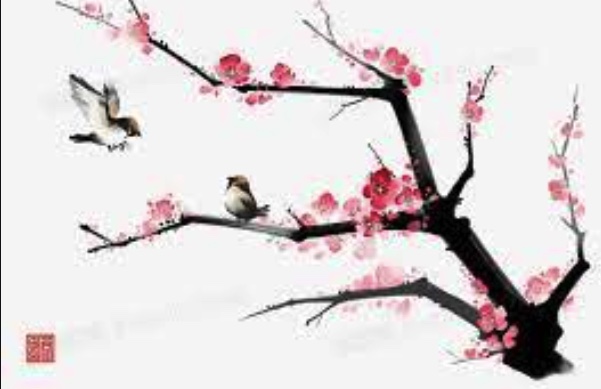
One of the most beloved flowers in China, the plum blossoms (méi-huā, 梅花) have been frequently depicted in Chinese painting and poetry for centuries. The Chinese see its blossoms as both a symbol of winter as well as a harbinger of spring. It is precisely for this reason that the blossoms are so beloved, as they bloom most vibrantly amidst the winter snow, after most other plants have shed their leaves, and before other flowers appear. They are seen as an example of resilience and perseverance in the face of adversity. Though neither the plum tree nor its blossoms are very striking, they manage to exude an otherworldly exquisiteness and beautiful elegance. The demeanor and character of the plum tree thereby serves as a metaphor for inner beauty and humble display under adverse conditions. Because they blossom in winter, the plum blossom is a member of the “Three Friends of Winter (歲寒三友)”, along with the pine and the bamboo. The plum blossom is also a member of the “Four Gentlemen (四君子)” in Chinese art (the others being orchid, bamboo, and chrysanthemum), symbolizing nobility. In China, there are over 300 recorded cultivars of mei, which can be broadly divided by color into white, pink, red, purple, and light green types.

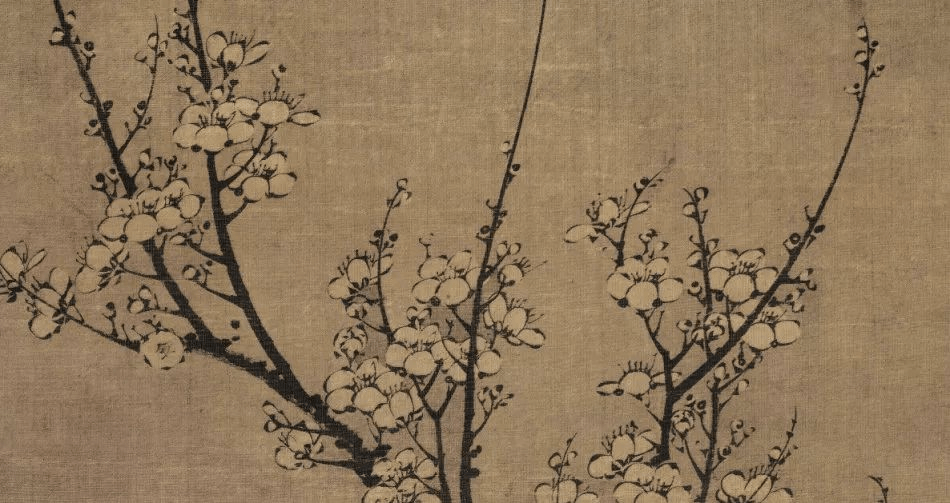
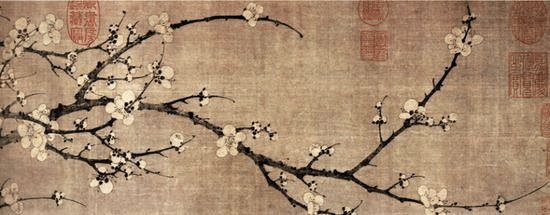
When we look through all of the ancient and modern books on plum blossom paintings, it is not difficult to discover that all of the famous master plum blossom painters had extensive knowledge, deep understanding of ancient and their own contemporary times, and immense talents. No artist in history can be found who lacked virtue and learning and still was capable of painting highly exquisite plum blossom paintings. The plum blossom paintings of ancient artists such as Mian Wang and Dongxin Jin and the modern artist Changshuo Wu are splendid works based upon the profound knowledge and virtue of their creators.

Mian Wang ( 1287-1359 ) : Early Spring at South Corner of Garden
Artist: Dongxin Jin (1687 – 1764)
Artist: Changshuo Wu (1844 – 1927)

As a contemporary artist, the Pop of Buddhist, H.H. Dorje Chang Buddha III has also painted dozens of masterpieces of plum blossom compositions. All in the book entitled Collected Plum Blossom Paintings, Calligraphy, Poems, and Songs. Wielding the brush with great facility, His Holiness creates paintings that are completely devoid of mundane garishness, have the exquisite look of ancient bronze and stone inscriptions, and are imbued with a scholarly air. His Holiness’s painting skills have surpassed the ordinary and reached the consummate mastery of a holy being. Below are several art works from the book. Some of the paintings are in the exhibition of The International Art Museum of America.

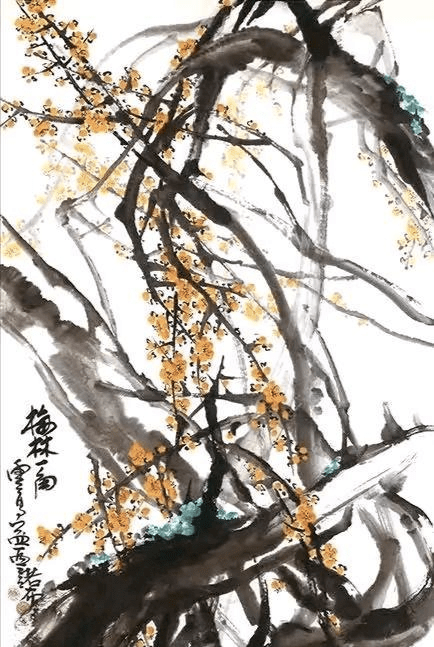
Small Portion of a Plum Grove

Yellow plum blossoms bloom in winter and are generally used during Chinese New Year celebrations as a symbol of great auspiciousness. The painting expresses beauty of a real plum blossom grove.

Drunk in a Green Garden

The turquoise plum blossom is a rare species of plum blossom. These elegant, sublime flowers have a strong resistance to coldness and a scent that is quite fresh and fragrant. This painting has a vigorous and firm style yet maintains great simplicity. The brushwork is bold, vigorous, and completely unconstrained. Large, dancing strokes of a casual hand and free mind bring to form branches and twigs.

Plum Fragrance in the Holy Realm

The brushwork, casually applied, was accomplished with an unfettered hand and detached mind, free of the slightest artificiality. It is a seemingly ever-changing work. Its charm, tone, transitions, and depictions represent the highest level of Eastern ink-and-wash paintings. A transparent layer of lighter ink on top of darker ink is clearly visible, imbuing the painting with a pure and fragrant air and providing the viewer with a feeling of comfort and ease.

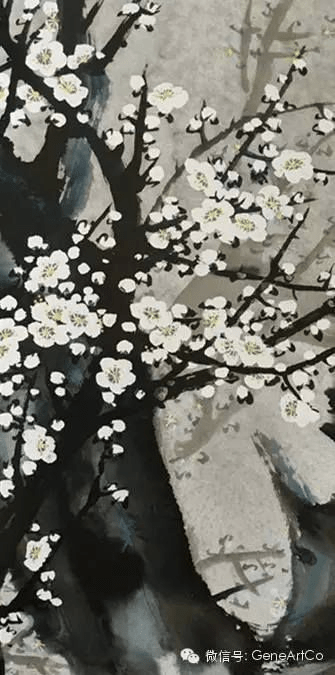
Winter Powder

A most elegant and valued plum flower called ‘Dong Fen” (winter powder). It is widely known to be the king of whiter plum blossoms. A strong contrast is presented by the graceful dense ink that was used to paint the tree trunk and the whiting used to form the flowers. The spatial effect of fairness adds to the charm of the picture, showing an awareness of both emptiness and form. A very special aspect of this painting is that the artist did not apply powerful, bold strokes of uneven contour and content. Rather, ink was applied through a gradual moistening process, manifesting the strong talent of the artist.

Chinese Plum Blossom Paintings

Link: https://peacelilysite.com/2022/11/03/chinese-plum-blossom-paintings/

#DorjeChangBuddhaIII #HHDorjeChangBuddhaIII#DorjeChangBuddha#IAMA#InternationalArtMuseumofAmerica#ChinesePaintings#PlumBlossom#Paintings#WangMian#WuChangShuo

Source: https://www.comuseum.com/painting/flower-painting/plum-blossom/