Every day you are faced with a million little traps that encourage you to take your life way too seriously. Next time you are tempted to smash your computer or lash out in a fit of road rage, remember these reasons not to take life so seriously.
1. Relationships are all that matter
Time and time again when researchers have tried to figure out what makes people happy they have come to the same conclusion: personal relationships make the biggest difference. If we valued our happiness over money we would do everything we could to spend time with friends and family and not worry so much about putting in extra time at work. When you look back on your life, you won’t reflect on the time you spent at work; you will remember family dinners, great vacations, romantic dinners, and your wedding.
2. Rich people aren’t happier people Spending more time at home or with friends will probably have a negative impact on the balance of your bank account. Just reading that sentence probably sent a wave of panic through some of you, but consider the fact that wealth is not correlated with happiness. In fact, once you have enough money to satisfy your basic needs, money makes very little difference in your overall well-being. The only exceptions are if you give your extra money to charity.
3. Worrying isn’t productive Some of us even end up stressed out in situations where it is totally unwarranted. For example, you might find yourself visiting a new city like London or Paris and end up thoroughly confused by the transit system. You can’t find out how to get where you want to go and it makes you want to scream. But what are you accomplishing by stressing yourself out? Nothing.
4. Your time is limited You only get to live one life. If you’re lucky enough to make it to age 90 you still have less than 800,000 hours between the time you are born and the time you die to cherish and enjoy all the things that make up life. One third of that time you won’t even be awake for, so you had best make the most of the remaining chunk. Do what you need to do to live a happy and fulfilled life.
There is a rather famous tombstone in Westminster Abbey. There’s nothing so special about it, except for its inscription. I believe that many people have heard of it.
“When I was young and free and my imagination had no limits, I dreamed of changing the world. As I grew older and wiser, I discovered the world would not change, so I shortened my sights somewhat and decided to change only my country. But it, too, seemed immovable. As I grew into my twilight years, in one last desperate attempt, I settled for changing only my family, those closest to me, but alas, they would have none of it. And now, as I lie on my deathbed, I suddenly realize: If I had only changed myself first, then by example I would have changed my family. From their inspiration and encouragement, I would then have been able to better my country, and who knows, I may have even changed the world.”
It is said that many world dignitaries and celebrities were deeply moved when they saw these words Some people say that this is a teaching of life, some people say that it is a kind of introspection of the soul.
There are similar teachings and philosophies in Chinese traditional culture. The Great Learning is a compilation of Confucian teachings used to address deeply important social behavior. In The Great Learning says: “The ancients who wished to illustrate illustrious virtue throughout the kingdom, first ordered well their own States. Wishing to order well their States, they first regulated their families. Wishing to regulate their families, they first cultivated their persons.”
“From the Kings down to the mass of ordinary people, all must consider the cultivation of the person the root of everything besides. It cannot be, when the root is neglected, that what should spring from it will be well ordered.”
In Buddhism, self cultivation is heavily emphasized as well. The first thing for all buddhist disciples is constantly cultivating themselves. In What is Cultivation, His HolinessDorje Chang Buddha III provides detailed guidance on self-cultivation. Self-cultivation is the fundamental and essential in the learning of Buddhism. Through self-cultivation, one will not only live a happy life and contribute the best of oneself to the society, but also can reach enlightenment and liberation.
Scientists can tell us how to be happy. Really. Here are 10 ways, with the research to prove it.
by Jen Angel
In the last few years, psychologists and researchers have been digging up hard data on a question previously left to philosophers: What makes us happy? Researchers like the father-son team Ed Diener and Robert Biswas-Diener, Stanford psychologist Sonja Lyubomirsky, and ethicist Stephen Post have studied people all over the world to find out how things like money, attitude, culture, memory, health, altruism, and our day-to-day habits affect our well-being. The emerging field of positive psychology is bursting with new findings that suggest your actions can have a significant effect on your happiness and satisfaction with life. Here are 10 scientifically proven strategies for getting happy.
Savor Everyday Moments
Pause now and then to smell a rose or watch children at play. Study participants who took time to “savor” ordinary events that they normally hurried through, or to think back on pleasant moments from their day, “showed significant increases in happiness and reductions in depression,” says psychologist Sonja Lyubomirsky.
Avoid Comparisons
While keeping up with the Joneses is part of American culture, comparing ourselves with others can be damaging to happiness and self-esteem. Instead of comparing ourselves to others, focusing on our own personal achievement leads to greater satisfaction, according to Lyubomirsky.
Put Money Low on the List
People who put money high on their priority list are more at risk for depression, anxiety, and low self-esteem, according to researchers Tim Kasser and Richard Ryan. Their findings hold true across nations and cultures. “The more we seek satisfactions in material goods, the less we find them there,” Ryan says. “The satisfaction has a short half-life—it’s very fleeting.” Money-seekers also score lower on tests of vitality and self-actualization.
Have Meaningful Goals
“People who strive for something significant, whether it’s learning a new craft or raising moral children, are far happier than those who don’t have strong dreams or aspirations,” say Ed Diener and Robert Biswas-Diener. “As humans, we actually require a sense of meaning to thrive.” Harvard’s resident happiness professor, Tal Ben-Shahar, agrees, “Happiness lies at the intersection between pleasure and meaning. Whether at work or at home, the goal is to engage in activities that are both personally significant and enjoyable.”
Take Initiative at Work
How happy you are at work depends in part on how much initiative you take. Researcher Amy Wrzesniewski says that when we express creativity, help others, suggest improvements, or do additional tasks on the job, we make our work more rewarding and feel more in control.
Make Friends, Treasure Family
Happier people tend to have good families, friends, and supportive relationships, say Diener and Biswas-Diener. But it’s not enough to be the life of the party if you’re surrounded by shallow acquaintances. “We don’t just need relationships, we need close ones” that involve understanding and caring.
Smile Even When You Don’t Feel Like It
It sounds simple, but it works. “Happy people…see possibilities, opportunities, and success. When they think of the future, they are optimistic, and when they review the past, they tend to savor the high points,” say Diener and Biswas-Diener. Even if you weren’t born looking at the glass as half-full, with practice, a positive outlook can become a habit.
Say Thank You Like You Mean It
People who keep gratitude journals on a weekly basis are healthier, more optimistic, and more likely to make progress toward achieving personal goals, according to author Robert Emmons. Research by Martin Seligman, founder of positive psychology, revealed that people who write “gratitude letters” to someone who made a difference in their lives score higher on happiness, and lower on depression—and the effect lasts for weeks.
Get Out and Exercise
A Duke University study shows that exercise may be just as effective as drugs in treating depression, without all the side effects and expense. Other research shows that in addition to health benefits, regular exercise offers a sense of accomplishment and opportunity for social interaction, releases feel-good endorphins, and boosts self-esteem.
Give It Away, Give It Away Now!
Make altruism and giving part of your life, and be purposeful about it. Researcher Stephen Post says helping a neighbor, volunteering, or donating goods and services results in a “helper’s high,” and you get more health benefits than you would from exercise or quitting smoking. Listening to a friend, passing on your skills, celebrating others’ successes, and forgiveness also contribute to happiness, he says. Researcher Elizabeth Dunn found that those who spend money on others reported much greater happiness than those who spend it on themselves.
When I was a child, my parents always tell me “ Early to bed and early to rise, makes a man happy, healthy, and wise. In western countries, there are old sayings much like this one, such as ” Early birds get worms”. Sleeping early and getting up early is a very good habit. However I found out it is very difficult to pass down this good habit to my children. They have a million reasons to stay up late, academic and recreational. So I decided to find some scientific evidence to convince them.
The information I found surprised me. I realized that I myself should sleep and wake up even earlier.
Circadian rhythms and internal biological clock
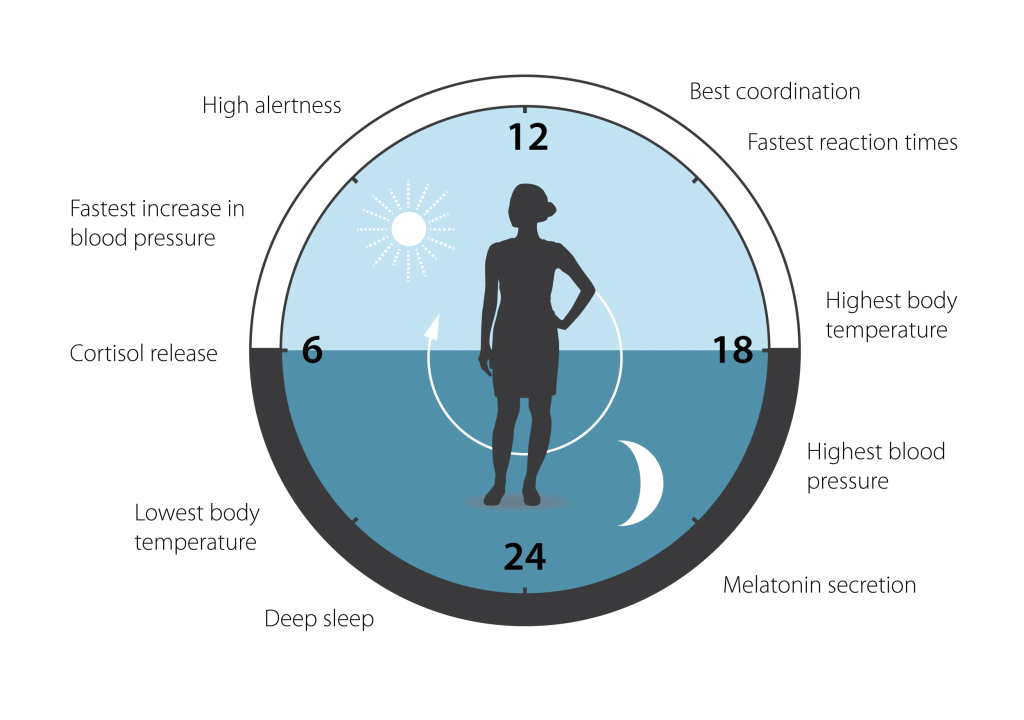
Three scientists won the 2017 Nobel Prize for their discoveries of molecular mechanisms that control circadian rhythms. Circadian rhythms are driven by an internal biological clock that anticipates day/night cycles to optimize the physiology and behavior of organisms.
“Chronobiology has an impact on many aspects of our physiology. For example, circadian clocks help to regulate sleep patterns, feeding behavior, hormone release, blood pressure and body temperature. Molecular clocks also play critical roles locally in many tissues. Ablation of clock genes in animal models results in arrhythmic production of hormones, such as corticosterone and insulin (Son et al., 2008). Clock genes also exert a profound influence on metabolism through the control of gluconeogenesis, insulin sensitivity and systemic oscillation of blood glucose (Panda, 2016). Sleep is vital for normal brain function and circadian dysfunction has been linked to sleep disorders, as well as depression, bipolar disorder, cognitive function, memory formation and some neurological diseases (Gerstner and Yin, 2010).”
The circadian clock has an impact on many aspects of our physiology. This clock helps to regulate sleep patterns, feeding behavior, hormone release, blood pressure and body temperature. A large proportion of our genes are regulated by the clock. From https://www.nobelprize.org/prizes/medicine/2017/advanced-information/
Body-Energy Clock in Chinese Medicine
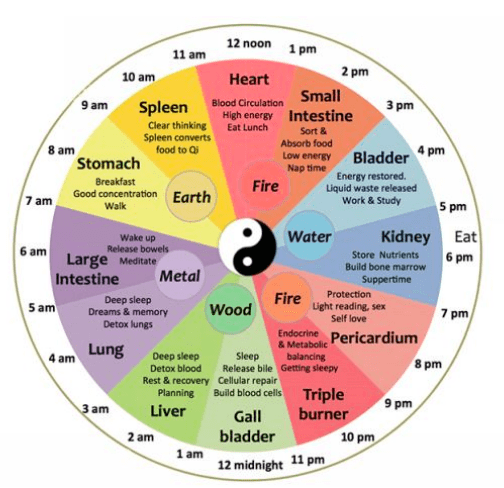
Observations that organisms adapt their physiology and behavior to the time of the day in a circadian fashion have been documented for a long time. Thousands years ago in Chinese Medicine, the body clock was already known. The 24 hour day was divided into 12 two-hour intervals of the Qi (vital force) moving through the organ system. The Body-Energy Clock is built upon the concept of the cyclical ebb and flow of energy throughout the body. During a 24-hour period(see the following diagram), Qi moves in two-hour intervals through the organ systems. During sleep, Qi draws inward to restore the body. This phase is completed between 1 and 3 a.m., when the liver cleanses the blood and performs a myriad of functions that set the stage for Qi moving outward again.
In the 12-hour period following the peak functioning of the liver—from 3 a.m. onward—energy cycles to the organs associated with daily activity, digestion and elimination: the lungs, large intestine, stomach/pancreas, heart, small intestine. By mid-afternoon, energy again moves inward to support internal organs associated with restoring and maintaining the system. The purpose is to move fluids and heat, as well as to filter and cleanse—by the pericardium, triple burner (coordinates water functions and temperature), bladder/kidneys and the liver. Understanding The Body-Energy Clock, could help you to better manage your Sleep, Meals, & Mood.
5 am to 7 am is the time of the Large Intestine, making it a perfect time to have a bowel movement and remove toxins from the day before. So that is the perfect time to get up. Waking up at this time, getting out of bed and moving around, will help your large intestine excrete the waste. Personally, I have discovered that I am prone to constipation if I get up later than this time.
7-9am is the time of the Stomach, so it is important to eat the biggest meal of the day here to optimize digestion and absorption. Warm meals that are high in nutrition are best in the morning. Therefore, if you get up early, you will have enough time to make and enjoy a hearty breakfast. If you get up late, and skip breakfast or just grab some easy treats, then you don’t get enough nutrition for your whole body. According to the body clock the stomach has it’s strongest time in the morning, it secretes a lot of digestive juices in the morning. A lot of people like to eat a big meal at dinner, which can cause the stomach to be overburdened and make the it unable to rest adequately during sleep.
From the Body-Energy Clock we can see the Gall Bladder is most active from 11 p.m. to 1 a.m. The Gall Bladder excretes bile and digest the good fats, it is working hard to repair damaged cells and build new ones. And this process is better processed when you are sleep.
1 a.m. to 3 a.m. is the most active time for the Liver. During this time, toxins are released from the body and fresh new blood is made. The liver is the main detoxifying organ in the body. Our body needs to be in the deep sleep stage, in order to give the liver its full energy capacity so it can do its proper job.
Melatonin Level
Melatonin is often referred to as the sleep hormone. Melatonin level plays an important role in our sleep-wake cycle. It is well-established that melatonin produced by the body plays a fundamental role in getting quality sleep. Scientist has discovered, our body start to increase melatonin secretion soon after the onset of darkness, peaks in the middle of the night, between 2 and 4 a.m., and gradually falls during the second half of the night. Thus most people have the experience that if they stay up too late, they have trouble falling asleep. After 4 a.m. Melatonin level start to decrease, so after 4 a.m. our sleep goes into a light, shallow and dreamy state. Falling asleep during 11 p.m. to 4 a.m., we can get better quality rest from sleeping.
There are many benefits for Going to bed early and getting up early. Here are some examples:
Early risers, whether young or old, have more positive emotions and a better sense of self-health.
Depression is a common mental illness that affects 264 million people worldwide, according to the latest data released on the World Health Organization’s website. A new study in the United States shows that for people who are accustomed to going to bed late, if they can go to bed an hour earlier, they can reduce the risk of depression by 23%.
Staying up late is also an important factor in gain weight, because staying up late can lead to endocrine disorders. If you rest on time, get up early and exercise properly, not only will you prevent excessive weight gain, but you will also be able to maintain a slim body. So, consider to be a early sleeper and early riser, if you wish to control your weight.
Multiple studies have shown that sleep deprivation is associated with increased risk of morbidity. Going to bed early and getting up early can enhance immunity and help fight colds and other viruses. It can also greatly reduce the risk of chronic diseases such as heart disease, kidney disease, high blood pressure, diabetes and stroke.
Study confirms that early sleepers and early risers score 30% higher on anagram tests than those who stay up late.
Here is a interesting video of a navy seal who likes to go to bed early and get up early. I hope you enjoy it, and be happy and healthy.
Tai chi helps reduce stress and anxiety. And it also helps increase flexibility and balance.
By Mayo Clinic Staff
If you’re looking for a way to reduce stress, consider tai chi (TIE-CHEE). Originally developed for self-defense, tai chi has evolved into a graceful form of exercise that’s now used for stress reduction and a variety of other health conditions. Often described as meditation in motion, tai chi promotes serenity through gentle, flowing movements.
What is tai chi?
Tai chi is an ancient Chinese tradition that, today, is practiced as a graceful form of exercise. It involves a series of movements performed in a slow, focused manner and accompanied by deep breathing.
Tai chi, also called tai chi chuan, is a noncompetitive, self-paced system of gentle physical exercise and stretching. Each posture flows into the next without pause, ensuring that your body is in constant motion.
Tai chi has many different styles. Each style may subtly emphasize various tai chi principles and methods. There are variations within each style. Some styles may focus on health maintenance, while others focus on the martial arts aspect of tai chi.
Tai chi is different from yoga, another type of meditative movement. Yoga includes various physical postures and breathing techniques, along with meditation.
Who can do tai chi?
Tai chi is low impact and puts minimal stress on muscles and joints, making it generally safe for all ages and fitness levels. In fact, because tai chi is a low-impact exercise, it may be especially suitable if you’re an older adult who otherwise may not exercise.
You may also find tai chi appealing because it’s inexpensive and requires no special equipment. You can do tai chi anywhere, including indoors or outside. And you can do tai chi alone or in a group class.
Although tai chi is generally safe, women who are pregnant or people with joint problems, back pain, fractures, severe osteoporosis or a hernia should consult their health care provider before trying tai chi. Modification or avoidance of certain postures may be recommended.
Why try tai chi?
When learned correctly and performed regularly, tai chi can be a positive part of an overall approach to improving your health. The benefits of tai chi may include:
Decreased stress, anxiety and depression
Improved mood
Improved aerobic capacity
Increased energy and stamina
Improved flexibility, balance and agility
Improved muscle strength and definition
More research is needed to determine the health benefits of tai chi. Some evidence indicates that tai chi may also help:
Enhance quality of sleep
Enhance the immune system
Help lower blood pressure
Improve joint pain
Improve symptoms of congestive heart failure
Improve overall well-being
Reduce risk of falls in older adults
How to get started with tai chi
Although you can rent or buy videos and books about tai chi, consider seeking guidance from a qualified tai chi instructor to gain the full benefits and learn proper techniques.
You can find tai chi classes in many communities today. To find a class near you, contact local fitness centers, health clubs and senior centers. Tai chi instructors don’t have to be licensed or attend a standard training program. It’s a good idea to ask about an instructor’s training and experience, and get recommendations if possible.
A tai chi instructor can teach you specific positions and breathing techniques. An instructor can also teach you how to practice tai chi safely, especially if you have injuries, chronic conditions, or balance or coordination problems. Although tai chi is slow and gentle, and generally doesn’t have negative side effects, it may be possible to get injured if you don’t use the proper techniques.
After learning tai chi, you may eventually feel confident enough to do tai chi on your own. But if you enjoy the social aspects of a class, consider continuing with group tai chi classes.
Maintaining the benefits of tai chi
While you may gain some benefit from a tai chi class that lasts 12 weeks or less, you may enjoy greater benefits if you continue tai chi for the long term and become more skilled.
You may find it helpful to practice tai chi in the same place and at the same time every day to develop a routine. But if your schedule is erratic, do tai chi whenever you have a few minutes. You can even practice the soothing mind-body concepts of tai chi without performing the actual movements when you are in a stressful situation, such as a traffic jam or a tense work meeting, for instance.
Squat exercises aren’t just for athletes. You can do them as part of your regular exercise routine.
They strengthen your lower body, targeting your glutes and quadriceps.
They also make you use your core muscles.
Other muscles that benefit from squats are:
Hip muscles
Calves
Hamstrings
Obliques
Squats burn calories and might help you lose weight.
They also lower your chances of injuring your knees and ankles. As you exercise, the movement strengthens your tendons, bones, and ligaments around the leg muscles. It takes some of the weight off your knees and ankles.
They help make your knees more stable, too.
What’s more, squats may also help boost your bone mineral density for stronger bones. It adds strength to your skeleton, mainly in the spine and lower body.
Squats improve your flexibility, too. As you become older, your tendons, muscles, and ligaments become less elastic. Regularly doing squats can help slow down this process and limber you up.
Squats help you feel and look good. Squatting helps shape up your legs and butt since it targets the glute and inner thigh muscles. As your buttocks become firm, your posture and balance might improve.
How to Do Squats
Do squats the right way to protect yourself from getting injured. Poor form can take a toll on your spine and knees over time.
The right way to do a squat is to:
Stand with your feet apart and parallel to each other.
Place your hands on your thighs.
Look up and lift your chest.
Bend your knees to a 90-degree angle, putting all your weight on your heels and sitting back slowly.
Your knees shouldn’t go beyond your toes, and your head and chest should stay upright.
Hold the position for 5 seconds.
Rise back up, pressing through your heels, and straighten your hips back to the starting position.
Repeat five times.
Squats are one of the most effective strength-training exercises around. If you’re not working out already, talk to your doctor before you get started. They can let you know if squats are safe for you to do. You might also want to think about working with a professional strength trainer, who can make sure you’re using the right form.
Do you want to prevent back pain? Try these exercises to stretch and strengthen your back and supporting muscles. Repeat each exercise a few times, then increase the repetitions as the exercise gets easier.
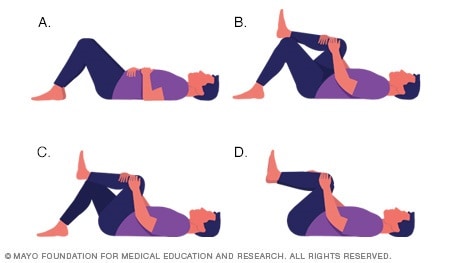
Knee-to-chest stretch
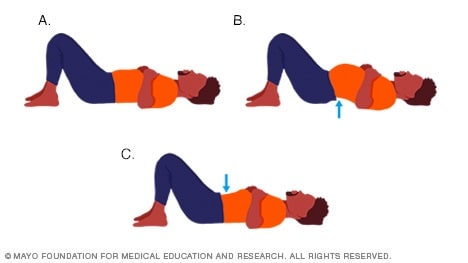
Lie on your back with your knees bent and your feet flat on the floor (A). Using both hands, pull up one knee and press it to your chest (B). Tighten your abdominals and press your spine to the floor. Hold for 5 seconds. Return to the starting position and repeat with the opposite leg (C). Return to the starting position and then repeat with both legs at the same time (D). Repeat each stretch 2 to 3 times — preferably once in the morning and once at night.
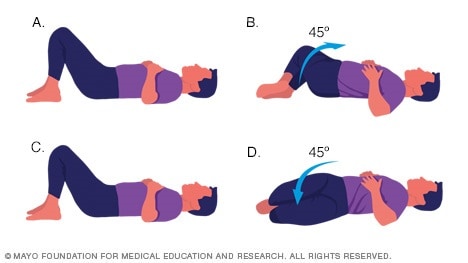
Lower back rotational stretch
Lie on your back with your knees bent and your feet flat on the floor (A). Keeping your shoulders firmly on the floor, roll your bent knees to one side (B). Hold for 5 to 10 seconds. Return to the starting position (C). Repeat on the opposite side (D). Repeat each stretch 2 to 3 times — preferably once in the morning and once at night.
Lower back flexibility exercise
Lie on your back with your knees bent and your feet flat on the floor (A). Tighten your abdominal muscles so your stomach pulls away from your waistband (B). Hold for five seconds and then relax. Flatten your back, pulling your bellybutton toward the floor (C). Hold for five seconds and then relax. Repeat. Start with five repetitions each day and gradually work up to 30.
Bridge exercise
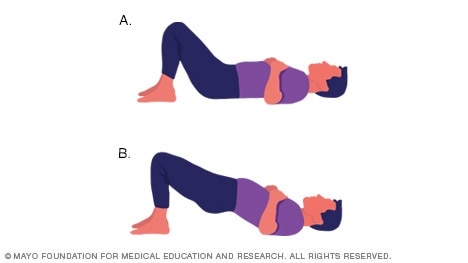
Lie on your back with your knees bent and your feet flat on the floor (A). Keeping your shoulders and head relaxed on the floor, tighten your abdominal and gluteal muscles. Then raise your hips to form a straight line from your knees to your shoulders (B). Try to hold the position long enough to complete three deep breaths. Return to the starting position and repeat. Start with five repetitions each day and gradually work up to 30.
Cat stretch
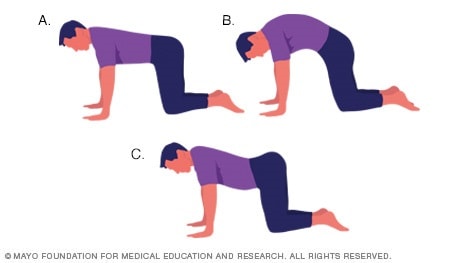
Position yourself on your hands and knees (A). Slowly arch your back, as if you’re pulling your abdomen up toward the ceiling (B). Then slowly let your back and abdomen sag toward the floor (C). Return to the starting position (A). Repeat 3 to 5 times twice a day.
Seated lower back rotational stretch
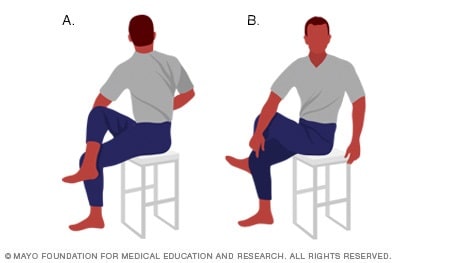
Sit on an armless chair or a stool. Cross your right leg over your left leg. Bracing your left elbow against the outside of your right knee, twist and stretch to the side (A). Hold for 10 seconds. Repeat on the opposite side (B). Repeat this stretch 3 to 5 times on each side twice a day.
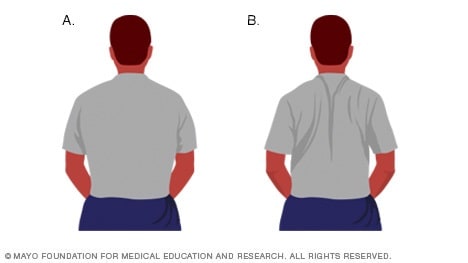
Shoulder blade squeeze
Sit on an armless chair or a stool (A). While maintaining good posture, pull your shoulder blades together (B). Hold for five seconds and then relax. Repeat 3 to 5 times twice a day.
When you have type 2 diabetes, taking time to plan your meals goes a long way toward controlling your blood sugar and weight.
Function
Your main focus is on keeping your blood sugar (glucose) level in your target range. To help manage your blood sugar, follow a meal plan that has:
Food from all the food groups
Fewer calories
About the same amount of carbohydrates at each meal and snack
Healthy fats
Along with healthy eating, you can help keep your blood sugar in target range by maintaining a healthy weight. People with type 2 diabetes are often overweight or obese. Losing even 10 pounds (4.5 kilograms) can help you manage your diabetes better. Eating healthy foods and staying active (for example, 60 total minutes of walking or other activity per day) can help you meet and maintain your weight loss goal. Activity lets your muscles use sugar from the blood without needing insulin to move the sugar into the muscle cells.
HOW CARBOHYDRATES AFFECT BLOOD SUGAR
Carbohydrates in food give your body energy. You need to eat carbohydrates to maintain your energy. But carbohydrates also raise your blood sugar higher and faster than other kinds of food.
The main kinds of carbohydrates are starches, sugars, and fiber. Learn which foods have carbohydrates. This will help with meal planning so that you can keep your blood sugar in your target range. Not all carbohydrates can be broken down and absorbed by your body. Foods with more non-digestible carbohydrates, or fiber, are less likely to increase your blood sugar out of your goal range. These include foods such as beans and whole grains.
MEAL PLANNING FOR CHILDREN WITH TYPE 2 DIABETES
Meal plans should consider the amount of calories children need to grow. In general, three small meals and three snacks a day can help meet calorie needs. Many children with type 2 diabetes are overweight. The goal should be able to reach a healthy weight by eating healthy foods and getting more activity (150 minutes in a week).
Work with a registered dietitian to design a meal plan for your child. A registered dietitian is an expert in food and nutrition.
The following tips can help your child stay on track:
No food is off-limits. Knowing how different foods affect your child’s blood sugar helps you and your child keep blood sugar in target range.
Help your child learn how much food is a healthy amount. This is called portion control.
Have your family gradually switch from drinking soda and other sugary drinks, such as sports drinks and juices, to plain water or low-fat milk.
PLANNING MEALS
Everyone has individual needs. Work with your health care provider, registered dietitian, or diabetes educator to develop a meal plan that works for you.
When shopping, read food labels to make better food choices.
A good way to make sure you get all the nutrients you need during meals is to use the plate method. This is a visual food guide that helps you choose the best types and right amounts of food to eat. It encourages larger portions of non-starchy vegetables (half the plate) and moderate portions of protein (one quarter of the plate) and starch (one quarter of the plate).
EAT A VARIETY OF FOODS
Eating a wide variety of foods helps you stay healthy. Try to include foods from all the food groups at each meal.
VEGETABLES (2½ to 3 cups or 450 to 550 grams a day)
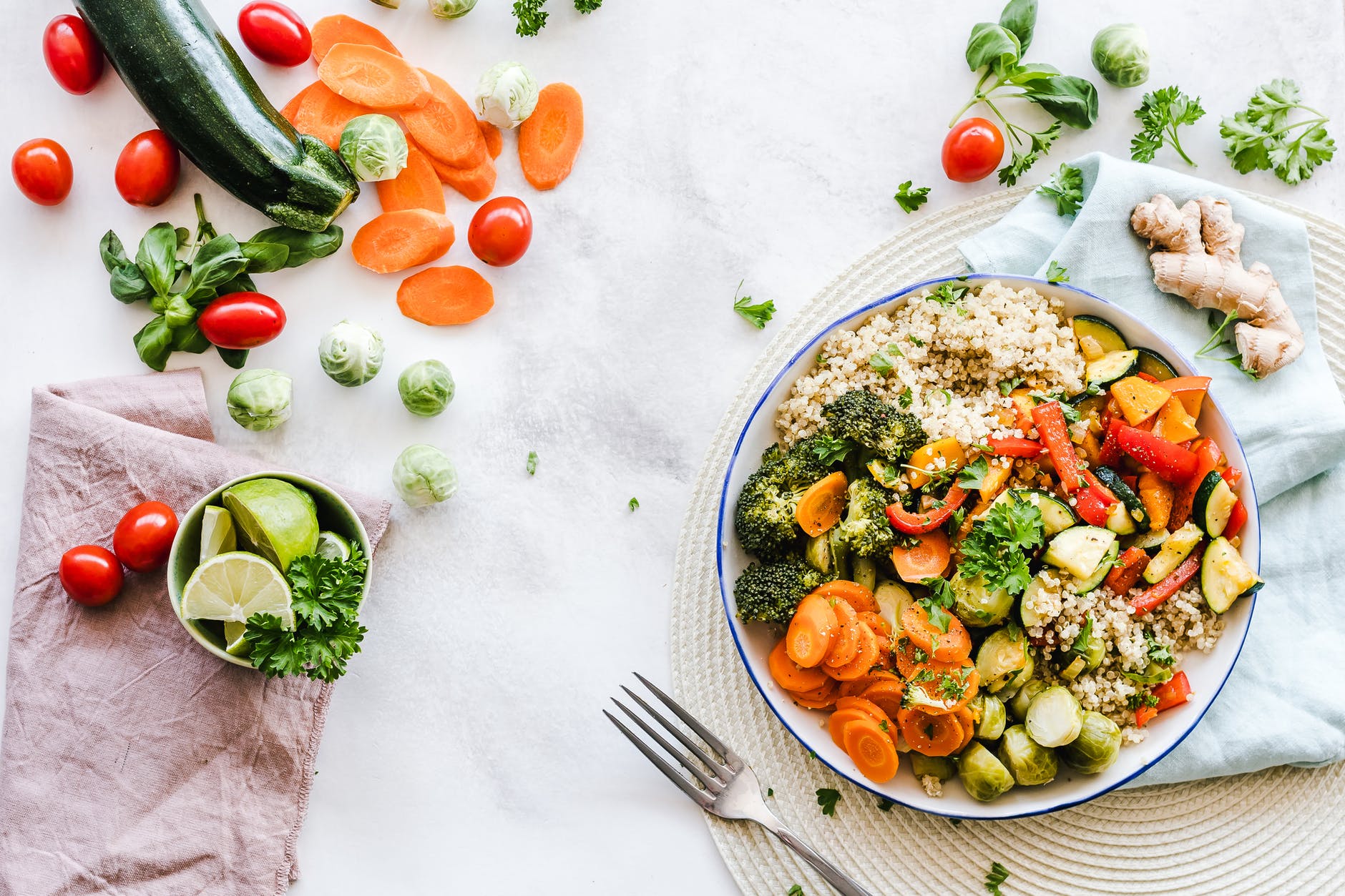
Choose fresh or frozen vegetables without added sauces, fats, or salt. Non-starchy vegetables include dark green and deep yellow vegetables, such as cucumber, spinach, broccoli, romaine lettuce, cabbage, chard, and bell peppers. Starchy vegetables include corn, green peas, lima beans, carrots, yams and taro. Note that potato should be considered a pure starch, like white bread or white rice, instead of a vegetable.
FRUITS (1½ to 2 cups or 240 to 320 grams a day)
Choose fresh, frozen, canned (without added sugar or syrup), or unsweetened dried fruits. Try apples, bananas, berries, cherries, fruit cocktail, grapes, melon, oranges, peaches, pears, papaya, pineapple, and raisins. Drink juices that are 100% fruit with no added sweeteners or syrups.
GRAINS (3 to 4 ounces or 85 to 115 grams a day)
There are 2 types of grains:
Whole grains are unprocessed and have the entire grain kernel. Examples are whole-wheat flour, oatmeal, whole cornmeal, amaranth, barley, brown and wild rice, buckwheat, and quinoa.
Refined grains have been processed (milled) to remove the bran and germ. Examples are white flour, de-germed cornmeal, white bread, and white rice.
Grains have starch, a type of carbohydrate. Carbohydrates raise your blood sugar level. For healthy eating, make sure half of the grains you eat each day are whole grains. Whole grains have lots of fiber. Fiber in the diet keeps your blood sugar level from rising too fast.
PROTEIN FOODS (5 to 6½ ounces or 140 to 184 grams a day)
Protein foods include meat, poultry, seafood, eggs, beans and peas, nuts, seeds, and processed soy foods. Eat fish and poultry more often. Remove the skin from chicken and turkey. Select lean cuts of beef, veal, pork, or wild game. Trim all visible fat from meat. Bake, roast, broil, grill, or boil instead of frying. When frying proteins, use healthy oils such as olive oil.
Choose low-fat dairy products. Be aware that milk, yogurt, and other dairy foods have natural sugar, even when they do not contain added sugar. Take this into account when planning meals to stay in your blood sugar target range. Some non-fat dairy products have a lot of added sugar. Be sure to read the label.
OILS/FATS (no more than 7 teaspoons or 35 milliliters a day)
Oils are not considered a food group. But they have nutrients that help your body stay healthy. Oils are different from fats in that oils remain liquid at room temperature. Fats remain solid at room temperature.
Limit your intake of fatty foods, especially those high in saturated fat, such as hamburgers, deep-fried foods, bacon, and butter.
Instead, choose foods that are high in polyunsaturated or monounsaturated fats. These include fish, nuts, and vegetable oils.
Oils can raise your blood sugar, but not as fast as starch. Oils are also high in calories. Try to use no more than the recommended daily limit of 7 teaspoons (35 milliliters).
WHAT ABOUT ALCOHOL AND SWEETS?
If you choose to drink alcohol, limit the amount and have it with a meal. Check with your health care provider about how alcohol will affect your blood sugar and to determine a safe amount for you.
Sweets are high in fat and sugar. Keep portion sizes small.
Here are tips to help avoid eating too many sweets:
Ask for extra spoons and forks and split your dessert with others.
Eat sweets that are sugar-free.
Always ask for the smallest serving size or children’s size.
More than 37 million Americans have diabetes (about 1 in 10), and approximately 90-95% of them have type 2 diabetes. Type 2 diabetes most often develops in people over age 45, but more and more children, teens, and young adults are also developing it.
What Causes Type 2 Diabetes?
Insulin is a hormone made by your pancreas that acts like a key to let blood sugar into the cells in your body for use as energy. If you have type 2 diabetes, cells don’t respond normally to insulin; this is called insulin resistance. Your pancreas makes more insulin to try to get cells to respond. Eventually your pancreas can’t keep up, and your blood sugar rises, setting the stage for prediabetes and type 2 diabetes. High blood sugar is damaging to the body and can cause other serious health problems, such as heart disease, vision loss, and kidney disease.
Symptoms and Risk Factors
Type 2 diabetes symptoms often develop over several years and can go on for a long time without being noticed (sometimes there aren’t any noticeable symptoms at all). Because symptoms can be hard to spot, it’s important to know the risk factors and to see your doctor to get your blood sugar tested if you have any of them
Testing for Type 2 Diabetes
A simple blood test will let you know if you have diabetes. If you’ve gotten your blood sugar tested at a health fair or pharmacy, follow up at a clinic or doctor’s office to make sure the results are accurate.
Unlike many health conditions, diabetes is managed mostly by you, with support from your health care team (including your primary care doctor, foot doctor, dentist, eye doctor, registered dietitian nutritionist, diabetes educator, and pharmacist), family, and other important people in your life. Managing diabetes can be challenging, but everything you do to improve your health is worth it!
You may be able to manage your diabetes with healthy eating and being active, or your doctor may prescribe insulin, other injectable medications, or oral diabetes medicines to help manage your blood sugar and avoid complications. You’ll still need to eat healthy and be active if you take insulin or other medicines. It’s also important to keep your blood pressure and cholesterol close to the targets your doctor sets for you and get necessary screening tests.
You’ll need to check your blood sugar regularly. Ask your doctor how often you should check it and what your target blood sugar levels should be. Keeping your blood sugar levels as close to target as possible will help you prevent or delay diabetes-related complications.
Stress is a part of life, but it can make managing diabetes harder, including managing your blood sugar levels and dealing with daily diabetes care. Regular physical activity, getting enough sleep, and relaxation exercises can help. Talk to your doctor and diabetes educator about these and other ways you can manage stress.
Make regular appointments with your health care team to be sure you’re on track with your treatment plan and to get help with new ideas and strategies if needed.
Whether you were just diagnosed with diabetes or have had it for some time, meeting with a diabetes educator is a great way to get support and guidance, including how to:
Develop a healthy eating and activity plan
Test your blood sugar and keep a record of the results
Recognize the signs of high or low blood sugar and what to do about it
If needed, give yourself insulin by syringe, pen, or pump
Monitor your feet, skin, and eyes to catch problems early
Buy diabetes supplies and store them properly
Manage stress and deal with daily diabetes care
Ask your doctor about diabetes self-management education and support services and to recommend a diabetes educator, or search the Association of Diabetes Care & Education Specialists’ (ADCES) nationwide directoryexternal icon for a list of programs in your community.
Type 2 Diabetes in Children and Teens
Childhood obesity rates are rising, and so are the rates of type 2 diabetes in youth. More than 75% of children with type 2 diabetes have a close relative who has it, too. But it’s not always because family members are related; it can also be because they share certain habits that can increase their risk. Parents can help prevent or delay type 2 diabetes by developing a plan for the whole family:
Drinking more water and fewer sugary drinks
Eating more fruits and vegetables
Making favorite foods healthier
Making physical activity more fun
Healthy changes become habits more easily when everyone makes them together. Find out how to take charge family style with these healthy tips.
Heart attacks are often stereotyped as something that happens to older men, not women. But heart disease is the leading cause of death for women in the United States.1 Yet only about half (56%) of women know this.1
Plus, the way women experience a heart attack can feel different from men. While both men and women may have chest pain during a heart attack, women tend to have symptoms in addition to chest pain.
Researchers found that when women have a heart attack, they’re more likely to experience 3 or more related symptoms compared to men.2 These symptoms may include jaw pain, neck pain, back pain, and shortness of breath, and can make it hard for women to tell if they’re having a heart attack.
Women are also more likely than men to think their heart attack symptoms are caused by anxiety and stress.2 Oftentimes, this misunderstanding — combined with a wider range of symptoms — can cause women to wait longer to get treated.
“Several studies have shown that women wait longer to get treatment for a heart attack than men,” says Mingsum Lee, MD, a clinical cardiologist at Kaiser Permanente’s Los Angeles Medical Center.
So, it’s important to learn these symptoms of a heart attack and know when to seek care.
Heart attack warning signs for women
1. Chest pain
The most common heart attack symptom for women (and men) is chest pain. “About 90% of women and men have chest pain when they’re having a heart attack,” says Dr. Lee.
This chest pain and discomfort usually happens after stress — the stress can either be physical, like exercise, or emotional stress. The pain is usually strong, comes on gradually, and increases in intensity over several minutes.
“Typically, the pain feels very deep and it’s hard to localize or pinpoint,” says Dr. Lee. “People generally use terms like ‘pressure,’ ‘squeezing,’ ‘heaviness,’ or ‘tightness’ to describe the sensation in their chest.”
2. Arm, back, neck, or jaw pain
“Sometimes chest pain can radiate or travel through your arm, neck, jaw, or your back,” says Dr. Lee. The pain may gradually get more intense over several minutes.
Since most people expect pain to be in their chest during a heart attack, these symptoms can be very confusing. This is especially true because it may be difficult to pinpoint where the pain started.
3. Stomach pain
Nausea and stomach pain may also be heart attack warning signs for women. “Sometimes people come in late for care because they think they’re having heartburn or acid reflux,” says Dr. Lee. Heartburn or reflux comes from inflammation in the esophagus, which is right next to the heart. This can make it hard to tell if it’s discomfort from eating certain foods or a heart attack. “Generally speaking, heartburn can be triggered by certain spicy food, citrus, and alcohol,” she explains. And acid reflux feels worse when you lie down.
4. Shortness of breath
You might be having a heart attack if you suddenly have shortness of breath for no apparent reason. It may feel like you have to stop and catch your breath while doing an ordinary task. “For example, if you can normally do grocery shopping with no problem, but suddenly you can’t catch your breath while you’re walking down the grocery aisle and you have to stop to rest, that’s a warning sign,” says Dr. Lee.
5. Sweating
Sudden sweating plus chest pain is another related heart attack symptom for women. You may feel like you’re having a cold sweat or feel clammy while also feeling some chest pain.
6. Fatigue
Similarly, chest pain with sudden fatigue and exhaustion may be a sign that you’re having a heart attack. You may feel overly tired for no reason — and the fatigue comes out of nowhere. Your regular activities suddenly become too difficult because you’re extremely tired.
Don’t hesitate to call 911
You might not have all of these heart attack warning signs. But if you’re having any of these symptoms, call 911 immediately. Don’t wait.
In her work, Dr. Lee has seen both younger and older women put off going to the doctor — even when they’re feeling heart attack symptoms. “Young women are often focused on being the caretaker for their children or elderly parents, and they don’t come into the hospital because there’s no one else to take care of their children or parents,” she says.
On the flip side, Dr. Lee has seen older women who are widowed and live alone not want to bother their children or friends. “These women may be having chest pain, but they don’t want to bother people. So they sit at home and hope the symptoms go away,” she says. Sometimes, they don’t drive and are too embarrassed to ask for help.
“I think a lot of times women are used to being the caregivers, so when they themselves need help they aren’t used to asking for it,” Dr. Lee says. This could be another reason why women wait so long to get care for heart attacks.
But it’s important to listen to your body and prioritize your health.
Bottom line: If you’re not sure if you’re having a heart attack, come into the hospital to get checked out. “The earlier you come in for medical care,” Dr. Lee says, “the earlier we can start therapy and the less damage there will be to the heart.”
Risk factors for heart attack in women
In addition to knowing key heart attack symptoms, it’s also important to know if you have risk factors for heart disease. “Many women aren’t aware that they’re at risk for heart attack,” explains Dr. Lee. “So when they start having symptoms, they don’t even consider that it’s a warning sign.”
Common risk factors for women include:
Certain medical conditions. Women are at higher risk for heart disease if they have diabetes, high blood pressure, or an inflammatory disease like rheumatoid arthritis or lupus.
Pregnancy complications. Women who had pregnancy complications like gestational diabetes, gestational hypertension, or preeclampsia are at higher risk for heart attack later in life.
Smoking. Research shows that smoking can increase the risk of heart attack for young people by sevenfold.3 And female smokers are 25% more likely to have heart disease than male smokers.3
Lifestyle choices. Poor diet, overuse of alcohol, and physical inactivity all increase a woman’s risk for heart attack.
Menopause. Lower levels of estrogen after menopause can increase the risk of heart attack for women.
Understanding your risk factors and knowing common heart attack symptoms are important first steps in taking care of your heart.















 Peace LiLy