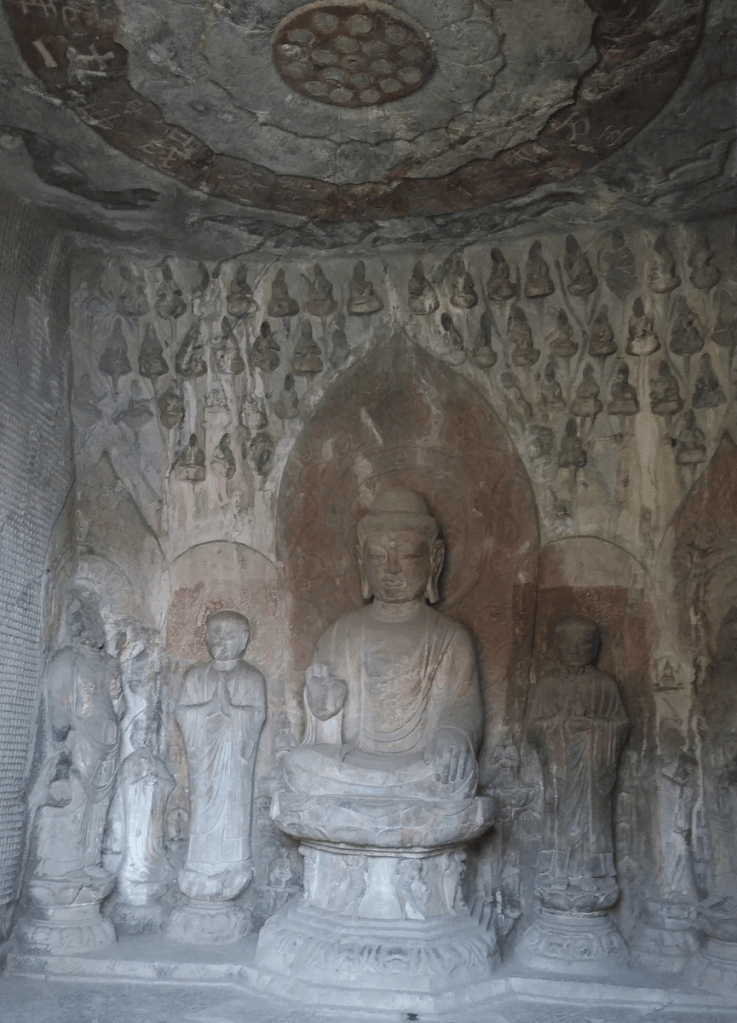
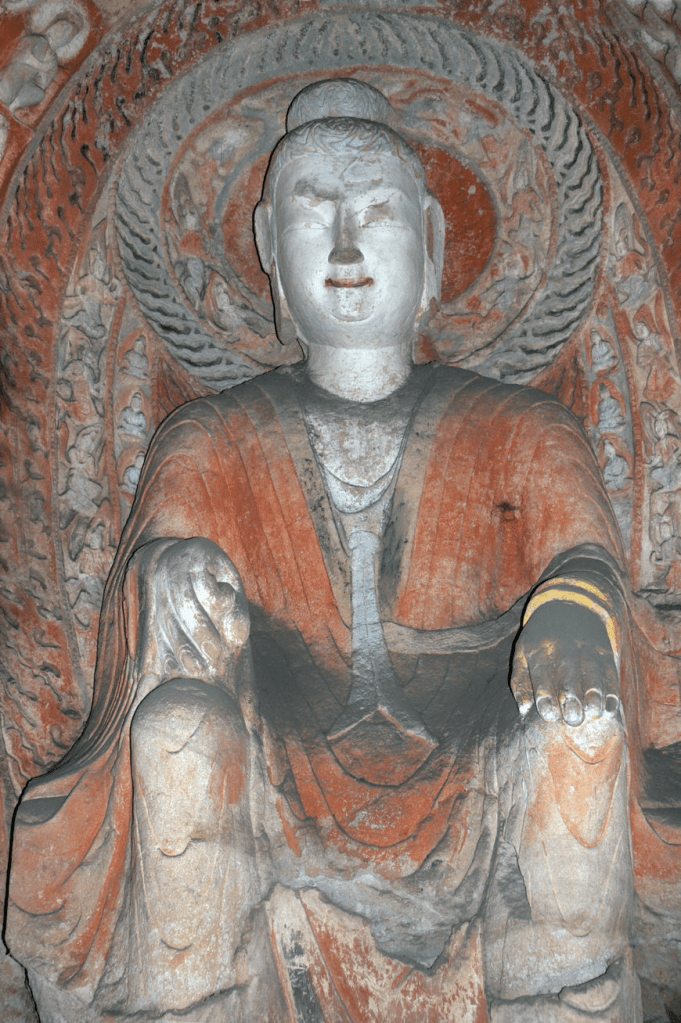
Yanmenguan – A Famous Pass of Great Wall

Nestled in the depths of Yanmen Mountain in Shanxi, the ancient Yanmenguan Pass stands as a solitary testament to history, dating back some 2,000 years. This once invincible guardian of the frontier, which served as a formidable defense along the boundary, now seems like a wise old man, eager to share tales of its storied past.

Located 12 miles (19 kilometers) north of Daixian County, in Shanxi Province, Yanmenguan Pass is one of the three notable passes of the Inner Great Wall, alongside Ningwu Pass and Pianguan Pass.

The region’s history can be traced back to the Spring and Autumn Period (770 BC – 476 BC), when King Wuling of Zhao State first established Yanmen County here. During the reign of Emperor Qin Shi Huang (259 – 210 BC), orders were given to construct Yanmen Pass as a fortification against the northern tribes, sparking centuries of fierce battles for control.

In the Northern Song Dynasty (960 – 1127), the famous Yang family warriors, including female members, were stationed at the pass to defend against invasions from the Qidan troops of the northern prairies. Statues of some of these legendary figures can be seen lining the entrance path of the scenic area.

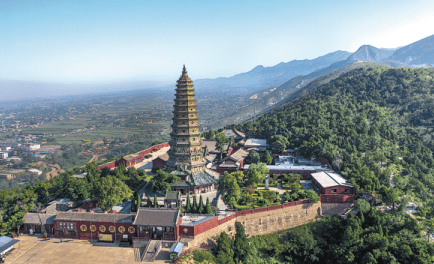
The structure of the pass includes a pass city, a barbican, and an enclosing wall. Nestled between two rolling hills, the pass city stands at a height of 30 feet (nine meters) and spans a perimeter of 1,100 miles (1,006 meters). Extending from the east and west wings of the pass city, the enclosing wall measures over three miles (five kilometers) in length and is punctuated with beacon towers. The barbican was constructed outside the northern gate of the pass city.

A Uniquely Designed Military Stronghold

The northern gate of the pass, Di Li Gate, boasts a barbican that forms a double defense line. Unlike most barbicans, the entrance door is situated on the east wall instead of the front, exposing potential invaders from two sides. Another distinctive feature is that Tian Xi’an Gate, which opens to the central plain, is not directly aligned with Di Li Gate. It is located at the northeast corner of the pass, while the area directly opposite Di Li Gate is a false lead, leading to a secluded mountain area with no walkable path, only dense trees, knee-high grass, and wild beasts.

Behind Di Li Gate lies a large reservoir with military potential. In case of a breach, defenders could break the dam to flood the invading forces. Additionally, a pagoda stands on the northern slope of the enclosing wall, occupying the highest point of the area at an altitude of 5,968 feet (1,819 meters). This strategic location served as an ideal command post, offering a commanding view of the entire area.

Yanmenguan was renowned for its strategic significance and legendary wars, having witnessed over 1,000 skirmishes and 140 significant battles throughout history. Since the era of the Zhao State during the Warring States period, every dynasty has recognized the importance of Yanmenguan’s defensive position. It has always been a border gateway marked by fierce conflict and integration between farming and nomadic peoples.

However, amidst the echoes of past battles, a story of peace and kindness emerges through the figure of Wang Zhaojun, one of the “Four Great Beauties” of ancient China. Two thousand years ago, she passed through Yanmenguan as an envoy of peace between China and the Xiongnu.

In 33 B.C., after over a century of conflict with the Xiongnu in the north, the Han Dynasty had grown stronger under Emperor Yuan, while the southern Xiongnu had weakened. The people longed for stability, and to establish friendly relations with the Han Dynasty, Chanyu Huhanye, the Monarch of the Xiongnu, visited Chang’an to meet Emperor Yuan.

Wang Zhaojun, born in 51 BC near the beautiful Xiangxi River at the foot of Jingchu Mountain, traveled to the bustling capital Chang’an in 38 BC after being chosen as a maid for the Imperial Palace. Customarily, the Emperor selected maids based on their portraits, and Wang, likened to a phoenix, was so pure that she didn’t need to bribe the artist Mao Yanshou, unlike the other maids. Mao, however, deliberately created an unflattering portrait of her, relegating her to the role of an ordinary maid with chores in the palace’s corners. Despite the cold treatment and challenging tasks, this adversity served to strengthen her mentally and physically, perhaps as a divine preparation for her destiny.

As a court lady in waiting, Wang Zhaojun was chosen for the marriage. When the matron of the harem presented her unflattering portrait to the Emperor, he merely glanced at it and approved. But upon seeing her in person, her beauty and grace astonished the Emperor, the monarch, and the ministers. Huhanye was overjoyed and vowed to maintain peace along the frontier.

Wang Zhaojun followed the Emperor’s orders, becoming a symbol of peace through her marriage to the Xiongnu. She was honored with the title “Ninghu Yanzhi,” meaning queen who could bring peace to the Xiongnu. Subsequently, she devoted her life to maintaining stability along the Han-Xiongnu border and promoting Han culture.

Two thousand years ago, the Huns led a nomadic life in the harsh northern deserts, lagging behind the more advanced Han Dynasty. As Wang Zhaojun traveled to Xiongnu, she observed the stark contrast between the desolation of the north and the prosperity of Chang’an.

After crossing Yanmenguan, her hometown of Jingchu and the Han palace in Chang’an seemed far away, leading to feelings of homesickness. Playing a sorrowful melody on her pipa (Chinese lute), she captured the attention of a flock of geese flying overhead. So captivated were they by the beautiful music and the sight of the graceful woman on horseback that they forgot to flap their wings and fell to the ground. This incident gave rise to the saying that Wang Zhaojun’s beauty was so captivating that it made geese fall to the ground. Wang Zhaojun’s role in fostering harmony through her marriage and contributing to a peaceful border region exemplifies the traditional Chinese cultural value of “harmony.”

After arriving in Xiongnu, Zhaojun faced a challenging living environment and vastly different customs. Nevertheless, she steadfastly adhered to her mission, set aside her homesickness, and courageously, persistently, and compassionately integrated into the Hun’s lifestyle. She transformed from an ordinary Han palace maid to a virtuous and kind Queen of the Xiongnu, assisting the monarch across two generations.

She urged the monarch to cease hostilities and introduced Han’s advanced cultural etiquette system to the Hun people. Moreover, she taught them to cultivate millet and hemp, rear domestic animals, weave cloth, and dig wells. Consequently, the beacons and wars along the frontier ceased, and a scene of “wind blowing through the grass and cattle and sheep grazing” emerged, allowing the people to live peaceful and prosperous lives.

Wang Zhaojun’s role in fostering harmony through her marriage and contributing to a peaceful border region exemplifies the traditional Chinese cultural value of “harmony.” The ethereal Wang Zhaojun lived up to the expectations of the Han Dynasty, resolved the conflict between the Han Dynasty and the Xiongnu, and propagated Han culture. Her accomplishments have become beacons of inspiration for future generations.

Instrumental in establishing peace and prosperity along the Han-Xiongnu border for half a century, she earned the love and respect of the people of her time and those of future generations. In her honor, the Huns constructed ‘The Tomb of Wang Zhaojun’ near the bank of the Big Black River. In the northern desert, she was revered as a Goddess sent by Heaven to assist the Xiongnu. It was said that there would be plentiful water and lush grass wherever she passed.


wang-zhaojun
(Image: Yaliga Ba via Dreamstime)

Today, as I reflect on this beautiful and strong woman, I can’t help but feel deeply moved. In the present world, we have extremely advanced technology, but it seems that people’s moral standards and the level of civilization have not been correspondingly enhanced. I earnestly hope that modern people can resolve national, racial, and regional contradictions and conflicts through peaceful means, and avoid resorting to war, violence, and terror, as these can only bring disaster and trauma to humanity and the planet.

Yanmenguan – A Famous Pass of Great Wall

Link: https://peacelilysite.com/2023/10/05/yanmenguan-a-famous-pass-of-great-wall/

Source: https://www.travelchinaguide.com/china_great_wall/scene/shanxi/yanmenguan.htm, https://artsandculture.google.com/story/yanmenguan-simatai-great-wall-tourist-area/SgUBezUMaQVMQQ?hl=en

Hangzhou: Where History, Culture, and Natural Beauty Converge

The recent Asian Games held in Hangzhou, China, brought the world’s attention to a spectacular opening ceremony that dazzled the senses. It was a momentous occasion that reminded me of Hangzhou’s unique charm—a city that effortlessly blends history, culture, and breathtaking natural beauty. In this blog post, I am trying to introduce some Hangzhou’s rich history, cultural significance, and the enchanting West Lake that graces this remarkable destination.

Hangzhou’s historical significance dates back over a thousand years. As the capital of the Southern Song Dynasty (1127-1279), it was the political, economic, and cultural center of ancient China. The city’s past is vividly reflected in its well-preserved landmarks, such as the Grand Canal, which was once the world’s busiest and longest artificial waterway. The canal played a pivotal role in facilitating trade and cultural exchange between northern and southern China.

Hangzhou’s cultural heritage is as rich as its history. The city is celebrated for its pivotal role in nurturing Chinese art, literature, and philosophy. It is home to numerous temples, museums, and historical sites. One of the most iconic landmarks is the Six Harmonies Pagoda, which offers breathtaking views of the Qiantang River. Additionally, Hangzhou is renowned for its tea culture, with the world-famous Longjing (Dragon Well) tea originating from the lush plantations that surround the West Lake.

Nature’s Masterpiece: The West Lake

By Mlq4296 – Own work, CC BY-SA 3.0, https://commons.wikimedia.org/w/index.php?curid=5549787

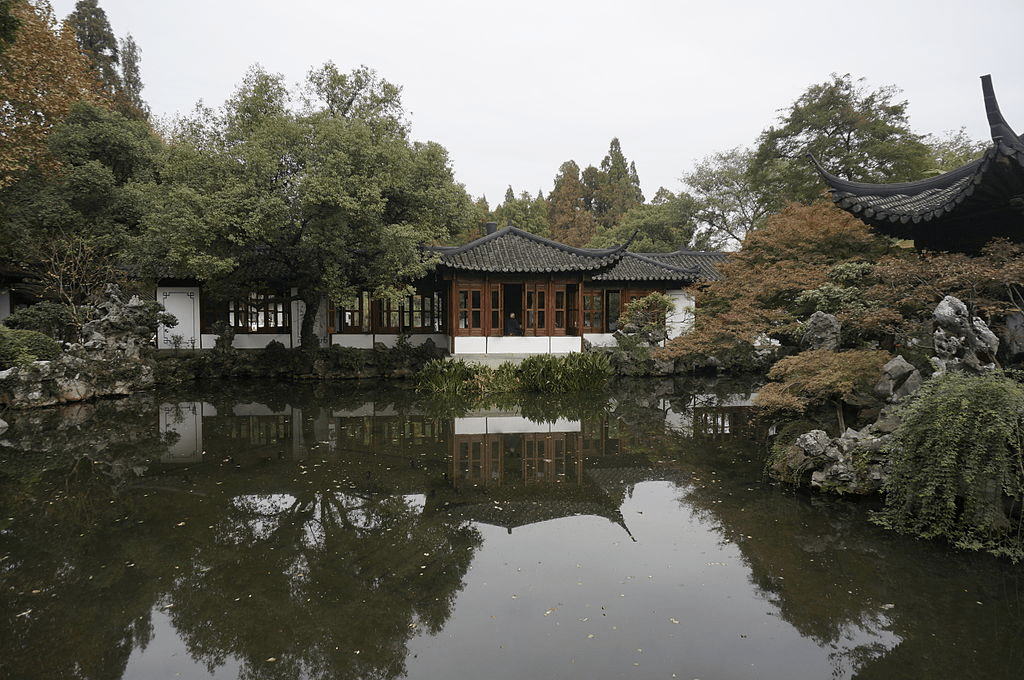
The Guozhuang Garden, one of many historic gardens in the West Lake By 猫猫的日记本 – Own work, CC BY-SA 4.0, https://commons.wikimedia.org/w/index.php?curid=39259489

The West Lake, or Xi Hu in Chinese, is Hangzhou’s crown jewel, a UNESCO World Heritage Site that captivates visitors with its picturesque beauty. Surrounded by lush hills, willow-lined pathways, and charming pagodas, the lake’s serenity has been an inspiration to poets, artists, and philosophers for centuries. Its natural allure changes with the seasons, making it a destination worth visiting year-round.

Highlights of the West Lake

Leifeng Pagoda, perched atop Sunset Hill, is a historical gem that offers sweeping vistas of the West Lake. As the sun gracefully descends below the horizon, this iconic pagoda bathes the lake in its enchanting glow, creating a magical setting perfect for a romantic evening. But beyond its scenic beauty, Leifeng Pagoda is intertwined with a captivating and somewhat tragic love story that has captured the hearts of generations.

In the Chinese folk tale “The Legend of the White Snake,” the story unfolds with the white snake, who falls deeply in love with a young man named Xu Xian. In a remarkable transformation, the white snake assumes the guise of a young lady and marries Xu Xian. However, their love is not without obstacles. The wise monk Fahai recognizes the bride’s true identity as a white snake and cunningly deceives Xu Xian, leading him to Jinshan. In a valiant attempt to rescue Xu Xian, the White Lady rushes to Jinshan, only to be suppressed under the Leifeng Pagoda by Fahai.

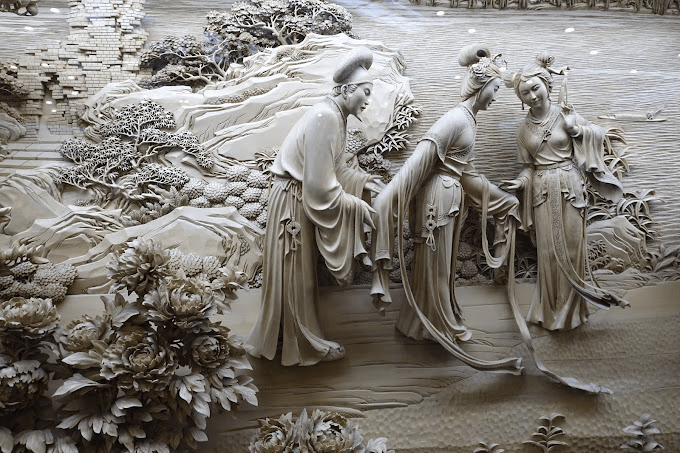
The hidden interior of Leifeng Pagoda is adorned with intricate carvings crafted in the style of Dongyang woodcarvings. These carvings vividly depict the captivating love story of Bai Niangzi (the White Snake) and Xu Xian as told in the legend of “The Legend of the White Snake.” The carvings employ five distinct techniques, including round carving, semi-round carving, high relief, deep relief, and shallow relief. These techniques are skillfully combined into a form known as “overlay carving,” which serves to enhance the storytelling and character portrayal within the legend.

Leifeng Pagoda, with its breathtaking views and rich cultural significance, stands as a testament to the enduring power of love and storytelling. It invites visitors to delve into the enchanting world of Chinese folklore while appreciating the timeless beauty of the West Lake at sunset.

Three Pools Mirroring the Moon: This picturesque scene features three small pagodas surrounded by water, beautifully illuminated during the Mid-Autumn Festival. It’s a breathtaking sight that draws thousands of visitors each year.

West Lake Cruise: Exploring the lake by boat provides a unique perspective of its beauty. As you glide across the serene waters, you’ll pass by charming islets, arched bridges, and elegant lakeside gardens.

Lingyin Temple: Located in the vicinity of the West Lake, Lingyin Temple is one of China’s most ancient and revered Buddhist temples. Its serene atmosphere and intricate carvings make it a cultural treasure.

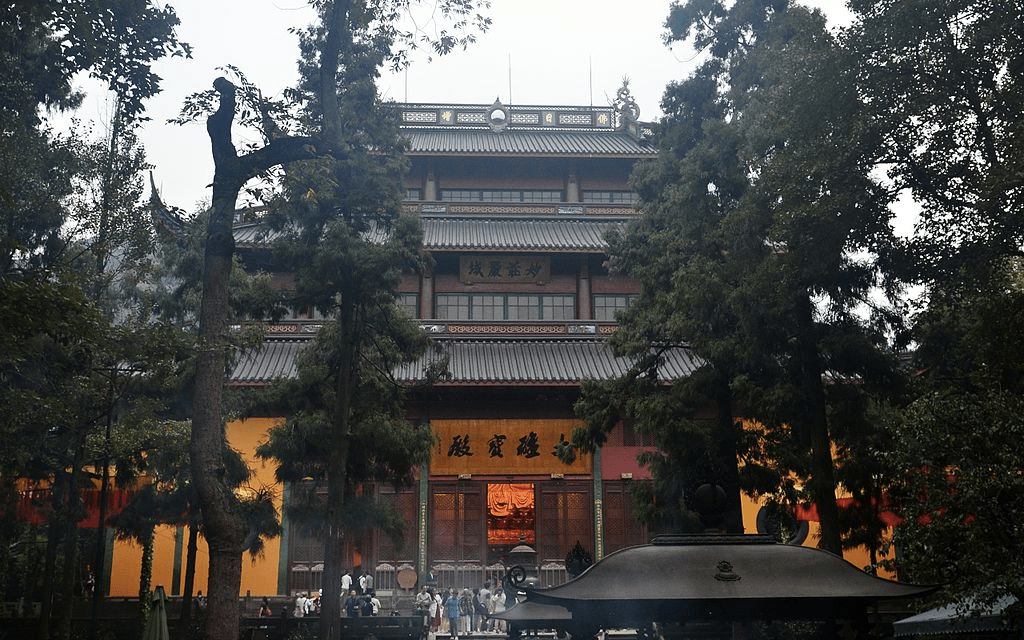
The Mahavira Hall By Tyg728 – Own work, CC BY-SA 4.0, https://commons.wikimedia.org/w/index.php?curid=52305861
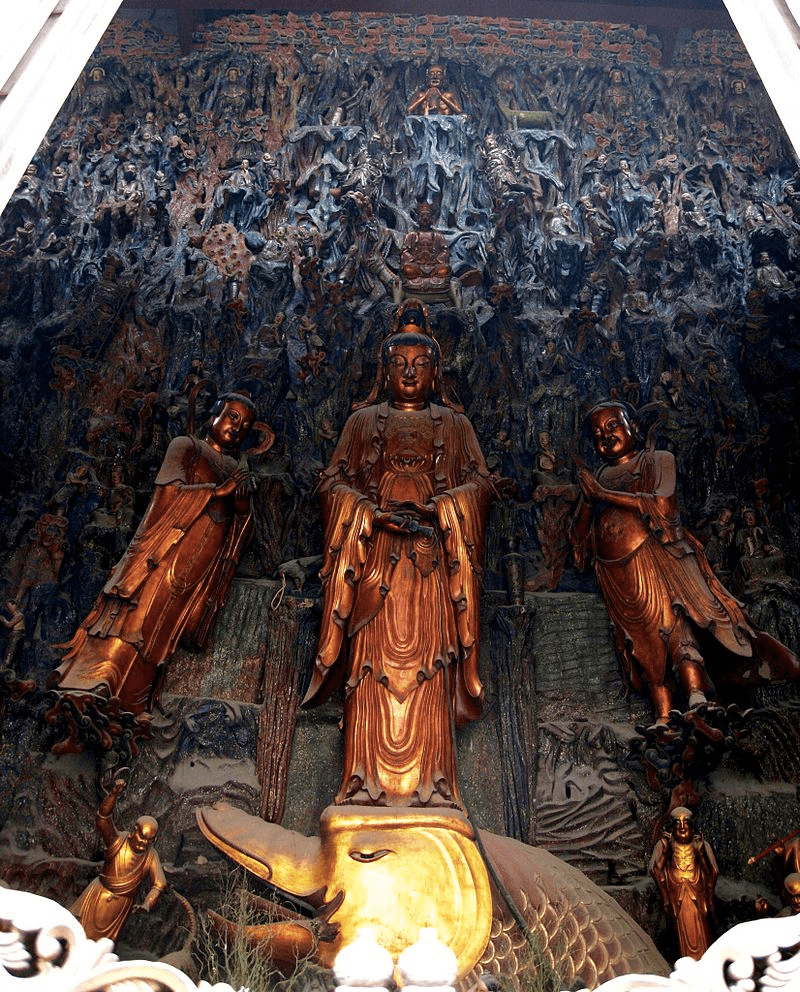
Panorama enshrining a main statue of Guanyin, a manifestation of the Bodhisattva Avalokiteśvara, at the back of the Mahavira Hall By Kuebi = Armin Kübelbeck – Own work, CC BY-SA 3.0, https://commons.wikimedia.org/w/index.php?curid=3074408
Arhat statues enshrined inside the Hall of the Five Hundred Arhats By Wa18, CC BY 3.0, https://commons.wikimedia.org/w/index.php?curid=56534477

According to historical tradition, the origins of Lingyin Monastery trace back to the year 328 AD, during the Eastern Jin dynasty (266–420). The monastery was established by an Indian monk known as Huili in Chinese. Right from its inception, Lingyin gained widespread recognition as a prominent Buddhist institution in the Jiangnan region.

During its zenith under the Wuyue Kingdom (907–978), Lingyin Temple stood as a grand edifice. It comprised nine multi-story buildings, 18 pavilions, 72 halls, and more than 1300 dormitory rooms, providing a sanctuary for over 3000 monks. The legacy of this era is also etched into the rich Buddhist carvings that adorn the Feilai Feng grottos and the surrounding mountains.

In the later years of the Southern Song dynasty (1127–1279), Lingyin Monastery retained its eminence, securing its position as one of the ten most significant temples of the Chan sect in the Jiangnan region. Regrettably, this prominence did not shield the monastery from the ravages of time and external threats. Over the centuries, Lingyin Temple has undergone reconstruction no less than sixteen times. While some of the existing structures date back to earlier Chinese dynasties, much of what stands today are modern restorations from the late Qing period (1644–1911).

The temple is also associated with a famous and eccentric monk, Jigong. The legends of this mad monk find their roots in the life of a historical figure named Li Xiuyuan (1148-1209). Born into a family of officials with a long-standing Buddhist tradition in Tiantai County, Zhejiang Province, Li Xiuyuan’s life took a different course when his parents passed away at the age of 18. He made his way to Lingyin Temple, the largest Buddhist temple in Hangzhou, where he became a monk.

Hall of Master Jigong

Under the guidance of Hui Yuan, a senior abbot at Lingyin Temple, Li received the Buddhist name Daoji. However, he was not inclined toward the temple’s customary routines of sutra chanting and meditation. In defiance of strict Buddhist rules, he indulged in eating meat and drinking alcohol, even publicly. His appearance often featured a dirty, tattered cassock, and he could be spotted wandering the streets in a half-drunken state.

Despite his peculiar behavior, Li endeared himself to the local community. He displayed great compassion for the poor and disadvantaged, possessed remarkable skills in medicine, and was known for his ability to treat complex ailments, often saving lives. He was also noted for his wit and what some considered magical abilities. As a result, he became known as Ji Gong the Living Buddha, a folk hero whose legacy has endured in China for over 800 years.

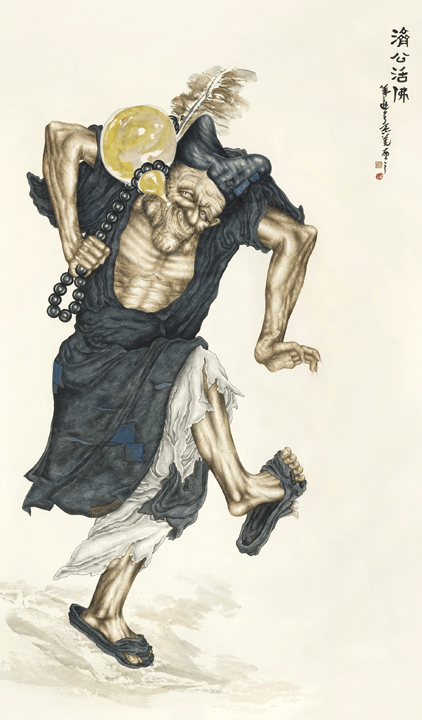
Ji Gong’s distinctive image, with a crumpled hat, ragged robe, and a worn-out palm leaf fan, remains familiar to the public. In fact, an ink painting of Jigong HuoFo, created by the artist H.H.  Dorje Chang Buddha III, is displayed in the International Art Museum of America. This artwork skillfully captures the monk’s details, including his skin, meridians, and veins, utilizing fine brushwork and realism to vividly portray the life of this beggar-like figure who held a special place in the hearts of many.

Another remarkable natural treasure worth mentioning is Longjing Tea. West Lake Longjing tea is among China’s most prestigious teas, renowned for its attributes of “vibrant green color, rich fragrance, mellow taste, and exquisite appearance.” It is often referred to as the “Four Uniques.” Cultivated in five primary production regions—ShiFeng, Longjing, Yunxi, Hupao, and Meijiawu—West Lake Longjing tea is celebrated for its superior quality. Among these regions, ShiFeng stands out as the finest, and “Mingqian tea” is its most coveted variety, frequently chosen as a high-quality gift for special occasions. Shifeng Longjing tea is predominantly produced in the renowned tea villages of Hangzhou Longjing Village and Wengjiashan Village, signifying the “Number One Tea Village in the World.”

Moreover, it’s worth noting that H.H.  Dorje Chang Buddha III has masterfully crafted a tea called “Bi Yu Chun,” which has achieved the highest-grade ranking in China. His Holiness has elevated the traditional techniques of tea production to a level of perfection, resulting in the creation of this exceptional green tea.

Bi Yu Chun possesses a unique flavor and unparalleled quality. Its tea leaves are compact and delicate, retaining their natural fuzz, boasting the color and luster of green jade. This tea exudes a pure aroma reminiscent of chicken broth or roasted chestnuts. It offers a pleasantly refreshing taste that lingers, maintaining its rich flavor for an extended duration. The tea is beautifully translucent, displaying a radiant green akin to that of green jade, akin to a mountain spring. Long after you savor it, the delightful flavor of Bi Yu Chun lingers in your thoughts.

In June of 1989, a competition was held to select the finest Chinese teas. Bi Yu Chun was among the contenders, alongside esteemed Chinese teas like Shi Feng Long Jing, Dong Ting Bi Luo Chun, and Jun Shan Yin Zhen. Evaluated by a committee of tea experts based on the conventional standards for tea evaluation, Bi Yu Chun scored an outstanding 101 points, surpassing all other grades to earn the title of the top Chinese tea. Experts hailed Bi Yu Chun for rectifying the three common shortcomings of Chinese green tea: insufficient greenness, a bitter and astringent taste, and an inability to withstand steeping well. Bi Yu Chun has thus exceeded the highest global standards for tea production and is acclaimed as the premier Chinese tea.

H.H.  Dorje Chang Buddha III‘s talents extend beyond being an exceptional painter; he is also a superb tea artisan. The wisdom and knowledge of His Holiness are truly profound and transcend human imagination.

Hangzhou, with its rich history, cultural significance, and the enchanting West Lake, offers a unique blend of experiences that captivate the soul. Whether you’re exploring the city’s historic sites, sipping on a cup of Longjing tea, or strolling along the shores of the West Lake, Hangzhou is a destination that promises an unforgettable journey through China’s past and present. It’s a place where tradition and modernity coexist harmoniously, leaving an indelible mark on all who have the privilege to visit.

Hangzhou: Where History, Culture, and Natural Beauty Converge

Link:https://peacelilysite.com/2023/09/28/hangzhou-where-history-culture-and-natural-beauty-converge/

 #H.H.DorjeChangBuddhaIIIDorjeChangBuddhaIII ##IAMA#InternationalArtMuseumofAmerica

#WestLake #XiHu#HangZhou#TravelChina #LongjingTea #LingyinTemple #AsianGames #JingongMonk

Source: https://en.wikipedia.org/wiki/Lingyin_Temple https://en.wikipedia.org/wiki/Leifeng_Pagoda#:~:text=Leifeng%20Pagoda%20was%20one%20of,Fahai%20under%20the%20Leifeng%20Pagoda., https://en.wikipedia.org/wiki/Lingyin_Temple

Guangsheng Temple with Ancient Chinese Buddhist Buildings,Murals & Statues

As a cradle of Chinese culture, Shanxi is renowned for its abundance of cultural and historical treasures. While some iconic historical relics and monuments like the Great Wall, which stretches across the province, the Yungang Grottoes in Datong, and the Sakyamuni Pagoda in Yingxian, are at the top of tourists’ itineraries, there are also lesser-known “hidden gems” in terms of historical significance that are well worth exploring.

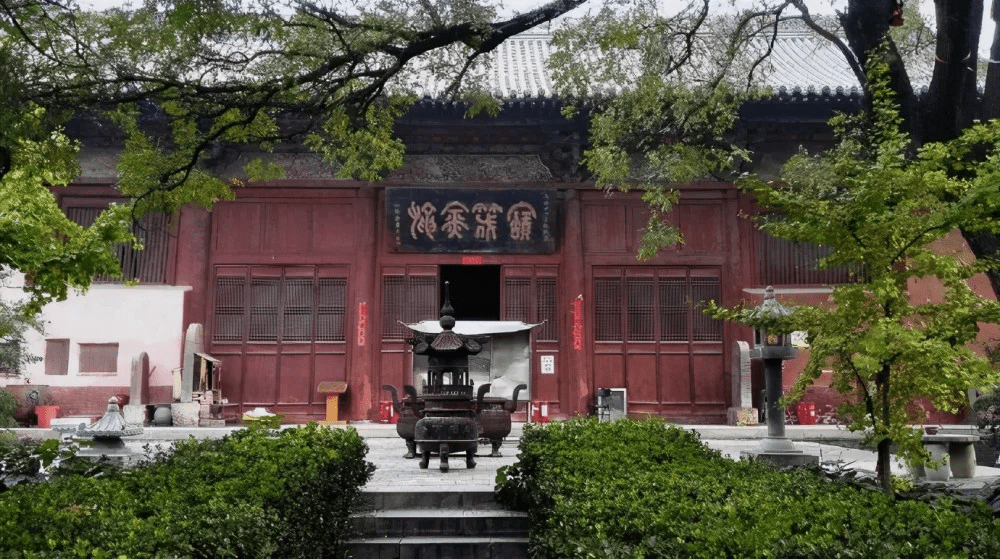
One such hidden gem is the Guangsheng Buddhist Temple, located in the Zhaocheng township of Hongtong county. The Guangsheng Temple is actually a complex that encompasses the upper monastery, the lower monastery, and the Water God Temple, situated on the slopes and foothills of Huoshan Mountain in Zhaocheng.

Founded in the first year (147) of the Jianhe reign of the Eastern Han Dynasty (25-220), the temple originally bore the name Julushe Temple. It later acquired its present name during the Tang Dynasty (618-907). While it suffered damage during an earthquake in the 7th year (1303) of the Dade reign of the Yuan Dynasty (1271-1368), subsequent restoration efforts took place over the years, preserving much of the architectural style from the Yuan Dynasty. Nestled against the mountains and overlooking a river, the temple is surrounded by ancient trees and boasts the Huoquan Spring gushing beneath the rocks at the foot of Huoshan Mountain, creating a serene and picturesque environment. The temple can be divided into three main sections: the upper temple, the lower temple, and the Water God Temple.

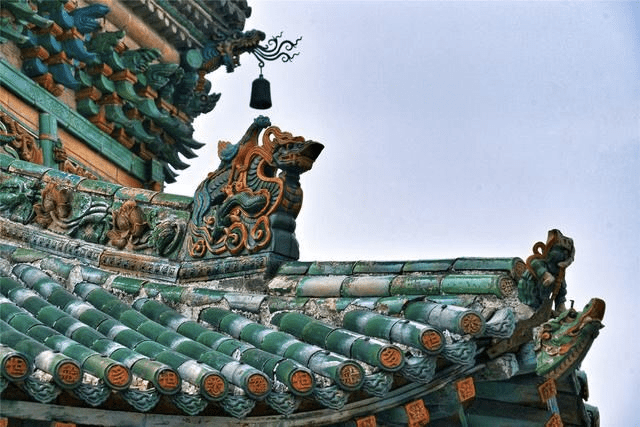
The upper temple, perched atop Huoshan Mountain amidst lush pine trees, is graced with ancient towers and adorned with colored glaze components, radiating magnificence and splendor. The lower temple, situated at the base of Huoshan Mountain, harmoniously blends with the mountain’s natural contours, creating an intriguing landscape with varying elevations. Adjacent to the lower temple is the Water God Temple, with connected walls. Here, one can find the Statue of Ying, an emperor of the Ming Dynasty, and renowned frescoes depicting Yuan Dramas, both of which are celebrated locally and internationally.

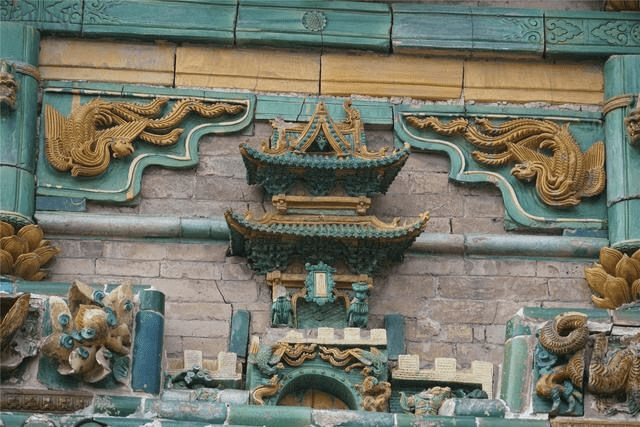
The upper temple complex comprises the temple gate, the Flying Rainbow Tower, the Amitabha Hall, the Great Hall, the Vairochana Hall, the Kwan-yin Hall, the Ksitigarbha Hall, as well as wing-rooms and corridors, among other features. The Temple Gate, situated at the entrance, is flanked by two guardian warriors. Just beyond the gate stands the impressive Flying Rainbow Tower, constructed from colored glaze bricks. Originally built during the Eastern Han Dynasty (25-220) and later restored in the Ming Dynasty (1368-1644), this thirteen-story tower soars to a height of 47.31 meters, featuring an octagonal plan. The tower is adorned with tri-colored glaze in yellow, green, and blue, creating a splendid and vibrant spectacle. Elaborate wooden square blocks and intricately carved designs of Buddha, Bodhisattvas, guardian warriors, flowers, birds, and animals adorn the eaves and pillars. Corridors encircle the first story, while the tower’s interior houses only the stairs leading to the tenth floor, showcasing remarkable architectural and artistic prowess.

Behind the tower lies the Amitabha Hall, a 5-bay wide, 4-bay long structure with a single-eaved gable and hip roof. Inside, the hall features three exquisite statues: Amitabha Buddha, Manjusri Bodhisattva, and Vajrapani Bodhisattva. These statues, masterpieces of the Ming Dynasty, are accompanied by frescoes adorning the eastern wall and screen wall. Additionally, the temple once housed 4,000 volumes of the Pingshui version of the Tripitaka during the Huangtong reign of the Jin Dynasty (1115-1234). These valuable volumes are now preserved in the Beijing Library and serve as a rare source for studying the history of Chinese printing.

The Great Hall, characterized by a 5-bay width, a single-eaved gable, and a hip roof, features three niches within for wooden statues of Sakyamuni, Manjusri, and Samantabhadra. These statues are meticulously crafted, possessing well-proportioned forms, a plump appearance, and an air of perfect serenity. In the Qing Dynasty, the hall was adorned with eighteen iron arhats along its two sides, along with statues of Kwan-yin and Amitabha Buddha on the rear niche wall.

The Vairochana Hall, spanning 5 bays in width with a hip roof, boasts an architectural style typical of the Yuan Dynasty, with two gables supported by substantial crawling beams. The altar within the hall features statues of three Buddhas and four Bodhisattvas, surrounded by wooden niches containing 35 iron statues. Notably, the back wall of the hall showcases frescoes depicting Sakyamuni and twelve Bodhisattvas of Perfect Enlightenment, regarded as exceptional examples of this art form.

The lower temple complex comprises the temple gate, front hall, back hall, the buttress hall, and other buildings, all constructed during the Yuan Dynasty. The temple gate stands impressively tall, measuring 3 bays in width and 3 bays in length, featuring a single-eaved gable and a hip roof. Canopies have been added to both the front and back eaves, lending it the appearance of a pavilion with double eaves. The front hall spans five bays in width and is supported by only two pillars that bear the weight of the entire structure. The back hall, dating back to the second year (1309) of the Zhida reign in the Yuan Dynasty, stretches 7 bays in width, featuring 9 purlins, 8 rafters, and a single-eaved overhanging gable roof. Within the hall, you’ll find the main statues of Amitabha Buddha, Sakyamuni Buddha, Bhaisajyaguru Buddha, Manjusri Bodhisattva, and Samantabhadra Bodhisattva, all crafted during the Yuan Dynasty. Sadly, the once-present frescoes on the walls were stolen and smuggled to other countries in 1928, and they are currently housed in the Naerson Museum in Texas, US. Notably, the fresco on the south wall documented the performances of Yuan Drama, serving as rare reference material for the study of Chinese dramas.

The lower temple complex photo from:Beijing Transportation University ancient architecture

The lower temple complex photo from: Beijing Transportation University ancient architecture

The Water God Temple comprises two courtyards: the front yard and the back yard, featuring key structures like the Temple Gate, the Door of Amenity, the Ming Ying King Hall, and wing-rooms of cave dwellings. The Ming Ying King Hall, measuring 5 bays in width and 5 bays in length, is enveloped by a cloister and crowned with a double-eaved gable hip roof. The interior beams follow a conventional style. Within the hall, you’ll find statues of Water God Ming Ying King and his eleven attendants. Their facial features, attire, and postures are all reflective of the Yuan style. The hall’s walls are adorned with frescoes depicting scenes of people praying for rain and other historical narratives, covering an area of 197 square meters. Notably, the eastern end of the south wall features vivid depictions of a comprehensive set of stage properties used by performers, including costumes, stage instruments, musical instruments, makeup, curtains, and the stage itself. The artwork is meticulously arranged, with a simple yet profound color palette, and the dramatis personae are depicted with great expressiveness. This fresco offers an authentic glimpse into the heyday of Yuan Drama and stands as a rare and outstanding example of Yuan fresco art in China.

Guangsheng Temple with Ancient Chinese Buddhist Buildings,Murals & Statues

Link: https://peacelilysite.com/2023/09/20/guangsheng-temple-with-ancient-chinese-buddhist-buildings%ef%bc%8cmurals-statues/

Source: http://shanxi.chinadaily.com.cn/2022-05/06/c_748899.htm, http://en.chinaculture.org/library/2008-02/15/content_34504.htm

Tongli Ancient Water Town: A Poetic Dream of the Oriental Venice

Photo from https://almostlanding.com/things-to-do-in-tongli-water-town-china/

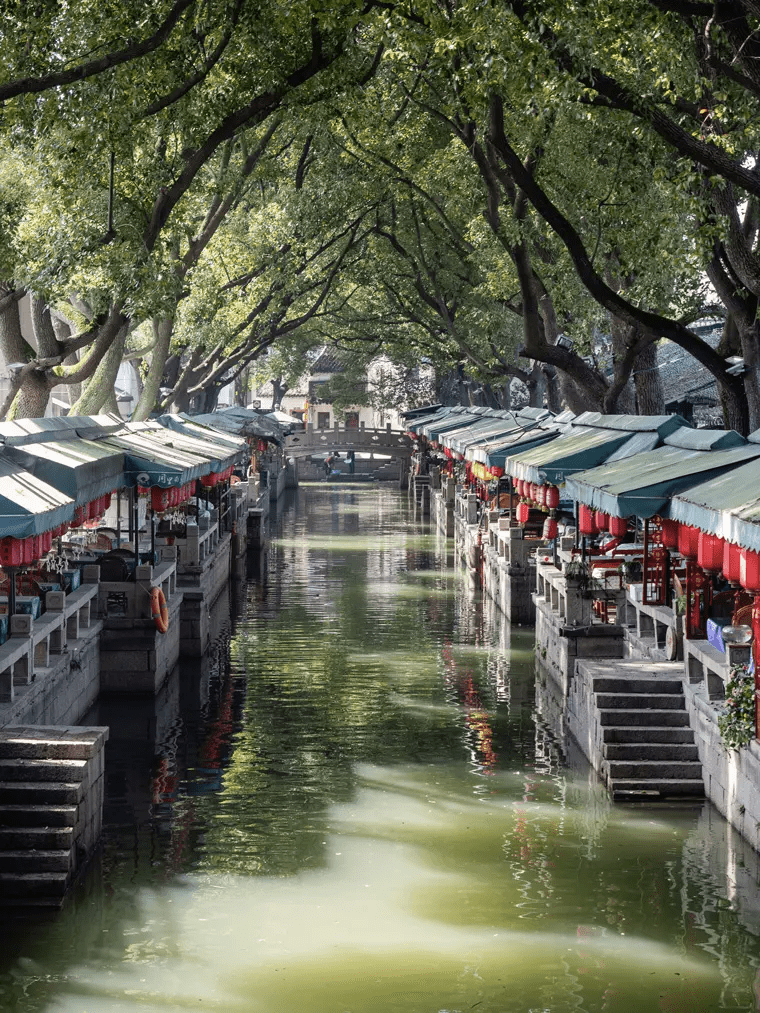
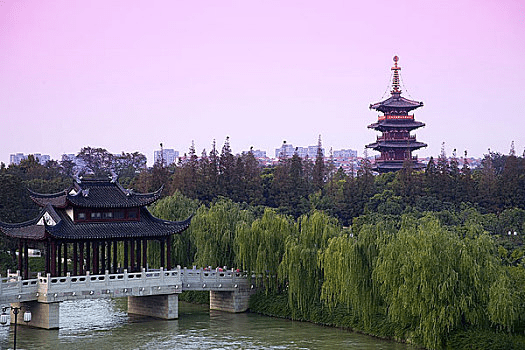
Tongli (同里), also called Tongli Water Town, in the southwest of Suzhou, is one of the “Top Six Ancient Towns in Jiangnan (Regions South of Yangtze River)” in China with a long history of over 1,000 years. Enjoying the advantageous location of being surrounded by water and linked by old stone bridges, Tongli is the symbol of water town in southern China. Therefore, it is regarded as the “Oriental Venice” as well as a “Natural Photo Studio” by people from the whole world and is titled the “National AAAAA Tourist Attraction”. Moreover, since it still well keeps a series of ancient structures from the Song, Yuan, Ming and Qing dynasties, like the “Retreat & Reflection Garden (退思园)” which is a World Cultural Heritage Site praised by many poets, Tongli is a perfect place to savor the authentic flavor of old water town in China and the real leisure life of the charming Jiangnan (江南) region.

Tongli was established in the Song Dynasty over 10 centuries ago and was first named Fu Tu (富土, Fertile Land). But it changed to be called as Tong Li (铜里) so not to be too extravagant. And later people finally changed its name again into the present Tongli (同里). According to the history, Tongli is a key place in the ancient Wu (吴) region, and since it could communicate with the outside world only by boat, there were few wars or turbulence. And then, it became an ideal place for people to escape from the social upheaval and settle down.

Highlights in Tongli

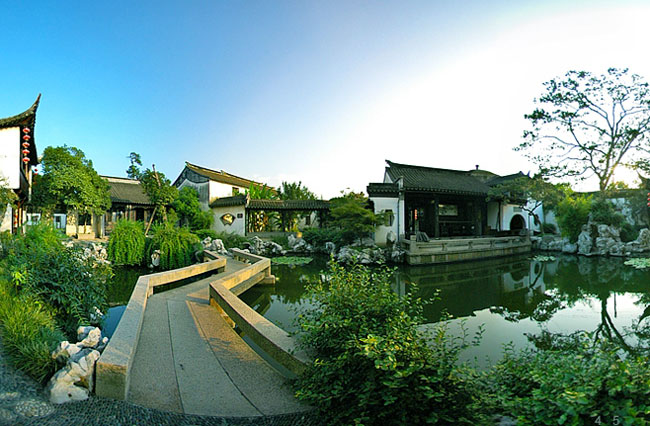
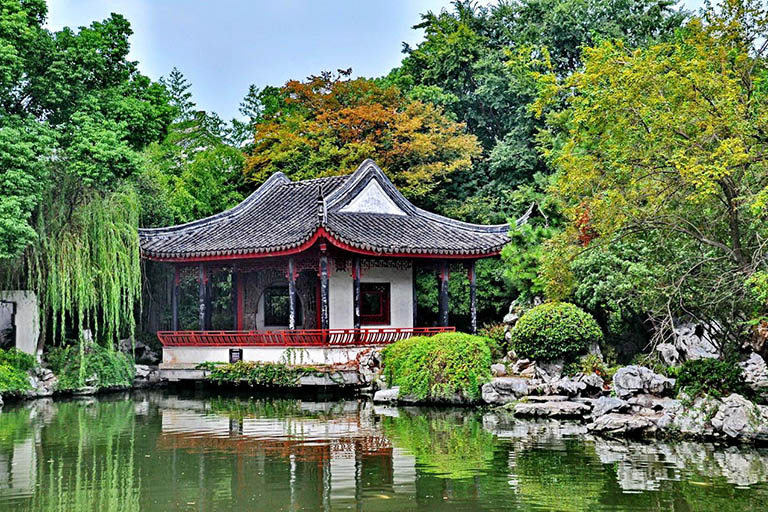
Retreat & Reflection Garden

Tuisi Garden, also known as Retreat & Reflection Garden, earned its place on the prestigious list of UNESCO World Cultural Heritage Sites. This exquisite garden was meticulously crafted between 1885 and 1887 by Ren Lansheng, a former government official who was dismissed due to corruption. Ren chose to name this sanctuary “Tui Si Yuan” to symbolize his personal journey of introspection.

As you wander through Tuisi Garden, you’ll be transported to a bygone era, where historic wooden structures exude an ancient charm. However, what truly astonishes visitors is the enchanting water garden concealed within its confines. Here, pavilions, corridors, bridges, halls, houses, rockeries, pools, ancient trees, vibrant flowers, and charming fish coexist in perfect harmony, creating a secret oasis.

Whether you follow the stone-paved paths or stand atop pavilions nestled among the rockeries, you’ll be treated to breathtaking views of this natural and traditional garden. Such is its extraordinary beauty that a Tuisi Zhuang (Retreat & Reflection Villa) was recreated in a botanic garden in New York, USA, faithfully mirroring the essence of Tuisi Garden. This tribute stands as a testament to the global appreciation of Chinese garden artistry.

Secret Garden in Retreat & Reflection Garden

Tongli

Ancient Tuisi Garden in Spring

Gengle Hall

Gengle Hall (耕乐堂 or Happy Farming Hall), situated in the heart of Lujiadai (陆家埭), stands as a remarkable testament to ancient architecture within Tongli Water Town. Dating back to the Ming Dynasty, this building exemplifies the traditional residential-garden structure of its time, offering visitors a glimpse into the historical architecture of the region.

Within the residential section of Gengle Hall, one can admire an array of intricately carved root artworks, showcasing a variety of shapes including eagles, flowering trees, figures, lions, and more. As you explore this part of the hall, you’ll be immersed in a world of artistic craftsmanship.

Venturing into the water garden, you’ll be treated to crystal-clear pools teeming with vibrant red fish, picturesque stone bridges gracefully arching over the water, weathered yet charming old houses, and the backdrop of a serene blue sky. Every moment spent here promises a unique and captivating visual experience.

Tongli

Picturesque Scenery in the Garden of Gengle Hall

The Pearl Tower

The Pearl Tower (珍珠塔) in Tongli Water Town is not precisely a tower, but rather an opulent mansion. It is renowned for its association with the poignant love story known as the ‘Pearl Tower,’ which unfolds within the walls of this former official censor’s residence.

According to the tale, Fang Qing (方卿) and Chen Cuie (陈翠娥) shared a deep and passionate love, yet their union was fraught with the challenges posed by their disparate family backgrounds. Undaunted, Fang Qing worked tirelessly to attain the coveted title of ‘Number One Scholar’ and returned to his hometown with a sterling reputation. Finally, he and Cuie were able to overcome the obstacles and were wed.

When you visit the Pearl Tower, you’ll have the opportunity to marvel at the ancient architecture and the expansive water garden, allowing you to immerse yourself in the enchanting ambiance of this historic water town and experience the enduring romance of the famous love story.

Tongli

The Mansion of Pearl Tower

The Three Bridges

The Three Bridges (三桥) in Tongli, namely Taiping Bridge (太平桥), Jili Bridge (吉利桥), and Changqing Bridge (长庆桥), stand out as must-see attractions within Tongli Water Town. Together, they form a configuration resembling the Chinese character “品,” making the Three Bridges a cherished treasure of Tongli. As you stroll along these bridges, you’ll witness people walking above and boats gracefully gliding beneath, creating a dynamic and picturesque scene.

Particularly during festivals, these bridges come alive with activity, exuding a sense of bustling joy. Local residents consider it highly auspicious and joyous to traverse the Three Bridges, believing that it brings good fortune and improved health. You can embrace this tradition by walking across the Jili Bridge, Taiping Bridge, and Changqing Bridge in a continuous loop without turning back, in pursuit of greater blessings and well-being.

Besides, there are many other interesting places to visit in Tongli Water Town, like Jiayin Hall (嘉荫堂) with beautiful design and gauze-cap-like beam decorations, Chongben Hall (崇本堂) with exquisite sculptures, Mingqing Street (明清街) with various local food and shops, Luoxing Island (罗星洲) with fabulous natural scenery, etc. you can spend more time to discover deeper beauty of Tongli!

Amazing Activities in Tongli

You deserve to try the featured activities in Tongli to get the real fun and feel the authentic charm of this famous water town.

Rickshaw Tour

Let the local carter take you to appreciate Tongli Water Town with a distinct visual angle on the ancient rickshaw. Passing through the narrow lanes and admiring the centuries-old buildings, you can imagine yourself being the people living in Tongli in ancient times.

Boat Tour

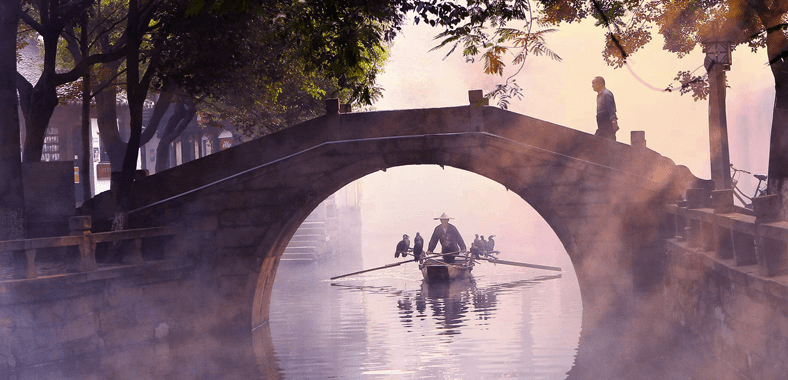
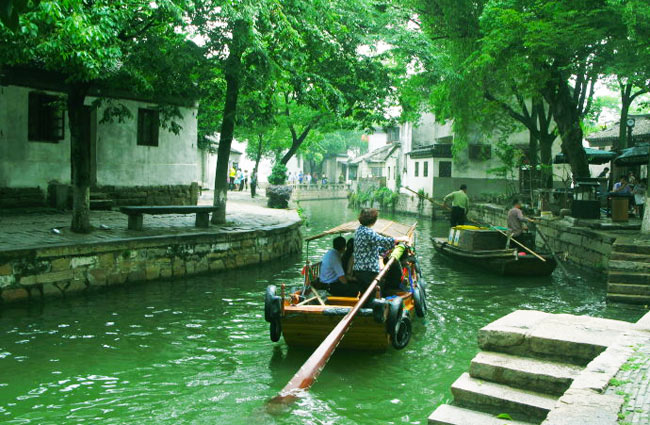
Take a sculling boat at the daytime to feel the excitement of watching the ancient buildings and people passing by, the brand-new practice of going through the old Chinese bridges. You can have the scene of ancient Tongli people communicating the outside by boat in your mind. (25 min, about CNY 90 / boat; 1-6 people / boat)

Tongli

Splendid Night View

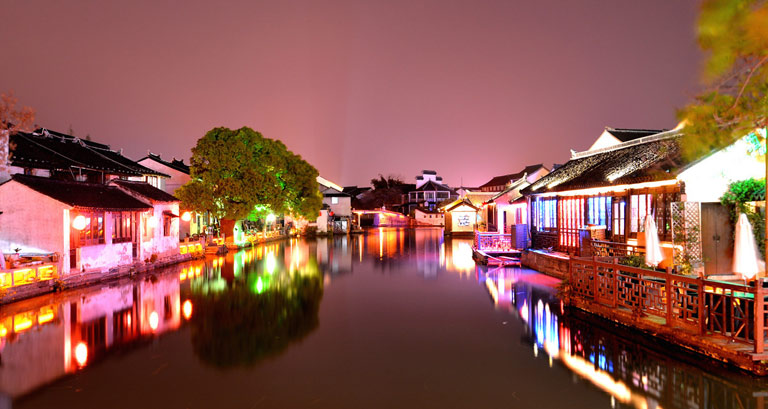
The night view of Tongli Water Town is splendid. With strings of red lanterns lighting along the river, gorgeous colorful flashes shining in the trees, sparkling lights curving the fancy lines of bridges and paths, the water town will make you immerse into its beauty.

TongliSplendid Night View in Tongli Water Town
Best Seasons to Visit Tongli

Tongli is an ideal destination to visit year-round, showcasing diverse landscapes in each season:

  • Spring: Tongli is at its most charming and poetic during this season, boasting moderate temperatures and a touch of misty rain to enhance its allure.
  • Summer: The summertime in Tongli is vibrant, with numerous local folk activities that offer a fantastic opportunity to immerse yourself in the rich folk culture of this renowned Chinese water town. Additionally, you can savor the mesmerizing night views as you wander along its scenic rivers and bridges.
  • Autumn: Tongli dons a fresh and crisp aura during autumn. The faint fragrance of sweet-scented osmanthus fills the air, transforming Tongli Water Town into a captivating young lady beneath the clear azure skies.
  • Winter: In the winter months, Tongli is tranquil, attracting fewer tourists. Particularly after a snowfall, the town adorns itself in pure white beauty, complemented by the soft glow of red lanterns lining the riverbanks.”

Tongli Ancient Water Town: A Poetic Dream of the Oriental Venice

Link:https://peacelilysite.com/2023/09/12/tongli-ancient-water-town-a-poetic-dream-of-the-oriental-venice/

Source: https://www.chinadiscovery.com/jiangsu/suzhou/tongli.html, https://almostlanding.com/things-to-do-in-tongli-water-town-china/

The cultural Heritage of Hanshan Temple

The cultural Heritage of Hanshan Temple

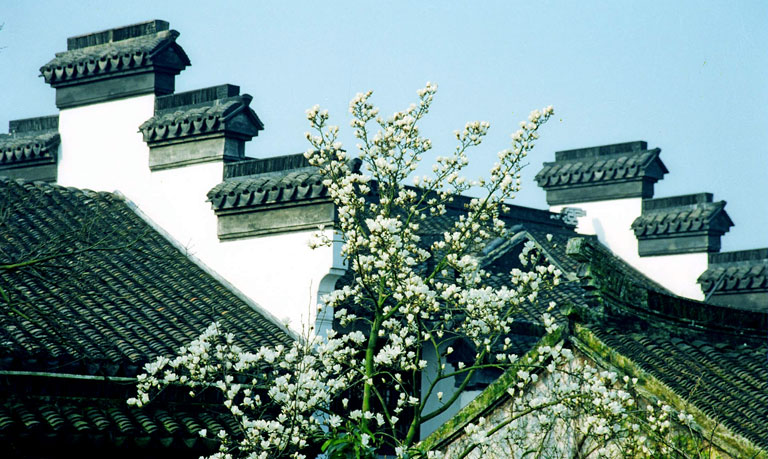
Hanshan Temple (寒山寺), which translates to Cold Mountain Temple, is situated in the Gusu District of Suzhou city. Originally named “Miaoli Puming Temple,” it dates back to the Liang Dynasty of the Southern Dynasties, specifically from A.D 502-519. Covering an area of approximately 13,000 square meters, the temple boasts a construction area exceeding 3,400 square meters.

During the Tang Dynasty’s Zhenguan period (A.D. 627-649), two prominent monks of the time, Hanshan and Xiqian, founded Hanshan Temple. Over its more than 1,300-year history, the temple has suffered five fires (some versions claim seven), with its most recent reconstruction occurring during the Guangxu period (A.D. 1875-1908) of the Qing Dynasty. Historically, Suzhou’s Hanshan Temple held a prestigious position among China’s top ten famous temples. Its fame extends beyond borders due to a poem composed by Zhang Ji, a Tang Dynasty poet, which is taught in Chinese primary schools. This poem is also included in the curriculum of Japanese schools, further elevating Hanshan Temple’s renown in Japan, attracting numerous Japanese visitors who come to pay their respects to the Buddha. The temple features numerous historic buildings and tablet inscriptions authored by calligraphers, making it a popular destination for those seeking peace and spiritual solace.
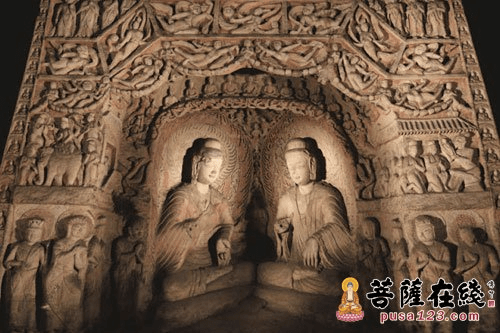
Hanshan Temple holds a distinguished place in China’s Buddhist history, chiefly because of the famous poem by Tang Dynasty poet Zhang Ji. This poem is part of the curriculum in primary schools in both China and Japan.

The Night Lodging at Maple Bridge
By Zhang Ji

月落乌啼霜满天
The moon sinks in the frosty sky and ravens caw far and near

江枫渔火对愁眠
Riverside maples and fishing lamps gloomily make me drowsy

姑苏城外寒山寺
From the Han-Shan temple siting at outside of the Gu-Su town

夜半钟声到客船
Come midnight bell rings as a passenger boat is arriving 

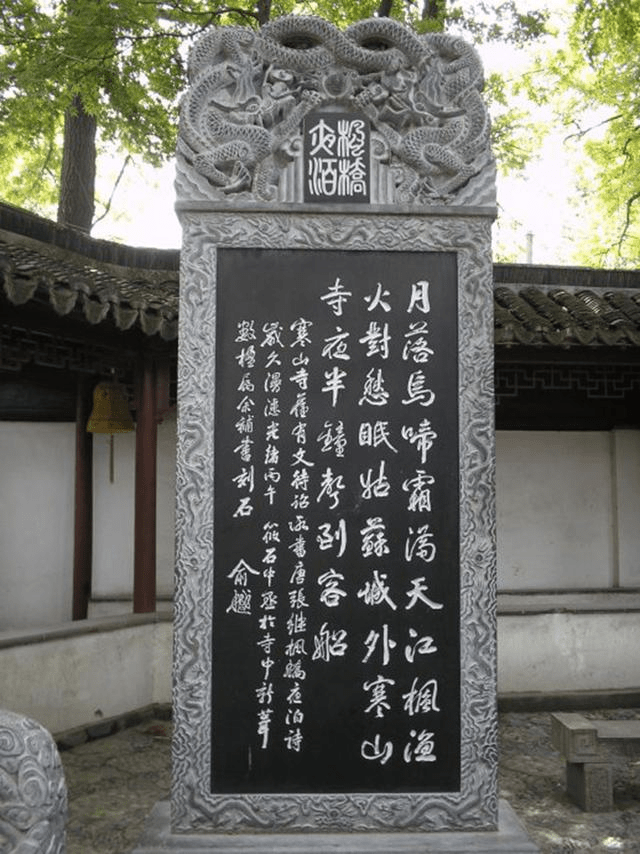
Apart from the legends of Hanshan and Shide, Hanshan Temple boasts a collection of treasures that have been cherished throughout its extensive history. Among these treasures, one of the most renowned is the poetic stele of ‘Night Mooring at Maple Bridge,’ crafted by the esteemed scholar and calligrapher Yu Yue during the late Qing Dynasty. It stands as an invaluable asset to Hanshan Temple.

It must be acknowledged that this piece of calligraphy represents the apex of ‘Night Mooring at Maple Bridge’ renditions throughout history. The lines of regular script flow seamlessly, displaying an inherent elegance and freshness, achieved with seemingly effortless brushwork. Engraved upon the stele, it emanates a subtle, age-old charm and an evocative poetic atmosphere. Each time I gaze upon this stele, it evokes a different emotional response within me. As I have delved into the art of calligraphy myself, I have even attempted to replicate ‘Night Mooring at Maple Bridge.’ While I deeply appreciate Yu Yue’s extraordinary skill and find it visually pleasing, there has always been a sensation of something missing, an ineffable aspect I couldn’t articulate. My pursuit has persisted, a continuous quest to discover calligraphic masterpieces that could genuinely satiate my aesthetic sensibilities, and this aspiration remains deeply rooted within me.

The other day, I had a sudden encounter with ‘Night Mooring at Maple Bridge,’ personally penned by H.H. Dorje Chang Buddha III, and it was as if I had stumbled upon a divine masterpiece! This artwork utilizes cursive script, showcasing the grandeur reminiscent of dragons and serpents, seasoned with masterful brushwork, conveying both a majestic ruggedness and a subtle elegance. What elevates its worth even further is its dynamic and ceaseless artistic allure, reaching monumental proportions. It can be aptly described as the highest sacred creation, far beyond the grasp of ordinary individuals. This represents the embodiment of the Five Vidyas, as expressed by the Buddhas and Bodhisattvas in the realm of Prajna, offering an extraordinary experience to those who behold it and serving as the ultimate exemplar for calligraphy enthusiasts like myself to aspire to emulate.

In this lifetime, I am profoundly fortunate to have encountered the authentic and unwavering Dharma of the Tathagata. The achievements of H.H. Dorje Chang Buddha III stand unparalleled on a global scale. When it comes to providing tangible evidence of wisdom and realization attained through proficiency in both exoteric and esoteric Buddhism, as well as mastery of the Five Vidyas, there is simply no one within the realm of Buddhism who can be mentioned in the same breath as His Holiness.

The Buddha’s criterion for measuring one’s level of accomplishment in the Buddha-dharma is rooted in the extent of proficiency in both exoteric and esoteric Buddhism, as well as the mastery of the Five Vidyas. However, throughout the history of Buddhism up to the present day, only H.H. Dorje Chang Buddha III Holiest Tathagata has truly and comprehensively demonstrated complete proficiency in exoteric and esoteric Buddhism, along with perfect mastery of the Five Vidyas. His Holiness unmistakably presents, for all to witness, a myriad of achievements that exemplify his complete proficiency in exoteric and esoteric Buddhism and his impeccable mastery of the Five Vidyas, as stipulated by the Buddha.

His Holiness, an ancient Buddha, holds the distinction of being the first being of holy virtue in history to genuinely manifest such lofty and all-encompassing realization. The undeniable proof of this is found in the numerous accomplishments single-handedly achieved by H.H. Dorje Chang Buddha III, as detailed within the thirty main categories listed in this book, “H.H. Dorje Chang Buddha III — A Treasury of True Buddha-Dharma.”

I earnestly pray that all sentient beings may embark upon the ‘vessel’ of liberation and achieve enlightenment.

The cultural Heritage of Hanshan Temple

Link:https://peacelilysite.com/2023/09/08/the-cultural-heritage-of-hanshan-temple/

#DorjeChangBuddhaIII #HHDorjeChangBuddhaIII  #HanShanTemple #ChineseCalligraphy #Buddhism #ExotericandEsotericBuddhism #AcientBuddha #TreasureBook #FiveVidyas

Source: https://blog.wenxuecity.com/myblog/77953/202108/16124.html, https://www.chinadiscovery.com/jiangsu/suzhou/hanshan-temple.html

Fanjing Mount

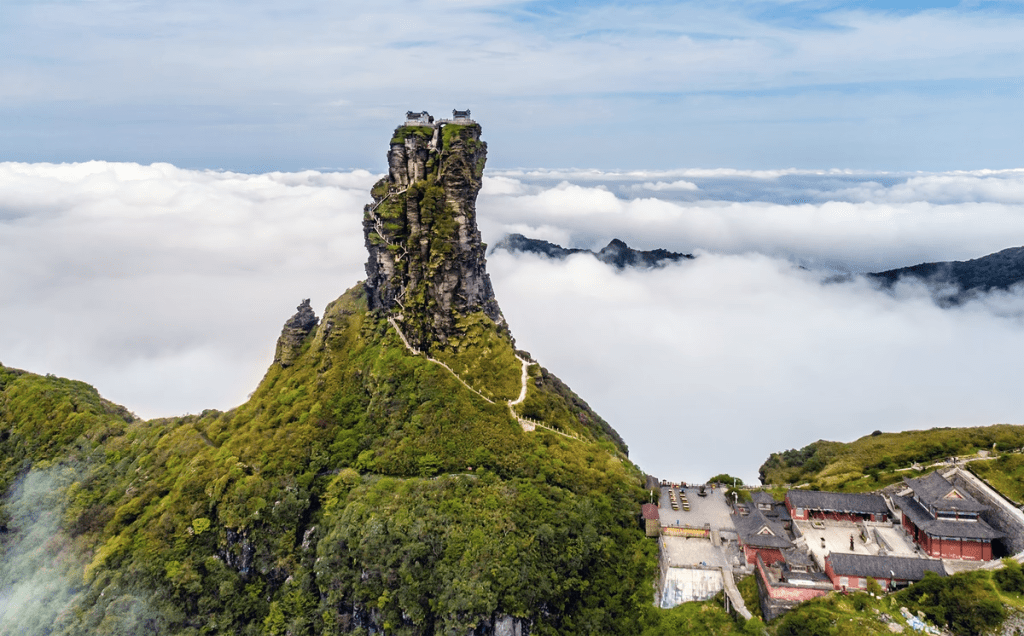
A view of the New Golden Summit, looking west. Costfoto / Barcroft Media via Getty

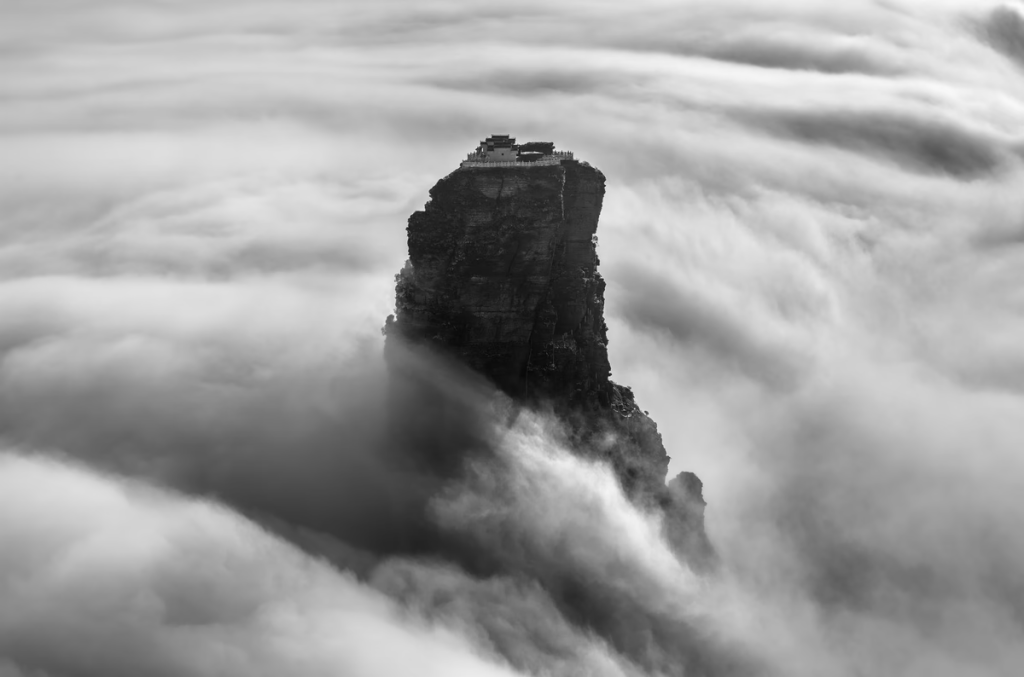
Clouds roll past the New Golden Summit on Mount Fanjing.  Clkraus / Shutterstock

Fanjingshan, also known as Mount Fanjing, is situated in the eastern part of Guizhou Province, China, within Tongren City. It is positioned approximately 248 kilometers away from Guiyang and 220 kilometers from Zhangjiajie. Mount Fanjing proudly claims the title of being the highest peak within the Wuling Mountains, with an impressive elevation of 2572 meters. The mountain stands adorned with primitive vegetation, its landscape characterized by majestic peaks, a continuous succession of towering summits, babbling streams interwoven with cascading waterfalls.

Moreover, Fanjingshan holds great spiritual significance as a revered Buddhist site. It’s widely believed among Buddhists that Fanjingshan is a place where spiritual enlightenment akin to that of Maitreya Buddha can be attained.

The appellation “Fanjing” finds its origins in “Fantian Jingtu,” a Buddhist term that translates to “Brahma’s Pure Land.” This hallowed mountain has been acclaimed as China’s Fifth Buddhist Mountain, a distinction following the likes of Mount Wutai in Shanxi Province, Mount Putuo in Zhejiang Province, Mount Emei in Sichuan Province, and Mount Jiuhua in Anhui Province. With a history spanning over 2000 years, embellished by extraordinary rock formations and abundant biodiversity, Mount Fanjing unveils itself as a serene, distinct haven. A sojourn to this tranquil expanse offers a revitalizing and spiritual respite from the bustling clamor of urban life.

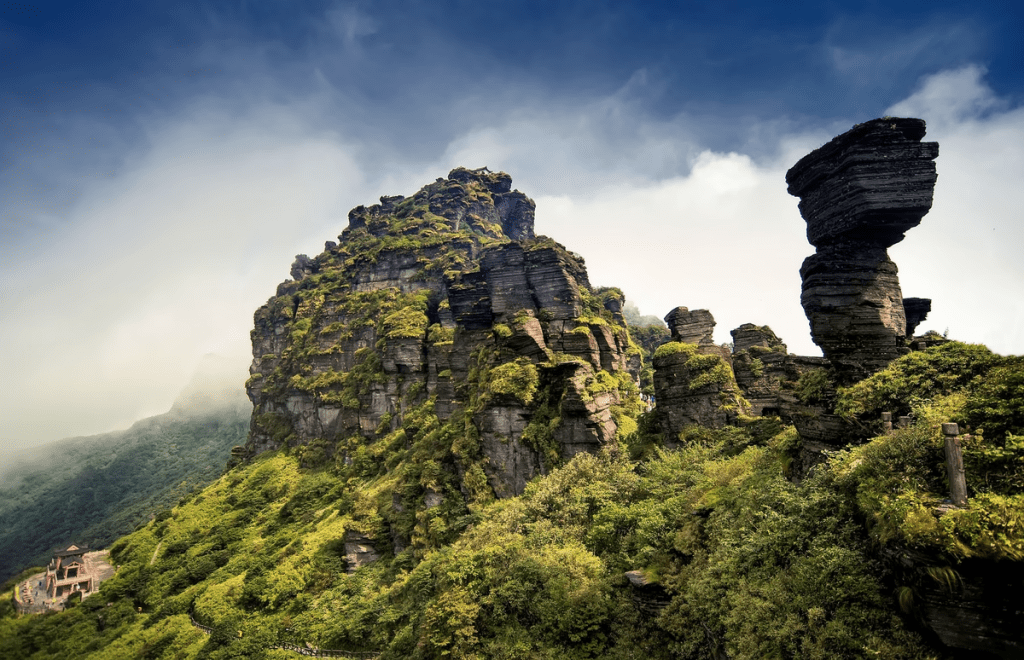
Unique geological landforms, including the “Mushroom Stone” at right. Sanyanwuji / Shutterstock

In geological terms, Mount Fanjing assumes the form of a “fold belt,” an arrangement akin to stacked layers of rock resembling an assemblage of intricate shapes, an occurrence seldom witnessed elsewhere. The Mushroom Stone serves as a prime exemplar, where layers of rock have taken on the semblance of a towering mushroom.

Throughout antiquity, Fanjing Mountain stood as a venerable hub of Buddhist culture within the Wuling Mountain range. Historical records attest to the proliferation of numerous Buddhist temples along its slopes, catering to pilgrims from around the world. Yet, during the 16th century in the Ming Dynasty, a substantial number of these temples met destruction, effectively suppressing Fanjing Mountain’s renown. The subsequent Qing Dynasty saw a revival of fortunes, with governmental initiatives aimed at temple reconstruction and expansion along the mountain’s pathway to the “Red Clouds Golden Summit.” Notable temples such as Cheng’en Temple and Baoguo Temple were erected. By 1896, the fifth phase of Fanjingshan Temple reconstruction reached its culmination, bestowing upon Fanjing Mountain an esteemed status in the global Buddhist sphere and solidifying its position as China’s “No. 5 Great Buddhist Mountain.”

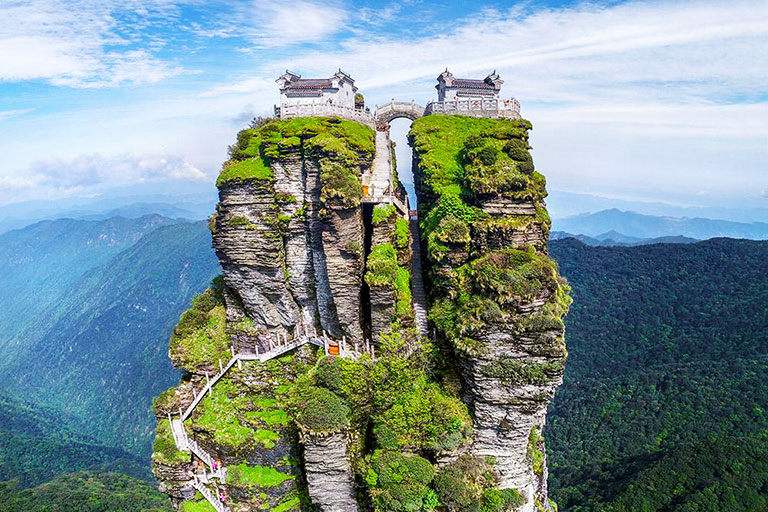
Mount Fanjing boasts three soaring summits that pierce the heavens – the Red Clouds Golden Summit (2336 meters), the Old Golden Summit (2493 meters), and the Phoenix Golden Summit (2572 meters). From these majestic pinnacles, visitors are treated to breathtaking panoramic vistas of Mount Fanjing’s expansive landscape. Crowning the preeminent “Red Clouds Golden Peak” stands the remarkable Fanjingshan Temple, perched at a daring elevation of 2,336 meters above sea level. Nestled atop the columnar peak, this temple’s elusive location beckons travelers to witness its ethereal presence firsthand and capture mesmerizing, novel photographs.

Fanjingshan Temple, encompassing the revered Temple of the Buddha (释迦殿) and the Maitreya Temple (弥勒殿), graces the summit of the “Red Clouds Golden Summit” (also known as the New Golden Summit) on Fanjing Mountain. The former is dedicated to the worship of Sakyamuni, symbolizing the present, while the latter venerates Maitreya, representing the future. These two temples trace their origins back to the Yongle period of the Ming Dynasty, over five centuries ago. Presently, they have been meticulously reconstructed to echo their original splendor, their structures fortified with iron tiles to withstand the mountain’s formidable winds. Each temple is embodied by a single hall, constructed from meticulously arranged stone pieces measuring 5.4 meters in width and 5.55 meters in depth. A bridge gracefully connects the two temples, spanning the depths of the Gold Sword Gorge.

For pilgrims journeying to Fanjingshan, the ascent involves ascending thousands of steps to initially reach the Temple of the Buddha on the southern facet. Subsequently, crossing the bridge leads to the Maitreya Temple on the northern side of the “Red Clouds Golden Summit.” This sequence mirrors the Buddhist concept of transition from the present (Sakyamuni) to the future (Maitreya). As the “Red Clouds Golden Summit” often finds itself enshrouded by mist and enveloped in sea of clouds, standing upon the terrace outside Fanjingshan Temple offers a surreal experience of gazing upon the world from above, capturing an otherworldly perspective amidst the natural elements.

Much like the iconic Avatar Hallelujah Mountain in Zhangjiajie National Forest Park, Fanjingshan stands as a towering pinnacle, slender and vertically oriented, evoking the image of a pencil standing upright on a desk. Scaling its summit requires ascending over 8,000 steps or opting for a cable car ride up from the road below. Most visitors opt for a full day to thoroughly explore this remarkable sacred mountain. Its attractions span a diverse range, encompassing the Red Cloud Golden Peak, Old Golden Summit, Ten-Thousand Sleeping Buddha, Mushroom Stone, Jiulong Pond, Fenghuang Mountain, Numerous Rolls of Books, and more.

Situated in the mountainous expanse of Guizhou Province, Fanjingshan falls within the ambit of a subtropical humid monsoon climate, distinctly marked by four seasons. Throughout the year, the average annual temperature oscillates between 13.1°C and 14.7°C. July witnesses the hottest days, with an average temperature hovering around 24°C, while January holds the chilliest nights, registering an average temperature of approximately 4.6°C. On the whole, Fanjingshan enjoys a temperate climate, graced by ample sunlight and rainfall. Summers remain moderate, and winters remain mild, with neither excessive heat nor biting cold. Rainfall predominantly occurs from May to October, while the frost-free period spans a generous 270 to 278 days annually.

The prime window to explore Mount Fanjing extends from March to November. For those seeking to capture stunning photographs, the early morning hours are particularly enchanting. The aftermath of rain unveils captivating spectacles, such as the Sea of Clouds, Zen Fog, Buddha Light, and breathtaking sunrises, which contribute to the mountain’s mystique and allure.

Fanjing Mount

Link: https://peacelilysite.com/2023/08/22/fanjing-mount/

#FanjingMount# MountFanjing #Zhangjiajie #Buddha #BuddhistTemple #MaitreyaBuddha #FanTieJingTu #China #Travel #TravelChina #GuiZhou

Source: https://www.chinadiscovery.com/guizhou/fanjingshan.html, https://www.theatlantic.com/photo/2019/04/a-photo-visit-to-mount-fanjing/586879/, https://www.chinadiscovery.com/guizhou/fanjingshan/fanjingshan-temple.html

Amazing Bridges in China

The oldest Stone Bridge

By English Wikipedia user Zhao 1974 – Imported from English Wikipedia, Photo taken by Zhao 1974, Public Domain, https://commons.wikimedia.org/w/index.php?curid=1813644

Photo from Internet

The Anji Bridge (安济桥) is the world’s oldest open-spandrel segmental arch bridge of stone construction. Credited to the design of a craftsman named Li Chun, the bridge was constructed in the years 595–605 during the Sui dynasty (581–618). Located in the southern part of HebeiProvince, it is the oldest standing bridge in China.

The Anji bridge is about 64 metres (210 ft) long with a central span of 37.37 metres (122.6 ft). It stands 7.3 metres (24 ft) tall and has a width of 9 metres (30 ft). The central arch is made of 28 thin, curved limestone slabs which are joined with iron butterfly joints. This allows the arch to adjust to shifts in its supports and prevents the bridge from collapsing even when a segment of the arch breaks. The bridge has two small side arches on either side of the main arch. These side arches serve two important functions: first, they reduce the total weight of the bridge by about 15.3% or approximately 700 tons, which is vital because of the low rise-to-span ratio and the large forces on the abutments it creates. Second, when the bridge is submerged during a flood, they allow water to pass through, thereby reducing the forces on the structure of the bridge.

During the next 1,400 years, the bridge survived at least eight wars, ten major floods and numerous earthquakes, the most recent being the 7.2-magnitude Xingtai earthquake in 1966. Yet, the support structure remains intact and the bridge is still in use. Only the ornamental railings have been replaced every few hundred years.

The Highest Bridge in the World

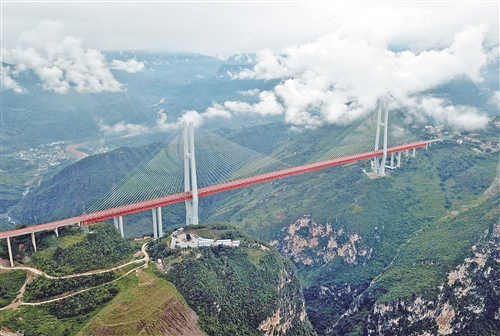
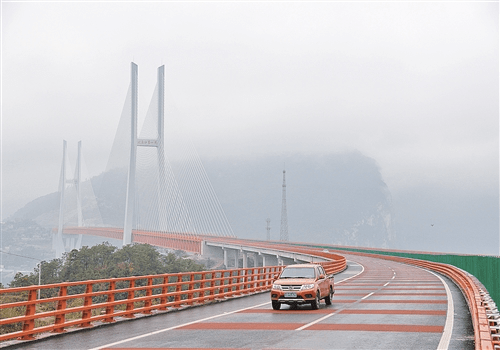
The Duge Bridge, also called the Beipanjiang Bridge, is a four-lane cable-stayed bridge on the border between the provinces of Guizhou and Yunnan in China. As of 2021, the bridge is the highest in the world, with the road deck sitting over 565 metres (1,854 ft) above the Beipan River.

The Beipanjiang bridge in southern China has opened to traffic following three years of construction.

The longest Crossing Sea Bridge

The 55km crossing consists of three cable-stayed bridges and link roads in the three cities, reducing the travelling time between Hong Kong and Macau/Zhuhai from an hour’s ferry ride to a 40-minute car journey. This is a key initiative of the Chinese government’s plan to drive the economic and social integration of the Greater Bay Area which encompasses 11 cities in Southern China including Hong Kong and Macau. Opened to traffic at early 2018.

Crossing an Ocean: The Hong Kong-Zhuhai-Macau Bridge

Amazing Bridges in China

Link:https://wordpress.com/post/peacelilysite.com/6429

#China #Bridges #OldestBridge #LongestBridge #HighestBridge #AnjiBridge#Hebei #Hongkong #Macau #ChineseCulture #Yunnan #Guizhou #ZhaozhouBridge

Source: https://gz.cri.cn/n/20230216/b6d28ebf-5a77-46e8-7231-afcde4a8b554.html, https://finance.sina.com.cn/roll/2019-05-08/doc-ihvhiqax7322797.shtml, https://www.google.com/search?q=World%27s+highest+bridge+opens+to+traffic+in+China&oq=World%27s+highest+bridge+opens+to+traffic+in+China&aqs=chrome..69i57j69i61.1269j0j4&sourceid=chrome&ie=UTF-8, https://en.wikipedia.org/wiki/Anji_Bridge

The Huntington Library

A Haven of Beauty, Culture, and Knowledge

Tucked away in the idyllic town of San Marino, California, lies a captivating destination that continues to enthrall visitors from all corners of the globe—the Huntington Library, Art Museum, and Botanical Gardens. Boasting breathtaking landscapes, vast collections, and a harmonious fusion of nature, culture, art, history, and science, the Huntington Library is a place of awe-inspiring wonder that leaves an indelible mark on the hearts of those who venture within its gates. This July 4th holiday, we had the pleasure of revisiting this remarkable institution, once again succumbing to its irresistible allure.

Stepping foot into the Huntington Library is like entering a world where nature and culture intertwine harmoniously. The lush botanical gardens stretch across 120 acres, offering a mesmerizing collection of plants, flowers, and trees from all corners of the globe. As you stroll along the meandering paths, you’ll encounter a kaleidoscope of colors and fragrances, inviting you to immerse yourself in the serenity of nature. The carefully manicured landscapes provide the perfect backdrop for contemplation, relaxation, and exploration.

Chinese Garden

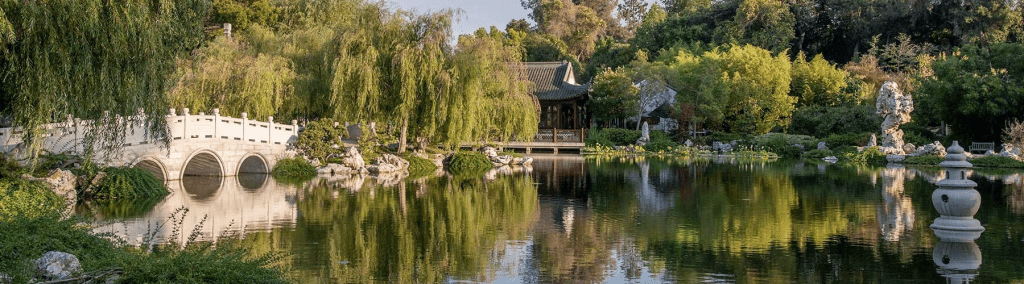
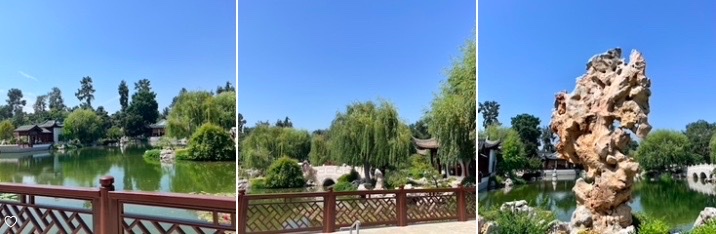
Among the many wonders that grace the Huntington Library, the Chinese Garden stands out as a true gem. This tranquil oasis, known as the Garden of Flowing Fragrance (Liu Fang Yuan), transports visitors to the essence of traditional Chinese landscaping. With its tranquil ponds, graceful pavilions, and meandering pathways, the Chinese Garden evokes a sense of peace and serenity. Every element, from the meticulously arranged rocks to the delicate architecture, conveys the rich insights of Chinese culture, inviting visitors to appreciate its profound beauty.

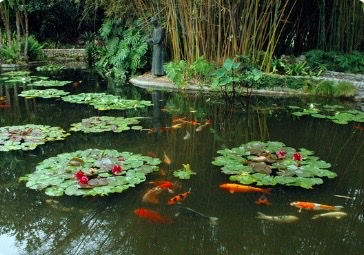
Nestled within the captivating grounds of the Huntington Library, Art Museum, and Botanical Gardens, the Lily Ponds stand as a timeless testament to the beauty and tranquility of nature. Established in 1904 as the first garden on Henry E. Huntington’s property, the Lily Ponds have become a beloved destination for visitors seeking solace and respite. Surrounded by bamboo groves and the majestic conifer tree collection, this serene haven features five picturesque ponds and an open grass meadow. With the presence of lotus blossoms, graceful koi fish, and elegant papyrus, the Lily Ponds offer a truly enchanting location for relaxation and the staging of unique events.

Beyond its mesmerizing gardens, the Huntington Library boasts an extensive collection of art, rare books, manuscripts, and historical artifacts. Art enthusiasts will find themselves immersed in masterpieces that span centuries, from the Renaissance to contemporary works. History buffs can delve into rare documents that shed light on pivotal moments in human civilization. Moreover, the Huntington Library offers an incredible array of scientific resources, including an impressive collection of botanical specimens, which serve as invaluable tools for researchers and scholars.

Peter Verstille’s diary and memorandum book, pages 19 and 20. Verstille was dismayed by the political corruption and misdirection he perceived in London. Throughout his diary, he worried what “the Deplorable Degeneracy of our present Times” would mean for the fate of the British Empire and America. | The Huntington Library, Art Museum, and Botanical Gardens.

The Huntington Library’s existence as a public treasure is owed to the foresight and generosity of Henry E. Huntington and his second wife, Arabella. The couple amassed an extraordinary collection of books, art, and manuscripts throughout their lifetimes. Instead of keeping these treasures confined to private quarters, they made the decision to establish the Huntington Library, ensuring that future generations would have the opportunity to experience the world’s wonders firsthand. Their philanthropic vision has created a lasting legacy that continues to enrich the lives of countless individuals today.

Visiting the Huntington Library is an experience that lingers in the hearts and minds of all who venture within its gates. The seamless integration of nature, culture, art, history, and science makes it a truly remarkable place. Whether you find solace in the tranquil Chinese Garden, lose yourself in the captivating art collections, or immerse yourself in the wealth of knowledge held within its walls, the Huntington Library offers a journey of discovery and inspiration. The selfless act of the Huntington couple in preserving this treasure for the public to enjoy is a testament to the power of sharing and the immense value of fostering a deeper understanding of our world. So, if you ever find yourself in California, make sure to visit the Huntington Library, where beauty, culture, and knowledge come together in perfect harmony.

A Haven of Beauty, Culture, and Knowledge

Link:https://peacelilysite.com/2023/07/14/the-huntington-library/

#HuntingtonLibrary#ChineseGarden #LilyPonds#Beauty #Culture #Knowledge#California #Botanical Gardens #ExtraordinaryDestination #Travel #History

Source: https://huntington.org

Longmen Grottoes

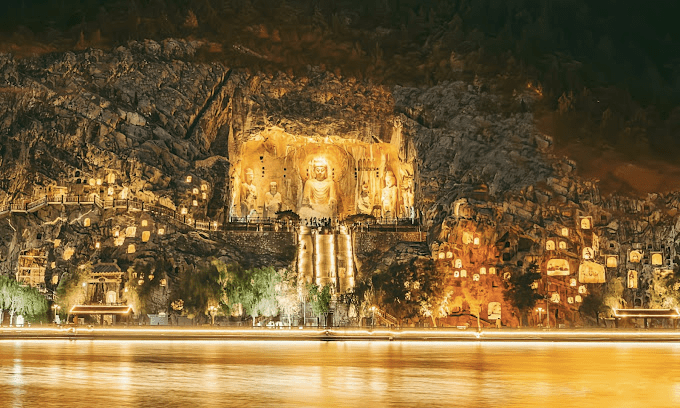
Splendid Night Scene of Longmen Grottoes, By Jack Sparrow

The Longmen Grottoes, a Buddhist cave complex located 13 kilometers south of Luoyang in China’s Henan province, form some of the most significant and exquisite representations of ancient Chinese stone art. Created over the course of approximately five centuries beginning in 493 CE, these grottoes, along with the statues and inscriptions carved within, provide a window into the political, cultural, and artistic circumstances of the late Northern Wei and Tang periods. The caves were carved into the steep limestone cliffs of Mount Longmen and Mount Xiang which face one another along a one kilometer stretch, forming a valley through which the Yi River flows. This site, with its appearance of a natural gate, was historically referred to as Yique or “Gate of the Yi River.” After Emperor Yang of the Sui Dynasty built an imperial palace in Luoyang at the beginning of the 7th century CE with its southern gate aligned to the cliffs of the site, the name Longmen or “Dragon’s Gate” came into use (the dragon served as an emblem of the power of the emperor).

LAYOUT

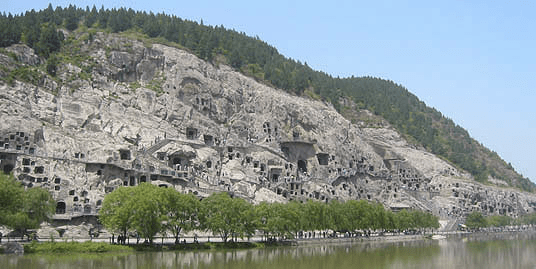
Mt. Longmen as seen from Manshui Bridge to the southeast

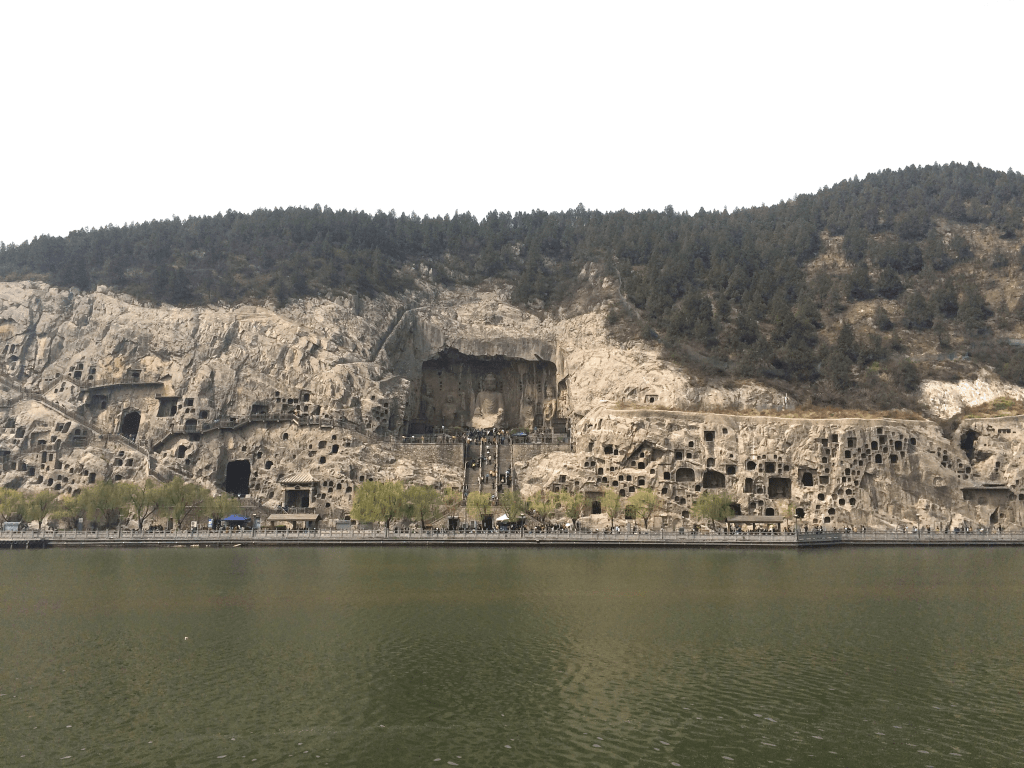
In total, more than 2,300 grottoes and niches, 100,000 Buddhist statues, ranging in size from several centimeters to over 17 meters, and over 2,800 inscriptions were carved into the cliffs at the site, making it the largest such complex in China. A majority of the caves were carved into the face of Mount Longmen, on the west side of the Yi River. Such is the density of grottoes and niches there that they give the cliff face an incredible, honeycomb-like appearance when viewed at a distance. Whereas those grottoes on the west side were used for ceremonies which honored the dead, the caves carved on Mount Xiang to the east were home to a large community of Buddhist monks of various sects.

View of the West Hill Grottoes from the east bank of the Yi River. Charlie – Own work

2,300 GROTTOES & NICHES, 100,000 BUDDHIST STATUES, & OVER 2,800 INSCRIPTIONS WERE CARVED INTO THE CLIFFS AT THE SITE.

REFLECTION OF SOCIETY

The carving of grottoes into remote mountainsides to serve as Buddhist temples was a practice which originated in India c. 3rd century BCE. Buddhism, along with the practice of grotto carving, passed to China along the silk road, influencing the creation of Buddhist grottoes at Yungang near Pingcheng (modern day Datong), the capital of the Northern Wei Dynasty, in the middle of the 5th century CE. When Emperor Xiaowen, who contributed to the carving of the Yungang Grottoes, moved the capital from Pingcheng to Luoyang in 493 CE, he shifted his energy to beginning grotto construction at Longmen.

Many of the statues within the oldest grotto carved there, Guyang Cave, were ones which members of the royalty, who followed Emperor Xiaowen to Luoyang, vowed to build. Over 1,000 niches and 800 inscriptions are contained within the cave, making it one of the richest at Longmen and significant as a reflection of the late Northern Wei style of both sculpting and writing. The central statues of Sakyamuni Buddha and two Bodhisattvas (those on the path to enlightenment) each take on a somber appearance and a slender silhouette, contrasting the earlier, broad-shouldered style found at Yungang. Inscriptions attached to statues within Guyang Cave include 19 of the 20 inscriptions designated as exemplary forms of Northern Wei calligraphy and are critical in helping to identify the origins of each work.

Sakyamuni Buddha and two Bodhisattvas at Guyang Cave

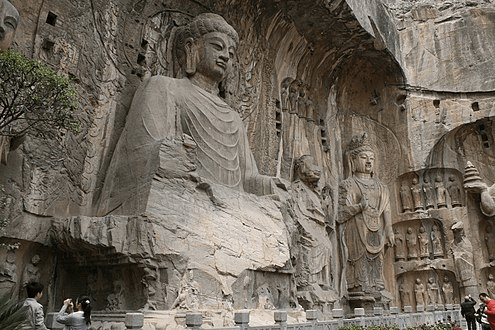
Fengxian, or Feng Xian Si (奉先寺), or Li Zhi cave is the Ancestor Worshipping Cave, which is the largest of all caves carved on the west hill built between 672 and 676 for Empress Wu Zetian. The carvings are claimed to be the ultimate in architectural perfection of the Tang dynasty. The shrine inside the cave measures 39 m x35m. It has the largest Buddha statue at the Longmen Grottoes. Of the nine huge carved statues, the highly impressive image of Vairocana Buddha is sculpted on the back wall of the Fengxian. The image is 17.14m high and has 2 m long ears.An inscription at the base of this figure gives 676 as the year of carving. The Bodhisattva on the left of the main image of Buddha is decorated with a crown and pearls. Also shown is a divine person trampling an evil spirit. The main Vairocana image’s features are plumpish and of peaceful and natural expression. Each of the other large statues are carved with expressions matching their representative roles. These were carved at the orders of Empress Wu Zetian, and are considered uniquely representative of the Tang dynasty’s “vigorous, elegant and realistic style.” The huge Vairocana statue is considered as “the quintessence of Buddhist sculpture in China.”

Attendants at FengxiaSi Cave Uploaded by Benjamin Oswald

The Vairocana statue also provides at its base the names of the artisans who worked here, the name of the Emperor Gaozong, who was the donor, and also honors Wu Zetian. It is said that Wu Zetian donated “twenty-thousand strings of her rouge and powder money” to complete this edifice. Hence, it is conjectured that the Vairocana Buddha was carved to resemble the Empress herself and termed a “Chinese Mona Lisa, Venus or as the Mother of China”. All the images here, which remain undamaged, project character and animation. Statues of Kasyapa and Ananda, the two principal disciples of Vairocana, and of two Bodhisattvas with crowns flank the main statue, in addition to numerous images of “lokapalas (guardians or heavenly kings), dvarapalas (temple guards), flying devas and numerous other figures.

The Big Vairocana of Longmen Buddha Grottoes
Vairocana (Lu SheNa) Buddha, By Anagoria – Own work, CC BY 3.0, https://commons.wikimedia.org/w/index.php?curid=49649630

NOTABLE CAVES

In addition to Guyang and Fengxiansi Caves, several others are particularly worthy of mention. The set of three Binyang Caves (North, Middle, South), carved shortly after the Northern Wei capital was moved to Luoyang, was donated by Emperor Xuanwu in honor of his father, Emperor Xiaowen, and mother, Empress Wenzhao. Unlike figures in Guyang Cave, those in the Binyang Caves are of an earlier Northern Wei style, closer to that found at Yungang Grottoes. Work began on Yaofang Cave in the intervening period between the Northern Wei and Tang dynasties and came to include the engraving of 140 Tang era medical prescriptions – practical remedies to ailments ranging from cholera to hysteria. These treatments, which spread to Japan in the 10th century CE, reveal the degree to which medical science advanced during the Tang Dynasty.

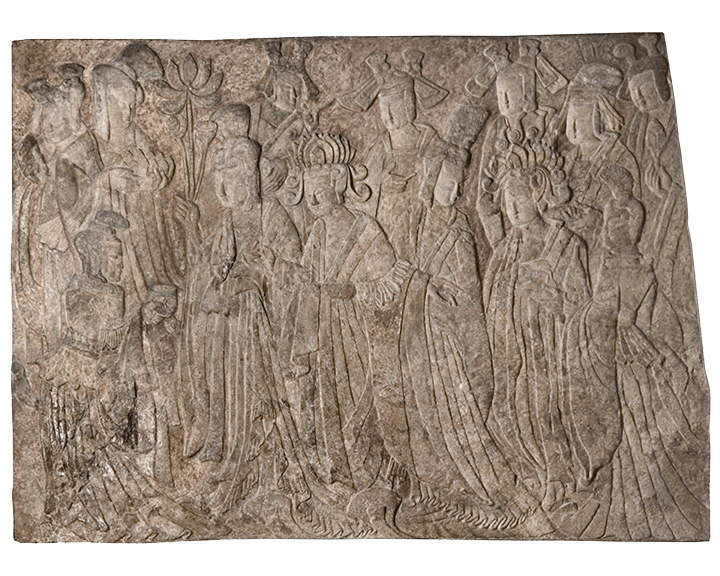
Offering Procession of the Empress as Donor with Her Court, Chinese, from Longmen, Binyang Central Cave, Henan Province, ca. 522 C.E., Northern Wei Dynasty

This Offering Procession of the Empress as Donor with Her Court, was taken off from the original place for reasons. And now you can see it in the Nelson-Atkins Museum of Art  in Kansas City, US. The Nelson-Atkins Museum of Art is a much-loved institution. Many americas may not know, though, is that the Nelson also has a world-renowned reputation among artists and scholars of Asian art. With more than 7,000 works spanning 5,000 years, the museum boasts one of the most celebrated collections of Asian art in the West.

Wanfo Cave, which was completed shortly after the completion of Fengxiansi Cave, was created in honor of Emperor Gaozong and Empress Wu Zetian and purportedly contains 15,000 small, sitting Buddha figures carved within the vast grids of tiny niches which blanket several walls. Prominent patrons of the cave included a female court official and a palace chapel nun. The largest grotto on the east side, Kanjingsi Cave, unlike many other large caves, lacks the grouping of large, carved Buddhist statues. In their place is a procession of life-sized Arhats (those far advanced along the path to enlightenment) stretching around the perimeter of the cave, each with a unique expression, carved in relief in the evocative and highly-detailed style found at other Tang era grottoes.

Wanfo Cave, part of the Longmen Grottoes, containing 15,000 Buddha figures, Uploaded by Benjamin Oswald, published on 21 August 2017

PRESERVATION

One can only imagine the splendor of the grottoes at Longmen during the Tang Dynasty, with thousands of recently completed carvings painted in a brilliant array of colors. Unfortunately, a number of natural and human forces have detracted from, although in many cases by no means destroyed, the intention of the original artists. Among the natural causes of damage are corrosion due to acid rain, wear from wind exposure, and naturally occurring fissures of the limestone, exacerbated by plant growth and water seepage.

The caves, stone statues, steles and inscriptions scattered in the East Hill and West Hill at Longmen have been well preserved. The property area and buffer zone retain their natural landscapes and the ecological environment that have existed since the late 5th century. The works of humans and nature have been harmoniously unified and the landscapes possess high integrity.

In the continuous evolution of Longmen Grottoes, the aesthetic elements and features of the Chinese cave temples’ art, including the layout, material, function, traditional technique and location, and the intrinsic link between the layout and the various elements have been preserved and passed on. Great efforts have been made to maintain the historical appearance of the caves and preserve and pass on the original Buddhist culture and its spiritual and aesthetic functions, while always adhering to the principle of “Retaining the historic condition”.

As with pilgrims of ages past, who visited Longmen to worship or to gain merit through the dedication of a Buddhist image, these grottoes afford modern visitors the chance to take a step closer to the lives of people from a different era, and to stand in wonder at the ability and determination of humankind.

Longmen Grottoes

Link:https://peacelilysite.com/2023/05/05/longmen-grottoes/

#Travel #ChineseCulture #LongmenGrottoes #BuddhistStatues #Art #Carvings #AsianArt

Source: https://en.wikipedia.org/wiki/Longmen_Grottoes, https://www.worldhistory.org/Longmen_Grottoes/, https://www.travelchinaguide.com/attraction/henan/luoyang/longmen.htm

Yungang Grottoes

The Yungang Buddhist grottoes, a massive complex comprising 252 caves and niches with 51,000 statues carved into an area of 18,000 square meters, are a remarkable achievement of Buddhist cave art in China. Constructed from the mid-5th to early-6th century AD, the grottoes were influenced by Buddhist cave art from South and Central Asia but also incorporated distinct Chinese elements and local spirit. They played a crucial role among early Oriental Buddhist grottoes and had a far-reaching impact on Buddhist cave art in China and East Asia.

The five caves of Tanyao and their imperial patronage 

The construction of Yungang began with five cave-temples, known today as caves 16 to 20, at the west end of the cliff. These caves were imperial commissions of the Northern Wei dynasty in around 460 C.E. The Northern Wei rulers, who belonged to the Tuoba clan from northern China, had recently unified northern China after centuries of political turmoil and established Buddhism as the state religion. The dynasty’s capital, Pingcheng, became a significant center for Buddhist religious and artistic expression.

The five caves of Tanyao, created by Tan Yao, are classical masterpieces of the first peak of Chinese art, displaying a strict unity of layout and design. These caves each contain a colossal Buddha as the central icon, with Cave 20 housing a gigantic seated Buddha in a meditation posture and a standing attendant Buddha on one side. Another attendant Buddha likely existed on the other side, but it has been lost along with the cave’s exterior wall. The imperial patronage of these caves reflects the Northern Wei dynasty’s fusion of state power and religious devotion.

Buddha, Cave 20 at Yungang, Datong, China (photo: xiquinhosilva, CC BY 2.0)

The main Buddha measures roughly 13 meters in height. He has plump cheeks, a thick neck, elongated eyes, a sharply cut nose, slightly smiling lips, and broad shoulders, all of which produce a solemn appearance.

The well-preserved halo behind the main Buddha is composed of an outer band of flame patterns and two inner bands decorated with seven seated Buddhas of miniature size. The robe features zigzag patterns on the edge. The right shoulder of the main Buddha is left exposed, whereas the standing attendant Buddha on the east wall wears a robe that covers both shoulders with a high neckline. 

Historical records recount that Tanyao, a renowned monk cleric with official ranks, advised Emperor Wencheng to undertake construction of five cave-temples (Caves 16–20) to commemorate the five founding emperors of the Northern Wei dynasty. Claiming that the emperor of Northern Wei was the living Buddha, this project declared the emperor’s political and spiritual legitimacy, and strengthened the rule of the imperial family.

Buddha (left) and attendant Buddha (right), Cave 20 at Yungang (photo: xiquinhosilva, CC BY 2.0)

The statues housed in the caves and niches are in good condition and all of the caves and statues have not suffered major damage from vandalism and/or natural disasters. Restoration and repair had been made on deficient parts of some statues in the past. All the necessary attributes demonstrating the Outstanding Universal Value of Yungang Grottoes are contained within the boundary of the property area. The buffer zone provides a necessary safe area for the conservation of the Grottoes, the setting and the historic environment. These measures have enabled the Yungang Grottoes to serve as one of the greatest ancient stone carving art treasure houses in the world.

The location, caves and statues of the Yungang Grottoes have retained their historic appearance. The eaves of wooden pavilions of the caves and the related historical remains have kept the distinctive character of the times when they were constructed. The daily maintenance and conservation intervention have been conducted following the conservation principle of minimal intervention in design, materials, methodology, techniques and craftsmanship.

The cross-legged Bodhisattva Maitreya, on the east wall of the antechamber of Cave 9, phase II, Yungang Grottoes, Datong, China (photo: G41rn8, CC BY-SA 4.0)

The paired caves and the major development at Yungang

Beginning roughly a decade after the initial commission, the imperial projects at Yungang advanced to a second phase that lasted from c. 470s until 494 C.E. In contrast to the monumental Buddha found in Cave 20, the interior of the second-phase cave-temples are decorated with reliefs that depict Buddhas, bodhisattvas, and other divine figures in various scales and configurations.

One of the most distinctive features developed in the second phase of construction are paired caves—two adjacent caves featuring a similar architectural plan and pictorial program. The paired cave-temple layout is understood to symbolically represent the reign of two coincident rulers: Emperor Xiaowen (471–499 C.E.) and Empress Dowager Wenming (442–490 C.E.). The use of paired cave-temples became another means to demonstrate the dynasty’s imperial power.  

The paired Caves 5 and 6 are among the most lavishly decorated cave-temples at Yungang. Cave 6 has an antechamber and a square main chamber supported by a central pillar (see the full cave 6 in 3D). A square clerestory (window) is opened right above the passageway to the main chamber to let in light (although it is hard to see in photos or the 3D image).

In the main chamber of Cave 6, the east, south, and west walls are divided vertically into three main registers that include complex pictorial programs (the north wall features a large niche housing a trinity of Buddhas that are later repairs). We find seated Buddha figures and scenes from the Buddha’s life throughout the chamber. Depictions of the historical Buddha, who was believed to live in the Ganges River basin during the 6th century B.C.E., derived largely from Buddhist texts. The Buddha’s biography details the course of his life from birth to enlightenment, and eventually to nirvana, the final extinction. The life of the Buddha was among the most popular themes for artistic representation throughout the Buddhist world. 

The First Sermon of the Buddha at Deer Park, Cave 6, Yungang, Datong, China

One scene from the Buddha’s life (at the southern end of the east wall) shows the First Sermon of the Buddha at Deer Park, identifiable by the depiction of a pair of deer on the Buddha’s throne. We see a canopied standing Buddha flanked by two standing bodhisattvas and a myriad of worshippers in the background. Just below the standing Buddha niche, a seated Buddha with his right hand raised (the fearless gesture) can be seen in a trapezoidal-shaped niche flanked by two five-story pagodas (just visible at the edges of the scene in the photograph). Worshippers either kneel in front of the throne or stand facing the Buddha on his two sides.   

Rock-cut cave-temples

Rock-cut cave-temples first appeared in western India in the 1st century B.C.E. There are two basic types: apsidal-shaped (semicircular) chaitya (sanctuary, temple, or prayer hall in Indian religions) and vihāra caves where monks resided—both of which we find at places like the caves of Ajanta, India. Both types were transmitted eastwards to Central Asia up to the 5th century with modifications of the structures. At Yungang, the sanctuary type was further adapted into a square shape that houses a central pillar in the middle, as we find in Cave 6. At the same time, a number of architectural features find their precedents in Goguryeo tombs from present-day northeastern China and North Korea. 

But what facilitated these different traditions coming together at Yungang?

Ajanta, Cave 26, (photo: Arian Zwegers, CC: BY 2.0)

Transmissions and transformations of artistic styles

Yungang was a hub where multiple artistic traditions of South Asia, Central Asia, and pre-Buddhist China synthesized into something new. This was made possible by the Silk Road, a network of ancient trade routes linking East Asia with the rest of Eurasia. Goods and ideas have been exchanged along the Silk Road since at least the second century B.C.E. Central to the economic, cultural, and religious interactions between different parts of Eurasia, the Silk Road tied the Northern Wei territory to the sacred heartland of Buddhism in South Asia, and to Central Asian kingdoms that promoted Buddhist teachings. 

A primary factor facilitating the encounter of these varied traditions was the gathering of human resources and materials from different regions. In the 430s and 440s, the Northern Wei court issued decrees that relocated artisans and monks from its conquered lands to the capital city of Pingcheng. The concentration of people and craftsmanship in the capital led to the artistic flourishing of well-executed Buddhist monasteries, cave-temples, sculptures, and murals. Eminent monks who were active in Pingcheng had also engaged with religious activities in other urban centers such as Chang’an and Wuwei, and maintained close ties with Central Asian Buddhist communities.

Just as the form of the rock-cut cave-temples was adapted from earlier traditions in South Asia, statues and reliefs at Yungang exhibit strong stylistic and iconographic affinities with earlier Buddhist art traditions from northwestern India and Central Asia. For instance, the main colossal Buddha images in Caves 16 to 20 feature a round face, with a gentle, calm expression that creates an impression of sanctity, and a robe style that clings tightly to the body yet is rendered with schematic patterns. All of these features echo the aesthetics found in previous traditions, especially the Buddhist sculptures in Gandhara, a Buddhist center located in present-day northwest India and Pakistan. 

Yungang art exerted influence, in turn, on Central Asian cave-temples starting in the later 6th century, such as Dunhuang, indicating that a dynamic exchange took place among the major cultural centers along the Silk Road. 

An iconic form of the Buddha, 2nd–3rd century C.E., Kushan period, Gandhara, schist, 19.76 x 16.49 x 4.56 inches (The British Museum)

Sinicization reforms under the reign of Emperor Xiaowen

One of the new developments shown at Yungang that would have a long-lasting effect on Chinese Buddhist art was Sinicization, a process of adapting non-Chinese traditions into Han Chinese culture. In Cave 1, between the canopy of the central pillar and the ceiling we find intertwined dragons surrounding mountains that represent Mount Meru (the sacred mountain considered to be the center of the universe in Buddhist cosmology). The design shows strong influence of the pre-Buddhist Chinese tradition in two aspects. First, the dragons are depicted with typical Chinese conventions—a snake-like curving body with four legs. Mount Meru was not related to dragons in pre-Chinese Buddhist art traditions. The incorporation of dragons in the design reveals an integration of the motif’s symbolic reference to a spiritual life force in traditional Chinese beliefs.

Central pillar in Cave 1, c. 480s, Northern Wei, Yungang (photo: Zhangzhugang, CC BY-SA 3.0)

In Cave 6, we also see Sinicized traits in a new style of the Buddha’s monastic robe, which features loose drapery that falls around the body and clothes the Buddha entirely instead of the earlier style that clings closely to a partly exposed body. The new style finds parallel in the contemporary dress of court officials.

Overall, these new styles and motifs were a response to the political reform of Sinicization promoted by Emperor Xiaowen and Dowager Wenming during their reign in the Taihe era (477–499 C.E.). The reform aimed at legitimizing the Northern Wei regime, built by non-Chinese nomadic groups, as an imperial Chinese dynasty, and promoting a greater sense of conformity throughout the empire.

Buddha with Sinicized traits, Cave 6, Yungang, China (photo: Gisling, CC BY-SA 3.0)

The legacy of Yungang 

Despite the move of the capital to Luoyang in 494 C.E., constructions at Yungang continued for another three decades. Cave-temples of this phase are much smaller in size than at the earlier western end of the complex. Over half a millennium later in the 13th century when Yungang was the capital of the Liao Dynasty, Yungang witnessed another era of glory, with restorations of the caves and installation of wooden structures attached to their façades. Yet it was only a temporary phenomenon. The site later stayed silent for centuries until its early 20th-century rediscovery along with other major cave-temples by foreigners on expeditions.

Modern scholarship about the history and the art of Yungang Cave-temples has continued to provide new information about the site. The most recent archaeological excavations at Yungang unearthed the remains of a monastery dated to the Northern Wei dynasty above the western section of the cliff. The well-preserved foundations of courtyards, the central stupa (a sepulchral monument that refers to the Buddha), residential cells for monks, and objects continue to enrich our understanding of the site as a significant religious center from the 5th century. 

Yungang Grottoes

Link: https://peacelilysite.com/2023/03/31/yungang-grottoes/

#BuddhistArt #YungangGrottoes #BuddhaStatus #Buddhist #SilkRoad #TravelChina #BuddhistHistory #Cave-Temples #Religion

Source: smarthistory.org/yungang-grottoes