Buddha Speaks of Amitabha

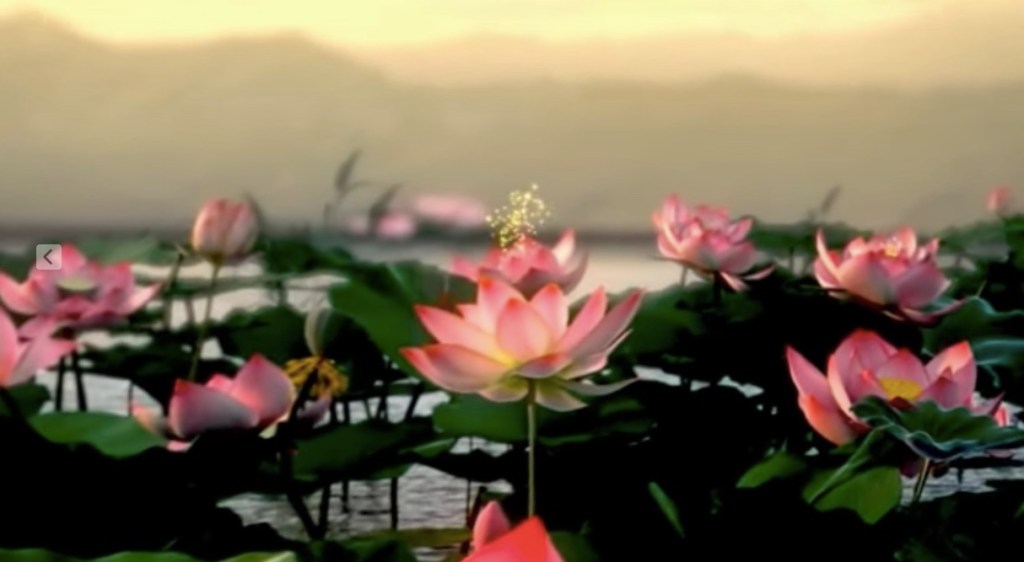
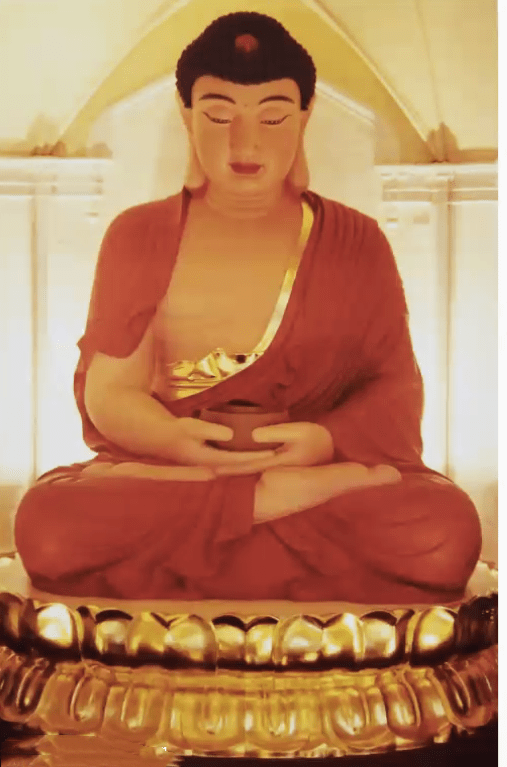
Solemn Amitabha Statue in Hua Zang Si Temple at San Francisco

Buddha Speaks of Amitabha

Once upon a time, it is said that the Buddha resided in Shravasti, within the Jeta Grove, situated in the garden of the Benefactor of Orphans and the Solitary. Accompanying him were a congregation of twelve hundred fifty great Bhiksus, all esteemed arhats whom the assembly recognized, including Elders Sariputra, Mahamaudgalyayana, Mahakasyapa, Hahakatyayana, Mahakaushtila, Revata, Suddhipanthaka, Nanda, Ananda, Rahula, Gavampati, Pindolabharadvaja, Kalodayin, Mahakaphina, Vaddujla, Aniruddha, and others. Additionally, numerous Bodhisattvas and celestial beings, including Ajita Bodhisattva, Gandhastin Bodhisattva, Nityodyukta Bodhisattva, and the chief of gods, Shakra, were present, along with countless beings from various heavens.

During that time, the Buddha addressed Elder Sariputra, saying, “Travel westward across hundreds of thousands of millions of Buddhalands, and you will reach a realm known as Ultimate Bliss. In this land, a Buddha named Amitabha currently imparts the teachings.”

“Sariputra, why is it called Ultimate Bliss? Because every being in this country is free from suffering and enjoys unbounded bliss, hence the name Ultimate Bliss.”

Furthermore, Sariputra, the land of Ultimate Bliss is enclosed by seven tiers of railing, crafted from the four treasures, thus earning its name. Pools of the seven jewels, filled with the eight waters of merit and virtue, grace this land. The pools boast pure bottoms covered in golden sand, with stairs of gold, silver, lapis lazuli, and crystal on each side. Raised pavilions, adorned with precious materials like gold, silver, lapis lazuli, crystal, mother-of-pearl, red pearls, and carnelian, grace the surroundings. Within these pools, lotuses with hues resembling carriage wheels bloom, emitting subtle, wonderfully fragrant, and pure scents.

“The realization of the land of Ultimate Bliss is thus adorned with merit,” Sariputra, the Buddha continued.

Moreover, in this Buddhaland, harmonious heavenly music perpetually resonates, and the ground is composed of yellow gold. During the six periods of day and night, a rain of mandarava flowers descends, and each morning, the inhabitants of this land offer myriad wonderful flowers to countless Buddhas in all directions. After their meals, they leisurely stroll through their homeland.

Sariputra, the land of Ultimate Bliss is abundantly adorned in this way.
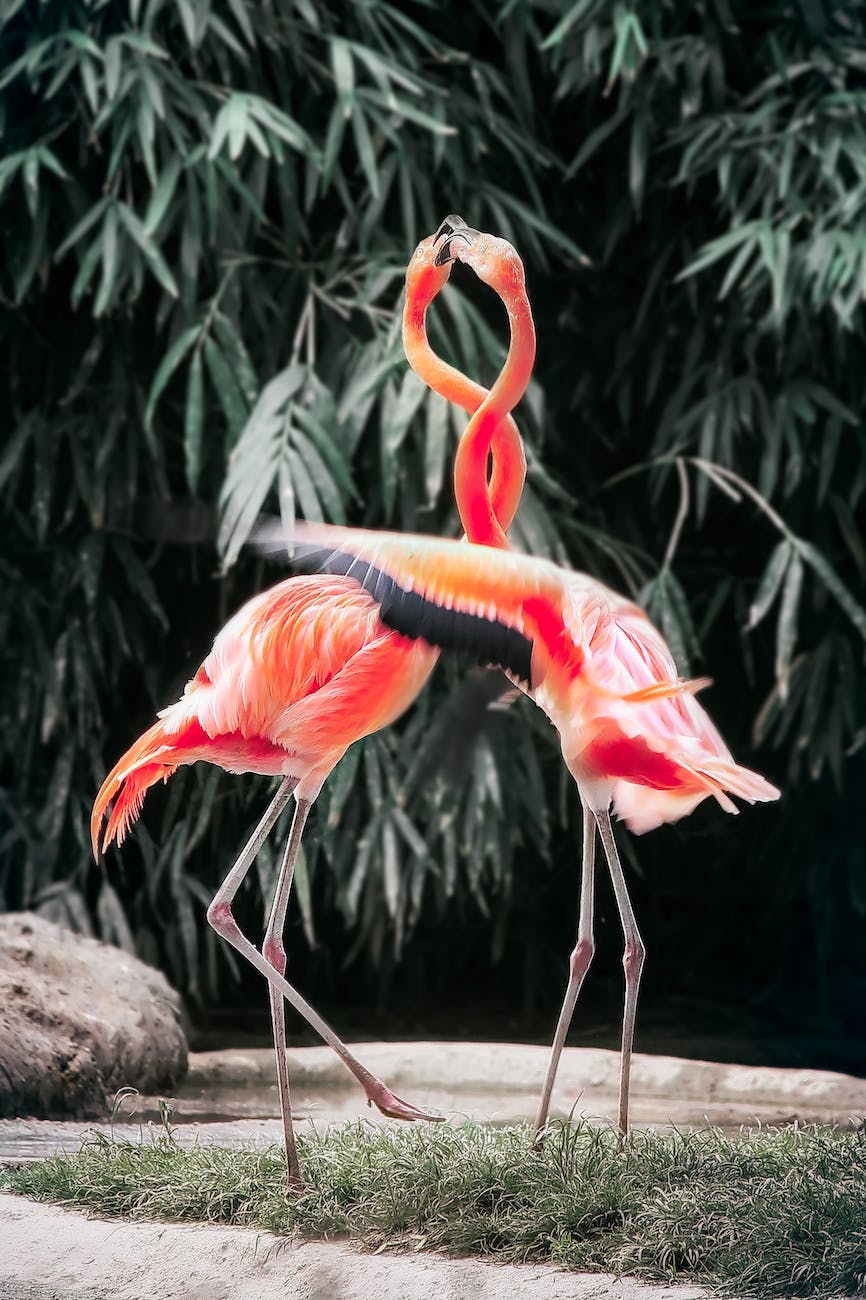
Furthermore, rare and exquisite varicolored birds, including white cranes, peacocks, parrots, egrets, kalavinkas, and two-headed birds, inhabit this land. In the six periods of the day and night, these flocks produce melodious and elegant sounds, proclaiming profound teachings such as the five roots, the five powers, the seven Bodhi shares, and the eight sagely way shares. When the inhabitants hear these sounds, they become mindful of the Buddha, the Dharma, and the Sangha.“Sariputra, do not assume these birds are karmic retribution. In this Buddhaland, there are no three evil ways of rebirth; in fact, not even the names of these ways exist. Amitabha Buddha, desiring to widely spread the Dharma sound, created this multitude of birds through transformation.”

The Buddha continued to describe the enchanting features of the land of Ultimate Bliss, its jeweled trees producing subtle and wonderful sounds when the soft wind blows. As these descriptions unfolded, Sariputra listened attentively, absorbing the profound beauty of this Buddhaland.

After detailing the splendors of the land, the Buddha turned to Sariputra and asked, “Why do you think this Buddha is called Amitabha?”

“The brilliance of Amitabha Buddha’s light is immeasurable, illuminating the lands of the ten directions without hindrance. He is called Amitabha for this reason. Furthermore, the lifespan of Amitabha Buddha and his people extends for countless kalpas, making him worthy of the name ‘Amitabha.’ Ten kalpas have passed since Amitabha attained Buddhahood.”

As the Buddha spoke, Sariputra gained deeper insights into the infinite virtues of Amitabha Buddha and the extraordinary qualities of the land of Ultimate Bliss.

The text continues to explore the presence and teachings of other Buddhas in different directions, emphasizing their encouragement for all living beings to believe, praise, and hold in reverence the inconceivable merit and virtue of the sutra.

Finally, the Buddha urged Sariputra and all present to have faith and make the vow to be born in Amitabha’s country, emphasizing the profound benefits and the irreversible attainment of anuttara-samyak-sambodhi for those who make this vow.

Upon concluding his teachings, the Buddha witnessed Sariputra, the bhiksus, gods, humans, and other celestial beings joyously receiving his words. The assembly, filled with reverence, bowed and withdrew, having absorbed the wisdom imparted by the Buddha.

Buddha Speaks of Amitabha

Link: https://peacelilysite.com/2023/12/06/buddha-speaks-of-amitabha/

#Amitabha

Source: wisdomtea.org/2023/11/30/buddha-speaks-of-amitabha/

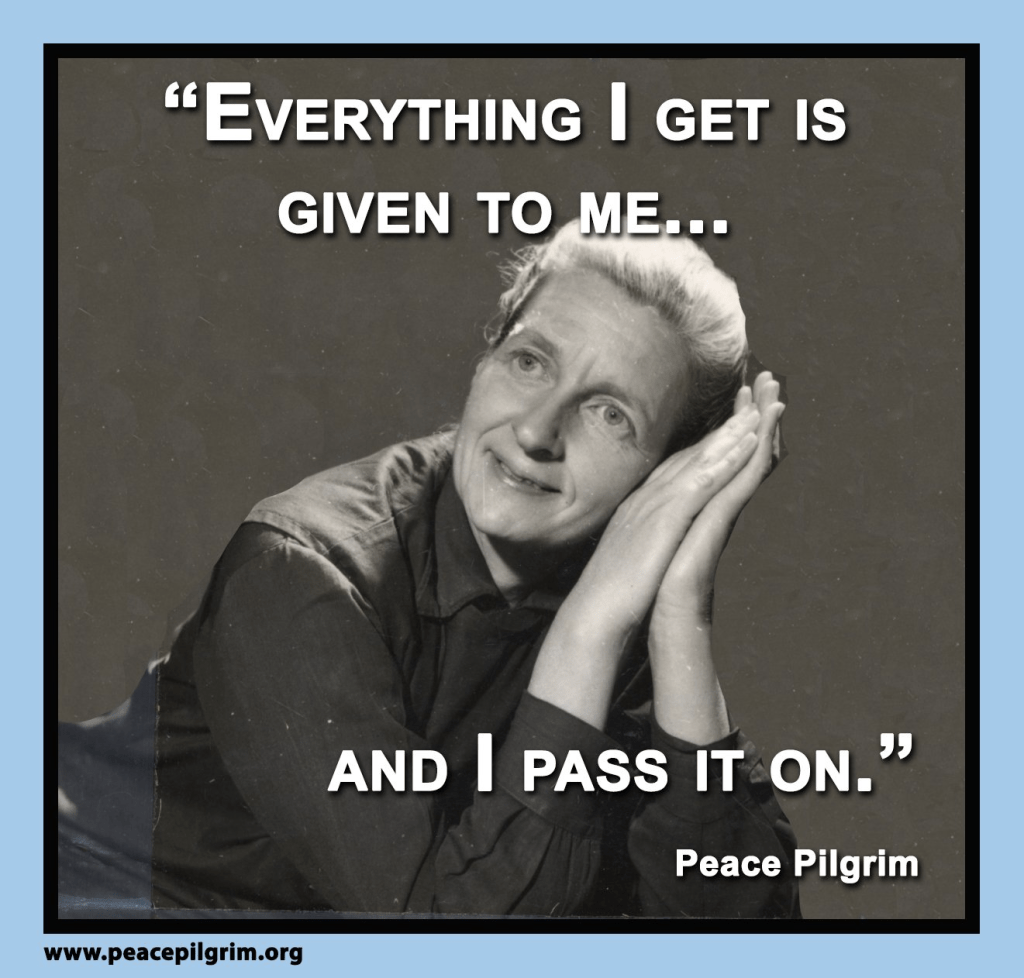
Embracing the Spirit of Giving: Wisdom from Peace Pilgrim

As we enter the holiday season, a time of reflection and celebration, the timeless wisdom of Peace Pilgrim offers profound insights into the true essence of life. “Now there is a living to give instead of to get,” she said, encouraging a shift from acquisition to sharing. Let’s delve into the transformative teachings of Peace Pilgrim, exploring how they can bring peace and fulfillment into our lives.

Peace Pilgrim’s philosophy centers on the joy of giving. Concentrating on the act of giving, she reveals that it becomes a reciprocal source of joy. Health, happiness, and inner peace flow abundantly when one gives selflessly. There’s a profound feeling of endless energy, a connection to the universal source that never seems to deplete.

A key theme in Peace Pilgrim’s teachings is taking control of one’s life. Contrasting the ego, driven by bodily desires and mental demands, with the higher nature governing body, mind, and emotions, she exemplifies the ability to command oneself. Through giving, she demonstrates the power to instruct the body to rest, the mind to focus, and the emotions to find stillness, even in challenging circumstances.

Quoting Thoreau, Peace Pilgrim introduces the concept of dancing to a different drummer—the higher nature instead of the lower. This alternative way of living is marked by aligning oneself with a deeper, more profound purpose. Choosing to follow the rhythm of the higher nature leads to a life driven by compassion, understanding, and a commitment to the well-being of others.

In her journey, Peace Pilgrim made crucial early discoveries. Initially, she found that making money was easy, but the meaninglessness of earning and spending frivolously became apparent. Out of a deep seeking for a meaningful life, she experienced a profound inner shift. Walking through the woods one night, she encountered a psychological hump—a point of no return. With complete willingness and no reservations, she dedicated her life to service.

As we navigate the holiday season, let’s carry the profound wisdom of Peace Pilgrim in our hearts. Embracing the spirit of giving not only enriches the lives of those around us but also brings a sense of fulfillment and purpose. Peace Pilgrim’s inner discovery serves as a poignant reminder that true abundance lies in the joy of giving, connecting us to an endless reservoir of universal energy.

Mildred Norman, later known as Peace Pilgrim, embarked on her peace pilgrimage in 1953, a journey that extended for decades. Her commitment to spreading the message of peace was unparalleled—she walked tirelessly, crisscrossing the United States six times. Remarkably, Peace Pilgrim covered over 25,000 miles during her pilgrimage, a feat she deemed too insignificant to keep precise count.

Her unconventional lifestyle reflected her profound dedication to her mission. Peace Pilgrim adhered to a minimalist philosophy, carrying neither money nor accepting any. She embraced a life of voluntary simplicity, often going without food until it was offered or found in the wild. Accommodations were simple and spontaneous, ranging from bus stations to cornfields when no one extended an invitation.

Peace Pilgrim’s journey became a testament to the transformative power of a singular commitment to a higher purpose. Her life exemplifies the possibility of living with purpose, prioritizing service over material pursuits, and finding fulfillment in the pursuit of peace. As we reflect on her remarkable life, we’re inspired to consider the ways we, too, can contribute to a more compassionate and harmonious world.

Embracing the Spirit of Giving: Wisdom from Peace Pilgrim

Link:https://peacelilysite.com/2023/11/22/embracing-the-spirit-of-giving-wisdom-from-peace-pilgrim/

#PeacePilgrim #Thankgiving #HolidaySeason #Giving #Peace #Love #Compassionate

The transformative story of Angulimala

A Tale of Compassion and Transformation

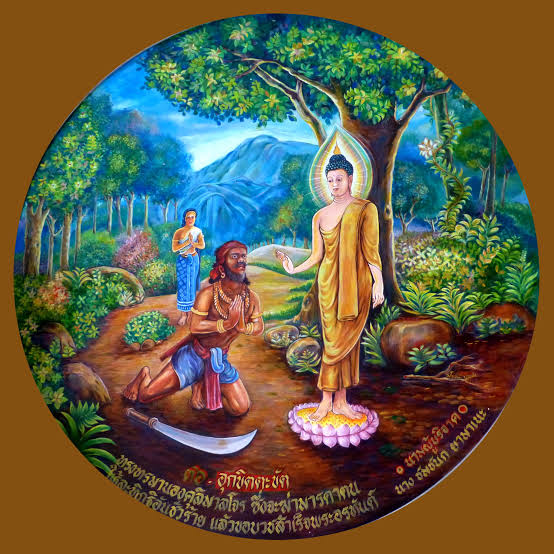
The Angulimala Sutta, a captivating narrative from Buddhist scriptures, recounts the remarkable transformation of a blood-thirsty murderer into a compassionate monk under the profound influence of the Buddha. Angulimala, notorious for his brutal killings and a garland of severed fingers, terrorized the realm of King Pasenadi. The tale unfolds during a time when the Buddha, with unwavering compassion, confronted the darkness that shrouded Angulimala’s soul.

Angulimala’s notoriety as a ruthless killer, leaving villages and towns in a state of fear, paints a grim picture of his violent nature. His garland of fingers serves as a gruesome testament to the lives he had taken, making him a symbol of terror and malevolence.

Undeterred by Angulimala’s fearsome reputation, the Buddha ventured into the region where the murderer roamed freely. Despite warnings from locals about the dangers posed by Angulimala, the Buddha calmly continued his journey, determined to confront the source of darkness.

As the Buddha walked towards Angulimala’s lair, the air thick with tension, he encountered the menacing killer. Rather than responding with fear, the Buddha skillfully engaged Angulimala in a dialogue that would alter the course of his life. The Buddha’s words, laden with wisdom and compassion, began to unravel the tightly woven fabric of Angulimala’s violent identity.

In a pivotal moment, as Angulimala sought to chase down the Buddha with murderous intent, the Buddha employed a feat of psychic power. Despite running at full speed, Angulimala found himself unable to catch up with the Buddha walking at a normal pace. This display of supernatural ability left Angulimala astonished and created a space for the transformative dialogue that followed.

Angulimala urgently called out, “Stop, contemplative! Stop!” The Buddha calmly replied, “I have stopped, Angulimala. You stop.”

Perplexed, Angulimala asked, “While walking, contemplative, you say, ‘I have stopped.’ But when I have stopped, you say I haven’t. I ask you the meaning of this: How have you stopped? How haven’t I?”

The Buddha responded, “I have stopped, Angulimala, once and for all, having cast off violence toward all living beings. You, though, are unrestrained toward beings. That’s how I’ve stopped and you haven’t.”

Baffled by the Buddha’s profound words, Angulimala sought clarity on the apparent contradiction. The Buddha’s response not only clarified the cessation of violence within his own heart but also illuminated the unrestrained nature of Angulimala’s actions. This insightful exchange marked the beginning of a transformative journey within Angulimala, planting the seeds of change in his consciousness.

With a heart now inclined towards virtue, Angulimala, in an impromptu moment, requested ordination from the Buddha. The Buddha, recognizing the sincerity of Angulimala’s transformation, granted his request, welcoming him into the community of monks adorned with saffron robes and shaven heads.

Even as Angulimala embraced the monastic life, local villagers, fearing his past atrocities, sought protection from King Pasenadi. The king, in response, assembled an army and approached the monastery. Despite the villagers’ pleas to “stamp him out,” the Buddha’s wisdom paved the way for an unexpected resolution.

When questioned by the Buddha about how he would treat Angulimala if he had truly renounced violence, King Pasenadi underwent a profound transformation. The Buddha’s teachings on discernment and compassion prompted the king to reconsider his stance. Witnessing Angulimala’s monkhood, the king shifted from disbelief to acceptance, vowing to support him on his path to redemption.

The Angulimala Sutta not only narrates the personal transformation of a notorious murderer but also highlights the transformative power of compassion and wisdom. The Buddha’s fearlessness, compassion, and skillful means shattered the shackles of violence that bound Angulimala. Moreover, the sutta portrays the ripple effect of transformation, as even King Pasenadi undergoes a change of heart. This timeless tale serves as an enduring testament to the potential for redemption, forgiveness, and the profound impact of the Buddha’s teachings on even the most deeply entrenched patterns of suffering.

The transformative story of Angulimala

Link:https://peacelilysite.com/2023/11/15/the-transformative-story-of-angulimala/

#AngulimalaSutta #ShakymuniBuddha #Transformation #Compassion #Wisdom #Monk

Source: https://blogs.icrc.org/religion-humanitarianprinciples/a-humanitarian-re-reading-of-the-angulimala-sutta/#:~:text=Moved%20by%20the%20Buddha’s%20words,saffron%20robes%20and%20shaven%20heads.

Global Buddhists Unite in Compassion: Commemorating the Buddha-Stipulated Day of Releasing Lives

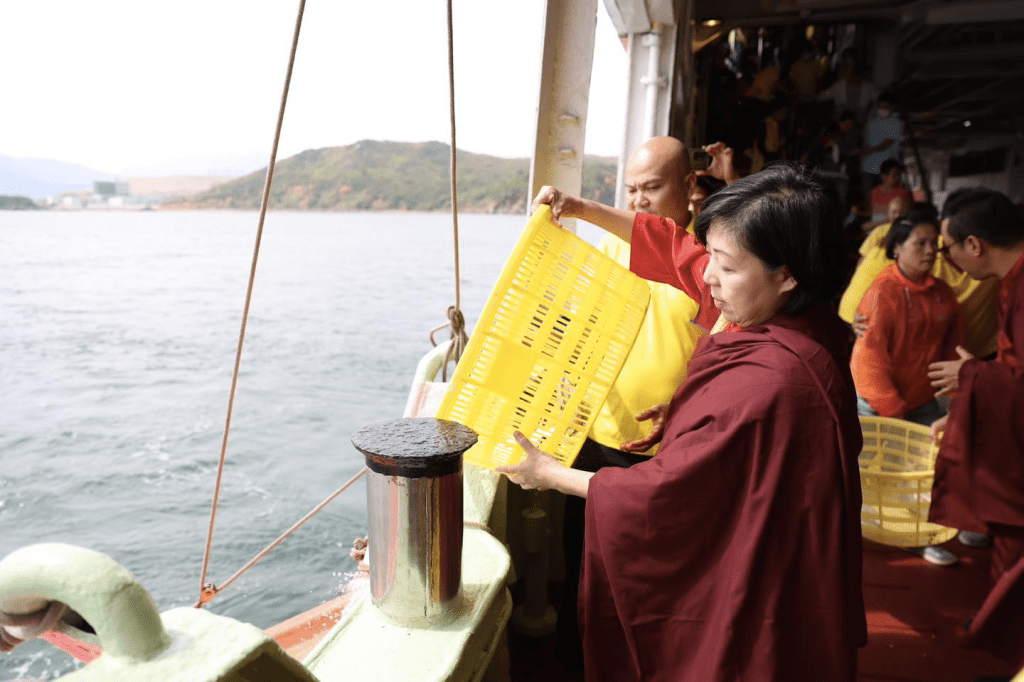
Buddhists worldwide converged on October 29th to observe the Buddha-Stipulated Day of Releasing Lives, an admirable day dedicated to compassion and liberation. Originating in 2009, this tradition finds its roots in the teachings of H.H. Dorje Chang Buddha III, who, after completing a monumental Buddhist activity, led His disciples in releasing captive lives and declared this day as a time to extend compassion to all beings. In 2023, the H.H. Dorje Chang Buddha III Culture and Art Museum and the World Buddhism Association Headquarters commemorated this occasion with life-releasing events in Marina Del Ray, California, and World’s Fair Marina, Flushing, New York.

The practice of releasing captive lives holds deep significance for Buddhists. H.H. Dorje Chang Buddha III once imparted in the Dharma of Cultivation, “All living beings in the six realms of reincarnation within the three spheres of the universe have been since beginningless time my fathers and mothers in the revolving cycle of reincarnation.” Furthermore, “The Brahma’s Net Sutra – The Book of Bodhisattva Precepts” explicitly teaches the importance of compassionately engaging in the practice of releasing captive animals into the wild and freeing living beings from suffering.

On October 28th, the Monastery of Hua Zang Si Temple in San Francisco, along with Buddhist disciples, organized a fish release event at the San Rafael Port, located at 110 Loch Lomond.

Hua Zang Si Abbess Ruzun Ruohui emphasized, “Our acts of compassion are not confined to specific days or places. Guided by the teachings of H.H. Dorje Chang Buddha III and Shakyamuni Buddha, we believe in intervening whenever and wherever beings face dire fear or calamity, offering them safety and liberation from suffering. As the saying puts it, ‘We hold dear the continuity of their lives and cannot bear to witness their untimely end.’ Our driving force is compassion and empathy, with a desire to bestow happiness and freedom upon all sentient beings, relieving them from the burdens of suffering.”

Buddhist disciples in Taiwan organized a fish release event at the ocean beach.

Buddhist disciples at PinDong Taiwan released crickets.

In 2023, nations worldwide continuously struggle with prolonged regional conflicts, ongoing wars, economic turmoil, and the devastating impacts of climate change, resulting in a profound loss of lives and widespread suffering. From storms, flooding, earthquake, to wildfires, 2023 has already been a record catastrophic year for weather and climate disasters globally. On this occasion of the Buddha-Stipulated Day of Releasing Lives, individual Buddhists, temples, and religious organizations from around the world have come together in unity to conduct life-releasing activities. Their shared aspiration is to dedicate all merits to the well-being of living beings. May adversity be vanquished, and may all living beings find prosperity and wisdom, leading to lives filled with goodness. May nations thrive and may peace reign supreme throughout the world.

Global Buddhists Unite in Compassion: Commemorating the Buddha-Stipulated Day of Releasing Lives

Link: https://peacelilysite.com/2023/11/10/global-buddhists-unite-in-compassion-commemorating-the-buddha-stipulated-day-of-releasing-lives/

#Buddha-StipulatedDayReleasingLives #DorjeChangBuddhaIII #HHDorjeChangBuddhaIII #HuaZangSi #ReleasingLives #FishReleasing #Compassion

Source: https://nyweekly.com/lifestyle/global-buddhists-unite-in-compassion-commemorating-the-buddha-stipulated-day-of-releasing-lives/

Embracing the Universe: Insights from Einstein and Buddha

Albert Einstein and Charlie Chaplin were two of the most iconic figures of the 20th century, known for entirely different reasons. A memorable exchange from early in their friendship perfectly and humorously illustrates these differences.

Einstein once expressed his admiration for Chaplin’s art, saying, “What I most admire about your art is its universality. You don’t say a word, yet the whole world understands you!”

Chaplin’s response, delivered with impeccable comedic timing, was, “True. But your glory is even greater! The whole world admires you, even though they don’t understand a word of what you say.”

I find myself in agreement with Chaplin. While I may not grasp the intricacies of Einstein’s scientific achievements, I admire him as a profound thinker who grappled with life’s deepest questions. His reflections on the universe and our place within it have been particularly inspiring to me since my youth.

Einstein’s curiosity and search for meaning are traits that many of us can relate to. He once expressed a desire to ask God about the origins of the universe, believing that such knowledge would lead to a deeper understanding of life’s purpose. He said, “I used to think that if I could ask God one question, it would be about how the universe began, because then all the rest would be just equations. But as I got older, I became less concerned with how the universe began. Instead, I would want to know why he started the universe. If I knew that, then I would know the purpose of my own life.”

Furthermore, Einstein pondered the nature of the universe and our perception of it, stating, “The most important decision we make is whether we believe we live in a friendly or hostile universe.” This quote underscores the power of our beliefs and attitudes in shaping our experiences and interactions with the world around us. A friendly universe is one where we see opportunities for growth and connection, while a hostile universe may lead to fear and isolation.

The Einstein quote that resonates with me the most is, “A human being is a part of the whole, called by us ‘Universe,’ a part limited in time and space. He experiences himself, his thoughts and feelings as something separated from the rest, a kind of optical delusion of his consciousness. This delusion is a kind of prison for us, restricting us to our personal desires and to affection for a few persons nearest to us. Our task must be to free ourselves from this prison by widening our circle of compassion to embrace all living creatures and the whole of nature in its beauty. Nobody is able to achieve this completely, but the striving for such achievement is in itself a part of the liberation and a foundation for inner security.” In this quote, Einstein alludes to the Buddhist concept of interconnectedness and the illusion of separateness. However, Einstein likely only grasped the theoretical concept and did not experience the oneness with the universe. The Buddha, on the other hand, has seen the truth, experienced the oneness, and achieved inner realization.

Over two thousand five hundred years ago, Shakyamuni crossed the Nairanjana River and sat under a Bodhi tree, where he was immersed in deep inner contemplation. At that time, he was tormented by worldly desires, hunger, craving for sleep, and fear and doubt. But he triumphed over these internal demons and continued his inner quest.

Then, like a limitless, penetrating beam of light, Shakyamuni experienced a moment of clarity in which he gained profound insight that life is eternal and one with the vast cosmos. He became a Buddha—a person awakened to the supreme truth of the Law of life.

The Buddha, Siddhartha Gautama, achieved enlightenment under the Bodhi tree, and the first words he spoke were: “How amazing, how amazing, all sentient beings possess the wisdom and virtue of the Tathagata. However, due to delusions and attachments, they cannot realize it. “

In the eyes of the Buddha, all sentient beings inherently possess the wisdom, the characteristics, and the blessings of the Tathagata within their minds that are troubled by afflictions, defilements, and the cycle of birth and death. Through this teaching, we know that Buddha-nature is inherently present in all sentient beings.

Einstein’s words resonate with the teachings of Buddha, who attained enlightenment and taught that all beings are interconnected. Buddha’s teachings emphasize compassion and understanding for all living beings, recognizing that we are all part of the same universe. Unlike Einstein, who believed that complete compassion was unattainable, Buddha demonstrated that it is possible to embrace all living beings and the universe in its entirety with love and kindness.

However, Buddhism is much deeper and vaster than just these concepts. All Buddhas possess three bodies and four wisdoms. The Mahāyāna theory of the three bodies—the dharma-body, the reward-body, and the response-body—is most common. The dharma body (法身) is considered to be the eternal, indestructible true principle, the Buddha’s original body. The response body (應身) is considered to be the Buddha’s manifest body, but in Mahāyāna Buddhism, it is regarded as the personification body, which manifests from the true principle according to the temperaments and abilities of sentient beings in order to save them.

The reward body (報身) is manifested as a combination of the other two and is therefore not simply the eternal true principle, nor simply an impermanent personality. Rather, it is an ideal body possessed by those who have awakened to the true principle based on meritorious practice. It is the living form of the eternal principle, possessing individuality. This is a general explanation, and there have been many interpretations of the Buddha-body theory in the history of Buddhism, among which there are significant differences. The three bodies are not separate entities but three integral aspects of a single Buddha.

The four wisdoms of Buddha are: Great Mirror Wisdom, which is still and void—motionless; Universal Wisdom, which is capable of facing mind-defilements without attaching to them through love or aversion; Wonderful Observing Wisdom, which has the ability to discriminate and discern the wide field of sensory impressions, while at the same time never experiencing unbridled and reactionary patterns of thought; and Perfecting Wisdom, which can direct all the sense faculties into observing phenomena without being constrained by dualism.

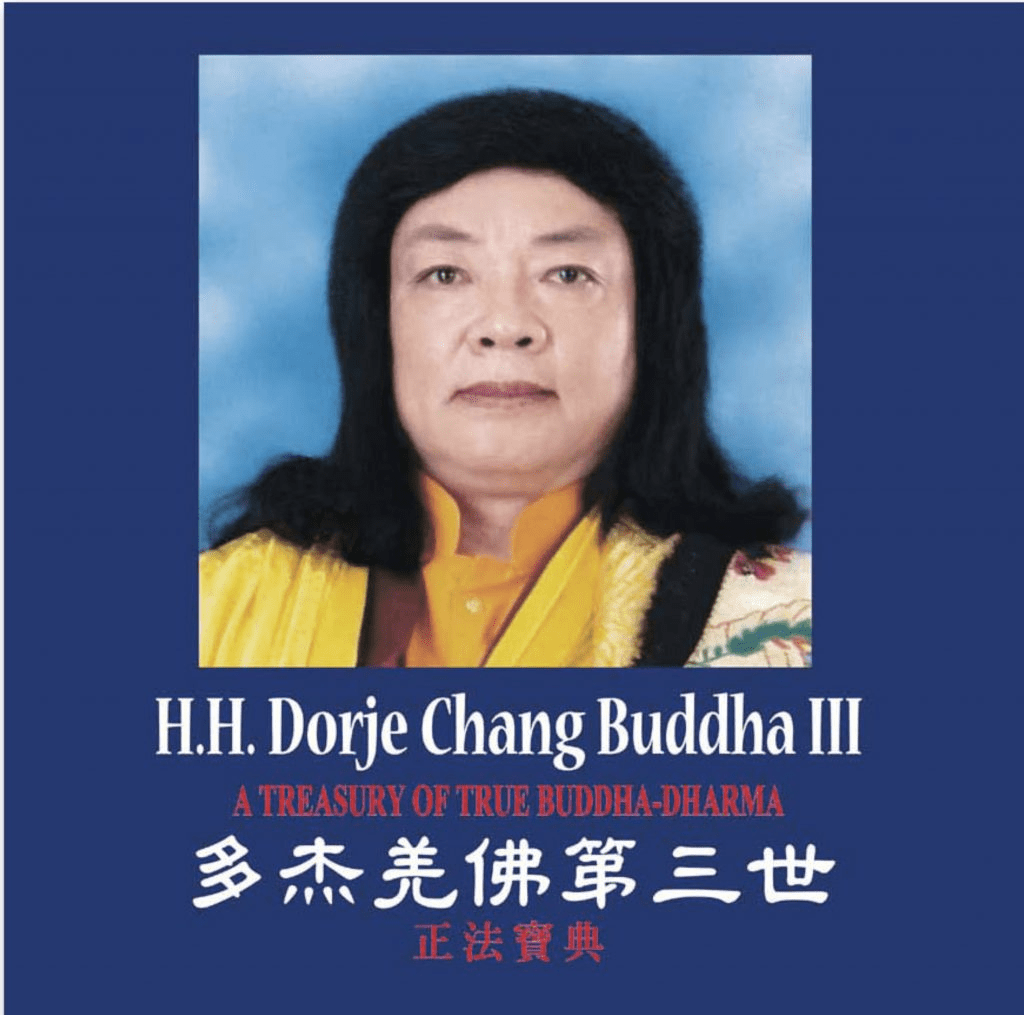
Buddha possesses vast knowledge, superb skills, magnificent supernormal power, and comprehensive wisdom of the universe. The treasure book, “H.H. Dorje Chang Buddha III,” stands as a testament to this statement. However, this book contains only a drop of water from the vast ocean of Buddha’s teachings and wisdom.

The video below showcases the boundless compassion and highlights the extraordinary accomplishments of H.H. Dorje Chang Buddha III. It was published by China Educational Channels TV and features interviews with Buddhist disciples from around the globe.

Discovering the Root of Buddhism, Propagating True Buddha Dharma(H.H. Dorje Chang Buddha III)

Embracing the Universe: Insights from Einstein and Buddha

Link: https://peacelilysite.com/2023/10/26/embracing-the-universe-insights-from-einstein-and-buddha/

#Buddha #Einstein #Buddhism #Buddhist #ShakymuniBuddha #DorjeChangBuddhaIII  #HHDorjeChangBuddhaIII   #Compassion #universe #Chaplin

Source: http://www.buddhism-dict.net/ddb/pcache/4eid(b4e09-8eab).html, https://unbornmind.com/2017/02/18/the-four-wisdoms/, https://www.worldtribune.org/2019/volume-3-chapter-three-the-buddha/, https://www.upworthy.com/albert-einstein-charlie-chaplin-friendship-joke

Do not lose Your good nature because of the Reactions of the outside world

I saw a story like this on the internet:

A Zen practitioner was meditating by the river when he heard struggling sounds. Upon opening his eyes, he saw a scorpion struggling in the water.

He reached out to lift it up, only to be stung by the scorpion’s raised stinger. He placed the scorpion on the bank and continued meditating.

After a while, he heard struggling sounds again. Opening his eyes, he saw the scorpion had fallen back into the water.

He rescued it again, and of course, was stung once more. He continued meditating.

After a while, he had the same unfortunate encounter.

A nearby fisherman said, “You’re so foolish, don’t you know that scorpions sting people?”

The Zen practitioner replied, “I know, I’ve been stung three times.”

The fisherman asked, “Then why do you still save it?”

The Zen practitioner said, “Stinging is its nature, compassion is mine. My nature will not change because of its nature.”

At that moment, he heard struggling sounds again. Looking down, it was the same scorpion.

He looked at his swollen hand, then at the struggling scorpion in the water, and without hesitation, reached out to it again.

This story beautifully illustrates the Buddhist principle of compassion and loving-kindness towards all living beings, regardless of their actions. It embodies the teachings of the Buddha, who emphasized the importance of cultivating a heart full of compassion.

The practice of compassion is central to the Buddhist path. In Mahayana Buddhism, the Bodhisattva ideal embodies the ultimate expression of compassion. A Bodhisattva is one who, motivated by great compassion, has generated bodhicitta, the spontaneous wish to attain Buddhahood for the benefit of all sentient beings.

Moreover, the story reminds us of the great sacrifices made by Siddhartha Gautama, who later became known as Shakyamuni Buddha. He renounced his life of luxury and privilege to seek the ultimate truth of life and the universe. His journey was fueled by the desire to find a way to liberate all beings from the cycle of birth and death, known as samsara.

However, after two and a half millennia, the profound teachings of Shakyamuni Buddha have been gradually forgotten. To revive and propagate the Dharma once more, the primordial Tathagata Buddha, Dorje Chang Buddha, incarnated as H.H. Dorje Chang Buddha III in our world.

H.H. Dorje Chang Buddha III has not only brought the highest form of Buddha Dharma to this world but also set a remarkable example for all disciples through his boundless compassion and humility.

In the past decade, H.H. Dorje Chang Buddha III has endured significant suffering due to long-term persecution for his religious activities. A member country of Interpol once requested that the organization issue a warrant for his arrest. This request was later voluntarily withdrawn by the member country after several years. Following a thorough investigation, in October of 2008, the 72nd session of the Commission for the Control of Interpol’s Files withdrew the arrest warrant and dismissed the entire case against H.H. Dorje Chang Buddha III. Interpol also issued a document stating unequivocally that the arrest warrant against H.H. Dorje Chang Buddha III has been canceled and all member countries have been informed of the cancellation.

Although H.H. Dorje Chang Buddha III received official notification of the withdrawal of the arrest warrant and the removal of the entire case, he has never publicly displayed such documents to prove his innocence. Despite enduring slander, H.H. Dorje Chang Buddha III chose not to disclose this irrefutable evidence. When the World Peace Prize Awarding Council inquired about this, he responded by explaining that his duty is to bear all of the karmic offenses committed by living beings and to bestow upon them all of the good karma and merit that he has cultivated. He expressed concern that if he were to prove his innocence using those documents, those who slandered him would be perceived as guilty. He questioned, “Who, then, will bear their karmic offenses?”

There have been many instances that highlight his holiness’s profound compassion. For example, some of his disciples once left and defamed him, but he still welcomed them back with open arms and treated them no differently than before.

H.H. Dorje Chang Buddha III often reminds his disciples that he harbors no enemies and that all sentient beings are his dearest relatives. He encourages everyone to reflect on their own actions and to strive to lead a life filled with kindness, patience, and understanding.

His Holiness Dorje Chang Buddha III embodies the essence of selflessness and serves as a moral beacon for all to follow. He has also demonstrated how peace can be achieved through determination, humility, and the perseverance to champion its cause even in the face of adversity.

Do not lose Your good nature because of the Reactions of the outside world

Link: https://peacelilysite.com/2023/10/19/do-not-lose-your-good-nature-because-of-the-reactions-of-the-outside-world/

#DorjeChangBuddhaIII #HHDorjeChangBuddhaIII #BuddhaDharma#Compassion

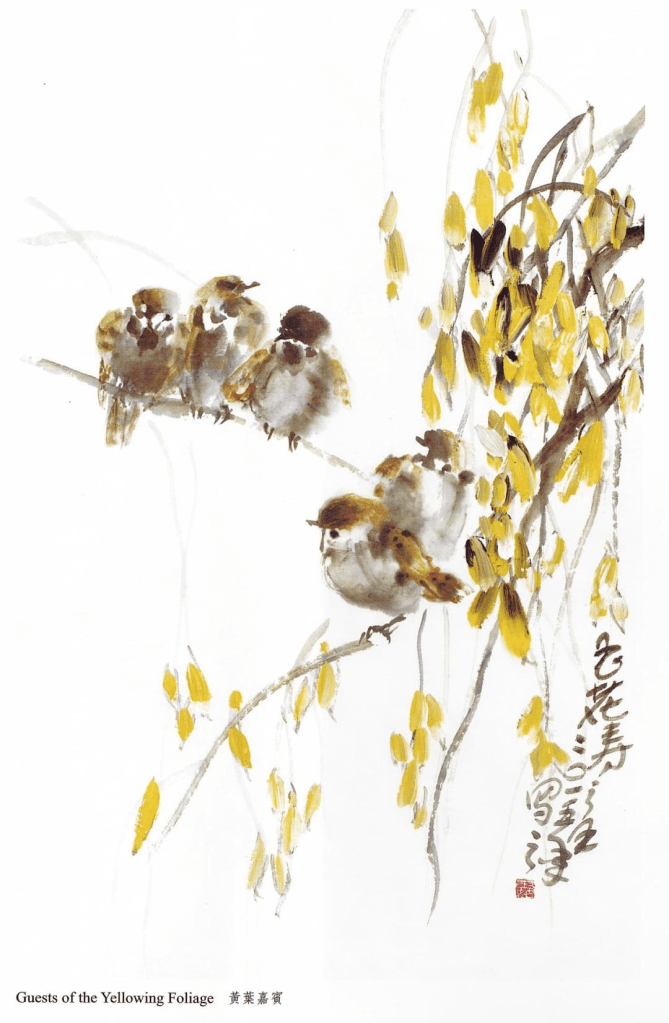
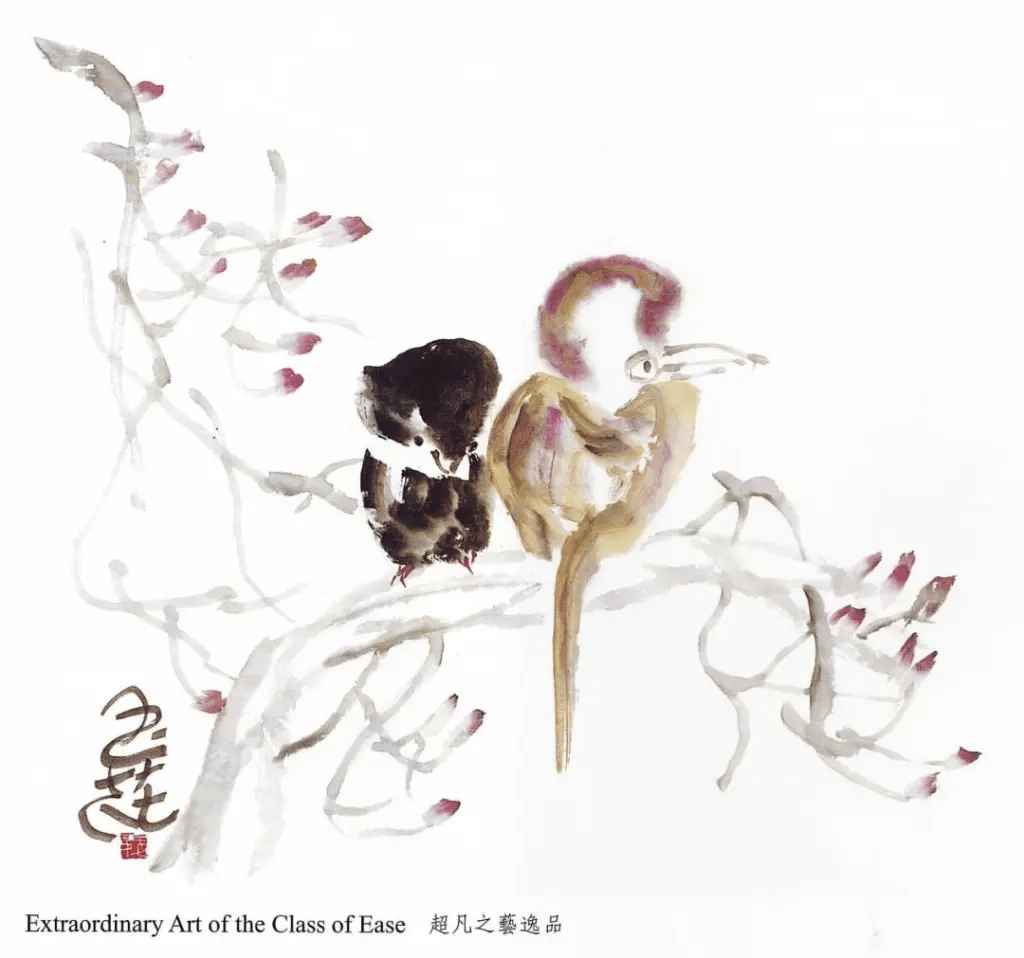
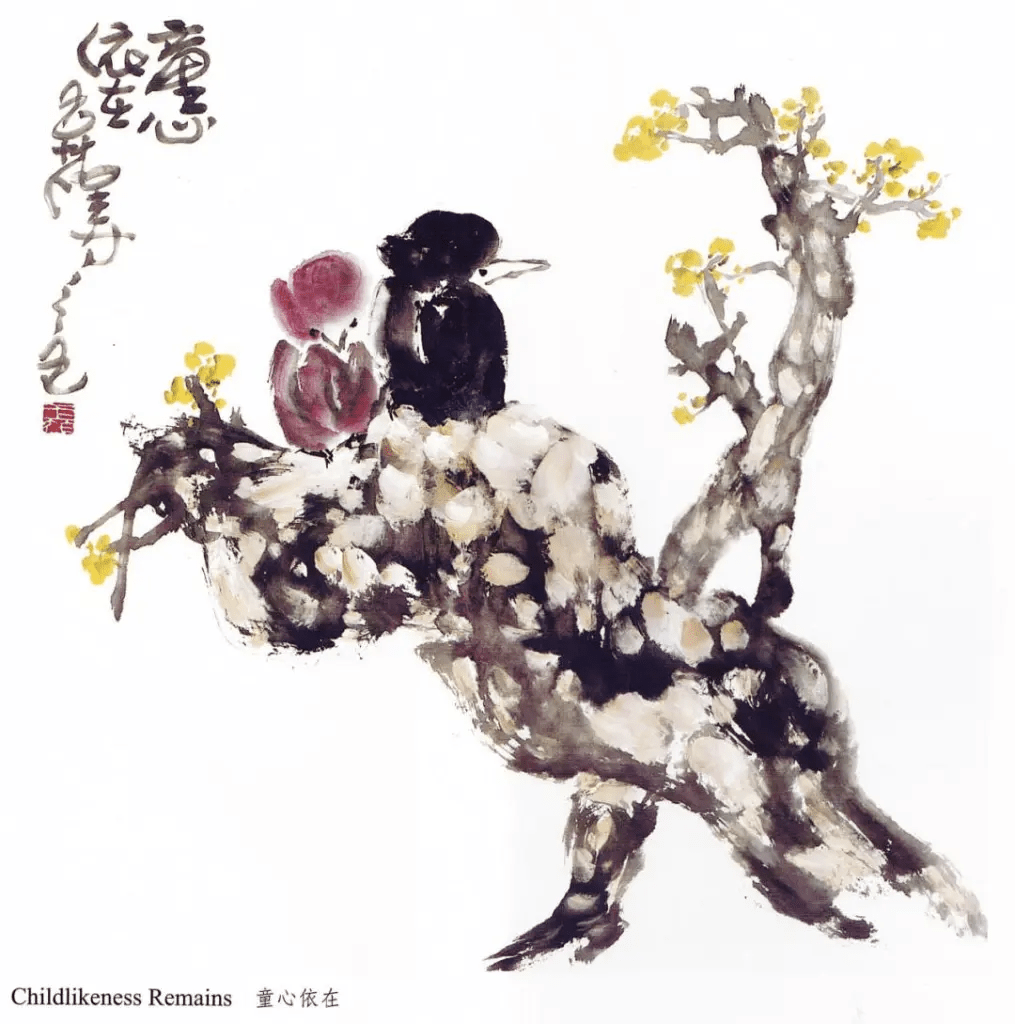
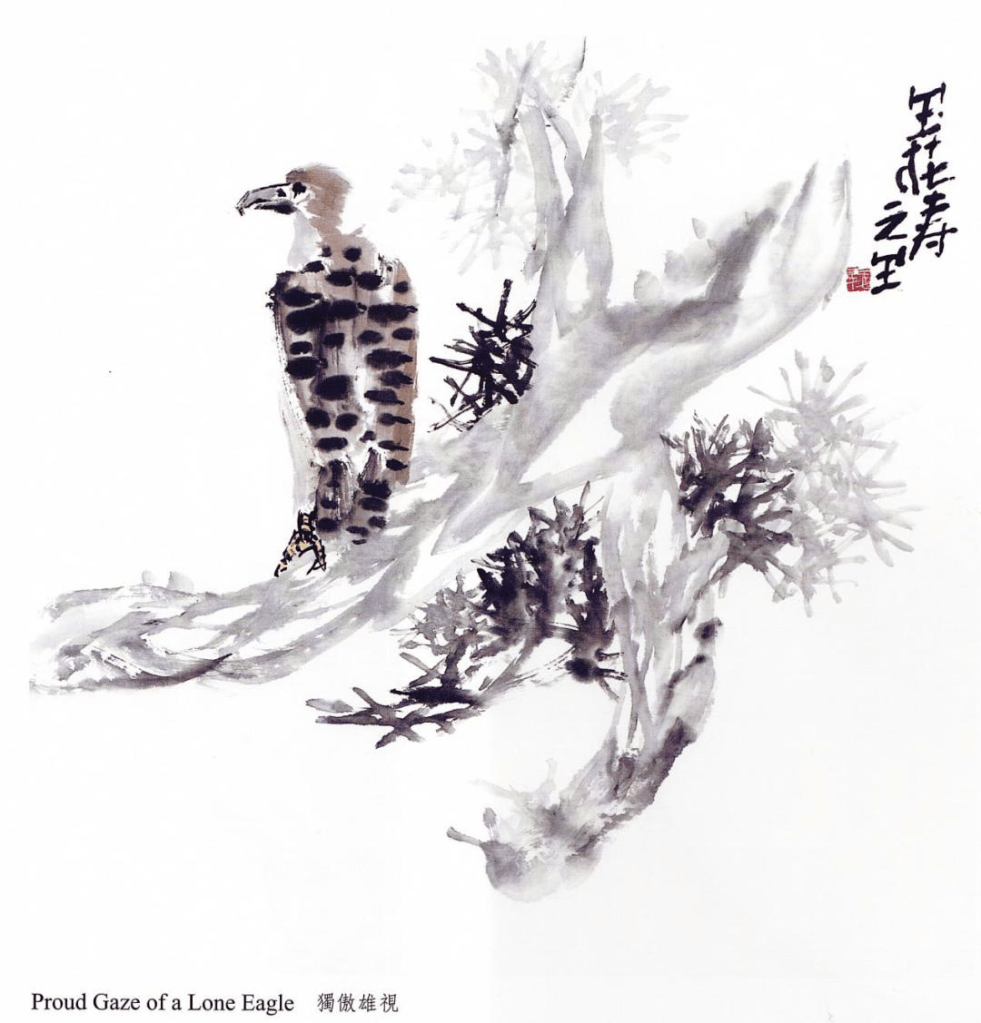
Yu Hua Shou Zhi Wang Flower and Bird Painting Album

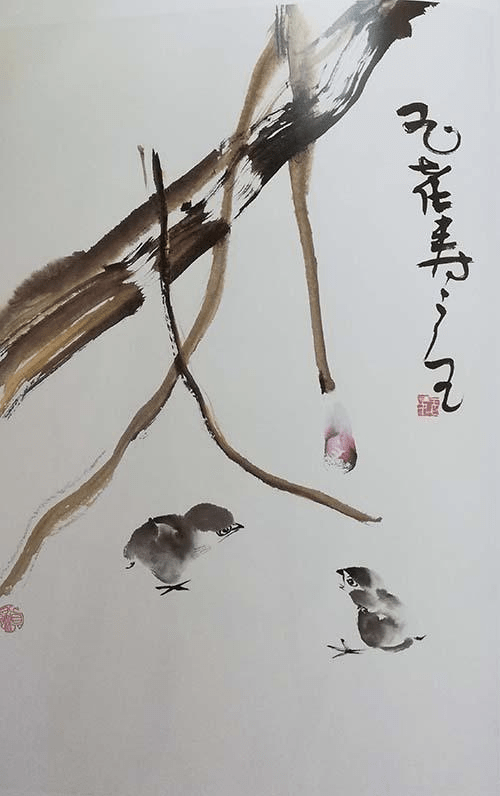
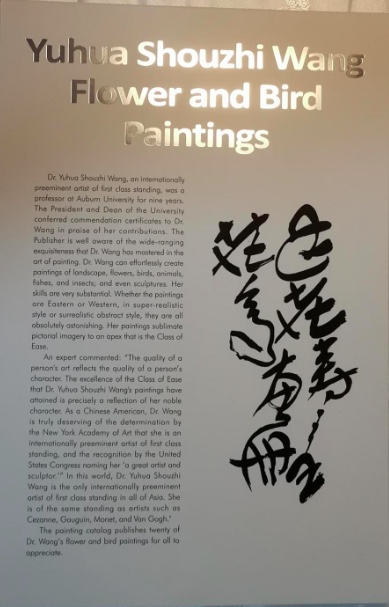
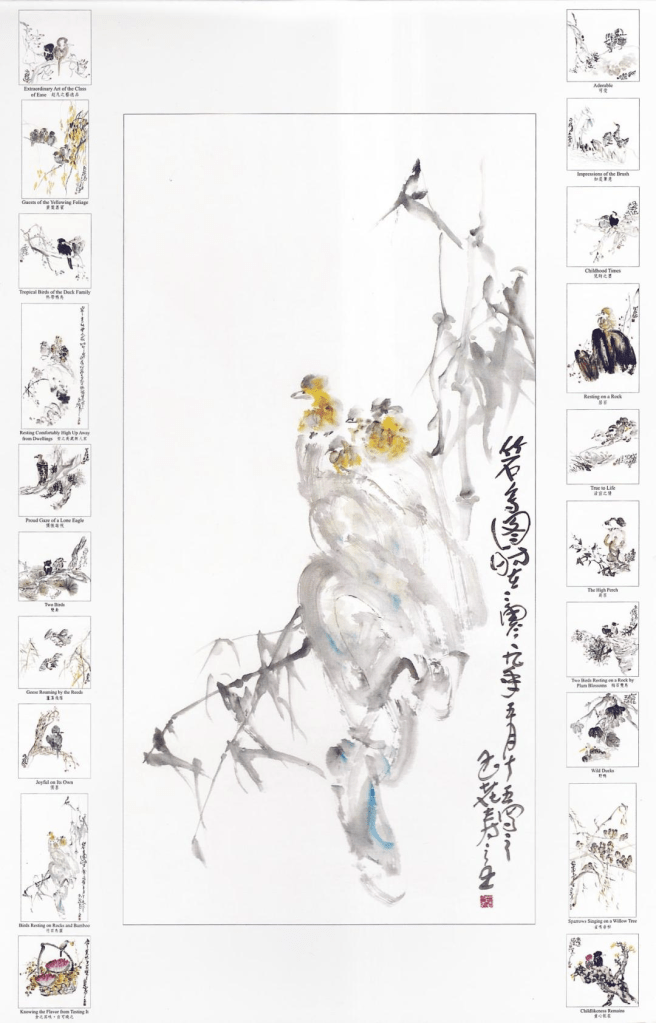
The beauty of art emanates from the soul, while the beauty of the soul reflects one’s internal cultivation. In Professor Yu Hua Shou Zhi Wang’s “Yu Hua Shou Zhi Wang Flower and Bird Painting Album,” we are presented with a delightful sense of freshness and warmth, coupled with a profound and uplifting force. Let’s savor the experience of “Yu Hua Shou Zhi Wang Flower and Bird Painting Album” together and witness the extraordinary talent and profound moral character of the artist!

Professor Yu Hua Shou Zhi Wang’s works are characterized by strong and powerful brushstrokes, showcasing a rich and diverse palette, and exuding a poetic and artistic charm. Each piece is infused with sunlight, radiating sincerity, simplicity, and a delightful sense of innocence and romance. As we immerse ourselves in Professor Yu Hua Shou Zhi Wang’s “Yu Hua Shou Zhi Wang Flower and Bird Painting Album,” we can deeply sense the artist’s love and compassion for animals. Each artwork invites us into a transcendent dialogue with a sage-like presence, revealing the captivating allure of art!

Professor Yu Hua Shou Zhi Wang is brimming with compassion and care for all living beings, be it humans or animals, even including honeybees that can sting. She treats each of them with equal and attentive concern.

A few years ago, bees would frequently visit Professor Yu Hua Shou Zhi Wang’s residence. The first time they built a hive at her home, they even stung someone. Some people suggested removing the beehive to prevent further harm, but Professor Yu Hua Shou Zhi Wang firmly disagreed. She felt deep empathy for the bees, as they had finally found a shelter from wind and rain. She made it clear that if they had to leave, the bees should not be harmed. In fact, she would rather move out herself than cause suffering to the bees. As a result, Professor Yu Hua Shou Zhi Wang and her family decided to move to her art studio to live.

Another incident involving Professor Wang showcases her compassionate nature when she saved a butterfly that had fallen into the water. Concerned about the butterfly’s well-being, she took it home and cared for it for a few days until it was fully recovered, and only then did she release it back into the wild.

The compassionate and kind professor frequently utilizes the money earned from selling her paintings to release captured living beings, such as birds, fish, and more. On numerous occasions, she has purchased large quantities of fish, sometimes weighing several cabins or even tens of tons, to set them free. There have been instances where she bought an entire boat-load of fish from a large fishing vessel, ensuring their liberation and return to their natural habitats.

I couldn’t help but ponder: When two conflicting interests clash, do we prioritize the welfare of others or our own interests first? It’s a challenging question, and not many people in this world can genuinely put the welfare of others before their own. However, Professor Yu Hua Shou Zhi Wang managed to do just that. She consistently places the well-being of all beings ahead of her own interests. Her unwavering compassion and greatness are truly remarkable and serve as an inspiring example for us all.

In daily life, Professor Yu Hua Shou Zhi Wang is very frugal. She is reluctant to waste even the water used for daily living tasks, such as washing rice or clothes. She often collects and saves the used water to water the garden or flush the toilet. Additionally, Professor Yu Hua Shou Zhi Wang frequently donates his own salary to help those in need. When asked by students, “You can earn a lot of money from selling just one of your artworks, so why are you still so frugal?” At moments like these, Professor Yu Hua Shou Zhi Wang advises the students to cherish their blessings and not to waste anything. He encourages them to use the money saved from being frugal to support more people who are facing difficulties.

The well-known saying, “Deeply hidden talent not easily revealed” aptly describes Dr. Yuhua Shouzhi Wang’s morality and inner refinement. The characteristics of an artist’s paintings essentially reflect the character of the painter. From the paintings above you can find humility, inner peace, harmony and noble morality of professor Wang.

Dr. Yuhua Shouzhi Wang is the Lifetime Honorary Chairwoman of the International Art Museum of America. The museum has a dedicated gallery exhibiting her artworks. 

Yu Hua Shou Zhi Wang Flower and Bird Painting Album

Link:https://peacelilysite.com/2023/08/04/yu-hua-shou-zhi-wang-flower-and-bird-painting-album/

#ProfessorYuHuaShouZhiWang#Art#Artist#ClassofEase#InternationalArtMuseumofAmerica #ArtistofFirstclassstanding#Inkpaintings#LotusPainters #FlowerBirds

The First Sign of Civilization: Healing Broken Bones

In our quest to understand the origins of civilization, we often associate it with technological advancements, architectural marvels, or complex social structures. However, renowned anthropologist Margaret Mead presented a profound perspective on the matter. When asked about the first sign of civilization in a culture, Mead shared an unexpected answer that challenged conventional wisdom. She believed that the first evidence of civilization lies not in material objects but in the compassionate act of healing a broken femur.

In the animal kingdom, the inability to run, defend oneself, or access vital resources due to a broken leg can be a death sentence. Animals, being driven primarily by instinct, have limited capacity for compassion and assistance. Consequently, when a leg is fractured, survival becomes nearly impossible. Mead’s contrasting observation highlights the crucial distinction between human and animal behavior.

When a human being sustains a broken femur, the healing process takes time, care, and attention. It is during this period that the true essence of civilization emerges. The act of staying with the injured person, binding their wound, providing support, and ensuring their safety exemplifies the depth of human compassion and the development of a nurturing society. It is in these moments that the potential for humanity’s collective progress is realized.

Photo by Sarwer e Kainat Welfare on Pexels.com

Empathy lies at the core of our ability to serve others. It is our capacity to understand and share the feelings of another that allows us to extend a helping hand. Mead’s observation reminds us of the inherent empathy ingrained within our species. When we see someone in pain, our natural inclination is to offer assistance, whether through physical aid, emotional support, or simply being present. It is through the act of serving others that we tap into our highest human potential.

Acts of service have far-reaching consequences beyond the immediate impact on the individual being helped. When we extend kindness and support to others, we inspire a chain reaction of goodwill and compassion. Small acts of service can ignite a spark within others, motivating them to pay it forward. This ripple effect spreads throughout communities, strengthening social bonds and fostering a collective spirit of unity and care.

In Mead’s view, civilization begins with the act of helping someone through difficulty. It is through these acts of kindness, empathy, and service that we create a society marked by progress and interconnectedness. Civilization is not solely defined by technological advancements or material achievements but rather by the quality of human relationships and our commitment to supporting one another.

Margaret Mead’s perspective on the first sign of civilization challenges conventional notions and invites us to reflect on our values as a society. True civilization is not measured solely by material progress, but by our capacity to care for and uplift one another. By embracing our innate empathy and engaging in acts of service, we foster a civilization rooted in compassion, unity, and collective growth. Let us remember that we are at our best when we serve others, and through our actions, we can shape a more civilized and harmonious world.

The First Sign of Civilization: Healing Broken Bones

Link: https://peacelilysite.com/2023/06/22/the-first-sign-of-civilization-healing-broken-bones/

#Anthropologist #MargaretMead #Civilization#Healing #BrokenBones #Empathy #Help#Compassion

The Power of Perspective: Creating Heaven or Hell through Human Interaction

A fresco showing heaven above, and hell below, Vank Cathedral, Iran
By 六龍幻天 – originally posted to Flickr as trip0808 1531, CC BY-SA 2.0, https://commons.wikimedia.org/w/index.php?curid=6773334

In the realms of the divine, where questions often outweigh answers, one man sought to understand the essence of Heaven and Hell. Little did he know that his journey would reveal a profound truth about human nature and the impact of our actions on others. As the man conversed with the Lord, he discovered that the stark difference between these two realms was not found in their physical setting, but rather in the attitudes and approach of the people present. This revelation serves as a powerful reminder that we possess the ability to shape the experiences of those around us, either by causing suffering or by bringing comfort and hope. In this blog post, we delve deeper into this thought-provoking tale and explore how we can create heaven or hell for one another in our own lives.

Parable of the Long Spoon

The man, driven by curiosity, approached the Lord and asked about the nature of Heaven and Hell. In response, the Lord led him to two seemingly identical rooms. In the first room, the man witnessed a distressing sight. A large round table occupied the center, with an enticing pot of stew resting upon it. The aroma of the stew tantalized the man’s senses, but his attention was soon drawn to the people surrounding the table. They appeared thin, sickly, and famished, holding spoons with long handles. Though they could dip their spoons into the pot and retrieve a mouthwatering spoonful, the length of the handles prevented them from nourishing themselves. The scene evoked immense suffering and misery within the man’s heart.

As the man recoiled from the harrowing sight, the Lord declared, “You have seen Hell.”

From internet by Kelly McCartney

Curiosity still burning within him, the man followed the Lord into the second room. To his surprise, he discovered an identical scene to the previous room. The same round table with the savory pot of stew occupied the center, and the people around it were equipped with the same long-handled spoons. However, in stark contrast to Hell, the people here were well nourished, plump, and filled with joy. Laughter and lively conversation filled the room.

Baffled and perplexed, the holy man expressed his confusion to the Lord. The Lord responded with a simple yet profound explanation: “It is simple. They have learned to feed each other, while the greedy only think of themselves.”

The Power of Perspective: The tale’s moral lies not in the physical attributes of the two rooms, but in the way individuals treat one another. It highlights the transformative impact of selflessness, compassion, and cooperation in creating a heavenly environment. Similarly, the absence of these qualities leads to a hellish existence characterized by suffering and isolation.

Photo from weixin.com

In our everyday lives, we are constantly presented with opportunities to shape the experiences of those around us. Our actions, however small, carry the potential to bring either happiness or sorrow. By choosing to treat others with kindness, empathy, and generosity, we create a ripple effect that can transform even the most challenging situations into moments of solace and hope.

Imagine a world where every interaction is infused with compassion and understanding. It is a world where we go beyond our self-centered desires and actively seek to alleviate the suffering of others. By recognizing the interconnectedness of our lives, we can foster a sense of unity and build a harmonious society.

Creating heaven on Earth begins with cultivating empathy and embracing a mindset that values the well-being of others. It involves reaching out to those in need, offering a helping hand, and truly listening to one another’s struggles. Small acts of kindness, whether it’s a smile, a supportive word, or a selfless gesture, can make a significant difference in someone’s life.

The Power of Perspective: Creating Heaven or Hell through Human Interaction

Link:https://peacelilysite.com/2023/05/18/the-power-of-perspective-creating-heaven-or-hell-through-human-interaction/

#ParableoftheLongSpoon#Heaven #Hell #Compassion#Empathy #Harmony#God

Facing the Truth: Life is Difficult

Facing the Truth: Life is Difficult

Recently, my two college-aged sons have been expressing that they find life to be difficult. In an effort to provide them with guidance and support, I have been offering them spiritual advice and emotional support. While searching for resources to assist in this endeavor, I stumbled upon the profound and enlightening book, The Road Less Traveled, by Scott Peck. The insights and philosophy presented within the book have been incredibly inspiring and beneficial in helping me to support my sons in their journey.

The Road Less Traveled is a self-help book by American psychiatrist and author Scott Peck, first published in 1978. The book has had a significant impact, selling millions of copies and remaining on the New York Times bestseller list for more than ten years. One of the main themes of the book is the concept of the four disciplines: psychiatry, psychology, religion, and philosophy. Each discipline offers unique perspectives on how to navigate the challenges of life and achieve personal growth.

The book’s central message is that life is difficult, but that this difficulty can be transcended by understanding and accepting it. Peck argues that discipline is the basic tool we need to solve life’s problems, and that with enough discipline we can solve all problems. Additionally, the book explores themes of love, relationships, parenting, and self-discovery, as well as teaching about distinguishing dependency from love and how to become one’s true self.

Life is a series of problems. It is something that we all must face and deal with on a daily basis. Some of these problems may be small and easily solved, while others may be more complex and difficult to overcome. The question we must ask ourselves is: do we want to moan about these problems or do we want to solve them?

As adults, we have the power to choose how we react to life’s problems. We can choose to bemoan our difficulties and wallow in our troubles, or we can choose to take action and find solutions. The latter approach is far more productive and will ultimately lead to greater satisfaction and fulfillment in life.

In addition to making this choice for ourselves, it is also important to teach our children to solve problems in a similar manner. As parents, we have a responsibility to guide and teach our children, helping them to develop the skills and mindset needed to overcome the challenges that life will inevitably present to them.

One of the most important tools we have for solving life’s problems is discipline. Without discipline, we will not be able to effectively tackle the issues that we face. With only some discipline, we may be able to solve only some problems, but with total discipline, we can solve all problems. Discipline is the key to success in any endeavor. It allows us to focus our minds and efforts, to set goals and make plans, and to persist in the face of adversity.

It is important to note that problems do not go away on their own. They must be worked through and dealt with, otherwise they will remain forever, acting as a barrier to the growth and development of the spirit. It is essential that we learn to face and overcome problems, rather than avoiding or ignoring them.

One way to do this is by learning to Delay Gratification. By scheduling the pain and pleasure of life in a way that we deal with pain first and get it over with, it allows us to enhance the pleasure we gain from it. This is the only decent way to live. With discipline, we can solve most of the problems, and delay gratification is a process that can help us to get through the most difficult moments.

Peck also emphasizes the importance of Love and Community in personal growth. He argues that true love is not just an emotional state, but also an action, and that it requires a commitment to growth and self-discipline. He also stresses the importance of community, stating that “the love of community is the only true love.”

I have also found out in Buddhism, love has a deeper meaning that goes beyond romantic or familial feelings. It encompasses compassion and the belief in treating all beings as if they were our own relatives or parents. In What is Cultivation by H.H. Dorje Chang Buddha III, says: “Loving-kindness: At all times, through the actions of my three karmas, I am loving and kind toward all living beings, who have been my parents. I wish them a long life without illness, good fortune, good luck, and a happy life. ” This means that at all times, through all our actions, thoughts, and words, we should strive to be loving and kind towards all living beings, recognizing that they have been our parents in past lives. This belief is expressed through the wish for all beings to have a long life free from illness, good fortune, good luck, and happiness. This unconditional love can have a positive impact on individuals who are facing challenges and difficulties in their lives.

Everyone must face and deal with the challenges and difficulties in life. Moaning about them or solving them, it’s a choice we make, and the latter can lead to greater satisfaction and fulfillment in life. Teaching our children to solve problems in a similar manner and helping them to develop the discipline and tools needed, that could be in religions or philosophy or psychology, to succeed in life is an essential responsibility of parenthood.

Facing the Truth: Life is Difficult

Link: http://What is Cultivation by H.H.Dorje Chang Buddha III

#TheRoadLessTraveled#ScottPeck#Discipline#Love#Compassion#Philosophy#DelayGratification#Religions#Phsycology#Truth#Discipline#WhatisCultivation #H.H.DorjeChangBuddhaIII