The Art of Graceful Living: Lessons from Yang Jiang on Simplicity and Inner Peace

Yang Jiang, my favorite contemporary female writer, lived a life intertwined with the turbulence of her times, yet she remained as pure and free as a cloud in the sky. Her works not only reveal the beauty of literature but also inspire us on how to maintain inner peace and composure amidst the chaos of the world.

Yang Jiang’s translation of the poem, “I compete with no one, and I disdain competing with anyone; I warm my hands by the fire of life, and when it dims, I am ready to go,” reflects her entire life. In her quiet dignity and grace, she transformed the hardships of life into something serene and beautiful, never letting bitterness take root.

Her unassuming nature is perhaps her most remarkable quality. While many chase after fame and recognition, Yang Jiang focused purely on her love for knowledge. Her reading, writing, and translation work were not for the sake of recognition, but for the joy of learning. In her essay “The Invisibility Cloak,” she explains that humility is the best protection in a complicated world. By not seeking heights, one doesn’t fear falling; by avoiding ambition, one retains a sense of innocence and inner calm. Yang Jiang embodied this wisdom throughout her life. During the Cultural Revolution, when she was assigned the humbling task of cleaning toilets, she used the opportunity to find freedom in adversity, relishing the quiet moments to read and reflect.

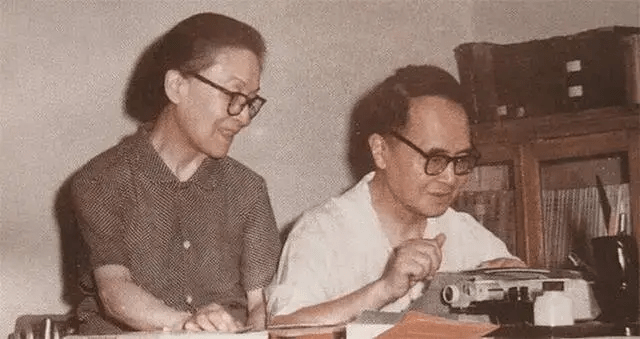
Yang Jiang and her husband Qian ZhongShu

“Simple living and a noble soul are the highest realms of life,” she once said. This was not just a belief but a guiding principle for Yang Jiang. She valued her time deeply, distancing herself from superficial socializing and instead focusing on self-cultivation. Together with her husband, Qian Zhongshu, they shared a simple, intellectual life, each respecting the other’s need for space and quiet to work. After her husband’s passing, Yang Jiang withdrew even further from the world, spending her days immersed in writing and editing.

At the age of 92, Yang Jiang published her essay collection We Three, which received widespread acclaim. Even at the age of 103, she was still active in compiling and publishing The Complete Works of Yang Jiang, a reflection of her lifelong dedication to literature.

It was her ability to remove herself from the distractions of life that allowed her to create works of such lasting value.

Her translation of the eight-volume Don Quixote, once the best-selling Chinese version, drew criticism at one point as a “negative example.” Many writers rushed to her defense, but Yang Jiang responded with characteristic humility: “I sincerely declare that I am a humble translator. I have revised my translation over and over, and still feel it’s not good enough. I hope the experts will offer their guidance.” Her modesty and openness to improvement reflect the calm confidence she carried throughout her life.

In her book Walking on the Edge of Life, she wrote, “We once yearned for the waves of fate, only to realize in the end that the most beautiful scenery in life is the inner calm and composure.” This sentence captures the essence of her wisdom. She knew that, amid the noise and complexity of the outside world, it is the peace we cultivate within that is the most precious.

Yang Jiang rarely wore makeup, preferring to show her natural face to the world. This was not just about simplicity in appearance but about a deeper confidence and acceptance of her true self. She believed that external beauty was far less important than the richness of one’s inner life. As she wisely said, “A woman’s greatest strength is not how beautifully she dresses, but the ability to make herself happy no matter what happens.”

Through her life, Yang Jiang has shown us that even in the face of life’s greatest challenges, it is possible to maintain elegance and beauty by nurturing simplicity and inner richness. Her wisdom and grace continue to inspire us to live with quiet strength, away from the distractions of the world, focused on what truly matters.

Link: https://peacelilysite.com/2024/10/03/the-art-of-graceful-living-lessons-from-yang-jiang-on-simplicity-and-inner-peace/

#YangJiang #QianZhongShu #WeThree #WalkingontheEdgeofLife #InnerPeace #Wisdom #Simplicity

The Wisdom of Humility: A Tale of Zuo Zongtang

Zuo Zongtang, a prominent official of the late Qing dynasty, was renowned not only for his military prowess but also for his skill in the game of Go. His expertise was so exceptional that none of his subordinates could match him.

One day, while traveling incognito, Zuo Zongtang stumbled upon a thatched cottage with a plaque reading “The Best Go Player in the World.” Skeptical, he decided to challenge the owner to a series of games. To his surprise, he won all three matches. With a smile, Zuo Zongtang remarked, “You can take down that plaque now!” Satisfied, he continued on his journey.

However, after a successful military campaign, Zuo Zongtang returned to the same area. Curious to see if the plaque had been removed, he visited the cottage once more. To his astonishment, the plaque was still there. Determined to test his luck again, he challenged the owner to another three games—and this time, he lost all three. Perplexed, he asked the owner how this was possible.

The owner explained, “The last time you visited, you were on a mission to lead troops into battle. I didn’t want to affect your spirit negatively. But now that you’ve returned victorious, I felt free to play at my best.”

This story highlights a profound lesson: True mastery often involves knowing when to yield. A master may win, but true greatness lies in the ability to be gracious. Similarly, wisdom involves understanding the feelings of others and knowing when to let go of one’s own ambitions.

Life often mirrors this dynamic. While the clever may fixate on gains and losses, the truly wise are those who bravely release their attachments. Wisdom is not merely about cleverness but about humility and compassion.

In Buddhism, true wisdom arises from great compassion. When one transcends self-interest and embraces deep compassion, the door to true wisdom opens. H.H. Dorje Chang Buddha III emphasizes in his teachings that genuine cultivation involves prioritizing the well-being of others. In his Dharma discourses, His Holiness has repeatedly highlighted the importance of:

“Establishing great compassion as your foundation. Avoid all evil deeds. Commit to all that is good. Set aside personal interests to benefit others. Patiently endure humiliation and adversity. Practice humility. Purify your mind. When encountering beings, regardless of their condition—be they handicapped, deficient, sick, or healthy—treat them all as family. Understand that all phenomena are governed by causality.”

The Buddha’s life exemplified this principle perfectly. He never sought to be revered from a lofty pedestal but instead viewed himself as a humble servant to all beings. Every action he took was dedicated to promoting peace, liberation, and happiness for all.

As a true Buddha living in the world at this time, H.H. Dorje Chang Buddha III has never been concerned about damaging His own honor, status, or image, for He has effaced Himself in order to benefit living beings by saying that He is an ordinary person like everyone else. In reality, the facts prove that in the few-thousand-year history of Buddhism, H.H. Dorje Chang Buddha III is truly one who has actually manifested the pinnacle of attainment in both Exoteric and Esoteric Buddhism and perfection in the Five Vidyas! His Holiness the Buddha is also the only one in the history of Buddhism who has made it His practice to benefit and serve living beings without accepting any offerings.

Link: https://peacelilysite.com/2024/08/09/the-wisdom-of-humility-a-tale-of-zuo-zongtang/

Source: https://www.sohu.com/a/113788534_456094

Discovering Meaning in Adversity: Lessons from Viktor Frankl’s ‘Man’s Search for Meaning’

In his profound book “Man’s Search for Meaning,” psychologist Viktor Frankl imparts crucial lessons on finding meaning in our lives. The book is divided into two parts: the first half comprises the author’s semi-autobiographical narrative of life in a concentration camp, retaining insights and thoughts from the perspective of a refugee. Frankl, with the keen observational eye of a psychologist, categorizes the camp’s inhabitants into two main groups. Those who survived were invariably those who found meaning in life and clung to a shred of hope to keep moving forward, although many of them did not persevere until the end. Those who deemed life meaningless, lost the will to live, and had no hope, inevitably perished.

The second half delves into the fundamental concepts of logotherapy from a psychological perspective. Observations from the refugee camp are documented and internalized into the author’s own “logotherapy,” aiding patients—or ordinary people like us—in finding meaning in life and living their unique existence. The author advocates against determinism, emphasizing the importance of individual choice over environmental determinism.

Frankl, a Jewish psychiatrist imprisoned in the Auschwitz concentration camp, experienced a tumultuous journey of emotions. Before Christmas in 1944, rumors spread in Auschwitz that the war would end and everyone would be released, yet after Christmas passed without the anticipated victory, hopelessness descended, resulting in the death of 80% of the camp’s inhabitants—not from hunger and cold, but from the loss of hope. Frankl survived because two things mattered to him: his family, especially his love for his wife, which provided him with immense motivation during times of suffering, and his manuscript, his work on the psychological “logotherapy” he aimed to complete. These two things were bigger than himself, sustaining him through the ordeal.

This book stands out among numerous works because it encompasses both the author’s personal harrowing experiences and the detached observations of a scientist. From the outset, the author states his reluctance to write a mere chronicle of the concentration camp but rather aims to answer one question: “What psychological journey does an ordinary prisoner go through each day in the camp?” His observations focus on the silent, anonymous inmates’ reactions to their environment, including his own.

What fascinates me most is the author’s earnest yet transcendent perspective. Grounded in his own inner being, he strives for honesty without self-pity or complaint, maintaining a clinical detachment that rises above the harsh realities of the time. This writing style and attitude reveal both his resilient spirit and remarkable clarity of mind, as well as his profound understanding of his inhuman conditions, rendering emotional catharsis unnecessary.

At times, he detaches himself from his immediate surroundings, engaging in imaginary dialogues with his beloved wife, allowing love to fill his heart. The ability to detach oneself from reality using imagination is a unique human skill that aids survival in extreme adversity.

His theory posits that the search for meaning in life is the fundamental driving force of human existence. This meaning is unique and individual, requiring realization and practice by each person; only through this realization can one’s will to meaning be fulfilled. The aim of “logotherapy” is to aid individuals in uncovering the meaning in their lives. This meaning varies for each person and changes at different life stages, necessitating personal exploration. Once discovered, it provides hope for easing the neuroses arising from a lack of meaning in life. Meaning in life is concrete and tangible. For instance, a mother may find meaning in living for her children. I wholeheartedly concur with the author’s view that the meaning of life is not fixed. The sustenance it provides varies at different ages and stages of life. For instance, there was an elderly man who had been depressed for two years after losing his wife, seeking assistance from Frankl. When asked what his wife would do if he had passed away before her, the man responded that she would not be able to bear such pain. Frankl then remarked, “So, she left first. You can bear the pain for her to rest in peace. Isn’t that good?” The man felt relieved upon hearing this. He found the meaning of his life at that time.

According to author, there are three paths to finding meaning in life: 1. Creativity and work; 2. Recognizing values (such as love); 3. Suffering. Frankl firmly believes that everyone can find meaning in life, whether through creativity and work, experiencing something or loving someone, or, in extreme circumstances, when all joy is stripped away, unavoidable suffering itself becomes the meaning of life. From his experiences in the concentration camp, he realized the third path.

In extreme adverse conditions, when a person is reduced to nothing but their body and mind, they still retain the freedom to choose their attitude towards their environment. They can either actively and arduously utilize every condition to survive or succumb to the desire to die, yielding to fate. The choice of attitude is the only and complete dignity and meaning. And humans can choose to say “yes” to life.

Therefore, Frankl is a pessimistic optimist. He acknowledges that life itself is inherently meaningless, yet he is willing to inspire humanity to find meaning for themselves. His mission in existential psychiatry is to help patients find their own meaning in life through various methods. In contrast to psychoanalysis, which views humans as passive products of their environment, Frankl places human subjective will in a more significant position.

I cannot disagree with Frankl’s viewpoint. From my own half-century of life experience, I also believe that the attitude we adopt towards our environment, whether favorable or adverse, ultimately determines the trajectory of our lives. This is what I mean by “character determines destiny.” There are times of despair, hopelessness, and pessimism, of course, and there is no need to feel ashamed. We should learn to pull ourselves out of negative emotions and sincerely believe that “tomorrow will be better.” And indeed, tomorrow often turns out fine.

Nine powerful quotes from the book Man’s Search for Meaning

  1. Choose hope. We cannot always change our circumstances but we always have a choice about our attitude in any given situation. As Viktor Frankl writes, “When we are no longer able to change a situation, we are challenged to change ourselves.”*
  2. Know your why. Ask yourself: What am I living for? Every single day, we should ask ourselves why we are getting up and why we are here at all “Those who have a ‘why’ can bear with almost any ‘how’.”
  3. Learn how to cry. Tears are not a sign of weakness; they emanate from a soul that is not afraid to break: “But there was no need to be ashamed of tears, for tears bore witness that a man had the greatest courage, the courage to suffer.”
  4. Don’t just be part of the herd. The world is upside down; sometimes doing what everyone else is doing is what is insane. “An abnormal reaction to an abnormal situation is normal.”
  5. Live meaningfully. We create meaning by answering the questions life asks from us. “Ultimately, man should not ask what the meaning of his life is, but rather must recognize that it is he who is asked. In a word, each man is questioned by life and he can only answer to life by answering for his own life. It did not really matter what we expected of life, but rather what life expected of us.”
  6. Fill your day doing acts of kindness. There is purpose in kindness; there is meaning in the hundreds of small acts of giving that we have the opportunity to grasp each day. “We who lived in concentration camps can remember the men who walked through the huts comforting others, giving away their last piece of bread. They offer sufficient proof that everything can be taken from man but one thing: the last of the human freedoms-to choose one’s own way.”
  7. Move beyond yourself. We find true meaning when we transcend our own needs and limits. “The more one forgets himself – by giving himself to a cause to serve or another person to love – the more human he is and the more he actualizes himself.”
  8. Feel the pain of others. Suffering hurts no matter how irrelevant or ordinary it may seem to others. Be attuned to others’ grief even if doesn’t seem like a tragedy in the overall scheme of life. “Thus suffering completely fills the human soul and conscious mind, no matter whether the suffering is great or little. Therefore, the ‘size’ of human suffering is absolutely relative.”
  9. We can change even when life is hard. We can create meaningful lives full of depth and love and purpose. “Man does not simply exist but always decides what his existence will be, what he will become the next moment. By the same token, every human being has the freedom to change at any instant.”

Link:https://peacelilysite.com/2024/05/10/discovering-meaning-in-adversity-lessons-from-viktor-frankls-mans-search-for-meaning/

Source: https://aish.com/viktor-frankl-on-mans-search-for-meaning/?utm_source=googlegrants&utm_medium=cpc&utm_campaign=19561819333&utm_term=&gad_source=1&gclid=Cj0KCQjwxeyxBhC7ARIsAC7dS39s79sG7BUeoDswcsOBoRwlH6T6GmrNQQI4sy3uRqgCvyLnNNoEQooaAo9EEALw_wcB, https://book.douban.com/subject/5330333/reviews

The World Without Complaint: A Journey to Positivity and Gratitude

In a world often overshadowed by negativity, encountering a book that challenges us to break free from the habit of complaining is like a breath of fresh air. “The World Without Complaint” by Well Bowen offers an insightful perspective on the harmful effects of constant complaints and provides practical strategies for fostering a mindset of gratitude and positivity.

We read because we crave insight, resonance, guidance, and growth. Have you ever found yourself caught in a cycle of complaints about the world, life, family, friends, or even strangers? Today, let’s explore some notes from “The World Without Complaint.” This bestselling book has reached readers in 80 countries, urging us to consider how a single book and a simple wristband can transform us from habitual complainers into ambassadors of positivity.


The Marvel of the Wristband
Have you ever participated in a lunchtime gripe session with colleagues or friends, only to find that venting seems to worsen your stress? It’s as if complaining adds fuel to the fire of our worries. The truth is, many of us are oblivious to our own negative attitudes and behaviors. While others may perceive the negativity in our speech, we often fail to recognize it ourselves. But can we change? Absolutely! By wearing the No Complaining wristband and committing to a 21-day challenge, we can become more aware of our complaints, their frequency, and ultimately, how to stop them.

The Secret to a Dream Life
The tool: The No Complaining wristband (or any accessory that reminds you to stay positive, like a fitness tracker). The secret: Consistency. As you practice the 21-day challenge and swap the wristband between your hands, you’ll start paying closer attention to your words and actions. This seemingly insignificant wristband becomes a beacon, helping you identify and release negative emotions you may not have been aware of before.

How to Use the Wristband

  • Wear the wristband on one wrist to start your 21-day journey.
  • When you catch yourself complaining, criticizing, gossiping, or being sarcastic, switch the wristband to the other hand and start over. Each time you switch, you reset your 21-day journey.
  • Keep going.

The Key to Success

  • Move the wristband with each complaint.
  • Keep track of your progress.
  • Focus on your own wristband; don’t worry about others’.
  • Don’t outsmart yourself.

Unconscious Incompetence
Complaining not only distracts us from our true desires but can also harm our health and relationships. Changing just one percent of the world’s population can create a ripple effect of positivity that uplifts everyone. Complaints never attract what we desire; instead, they reinforce what we don’t want. Our thoughts shape our lives, so let’s be fully present, steadfast, and strive to be better versions of ourselves.

Conscious Competence

  • Smile, breathe, take it slow. Our words have power. Changing what we say can change our lives.
  • Criticism and sarcasm are rarely productive. Focus on constructive feedback and encouragement.
  • Plant seeds of positivity in your interactions. Inspire others by embodying the change you wish to see.
  • Transform your mindset from one of complaint to one of gratitude. Every moment is an opportunity to create the life you desire.

Unconscious Competence

  • Transform your tools and methods into personal logic and theory.
  • The best time to plant a tree was ten years ago. The second-best time is now. Believe in your ability to change, and the solutions to all your problems will follow.

Complaining is more than just a fleeting expression of dissatisfaction; it’s a habit that can poison our minds and relationships. Continuously focusing on what’s wrong or lacking in our lives not only perpetuates a cycle of negativity but also reinforces feelings of helplessness and victimhood. Complaining can strain our relationships, as constant negativity can push others away and create a toxic environment.

Moreover, the energy we invest in complaining could be better utilized to find solutions to our problems or to appreciate the blessings we already have. Dwelling on complaints keeps us stuck in a state of discontentment, hindering personal growth and preventing us from fully embracing life’s joys.

Training Yourself to Avoid Complaints
Breaking the habit of complaining requires conscious effort and dedication. Bowen’s book offers practical techniques and exercises to help readers rewire their brains and cultivate a more positive outlook. From mindfulness practices to gratitude journaling, the book provides actionable steps to shift our focus from complaints to appreciation.

One effective strategy is to practice mindfulness and become more aware of our thoughts and emotions. By recognizing the patterns of negativity that lead to complaints, we can interrupt the cycle and choose a more constructive response. Additionally, cultivating a habit of gratitude can help us reframe our perspective and find joy in even the smallest blessings.

The Benefits of Embracing Positivity
Choosing not to complain has numerous benefits that extend beyond our personal well-being. By adopting a positive mindset, we become more resilient in the face of challenges and better equipped to navigate life’s ups and downs. Our relationships thrive in an environment of positivity, fostering deeper connections and mutual support.

Furthermore, a world without complaints has the potential to spark positive change on a larger scale. Imagine if just one percent of the population committed to refraining from complaints— the ripple effects would be profound. Communities would be filled with kindness and compassion, and collective efforts toward solving problems would be more effective and harmonious.

Link:https://peacelilysite.com/2024/03/15/the-world-without-complaint-a-journey-to-positivity-and-gratitude/

Unlocking Life’s Wisdom: Lessons from Benjamin Franklin

In the intricate tapestry of life, the tragedy often unfolds in the untimely aging of our bodies and the delayed acquisition of wisdom. The relentless pace of time is keenly felt as we advance in age, and it appears to quicken its stride. Acknowledging the finite and precious nature of life, the imperative emerges to use time judiciously, ensuring it doesn’t slip away in vain. Wisdom, a product of experience, demands the investment of time to mature.

Many traverse their youthful years without a profound understanding of life or the ability to make sound decisions. These capabilities tend to evolve slowly, sculpted by the crucible of life and work experiences. Regrettably, just as individuals amass the wisdom to navigate life effectively, the opportune moments for significant changes might have already slipped through their grasp.

To avert the arrival of wisdom too late, one must treasure time, actively seek learning and growth opportunities, and expedite wisdom acquisition through continuous learning, reflection, and introspection. Making sagacious choices early in life becomes a shield against future regrets.

The aforementioned philosophy mirrors Franklin D. Roosevelt’s contemplation and insight into life, urging individuals to proactively plan and reflect on their lives from a young age. Striving for the wisdom that typically takes years to acquire allows for the optimal utilization of limited time, resulting in a more fulfilling and meaningful life.

Persuasion: Appealing to Interests Over Reason

In the realm of persuasion, appealing to interests often outshines the use of reason alone. The driving force behind human behavior lies in the pursuit of benefits and the avoidance of harm. To sway others convincingly, it is crucial to showcase the tangible or intangible benefits they stand to gain by adopting a suggestion. This pragmatic approach surpasses relying solely on logic and rational arguments.

Rooted in fundamental psychological principles of human decision-making, individuals tend to weigh their interests and benefits when making choices. Clearly illustrating how adopting a suggestion directly or indirectly benefits them—such as saving time, reducing costs, improving health, or increasing happiness—makes the suggestion more likely to be accepted.

While rational thinking plays a pivotal role in decision-making, emotions profoundly influence human choices. Emphasizing how a suggestion meets others’ needs, desires, or alleviates their pain can evoke emotions and enhance the persuasiveness of the argument.

The call to appeal to interests doesn’t negate the importance of logic and reason in persuasion. Rather, it recognizes that addressing individuals’ interests alongside rational thinking fosters emotional resonance, increasing the likelihood of persuasive success.

Combining the demonstration of benefits with sound reasoning can comprehensively influence the audience’s decision-making process. Yet, the essence lies in the reminder that, in persuading others, emphasis should be placed on making them see the direct benefits of following the advice. Such appeals are more attractive and compelling, urging action.

Words of Wisdom: Thoughtful Speech and Lifelong Learning

“Fool’s hearts are in their mouths; wise men’s mouths are in their hearts.” This timeless advice urges against reckless or thoughtless speech, stemming from the eagerness to express ideas without due consideration. A wise person contemplates before speaking, filtering thoughts and emotions before choosing words. This not only avoids misunderstandings and conflicts but also reflects maturity and wisdom.

Thinking more and speaking less is the mantra. Caution with words prevents reckless speech. Investing in knowledge, unlike wealth, provides lasting returns. Allocating resources to personal growth and wisdom yields valuable returns. While wealth can be stolen or lost, knowledge gained through learning becomes an everlasting asset, guiding individuals to make wise decisions and achieve success.

Investing time, money, and energy in education and learning ensures acquired knowledge becomes an intrinsic part of oneself—a secure and irrevocable asset. Returns from self-improvement far exceed material wealth accumulation.

Stages of Life: Wisdom’s Evolution

At twenty, willpower dominates; at thirty, wit takes control; at forty, judgment prevails. Different life stages exhibit distinct psychological and competency characteristics. The twenties are often driven by willpower, with decisions based on impulses and passion. By thirty, adaptability and mechanisms take precedence, with accumulated experience guiding creative problem-solving. Wit becomes crucial for survival and success. By forty, decisions are grounded in mature judgment, informed by rich experiences.

Judgment becomes the key ability for this age group—guiding individuals to make rational and long-term decisions in complex environments. Mental development undergoes changes with age, and active learning and adaptation should be encouraged at every stage. Utilizing each period’s characteristics to achieve personal potential and goals is the key.

Continuous Growth: The Lifelong Pursuit

In the journey of life, successful individuals strive for daily self-improvement. Failures, on the other hand, repeat the same patterns daily. The distinction between success and failure lies in continuous self-improvement versus stagnation.

Some individuals stagnate in the early stages of life, and while physically alive, they lack true meaning and vitality. The essence of life isn’t solely in its length but in its depth and quality. Lifelong learning, continuous self-improvement, and exploration are crucial to maintaining vitality and meaning. Regardless of life stage, the pursuit of growth and change is paramount, avoiding premature spiritual death and infusing life with vibrancy and progress.

Positive Communication: The Power of Praise

“I won’t say anything negative about anyone; I’ll only speak positively about everyone I know.” Focusing on people’s strengths rather than weaknesses builds and maintains good relationships. Choosing to selectively share opinions about others, even if aware of their shortcomings, promotes a positive atmosphere.

This practice avoids hurting others’ self-esteem, reduces conflicts, and fosters a positive environment. Commending others’ strengths and achievements makes them feel respected and recognized, enhancing relationships and intimacy. Praise motivates individuals, opens their hearts, and fosters a positive and constructive attitude in interpersonal relationships.

By concentrating on others’ strengths and offering sincere praise, a harmonious social environment is cultivated, and deeper connections are formed. This approach applies not only to personal relationships but also to interactions in the workplace and public life.

Thoughtful Debate: Constructive Communication

Debating and refuting in interpersonal communication can have potential negative impacts, particularly when this behavior becomes habitual. Even if one proves their point in an argument, victories may lack substantive value, potentially sacrificing relationships. People value being respected and understood more than being persuaded or defeated.

Adopting an open and constructive attitude in communication, listening, respecting others’ viewpoints, and seeking understanding fosters healthy relationships. This approach prioritizes effective communication over the pursuit of victory in every argument.

Practical Wisdom: Testing Thoughts Through Action

Thoughts lead to actions, and actions have consequences. The true test of thoughts lies in observing the effects of the behavior they guide. Judging the value of a thought is most effectively done by observing the practical effects of the behavior it influences. Actions guided by positive thoughts, leading to personal growth and societal improvement, are considered valuable and correct.

The effectiveness of thoughts and beliefs is best evaluated by their application in real life, focusing on outcomes rather than theoretical consistency. A results-oriented approach encourages critical thinking based on actual consequences, promoting self-awareness and a practical mindset.

Navigating Contradictions: Empathy and Self-Reflection

In a world where fools and cowards coexist, Franklin’s observation highlights the contradiction in human behavior. People often find enough courage and wisdom to endure others’ misfortunes and mind others’ business. This contradiction emphasizes the need for self-improvement rather than excessive intervention in others’ lives.

“Love thy neighbor, but do not tear down your fence” underscores the importance of maintaining good social relations while respecting personal boundaries and privacy. Balancing relationships while preserving personal independence and dignity fosters both community welfare and personal growth.

Overcoming Poverty: The Power of Mindset

“Poverty itself is not frightening; what is truly frightening is the mindset that believes one is destined to be poor or bound to die poor.” The real danger lies in negative thought patterns perceiving oneself as inevitably poor. Poverty is a changeable condition, and individuals can improve their situations through effort, education, and innovation.

Rejecting the acceptance of poverty as an unchangeable fate and believing in the ability to alter life circumstances fosters optimism. Maintaining a positive mindset provides the motivation to seek change, find opportunities, and achieve personal growth and success.

Benjamin Franklin’s Timeless Wisdom

Franklin’s thoughts and quotes encompass various facets of life, offering lessons in personal growth, interpersonal relationships, professional ethics, and social responsibility. His profound insights and pragmatic philosophy remain relevant, providing guidance on how to balance personal development with social responsibility, navigate complex relationships, and approach life’s challenges with a positive attitude.

As we absorb Franklin’s wisdom, we gain not only a deeper understanding of human nature and social phenomena but also a blueprint for a more fulfilling and meaningful life. Franklin’s legacy endures as a beacon of practical wisdom, encouraging us to embrace continuous learning, cultivate positive relationships, and face life’s journey with resilience and optimism.

Link:https://peacelilysite.com/2024/03/07/unlocking-lifes-wisdom-lessons-from-benjamin-franklin/

Ullambana Sutra

Ullambana Sutra

Once upon a time, it is said that the Buddha resided in Shravasti, specifically in the Garden of the Benefactor of Orphans and the Solitary.

Mahamaudgalyayana, having recently attained the six penetrations, felt a deep desire to repay the kindness of his parents for raising him. Utilizing his divine vision, he surveyed the world and discovered that his departed mother was reborn among the hungry ghosts, emaciated and without sustenance.

Touched by compassion and sadness, Mahamaudgalyayana filled a bowl with food and approached his mother to provide nourishment. However, as she attempted to consume the food, it inexplicably transformed into burning coals, rendering it inedible.

In anguish, Mahamaudgalyayana hurried back to the Buddha to recount this sorrowful experience.

The Buddha, acknowledging the profound and entrenched offenses of Mahamaudgalyayana’s mother, explained that individual efforts alone were insufficient to liberate her. Even though filial sentiments could move heaven and earth, the combined spiritual power of the Sangha from the ten directions was necessary for her liberation.

The Buddha proceeded to impart a salvific teaching, a method to alleviate the suffering and remove obstacles from accumulated offenses. He instructed Mahamaudgalyayana to make offerings to the assembled Sangha on the fifteenth day of the seventh month, known as Pravarana day. These offerings included clean basins filled with diverse flavors, the five fruits, incense, oil, lamps, candles, beds, and bedding – the best of worldly offerings. The entire virtuous Sangha, regardless of their location or spiritual accomplishments, was to gather on that day and partake in the pravarana food.

By making such offerings, Mahamaudgalyayana’s parents, as well as ancestors of seven generations, could escape the paths of suffering and attain liberation. The Buddha directed the assembled Sangha to recite mantras and vows for the benefit of the donor’s family.

Delighted by this guidance, Mahamaudgalyayana and the great Bodhisattvas followed the Buddha’s instructions. As a result, Mahamaudgalyayana’s mother found liberation from the prolonged suffering of the hungry ghosts.

Expressing gratitude, Mahamaudgalyayana inquired if future disciples, by offering Ullambana basins, could similarly assist their present and past parents. The Buddha affirmed this, emphasizing the importance of practicing compassionate filial conduct on the fifteenth day of the seventh month.

He urged disciples to place diverse foods in Ullambana basins and offer them to the Pravarana Sangha of the ten directions. The practitioners should vow to ensure their parents’ longevity and happiness, as well as the liberation of seven generations of ancestors from the realm of hungry ghosts.

In conclusion, the Buddha encouraged all disciples to consistently recall their parents and ancestors, offering Ullambana basins on the fifteenth day of the seventh month as a gesture of filial compassion. This practice, he emphasized, was a respectful way to repay the boundless kindness bestowed by one’s parents. The bhikshu Maudgalyayana and the entire assembly, inspired by the Buddha’s teachings, joyfully embraced this compassionate practice. And thus, the Buddha spoke of the Ullambana Sutra, providing a timeless guide for repaying the kindness of parents.

Ullambana Sutra

Link: https://peacelilysite.com/2023/12/12/ullambana-sutra/

#BuddhistSutra #Ullambana #Maudgalyayana #Filialcompassion

Source: https://wisdomtea.org/2023/12/07/ullambana-sutra/