Stop Comparing. Start Living.

As the saying goes, “Don’t be afraid of not knowing the quality of something—be afraid of comparing one thing with another.” Comparison is a double-edged sword. Without it, there is no disappointment. But once we begin measuring ourselves against others, dissatisfaction creeps in. Comparison is one of the root causes of suffering, and often the very reason happiness eludes us. Much of our pain in life arises not from reality itself, but from our attachments and the distinctions we draw in our minds.

I recently came across a thought-provoking story:
A king once posed a question to a wise man—“If I draw a line on a piece of paper and you’re not allowed to shorten it, how can you make it appear shorter?”
The wise man calmly stepped forward and drew a longer line next to it. Suddenly, the original line seemed shorter, not because it changed, but because of the comparison.

This simple parable reveals a profound truth: dissatisfaction often comes not from our actual circumstances, but from comparing them to someone else’s.

Take a look at real life. I weigh 170 pounds and carry a round belly. But if I constantly compare myself to someone who weighs 140 pounds and is lean and fit, I’ll label myself as “fat.” If I live on $2,000 a month and compare my lifestyle to someone spending $20,000, I’ll think I’m “poor.” But what if I didn’t compare? What if I simply appreciated what I had?

Survival is only part of life’s weight. The heavier burden is comparison. Many people spend their whole lives chasing after what others were born with, only to realize too late that what they’ve always had was someone else’s lifelong dream.

In the classic novel Demi-Gods and Semi-Devils, the character Murong Fu dedicates his entire life to a goal that Duan Yu was born into. Ironically, the woman Duan Yu longs for is someone Murong Fu already had from the beginning. And Ding Chunqiu, who went to great lengths and harmed countless people to get what he wanted, lost in the end to Xuzhu—who gained it all effortlessly, through virtue and sincerity.

We come into this world busying ourselves, striving, chasing after happiness. Yet we become trapped in appearances, constantly looking outward for fulfillment. We complain about stress and pressure, but when we pause to reflect, we often find that we’ve created most of that pressure ourselves—through endless comparison and unrealistic expectations.

It’s unwise—and even harmful—to judge the value of your own life by someone else’s standards. In life, not everything goes our way. If we spend all day comparing ourselves to others, we’ll always feel like something’s missing. But what if we started each day with gratitude instead?

Try this: When you wake up, take three minutes to feel content. Say to yourself with sincerity: “I am grateful for what I have right now. I am content. I am thankful.”
It’s a small act, but it can change your entire mindset.

Comparison doesn’t have to be harmful. It can also be a mirror for growth—if we use it wisely. Rather than feeling inferior and falling into envy or resentment, we can choose to let comparison inspire self-improvement. Let it motivate us to become a better version of ourselves.

And most importantly, compare yourself to your past self.
As a Buddhist disciple, I ask myself daily:

  • Have I improved my spiritual practice compared to yesterday?
  • Have I reduced negative thoughts and actions?
  • Have I done more good today than I did yesterday?
Over time, these small reflections add up. Bit by bit, we grow in virtue, in clarity, in compassion. And when we live this way—progressing each day, anchored in gratitude—we naturally find peace. We naturally move toward liberation and fulfillment.

Be thankful for what you have, right here, right now. Don’t compare. Don’t compete. Contentment is the true path to lasting happiness.

Fill your life with kindness and righteousness. Strengthen your heart and spirit. In a world full of comparisons, choose instead to grow, to give, and to be deeply, joyfully alive.

Link:https://peacelilysite.com/2025/05/14/stop-comparing-start-living/

A Life Well-Loved: Finding Strength in Softness and Wisdom in Time

After more than fifty years of experiencing life’s ups and downs, I have finally come to understand the profound importance of quieting down, reflecting, and learning how to truly love myself. It is only through self-love that we can genuinely love others.

“When I truly began to love myself, I started going to bed earlier and learned to enjoy exercise. I stopped getting lost in worries and anxieties. Instead, I became confident and pursued meaningful people and endeavors with passion. That was the moment my life truly began.”

Understanding another person is never easy. We must walk in their shoes, see the world through their eyes, and consider life from their perspective. Yet, this journey often brings sadness. But in that sadness, we discover clarity—we learn to focus on what truly matters.

Rather than wasting our time on trivial concerns and unfulfilling distractions, we should devote ourselves to nourishing pursuits: sleep, books, exercise, the beauty of nature, and, above all, the love we have for the world. When we consciously take control of our time, the tranquility of daily life emerges naturally, and anxiety fades away.

Kahlil Gibran once said, “If one day you stop searching for love and simply love; stop yearning for success and just do; stop pursuing empty growth and begin to cultivate your character, then your life will truly begin.” This wisdom reminds us that authentic living starts with our inner transformation.

Loving yourself means understanding that pain and emotional turmoil are often just reminders to live authentically. Unless it stems from physical illness, much of our suffering comes from misplaced values rather than objective reality. The things we cling to the most are often the very things that torment us, while those beyond our control are simply not worth our distress. True wisdom lies in knowing when to hold on and when to let go.

To be nurtured by others is a gift; to nurture others is an even greater act of cultivation.

May we have eyes that shine like stars, hearts as vast as the ocean, and lives that leave behind the fragrance of kindness wherever we go.

The Wisdom of Middle Age

Middle age teaches us the value of patience, restraint, and measured action. In our youth, we often equate eloquence with intelligence, only to later realize that true wisdom often lies in silence. As W. Somerset Maugham observed, “In a crowd, the quietest person is often the most powerful.”

In conversations, we should not rush to take center stage. Instead, we should listen more and speak less, exercising the grace of restraint. When others share, let us resist the urge to interrupt. When disagreements arise, let us not hastily refute. Instead of saying, “I think,” we can ask, “What do you think?” Instead of declaring, “You are wrong,” we can offer, “Perhaps there is another way to see this.” By replacing subjective judgment with open-minded awareness, we foster deeper understanding.

The world is not simply black and white. By speaking a beat slower and thinking a step faster, we cultivate clarity and wisdom in our lives.

In psychology, there is a concept called task separation: our emotions are our responsibility, while others’ reactions belong to them. The wisdom of softness lies in maintaining a gentle boundary between the two. It allows us to be vulnerable and to accept imperfection in ourselves and others. Harsh confrontation often leads to conflict, but a simple, “I understand your difficulties,” can resolve tensions effortlessly. As Alfred Adler wisely said, “True strength lies in the courage to expose one’s vulnerabilities.”

Try shifting from “I must win” to “We can solve this together.” Instead of “Why don’t you understand me?” consider, “Perhaps I need to express myself differently.” Softness is not weakness—it is a space that allows relationships to breathe and grow.

Kazuo Inamori once said, “What you hold in your heart is what you will encounter.” True generosity is not about calculated acts of kindness but instinctive goodwill. A small gesture—carrying a neighbor’s trash, offering a sincere compliment, or leaving a light on for a loved one—creates ripples that spread far beyond our immediate reach.

A generous heart does not tally whether kindness is repaid. As the Tao Te Ching states, “The more you give to others, the more you have yourself.” Every act of warmth we extend ultimately enriches our own lives.

As we journey through middle age, wisdom is cultivated through restraint. In youth, we may be like strong liquor—bold and fiery; with time, we become like fine tea—subtle yet deeply enriching. Speaking slowly allows us to reflect, gentleness fosters harmonious relationships, and generosity ensures lasting blessings.

These qualities of slow cultivation cannot be rushed or feigned. But with daily practice and yearly dedication, we will come to embody the depth of the old adage: “Still waters run deep.”

Link:https://peacelilysite.com/2025/04/02/a-life-well-loved-finding-strength-in-softness-and-wisdom-in-time/

I Want to Love You

Virginia Satir’s Wisdom on Love and Relationships

I want to love you without clutching,
Appreciate you without judging,
Join you without invading,
Invite you without demanding,
Leave you without guilt,
Criticize you without blaming,
And help you without insulting.
If I can have the same from you,
then we can truly meet and enrich each other.

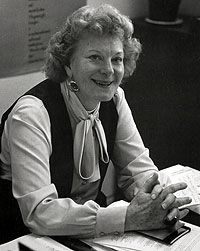
Virginia Satir, a trailblazer in family therapy, is celebrated for her profound understanding of human emotions and relationships. Her timeless poem I Want to Love You encapsulates the essence of love in tender, insightful language. Satir invites us to redefine love as not merely an emotional bond but an intentional practice rooted in respect, understanding, and wisdom. (Photo from Wikimedia commons)

Satir emphasized the importance of nurturing love that is healthy, respectful, and boundaries. Her work reveals that true love fosters connection, trust, and mutual growth. This approach provides a blueprint for enriching relationships, particularly within families and marriages, where deep emotional bonds often coexist with challenges.

Love in Parent-Child Relationships

Satir’s therapeutic approach frequently emphasized parenting as a delicate balance of nurturing and letting go. One of her core principles was the importance of validating children’s emotions and individuality.

She often used metaphors to illustrate her points. For instance, she likened parenting to tending a garden: “You water the seeds, but you cannot decide how each flower will bloom.” This philosophy highlights the role of parents in providing unconditional support during early childhood while allowing space for independence as the child matures.

A famous anecdote from her work involved a mother who struggled with her teenage daughter’s rebellion. Satir encouraged the mother to write a letter expressing her love without judgment. This simple act fostered a renewed connection, demonstrating how acknowledgment and respect can rebuild bonds.

Parenting, as Satir taught, is about cultivating trust and allowing children to flourish as autonomous individuals, experiencing love as a source of empowerment rather than control.

Cultivating Love in Marital Bonds

Satir believed that love in marriage thrives on mutual respect, clear communication, and intentional effort. She often used her Family Sculpting technique to help couples visualize the dynamics of their relationship. By arranging family members to represent emotional closeness and distance, couples could see the need for adjustments in their behavior.

For instance, Satir once worked with a couple where the wife felt unheard. By “sculpting” the wife seated with her back to the husband, the couple visualized their emotional disconnection. This powerful exercise led to a heartfelt conversation where both partners committed to active listening and mutual validation.

In practice, Satir advocated for specific behaviors to nurture marital love:

  • A wife can replace nagging with encouragement and complaints with collaboration, creating a foundation of trust and partnership.
  • A husband can demonstrate responsibility through actions rather than words, replacing criticism with appreciation and patience.

These small, intentional changes can transform the atmosphere of a marriage, fostering harmony and mutual growth.

In all relationships—whether between parents and children or spouses—Satir emphasized equality, respect, and tolerance. She taught that love devoid of attachment, judgment, or control becomes a source of profound warmth and harmony.

Satir’s work inspires us to approach love as a life-affirming practice, one that enriches our connections and empowers personal growth. Whether through her transformative therapy sessions or the tender verses of her poetry, she reminds us that love is not just an emotion but a lifelong commitment to nurturing ourselves and those around us.

Link:https://peacelilysite.com/2024/11/21/i-want-to-love-you/

A Thought-Provoking Reflection: Building a Harmonious World Through Self-Growth

I recently came across a thought-provoking video that offered a profound insight into the root cause of social disorder. A newspaper invited submissions on the topic: “What is the root cause of social disorder?” One answer stood out for its simplicity yet profound depth: “It’s me.”

This response highlights a universal truth: the state of the world mirrors the state of each individual. If “I” embody qualities like sincerity, kindness, and a willingness to help, I can foster harmony in my family and community. Conversely, if “I” succumb to selfishness, greed, and deceit, disorder and instability are inevitable.

The peace and stability of society, our nation, and even the world rest on each of us. By reducing criticism of others and turning our attention inward—reflecting on our thoughts, words, and actions—we can become catalysts for harmony.

True greatness is not about outperforming others but about improving ourselves. By focusing on personal growth, we enrich our lives and contribute to a better world.

Mother Teresa’s Timeless Wisdom

Mother Teresa’s poem “Do It Anyway” offers profound guidance for navigating life’s challenges with integrity, kindness, and resilience. It reminds us to act according to our values, regardless of external circumstances:

People are unreasonable,illogical and self-centered

Love them anyway.

If you are kind,people may accuse you of selfish,ulterior motives;

Be kind anyway.

If you are successful,you will win some false friends and some true enemies;

Succeed anyway.

The good you do today will be forgotten tomorrow;

Do good anyway.

If you are honest and frank,people may cheat you;

Be honest and frank anyway.

People favor under dogs but follow only topdogs.

Fight for a few underdogs anyway.

What you spend years building may be destroyed overnight;

Build anyway.

If you find serenity and happiness,they may be jealous;

Be happy anyway.

People really need help but may attack you if you do help them.

Help people anyway.

Give the world the best you have,And it may never be enough;

Give the world the best you have anyway.

Her words teach us that life’s meaning lies in staying true to our values, not in others’ perceptions or responses. Ultimately, our actions reflect a dialogue with our conscience, not a transaction with others.

Personal growth begins with the courage to look inward. When frustration or dissatisfaction arises, take a moment for self-reflection. Ask yourself, “How can I improve?” This practice shifts focus from external blame to internal progress. Growth unfolds through small, manageable goals—whether it’s mastering a new skill, refining emotional resilience, or nurturing patience.

Kindness is another cornerstone of personal development. Choose compassion, even when faced with misunderstanding or adversity, because every person carries unseen struggles. Alongside kindness, maintain integrity and uphold what’s right, regardless of external validation. As Mother Teresa wisely said, “Give the world the best you have, and it may never be enough; give your best anyway.”

By weaving self-reflection, purposeful improvement, and compassionate action into daily life, we not only enhance ourselves but also contribute to a more harmonious world.

World peace begins with individual actions. Change doesn’t require grand gestures; it starts with small, deliberate acts of kindness—a warm smile, a kind word, or a helping hand.

When we each commit to self-growth, compassion, and mindfulness, we create ripples of positive change in our communities and beyond. Together, these ripples can form a wave of harmony that transforms the world.

Let us strive to become better versions of ourselves, nurturing peace and love in our hearts. By doing so, we can build a brighter, more peaceful future—one person at a time.

Mastering Emotions: The Path to Inner Peace

In ancient Tibet, there was a man named Aediba. Whenever he found himself angry or in the midst of an argument, he had a peculiar habit. He would immediately run home and circle his house and land three times before sitting down by the fields to catch his breath. As the years passed, Aediba worked tirelessly, and his house and land expanded significantly. But regardless of how large his property grew, he continued his practice—whenever he got upset, he would run three laps around it.

By the time Aediba had grown old, his property stretched far and wide. One day, after yet another argument, he grabbed his walking stick and, with great effort, completed his customary three laps. When he finally sat down to rest, the sun had already set. Concerned, his grandson approached him and said, “Grandpa, you’re too old to keep doing this. No one around here owns more land than you. You don’t need to run around your property anymore when you’re angry. Can you tell me why you’ve done this your whole life?”

Aediba smiled and replied, “When I was young, every time I got angry, I would run around my house and land. As I ran, I’d think to myself, ‘My house is so small, my land is so little—what right do I have to be angry or argue with anyone?’ That thought always calmed me down, and I would pour all my energy into working harder. Now, even though my house is large and my land vast, I walk around it and think, ‘I have so much—why should I waste my time quarreling with others?’ And once again, my anger fades.”

Just as every rose has its thorns, every person has traits that may frustrate us. The key to happiness is not trying to remove these “thorns,” but learning how to live with them, avoiding getting hurt.

This simple yet profound story teaches us a vital lesson about managing emotions. With family, there’s no need to argue to prove who’s right or wrong. Winning or losing a debate doesn’t matter—home is not a battlefield. We need to make sure our own thorns don’t harm those we love.

When interacting with others, especially those who may not see the world as we do, it’s wise to avoid unnecessary arguments. Not engaging in debates over who’s right shows maturity and emotional intelligence. In fact, most arguments are futile. The real strength lies in holding back, demonstrating grace, and knowing when to step away. Spiritual teachings from ancient times remind us, “When you open your mouth, your energy scatters; when your mind stirs, your internal strength cools.” Engaging in constant disputes not only wastes time but drains our energy.

On Mount Emei, there lived an old monk named Yongtong, who was over 100 years old. Someone once asked him, “Master, what is the secret to happiness?” Yongtong calmly replied, “Never argue.” The person asking wasn’t satisfied with this simple answer and said, “Master, I don’t quite agree with your idea that this is the secret.” Yongtong smiled and said, “Yes, you’re absolutely right…”

Life is full of challenges and difficulties, and none of us can avoid them. However, if we let every problem cause frustration or every small setback lead to anger, life will be full of turmoil. Truly strong individuals know how to control their emotions, step back, and manage problems calmly. Mastering our emotions isn’t about avoiding conflict entirely, but about learning to navigate it with wisdom and grace—leading to a life of peace and fulfillment.

Link:https://peacelilysite.com/2024/10/11/mastering-emotions-the-path-to-inner-peace/

A Single Rose Can Change a Life

One day, a little girl, full of innocence and joy, picked some roses. As she wandered down the road, she saw a poor beggar lying by the roadside. She paused, glanced at the flowers in her hand, and gently placed the most beautiful rose beside the sleeping man. She smiled to herself, thinking, “When he wakes up, he’ll be so happy.” With that, she skipped away, her heart light and joyful.

The sweet fragrance of the rose stirred the beggar from his slumber. Groggily, he opened his eyes and saw the delicate flower in his hand. “Did someone really give this to me? Could something so wonderful happen to someone like me? It’s like the sun rising in the west,” he thought, bewildered. “The person who gave me this flower must be a truly kind and beautiful soul.”

Overcome with emotion, the beggar decided to return to his shabby home. He rummaged through a dusty corner and found an old, dirty bottle. Filling it with water, he placed the rose inside. For a moment, he admired the flower, but then something nagged at him. “Wait,” he thought, “This beautiful rose can’t be in such a filthy bottle.”

He carefully removed the flower, washed the bottle thoroughly, and then placed the rose back inside. But as he looked again, he noticed the dusty table beneath it. “How could such a clean flower sit on such a dirty table?” He set to work, cleaning the table until it gleamed.

As he stepped back to admire the scene, he suddenly realized: “How can this beautiful rose, in a clean bottle, on a spotless table, exist in such a cluttered, dirty room?” He made a bold decision then and there – he would clean the entire house! With renewed energy, he swept away the dust, arranged his belongings neatly, and cleared out all the trash.

With every corner he cleaned, the house became warmer, cozier. A sense of peace filled the room. It was then that he caught his reflection in the mirror – his disheveled hair, his dirty face, his ragged clothes.

“Is that really me?” he asked himself.

Without hesitation, he took a bath, put on his best (though still worn) clothes, shaved, and tidied himself up from head to toe. When he looked in the mirror again, he smiled. “Hmm, I don’t look so bad!”

“Why should I remain a beggar? Tomorrow, I will find work,” he resolved.

Unbothered by hard or dirty work, and unpicky about the job, he soon found employment.

“Someone gave me a flower, and it turns out I’m not worthless after all,” became his daily mantra. It motivated him to work diligently, and as the years passed, he found success. But more than that, he discovered a new purpose.

“A single flower changed my life,” he thought. “I must help others in the same way.” And so, whenever he encountered someone in need, he offered a helping hand. Over time, the number of people he helped grew, and within a few years, he became a respected philanthropist, known far and wide for his kindness.

The story doesn’t end here. Those he helped went on to spread kindness to others, creating a ripple effect that touched countless lives.

In truth, we all need a beautiful flower – a small act of kindness – to remind us of our worth. And that flower? It’s something we all possess and can give freely.

Isn’t it true?

  • In public, we can hold the door for someone behind us.
  • When we see someone feeling down, we can offer them a smile.
  • We can give a genuine compliment to brighten someone’s day.
  • On a rainy day, we can drive a little slower to avoid splashing water on pedestrians.
  • We can pick up a stray nail on the ground to prevent someone from getting hurt.
  • We can speak with kindness and warmth to everyone we meet.

These are simple actions, right? They require little effort, yet they have the power to transform lives. Just like that unnoticed rose changed the beggar’s life, our small acts of kindness can change the world, one person at a time.

In our daily lives, we often believe that once something is done, it’s over. Once words are spoken, they disappear. But in reality, it’s far from over. A kind word, a smile, a simple gesture – these can brighten someone’s day, create ripples of happiness, and leave a lasting impact.

Giving someone a rose, literal or figurative, not only leaves a lingering fragrance in their heart, but it also brings joy back into our own lives. Today, when we plant a seed of kindness, it may grow into a tree in ten years. In a hundred years, it could become a small forest. And in a thousand years, that forest may provide blessings to generations yet to come.

Nothing we do, say, or think ends at the moment. Whether good or bad, everything continues to spread, shaping the world around us.

Link:

Father’s Day Joy: Poems to Celebrate Dad

Dads are just the best, aren’t they? They work hard, put up with so much, make us smile, and make everything okay. Father’s Day is a wonderful occasion to show the Dads in our lives how much we appreciate them. Here are some awesome Dad poems to celebrate every dad.

Fathers Mean the World
Fathers are the ones who work so hard,
Building bridges and fixing up the yard,
Driving trucks and feeding their families,
Their hard work is the backbone of society.

They have toiled in the sun and rain,
Working hard to help ease the family’s pain,
Their dedication and hard work, never in vain,
For their love and care, there is no refrain.

They have built homes and schools and more,
Their contributions we cannot ignore,
From fixing everything that’s broken,
To teaching us lessons that remain unspoken.

Fathers are the unsung heroes of our time,
Their sacrifices and hard work are a true sign,
Of their unwavering dedication and love,
That lifts us up and makes us soar above.

We need fathers in this world today more than ever,
To guide us through life’s twists and turns, we must endeavor,
To honor their hard work and sacrifice,
And cherish their love and care, forever in our lives.
~ Dev Sommerville

My Dad is My Rock
My dad has always been my rock,
Supporting me as I chased my dreams around the clock,
Encouraging me to go on the craziest adventures,
And taking me seriously, no matter the venture.
He gave me advice and encouragement,
Even when I was feeling lost and disheartened,
His words of wisdom, always on point,
Helped me navigate life’s twists and turns with every joint.

With his unwavering support, I gained strength,
To pursue my passions, no matter the length,
For all the times he’s been there, day by day,
My dad’s love and support, I’ll always repay.
So on this Father’s Day, I want to say,
Thank you, Dad, for all the support along the way,
Your love and care have helped me soar,
And for that, I’ll cherish you forevermore.
~ Winnie Smith-Garland

Photo by Josh Willink on Pexels.com

Dads Show Us the Way
Dads are the guiding lights that lead the way,
Raising kids to be strong, brave, and never stray,
Teaching us to try hard, and put ourselves to the test,
To see the funny side of things, and do our best.

Dads inspire us to be optimistic and kind,
To find our mission in life, and always keep in mind,
That success comes to those who never give up,
Who work hard and never hold a grudge.

With patience and love, dads show us the way,
To live in the here and now, and seize each day,
To face life’s challenges with grace and ease,
And to never ever give up on our dreams.

Dads teach us values that shape our lives,
To be kind to others, and treat them with respect and thrive,
Their love and guidance, we’ll cherish forevermore,
For dads play a crucial role in the world, that we can’t ignore.
~ Harrison Beslow

Photo by Lgh_9 on Pexels.com

My Dad, My Teacher
From the very start, my dad’s been there,
Teaching me to ride my bike without a care.
When my toys broke, he fixed them with a grin,
And when I needed help, he always pitched in.

Through every scrape and tear, he wiped away my fears,
Making everything okay, and drying up my tears.
He’s been my rock, my guide, my hero, all in one,
And I’m grateful for everything he’s done.

He’s taught me to be kind, and to spread my wings,
And he’s always been there to help with anything.
With his patience and love, he’s helped me through it all,
And I’m grateful for his support, big and small.

I’m lucky to have such an awesome dad,
And I’m grateful for all the fun we’ve had.
He’s the best friend I could ever wish for,
And I’ll always love him more and more.
~ Reese Carlington

My loving dad is always there,
To show me love and give me care,
With hugs and kisses, he makes my day,
I love my daddy more than words can say.
~ Louie Clyborne

Link:https://peacelilysite.com/2024/06/14/fathers-day-joy-poems-to-celebrate-dad/

Source: https://www.homemade-gifts-made-easy.com/fathers-day-poems.html

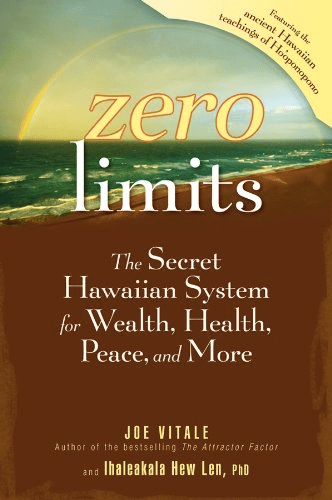
Zero Limits: Clearing Negative Energy, Returning to Perfect Emptiness

The Secret Hawaiian System for Wealth, Health, Peace, and More

In 1984, a therapist in Hawaii achieved remarkable results over three years, healing mentally ill patients at the Hawaii State Hospital without resorting to clinical counseling or medication. Reviewing their records, he repeatedly recited four phrases to “clear” himself: “I’m sorry, please forgive me, thank you, I love you.”

This extraordinary tale intrigued Mr. Vitale, inspiring him to seek out this extraordinary therapist and learn from him. Vitale discovered that Dr. Hew Len employed these four sentences as part of a traditional Hawaiian healing technique known as “Hooponopono,” which translates to “to correct, to clear, to make right” in Hawaiian.

This method not only restored the health of mentally ill patients but also miraculously cured a woman who had suffered from asthma for 50 years overnight. Can four sentences really resolve all problems? Smooth out everything?

These four affirmations have the power to clear all negative energy, balance emotions, and enable you to return to the divine state of “zero limits” (a state of returning to zero, also known as emptiness in Buddhist philosophy, where nothing exists, and anything is possible). By embracing these four phrases, you can face your life more freely and elegantly, leading to health, wealth, and joy.

By approaching each day with an unrestricted perspective, repeating these four sentences concerning your mind, subconscious, experiences, people, and encountered problems with a sincere, repentant, and grateful heart, you will learn to love yourself, forgive yourself, and appreciate yourself. This practice will lead you to live a more fulfilling, wise, and abundant life.

Let us not only refrain from complaining but also say, “I love you!”

What is the Zero Limits method?

It’s straightforward—just four sentences: “I’m sorry, please forgive me, thank you, I love you.”

What do these four sentences represent? In simple terms:

“I’m sorry”: Acknowledge 100% responsibility for what has happened (because everything is created by oneself).

“Please forgive me”: Request forgiveness (forgive oneself).

“Thank you”: Express gratitude, show trust, and believe that all problems will be resolved in the best way for everyone involved.

“I love you”: Invoke the power of divinity to clear related memories and heal all wounds.

Although these four sentences in Ho’oponopono therapy are simple, they encompass profound states and meanings. This is a convenient method that can be used at any time during our spiritual growth journey, transcending various spiritual practices.

How to use this method? It’s straightforward—whenever you encounter a problem, simply keep repeating these sentences (there’s no need to rush into belief or doubt; give it a try).

Fundamental Theory of Zero Limits:

You are not aware of what is happening.

Whether consciously or unconsciously, it is impossible to be aware of everything happening within and around you. At this very moment, your body and brain are self-adjusting without your conscious awareness. Countless invisible signals are transmitted through the air, from radio waves to thoughts and consciousness. All of this occurs unconsciously, and your consciousness is not aware of nor in control of this process. This is why you can think positively but still face challenges. In essence, you must understand that your consciousness is not the true creator of everything.

You cannot control everything

If you are unaware of what is happening, you certainly cannot control it. Believing that the world follows your commands is merely a manifestation of satisfying the desires of the ego. Since your ego cannot completely comprehend what is happening in the world, allowing the ego to decide what is best for you is obviously unwise. You can make choices, but you cannot control. You can use your consciousness to choose what you want to experience, but you must also learn to let go and not worry about how or when it will happen; surrender is the key.

You can heal everything that happens.

Regardless of what appears in your life and how it comes about, it requires healing. Because it is now within your perception, if you can feel it, you can heal it. If you see it in others and it troubles you, you must heal it. You may not understand why it appeared in your life or how it happened, but you can let go now. As you have become aware of it, the more you heal, the simpler it becomes to manifest your desires. By releasing blocked energy, you allow this energy to be used for other things.

You must take 100% responsibility for everything you experience.

The events in your life are not your fault, but they are your responsibility. This responsibility includes everything said, done, and thought, as well as everything said, done, and thought by others appearing in your life. If you take 100% responsibility for everything in your life, then when others have problems, those problems also become yours. In short, you cannot blame anyone or anything for your current situation. All you can do is take responsibility, accept it, embrace it, and love it. The deeper you heal, the more connected you become to the source of life.

The ticket to the state of Zero Limits is saying “I love you.”

To overcome the bottleneck of understanding, to obtain a pass from healing to manifestation, is that simple phrase “I love you.” Saying “I love you” to divinity clears everything within you, allowing you to experience the miracle of “Zero Limits.” The key is to love all things: love the excess fat, love the hidden pain, love the troublesome issues, love children with problems, or love neighbors and partners—in short, love everything. Love transforms and releases blocked energy, and by saying “I love you,” you can experience the power of divinity, just like saying “Open sesame.”

Inspiration is more important than thought.

Thoughts are toys of the mind, while inspiration is a directive from divinity. From a certain point onward, you will surrender and learn to listen instead of begging and waiting. Thought is an attempt by the ego to control life from a limited perspective, while inspiration is a reception of messages from divinity and taking action. Thought yields results, while inspiration produces miracles.

Even if you are not sure what is happening, you can still solve problems.

A part of the purpose of survival is to solve problems. To solve problems, you must first understand: Who am I? Who is actually in charge? The consciousness thinks that intellect is the problem solver, capable of controlling what happens, what one experiences, and when. However, in reality, decisions are made before the consciousness decides, and intellect is unaware of this. If it is not intellect or consciousness, then who is in charge?

It is your subconscious. The subconscious is dominated by replayed memories, and it imitates, repeats, and resonates with these memories. The actions, understanding, feelings, and decisions of the subconscious are entirely dictated by memory. Similarly, consciousness operates through replayed memories without awareness. Therefore, replayed memories dominate everything the subconscious and consciousness experience.

The subconscious is the repository of accumulated memories since the beginning. It constantly replays past memories, and the power of choice that consciousness possesses is the power to choose. Both the subconscious and consciousness do not create their own thoughts, feelings, or actions; rather, their experiences resonate with replayed memories and inspirations.

To solve problems, it is crucial to understand that the physical body and the world itself are not the issue; the problem lies in the replayed memories within the subconscious.

The universe comes from nothing and will return to nothing. The universe begins at zero and ends at zero.

Zero Limits: Clearing Negative Energy, Returning to Perfect Emptiness

Link:https://peacelilysite.com/2024/02/02/zero-limits-clearing-negative-energy-returning-to-perfect-emptiness/

#SecretHawaiianSystem #Wealth #Health#Peace #ZeroLimits #NegativeEnergy #Forgiveness #Grateful #Thanks

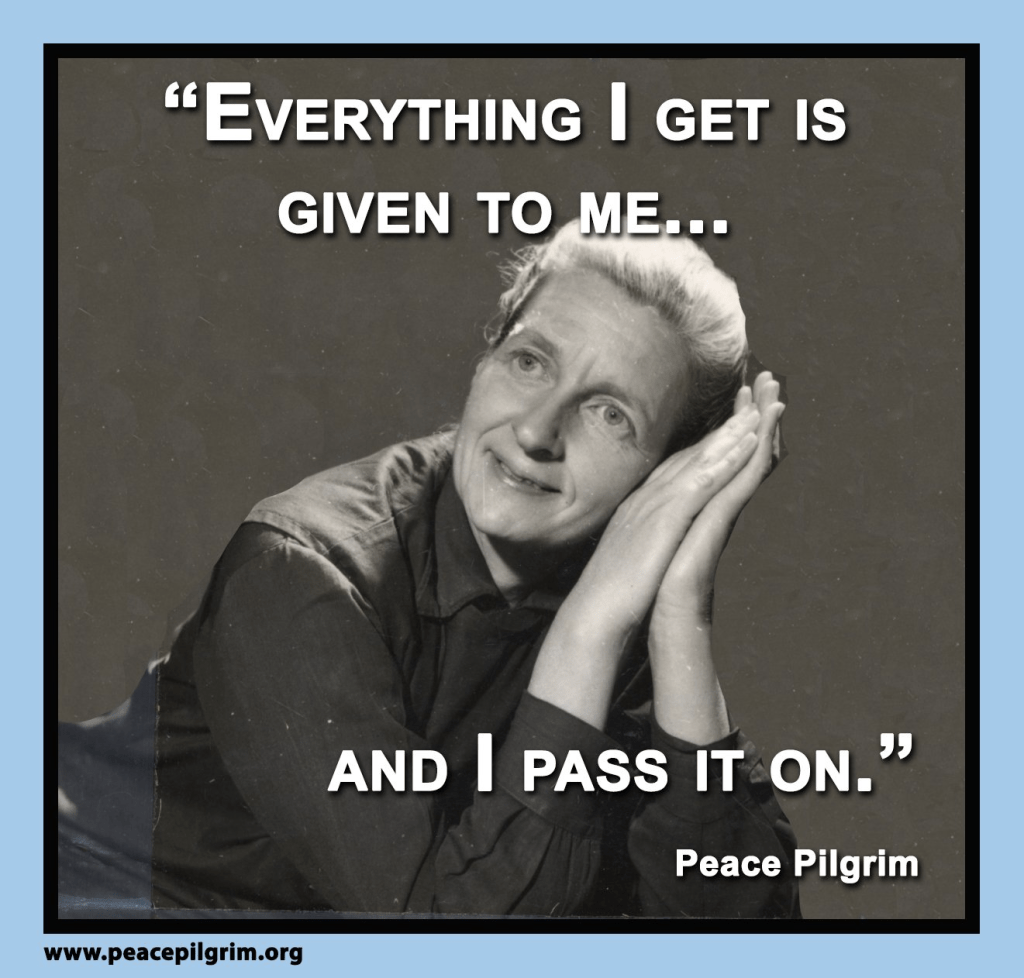
Embracing the Spirit of Giving: Wisdom from Peace Pilgrim

As we enter the holiday season, a time of reflection and celebration, the timeless wisdom of Peace Pilgrim offers profound insights into the true essence of life. “Now there is a living to give instead of to get,” she said, encouraging a shift from acquisition to sharing. Let’s delve into the transformative teachings of Peace Pilgrim, exploring how they can bring peace and fulfillment into our lives.

Peace Pilgrim’s philosophy centers on the joy of giving. Concentrating on the act of giving, she reveals that it becomes a reciprocal source of joy. Health, happiness, and inner peace flow abundantly when one gives selflessly. There’s a profound feeling of endless energy, a connection to the universal source that never seems to deplete.

A key theme in Peace Pilgrim’s teachings is taking control of one’s life. Contrasting the ego, driven by bodily desires and mental demands, with the higher nature governing body, mind, and emotions, she exemplifies the ability to command oneself. Through giving, she demonstrates the power to instruct the body to rest, the mind to focus, and the emotions to find stillness, even in challenging circumstances.

Quoting Thoreau, Peace Pilgrim introduces the concept of dancing to a different drummer—the higher nature instead of the lower. This alternative way of living is marked by aligning oneself with a deeper, more profound purpose. Choosing to follow the rhythm of the higher nature leads to a life driven by compassion, understanding, and a commitment to the well-being of others.

In her journey, Peace Pilgrim made crucial early discoveries. Initially, she found that making money was easy, but the meaninglessness of earning and spending frivolously became apparent. Out of a deep seeking for a meaningful life, she experienced a profound inner shift. Walking through the woods one night, she encountered a psychological hump—a point of no return. With complete willingness and no reservations, she dedicated her life to service.

As we navigate the holiday season, let’s carry the profound wisdom of Peace Pilgrim in our hearts. Embracing the spirit of giving not only enriches the lives of those around us but also brings a sense of fulfillment and purpose. Peace Pilgrim’s inner discovery serves as a poignant reminder that true abundance lies in the joy of giving, connecting us to an endless reservoir of universal energy.

Mildred Norman, later known as Peace Pilgrim, embarked on her peace pilgrimage in 1953, a journey that extended for decades. Her commitment to spreading the message of peace was unparalleled—she walked tirelessly, crisscrossing the United States six times. Remarkably, Peace Pilgrim covered over 25,000 miles during her pilgrimage, a feat she deemed too insignificant to keep precise count.

Her unconventional lifestyle reflected her profound dedication to her mission. Peace Pilgrim adhered to a minimalist philosophy, carrying neither money nor accepting any. She embraced a life of voluntary simplicity, often going without food until it was offered or found in the wild. Accommodations were simple and spontaneous, ranging from bus stations to cornfields when no one extended an invitation.

Peace Pilgrim’s journey became a testament to the transformative power of a singular commitment to a higher purpose. Her life exemplifies the possibility of living with purpose, prioritizing service over material pursuits, and finding fulfillment in the pursuit of peace. As we reflect on her remarkable life, we’re inspired to consider the ways we, too, can contribute to a more compassionate and harmonious world.

Embracing the Spirit of Giving: Wisdom from Peace Pilgrim

Link:https://peacelilysite.com/2023/11/22/embracing-the-spirit-of-giving-wisdom-from-peace-pilgrim/

#PeacePilgrim #Thankgiving #HolidaySeason #Giving #Peace #Love #Compassionate

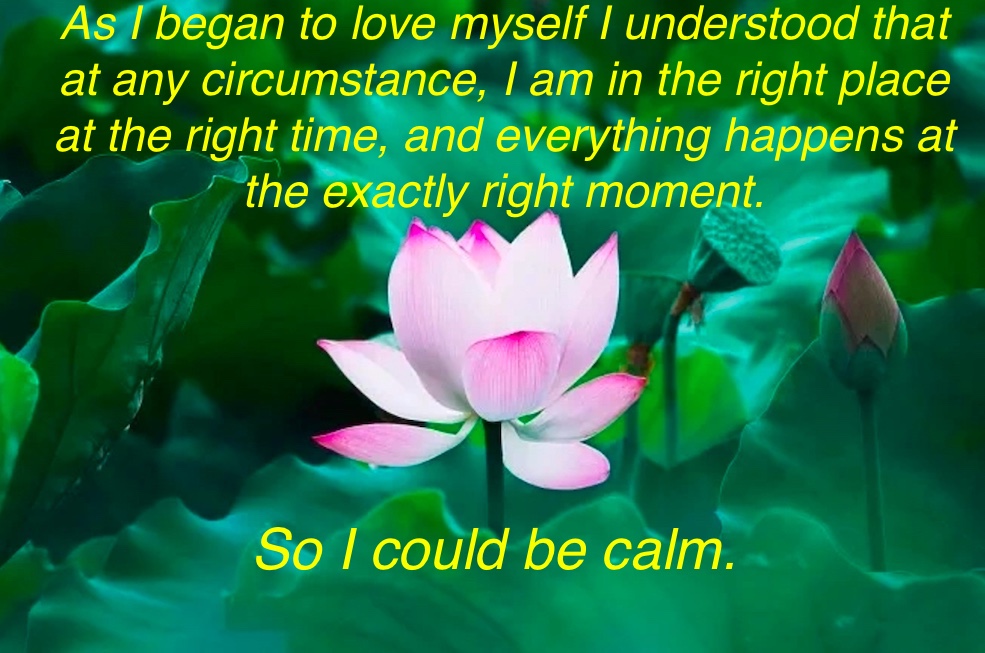
As I began to love Myself

Charlie Chaplin: More Than a Comedian – A Source of Wisdom and Inspiration

During my high school and college years, amidst the pressures of academics and the challenges of growing up, one name stood out as a constant source of laughter and profound insight into life – Charlie Chaplin. Beyond the laughter, Chaplin possessed a deep insight into the human condition. His films often depicted the struggles of the working class, the hardships of life, and the pursuit of happiness. Through his art, he conveyed powerful messages about empathy, resilience, and the importance of finding joy in the little things.

Little did I know then that the man behind the iconic Tramp character was not just an actor but also a writer, filmmaker, and a brilliant mind. One particular creation of his, the poem “As I Began To Love Myself,” has left an indelible mark on my heart, providing me with invaluable wisdom on how to live a better life.

“As I Began To Love Myself”

As I began to love myself I found that anguish and emotional suffering are only warning signs that I was living against my own truth.

Today, I know, this is “AUTHENTICITY”.

As I began to love myself I understood how much it can offend somebody As I try to force my desires on this person, even though I knew the time was not right and the person was not ready for it, and even though this person was me.

Today I call it “RESPECT”.

As I began to love myself I stopped craving for a different life, and I could see that everything that surrounded me was inviting me to grow.

Today I call it “Maturity”.

Today I call it “SELF-CONFIDENCE”.

As I began to love myself I quit stealing my own time, and I stopped designing huge projects for the future. Today, I only do what brings me joy and happiness, things I love to do and that make my heart cheer, and I do them in my own way and in my own rhythm.

Today I call it “SIMPLICITY”.

As I began to love myself I freed myself of anything that is no good for my health – food, people, things, situations, and everything that drew me down and away from myself.

At first, I called this attitude a healthy egoism.

Today I know it is “LOVE OF ONESELF”.

As I began to love myself I quit trying to always be right, and ever since I was wrong less of the time.

Today I discovered that is “MODESTY”.

As I began to love myself I refused to go on living in the past and worrying about the future. Now, I only live for the moment, where everything is happening.

Today I live each day, day by day, and I call it “FULFILLMENT”.

As I began to love myself I recognized that my mind can disturb me and it can make me sick. But as I connected it to my heart, my mind became a valuable ally.

Today I call this connection “WISDOM OF THE HEART”.

We no longer need to fear arguments, confrontations or any kind of problems with ourselves or others. Even stars collide, and out of their crashing, new worlds are born.

Today I know “THAT IS LIFE”!

Charlie Chaplin, the man who made us laugh and ponder life’s complexities, continues to inspire and guide us through his timeless wisdom. His poem, “As I Began To Love Myself,” encapsulates valuable life lessons about authenticity, respect, maturity, self-confidence, simplicity, love of oneself, modesty, fulfillment, and the wisdom of the heart. As we remember this iconic figure, let us carry his insights with us on our journey towards a better and more meaningful life, just as he did for me during my high school and college years. Charlie Chaplin wasn’t just an entertainer; he was a philosopher whose words and actions continue to resonate with us all.

Charlie Chaplin: More Than a Comedian – A Source of Wisdom and Inspiration

Link:https://peacelilysite.com/2023/09/07/as-i-began-to-love-myself/

#CharlieChaplin # Comedian #Wisdom #Inspiration #AsIbegantolovemyself