I recently came across a thought-provoking video that offered a profound insight into the root cause of social disorder. A newspaper invited submissions on the topic: “What is the root cause of social disorder?” One answer stood out for its simplicity yet profound depth: “It’s me.”
This response highlights a universal truth: the state of the world mirrors the state of each individual. If “I” embody qualities like sincerity, kindness, and a willingness to help, I can foster harmony in my family and community. Conversely, if “I” succumb to selfishness, greed, and deceit, disorder and instability are inevitable.
The peace and stability of society, our nation, and even the world rest on each of us. By reducing criticism of others and turning our attention inward—reflecting on our thoughts, words, and actions—we can become catalysts for harmony.
True greatness is not about outperforming others but about improving ourselves. By focusing on personal growth, we enrich our lives and contribute to a better world.
Mother Teresa’s Timeless Wisdom
Mother Teresa’s poem “Do It Anyway” offers profound guidance for navigating life’s challenges with integrity, kindness, and resilience. It reminds us to act according to our values, regardless of external circumstances:
People are unreasonable,illogical and self-centered
Love them anyway.
If you are kind,people may accuse you of selfish,ulterior motives;
Be kind anyway.
If you are successful,you will win some false friends and some true enemies;
Succeed anyway.
The good you do today will be forgotten tomorrow;
Do good anyway.
If you are honest and frank,people may cheat you;
Be honest and frank anyway.
People favor under dogs but follow only topdogs.
Fight for a few underdogs anyway.
What you spend years building may be destroyed overnight;
Build anyway.
If you find serenity and happiness,they may be jealous;
Be happy anyway.
People really need help but may attack you if you do help them.
Help people anyway.
Give the world the best you have,And it may never be enough;
Give the world the best you have anyway.
Her words teach us that life’s meaning lies in staying true to our values, not in others’ perceptions or responses. Ultimately, our actions reflect a dialogue with our conscience, not a transaction with others.
Personal growth begins with the courage to look inward. When frustration or dissatisfaction arises, take a moment for self-reflection. Ask yourself, “How can I improve?” This practice shifts focus from external blame to internal progress. Growth unfolds through small, manageable goals—whether it’s mastering a new skill, refining emotional resilience, or nurturing patience.
Kindness is another cornerstone of personal development. Choose compassion, even when faced with misunderstanding or adversity, because every person carries unseen struggles. Alongside kindness, maintain integrity and uphold what’s right, regardless of external validation. As Mother Teresa wisely said, “Give the world the best you have, and it may never be enough; give your best anyway.”
By weaving self-reflection, purposeful improvement, and compassionate action into daily life, we not only enhance ourselves but also contribute to a more harmonious world.
World peace begins with individual actions. Change doesn’t require grand gestures; it starts with small, deliberate acts of kindness—a warm smile, a kind word, or a helping hand.
When we each commit to self-growth, compassion, and mindfulness, we create ripples of positive change in our communities and beyond. Together, these ripples can form a wave of harmony that transforms the world.
Let us strive to become better versions of ourselves, nurturing peace and love in our hearts. By doing so, we can build a brighter, more peaceful future—one person at a time.
In ancient Tibet, there was a man named Aediba. Whenever he found himself angry or in the midst of an argument, he had a peculiar habit. He would immediately run home and circle his house and land three times before sitting down by the fields to catch his breath. As the years passed, Aediba worked tirelessly, and his house and land expanded significantly. But regardless of how large his property grew, he continued his practice—whenever he got upset, he would run three laps around it.
By the time Aediba had grown old, his property stretched far and wide. One day, after yet another argument, he grabbed his walking stick and, with great effort, completed his customary three laps. When he finally sat down to rest, the sun had already set. Concerned, his grandson approached him and said, “Grandpa, you’re too old to keep doing this. No one around here owns more land than you. You don’t need to run around your property anymore when you’re angry. Can you tell me why you’ve done this your whole life?”
Aediba smiled and replied, “When I was young, every time I got angry, I would run around my house and land. As I ran, I’d think to myself, ‘My house is so small, my land is so little—what right do I have to be angry or argue with anyone?’ That thought always calmed me down, and I would pour all my energy into working harder. Now, even though my house is large and my land vast, I walk around it and think, ‘I have so much—why should I waste my time quarreling with others?’ And once again, my anger fades.”
Just as every rose has its thorns, every person has traits that may frustrate us. The key to happiness is not trying to remove these “thorns,” but learning how to live with them, avoiding getting hurt.
This simple yet profound story teaches us a vital lesson about managing emotions. With family, there’s no need to argue to prove who’s right or wrong. Winning or losing a debate doesn’t matter—home is not a battlefield. We need to make sure our own thorns don’t harm those we love.
When interacting with others, especially those who may not see the world as we do, it’s wise to avoid unnecessary arguments. Not engaging in debates over who’s right shows maturity and emotional intelligence. In fact, most arguments are futile. The real strength lies in holding back, demonstrating grace, and knowing when to step away. Spiritual teachings from ancient times remind us, “When you open your mouth, your energy scatters; when your mind stirs, your internal strength cools.” Engaging in constant disputes not only wastes time but drains our energy.
On Mount Emei, there lived an old monk named Yongtong, who was over 100 years old. Someone once asked him, “Master, what is the secret to happiness?” Yongtong calmly replied, “Never argue.” The person asking wasn’t satisfied with this simple answer and said, “Master, I don’t quite agree with your idea that this is the secret.” Yongtong smiled and said, “Yes, you’re absolutely right…”
Life is full of challenges and difficulties, and none of us can avoid them. However, if we let every problem cause frustration or every small setback lead to anger, life will be full of turmoil. Truly strong individuals know how to control their emotions, step back, and manage problems calmly. Mastering our emotions isn’t about avoiding conflict entirely, but about learning to navigate it with wisdom and grace—leading to a life of peace and fulfillment.
One day, a little girl, full of innocence and joy, picked some roses. As she wandered down the road, she saw a poor beggar lying by the roadside. She paused, glanced at the flowers in her hand, and gently placed the most beautiful rose beside the sleeping man. She smiled to herself, thinking, “When he wakes up, he’ll be so happy.” With that, she skipped away, her heart light and joyful.
The sweet fragrance of the rose stirred the beggar from his slumber. Groggily, he opened his eyes and saw the delicate flower in his hand. “Did someone really give this to me? Could something so wonderful happen to someone like me? It’s like the sun rising in the west,” he thought, bewildered. “The person who gave me this flower must be a truly kind and beautiful soul.”
Overcome with emotion, the beggar decided to return to his shabby home. He rummaged through a dusty corner and found an old, dirty bottle. Filling it with water, he placed the rose inside. For a moment, he admired the flower, but then something nagged at him. “Wait,” he thought, “This beautiful rose can’t be in such a filthy bottle.”
He carefully removed the flower, washed the bottle thoroughly, and then placed the rose back inside. But as he looked again, he noticed the dusty table beneath it. “How could such a clean flower sit on such a dirty table?” He set to work, cleaning the table until it gleamed.
As he stepped back to admire the scene, he suddenly realized: “How can this beautiful rose, in a clean bottle, on a spotless table, exist in such a cluttered, dirty room?” He made a bold decision then and there – he would clean the entire house! With renewed energy, he swept away the dust, arranged his belongings neatly, and cleared out all the trash.
With every corner he cleaned, the house became warmer, cozier. A sense of peace filled the room. It was then that he caught his reflection in the mirror – his disheveled hair, his dirty face, his ragged clothes.
“Is that really me?” he asked himself.
Without hesitation, he took a bath, put on his best (though still worn) clothes, shaved, and tidied himself up from head to toe. When he looked in the mirror again, he smiled. “Hmm, I don’t look so bad!”
“Why should I remain a beggar? Tomorrow, I will find work,” he resolved.
Unbothered by hard or dirty work, and unpicky about the job, he soon found employment.
“Someone gave me a flower, and it turns out I’m not worthless after all,” became his daily mantra. It motivated him to work diligently, and as the years passed, he found success. But more than that, he discovered a new purpose.
“A single flower changed my life,” he thought. “I must help others in the same way.” And so, whenever he encountered someone in need, he offered a helping hand. Over time, the number of people he helped grew, and within a few years, he became a respected philanthropist, known far and wide for his kindness.
The story doesn’t end here. Those he helped went on to spread kindness to others, creating a ripple effect that touched countless lives.
In truth, we all need a beautiful flower – a small act of kindness – to remind us of our worth. And that flower? It’s something we all possess and can give freely.
Isn’t it true?
In public, we can hold the door for someone behind us.
When we see someone feeling down, we can offer them a smile.
We can give a genuine compliment to brighten someone’s day.
On a rainy day, we can drive a little slower to avoid splashing water on pedestrians.
We can pick up a stray nail on the ground to prevent someone from getting hurt.
We can speak with kindness and warmth to everyone we meet.
These are simple actions, right? They require little effort, yet they have the power to transform lives. Just like that unnoticed rose changed the beggar’s life, our small acts of kindness can change the world, one person at a time.
In our daily lives, we often believe that once something is done, it’s over. Once words are spoken, they disappear. But in reality, it’s far from over. A kind word, a smile, a simple gesture – these can brighten someone’s day, create ripples of happiness, and leave a lasting impact.
Giving someone a rose, literal or figurative, not only leaves a lingering fragrance in their heart, but it also brings joy back into our own lives. Today, when we plant a seed of kindness, it may grow into a tree in ten years. In a hundred years, it could become a small forest. And in a thousand years, that forest may provide blessings to generations yet to come.
Nothing we do, say, or think ends at the moment. Whether good or bad, everything continues to spread, shaping the world around us.
Dads are just the best, aren’t they? They work hard, put up with so much, make us smile, and make everything okay. Father’s Day is a wonderful occasion to show the Dads in our lives how much we appreciate them. Here are some awesome Dad poems to celebrate every dad.
Fathers Mean the World Fathers are the ones who work so hard, Building bridges and fixing up the yard, Driving trucks and feeding their families, Their hard work is the backbone of society.
They have toiled in the sun and rain, Working hard to help ease the family’s pain, Their dedication and hard work, never in vain, For their love and care, there is no refrain.
They have built homes and schools and more, Their contributions we cannot ignore, From fixing everything that’s broken, To teaching us lessons that remain unspoken.
Fathers are the unsung heroes of our time, Their sacrifices and hard work are a true sign, Of their unwavering dedication and love, That lifts us up and makes us soar above.
We need fathers in this world today more than ever, To guide us through life’s twists and turns, we must endeavor, To honor their hard work and sacrifice, And cherish their love and care, forever in our lives. ~ Dev Sommerville
My Dad is My Rock My dad has always been my rock, Supporting me as I chased my dreams around the clock, Encouraging me to go on the craziest adventures, And taking me seriously, no matter the venture. He gave me advice and encouragement, Even when I was feeling lost and disheartened, His words of wisdom, always on point, Helped me navigate life’s twists and turns with every joint.
With his unwavering support, I gained strength, To pursue my passions, no matter the length, For all the times he’s been there, day by day, My dad’s love and support, I’ll always repay. So on this Father’s Day, I want to say, Thank you, Dad, for all the support along the way, Your love and care have helped me soar, And for that, I’ll cherish you forevermore. ~ Winnie Smith-Garland
Dads Show Us the Way Dads are the guiding lights that lead the way, Raising kids to be strong, brave, and never stray, Teaching us to try hard, and put ourselves to the test, To see the funny side of things, and do our best.
Dads inspire us to be optimistic and kind, To find our mission in life, and always keep in mind, That success comes to those who never give up, Who work hard and never hold a grudge.
With patience and love, dads show us the way, To live in the here and now, and seize each day, To face life’s challenges with grace and ease, And to never ever give up on our dreams.
Dads teach us values that shape our lives, To be kind to others, and treat them with respect and thrive, Their love and guidance, we’ll cherish forevermore, For dads play a crucial role in the world, that we can’t ignore. ~ Harrison Beslow
My Dad, My Teacher From the very start, my dad’s been there, Teaching me to ride my bike without a care. When my toys broke, he fixed them with a grin, And when I needed help, he always pitched in.
Through every scrape and tear, he wiped away my fears, Making everything okay, and drying up my tears. He’s been my rock, my guide, my hero, all in one, And I’m grateful for everything he’s done.
He’s taught me to be kind, and to spread my wings, And he’s always been there to help with anything. With his patience and love, he’s helped me through it all, And I’m grateful for his support, big and small.
I’m lucky to have such an awesome dad, And I’m grateful for all the fun we’ve had. He’s the best friend I could ever wish for, And I’ll always love him more and more. ~ Reese Carlington
My loving dad is always there, To show me love and give me care, With hugs and kisses, he makes my day, I love my daddy more than words can say. ~ Louie Clyborne
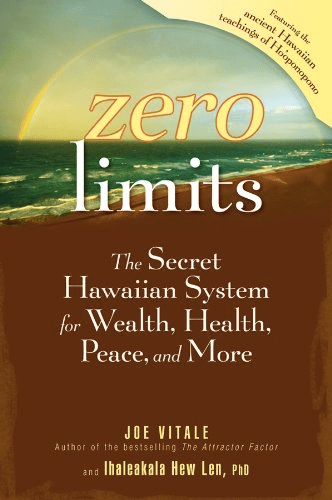
In 1984, a therapist in Hawaii achieved remarkable results over three years, healing mentally ill patients at the Hawaii State Hospital without resorting to clinical counseling or medication. Reviewing their records, he repeatedly recited four phrases to “clear” himself: “I’m sorry, please forgive me, thank you, I love you.”
This extraordinary tale intrigued Mr. Vitale, inspiring him to seek out this extraordinary therapist and learn from him. Vitale discovered that Dr. Hew Len employed these four sentences as part of a traditional Hawaiian healing technique known as “Hooponopono,” which translates to “to correct, to clear, to make right” in Hawaiian.
This method not only restored the health of mentally ill patients but also miraculously cured a woman who had suffered from asthma for 50 years overnight. Can four sentences really resolve all problems? Smooth out everything?
These four affirmations have the power to clear all negative energy, balance emotions, and enable you to return to the divine state of “zero limits” (a state of returning to zero, also known as emptiness in Buddhist philosophy, where nothing exists, and anything is possible). By embracing these four phrases, you can face your life more freely and elegantly, leading to health, wealth, and joy.
By approaching each day with an unrestricted perspective, repeating these four sentences concerning your mind, subconscious, experiences, people, and encountered problems with a sincere, repentant, and grateful heart, you will learn to love yourself, forgive yourself, and appreciate yourself. This practice will lead you to live a more fulfilling, wise, and abundant life.
Let us not only refrain from complaining but also say, “I love you!”
What is the Zero Limits method?
It’s straightforward—just four sentences: “I’m sorry, please forgive me, thank you, I love you.”
What do these four sentences represent? In simple terms:
“I’m sorry”: Acknowledge 100% responsibility for what has happened (because everything is created by oneself).
“Thank you”: Express gratitude, show trust, and believe that all problems will be resolved in the best way for everyone involved.
“I love you”: Invoke the power of divinity to clear related memories and heal all wounds.
Although these four sentences in Ho’oponopono therapy are simple, they encompass profound states and meanings. This is a convenient method that can be used at any time during our spiritual growth journey, transcending various spiritual practices.
How to use this method? It’s straightforward—whenever you encounter a problem, simply keep repeating these sentences (there’s no need to rush into belief or doubt; give it a try).
Fundamental Theory of Zero Limits:
You are not aware of what is happening.
Whether consciously or unconsciously, it is impossible to be aware of everything happening within and around you. At this very moment, your body and brain are self-adjusting without your conscious awareness. Countless invisible signals are transmitted through the air, from radio waves to thoughts and consciousness. All of this occurs unconsciously, and your consciousness is not aware of nor in control of this process. This is why you can think positively but still face challenges. In essence, you must understand that your consciousness is not the true creator of everything.
You cannot control everything
If you are unaware of what is happening, you certainly cannot control it. Believing that the world follows your commands is merely a manifestation of satisfying the desires of the ego. Since your ego cannot completely comprehend what is happening in the world, allowing the ego to decide what is best for you is obviously unwise. You can make choices, but you cannot control. You can use your consciousness to choose what you want to experience, but you must also learn to let go and not worry about how or when it will happen; surrender is the key.
You can heal everything that happens.
Regardless of what appears in your life and how it comes about, it requires healing. Because it is now within your perception, if you can feel it, you can heal it. If you see it in others and it troubles you, you must heal it. You may not understand why it appeared in your life or how it happened, but you can let go now. As you have become aware of it, the more you heal, the simpler it becomes to manifest your desires. By releasing blocked energy, you allow this energy to be used for other things.
You must take 100% responsibility for everything you experience.
The events in your life are not your fault, but they are your responsibility. This responsibility includes everything said, done, and thought, as well as everything said, done, and thought by others appearing in your life. If you take 100% responsibility for everything in your life, then when others have problems, those problems also become yours. In short, you cannot blame anyone or anything for your current situation. All you can do is take responsibility, accept it, embrace it, and love it. The deeper you heal, the more connected you become to the source of life.
The ticket to the state of Zero Limits is saying “I love you.”
To overcome the bottleneck of understanding, to obtain a pass from healing to manifestation, is that simple phrase “I love you.” Saying “I love you” to divinity clears everything within you, allowing you to experience the miracle of “Zero Limits.” The key is to love all things: love the excess fat, love the hidden pain, love the troublesome issues, love children with problems, or love neighbors and partners—in short, love everything. Love transforms and releases blocked energy, and by saying “I love you,” you can experience the power of divinity, just like saying “Open sesame.”
Inspiration is more important than thought.
Thoughts are toys of the mind, while inspiration is a directive from divinity. From a certain point onward, you will surrender and learn to listen instead of begging and waiting. Thought is an attempt by the ego to control life from a limited perspective, while inspiration is a reception of messages from divinity and taking action. Thought yields results, while inspiration produces miracles.
Even if you are not sure what is happening, you can still solve problems.
A part of the purpose of survival is to solve problems. To solve problems, you must first understand: Who am I? Who is actually in charge? The consciousness thinks that intellect is the problem solver, capable of controlling what happens, what one experiences, and when. However, in reality, decisions are made before the consciousness decides, and intellect is unaware of this. If it is not intellect or consciousness, then who is in charge?
It is your subconscious. The subconscious is dominated by replayed memories, and it imitates, repeats, and resonates with these memories. The actions, understanding, feelings, and decisions of the subconscious are entirely dictated by memory. Similarly, consciousness operates through replayed memories without awareness. Therefore, replayed memories dominate everything the subconscious and consciousness experience.
The subconscious is the repository of accumulated memories since the beginning. It constantly replays past memories, and the power of choice that consciousness possesses is the power to choose. Both the subconscious and consciousness do not create their own thoughts, feelings, or actions; rather, their experiences resonate with replayed memories and inspirations.
To solve problems, it is crucial to understand that the physical body and the world itself are not the issue; the problem lies in the replayed memories within the subconscious.
The universe comes from nothing and will return to nothing. The universe begins at zero and ends at zero.
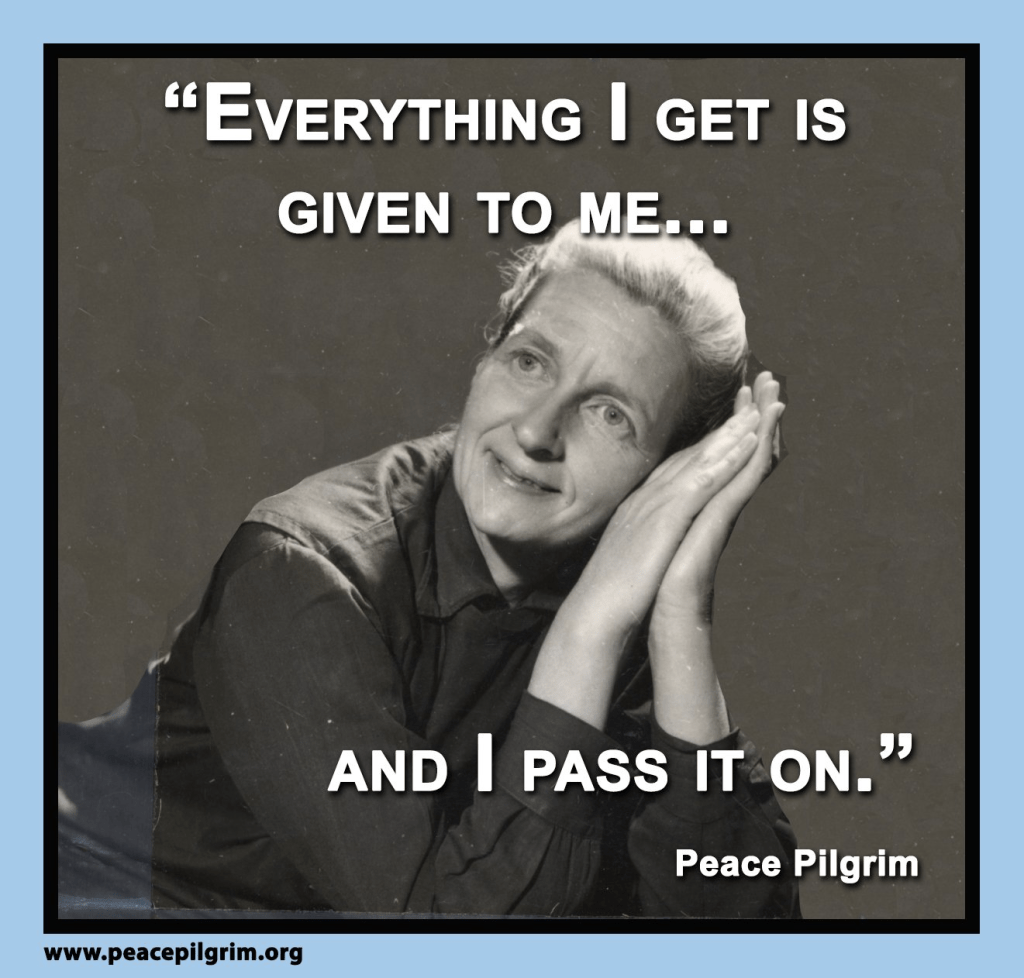
As we enter the holiday season, a time of reflection and celebration, the timeless wisdom of Peace Pilgrim offers profound insights into the true essence of life. “Now there is a living to give instead of to get,” she said, encouraging a shift from acquisition to sharing. Let’s delve into the transformative teachings of Peace Pilgrim, exploring how they can bring peace and fulfillment into our lives.
Peace Pilgrim’s philosophy centers on the joy of giving. Concentrating on the act of giving, she reveals that it becomes a reciprocal source of joy. Health, happiness, and inner peace flow abundantly when one gives selflessly. There’s a profound feeling of endless energy, a connection to the universal source that never seems to deplete.
A key theme in Peace Pilgrim’s teachings is taking control of one’s life. Contrasting the ego, driven by bodily desires and mental demands, with the higher nature governing body, mind, and emotions, she exemplifies the ability to command oneself. Through giving, she demonstrates the power to instruct the body to rest, the mind to focus, and the emotions to find stillness, even in challenging circumstances.
Quoting Thoreau, Peace Pilgrim introduces the concept of dancing to a different drummer—the higher nature instead of the lower. This alternative way of living is marked by aligning oneself with a deeper, more profound purpose. Choosing to follow the rhythm of the higher nature leads to a life driven by compassion, understanding, and a commitment to the well-being of others.
In her journey, Peace Pilgrim made crucial early discoveries. Initially, she found that making money was easy, but the meaninglessness of earning and spending frivolously became apparent. Out of a deep seeking for a meaningful life, she experienced a profound inner shift. Walking through the woods one night, she encountered a psychological hump—a point of no return. With complete willingness and no reservations, she dedicated her life to service.
As we navigate the holiday season, let’s carry the profound wisdom of Peace Pilgrim in our hearts. Embracing the spirit of giving not only enriches the lives of those around us but also brings a sense of fulfillment and purpose. Peace Pilgrim’s inner discovery serves as a poignant reminder that true abundance lies in the joy of giving, connecting us to an endless reservoir of universal energy.
Mildred Norman, later known as Peace Pilgrim, embarked on her peace pilgrimage in 1953, a journey that extended for decades. Her commitment to spreading the message of peace was unparalleled—she walked tirelessly, crisscrossing the United States six times. Remarkably, Peace Pilgrim covered over 25,000 miles during her pilgrimage, a feat she deemed too insignificant to keep precise count.
Her unconventional lifestyle reflected her profound dedication to her mission. Peace Pilgrim adhered to a minimalist philosophy, carrying neither money nor accepting any. She embraced a life of voluntary simplicity, often going without food until it was offered or found in the wild. Accommodations were simple and spontaneous, ranging from bus stations to cornfields when no one extended an invitation.
Peace Pilgrim’s journey became a testament to the transformative power of a singular commitment to a higher purpose. Her life exemplifies the possibility of living with purpose, prioritizing service over material pursuits, and finding fulfillment in the pursuit of peace. As we reflect on her remarkable life, we’re inspired to consider the ways we, too, can contribute to a more compassionate and harmonious world.
During my high school and college years, amidst the pressures of academics and the challenges of growing up, one name stood out as a constant source of laughter and profound insight into life – Charlie Chaplin. Beyond the laughter, Chaplin possessed a deep insight into the human condition. His films often depicted the struggles of the working class, the hardships of life, and the pursuit of happiness. Through his art, he conveyed powerful messages about empathy, resilience, and the importance of finding joy in the little things.
Little did I know then that the man behind the iconic Tramp character was not just an actor but also a writer, filmmaker, and a brilliant mind. One particular creation of his, the poem “As I Began To Love Myself,” has left an indelible mark on my heart, providing me with invaluable wisdom on how to live a better life.
“As I Began To Love Myself”
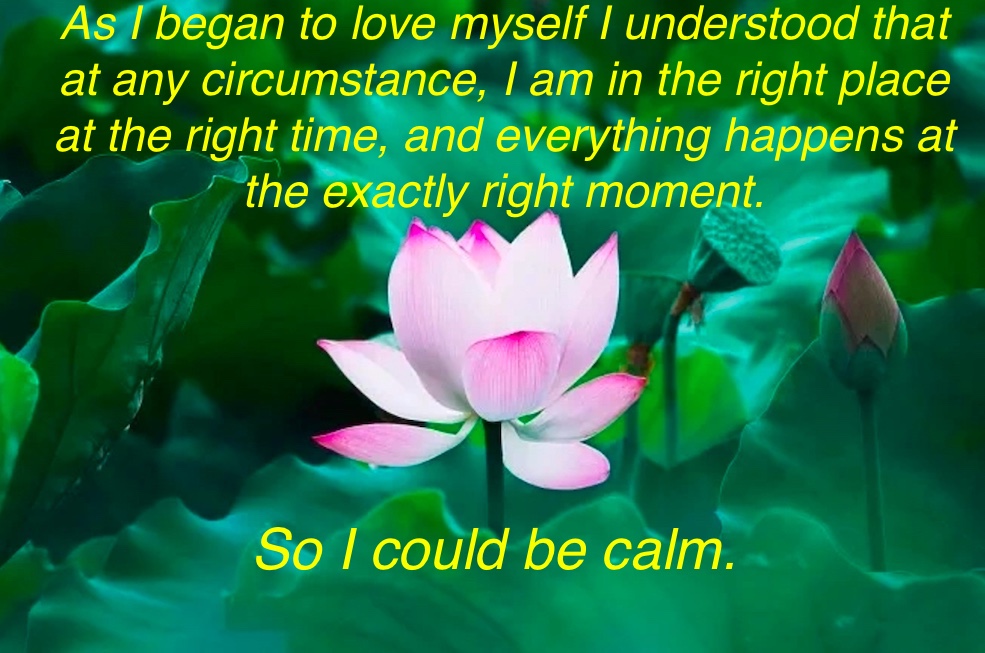
As I began to love myself I found that anguish and emotional suffering are only warning signs that I was living against my own truth.
Today, I know, this is “AUTHENTICITY”.
As I began to love myself I understood how much it can offend somebody As I try to force my desires on this person, even though I knew the time was not right and the person was not ready for it, and even though this person was me.
Today I call it “RESPECT”.
As I began to love myself I stopped craving for a different life, and I could see that everything that surrounded me was inviting me to grow.
Today I call it “Maturity”.
Today I call it “SELF-CONFIDENCE”.
As I began to love myself I quit stealing my own time, and I stopped designing huge projects for the future. Today, I only do what brings me joy and happiness, things I love to do and that make my heart cheer, and I do them in my own way and in my own rhythm.
Today I call it “SIMPLICITY”.
As I began to love myself I freed myself of anything that is no good for my health – food, people, things, situations, and everything that drew me down and away from myself.
At first, I called this attitude a healthy egoism.
Today I know it is “LOVE OF ONESELF”.
As I began to love myself I quit trying to always be right, and ever since I was wrong less of the time.
Today I discovered that is “MODESTY”.
As I began to love myself I refused to go on living in the past and worrying about the future. Now, I only live for the moment, where everything is happening.
Today I live each day, day by day, and I call it “FULFILLMENT”.
As I began to love myself I recognized that my mind can disturb me and it can make me sick. But as I connected it to my heart, my mind became a valuable ally.
Today I call this connection “WISDOM OF THE HEART”.
We no longer need to fear arguments, confrontations or any kind of problems with ourselves or others. Even stars collide, and out of their crashing, new worlds are born.
Today I know “THAT IS LIFE”!
Charlie Chaplin, the man who made us laugh and ponder life’s complexities, continues to inspire and guide us through his timeless wisdom. His poem, “As I Began To Love Myself,” encapsulates valuable life lessons about authenticity, respect, maturity, self-confidence, simplicity, love of oneself, modesty, fulfillment, and the wisdom of the heart. As we remember this iconic figure, let us carry his insights with us on our journey towards a better and more meaningful life, just as he did for me during my high school and college years. Charlie Chaplin wasn’t just an entertainer; he was a philosopher whose words and actions continue to resonate with us all.
For over 75 years, Harvard’s Grant and Glueck study has tracked the physical and emotional well-being of two populations: 456 poor men growing up in Boston from 1939 to 2014 (the Grant Study), and 268 male graduates from Harvard’s classes of 1939-1944 (the Glueck study).
Due to the length of the research period, this has required multiple generations of researchers. Since before WWII, they’ve diligently analyzed blood samples, conducted brain scans (once they became available), and pored over self-reported surveys, as well as actual interactions with these men, to compile the findings.
The conclusion? According to Robert Waldinger, director of the Harvard Study of Adult Development, one thing surpasses all the rest in terms of importance:
“The clearest message that we get from this 75-year study is this: Good relationships keep us happier and healthier. Period.”
Not how much is in your 401(k). Not how many conferences you spoke at–or keynoted. Not how many blog posts you wrote or how many followers you had or how many tech companies you worked for or how much power you wielded there or how much you vested at each.
No, the biggest predictor of your happiness and fulfillment overall in life is, basically, love.
Specifically, the study demonstrates that having someone to rely on helps your nervous system relax, helps your brain stay healthier for longer, and reduces both emotional as well as physical pain.
The data is also very clear that those who feel lonely are more likely to see their physical health decline earlier and die younger.
“It’s not just the number of friends you have, and it’s not whether or not you’re in a committed relationship,” says Waldinger. “It’s the quality of your close relationships that matters.”
What that means is this: It doesn’t matter whether you have a huge group of friends and go out every weekend or if you’re in a “perfect” romantic relationship (as if those exist). It’s the quality of the relationships–how much vulnerability and depth exists within them; how safe you feel sharing with one another; the extent to which you can relax and be seen for who you truly are, and truly see another.
According to George Vaillant, the Harvard psychiatrist who directed the study from 1972 to 2004, there are two foundational elements to this: “One is love. The other is finding a way of coping with life that does not push love away.”
“When the study began, nobody cared about empathy or attachment. But the key to healthy aging is relationships, relationships, relationships. ” — George Vaillant
Thus, if you’ve found love (in the form of a relationship, let’s say) but you undergo a trauma like losing a job, losing a parent, or losing a child, and you don’t deal with that trauma, you could end up “coping” in a way that pushes love away.
This is a very good reminder to prioritize not only connection but your own capacity to process emotions and stress. If you’re struggling, get a good therapist. Join a support group. Invest in a workshop. Get a grief counselor. Take personal growth seriously so you are available for connection.
Because the data is clear that, in the end, you could have all the money you’ve ever wanted, a successful career, and be in good physical health, but without loving relationships, you won’t be happy.
The next time you’re scrolling through Facebook instead of being present at the table with your significant other, or you’re considering staying late at the office instead of getting together with your close friend, or you catch yourself working on a Saturday instead of going to the farmer’s market with your sister, consider making a different choice.
“Relationships are messy and they’re complicated,” acknowledges Waldinger. But he’s adamant in his research-backed assessment:
Once upon a time, in a small village nestled amidst rolling hills and verdant fields, lived a humble shoemaker named Michael. Despite his meager existence, Michael was known throughout the village for his kindness and compassion.
One bitterly cold winter’s night, as the village lay shrouded in a thick blanket of snow, a weary traveler knocked on Michael’s door seeking refuge. The traveler, unbeknownst to Michael, was none other than an angel sent to test the hearts of men.
Moved by the traveler’s plight, Michael invited him into his modest home, offering him a warm fire and a hot meal. Oblivious to the angel’s celestial nature, Michael treated him with the utmost care and kindness, tending to his needs as if he were a cherished guest.
As the night wore on, the angel observed Michael’s selfless actions with great interest. He could not help but be touched by the shoemaker’s genuine love and generosity, a love that surpassed the boundaries of wealth and social standing.
Days turned into weeks, and the angel continued to reside with Michael, secretly observing the shoemaker’s interactions with his family, friends, and neighbors. He witnessed how Michael tirelessly toiled to provide for his loved ones, how he shared whatever he had with those less fortunate, and how he spread warmth and kindness wherever he went.
One fateful day, the angel revealed his true identity to Michael. Overwhelmed with awe and wonder, Michael fell to his knees, humbled by the realization that he had unknowingly saved an angel. “Why did you choose me?” Michael asked in astonishment.
The angel smiled warmly and replied, “It was your love, Michael. Your love for your fellow beings and your unwavering kindness touched the depths of my heart. Through your actions, you have shown me what it means to truly live.”
In that moment, Michael understood the profound truth that Tolstoy had sought to convey. Love was the ultimate purpose of life, the force that breathed meaning into our existence. It was love that transcended social barriers, that connected souls, and that had the power to transform the world.
From that day forward, Michael’s love and compassion only grew stronger. He became a guiding light in the village, inspiring others to embrace love and kindness as the guiding principles of their lives.
The echoes of Michael’s love spread throughout the village, reaching the ears of a wealthy man named Simon. Simon, consumed by his own greed and selfishness, felt a profound emptiness within his soul. Touched by the stories of Michael’s love, he yearned to experience that same sense of fulfillment.
With a heavy heart, Simon approached Michael, seeking guidance and redemption. Recognizing the sincerity in Simon’s plea, Michael embraced him with open arms, teaching him the ways of love and compassion. In time, Simon’s heart softened, and he too began to live a life driven by love and selflessness.
Meanwhile, in a neighboring village, a woman named Matryona lived in seclusion, her heart burdened by the loss of her family. But one fateful day, as Matryona journeyed through the forest, she stumbled upon two orphaned girls on the brink of despair. Driven by a surge of love and empathy, Matryona took the girls under her wing, offering them shelter, care, and a mother’s love.
As the seasons passed, the village flourished under the influence of love. Acts of kindness became the norm, and the air was filled with warmth and harmony. The transformative power of love had woven its magic, creating a tapestry of compassion that embraced every soul in the village.
And so, the tale of Michael, Simon, and Matryona became legendary, passed down through generations as a testament to the profound truth that Tolstoy had so eloquently expressed. Love, the essence of life, had indeed triumphed, illuminating the path to a more beautiful and harmonious world.
Recently, my two college-aged sons have been expressing that they find life to be difficult. In an effort to provide them with guidance and support, I have been offering them spiritual advice and emotional support. While searching for resources to assist in this endeavor, I stumbled upon the profound and enlightening book, The Road Less Traveled, by Scott Peck. The insights and philosophy presented within the book have been incredibly inspiring and beneficial in helping me to support my sons in their journey.
The Road Less Traveled is a self-help book by American psychiatrist and author Scott Peck, first published in 1978. The book has had a significant impact, selling millions of copies and remaining on the New York Times bestseller list for more than ten years. One of the main themes of the book is the concept of the four disciplines: psychiatry, psychology, religion, and philosophy. Each discipline offers unique perspectives on how to navigate the challenges of life and achieve personal growth.
The book’s central message is that life is difficult, but that this difficulty can be transcended by understanding and accepting it. Peck argues that discipline is the basic tool we need to solve life’s problems, and that with enough discipline we can solve all problems. Additionally, the book explores themes of love, relationships, parenting, and self-discovery, as well as teaching about distinguishing dependency from love and how to become one’s true self.
Life is a series of problems. It is something that we all must face and deal with on a daily basis. Some of these problems may be small and easily solved, while others may be more complex and difficult to overcome. The question we must ask ourselves is: do we want to moan about these problems or do we want to solve them?
As adults, we have the power to choose how we react to life’s problems. We can choose to bemoan our difficulties and wallow in our troubles, or we can choose to take action and find solutions. The latter approach is far more productive and will ultimately lead to greater satisfaction and fulfillment in life.
In addition to making this choice for ourselves, it is also important to teach our children to solve problems in a similar manner. As parents, we have a responsibility to guide and teach our children, helping them to develop the skills and mindset needed to overcome the challenges that life will inevitably present to them.
One of the most important tools we have for solving life’s problems is discipline. Without discipline, we will not be able to effectively tackle the issues that we face. With only some discipline, we may be able to solve only some problems, but with total discipline, we can solve all problems. Discipline is the key to success in any endeavor. It allows us to focus our minds and efforts, to set goals and make plans, and to persist in the face of adversity.
It is important to note that problems do not go away on their own. They must be worked through and dealt with, otherwise they will remain forever, acting as a barrier to the growth and development of the spirit. It is essential that we learn to face and overcome problems, rather than avoiding or ignoring them.
One way to do this is by learning to Delay Gratification. By scheduling the pain and pleasure of life in a way that we deal with pain first and get it over with, it allows us to enhance the pleasure we gain from it. This is the only decent way to live. With discipline, we can solve most of the problems, and delay gratification is a process that can help us to get through the most difficult moments.
Peck also emphasizes the importance of Love and Community in personal growth. He argues that true love is not just an emotional state, but also an action, and that it requires a commitment to growth and self-discipline. He also stresses the importance of community, stating that “the love of community is the only true love.”
I have also found out in Buddhism, love has a deeper meaning that goes beyond romantic or familial feelings. It encompasses compassion and the belief in treating all beings as if they were our own relatives or parents. In What is Cultivation by H.H. Dorje Chang Buddha III, says: “Loving-kindness: At all times, through the actions of my three karmas, I am loving and kind toward all living beings, who have been my parents. I wish them a long life without illness, good fortune, good luck, and a happy life. ” This means that at all times, through all our actions, thoughts, and words, we should strive to be loving and kind towards all living beings, recognizing that they have been our parents in past lives. This belief is expressed through the wish for all beings to have a long life free from illness, good fortune, good luck, and happiness. This unconditional love can have a positive impact on individuals who are facing challenges and difficulties in their lives.
Everyone must face and deal with the challenges and difficulties in life. Moaning about them or solving them, it’s a choice we make, and the latter can lead to greater satisfaction and fulfillment in life. Teaching our children to solve problems in a similar manner and helping them to develop the discipline and tools needed, that could be in religions or philosophy or psychology, to succeed in life is an essential responsibility of parenthood.