Tasha Tudor: A Life of Simplicity and Beauty

At 92 years old, Tasha Tudor lived a life that seemed lifted from the pages of a fairy tale. A beloved American picture book author and illustrator, her world was filled with charm, creativity, and a profound connection to nature. Her quiet, pastoral lifestyle captured the imagination of many, and a documentary about her life gained widespread acclaim in both the United States and Japan—earning her the title of one of the most admired women of her time.

Tasha was born into a prominent family, surrounded by great minds and cultural icons—her home once welcomed the likes of Albert Einstein and Mark Twain. Growing up in such an environment may have nurtured her early independence and vivid imagination. While others her age dreamed of parties and popularity, Tasha longed for a simpler dream: to own a cow and live close to nature.

At just 15, she left formal schooling to follow her passion for art and farming. This bold decision marked the beginning of a remarkable artistic journey. Over her lifetime, Tasha created more than 80 beautifully illustrated children’s books, winning the prestigious Caldecott Medal and receiving the Queen’s Lifetime Achievement Award. Her delicate, nostalgic illustrations shaped the childhoods of generations.

At 23, she married and raised four children. But when her unconventional lifestyle became too difficult for her husband to accept, they separated. Tasha pressed on, supporting herself through her art and craftsmanship.

When she was 57, and her children had grown, Tasha embraced the life she had always dreamed of. She moved to the hills of Vermont and built a cottage modeled after an 18th-century farmhouse. There, she lived without electricity, running water, or modern conveniences—choosing instead to return to the rhythms of a bygone era.
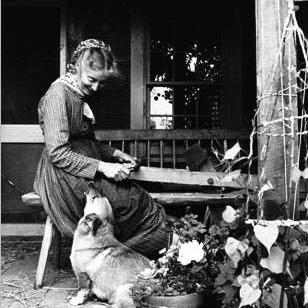
Tasha Tudor shaving splints from a log on her Vermont farm in 1977 By unknown Immediate sourcehttps://www.nytimes.com/2008/06/20/books/20tudor.html

Her days were filled with meaningful simplicity: raising chickens and sheep, growing vegetables, preparing meals by hand. She wove and sewed her own clothes—elegant dresses and colorful scarves—always taking pride in her appearance, even in solitude.

Tasha found deep joy in the natural world. She built a lush, secret garden where flowers bloomed in every season, and she tended it with love. Whether watering plants or walking through her fields, she embraced each moment with a grateful heart.

Though she lived alone, she was never lonely. Her cats and dogs kept her company, and her grandchildren visited often. Her home radiated warmth, creativity, and quiet joy.

“Letting go is a kind of strength,” she once said.

In an age obsessed with material gain, Tasha Tudor’s life reminds us that true richness lies in simplicity. She let go of the noise and temptations of modern life, choosing instead a path of peace, beauty, and authenticity.

Tasha Tudor didn’t just illustrate magical worlds—she lived in one. And through her life and work, she continues to inspire us to slow down, appreciate the everyday, and create beauty from the inside out.

Link: https://peacelilysite.com/2025/07/25/tasha-tudor-a-life-of-simplicity-and-beauty/

The Temple Way of Eating: Lessons in Gratitude, Simplicity, and Reducing Waste

During a visit to Holy Vajrasana Temple, I encountered the beautiful and meaningful practice of Oryoki. Often translated as “just the right amount,” Oryoki is a ritualized way of serving and eating food that combines efficiency, mindfulness, and gratitude. Its roots trace back to the Buddha’s time, embodying the Middle Way of taking neither too much nor too little—an ethos that resonates deeply with the principles of simplicity and compassion.

What Is Oryoki?

Oryoki originated during the Tang Dynasty in China and later influenced practices such as the Japanese tea ceremony. It is widely practiced in Zen monasteries as a way to unify daily life with spiritual practice. The ritual involves a meticulous series of hand gestures, silence, and mindfulness during the meal.

Monks sit in meditation posture, waiting to offer their empty bowls to servers, who portion food to the requested amount. Every movement is intentional, every crumb is appreciated, and every element is designed to minimize waste. Even the water used to wash the bowls is partially consumed and the remainder returned to the earth, often to nourish the garden.

Simple and Balanced Eating

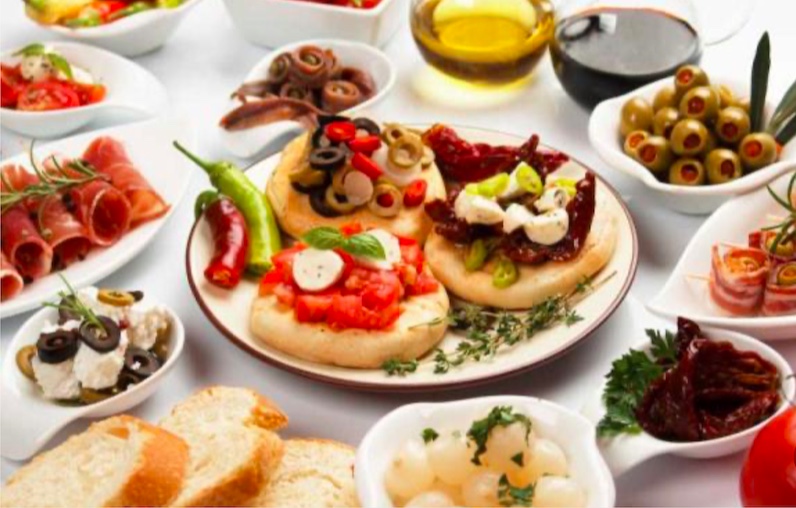
The meals at Holy Vajrasana Temple reflect the Oryoki tradition, featuring fresh fruits, vegetables, whole grains, and tofu. With minimal spices or stimulants, these meals are designed to nourish the body while keeping the mind clear and alert. Every effort is made to include the five flavors—sweet, salty, sour, bitter, and umami—and the five colors—red, green, white, yellow or orange, and black, blue, or purple.

Chefs follow the principle of eating simply, allowing the natural flavors of ingredients to shine. Eating in silence encourages mindfulness, helping participants savor each bite and truly appreciate the food’s journey from soil to plate.

Lessons in Gratitude and Reducing Waste

One of the most profound lessons from Oryoki is its emphasis on gratitude and sustainability. The practice reminds us to take only what we need and waste nothing. Participants are encouraged to finish their meals completely, leaving no remnants.

This principle can extend to our daily lives, especially during the holiday season when overindulgence and waste are common. By being mindful of portion sizes, recycling food scraps, and making thoughtful purchasing decisions—like avoiding vegetables wrapped in plastic—we can honor the spirit of gratitude and reduce our environmental footprint.

A Holiday Reminder: Gratitude Over Excess

As the holiday season approaches, let us take inspiration from these temple traditions. Instead of overindulging, savor each meal with mindfulness and gratitude. Remember those around the world who face hunger daily, and let this awareness guide us to be more conscious and compassionate in our eating habits.

Wishing you a joyful, mindful, and healthy holiday season! Let us cherish the food on our plates, honor the hands that prepared it, and commit to a less wasteful, more compassionate way of living.

Link: https://peacelilysite.com/2024/11/08/the-temple-way-of-eating-lessons-in-gratitude-simplicity-and-reducing-waste/

Source: https://tricycle.org/magazine/eating-just-right-amount/

Simplicity, Innocent Charm, and Natural Appearance

Minimal Brush Strokes Create Charming Paintings

It is often said that the essence of a high-quality painting lies in its incorporation of the calligraphic brushstrokes, the commanding presence reminiscent of engraved stone seals, a tonal quality derived from the artist’s mastery of literature, a stylistic expression emanating from the artist’s virtue, and a captivating allure that springs from the artist’s state of realization—this, indeed, is the true spirit of the painting.

In the International Art Museum of America, several paintings, executed with only a minimal number of strokes, possess the robust appeal akin to stone seal engravings. These artworks convey the artistic conception of returning to original purity and simplicity. With a liberated hand and mind, the artist applies their most refined skills, devoid of any lingering attachments, creating with minimal yet natural brushstrokes.

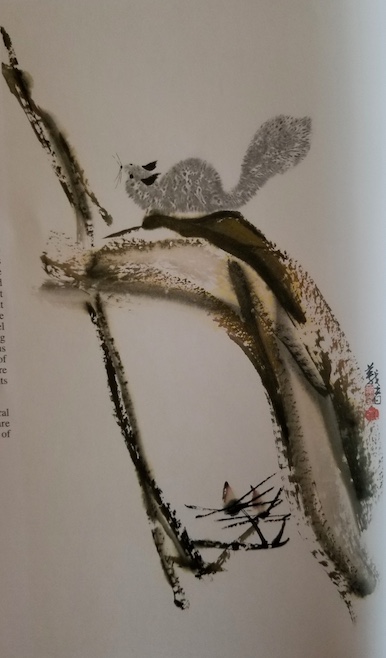
Za Chai Shi Gu (Brushwork Resembling Smashed Jade)

There is a phrase used in commenting upon Chinese paintings and calligraphy that related to smashed jade. This painting exemplifies that charming style of smashed jade.

The pine tree, rendered with just a few simple strokes, emanates a pervasive sense of strength across the entire painting. The exquisite and lively portrayal of the little squirrel employs a truly remarkable and mysterious technique, combining simplicity, innocent charm, a natural appearance, and authenticity into a harmonious whole.

Loquat

H.H. Dorje Chang Buddha III painted ‘Loquat’ in 2013. This painting achieves the skill of cherishing ink like gold in its conception, with no wasted or faulty strokes. With just a few strokes, it is high and lofty, vibrant and lively, containing an elegant and comforting sense of ease, as if the brush strokes were divinely inspired.

At the autumn auction of the New York Zhenguan International Auction Company on September 12, 2015, this painting ‘Loquat’ was auctioned for a staggering 10.2 million U.S. dollars.

Yi Chen Bu Ran (Immaculate)

With only a small number of strokes, a comforting and natural appeal appears vividly on paper. The style is neither overly cautious nor affected. A scholarly tone and an air of stone seals are revealed in the brushwork. This is a work of art with an attractiveness that stems from mature skills. The title “Immaculate” means that this painting is free of any trace of the mundane.

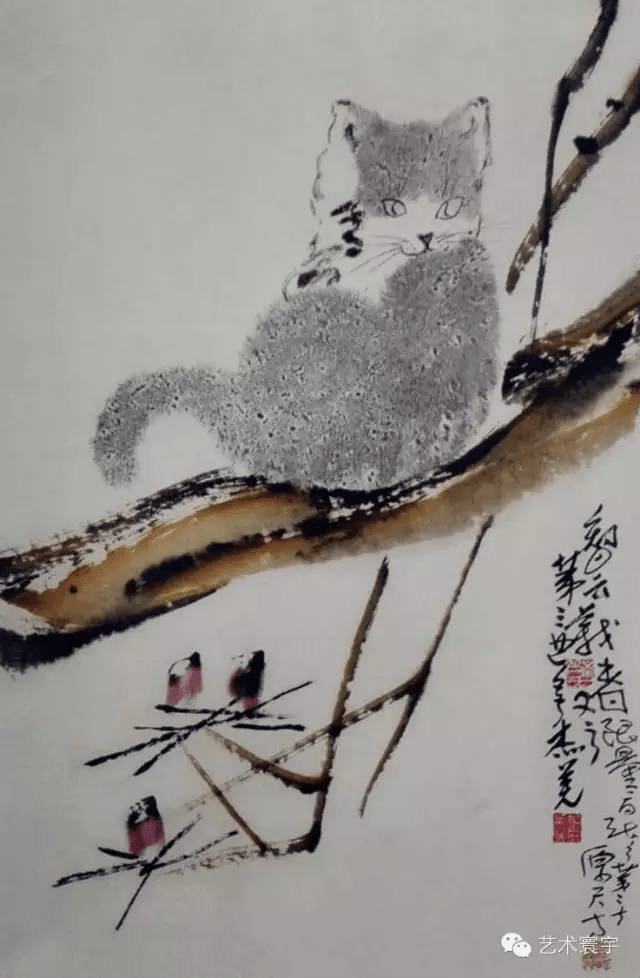
Cat of Unique Charm

In this painting, the cat is portrayed with a vibrant yet natural presence, achieved through the dynamic and captivating use of scattered ink. The entire artwork, painted with only a few brushstrokes, exudes the style of stone seals and an air of scholarly refinement. Both the form and spirit of the scene are skillfully captured. This work truly exemplifies masterful ink usage in a restrained manner.

One of the one hundred limited release copies of this small-scale, painting “Cat of Unique Charm” sold at auction for US$253,000, which is the highest per square foot selling price of any duplicate painting in the world. The prices of sold duplicate paintings by the most famous first-rate masters of art in the world cannot match the prices of sold duplicate paintings by H.H. Dorje Chang Buddha III.

Si Yu Sheng Hui (Resplendent Like Jade)

With just a few simple strokes, the entire painting is remarkably infused with a robust jade-like charm and an auspicious aura. Both the plantain tree and fruits exhibit a lack of mediocrity and were painted without the slightest mental attachment in the artist’s mind. They appear natural, elegant, and enchanting. This sentiment is succinctly captured in the accompanying short poem: “Unfurl the painting scroll, and the particularly fragrant scent of ink is released, permeating the viewer’s mind and intoxicating them to the core. Only a minimal number of strokes were applied. This exemplifies the regal art of using ink as sparingly as gold.”

H.H. Dorje Chang Buddha III, the artist behind these magnificent paintings, has crafted a pure and enchanting spiritual realm with his incredibly succinct brush and ink technique. Upon viewing, it evokes a sense of ethereality, akin to the moon reflected in water, and a freshness that pierces the heart, reminiscent of the sound produced when a piano key is pressed. This unique artistic essence, bridging the real and the virtual, transcends the ordinary, providing a natural and enlightening experience that often transports individuals into a realm of wonder.

Simplicity, Innocent Charm, and Natural Appearance

Link: https://peacelilysite.com/2023/11/10/simplicity-innocent-charm-and-natural-appearance/

#DorjeChangBuddhaIII #HHDorjeChangBuddhaIII##IAMA#InternationalArtMuseumofAmerica #Simplicity #InnocentCharm #Natural Appearance #StoneSeal