Walking for Peace: A Call for Moral Leadership Today

In a world shadowed by war, polarization, and a visible crisis of character among national leaders, many people feel a quiet but persistent sense of moral drifting. We watch the headlines, we hear the rhetoric, and we wonder: Where is the steady compass that points us toward what is right?

At this crossroads, political strategies alone are not enough. What we urgently need is moral leadership.

History reminds us what that looks like. Martin Luther King Jr. transformed American society not by deepening divisions, but by calling a fractured nation back to its highest values. His authority did not come from force, wealth, or position. It came from moral clarity. He appealed to conscience. He awakened compassion. He united people under the banner of shared human dignity.

Today, facing new global conflicts and cultural tensions, we must ask again: Where will the next wave of moral authority arise?
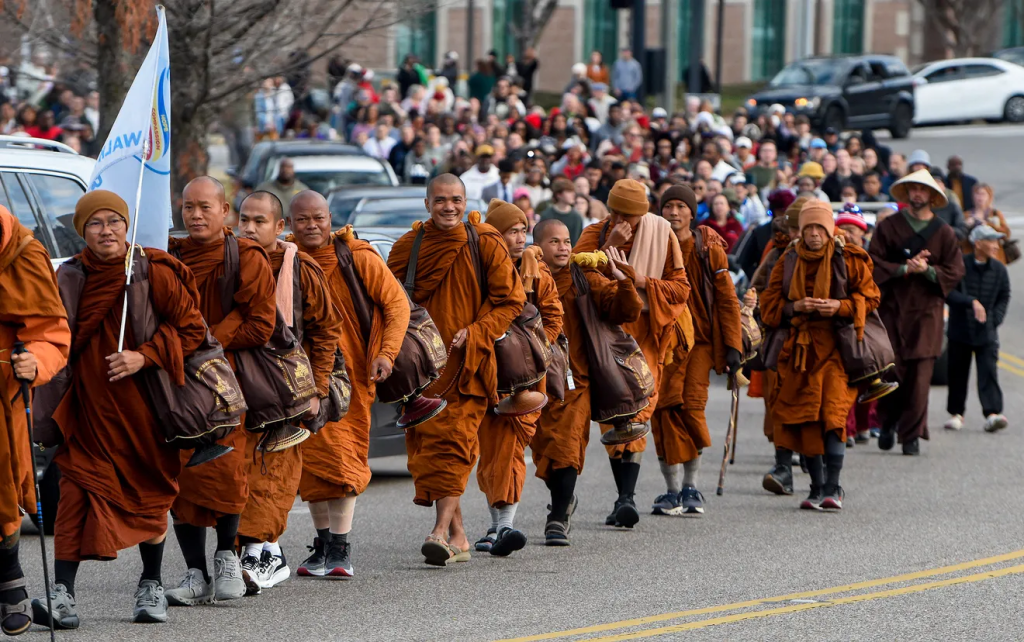
Buddhist monks walking in silence, carrying a powerful message of peace and mindfulness. (Handout photo)

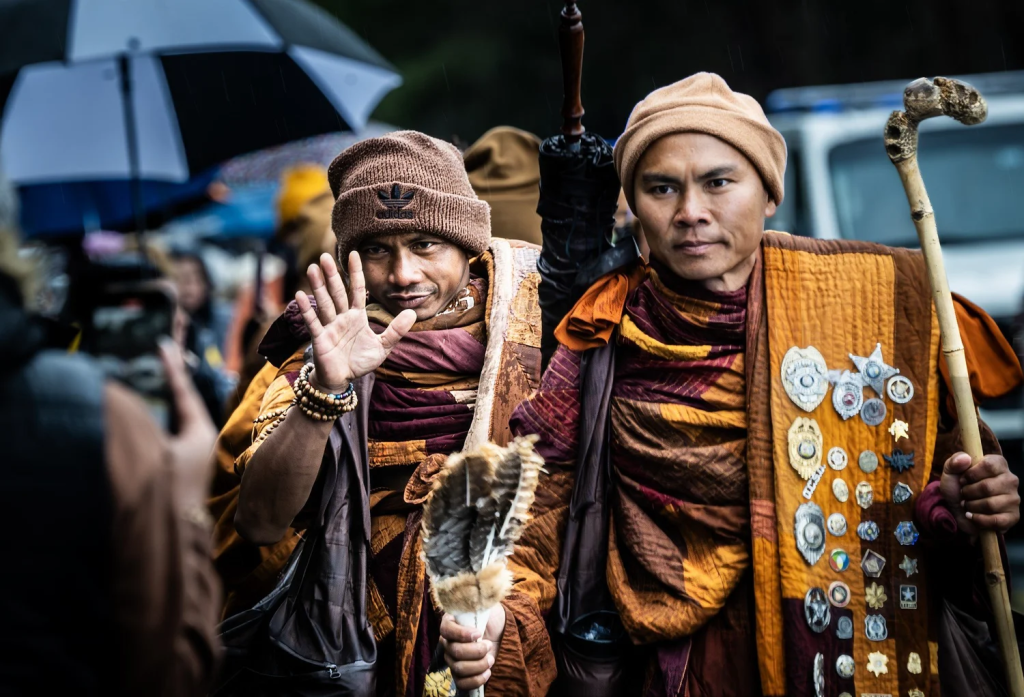
Recently, about twenty monks completed a 108-day walking journey for peace. Their pilgrimage was not a political campaign. It was not a media spectacle. It was a living embodiment of mindfulness and compassion in action. Step by step, through towns and cities, they carried a quiet message: peace is not merely an agreement signed on paper—it is a way of walking through the world.

In a society saturated with noise, outrage, and endless commentary, their disciplined silence spoke volumes. Their presence offered a visual reminder that true leadership begins with inner cultivation. When we lead with anger, we multiply conflict. When we lead with compassion, we create space for healing.

This is where Buddhist wisdom offers a profound contribution. Rooted in great compassion, loving-kindness, and deep self-reflection, the Buddhist path teaches that personal transformation and public responsibility are inseparable. A leader who has not mastered their own mind cannot bring harmony to others.

Across North America, millions now identify with Buddhist teachings, making it one of the most influential spiritual communities in the region. This growing presence brings an essential perspective to our troubled era—one that emphasizes empathy for all who suffer and reverence for every form of life.

Within this tradition, many look to Dorje Chang Buddha III as an example of moral leadership. Having lived in the United States for more than two decades, he has been recognized internationally for humanitarian and charitable work. His honors include the World Peace Prize, the Presidential Gold Medal, the Dr. Martin Luther King Jr. Legacy Award, and even a resolution passed in the United States Senate in recognition of his contributions.
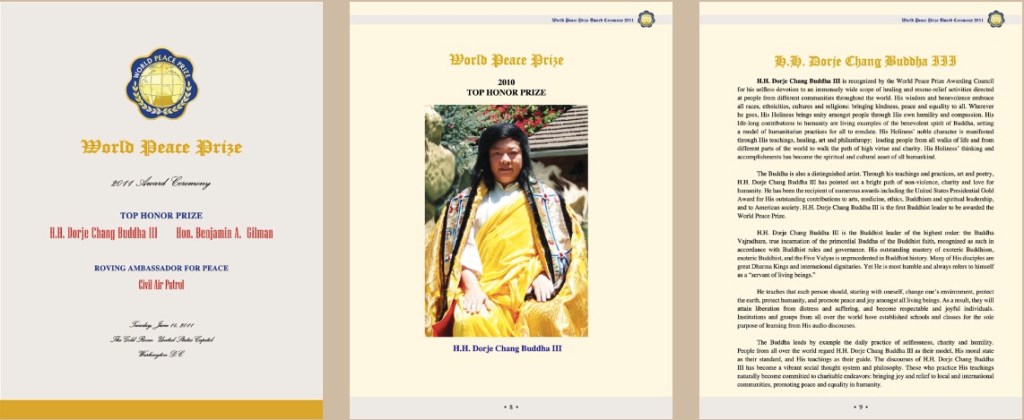
Yet perhaps more powerful than any award is his response to recognition. In an age driven by ego and self-promotion, he has expressed a vow of radical humility:

“I will bear all of the karmic offenses committed by living beings, and I will give everyone all of the good karma and merit that I plant.”

Whether one interprets this statement spiritually or symbolically, its moral essence is clear: a true leader does not seek to accumulate praise or advantage. A true leader seeks to shoulder responsibility and give benefit.

This is the kind of leadership our world desperately needs.

Moral leadership is not confined to one religion, culture, or tradition. It can be expressed through Judeo-Christian ethics, Buddhist compassion, or any path that places the common good above personal ambition. What matters is the heart behind the action.

If we are to navigate the challenges of our era, the answer will not come solely from policy, power, or popularity. It will come from conscience.

And perhaps the real invitation is not only to seek moral leaders—but to become them, each in our own sphere of influence.

Link:https://peacelilysite.com/2026/02/19/walking-for-peace-a-call-for-moral-leadership-today/
4 Unexpected Lessons on Peace from a Monk

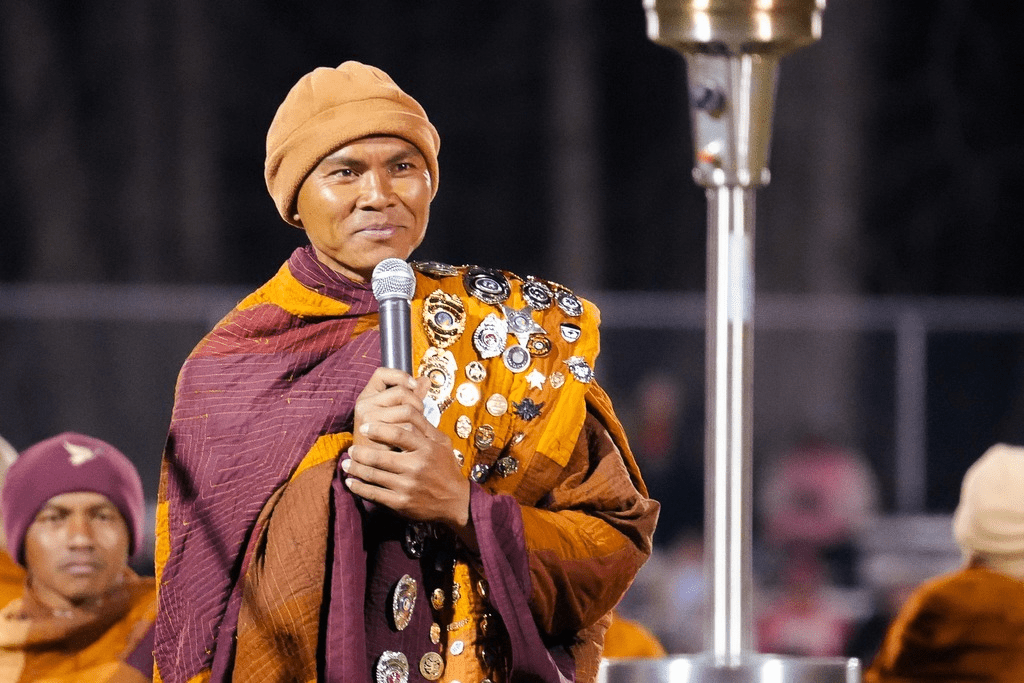
Photo credit Gladys Alvarez

That Challenge Everything We Think We Know

From Chatham Journal Newspaper January 24th 2026

Siler City, NC – On Wednesday evening the “Walk for Peace” monks stopped for the day at Jordan-Matthews High School. This was an opportunity for one of the monks to speak to the crowd gathered at the football here. Below is a summary of the lessons he hoped to teach.

We fight a battle every day, but the enemy isn’t external. It’s the relentless hum of our own minds—the constant wandering to past regrets and future anxieties, the endless scroll of digital distractions, and the crushing pressure to always be doing more. In this unwinnable war for a quiet mind, we often feel like we’re losing ground.

But what if the pursuit of peace wasn’t an epic battle at all? What if it was simply a series of small, counter-intuitive shifts in perspective? In a recent talk, a monk shared a path to peace that doesn’t require struggle, but instead invites awareness and acceptance. This post shares the four most surprising and impactful lessons from that talk—practical wisdom that can be applied to your life, starting right now.

1. To Connect With Your Kids, Stop Trying to Fix Them

As parents, our deepest instinct is to protect and guide. We want the best for our children, so we try to fix their mistakes and teach them the “right” way. But the monk pointed out a painful paradox: the more we try to “fix” or “change” them, the more we inadvertently build a “war” between us, pushing them further away.

His surprising solution was to shift our role entirely: stop trying to teach and start sharing. By approaching a child as a friend, we transform the dynamic from a top-down lecture into a shared conversation. This shift is the key to getting them to listen, and more profoundly, it creates the safety for the ultimate connection. The monk explained that when children see you as a friend, “whenever obstacle when they run into trouble they will come back to you and lean on your shoulder and cry and ask for help… that is when your chance come to teach them.”

unless you make friend with them you see them as your friends not mother not the father but a friend A friends means the different way of talk, different way of teaching, sharing… and that is when they listen.

In a world of high-pressure, achievement-oriented parenting, this advice is a radical act of trust. It asks us to let go of micromanagement and have faith that building a foundation of friendship is the most effective way to stay connected, especially when our kids are more influenced by peers and technology than ever before.

2. The Enemy of Peace Isn’t Chaos—It’s Multitasking

The monk observed that in our modern world, a distracted, wandering mind has become the “normal” condition. Very few people, he noted, can truly focus. He then offered a memorable metaphor for the primary source of this distraction: our smartphones.

And now that we all all have our lovers along with us every single second, you know who is your lover is your cellphone…

His solution is profoundly simple yet radically counter-cultural: stop multitasking. He framed this not as a mere productivity hack, but as the fundamental practice for purifying the mind. Without concentration on a single task, he explained, there can be no real peace.

This advice directly challenges the modern glorification of being busy. We multitask because we treat busyness as a proxy for importance and self-worth. To single-task is therefore an act of rebellion against the “cult of productivity.” It’s a way to reclaim our presence and discover that true effectiveness and inner calm are found not in doing more, but in giving our full attention to one thing at a time. This practice of single-pointed concentration is the very tool we need for the next lesson: dealing with the internal chaos of our own minds.

3. Don’t Fight Your Anxious Thoughts. Just Look at Them.

When we try to find a moment of quiet, the mind inevitably rebels. Thoughts of the past and worries about the future “pop up” and disrupt our focus. But the monk’s wisdom extends beyond just anxious thoughts—it applies to every distraction, internal and external. The itch on your nose, the sound of a distant siren, a sudden memory—our common reaction is to fight these intrusions and scold ourselves for getting distracted.

The monk’s instruction is to do the exact opposite. The goal is not to create a blank, empty mind. The practice is to simply add awareness to your breath, and when any thought, sound, or physical sensation appears, you acknowledge it without judgment. You observe it for a moment, and then gently guide your attention back to your breathing.

When that thought pop up, instead of trying to eliminate or push it away, just acknowledge it, observe that thought and then come back to this breathing.

He warned that this requires immense patience because “we will fail over and over.” This insight is liberating. It reframes “failure” as a completely normal and expected part of the process. Each time you notice your mind has wandered and you gently bring it back, you are succeeding.

4. Learn to Shed Your Leaves Like a Tree

To illustrate the art of letting go, the monk shared a powerful analogy from nature. In the autumn, trees shed their leaves. They don’t do this because they are weak; they do it as a brilliant survival strategy to conserve energy through the winter, preparing for new growth in the spring.

He explained that humans, however, often do the opposite. We spend our lives collecting and holding onto our mental “trash”—bad habits, unhappy memories, stress, and anxiety. We cling to these dead leaves until we are completely overwhelmed by their weight.

We have collected all kind of trash in our mind. Bad habit, unhappy thing, undesirable, all those things happening in our life that we suffered. We collected it so many and we recorded in here and we didn’t know how to let it go. We don’t know how to shut it off just like those trees.

This metaphor recasts “letting go” not as a passive act of giving up, but as an active, wise process of conserving our vital energy. In a world facing an epidemic of burnout, this lesson becomes a crucial survival strategy. It teaches us to release what no longer serves us in order to preserve our strength for what truly matters—for the new growth that awaits.

Peace is a Practice, Not a Destination

The war for a quiet mind ends the moment you stop fighting. As the monk’s lessons reveal, peace is not a distant state you arrive at, but the result of small, conscious actions. It’s found in the choice to single-task, the gentle observation of a thought, and the courage to let go of control—both in our own minds and in our relationships. Becoming a friend to our children and a non-judgmental observer of our thoughts are both practices in releasing the need to fix everything. Single-tasking is the foundation that makes this awareness possible.

He offered a simple starting point: each morning, write down the statement, “Today is going to be my peaceful day,” and live with that intention. But he also added a note of urgency. Many of us say we will do it “later,” but, as he warned, “that later that moment never comes.”

Don’t wait. Peace is a daily practice, and the work begins now. Looking at the “leaves” you’ve been carrying, what is just one you can choose to let go of today?

Link:https://peacelilysite.com/2026/01/29/4-unexpected-lessons-on-peace-from-a-monk/

One Lollipop, One Forest, and the Quiet Power of Kindness

Recently, I watched a short video that stayed with me far longer than I expected.

The scene took place in a small shop in Pakistan. A robber walked in, grabbed money and a phone, and prepared to leave. Sitting beside the shop owner was a little girl. She looked at the robber calmly, without screaming or hiding, and gently offered him the lollipop she was holding.

For a brief moment, everything seemed to stop.

The robber froze. He looked at the child, then slowly put the money and phone back down. Before leaving, he leaned over and kissed her on the forehead.

I don’t know whether the girl acted out of fear, nervousness, or pure instinct. But her simple, innocent gesture touched something deeply human in him. Perhaps, in that fleeting moment, his life took a different turn.

What moved me most was this realization:
Even those who appear hardened or dangerous may still carry a seed of kindness within them.
And sometimes, it only takes the smallest act to awaken it.

A single lollipop opened a door in the human heart.

Lately, I’ve been noticing more and more of these quiet sparks of goodness appearing around the world.

In the United States, a group of Buddhist monks has been walking on foot, praying for peace. Without slogans or confrontation, they offer presence, humility, and sincerity. Their journey has inspired many people to reflect on peace in a deeper way, and countless strangers have stepped forward to support them.

https://www.usatoday.com/picture-gallery/news/2025/12/23/buddhist-monk-walk-for-peace-passes-through-montgomery/87897028007/

Guided by the teachings of Namo Dorje Chang Buddha III, and with deep respect for the great mercy and loving-kindness through which Buddhas and Bodhisattvas benefit all living beings, the World Buddhism Association Headquarters (W.B.A.H.), Holy Miracles Temple (at Pasadena CA) and Sanger Mission sincerely to carry out Charitable Acts to Benefit Our Community Together: 2026 Food and Goods Drive, to collectively plant goodness. All donations will be sent to support local food banks, homeless shelters, and animal shelters in the Los Angeles area.

I also read about Jon Stewart, who announced an extraordinary donation of $116 million to help address homelessness across the United States—providing housing and dignity to people who have long been forgotten by society. It was a reminder that compassion, when paired with courage, can bring real and lasting change.

And then there is the story that expanded my sense of hope even further.

Johan Eliasch, a Swedish billionaire, acquired approximately 400,000 acres of the Amazon rainforest by purchasing the company that held its logging rights. Instead of continuing operations for profit, he immediately halted all logging activities.

Just like that, the chainsaws stopped.

That vast stretch of forest was allowed to remain intact—continuing to absorb carbon, protect biodiversity, and sustain one of the planet’s most vital ecosystems. His action demonstrated something profound: that private ownership, when guided by conscience, can become a powerful force for environmental protection.

This act of kindness may not be immediately seen by everyone, yet it will have a profound impact on the Earth’s ecological balance—and it is, in its own quiet way, safeguarding a future our children and grandchildren will still be able to breathe in.

From a child offering a lollipop…
to a monk walking for peace…
to a philanthropist sheltering the homeless…
to a forest saved from destruction—

These acts may differ in scale, but they arise from the same source:
the human longing to protect, to heal, and to do what is right.

In Buddhist teachings, compassion is not passive emotion—it is action.
It is wisdom expressed through kindness.

As a new year begins, I sincerely hope we will witness more of these compassionate and righteous choices—choices that quietly warm the world.

May we walk together,
letting kindness extinguish the fires of war,
allowing love to dissolve hatred and conflict,
and using compassion to heal sorrow, fear, and pain.

The world does not change all at once.
But every gentle act—no matter how small—adds light.

And sometimes, that light begins with something as simple as a child’s open hand.

Link: https://peacelilysite.com/2026/01/13/one-lollipop-one-forest-and-the-quiet-power-of-kindness/