THE MYSTERY OF THE LONGYOU CAVES

Longyou Caves are known as the ninth wonder of the ancient world. Source: Zhangzhugang / CC BY-SA 4.0

LONGYOU CAVES IS A COMPLEX OF 24 ARTIFICIAL CAVES, CONSTRUCTED INTO THE SANDSTONE GEOLOGY OF FENGHUANG HILL IN THE ZHEJIANG PROVINCE OF CHINA.

The caves were discovered by accident in 1992, when local farmers drained several ponds revealing five large manmade caverns and 19 smaller caves.

The five caverns, independent from each other measure between 18-34 metres, reaching heights of up to 20 metres with supporting pillars and distinctive shapes remarkably curved with shaking imprints across the cavern walls and ceilings.

After news of the discovery spread across China, it was first proposed that the caves were an obscure natural wonder, as the design and formation was completely distinct from other ancient caves, quarries, mines, or ceremonial caverns constructed in china throughout antiquity to draw a comparison.

Image Credit : Zhangzhugang – CC BY-SA 3.0

Upon further study, it was found that each complete cavern has only one portal, associated with a vertical shaft with a carved stairwell that allows rainfall and surface runoff to enter the caverns. To manage the water intake, a system of drainage troughs, some drainage channels, and a water trap was carved into the cavern base to collect the water.

The caverns are also aligned along a south to southwest orientation, maximising the use of sunlight to illuminate the interior, with inclined sidewalls that reduces the stress on the cave ceilings preventing collapse.

It is highly possible that the cavern was formed by carving rock stones from top to bottom and layer by layer using short chisels with different sizes (based on several short chisels made from steel, discovered in one of the larger caves).
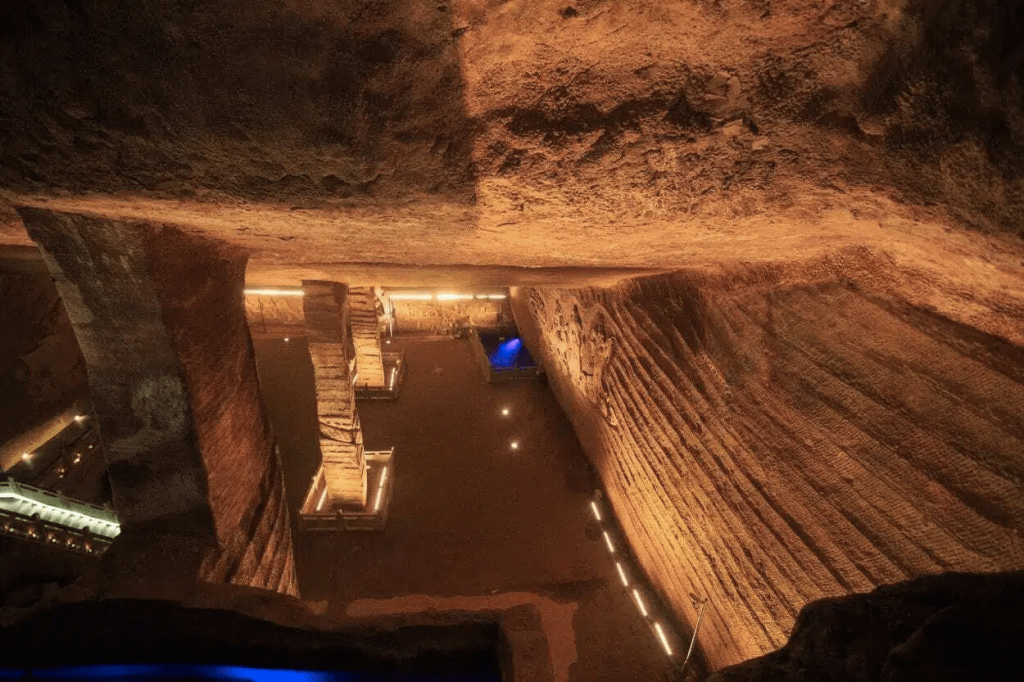
Image Credit : Zhangzhugang – CC BY-SA 3.0

Only one of the caves has been opened for tourism, chosen because of the stone carvings found inside which depict a horse, fish and bird. The Longyou Caves of Zhejiang province in China truly are an enigma and it has ten enduring mysteries that remain unresolved, despite more than two decades of research.

1. How Were the Longyou Caves Constructed?

A rough estimation of the workload involved in building the Longyou Caves is awe-inspiring. The quantity of rock that would have been removed in the overall excavation of the grottoes is estimated to be nearly 1,000,000 cubic meters (35,314,666 cu ft). Taking into account the average digging rate per day per person, scientists have calculated that it would take 1,000 people working day and night for six years to complete.

These calculations are based purely on hard labor, but what they haven’t taken into account is the incredible care and precision of the sculptors, meaning that the actual workload would far surpass the theoretical estimation. As for how they were constructed and what tools were used, it is still unknown. No tools have been found in the area, and, as we will explore later, scientists still don’t know how they achieved such symmetry, precision, and similarity between the different caves.

2. No Traces of Construction

Despite their size and the effort involved in creating them, so far no trace of their construction, or even their existence, has been located archival sources. Although the overall excavation involved almost a million cubic meters of stone, there is no archaeological evidence revealing where that quantity of stone went, and no evidence of the work. Moreover, there is not a single historic document that refers to them, which is highly unusual considering the sheer scale of the project. The origin of the Longyou Caves is a complete and utter mystery.

Experts wonder why the walls at the Longyou Caves in China are covered in chiseled parallel lines. (Zhangzhugang / CC BY-SA 4.0 )

3. Why Were the Walls Chiseled?

Every single one of the Longyou Caves is covered, from floor to ceiling, in parallel lines that have been chiseled into virtually every surface. The effect is a uniform pattern throughout the caves, which would have required immense manpower and endless hours to create. The question is why? Was such labor-intensive work purely for decoration? Are the lines or patterns symbolic in some way? All that is currently known is that the markings are similar to those found on pottery housed in a nearby museum, which is dated between 500 and 800 BC.

4. Lack of Fish in the Longyou Caves

When the caves were first discovered, they were filled with water, which presumably had been there for a long period of time. They had to be pumped out in order to realize that these were not just like the other “bottomless ponds” found within the area, but rather man-made structures. Most villages in southern China contain very deep ponds, which have been called “bottomless ponds” by generations of villagers. These ponds teem with fish, which are easily caught. However, after the first cave was pumped dry, not a single fish was to be seen, or any other sign of life.

5. How Did the Longyou Caves Remain So Well Preserved?

One of the most interesting and challenging questions is how the Longyou Caves have been able to keep their structural integrity for more than 2,000 years. There are no signs of collapse, no piles of rubble, and no damage despite the fact that in some areas the walls are only 50 centimeters (20 in) thick. Over the centuries, the area has gone through numerous floods, calamities and wars, the mountains have changed their appearance and exposed stones have been weathered, but inside the Longyou Caves, the form, patterns and markings are still clear and precise – it is as though they were built yesterday.

6. How Did the Builders Work in the Dark?

Due to the great depths of the caves, some areas at the bottom, which are not exposed to the opening above, are pitch-black. Yet even those dark areas are decorated with thousands of parallel lines on the walls, columns, and ceiling. So how did ancient people work in the dark? 

According to Jia Gang, a Tongji University professor specializing in civil engineering: “There should be lamps, because the cave’s mouth is very small, and the sunbeam could only shine in the cave at a certain angle during a certain period of time. As one goes deeper into the cave, the light becomes dimmer. At the cave’s bottom, which is usually dozen of meters from the mouth, one could hardly see anything.” However, this was at least two millennia ago and nothing that could have been used for lighting has been found.

7. Were the Longyou Caves Meant to be Connected?

All of the Longyou Caves are distributed across an area of only one square kilometer (0.38 sq mi). Considering such a high density, one cannot help asking whether some grottoes were meant to be connected. What would be the purpose of making so many separate caves in such a tight area without connecting them? In many areas, the walls between the caves are very thin, only 50 centimeters (20 in), but they were never linked so it appears they were intentionally kept apart. What’s more, many of the Longyou Caves are almost identical to each other.

8. Who Built the Longyou Caves?

Nobody has any idea who built the caves. Some scientists have claimed that it was not possible or logical for such as mammoth job to have been undertaken by regular village people. Only the emperor and the leaders could have organized such a huge project, like the construction of the Great Wall , which was built to defend against invasion from the outside world. But if it was commissioned by an Emperor, why are there no historical records of its construction?

9. How Did They Achieve Such Precision?

The scale of the Longyou Caves is magnificent and momentous, the design was delicate and scientific, the construction was sophisticated, and the precision is indicative of superior craftsmanship. The model, pattern and style of each cave is extremely similar. Every grotto is like a grand hall. One side is steep and another side is 45% inclined. The four walls are straight; the edges and corners are clearly demarcated. The chiseling marks within the Longyou Caves are uniform and precise.

“At the bottom of each cave, the ancient [builders] wouldn’t be able to see what the others were doing in the next grotto,” explained Yang Hongxun, an expert at the Archaeological Institute of Chinese Academy of Social Sciences. Nevertheless, “the inside of each cave had to be parallel with that of the other, or else the wall would be holed through. Thus the measure apparatus should have been very advanced. There must have been some layout about the sizes, locations, and the distances between the caves beforehand.”

With the help of modern equipment and methods, the investigators measured the sizes of the walls, and surprisingly found that the overall construction is extremely accurate. The walls between the caves are of the same thickness in different sections. So how did they achieve this precision? What were their methods?

Stairs leading down into one of the once-submerged Longyou Caves. (Zhangzhugang / CC BY-SA 4.0 )

10. What Were the Longyou Caves Used for?

Following extensive investigations and study, scientists and scholars have attempted to put forward explanations for the grottoes, but none so far provide a convincing explanation for why they were built and what they were used for.

Some archaeologists have suggested that the grottoes were the tombs of old emperors, emperor halls, or places for storage. But this interpretation is far-fetched. No funeral objects or tombs have been found and no artifacts left behind. If it were used like an emperor’s palace, the caves surely would have been designed differently, with separate rooms for different purposes like entertaining, meeting, and sleeping. But no evidence can be found of this and no traces of habitation have been found.

Another hypothesis is that the Longyou Caves were used for mining and extracting some type of mineral resource. However, mining operations would have required equipment and apparatus to extract the rocks and transport them. Again, no traces of this have been found, nor any evidence of where the rocks were taken. And of course, if the caves were just for mining, why create such intricate decorations on the walls, columns and ceilings?

Finally, some have suggested that these caves were the places for troops to be stationed and that an emperor of the past wanted to keep his soldiers out of view in order to keep his war preparations secret. However, these caves could not have been built in a short period of time. They would have taken many, many years to build so it is unlikely to have been done in preparation for war, which tends to come about much more quickly. Furthermore, there are no signs of people having stayed in the caves.

Despite decades of research, very few answers have emerged to explain the enigma of the Longyou Caves . Our ancient ancestors have achieved many wondrous things throughout history, but this discovery from China is truly an unsolved mystery which has yet to be cracked.

THE MYSTERY OF THE LONGYOU CAVES

Link: https://peacelilysite.com/2023/03/24/the-mystery-of-the-longyou-caves/

#Travel #TravelChina #LongyouCaves #Mistery

Source: https://www.ancient-origins.net/ancient-places-asia/longyou-caves-001248, https://www.heritagedaily.com/2020/08/the-mystery-of-the-longyou-caves/134874
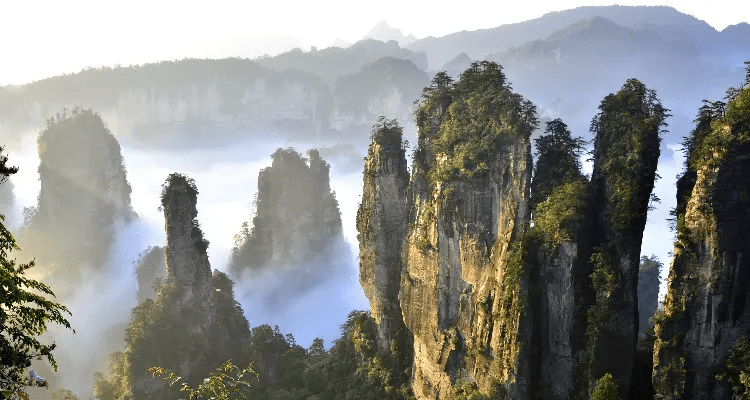
Zhangjiajie National Forest Park

A Natural Wonderland of Pillar Rock Formations and Majestic Scenery

Nestled in the central-eastern region of China lies the Zhangjiajie National Park, a sprawling park that is part of the Wulingyuan Scenic Area, featuring several protected areas that boast breathtaking natural wonders. The park, covering an area of 18.59 square miles (48.15 sq km), has been recognized as a GANP (Global Geoparks Network) Ambassador Park, and it is no surprise why it has earned such an honor. The park is home to the Zhangjiajie National Forest Park, which served as the inspiration for the film Avatar, making it a must-see destination for tourists and nature lovers alike.

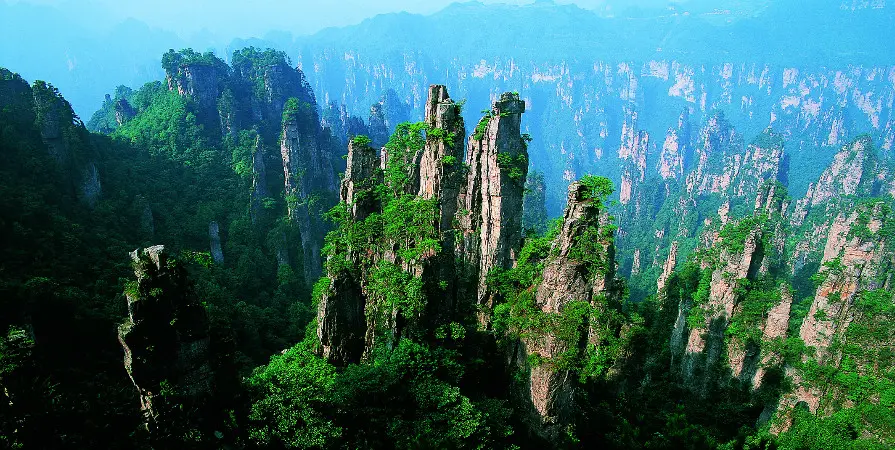
One of the most remarkable features of the park is its dense forests, deep ravines, deep canyons, unusual peaks, caves, and pillar-like rock formations that are scattered throughout the area. These pillar rock formations, which are made of quartz-sandstone and formed by physical erosion caused by the abundant rains, are the park’s most renowned attraction. They are not typical limestone-eroded pillars and are unique to the Zhangjiajie National Park.

The mountainous terrain, the lush forests, and the rolling clouds combine to create breathtaking scenery that inspires various forms of artwork, from literature to paintings, and even films. The landscapes created by the mountains and the pillar-like rock formations are the epitome of Chinese landscapes.

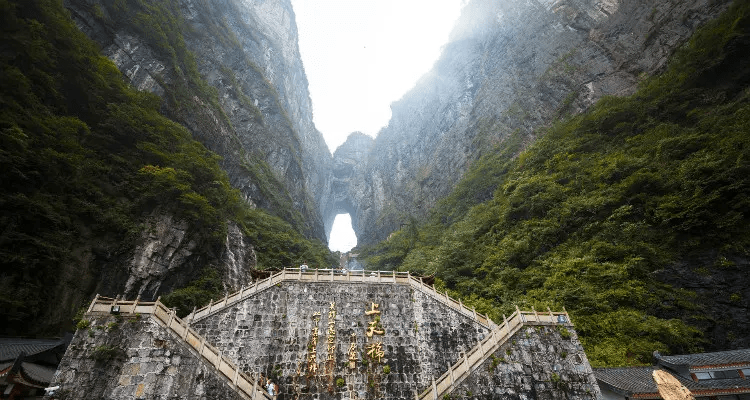
The door to the Heaven, Tianmen Mountain

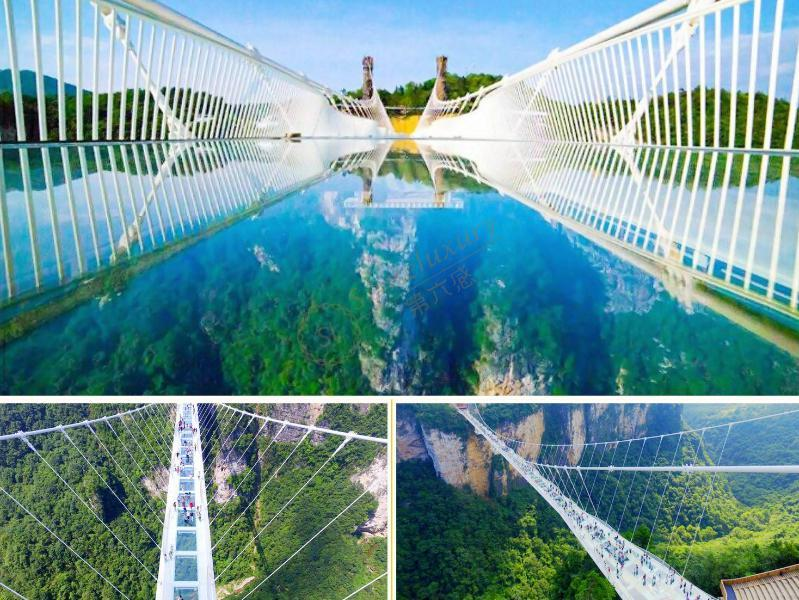
Visitors to the park have the opportunity to experience the splendor of the national park through various means, including hiking, biking, and taking a cable car or elevator. Two record-holding features in the park that help visitors experience the splendor of the national park are the Bailong Elevator and the Zhangjiajie Grand Canyon Glass Bridge.

The Bailong Elevator, affectionately known as the “hundred dragons sky lift,” is the world’s tallest outdoor lift, and it carries around 50 people at a time up 1,070 feet (326 m) in less than two minutes. From the top, visitors can enjoy stunning views of the surrounding mountains and forests.

The Zhangjiajie Grand Canyon Glass Bridge is the longest and highest pedestrian glass bridge in the world, stretching across 1,410 feet (430 m) at a height of 980 feet (300 m). Walking across the bridge, visitors can experience the thrill of walking on glass while enjoying panoramic views of the canyon and the mountains beyond.

From: https://m.senseluxury.com/guides/Asia-China/article-11148
Bailong Elevator

Features

The five most spectacular sights are the unusual peaks, deep canyons, beautiful waters, thick forests, and mysterious caves.

The scenery of Zhangjiajie National Forest ParkThe scenery of Zhangjiajie National Forest Park
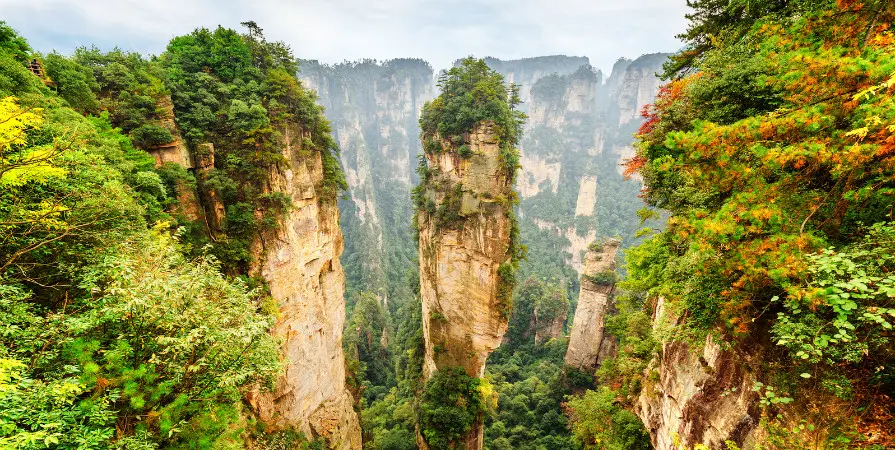
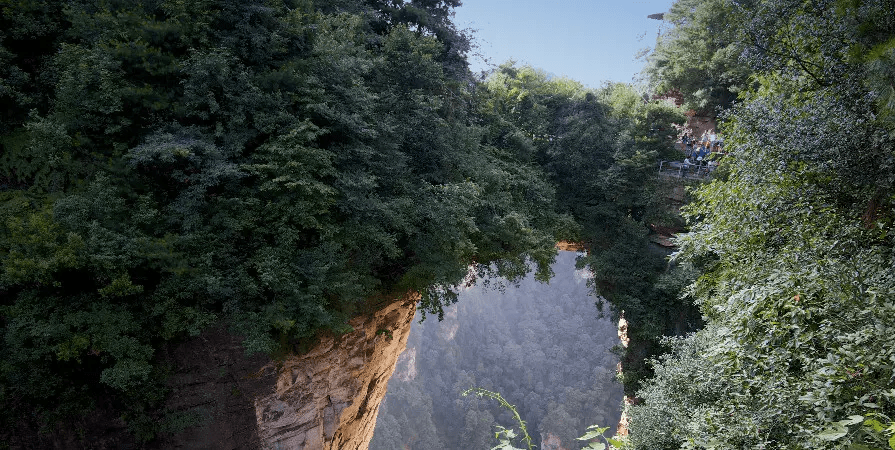
  • The peculiar peaks refer to the 3,000 or more mountain peaks made of quartz sandstones. The three representative peaks are Camel Peak, Drunk Stone Peak, and Five Finger Peak, which are elegant and magnificent.
  • The deep canyons refer to 32 canyons, each more than 2,000 meters in length. The most famous ones are Jinxi Canyon, Shentang Canyon, and 10-Li Gallery Canyon.
  • The beautiful water refers to the more than 800 waterscapes in the scenic area, including streams, springs, lakes, pools, and waterfalls.
  • Caves of different shapes can be found here. The most outstanding is Yellow Dragon Cave, which contains beautiful stalactites.
  • The rural landscapes also attract a lot of visitors. The local farmers are hospitable and you may visit their homes.

Zhangjiajie is picturesque to visit at any time of the year, but April to October is recommended, as winters are cold and the tourist areas are less accessible. But when is it best to go? It depends on the experience you’re looking for.  

For weather, September and October are the best times to go, when the weather is clear and comfortable. 

The national park is busy year-round except for winter from December to February. The peak season is from May to October.  

The short period from early-November to mid-November is considered to be the perfect time with good weather and without heavy crowds.  

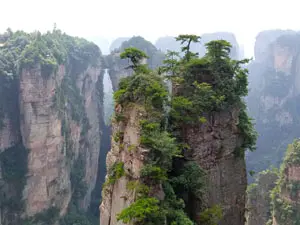
Yuanjiajie (‘Yuan Family Territory’ 袁家界) contains “Avatar Hallelujah Mountain“. It is the most popular sight in Zhangjiajie. Yuanjiajie is a butte (steep-sided platform mountain), surrounded by higher peaks, grotesque rock pillars, and deep valleys. The highlights of Yuanjiajie include the First Bridge under Heaven, Avatar Hallelujah Mountain, and ‘Lost Souls Platform’.

The easiest way to get up to Yuanjiajie is by the famous Hundred Dragon Elevator (Bailong Elevator). But we don’t recommend it (unless you arrive before 7 am or descend before 4 pm) due to typical 2-hour lines for the 2-minute ride. A 1–1½-hour hike is a better way if you are fit. 

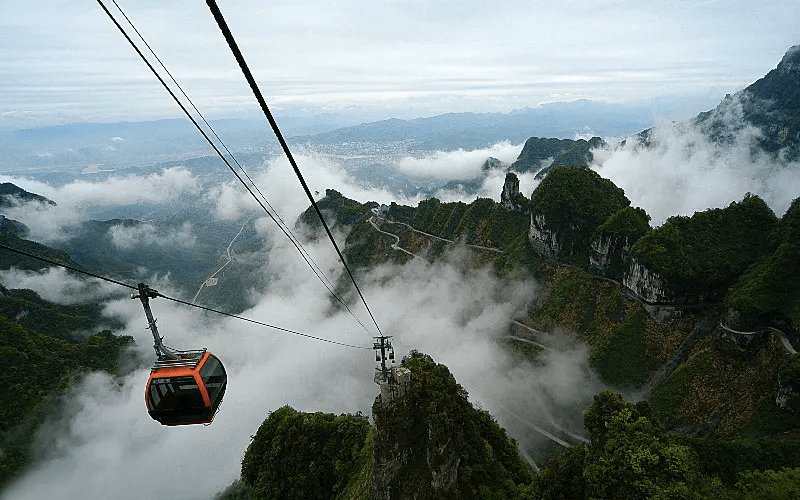
Tianzi Mountain (‘Heaven Son Mountain’ or ‘Emperor Mountain’ 天子山Tianzishan) offers the best chance of photographing a sea of clouds, mainly during spring or early autumn.

Don’t miss the cable car up to this area. The 30-minute ride will take you through the towering formations and give you the opportunity to take great fly-by photos. 

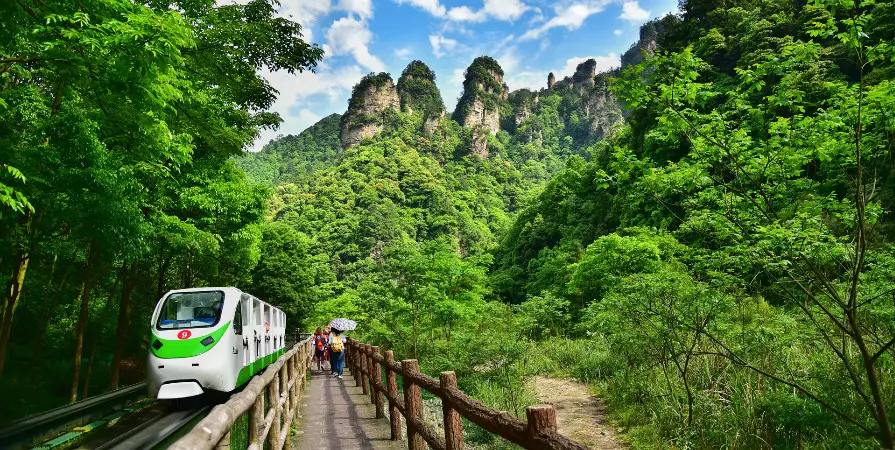
If your time permits, you can visit Ten-Mile Gallery where you can take a monorail train. After the train, you can hike up to Tianzi Mountain. 

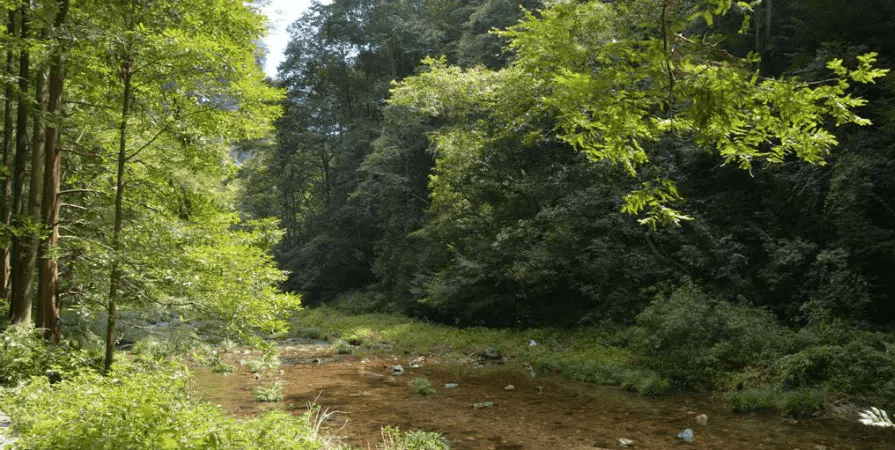
Gold Whip Stream (Jinbian Xi 金鞭溪) is a brook at the foot of the towering mountains. It is about 7½ km (4½ miles) long, about two hours’ walk. 

 It is an easy and relaxing walk along the stream. It gets quieter as you walk farther from the shuttle bus stop. 

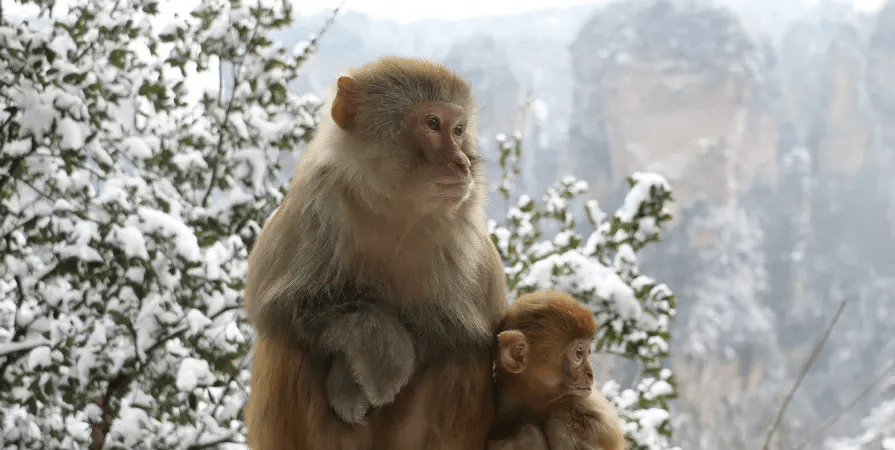
The 400-meter-high cliff by Gold Whip Stream is spectacular, especially at sunset. One thing to watch out for is the wild monkeys along the stream. 

Zhangjiajie National Park is an extraordinary destination that should be on every nature lover’s bucket list. It’s a place where visitors can connect with nature, experience the thrill of adventure, and marvel at the beauty of the world around them. Whether you’re a seasoned traveler or a first-time visitor to China, Zhangjiajie National Park is a must-see destination that will leave you breathless and in awe of the natural wonders of our world.

ZHANGJIAJIE China most Amazing National Forest Park (Avatar floating mountains). Best by drone 
A Natural Wonderland of Pillar Rock Formations and Majestic Scenery

Link: https://peacelilysite.com/2023/03/16/zhangjiajie-national-forest-park/

#Travel #TravelChina #ChineseCulture#ZHANGJIAJIE #AmazingNationalForestPark

Leshan Giant Buddha

Leshan Giant Buddha

Around a 2-hour drive from downtown Chengdu lies one of the most marvelous ancient wonders of China, the Leshan Giant Buddha, also known as Lingyun Giant Buddha. Carved into a cliff-face along a peaceful river, this imposing figure, at 71 meters (over 200 feet) in height, dates back over a thousand years and is the largest and tallest stone Buddha statue in the world.

Carved in the 8th century during the Tang Dynasty, the Leshan Giant Buddha was built during a peak period of Buddhist culture in ancient China. The sculpture depicts Maitreya, a very popular Buddha in the Tang Dynasty. The sutras say that when Maitreya comes into world, the world will be at peace. The female Chinese female sovereign Wu Zetian even proclaimed she was the reincarnation of Maitreya and was a strong advocate of Maitreya sculptures being built as a way to maintain her rule. People liked to carve Maitreya sculptures and believed that Maitreya would bring light and happiness into their lives in the future.

This remarkable historic site was listed as a UNESCO World Heritage Site since 1996. It is an amazing and immense religious relic that was built over a period of 90 years from 713 to 803 AD. The statue was constructed at the confluence of three rivers notorious for their turbulent waters; it was hoped that the Buddha’s presence would help calm the rivers’ waters.

Hai Tong’s Legacy

The Buddhist monk Hai Tong was concerned about the safety of the local people who earned their living around the three rivers. Many people traveling by boat in the area were killed by the turbulent waters each year before the Leshan Giant Buddha was created. Hai Tong decided to carve a statue of Buddha beside the river and believed that this sculpture would appease the river gods and keep the locals safe.

He had begged for over 20 years to accumulate enough money needed to build this statue. During this hard period in his life, he refused official help because the parties who offered it didn’t just want to help him but wanted to gain personal profits from the project. He even gouged out his eyeball in protest against the local authorities. These officials backed off after this behavior. Fortunately, Hai Tong’s disciples continued his work after he passed away and finally completed the sculpture in 803 AD after 90 years of hard work.

There is a cleverly designed drainage system behind the Buddha’s head and between his two ears. This important design aspect is the reason why the great Buddha of Leshan has not eroded despite having existed for thousands of years. The “spectacle”

Interestingly, there haven’t been any shipwrecks since the Buddha was built. Many stones were actually removed from the cliff and transferred to the rivers during construction, which made the waters calmer and safer than before. The project didn’t end after the Leshan Giant Buddha was finished.

Buddhism had been one of the most important religions in ancient China and many other people built statues around the giant Buddha to thank the gods . Numerous small Buddhas were carved around this huge statue. People even excavated the cliff tombs of the Han Dynasty around the Leshan Giant Buddha. Multiple historic sites make the Leshan Giant Buddha particularly important for archaeologists and researching people’s lifestyles in ancient times.

With the most sunny days and beautiful scenery, April and October are the best months of the year to travel to see the Leshan Giant Buddha.

There are two ways for visitors to see the Giant Buddha. One is to walk down from the top near the head and end at its feet. This involves some waiting in line, sometimes for hours on particularly busy days, and larger crowds, as well as many narrow and steep stairs, but offers you a more intimate perspective of the Buddha. This up-close view will allow you to appreciate the statue’s enormity; its shoulders spread over a width of 28 meters (as long as a basketball court!) and its pinky toe is large enough for a person to sit on.

The other option is to view the statue from a boat on the river immediately in front of it. The boat trip allows you to get the best and fullest front-facing view of the Buddha from a distance and is ideal for those who prefer not to wait in line and climb the stairs. The cruise takes around 30 minutes there and back, stopping for several minutes in front of the Buddha for visitors to appreciate the statue and take pictures. It’s best to sit on the right side of the boat, as the Buddha will end up being on that side once you arrive.

Leshan Giant Buddha

Link:https://peacelilysite.com/2023/02/23/leshan-giant-buddha/

#Travel#China#LeshanGiantBuddha#Buddhism#MarvelousAncientWonder

Source: https://www.trippest.com/chengdu-travel-guide/leshan-giant-buddha/ https://www.thechinaguide.com/sight/leshan-giant-buddha#:~:text=It’s%20best%20to%20sit%20on,worth%20seeing%20from%20both%20angles.

The Fourth Stop of Our Family Trip: Horseshoe Bend

The Fourth Stop of Our Family Trip: Horseshoe Bend

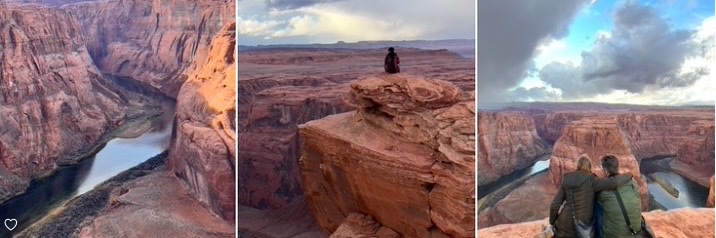
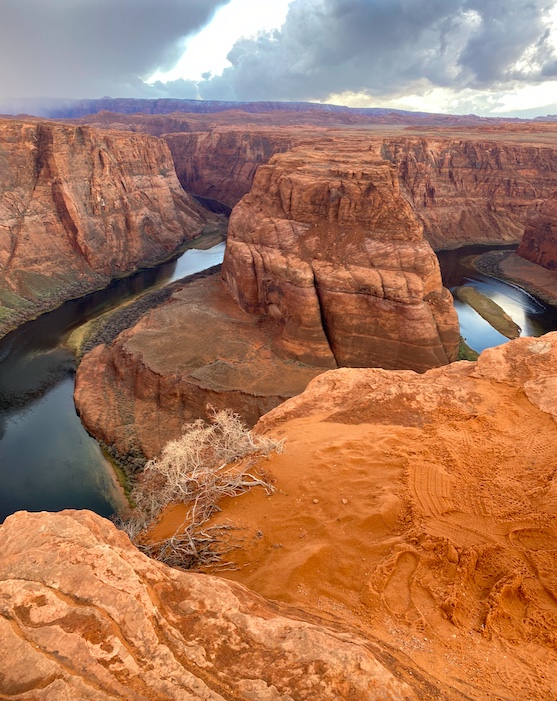
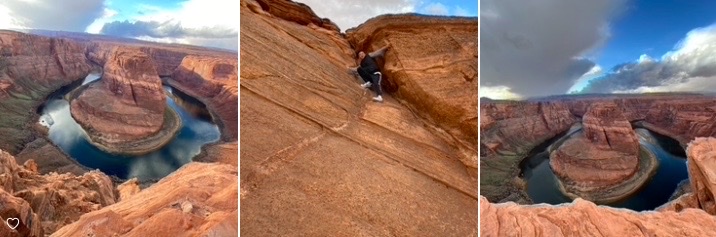
During our family trip, one of the most stunningly beautiful places we visited was Horseshoe Bend. As we approached the overlook, I was immediately impressed by the diamond blue water and the strange-shaped cliffs that surrounded the bend in the Colorado River. We stepped near the edge of the cliffs, and it was stunning how large the canyon was. The river was far below the towering cliff-sides, and I felt almost dizzy being so small and so high above the canyon floor.

We walked around the overlook area, which was full of visitors admiring the landscape. Despite the large crowd, everyone seemed to be happy, enjoying the beauty of nature and forgetting about the unhappiness in their lives. It was as if they were all experiencing the healing power of nature.

People were busy taking photos and posing for pictures, trying to preserve their memories of this awe-inspiring landscape that was formed over millennia of the river carving through the rock. And it made me realize how important it is to protect and preserve our planet, our beautiful home Earth.

The river, although beautiful, was much below its usual water height, due to the ongoing drought and unsustainable water use in this area. As a society, we need to focus on preventing global climate change, cleaning up pollution, and taking care of our planet for future generations. Instead of spending resources on trying to inhabit other planets, which are currently devoid of life, we need to work together to save our own planet.

If we don’t take action, our future generations might not have the same opportunities to experience and appreciate the beauty of nature that we have today. Earth is our only place for food, shelter, and energy for at least the next thousand years. So let’s join hands and work together to protect and preserve our beautiful home planet, so that our future generations can enjoy the same wonders of nature that we do today.

Our visit to Horseshoe Bend was more than just a family vacation. It was a powerful reminder that we all have a responsibility to protect and preserve our planet. As a result, I have made a personal commitment to reduce my consumption of unnecessary goods, and to practice the principles of “reduce, reuse, and recycle.” Additionally, I pray for an end to man-made disasters, such as war, and for the regeneration of healing powers from everyone’s heart.

In reflecting on this experience, I was reminded of the words of Peace Pilgrim, who said, “Remember the power of thought, and think only about the best that could happen. Dwell only upon the good things you want to see happen. Remember, through thought you create your inner conditions and help to create the conditions around you. We are all helping to make a great decision.” These words inspire me to focus on positivity and to believe that my thoughts and actions can create positive change in the world.


The Fourth Stop of Our Family Trip: Horseshoe Bend

Link: https://peacelilysite.com/2023/02/16/the-fourth-stop-of-our-family-trip-horseshoe-bend/

#Travel #ColoradoRiver #HorseShoeBend #Earth #FamilyTrip#Vacation

Winter Break Family Trip — Ligai Canyon

Winter Break Family Trip — Ligai Canyon

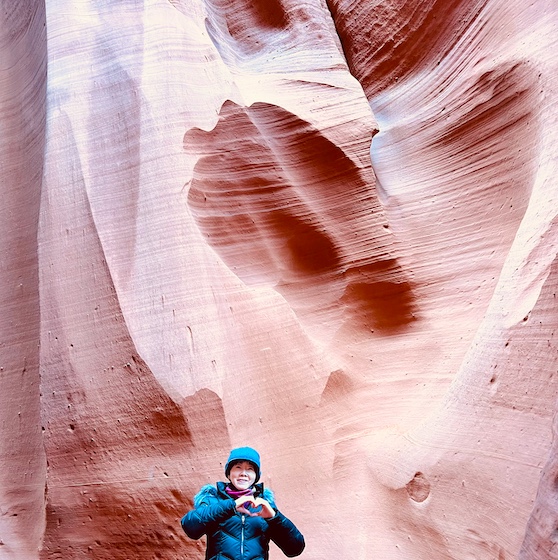
The third stop of our family winter break trip was the Ligai Canyon, and what an incredible experience it turned out to be. We had initially planned to visit Antelope Canyon, but all the tour tickets were sold out. Instead, the agent suggested we visit Ligai Canyon, a similar but lesser-known destination, the ticket is $70 per person, and we were pleasantly surprised by what we found.

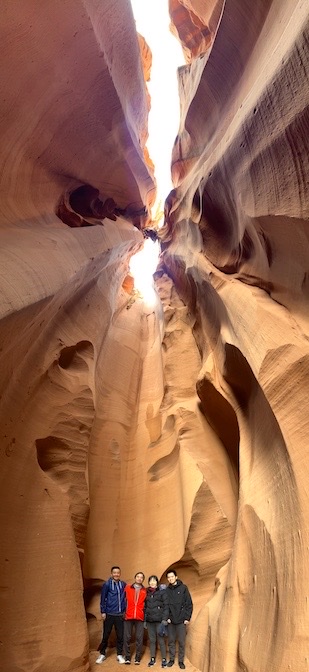
Ligai Canyon is located on Navajo private property, and all the tour guides are from the same family. Our tour guide was knowledgeable and friendly, he shared a wealth of information about the Navajo culture and way of life. He told us about the significance of blue as a protective color and showed us his beautiful turquoise bracelet. He also shared details about the four sacred mountains, the use of native herbs for medicine, and the Navajo’s life on their huge ranch, which is 6 miles by 6 miles.

We had very small group, just 6 people, and the tour place was not crowded at all. The tour guide shared that when he was a child, the canyons were his playground, and he and his friends had parties in the upper Antelope Canyon during their high school years. He never imagined that people would pay theme park prices to visit these places that were once their playgrounds.

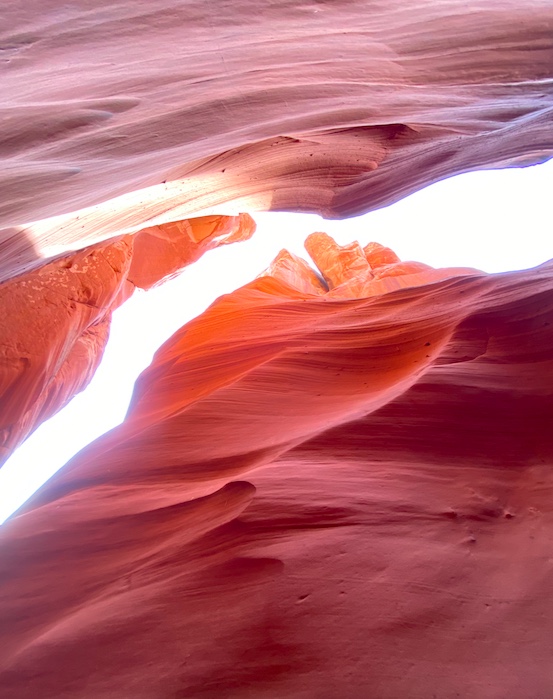
The Canyon truly captures the beauty and power of nature. It’s awe-inspiring to think about how the canyon was formed over millions of years by the forces of water and wind. The intricate patterns and shapes carved into the stone walls of the canyon are a testament to the sheer force of nature.

As you explore the canyon, you’ll be struck by the diversity of its features. From the heart-shaped carvings on the walls to the narrow pathways and towering cliffs, each aspect of the canyon offers something unique and breathtaking. The dynamic spiral shapes that wind their way up the walls are particularly mesmerizing, and add to the overall sense of movement and energy that permeates the canyon.

Another striking feature of the Ligai Canyon is its reddish hue. This rich, vibrant color is the result of the iron oxide in the rock, and adds an extra layer of beauty to an already stunning landscape. Whether you’re gazing up at the towering cliffs or admiring the intricate patterns on the walls, you’ll be awed by the sheer magnificence of this natural wonder.

At the end of the tour, our guide imparted some wise words to my two sons. He told them to learn from their grandparents and parents, and to hold onto their native language, as there is a wealth of wisdom and knowledge contained within it. My sons were deeply moved by his words, and I could see that they had taken his message to heart.

I hope that they will continue to pass down the Chinese culture to future generations, preserving its rich history and traditions. This was truly the highlight of the tour for me, and I am grateful for the guide’s insights and encouragement. By imparting these valuable lessons to my sons, he has given them a gift that they will carry with them for the rest of their lives.

Winter Break Family Trip — Ligai Canyon

Link:https://peacelilysite.com/2023/02/10/winter-break-family-trip-ligai-canyon/

#Travel#AntelopeCanyonValley#Trails#Hiking#LagaiCanyon #Navajo#LigaiCanyon#NativeAmerica

Winter Break Family Trip — Zion National Park

Winter Break Family Trip — Zion National Park

Our second stop on the road trip was Zion National Park. Zion National Park is a stunning natural wonder with over 200 sq. miles of diverse landscapes, towering cliffs, and diverse flora and fauna. It attracts more visitors than Yosemite National Park last year. Zion offers a unique blend of adventure, beauty, and inspiration.
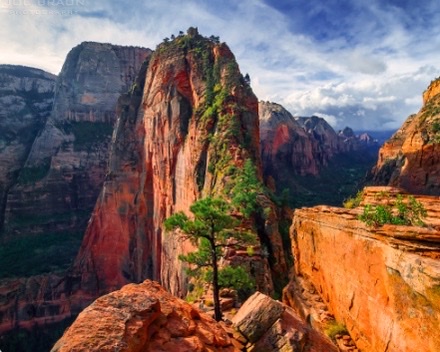
One of the hikes we did was the Angel’s Landing trail, a 5-mile round trip that is considered to be very challenging. The trail is steep and zigzags up the mountain, and a permit is required to complete the entire hike.

Despite the difficulty, my older son and husband were determined to reach the summit. They persevered and eventually made it to the top, where they were rewarded with breathtaking views of the surrounding mountains and valleys. In winter time the mountain top gets really icey, micro spikes are highly recommended.

I was unable to finish the Angel’s Landing trail, due to the challenging winding path resembling Lombard Street. I had to stop just before the permit-required section, feeling exhausted. Nevertheless, I still appreciated the views from my stopping point. Although I didn’t reach the summit, the overall experience was still memorable.

It’s worth noting that the Angel’s Landing trail can be dangerous, and since 2004, 17 people have died while attempting it. It’s important to be prepared and take all necessary precautions when tackling this challenging hike.

Riverside Trails

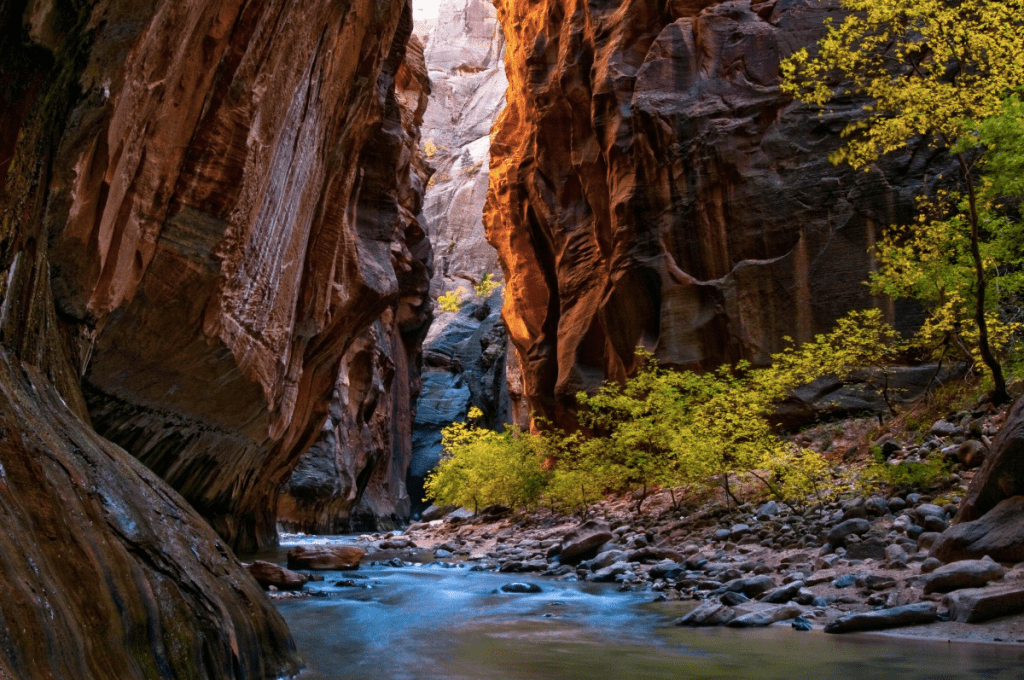
We explored other trails at the following day, like the Riverside Trail, but the weather didn’t cooperate. Despite heavy rain and feeling cold and wet, we were unable to fully enjoy the hike. However, we look forward to returning to the majestic and awe-inspiring Zion National Park in better weather. Overall, Zion National Park was an amazing experience and it is a must-see destination for anyone who loves nature and outdoor activities.

Winter Break Family Trip — Zion National Park

Link: https://peacelilysite.com/2023/02/01/winter-break-family-trip-zion-national-park/

#Travel#ZionNationalPark #Trails#Hiking#Angeleslanding

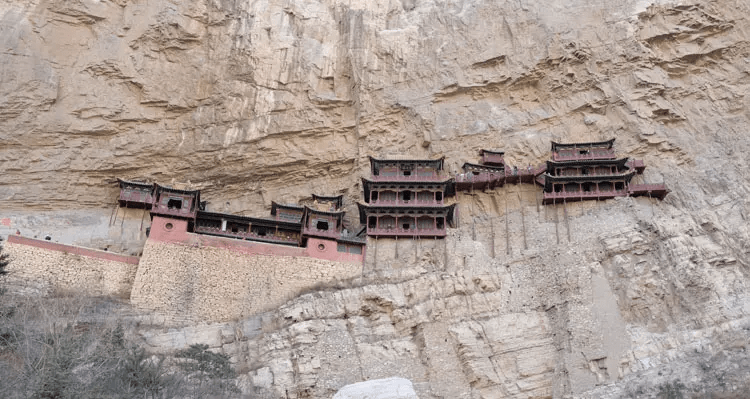
The Hanging Temple in China

By Charlie fong – Own work, CC BY-SA 4.0, https://commons.wikimedia.org/w/index.php?curid=82753942

The Hanging Temple in China

China have about a dozen of hanging temples. They are truly relics in Chinese architecture history. The most famous hanging Temple, is Hengshan Hanging Temple, Hanging Monastery or Xuankong Temple, is a unique and ancient structure located in Hunyuan County, Datong City, Shanxi Province, China. This temple is built into a cliff that stands 75 meters or 246 feet above the ground, near Mount Heng. The closest city, Datong, is located 64 kilometers or 40 miles to the northwest.

The Hanging Temple is one of the main tourist attractions and historical sites in the Datong area, along with the Yungang Grottoes. It is considered unique because it is the only existing temple that combines three Chinese traditional philosophies or religions: Buddhism, Taoism, and Confucianism. The structure is held in place with oak crossbeams that are fitted into holes chiseled into the cliffs, and the main supportive structure is hidden inside the bedrock.

The temple was built more than 1,500 years ago by a monk named Liaoran in 491 AD. Over the years, many repairs and extensions have been made to the temple, leading to its present-day scale. The temple comprises of 40 halls and pavilions that are all built on cliffs that are over 30 meters or 98 feet from the ground. The distance from north to south is longer than from east to west, and it becomes higher and higher as one moves from the south gate to the north along the mountain.

The temple’s layout includes the Qielan Hall (Hall of Sangharama), Sanguan Hall (Hall of Three Officials), Chunyang Hall, Hall of Sakyamuni, Hall of Three Religions, and Guanyin Hall. The Hall of Three Religions mainly enshrines Buddhist deities, as well as both Taoism and Confucianism. The statues of Sakyamuni (middle), Lao-Tze (left) and Confucius (right) are enshrined in the hall, reflecting the prevailing idea of “Three Teaching Harmonious as One” in the Ming and Qing dynasties (1368–1911).

By Zhangzhugang – Own work, CC BY-SA 3.0, https://commons.wikimedia.org/w/index.php?curid=32138611

The Hanging Temple is a unique and ancient structure that combines three Chinese traditional philosophies or religions, and is one of the main tourist attractions and historical sites in the Datong area. Its location on a sheer precipice and its history make it a must-see destination for anyone visiting China.

You can visit the Hanging Temple all year around, but considering the Datong weather, normally from April to October is the best period. Datong has a temperate continental climate with distinct seasons, low rainfall, a short summer, and a long freezing winter (November–March).

There are big temperature differences between morning and night, day to day, and mountain and valley, so please bring a warm jacket with you even if you travel in the summer time.

In order to protect the temple, the number of visitors is limited to 80 in the temple at a time. Therefore, it is recommended to visit the Hanging Temple early in the morning to avoid long waits especially in the high travel seasons (summer and holidays).

The Hanging Temple in China

link: https://peacelilysite.com/2023/01/27/the-hanging-temple-in-china/

#HangingTemple#Buddhism#Datongcity#TravelChina # Architecture #ChineseCulture#Travel #Temple

Source: https://www.chinahighlights.com/datong/attraction/hanging-monastery.htm, https://en.wikipedia.org/wiki/Hanging_Temple

Winter Break Family Trip – Day One

Winter Break Family Trip

(Day One)

Winter break is a time for family, fun, and relaxation, and this year my family and I decided to take a road trip. My sons planned all the details, from where to go and what to see, to where to stay. Our itinerary included stops in Las Vegas, Zion National Park, Antelope Canyon Valley, and Grand Canyon National Park. We set off right after Christmas, with our first destination being Las Vegas.

During the 9-hour drive to Las Vegas, my husband and two boys took turn to drive. To my surprise I felt a sense of calm and relaxation that I had never experienced before while on a road trip. In the past, I would have been sweating and nervous while my sons were driving, but this time I was able to enjoy the scenery, nap, and snack while calmly chanting the Buddha’s name in my mind. This experience helped me to understand the Heart Sutra more deeply, which states “…. Without any hindrance, no fears exist, far apart from every perverted view, the bodhisattva entered complete nirvana….”

The Heart Sutra teaches about the nature of reality, and this passage in particular expresses the idea that when we let go of our attachments and fears, we can experience true freedom and peace. This is what I felt during my road trip – a sense of having no worries, fears, or hindrances. I was able to fully enjoy the beauty of the landscape and the company of my family without any distractions.

Not only did I have a great time on the trip, but I also feel a sense of progress in my personal cultivation. I am happy to see that I have made some progress in my mindfulness and relaxation practices. This road trip was a perfect opportunity to put them into practice and experience the benefits firsthand.

A road trip is a way to disconnect from the daily stressors and focus on the present moment. It is also a great opportunity to explore new places, create memories with loved ones, and reflect on your personal growth.

First Stop: Las Vegas

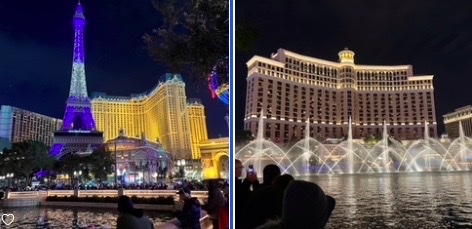
The first stop on the road trip was Las Vegas, and we had a great time exploring the city. One of the highlights of my trip was seeing the beautiful music fountain and Christmas-themed conservatory at the Bellagio. The water was choreographed to the beat of the music and the colorful lights added to the visual spectacle. It was a perfect way to relax after a day of sightseeing.

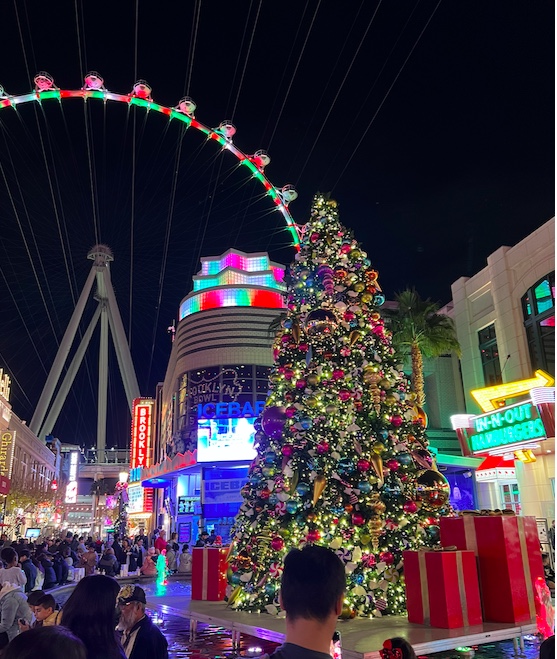
In addition to the music fountain, I also got to experience the festive holiday atmosphere in Las Vegas. The city was decked out in holiday decor, with colorful lights and decorations adorning the streets and buildings. It really added to the holiday cheer and made me feel like I was in a winter wonderland.

To get around the city, we took the monorail, which was a convenient and easy way to travel. It was a great alternative to driving or taking a taxi and it allowed me to see some of the city’s landmarks and attractions from a different perspective.

Winter Break Family Trip (Day One)

Link: https://peacelilysite.com/2023/01/26/winter-break-family-trip-day-one/

#WinterBreak#Family#RoadTrip#LasVegas#MusicFountain #Monorail #Christmas #Buddha #HeartSutra#Cultivation

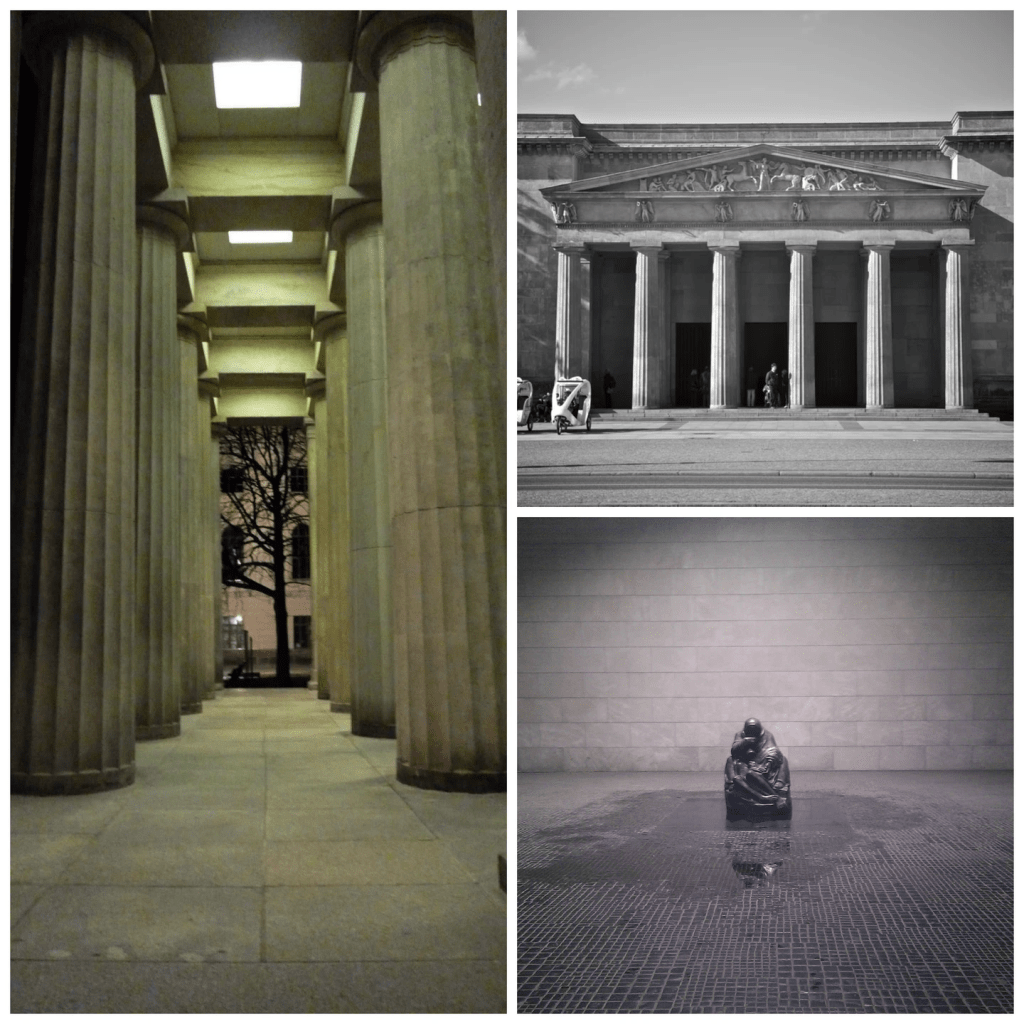
Neue Wache – Memorial of the Victims of War and Tyranny

Neue Wache – Memorial of the Victims of War and Tyranny

Originally commissioned by King Frederick William III of Prussia in 1816 to be the new guard house for the royal family, The Neue Wache building, still very much intact, is used as the Central Memorial of the Federal Republic of Germany for the Victims of War and Dictatorship. Rich in history and architecturally significant, the Neue Wache building is a prodigious landmark in the capital.

Placed on the bustling boulevard of Unter Den Linden, it rubs elbows with Humboldt University and the Zueghaus. Its neoclassical architecture is thanks to Karl Friedrich Schinkel, who was the demonstrative figure in the Greek architectural revival movement that took place during his time. His intent was to keep the building as open as possible, as seen by the columns and the courtyard. Like many buildings in Berlin, it has seen many tumultuous political and social tides, bearing witness to monarchy, fascism, disintegration, and reunification. Starting as a royal guard house until the devastation of World War I, it now serves as a house of remembrance.

To step inside the Neue Wache today is to be confronted by a different memorial – with the similarly empty interior now interrupted by another eye catching detail – that of a small bronze statue of a grieving mother sits on the ground, holding her son who died in the war. It is placed directly under the Oculus and on top of the remains of the unknown soldier and concentration camp victim. The empty hall made the mother seem so weak and helpless, and the grief so great…

In front of the statue, you will sharply experience the pain of the mother who lost her son, and the cruelty and ugliness of war. This “old, lonely, remorseful woman” represents all the postwar mothers in the world.

The casualties of war are a number for a country, but for any mother, it is a life-and-death separation that can never be accepted!

Reminiscent of Michaelangelo’s pieta housed in St. Peter’s Basilica in Vatican City, this provocative sculpture was the work of Prussian artist Käthe Kollwitz – famous for her depictions of the effects of war and poverty on the lives of the poor. In this instance secularising traditional imagery of Christian suffering to address social justice issues.  

Greek philosopher Plato would say that only the dead know the end of war. While the suffering continues without conclusion, its victims have a memorial in Berlin waiting for them. A place of contemplation and peaceful reflection. In a country that has, in only the last 100 years, experienced so much conflict and destruction.

This is the most ingeniously designed museum I have ever seen. There is only one exhibit in the huge building. The sun rises and sets, and the projection and spotlight of the skylight are different at different times, but the focus is always on that one statue. This simple sculpture amidst empty space can sting people’s hearts and make people feel the pain of war.

Neue Wache – Memorial of the Victims of War and Tyranny

Link: https://peacelilysite.com/2022/09/27/neue-wache-memorial-of-the-victims-of-war-and-tyranny/

#NeueWache#Museum#KingFrederickWilliamIII#Berlin#Germany#PrussianArtistKätheKollwitz#History#WorldWarI#WorldWarII#Memorial

Source: https://theculturetrip.com/europe/germany/articles/the-history-of-the-neue-wache-in-1-minute/, https://www.berlinexperiences.com/featured-berlin-experiences/step-inside-the-neue-wache/

Gaomin Temple One of The Greatest Zen temples In China

Gaomin Temple One of The Greatest Zen temples In China

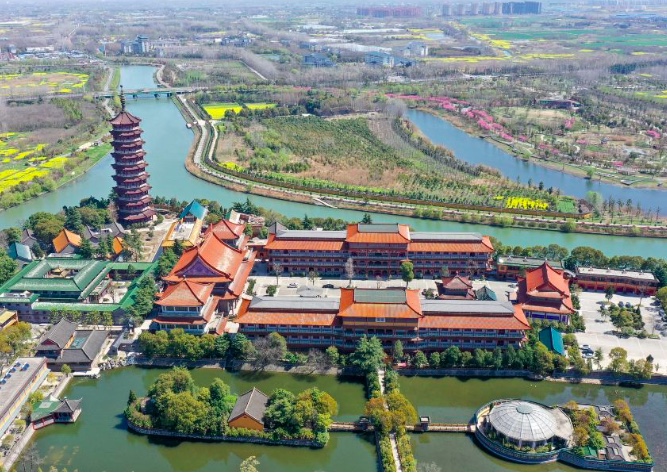
Gaomin Temple (Chinese: 高旻寺; pinyin: Gāomín Sì) is a Buddhist Temple in YangzhouJiangsu Province of China. The temple is situated in a semi-rural setting about 7 km south of downtown Yangzhou, on the western shore of the Old Channel of the Grand Canal of China, just south of its junction with the Yizheng-Yangzhou Canal.

Gaomin temple was first built in the Sui dynasty, and achieved its largest area in the Qing dynasty, when it was expanded twice. In 1651, Tianzhong Tower was built, as well as a temple next to it called the Tower Temple. During the Kangxi Emperor‘s (r. 1661–1722) stay in the temple in his fourth southern tour, he climbed on TianZhong Tower, overlooking the scenery, which was very beautiful and vast. Then named the temple for Gaomin Temple. At that time, Gaomin Temple, Zhenjiang’s Jinshan Temple, Chengdu’s Geyuan Temple and Xindu’s Baoguang Temple were known as the greatest four Zen temples.

Buddha Tower and TianZhong Tower By Jimmy Nov 2019

Water Pavilion and Zen Meditation Hall By Lisa Su Feb 2016

In ancient times, a great number of people in the temple became accomplished through the practice of zen. At the Gaomin Monastery in Yangzhou, basically every seven days one person would awaken to zen, becoming enlightened and accomplished. Last century, there were several Holy monks reached enlightenment from Gaomin Temple Zen seven-day retreat, such as XuYun ( 虚云), YiZhao( 意昭) and BenHuan (本焕).

Gaomin Temple’s zen practice was truly inexplicable but unfathomably profound. Gaomin Temple was famous for its strict precepts and Zen style. There were very strict and even cruel rules for monks participating in Zen seven-day retreat.

First of all, in ancient times when someone entered the Gaomin Monastery to practice zen, that person would first have to sign an agreement. That agreement was very simple. To put it bluntly, they agreed that they could be beaten to death with impunity. The one who beat them to death would not have to lose his own life. Additionally, they agreed to voluntarily carry out the dharma rules of the monastery. After they entered the monastery, they had to give up all of the dharmas that they previously learned. As soon as one arrived at Gaomin Monastery and entered the zen hall, one could not apply any previously learned dharmas.

Five people carried cudgels. Those five were called “the five great cudgel carriers.” Their specific task was to beat people. The practitioners had periods of running zen, each of which lasted the time it took for a stick of incense to burn from top to bottom. The stick of incense was not long. The practitioners had to jog. In the zen hall, many practitioners formed a circle and jogged. As they jogged, one of the cudgel carriers would strike his cudgel against something, which made a loud noise. As soon as he struck his cudgel against something, that loud noise sounded. When the jogging practitioners heard the striking sound from the cudgel, they had to immediately stop jogging. They were not allowed to jog even one more step. When the striking sound of the cudgel sounded again, they had to immediately resume their jogging.

Photo by Klub Boks on Pexels.com

As soon as the striking sound from his cudgel sounded, if you were still jogging, you would be taken aside and beaten to death. If you were not beaten to death, you were at the very least maimed. Thus, the minds of those practitioners were of course extremely focused. They were always focused on the sound of the cudgel. They were always fearful that they would be taken aside and severely beaten for continuing to jog after the striking of the cudgel sounded, or, if they had stopped jogging, for not immediately resuming their jogging after the striking of the cudgel sounded.

There were sitting periods as well, which lasted as long as it took for a stick of incense to burn from top to bottom. As soon as they sat down, the cudgel carriers in back of them would keep an eye on them. While sitting, the practitioners were not allowed to move in any way. The practitioners were absolutely forbidden to move. They were not permitted to recite the name of any Buddha or chant any mantra. If one was seen moving a bit, he was taken aside and severely beaten, to the extent of possible death. Therefore, after they sat down in a settled posture, as soon as the striking sound of the cudgel carrier’s cudgel could be heard, they did not dare move. They had to remain stiff for as long as the incense stick burned. They did not dare move in the slightest. The focus of their minds increased a hundredfold because they feared that they would inadvertently move, be taken aside, and be beaten, resulting in injury, deformity, or death.

There was also a rule of drinking water. The practitioners had to go to the east side to draw water and then carry the water with both hands to the west side. Only then could they drink the water. Additionally, the cup of water had to be completely filled. If a drop of water spilled to the ground as they were carrying the cup with both hands, they were taken aside and severely beaten.

Thus, the consciousness of those who practiced zen there did not wander. They did not think of other things. They did not rest. When they ate, they were not even allowed to make the sound of chopsticks hitting the bowl. As a result, their consciousness was forced to naturally not dare think of other things. Therefore, it is only natural that after our consciousness is united, we will not think things over and will not be distracted. Everyone fears being beaten to death. When you fear being beaten to death and death is used to force you, then you have no other choice. You must seriously deal with the matter. That is why in such circumstances it is very easy to cut off mistaken thinking. Through force, your thoughts are cut off. When your thoughts are cut off through force, you original nature emerges. As soon as your original nature emerges, you have broken through in your zen practice.

Photo by Pixabay on Pexels.com

Therefore, by and large, at each seven-day retreat someone broke through in his zen practice at that monastery. Basically, there would be one breakthrough every seven days. How did they know someone broke through? The day someone broke through, he was ordered to write a verse for others to hear, enabling the abbot of the zen hall and the zen master to recognize him. That practitioner was later tested again to see whether he truly awakened to the truth through the practice of zen, whether he understood his mind and saw his nature.

I have great admiration for those monks who were willing to give up their lives in pursuit of the true Buddha Dharma.

Gaomin Temple One of The Greatest Zen temples In China

Link:https://peacelilysite.com/2022/09/21/gaomin-temple-one-of-the-greatest-zen-temples-in-china/

#Buddhism#ZenBuddhism#ZenTemple#ChineseTemple#GaominTemple#ZenPractice#ZenSevendayRetreat#XuYun#Meditation#ZEnMaster#Monastery

Source: https://en.wikipedia.org/wiki/Gaomin_Temple, https://learntruebuddhism.com/the-great-dharma-of-zen-expounded-by-h-h-dorje-chang-buddha-iii/