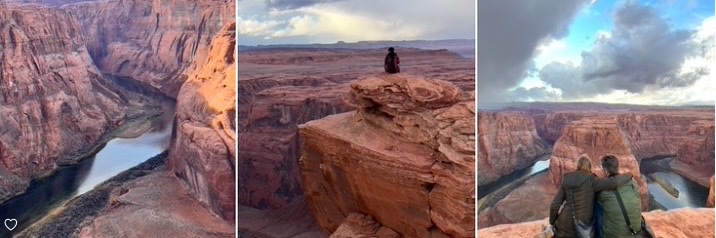
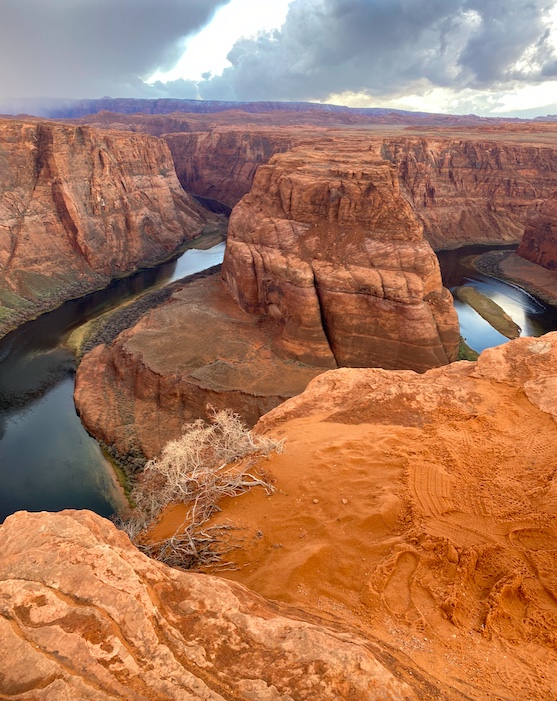
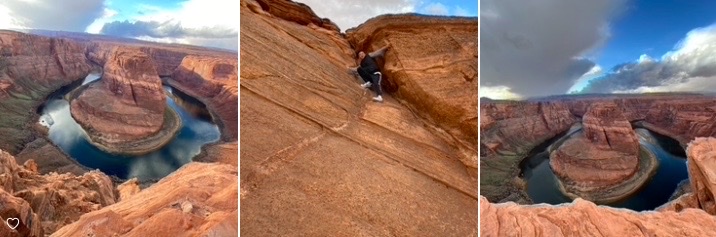
During our family trip, one of the most stunningly beautiful places we visited was Horseshoe Bend. As we approached the overlook, I was immediately impressed by the diamond blue water and the strange-shaped cliffs that surrounded the bend in the Colorado River. We stepped near the edge of the cliffs, and it was stunning how large the canyon was. The river was far below the towering cliff-sides, and I felt almost dizzy being so small and so high above the canyon floor.
We walked around the overlook area, which was full of visitors admiring the landscape. Despite the large crowd, everyone seemed to be happy, enjoying the beauty of nature and forgetting about the unhappiness in their lives. It was as if they were all experiencing the healing power of nature.
People were busy taking photos and posing for pictures, trying to preserve their memories of this awe-inspiring landscape that was formed over millennia of the river carving through the rock. And it made me realize how important it is to protect and preserve our planet, our beautiful home Earth.
The river, although beautiful, was much below its usual water height, due to the ongoing drought and unsustainable water use in this area. As a society, we need to focus on preventing global climate change, cleaning up pollution, and taking care of our planet for future generations. Instead of spending resources on trying to inhabit other planets, which are currently devoid of life, we need to work together to save our own planet.
If we don’t take action, our future generations might not have the same opportunities to experience and appreciate the beauty of nature that we have today. Earth is our only place for food, shelter, and energy for at least the next thousand years. So let’s join hands and work together to protect and preserve our beautiful home planet, so that our future generations can enjoy the same wonders of nature that we do today.
Our visit to Horseshoe Bend was more than just a family vacation. It was a powerful reminder that we all have a responsibility to protect and preserve our planet. As a result, I have made a personal commitment to reduce my consumption of unnecessary goods, and to practice the principles of “reduce, reuse, and recycle.” Additionally, I pray for an end to man-made disasters, such as war, and for the regeneration of healing powers from everyone’s heart.
In reflecting on this experience, I was reminded of the words of Peace Pilgrim, who said, “Remember the power of thought, and think only about the best that could happen. Dwell only upon the good things you want to see happen. Remember, through thought you create your inner conditions and help to create the conditions around you. We are all helping to make a great decision.” These words inspire me to focus on positivity and to believe that my thoughts and actions can create positive change in the world.
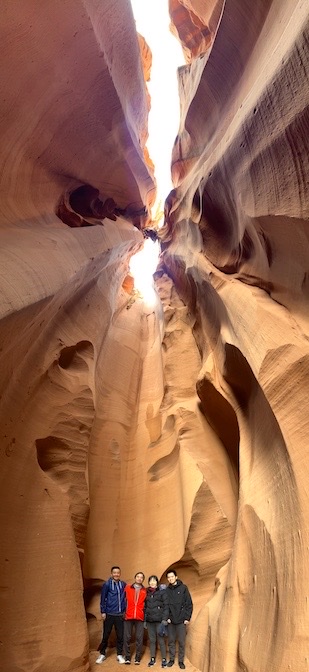
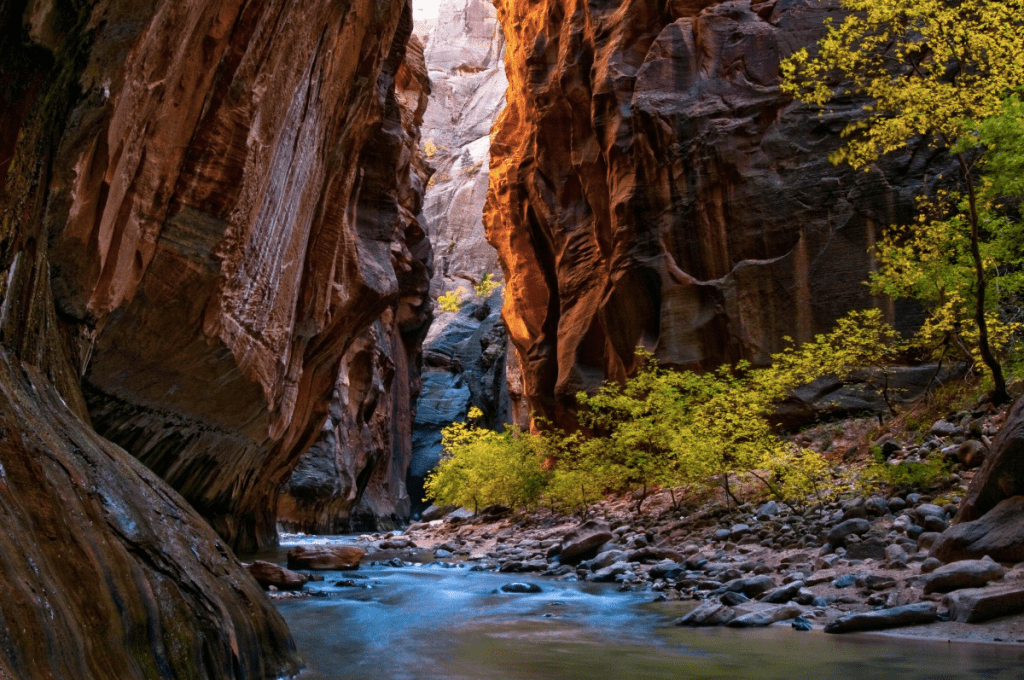
The third stop of our family winter break trip was the Ligai Canyon, and what an incredible experience it turned out to be. We had initially planned to visit Antelope Canyon, but all the tour tickets were sold out. Instead, the agent suggested we visit Ligai Canyon, a similar but lesser-known destination, the ticket is $70 per person, and we were pleasantly surprised by what we found.
Ligai Canyon is located on Navajo private property, and all the tour guides are from the same family. Our tour guide was knowledgeable and friendly, he shared a wealth of information about the Navajo culture and way of life. He told us about the significance of blue as a protective color and showed us his beautiful turquoise bracelet. He also shared details about the four sacred mountains, the use of native herbs for medicine, and the Navajo’s life on their huge ranch, which is 6 miles by 6 miles.
We had very small group, just 6 people, and the tour place was not crowded at all. The tour guide shared that when he was a child, the canyons were his playground, and he and his friends had parties in the upper Antelope Canyon during their high school years. He never imagined that people would pay theme park prices to visit these places that were once their playgrounds.
The Canyon truly captures the beauty and power of nature. It’s awe-inspiring to think about how the canyon was formed over millions of years by the forces of water and wind. The intricate patterns and shapes carved into the stone walls of the canyon are a testament to the sheer force of nature.
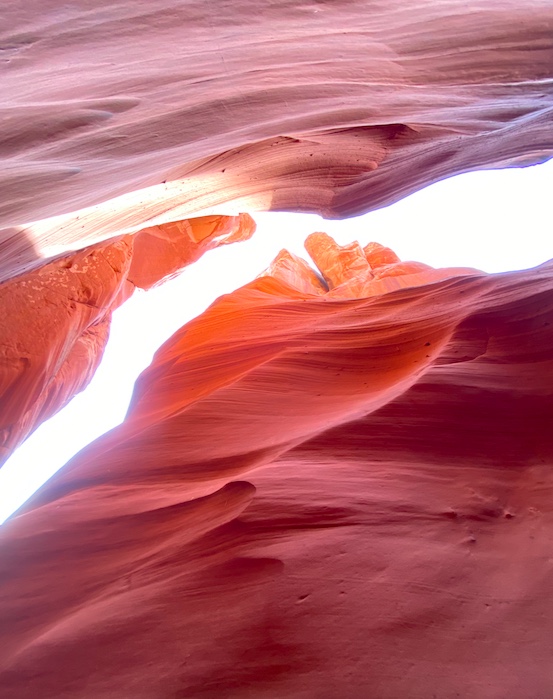
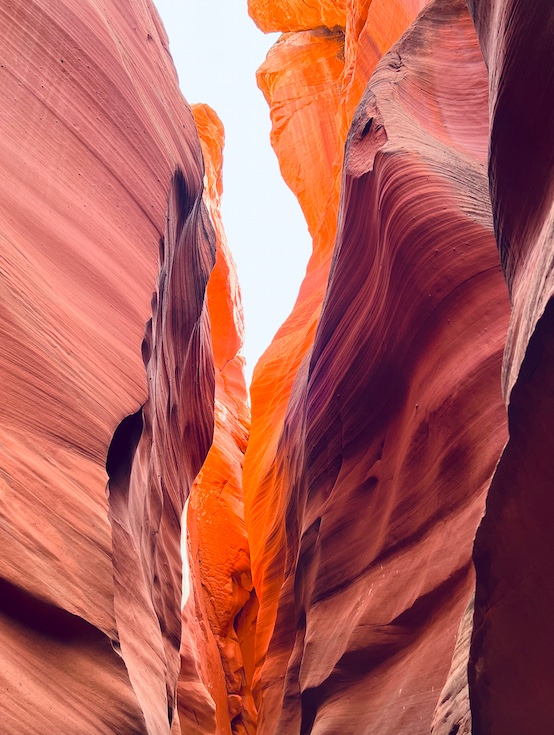
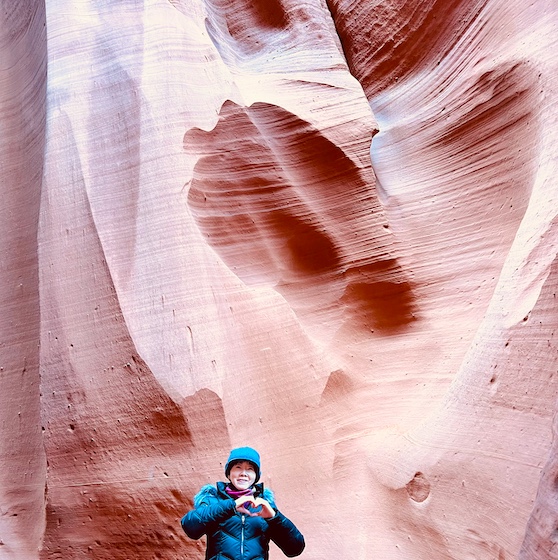
As you explore the canyon, you’ll be struck by the diversity of its features. From the heart-shaped carvings on the walls to the narrow pathways and towering cliffs, each aspect of the canyon offers something unique and breathtaking. The dynamic spiral shapes that wind their way up the walls are particularly mesmerizing, and add to the overall sense of movement and energy that permeates the canyon.
Another striking feature of the Ligai Canyon is its reddish hue. This rich, vibrant color is the result of the iron oxide in the rock, and adds an extra layer of beauty to an already stunning landscape. Whether you’re gazing up at the towering cliffs or admiring the intricate patterns on the walls, you’ll be awed by the sheer magnificence of this natural wonder.
At the end of the tour, our guide imparted some wise words to my two sons. He told them to learn from their grandparents and parents, and to hold onto their native language, as there is a wealth of wisdom and knowledge contained within it. My sons were deeply moved by his words, and I could see that they had taken his message to heart.
I hope that they will continue to pass down the Chinese culture to future generations, preserving its rich history and traditions. This was truly the highlight of the tour for me, and I am grateful for the guide’s insights and encouragement. By imparting these valuable lessons to my sons, he has given them a gift that they will carry with them for the rest of their lives.
Our second stop on the road trip was Zion National Park. Zion National Park is a stunning natural wonder with over 200 sq. miles of diverse landscapes, towering cliffs, and diverse flora and fauna. It attracts more visitors than Yosemite National Park last year. Zion offers a unique blend of adventure, beauty, and inspiration.
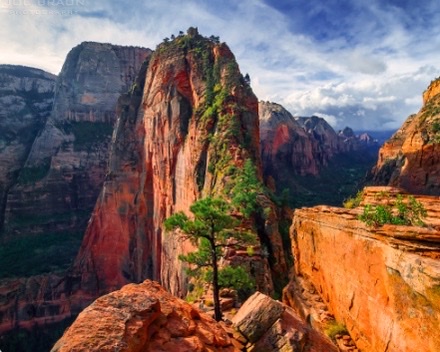
One of the hikes we did was the Angel’s Landing trail, a 5-mile round trip that is considered to be very challenging. The trail is steep and zigzags up the mountain, and a permit is required to complete the entire hike.
Despite the difficulty, my older son and husband were determined to reach the summit. They persevered and eventually made it to the top, where they were rewarded with breathtaking views of the surrounding mountains and valleys. In winter time the mountain top gets really icey, micro spikes are highly recommended.
I was unable to finish the Angel’s Landing trail, due to the challenging winding path resembling Lombard Street. I had to stop just before the permit-required section, feeling exhausted. Nevertheless, I still appreciated the views from my stopping point. Although I didn’t reach the summit, the overall experience was still memorable.
It’s worth noting that the Angel’s Landing trail can be dangerous, and since 2004, 17 people have died while attempting it. It’s important to be prepared and take all necessary precautions when tackling this challenging hike.
Riverside Trails
We explored other trails at the following day, like the Riverside Trail, but the weather didn’t cooperate. Despite heavy rain and feeling cold and wet, we were unable to fully enjoy the hike. However, we look forward to returning to the majestic and awe-inspiring Zion National Park in better weather. Overall, Zion National Park was an amazing experience and it is a must-see destination for anyone who loves nature and outdoor activities.
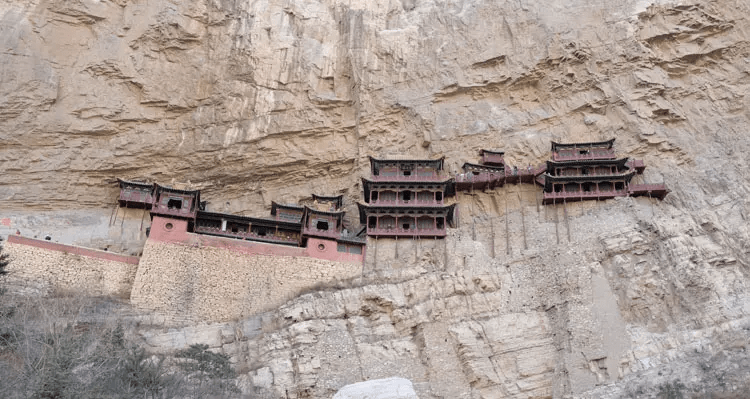
China have about a dozen of hanging temples. They are truly relics in Chinese architecture history. The most famous hanging Temple, is Hengshan Hanging Temple, Hanging Monastery or Xuankong Temple, is a unique and ancient structure located in Hunyuan County, Datong City, Shanxi Province, China. This temple is built into a cliff that stands 75 meters or 246 feet above the ground, near Mount Heng. The closest city, Datong, is located 64 kilometers or 40 miles to the northwest.
The Hanging Temple is one of the main tourist attractions and historical sites in the Datong area, along with the Yungang Grottoes. It is considered unique because it is the only existing temple that combines three Chinese traditional philosophies or religions: Buddhism, Taoism, and Confucianism. The structure is held in place with oak crossbeams that are fitted into holes chiseled into the cliffs, and the main supportive structure is hidden inside the bedrock.
The temple was built more than 1,500 years ago by a monk named Liaoran in 491 AD. Over the years, many repairs and extensions have been made to the temple, leading to its present-day scale. The temple comprises of 40 halls and pavilions that are all built on cliffs that are over 30 meters or 98 feet from the ground. The distance from north to south is longer than from east to west, and it becomes higher and higher as one moves from the south gate to the north along the mountain.
The temple’s layout includes the Qielan Hall (Hall of Sangharama), Sanguan Hall (Hall of Three Officials), Chunyang Hall, Hall of Sakyamuni, Hall of Three Religions, and Guanyin Hall. The Hall of Three Religions mainly enshrines Buddhist deities, as well as both Taoism and Confucianism. The statues of Sakyamuni (middle), Lao-Tze (left) and Confucius (right) are enshrined in the hall, reflecting the prevailing idea of “Three Teaching Harmonious as One” in the Ming and Qing dynasties (1368–1911).
The Hanging Temple is a unique and ancient structure that combines three Chinese traditional philosophies or religions, and is one of the main tourist attractions and historical sites in the Datong area. Its location on a sheer precipice and its history make it a must-see destination for anyone visiting China.
You can visit the Hanging Temple all year around, but considering the Datong weather, normally from April to October is the best period. Datong has a temperate continental climate with distinct seasons, low rainfall, a short summer, and a long freezing winter (November–March).
There are big temperature differences between morning and night, day to day, and mountain and valley, so please bring a warm jacket with you even if you travel in the summer time.
In order to protect the temple, the number of visitors is limited to 80 in the temple at a time. Therefore, it is recommended to visit the Hanging Temple early in the morning to avoid long waits especially in the high travel seasons (summer and holidays).
Winter break is a time for family, fun, and relaxation, and this year my family and I decided to take a road trip. My sons planned all the details, from where to go and what to see, to where to stay. Our itinerary included stops in Las Vegas, Zion National Park, Antelope Canyon Valley, and Grand Canyon National Park. We set off right after Christmas, with our first destination being Las Vegas.
During the 9-hour drive to Las Vegas, my husband and two boys took turn to drive. To my surprise I felt a sense of calm and relaxation that I had never experienced before while on a road trip. In the past, I would have been sweating and nervous while my sons were driving, but this time I was able to enjoy the scenery, nap, and snack while calmly chanting the Buddha’s name in my mind. This experience helped me to understand the Heart Sutra more deeply, which states “…. Without any hindrance, no fears exist, far apart from every perverted view, the bodhisattva entered complete nirvana….”
The Heart Sutra teaches about the nature of reality, and this passage in particular expresses the idea that when we let go of our attachments and fears, we can experience true freedom and peace. This is what I felt during my road trip – a sense of having no worries, fears, or hindrances. I was able to fully enjoy the beauty of the landscape and the company of my family without any distractions.
Not only did I have a great time on the trip, but I also feel a sense of progress in my personal cultivation. I am happy to see that I have made some progress in my mindfulness and relaxation practices. This road trip was a perfect opportunity to put them into practice and experience the benefits firsthand.
A road trip is a way to disconnect from the daily stressors and focus on the present moment. It is also a great opportunity to explore new places, create memories with loved ones, and reflect on your personal growth.
First Stop: Las Vegas
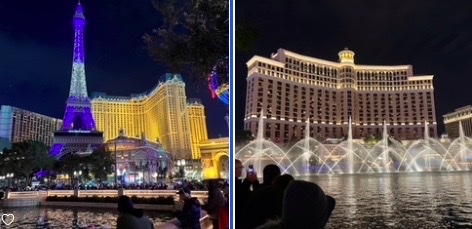
The first stop on the road trip was Las Vegas, and we had a great time exploring the city. One of the highlights of my trip was seeing the beautiful music fountain and Christmas-themed conservatory at the Bellagio. The water was choreographed to the beat of the music and the colorful lights added to the visual spectacle. It was a perfect way to relax after a day of sightseeing.
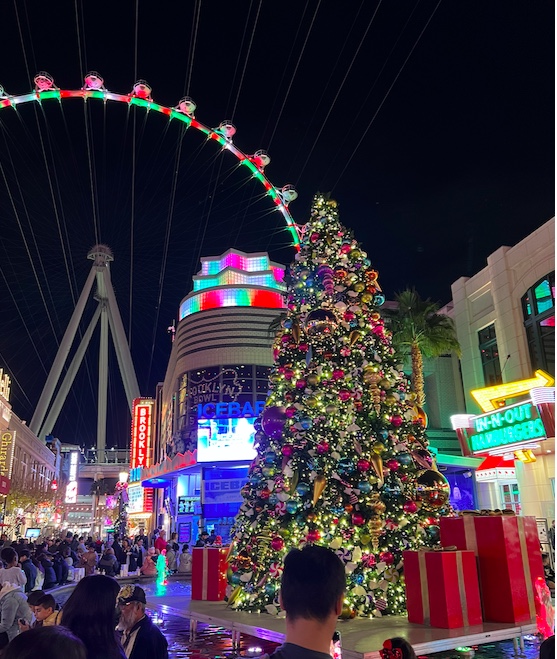
In addition to the music fountain, I also got to experience the festive holiday atmosphere in Las Vegas. The city was decked out in holiday decor, with colorful lights and decorations adorning the streets and buildings. It really added to the holiday cheer and made me feel like I was in a winter wonderland.
To get around the city, we took the monorail, which was a convenient and easy way to travel. It was a great alternative to driving or taking a taxi and it allowed me to see some of the city’s landmarks and attractions from a different perspective.
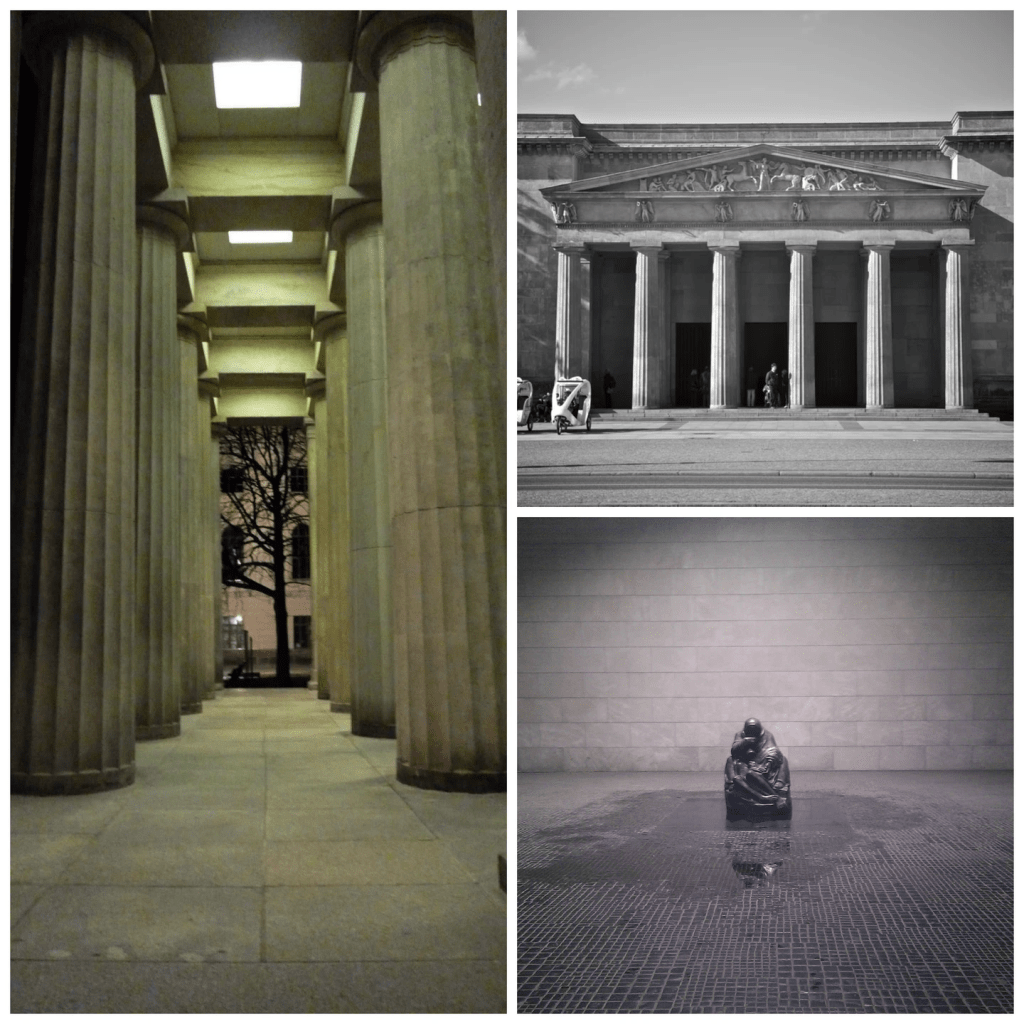
Originally commissioned by King Frederick William III of Prussia in 1816 to be the new guard house for the royal family, The Neue Wache building, still very much intact, is used as the Central Memorial of the Federal Republic of Germany for the Victims of War and Dictatorship. Rich in history and architecturally significant, the Neue Wache building is a prodigious landmark in the capital.
Placed on the bustling boulevard of Unter Den Linden, it rubs elbows with Humboldt University and the Zueghaus. Its neoclassical architecture is thanks to Karl Friedrich Schinkel, who was the demonstrative figure in the Greek architectural revival movement that took place during his time. His intent was to keep the building as open as possible, as seen by the columns and the courtyard. Like many buildings in Berlin, it has seen many tumultuous political and social tides, bearing witness to monarchy, fascism, disintegration, and reunification. Starting as a royal guard house until the devastation of World War I, it now serves as a house of remembrance.
To step inside the Neue Wache today is to be confronted by a different memorial – with the similarly empty interior now interrupted by another eye catching detail – that of a small bronze statue of a grieving mother sits on the ground, holding her son who died in the war. It is placed directly under the Oculus and on top of the remains of the unknown soldier and concentration camp victim. The empty hall made the mother seem so weak and helpless, and the grief so great…
In front of the statue, you will sharply experience the pain of the mother who lost her son, and the cruelty and ugliness of war. This “old, lonely, remorseful woman” represents all the postwar mothers in the world.
The casualties of war are a number for a country, but for any mother, it is a life-and-death separation that can never be accepted!
Reminiscent of Michaelangelo’s pieta housed in St. Peter’s Basilica in Vatican City, this provocative sculpture was the work of Prussian artist Käthe Kollwitz – famous for her depictions of the effects of war and poverty on the lives of the poor. In this instance secularising traditional imagery of Christian suffering to address social justice issues.
Greek philosopher Plato would say that only the dead know the end of war. While the suffering continues without conclusion, its victims have a memorial in Berlin waiting for them. A place of contemplation and peaceful reflection. In a country that has, in only the last 100 years, experienced so much conflict and destruction.
This is the most ingeniously designed museum I have ever seen. There is only one exhibit in the huge building. The sun rises and sets, and the projection and spotlight of the skylight are different at different times, but the focus is always on that one statue. This simple sculpture amidst empty space can sting people’s hearts and make people feel the pain of war.
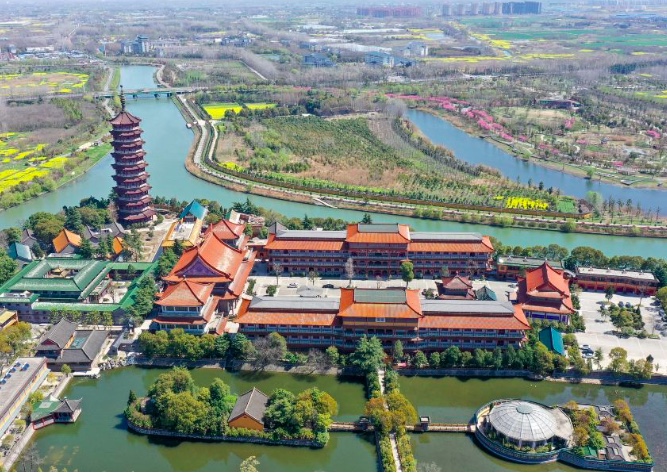
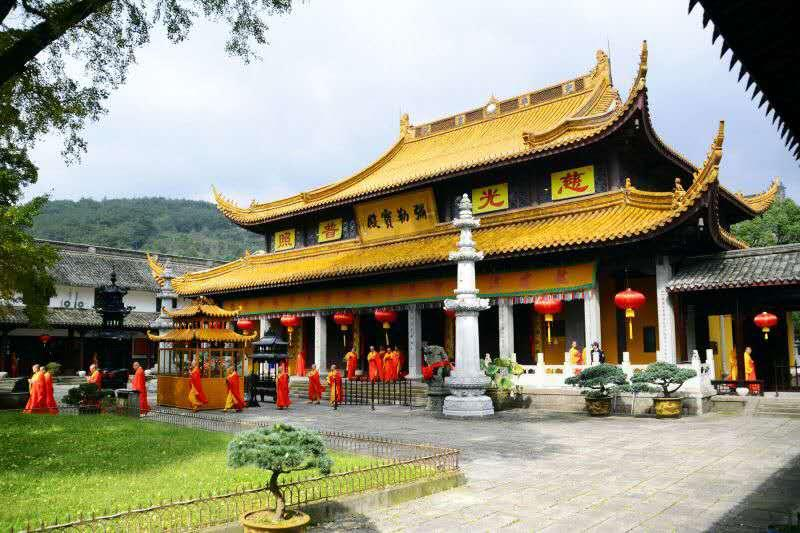
Gaomin Temple (Chinese: 高旻寺; pinyin: Gāomín Sì) is a Buddhist Temple in Yangzhou, Jiangsu Province of China. The temple is situated in a semi-rural setting about 7 km south of downtown Yangzhou, on the western shore of the Old Channel of the Grand Canal of China, just south of its junction with the Yizheng-Yangzhou Canal.
Gaomin temple was first built in the Sui dynasty, and achieved its largest area in the Qing dynasty, when it was expanded twice. In 1651, Tianzhong Tower was built, as well as a temple next to it called the Tower Temple. During the Kangxi Emperor‘s (r. 1661–1722) stay in the temple in his fourth southern tour, he climbed on TianZhong Tower, overlooking the scenery, which was very beautiful and vast. Then named the temple for Gaomin Temple. At that time, Gaomin Temple, Zhenjiang’s Jinshan Temple, Chengdu’s Geyuan Temple and Xindu’s Baoguang Temple were known as the greatest four Zen temples.
Buddha Tower and TianZhong Tower By Jimmy Nov 2019
Water Pavilion and Zen Meditation Hall By Lisa Su Feb 2016
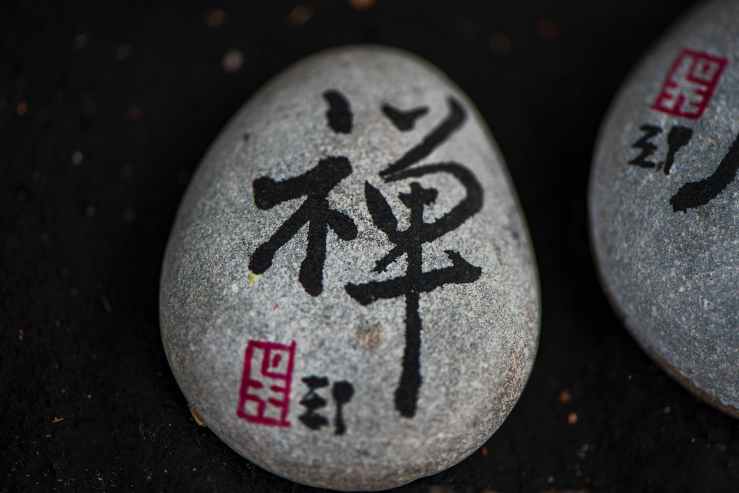
In ancient times, a great number of people in the temple became accomplished through the practice of zen. At the Gaomin Monastery in Yangzhou, basically every seven days one person would awaken to zen, becoming enlightened and accomplished. Last century, there were several Holy monks reached enlightenment from Gaomin Temple Zen seven-day retreat, such as XuYun ( 虚云), YiZhao( 意昭) and BenHuan (本焕).
Gaomin Temple’s zen practice was truly inexplicable but unfathomably profound. Gaomin Temple was famous for its strict precepts and Zen style. There were very strict and even cruel rules for monks participating in Zen seven-day retreat.
First of all, in ancient times when someone entered the Gaomin Monastery to practice zen, that person would first have to sign an agreement. That agreement was very simple. To put it bluntly, they agreed that they could be beaten to death with impunity. The one who beat them to death would not have to lose his own life. Additionally, they agreed to voluntarily carry out the dharma rules of the monastery. After they entered the monastery, they had to give up all of the dharmas that they previously learned. As soon as one arrived at Gaomin Monastery and entered the zen hall, one could not apply any previously learned dharmas.
Five people carried cudgels. Those five were called “the five great cudgel carriers.” Their specific task was to beat people. The practitioners had periods of running zen, each of which lasted the time it took for a stick of incense to burn from top to bottom. The stick of incense was not long. The practitioners had to jog. In the zen hall, many practitioners formed a circle and jogged. As they jogged, one of the cudgel carriers would strike his cudgel against something, which made a loud noise. As soon as he struck his cudgel against something, that loud noise sounded. When the jogging practitioners heard the striking sound from the cudgel, they had to immediately stop jogging. They were not allowed to jog even one more step. When the striking sound of the cudgel sounded again, they had to immediately resume their jogging.
As soon as the striking sound from his cudgel sounded, if you were still jogging, you would be taken aside and beaten to death. If you were not beaten to death, you were at the very least maimed. Thus, the minds of those practitioners were of course extremely focused. They were always focused on the sound of the cudgel. They were always fearful that they would be taken aside and severely beaten for continuing to jog after the striking of the cudgel sounded, or, if they had stopped jogging, for not immediately resuming their jogging after the striking of the cudgel sounded.
There were sitting periods as well, which lasted as long as it took for a stick of incense to burn from top to bottom. As soon as they sat down, the cudgel carriers in back of them would keep an eye on them. While sitting, the practitioners were not allowed to move in any way. The practitioners were absolutely forbidden to move. They were not permitted to recite the name of any Buddha or chant any mantra. If one was seen moving a bit, he was taken aside and severely beaten, to the extent of possible death. Therefore, after they sat down in a settled posture, as soon as the striking sound of the cudgel carrier’s cudgel could be heard, they did not dare move. They had to remain stiff for as long as the incense stick burned. They did not dare move in the slightest. The focus of their minds increased a hundredfold because they feared that they would inadvertently move, be taken aside, and be beaten, resulting in injury, deformity, or death.
There was also a rule of drinking water. The practitioners had to go to the east side to draw water and then carry the water with both hands to the west side. Only then could they drink the water. Additionally, the cup of water had to be completely filled. If a drop of water spilled to the ground as they were carrying the cup with both hands, they were taken aside and severely beaten.
Thus, the consciousness of those who practiced zen there did not wander. They did not think of other things. They did not rest. When they ate, they were not even allowed to make the sound of chopsticks hitting the bowl. As a result, their consciousness was forced to naturally not dare think of other things. Therefore, it is only natural that after our consciousness is united, we will not think things over and will not be distracted. Everyone fears being beaten to death. When you fear being beaten to death and death is used to force you, then you have no other choice. You must seriously deal with the matter. That is why in such circumstances it is very easy to cut off mistaken thinking. Through force, your thoughts are cut off. When your thoughts are cut off through force, you original nature emerges. As soon as your original nature emerges, you have broken through in your zen practice.
Therefore, by and large, at each seven-day retreat someone broke through in his zen practice at that monastery. Basically, there would be one breakthrough every seven days. How did they know someone broke through? The day someone broke through, he was ordered to write a verse for others to hear, enabling the abbot of the zen hall and the zen master to recognize him. That practitioner was later tested again to see whether he truly awakened to the truth through the practice of zen, whether he understood his mind and saw his nature.
I have great admiration for those monks who were willing to give up their lives in pursuit of the true Buddha Dharma.
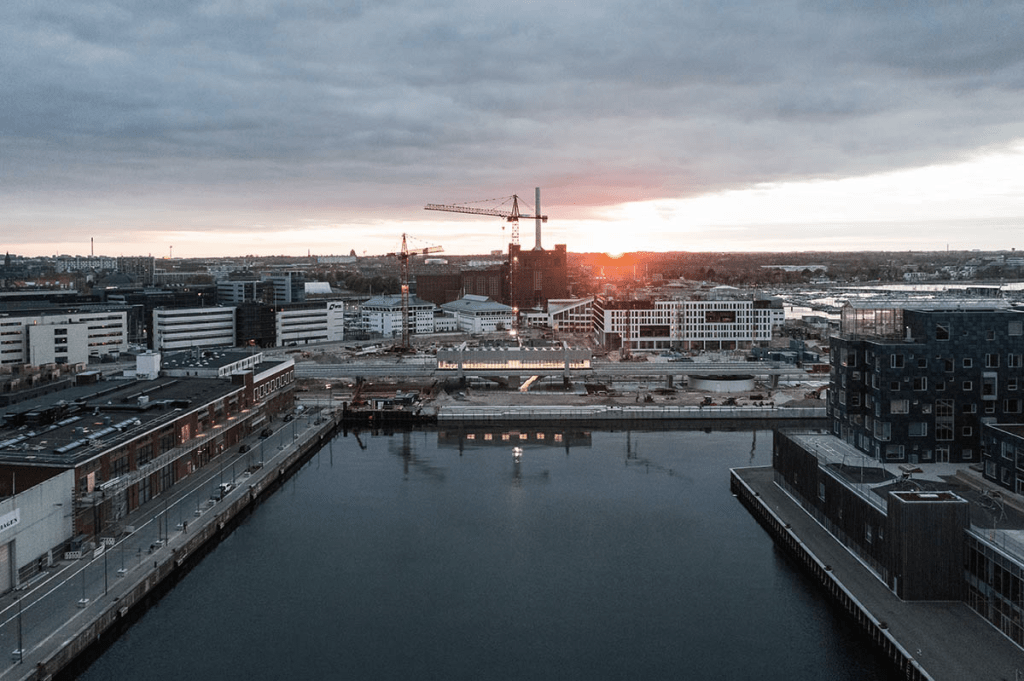
Copenhagen is a unique city, characterized by its canals, cycling culture, magnificent historical buildings, awe-spiringarchitecture structures, and happy locals. It is actually known as being one of the happiest city in the world.
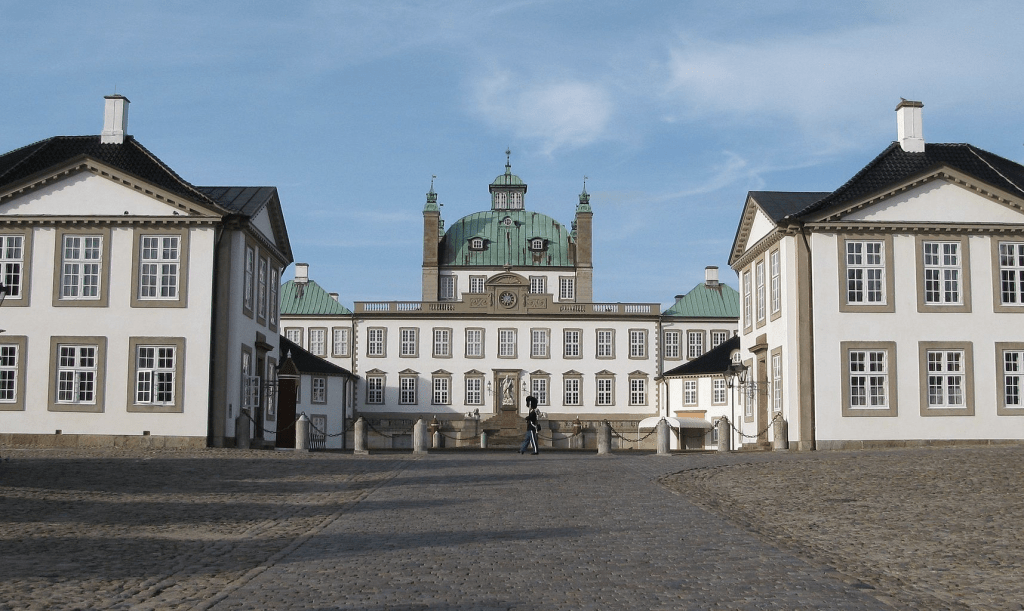
The architecture of Copenhagen in Denmark is characterised by a wide variety of styles, progressing through Christian IV‘s early 17th century landmarks and the elegant 17th century mansions and palaces of Frederiksstaden, to the late 19th century residential boroughs and cultural institutions to the modernistic contribution of the 20th century such as Arne Jacobsen‘s National Bank and SAS Royal Hotel.
Copenhagen is recognised globally as an exemplar of best practice urban planning. Its thriving mixed use city centre is defined by striking contemporary architecture, engaging public spaces and an abundance of human activity. These design outcomes have been deliberately achieved through careful replanning in the second half of the 20th century, with notable contributions both by leading international architects and a wave of new successful Danish architects.
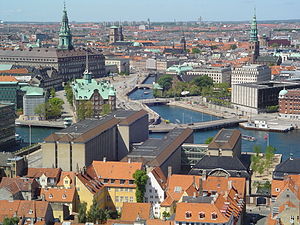
View of Copenhagen from the tower of the Church of Our Saviour
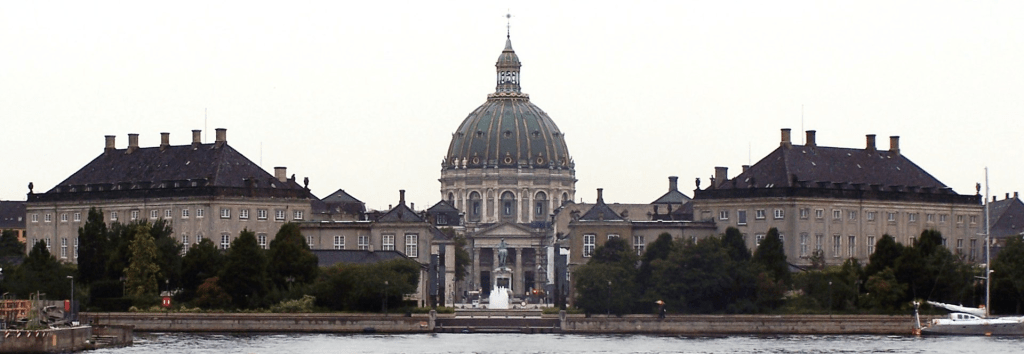
Frederiksstaden was constructed during the reign of Frederick V in the second half of the 18th century and is considered to be one of the most important Rococo complexes in Europe. It was developed to commemorated the 300 years jubilee of the House of Oldenburg taking the throne in Denmark. Leading the project was A. G. Moltke, with Nicolai Eigtved as the main architect. Frederiksstaden has Amalienborg Palace and Marble Church at its centre and together they create an axis that was extended with the creation of the new Copenhagen Opera House in 2005 on the other side of the harbour basin. The district is characterized by straight broad streets in a straight-angled street layout. The streets are lined by bourgeois houses, mansions and palaces. Another important building in the district is the royal Frederiks Hospital was Denmark‘s first hospital in the present-day meaning of the word. It now houses the Danish Museum of Art & Design.
Copenhagen’s urban development in the first half of the 20th century was heavily influenced by industrialisation. After World War II, Copenhagen Municipality adopted Fordism and repurposed its medieval centre to facilitate private automobile infrastructure in response to innovations in transport, trade and communication. Copenhagen’s spatial planning in this time frame was characterised by the separation of land uses: an approach which requires residents to travel by car to access facilities of different uses. This planning scheme largely aligned with the modernist framework endorsed by Le Corbusier in such conceptual projects
In 1962, Danish architect Jan Gehl shifted the trajectory of Copenhagen’s development by pedestrianising key parts of its city centre with the goal of enhancing the on-street conditions for humans.Rigorous field studies informed Gehl’s conclusion that city spaces perform best when they encourage the use of public spaces.[10] Gehl observed that the quality of life between buildings is diminished when substandard architecture, poor safety and overwhelming car infrastructure limit human engagement in public places.[10] Gehl therefore commenced the replanning of Copenhagen in 1962 by pedestrianising Strøget: the city’s main interior transit artery.
The pedestrianisation of Strøget marked as a major change in the approach of Copenhagen to urban life. The plan was much greater emphasis on pedestrian and bicycle access to the city at the expense of cars. This approach has in turn become internationally influential.
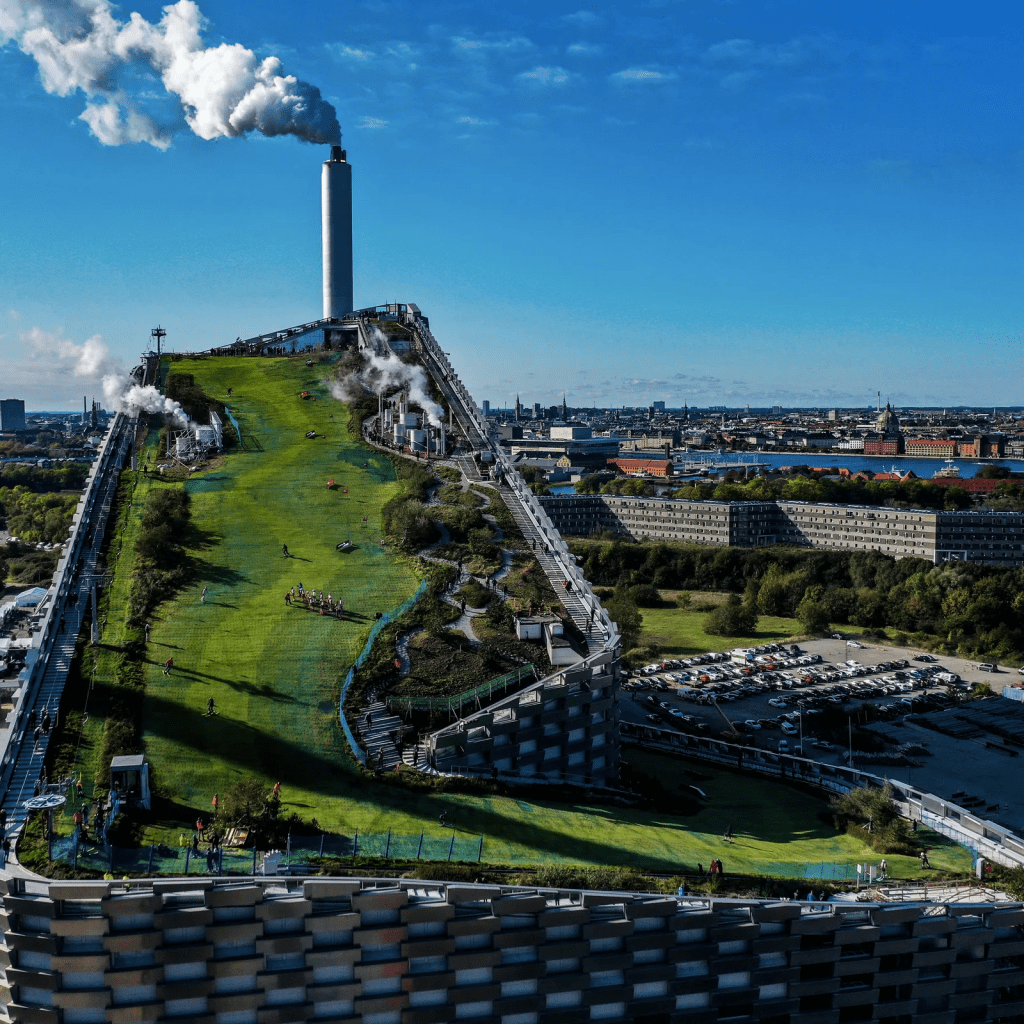
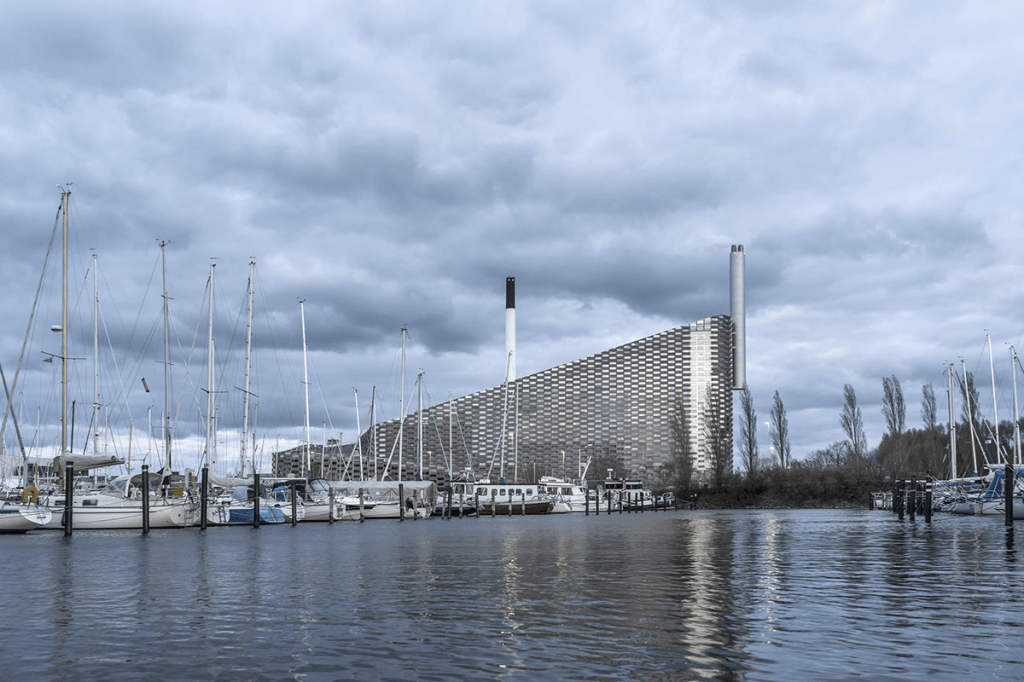
Designed by Danish architect Bjarke Ingels, CopenHill is a multi-use waste-to-energy plant. CopenHill is a real architectural marvel, combining greenery, beauty, waste management technology, sports venues and tourist attractions. The center is a ski slope, along the sides are several waste-to energy plants, the exterior supports multiple climbing walls, and there is a cafe on a hill. This effective design is worthy of other cities to learn and emulate. Skiing down the 1,300-foot green slope is surely a unforgettable experience.
CopenHill
Copenhagen is a marvelous city to see by bike. Grab a coffee from Prolog before heading south along the Cykelslangen (bike snake), which leads to the other side of the harbor. Bike onto Olafur Eliasson’s Circle Bridge, then ride back over the harbor on the new Lille Langebro bridge. Continue along the water to Nyhavn before riding back over the harbor along the Inderhavnsbroen, AKA the Kissing Bridge. In Christianshavn, you’ll bike past the old Noma space and Restaurant 108—grab a pastry on the way—and over the Butterfly Bridge.
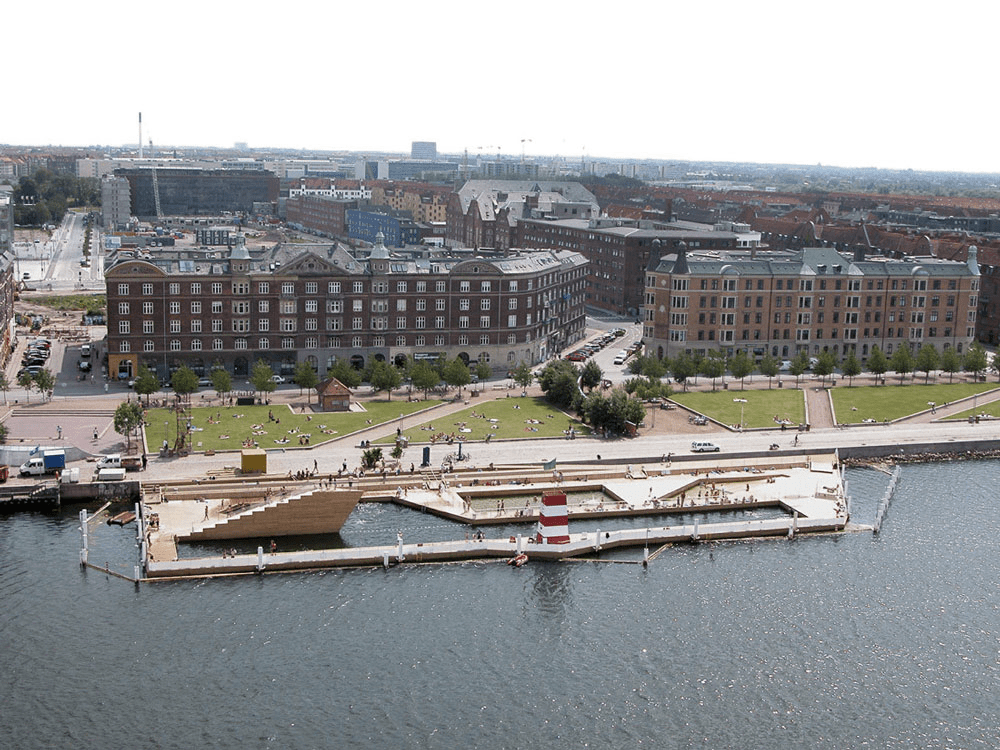
Copenhagen is one of the only cities in Europe where the harbour water is again clean enough to swim in. The city has built three popular harbour baths – a new type of city-beach for people to swim, sunbathe, and cool off on hot summer days. It is good to wear bathing clothes if you are visiting the city, so you can jump into the water whenever you want, especially in the summer.
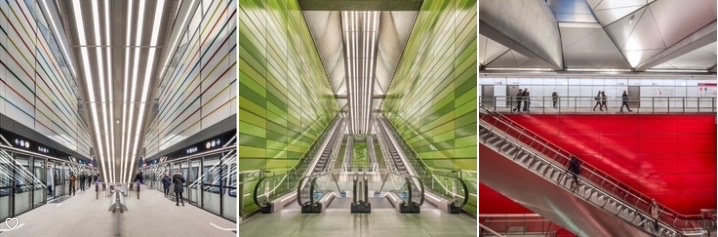
Copenhagen has a very convenient and fast subway system. There are now 4 lines called M1, M2,M3 and M4. These lines runs around the city and have intersects with each other. Riding the Metro in Denmark is the easiest and quickest way from the airport to central Copenhagen. Also the Metro runs without a driver (utilizing an automated train control system) and runs 24 hours a day, 7 days a week. During the rush hour the metro runs every 2 to 4 minutes. During the rest of the day trains run every 3 to 6 minutes, so there is very little waiting time.
Copenhagen’s Cityringen (City Circle Line) , the colorful commute (Photo: Anke Müllerklein)
UNESCO and the UIA launched the World Capital of Architecture initiative to highlight the key role of architecture, city planning, and culture in shaping urban identity and sustainable urban development. Every three years, the city designated as World Capital of Architecture becomes a global forum at the forefront of discussions on contemporary urban planning and architectural issues.
The city of Copenhagen has been officially designated as World Capital of Architecture for 2023 by the Director-General of UNESCO, Audrey Azoulay, on the recommendation of the General Assembly of the International Union of Architects (UIA).
This decision is in keeping with the partnership agreement established between UNESCO and the UIA in 2018, through which UNESCO designates the host cities of UIA’s World Congress as World Capitals of Architecture. “We are very happy to see the torch of the World Capital of Architecture title pass to Copenhagen from Rio de Janeiro,” Audrey Azoulay said. “The inaugural World Capital of Architecture in Rio was a real success, underlining the important role of urban planning, notably in the pandemic context”, she noted, adding that “Copenhagen will build upon Rio’s achievements, by continuing to show the way in which architecture and culture can respond to the challenges of our time, especially in the environmental field.”
As the World Capital of Architecture for 2023, Copenhagen will host a series of major events and programmes on the theme “Sustainable Futures – Leave No One Behind.” In coopeation with the Danish Association of Architects and various Nordic professional bodies, the municipality will examine how architecture and urban design contribute to meeting the 17 United Nations Sustainable Development Goals.
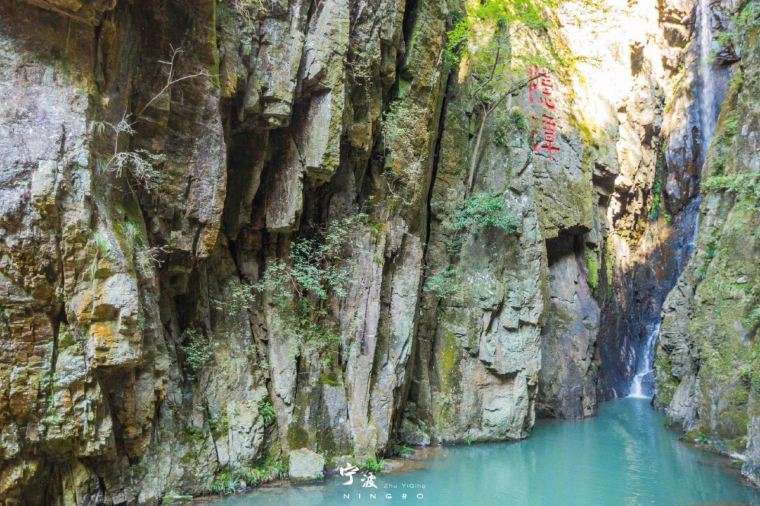
Located at around 8 kilometers north-west of Xikou Town, Fenghua City of Zhejiang Province, Xuedou Mountain is 800 meters above sea level, featuring graceful mountain ridges, unique cliffs, tempting waterfalls, and deep streams. The mountain has a milky peak, while on the peak there is a dou (meaning hollow or hole). Water flows out of the dou, and it is as white as milk, thus getting the name of the Milk Spring. It is well-known for its serenity, magnificent landscape, and an abundance of greenery. Mount Xuedou Scenic Area was known as “a fairyland on the sea” early in the Han Dynasty (206 BC-220 AD. However it was not popular until the previous president of National Party Jiang, Jieshi promoted it heartly. Xikou is the hometown for this important historical figure Jiang, Jieshi. His family had Buddhism tradition. So when he was young he often went to Xuedou Temple with his mother. He loved its picturesque sceneries, and believed it was the most beautiful place in the country. Later on he built a mansion in Mount Xuedou, he and his family lived there once a while. He even had a plan to promote Mount Xuedou as second Mount Lu, but the plan did not come true, since he left mainland China to Taiwan after the civil war. Therefore, this place becomes more mysterious and interesting for tourists from China and abroad to explore.
The charm of Mount Xuedou lies not only in its picturesque sceneries, it also has held a high status in Chinese Buddhism since ancient times. Located in a scenic site, the Xuedou Temple has a history of over 1600 years and has cultivated numerous eminent monks. It is also the place where Monk Maitreya practiced his Buddhism, thus a large number of eminent monks and pilgrims have been attracted to Mount Xuedou.
Maitreya Bodhisattva is a very popular Buddhist figure in China. Maitreya is a transcendent bodhisattva,he will be the next Buddha in the Saha world. Maitreya means “loving kindness.” In Mahayana Buddhism, Maitreya is the embodiment of all-encompassing love. Maitreya, in Buddhist tradition, presently resides in Tushita heaven.
With big belly and jolly smell, he is a symbol of enduring humiliation, optimism and compassion. In Buddhism teaching, disciples should be like the Buddhas and Bodhisattvas. All should have a broad mind, open heart, and great tolerance. The first priority for one who learns Buddhism and cultivates himself is to be patient and forbearing under insult.
In the historical record, there is an eminent Monk named Qichi (契此), who was the incarnation of Maitreya Bodhisattva. This monk lived at the end of WuDai period (right after the Tang Dynasty), and is most well known for his rather fat belly. Since he always carried a cloth bag, people began to call him the cloth bag monk. Unlike the stereotypical image of the strict and severe ascetic, Qichi was a jovial, good-humored man, but no less intelligent and thoughtful. He was loved and respected by all for these qualities. Often, others would ask him, “what is the true meaning of Buddhism?”, and in response, he would drop his bag to the ground. The deepest meaning of Buddhism is to lay down your burdens. Qichi took residence in Xuedou Temple, where he would spread the Buddhist Dharma to all those who came to him. To this day, Xuedou Mountain is regarded as the Holy Land of Maitreya. In honor of the cloth bag monk, statues of the Maitreya Bodhisattva are always depicted carrying a cloth bag.
Xuedou Temple
Xuedou Temple was originally founded in the Jin Dynasty. For thousands of years, it has been visited by many people, and has produced numerous eminent monks. It has a high status and is regarded by the Buddhist circle in China as one of the ten most famous Buddhist temples together with the other nine temples, such as Zhongtian, Zhutianning, Wanshou, the Yongzuo Temple of Hangzhou, and the Jiangshan Taiping Xingguo Temple of Nanjing.
During the Tang and Song dynasties, Xuedou Temple had received 41 imperial edicts from emperors of several generations. So far, the temple has stored 5,760 Confucian classics granted by emperors, jade seals, dragon robes, dragon pots and jade Buddhas.
In the temple, the constructions are magnificent and attractive. Outside the temple, ancient trees are towering up into the sky. Among them, two ginkgo trees from the Han Dynasty can be surrounded by about five people. With exuberant leaves, the ginkgoes rise above the clouds.
At the back peak of Xuedou Mount, the statue of Maitreya Buddha is the highest copper statue of its kind in the world. The Buddha body is 33 meters high, the lotus seat is 9 meters high, and the base is 14.74 meters high. It completed at 2008, with exquisite workmanship. Having this remarkable structure, Mount Xuedou was officially named as the fifth sacred Buddhist Site, dedicated to Maitreya Bodhisattva. Now, the temple covers a landscape area of over 20,000 sq meters and has perfectly combined natural landscapes and Buddhist culture.
XueDou Temple Overview
Since Mount Xuedou is dedicated for Maitreya Bodhisattva, there is a Grand Maitreya Hall in the Temple. It is really magnificent and dignified.
Grand Maitreya Hall
Marvelous Maitreya Statue
Qianzhang Rock Waterfall
In front of Xuedou Temple, there is a waterfall called Xuedou Waterfall, also known as Qianzhang Rock Waterfall. The water head is in the valleys at the south and the north of Xuedou Temple. The water of the Milk Spring flows into Jinjing Pool (which is an ancient pool developed in the Southern Song Dynasty), crossing Guanshan Bridge and pouring out of the cliff mouth.
The waterfall pours down from Qianzhang Rock. From the top of the rock to the pool, it is as high as 186 meters. At the half-way point, there is a huge rock. In spring and autumn, the rain falls down in a deluge but it runs into the rock at the half-way point and splashes in all directions right away. It falls like pearls and jades, and also dances like snow. Under the sunlight, it forms a rainbow, which is quite splendid. Xuedou Waterfall was well known by the whole nation as early as in the Northern Song Dynasty.
Sanyin Pond Waterfall
Sanyin Pond Waterfall is situated at 5 li north-west of Xuedou Temple. The water flows from Dongao Village (on Xuedou Mountain, there is a village of alpine flowers. With a beautiful and clean environment, the village is an ocean of flowers and seedlings) to the cliff mouth, forming one waterfall; it continues running down the mountainside to the foot, forming three waterfalls. As a result, it is called Sanyin Pond.
With a length of more than 1,600 meters, the pond can be divided into Shangyin Pond, Zhongyin Pond and Xiayin Pond respectively from the highest to the lowest. Shangyin Pond is highlighted by its quietness and danger; Zhongyin Pond stands out for its delicacy and cleanness; Xiayin Pond is well known for its superb beauty. Despite the positions of the three ponds in remote mountains and deep valleys and the difficulty of visiting them, tourists still visit in great numbers.
Miaogao Platform
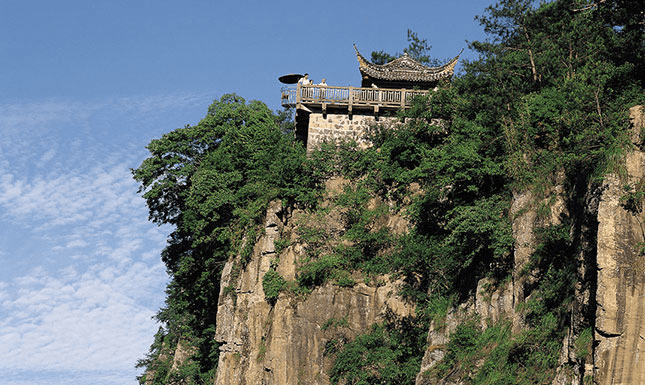
Miaogao Platform is also known as Miaogao Peak or Tianzhu Peak. It is the main scenic spot of the Xuedou landscapes. Although it is only 396 meters above sea level, it stands out against the mountain behind it. With the middle part bulging, three steep cliffs, and a gaping abyss down its side, the platform has a precipitous terrain.
In a narrow sense, Miaogao Platform refers to a platform of about 350 square meters. Standing at the front edge, you can look out on the natural sceneries of Tingxia Lake. On the periphery of Miaogao Platform, ancient trees and green bamboos are thriving so much that they keep the sunlight away. In addition, the clear breeze blows gently. It is an ideal summer resort.
Tingxia Lake
Located at the south of Xuedou, Tingxia Lake is 6 kilometers away from Xikou Town. It is a large artificial lake, with a surface area of 5.9 square kilometers, an equivalent of West Lake in Hangzhou. The water storage capacity is as much as 153 million cubic meters.
Tingxia Lake is a good place to enjoy the landscapes of lakes, mountains, steep peaks and deep valleys. Tingxia Lake is a huge reservoir famous for its position under Yushu Pavilion of Xuedou Mountain and its location at Tingxia Village.
Tingxia Lake has wonderful natural sceneries. On the basis of unique peaks, deep valleys, high mountains and water scenes, interesting and attractive landscapes of lakes and mountains come into being. With clean air and high quality water, the scenic spot is also rich in fish, fruit and forest resources. Tourists can sail on the lake, and can also go fishing, picnicking and camping.
Naturalists and photographers love to visit the Miaogao Platform, Qianzhang Rock, and Qianzhang Crag with its huge, scenic waterfall in the region spanning 85 square kilometers. Mount Xuedou is also a national forest park, a really great place worth of visiting.
It was late January, just a few weeks before Chinese New Year, when we headed to Zhoushan in Zhejiang Province. It was bitterly cold and traveling to Mount Putuo (普陀) for a two-day visit was not good timing. COVID-19 was—and still is—running rampant around the world. Any kind of travel required constant and painstaking vigilance, including full compliance with stringent prevention measures in China. Nevertheless, our destination looked as beautiful as ever, a glimmering island in the great ocean, celebrated as the “Buddha-land in the sea.” (Haitian fogou 海天佛國)
Mount Putuo is very environmentally friendly. Except for public buses, no vehicles are allowed, so we had to leave our car at the wharf. Most residents simply cycle around for their daily errands, and even said bicycles are under a quota control. For visitors to move about, you can take a bus, cycle, or simply walk. Roads and pathways are well maintained, and there is a long road that connects all the temples on the island, big or small, affording a pleasant journey at one’s own pace.
It was warm and sunny with a gentle breeze by the time we reached the island in the early afternoon. As there were very few visitors, we could stroll around at our leisure, enjoying the sunlight’s embrace. “You are so lucky,” commented our trip’s docent. “It was so windy in the morning that the ferry service was about to be suspended. In a week, the entire mountain might be closed to prevent the chance of further infections, no matter how sporadic.” We were blessed with the good fortune of a joyful excursion.
Mount Putuo is classified by the Chinese government as an “AAAAA Grade Scenic Resort and Historic Site,” attracting about 10 million visitors each year under normal circumstances. Visitation, though down 40 per cent during the pandemic in 2020, has rebounded sharply; as of April, 2.8 million people had visited Mount Putuo, a fivefold increase. The effort to attract visitors is ongoing: the Putuo Mountain College of the Buddhist Academy of China was recently completed, and Guanyin Dharma Park opened last November.
Putuo is a Chinese transliteration of the Sanskrit Potalaka, which is mentioned in several Buddhist scriptures, including the Gandavyuha Sutra (added as the final sutra in the Avatamsaka Sutra). Potalaka is described as the holy residence of Avalokiteshvara, the bodhisattva of compassion. According to Guang Xing, Mount Putuo was identified as the mythical Potalaka mountain by Buddhist monks and Chinese literati (Guang 2011: 1-22). It has been the pilgrimage site of Avalokiteshvara for about a millennium, honored as one of the four sacred Buddhist mountains in Chinese Buddhism. We speak here of Guanyin, the feminine form of Avalokiteshvara popularized in Chinese Buddhism. We will return to Guanyin below. For now, we simply need to know that Mount Putuo’s status matches that of Mount Wutai (五台) for Manjushri, Mount Jiuhua (九華) for Kshitigarbha, and Mount Emei (峨眉) for Samantabhadra.
There seem to be three main demographics for visitors to Mount Putuo: sightseers, pilgrims, and students of Buddhism. The majority of sightseers are visitors who do not have much knowledge of Buddhism, nor much interest in its history, sutras, or temples. Nevertheless, everyone, regardless of background, recognizes this place as one expecting reverence and respect for the buddhas and bodhisattvas. When we worship and make our wishes before the famous 33-meter statue of Nanhai Guanyin, we are also introspecting, contemplating, and reflecting on the vicissitudes and travails of our lives.
The town nearby is neat and chic, full of activity and interesting souvenirs for tourists to commemorate their visit. Even in the winter, Mount Putuo is generously covered with greenery and vegetation, with a multitude of species including ancient camphor trees and the rare wild plants of Carpinus putoensis (普陀鵝耳櫟). They are one of the major treasures on Mount Putuo and monoecious. There are red and yellow variations coexisting, but they do not mature at the same time, so the pollination rate is extremely low. When the Sun is shining, the leaves of many trees turn golden in the backdrop of the Prussian blue sky, surrounded by the various temples. It is truly a picturesque sight.
Carpinus Putoensis Cheng. From baidu
The beautiful scenery, unique to Mount Putuo, is reminiscent of places I have visited in Japan. The connection between Mount Putuo and Japan can be traced back to the Tang dynasty (618–907), when a Japanese Zen and Tendai monk-pilgrim named Egaku (Chinese: 慧鍔; Hui’E) wanted to bring a statue of Guanyin from Mount Wutai to Japan. However, his voyage back via Mount Putuo was hampered by storms and waves despite several attempts. One day, Egaku had a dream in which he realized that the statue of Guanyin did not want to leave. He decided to enshrine it and built a simple hut near the Tidal Sound Cave. Immediately, his ship sailed through and he was able to return to Japan. This is the story of Guanyin “bu ken qu” or “unwilling to go,” and is the source of many folktales surrounding the establishment of temples and monasteries on Mount Putuo. Exchanges between Mount Putuo and Japan continued over many centuries.
Guanyin is the real protagonist linking Japan and China, with Guanyin known as Kannon or Kanzeon in Japan. Belief in this personification of compassion and benevolence has a long history in China. First introduced from India in the Western Han dynasty (202 BCE–9 CE), Avalokiteshvara was adapted and amalgamated into Chinese culture, most famously through the female figuration and her unique 32 transformations (Guang 2011: 1-22). Beginning in the Song dynasty (960–1279), the Chinese transformed the bodhisattva into the Goddess of Mercy, depicted in the feminine. (Minneapolis Institute of Art)
Belief in Guanyin has flourished in China ever since, going beyond even religious boundaries in everyday life (Guang 2011: 1-22). She is not confined to monastic life, as it is said in the Universal Gate chapter of the Lotus Sutra that any worldly being in danger will be delivered instantly on calling her name. Therefore, Guanyin has been worshipped and revered by all classes of people. As she is a compassionate divinity with countless virtues and merits, she is endowed with transcendental power. She excels in skilful means, allowing her to appear in whatever form needed by sentient beings. And that, in my opinion, is probably the reason behind the 32 forms in the Chinese tradition, including Guanyin Yangzhi (楊枝), or Willow Branch Guanyin. The Guanyin Yangzhi is only one example among many of her history-rich gender transitions.
Willow Branch Guanyin. From online source
We were able to visit a 2.5-meter-high, 2.2-meter-wide monument of Guanyin Yangzhi at a nunnery of the same name. The nunnery, situated at the foot of Putuo’s Western Xiangwang Peak, was built in 1608. The artistic style was pioneered by Yan Liben (閻立本), a famous figure painter in the Tang dynasty, while the stele’s engravings appeared during the Ming dynasty (1368–1644). Holding a tender willow branch in her right hand and a clear water vase in the left, Guanyin is luxuriously crowned with pearls and precious stones, dressed in sumptuously embroidered garments, and adorned with agate, amber, and pearls. She spreads dewdrops to all the world’s quarters to dispel suffering and pain.
Guanyin is replete with the marks of beauty, dignity, and calm. Except for her face, there are not many traditionally female features shown. Indeed, she appears tall and somehow mighty and masculine, standing on her bare feet. Her belly bulges out slightly, and she has large hands and feet. While beholding her, I could not help but think of the mural of Padmapani, another manifestation of Avalokiteshvara, at Ajanta Cave No.1, in India. Painted during the sixth century BCE, the bearer of the blue lotus is a male figure with a slender body. Both forms of Avalokiteshvara are crowned and bejewelled, have physically beautiful features, and appear composed and graceful.
Padmapani, Ajanta Cave 1. From alamy.com
There are many temples on Mount Putuo, but the two most well known are Puji Temple (普濟寺) or the “front temple” (又稱前寺), and Huiji Temple (慧濟寺) on the peak of the mountain. They receive the most pilgrims, but Fayu Temple (法雨寺) is my personal favorite; when there is no pedestrian crowding, it has a gentle and soothing atmosphere. It is surrounded by towering ancient trees, suspending the visitor in time between past and present. From a distance, one can see that the gate to the monastery is unique, unlike those of other temples on Mount Putuo, which are painted in yellow ochre. Here it is light red in color: a soft, ambient hue that emphasizes an atmosphere of paradisical peace and bliss.
Upon entering and reaching the main hall of Nine Dragons, where a statue of Guanyin is enshrined, one feels a strong sense of sublime and resplendent majesty. Yuantong Hall of the Fayu Temple is renowned for its resplendent appearance and ingenious interior structure, with a large ball hanging from the ceiling of its dome surrounded by nine vertical rafters. Each rafter is carved with a dragon that rears its head in a scramble for the ball. This intricate layout is called the Bracket with Nine Coiling Dragons and is ascribed to Emperor Kangxi (康熙) (1654–1722), who used the materials of the former palace of the Ming dynasty in Nanjing to reconstruct an earlier monastery, Zhenhai Monastery, on Mount Putuo.
Fayu Temple. From the author
What strikes me most, however, is not Fayu Temple’s imperial heritage, but rather two great minds that made their mark here. Venerable Yinguang (印光) (1861–1940) was the 13th patriarch of the Pure Land tradition and the abbot of Fayu Temple for decades. Meanwhile, Ven. Hongyi (弘一) (1880–1942) wrote in traditional calligraphy Fayu Temple’s nameplate of “heavenly flowers and Dharma rain”—first devised by Emperor Kangxi. Li Shu Tong (李叔同) was Hongyi’s secular name. A wealthy and rakish young man, he was also an eclectic and learned scholar of high culture. He relinquished what he possessed and committed to living a monastic life. Fully devoted to promulgating Buddhism, he rose to become an eminent monk.
At some point, the two monastics met each other. It is said that Master Hongyi admired Master Yinguang and asked him to be his teacher. Humble and modest, Master Yinguang refused, but invited him to stay as long as he wanted. The two spent seven days together, studying, practicing, and meditating without a single word exchanged. They simply were, as minds think alike, without verbal obstructions, thoughts traveling and flowing effortlessly. How wonderful it is to exist together beyond words. But in the era of the Internet, we are bombarded with so many words and so much information that we lose our sense of their meaning, let alone their authenticity.
If we wish to be heard, we need to be sincere, candid, and heartfelt. “Guanyin” in Chinese means the Perceiver of Sounds, or “Guanshiyin,” the Perceiver of World’s Sounds. As chanted in the Universal Gate chapter of the Lotus Sutra: “Perceiver of the World’s Sounds, heavenly voice, the voice of the sea’s tide—magnificent, rich and harmonious surpassing all worldly sounds.” If we keep Guanyin in our hearts and call on her sincerely, she will always respond.