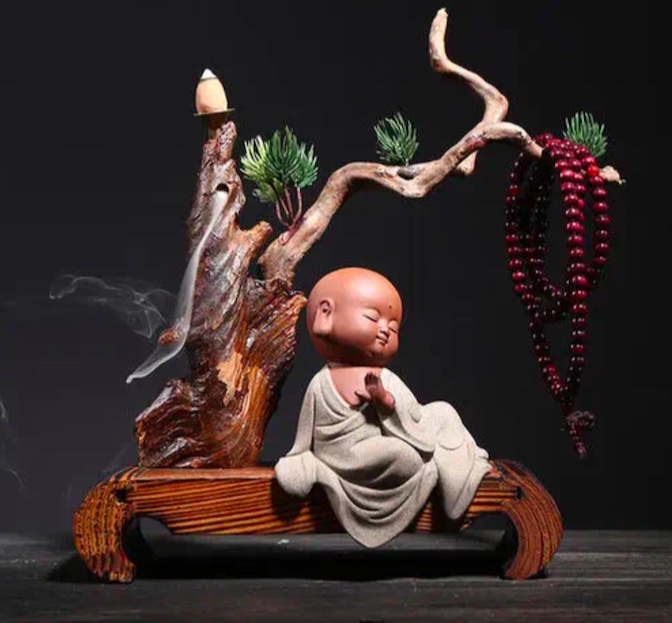
When Anger Has Nowhere to Stay
In our daily lives, anger often appears without invitation. A single word, a small inconvenience, or an unmet expectation can stir something deep within us. Before we realize it, the mind is no longer calm, and the heart feels as though it is burning.
There was once a woman who had a very bad temper. She often got angry over small things. Afterward, she would regret it. She knew her anger hurt others, and she truly wanted to change. But when anger came, she felt she could not control it.
One day, a friend told her, “There is a wise monk nearby. Maybe he can help you.”
So she decided to go.
When she met the monk, she told him everything—how easily she lost her temper, how much pain it caused, and how helpless she felt. She hoped he would give her some advice.
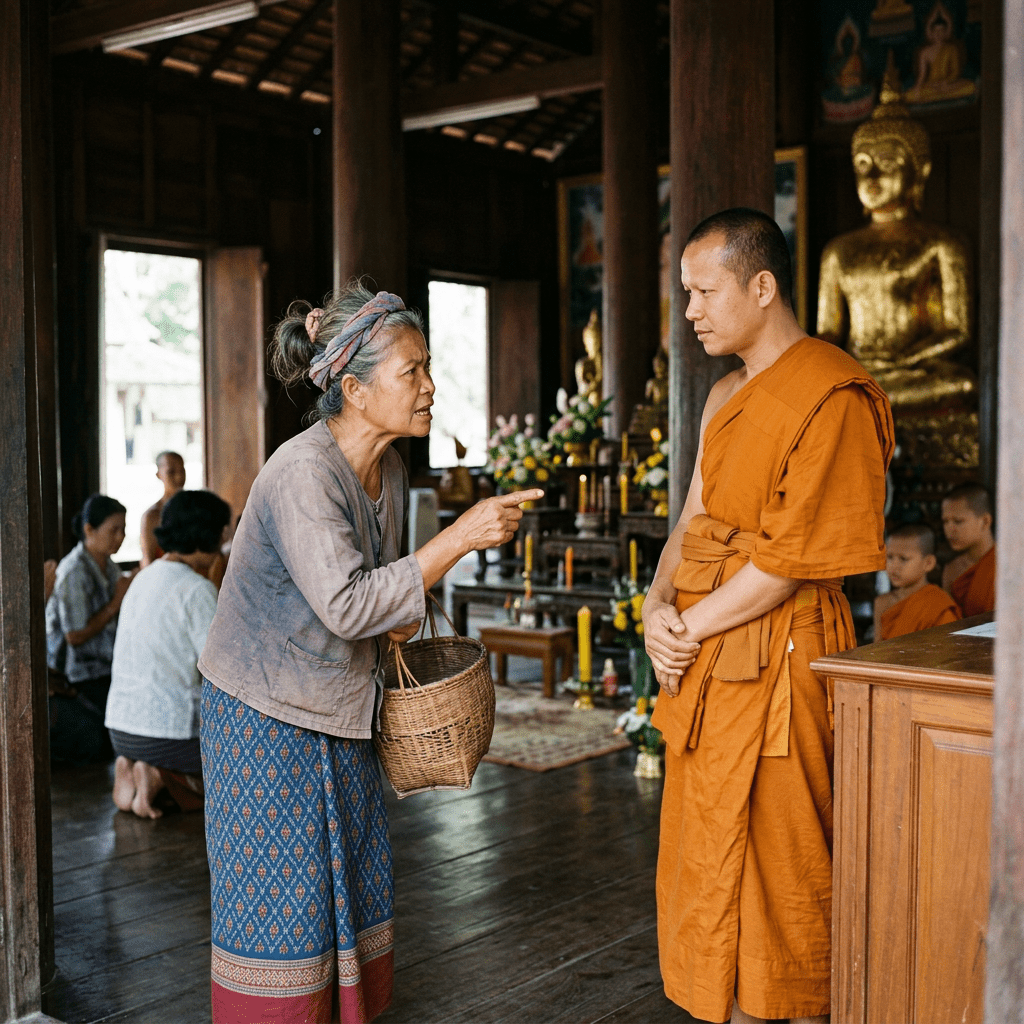
The monk listened quietly. When she finished, he said nothing. He simply led her to a small room, stepped outside, and closed the door.
Soon she realized—the door was locked.
At first, she was confused. Then she became angry.
“I came here for help, and he locks me in?” she thought.
The room was dark and cold. The more she thought about it, the angrier she became. She started shouting, knocking on the door, and scolding the monk loudly.
But there was no answer.
No matter how much she shouted, the monk did not respond.
After a long time, she became tired. Her voice grew quiet.
Then the monk asked from outside, “Are you still angry?”
She said, “I’m angry at myself! Why did I come here?”
The monk replied, “If you cannot forgive yourself, how will you forgive others?” Then he left.
The room became quiet again.
After some time, the monk returned and asked, “Are you still angry?”
She said, “No, I’m not angry anymore.”
“Why?” he asked.
She said, “What’s the use of being angry? I’m still stuck in this dark, cold room.”
Her anger had weakened, but it was still there.
Later, when the monk asked again, she said, “I’m not angry anymore, because you are not worth my anger.”
The monk said, “The root of your anger is still there. You have not let it go.”
His words stayed in her mind.
After a long silence, she asked, “Can you tell me—what is anger?”
This time, the monk came to the door. He did not speak. He simply poured the tea in his cup onto the ground.
The woman watched quietly.
Suddenly, she understood.
“If I do not get angry, where does anger come from?” she thought.
“If my mind is clear, what is there to be angry about?”
At that moment, she saw the truth: anger does not come from others. It comes from our own mind.
From the teaching of Gautama Buddha, we learn that anger arises when the mind is not open—when we hold on too tightly to our own thoughts, feelings, and expectations.
If we do not hold onto anger, it cannot stay.
In our daily life, anger often feels very real. We think others cause it. But if we look carefully, we see that it begins inside us.

When anger comes, we can pause and ask:
Why am I reacting this way?
What am I holding onto?
Can I let it go?
If we become more patient, more tolerant, and more willing to step back, anger will slowly lose its power.
Letting go of anger does not make us weak. It frees us.
When we put down the fire in our heart, we will see that things are not as bad as we thought. Other people are not as terrible as we imagined.
In the end, the lesson is simple:
If we do not create anger, it has nowhere to stay.
Link:https://peacelilysite.com/2026/04/21/no-one-to-blame-understanding-the-root-of-anger/

